-
Darwin
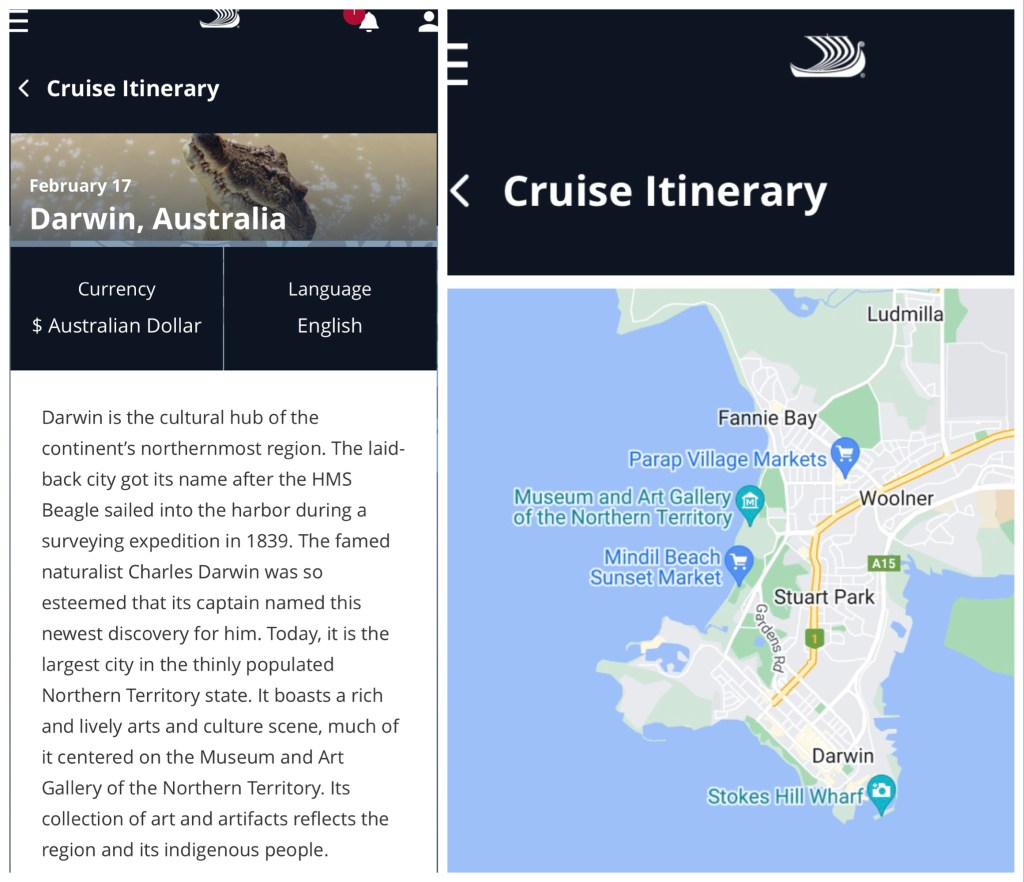
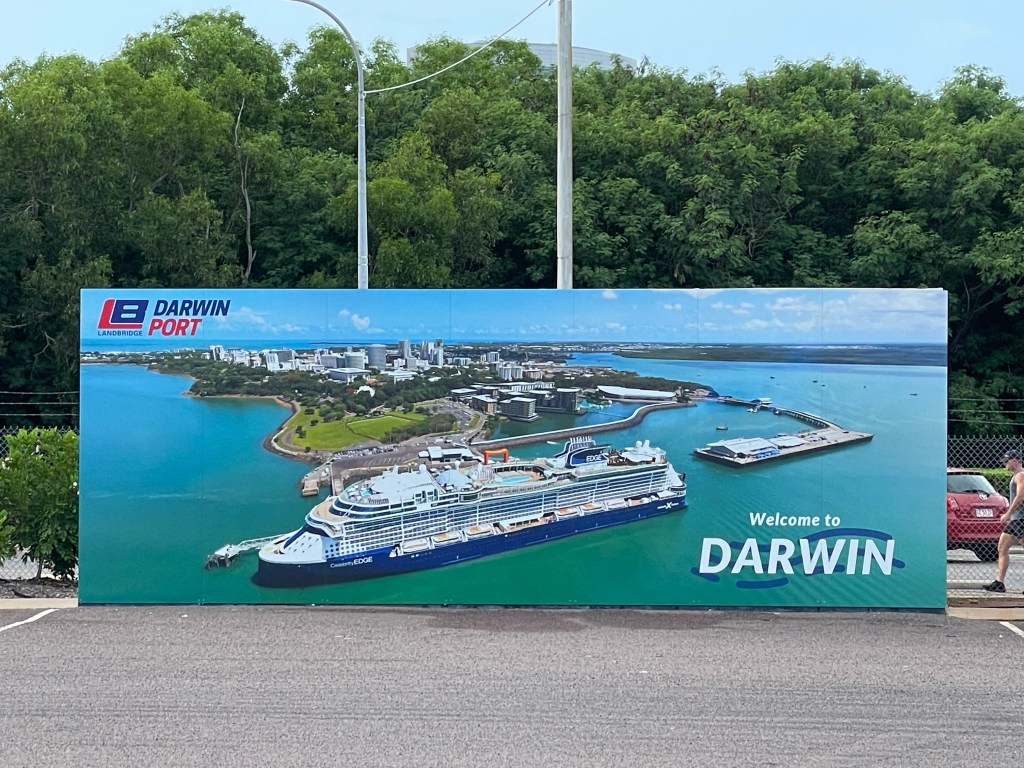
Feb. 17
An interesting stopover. Not just about Darwin, but Karla’s activities. We are friends with a 90 year old couple who are very sharp and seemingly healthy. He’s a retired Presbyterian minister; she a retiree from the State Department’s foreign service. Kathleen was on a bumpy tender ride (a week prior in Mooloolaba) which launched several passengers out of their seats. One launchee landed on Kathleen and caused serious pain to her leg. The ship Doc recommended an ultrasound and an MRI at the Darwin hospital to determine if there was a break or muscle tear. Karla, with her positive aggressiveness, offered to accompany them to the hospital to provide another set of eyes and mouths. Richard welcomed the offer. It became more important when he came down with pneumonia and was confined to his room. Karla received an education in the Australian healthcare system which I’ll let her describe.
Karla here: the Darwin public hospital emergency department triaged Kathleen upon our arrival and assigned us to a category which determined priority and waiting time. Interestingly, the hospital needed proof of the Australian visa which was provided after an email to Viking’s ship reception. They collected the $250 payment in advance. About 2 hours after waiting, we were called into an inner waiting room along with about 5-7 others. There were mostly aboriginal people in the waiting room. Within another hour, Kathleen was seen by an ER doc and provided an ultrasound but no MRI as the hospital had only 1 MRI machine and it was fully booked. The initial result was a very large hematoma but no muscle tear; the radiologist report was to be ready within a couple days and Viking medical needed to request it. The sympathetic ER doc had his supervisor examine Kathleen as well to confirm his findings and recommendations. The challenge with the injury is if the pressure (causing pain) continues and it does not begin to drain. The hospital ER bay seemed lower tech than I expected; not lots of bells and whistles, and I was startled to see a cockroach skiddle across the floor.
Back to Fred: Left on my own, I was fearful, but decided to venture out. A visit to a museum was followed by a walk around town and visit to an Op Shop. So many colorful, aboriginal-informed designs and color clothes! The quality of the Op Shop offerings was definitely higher. When Karla returned from hospital duty, she replicated the walk and also found colorful clothes and a manicure. We’re now very colorful! At the time of our walkabouts, we had to deal with 90* and about 85-90% humidity. Those numbers would discourage us from spending too much time here.
Darwin is a pleasant city of about 140,000 people. About 40 percent of the diverse population were born overseas. About 2/3 are Australian or English, but we see lots of Aboriginal people on the street.
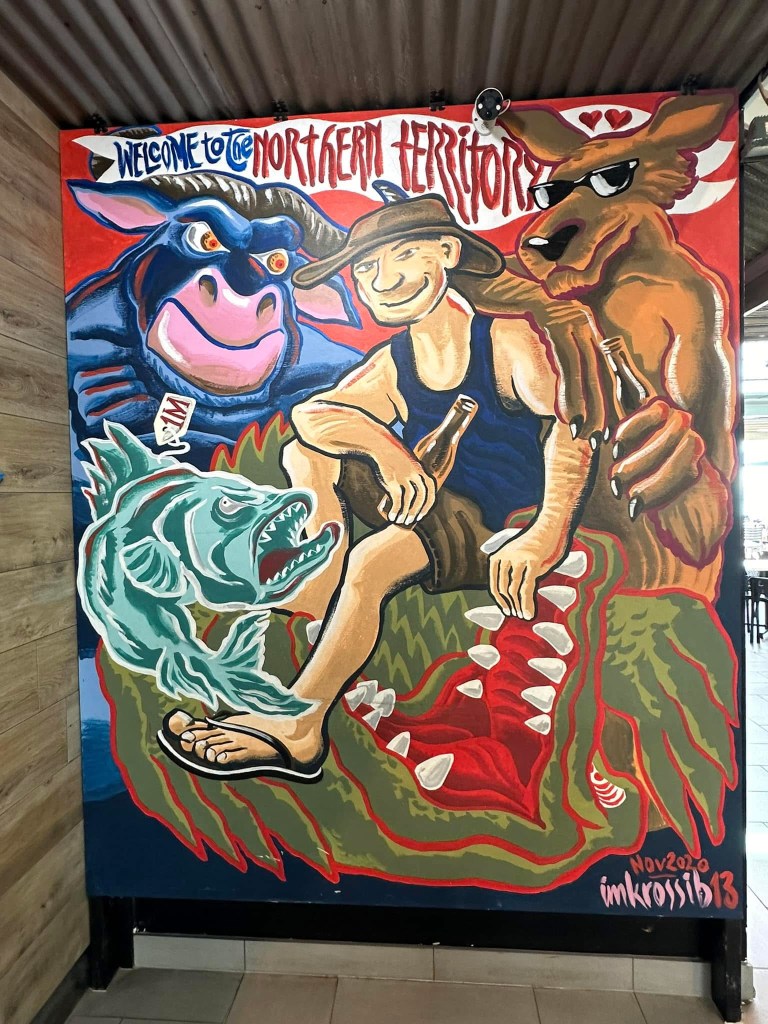
Since Darwin is relatively secluded, it has an abbreviated settlement history. It was visited by the HMS Beagle (Darwin’s ship without Darwin) in 1839. The captain of the ship chose to name the site Darwin. It was settled in 1869 and then populated by more English and Chinese because of the discovery of gold. The city has been rebuilt several times as a result of cyclones and World War 2. The cyclones of 1897 and 1937 were damaging. The 1974 Cyclone Tracy, with its 135 mph winds, was devastating, destroying 70% of the buildings/80% of the houses. In February of 1942, the Japanese followed their successful visit to Pearl Harbor with 188 planes and more bombs than were dropped on Pearl Harbor. With sea temperatures of 78* in July and 89* in December, they are likely to see more cyclones, although building codes were revamped to make them more cyclone proof.
The economy is now based on offshore mining of oil and natural gas, mining of gold, zinc, bauxite, and manganese, and tourism. It’s laid back and easy to visit. A few fun facts:
-The Aboriginees Act of 1905 established a Chief Protector of Aboriginees. He protected them by separating the children from their families in order to teach them the proper language and culture. Lots of the parents, because of the belief that they carried diseases, were assigned to “lock hospitals” and leprosariums. The Aboriginees are doing better now, but many we see on the streets don’t appear to be doing too well.
-One source sites problems with alcohol abuse. There were 6000 arrests in 2009. (Pretty high number for a population of 140,000.) There were 350 broken jaws or noses that same year. You can understand why I wanted Karla with me.
– Lots of crocs in the nearby rivers. They’re even thinking of thinning the “herd.” of about 100,000. But tourism prospers with croc trips. One can visit Crocosaurus Cove. Or, you can pay $50 to see jumping crocs and a bit more to ride in a “cage of death” and be lowered into croc waters….presumably being protected by the cage. Who would be afraid of a 20 foot 3000 pound overgrown lizard?
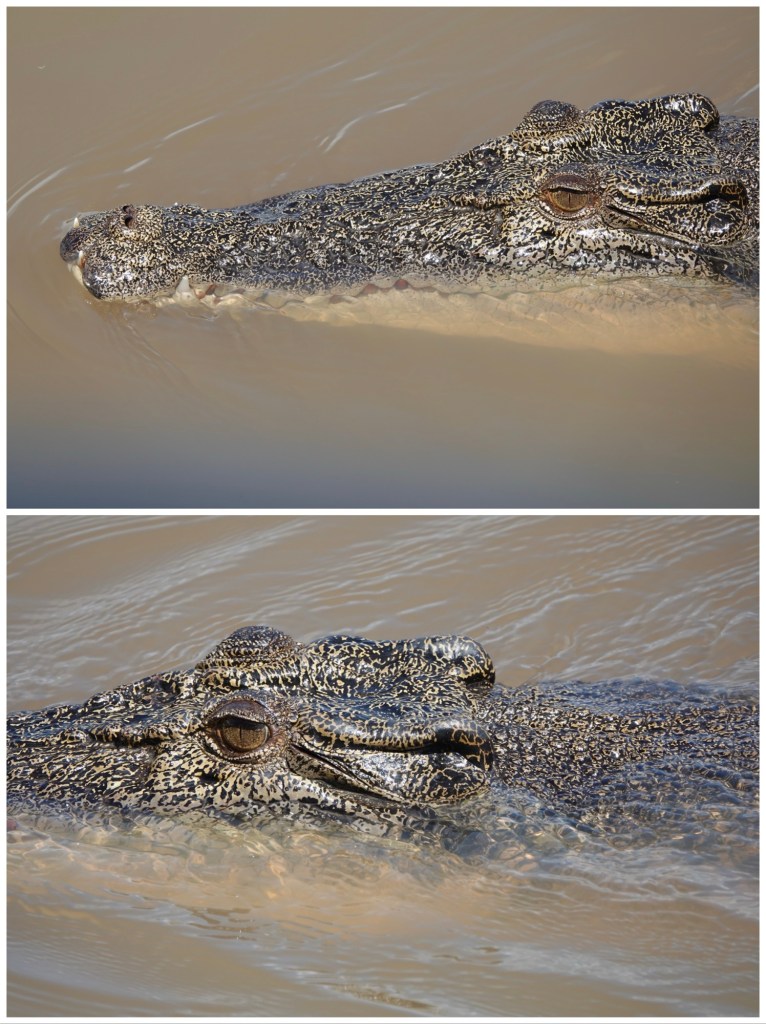
Photos courtesy of Rose Brooks 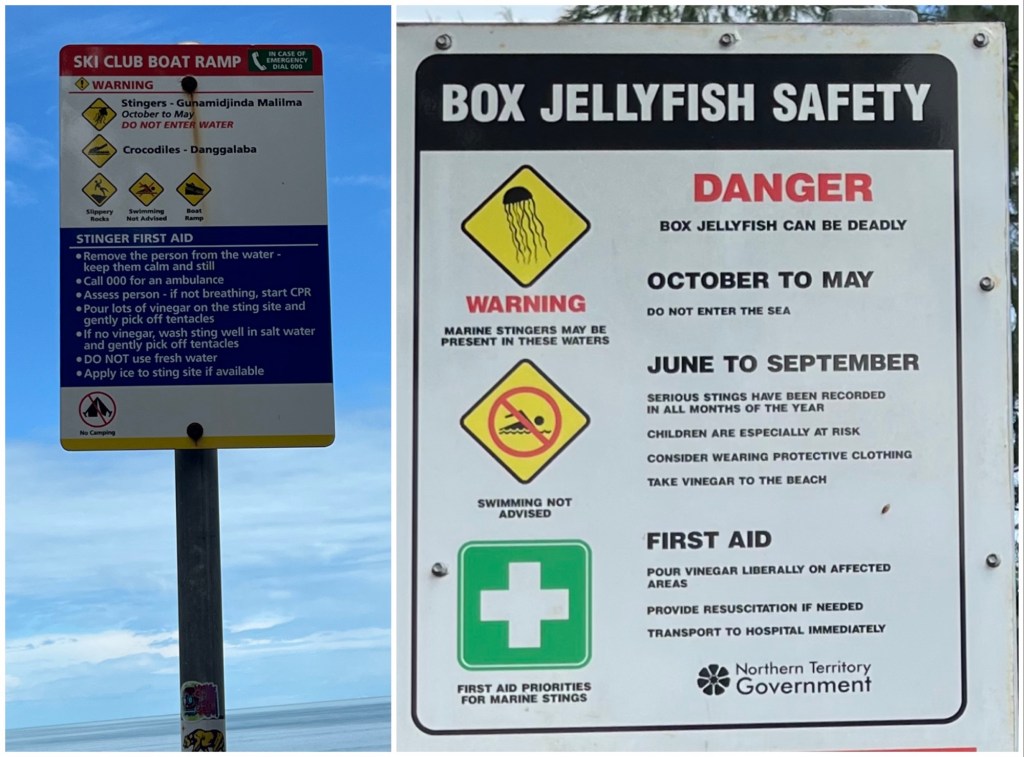
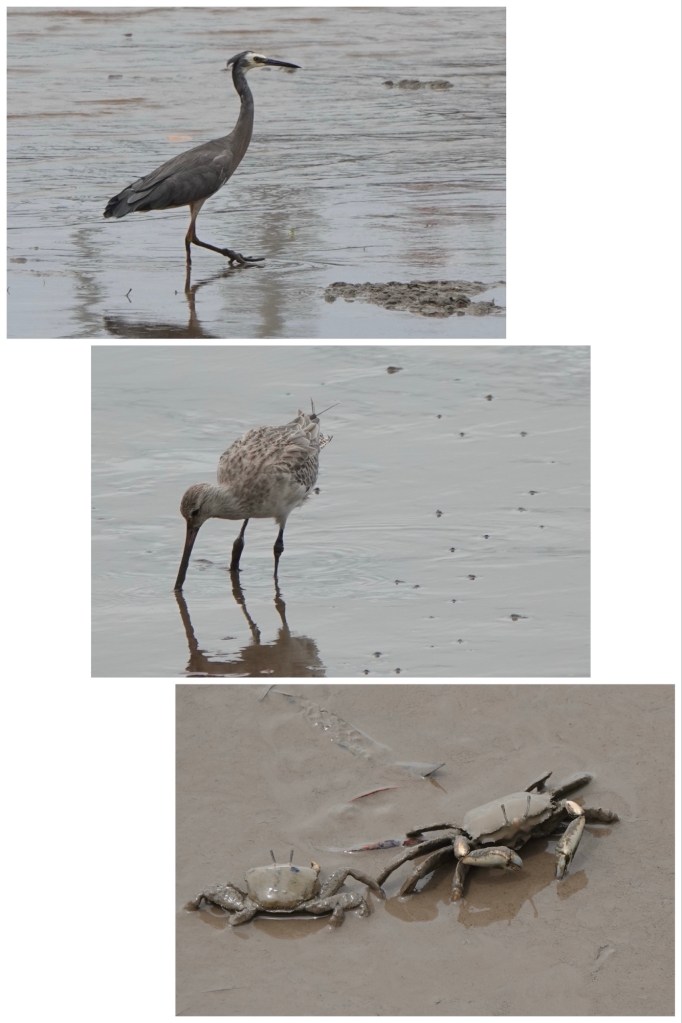
Deadly jellyfish; little known fact, most folks from Darwin carry vinegar in their cars to administer first aid for a jellyfish sting. 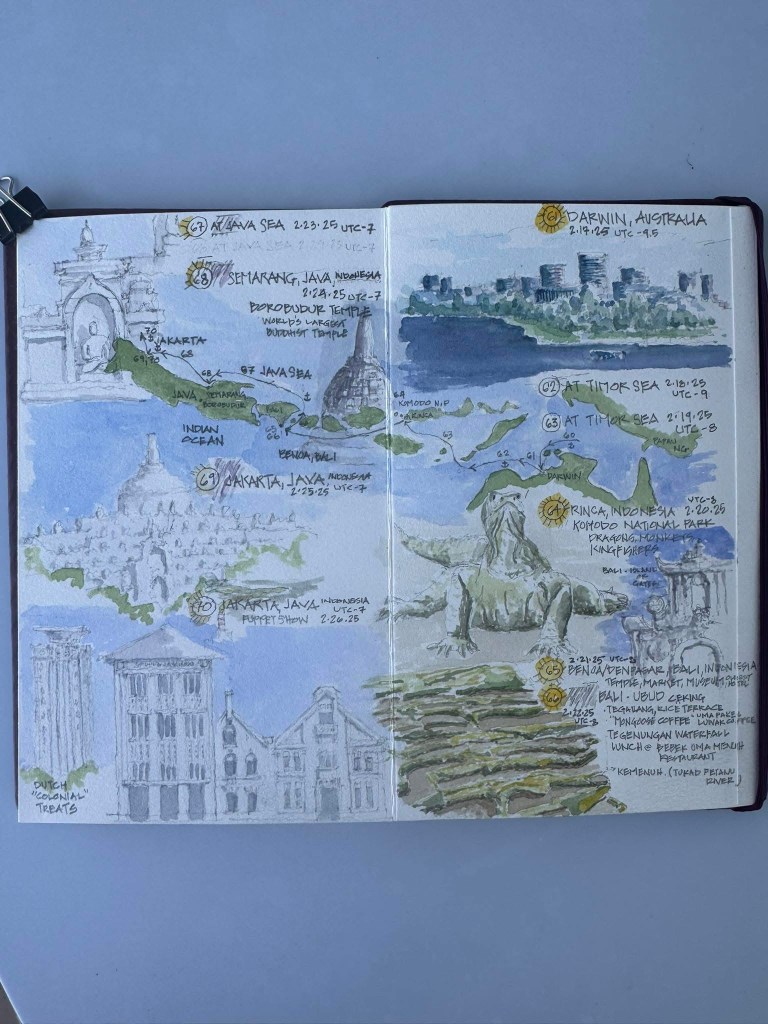
Pages from a drawing journal of a shipmate (Tim deNoble); Java to Darwin. -
The Arafura Sea
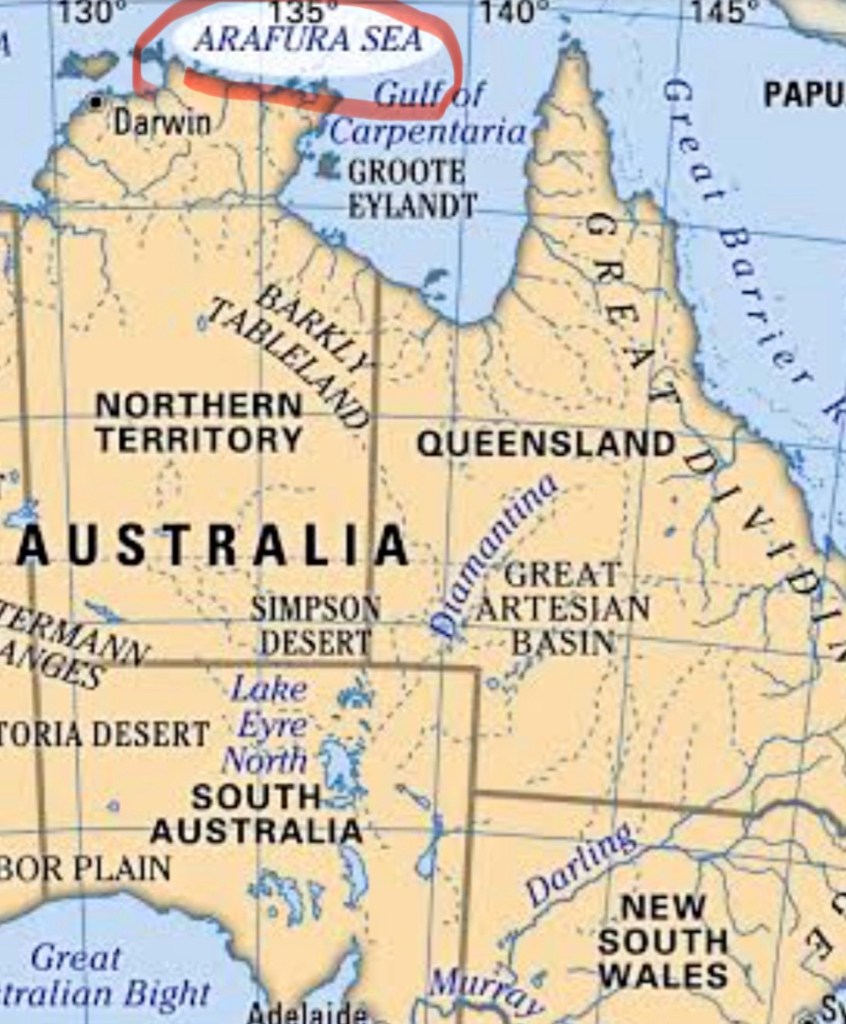
Britannica map Feb. 16
We’re in our second day cruising the Arafura Sea, on the way to Darwin. The Captain, on his noon update, said weather is nice. Actually, it’s not. It’s sunny and 85 degrees. Nice would be 55 and overcast. Walking at 85 degrees with winds of 15-20 mph is not our favorite. Still, Karla gets in her 2 hours plus. I split walking and push ups and get much less distance. My goal was to do laps and push ups until I hit 830 push ups by my birthday. As it happens, I did that on our second week. So now I’m getting lazy. Karla will keep at it even in the heat. I’ll get more aggressive when it cools down.
Being a long way from the US, it is challenging to keep up with activities there. Naturally, I turn to president trump’s ” truths” to see what’s happening.
“We’re doing great, LIKE YOU’VE NEVER SEEN BEFORE! All Republicans are supporting the Secretaries I’ve nominated…..except that CLOWN Ronald McConnell. I’ve instructed AG Bondi to investigate the traitor. And, reporters who do not condemn him will no longer be welcome in federal government buildings. We just recruited New York Mayor Adams to join our team. EVERYONE supports this except for a few traitors at DOJ. We should be EXECUTING traitors…or at least sending them to our outlying territories like Gaza, Greenland or Panama. Maybe even Guantanamo….unless we fill it up with abortion doctors or transgenders. We’re the ENVY of the world. MAGA”
That’s comforting. With apologies to Martin Niemoller:
First they came for the Muslims. I did not speak out because I was not a Muslim:
Then, they came for the gays, transgenders, and woke DEI’s. I did not speak out because I am straight;
Then they came for Hispanics, Palestinians disloyal Republicans and press critics….,
and “so it goes”….(Vonnegut)
Looking forward to Darwin.
-
Torres Strait and Thursday Island
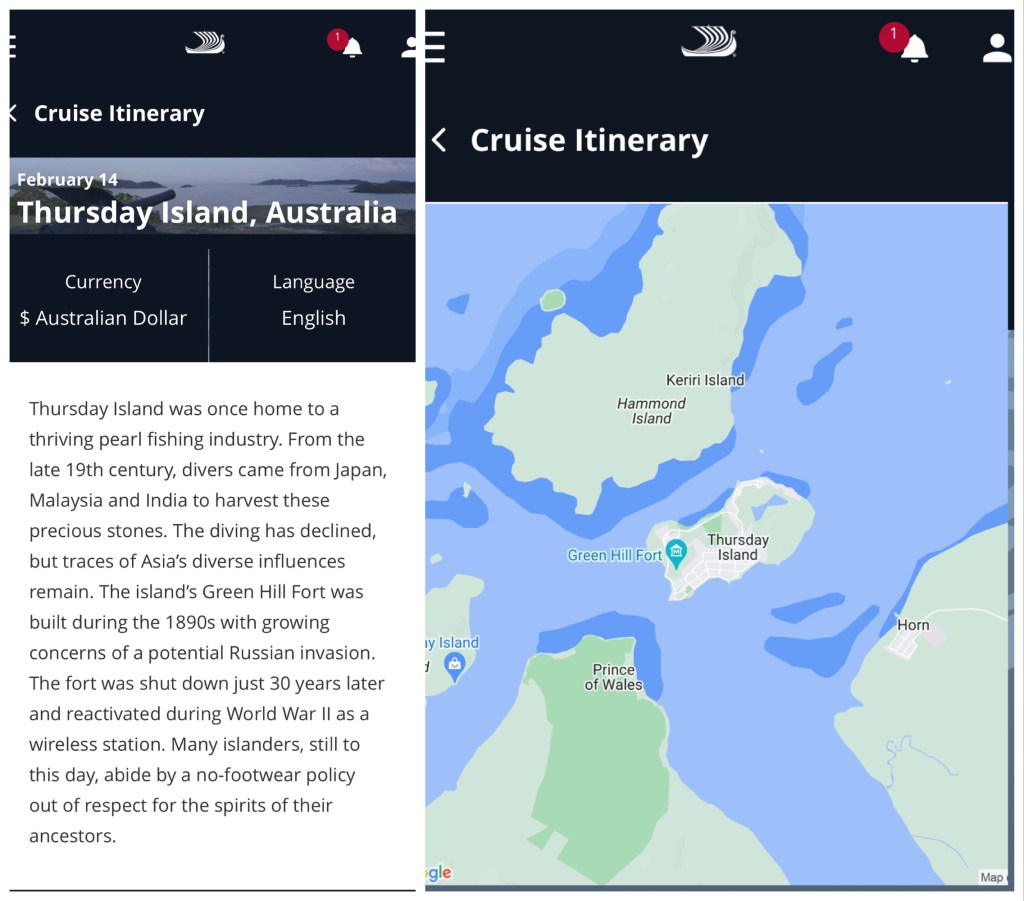
Feb. 15
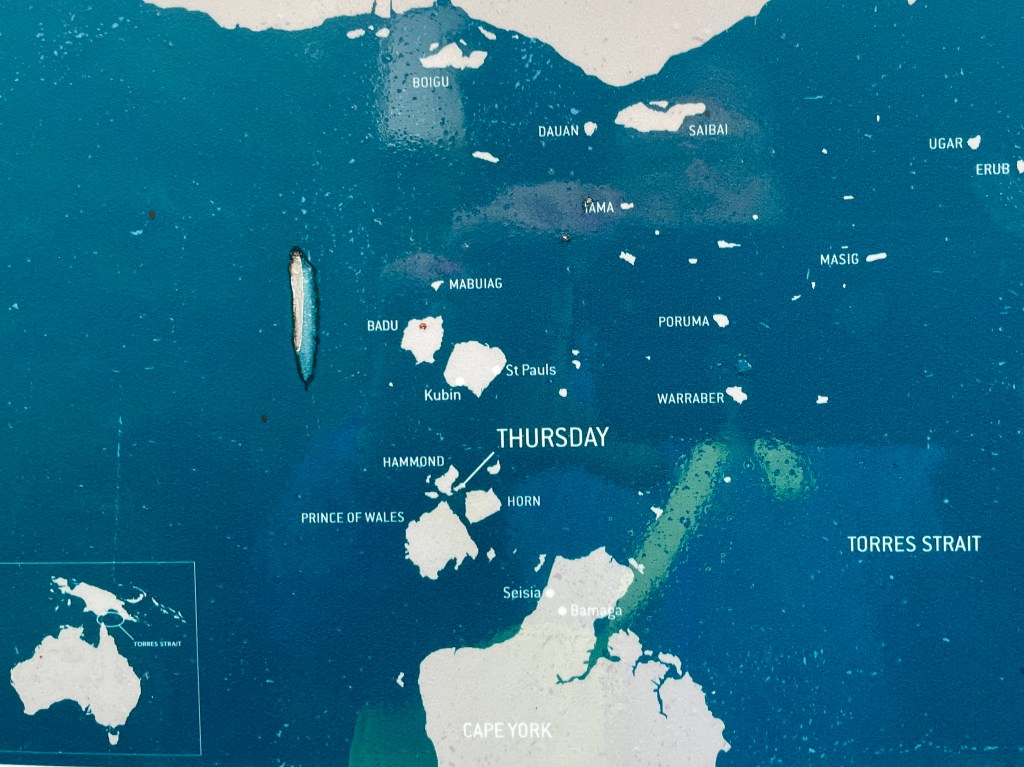
Torres Strait is the passageway between northern Australia and Papua New Guinea. There was a land bridge connecting the land masses about 10,000-12,000 years ago, but rising sea levels have covered most of the ‘bridge.” Now, there are 276 islands which used to be hills or at least high points. Fourteen of these are populated. The others must be available for discovery or claiming, but we weren’t there long enough to take action.
The population of all the islands is 4500-5000. About 50-60,000 Torres Straits descendants live in Australia. The islands are governed by a Regional Authority; they even have their own flag.
Originally, the island were settled by Melanesians, not Aboriginees. In 1606, Luis Vaez de Torres visited the strait, having sailed from Peru. Captain Cook, of course, mapped a number of the islands in 1770. In the mid 19th century the British assumed control of the islands.
In the 1850’s, the area became a center for harvesting pearls and oyster shells. That brought a number of immigrants, largely from Japan. The industry was aided by “blackbirding” or forcefully recruiting divers from outlying islands. The work became increasingly dangerous as overharvesting drove the ships and “luggers” to deeper water…over 200 feet, and the majority of deaths were due to the bends. The shells were a primary source of buttons until plastics came along. One of the more interesting sights on Thursday Island is the cemetery where there are many Japanese graves alongside TS Islanders and others. A plaque at the cemetery honors the Japanese:
This monument has been erected in memory of the centenary of the Japanese people who worked, lived and died in the Torres Strait area. From 1878 to 1941, thousands of Japanese were employed in the gathering of pearl shell and this constituted the principal enterprise of Northern Australia. They worked hard together with the Islanders contributing to the development of the fishing industry during this period. Approximately 700 of the Japanese people died in the Torres Strait area. May the Japanese rest in peace here”.
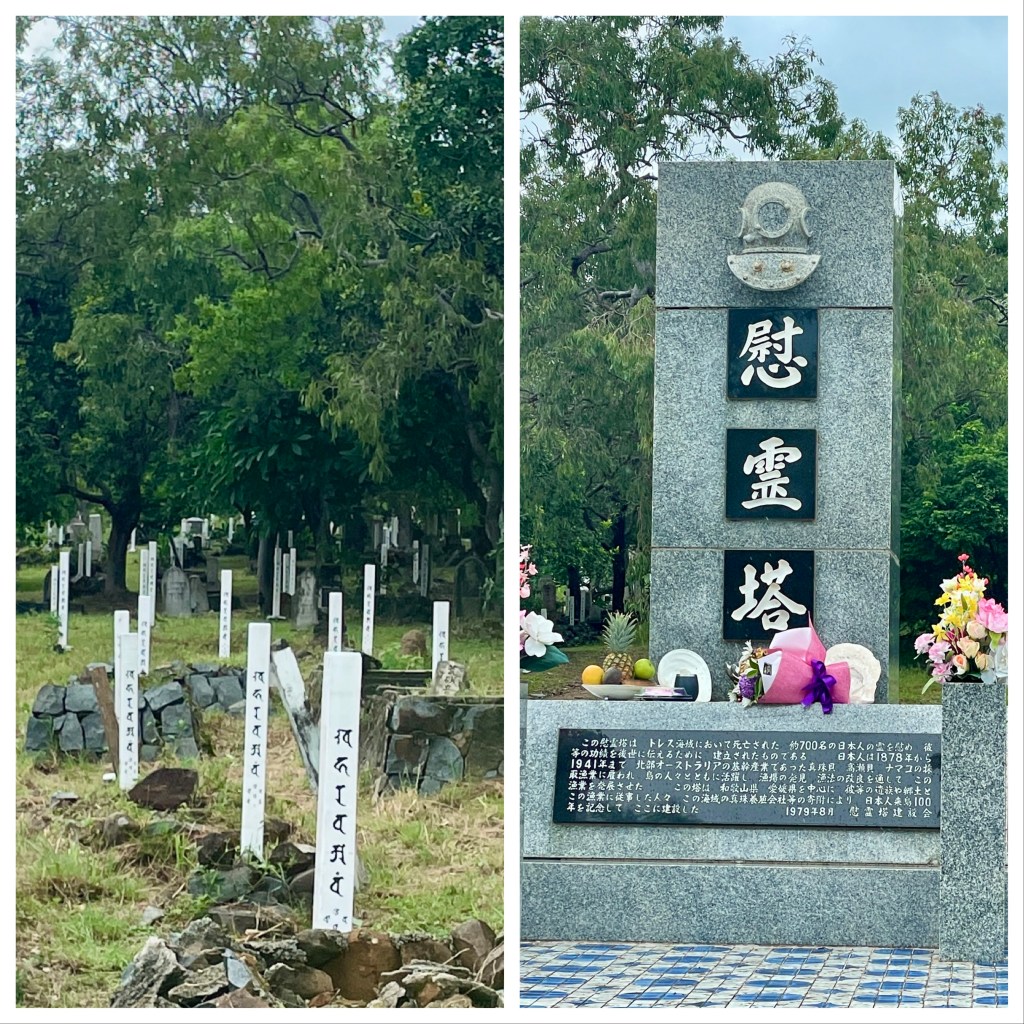
Graves of Japanese pearl divers and family members 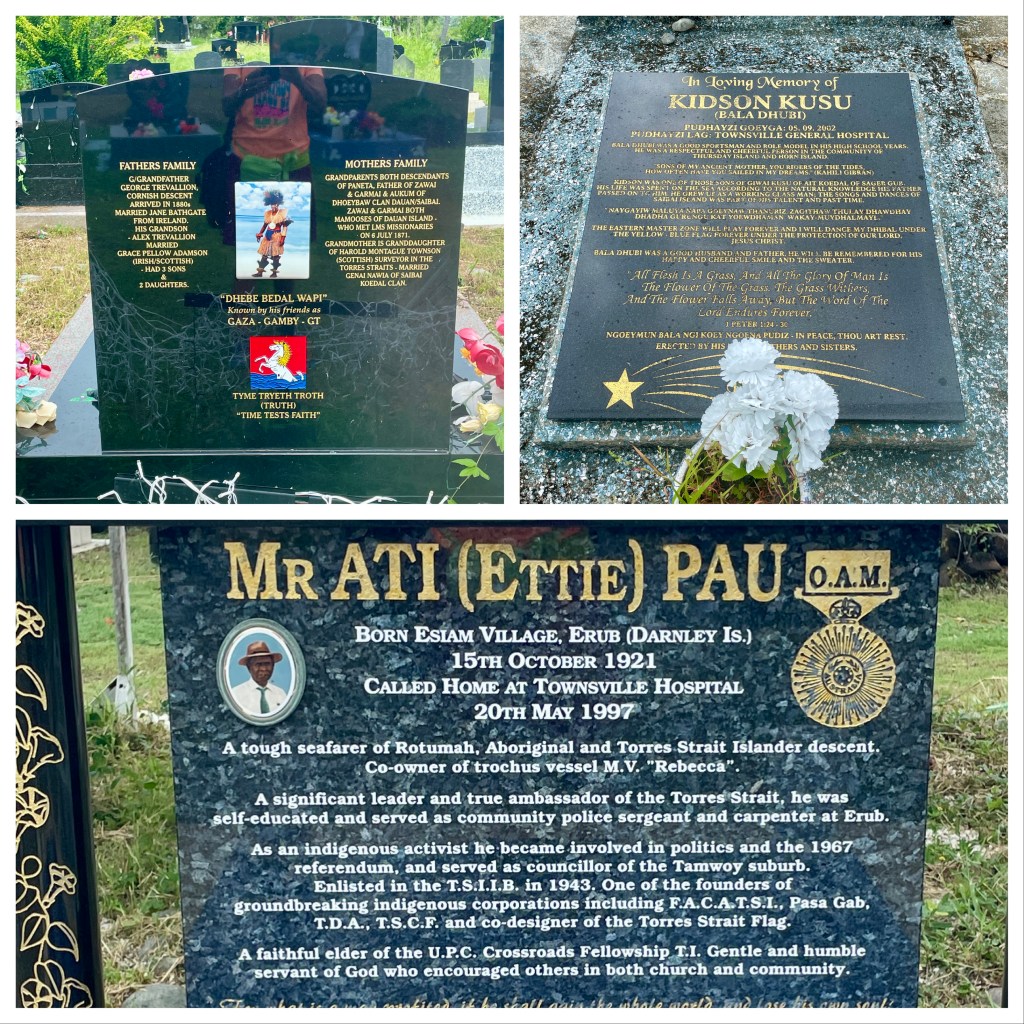
Grave markers of the indigenous community frequently had the person’s biography (top right and bottom) or lineage (top left). The islands are dealing with the threats of climate change, rising sea levels, and the impacts of cyclones. They are currently negatively impacted by erosion and water contamination. It is predicted that by 2100, the sea will rise by 1 to 3 1/2 feet. In the longer run, they won’t have to worry. Australia is moving northward about 3 inches per year. That’s about 20 miles in 100,000 years.
Thursday Island is the administrative center of the Regional Authority, as well as the center for the pilots who are necessary to guide ships through the strait. The island is home for about 2800 people. It is only 1.4 square miles and can be walked in a 6 mile loop. The economy is supported by pearl harvesting, fishing and tourism. During World War 2, Australian and US troops were housed there. While Japan bombed other islands, they stayed clear of Thursday Island. Some say that the cemetery full of deceased Japanese divers discouraged the Japanese from bombing.
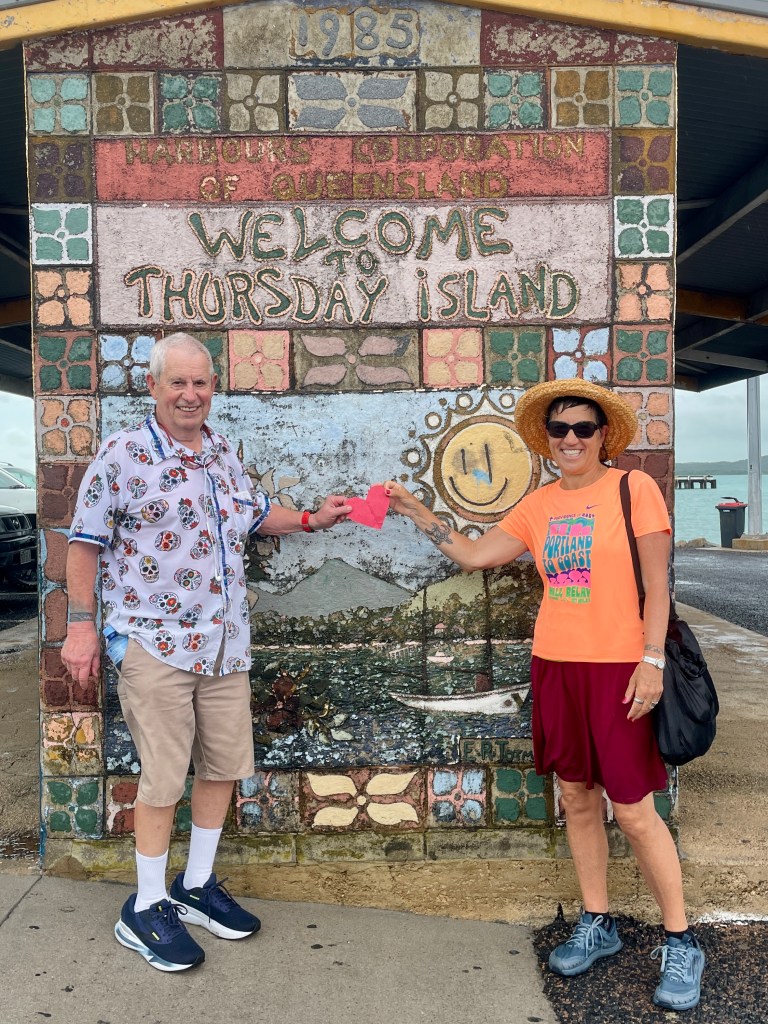
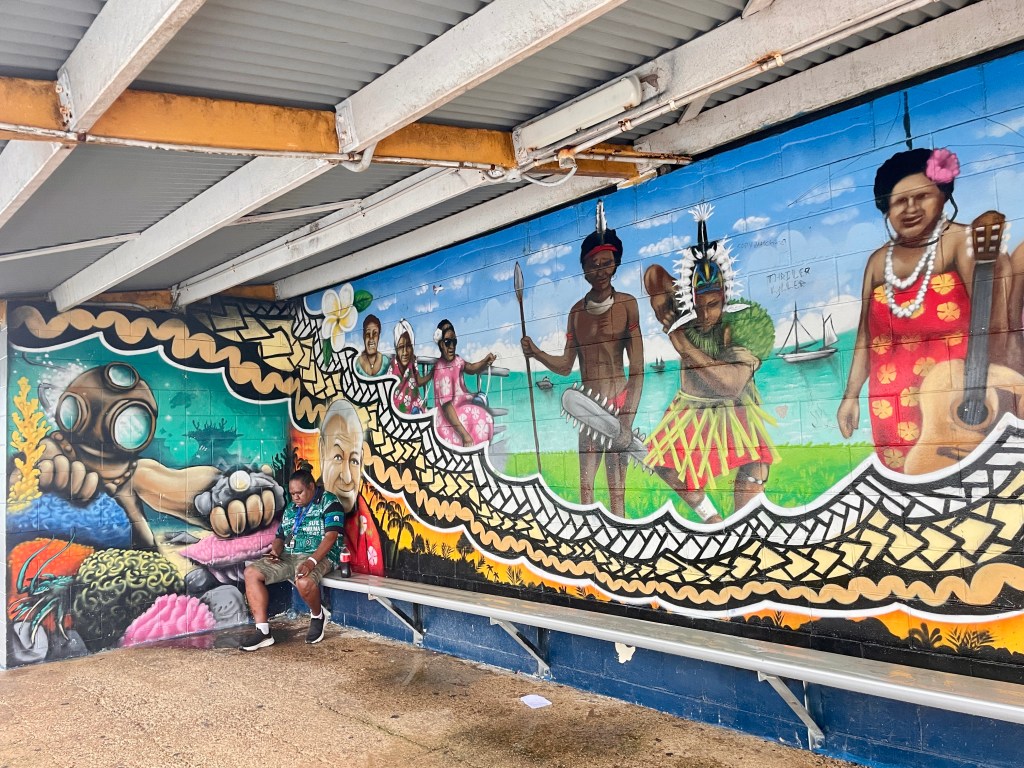
There isn’t much happening on the island. Karla, of course, was required to walk around the island. I thought about it, but we were told that we probably wouldn’t see saltwater crocs. I was going to follow her with the camera and get some action shots when the path got near the water. (They do say absolutely no swimming in the ocean.)
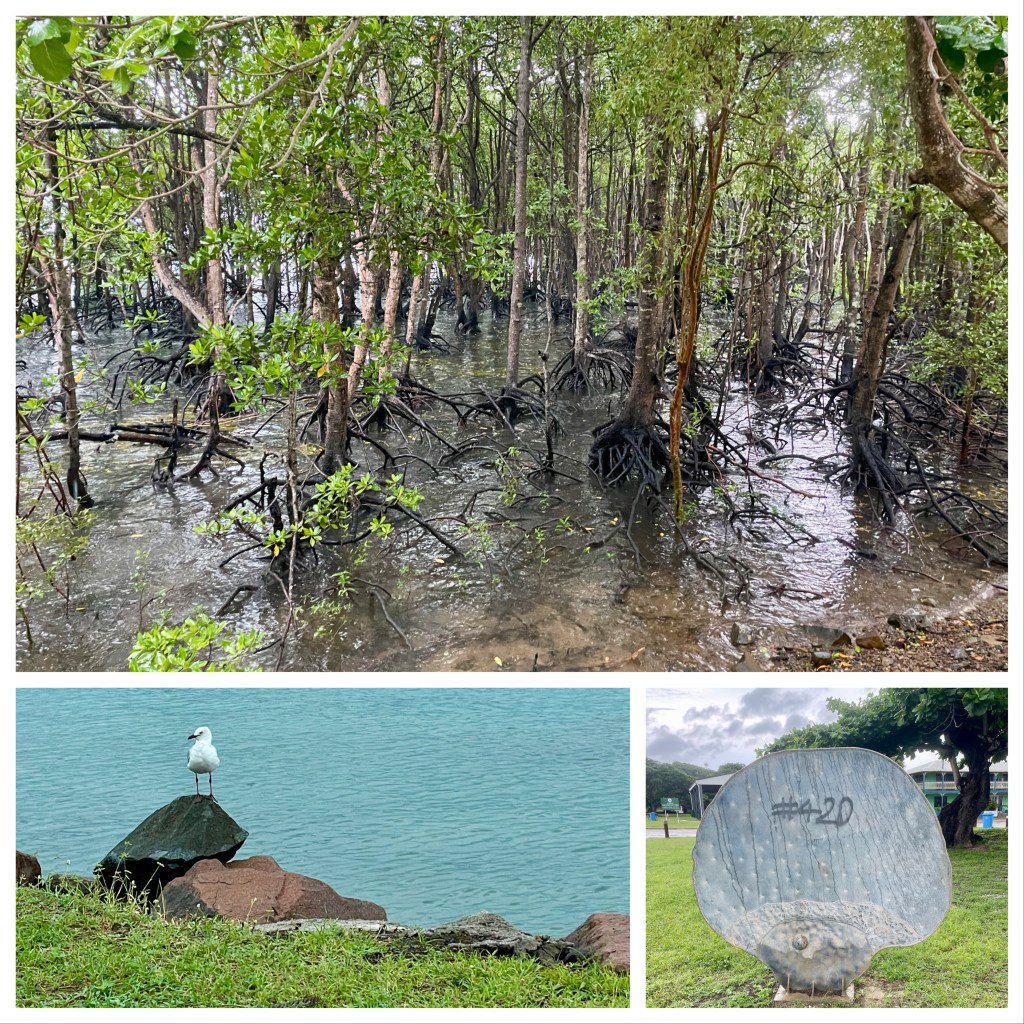
The walk around the island was an easy 5-6 miles; looked for lurking crocs in the mangroves but none seen. The shell is a monument to TI’s pearl history. Outside of the single main street, there wasn’t much activity. The shops that were open had to be pleased with 900 passengers wandering the streets, looking for ways to spend money. A couple heavy downpours even forced people inside, as if the merchants controlled the weather. We stopped at the post office to purchase cards and stamps, as the Island had a special stamp for outgoing mail.
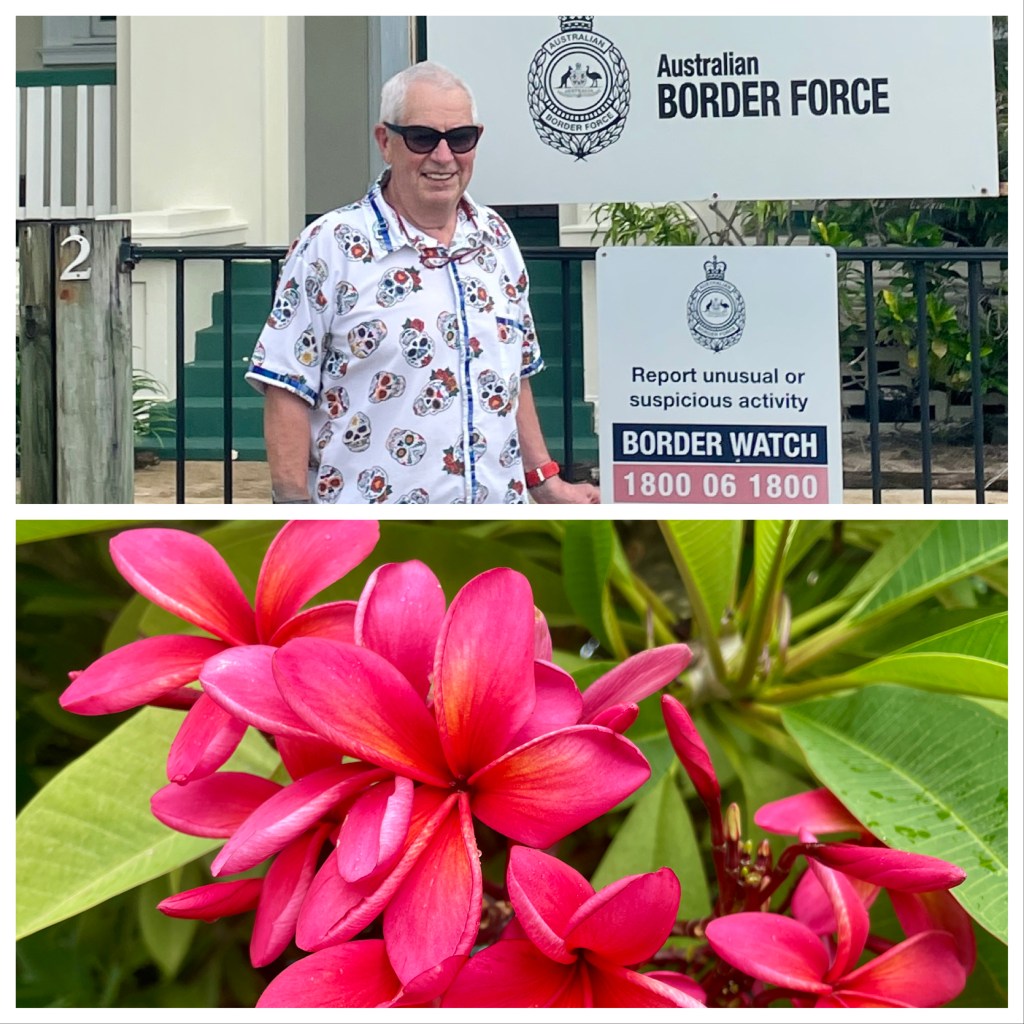
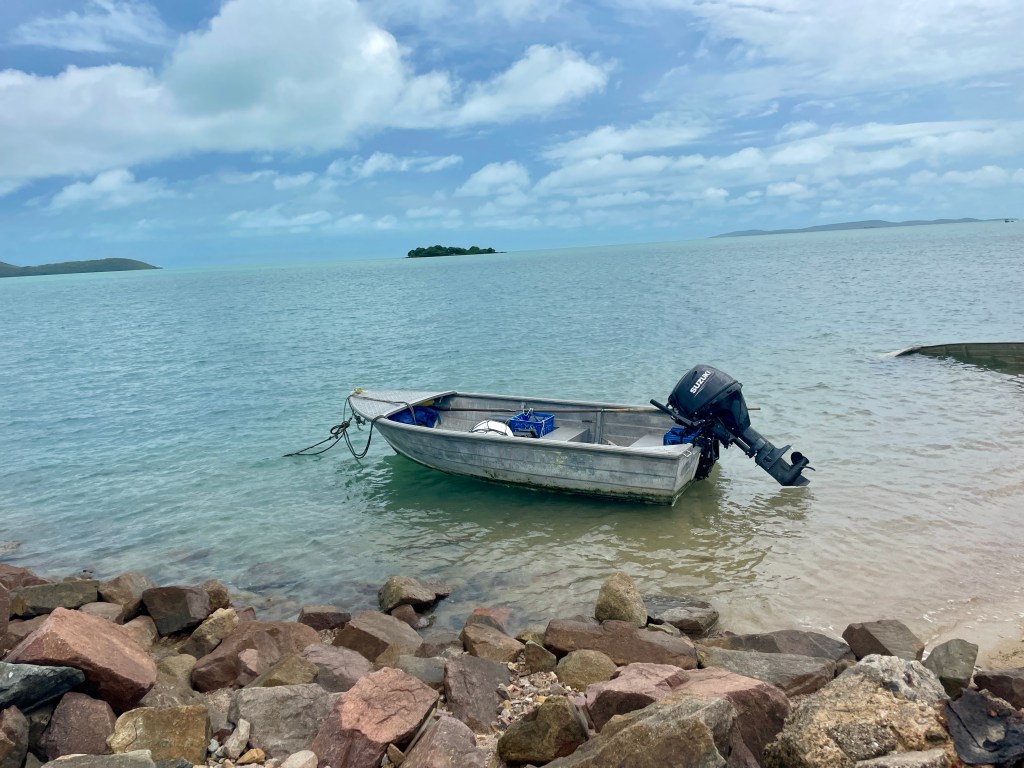
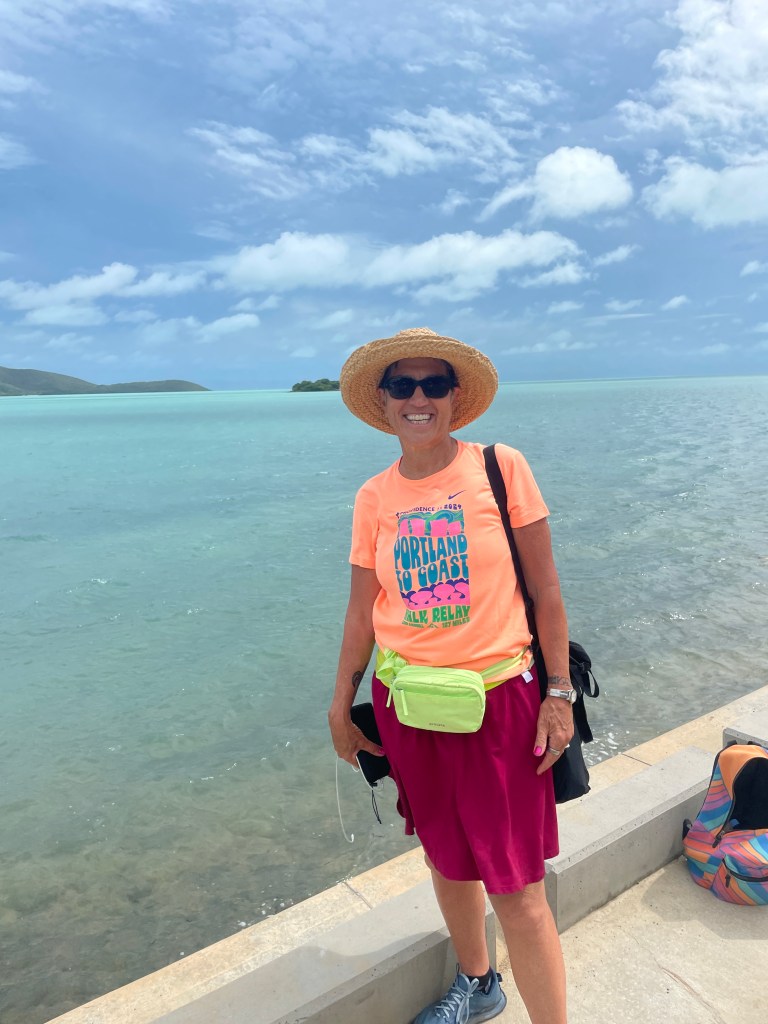
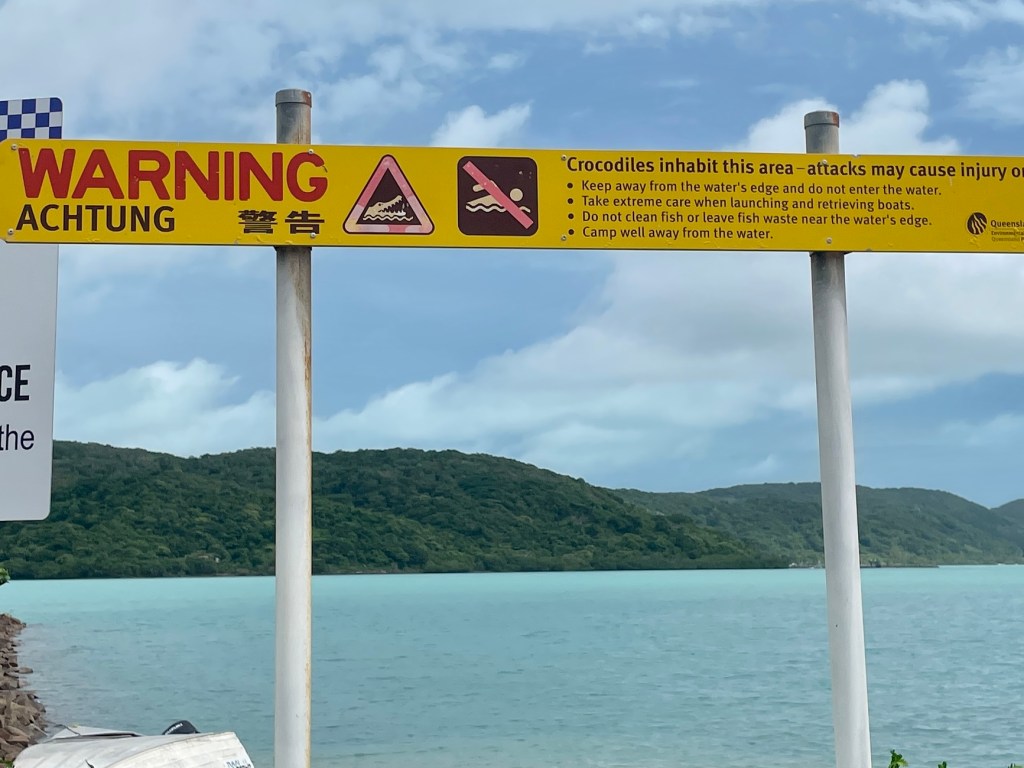
NO SWIMMING! In the evening, we had a nice dinner with our closest group of friends. It had a Valentine’s Day theme and was followed by active dancing on the deck to the tunes of the Viking band. This is hard work!
-
Great Barrier Reef–Whitsunday Is. & Cairns
Feb. 10-12
The Great Barrier Reef was important to Aboriginal and Torres Strait Islanders for tens of thousands of years. However, it was “discovered” by Captain Cook in 1770, when he ran aground on a reef. We need big numbers to describe it. The reef system covers 344,400 square kilometers. It is 1,400 miles long. The reef includes 3,000 reef systems and 600 islands. One of the 7 Natural Wonders of the World, it is about the size of Japan or Italy.
The GBR is a huge tourist attraction. With 2 million visitors per year, it brings in $6.4 billion per year and supports 64,000 jobs. Tourists can find snorkelling, scuba diving, helicopter rides, glass bottom boats, and semi-submersibles to view the abundance of creatures. Numbers vary, but among the claims…accurate, I think, are the big numbers below:
-800 types of hard coral; about 1,000 species of soft coral:
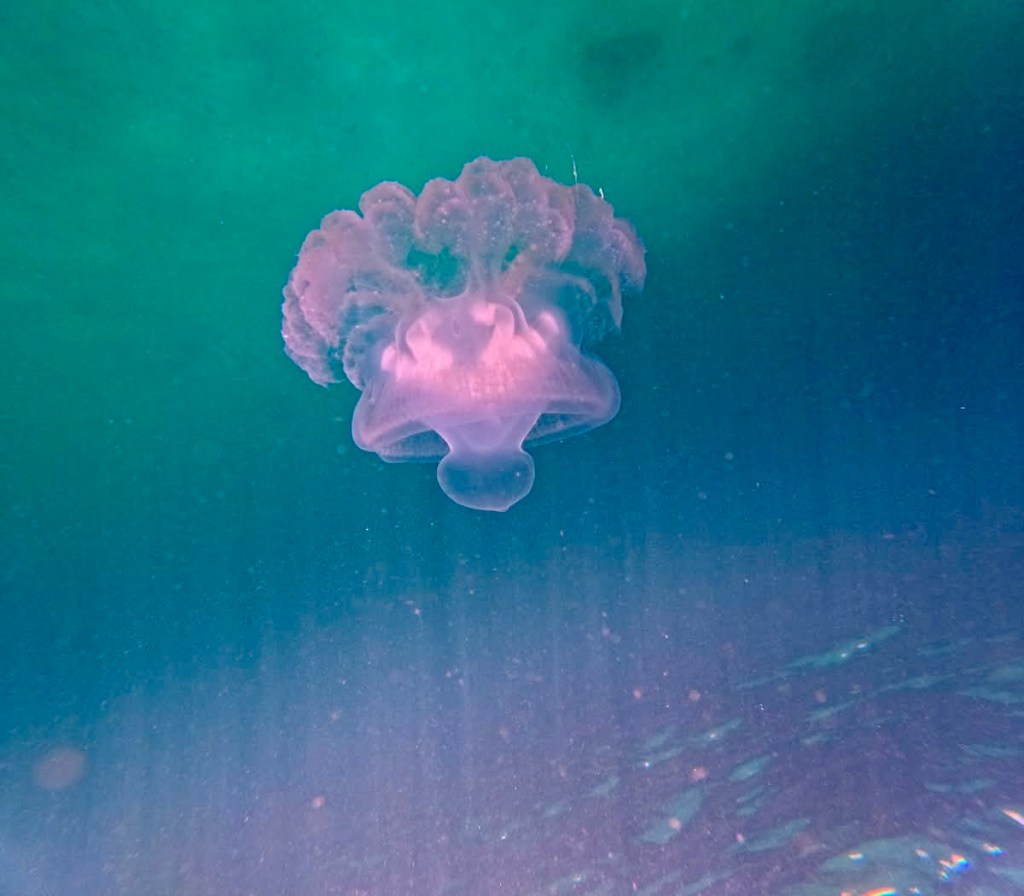
-100 species of jellyfish;
-6000 types of mollusks;
-4000 species of fish:
-6 kinds of turtles:
-14 kinds of sea snakes:
-1300 types of crustaceans:
-2500 different kinds of sponges:
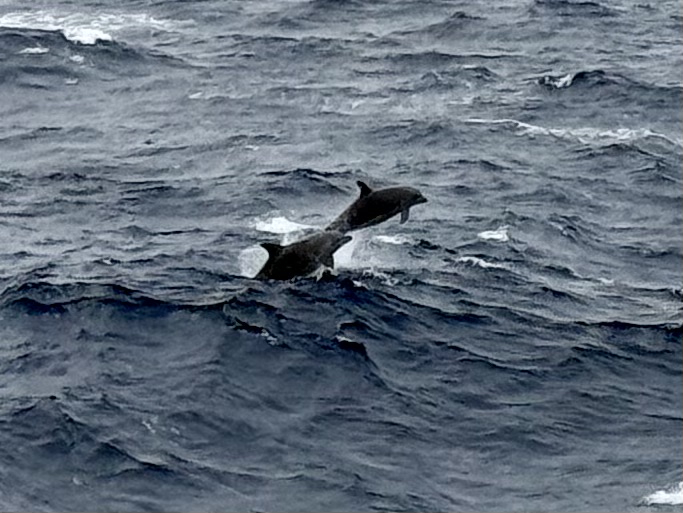
-30 different whales and dolphins.
These creatures interrelate in a variety of complex ways, For example, parrot fish eat algae off the coral. Sharks eat predators of parrot fish. Smaller fish eat parasites off parrot fish. About 25 percent of marine life is found among coral reefs….interacting with each other. It all works well. What could possibly go awry?
It is estimated that about half the coral has been lost since 1985. There are lots of reasons. Getting most attention is Global Warming. It has resulted in lots of “bleaching” read “killing” of the coral. A reduction of water quality stemming from land-based activity such as farm runoffs is an additional threat A loss of coastal wetlands, ocean acidification, and periodic cyclones add to the damage. And, the Crown Of Thorns Starfish has found its way into the GBR, feeding on coral and stripping the coral of its living tissue. There are restoration plans to address some of these threats, but Climate Change remains the largest threat. And that requires action by the US and China, as well as other less prolific polluters.
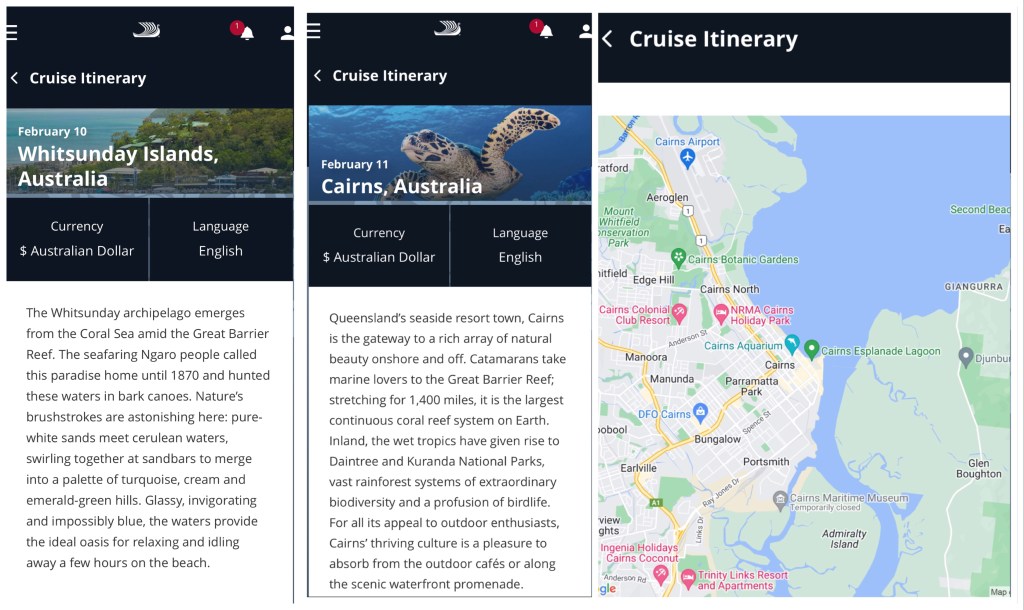
Our stops at Whitsunday Island(s) and Cairns (pronounced “Cans”) provided jumping off points to explore the reefs. Both are pleasant, very clean communities.
By chance, the Super Bowl was on our Whitsunday day. Viking did Superbowl well, complete with sugar trophy, lots of tailgater food (chicken wings, mini-hotdogs, quesadillas, corn chips with salsas, corn dogs, spring rolls and lots of desserts). In a Viking over-the-top way, bartenders created specialty drinks in the two teams’ colors.
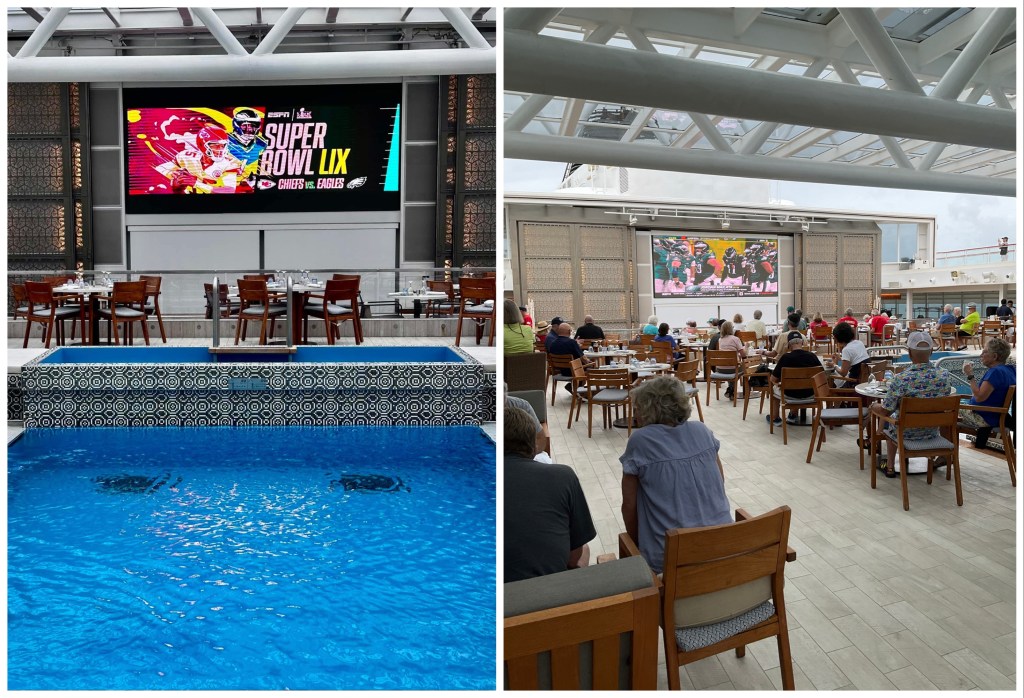
Whitsunday Island– Viking brought the superbowl aboard 

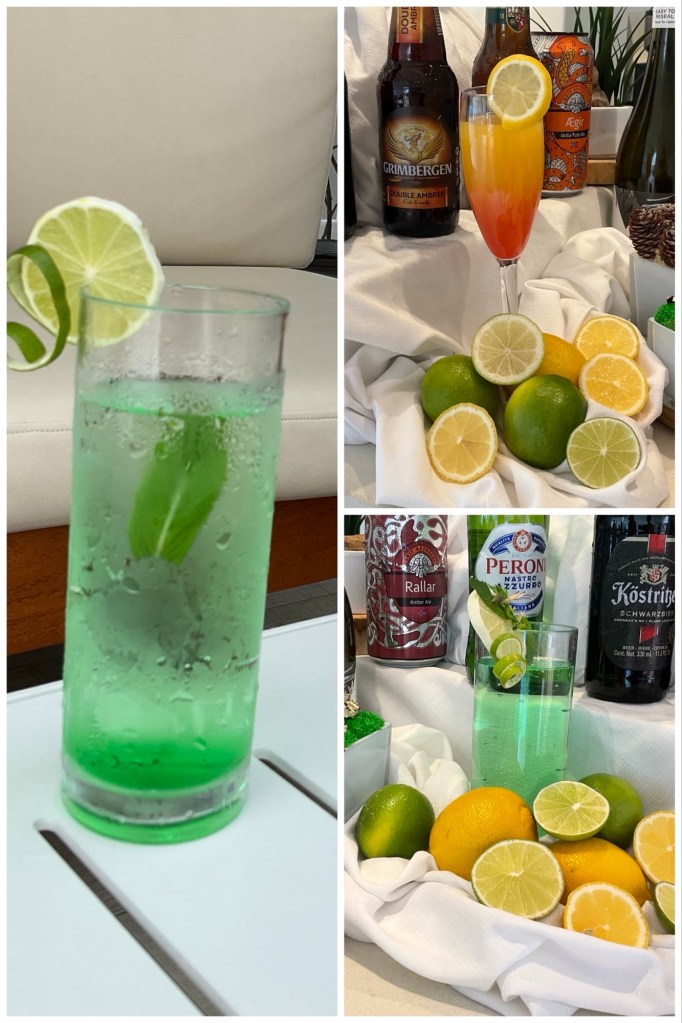
Signature cocktails in team colors 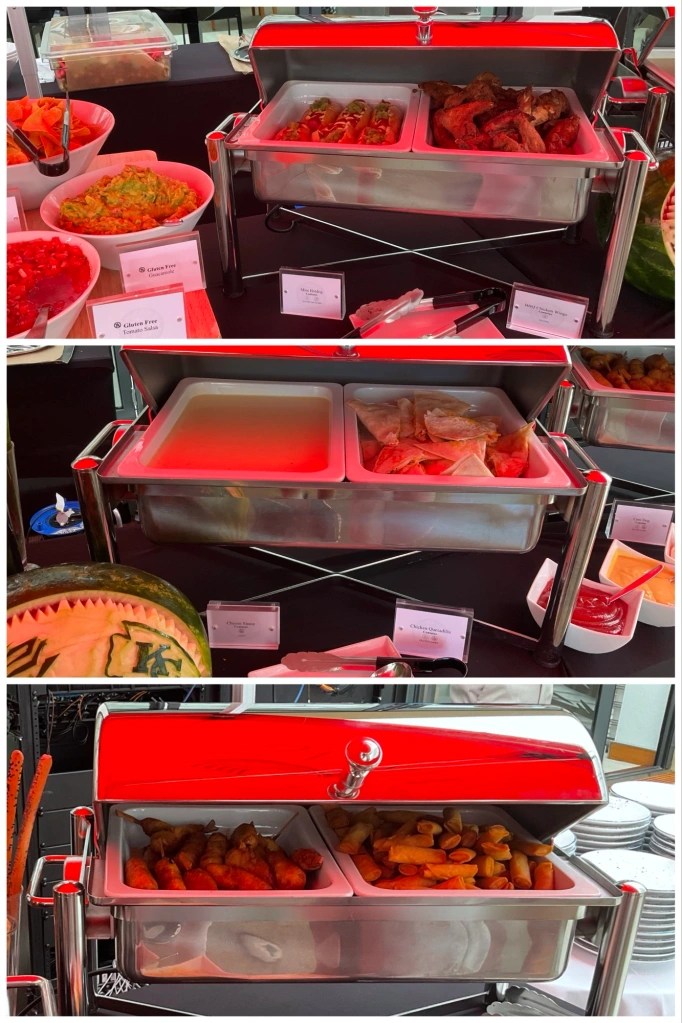
Hot dogs, wings, guac, chips, nacho cheese, and more 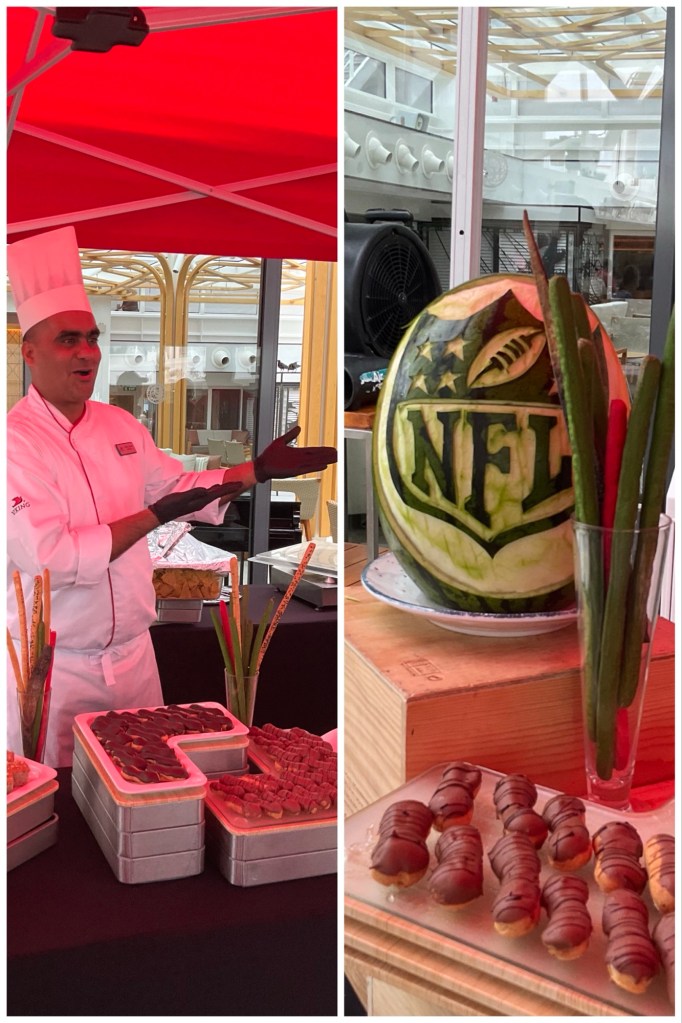
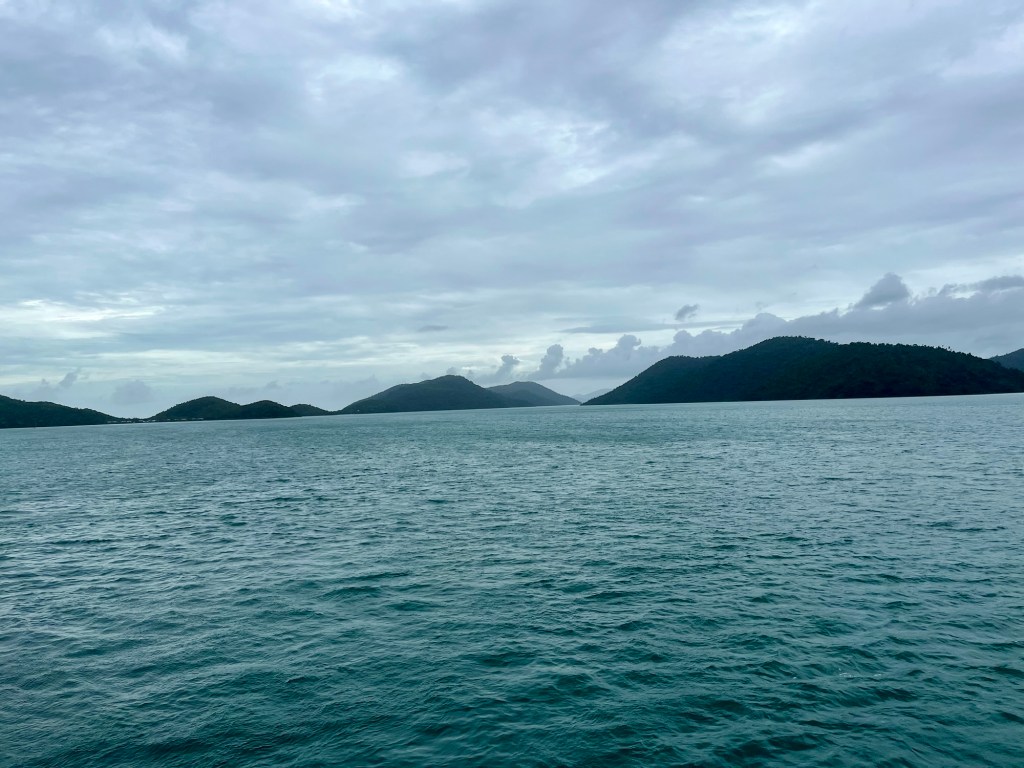
I stayed on the ship while Karla represented our family with a boat tour of the Islands.
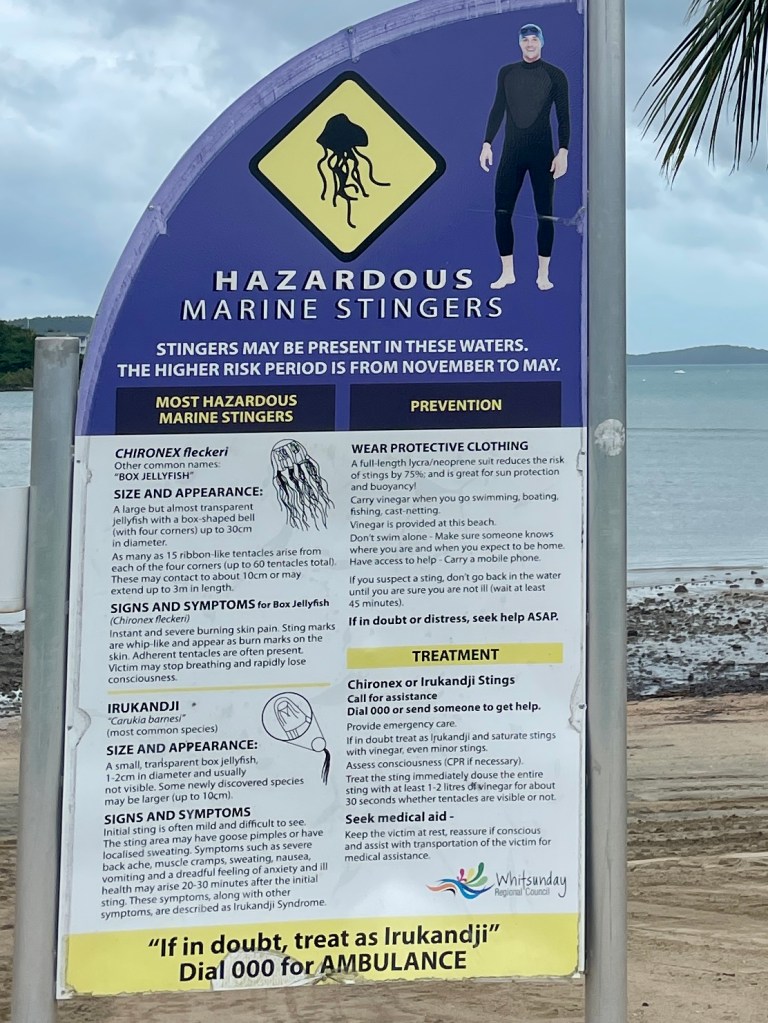
Warning sign seen walking around the island. The stingers are a serious thing. 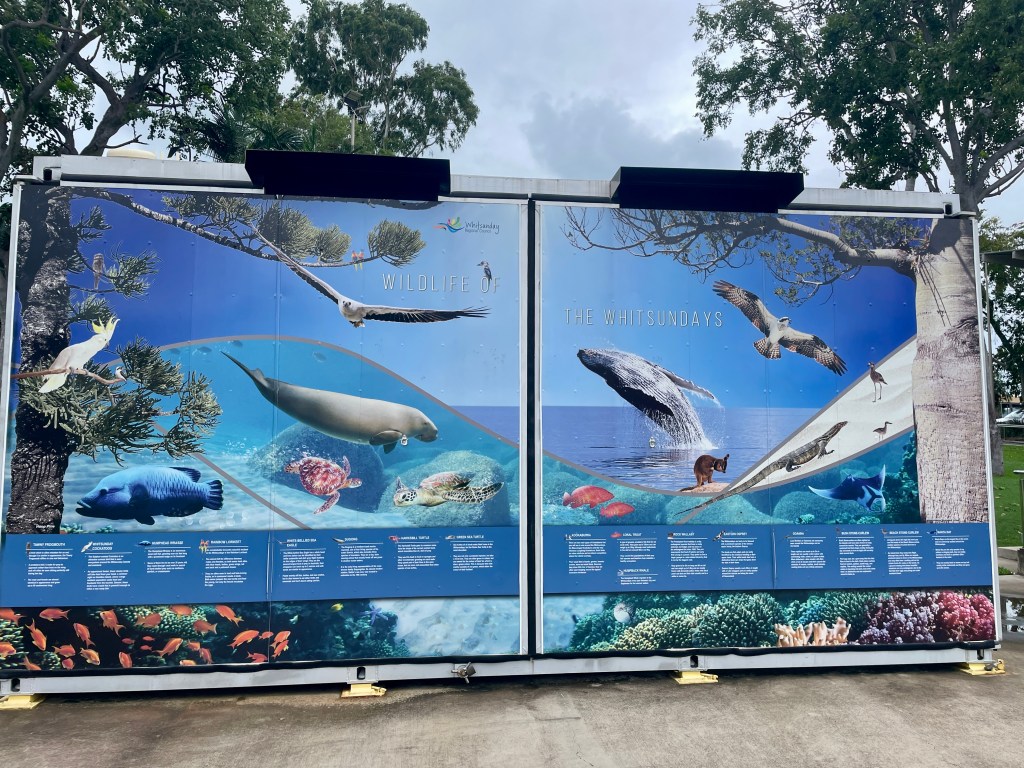
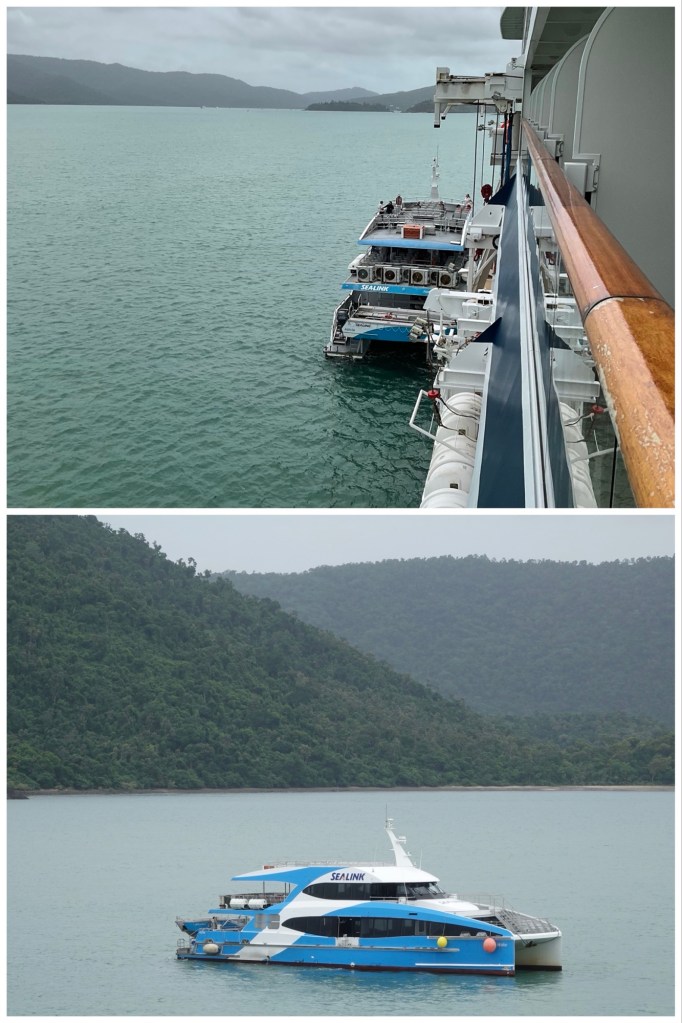
For the tour, Karla boarded the chartered catamarans directly from the Viking Sky.
Cairns
“Our first day in Cairns began about 1pm. We took the included tour of a very nice aquarium and then walked around….a lot. We saw a nice man made lagoon that allowed for swimming away from sharks and stinging jellyfish and lots of kids’ amenities like parks, play structures and shallow swimming pools. Of course, we had to find an “OP Shop” with an abundance of treasures. Then, there was the very modern mall for watch battery installation, followed by a visit to the “Reject Shop.” The Reject Shop was Cairns version of a Dollar Store. A stop at an oceanside restaurant for a beer and fish and chips preceded a visit to the Night Market…a large series of stalls with food, massages and touristy items.
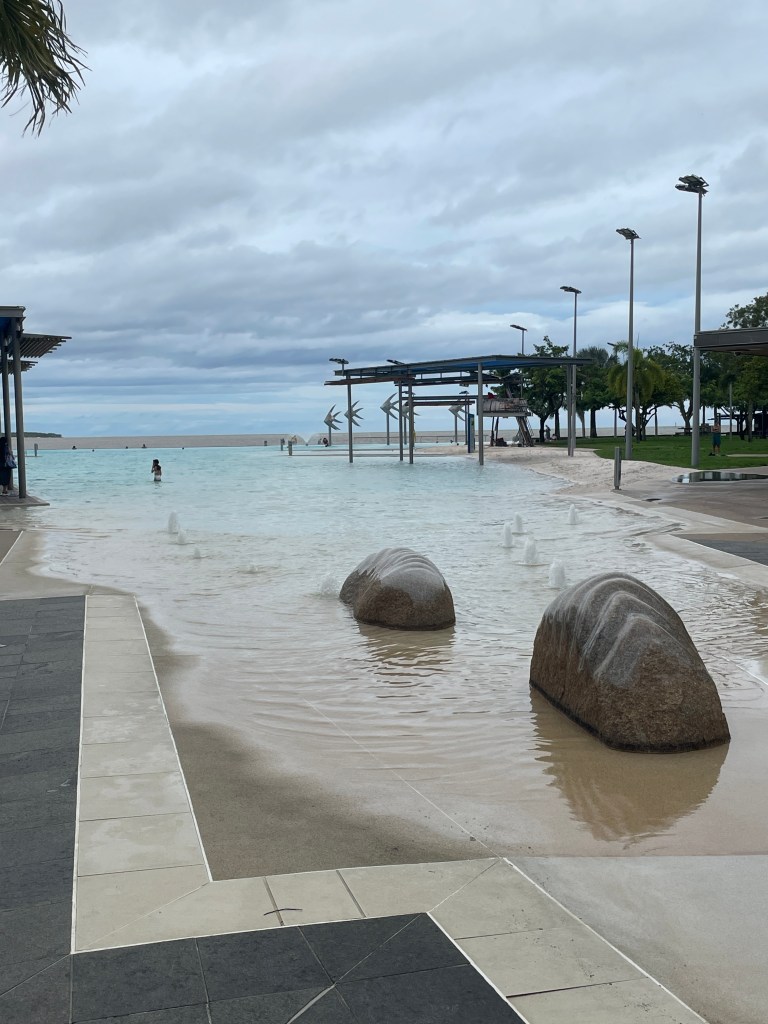
Cairns waterfront 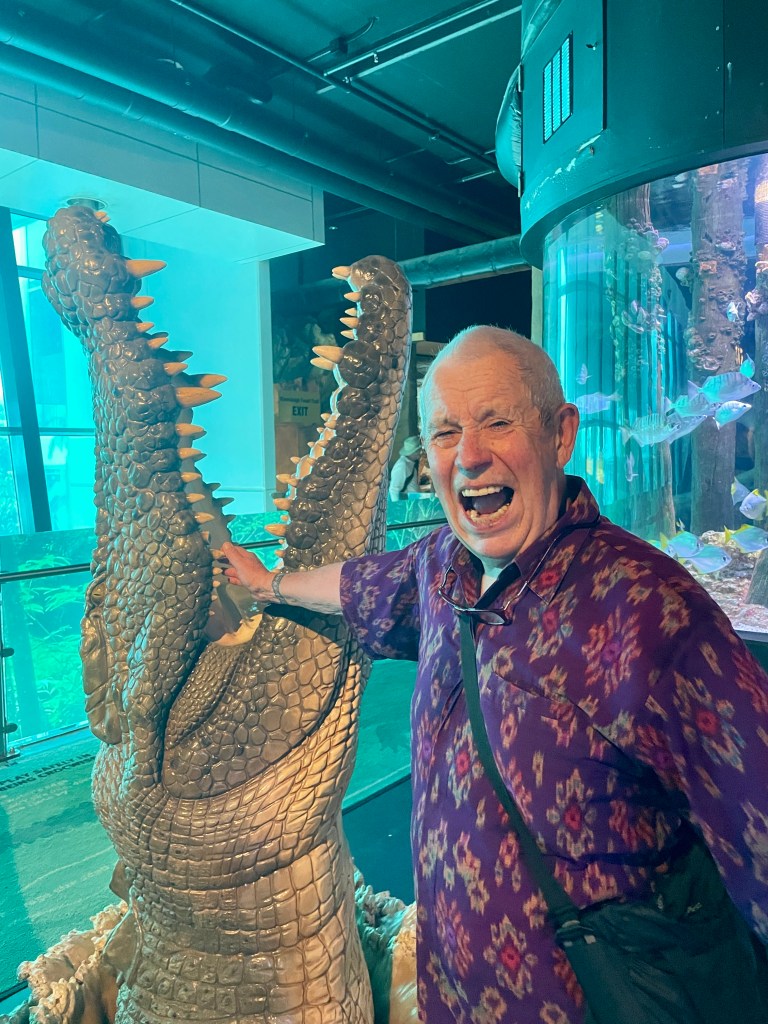
At the aquarium 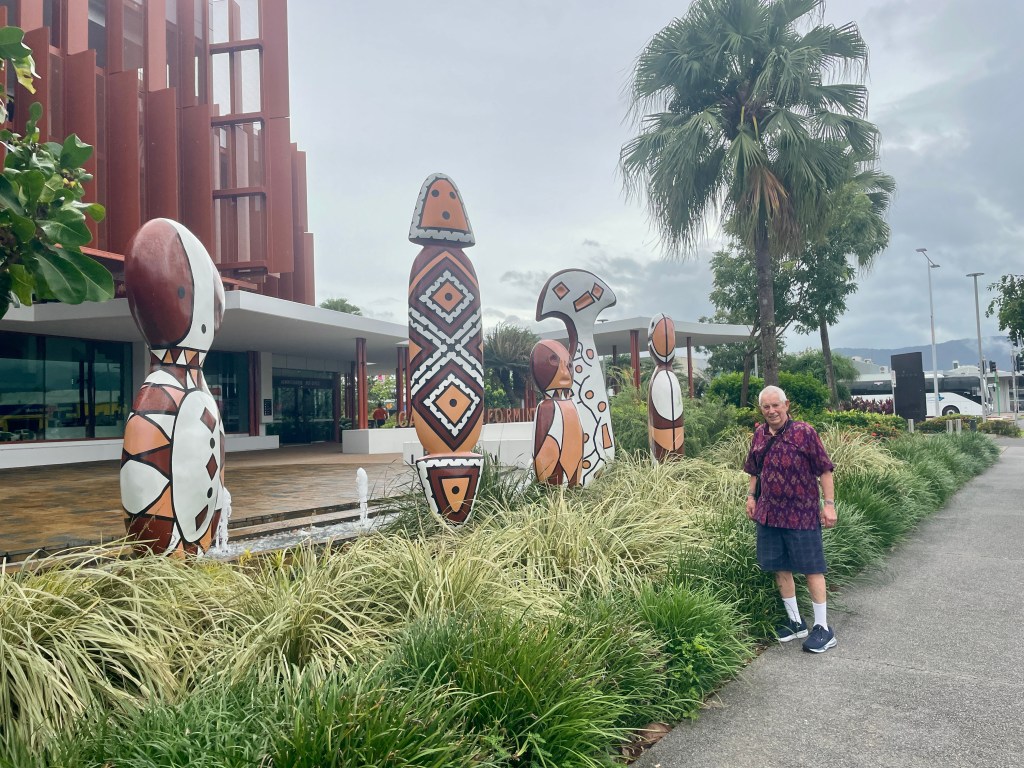
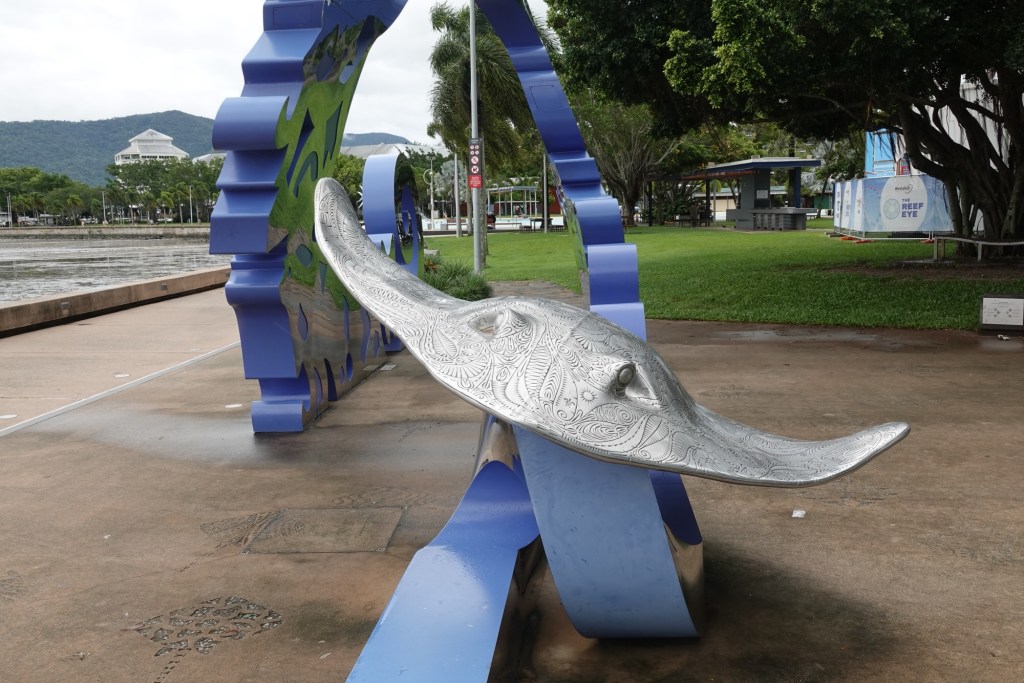
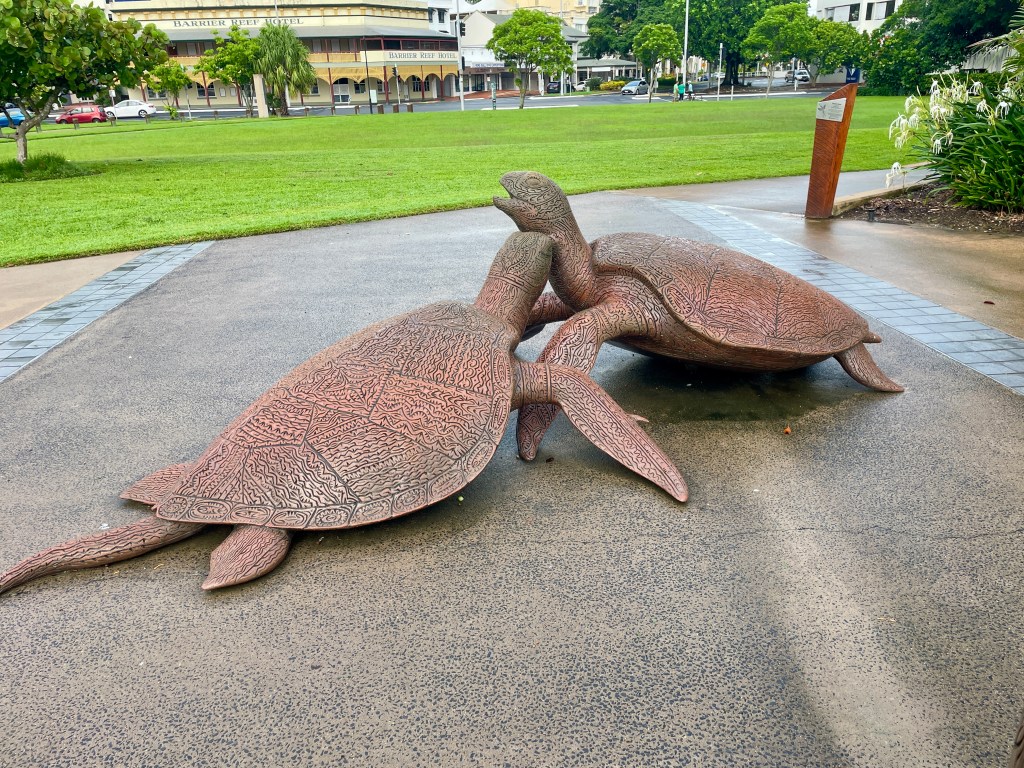
Great public art 
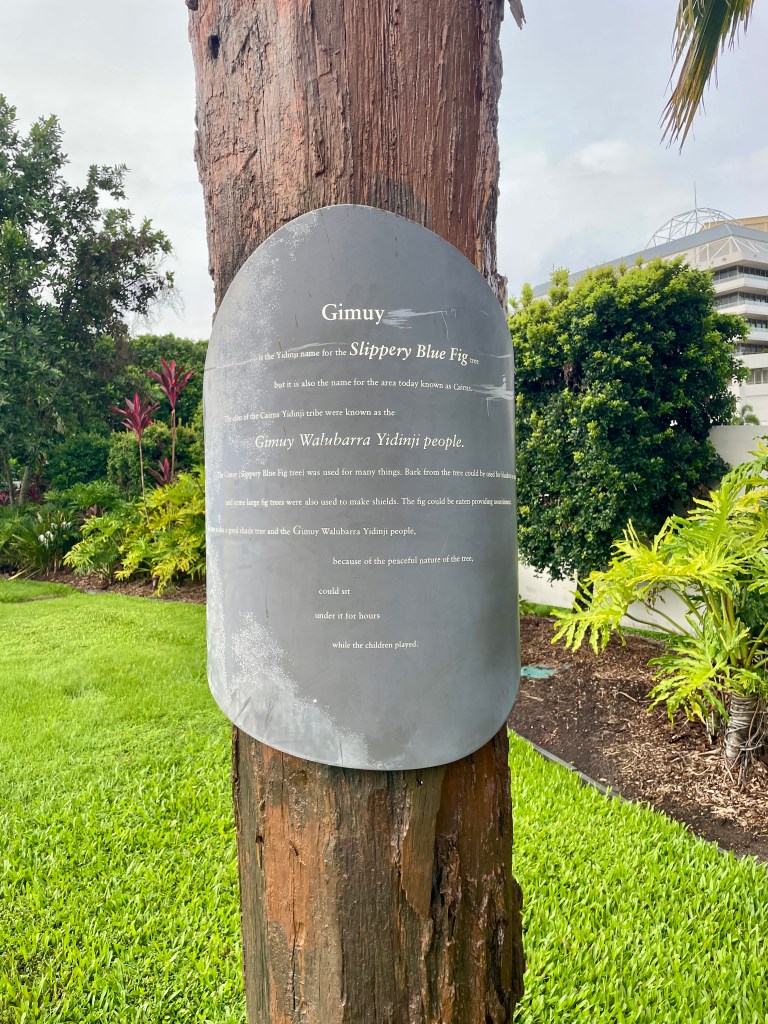
Indigenous story telling 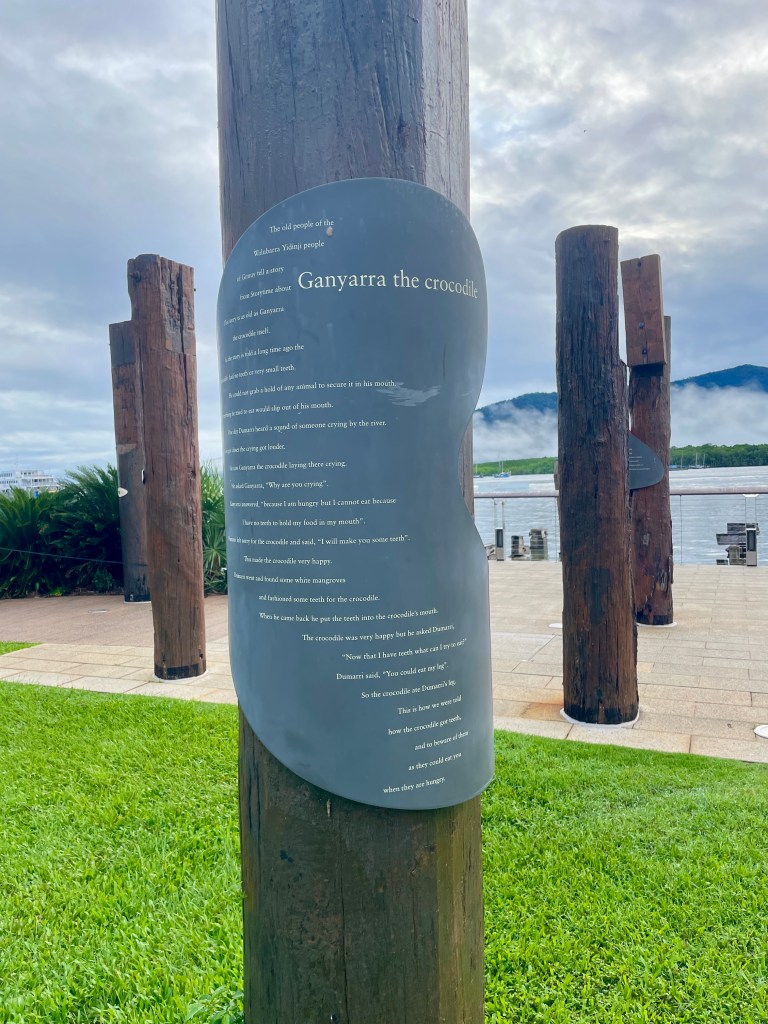
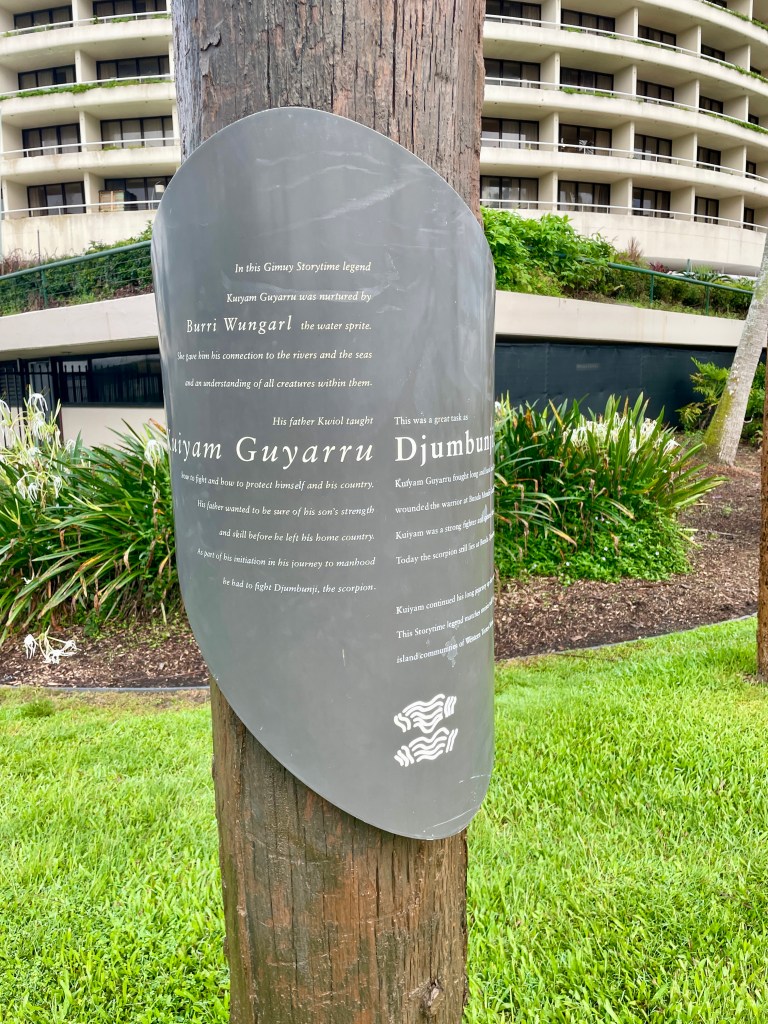
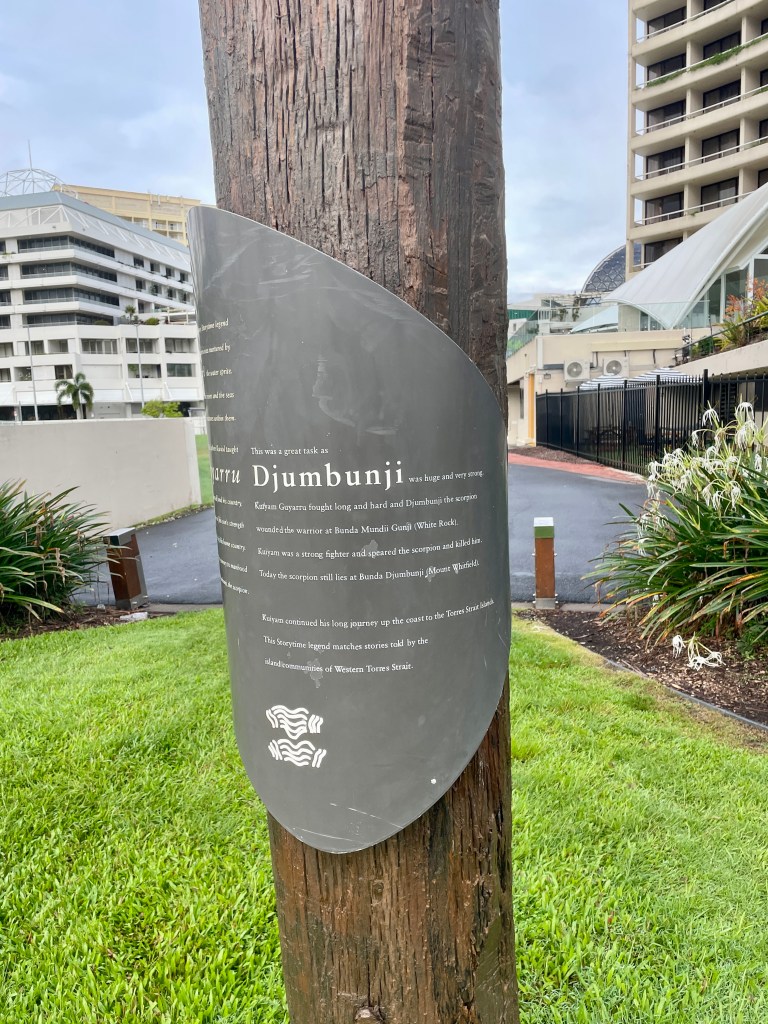
By the end of the day, Karla had 30,000 steps; I went over 20,000. That was more than either of us needed and we had to return to the ship for a beer and reading. A long and pleasant day.
Karla arranged for a snorkeling outing. She took lots of pictures at the aquarium which she will certainly claim to have seen on her adventure. My couple of GBR experiences were highlighted by bleached coral and few fish. We’ll see how she fares. We were told that this isn’t an especially good time to be snorkeling, given the stinging jellyfish, but tour operators evidently provide a “stinger suit.”
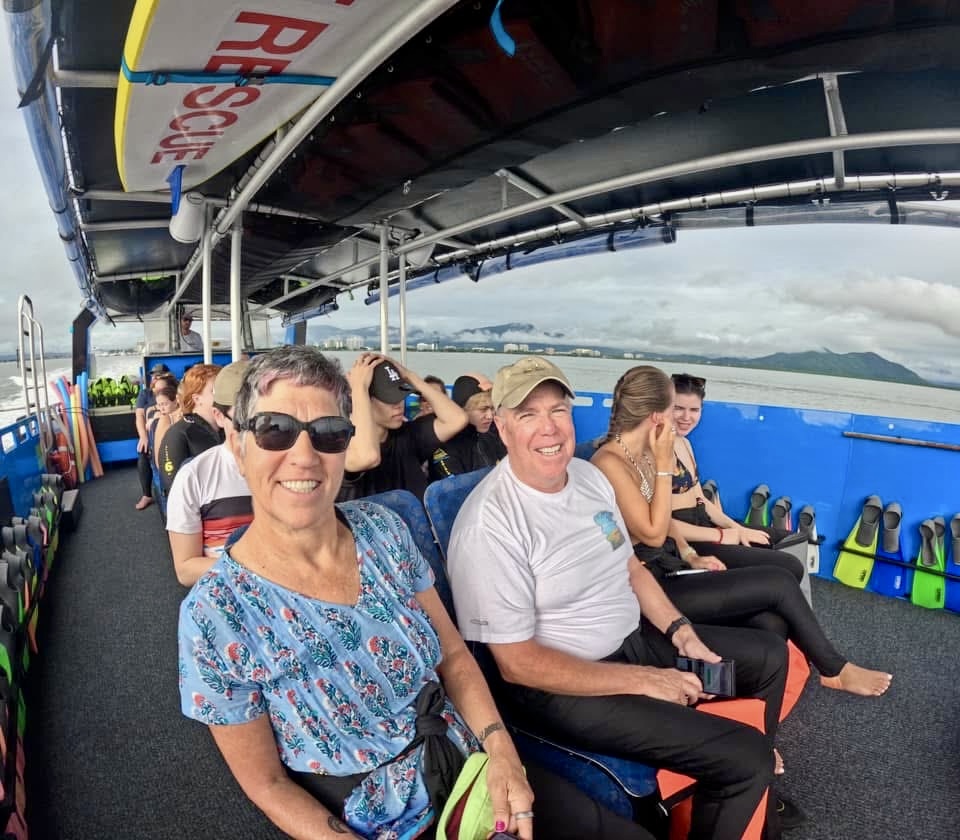
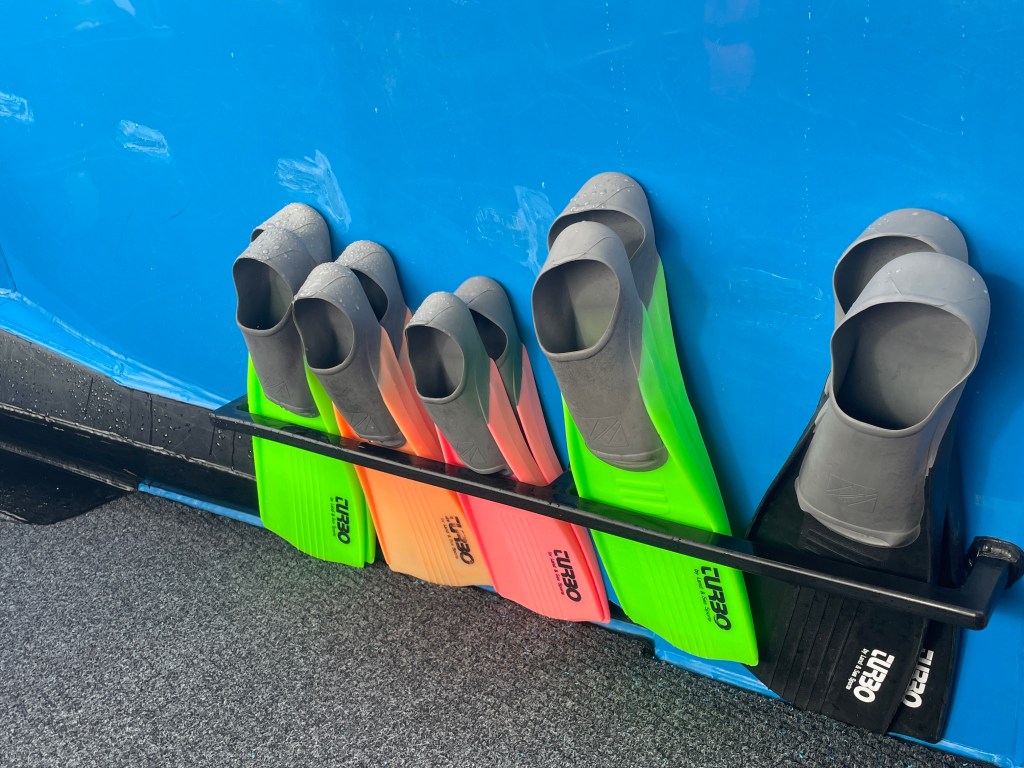
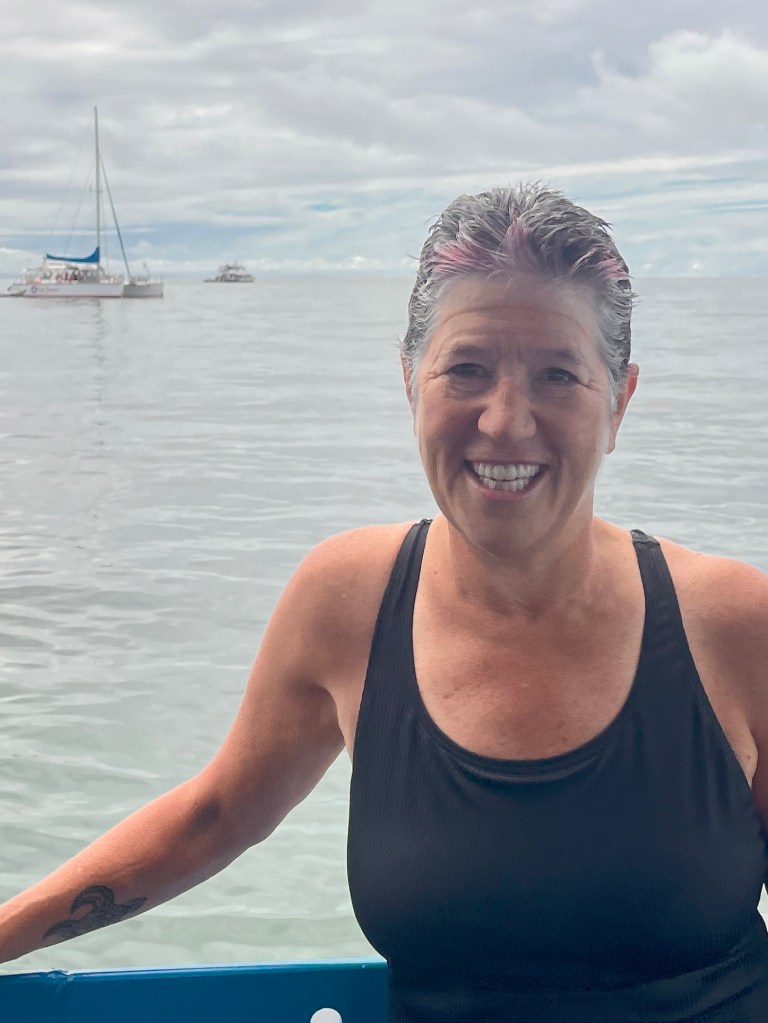
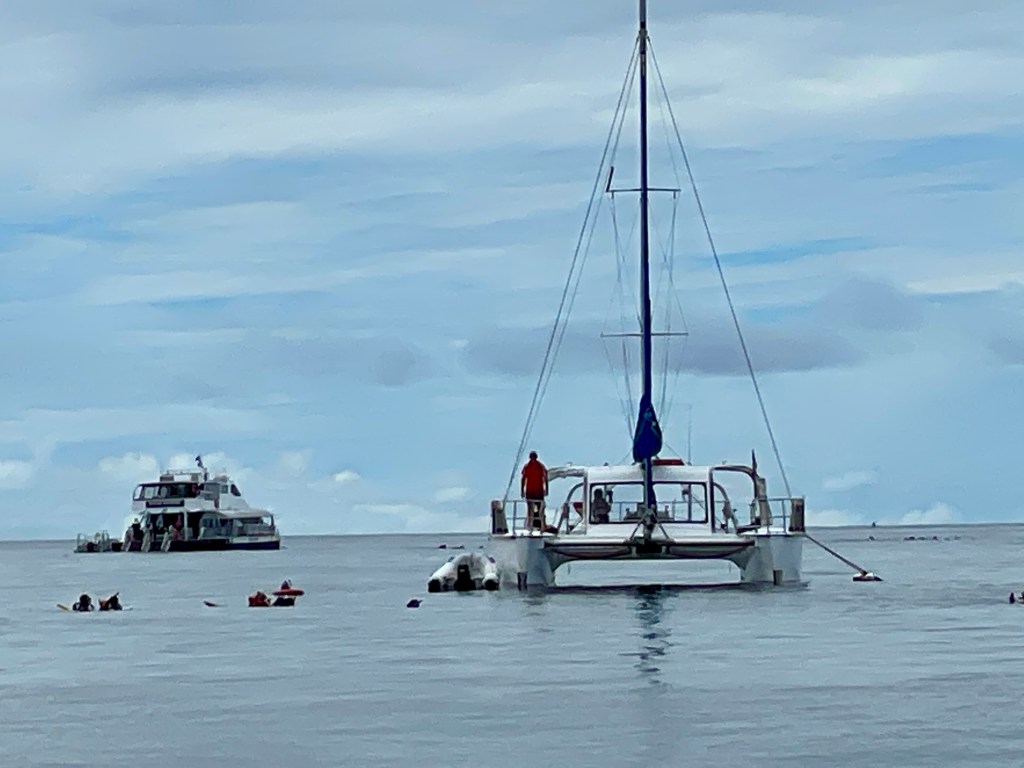
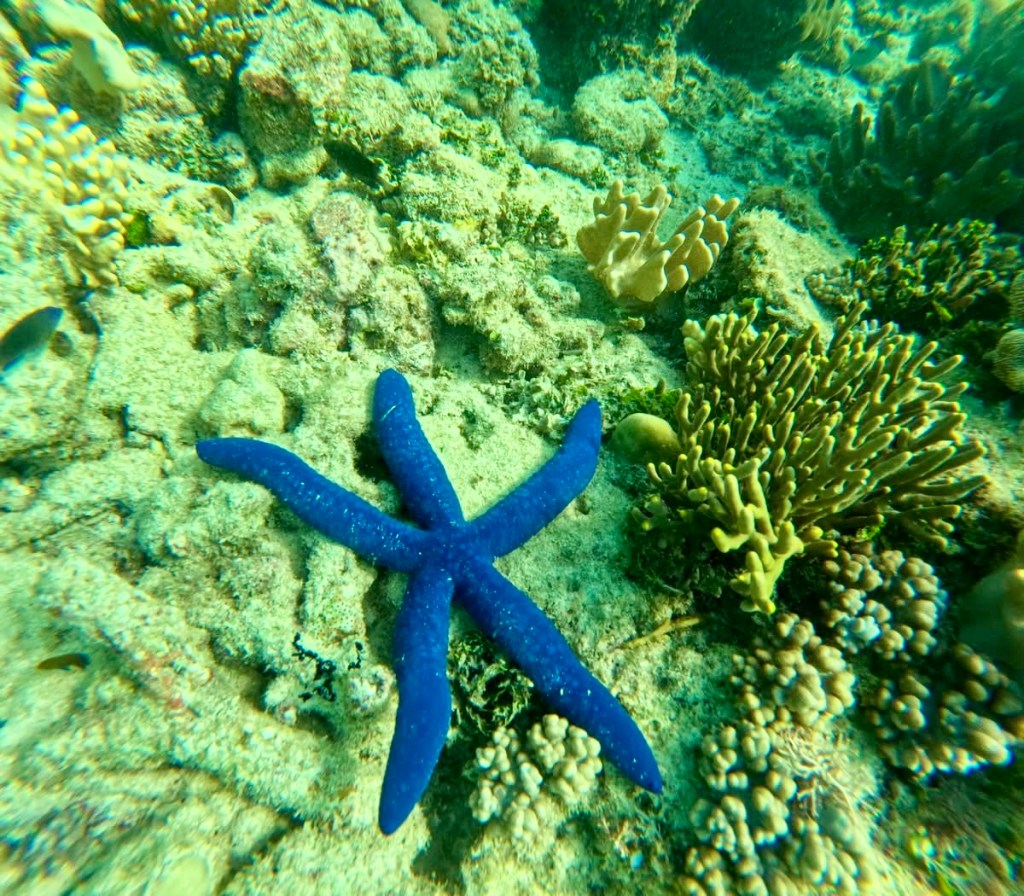
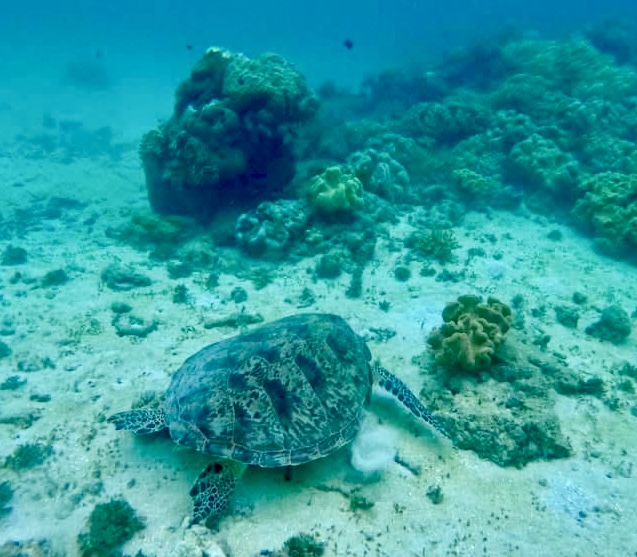
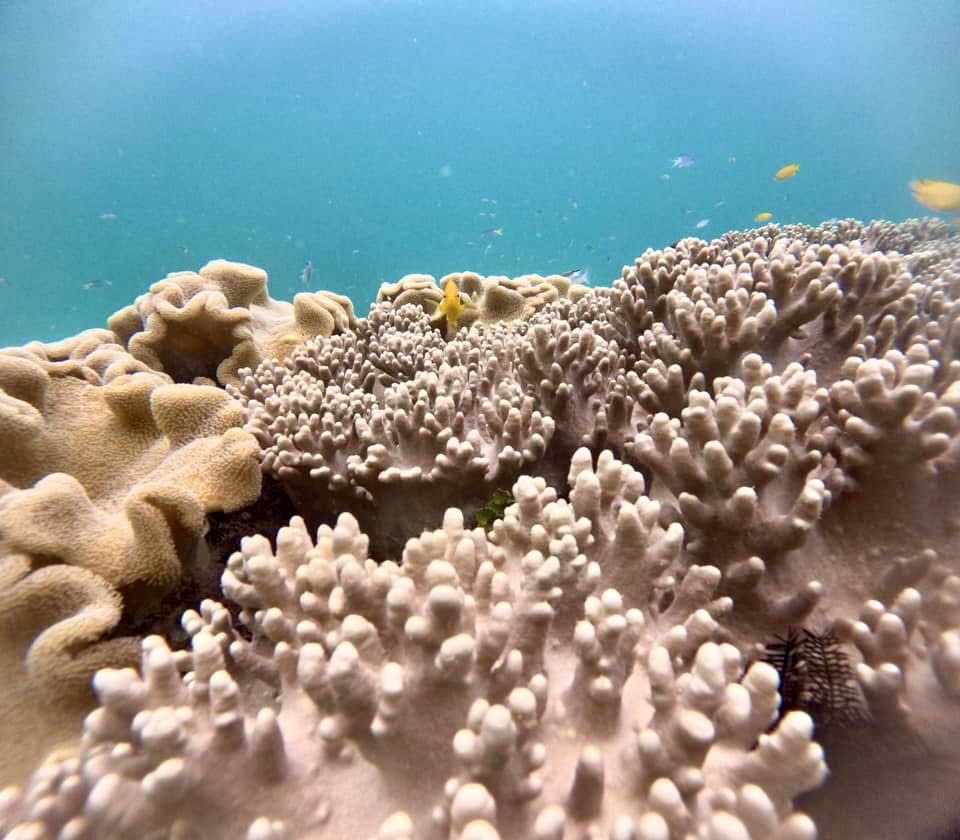
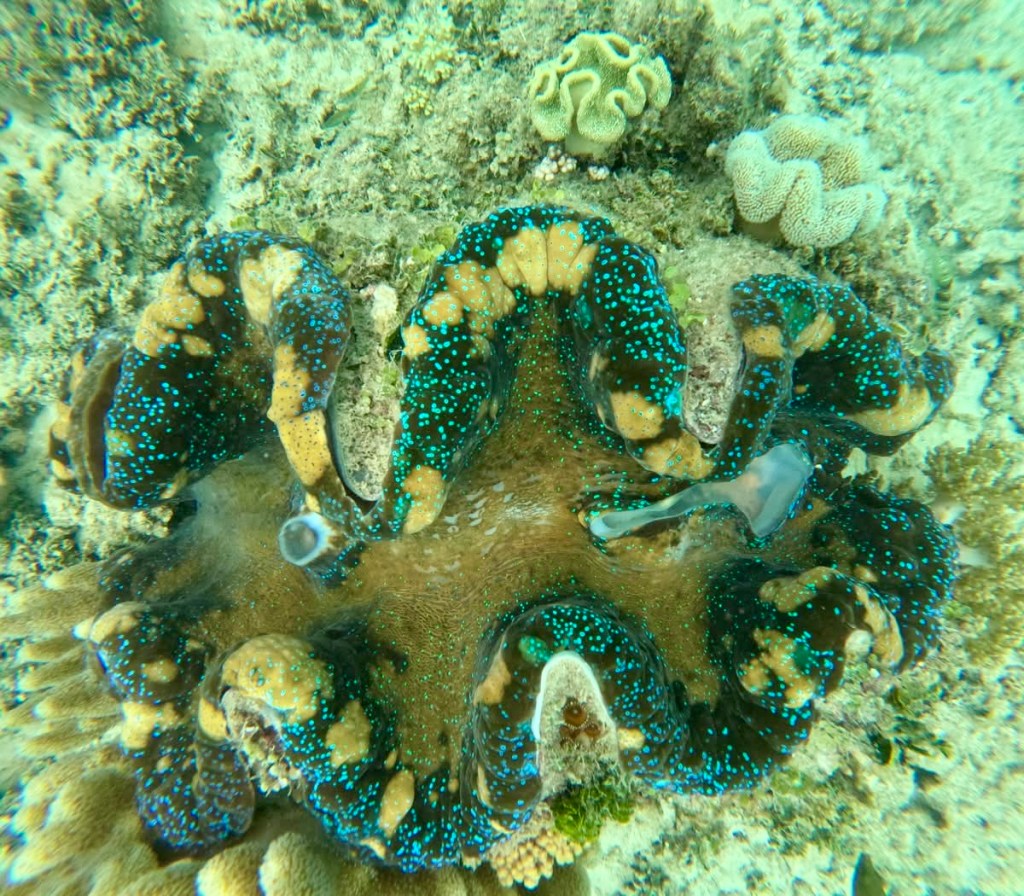
Karla: Upon checking in for the snorkeling trip, I was given a full body lycra “stinger suit” to protect against deadly jelly fish, fins, mask and snorkel. After a 45 min fast boat ride with great tunes blasting, we were in the water. We saw lots of colorful fish, healthy coral and sea cucumbers but no turtles or sharks. The ocean current was strong and the two lifeguards in the water had their jobs cut out for them. If you were not paying attention and actively swimming against the current, tracking the boat, you could be pulled quite a ways from our exploration area. It ended up being a good workout and fun time snorkeling.
-
Passengers
Feb. 9
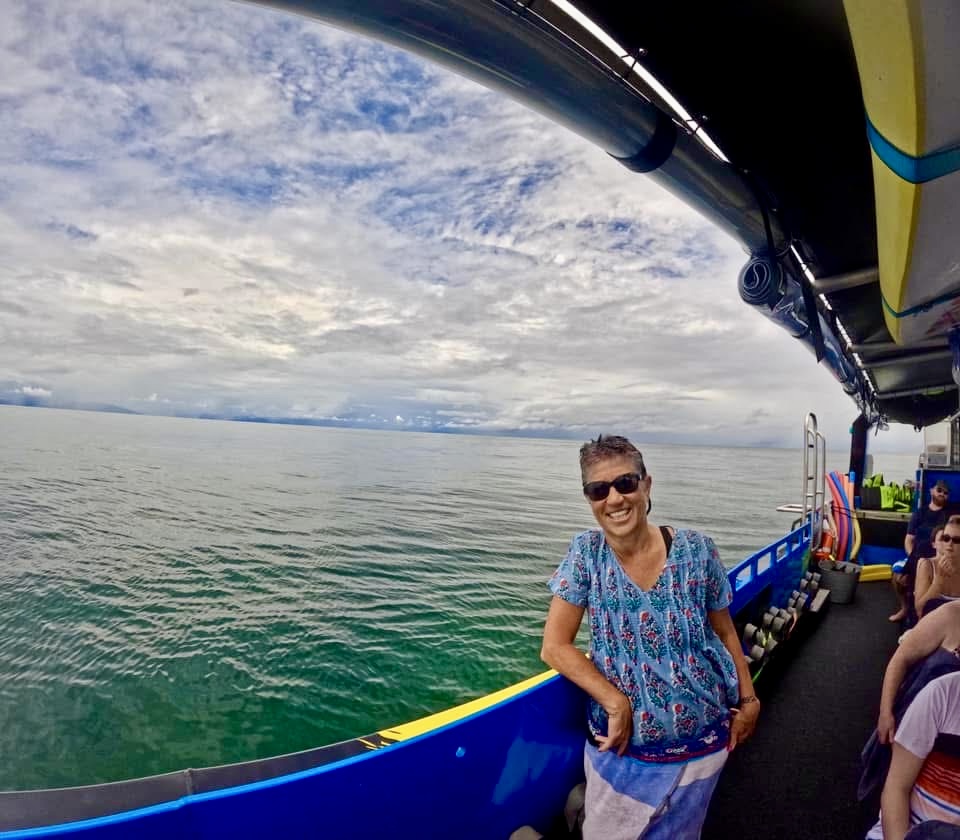
As we sail from Mooloolaba to Whitsunday Island it’s an opportunity to comment on our fellow passengers. The Viking Sky carries 900-1000 passengers. Perhaps half of them are doing the “full cruise” from Ft. Lauderdale to New York. If Viking could sell the entire itinerary to 900-1000 customers, they would. But, they sell in segments to customers looking for shorter cruises, like Sydney to Singapore or Cape Town to London We didn’t know it when we purchased the cruise, but we’re on a long segment from Los Angeles to London. The ship continues on another month-long segment of London to New York.
Everyone’s habits and activities place them in contact with certain groups. Karla, for example, knows certain people from Bridge lessons, Bible study and church, or walking the deck. We know people from our morning green juice and latte routine and cocktail hour/music in the Explorers’ lounge. And we meet people on excursions. But, we could spend the entire 4 months and not see people who eat in a particular restaurant and choose other activities. Then with new people getting on for their segments, there are always new faces.
The demographics continue to be average age of 73-75, I think. There are lots of aging bodies that move slowly, sometimes assisted by canes and walkers. This is especially apparent as we take bus rides on our excursions. It seems like getting off the bus can take 8-10 minutes. That’s no ones fault, but it works better when passengers know their limitations. And, while Viking labels excursions as easy, moderate or difficult, not everyone is accurate in their self-evaluation. If there are 150 stairs to a monument, lots of passengers learn that stairs are harder than they used to be.
Another realization is that people have different senses of line etiquette. I’m reminded of traveling with a Spanish group in Egypt. Our busload of Spaniards was lined up with a northern European group. As soon as a door opened, the Spaniards broke ranks and headed for the open door. The Dutch, or whoever they were, were offended, but overrun. On our excursion buses, passengers generally disembark by row. But there are always some who are attracted to the open door as soon as it opens. That can bother some people. And, I think that we (especially Karla) can bother older passengers because we walk fast between points A and B rather than shuffle along. I detect some form of “road rage” as perfectly nice people get upset because of others’ actions. When we visited the Australian Zoo, there were some complaints because “there was too much walking.” I suspect that they weren’t pleased to see us walking fast between exhibits.
Sometimes, the Captain will make the call on skipping a port because of “heavy seas.” Once, we skipped a port on a South Sea Island and sailed around the island to a more peaceful bay. Yesterday, at Mooloolaba, we anchored in the bay and took about a 30 minute tender (lifeboat) trip to the port. The swells were fairly high and getting on the tender required good timing and, lots of time, assistance from the crew. Stepping from the ship to the tender could be “flat” or could be 2-3 feet moving target as a swell moved the tender. With timing, it was OK for us. But, for people with canes and walkers it required lots of help. The most exciting tender experience for friends of ours occurred with rough waves near the dock. A wave hit the tender and it rolled enough to make some passengers think they were going in. Several people were thrown out of their seats. So far as we know there were some bruises, but no serious injuries.
-
Mooloolaba
Feb. 8
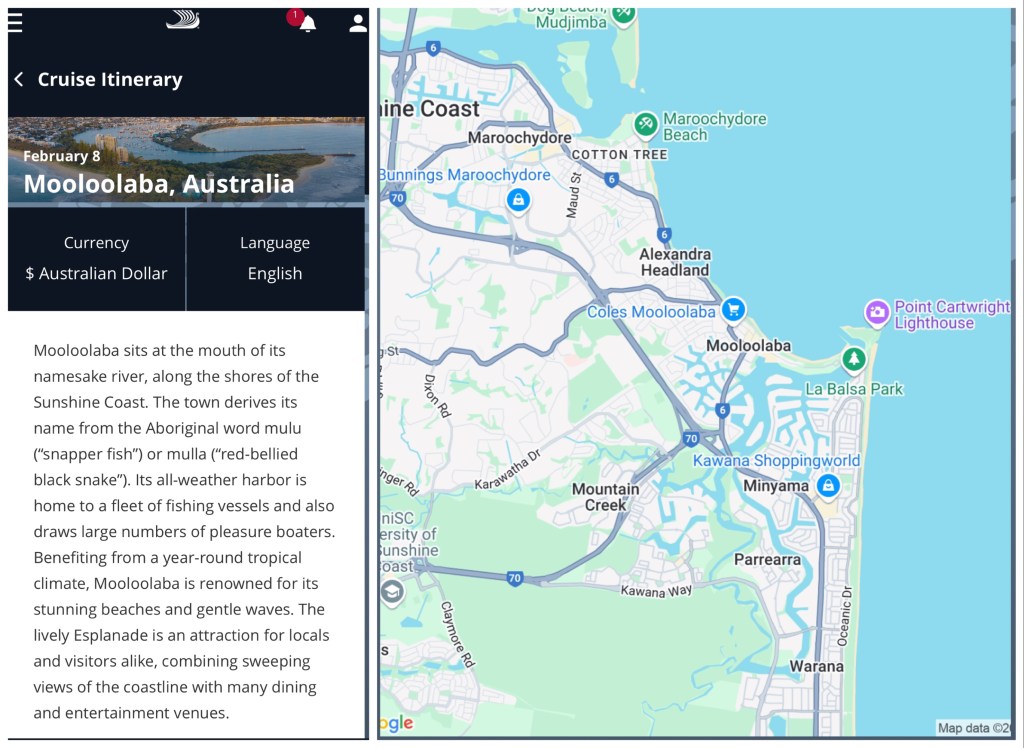
We anchored in the bay near Mooloolaba. With a population of 8700, we expected a sleepy little town. When our tender arrived at the dock, we saw a vibrant oceanfront community. It looked like lots more visitors than residents. A very nice beach and 80* temperature evidently is attractive to Australians.
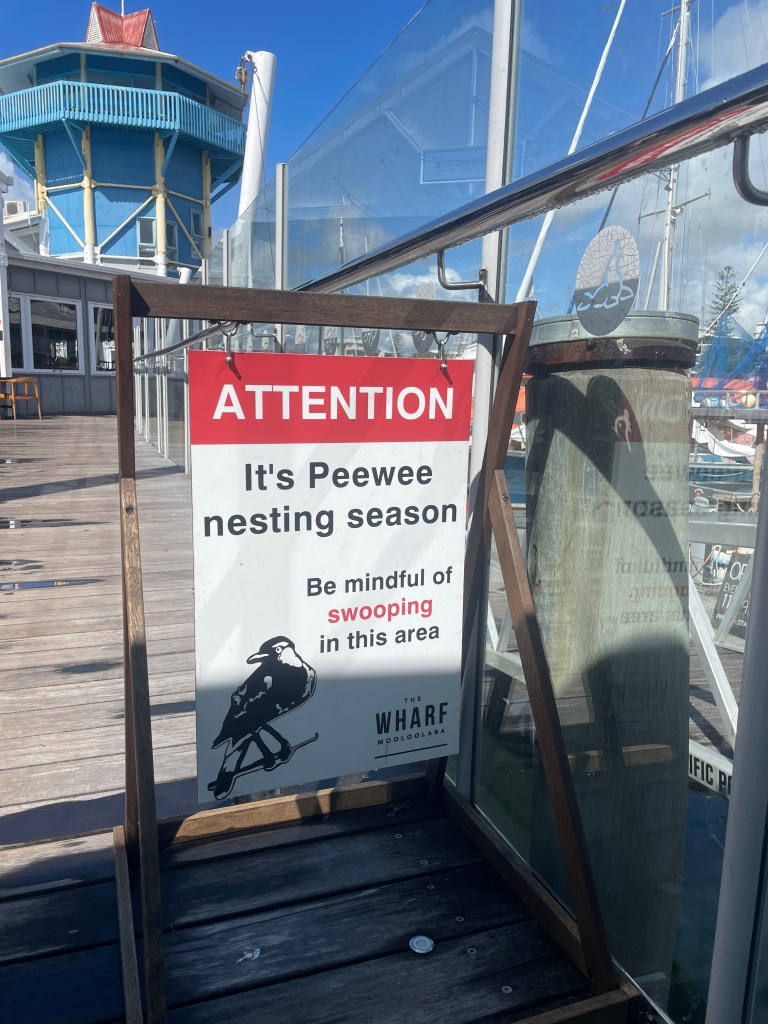
This sign greeted us as we disembarked from the tender. We survived with no dive bombing birds! We had at least an hour before our bus was to depart to Steve Irwin’s (crocodile hunter) Australian Zoo. Our walk around revealed a nice walkway along the coast which had plenty of shopping and eating opportunities. We didn’t need any food but the 50% off on womens clothes was interesting to one of us. Since it’s February they, of course, had an end-of-Summer sale.
The most interesting part of our walk was the drone operator….Karla
Karla here: While walking along the crowded beach, we noticed two lifeguards operating a drone, bringing it in for a landing. I learned that they use drones to patrol the beach for sharks and also swimmers who may be having problems.
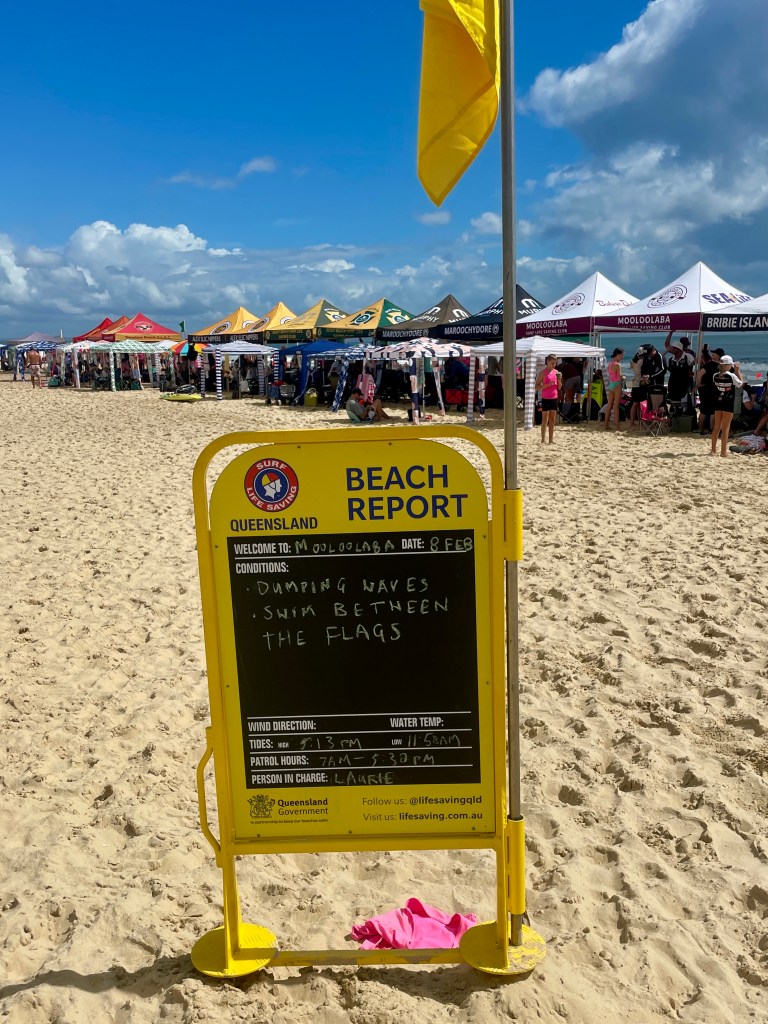
Dumping waves 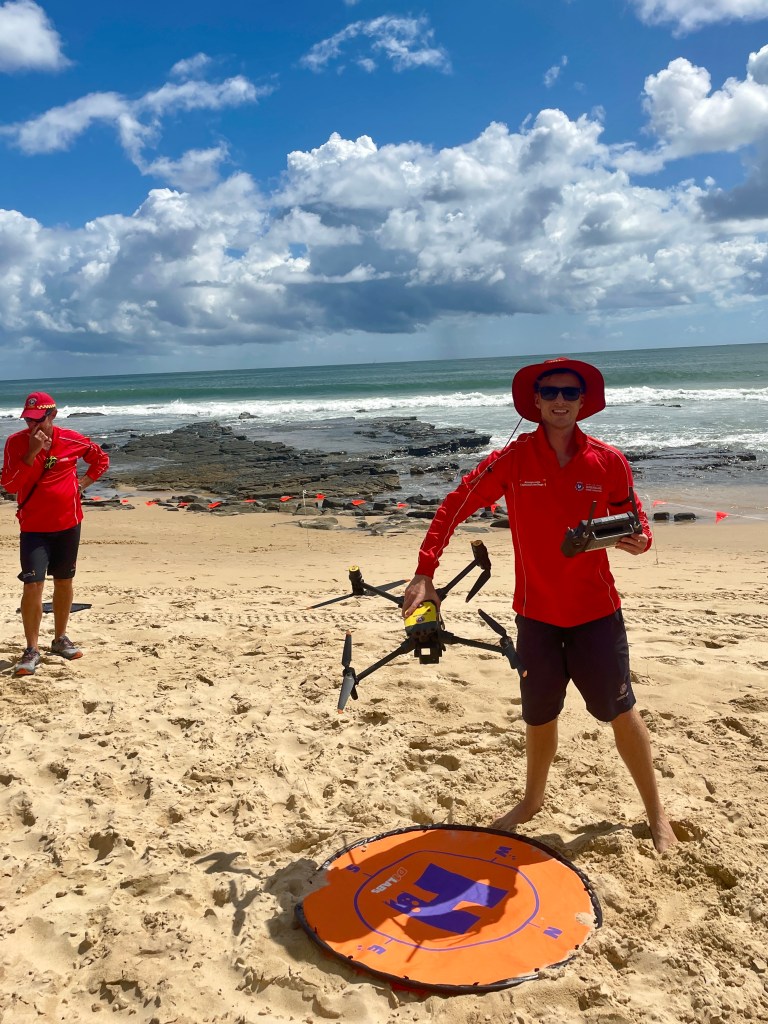
Specialized lifeguards using drones to patrol for sharks and distressed swimmers 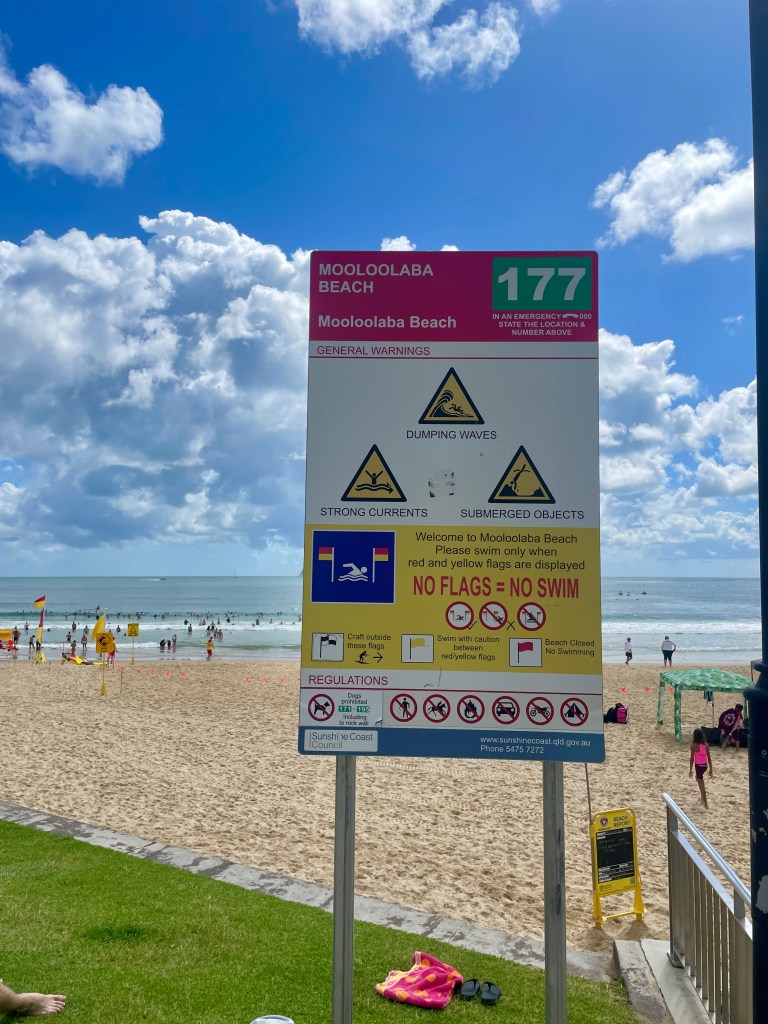
The lifeguard noted that there had been a shark (great white) fatality within the month that occurred within an hour of Mooloolaba. The sharks do not have a taste for humans but they are curious and, like toddlers, learn by biting or mouthing things they see that are not clearly fish. A bite can lead to significant blood loss and thus, death. The government has invested in shark nets along the ocean; some have baited hooks hanging down and others not. The nets have not proven too effective so they are using drones to patrol; the guide noted that he could clear the surf of swimmers in 2 minutes with the variety of resources available including walkie talkies, jet skis, rescue boards and more. The jet skis are sometimes used to herd and push the sharks away from the shallower water. Apparently the Aussies’ success in drone patrols has reached the US and recently forest service rangers have visited to learn more about how they could deploy the drones to fight forest fires.
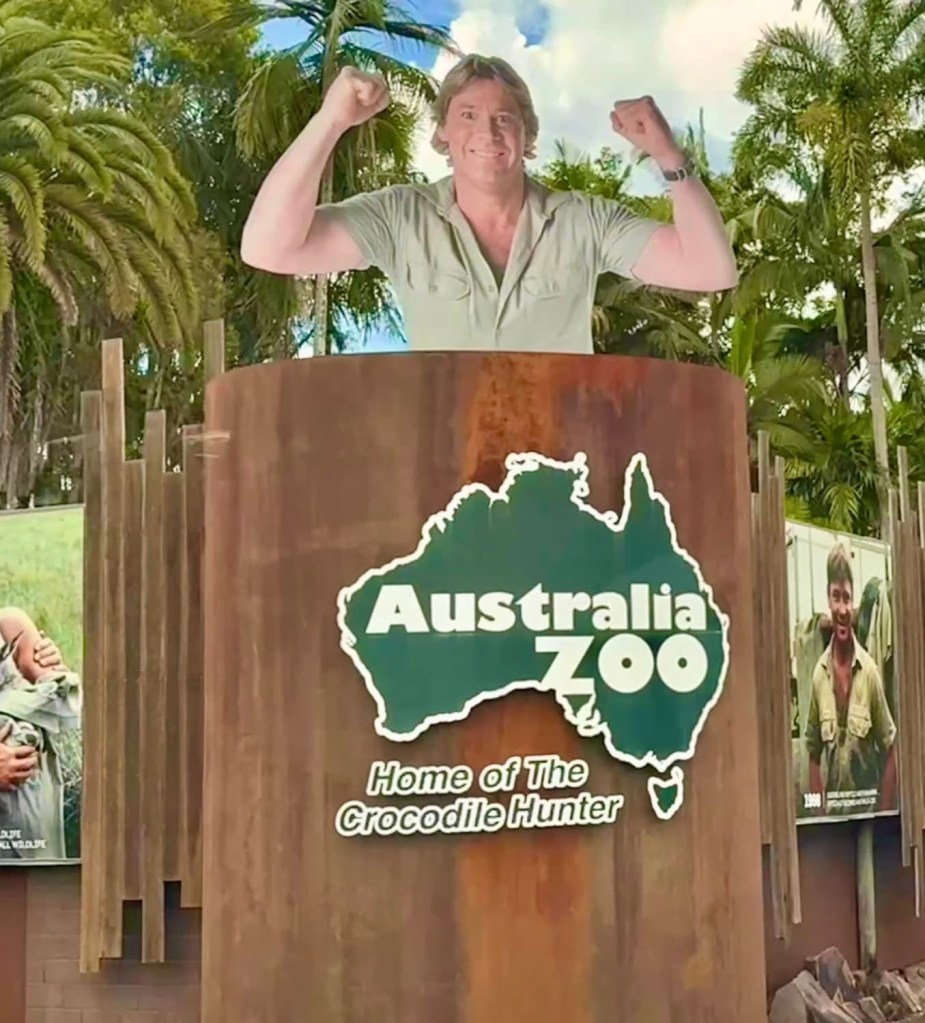
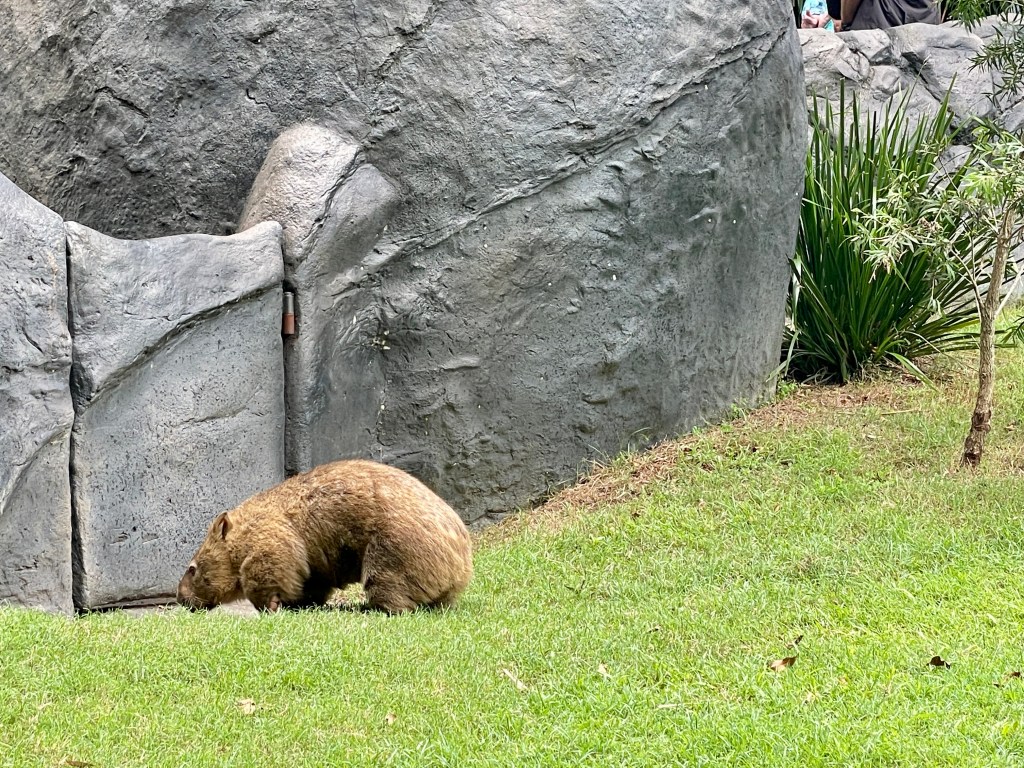
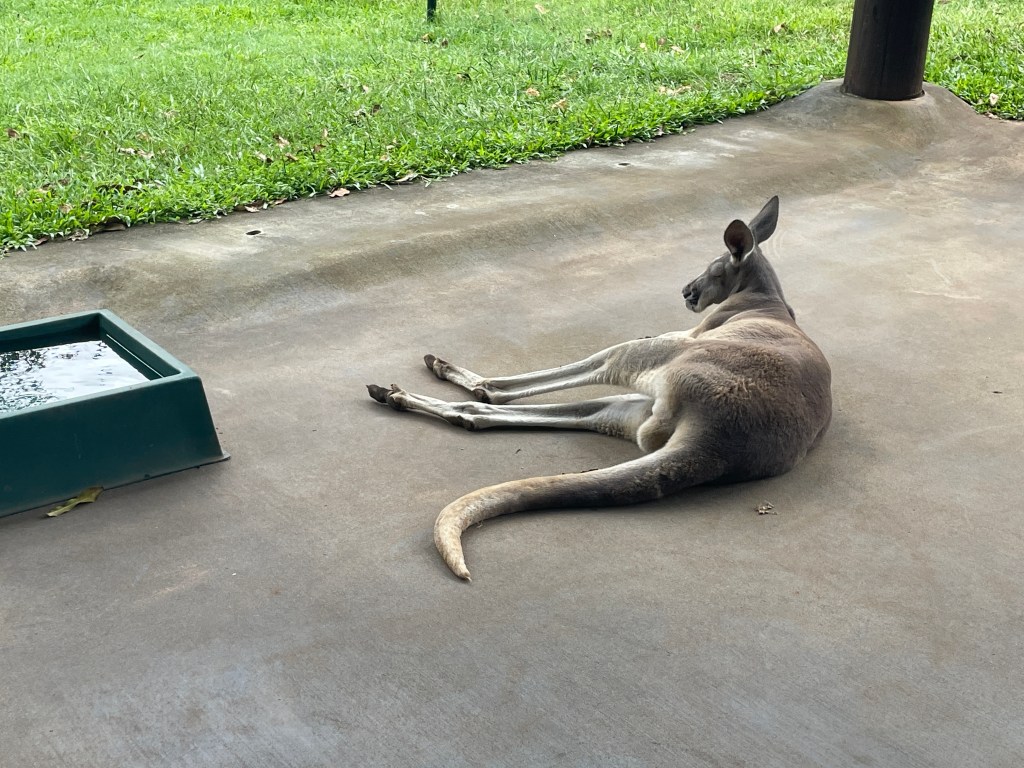
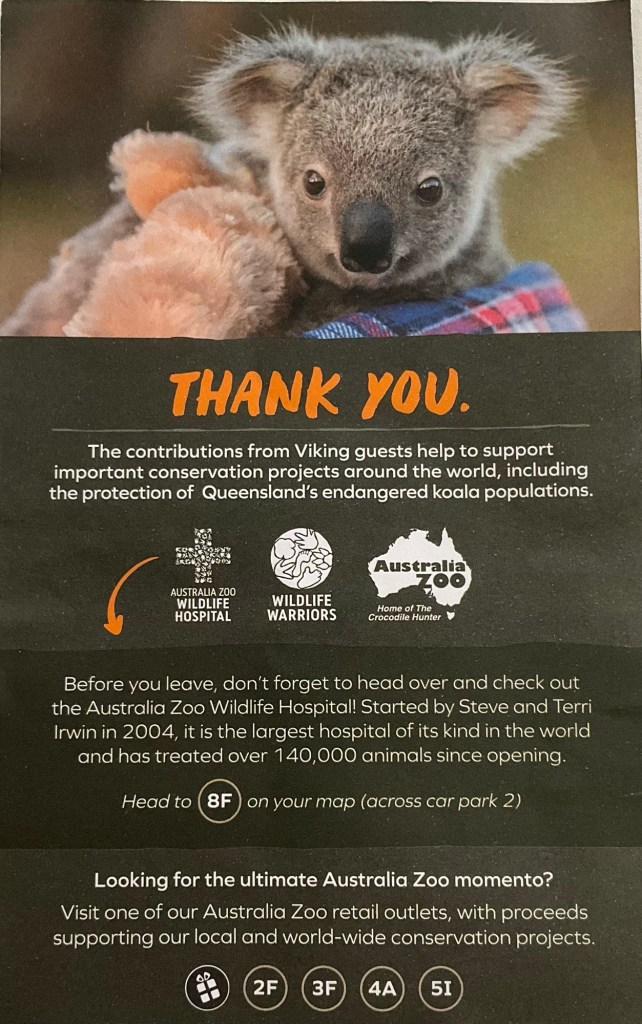
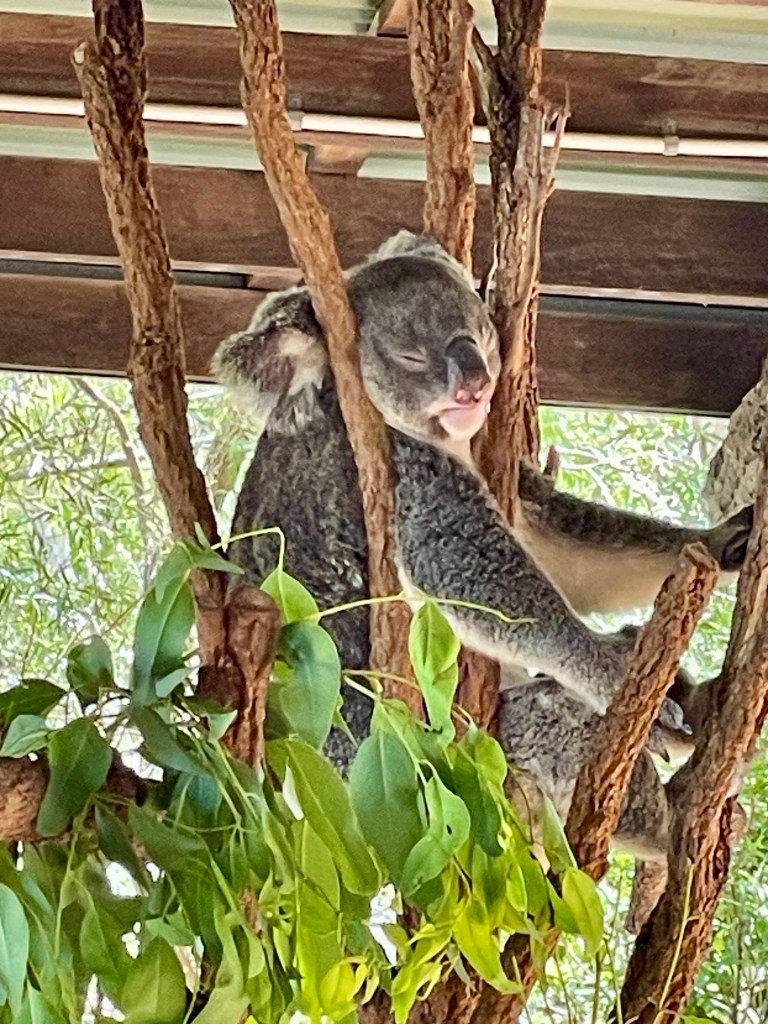
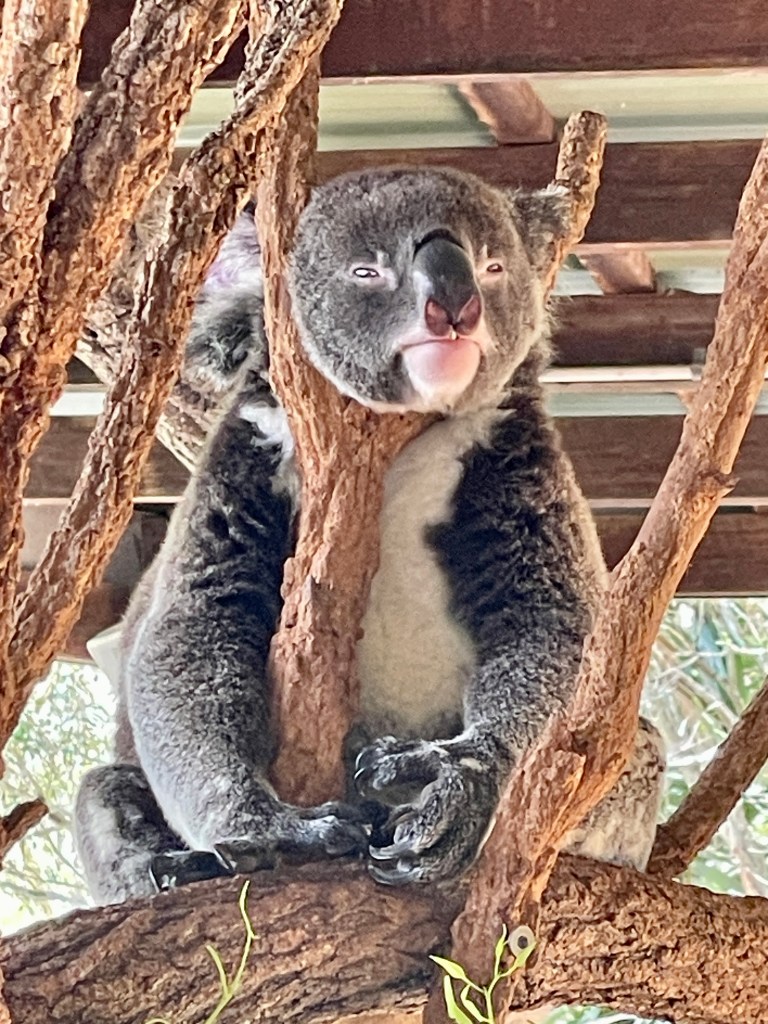
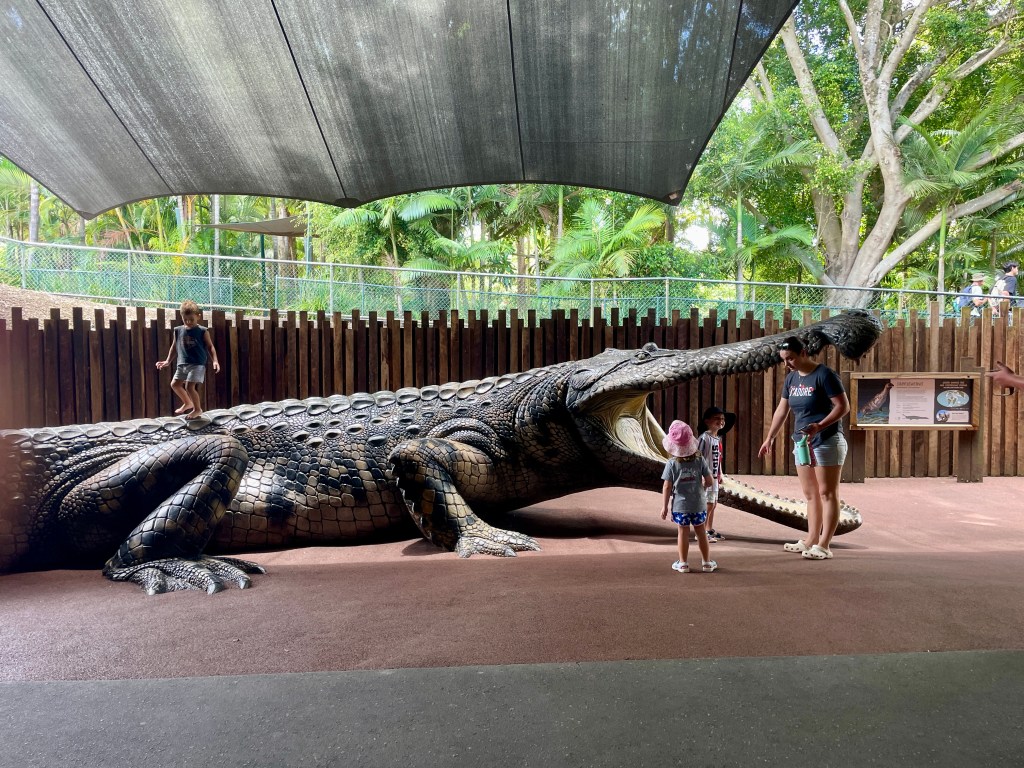
The Australian Zoo is a very nice facility full of predictable creatures…koalas, wombats, roos, crocs, snakes, etc. They also had imports from Asia and Africa. They no longer allow people to hold koalas (too much stress on the koalas) but we did pet one. They sleep so much that I doubt that it noticed. We had visited the Zoo with kids many years ago so didn’t need too much time. It was worthwhile, but we returned after about 2 hours. I decided to make my way to the tender and our ship. The other half of our party headed for the Summer sale.
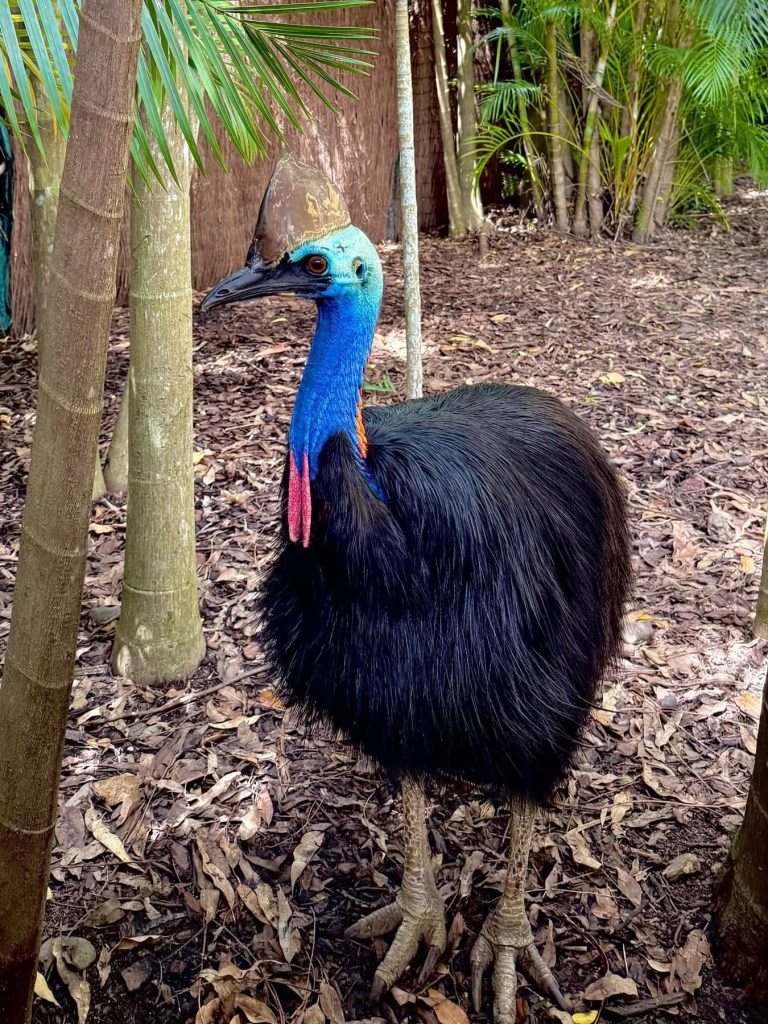
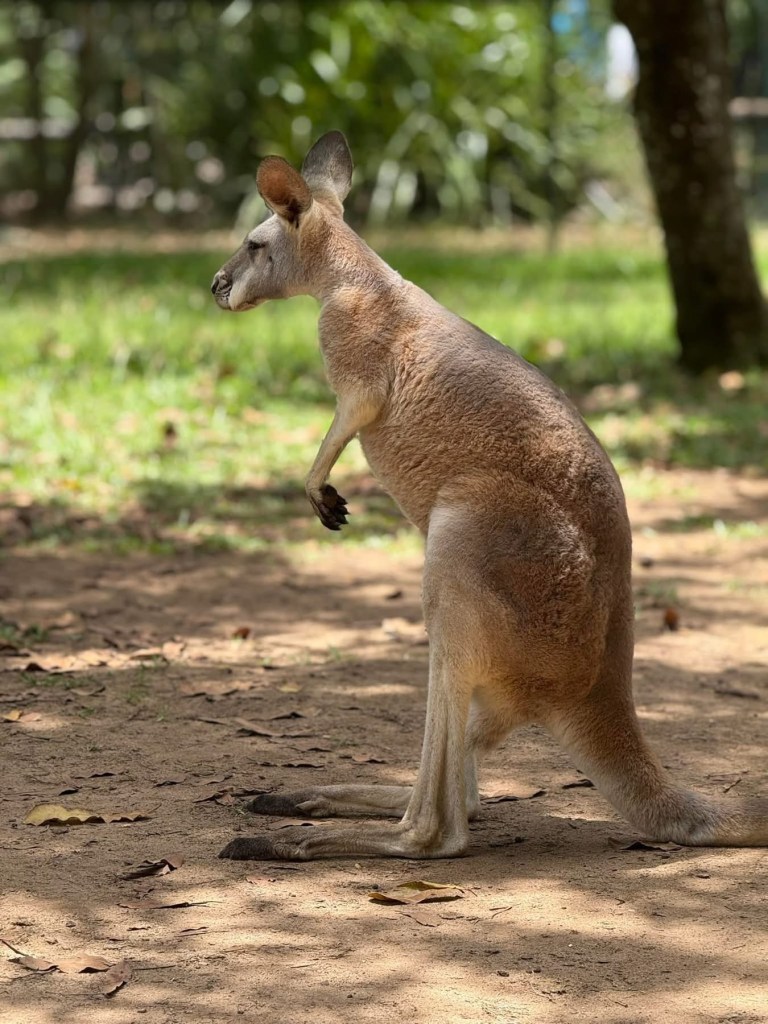
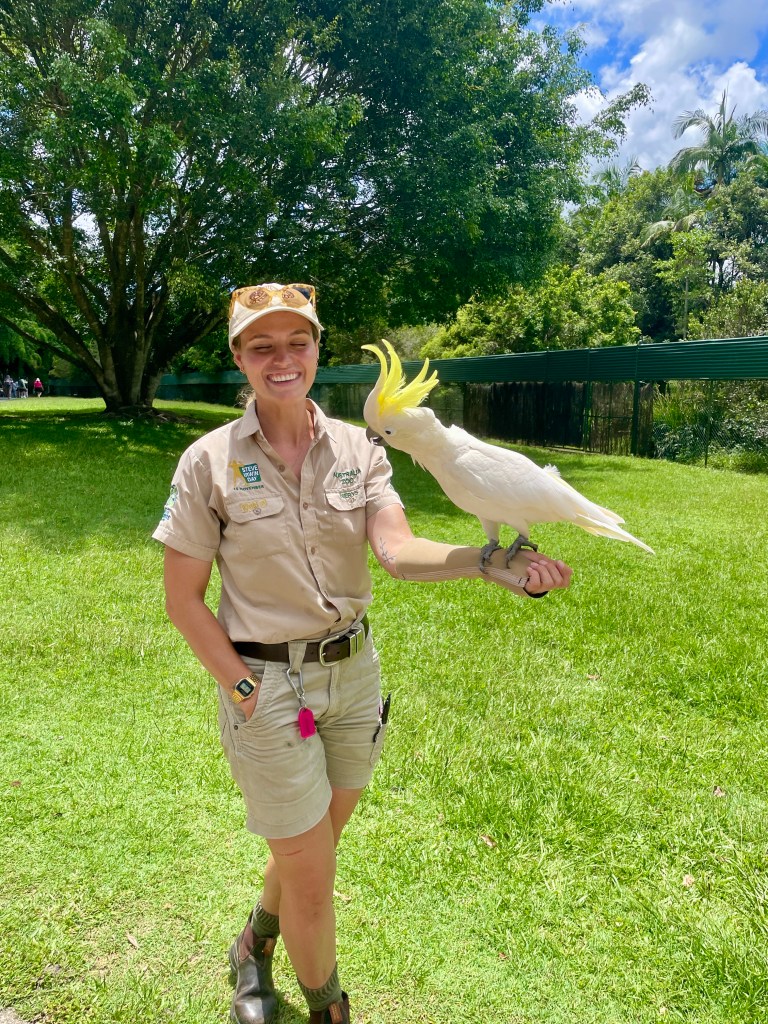
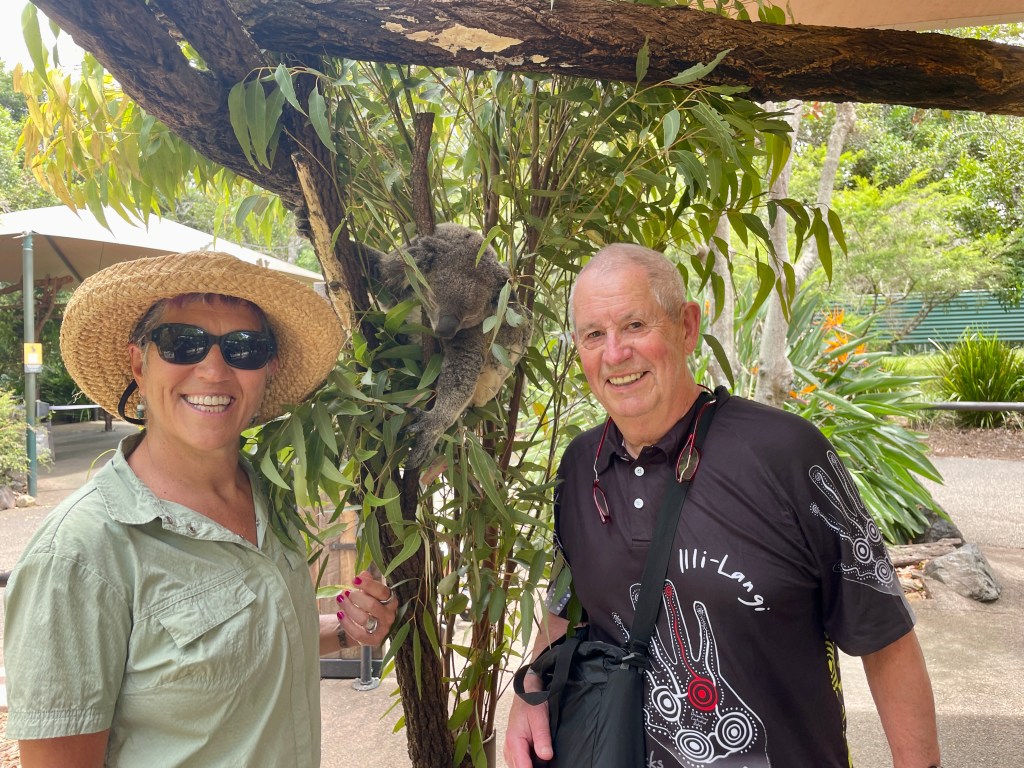

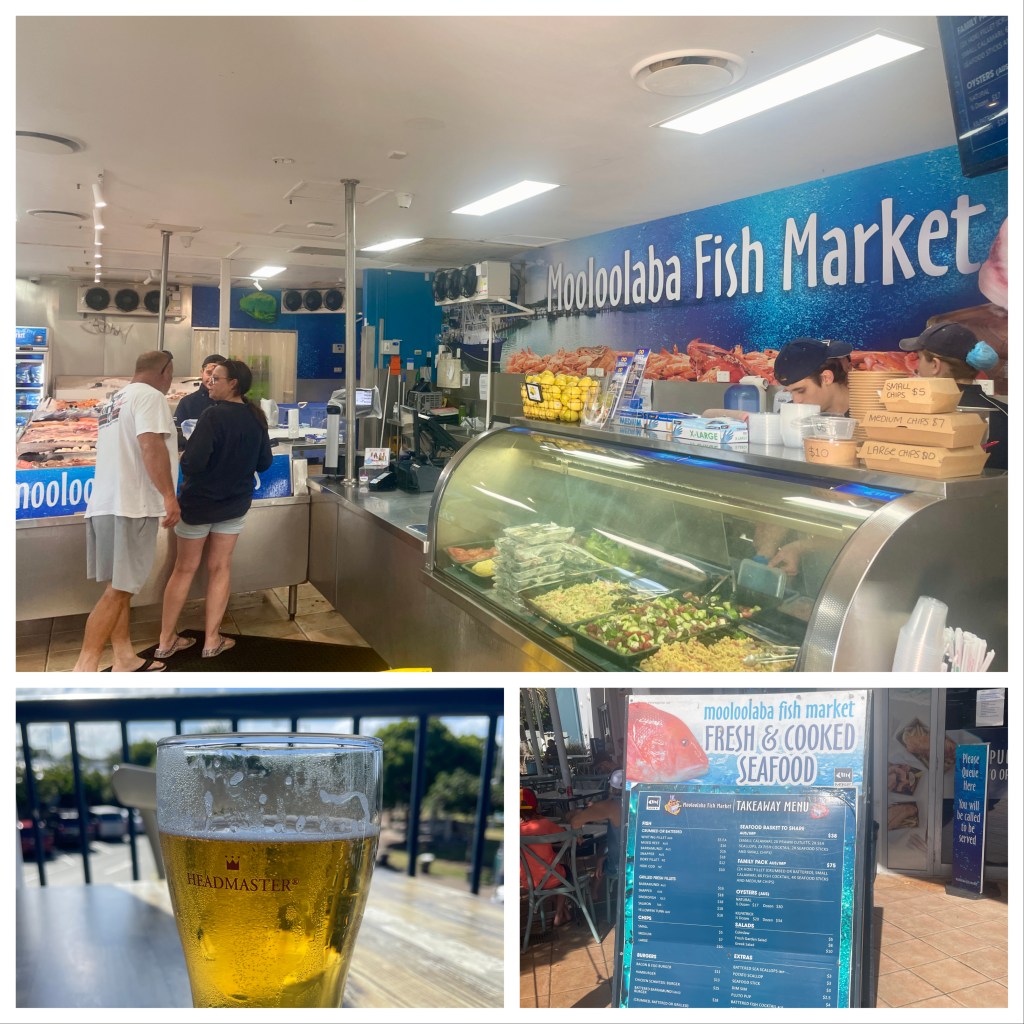
After touring about town, I (Karla) found this fish and chips place where you could pick out your fish. It was delicious with chips and “chicken salt,” which mixes salt and chicken bouillon and tasted amazing on the fries. -
Sydney
Feb. 5 and 6
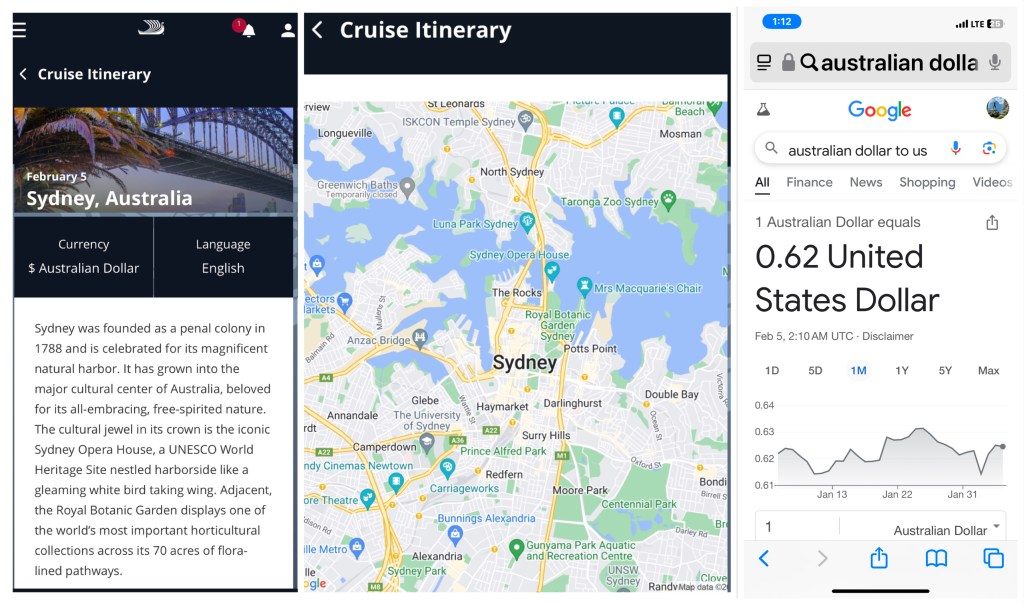
We were looking forward to a 2-day stop in Sydney. We weren’t disappointed. Sailing into the Sydney Harbor is matched only by entering New York in the shadow of the Statue of Liberty at dawn. So, we were up at 6 to make sure that we were ready for the tugs meeting us at the harbor entry. The entry boasts more than 100 bays and inlets. It was green, sunny and nicely developed. We passed through to the iconic 1932 bridge, the Opera House and the Circular Quay which hosts lots of retail development and the Sydney ferry system. Our last visit to the harbor found us docked right at the quay…between the bridge and the Opera House. This time there was some little ship called the Queen Elizabeth. We had to go further down the bay and take a water shuttle into the city….about a 10 minute ride.
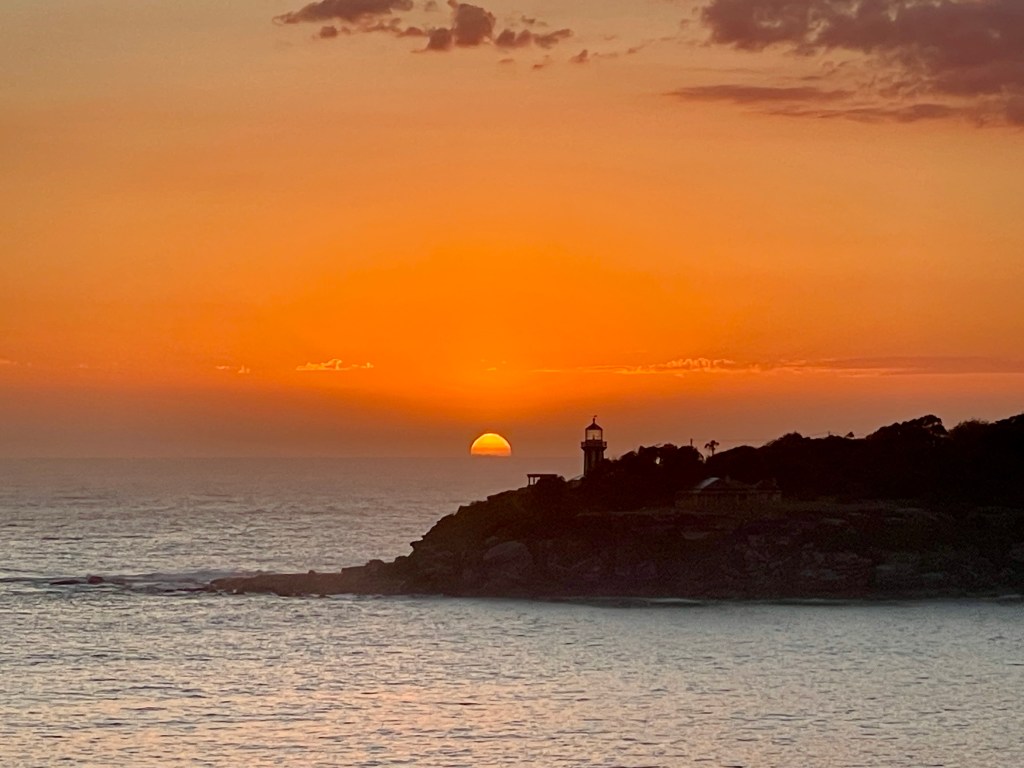
Our entry at sunrise 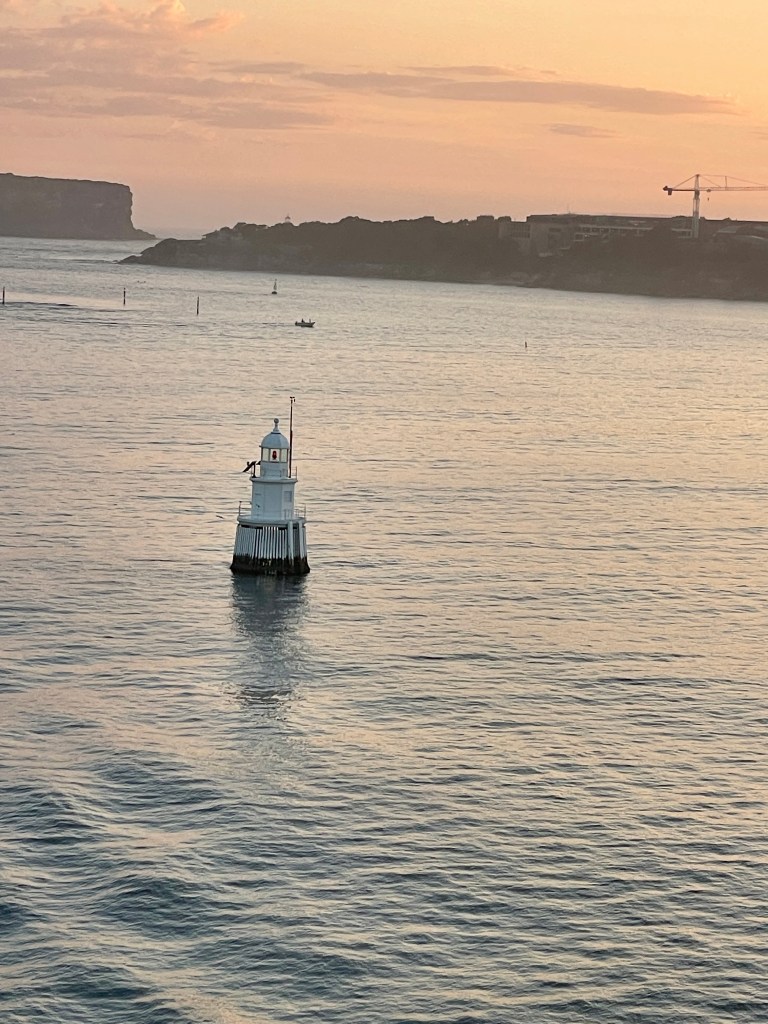
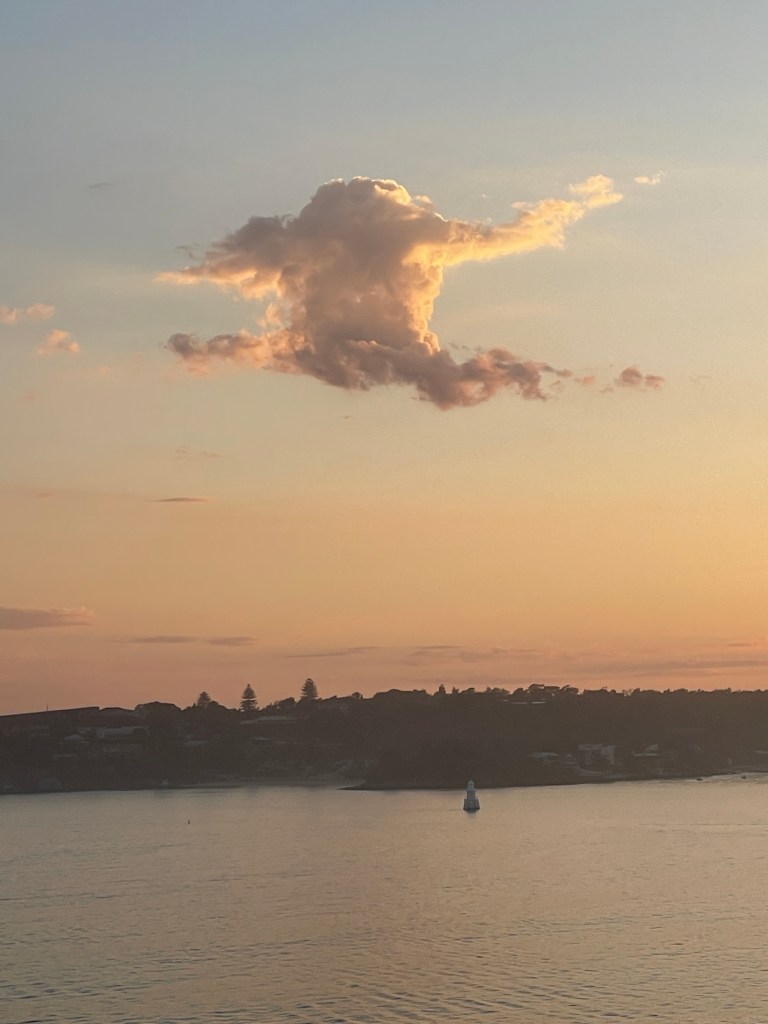
This cloud seems to be leaping and saying, “yippee” 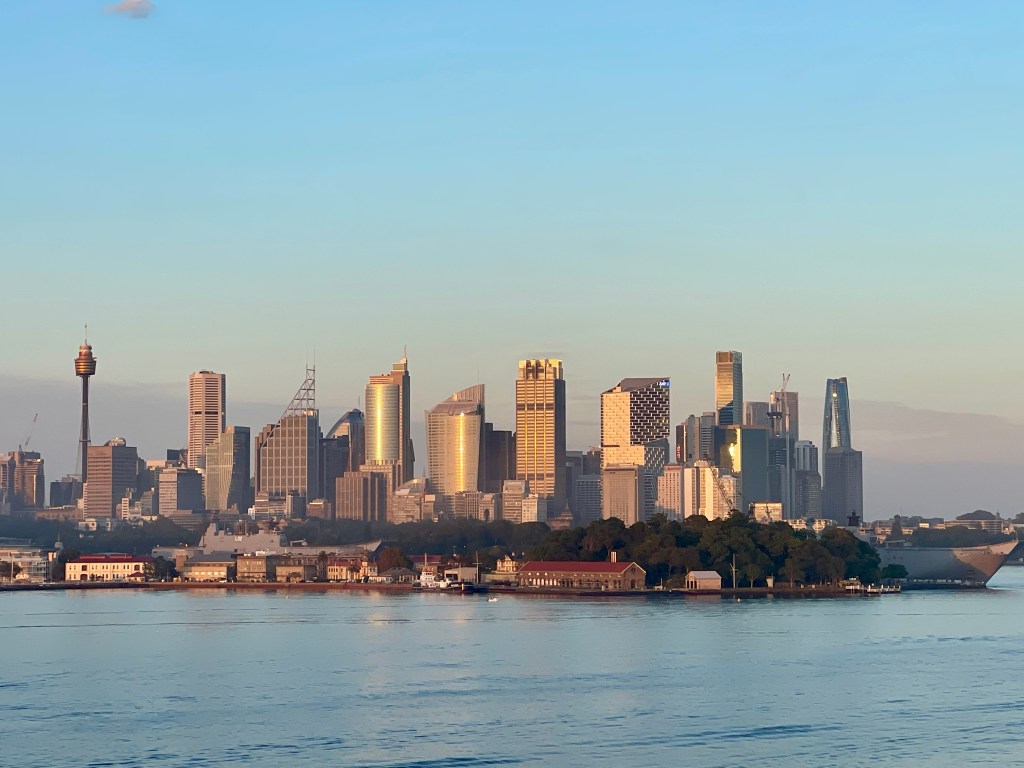
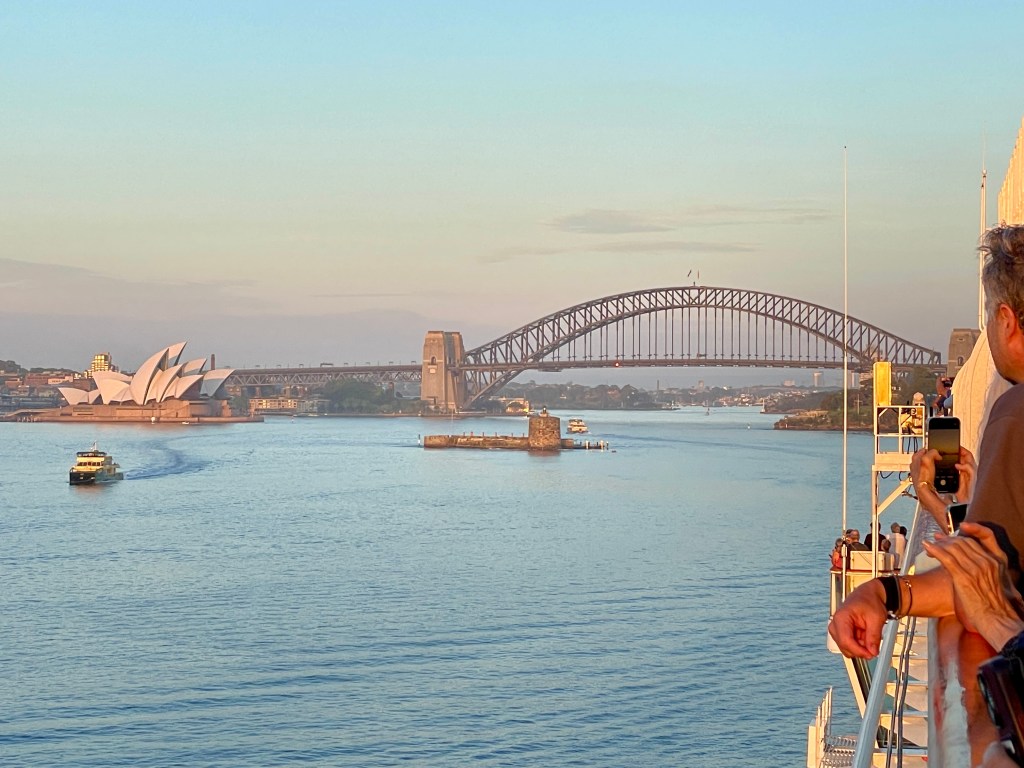
It was a crowd on deck for the views– Sydney Opera House and Bridge 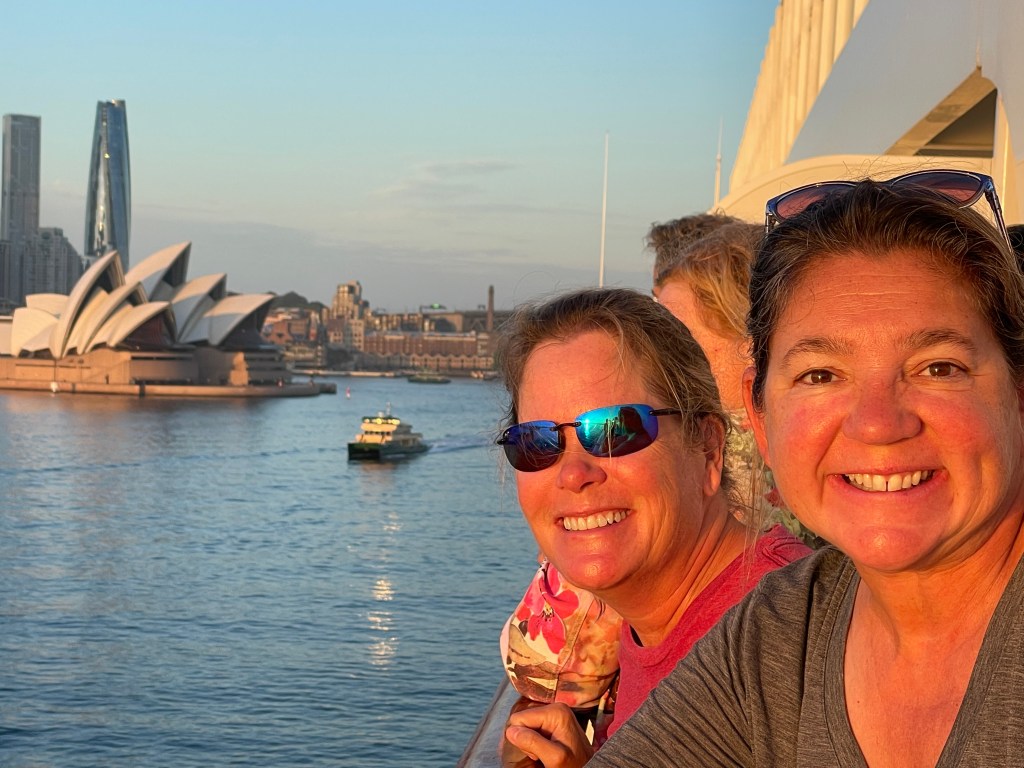
Friends, Joanna and Mary 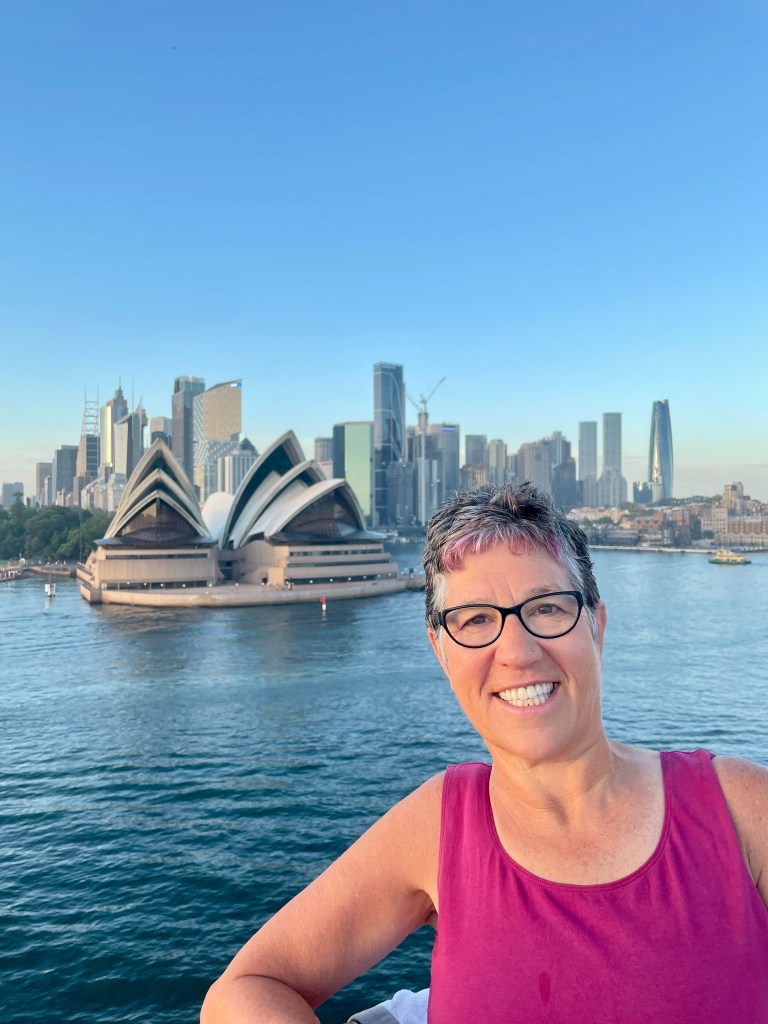
Our day 1 excursion was a scenic cruise of the harbor: a relaxing, narrated tour of 2 1/2 hours. Afterwards, we walked around a bit before Karla took off on a longer walk to an Op Shop. Everything was pleasant, including a well-deserved cold beer.
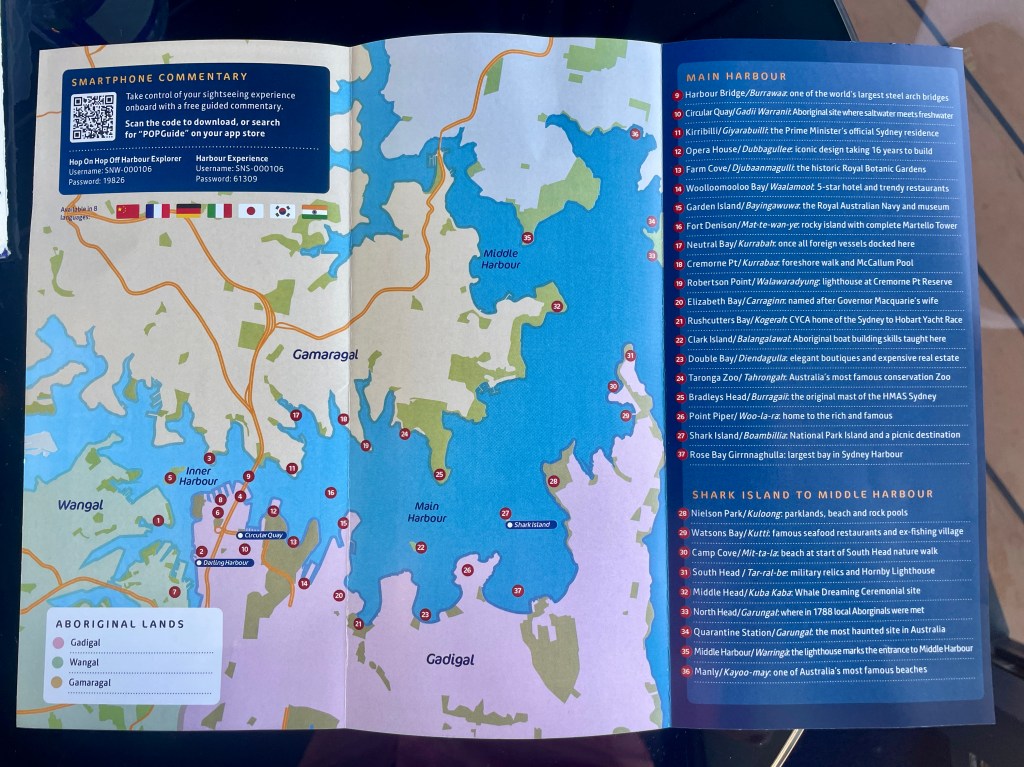
The route 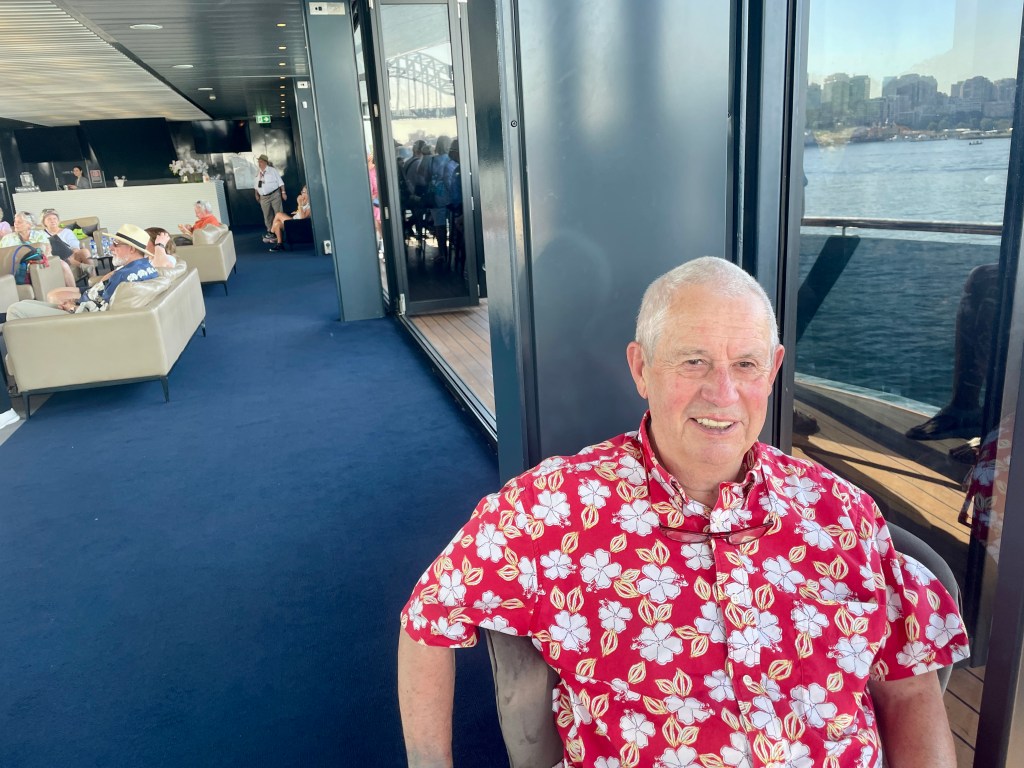
Comfy ride 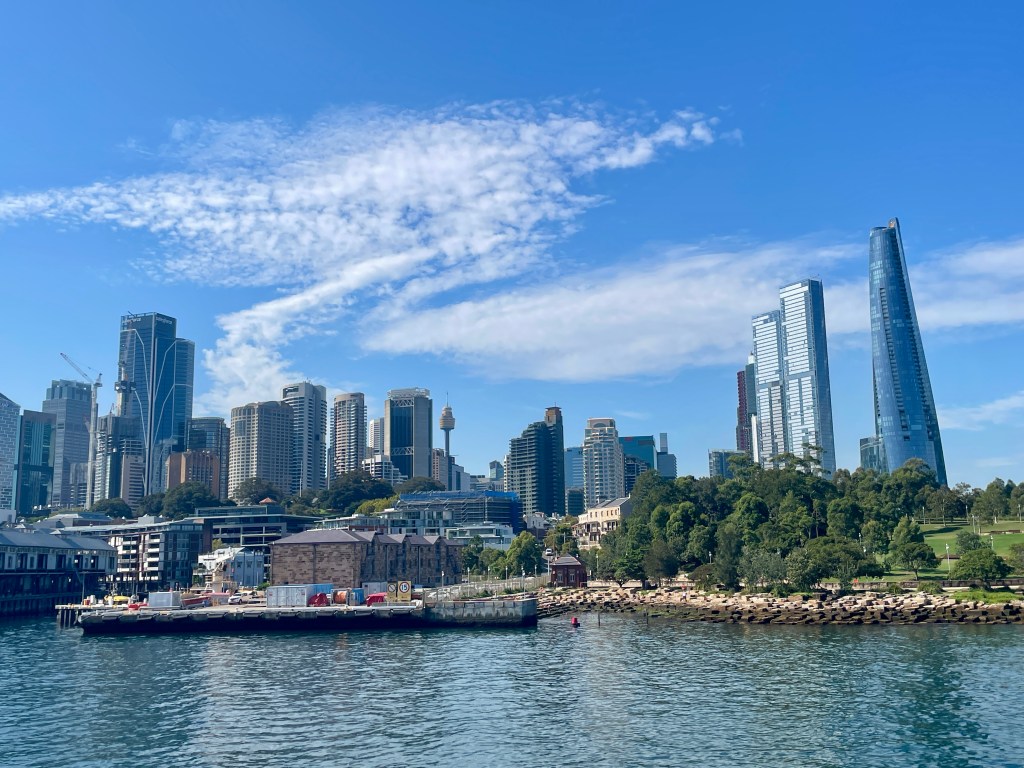
Looking out on downtown Sydney 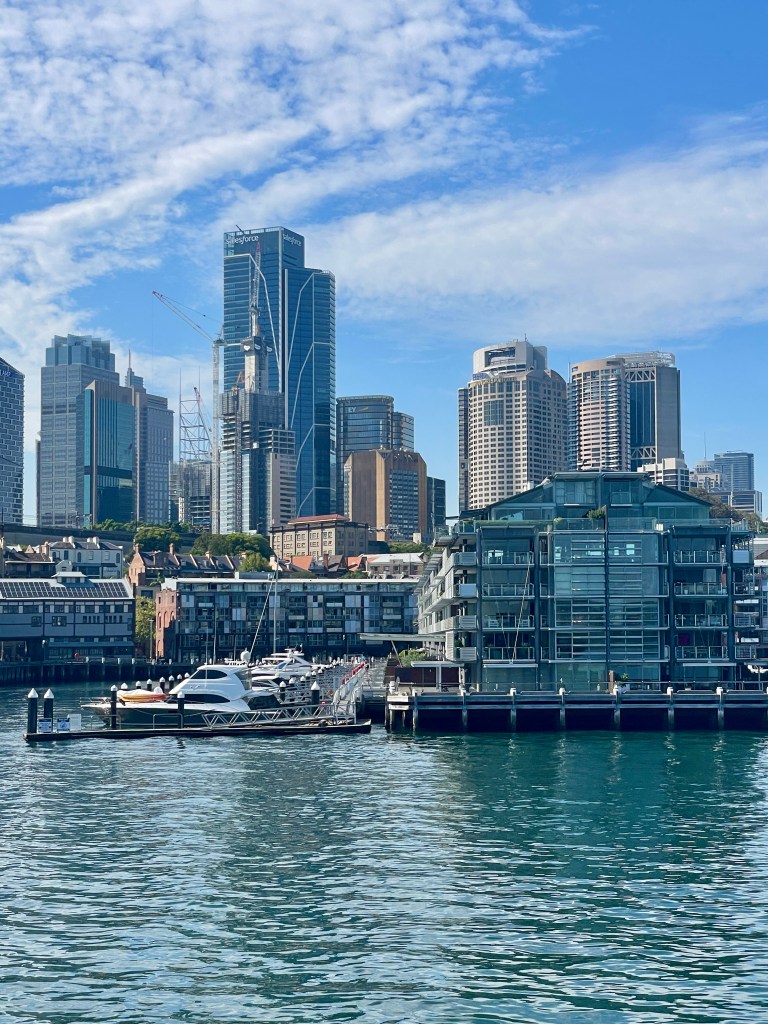
Yacht parking outside condos 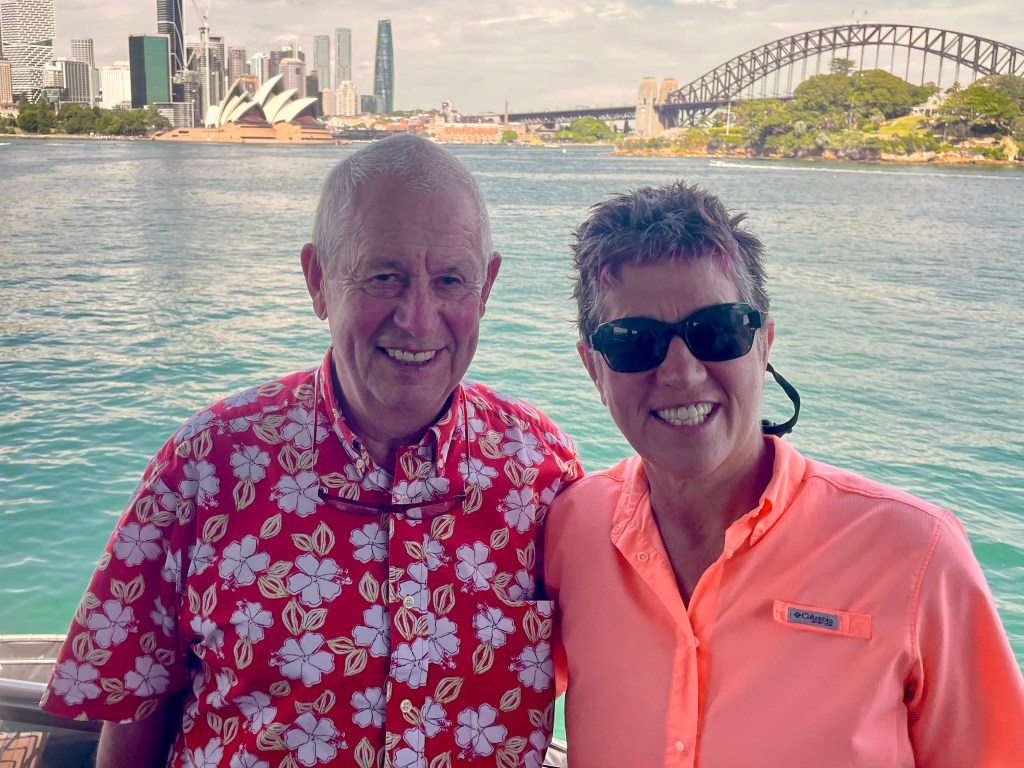
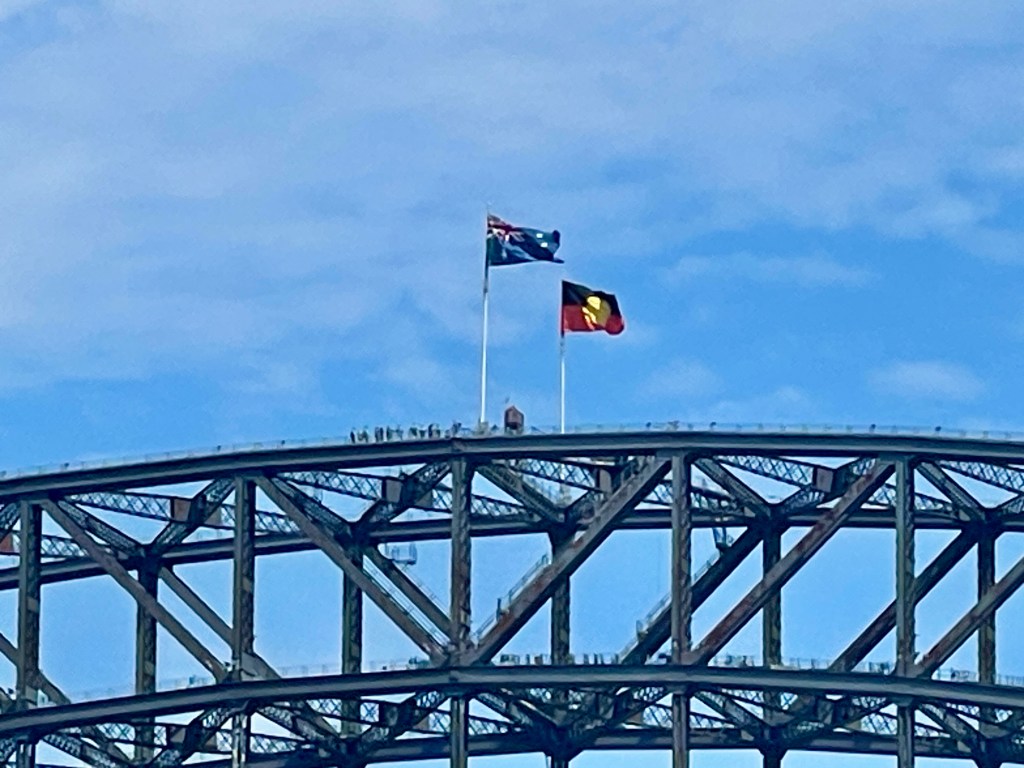
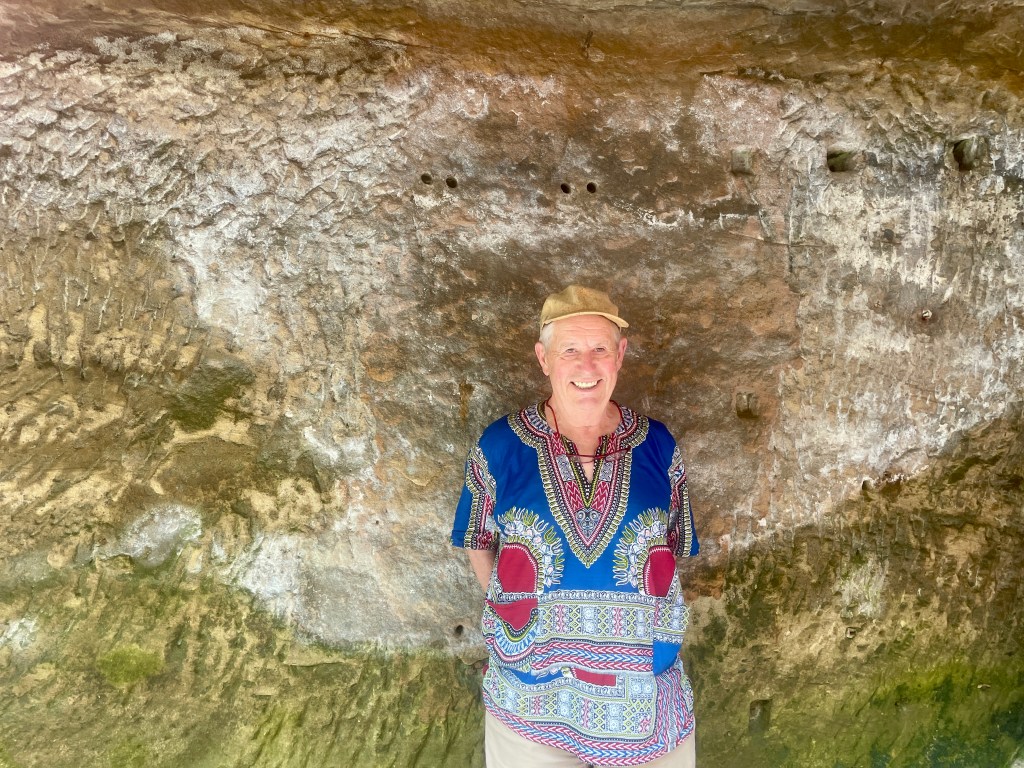
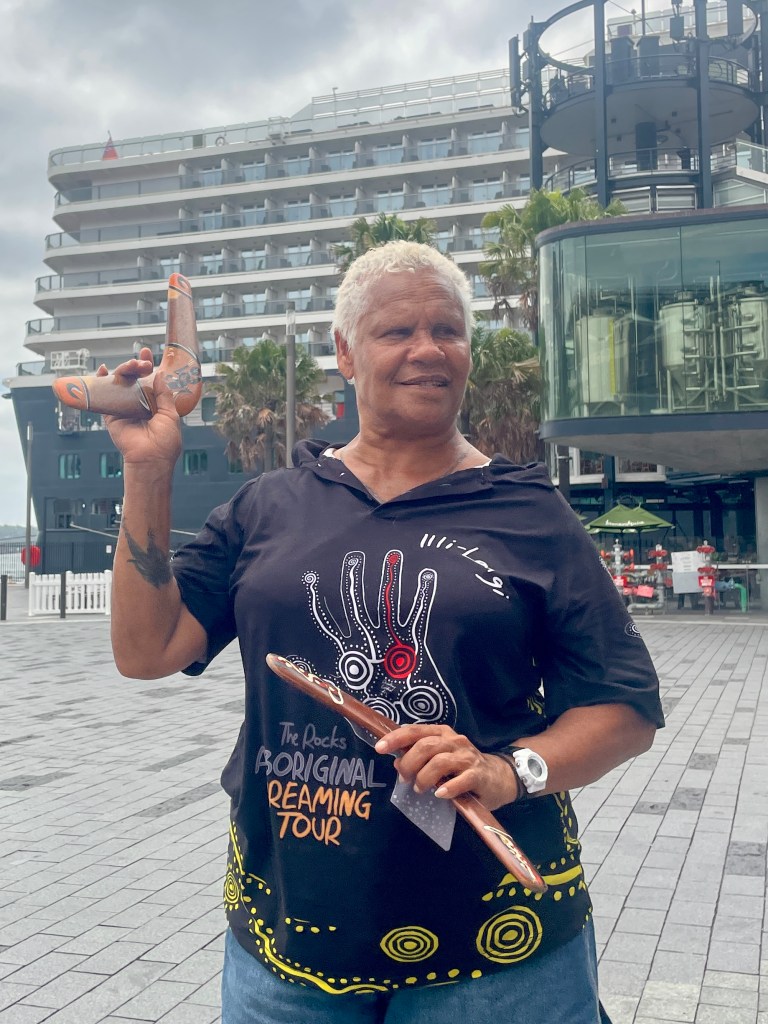
Sydney Bridge Climb was one excursion we did not take On Day 2, we found a “Rocks tour” offered by an Aboriginal owned company with the Aboriginal perspective. It was really more of a description of Aboriginee life and values, but it worked. Karla followed it with a lengthy walk along the extensive harbor wall. It does seem that Australia is working to honor Aboriginal history and it adds a nice dimension.
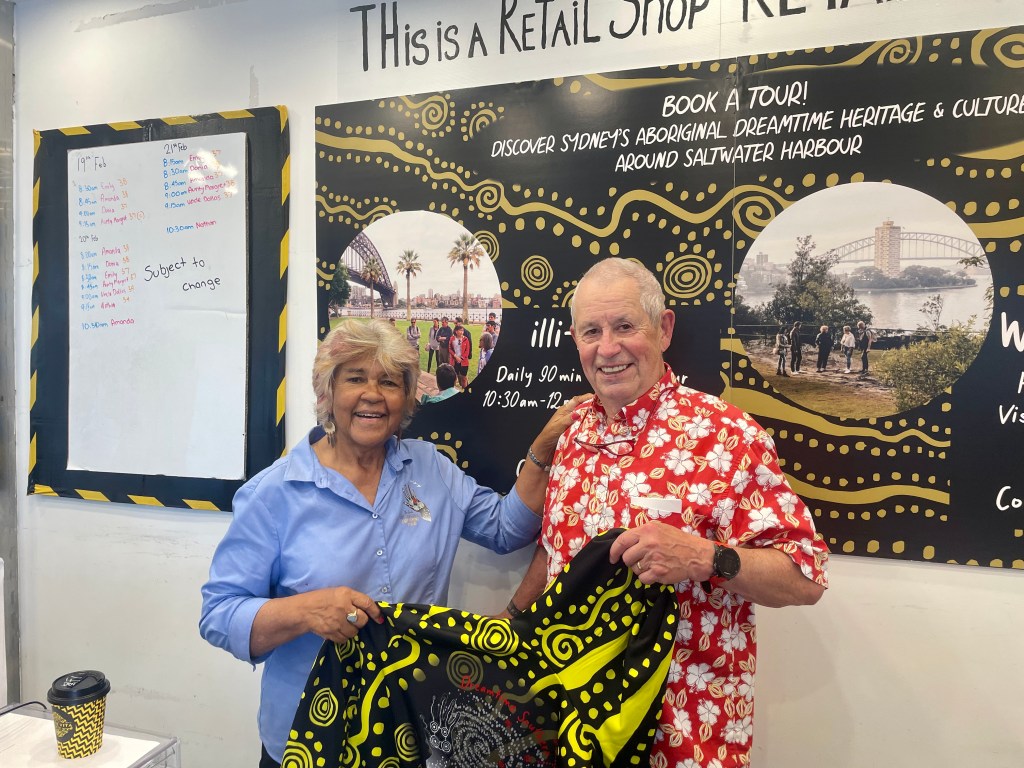
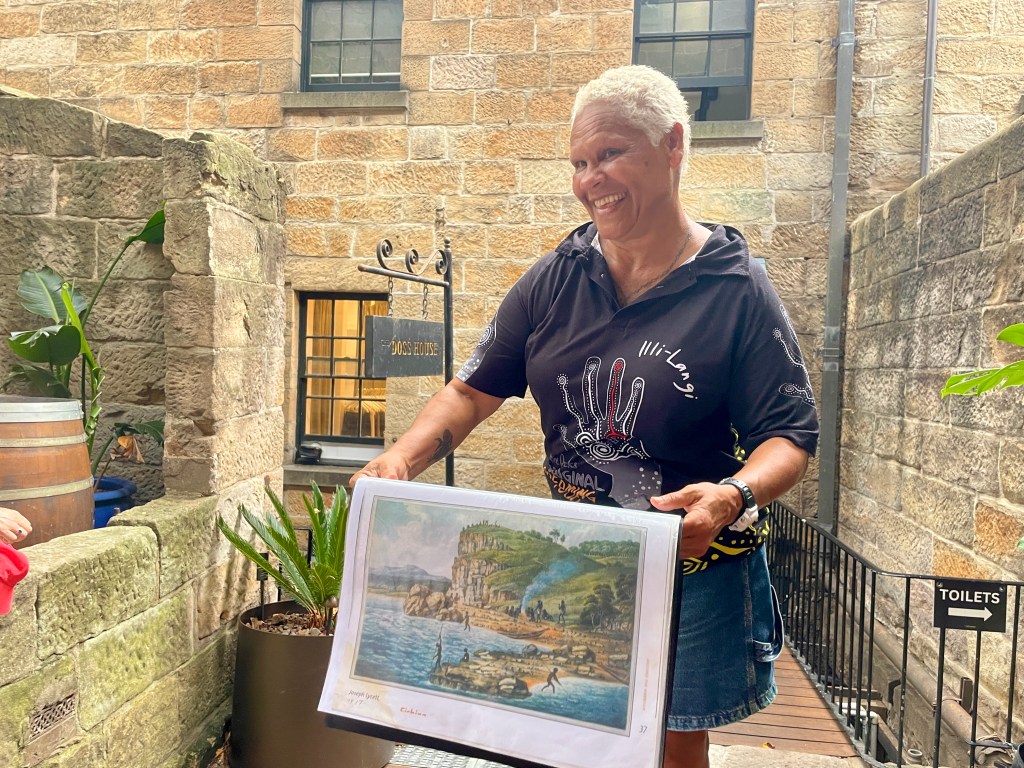
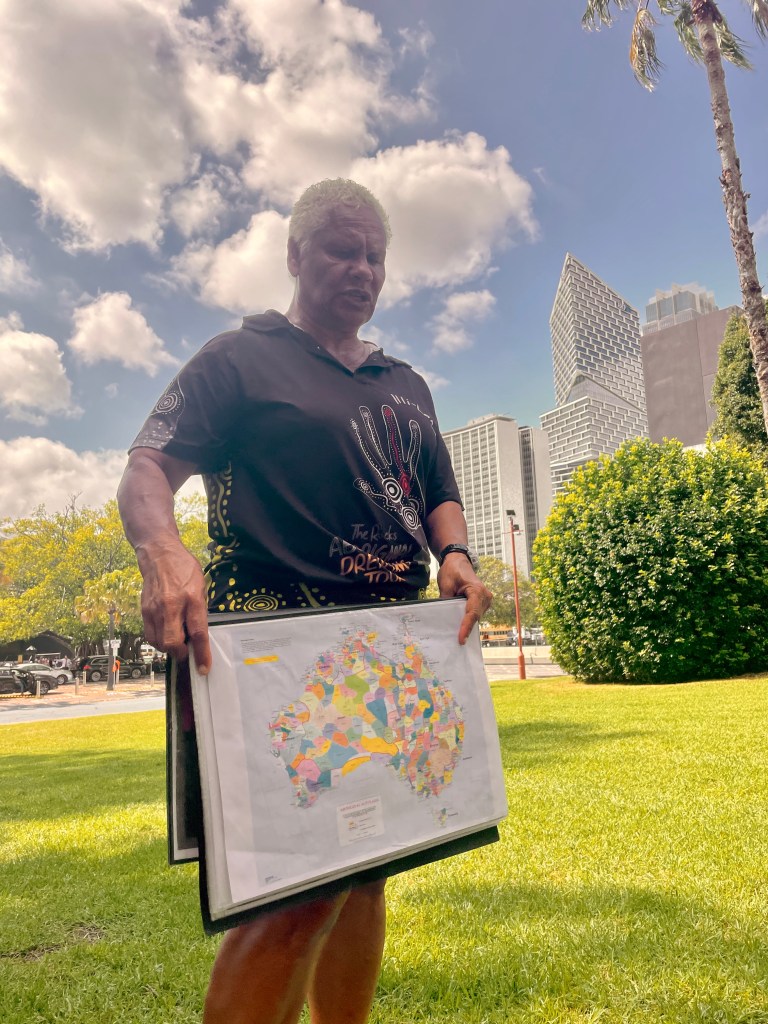
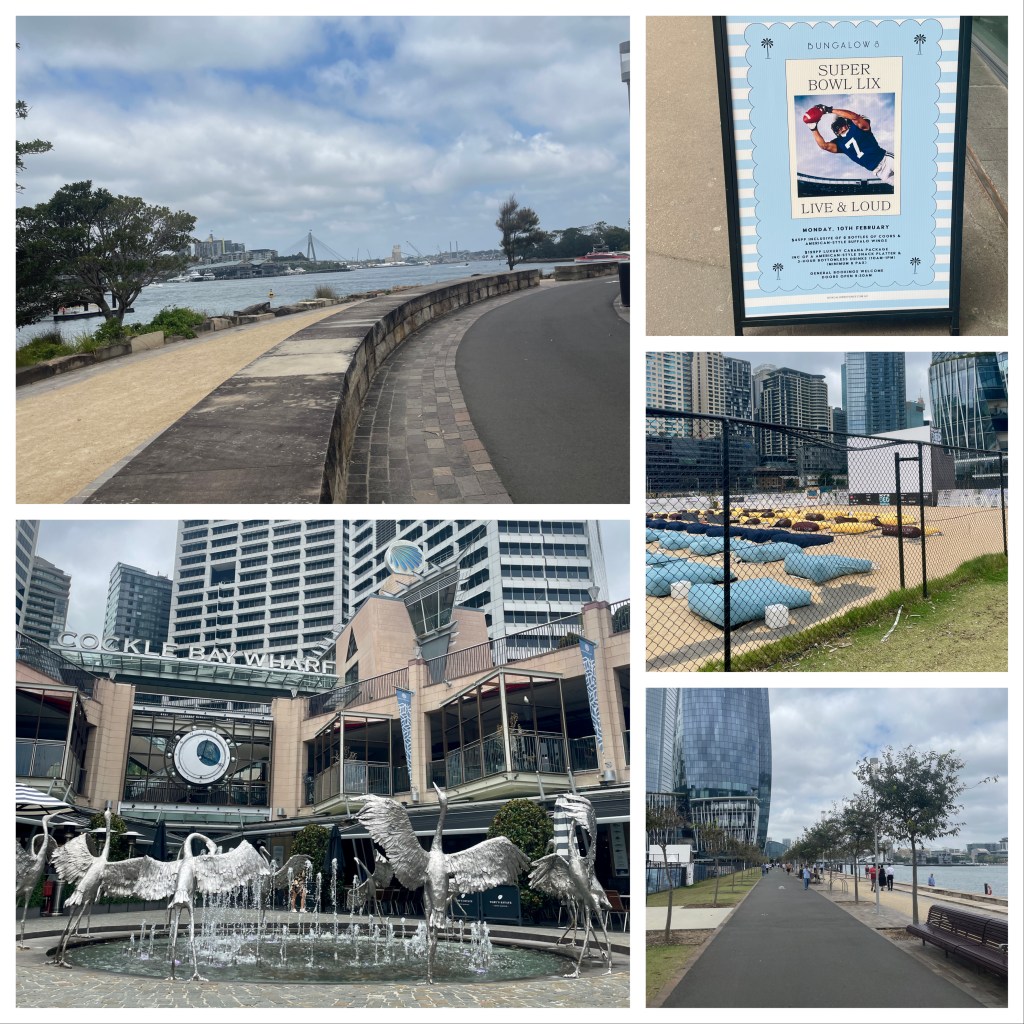
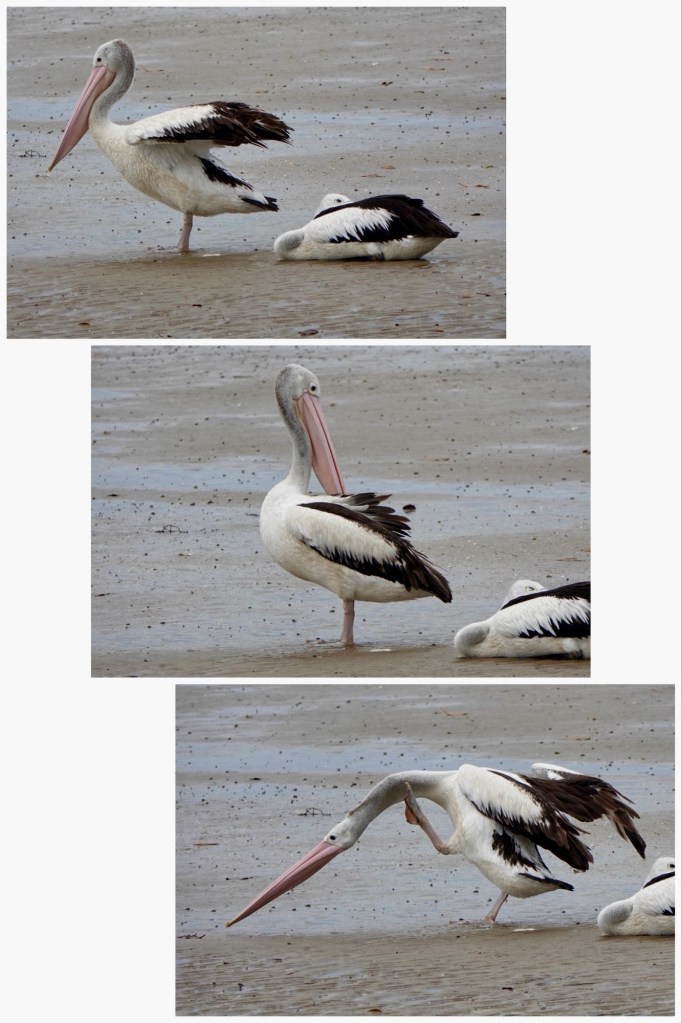
Great running and biking path along the harbor, outdoor cinema space with bean bag chairs, building art and marketing for super bowl watching. 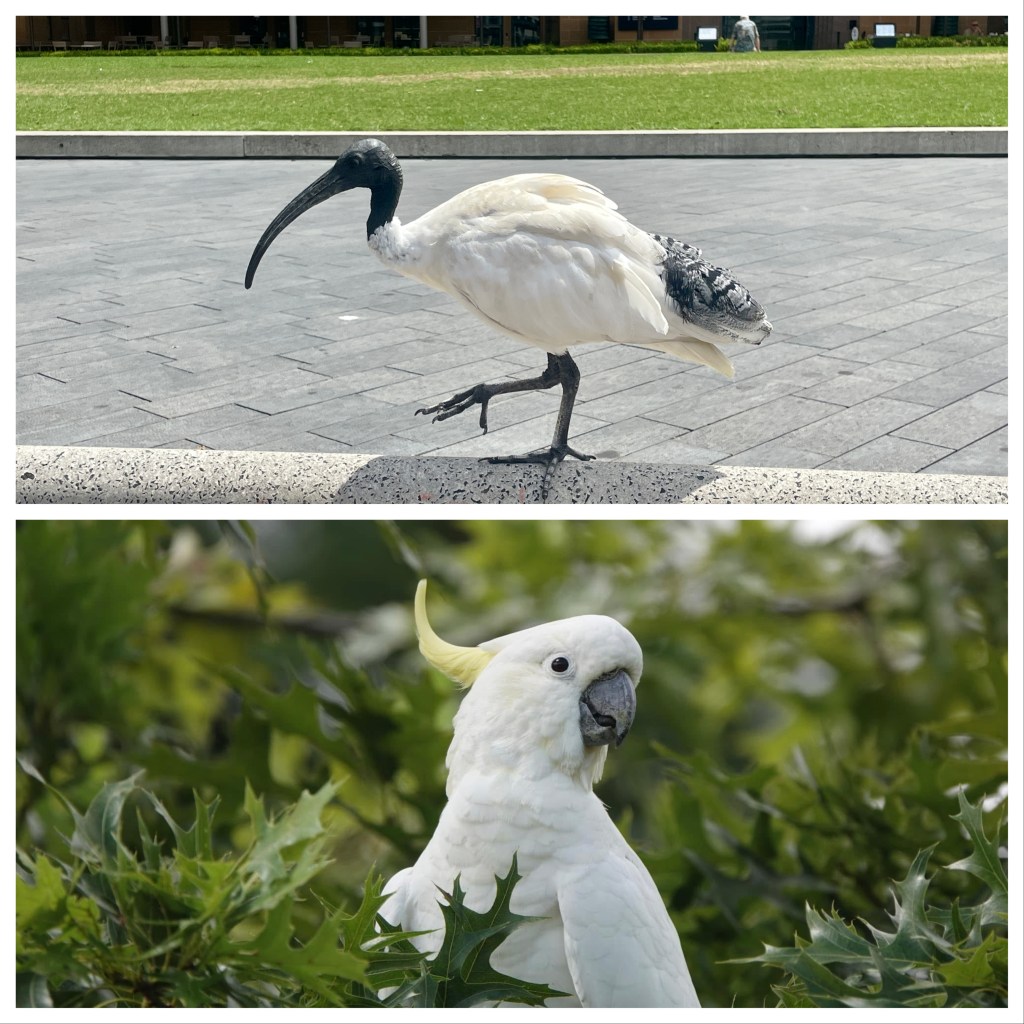
Birds seen in downtown Sydney In the evening of Day 2, Viking presented one of their giant seafood feedings so we averted starvation. About 100 passengers disembarked and another 100 got on the ship. The new passengers should have been impressed with their first meal. It was followed by a nice presentation by the astronomer. We’re lots smarter now.
In the morning, we sat at our usual breakfast couch. Across from us were a mother and daughter who were on board for the Los Angeles-Sydney segment. We pleasantly asked how they liked the trip. Their answer was very negative. Of course, we asked why. They didn’t think there was enough to do.Nobody gave them ideas on what to do, so they stayed in their stateroom. When we commented on the educational sessions, crafts, cards, , etc they said they weren’t interested in them. They had meals with some people, but then the people never followed up with them. I think I understand why. We don’t hang out with negative people and seldom see anything to complain about. They reminded us that there is that element among our passengers. I’m happy that we avoid them. It has been a nice cruise with lots of new friends.
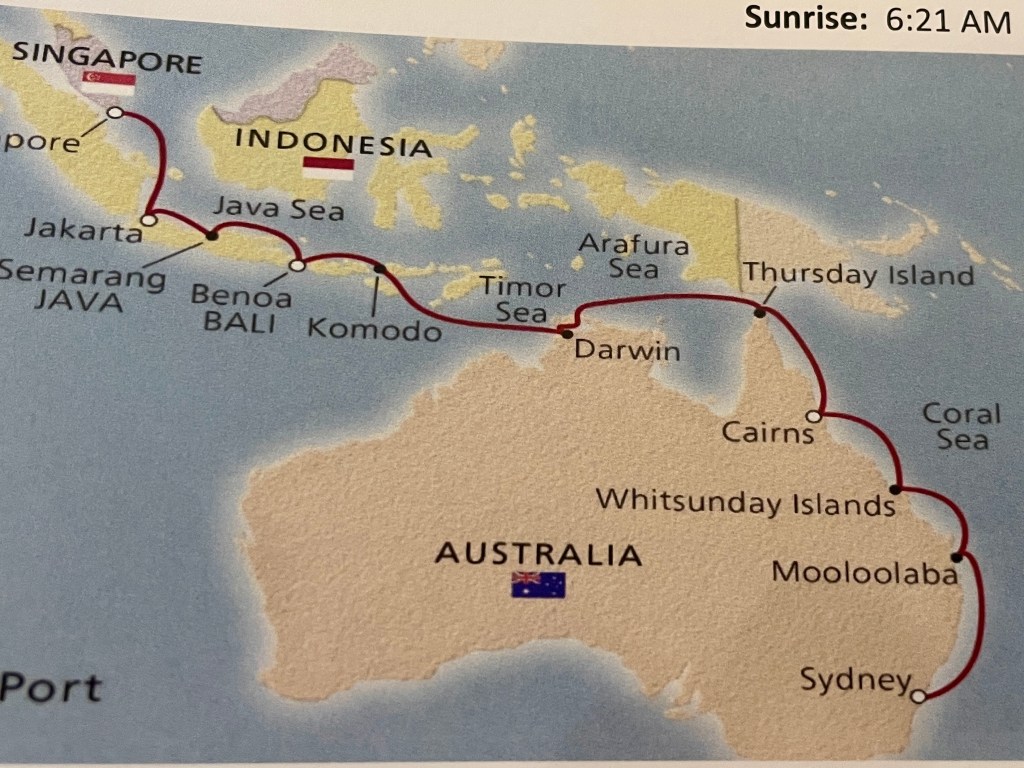
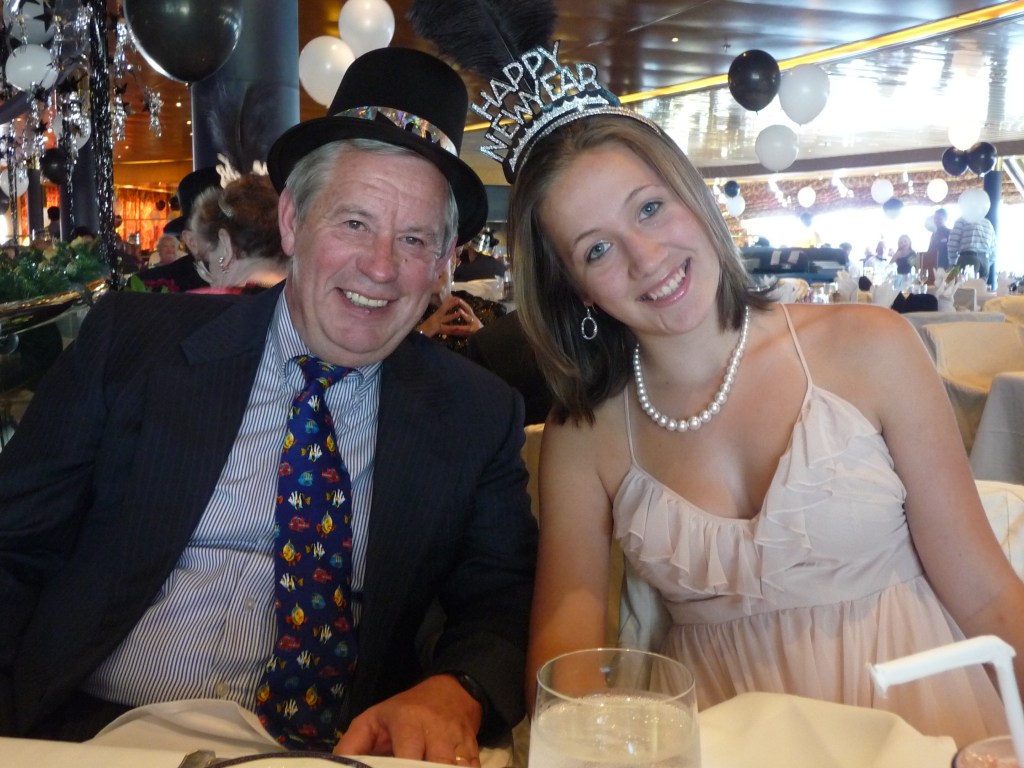
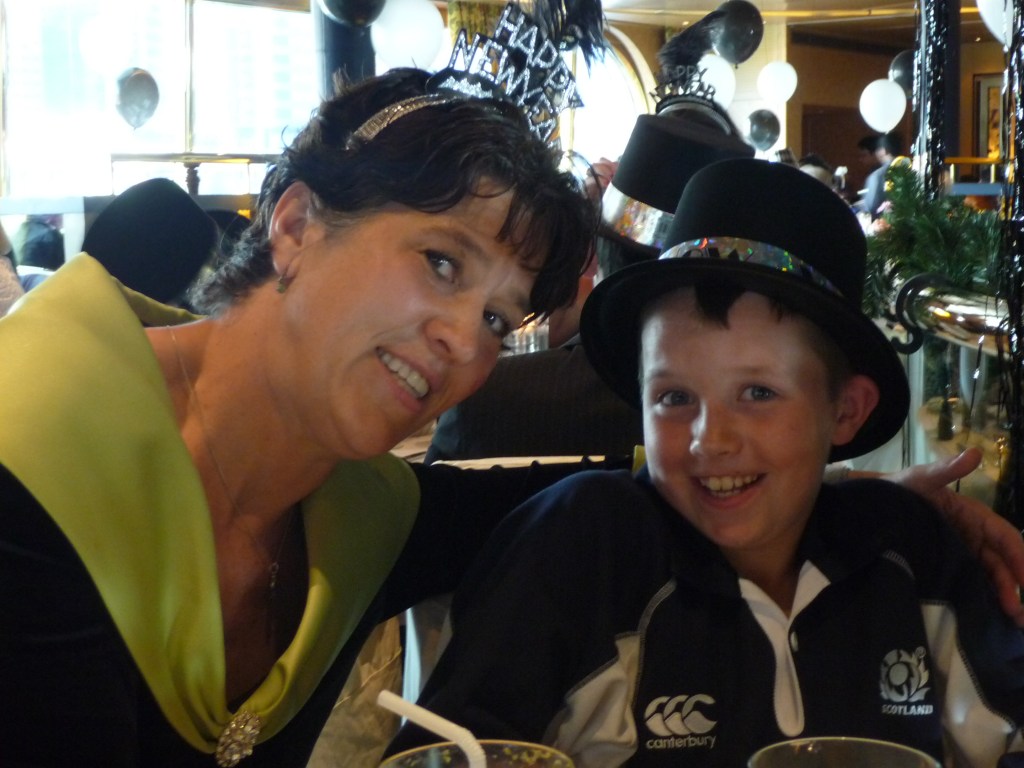
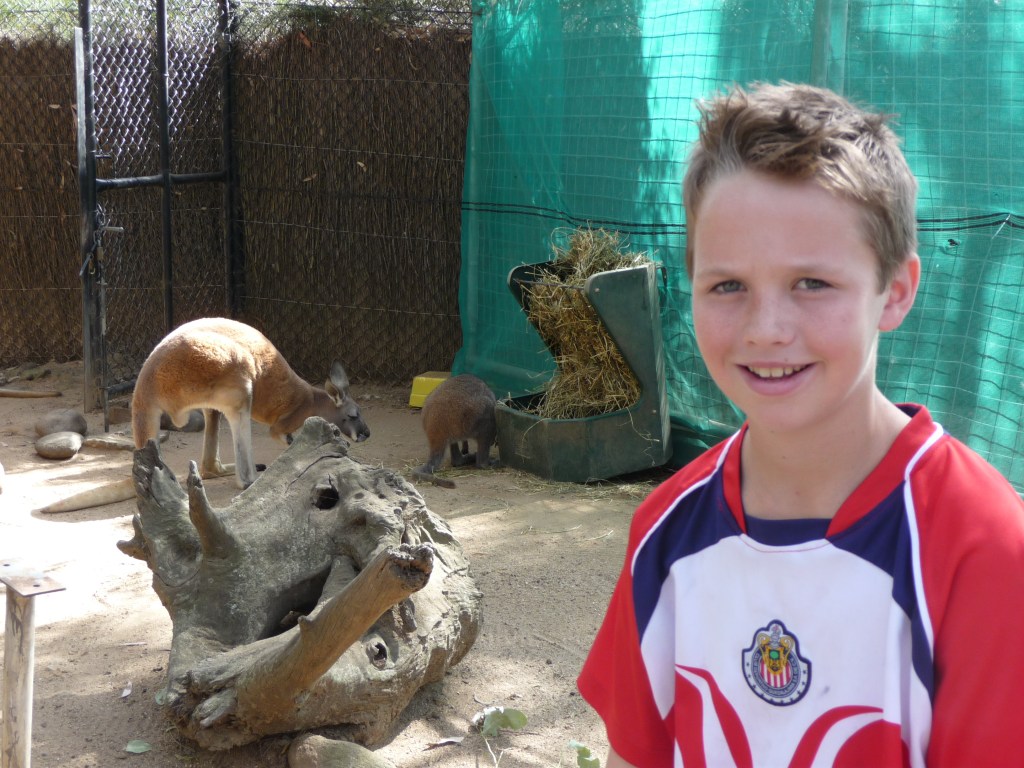
Next stops 2008-9 Australia trip with kids
In putting this blog together, we are checking our past photos and where relevant, including them. Over the holidays in 2008-9, we took a cruise with kids and stopped in Australia.
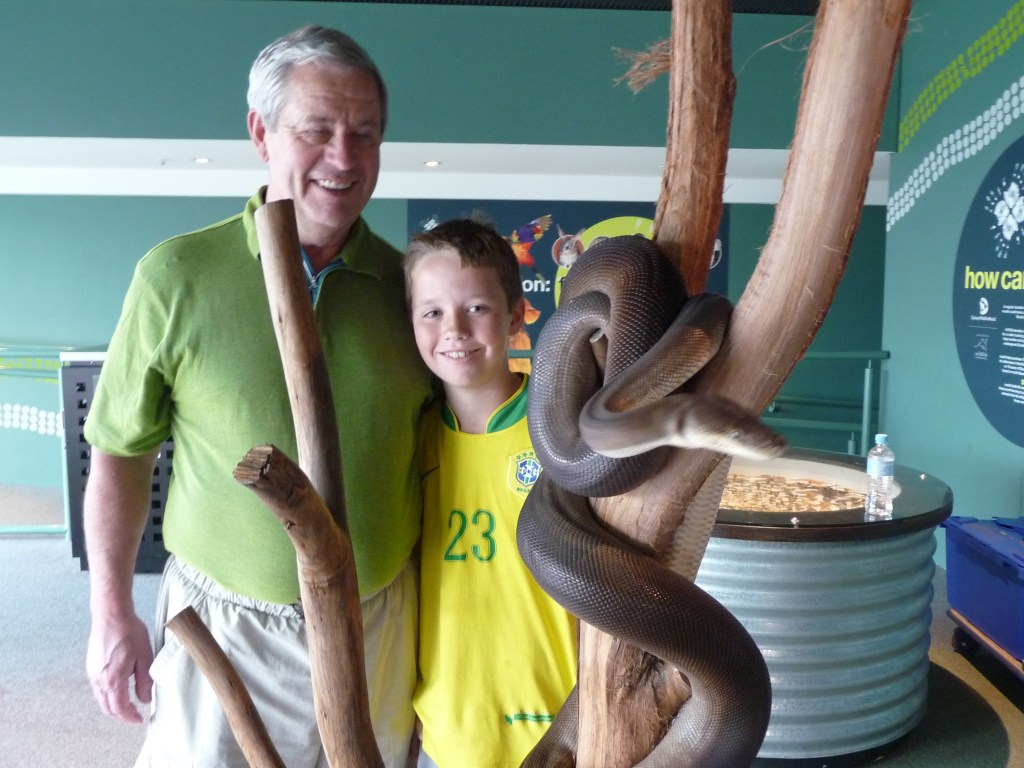
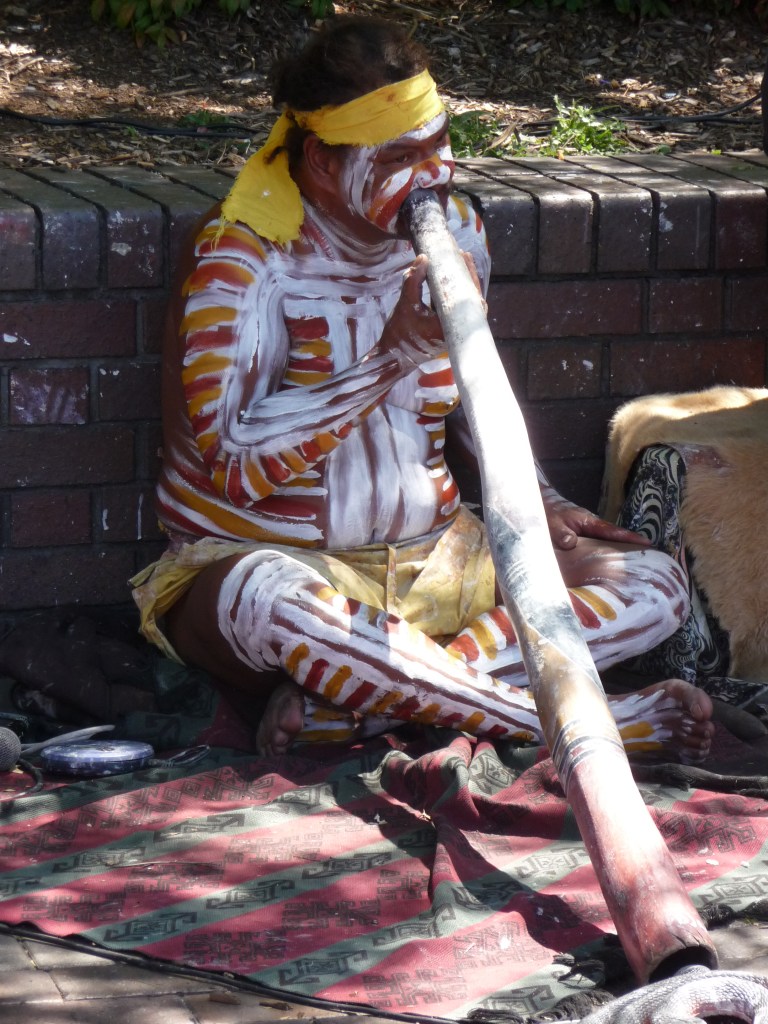
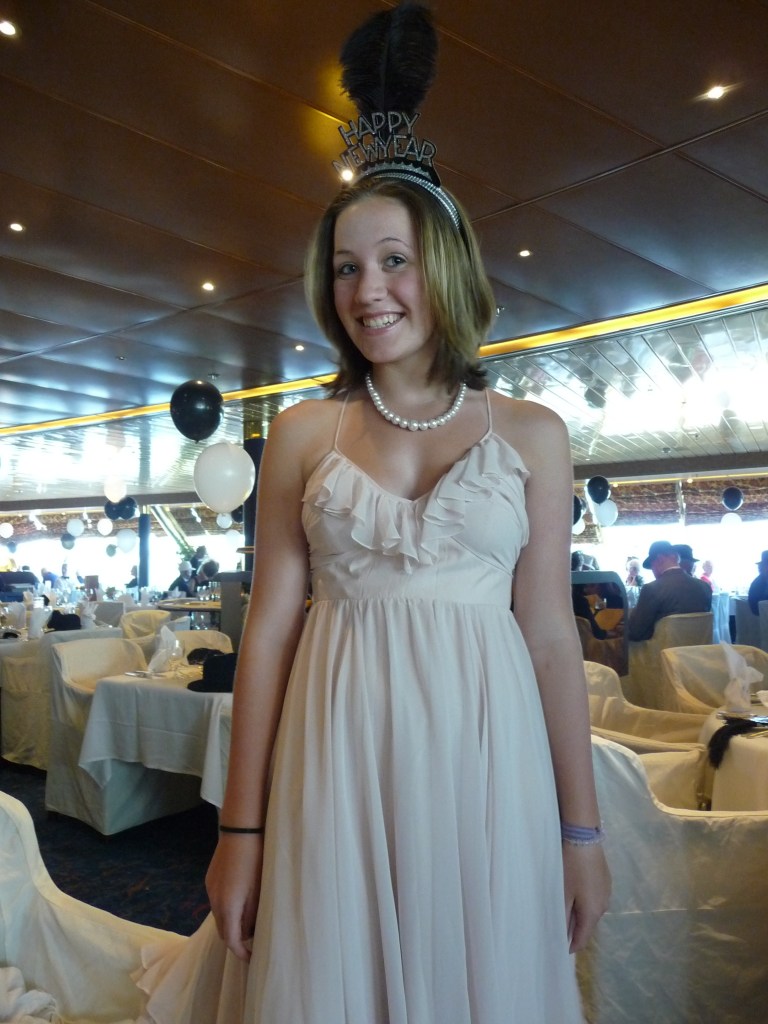
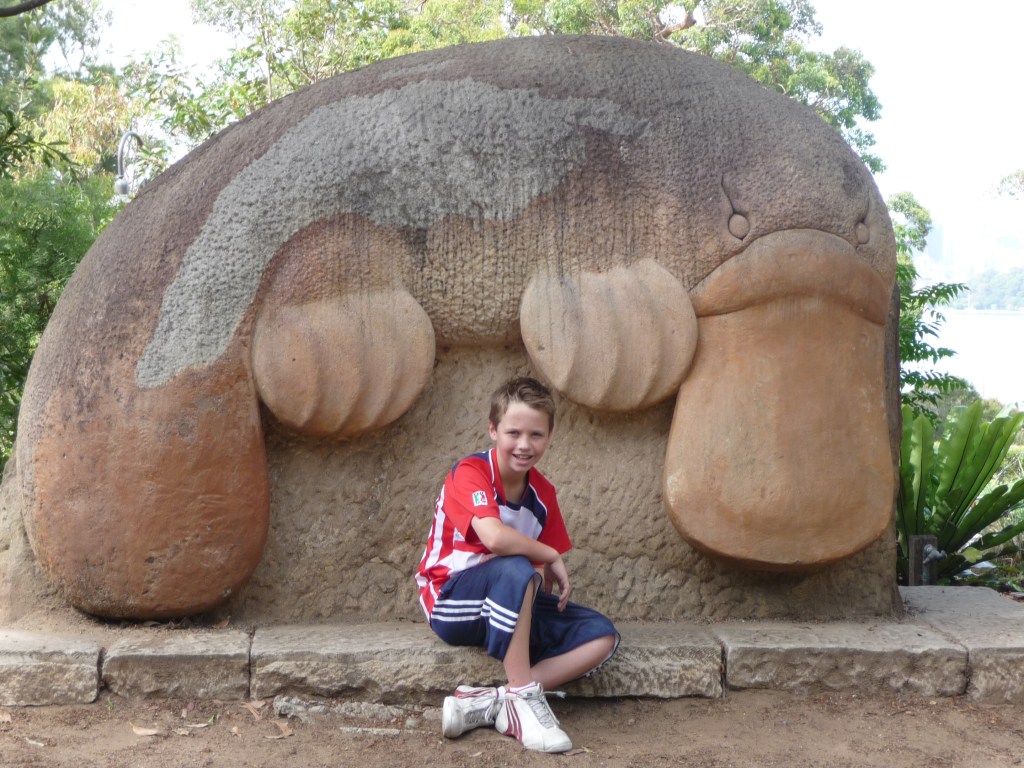
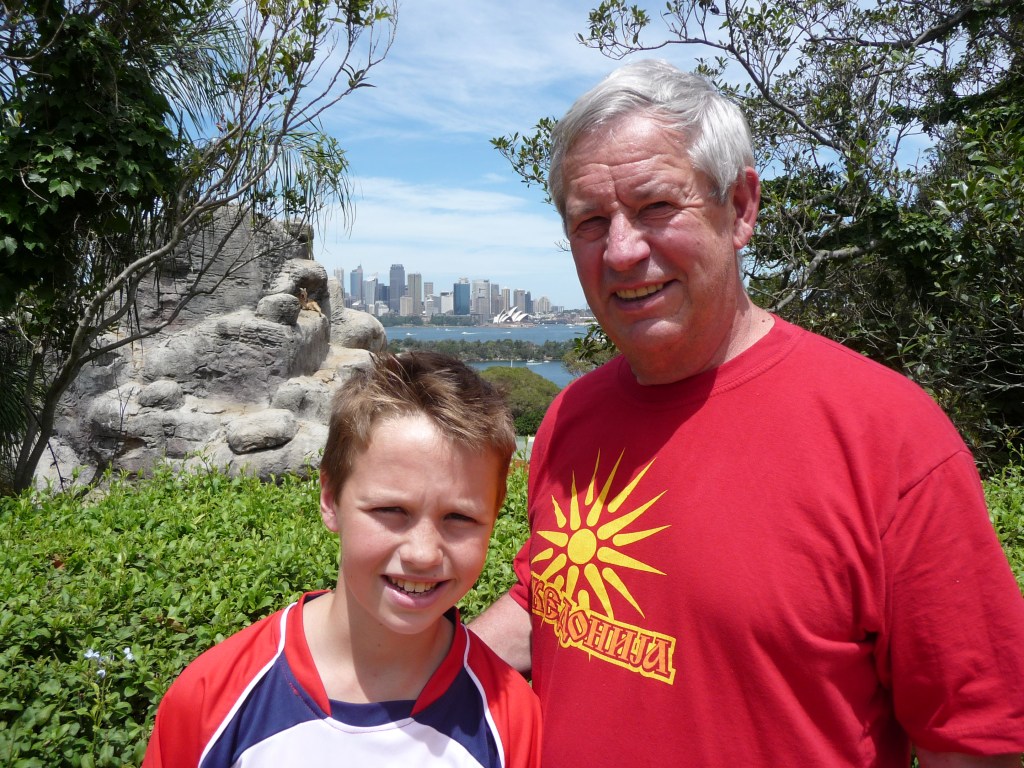
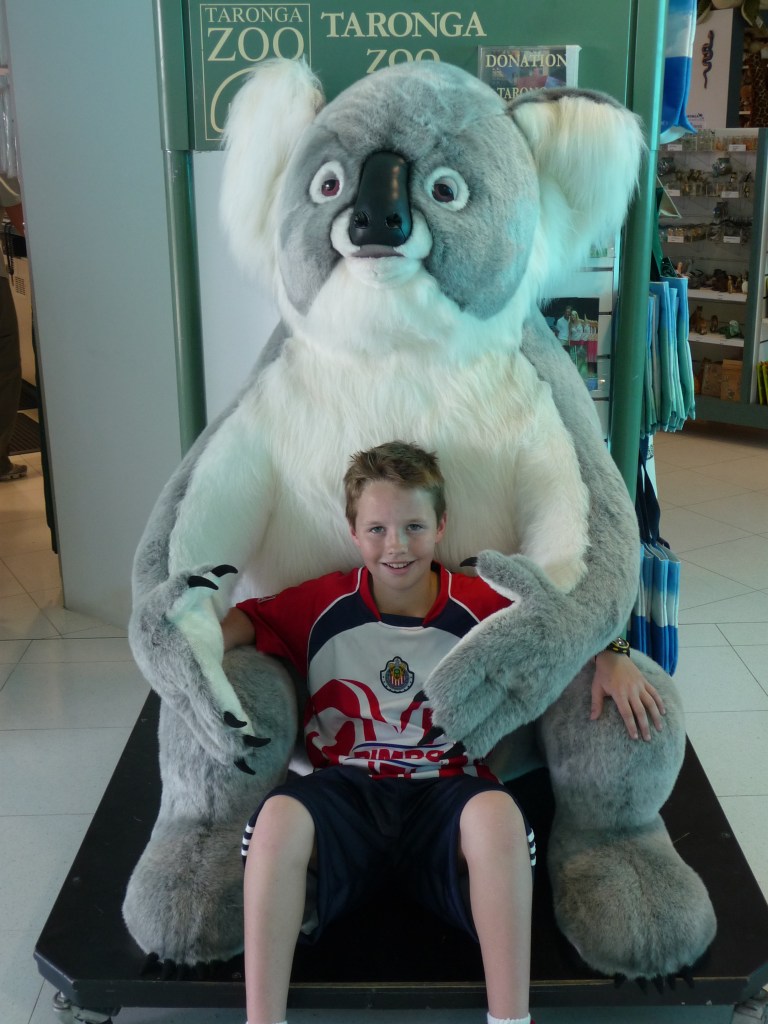
-
Australia
Feb. 5
We’ve been on the sea for one month. Before writing something on Australia, I thought it would be worthwhile checking in on the US. Naturally, I went to Truth Social for an authoritative update. Here’s what trump says:
“This is fun!. Now you see what a meritocracy looks like. No special deals for blacks, hispanics, gays, jews and disabled. America for Americans!! The woke D’s don’t know which direction we’re coming from. Elon is doing great. If I make Gaza a state, I may declare Elon as governor. Or, maybe Jared. He could develop the riviera coast. Baron could take over when he’s 21. Donny will be governor of Greenland. Eric can have Panama. I’ll have to talk to Melania about Canada.. She’s still upset about Stormy (who isn’t my type) and those other lying females. We’ll have more trump governors than anyone thought possible. I’m still working on a new flag design. I’ll have 5 choices and every American who sends me $10,000 can vote. No one believed that I could win the tariff wars with Mexico and Canada, but everyone says it’s a victory the likes of which have never been seen before. Remember, you can get a facsimile of the pens I use for signing Executive Orders for only $100 plus shipping and handling.”
It looks like everything is going as expected in the states, so I’ll turn to Australia We’ll be visiting from February 4 to 14, making stops in Sydney, Mooloolaba, Whitsunday Island, Cairns, Thursday Island, and Darwin. Fortunately, the Super Bowl is on a sea day….at 9:30 am.
Australia is the world’s 6th largest country, about the size of the US. It’s the oldest, driest, flattest country in the world and boasts both deserts and rainforests. Just about all of the 27 million people live on the coast rather than the dry, barren middle. It was settled about 50,000 years ago as its inhabitants migrated from Africa through Asia. There were about 250 languages spoken as the Aboriginal people spread throughout the country.
About 80 percent of the plants and animals there exist only in Australia. There were flightless birds, a 5500 pound wombat, pythons, kangaroos, platiypi (platypuses?) and turtles with hair. In New Zealand they say there are “no critters.” In Australia, they say everything wants to kill you.
Of course, I have questions about the culinary side of the animal population.
-Does a platypus taste fishy? or, like a duck?
-Do koalas taste cuddly? or like eucalyptus?
-Is a kangaroo bouncy? rubbery?
-I know crocodiles are tough if not marinated.
-Of course, an ostrich tastes like chicken
-And which of these are white meat so wives who don’t eat red meat will have some options?
There were an estimated 300,000 to three million Aboriginal people living in Australia when the country was “discovered.” Abel Tasman sailed up the west coast in the mid 1600’s. While he named the continent New Holland, he was more interested in finding spices for the East India Company than settling a new land. The British took an interest in settling the east coast and that interest was increased, surprisingly, by the Revolutionary War. When the British were displaced by upstart Americans, they could no longer send their convicts to Georgia. (Think ancestors of Marjorie Taylor Greene) so they focused on a new out-of-the-way land…Australia. The convicts were followed by exiles to supplement the labor force. Next came “blackbirding,” the practice of recruiting workers from the South Sea islands. Much of the “recruitment” took the form of kidnapping. The best way to acquire larger parcels of land was through extensive grazing of sheep. This, in turn, led to the immigration of a number of sheep shearers.
The flow of laborers was increased significantly by the “Gold Rush” in the 1850’s. That brought miners from Asia, Europe, and the US. Most of them were unsuccessful, but they represented a significant increase in the labor supply. Many disappointed miners were able to “squat” on land and assume ownership. Missionaries, who began arriving as early as 1815, were there to help with the displaced Aboriginal people. They removed children from their families to civilize them….not unlike what happened in the United States through the Bureau of Indian Affairs.
In 1905, the Commonwealth of Australia was established. At that time, there were many efforts that moved in a progressive direction In 1902, women got the right to vote. In 1912, retirement pensions were established, as well as maternity leave. In 1938, a federal minimum wage was established ($0.25 per hour).
Australians were active participants in World War 1 and 11.( The Japanese bombed Darwin and other parts of Northern Australia in 1942.) They continue to be involved in a number of peacekeeping missions for the United Nations. While they are a Constitutional Monarchy and have close relations with the US, their number one trading partner is China.
In 1967, Aboriginal people became citizens. There have been efforts to recognize their heritage, honor their languages and culture, and to return some of their lands. Lots of public meetings begin with a recognition of their heritage.
Today, there is a very diverse workforce. Skilled immigrant workers are welcomed. Australia had the highest sustained growth of any developed country between 1991 and 2020. That was stalled by covid in 2020.
-
We’re #1
Feb. 4
We’re in the 3rd day of a 3 day cruise from New Zealand to Sydney. There is an interesting clash between experiencing two great places to live and what is going on in the US. One might blame trump for the chaos in the US, but voters and Republican legislators also have some responsibility. I think that part of the problem is that many Americans think that “We’re Number one,” …the greatest country in the world.
There are international measurements and rankings of countries that come from the UN and other sources. I’m sure that the rankings are not absolutely accurate, but they are indicative. Let’s look at healthcare. In the US, I’ve read that we have the best healthcare system in the world. The international rankings find that Australia, The Netherlands, and the UK are at the top. The US is last among developed countries in terms of quality and affordability. Some other rankings include:
– Freedom Index (Cato Institute). Not in the top 15.
-Education. #36
-Life expectancy. #55
-Gender equality. #46
-Social progress #25
-Human poverty index. #1.
-Human rights. #59 or 6th worst among developed countries
But, let’s look at where we’re near the top
-Firearms ownership. #1 by far
-Per capita military spending. #2 after Israel which largely comes from the US.
-Pollution. #2 after China
-Incidence of Cancer. #4
-Incarceration. #1. grouped with Turkmenistan ,Rwanda, El Salvador and American Samoa
Drug use #1
Perhaps, if we could look more closely at ourselves and had more humility than arrogance we would be more successful in dealing with our own problems and dealing with other countries. The Post World War II world order seems to have served us pretty well. Glimpses of where were headed don’t make me optimistic. It’s too bad that New Zealand is so far away.
-
Immigration
Feb. 3
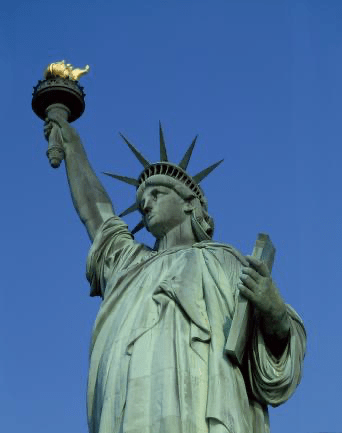
“Give me your tired, your poor, your huddled masses yearning to breathe free,” Emma Lazarus, The New Colossus, inscribed on the Statue of Liberty
Welcome the Stranger. The three Abrahamic religions
“America is for Americans”. Stephen Miller
“We will carry out the largest domestic deportation operation in American history”. DJ Trump
Putting aside the trumpist blather about Muslims, Hispanics and “shithole countries,” there are reasons to encourage immigration beyond the value of being welcoming. We should anticipate competition in attracting foreign workers to keep our countries growing. Many countries need to weigh economic needs against cultural, racial and sexual prejudices.
Nicholas Kristof had a recent piece related to Africa. https://www.nytimes.com/2025/01/28/opinion/africa-population-youth.html. Some facts:
-In the early 70’s, fewer than 10% of the world’s babies were born in Africa. By 2100, 54% of the world’s babies will be born in Sub-Saharan Africa (Lancet demographic forecast). If that forecast proves accurate, then:
-In the 22nd century, a majority of the world’s population will be African
-In 2100, 80% of the world’s population will be African or Asian.
-Climate change and drought are leading to starvation in countries which have weak governance following colonial control.
Increasingly, developed countries will need workers to support growth in their economies. In the short term, we will be able to see the impacts of immigration policy on workers in farming, construction, meat packing, landscaping and other areas. In the US, our retirement system was created in the 1930’s. At that time, there were 6 workers to 1 retiree. Now, there are close to 2 workers for each retiree. Recently, China had 7 workers per retiree. In 2050, they are estimated to have a 2:1 ratio.
Hungary has a conservative government with an anti-immigrant bias. Fifty-seven percent of young people plan to leave the country. Eighty per cent of them are under 40. One third have college degrees.
Angela Merkel supported the need for more immigrants. She was moved out as Germany’s leader. A reaction against immigrants was an important reason for England leaving the EU. Trump has repeatedly supported building a wall to keep immigrants out of the US. Interestingly; it is a wall defending against brown Mexicans, not White Canadians.
There was an anti-immigrant sympathy at a number of times in the US. Catholics and Jews had barriers to overcome. The 1924 Immigration Act sought to discourage East Europeans and Asians from coming to the US. The Chinese played an important part in railway development in the US, but there were efforts to exclude them prior to World War 11. However, after the Second World War, the Marshall Plan was developed and efforts ensued to rebuild countries damaged by the war. The sense that we needed to protect the most vulnerable represented a new direction.
Since the trump inauguration and his rash of Executive Orders, we now have The Defense Intelligence Agency, for example, discontinuing, celebration of MLK day, Black History Month, Juneteenth, LGBTQ Pride month, Holocaust Remembrance Day, and other special observances. No resources are to be spent on affinity groups or employee networking groups. And, accessibility programs are off limits.
It is nice to be spending time in New Zealand and Australia where there has been more attention on honoring the Maoris and Aboriginees and to support multicultural populations. Most countries are going to have an economic need for more immigrants. The most successful ones will be those that overcome prejudices and short term political gain in favor of economic prosperity.
-
Subscribe
Subscribed
Already have a WordPress.com account? Log in now.
 Millers World Cruise 2025