-
Phuket, Thailand
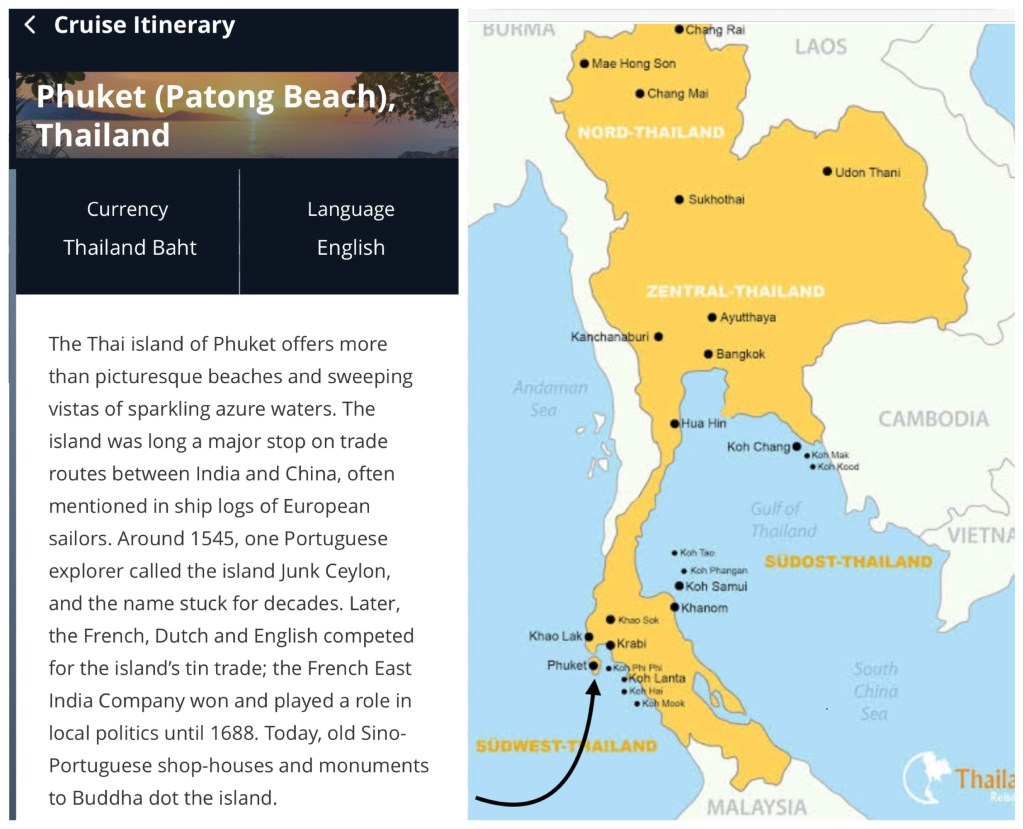
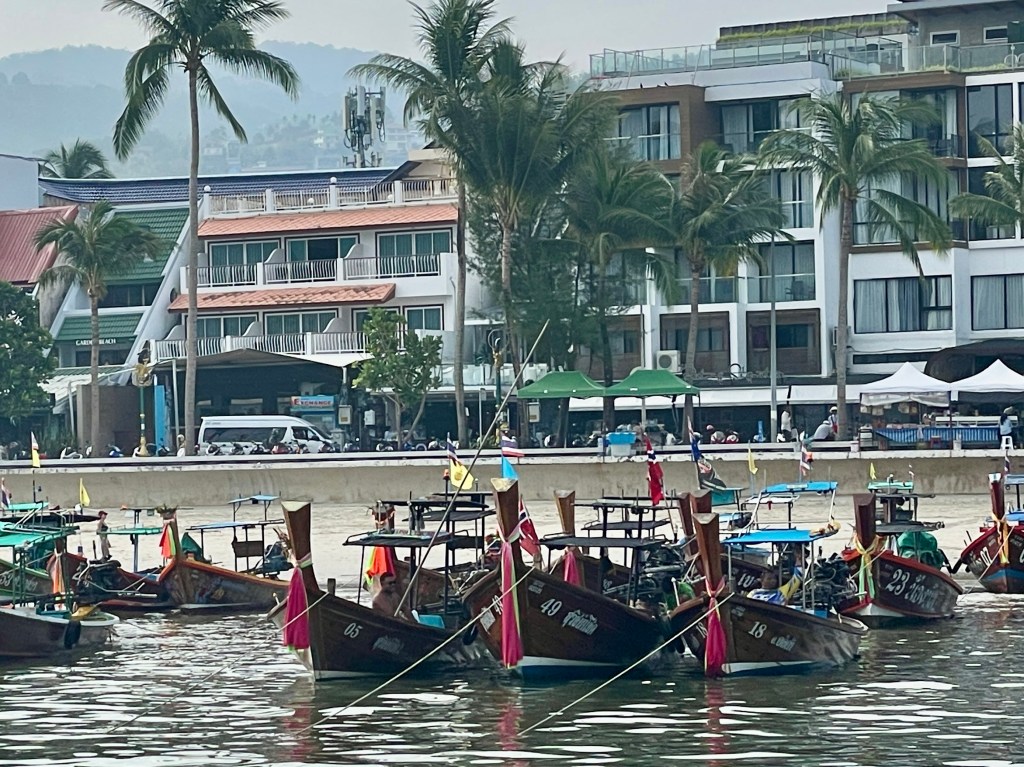
This was a tender port. Colorful fishing boats 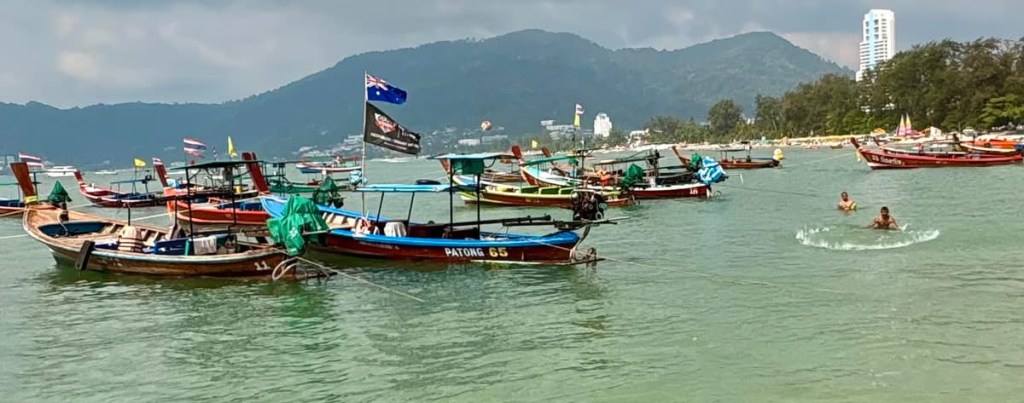
March 6
Phuket is Thailand’s largest island and 2nd smallest province. It is our only stop in Thailand….which is OK. We like Thailand, but favor the northern part of the country. Our last ship-stop was at a port with access to Bangkok, but it required a 2 hour bus trip both ways. Then, the city was so crowded that it was difficult to do much. Our stop this time found us in Patong Harbor. While we had stopped here before and enjoyed our massages, I thought I’d check the web to get some commentary. I found a number of comments:
sleazy;
the most illegal sex tourism;
people seem to lose their moral compass;
aggressive taxi mafia and unfriendly tuk tuk drivers;
drunk tourists;
go go bars and prostitution;
tourist trap;
poor choice of luxury hotels…most 1 or 2 stars;
don’t be surprised to see unacceptable behavior at swimming pools,lobbies, bars and restaurants;
overdeveloped and too commercialized;
charm gets old quickly;
staying not a good idea…not family friendly; and, the winner;
too avoid the wastewater treatment fee, many households discharge wastewater (sewage) untreated into canals and the sea Sea water exceeds acceptable limits for fecal coliform and enterococcus. (I thought Karla could still snorkel, but she would have to be looking for “floaters” rather than fish.)
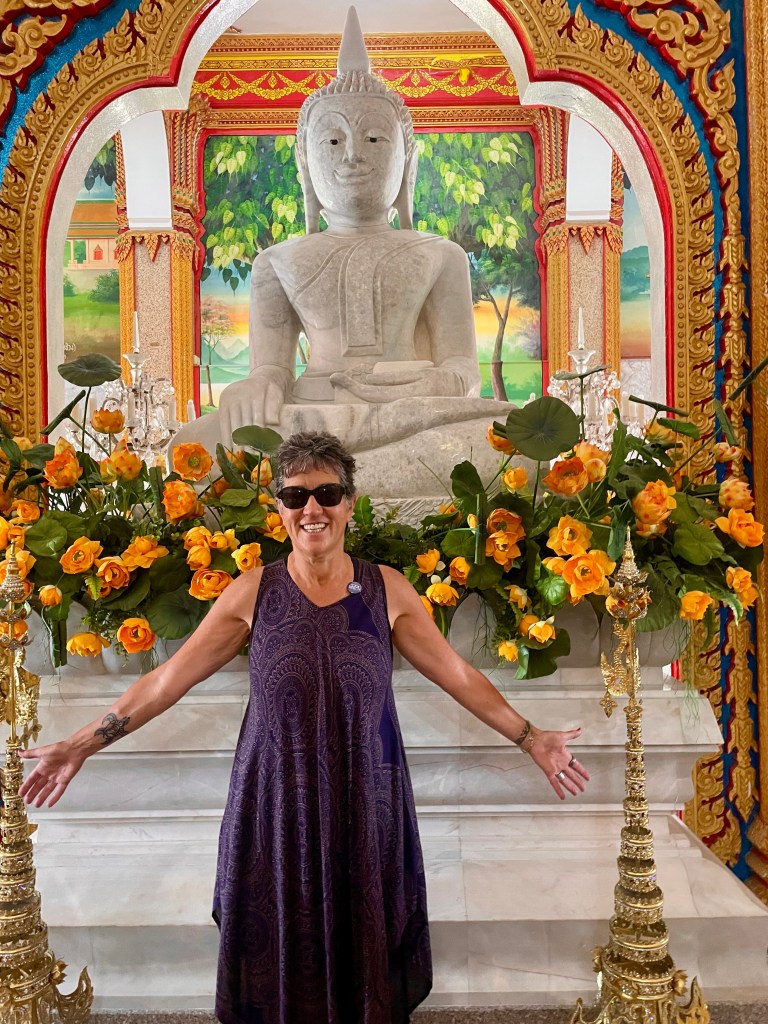
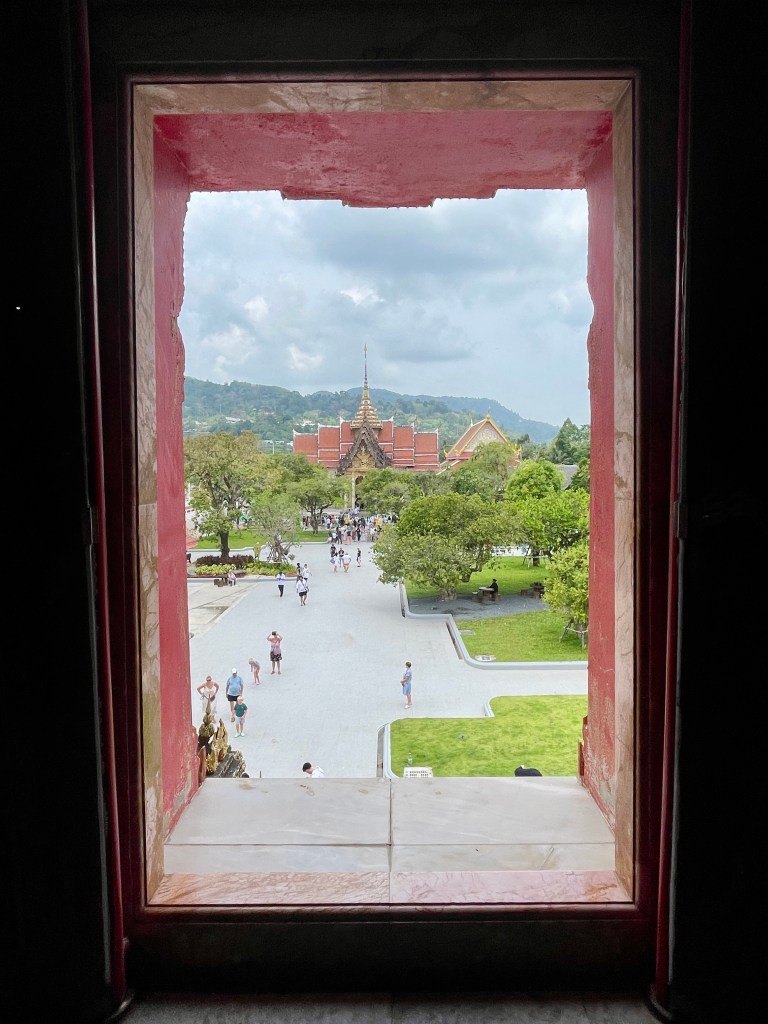
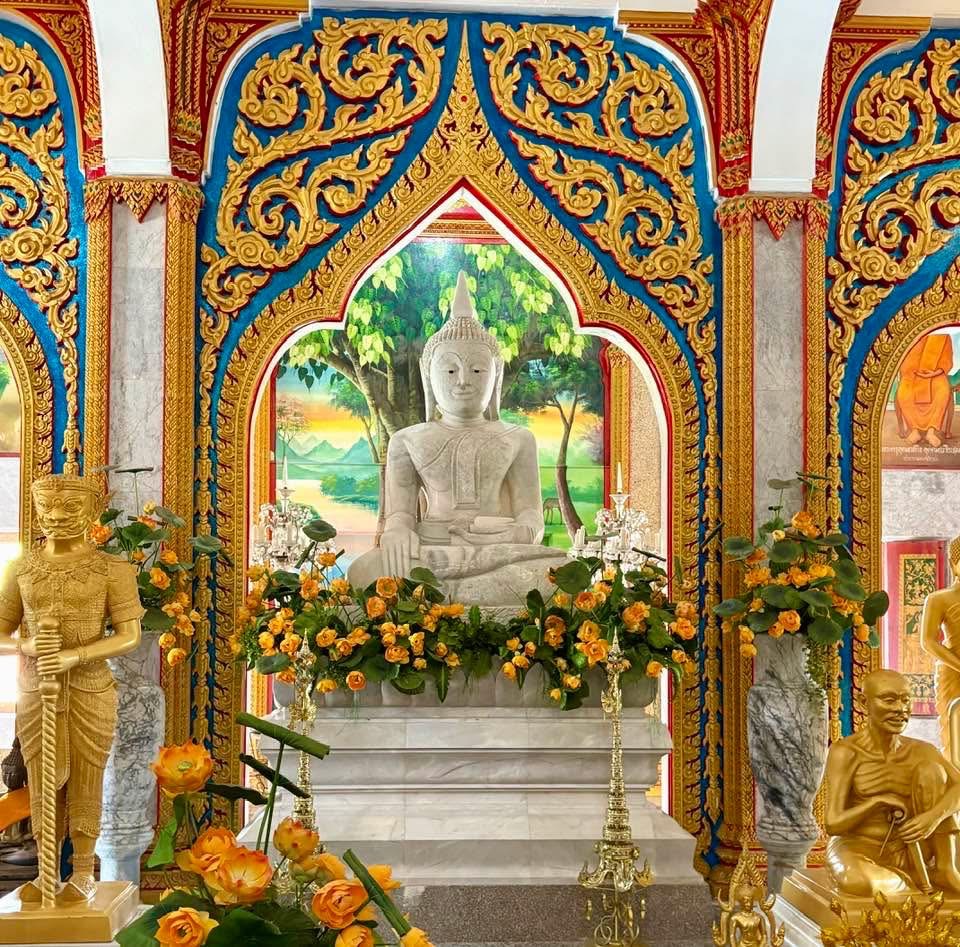
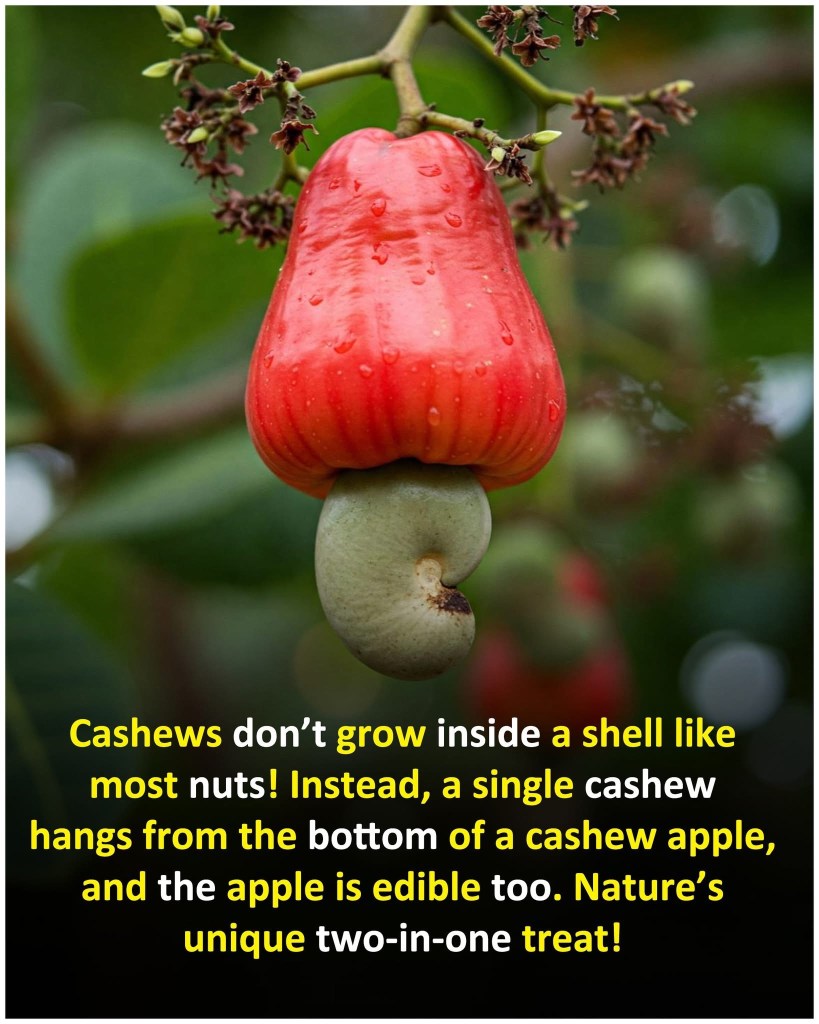
That sounded pretty good. So we arranged an island tour. We had a very good guide who led us to 2 temples and a cashew factory. Very nice scenery on the way. Karla commented that it might be fun to come back if it weren’t so hot (90-95). I’m getting about as many temples as I need, but they were nice. While Karla toured them with more vigor, I frequented the numerous small shops that spring up around all tourist sites. It’s hard to get enough colorful $5-6 dollar shirts. The cashew “factory” featured women shelling the cashews by hand, one at a time. After that brief look, we were able to enter the huge sales area and buy all kinds of products.
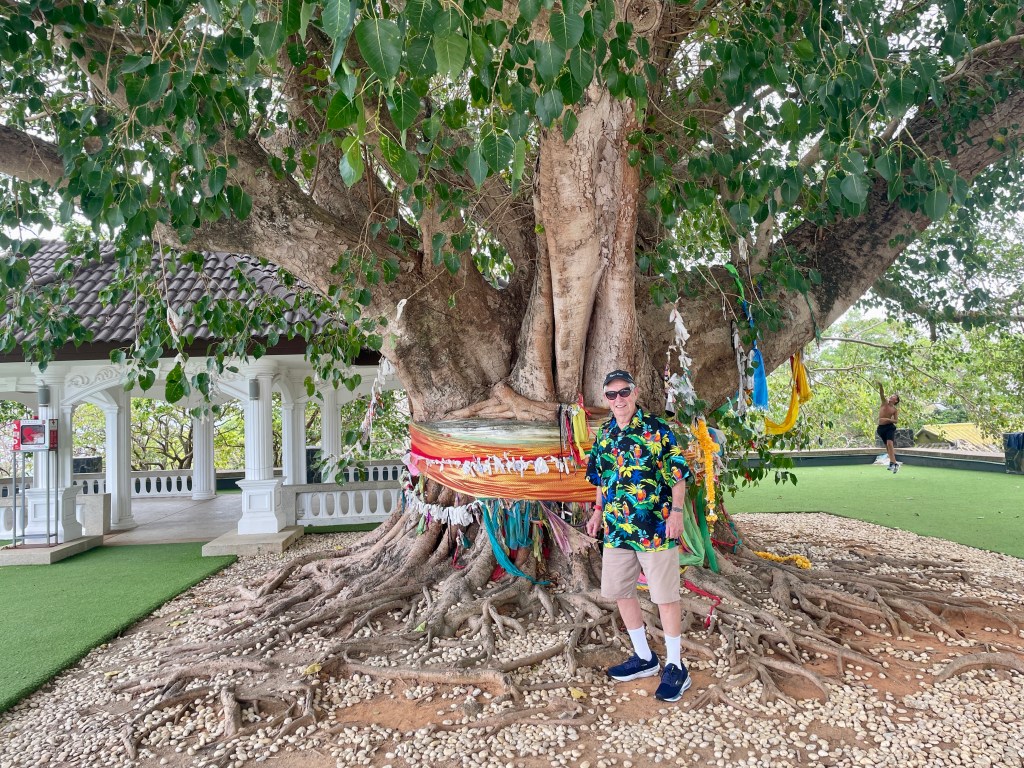
Bodhi Tree 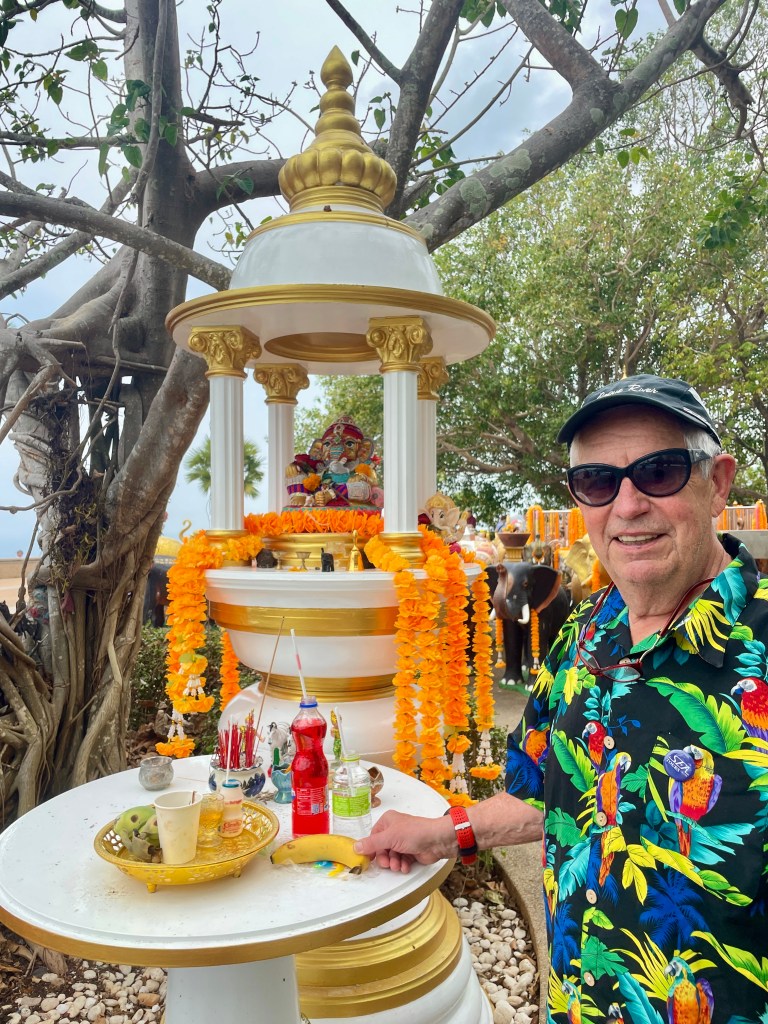
Hindu shrine 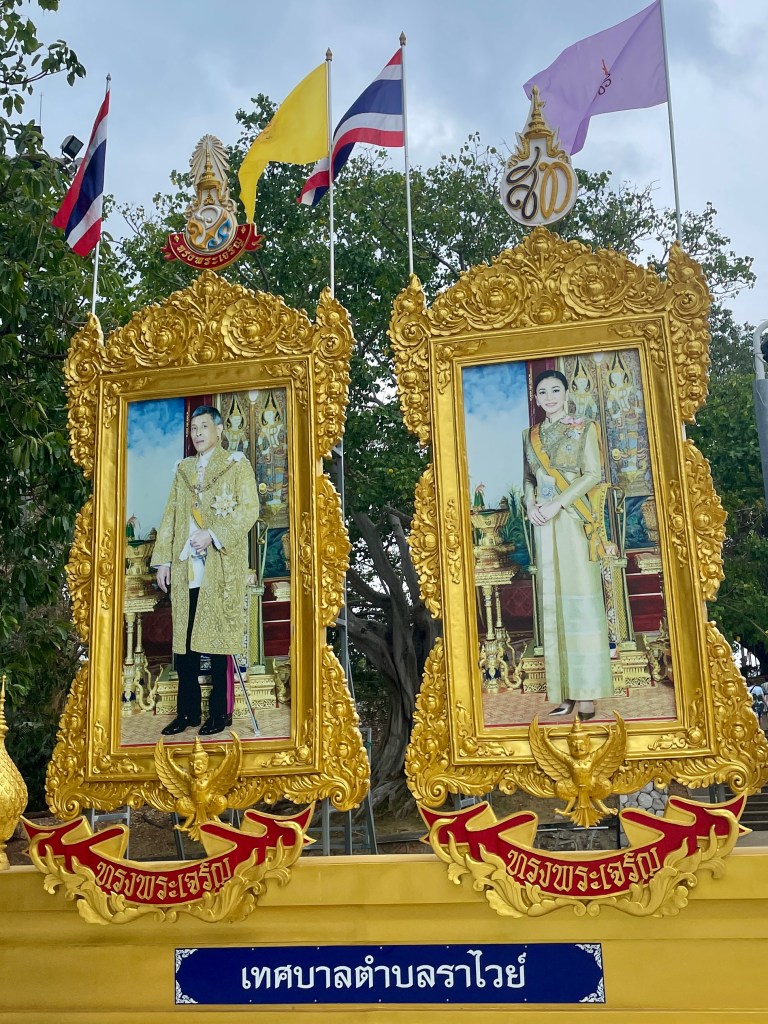
Thailand’s King and Queen 
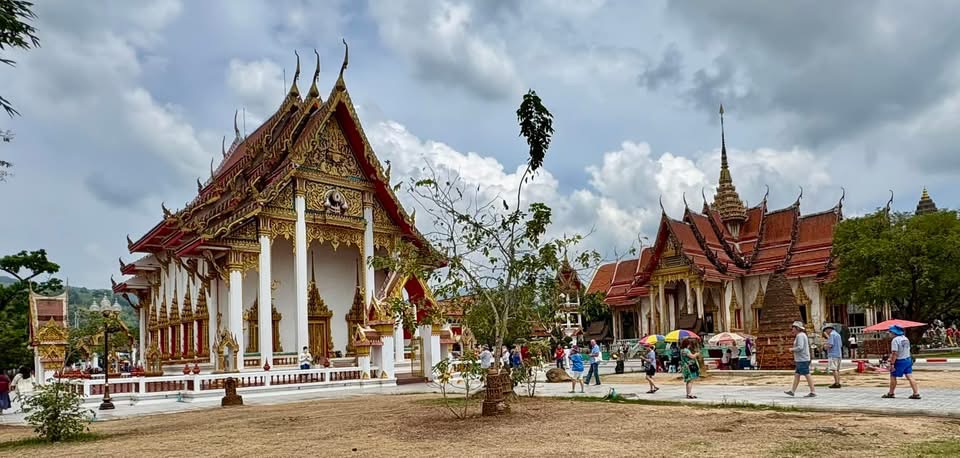
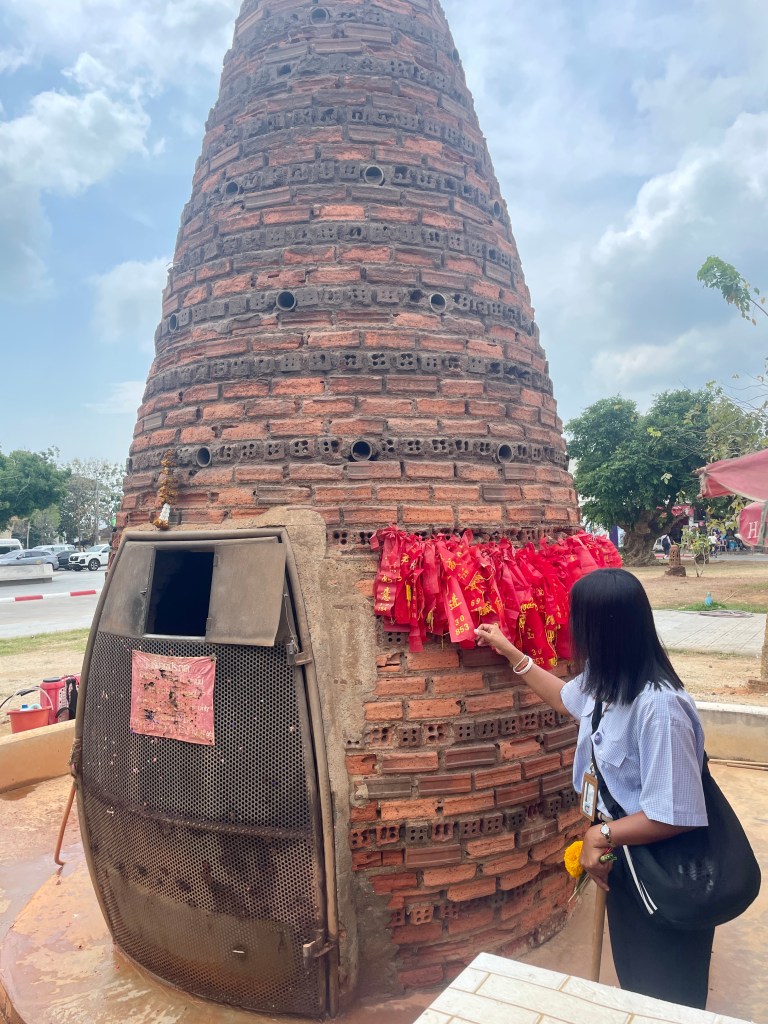
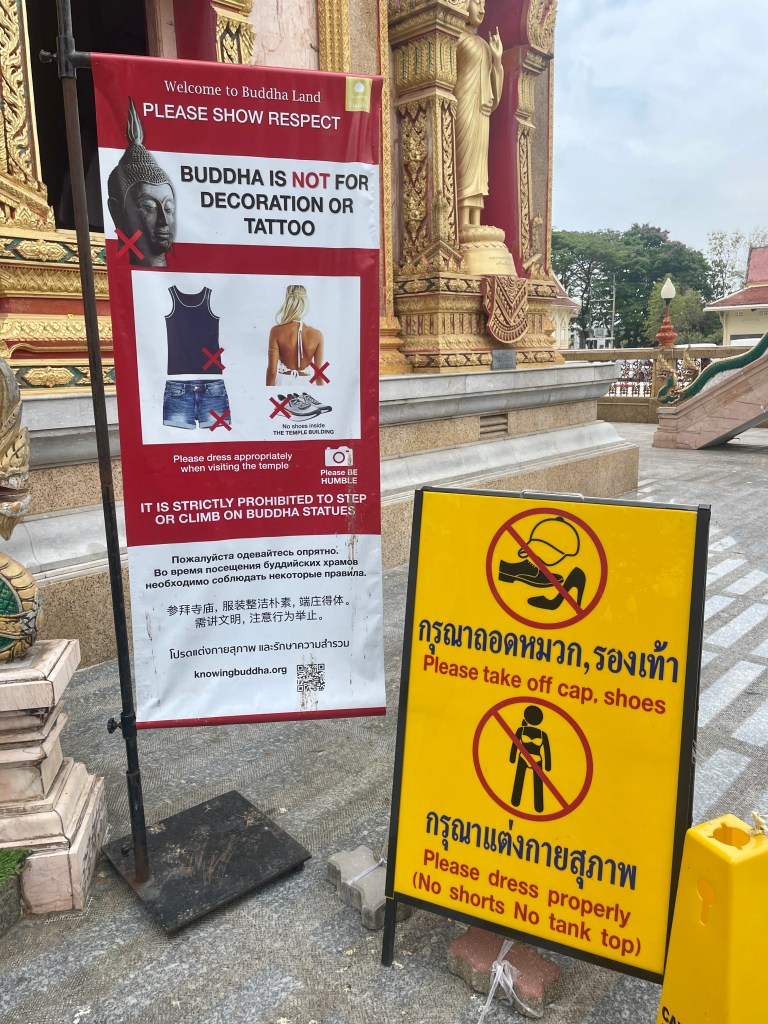
At Wat Chalong temple– stupa to set lit fireworks for good luck. Sound is supposed to chase away bad luck. 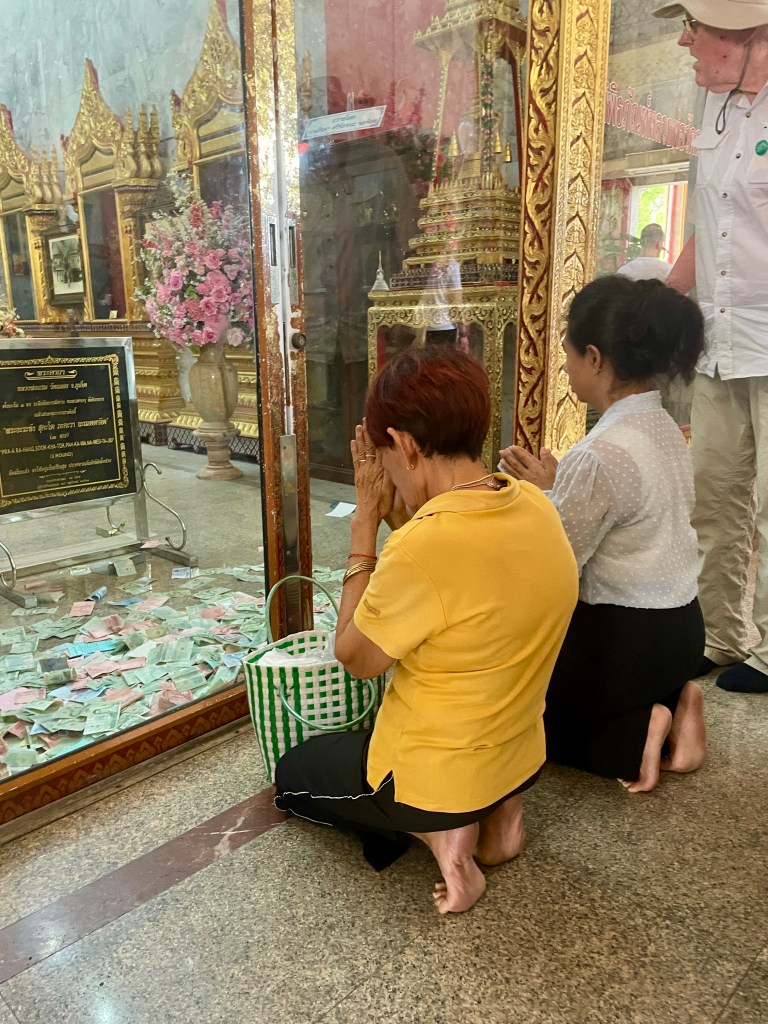
Prayers with money donations to help with good luck. 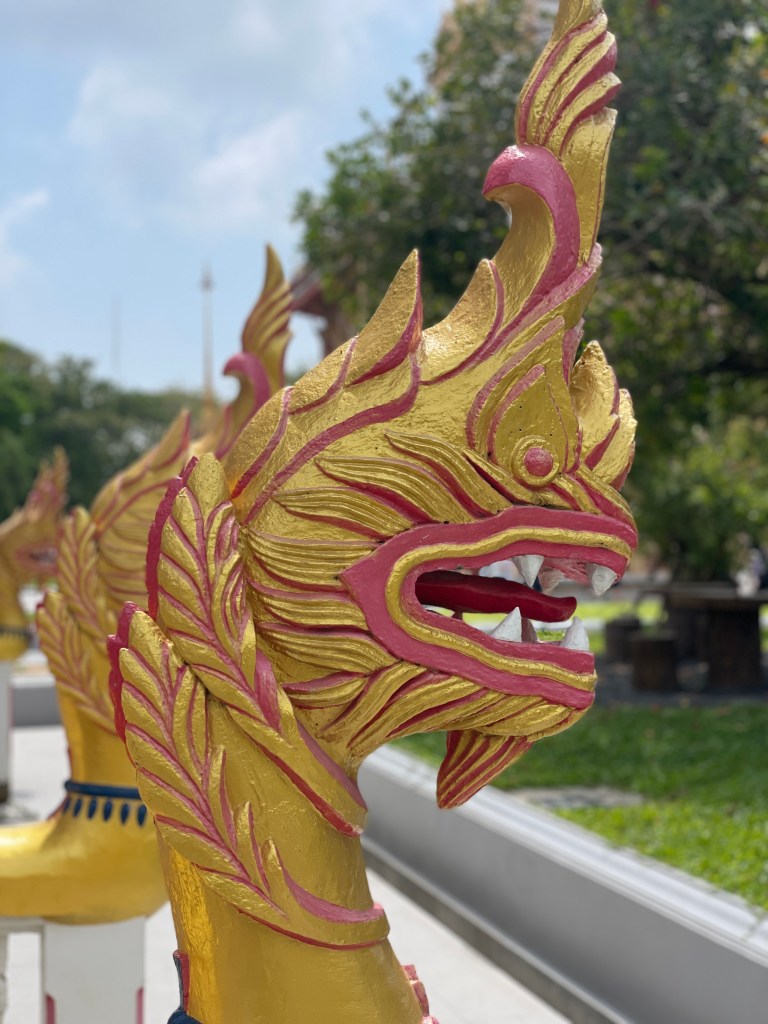
Once we returned to Patong, we went searching for a massage place. There were 5-6 on every block, it seemed, so the search was not difficult. We weren’t too particular, but there were one or two criteria. The signs on the door frequently said “no sex” and we wanted one of those. The second variable was more difficult. There are lots of “Lady Boys” who are men dressed as attractive women. (The language even has a 3rd gender referring to Lady Boys.) I was partial to having a woman masseuse, as was Karla. Karla got a whole body massage which included her person walking on her back. I got a back massage. Both were good….easily worth the $10 a piece. With such a great price, Karla could have gone snorkeling, but chose not to.
This entry shouldn’t end without a brief historical note on Phuket. How was it named? Students of English sailing history might recognize the name Percival Hightower. As a sea captain he admired the work of predecessors in establishing trading centers in Singapore and Penang. He reasoned that moving north and west from those posts he might find an island rich with spices. He was fortunate to anchor near what is now Phuket. He dispatched a crew to search the island for spices while he and his cartographer set about charting his discovery. His disappointed spice crew returned with a negative finding about the time the cartographer was asking Hightower what to call the island. His response to the exploratory crew was “Fuck It” He was obviously disappointed. The cartographer, thinking the captain was speaking to him, recorded the name, but thought it would be best to substitute PH for F to protect his captain’s future reputation. And, there you have it.
-
George Town, Day 2
March 5
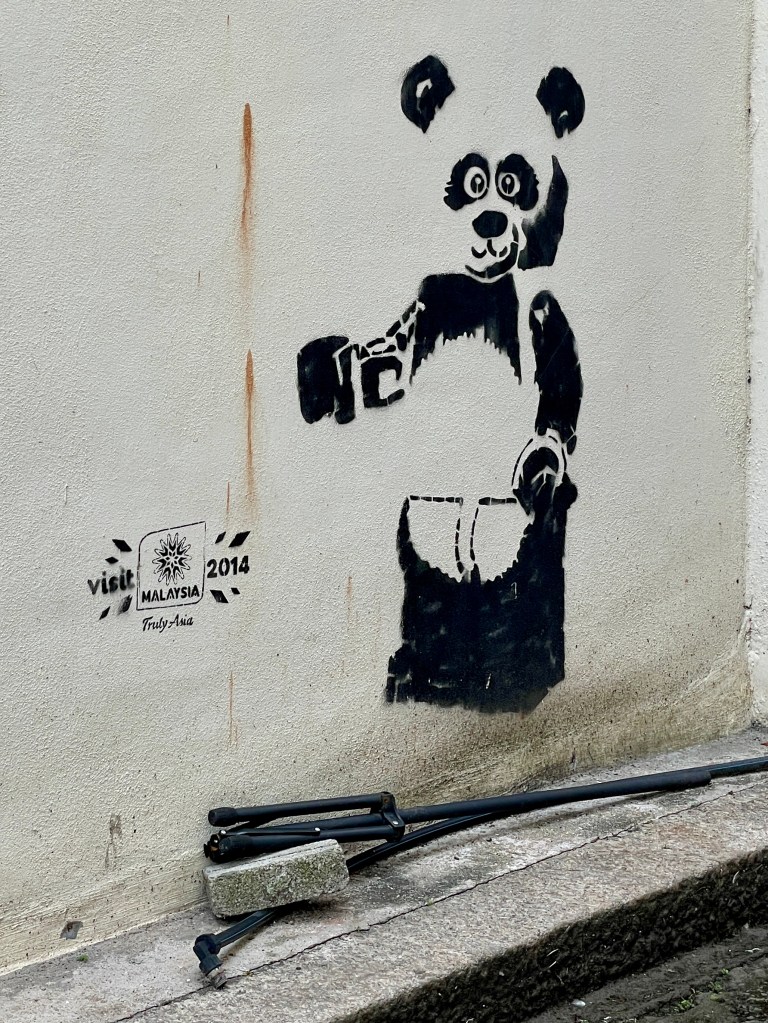
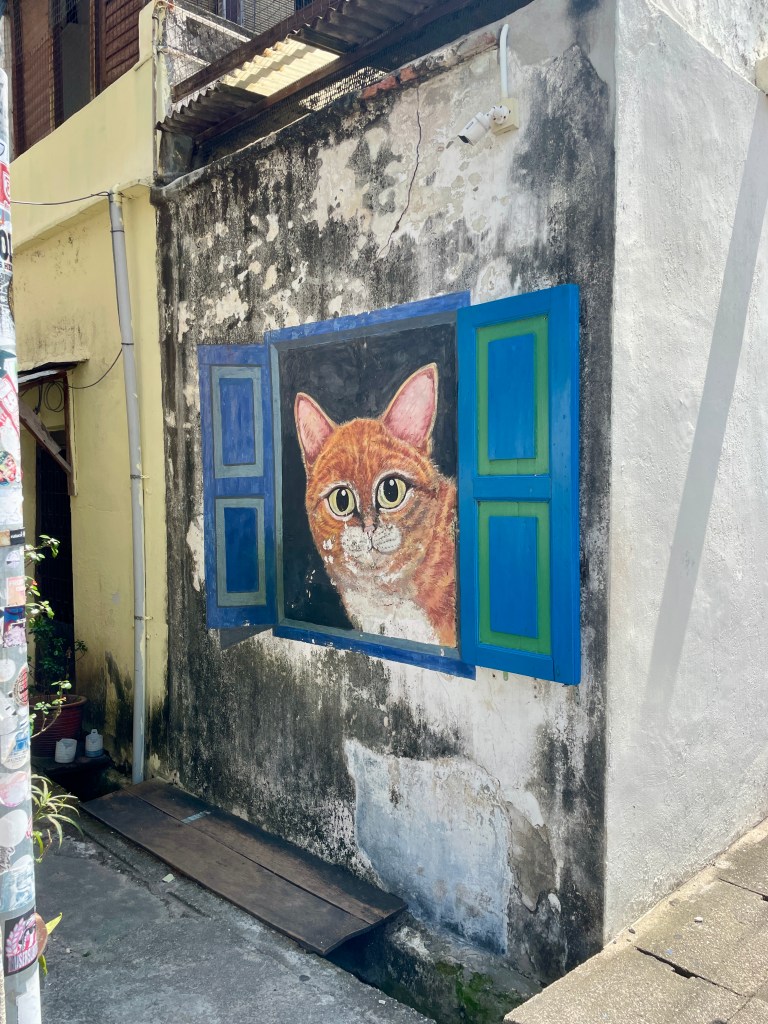
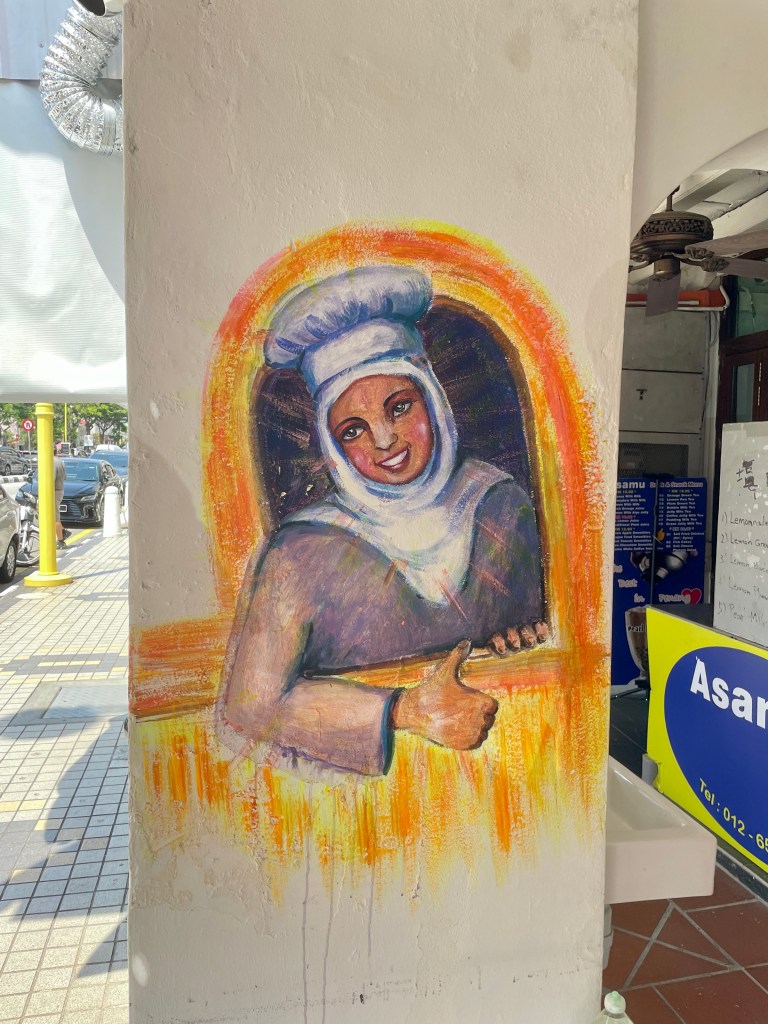
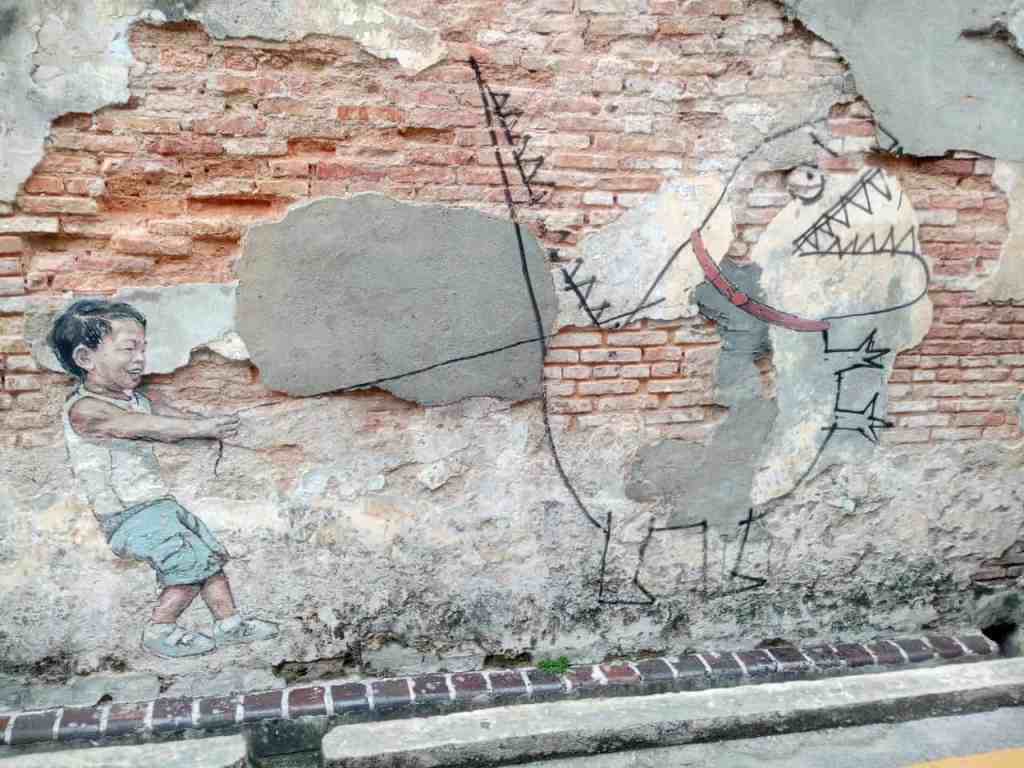
Today is a “free day.” We decided to invite a friend, Sally, to join us on an excursion to a shopping street. She’s a solo traveler and usually doesn’t get off the ship so it seemed to make sense. Karla grabbed us a “Grab”….read uber…and we footed the one dollar charge for the ride. One of the swarming taxi drivers would have done it for $20. We arrived at Armenia Street and Sally and Karla were able to buy some things and get pictures of and with street art. Lots of street art here.
Once we were finished, Sally and I arranged a trishaw to get a tour that ended at the ship. The driver had a routine that really wasn’t all that interesting to us. He wanted to stop at lots of street art for pictures. Sally didn’t want pictures. This bothered our “peddler” as he wanted to rest 8-10 minutes at each stop. We encouraged him to just go to the ship and that worked. Back at the terminal, where there are clothing and craft stalls, Sally found sandals she was looking for. A successful excursion.
While Sally and I were touring, Karla and her friend, Sandy, went for massages. Interesting that some spas offered a tan removal service, as white skin is highly valued– cosmetics are geared to whiteness as are billboards and other advertising.
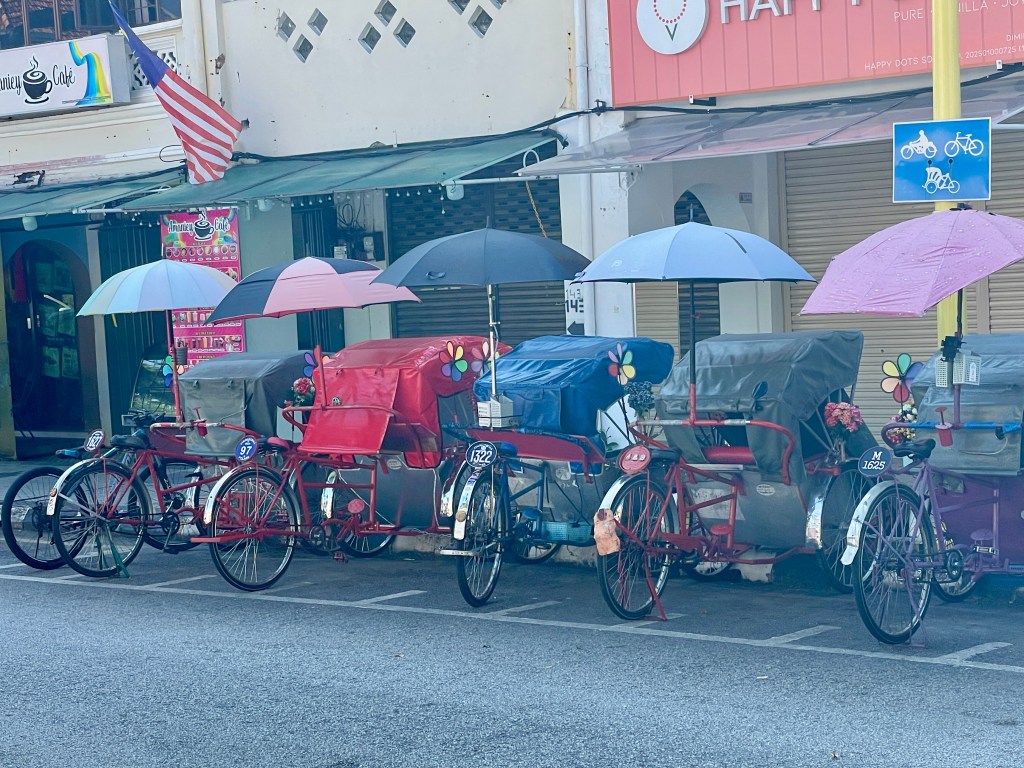
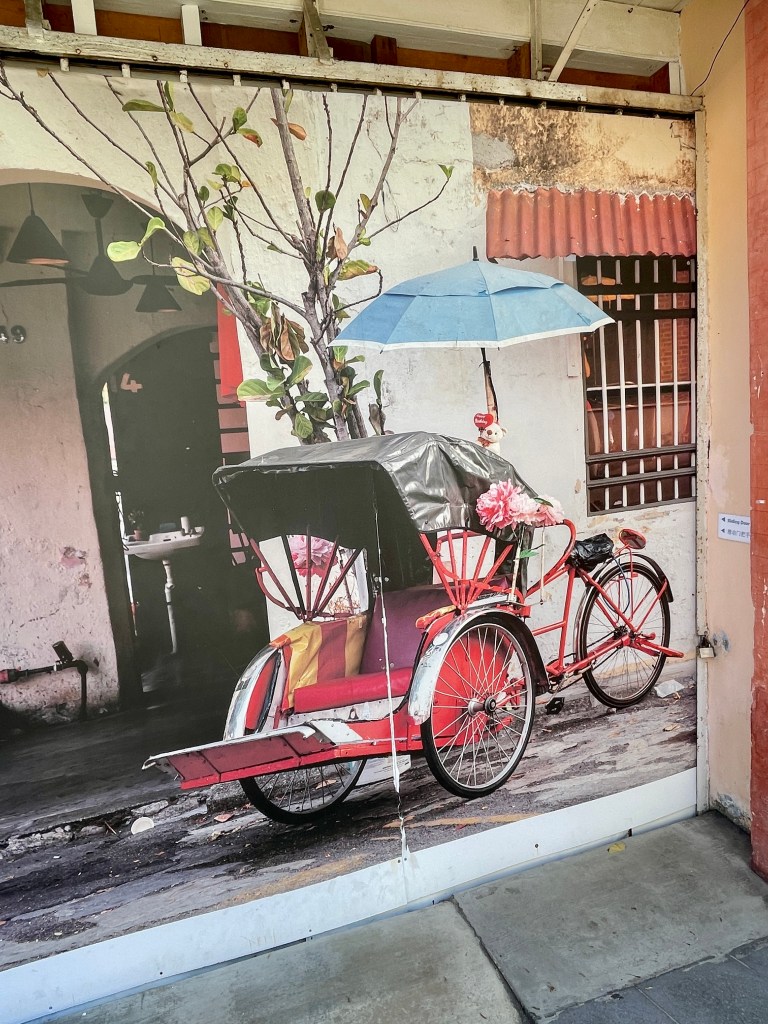
Rickshaws 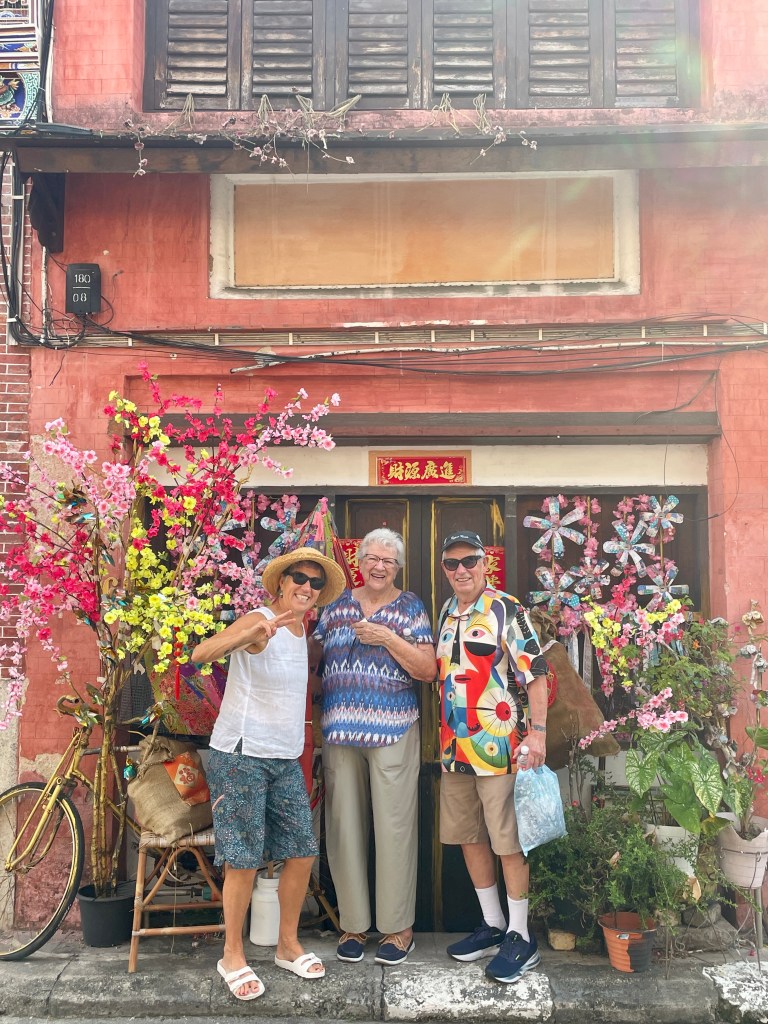
x

It’s time for a few cruise/ passenger updates:
-We were just notified of a couple itinerary updates. That happens for all sorts of reasons. In one case, a shore excursion company wasn’t delivering as Viking expects. The larger one was to skip Zanzibar. They evidently are not allowing people from Mombasa to enter because of a fear of cholera. That means an extra day in Mombasa and at sea. That’s fine, although we don’t know what to expect from cholera in Mombasa. We took the opportunity to book an overnight at Tsavo East National Park (game park) and will stay in the Park (hotel) and then do game drives both days that we are there.
-We heard that several people were asked to leave the ship. (Viking doesn’t reveal details so we’re operating on rumor.) In one case we heard of a fight in the laundromat. People get a sort of “laundromat rage” in trying to balance the use of 4 washers and dryers. We see some aggressive behavior, but it has fallen short of fights. Apparently, there are cameras in the laundry rooms.
A second example was a woman who we’ve seen pushing her husband around in a wheelchair. She evidently expects our tour guides (local citizens) to lift/carry her husband up the bus stairs to a seat. She reportedly melted down when a guide wouldn’t do it. We’re told that they were asked to leave. Parenthetically, we were sitting behind a male passenger who had serious mobility problems. I tried to help him up, but he was heavy. A Viking crew member eventually carried him down the the 3 steps. He was successful and I avoided any liability problems. Most passengers understand their limitations and make it easy on the rest of us.
-There are periodic health problems with our fellow travelers. Decisions have to be made about visiting local hospitals and then about whether to get required or advisable surgery. We had a friend on a previous cruise who broke a hip at the pyramids. She got “repaired” at an Egyptian hospital and returned to the trip in a week. Most passengers are concerned about getting an operation in a foreign hospital and consider leaving the cruise. We know one couple who left when the wife needed knee arthrosopic surgery and opted to return to the US for the surgery. In lots of cases the “foreigners” are perfectly competent and the conditions can be equal to or better than their home country. But, we all have preconceptions.
We are on the cruise to experience different countries and cultures. There are always changes and Viking does its best. There are lots of travelers who are looking to be cared for and expect and appreciate certainty. Changes can be bothersome to some, but it’s part of the package.
-
George Town, Malaysia
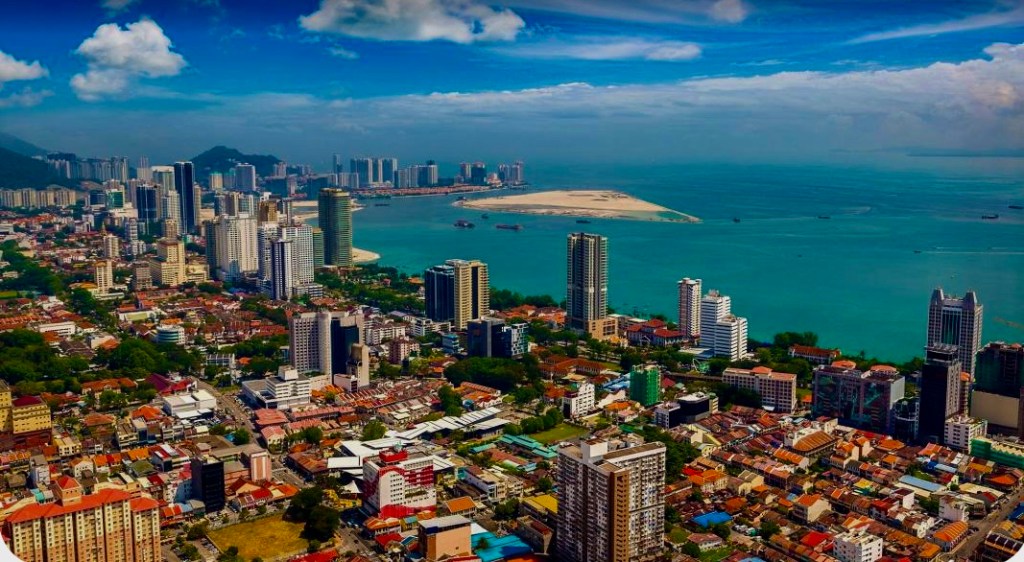
March 4
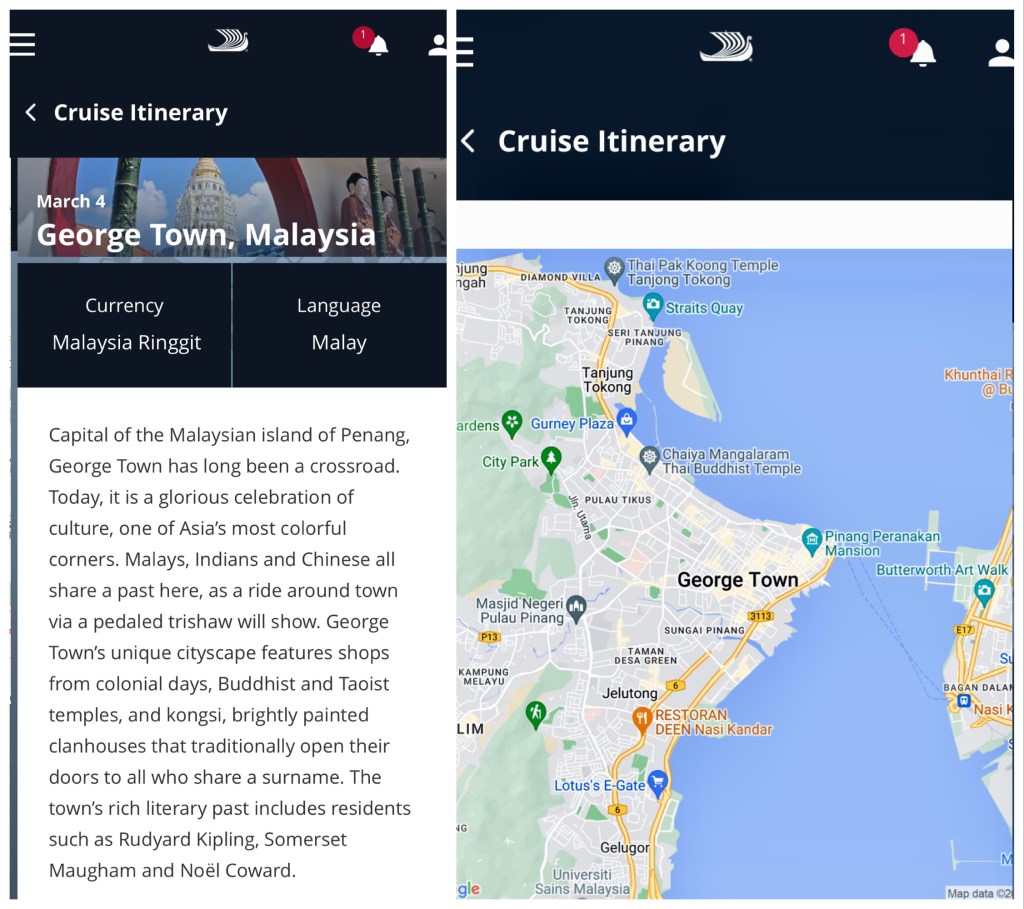
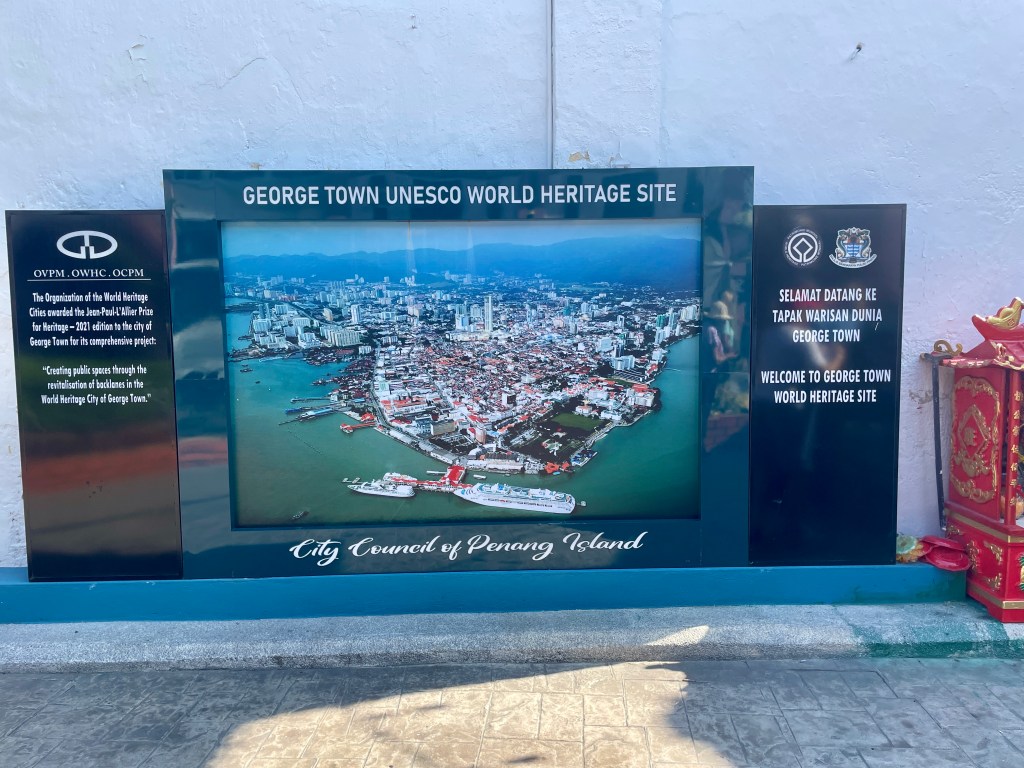
George Town, like Kuala Lumpur, was well situated to host visits from the Dutch, Portuguese and British as they were seeking commercial opportunities near the Straits of Malacca. In 1786 George Town became a British outpost and then a colony in 1867. After the prime of the spice trade, the economy was driven by tin mining and exports and then rubber. Now, both cities are working to emulate Singapore.
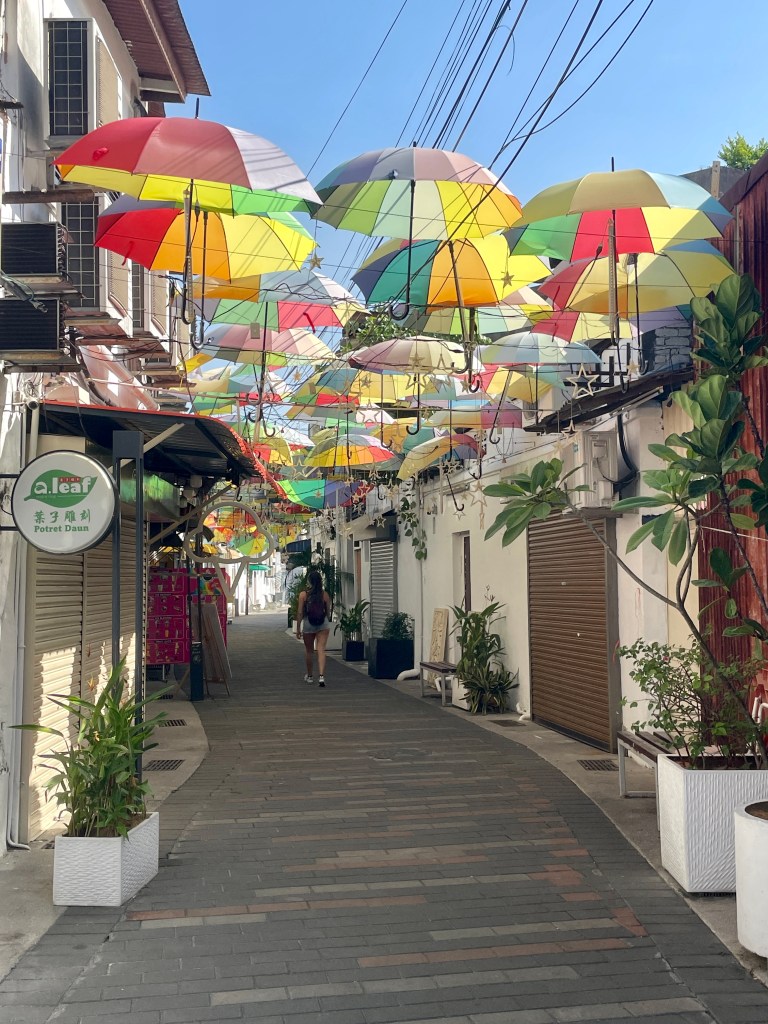
Following World War 2, George Town was defined by “incoherent planning, poor traffic management and a brain drain.” But, more recently, as the capital of Penang, it has achieved much more success. It is a commercial center that focuses on services and technology and has attracted a number of multinational corporations. Tourism is another driver. Currently, it has low unemployment and the highest GDP per capita of Malaysian cities. Fortunately, from our perspective, it still has lots of small markets and businesses. There are lots of large malls like Singapore, but it is still fun to visit the small shops of Chinatown and Little India.
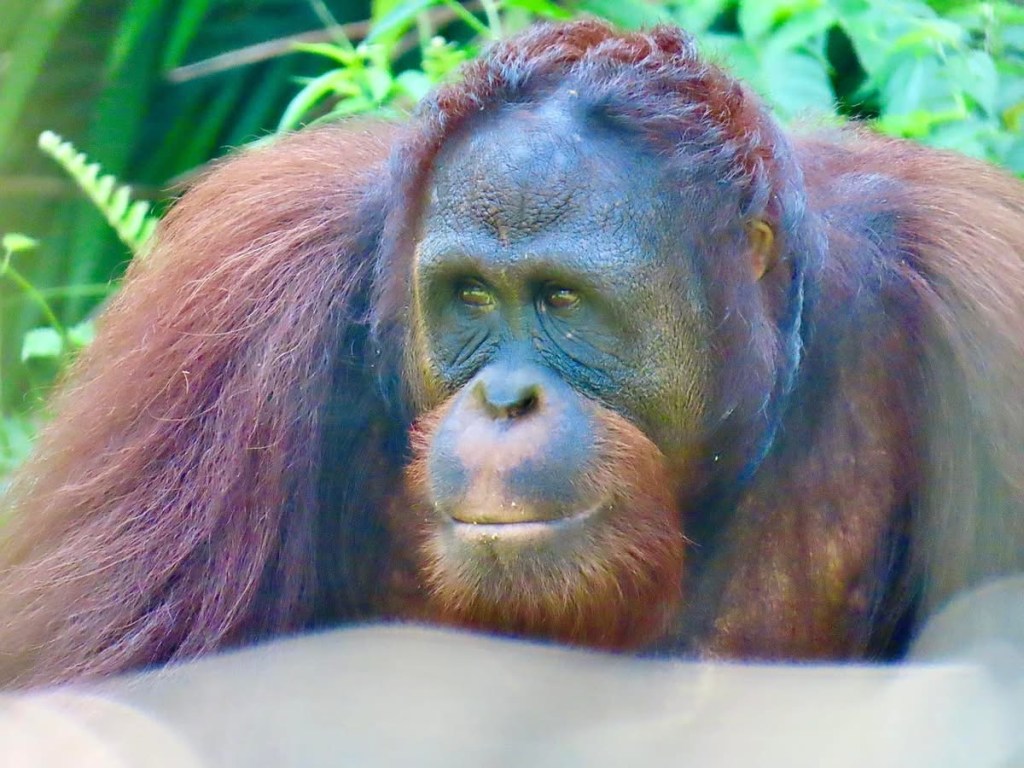
Following our standard excursion which visited an old town, the long (13.5 km) bridge to the mainland and a Buddhist temple, we returned on foot to small shops. Lots are run by Chinese who make up about 50 percent of the population. Walking was a bit of a challenge…not just because of the 90-95* temperatures. Karla ended up with 36,000 steps; I had 20k. There were lots of taxi and trishaw drivers that thought we needed their help. Perhaps tomorrow. We decided to wander around town rather than visit the orangutans. There is an excursion that visits a compound in which you can walk through a fenced off passage and view the orangutans. It’s actually more like walking through an enclosed area and letting them watch you. Since they have watched us before, we thought that we would skip it.
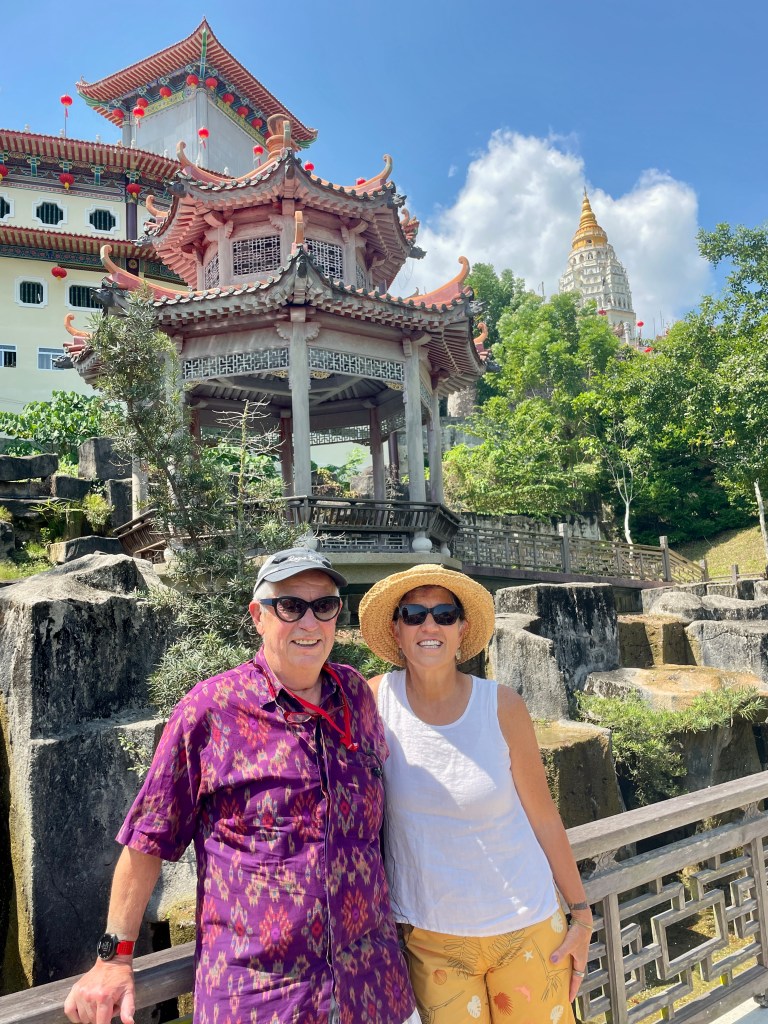
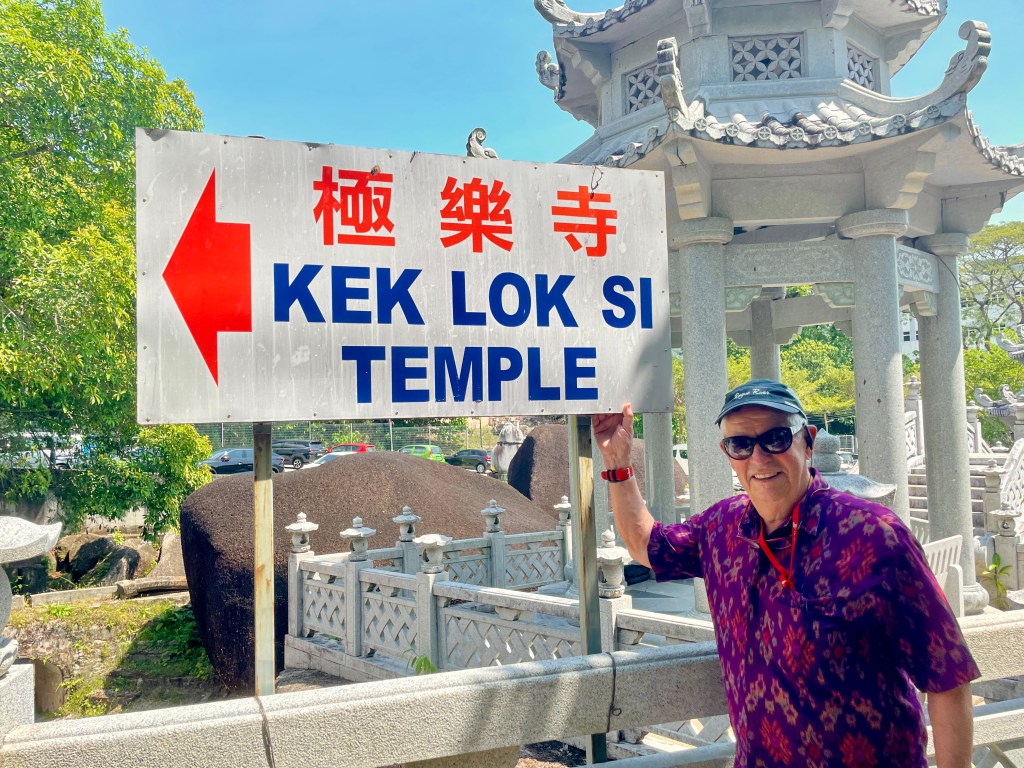
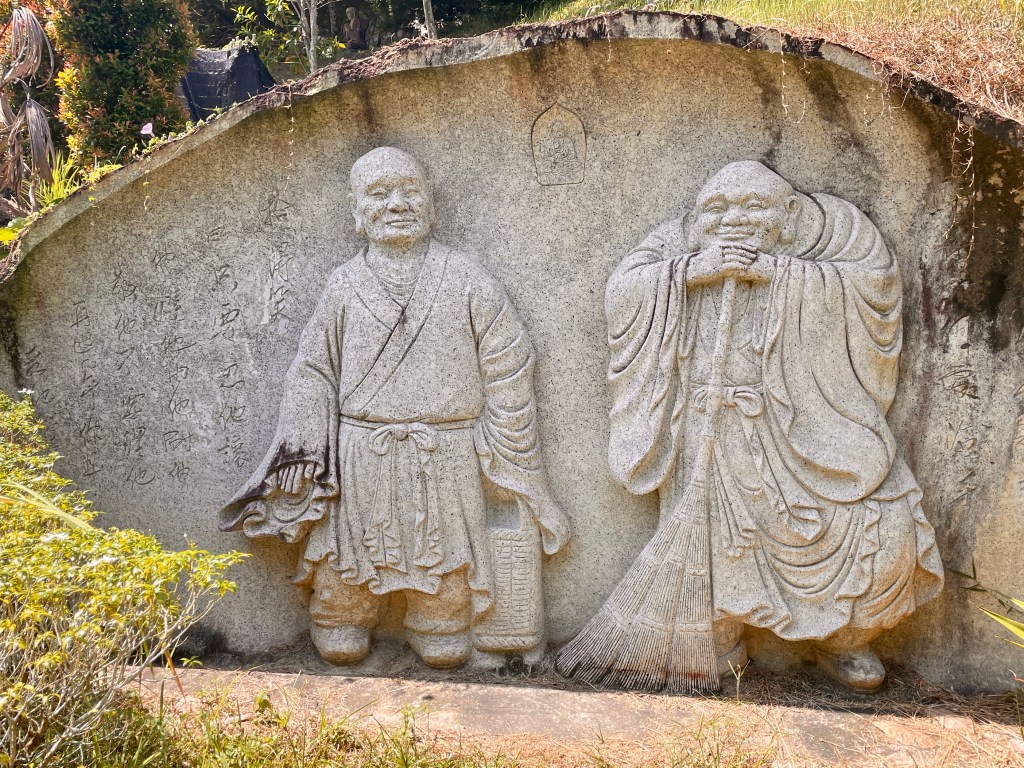
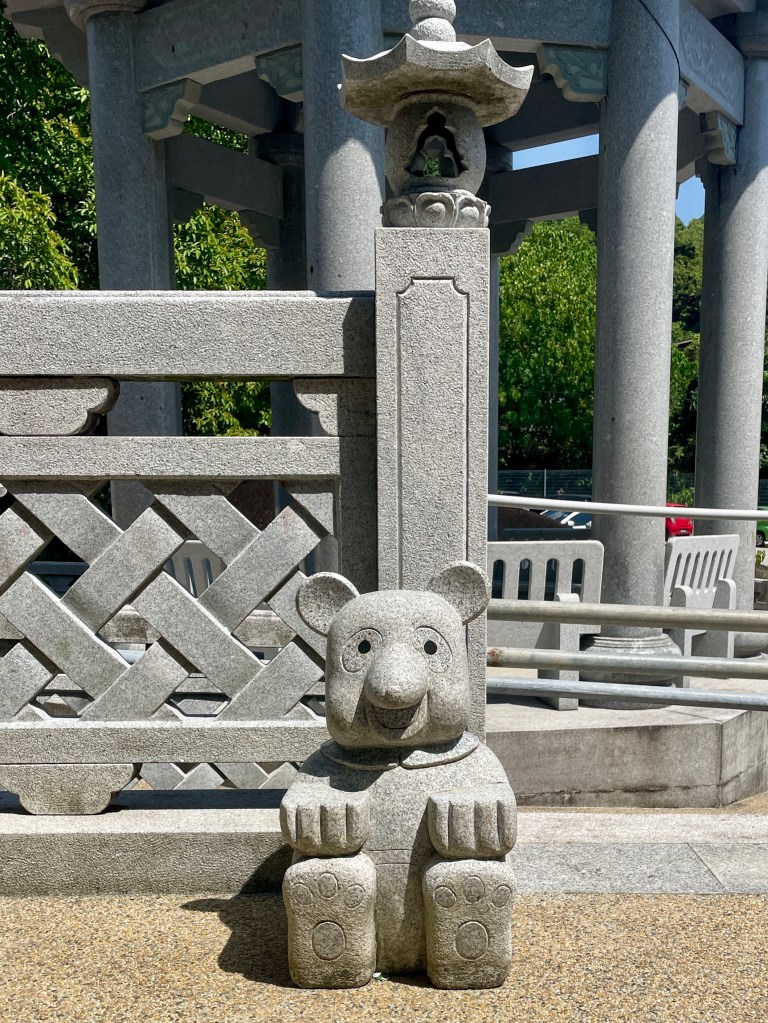
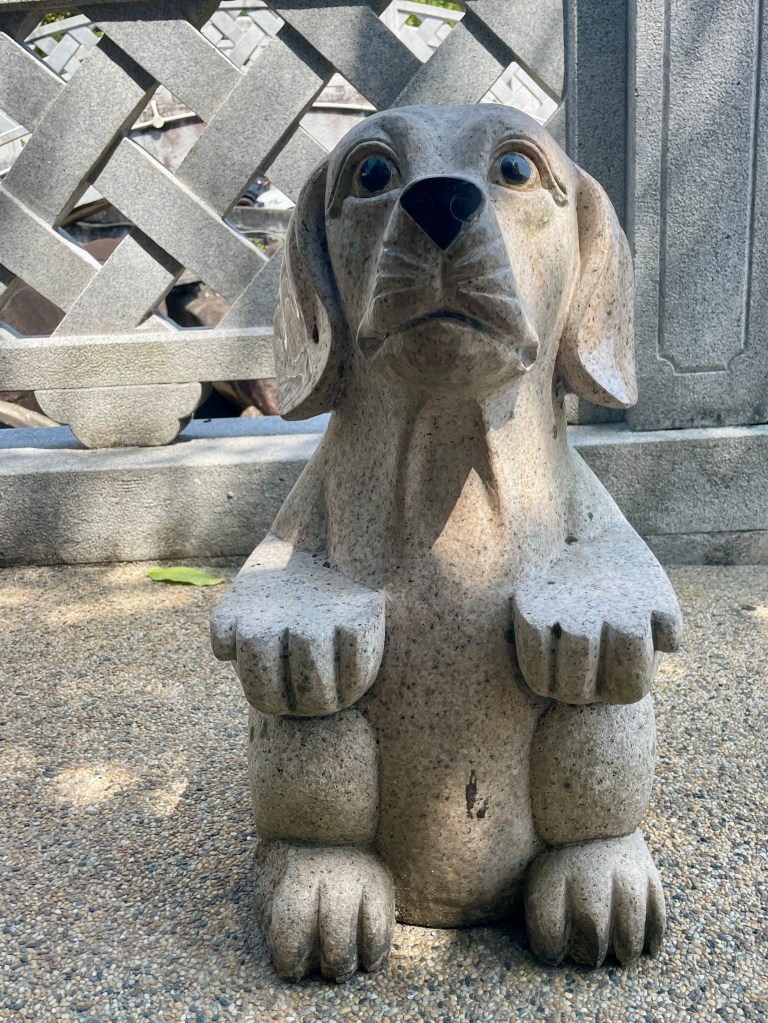
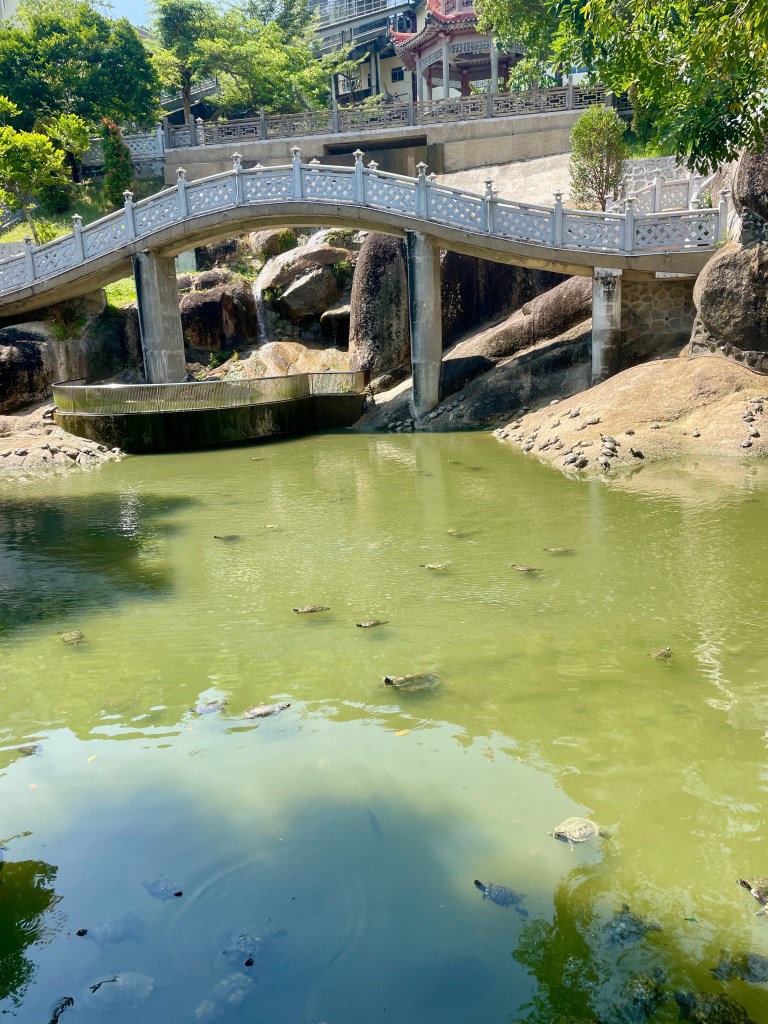
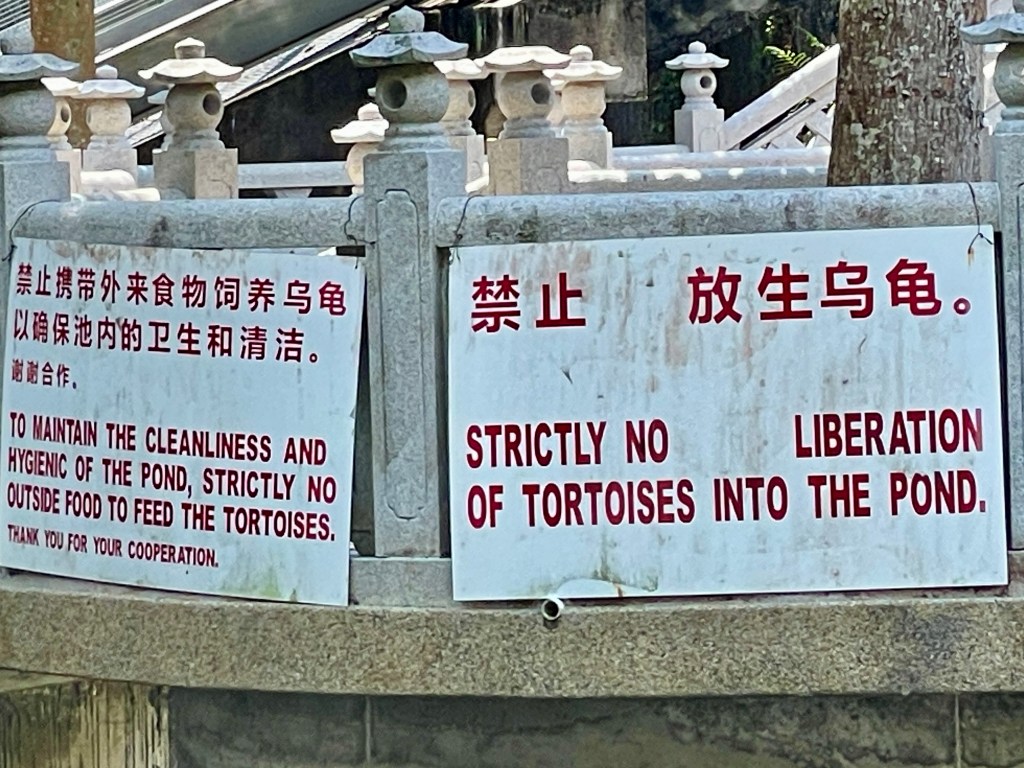
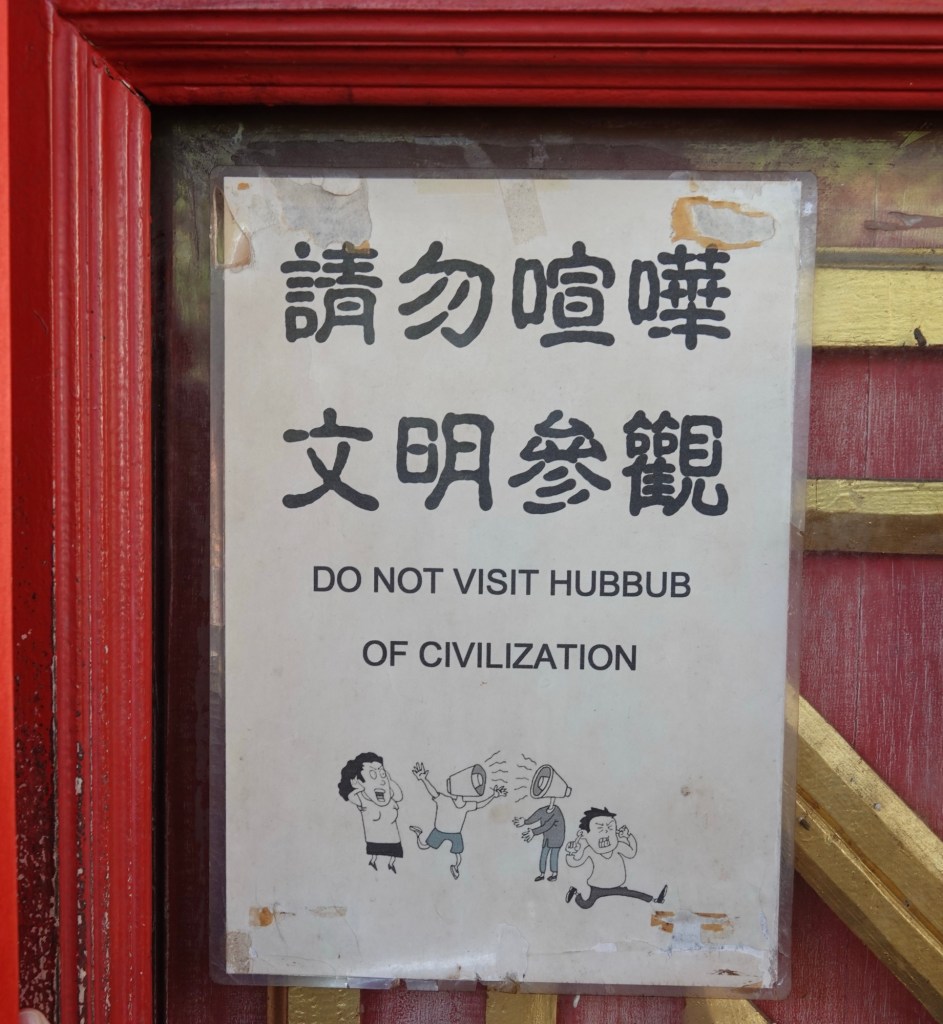
Loved this sign 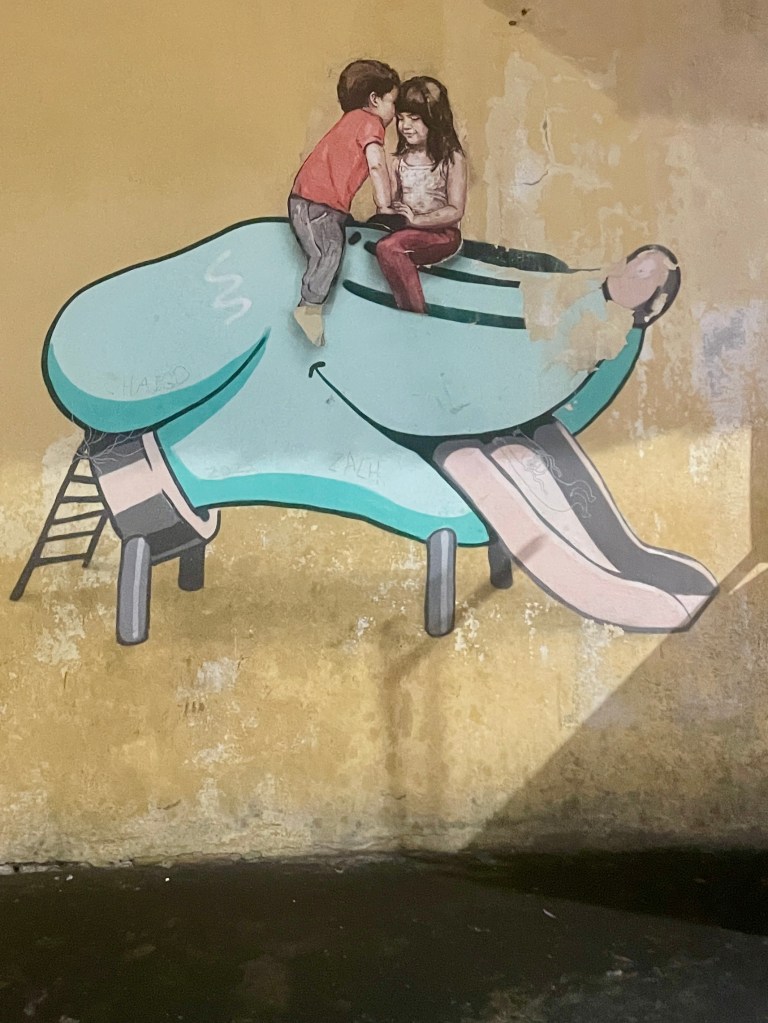
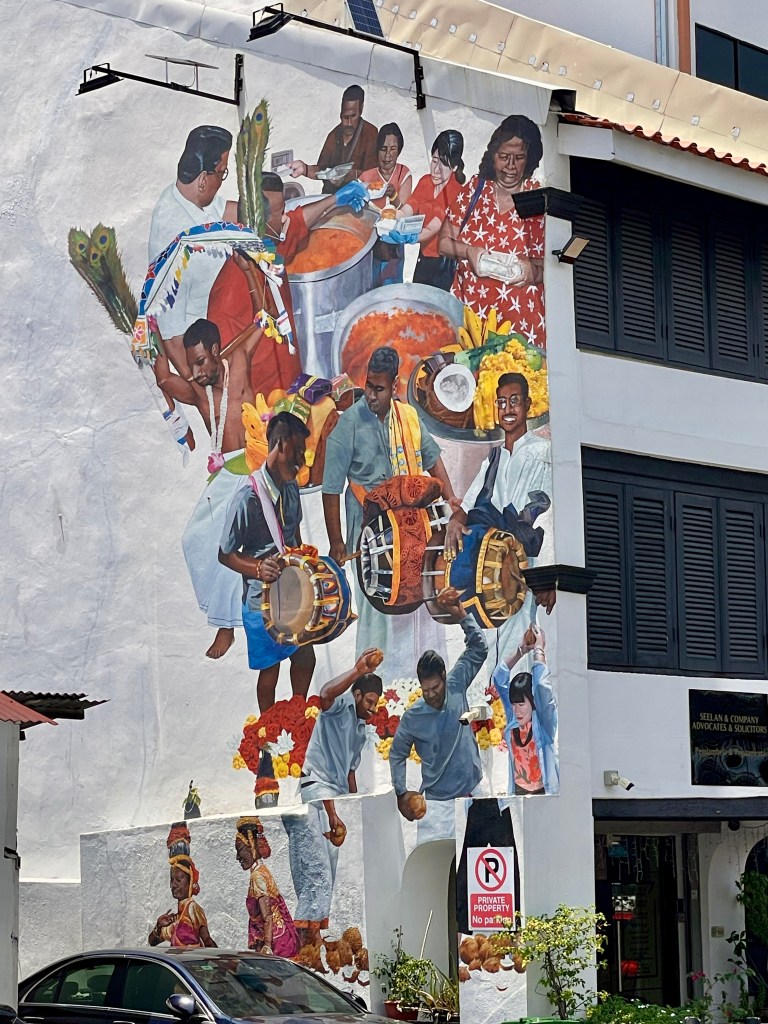
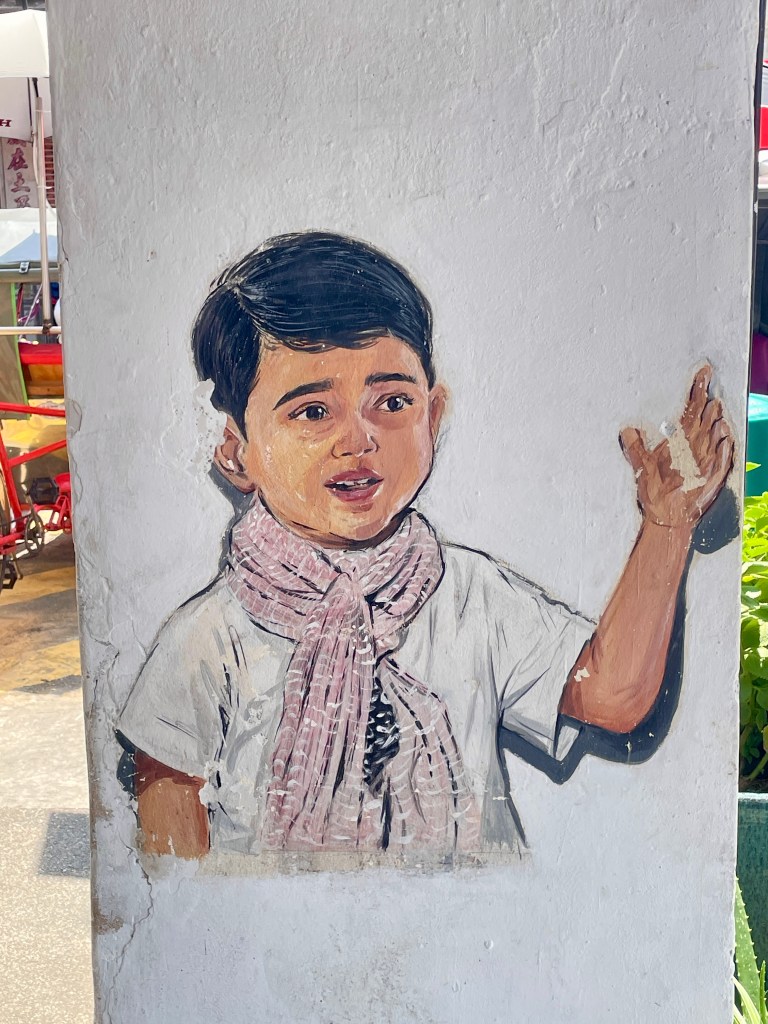
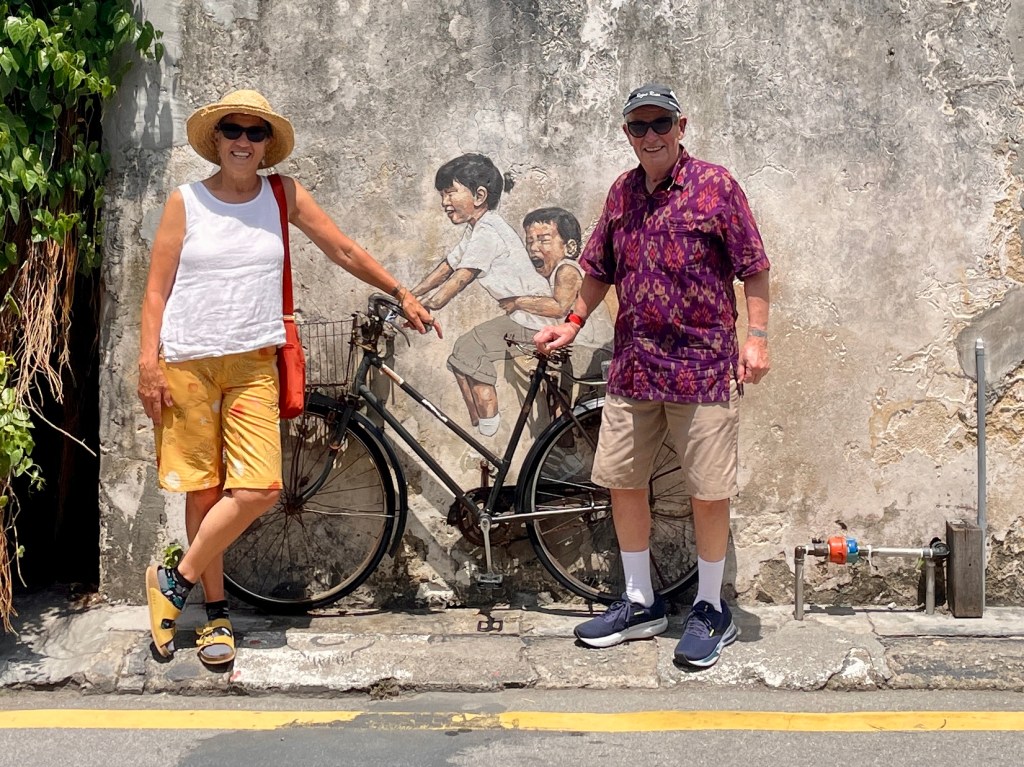
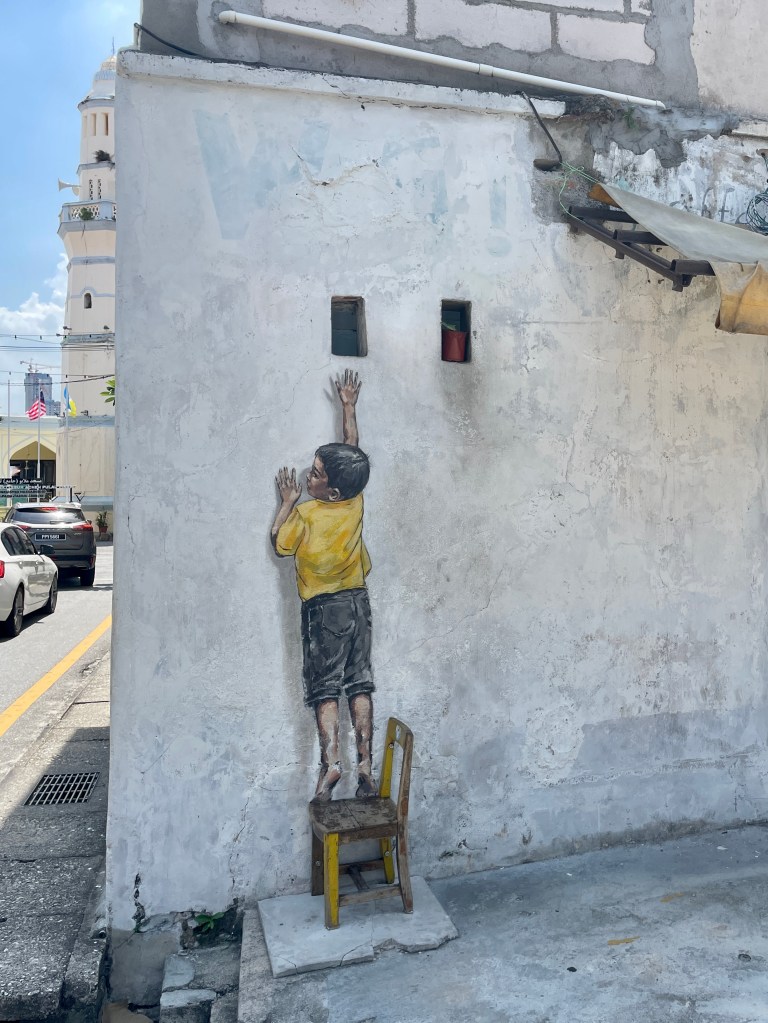
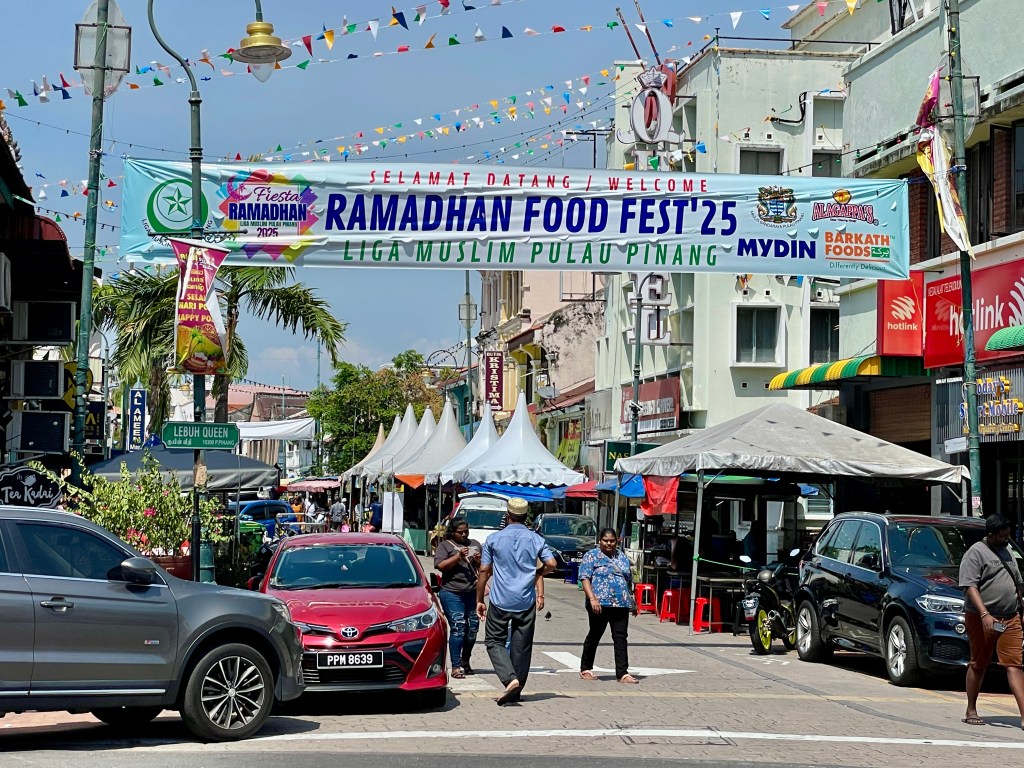
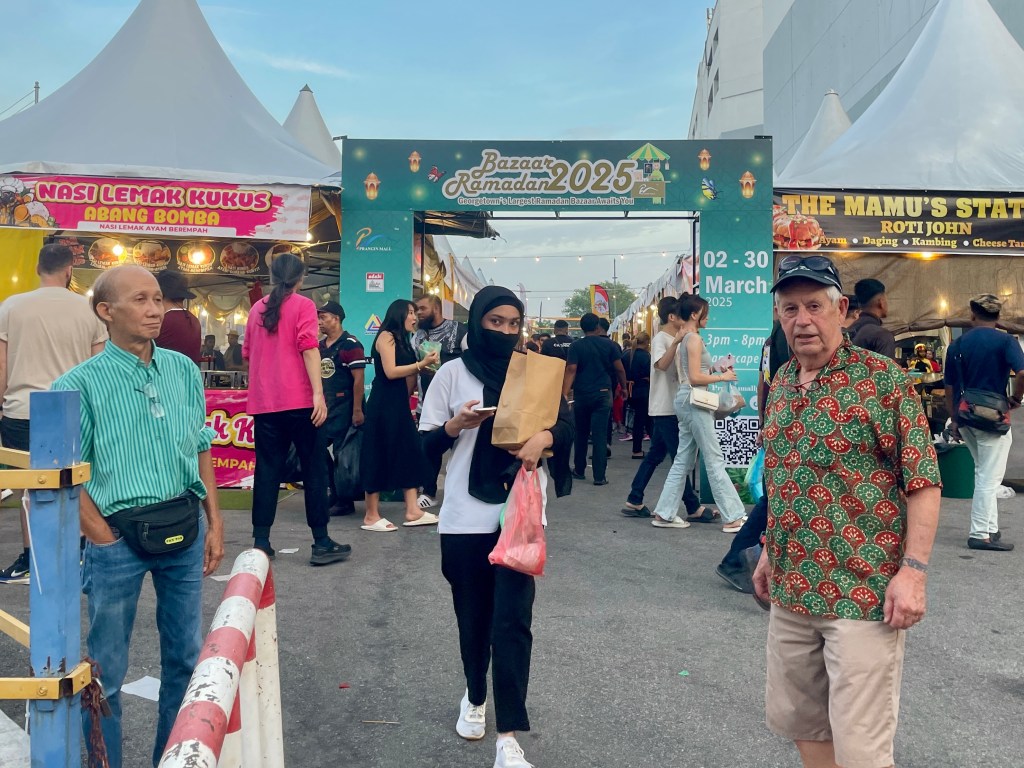
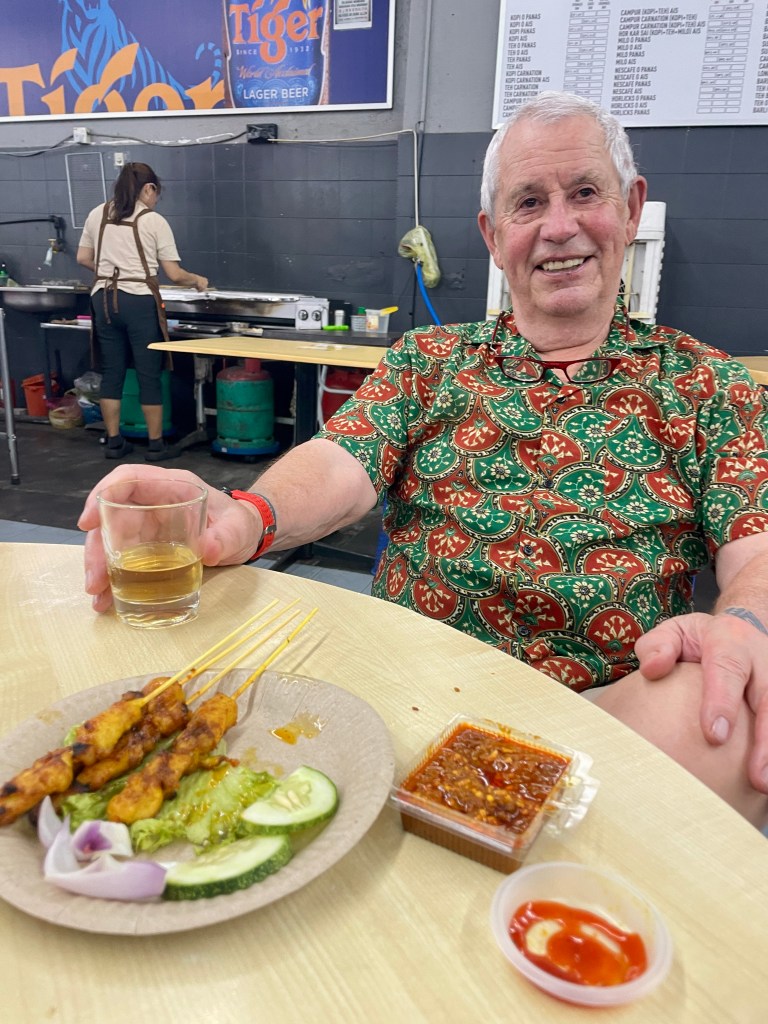
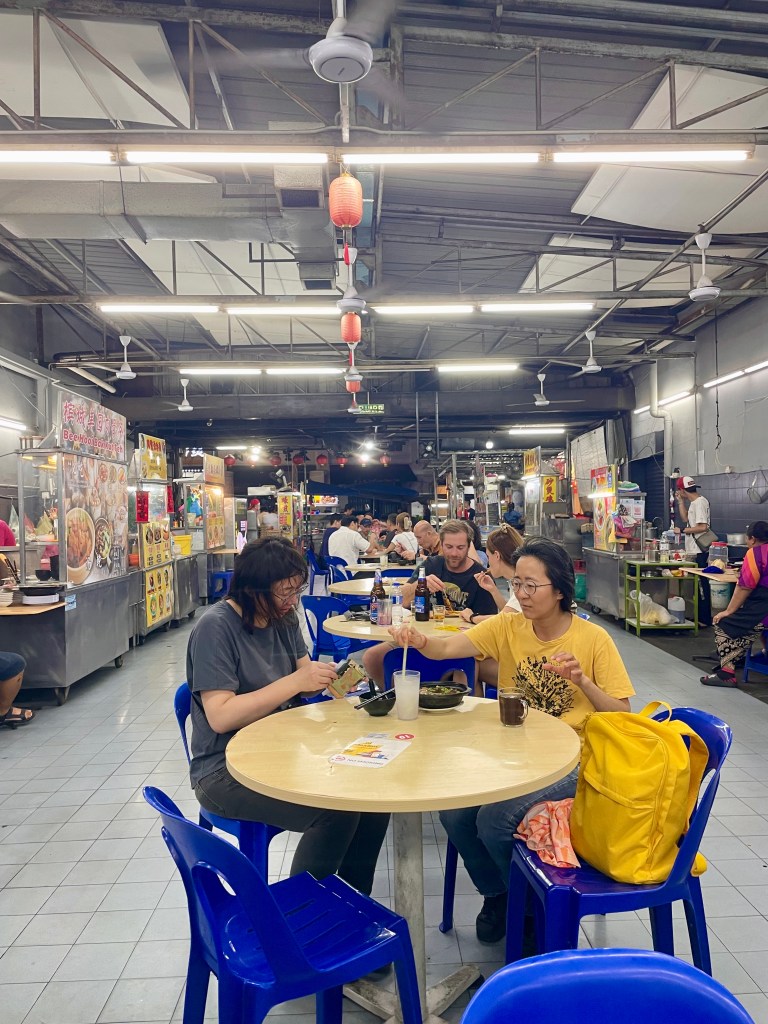
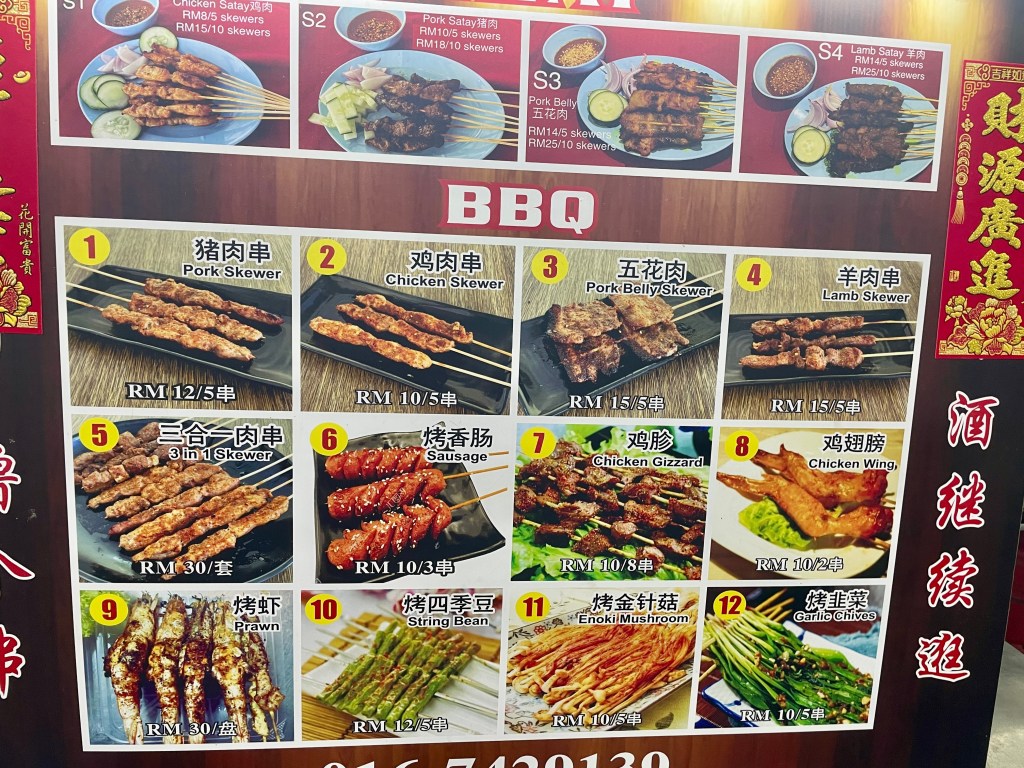
In the evening, we visited the Kimberley Street Night Market.” We settled for fried chicken, veggie springrolls, chicken satay, and beer. Walking back to the ship, we passed through “Little India.” That was more diverse with food and wares. A nice first day.
-
Kuala Lumpur . . . maybe
March 2, 2025
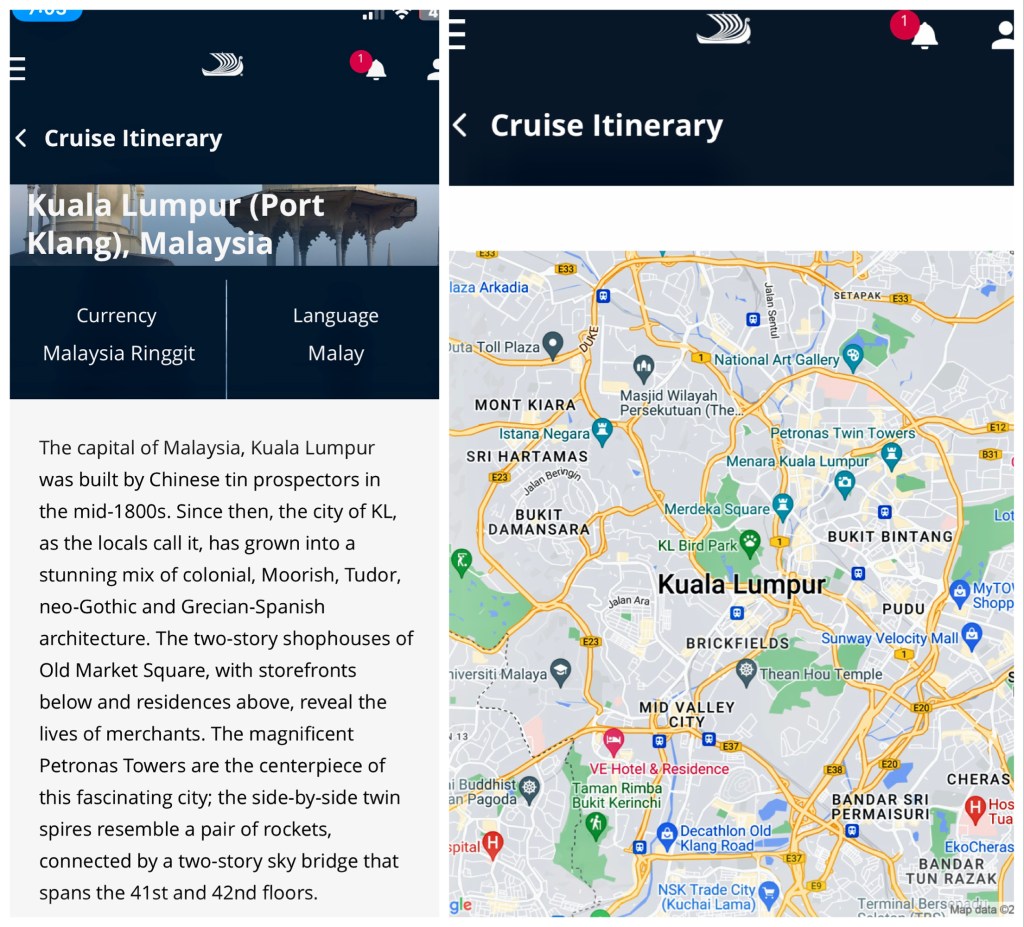
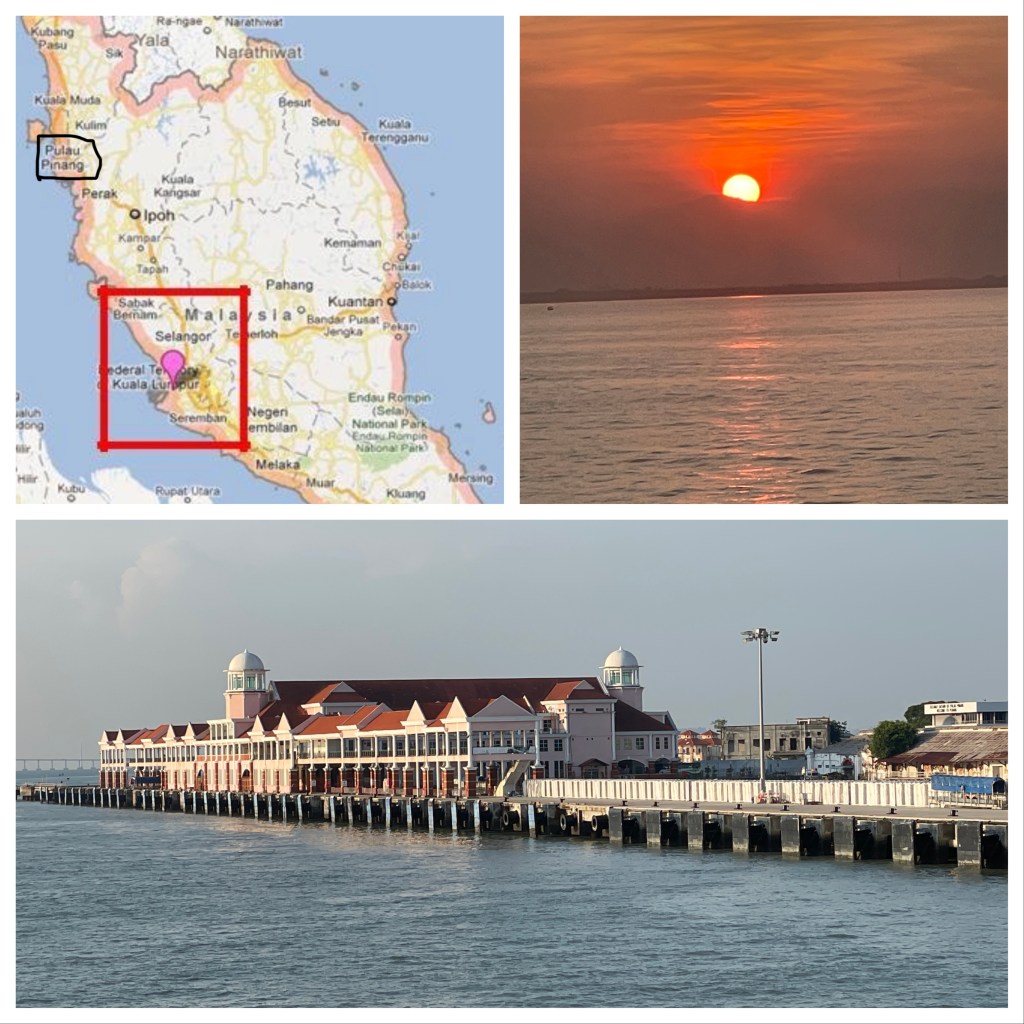
As we head into the port, we listened to the “port talk.” Viking described the city excursion to Kuala Lumpur as 5 1/2 hours with transportation requiring perhaps 1 1/2 hours both ways (only a 61 km distance so really bad traffic). We took this tour on our first visit and it was nothing special….a museum, some buildings, and it seems like something more. Our memories could be dampened by the downpour we experienced in KL. Evidently, there is also a shuttle bus to a closer destination, Port Klang. I think there’s a mall there. So, I googled it and found some valuable information.
-“Klang is not on people’s visit list.”
-“There are a number of criminal gangs operating in Klang. Among the Chinese community, there are the Ang Bin Hoey triad gangs such as Gang 21. There are also Gang 24, Gang 36, and others. It is thought that the Indians originally worked for Chinese gang leaders, but they now dominate many of the criminal organizations.” It sounds like a multicultural opportunity.
-Trip Advisor listings of things to do in Klang all show trips out of Klang to somewhere else.
-There is nothing to bring a traveler to Klang except ferry lines. (to get out)
-Port Klang has a seedy feel.
Armed with this new information, we decided to skip Kuala Lumpur and visit Klang. It may well be more attractive in the predicted 95* and thunderstorms. If nothing else, we could look for a vacation home.
At 9:30am we boarded a shuttle and headed to Klang. Karla was planning on some shopping; I was making plans to “explain a few things” to Gang 21. Fortunately for Karla and #21, we were dropped off at a shopping mall. Karla found a couple of items and I purchased some medication…..without prescription and at about 10 percent of the US cost. The mall is typical of what we have encountered in Singapore and Malaysia. It is huge and modern, occupying about 3 blocks and 3 storeys. All of the brands were there.
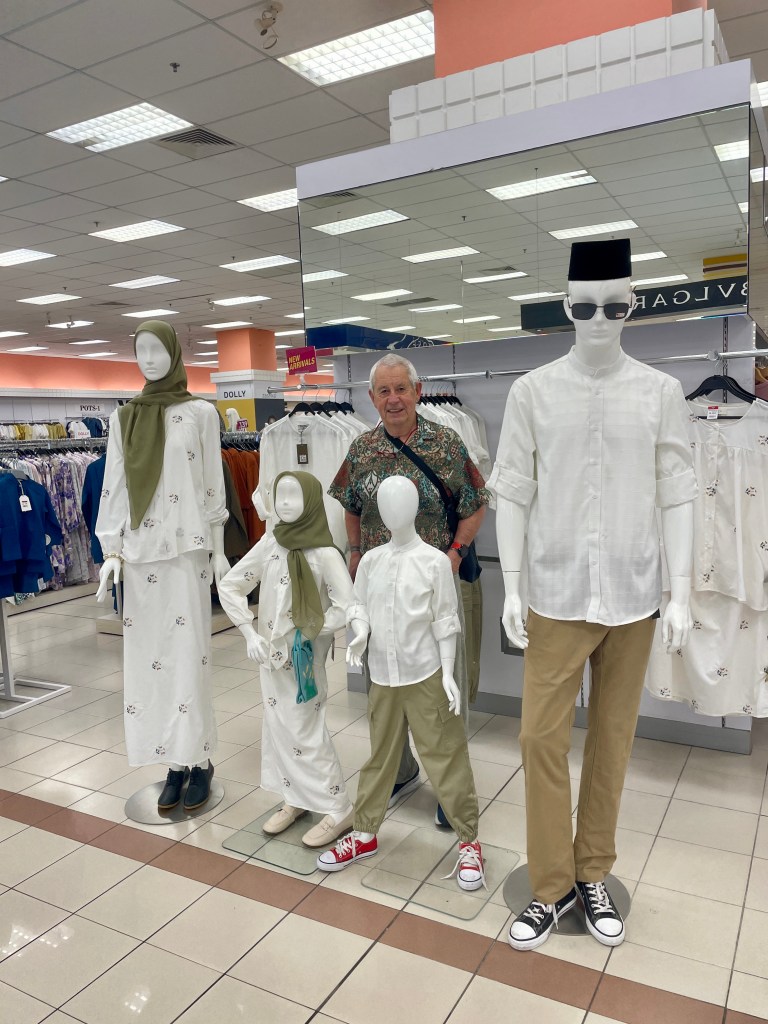
Muslim models 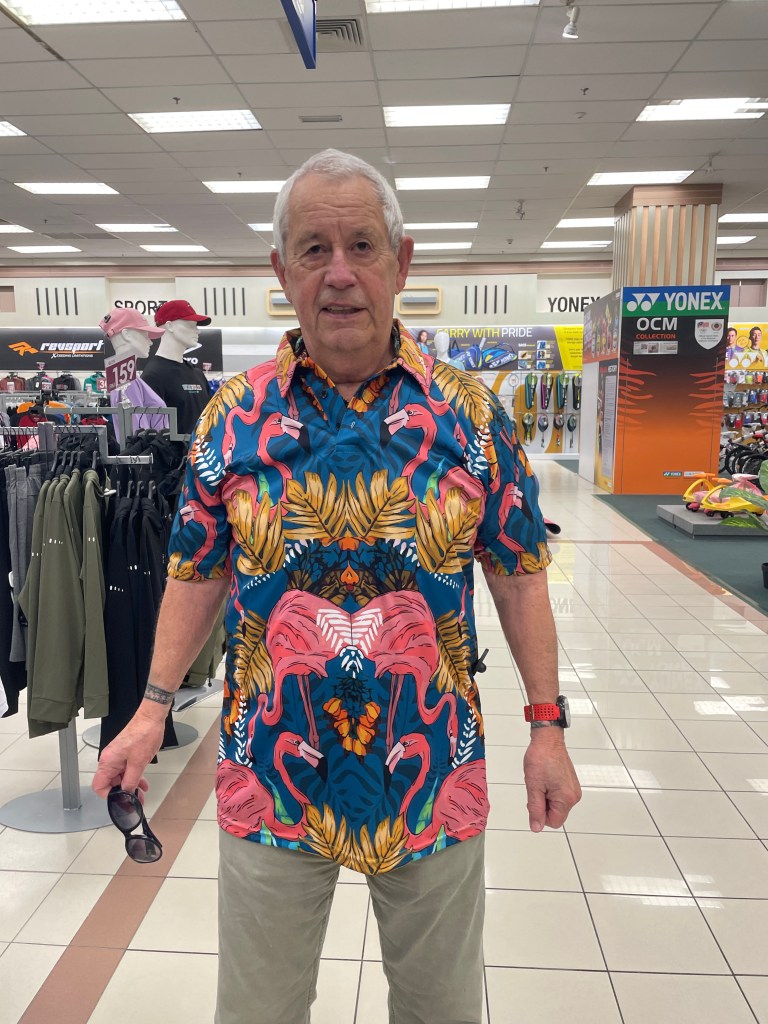
Fred modeling a shirt we bought for our friend, Lisa, who loves flamingoes. 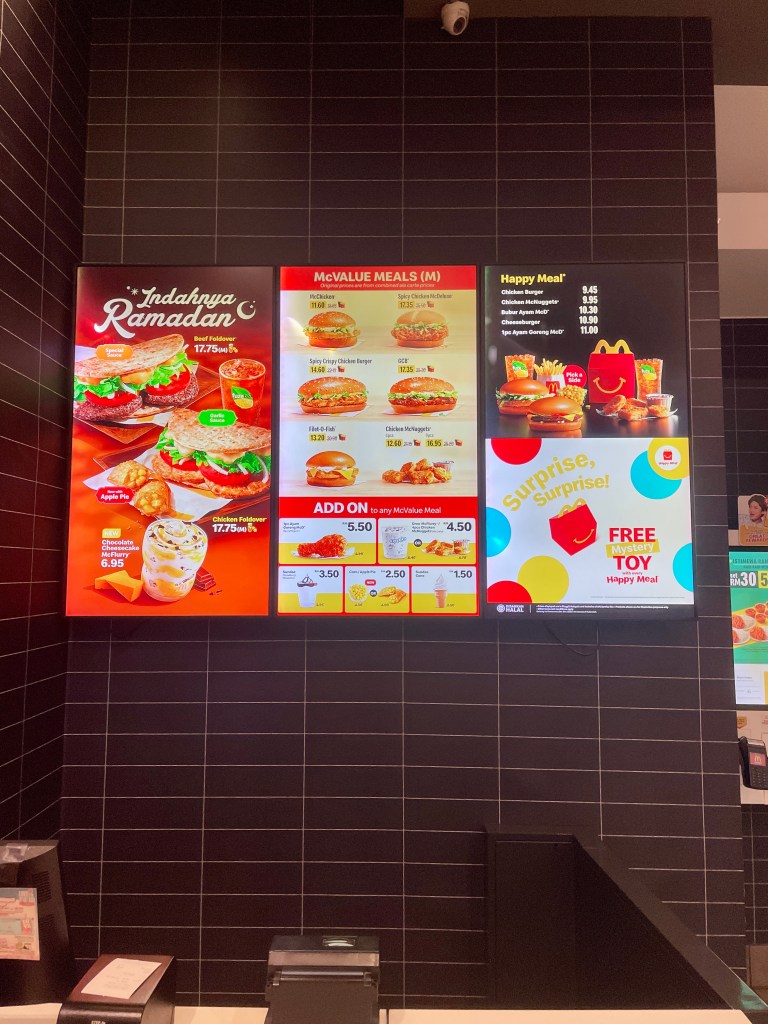
Ramadan menu 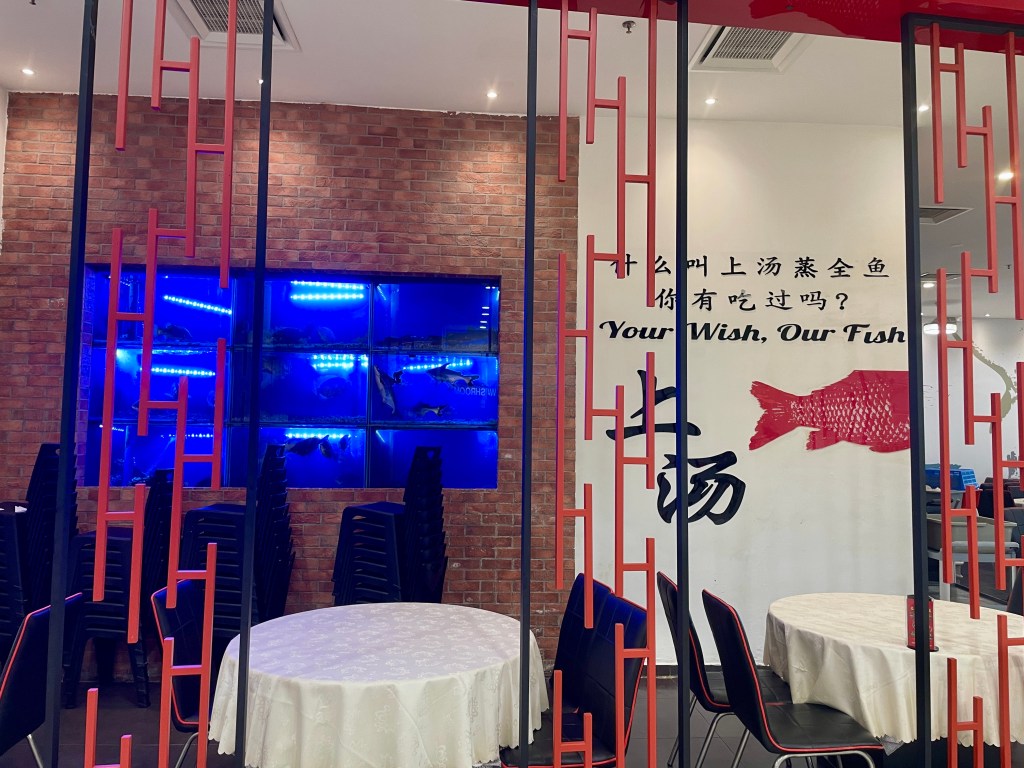
Choose your fish 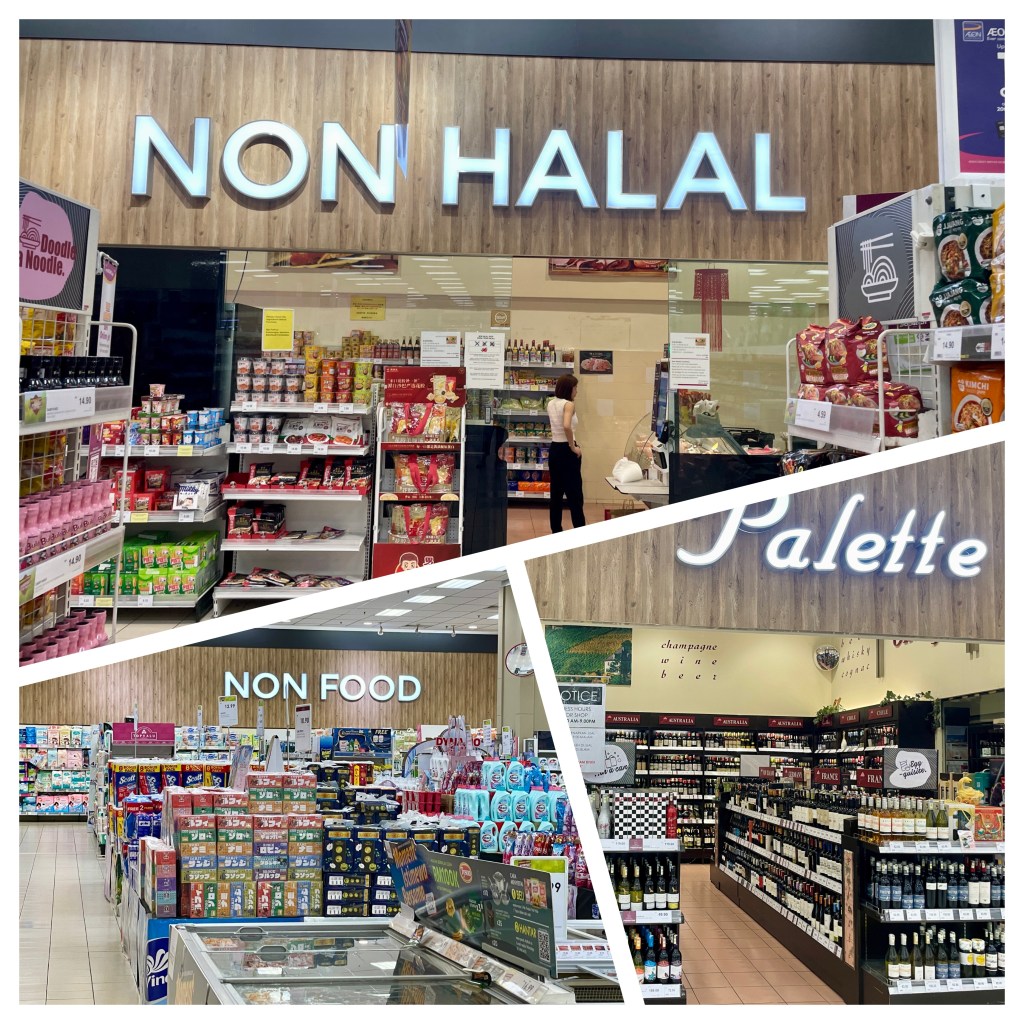
Grocery store department markings; halal is like kosher but for Muslims Klang is a city of almost 250,000, but we saw very little of it. Like Kuala Lumpur, it was founded to handle the tin trade. Later, rubber emerged as the major export; that has been superseded by palm oil. Had we spent more time in town, we would have seen lots of container farms and shipping infrastructure. We’ve seen quite a bit of that elsewhere.
-
At Sea
Feb. 27
Since we’re away from the country and our news sources, I thought it was worth spending part of our sea day to check on the US of A. Naturally, I went straight to Truth Social to see what the president was saying;
.
“”CAN YOU BELIEVE IT! Were seeing complaining THE LIKES OF WHICH YOU’VE NEVER SEEN. We made a couple changes in military leadership and the WOKE D’s complain that we fired the only black and woman members. We need WARFIGHTERS! I put one of Donny’s friends in charge of national food safety….more complaints. This kid may have no management experience, but, he’s been eating food all his life. He knows food. We have lots of cabinet with no experience and THAT’S WORKING. they’re very loyal. People complain about egg prices going up. I’ve got one word to say to them…DAMN BIDEN. I’ve already got more done THAN ANY PRESIDENT IN HISTORY. Who else could have made friends with Putin, ended the war in Ukraine, solved the Middle East conflict, stuck it to NATO, and renamed the Gulf of America. And, THIS IS ONLY MY FIRST MONTH. MAGA.”
Sounds like everything is fine.
-
Jakarta
Feb. 26
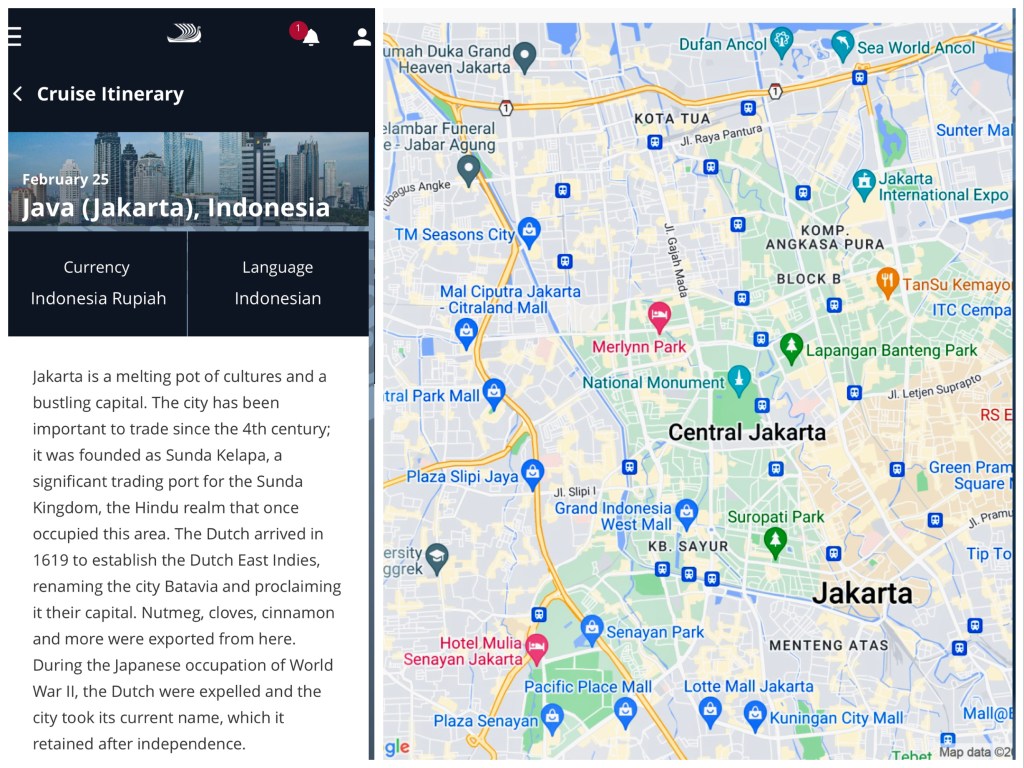
Jakarta, the capital city of Java, is the second largest urban area in the world. There are 32.6 million people….about 9 Oregons. There is a higher standard of living in Jakarta than in much of the rest of Indonesia so it draws lots of people from the countryside. The center of government, corporate headquarters, and very active port represent the second largest economy in southeast Asia…after Singapore.
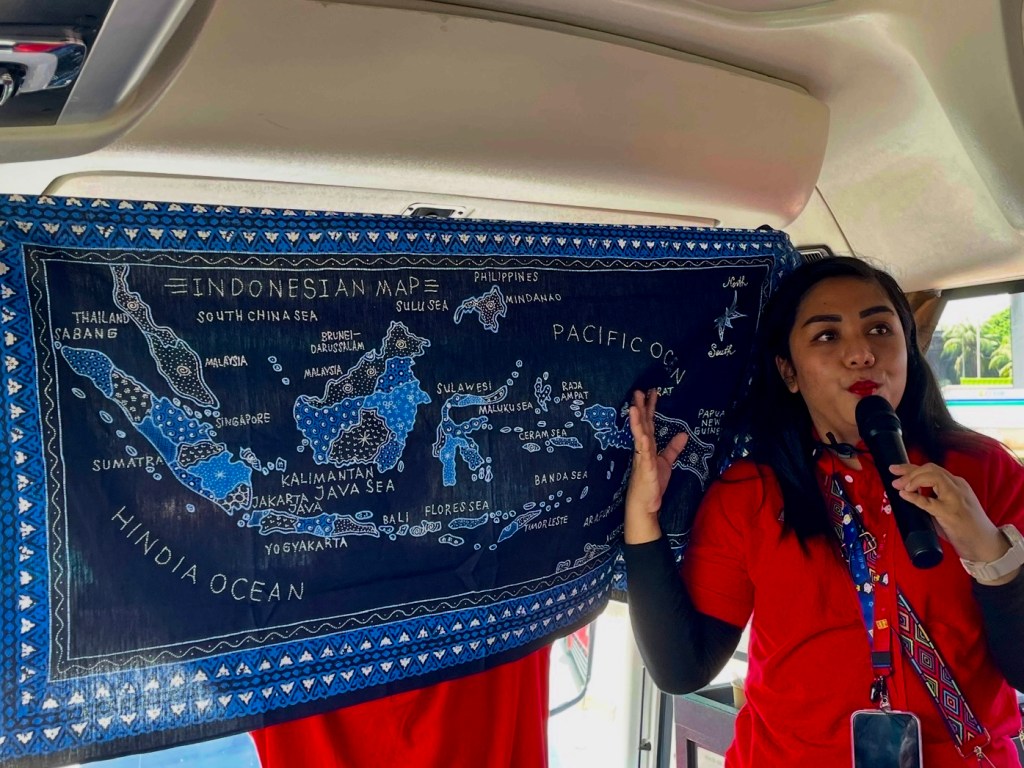
Our tour guide with an Indonesian map The challenges of living in Jakarta are many:
-dealing with rapid urban growth;
-an ecological breakdown;
-air pollution;
-gridlocked traffic;
-congestion, and
-flooding
Add to this, with groundwater extraction, the capital is sinking 2-4 inches per year. There are plans to move the capital to Borneo within about 20 years.
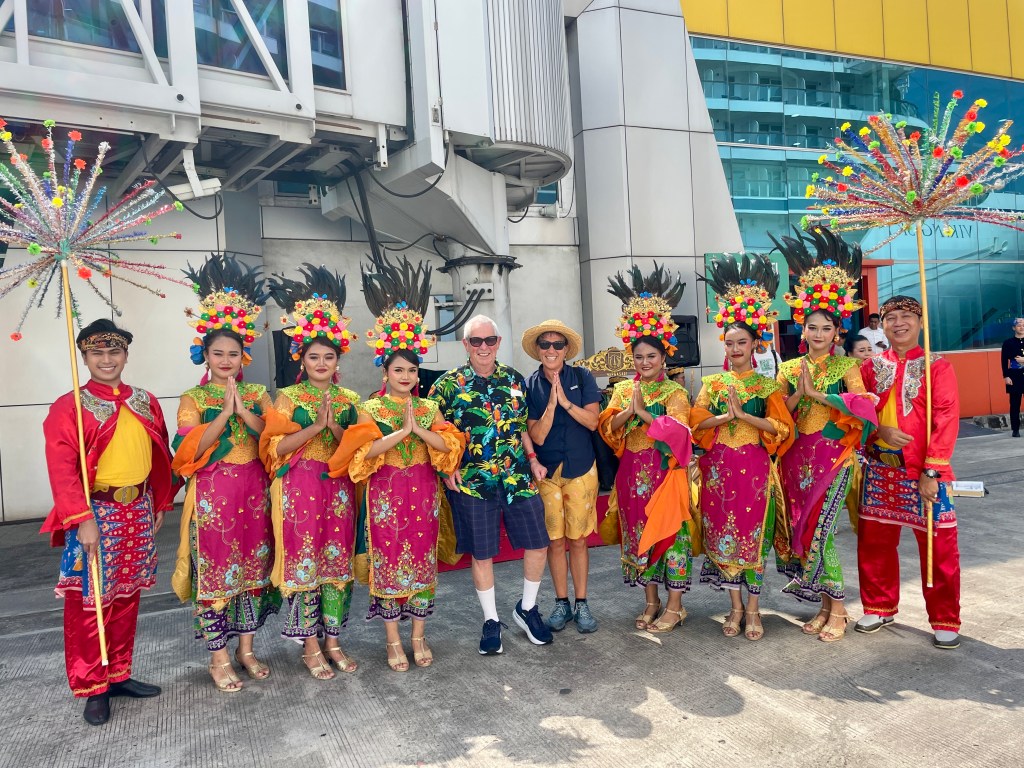
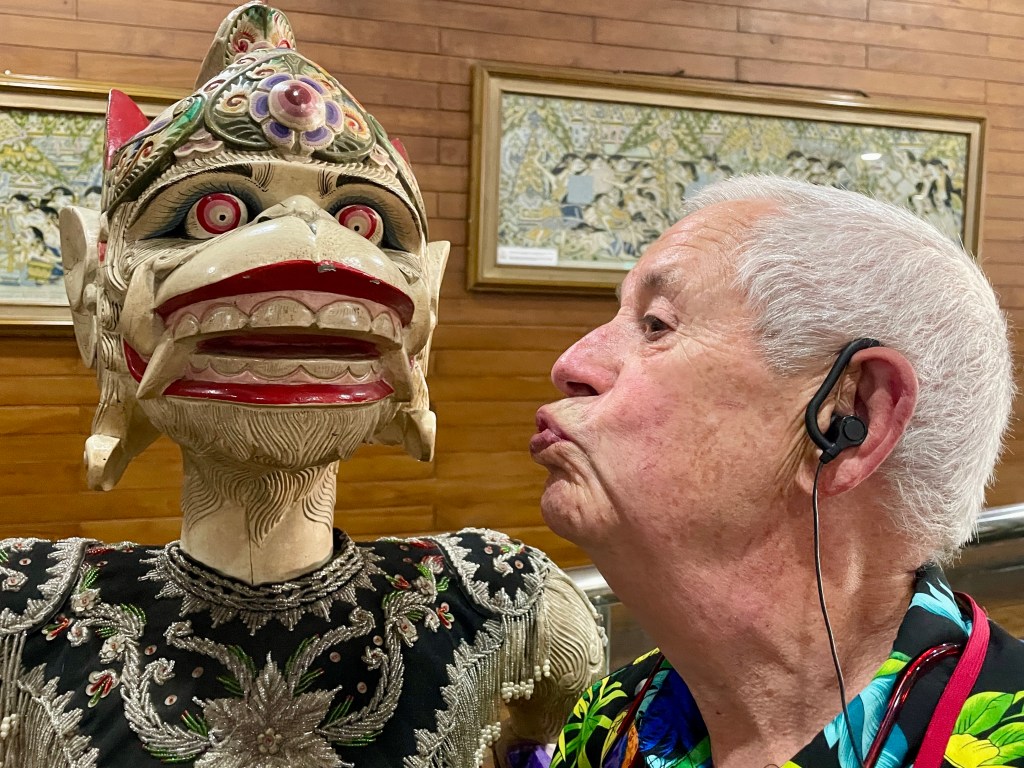
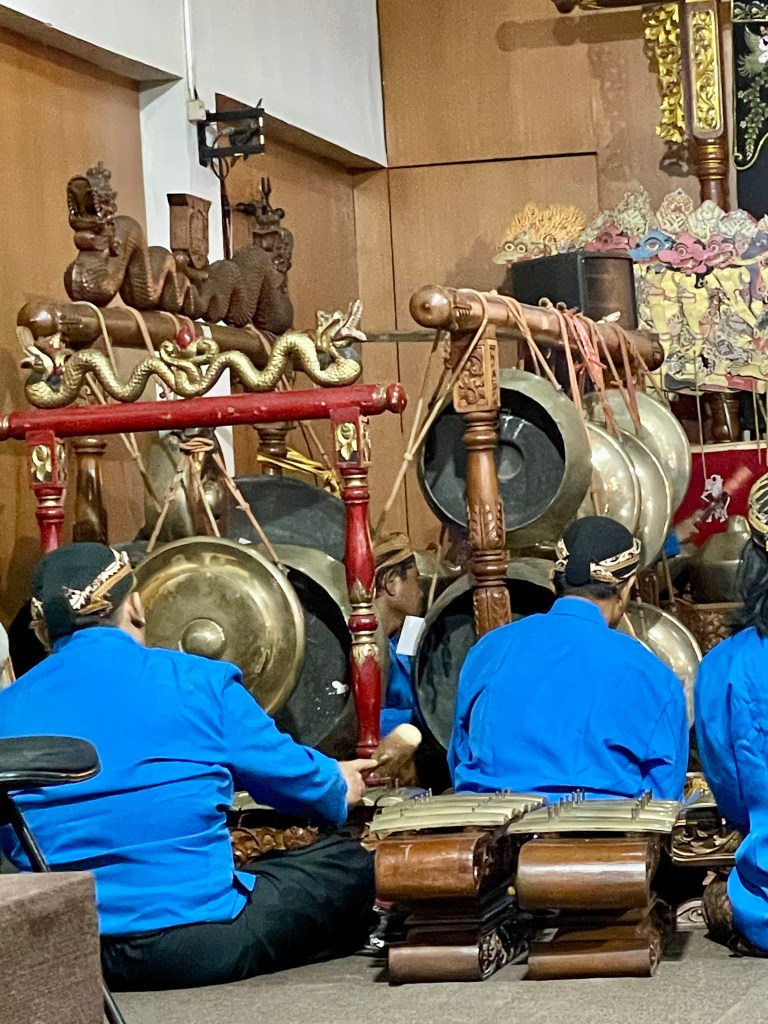
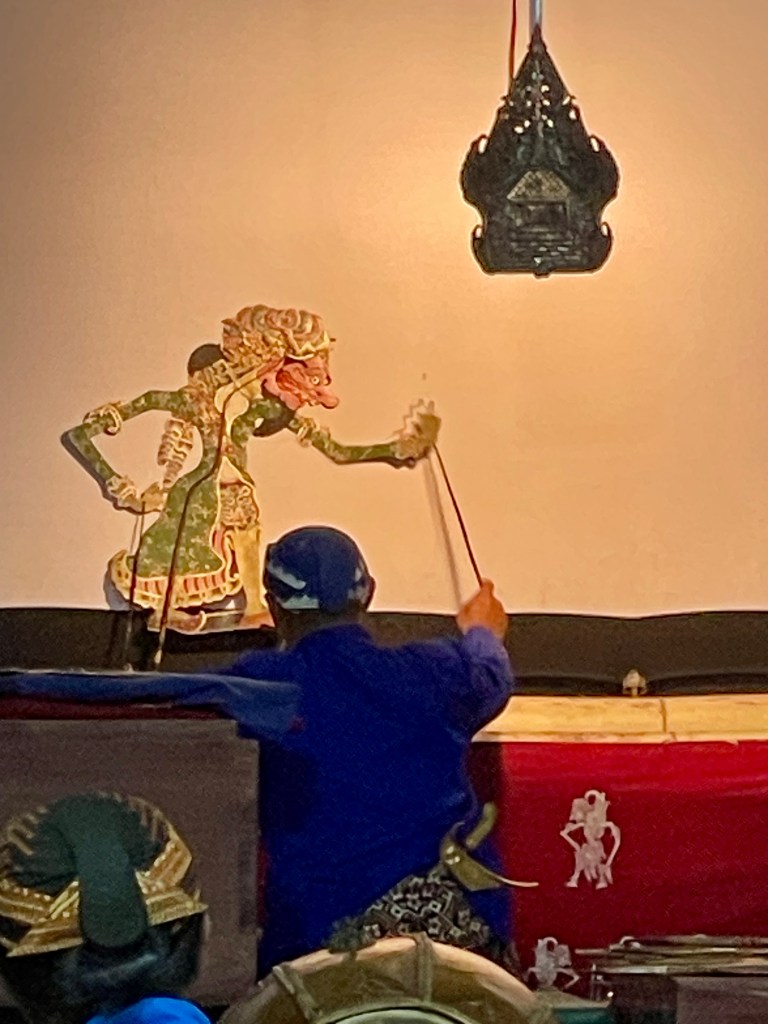
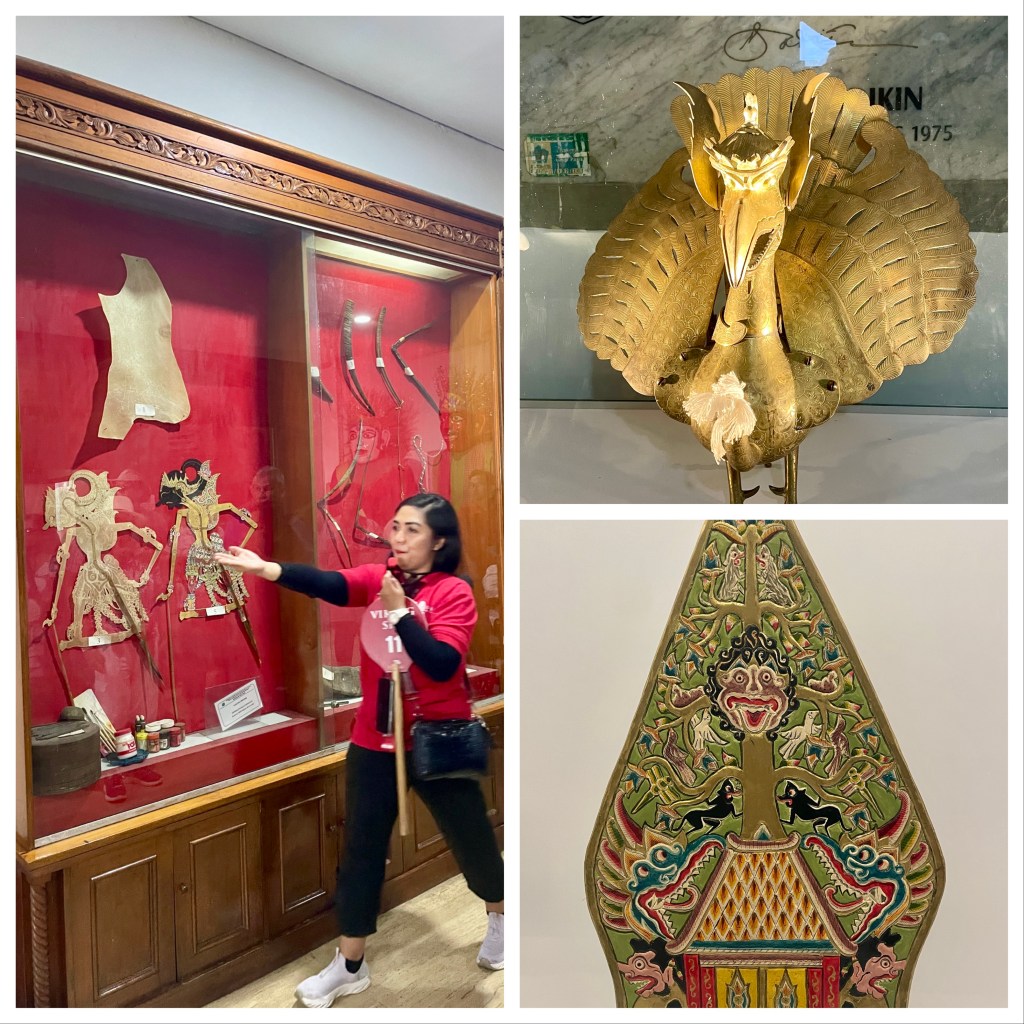
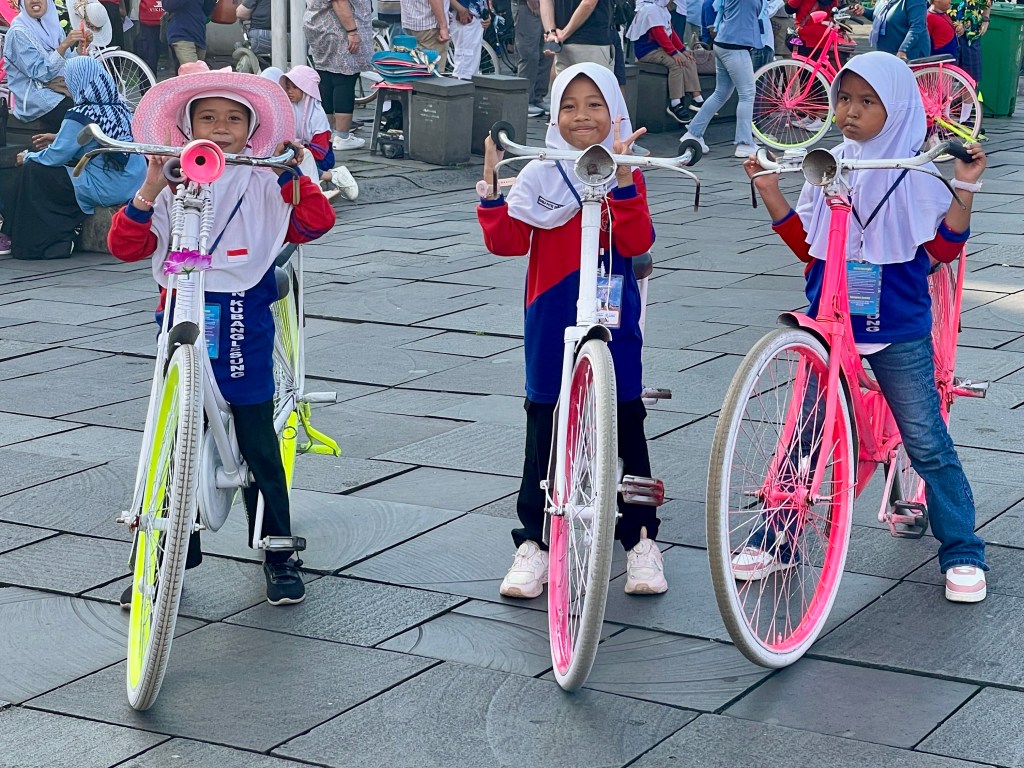
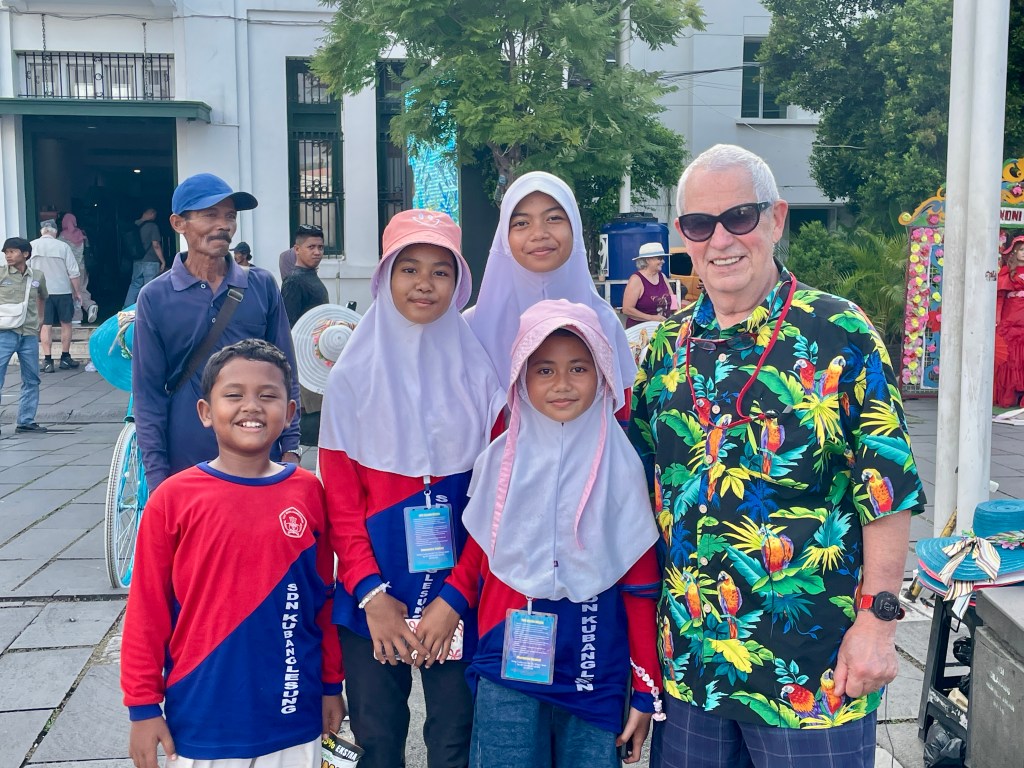
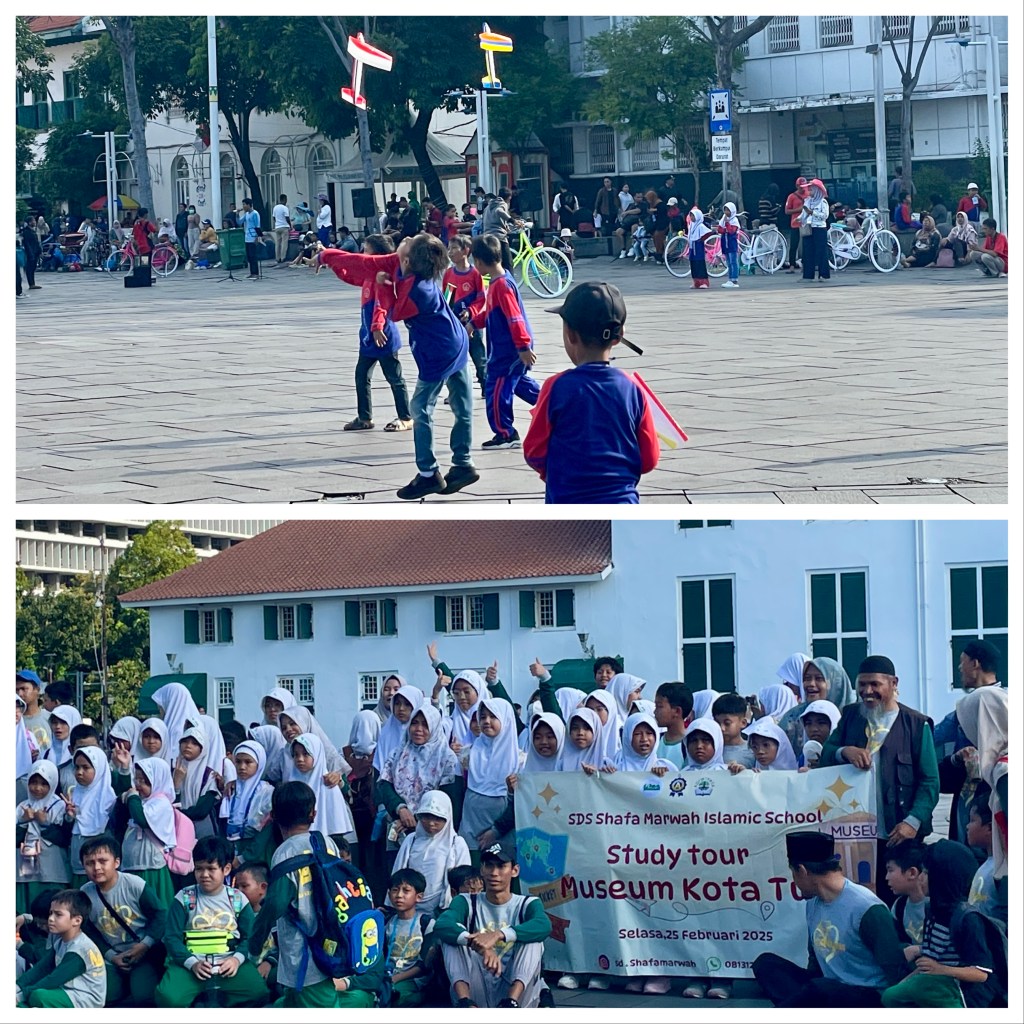
Our first day excursion was a visit to a puppet museum, a history museum and a mall. (There is more mall space in Jakarta than any other urban center in the world.) The tour bus fought through about an hour’s traffic before arriving at the puppets. There is a tradition of using lengthy (up to 8 hours) shadow puppet shows not only for entertainment, but for teaching religion and reinforcing values. We saw a brief show and then toured the puppet museum. It was lengthy, but interesting. Our guide related lots of stories which helped us appreciate the heritage. Outside the museum was a huge square where we were able to interact with lots of kids. The historical museum that followed had some pretty good exhibits….lots of Buddhist and Hindu stuff and replicas of the cranial and femur bones of the “Java Man.” Finally, we were dropped at a shopping center which was impressive…..muliple blocks and multiple floors.
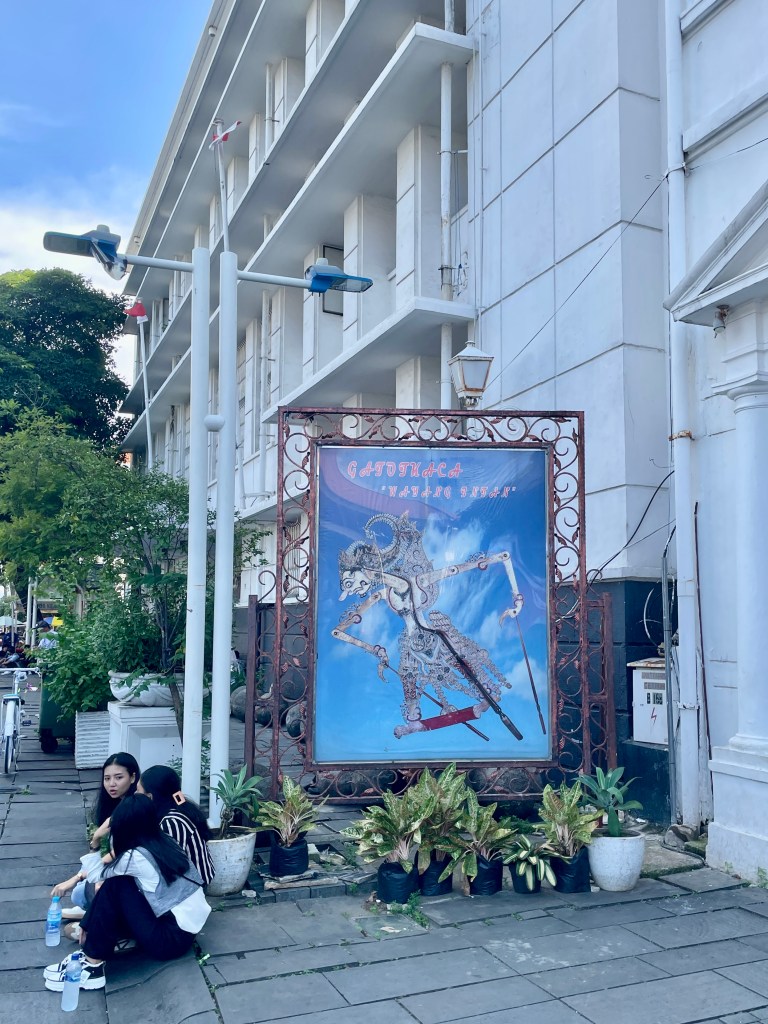
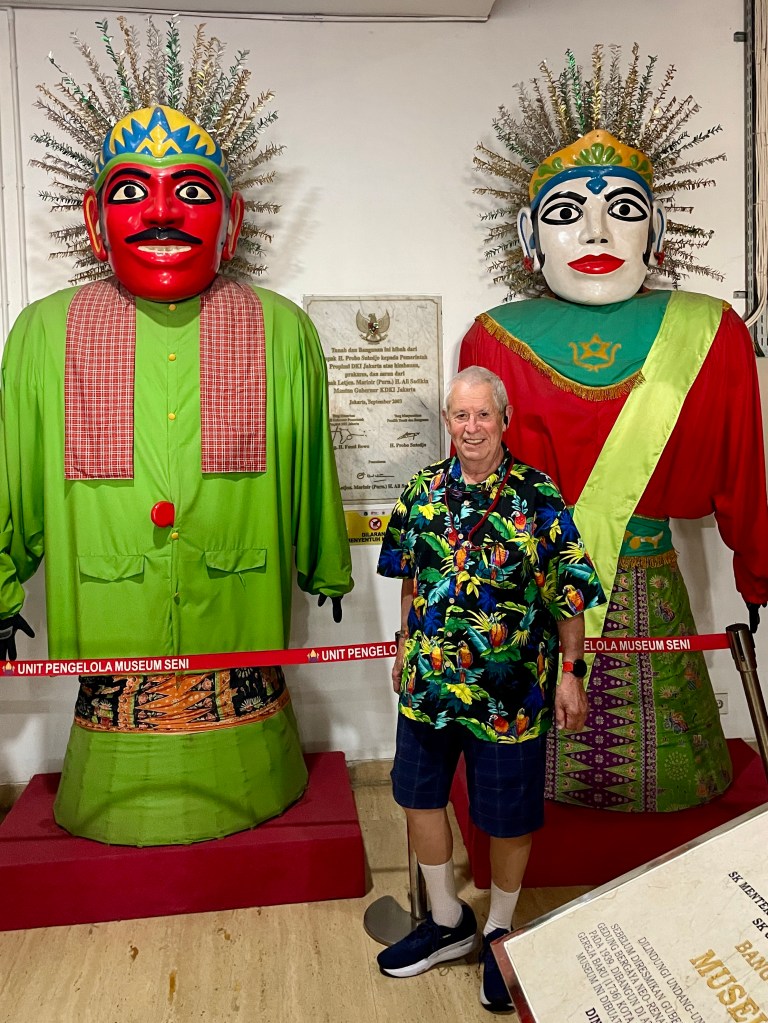
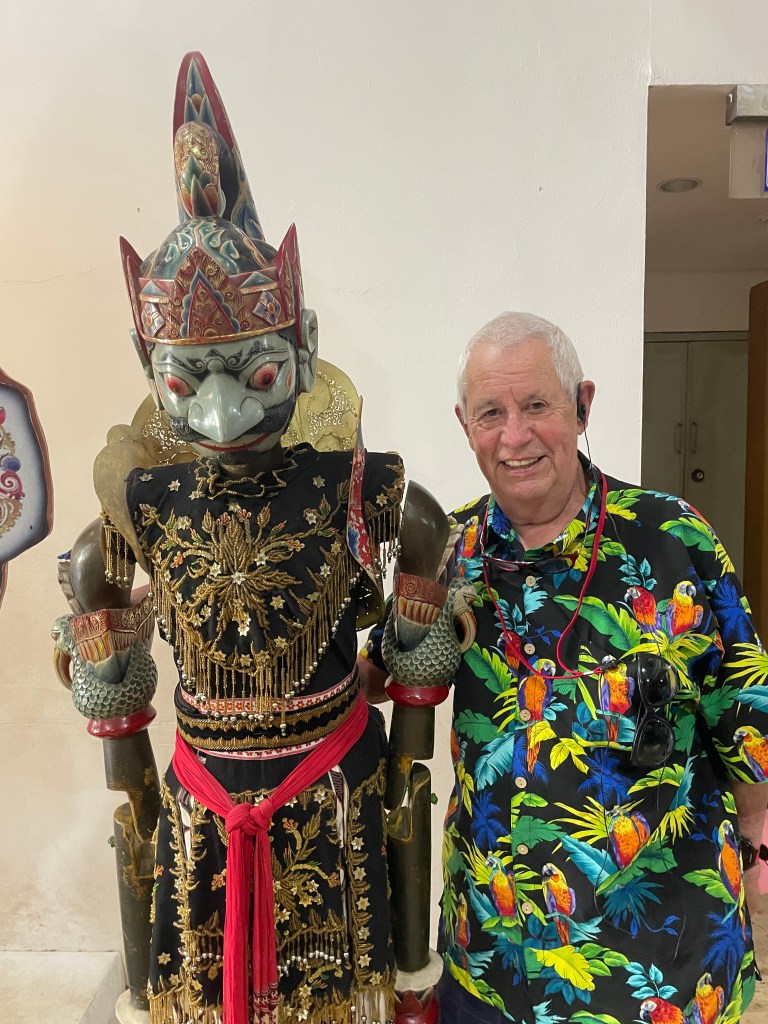

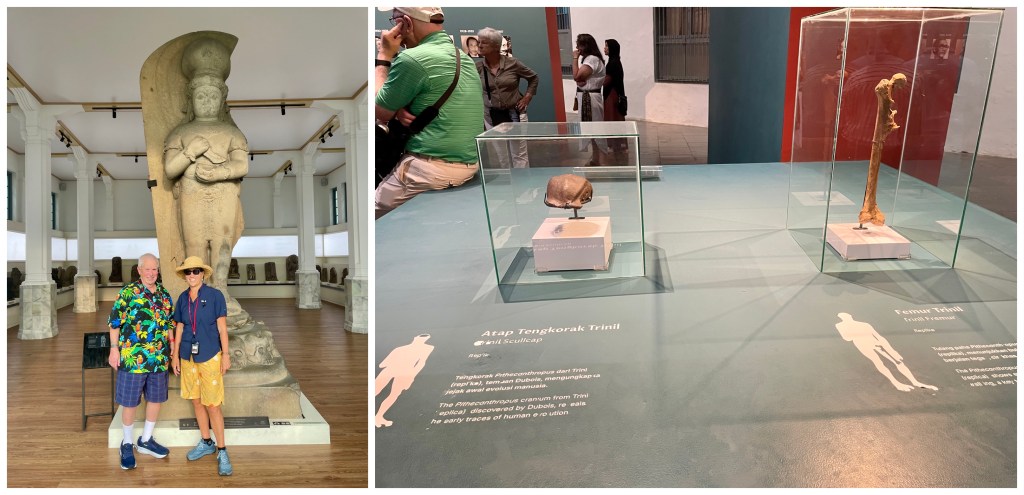
On the right: Java man piece of skull and femur 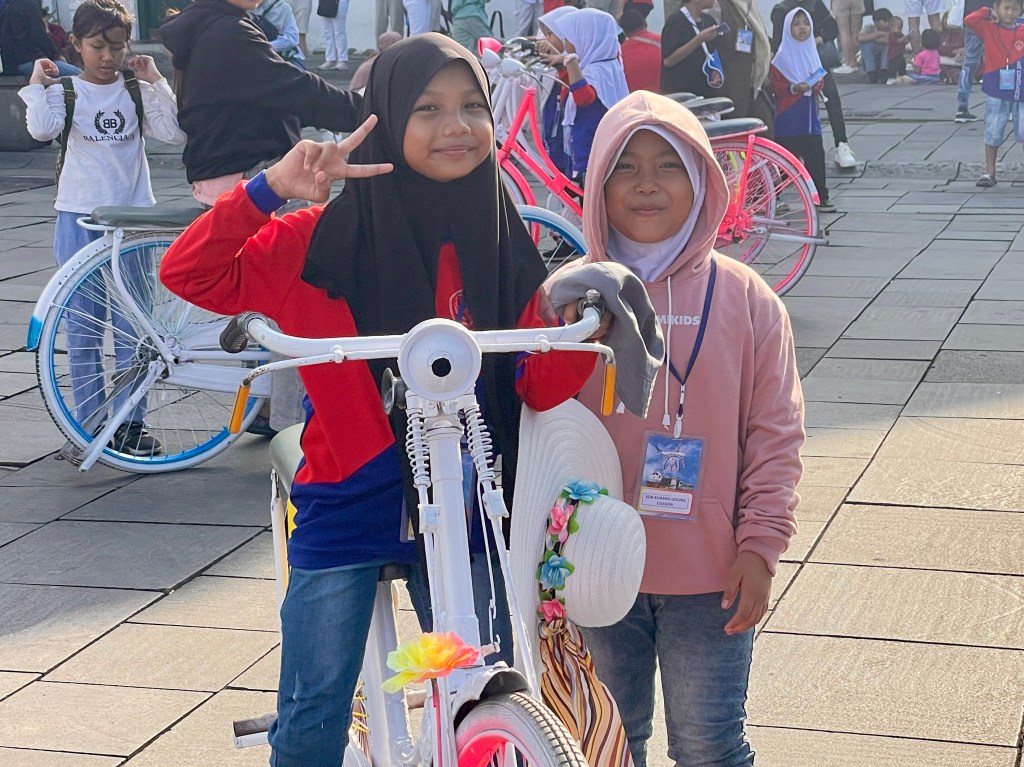
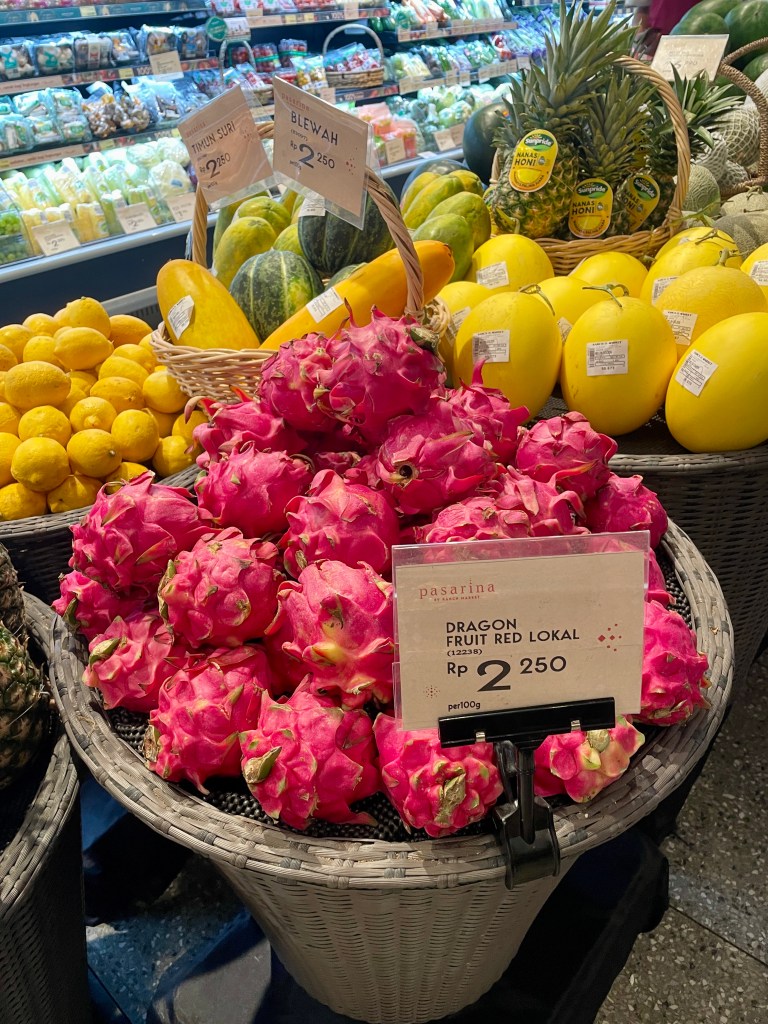
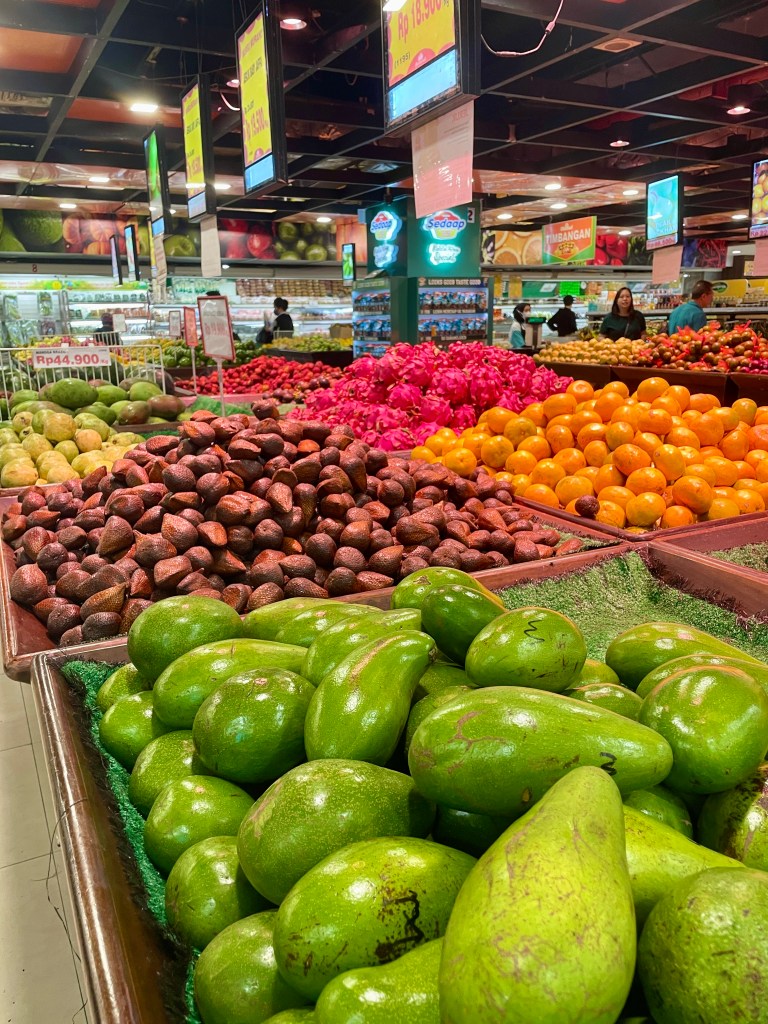
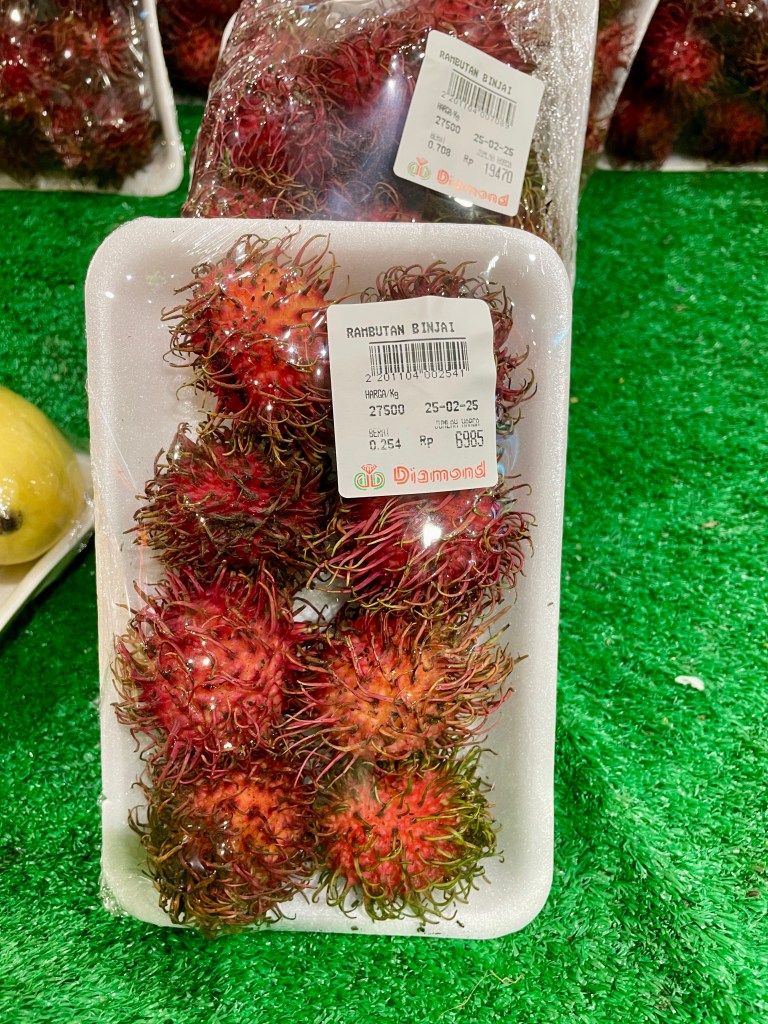
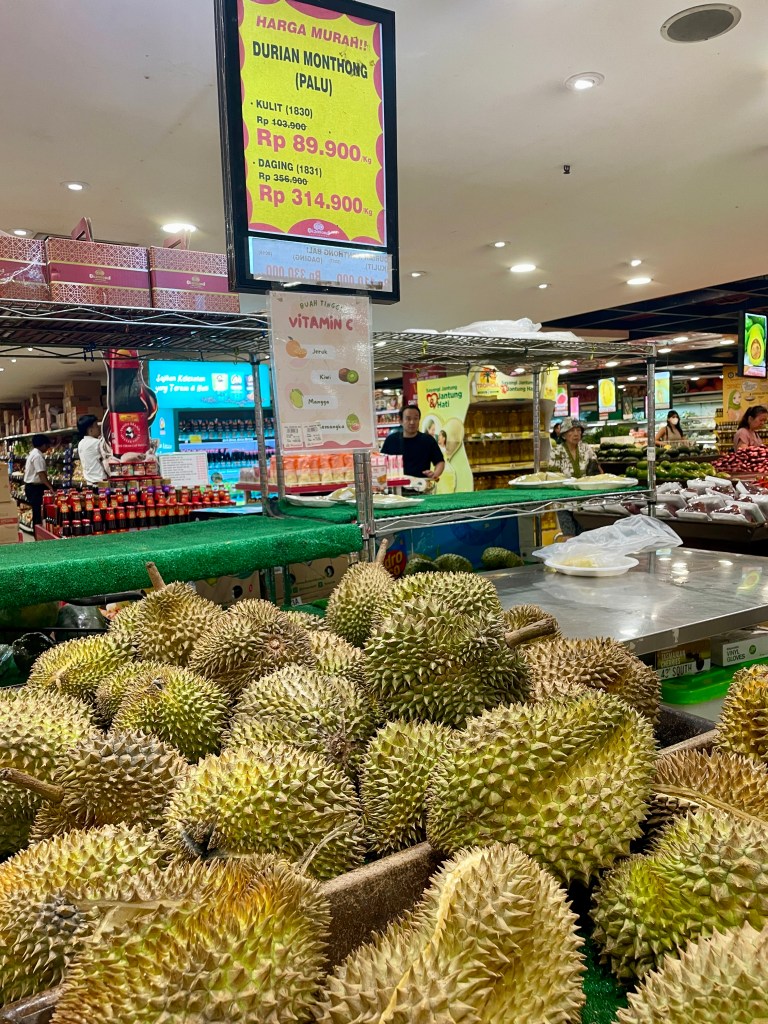
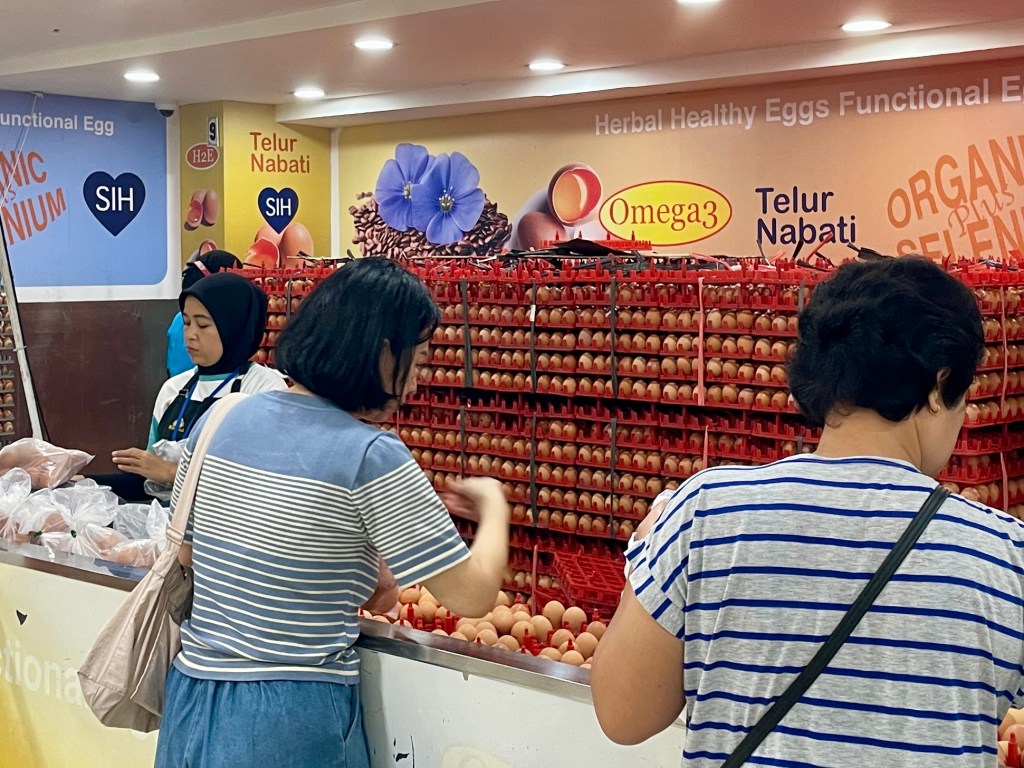
On the second day, we took a shuttle to guess…..a shopping mall. We arrived at 9:30 and learned that most stores opened at 10. There was a large grocery store in the basement level. Very nice. Among our observations were that eggs cost $2/ dozen. Also, it seemed that there were at least twice the number of employees than we expected. There must be an effort to create jobs, even if they have lower salaries. We also saw more workers in the port area and more police (unarmed) than we would expect. The mall was fun to wander through, but the only thing we absolutely had to have was a massage for Karla. She can write about it.
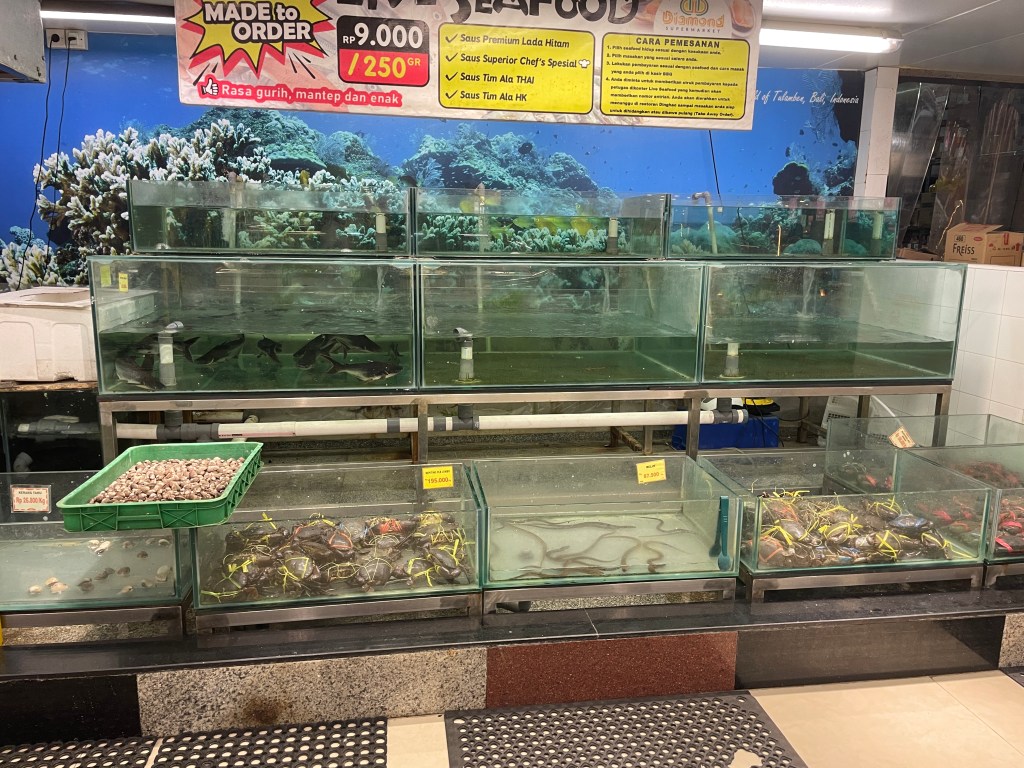
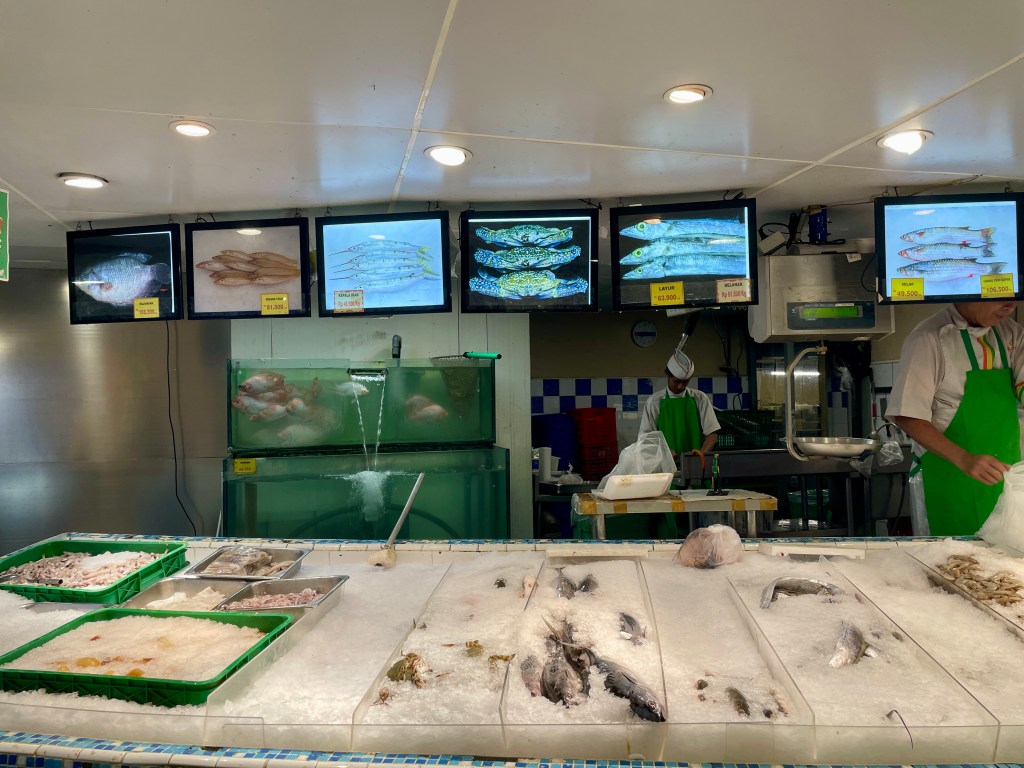
Lots of fresh fish. The video monitors have photos of the fish and pricing 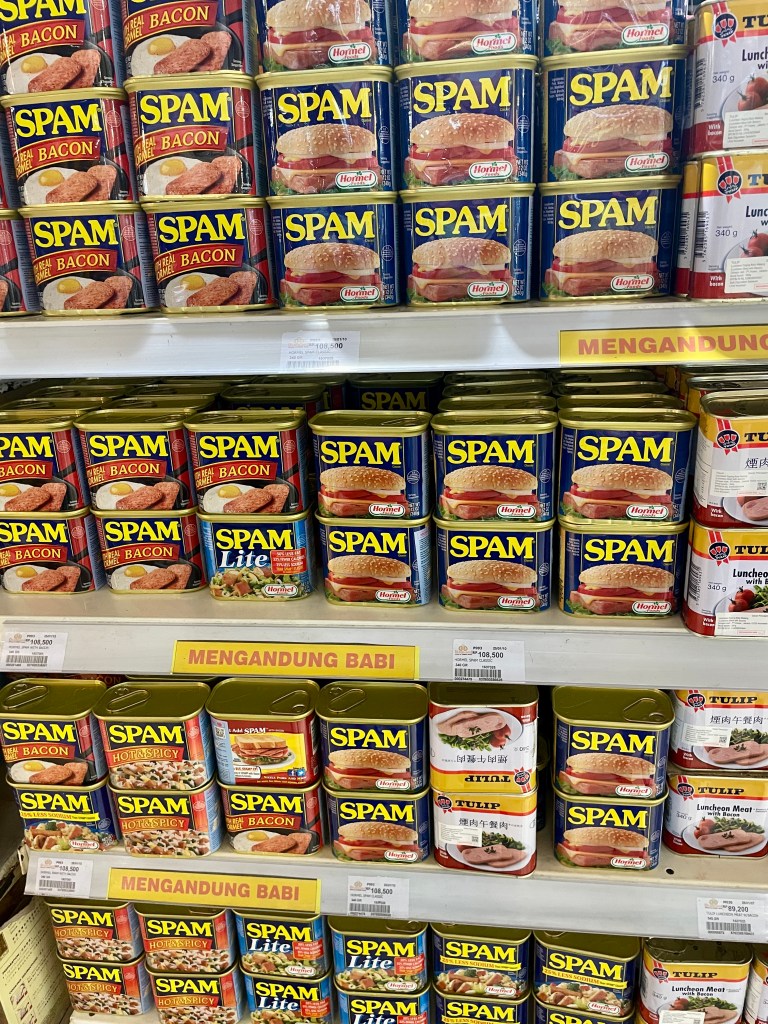
Karla here: the massage was among the best in my life. It was a “hurt me so good” massage as the therapist dug deep into tissues and knots while also stretching my (like the Thai massage) quads, hamstrings, hips, shoulders, arms, wrists, and back. The therapist used oil and when she found a knot, switched to a eucalyptus lotion. After the 90 minute massage (cost about $12), I opted for ear candling.
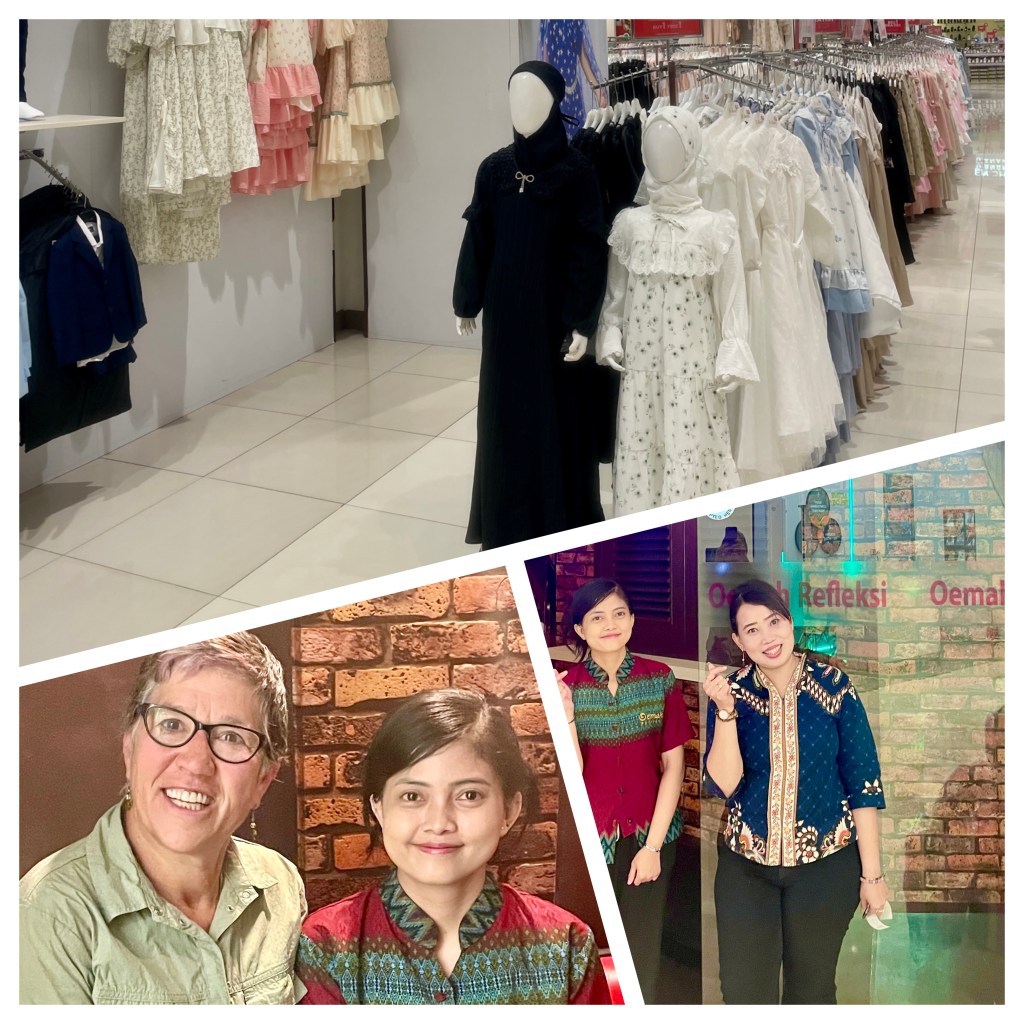
Muslim mannequins, my massage therapist and the shop owner. In writing this, I googled ear candling and am glad I did not do so beforehand. Here is a summary from a Balinese site, followed by Wikipedia excerpts. The therapist held the candle in place and lit it. At no time did I feel like it was harmful.
Ear candling is a traditional holistic practice that involves using hollow, cone-shaped candles to help remove earwax and impurities from the ear canal. Made from natural ingredients like beeswax or paraffin, these ear candles are placed gently in the ear while the opposite end is lit, creating a vacuum-like effect that is believed to draw out excess wax and debris.
When lit, the heat from the flame softens earwax, while the gentle suction created by the burning candle helps pull the wax and other impurities up into the hollow tube. This process is not only designed to cleanse the ear, but it can also promote relaxation and a sense of well-being.
Wikipedia calls ear candling “pseudoscientific” as well as “dangerous” and “ineffective.” It was a $6 add on service that I wanted to check out. No harm done. Following the spa visit, I toured around the mall and bought some Indonesian batik clothing for myself.
Upon return to the ship, we had dinner with friends, Kathy, Mike, Louise and Kim and then headed to the show to see performances of our cruise directors, Tara and Matt. One of the numbers was “Summer Loving” from Grease and the choir performed the harmony. Following that, the choir sang a rendition of Leonard Cohen’s Hallelujah, to great applause! Matt and Tara are leaving in Singapore so we will get new cruise directors and I will probably switch to more bridge play rather than choir. It bums me out that the timing conflicts and I have to choose. Rough life at sea.
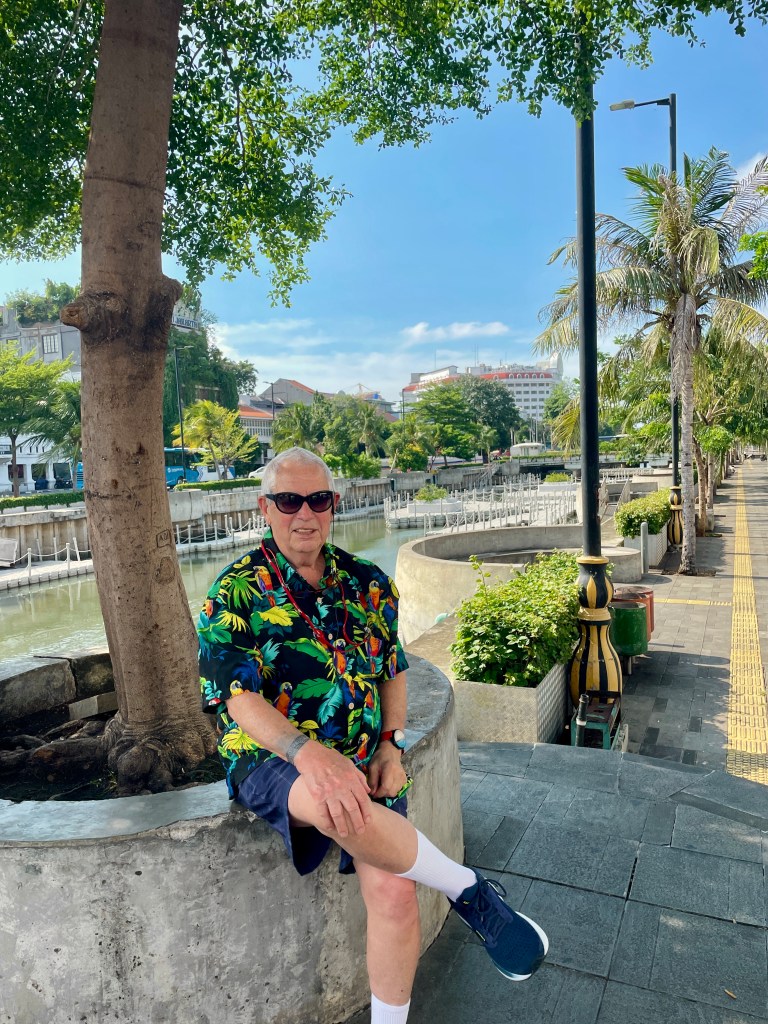
Back to Fred: I would never want to live here, but it was a better stop than we anticipated.
-
Semarang
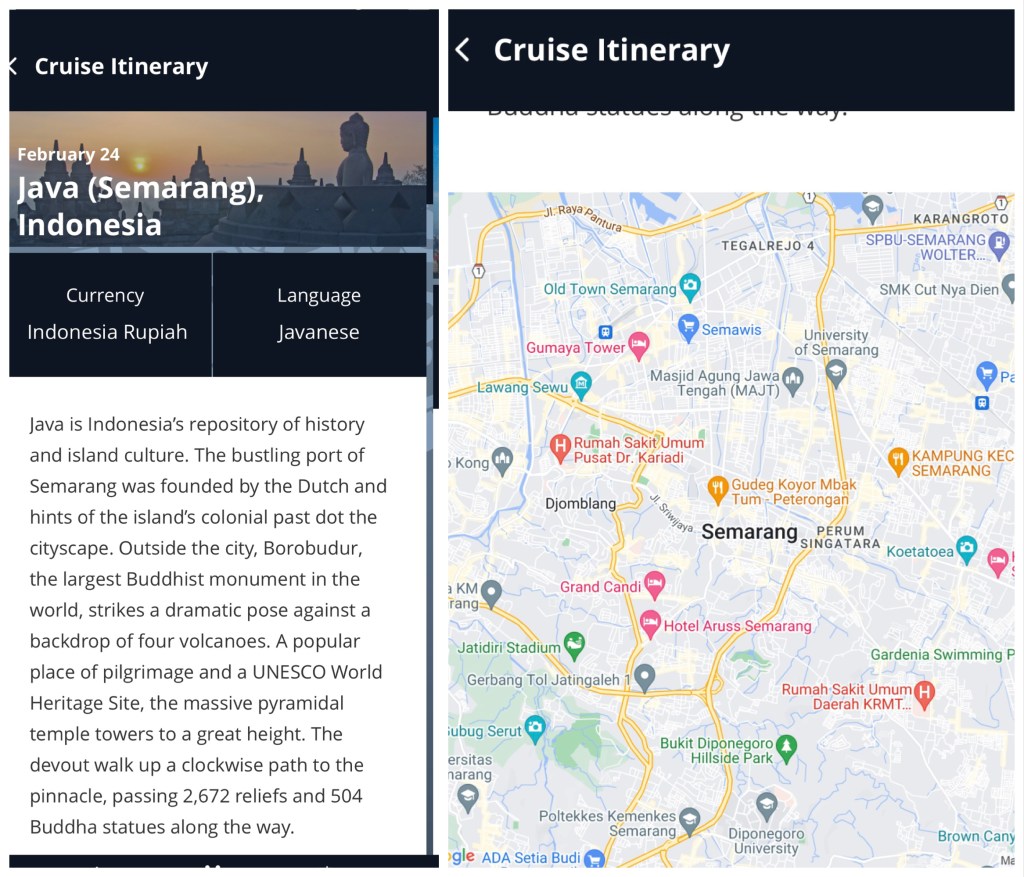
Feb. 24
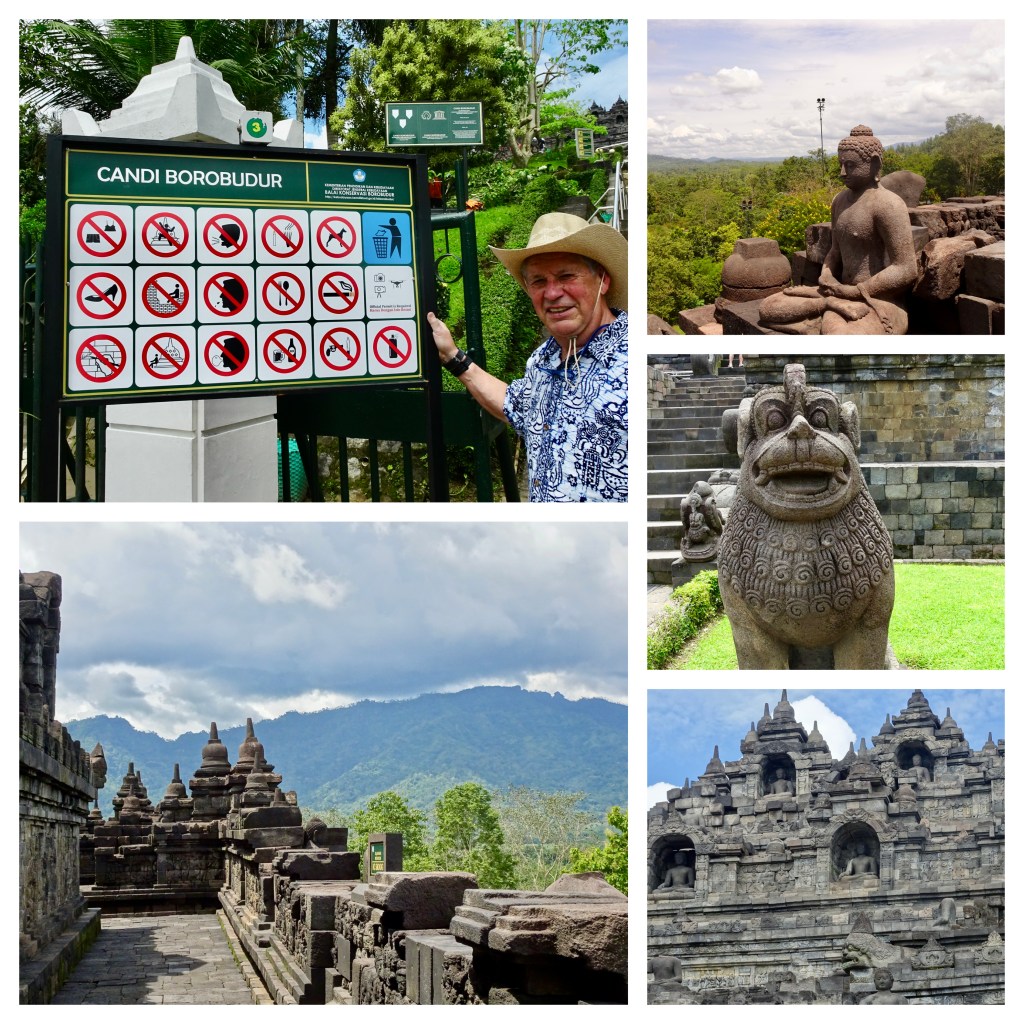
On our first world cruise (2017-18), we docked at Semarang and took an all day tour to Borobudur, the world’s largest Buddhist temple…..in the middle of a primarily Muslim country. It was a decent tour, but we didn’t even consider spending at least 6 hours on a hot and humid bus. We chose an included tour billed as Dutch Heritage. From what I had read, I wasn’t optimistic.
Semarang is the capital and largest city of Central Java. The city has about 1.7 million people, but the greater urban area hosts over 6 million. (The states of Washington and Oregon have 8 million and 4.3 million for comparison.) Think about putting all Oregonians in one place and giving them all motor scooters. Throw in some cars and buses and you have Semarang traffic. It takes lots of time to get places. The road and river system was developed to bring goods to port and isn’t bad, but there are so many (unruly) vehicles. Fortunately, the residents hold down the number of vehicles by placing 3-4 people on a scooter. It’s not surprising to see a family of 4 on a scooter. The parents sometimes have helmets.
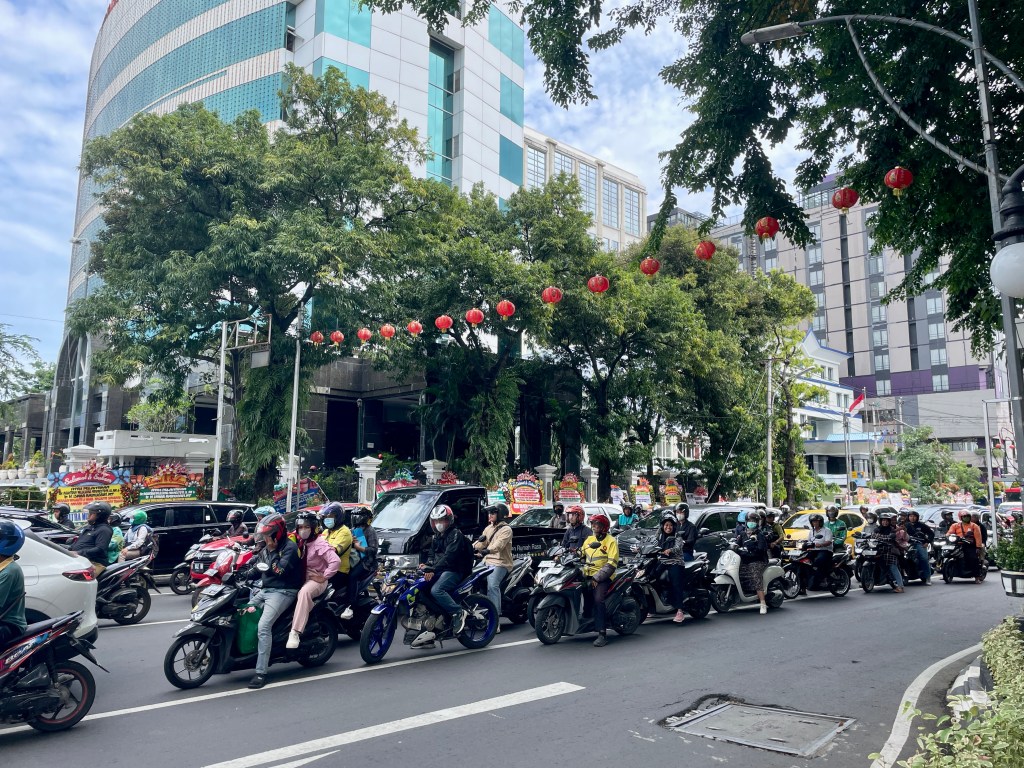
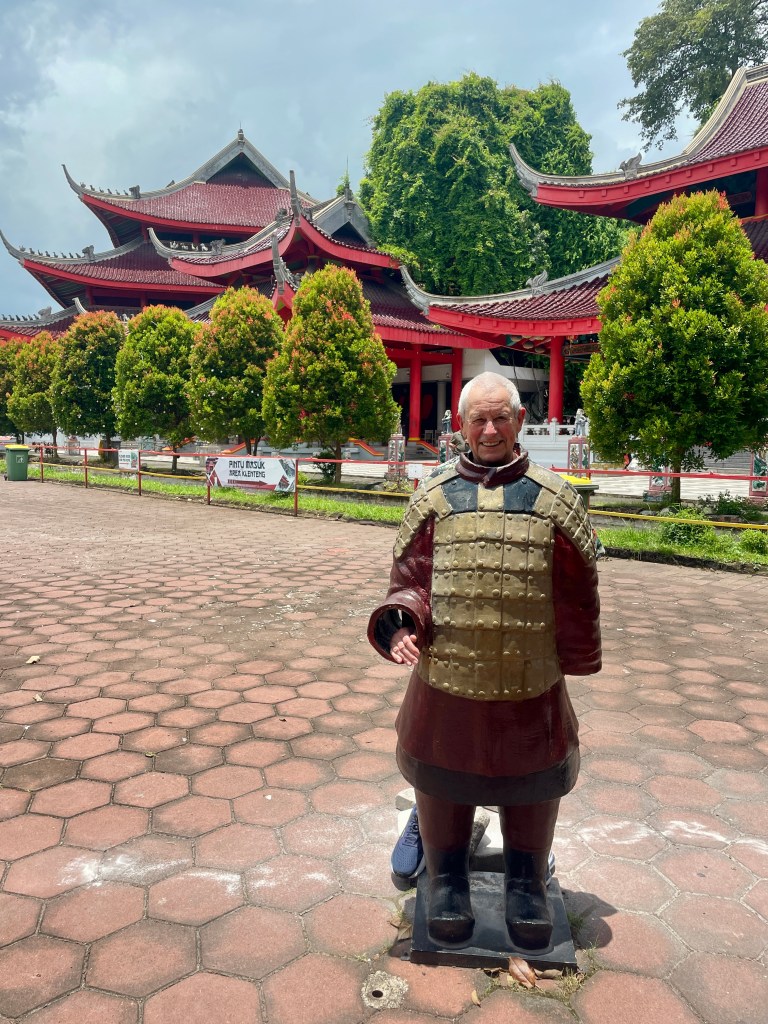
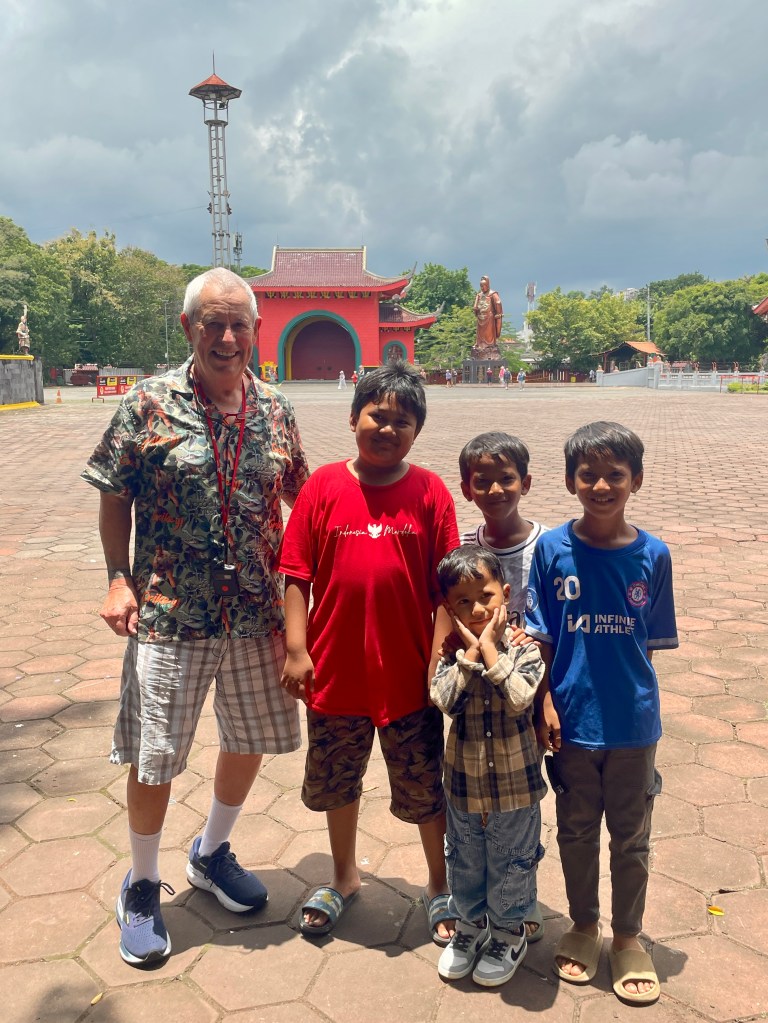
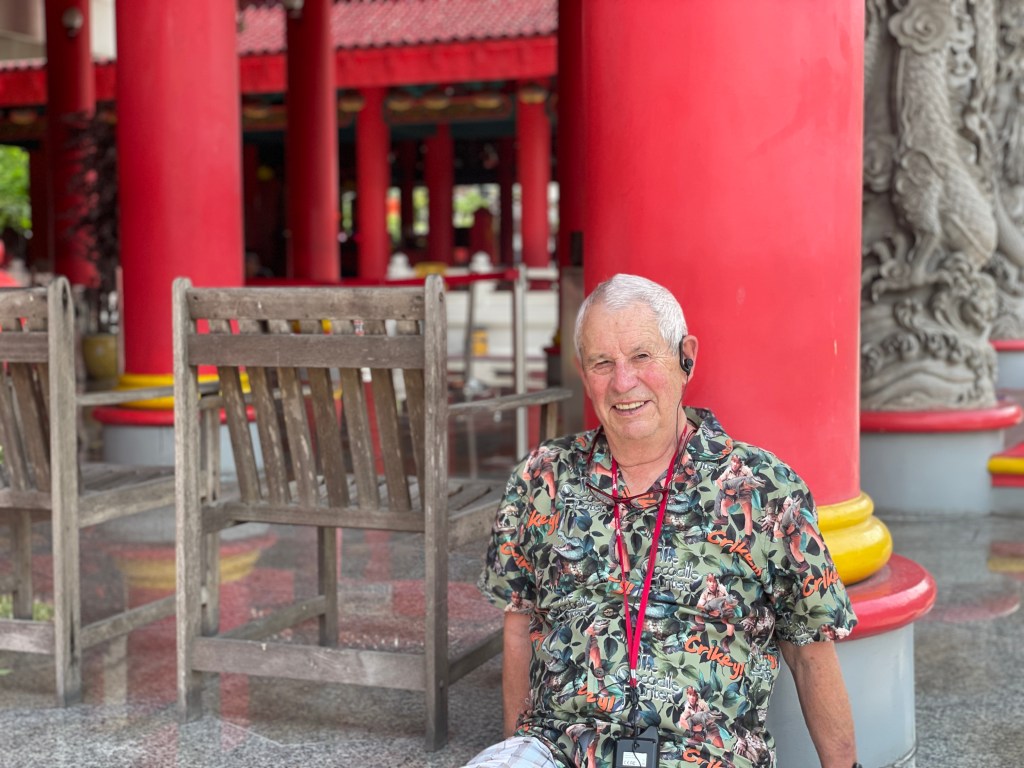
Early on, we were reminded of a Saudi tour where there wasn’t much to see and the older buildings were in disrepair. As we were taking the 45 minute ride from town to the older Dutch quarter, the guide said…”there’s a warehouse on the right”….”that’s a gas station”….”that used to be a supermarket.” The old Dutch quarter was indeed old and hadn’t been renovated. Nevertheless we saw the oldest church in Semarang, an older government building/museum and later a large Chinese Buddhist temple– Sam Po Kong. In each case, we looked for shade.
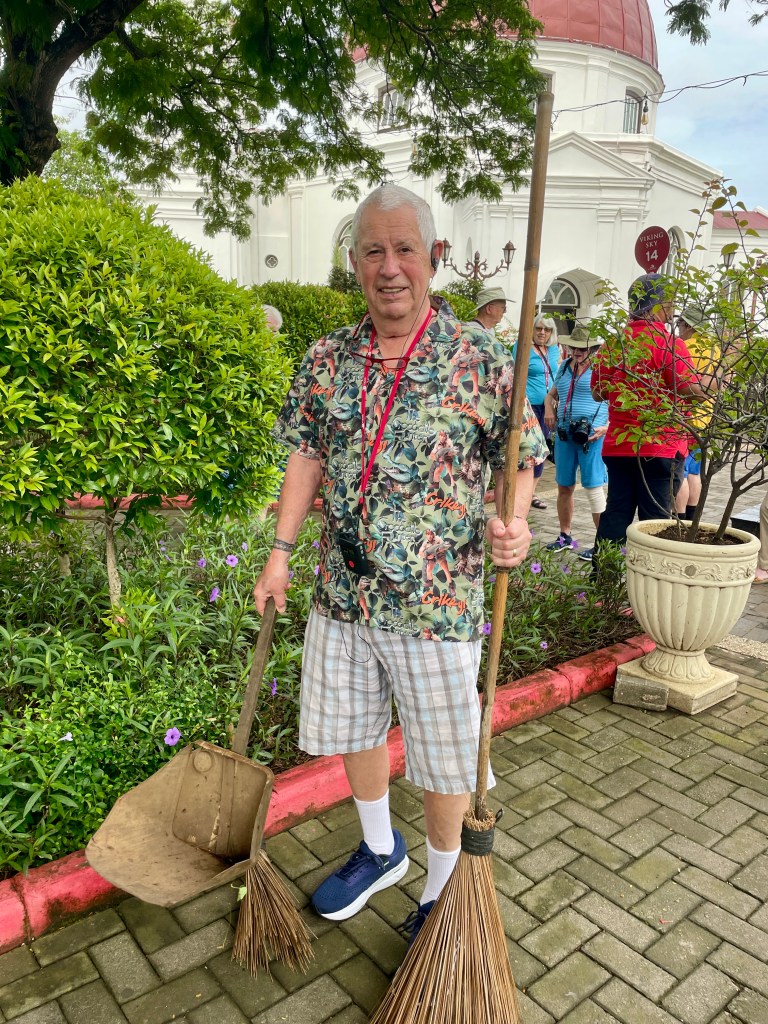
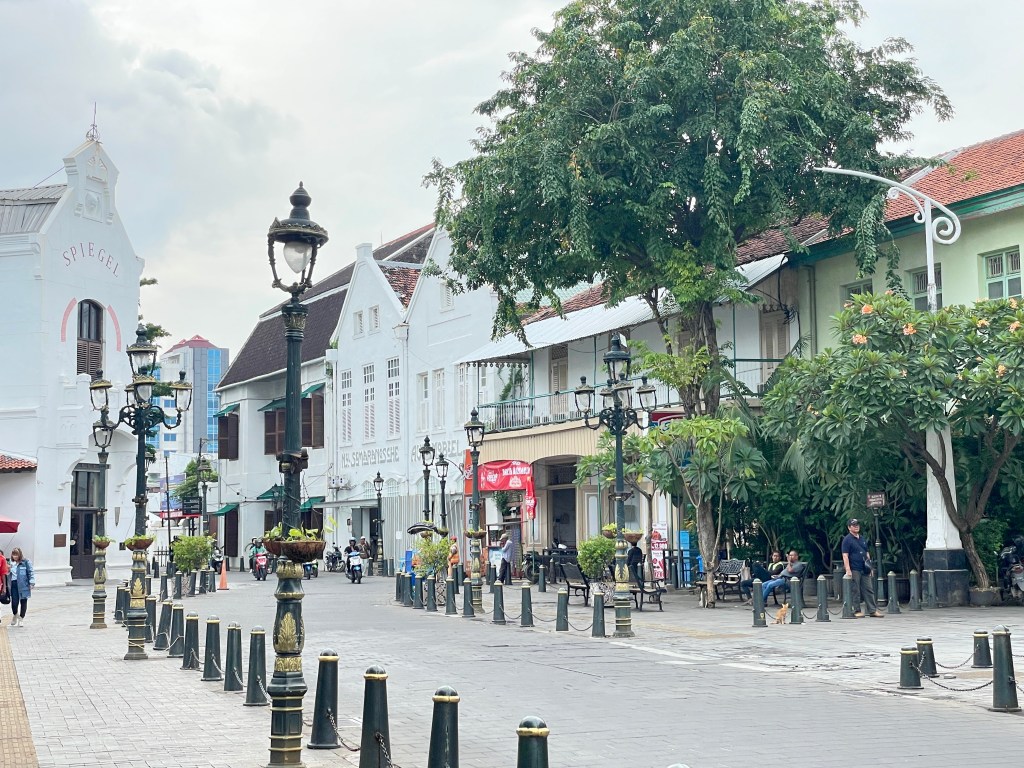
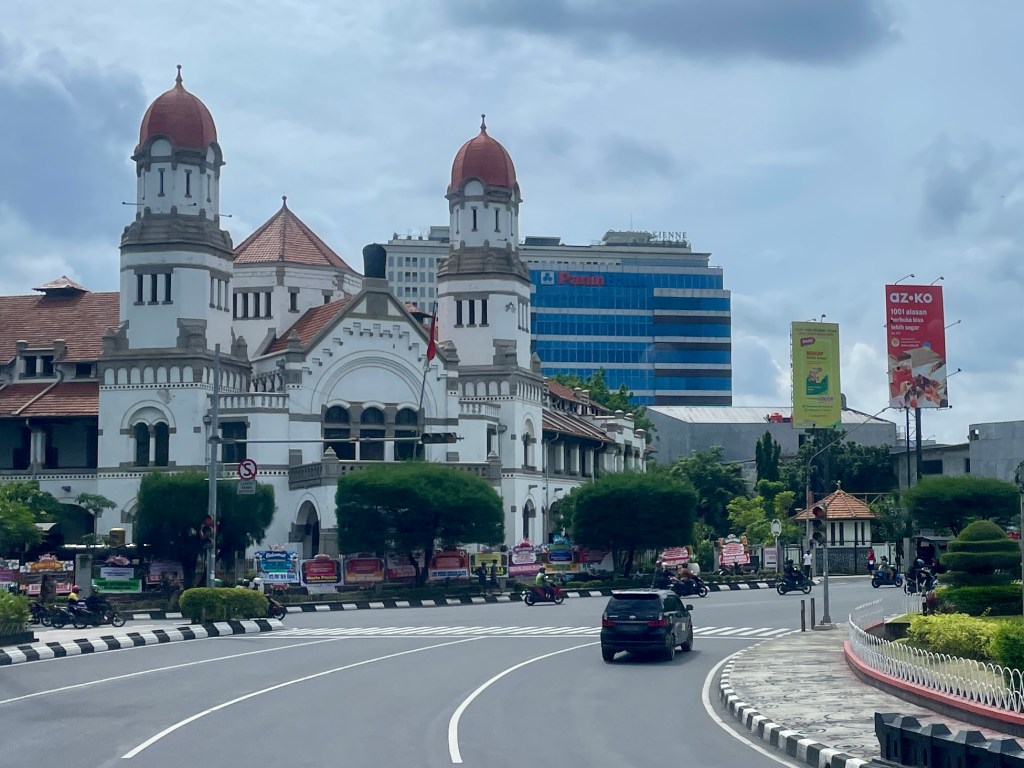
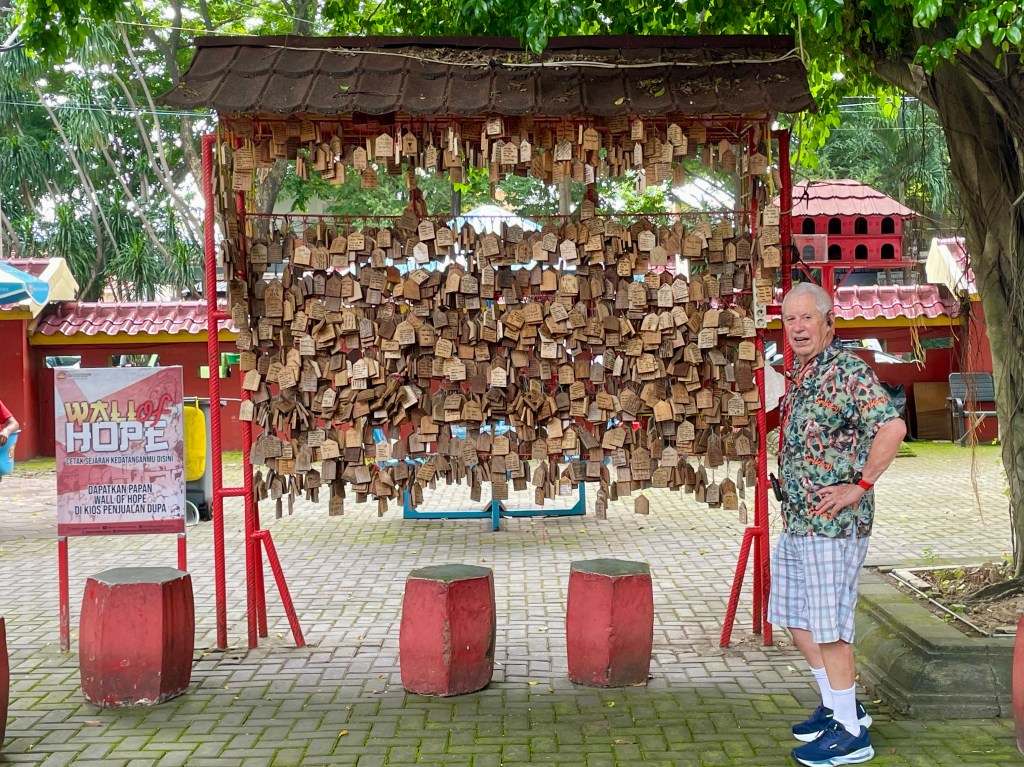
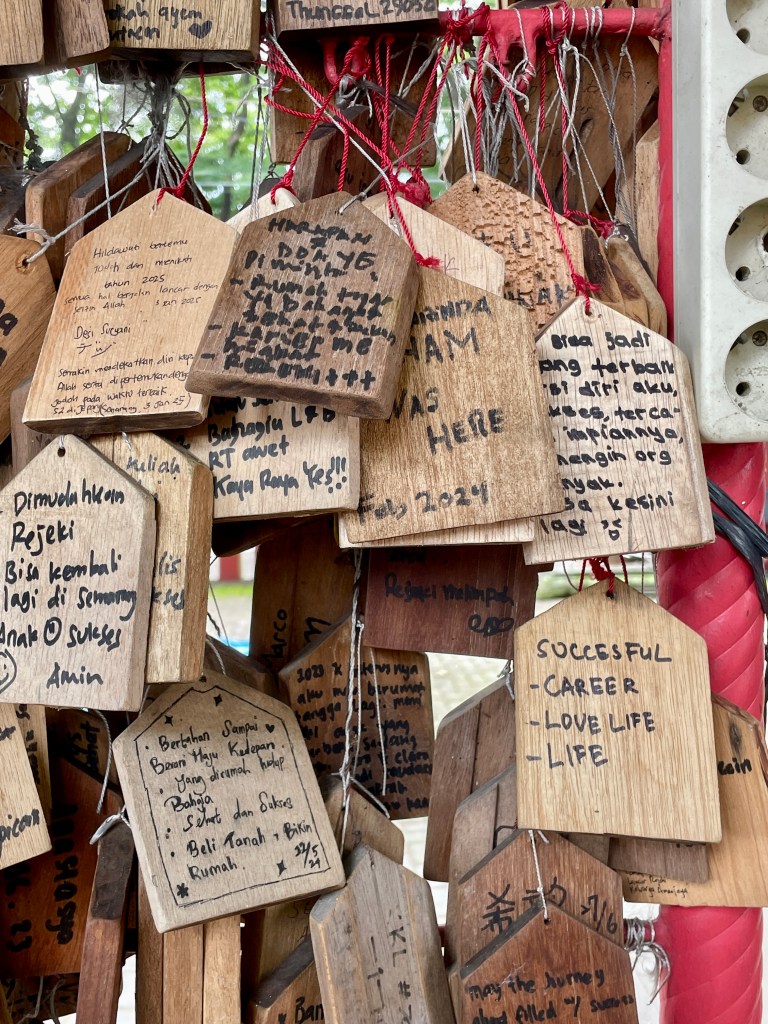
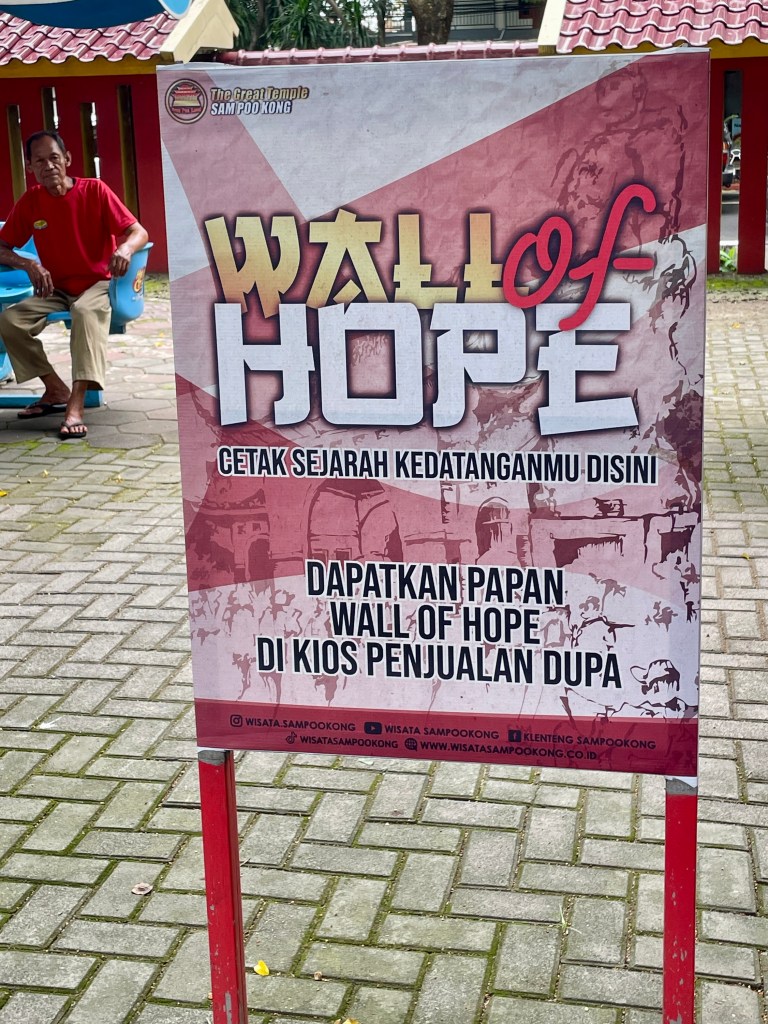
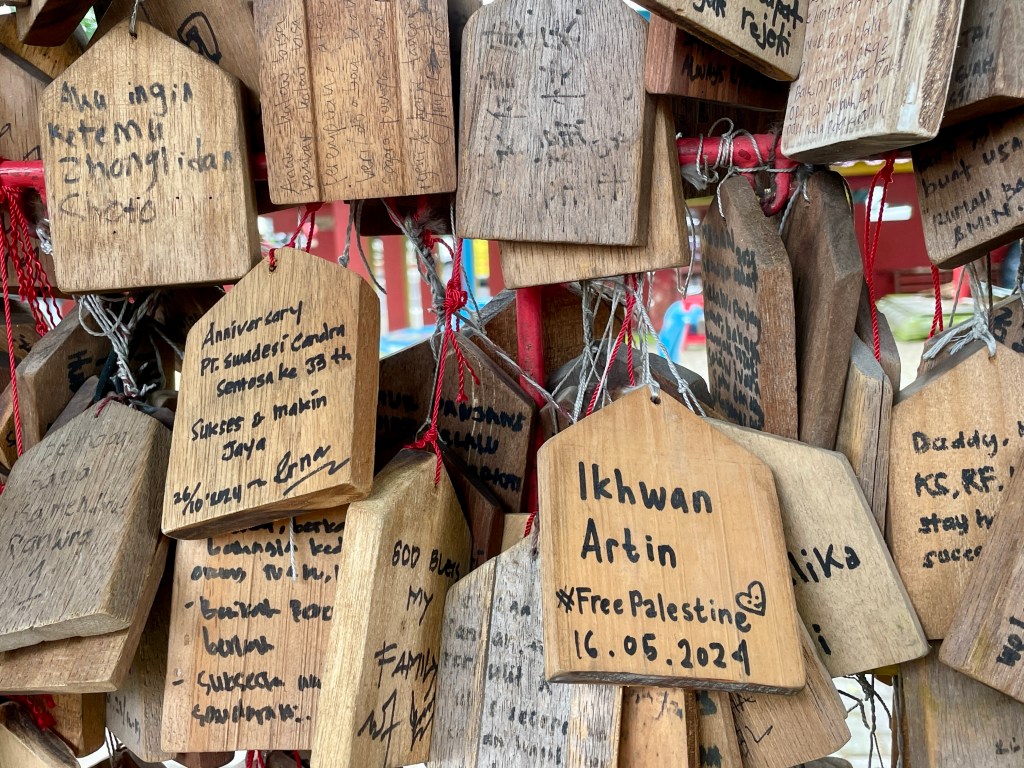
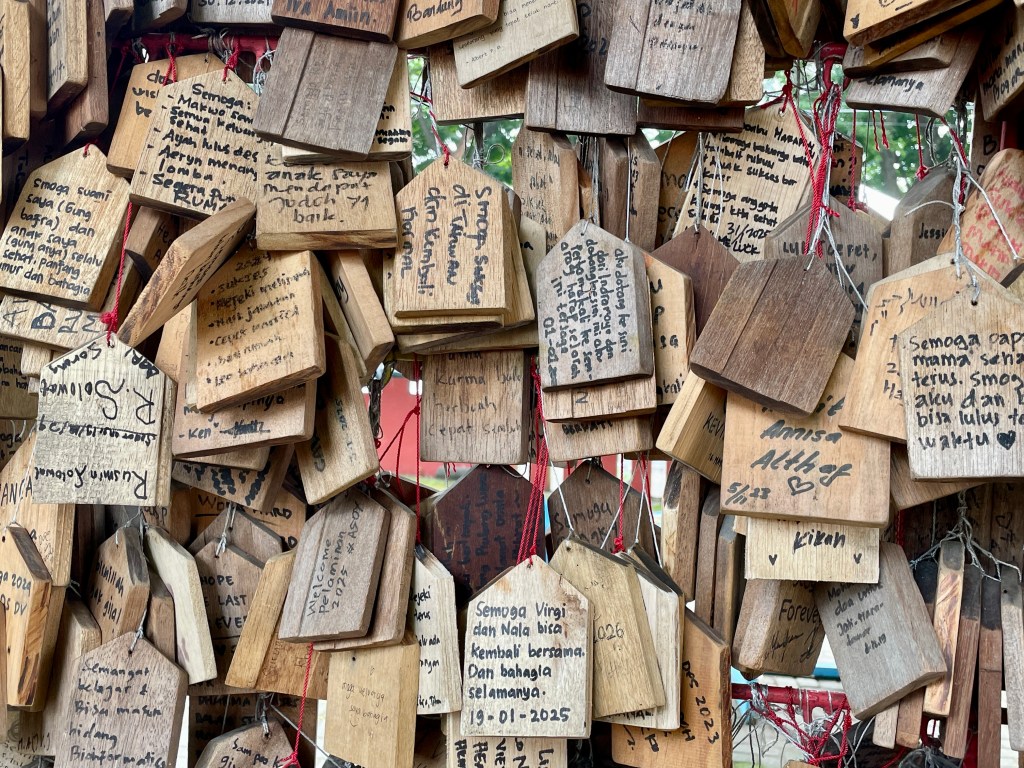
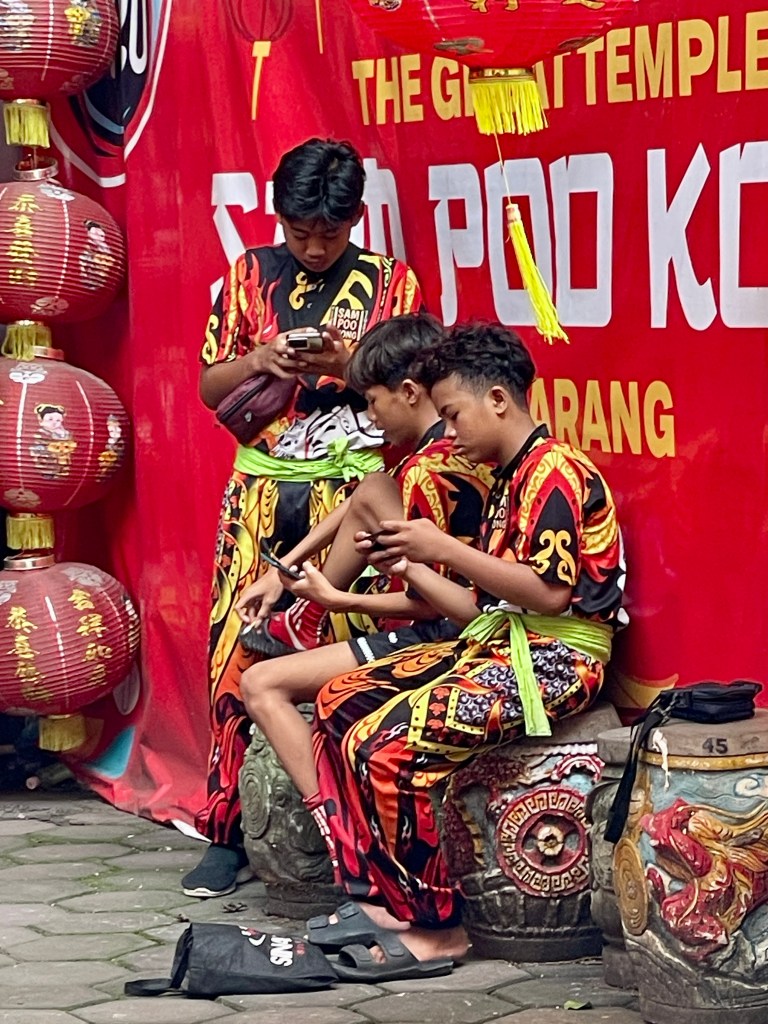
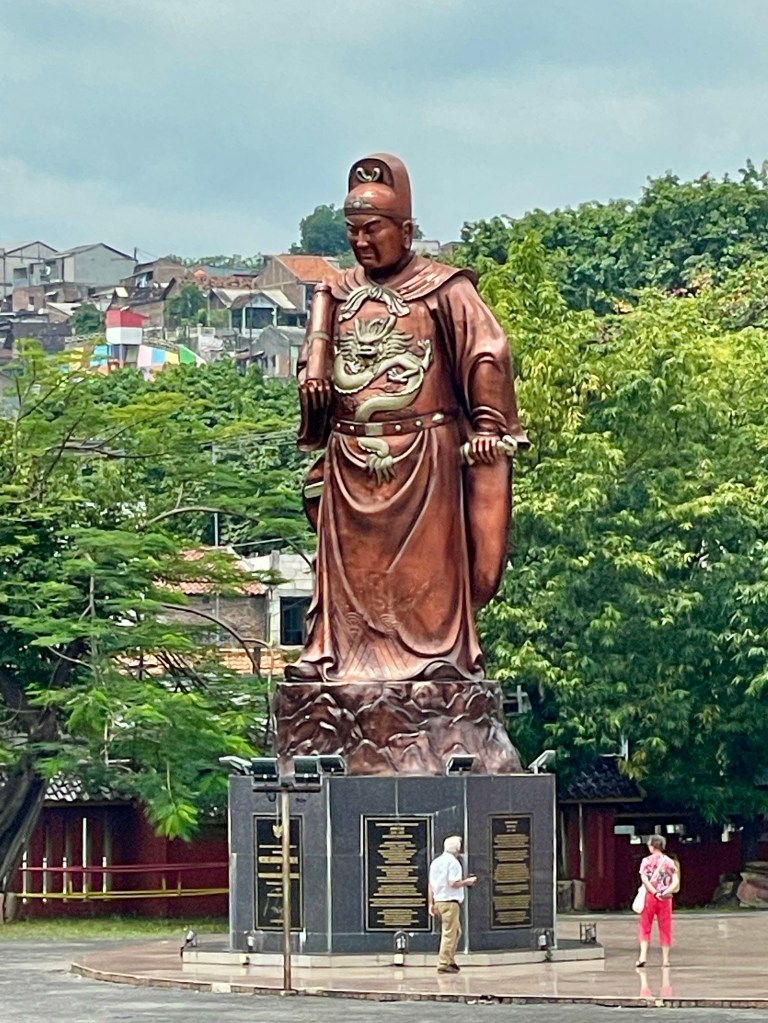
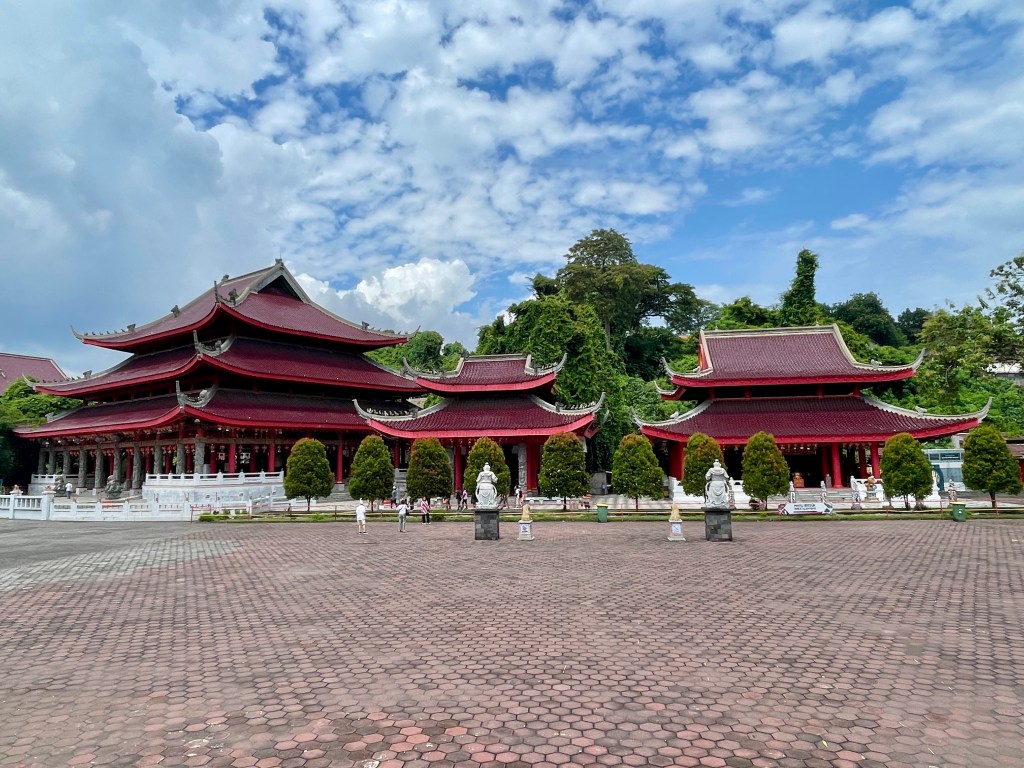
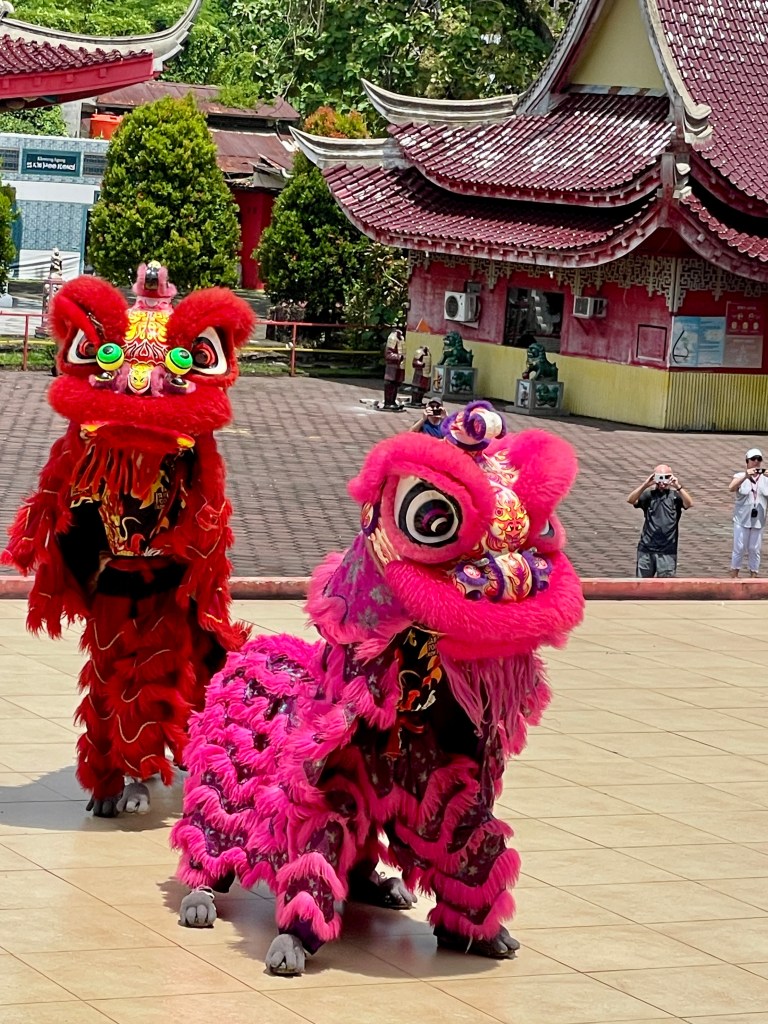
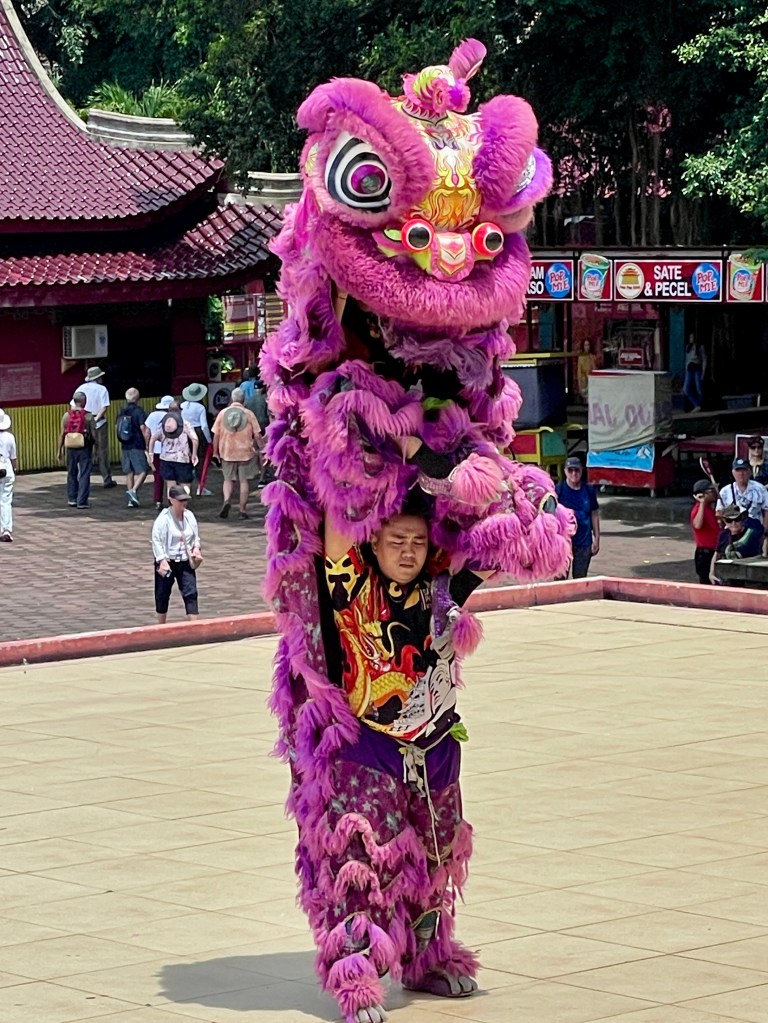
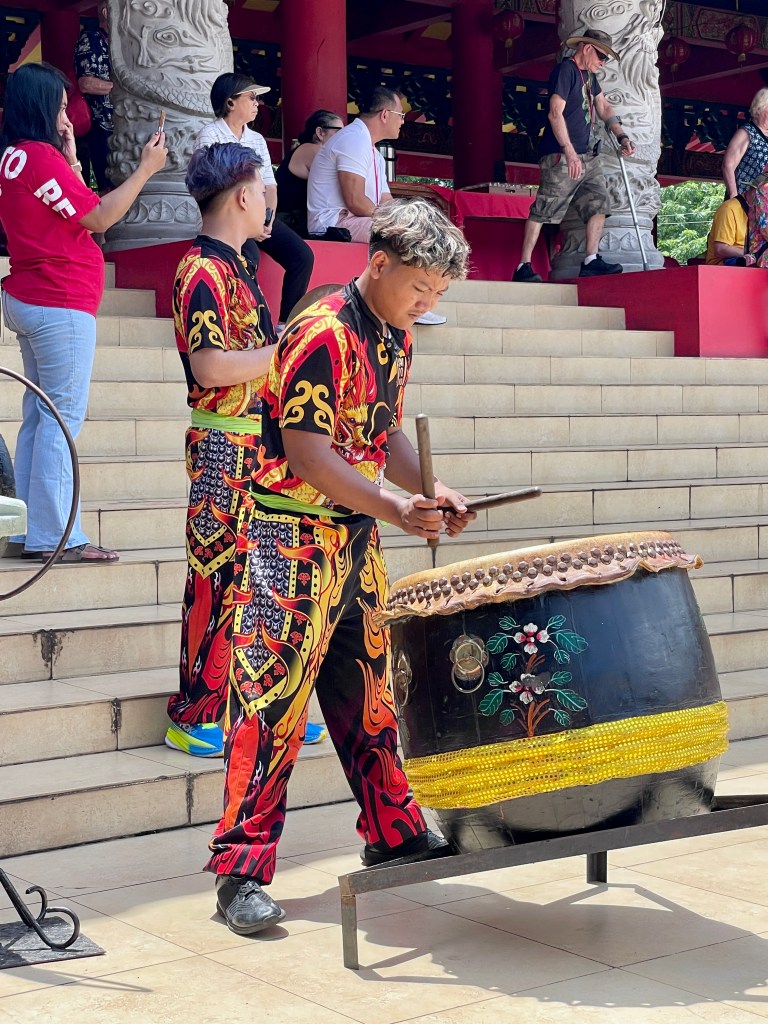
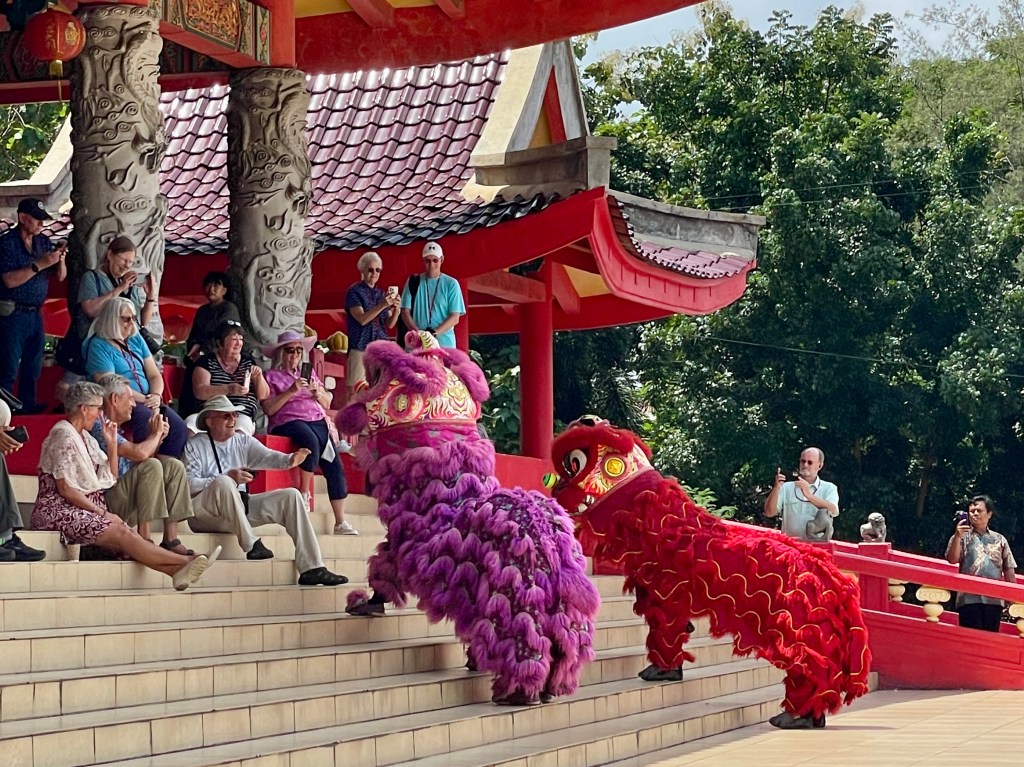
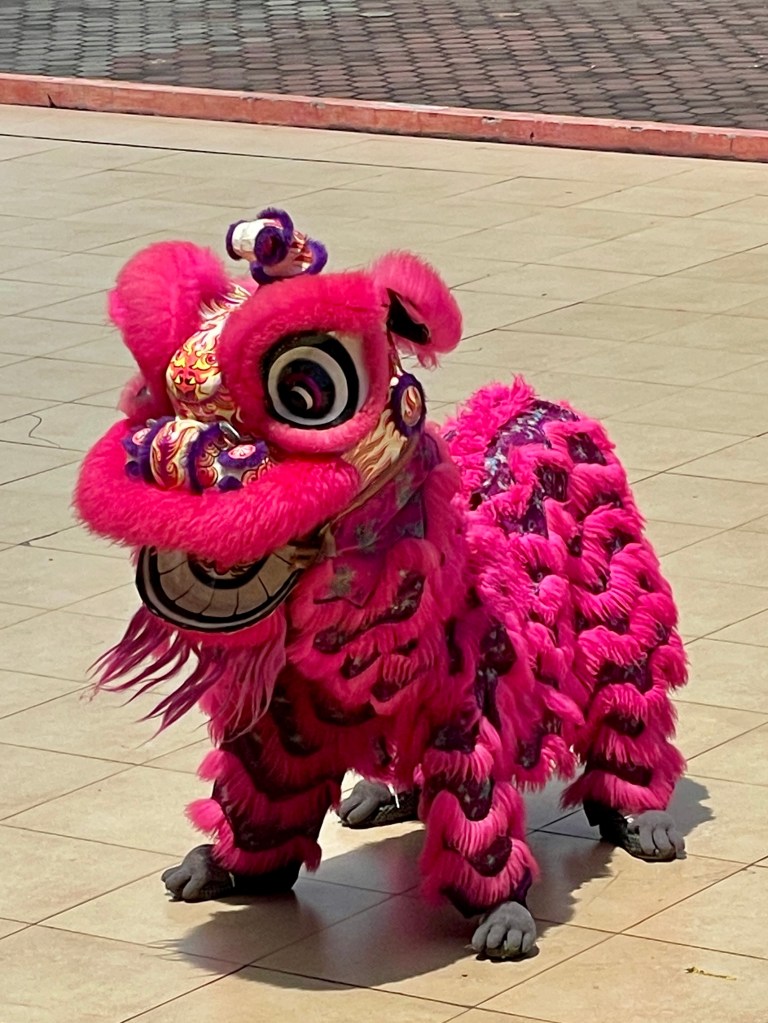
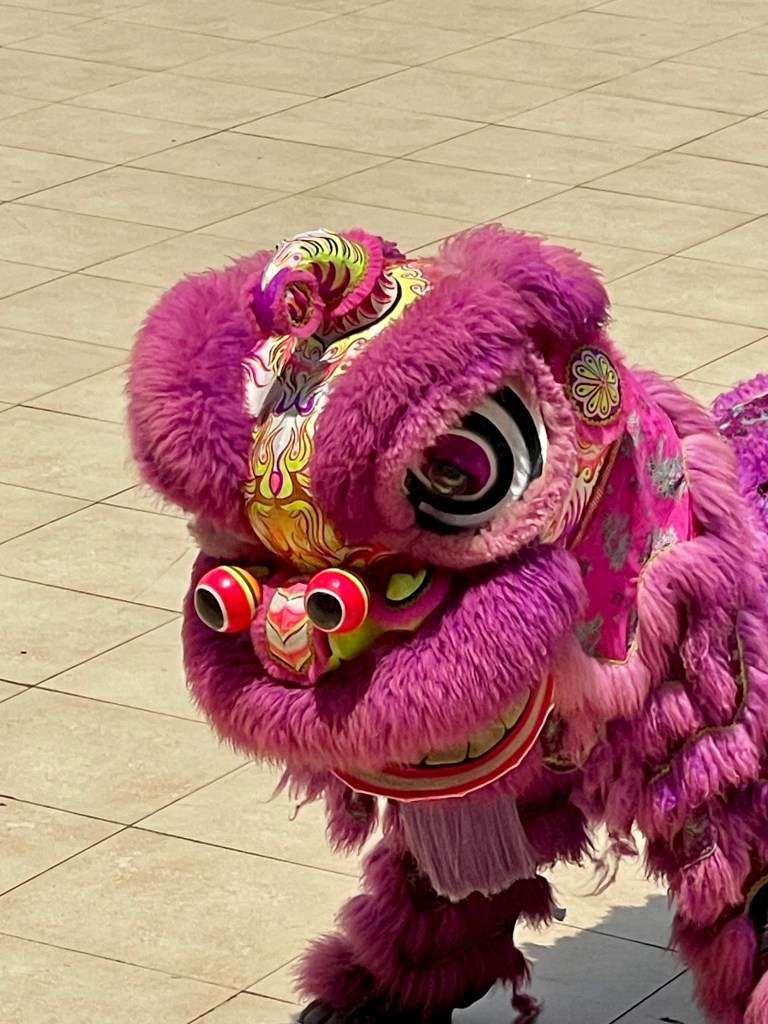
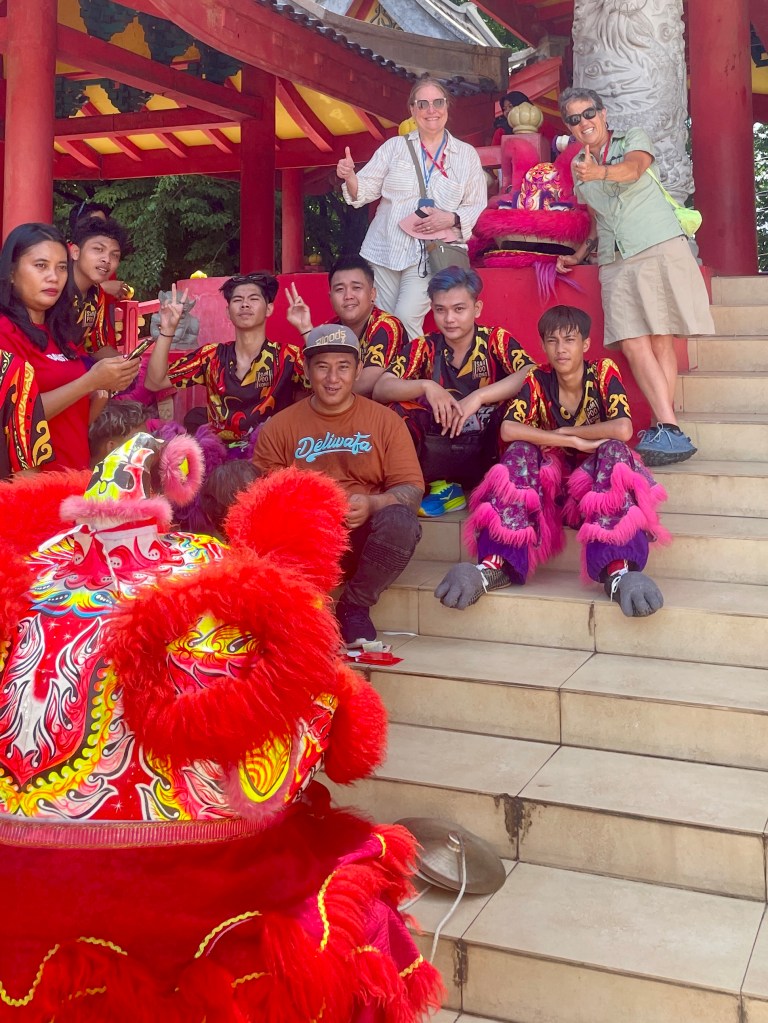
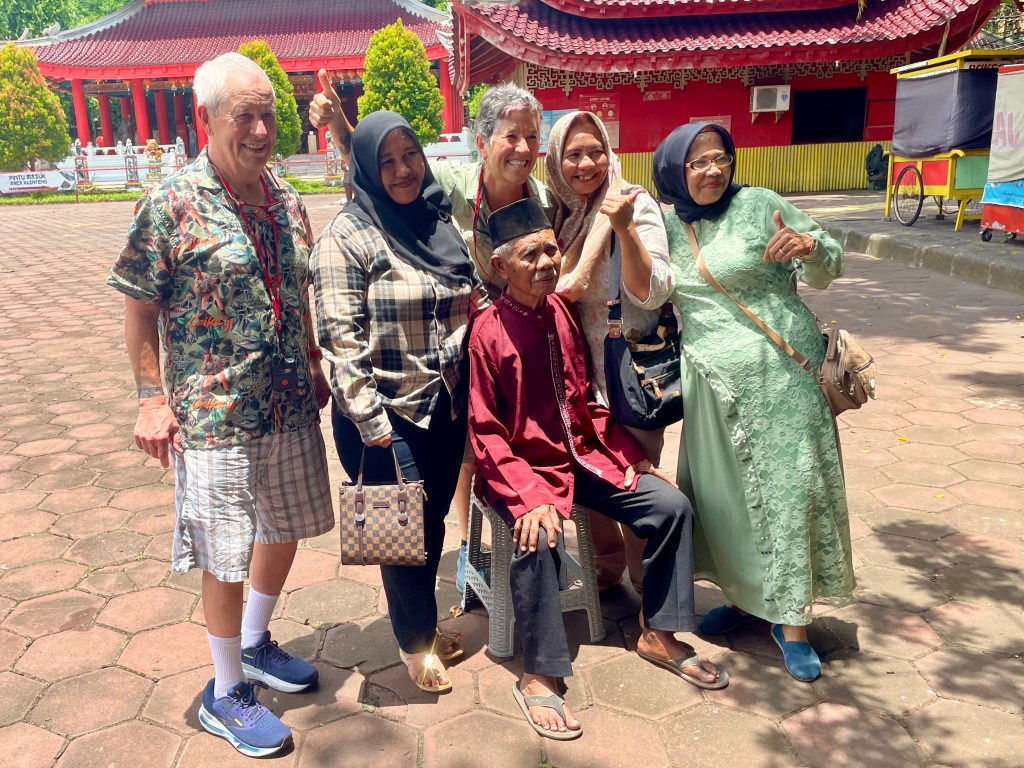
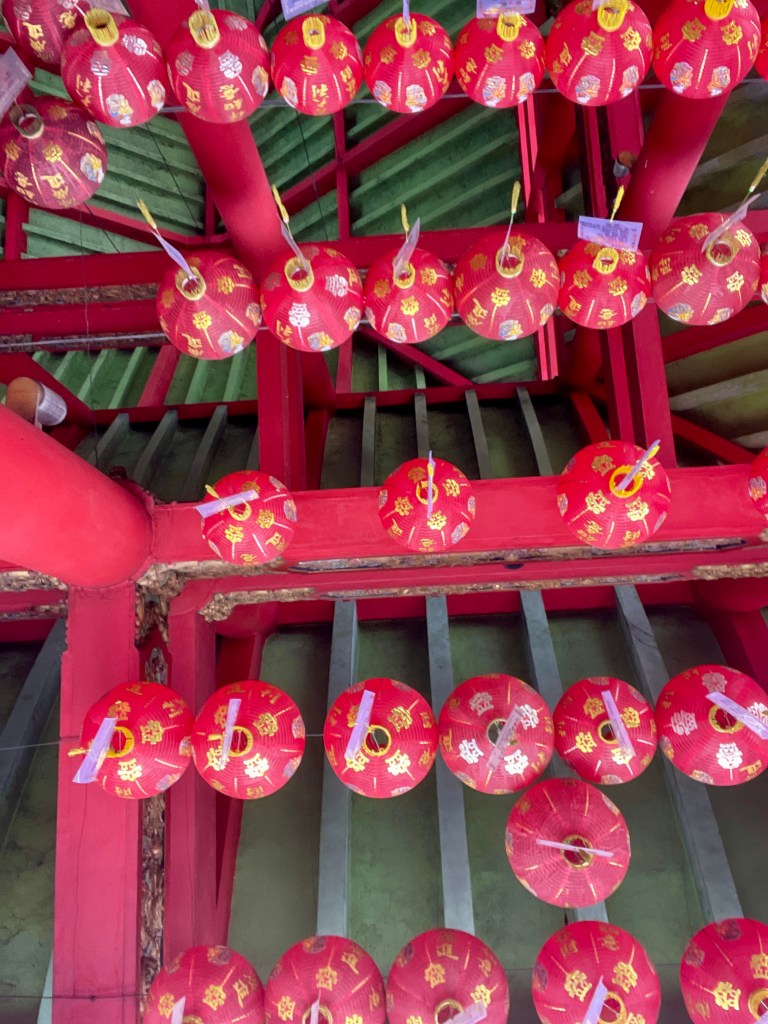
The raw material for the excursion was lacking, but trips are what you make of them. We enjoyed the entertainment by younger kids (teenagers?) dressed in dragon suits and dancing to drum and gong music. They performed with two per suit and seemed to enjoy it even in hot and humid weather Perhaps it was normal to them. Karla had an interesting discussion with a local about “her fortune.” There were several pronouncements about her future. I was relieved to hear that her next pregnancy would go well. When we returned to the ship we visited several booths on the dock and added a nice shirt to my collection.
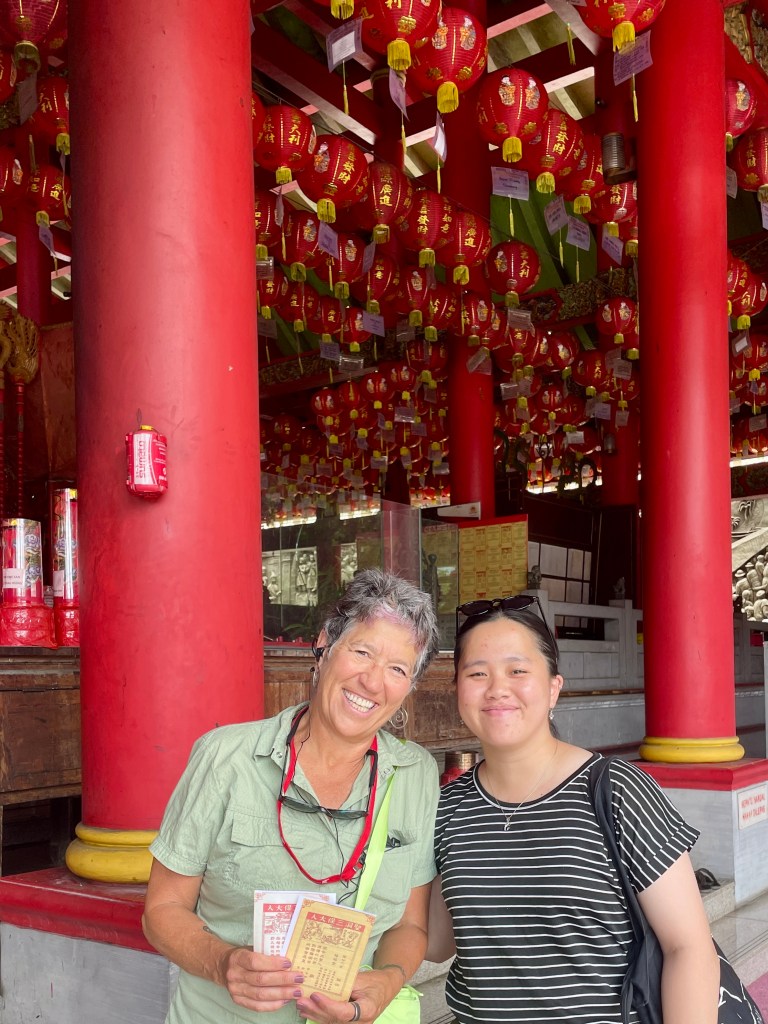
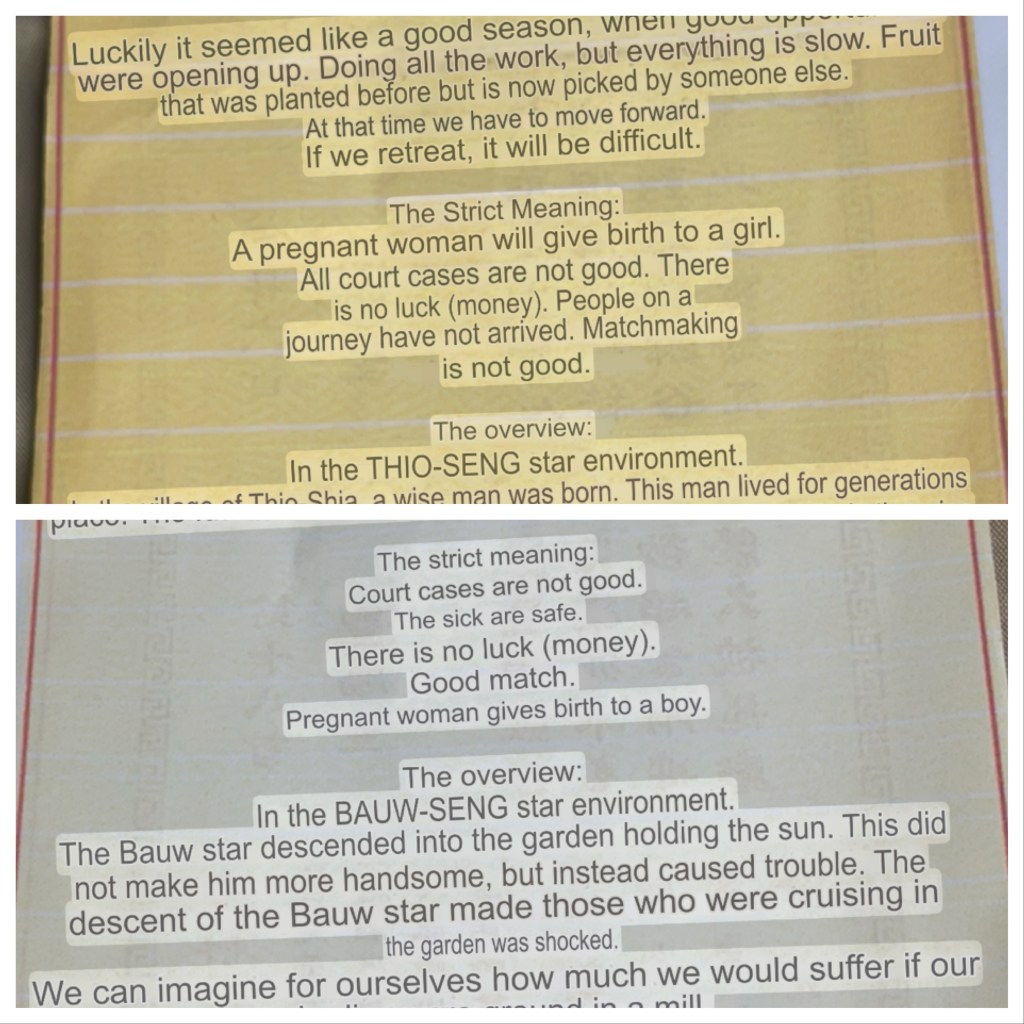
Karla’s two fortunes (google translate) Our memories of Semarang are not bad, but it won’t be a destination of choice. Bali had lots of cultural charm, although the urban area was a bit crowded and hectic. The traffic and urbanization in Semarang have squeezed out too much of the charm.
In the evening, we altered our usual routine and ate at the restaurant…where I have to wear pants (no shorts), and you sit down and get served. We thought that we would eat less if we ordered and got served as contrasted with piling food on our trays in a buffet line because everything looked so good. The downside was that we sat with other people. It’s a reminder of how many different passengers there are on board.
On to Jakarta where we have been warned of crowded conditions and pollution.
2017-18 Borobudur visit. Note all the prohibitions in the first photo.
-
Bali
Feb. 22-23
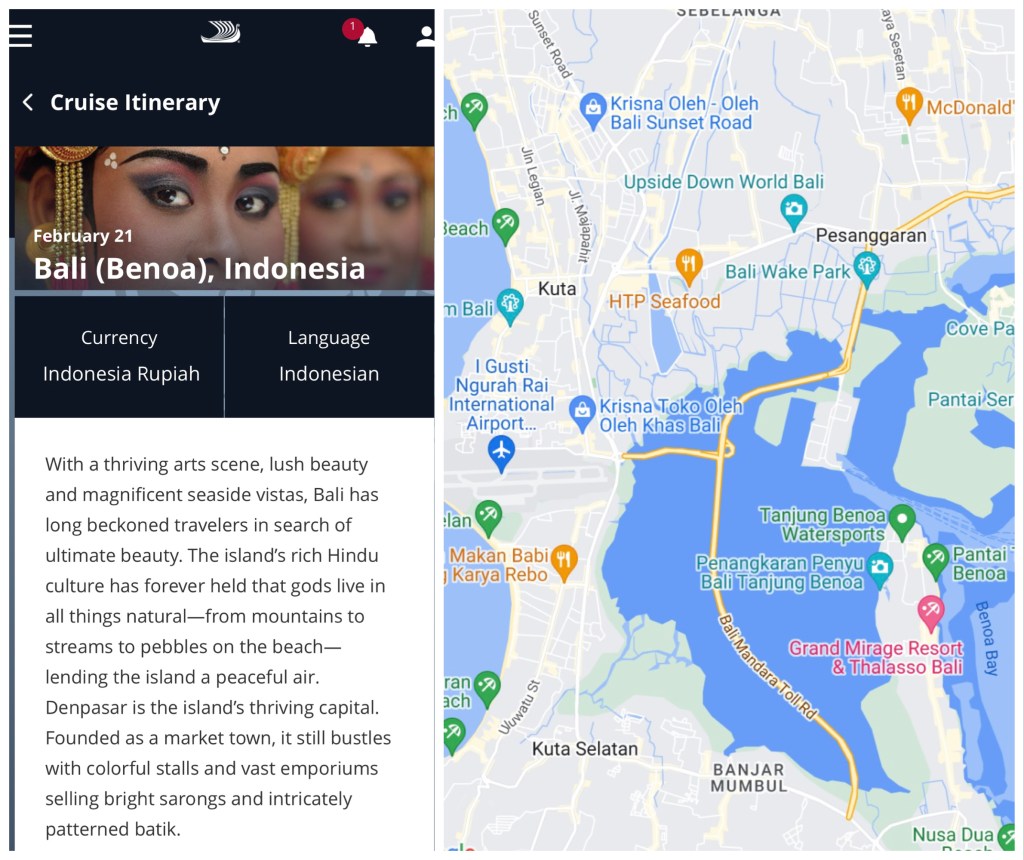
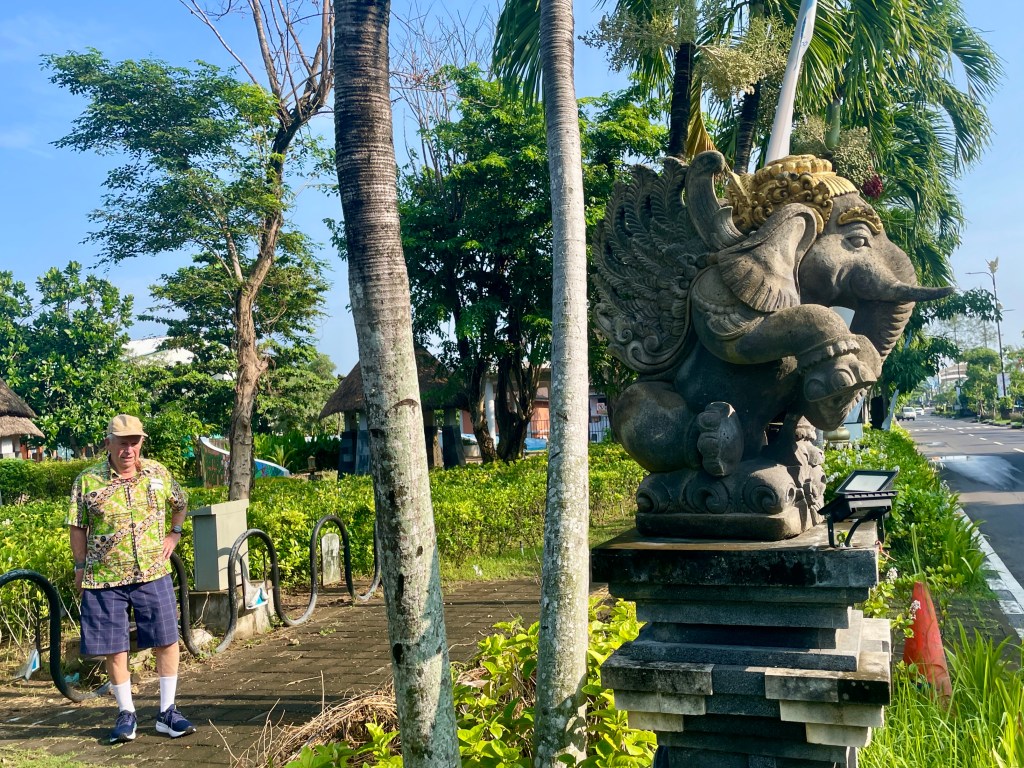
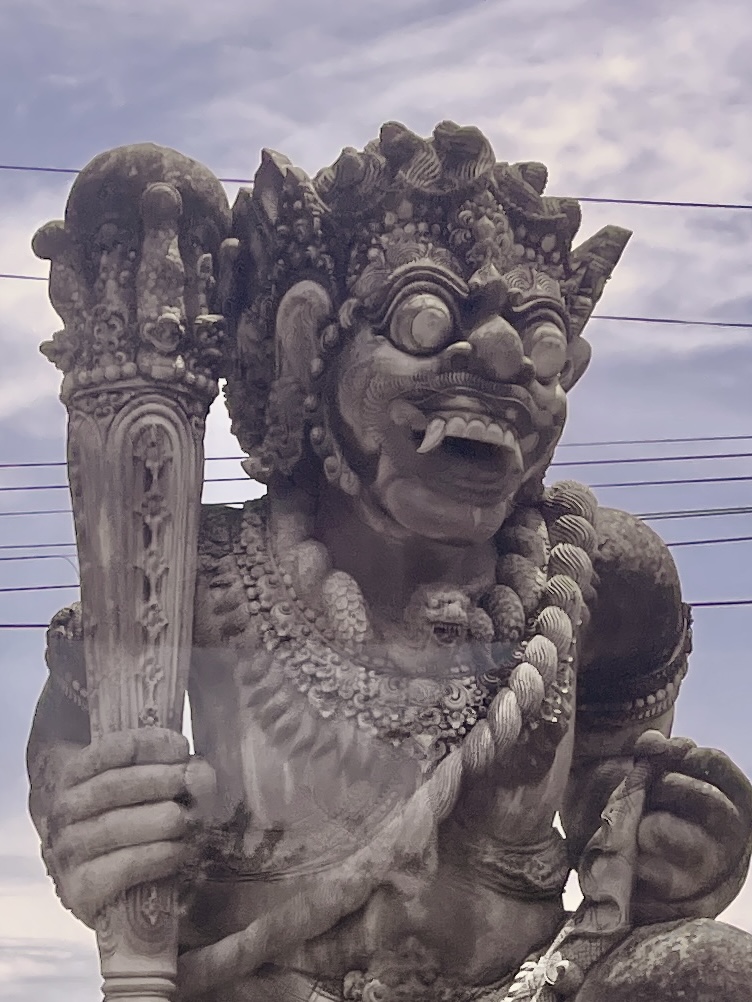
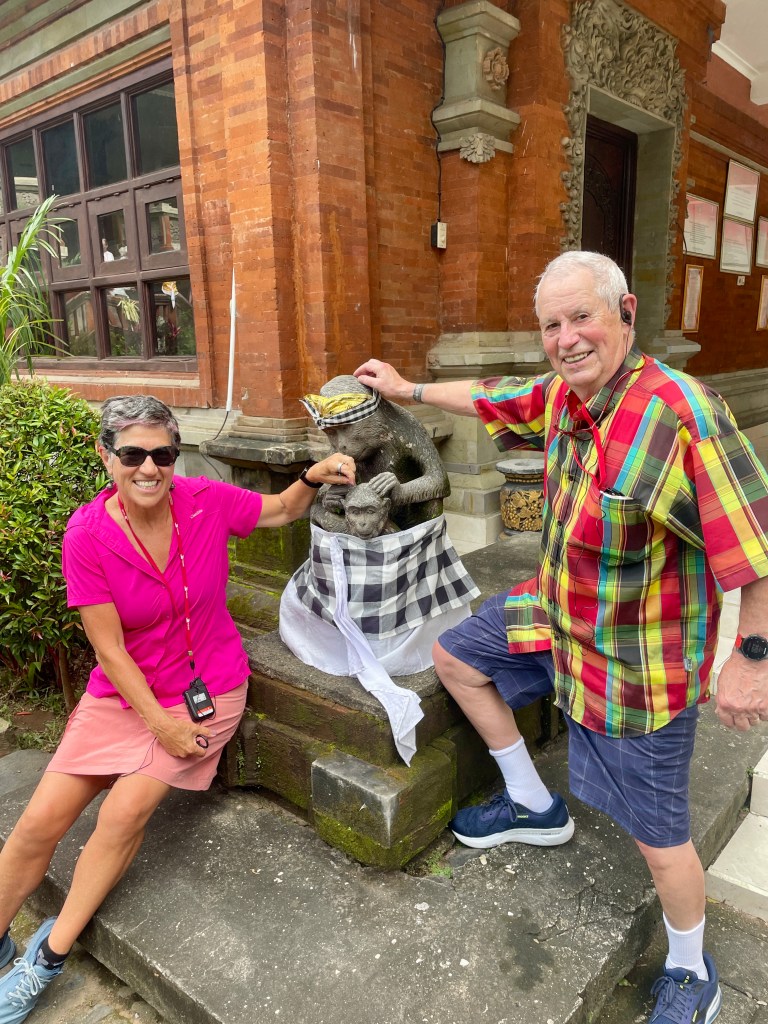
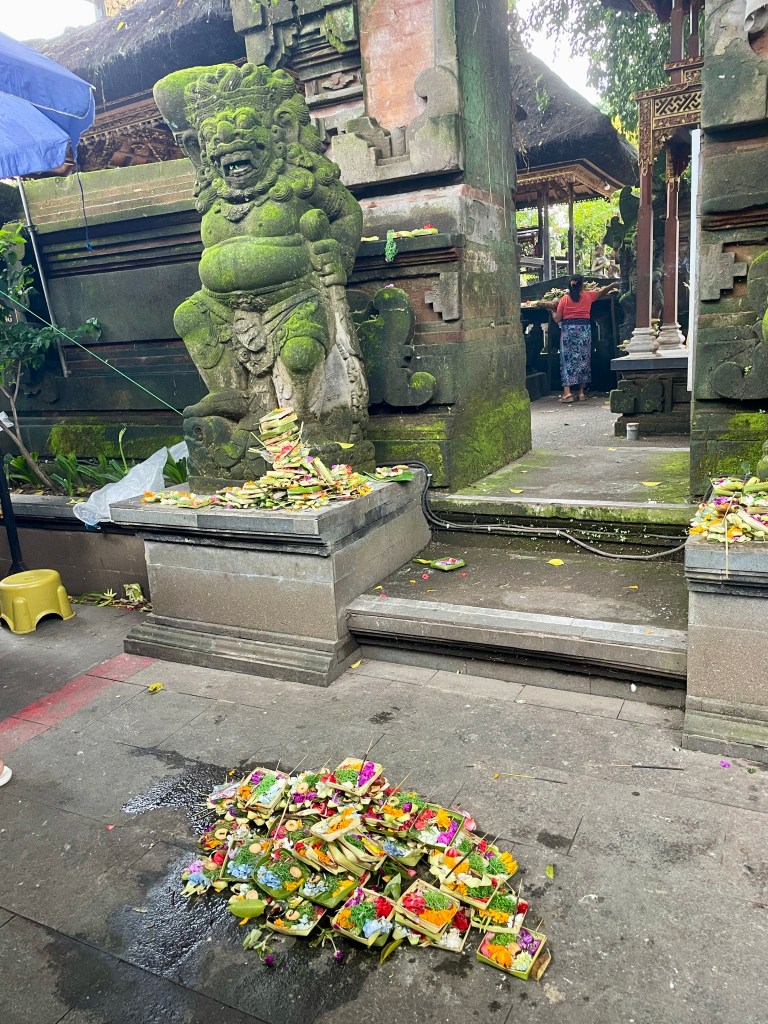
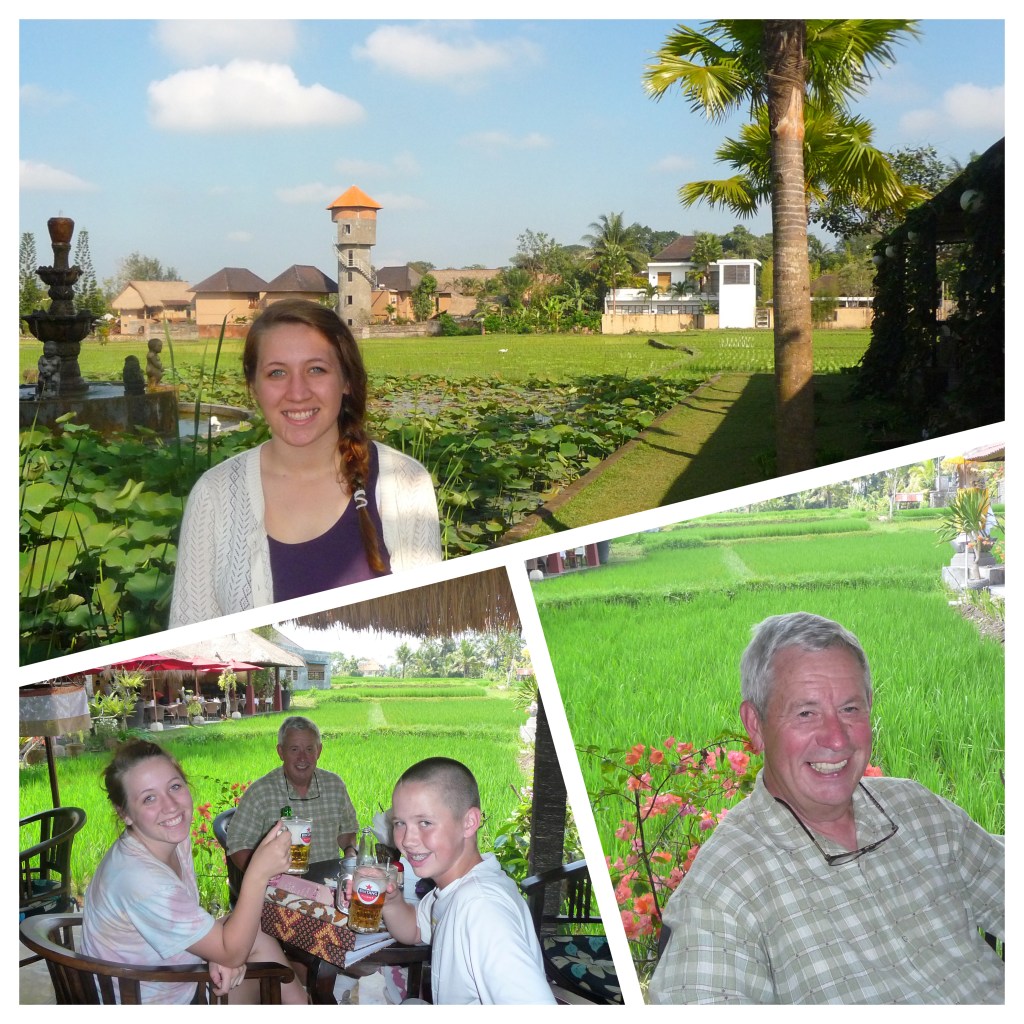
I think this is our 4th visit to Bali. About 30 years ago, we flew in and I drove around the island. I wouldn’t want to drive in the traffic today. We returned with kids and stayed in Ubud, an “artsy” city about 35-40 minutes from the city of arrival and capital, Denpasar. Today that trip takes about three times as long. We would return to Bali, but would definitely base or operations outside of the urban center. The motor scooters run the show and make it tough on we novice drivers.
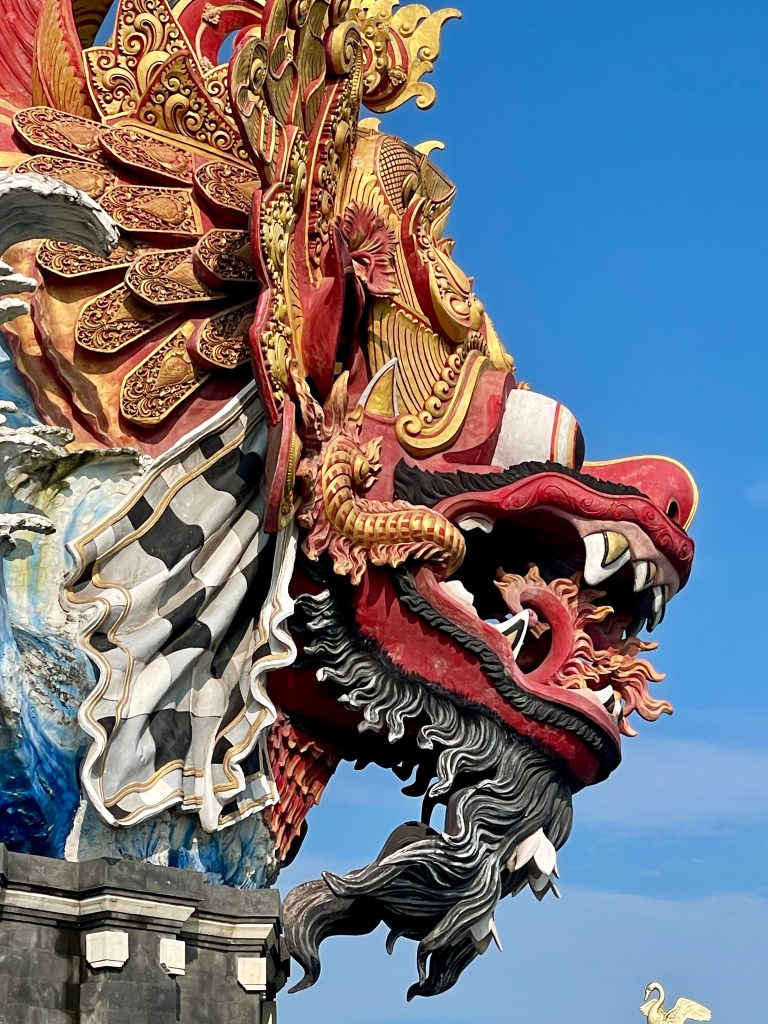
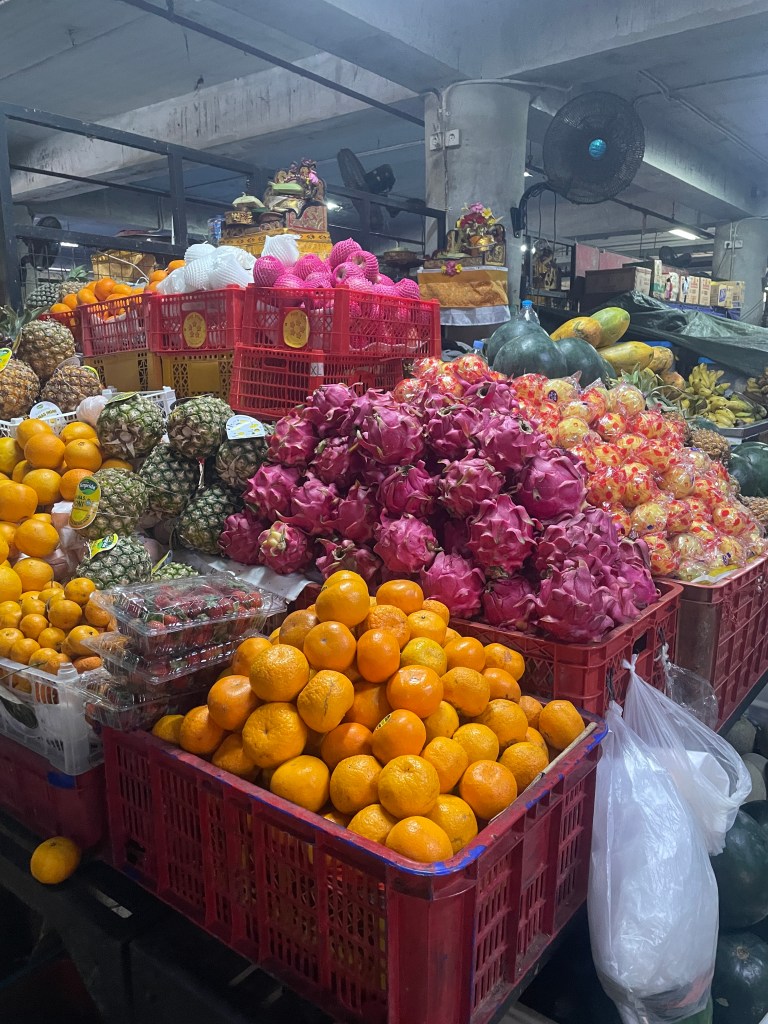
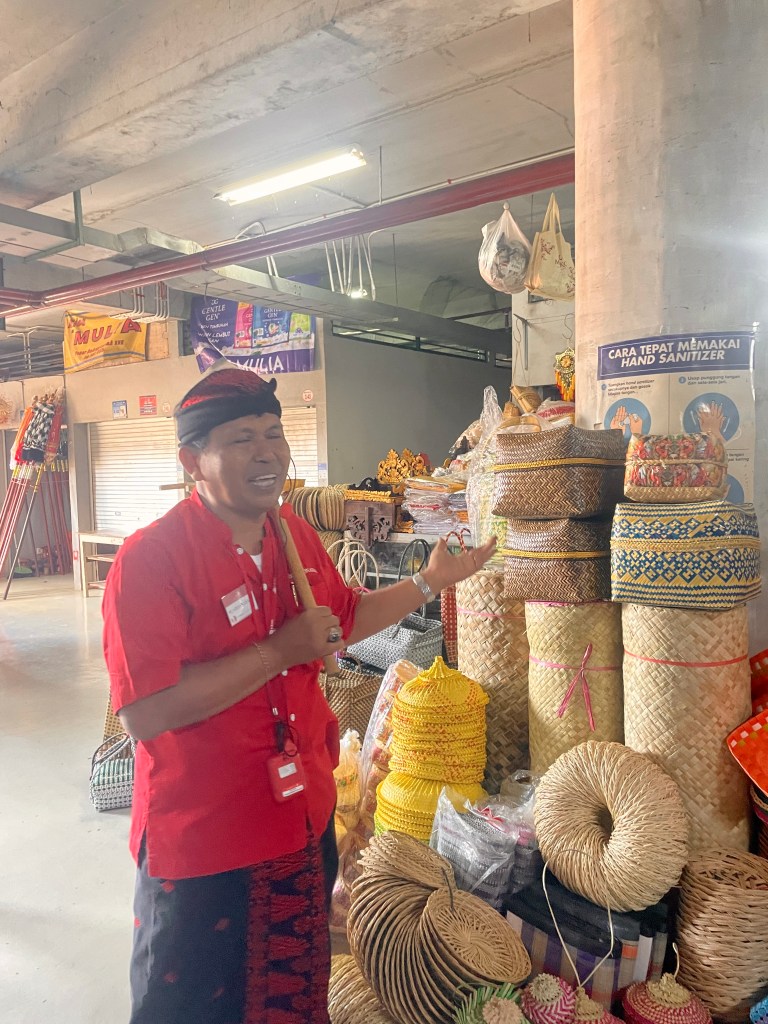
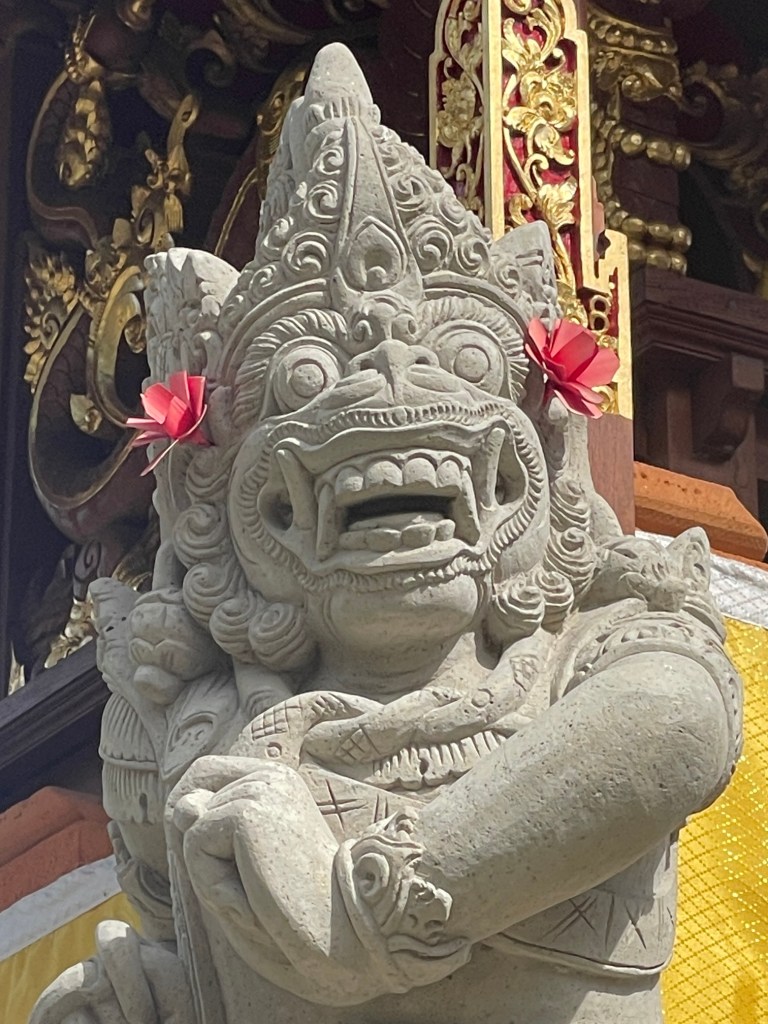
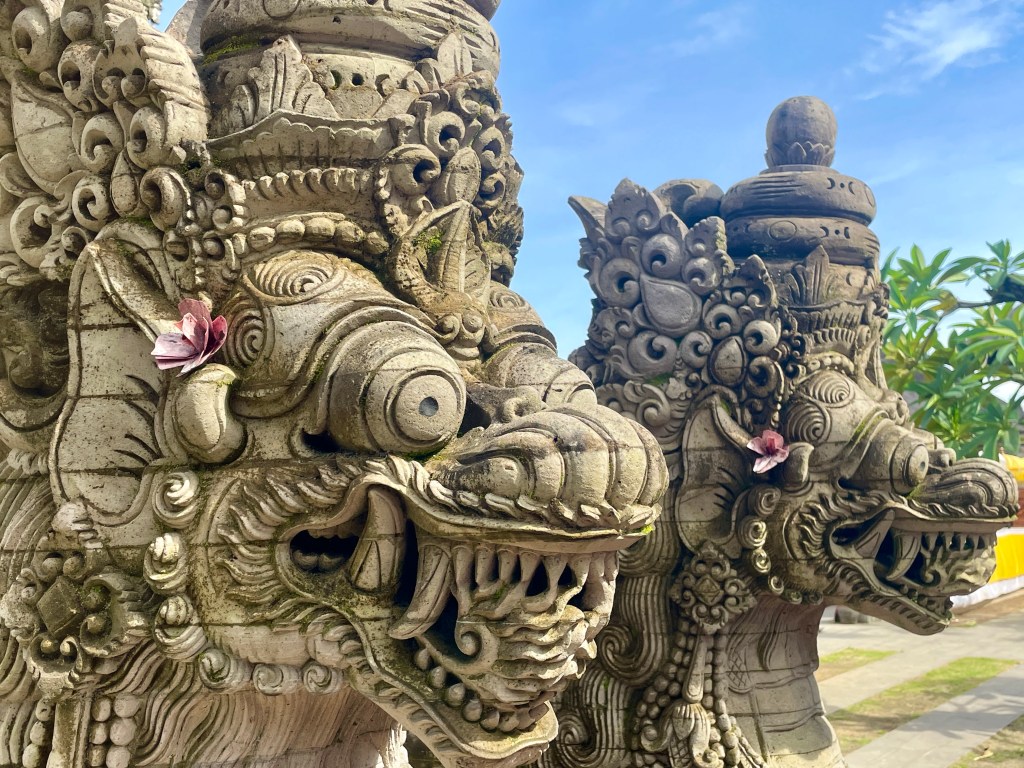
Our first day found us on a standard tour to the Denpasar central market and temple. We thought of leaving the tour group and making our way back to the ship after exploring on our own. However the distance plus the heat and humidity changed our minds. The market and temple were nothing special. We had a dancing exhibition and refreshments between the two and it was pretty good…especially the cold beer.
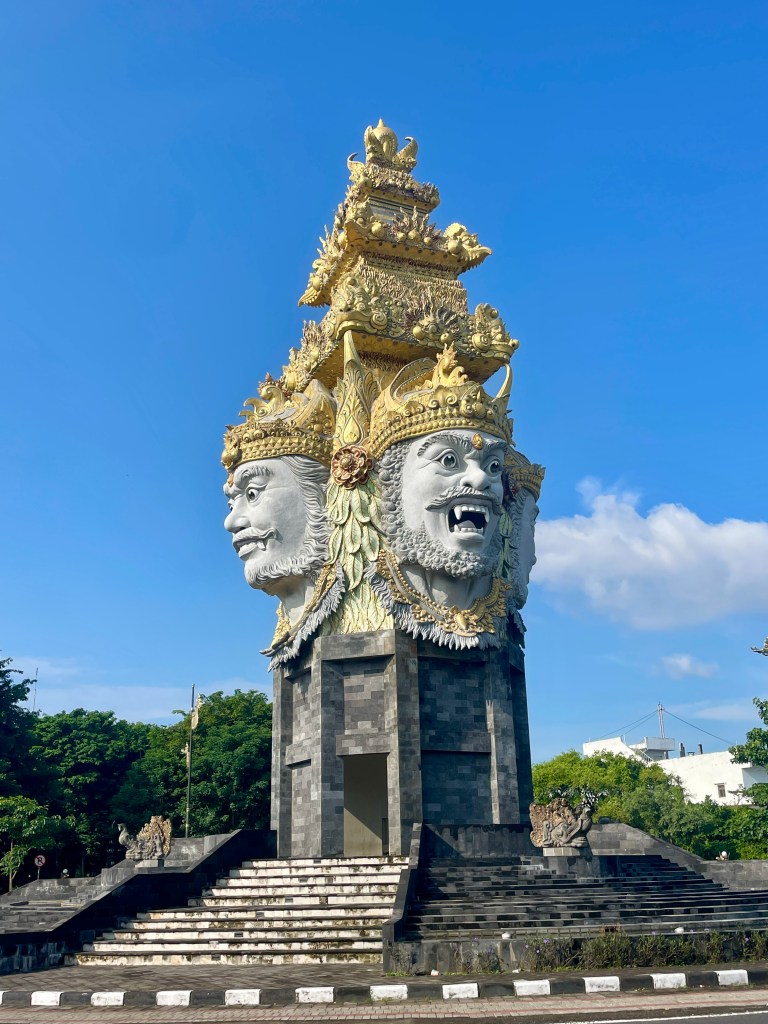
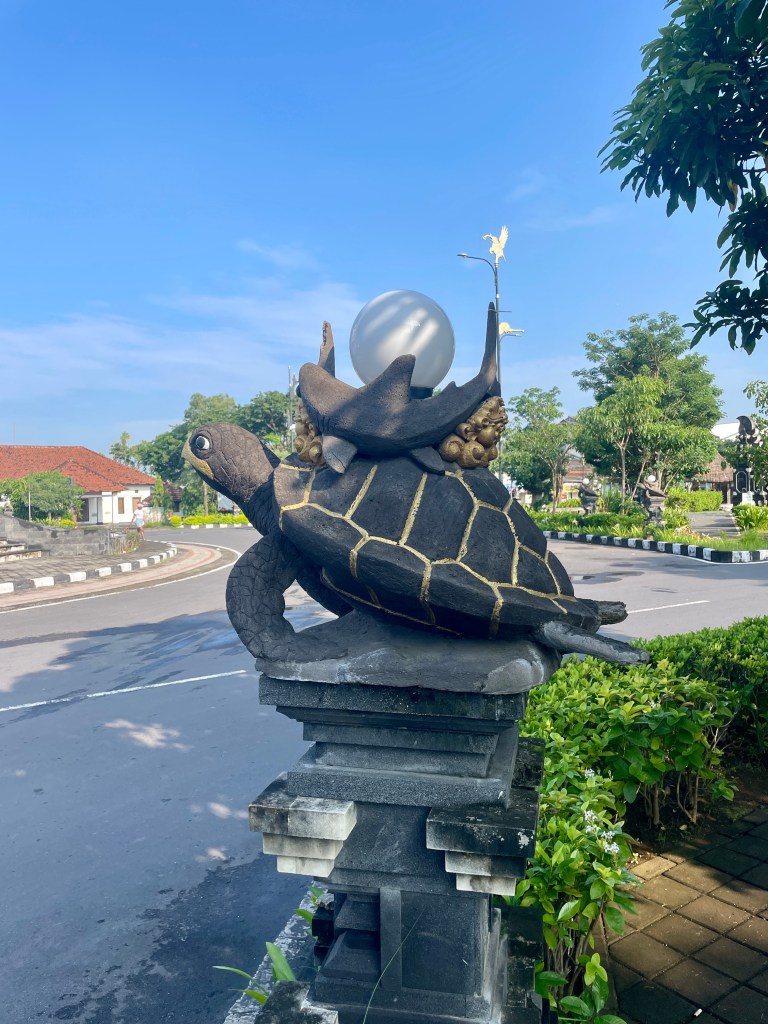
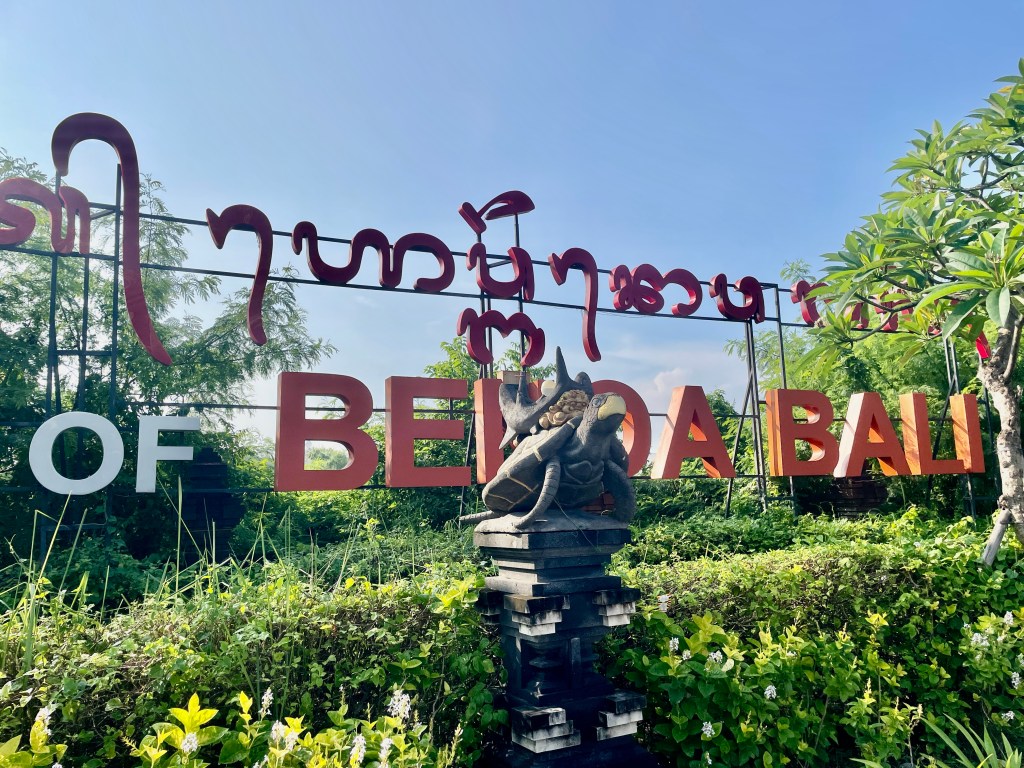
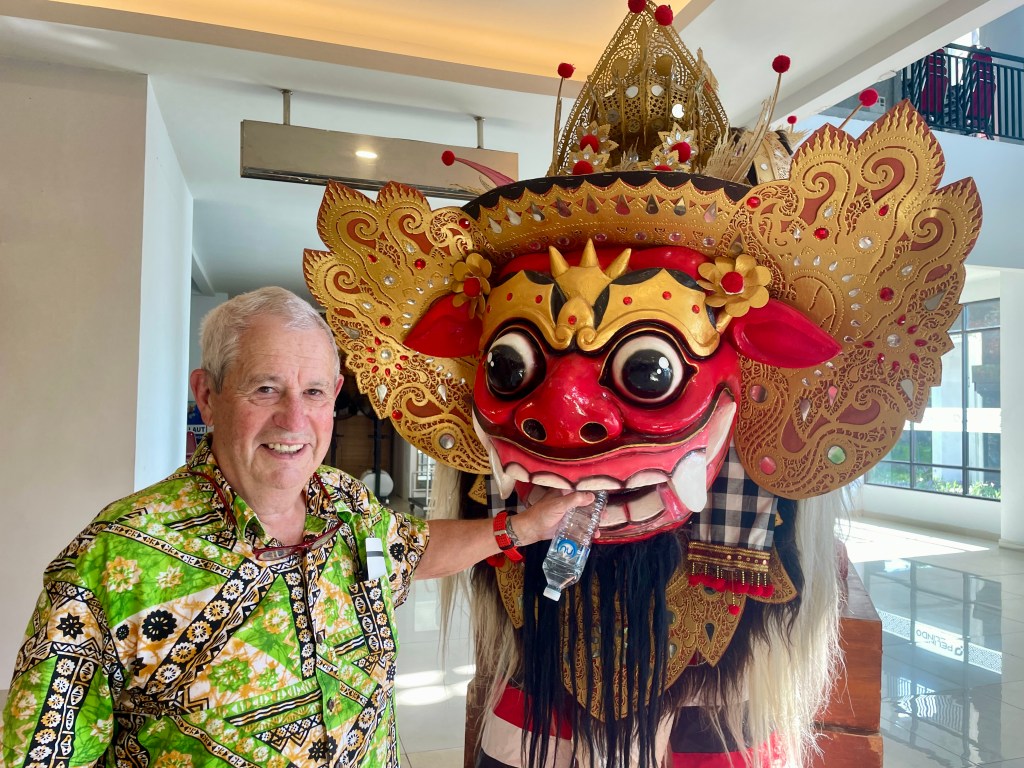
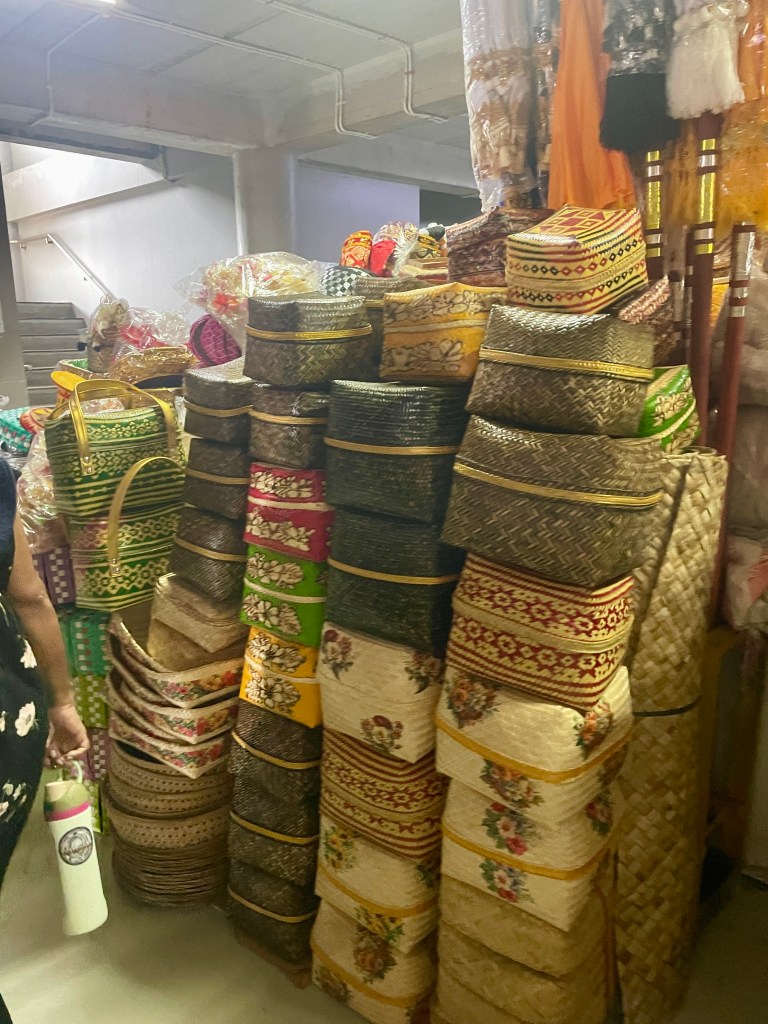
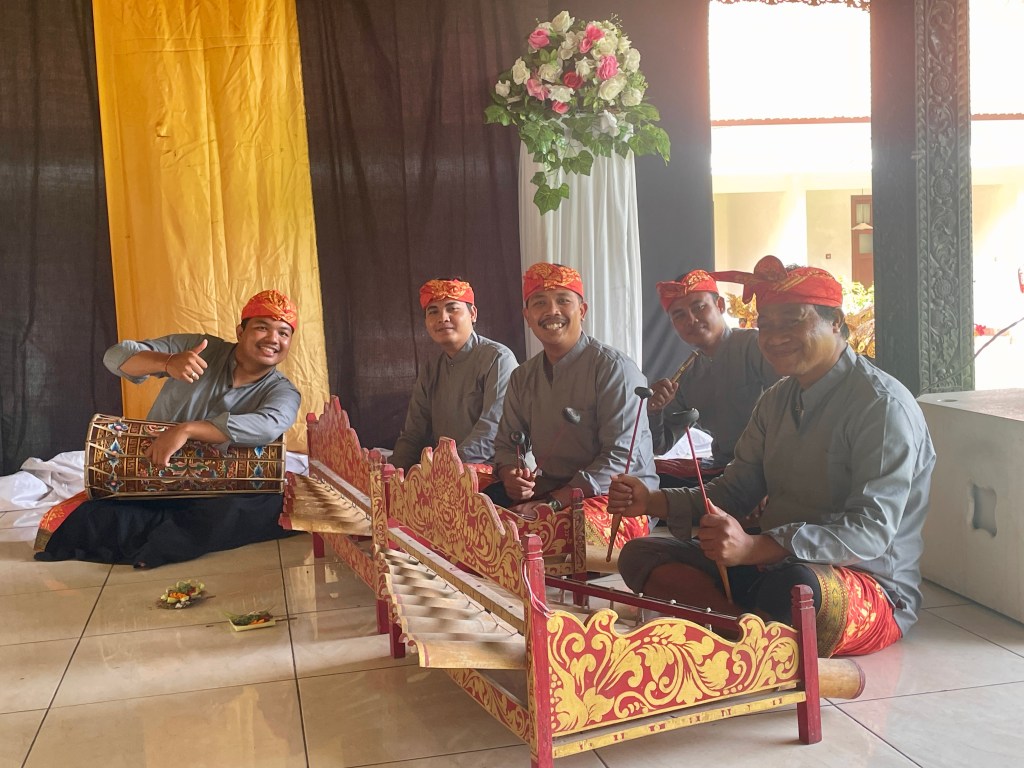
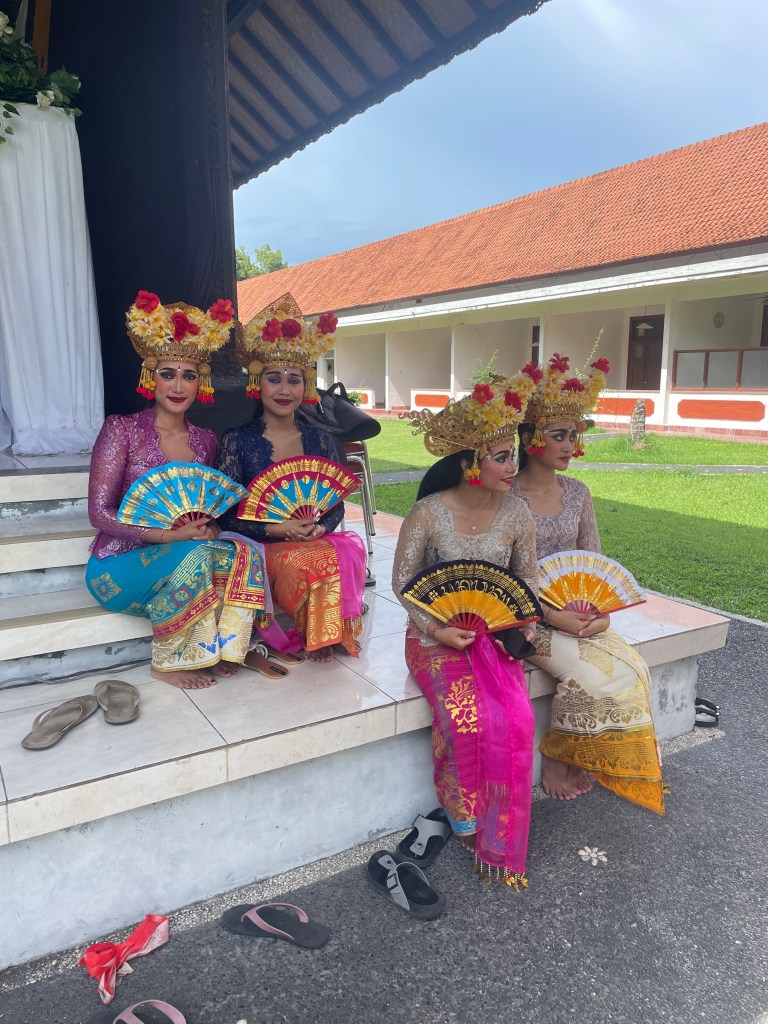
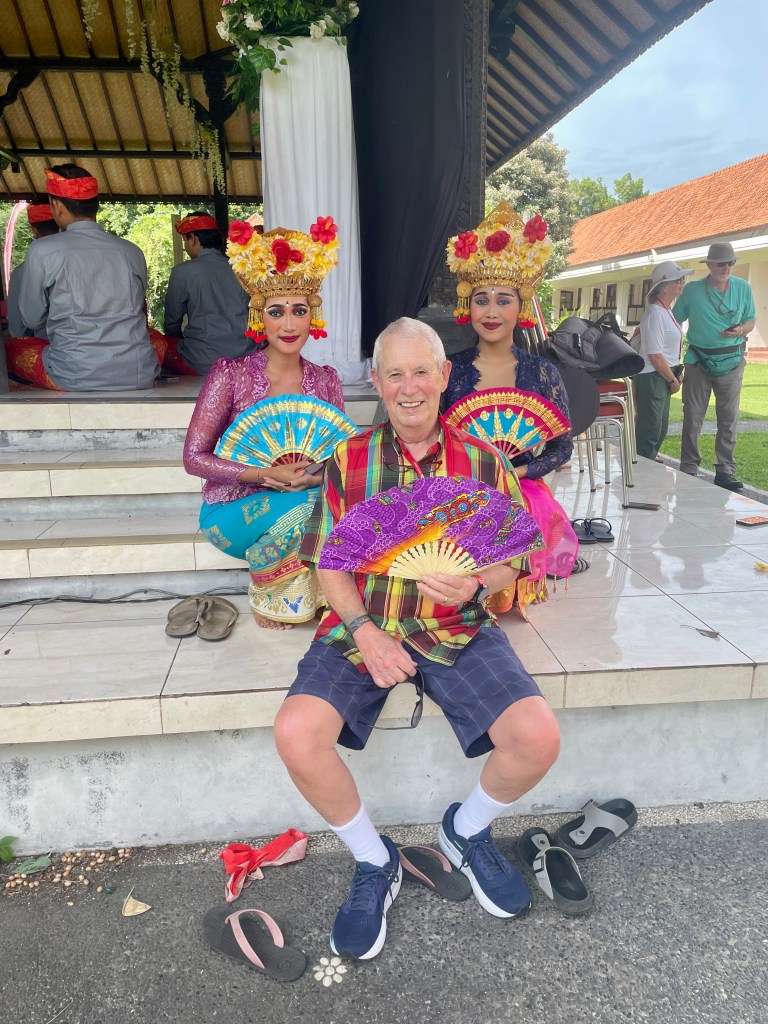
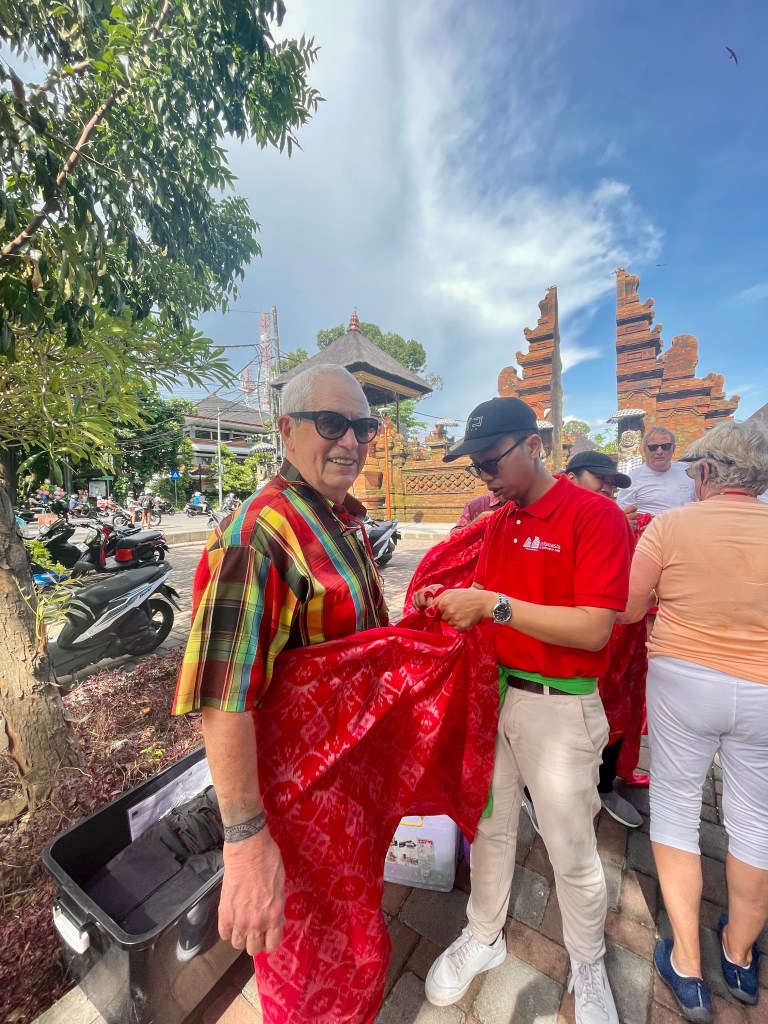
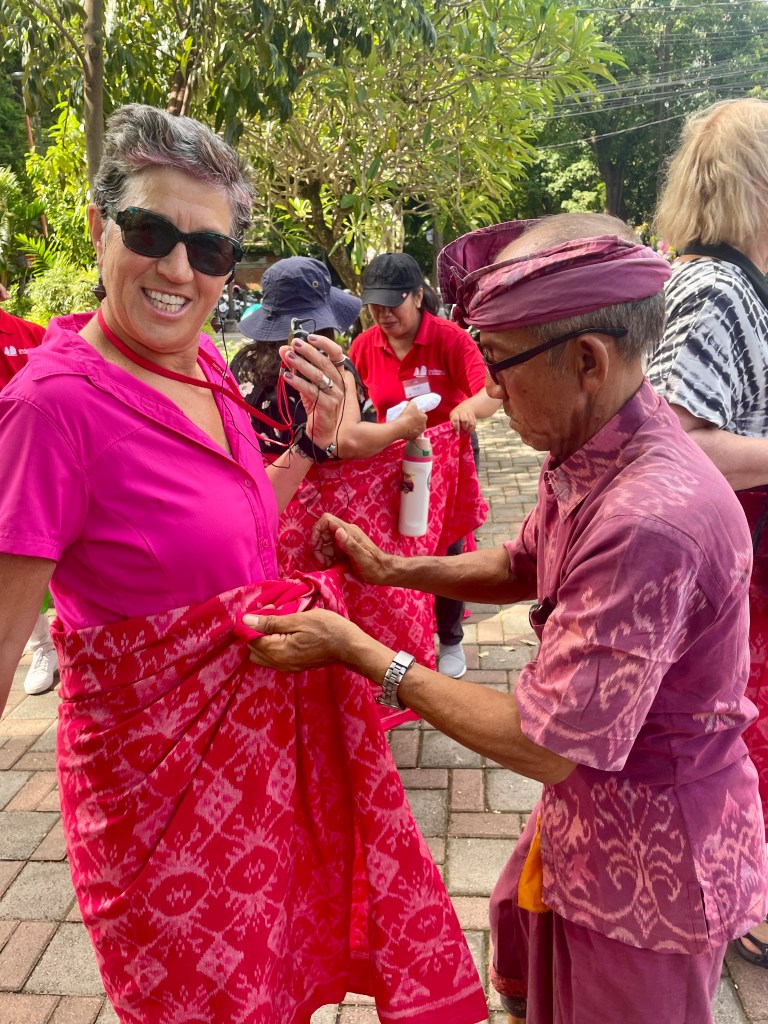

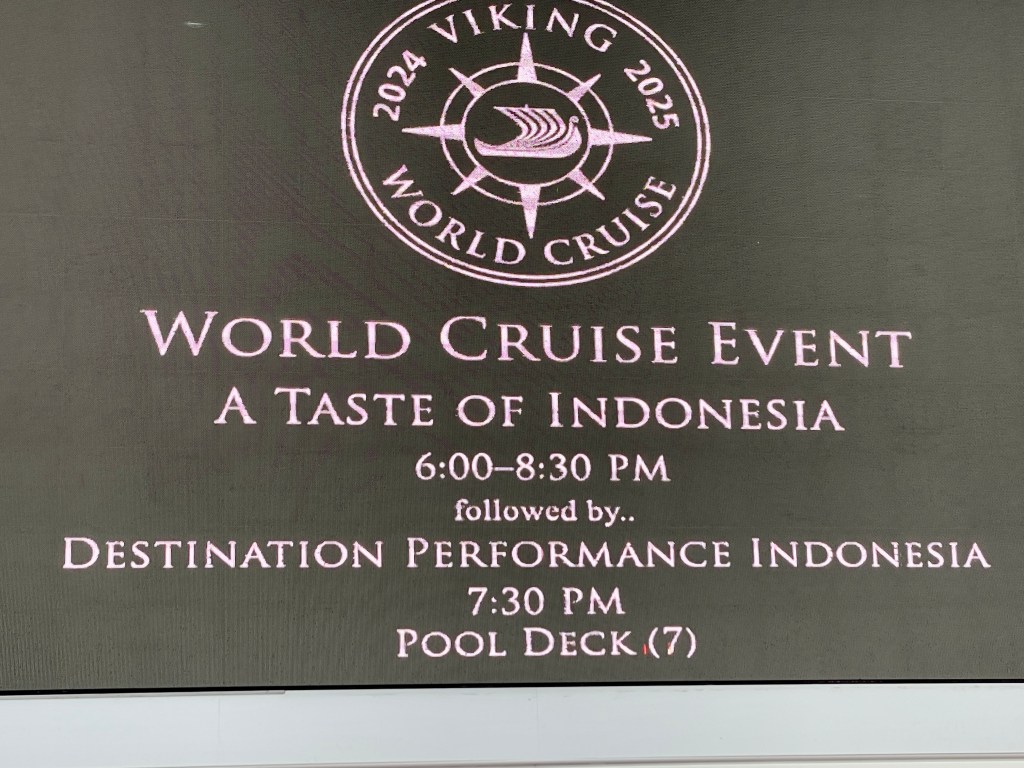
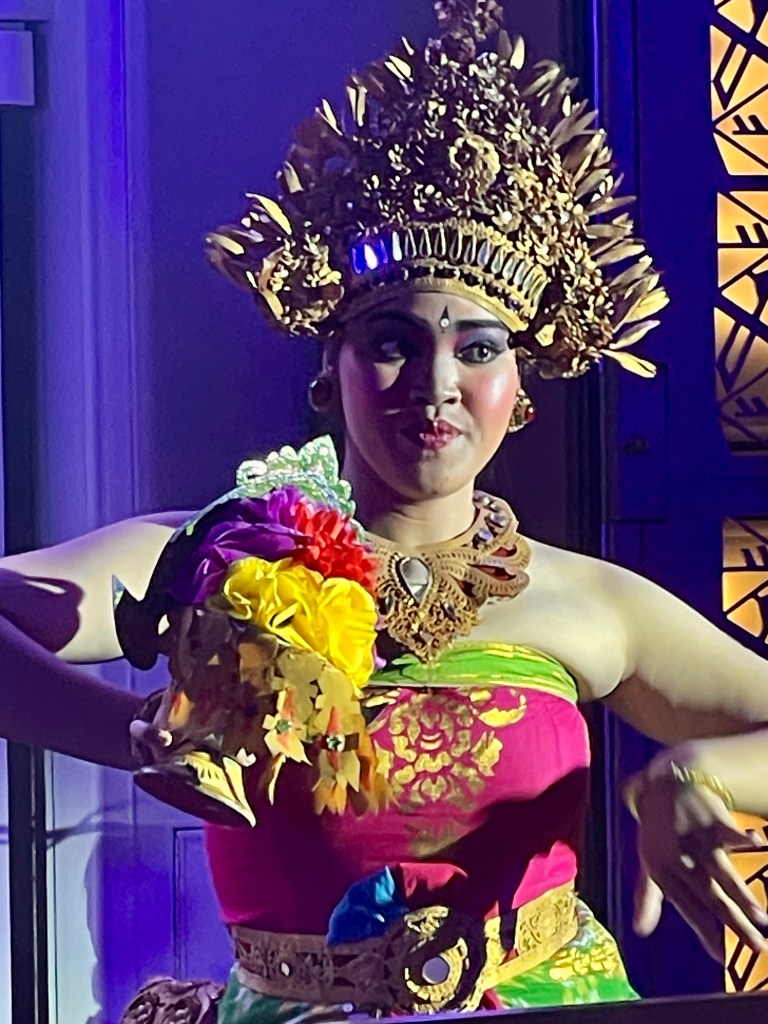
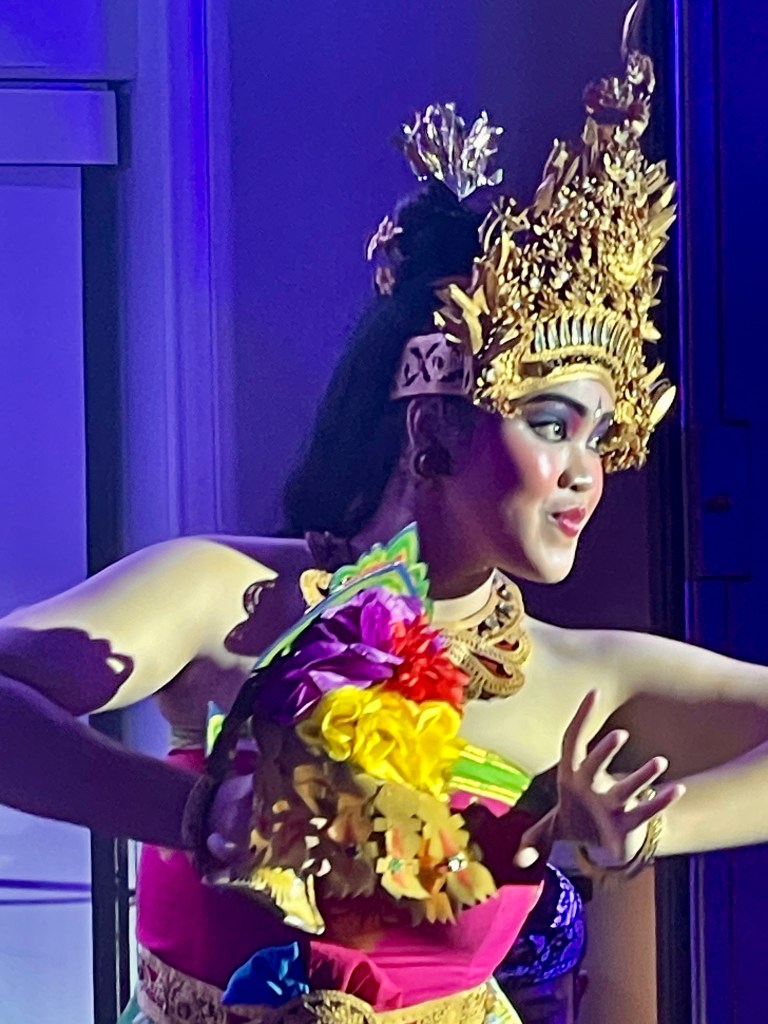
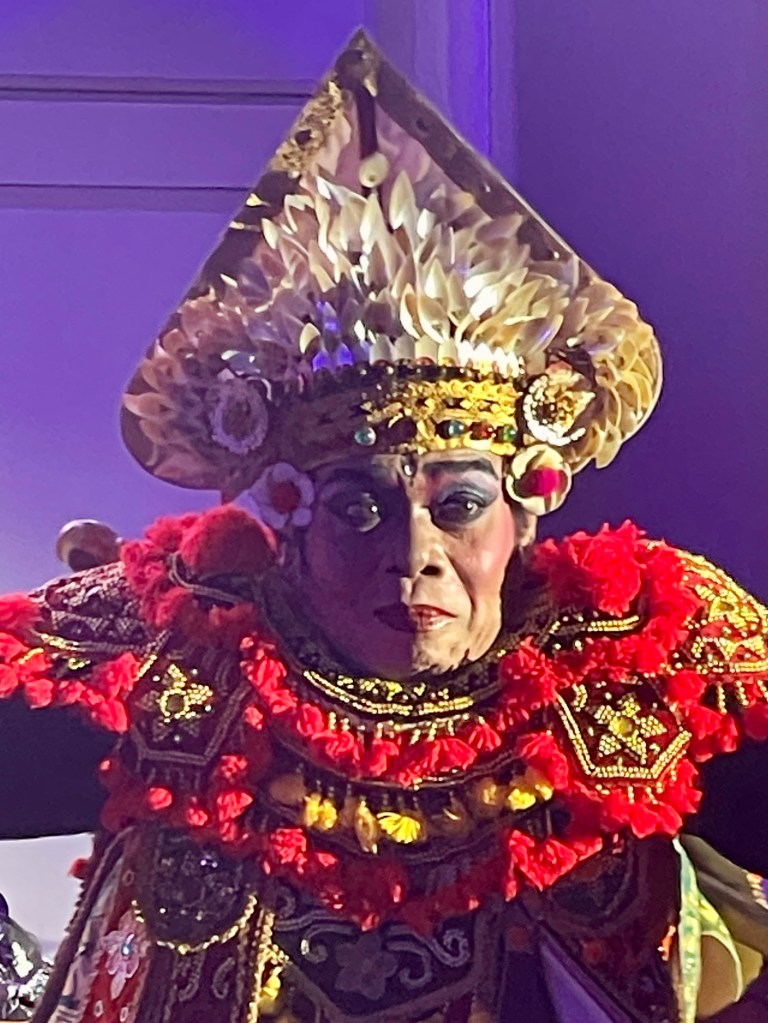
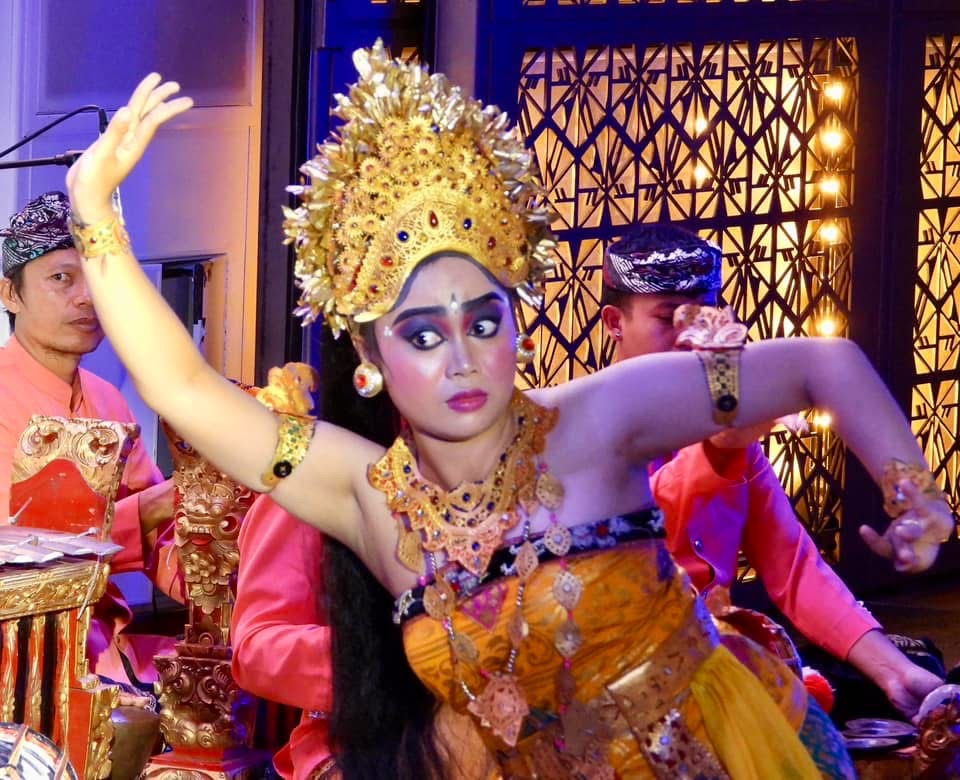
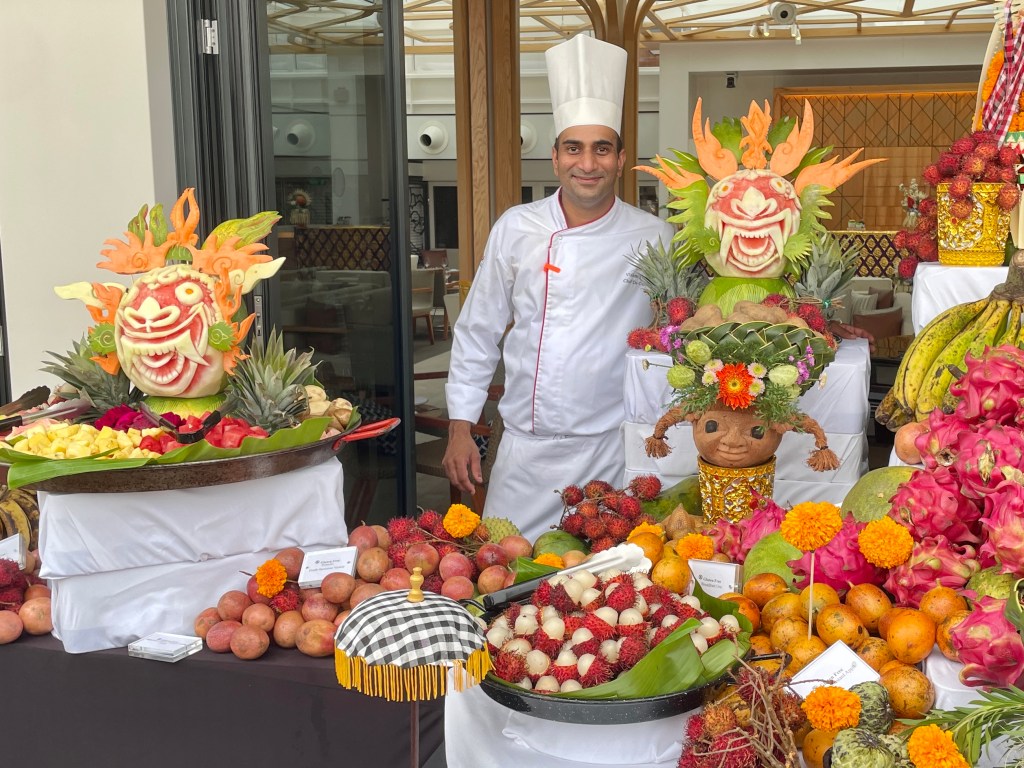
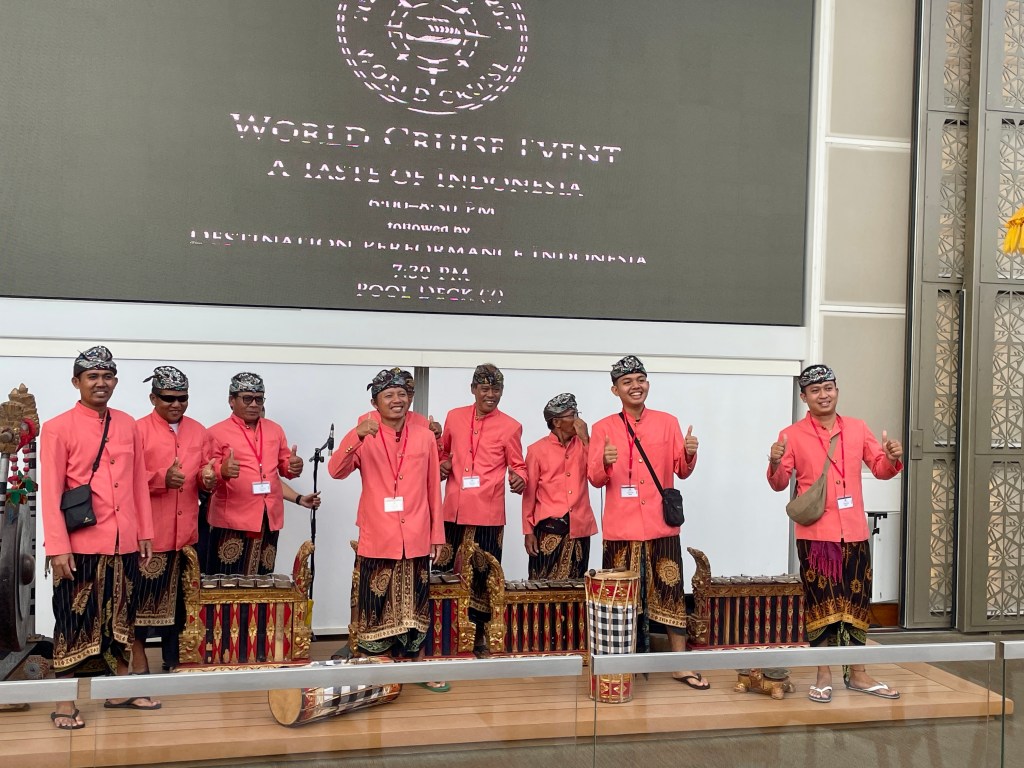
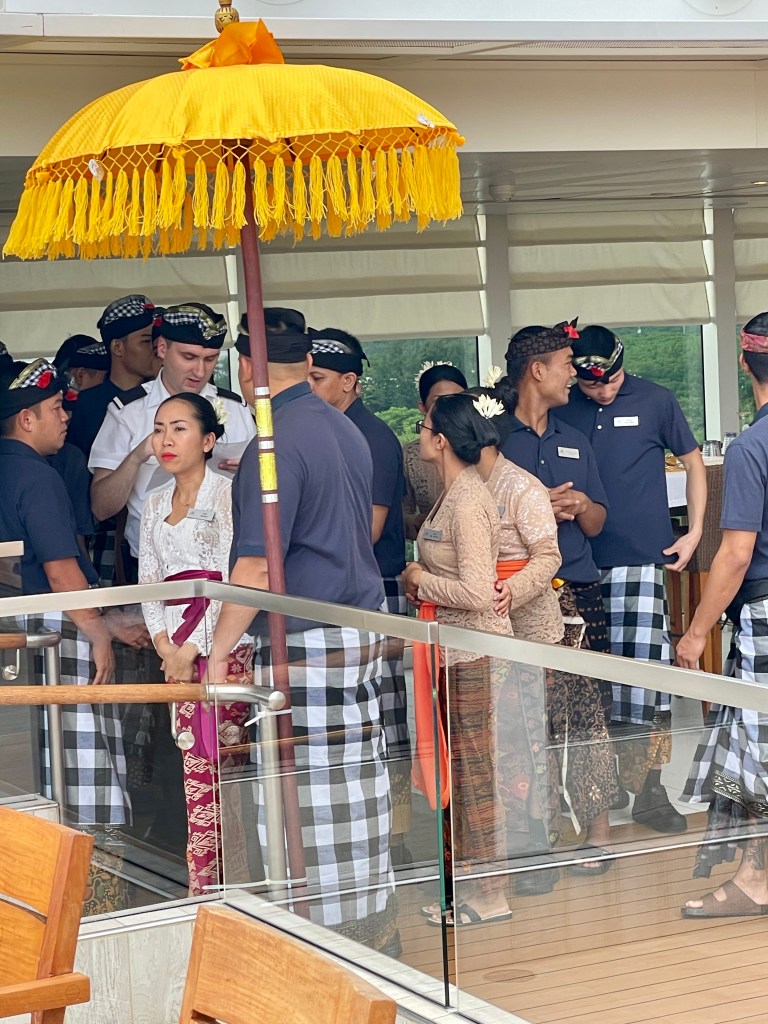
We returned to the ship and captured prime seats for an Indonesian dinner and dance show. The event was on the “pool deck” which has a moveable roof. As clouds appeared, the roof was 80 percent closed. We were in the front rows ….the “unclosed area.” We were in an impressive tropical storm that caused evacuation from the area and flooded meals. I think we enjoyed it more than our compatriots. The music and dance were very good.

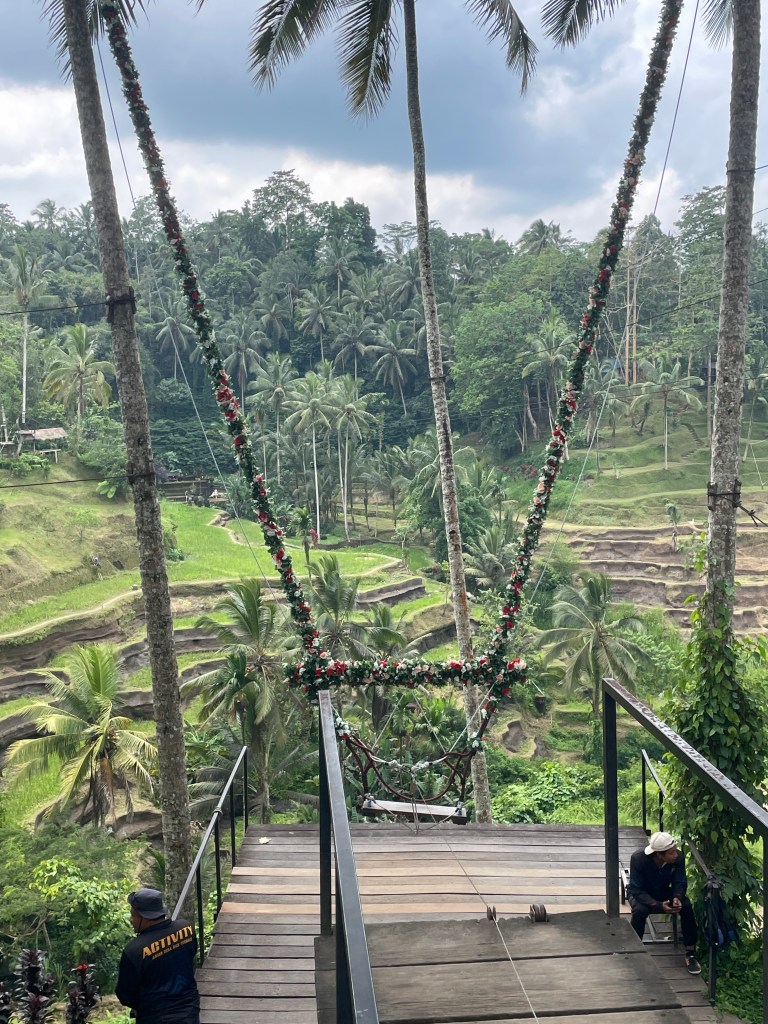
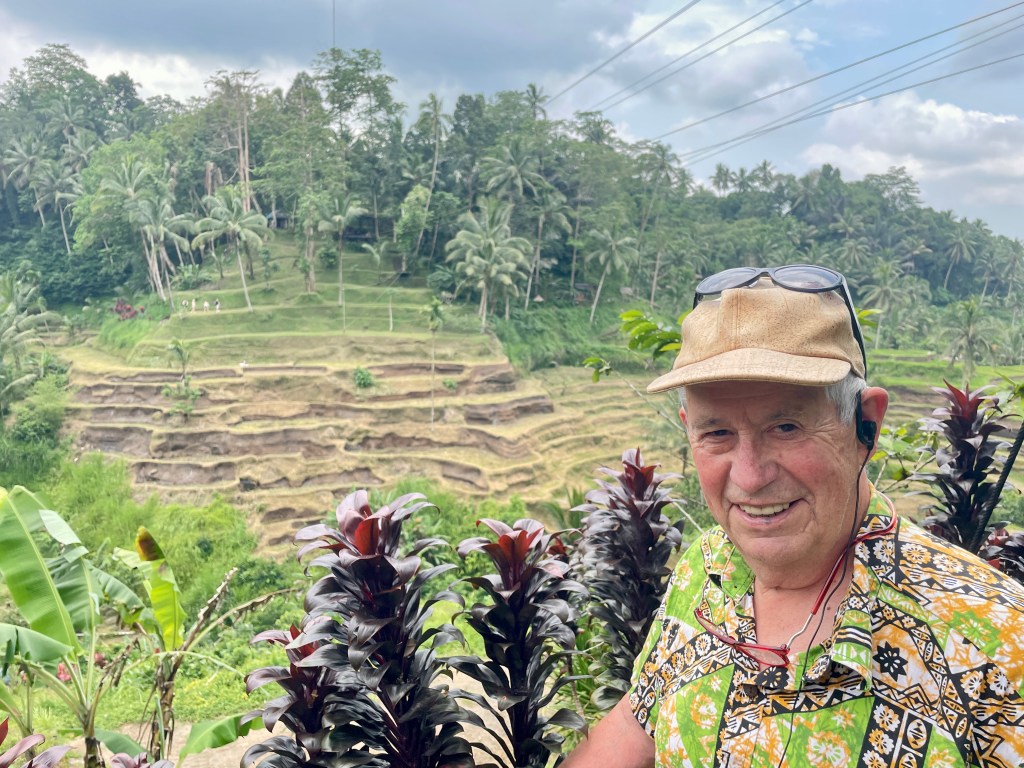
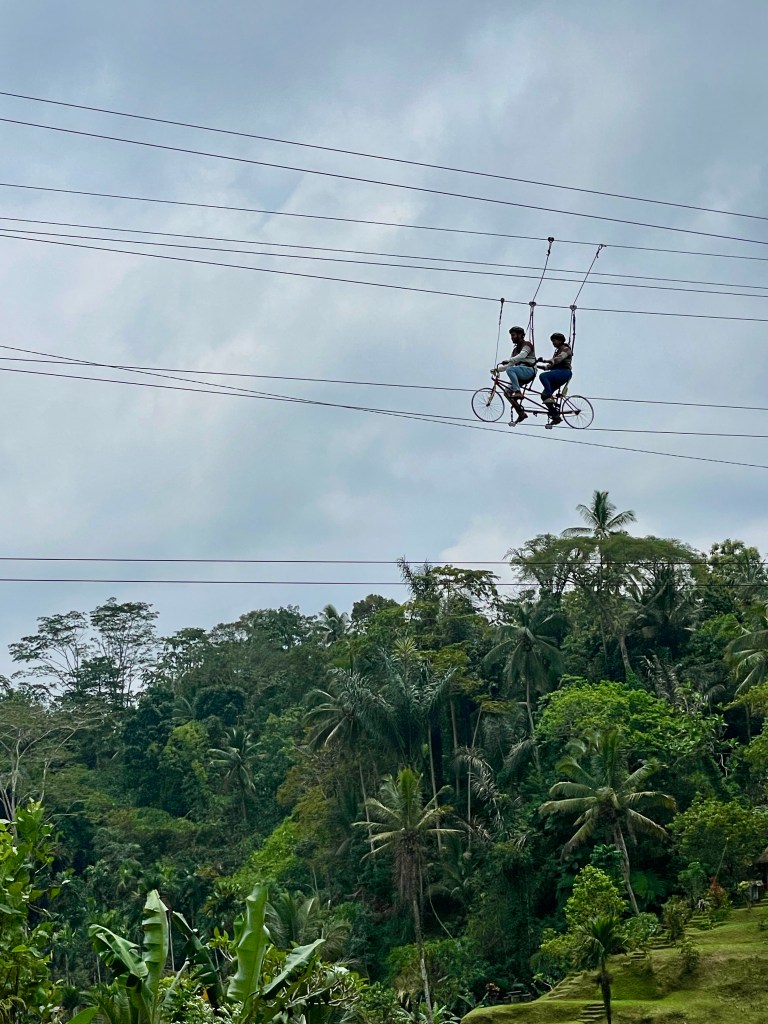
Our second day found us on an excursion to Ubud. Our first stop was a visit to rice terraces which occupy steep slopes.. While we had seen these on previous visits, they are now a commercial center for zip lines, swings, and even bicycle rides along a wire high above the terraces. It all looked safe enough, but didn’t attract us.
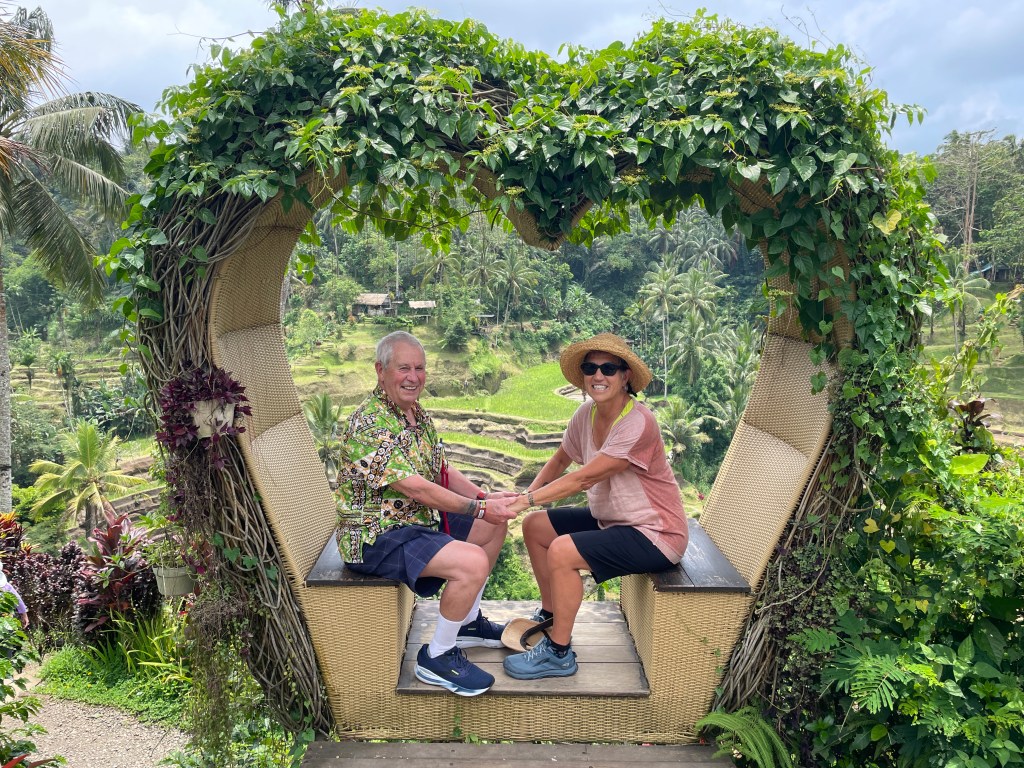
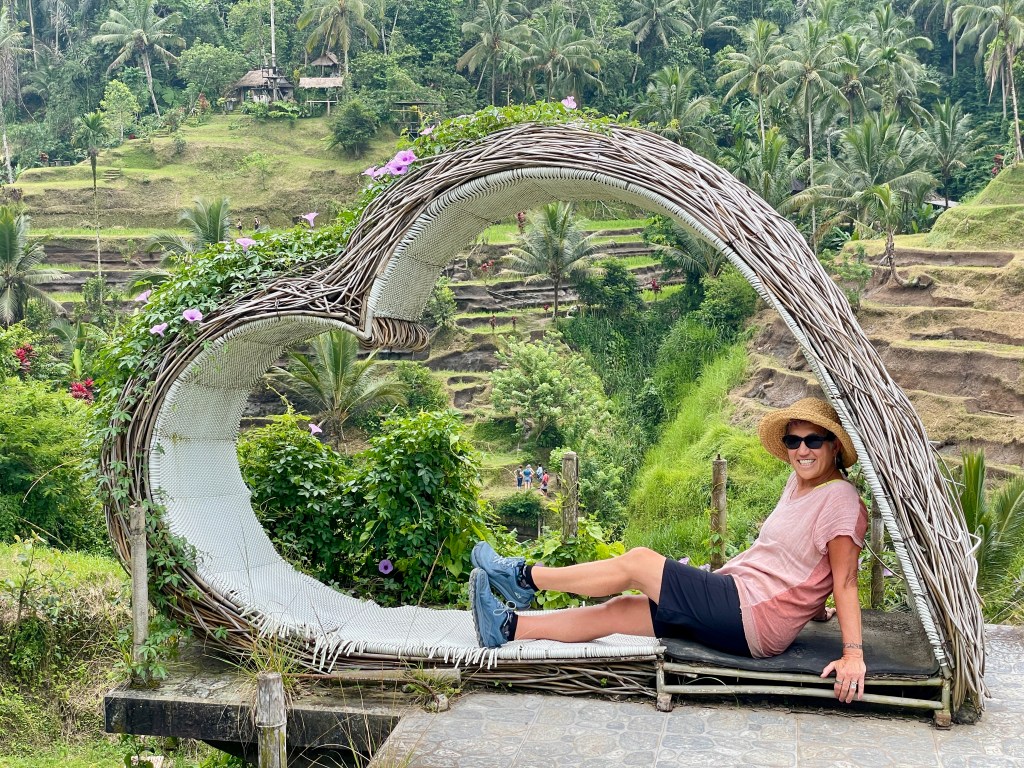
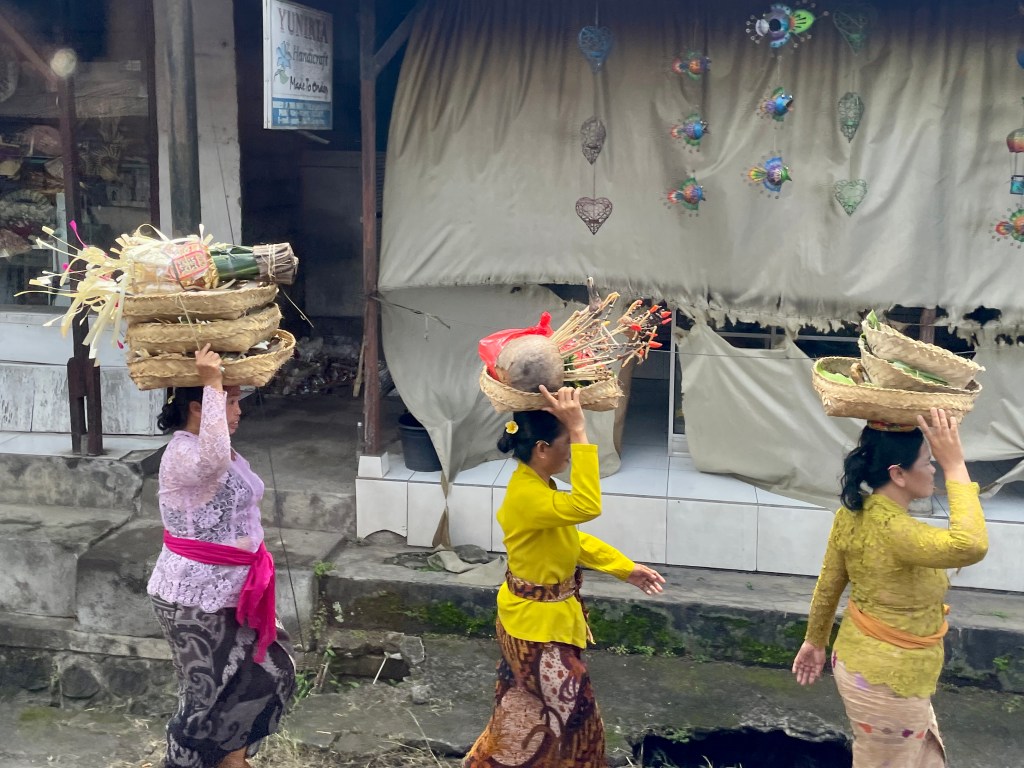
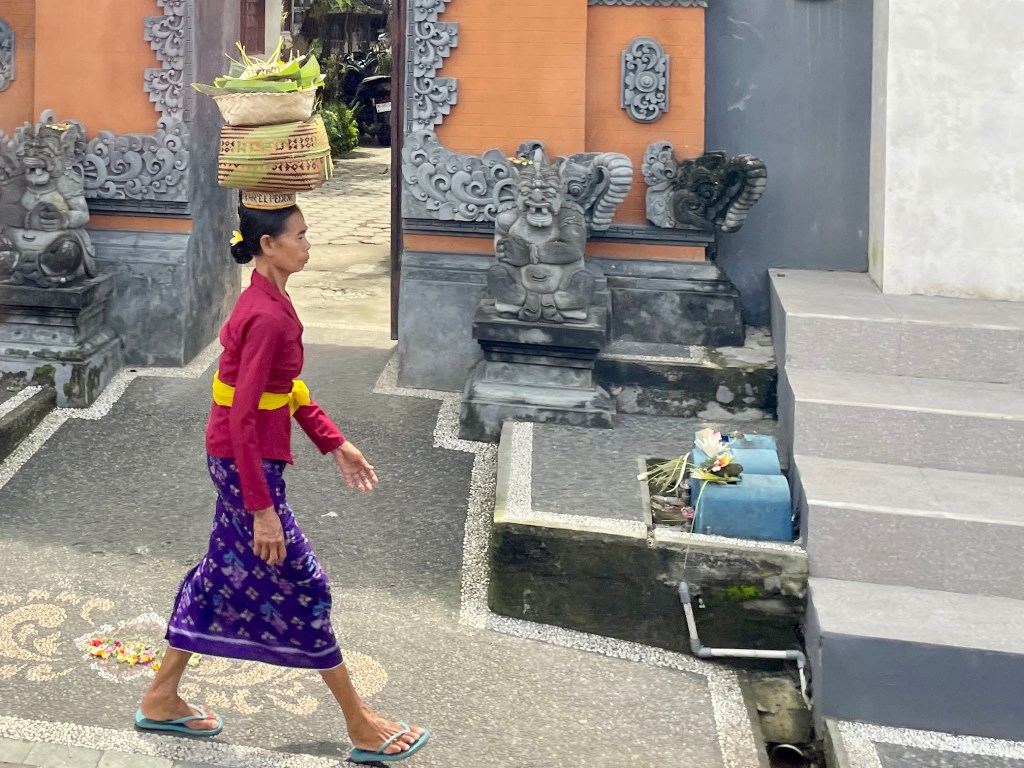
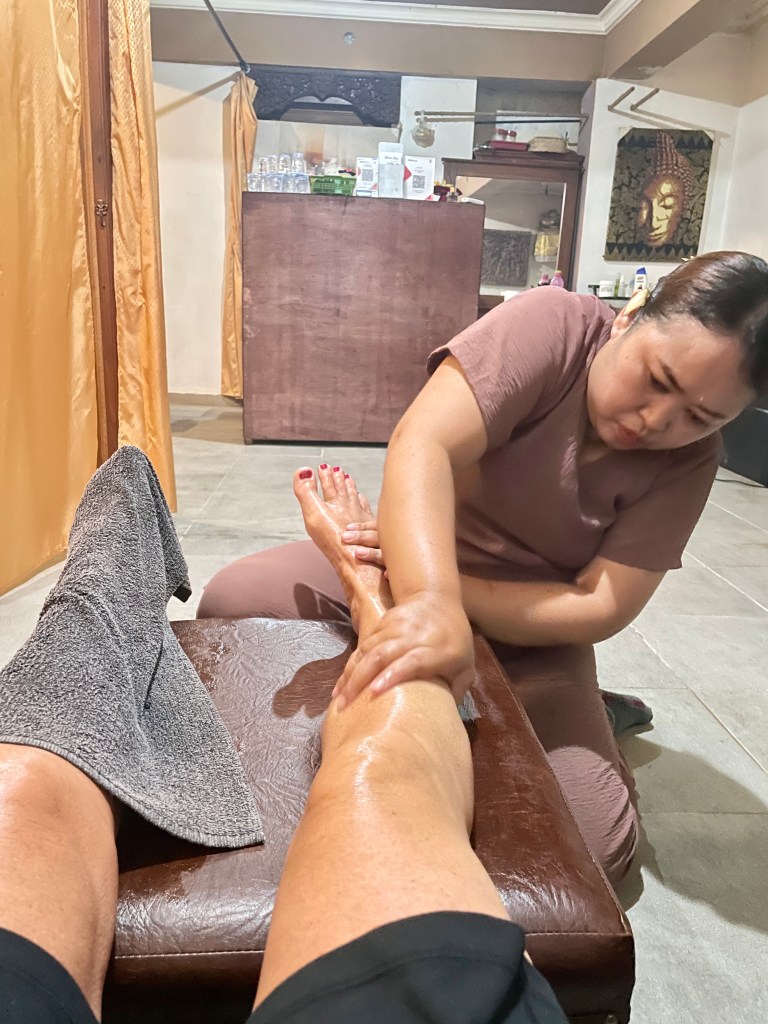
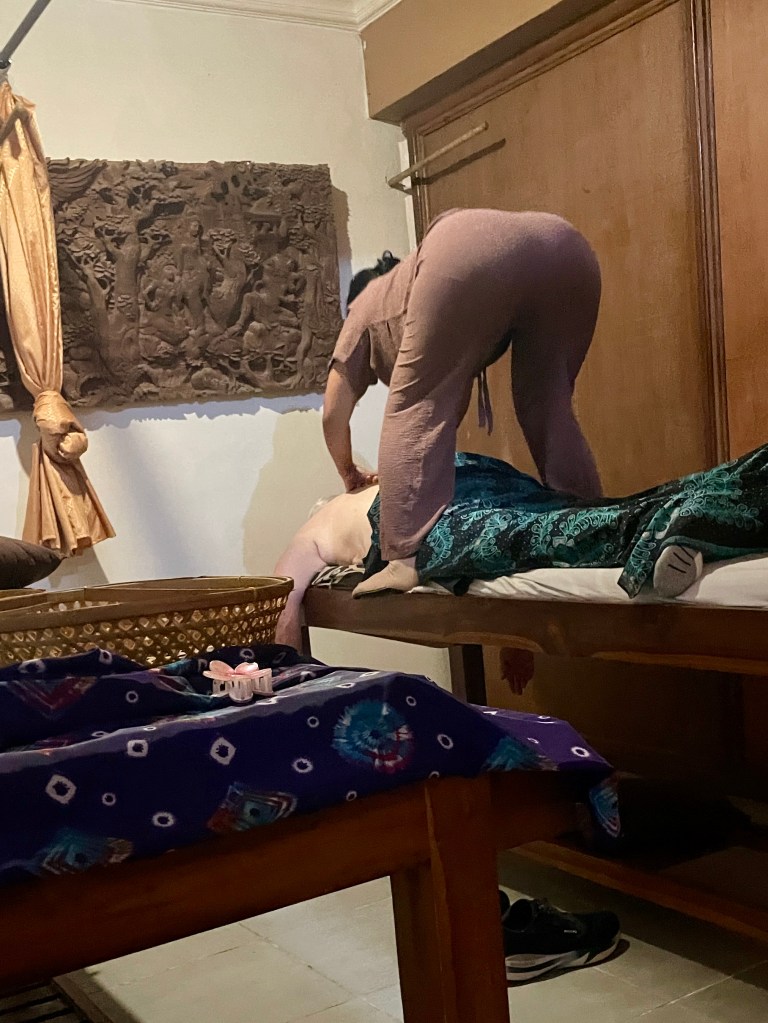
Next, we visited the Ubud market…the best on the island. It’s a great market covering blocks. We only had 1 1/2 hours there so moved quickly to it. After acquiring a few trinkets, Karla found a massage spot. She was looking for a foot and leg massage, but it cost $70,000 in Indonesian. Seems like a big number until you appreciate that there are 16,000 rupiah to one dollar. I went shopping while Karla started. I found a nice shirt, but had to pay $5. I got Karla a dress, but paid twice that much. She always gets more.
I returned to the massage place and Karla encouraged me to get a back massage. I did. Both massages were pretty good, but we had to pay between 9 and 10 dollars. With a dollar tip for each of the masseuses, it drove the price to over $10!….total, for both! We may make it back there. Nice environment, temples everywhere, friendly people, and not too expensive.
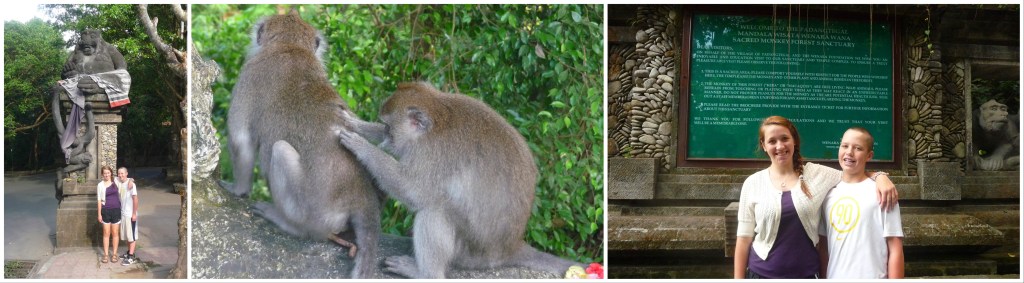
2011 Maddy and Jackson, Ubud and rice fields
-
Indonesia
Feb. 21
Indonesia is a fascinating place. Its history and diversity make it different from perhaps all of the countries we will be visiting. There are 17,000 islands stretching across 3000+ miles; 922 are populated. The largest of the islands are relatively well known: Sumatra, Java, Sulawesi, Borneo, and New Guinea. Its 280 million people make it the 4th largest country in the world. Jakarta is the 2nd largest urban area in the world. It is the most populous Muslim country; 87% of the country is Muslim. There are 600 ethnic groups and 700 languages spoken.
How do you govern with all of the remote islands and different cultural backgrounds and languages? I don’t know, but there are 38 provinces and 9 autonomous states. Below that are regencies, cities, districts, villages, neighborhoods, and hamlets. They say that once one gets beyond the larger islands, the villages are the most influential government entity. (All politics are local?)
We are told that humans started in Africa millions of years ago and migrated across Asia to reach what began as a land bridge and became islands as sea levels rose. Archaeologists discovered evidence of “the Java Man” from a million years ago. As the islands developed, seafarers arrived from Taiwan from the west and Melanesia from the east. The combination of early settlers and immigrants led to the cultural diversity we see today. The trade with outside countries only added to the diversity. As early as the 7th century, there was trade with China and India. That explains some of the Hindu and Buddhist influence. Islamic traders appeared in the 13th century; they clearly had an impact in establishing a nation that is so heavily Muslim.
Trade from the islands had a major impact on the development of the “western world.” Abundant spices like cinnamon, pepper, nutmeg, cloves and mace were traded to Europeans. Spices were extremely popular and valuable. They were used to make unrefrigerated meat more palatable,among other things. We are familiar with the travels of Marco Polo and the spice roads in the 13th and 14th centuries. The spices were moved by caravan to Istanbul, picked up by Venetians and distributed around Europe. That worked until the Ottomans conquered Istanbul and cut off the Europeans. The Spanish response was to send Columbus west to find a route to the “Indies.” You may recall that a landmass got in his way. The Portuguese sent Vasco de Gama east around Africa and the Portuguese got as far as India. Goa became a spice hub.
The Dutch were a sea power at the time and found an innovative way to enter the colonial competition. While the British established a British East India company around 1600, they weren’t especially successful. The Dutch established the Dutch East India (DEI) Company in 1602 and it became wildly successful. (Luckily, Elon Musk wasn’t around or DEI might have been eliminated.) Prior to the DEI, voyages were financed ship by ship. If a ship returned successfully, the financiers became rich. However, pirates, shipwrecks and disease frequently were victorious. The DEI found a way to spread the risk. Essentially it became the first multinational corporation. they introduced public trading of stocks and bonds on a stock exchange. The DEI was more than just a trading company. They were given the right to wage war, imprison and execute convicts, negotiate treaties, establish colonies and strike coins. With their near monopoly on spices and through slave trading, they became 2 1/2 times more valuable than Apple in today’s dollars. They achieved an 18 percent return over almost 200 years. Their dissolution in 1799 was attributed to smuggling, corruption and administrative costs.
Dutch control of Indonesia lasted until World War 2. Following a Japanese takeover during the war, Indonesia achieved independence in 1949. They have been generally democratic since then but it hasn’t been a straight line. While they have made economic progress, they are wrestling with impacts of over harvesting forests and impacts of climate change on agriculture. With its size and population, Indonesia remains a major player in the region.
-
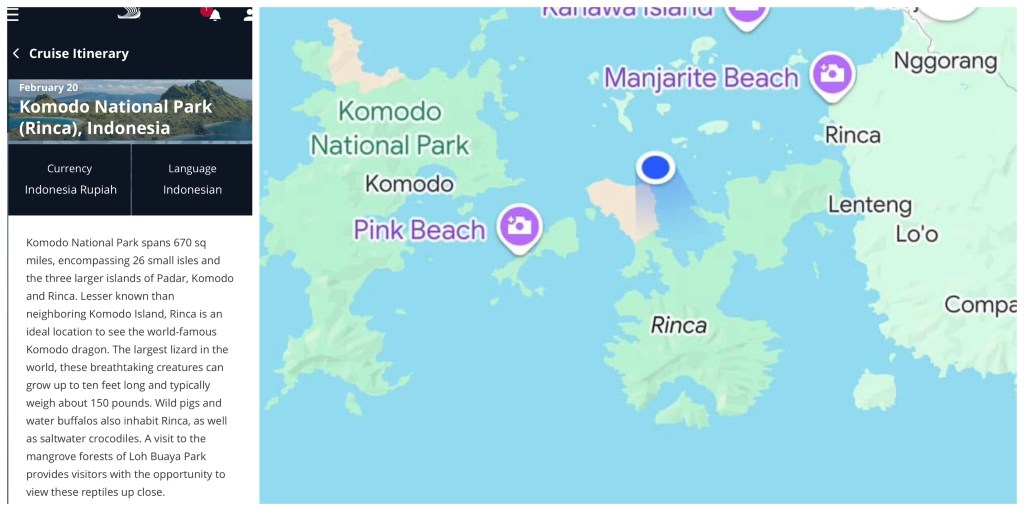
Komodo NP (Rinca Island)
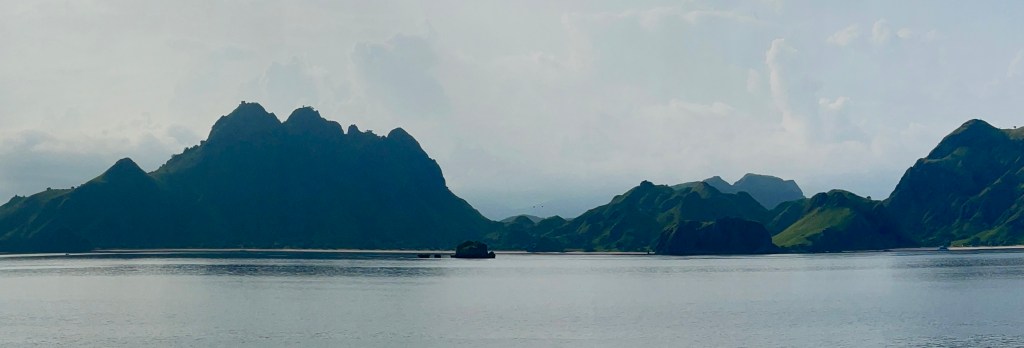
The terrain 
Feb. 19
We’re on the eve of a visit to Rinca Island and their Komodo Dragons. We visited Komodo Island on two previous occasions. Currently, it is closed to take the pressure off the Dragons and their environment. Komodo Island was configured so that we could walk among the creatures. We’re told that Rinca has walkways that provide some separation. That’s too bad. It lowers the risk and reduces the opportunity for exciting pictures.
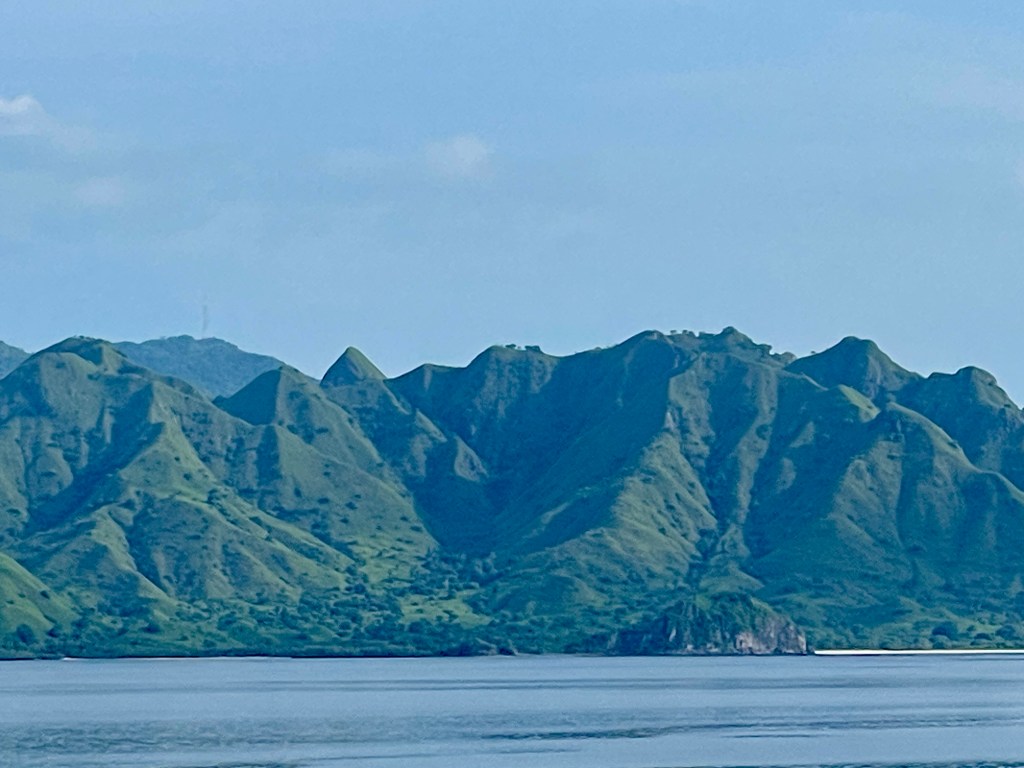

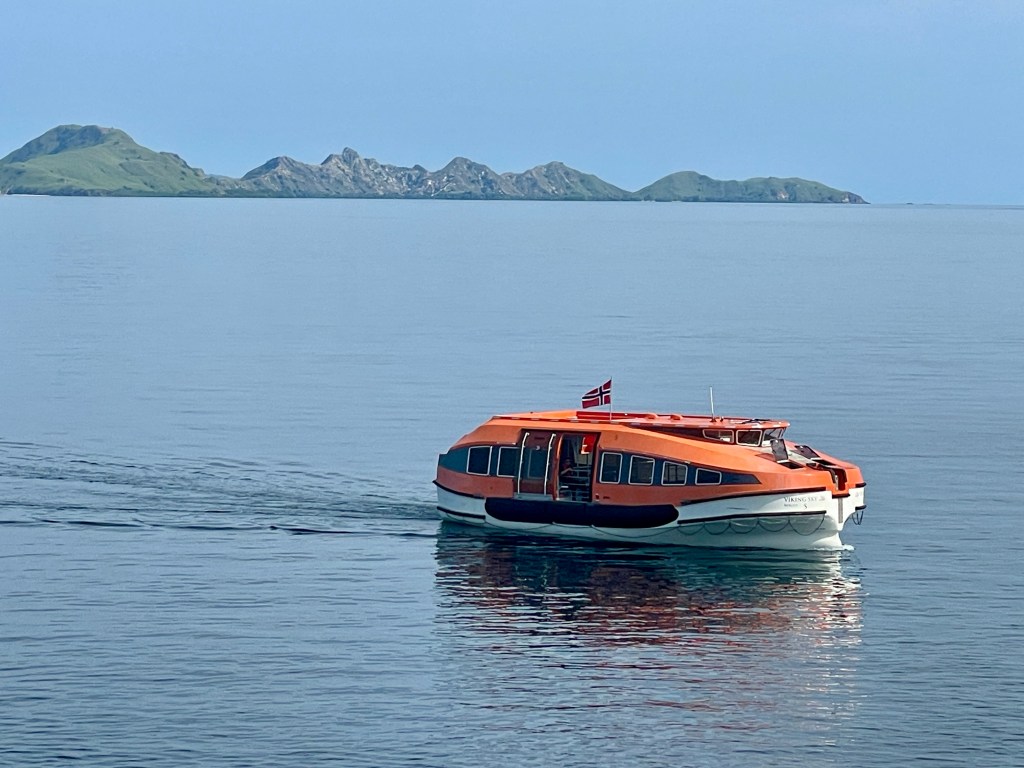
Tendering in 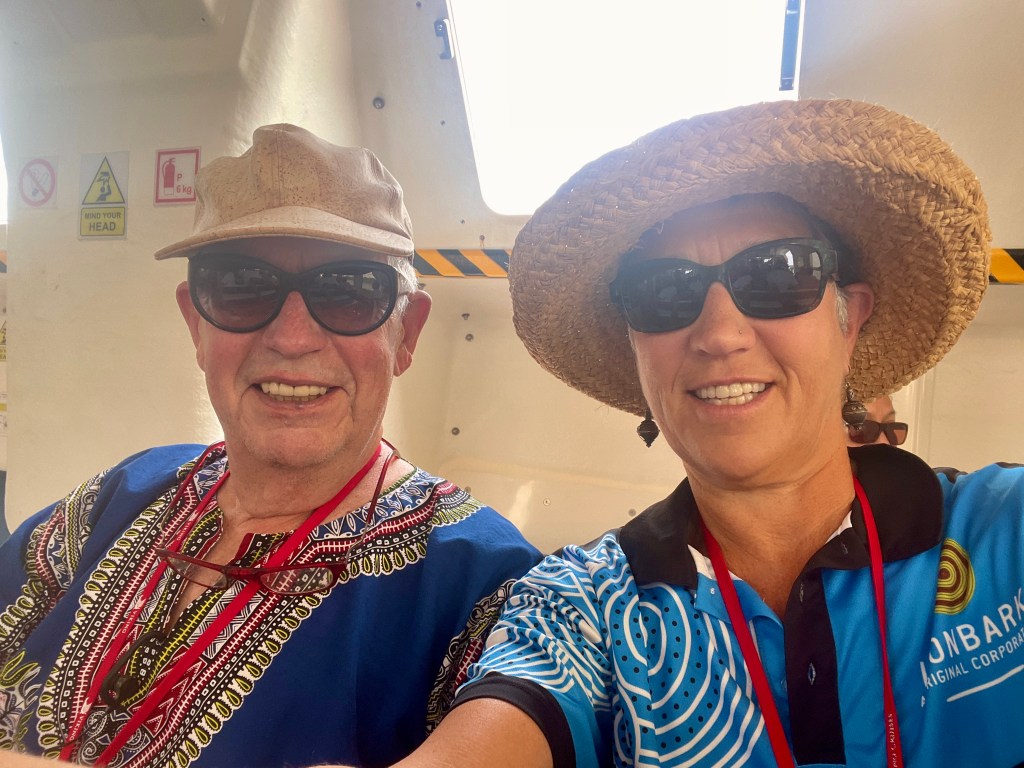
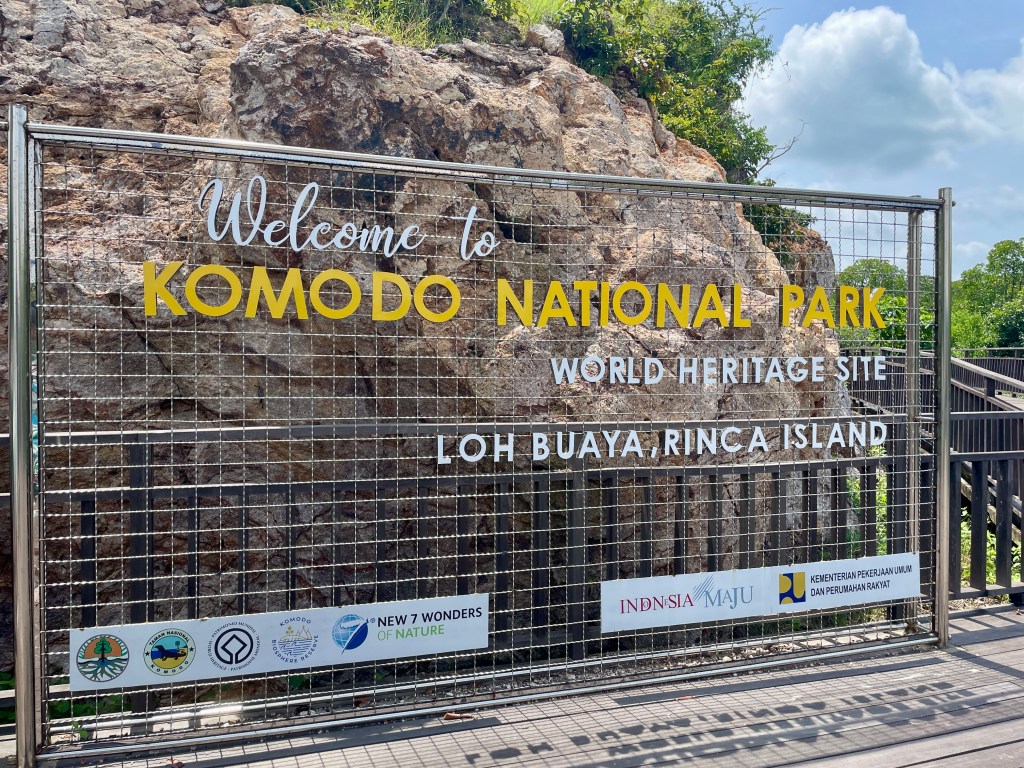
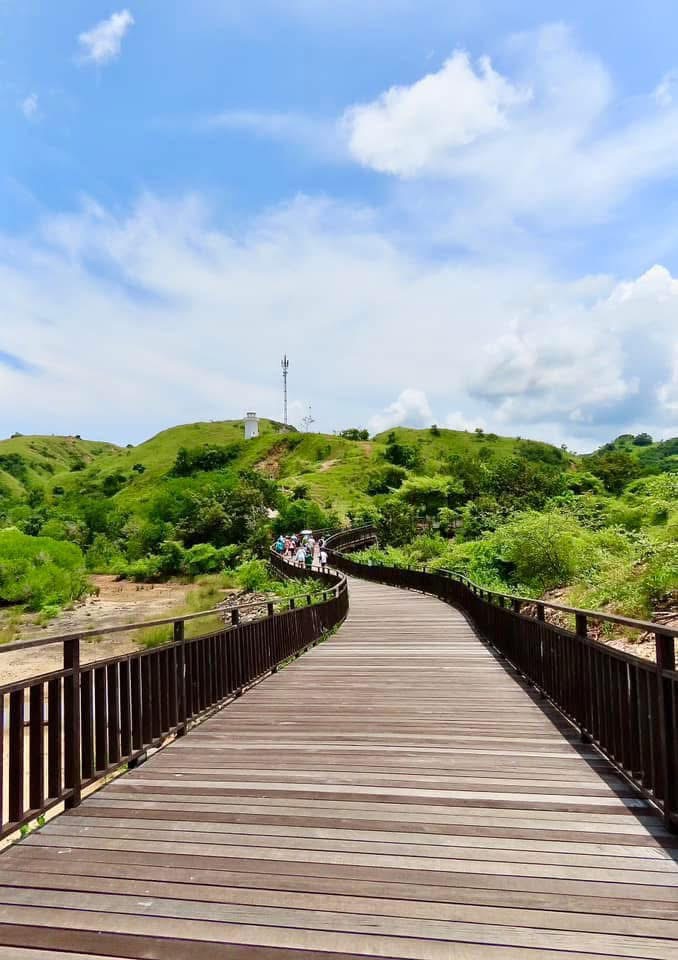
Long elevated walkways around the park keeps contact with the dragons at bay
During our pre-port talk on Komodo and Bali, it was clear that we will be entering a different culture with new experiences. We’re not in New Zealand or Australia anymore. (Dorothy.) The lecturer seemed to enjoy the transition and to make the audience squirm a little. He started by talking about large, fast, possibly hungry, man-eating dragons. He moved on to agressive monkeys in Bali. Monkeys that will jump on you, search your pockets for food and possibly bite. His admonition that dragons could smell blood miles away…so be careful if “you’re on your cycle” didn’t seem to worry the group much.
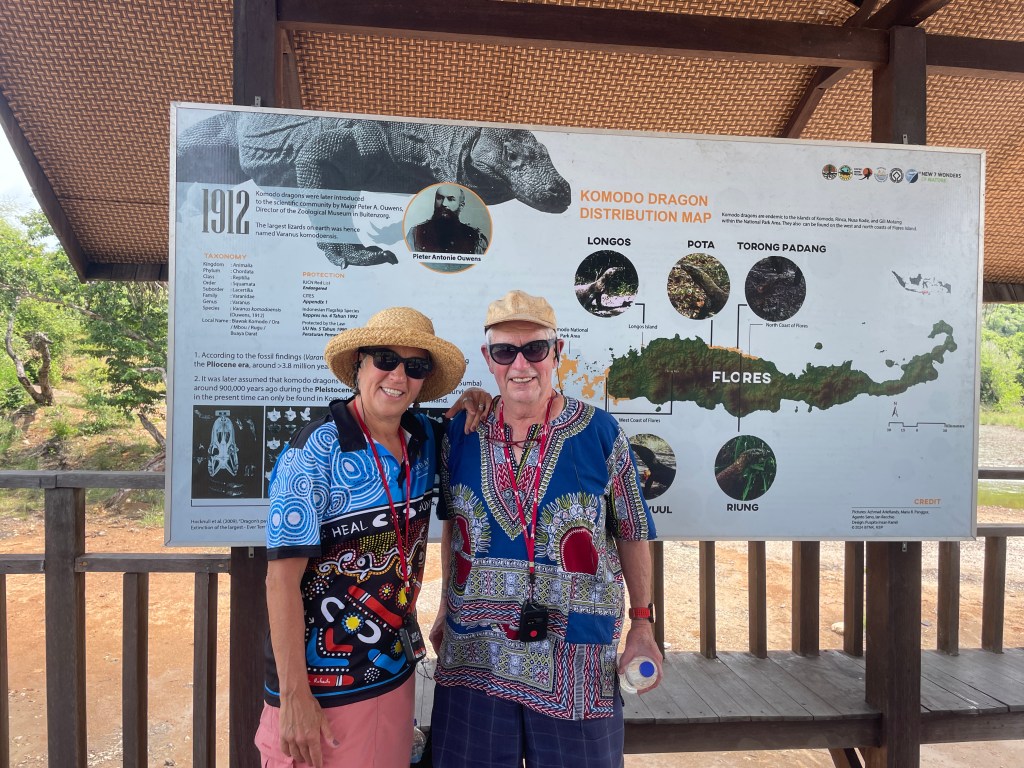
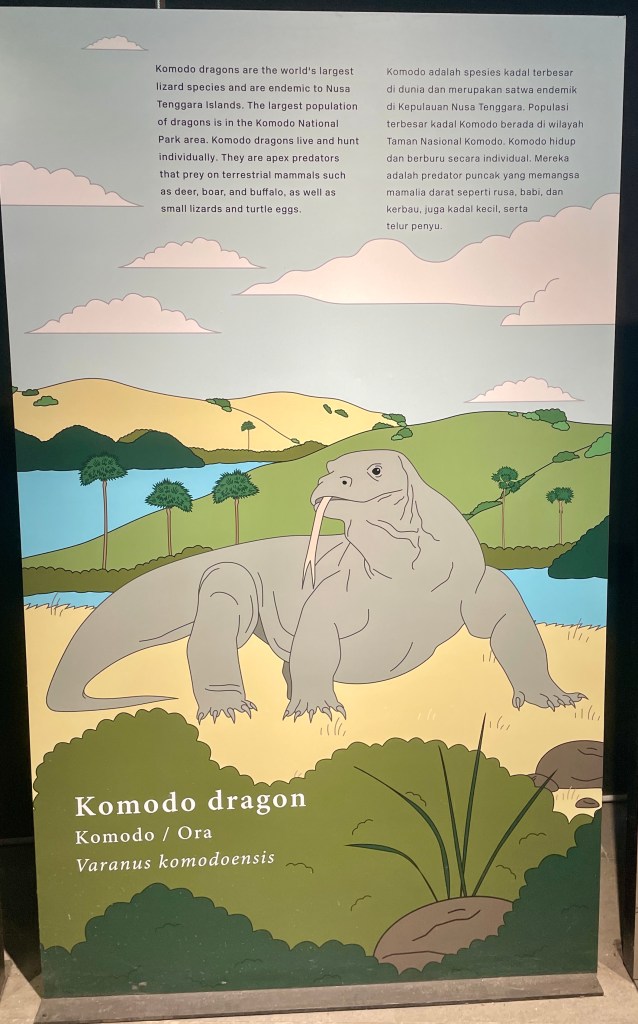
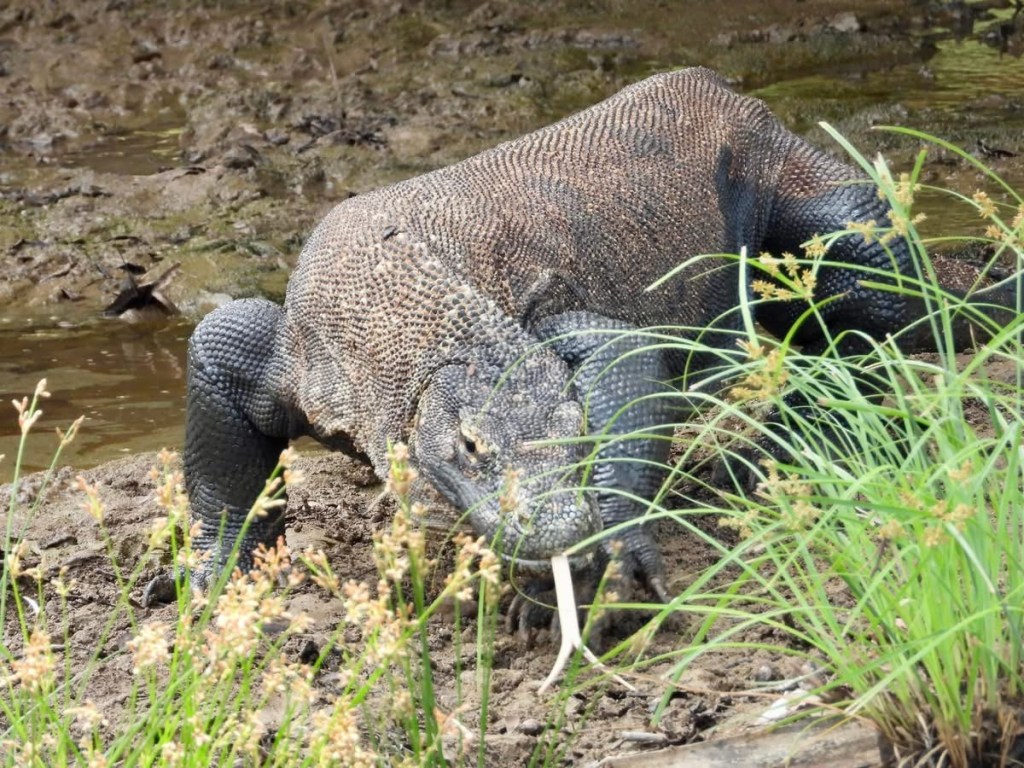
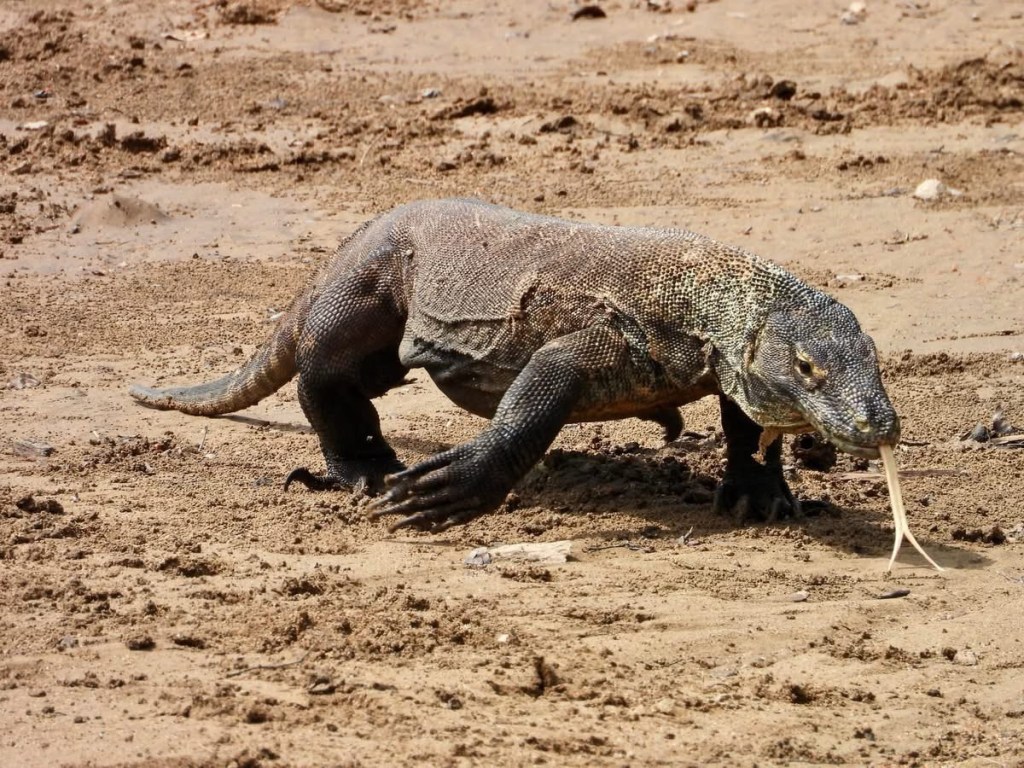
Komodo dragons are the largest of the monitor lizard family. They can grow to be 10 feet long….including a long tail….and 330 pounds. They swim easily and rapidly and, on land, can run 15-20 miles per hour for short distances. With no predators, they’re pretty much in charge. They. can see objects 900 feet away and can smell rotting carcasses within a 5 mile range. They will eat island residents like deer, boar, buffalo, rats, bats and other Komodos. However, they prefer rotting carcasses. This would seem to give them bad breath, but does serve to provide enough bacteria to make their bites result in infections. That may not be relevant since they usually use their serrated teeth to rip off body parts. Additionally, they have venom that slows their prey and makes swallowing easier. They can swallow a deer in minutes without much chewing. Once they digest their meal, they vomit bones, teeth horns and hair in a bundle of mucus. It would make a good video. I wouldn’t recommend eating it, but I bet it would make good soup.
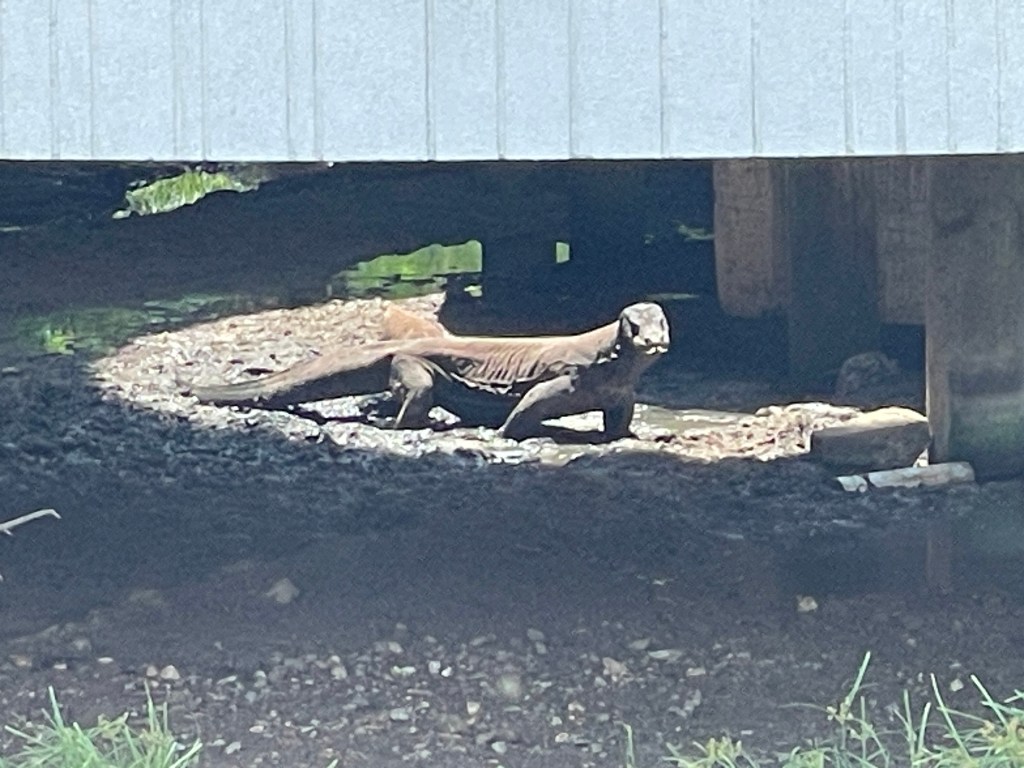

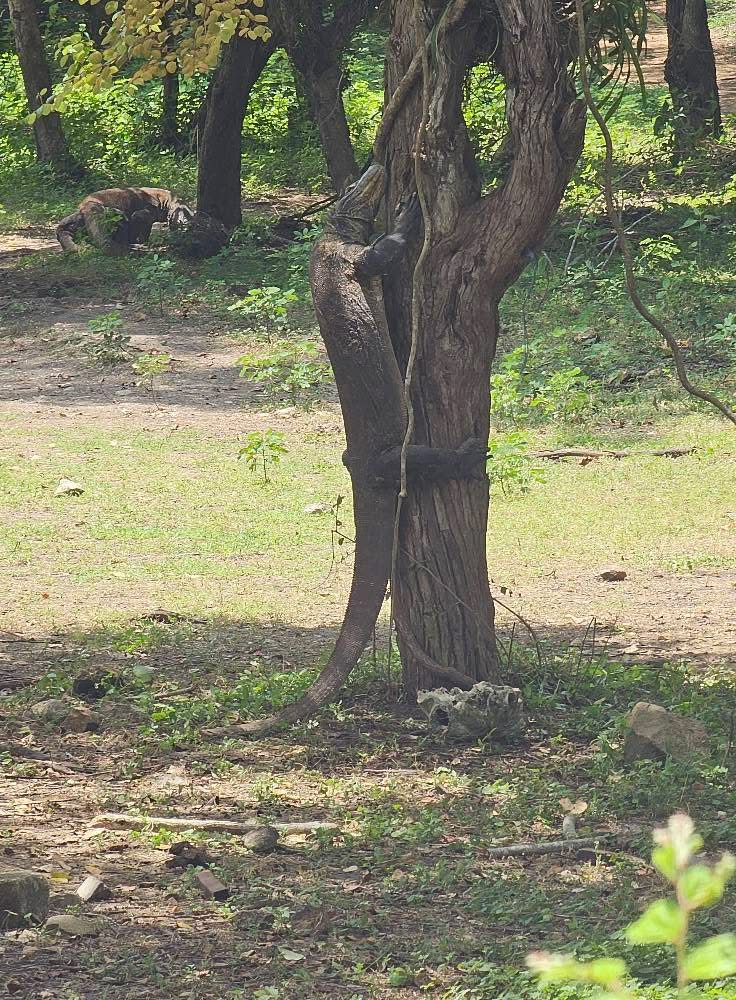
Climbing trees 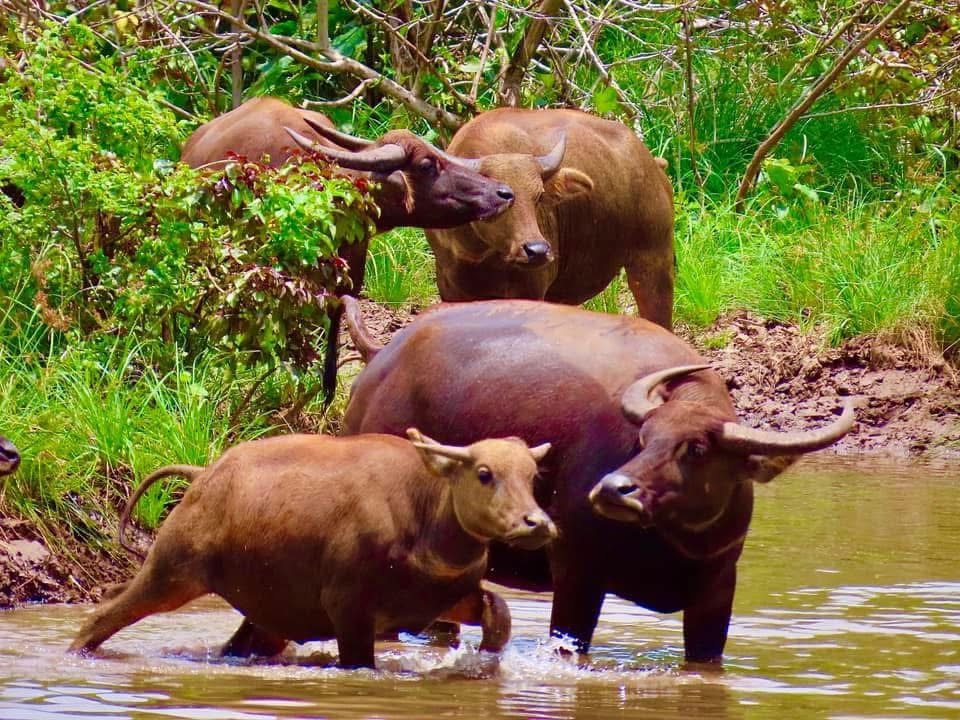
Ready food? 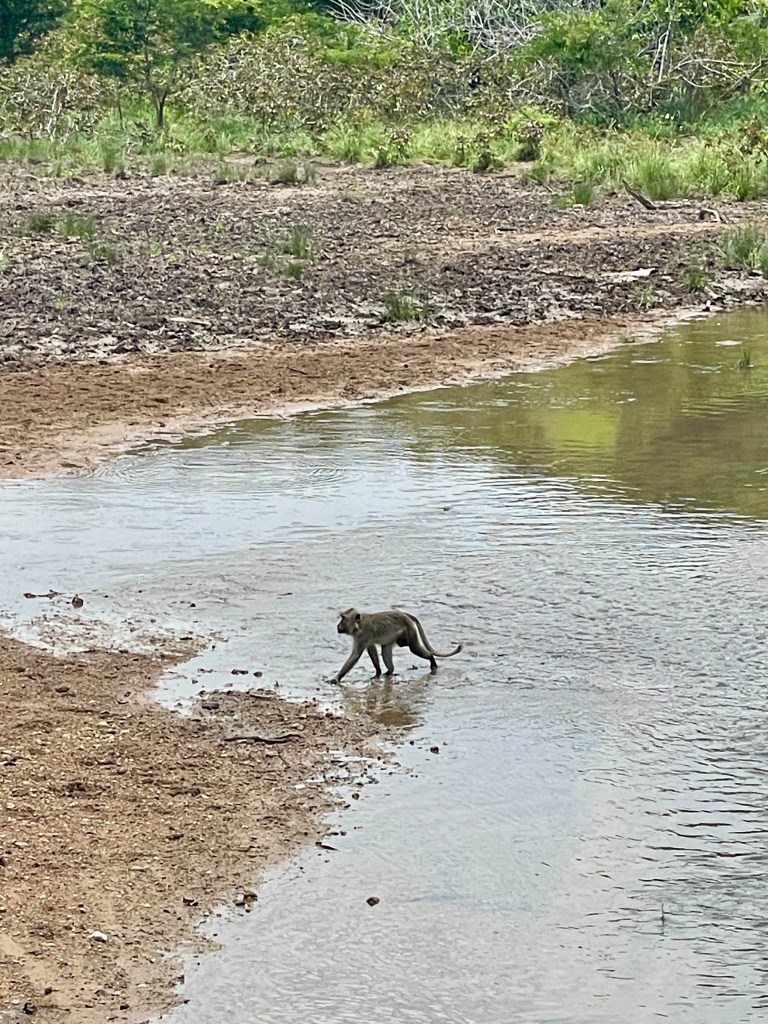
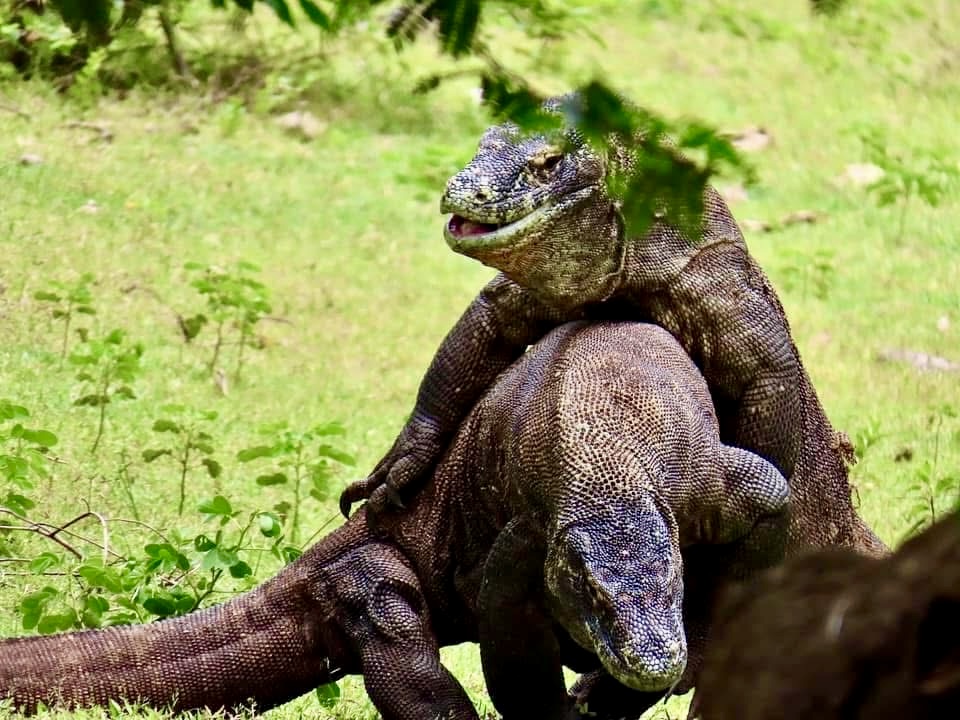
But, there’s a nicer side to the dragons. The moms will dig holes and lay 20-30 eggs.and spend most of 6-8 months sitting on them and protecting them from danger That’s the nice part. When the babies are born, they scurry for trees to climb. Instinctively, they seem to know that there’s a “Mommy Tax.” The mommies will scurry after the newborns and eat those she can catch. The young ones spend most of their time in trees, eating insects, birds and eggs. When possible, they roll in dung to make themselves less appetizing targets. They mature in 8-9 years and become the hunters. When they kill one of the island animals, they usually have to step aside when the adults arrive. The older ones can smell so well that a newly-deceased creature will attract them. They are not recommended as pets.
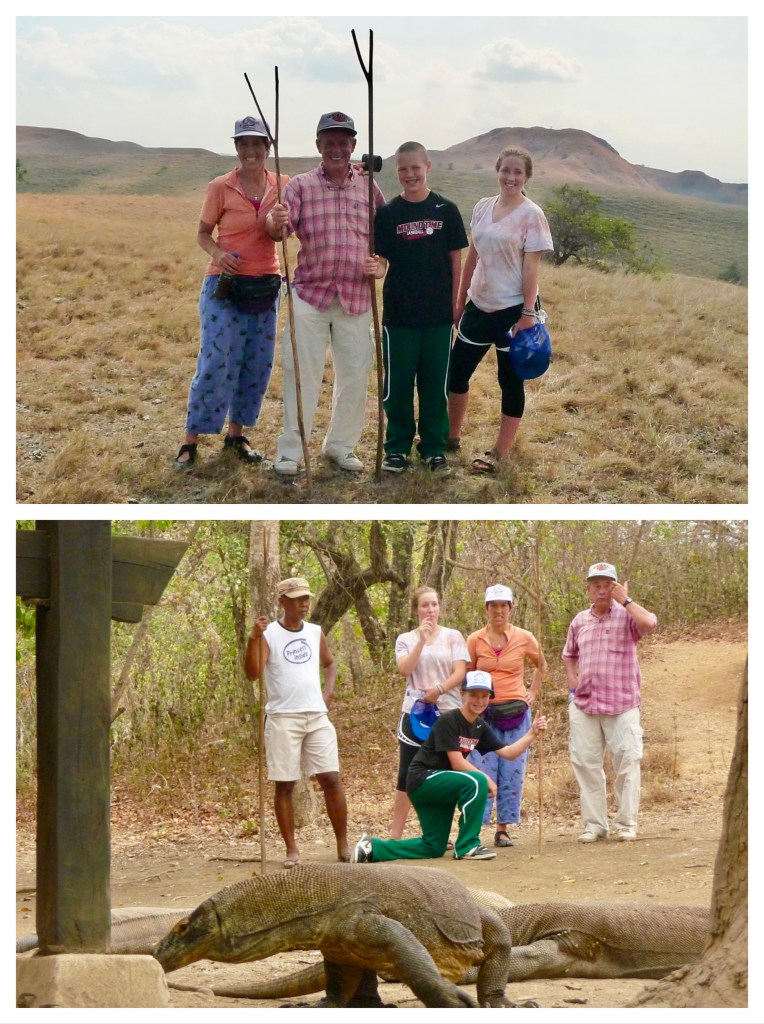
Two related stories: On our 2017 visit to Komodo, when we were walking the island, we were accompanied by teenagers carrying what appeared to be forked hot dog sticks. The sticks were flimsy, but placed on a Komodo snout they seemed to stop them. There was a group of 20-30 passengers watching 3-4 Komodos sunning themselves. When one passenger slipped to the ground, one of them, evidently tired of sunning, started moving rapidly toward him. The sticks worked.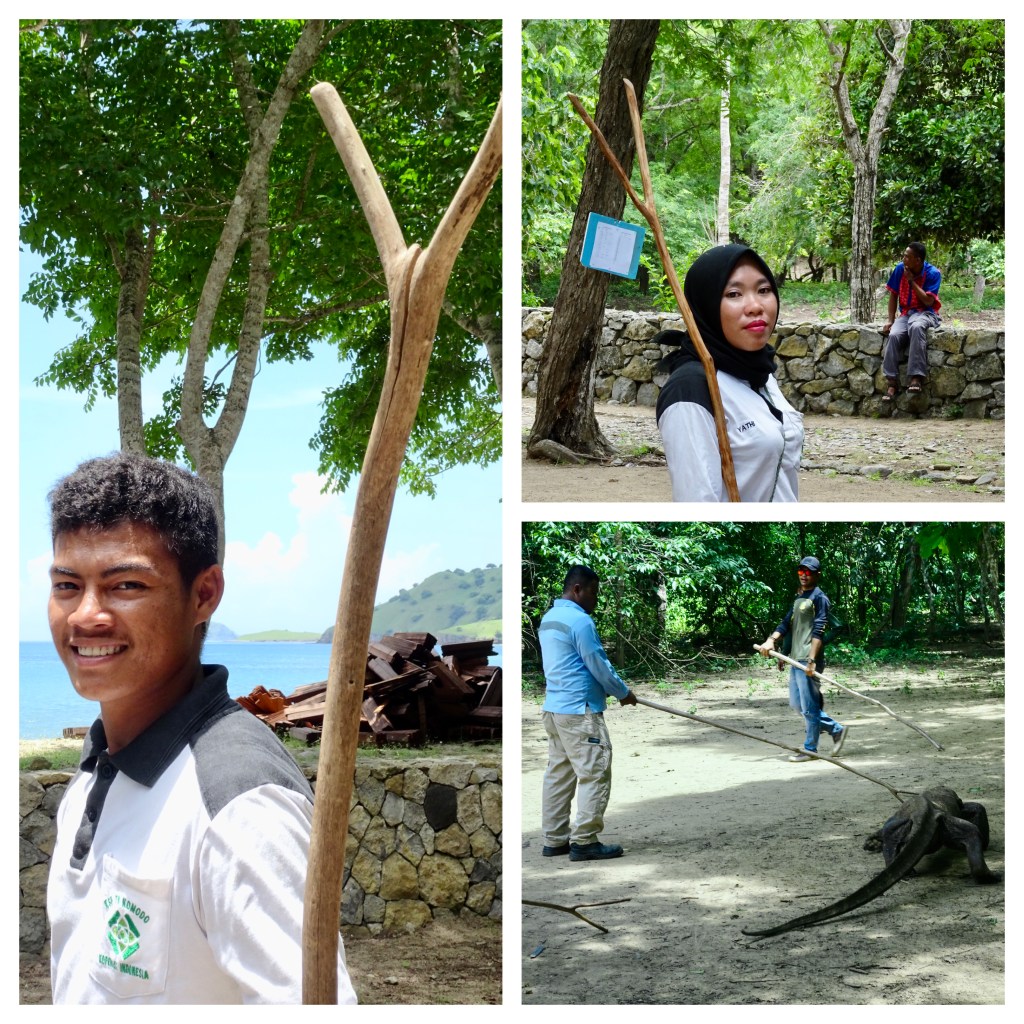
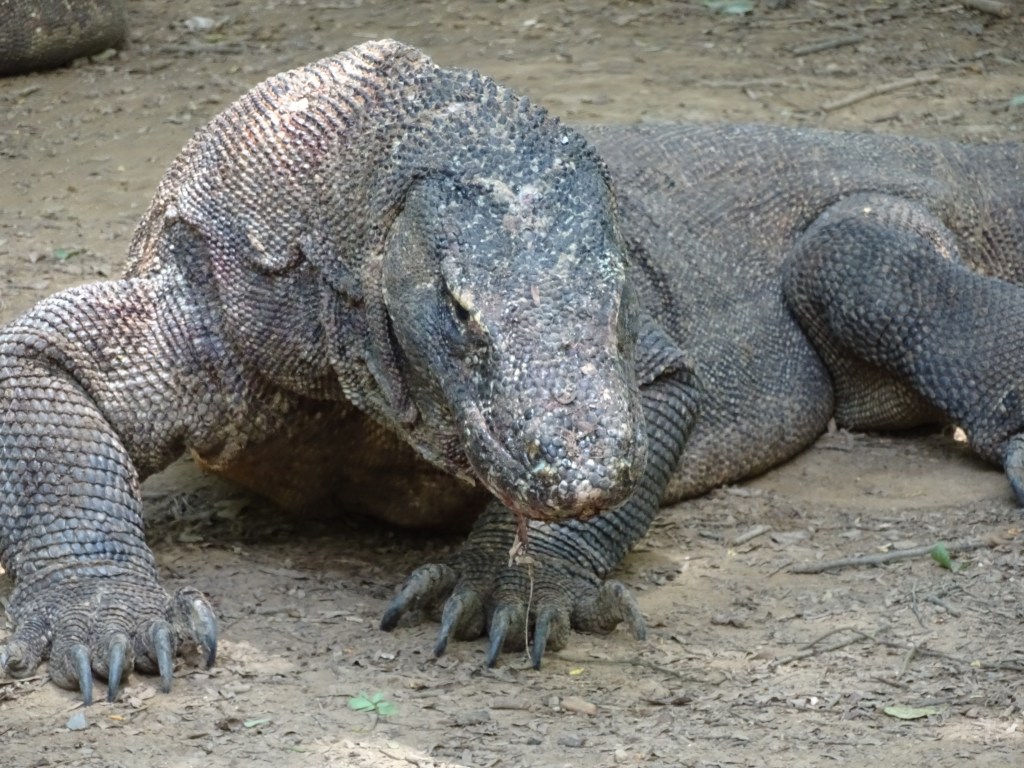
It is advised that individuals not go out walking alone. A photographer on the island decided to go out and see if he could find some good shots. When he didn’t return, some locals went looking for him. They found a camera. They didn’t tell us if he got some good shots.
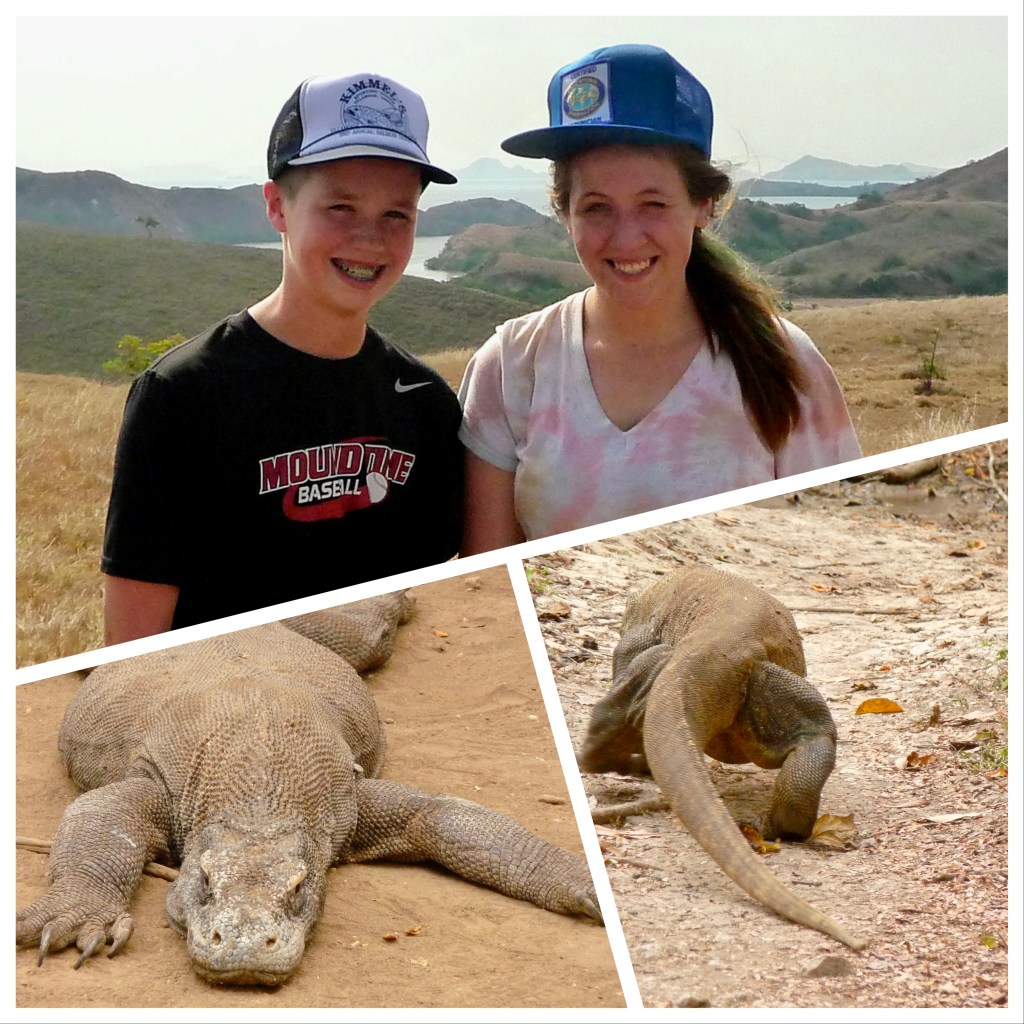
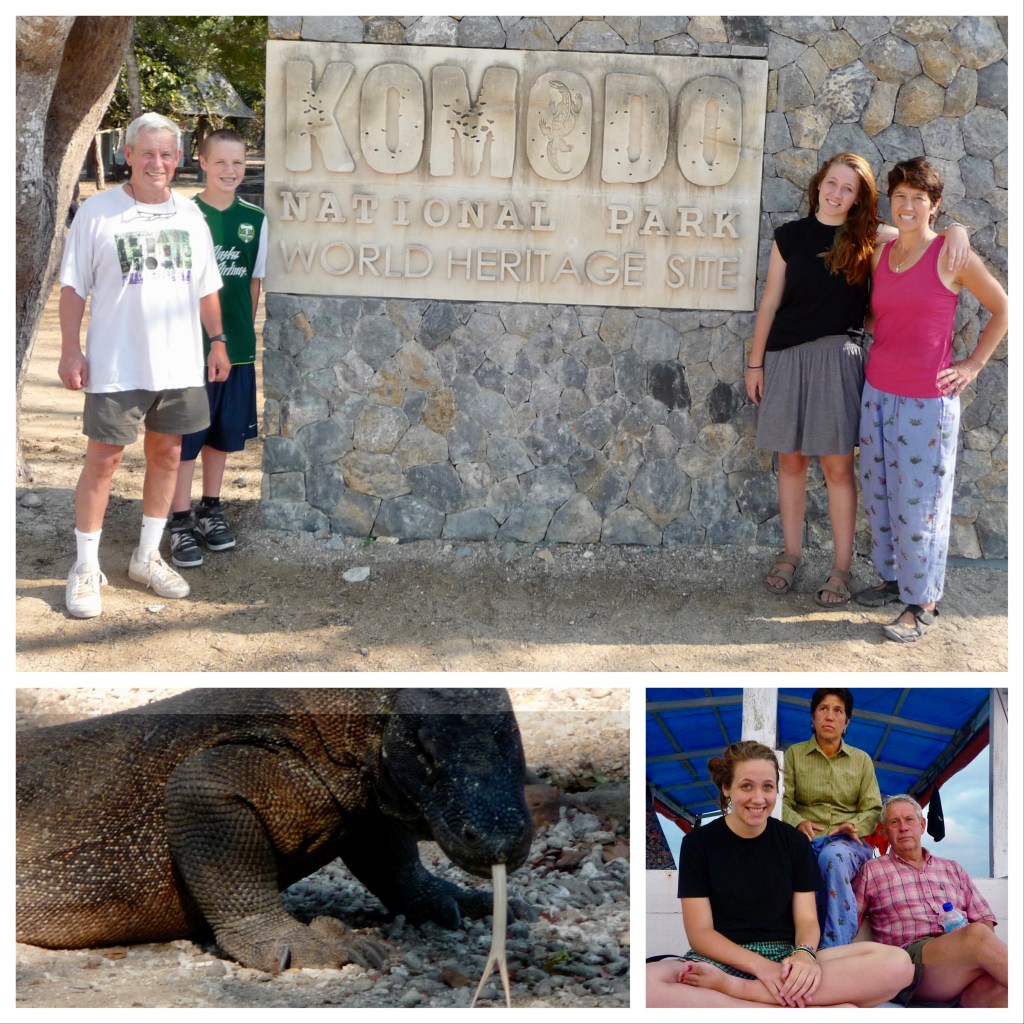
2011 Komodo Island visit with Maddy and Jackson
-
Subscribe
Subscribed
Already have a WordPress.com account? Log in now.
 Millers World Cruise 2025