-
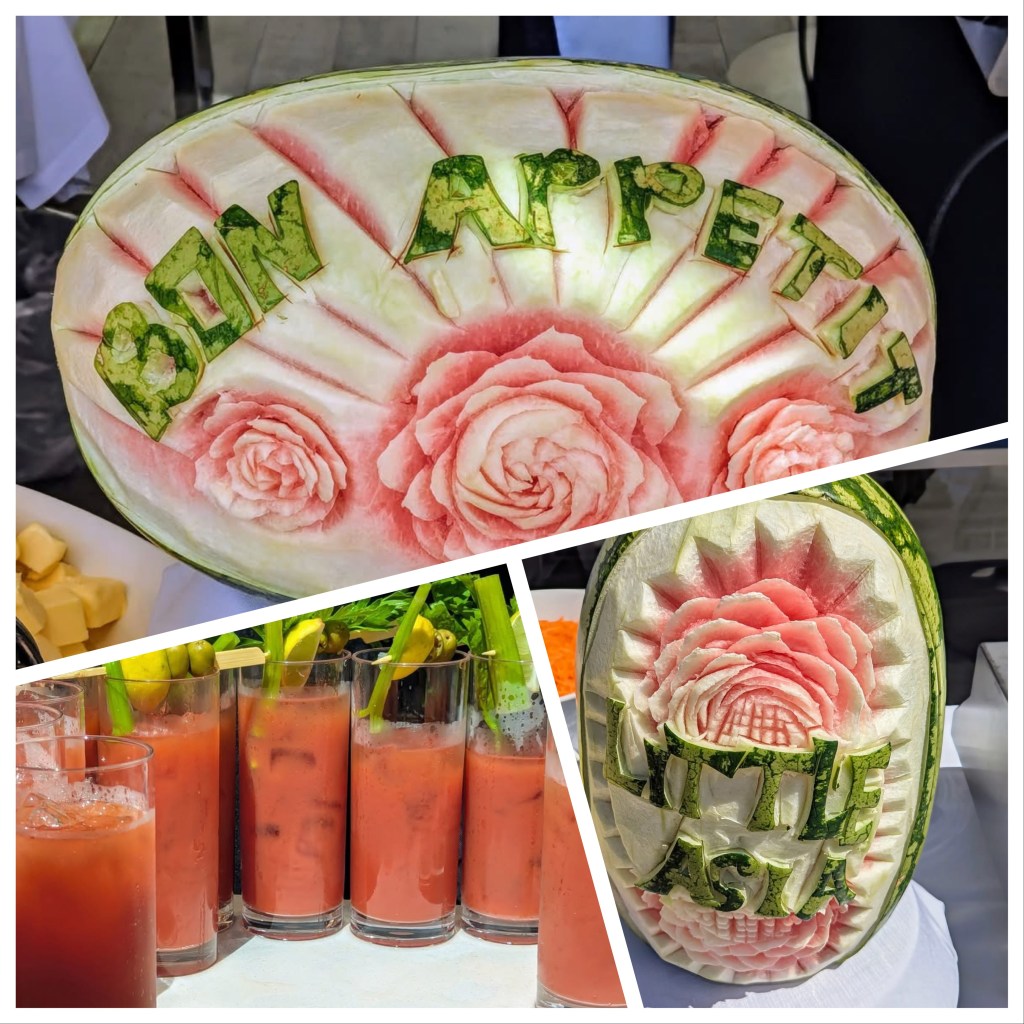
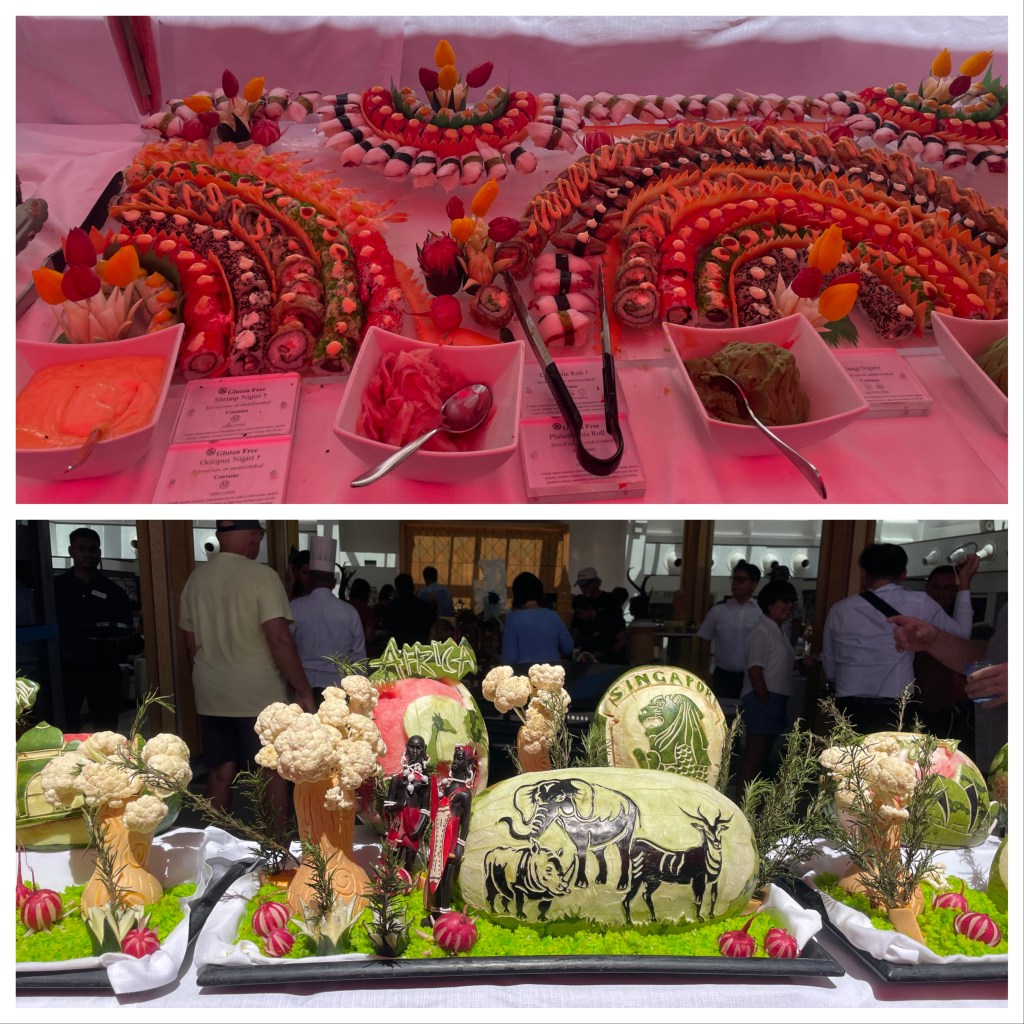
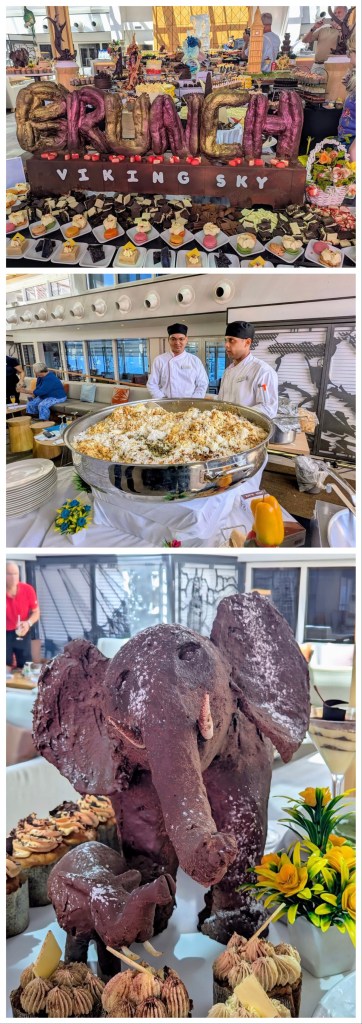
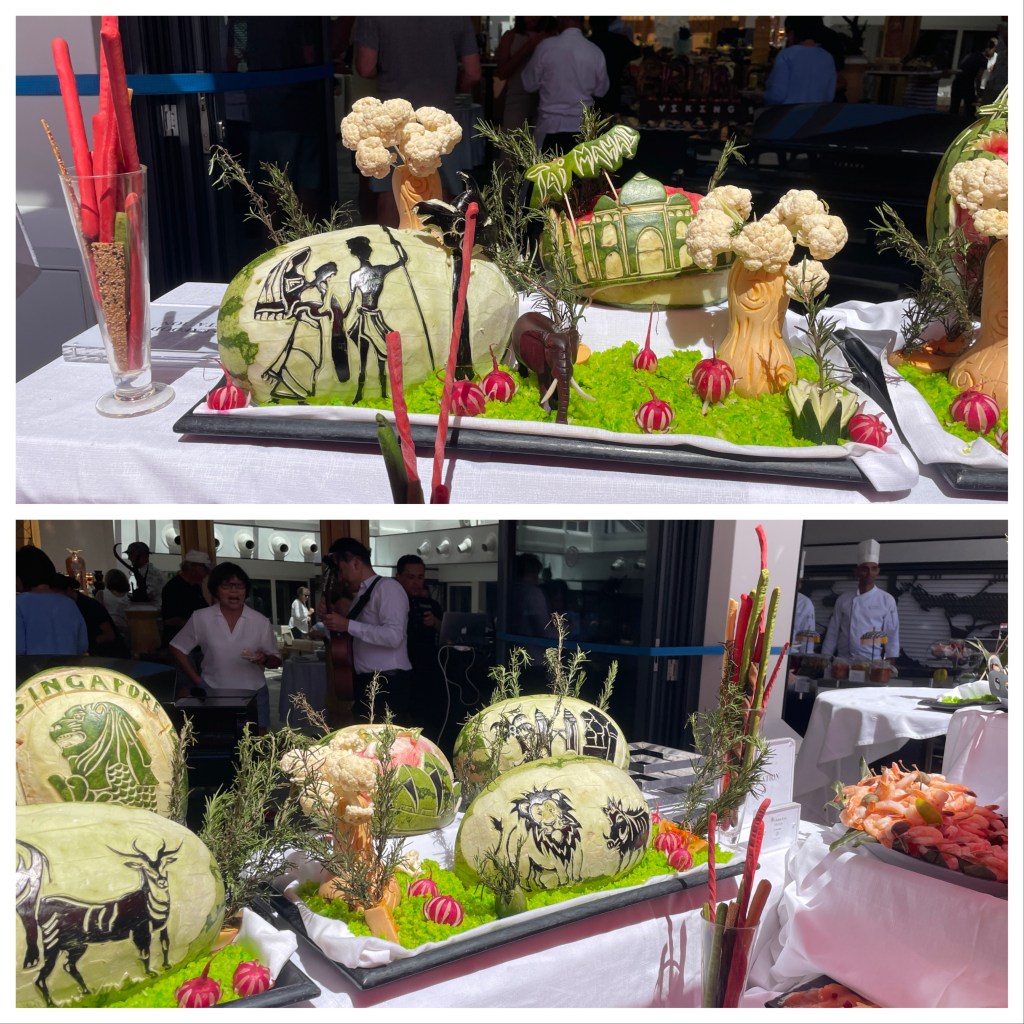
Sea Day Brunch
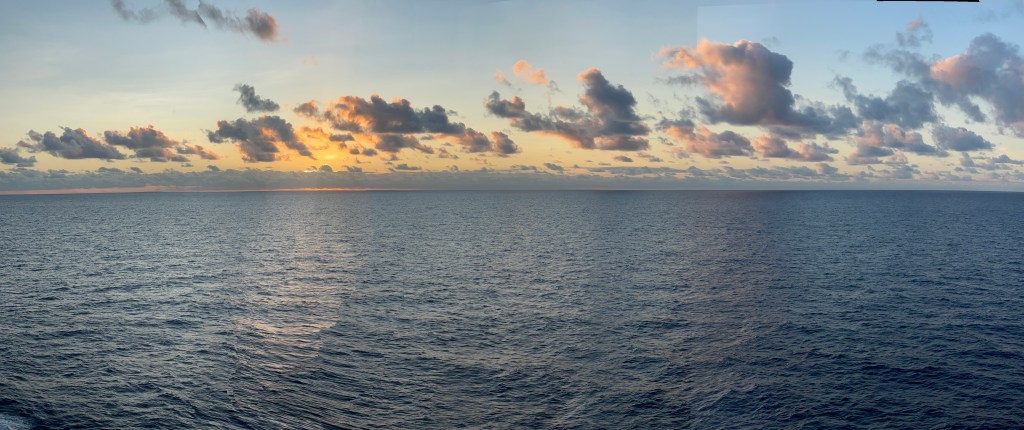
Mozambique Channel March 27
Viking does food well and food events! The chef and his team put together an incredible brunch for us.
-
Nosy Be, Madagascar
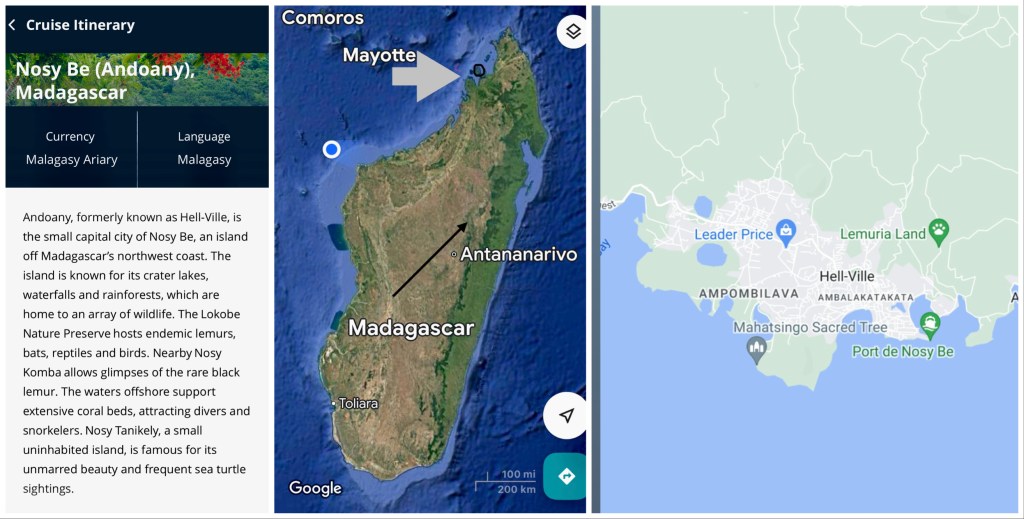
Nosy Be Island is at top left (black circle). Full map of Madagascar shows context. March 24 (10,431 miles from The Dalles)
Madagascar, off the southeast coast of Africa in the Indian Ocean, became the world’s 4th largest island by splitting off from Africa 180 million years ago (in the morning, I think) and from India 90 million years ago. Thirty-one million people made up of 18 “classified people” now occupy the island. The earliest settlers were Austronesians from Indonesia around 500 CE. They were followed by Bantus around 800 CE and the Arab traders. The Portuguees visited around 1500 and pirates and slave traders found the island to be a convenient stopover. A monarchy ruled the country until a French takeover in 1896. In 1960, they achieved independence.
Governing has not been easy. There were several disputed elections, an impeachment, 2 military coups, and 1 assassination. While the country is growing, there are significant income disparities. Seventy to 90 percent of the people are considered poor. Ninety percent of the people make less than $3.10 per day….69 percent less than $1 per day. There is considerable food insecurity and half the children under 5 have stunted growth. About one-third the people don’t have access to clean water.
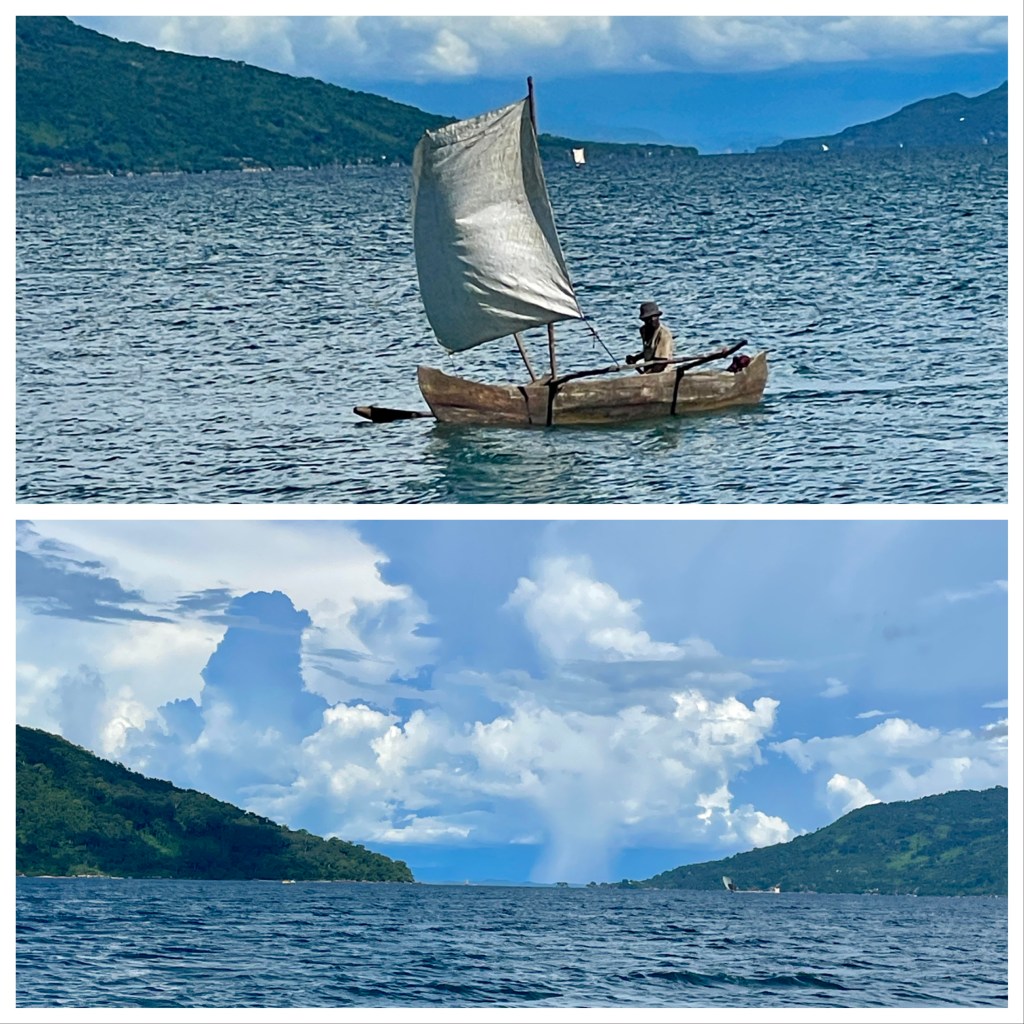
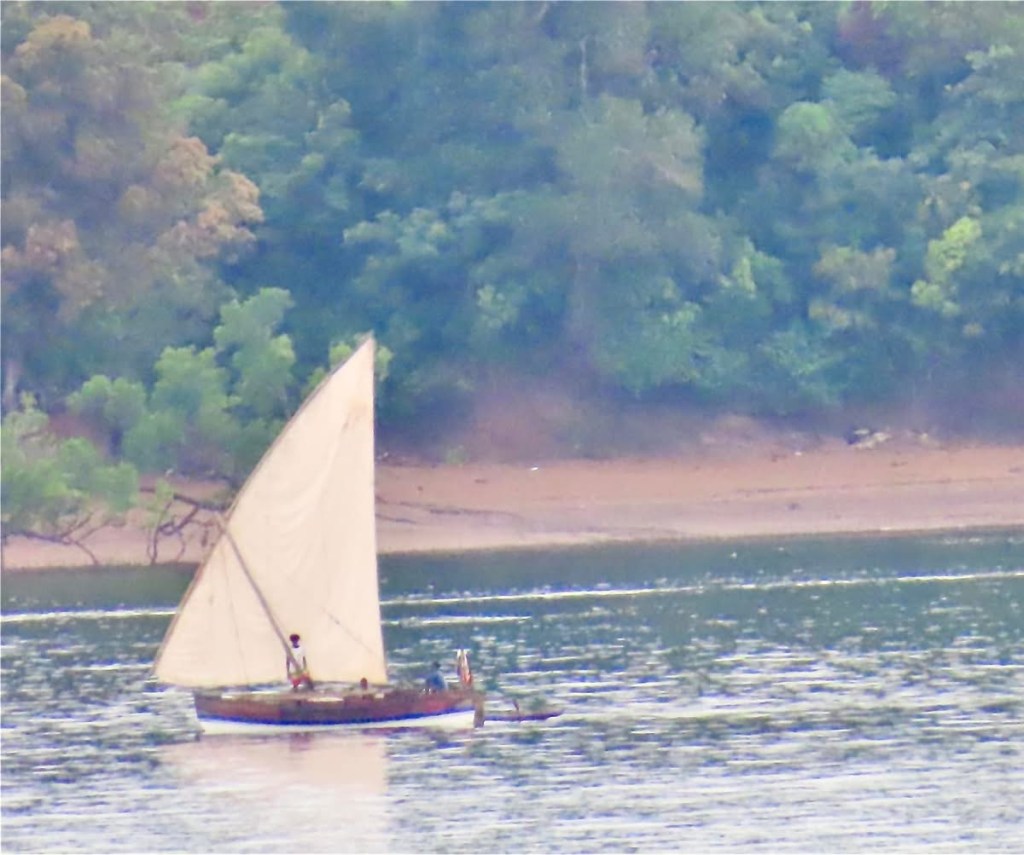
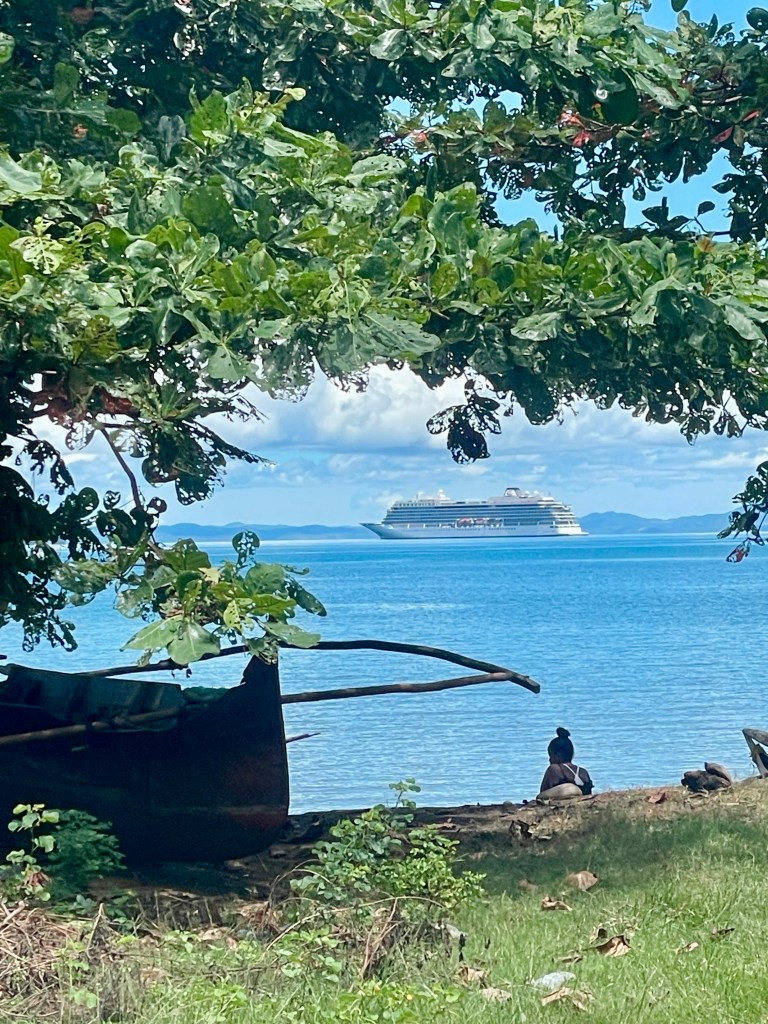
Seen from the tender to shore; rustic sailboat and storm brewing. On the brighter side, they have significant resources. They have precious metals, including half the world’s sapphires They export 80 percent of the world’s vanilla as well as coffee, cloves, lychee nuts, and shrimp. And there appear to be significant opportunities for tourism. There are coral reefs, rain forests, mountains and animals. Given its longtime separation from the African continent, about 90 percent of the animals are endemic as well as 80 percent of the fauna. However, they have been harmed by overgrazing animals and overcutting forests. Climate change has been a challenge as have invasive species. It appears that a diverse collection of people haven’t been governed very well and that lots of opportunities have been missed. But, there is potential. It would be interesting to see what would happen if they contracted with Singapore to run the island.
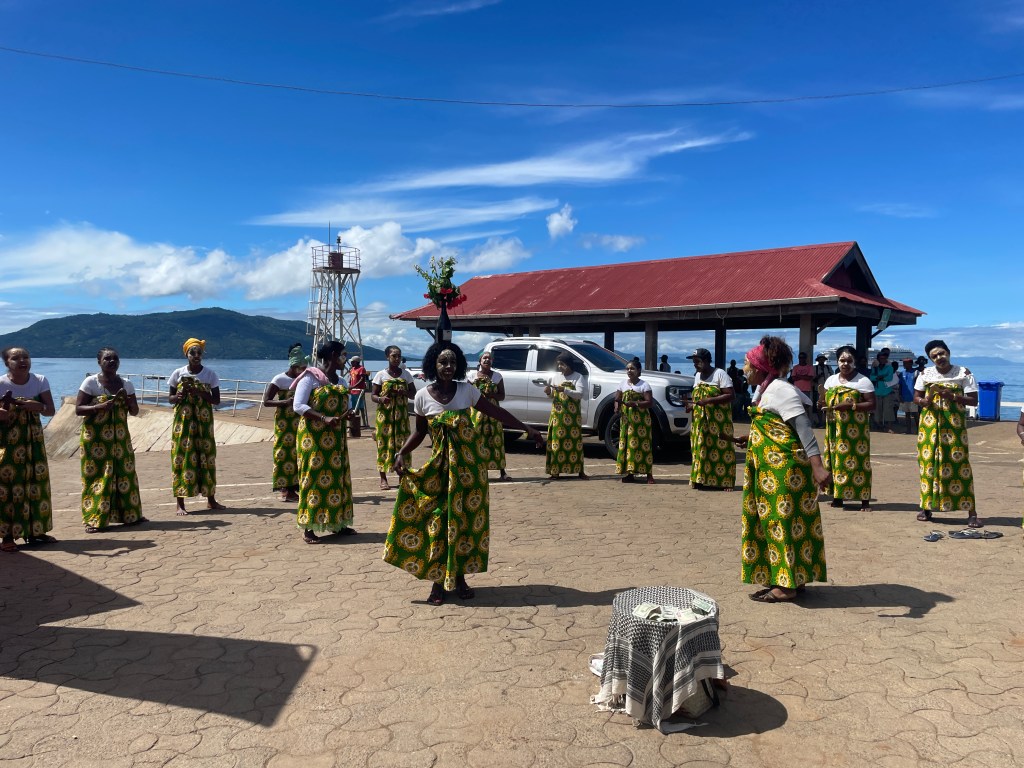
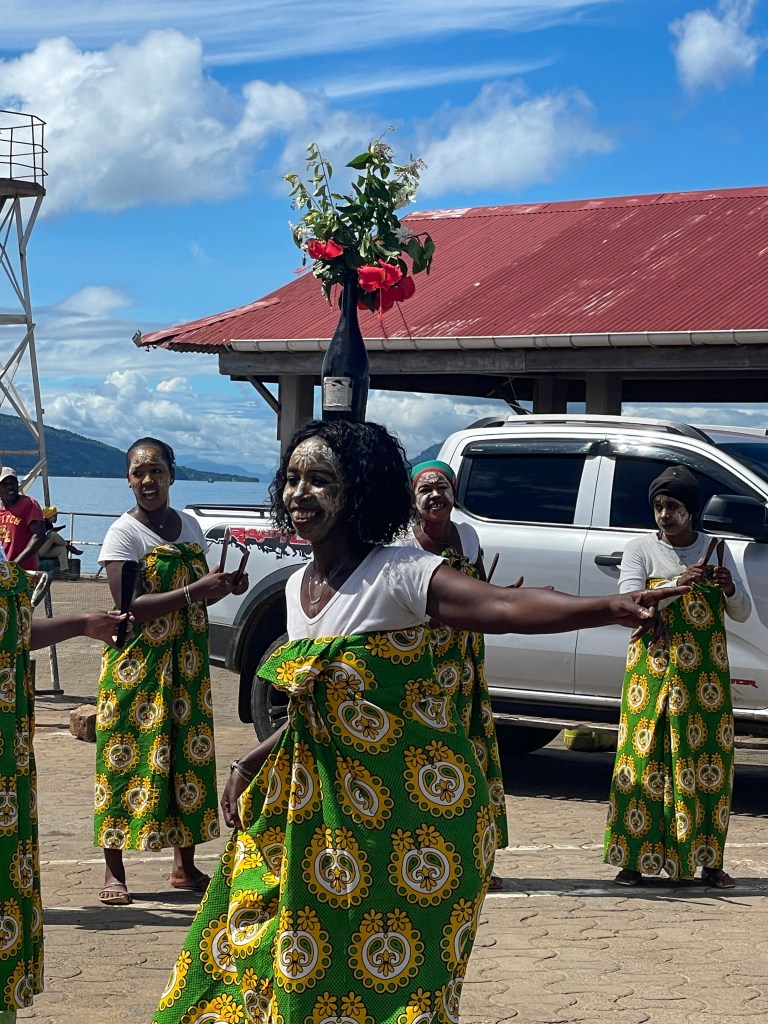
We anchored off the coast of Nosy Be (meaning “large island”), an island on the northwest coast of Madagascar with a population of about 100,000. Our tender took us to a 7 passenger van at the dock on the way to Lemuria Land. Following that, we were aimed at visiting the oldest village– Maradoka, lunch in Hell-Ville, and then shopping. (Hell-Ville, a pretty name, was named after Anne Chretien Louis de Hell, the French Governor of the island in 1838-41. Officially, it’s now Andoany, but often still called Hell-Ville.)
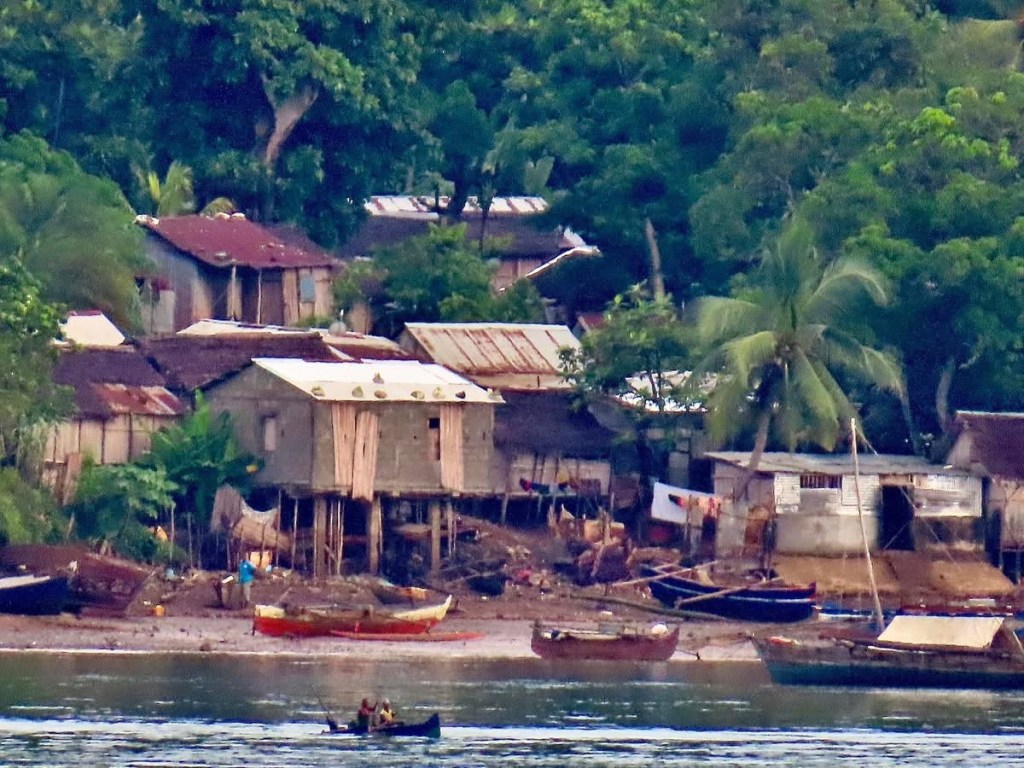
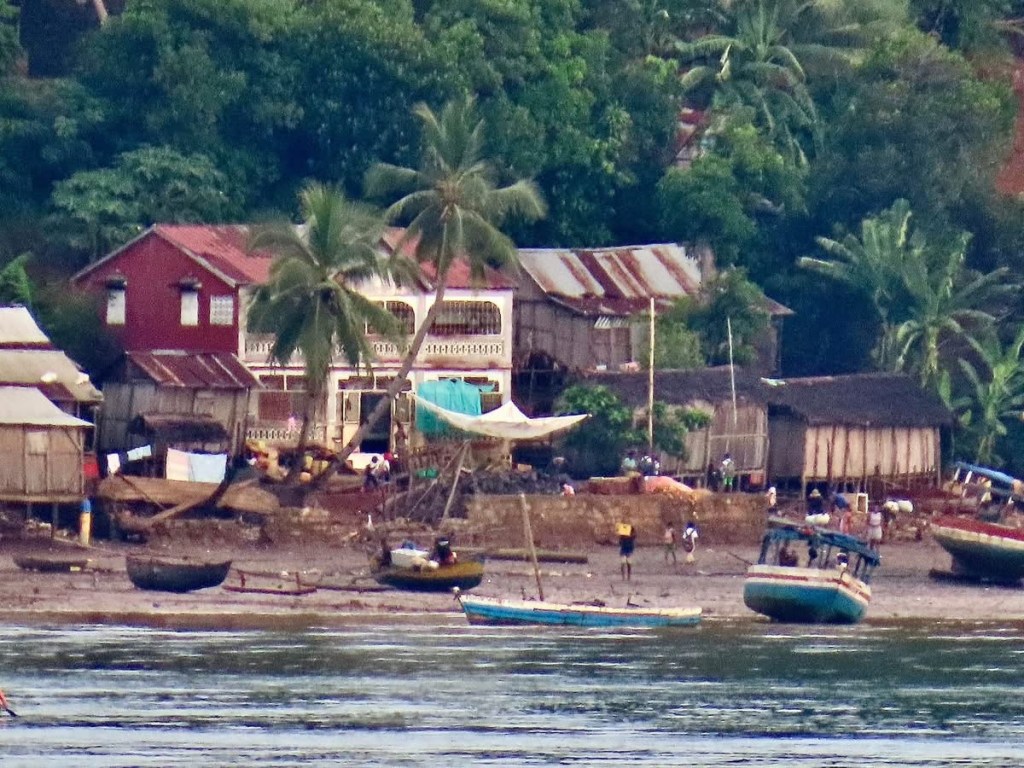
Our guide, a welcoming and personable young woman, accompanied us in the van. We’d been told by the Viking excursions manager that folks on the island were really excited at our coming, as this is another first for Viking. (Kenya was also a first). As our van departed, it was clear that the Chinese had not yet refurbished the area. It felt like we had stepped into a 50’s movie. There were people moving in all directions and just standing around. Countless tuk tuks. The first port road we passed was dirt and full of potholes. Along the route to Lemuria Land….a 1 1/2 lane road…were lots of stick, mud and corrugated tin houses; too many with standing water near by. It definitely looked poor. The road into LL continued with dirt and potholes and a jungly terrain.
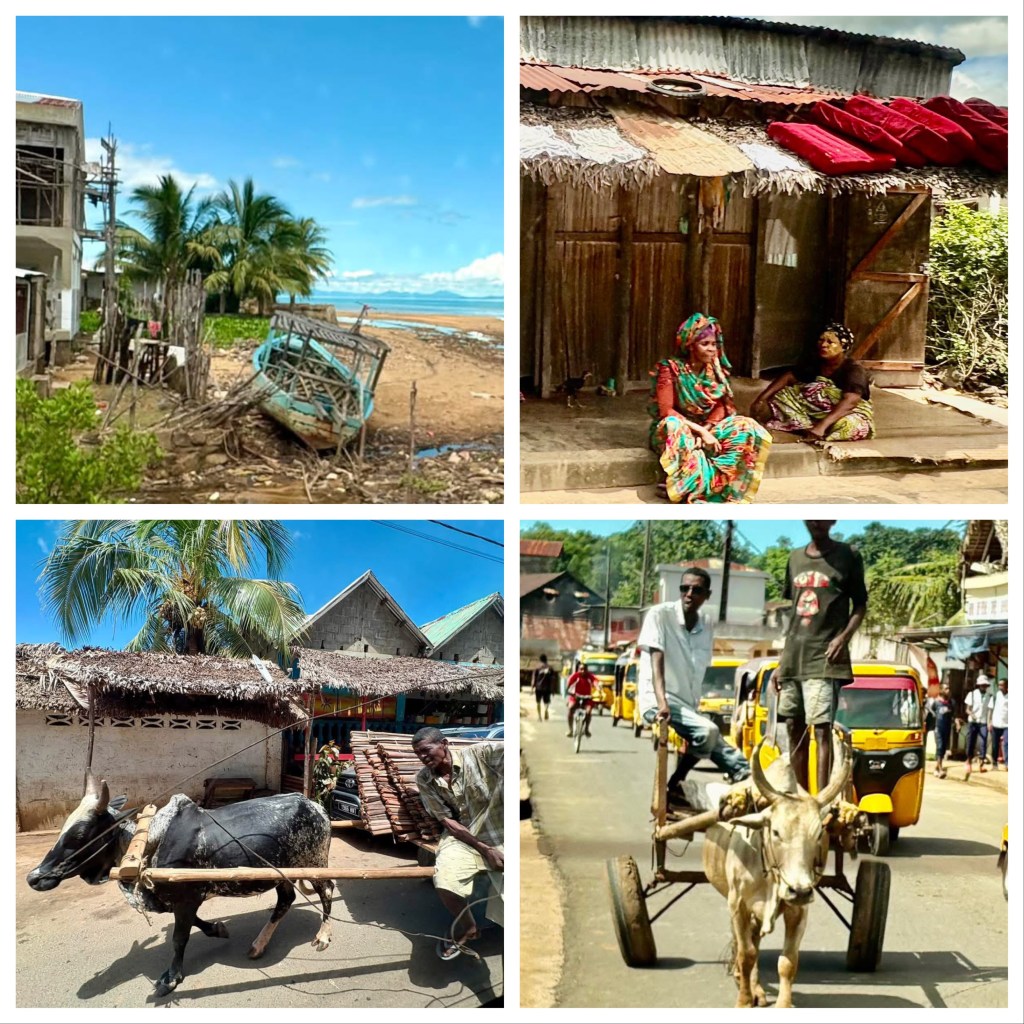
Per our guide, “wealthy people” owned ox carts and we saw several. At a central spot, we were assigned to a guide from the park. He was pretty good and walked us through a variety of plants and animals:
-We saw large plantations of Ylang Ylang trees which have flowers used for perfume. We toured a perfume distillery and its museum of old French artifacts. Later, Karla purchased some of the Ylang Ylang “oil.”
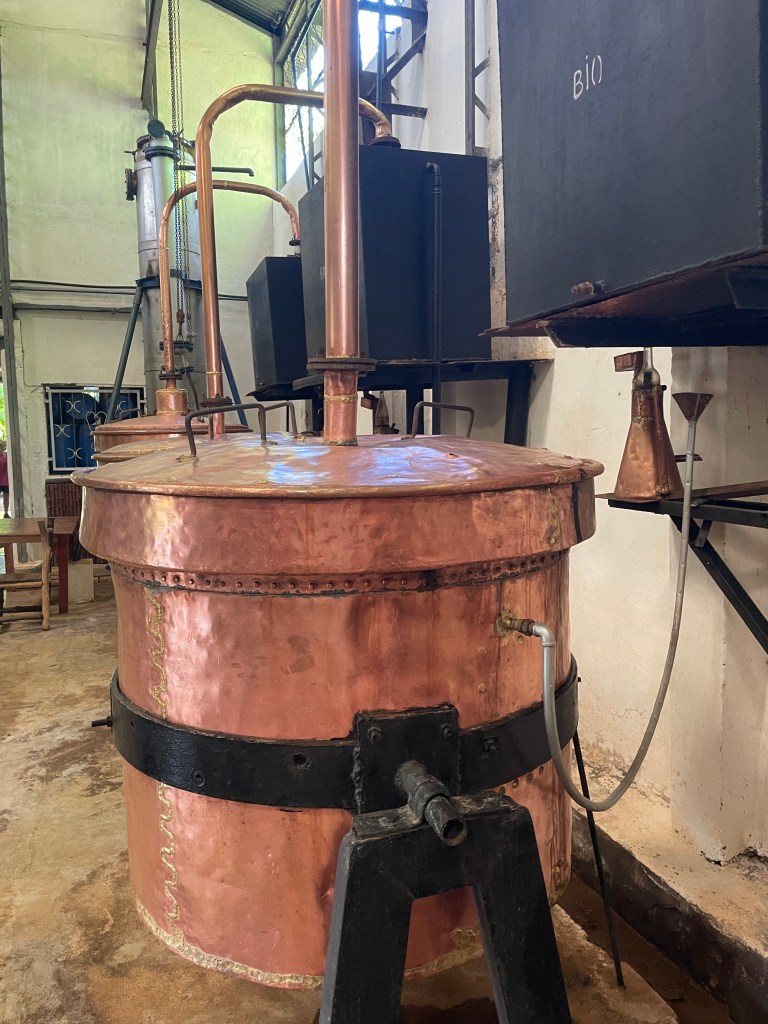
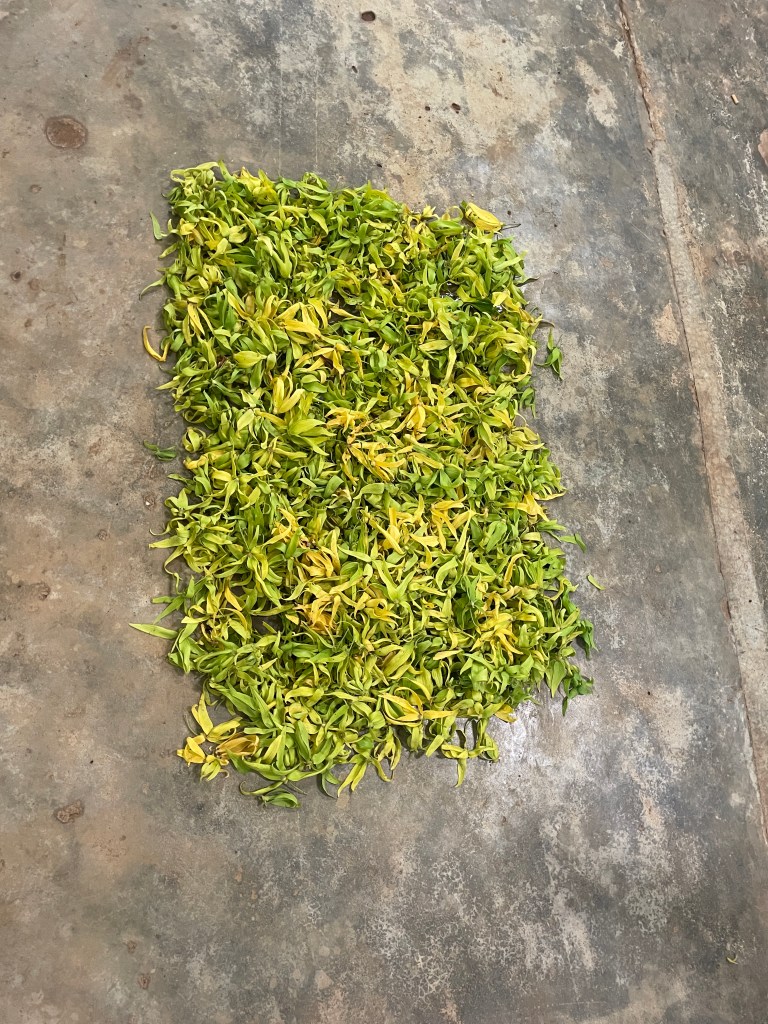
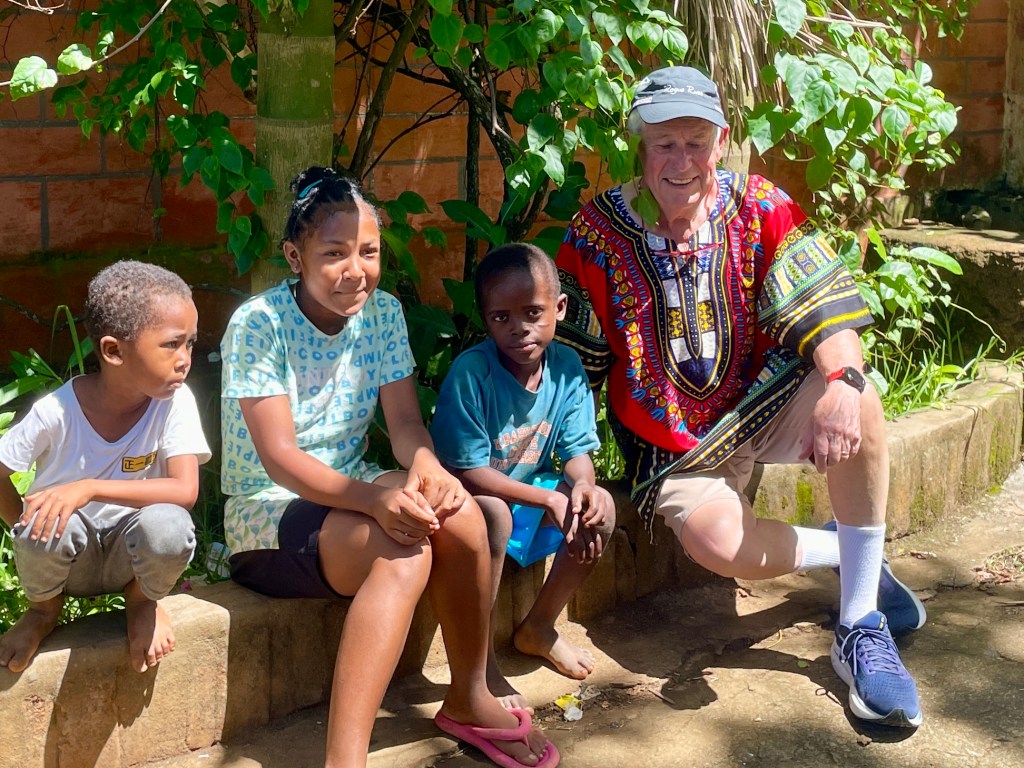
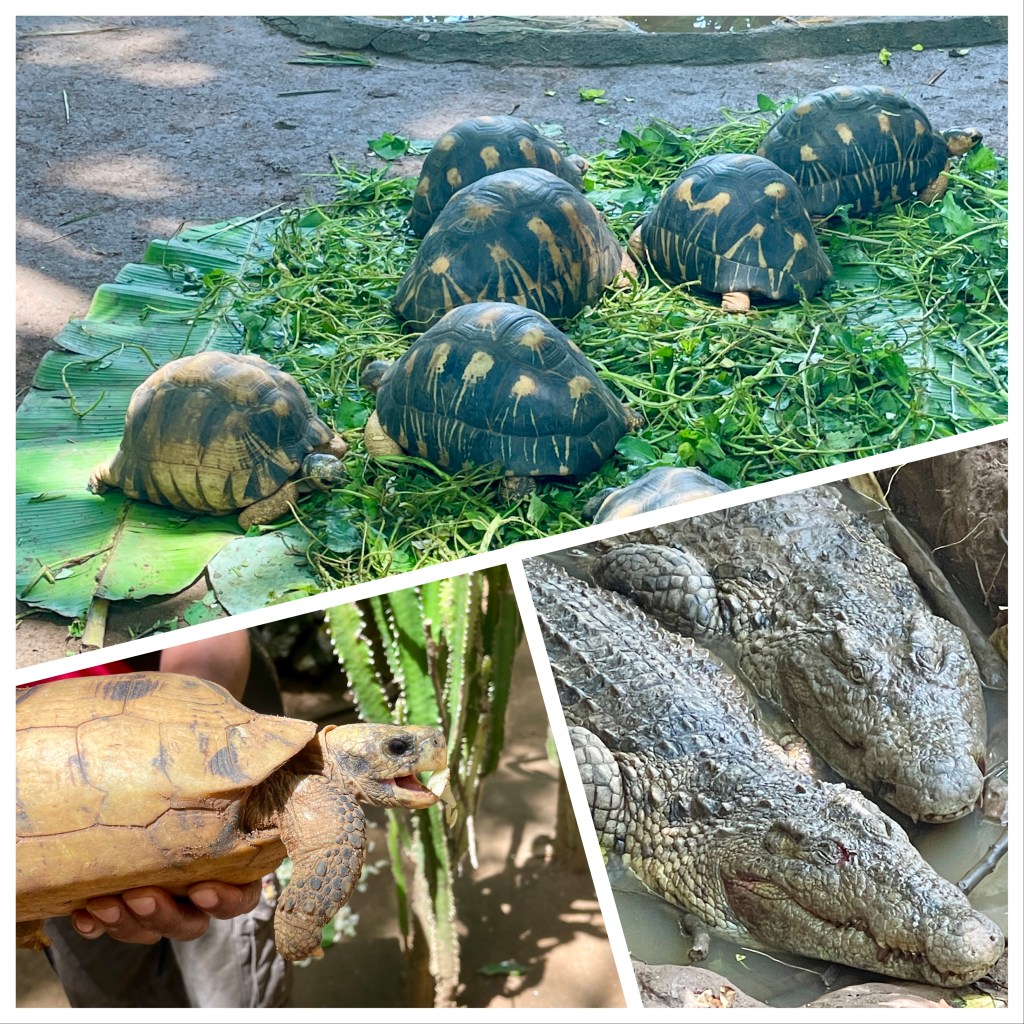
-Once we smelled better, we were taken on foot to crocs, tortoises, chameleons, and a variety of turtles, most of which lived in concrete structures, open at the top.
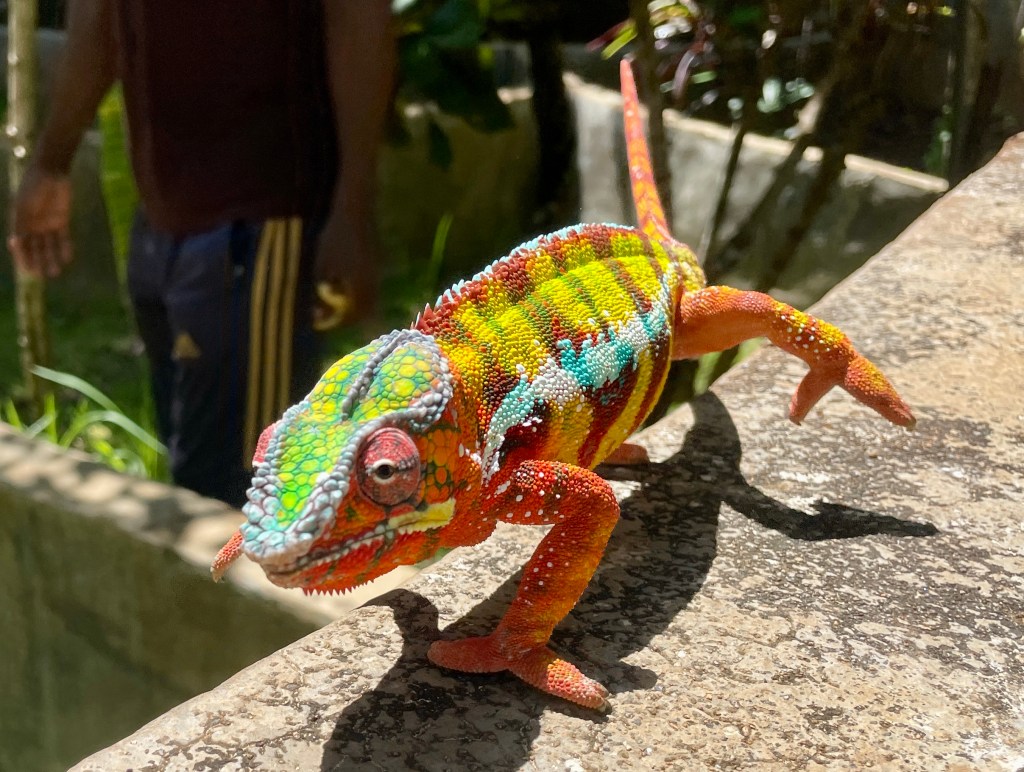
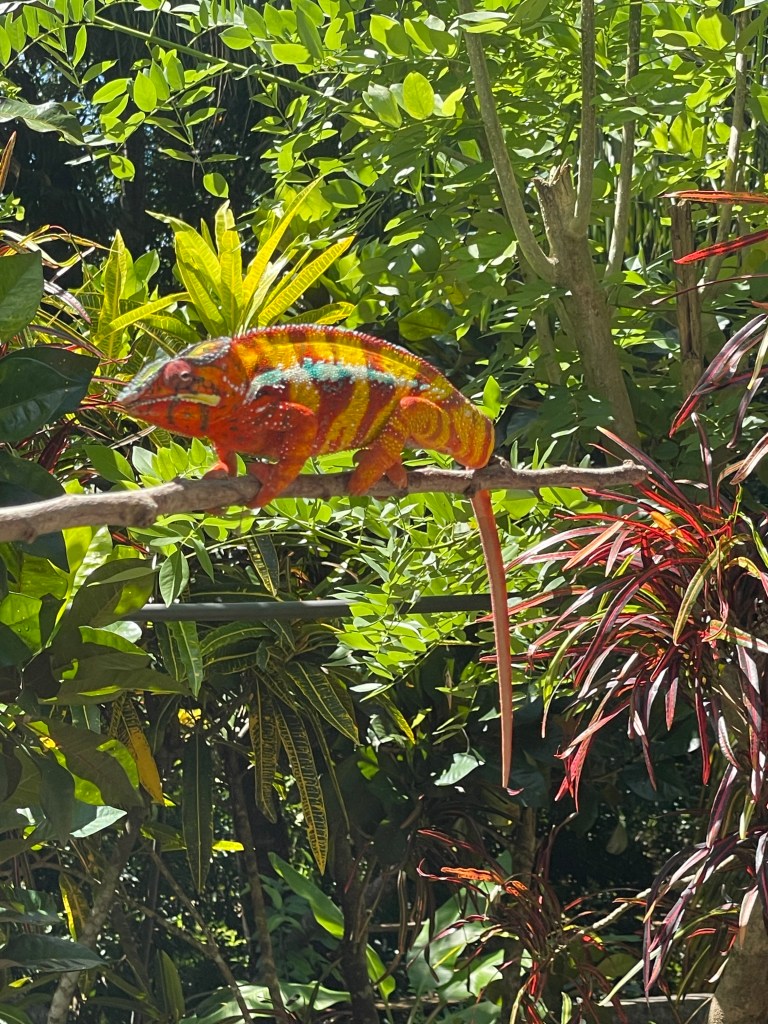
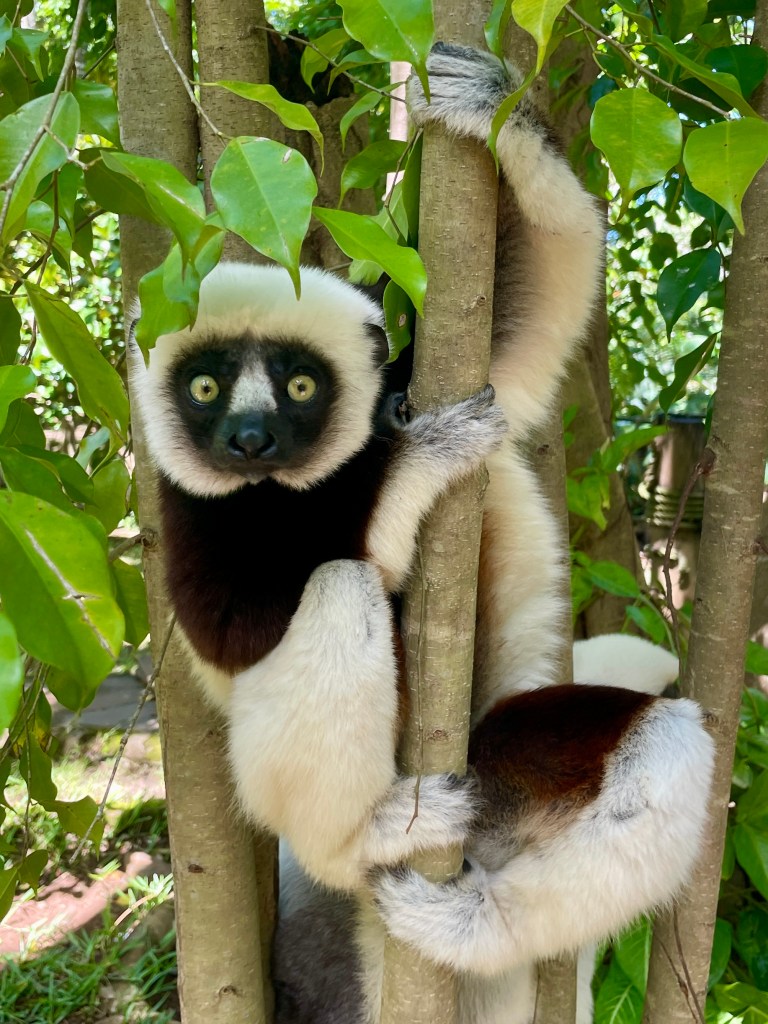
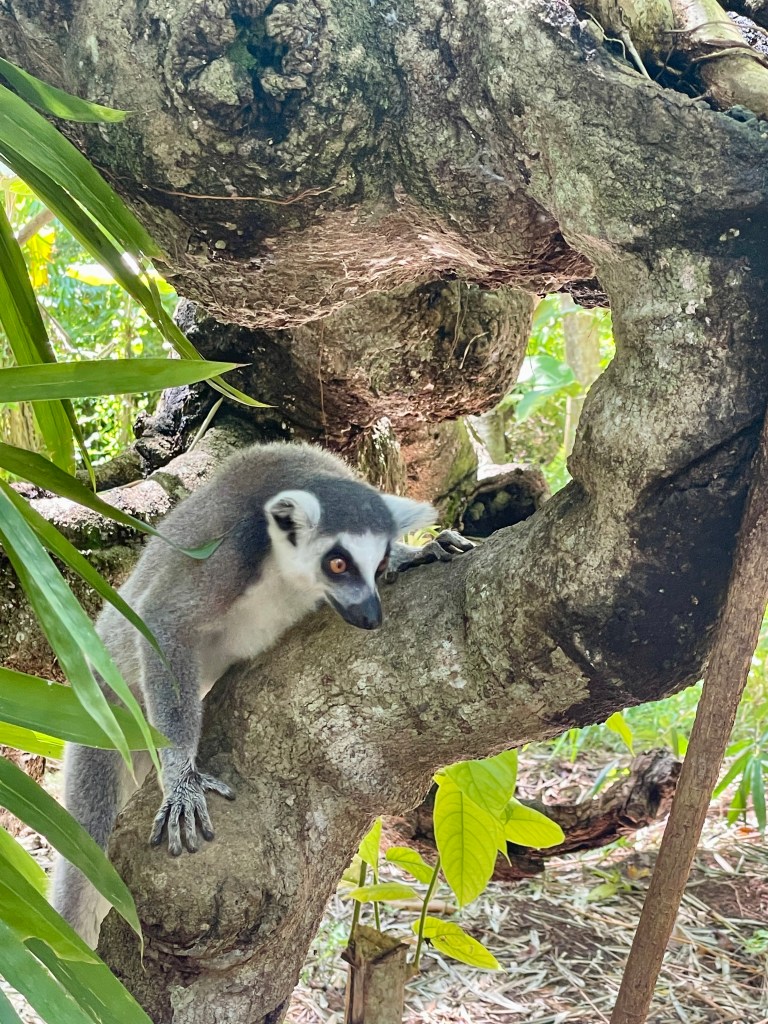
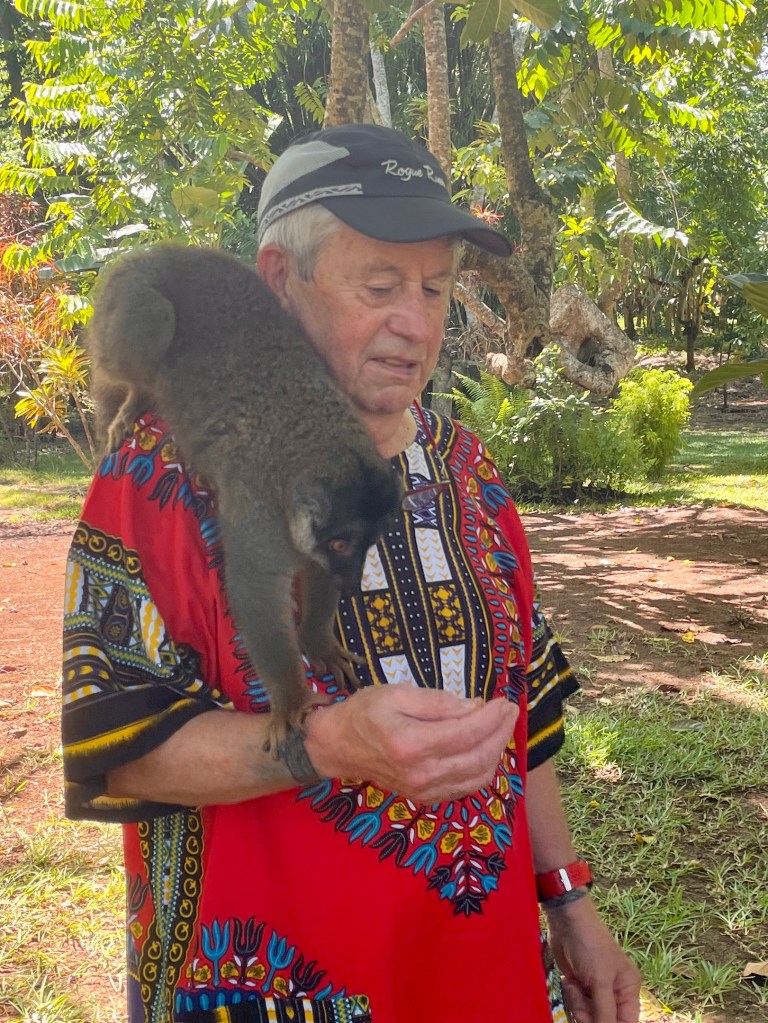
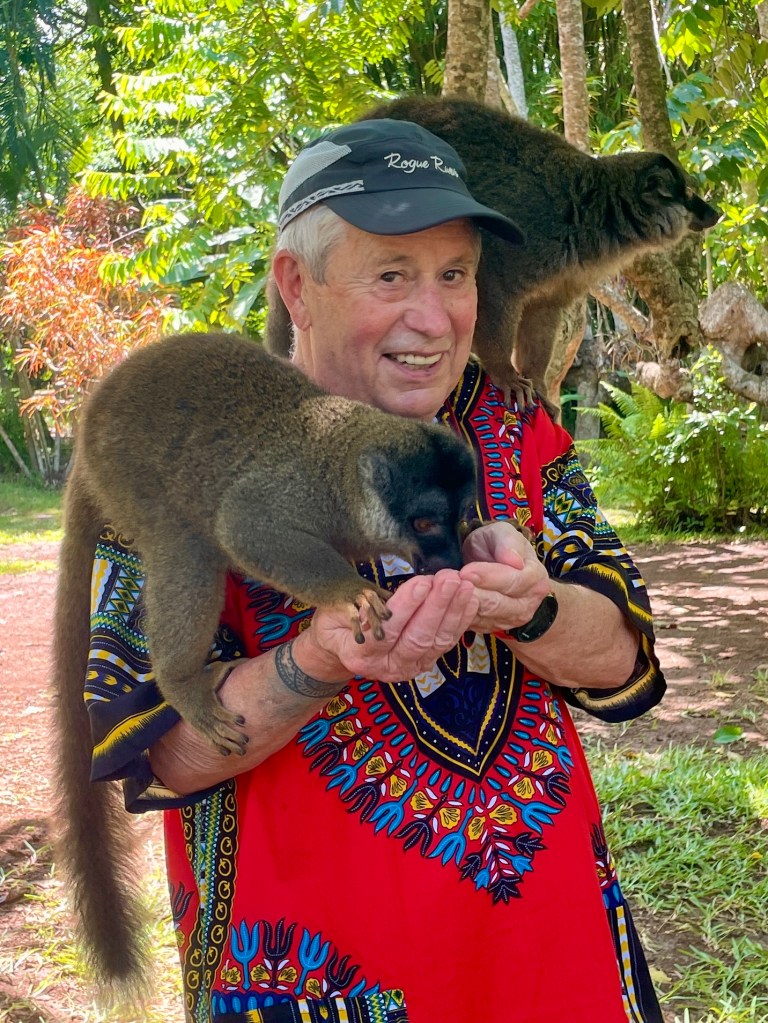
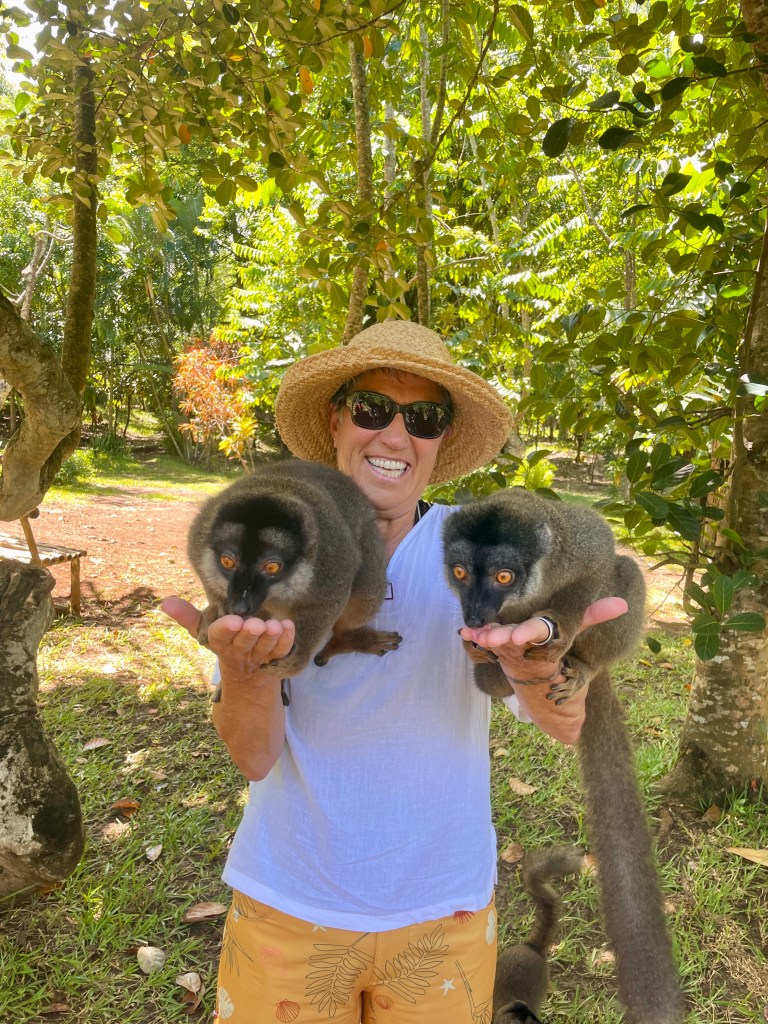
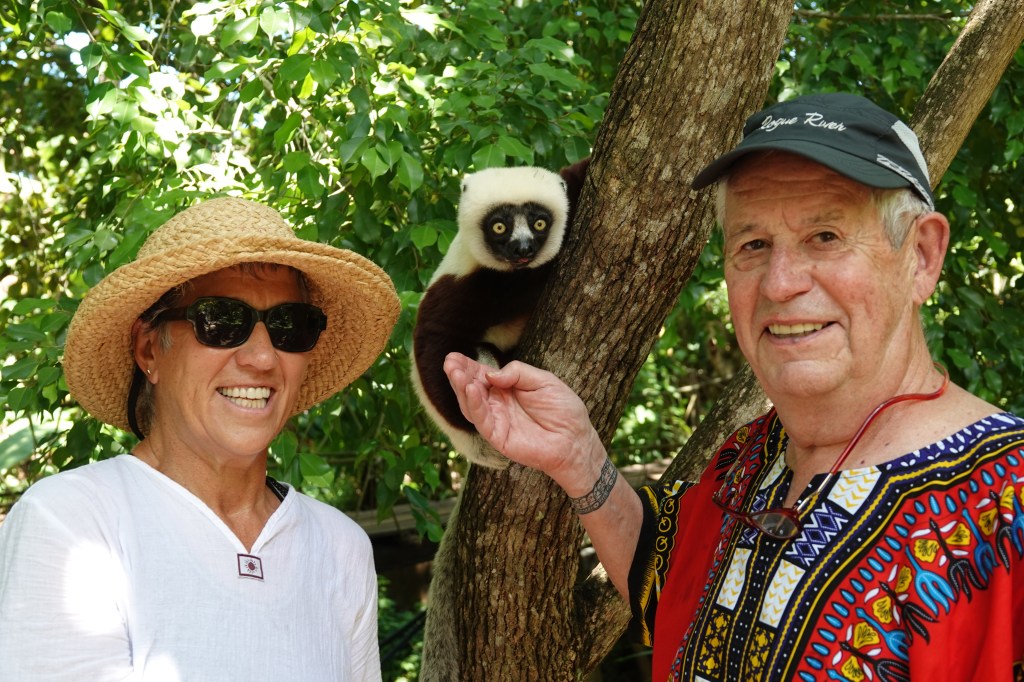
-The high point, of course, was the lemurs. Our ship naturalist, Richard, told us that the reason lemurs were so successful in Madagascar is that they did not have to compete with monkeys (more intelligent species) as there are no monkeys on the island. There are something like 95 species in Madagascar. I think we saw 5 different kinds. They tended to sit pleasantly in trees until small pieces of banana encouraged them to jump on our shoulders to eat. We liked the lemurs and they seemed to tolerate us….even like us if we had food.
The Maradoka village visit was pleasant. It was basically a drive-through with no pretense. There was something nice about that. Not a bunch of phony dances or stalls selling tourist goods; just a village. In the same area, we visited a museum (honoring the Sakalava people) and interacted with some people at craft stalls. Besides the shirts and magnets, they had lots of vanilla. Now, we do. On our way back to the ship, we had a great lunch at a Hell-Ville seafood and sea-view restaurant. Our guide then took us to a very authentic major market and another place to shop. We got some good stuff.
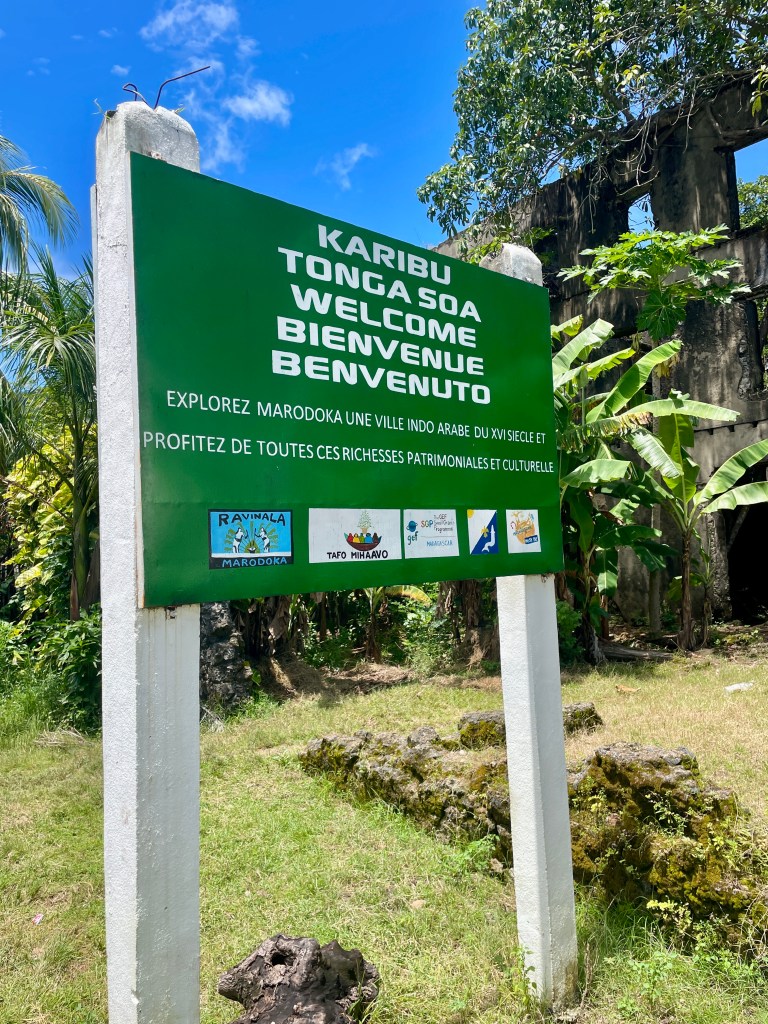
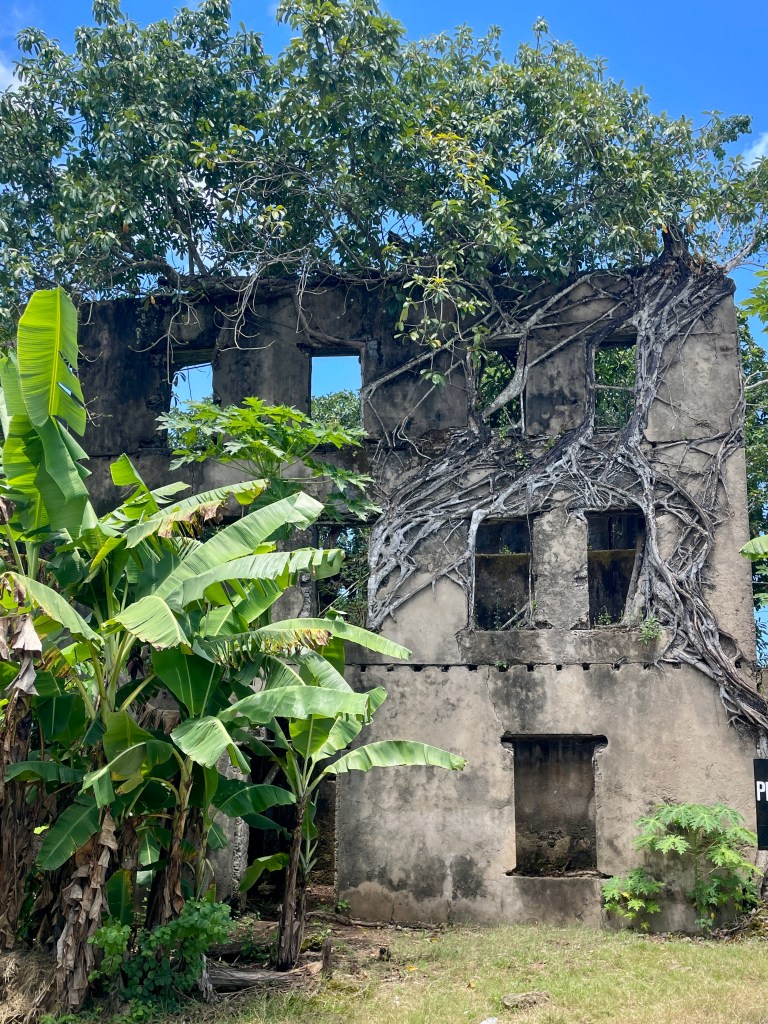
The “ghost” house in Maradoka (also the oldest). Local legend has it that the original owner (a slave trader) died with great wealth without heirs. He made a pact with the devil to protect his house and his wealth (assumed buried) and treasure-seekers have died on the property under suspicious circumstances. 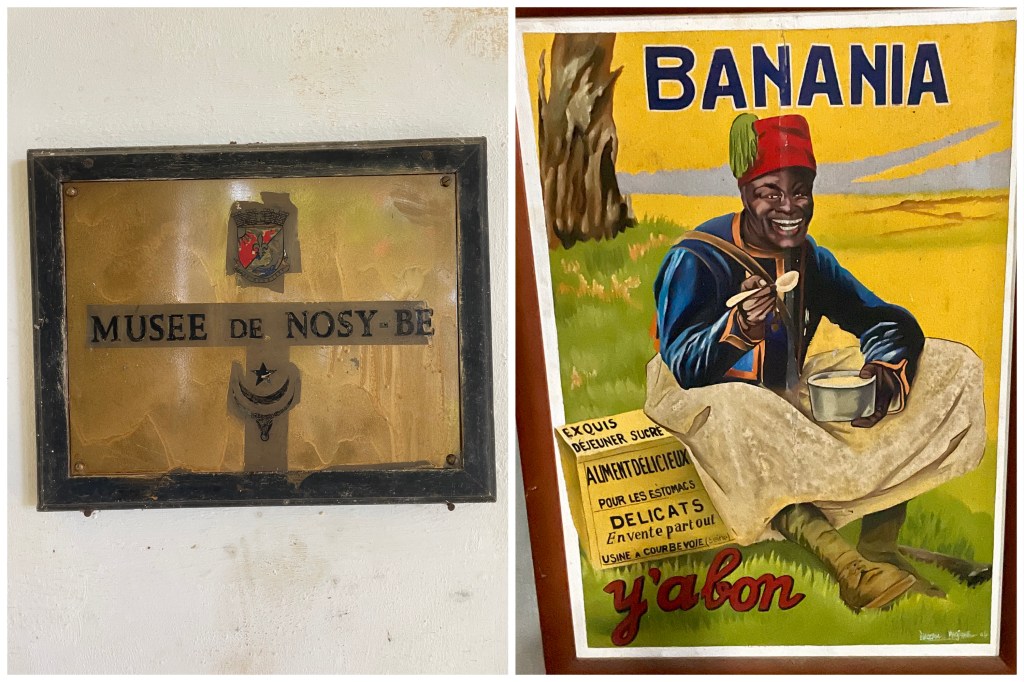
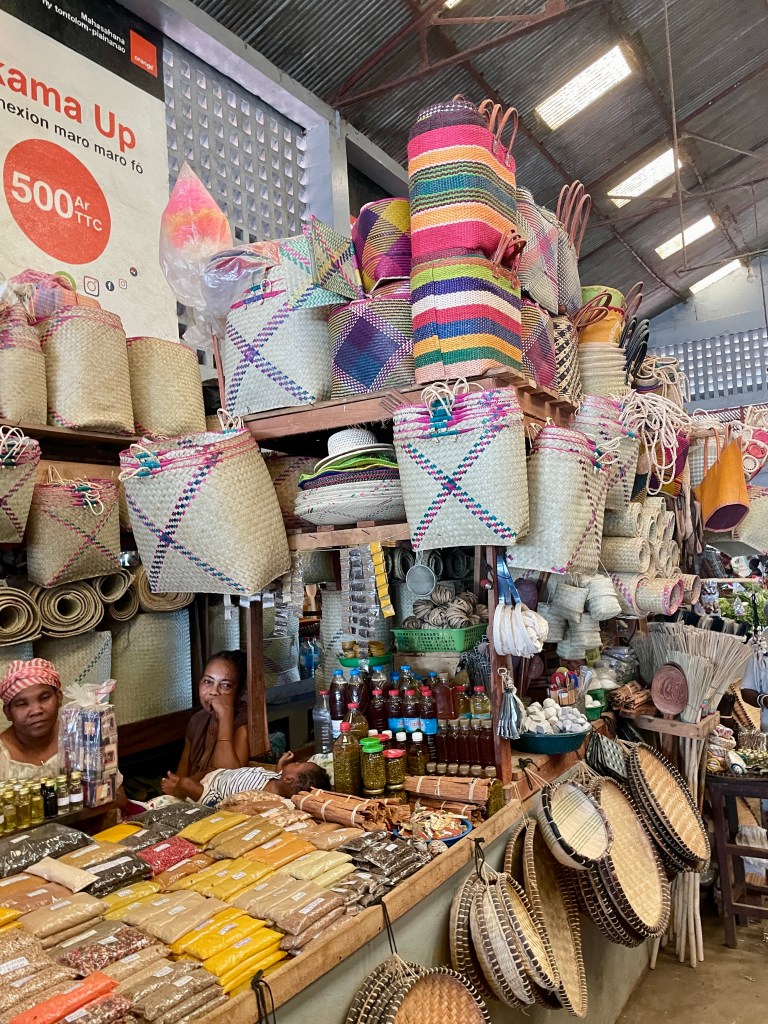
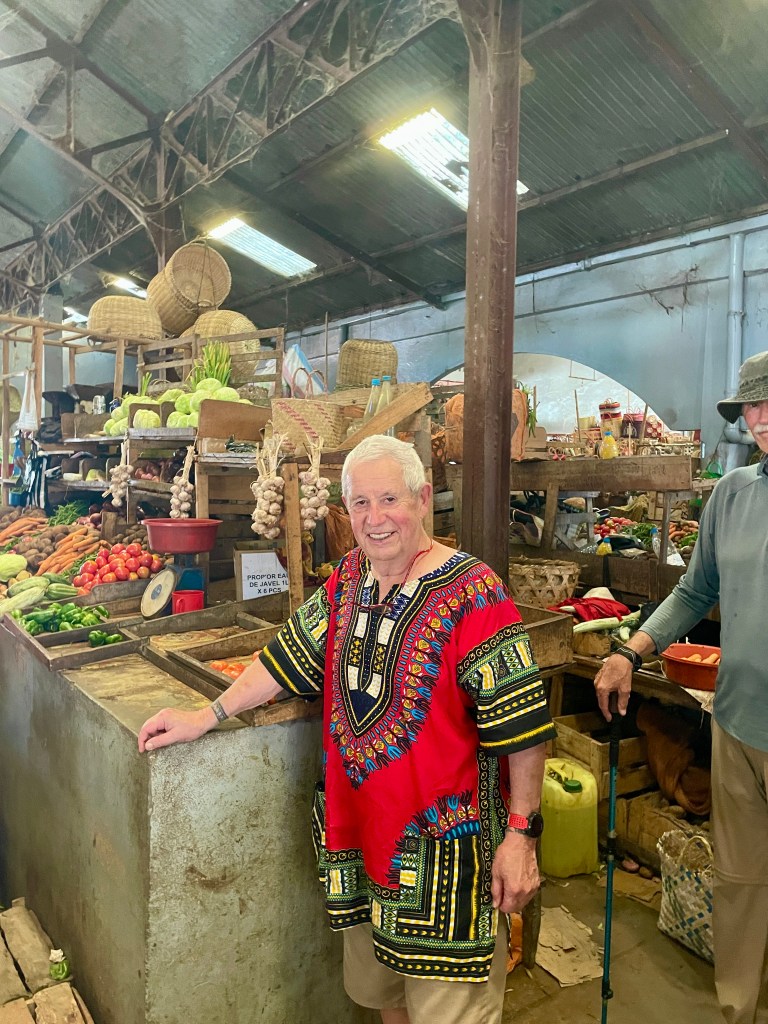
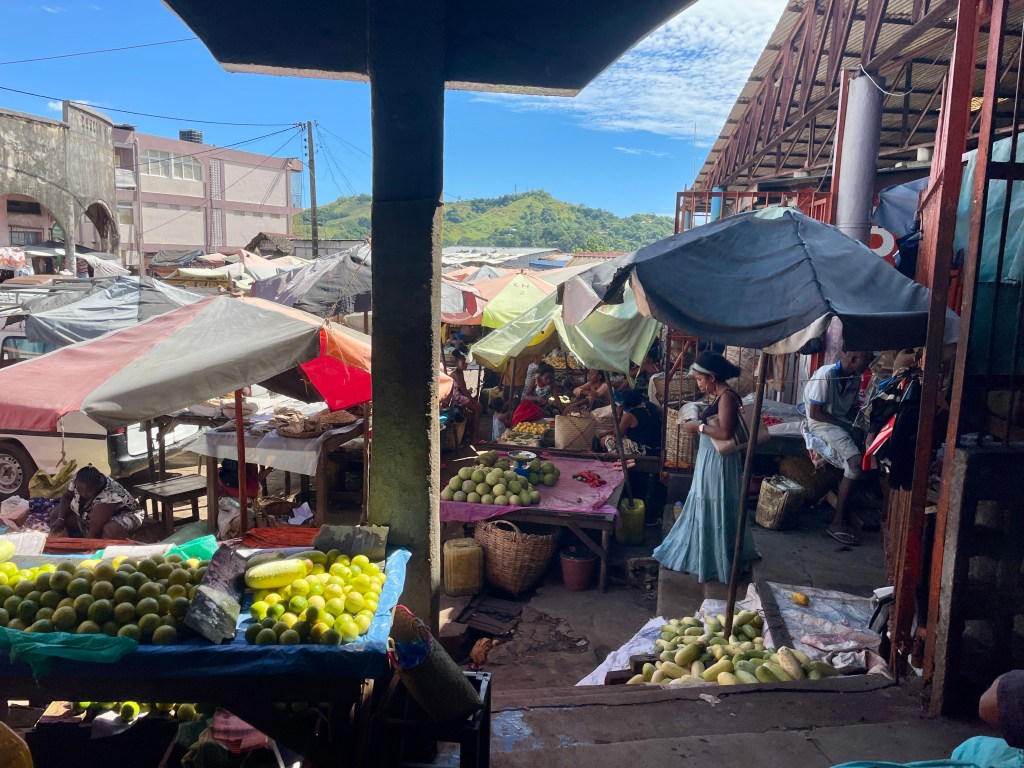
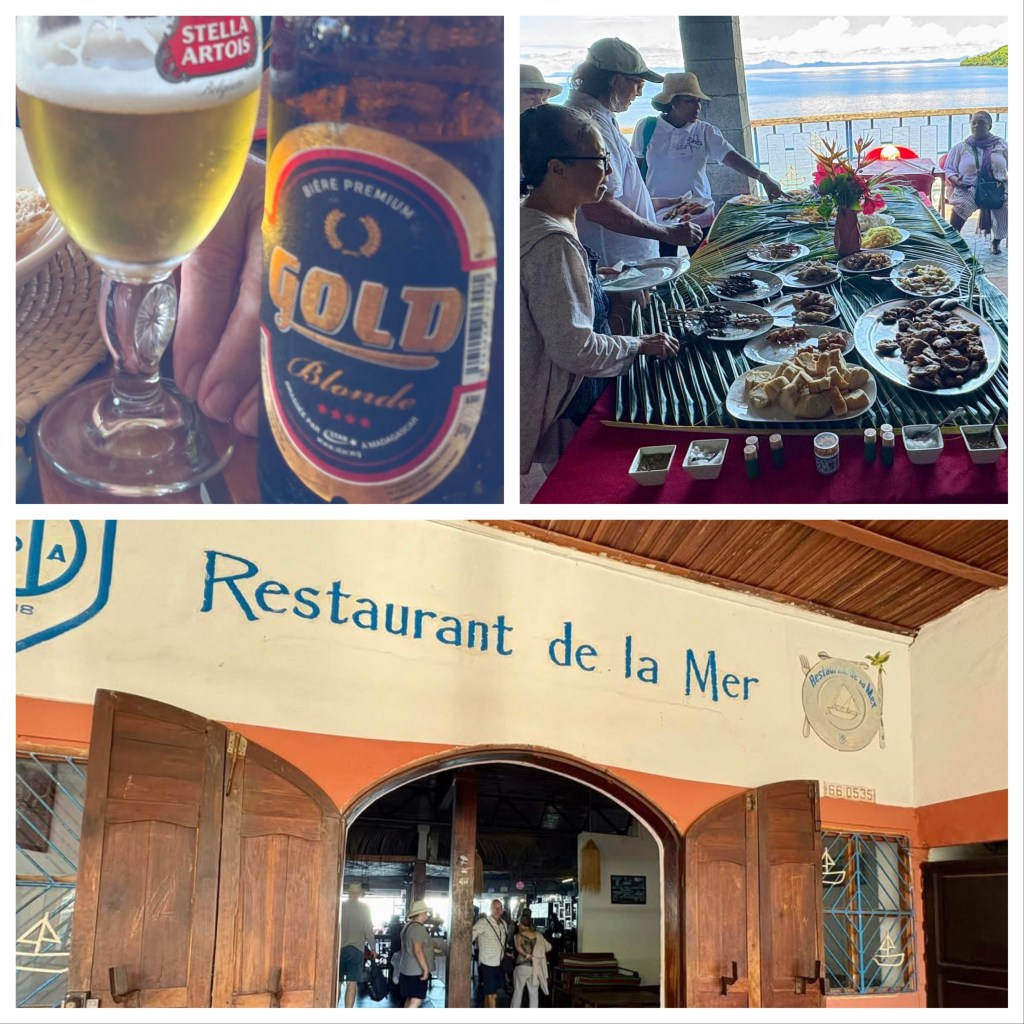
We returned to the dock with about three hours to go before the ship’s departure. It was hot and humid and a shower sounded better than more time in town. It was a very pleasant stop. But, they need more development and jobs. I read someone’s summary of Madagascar saying that the people seemed to have “no hope.” We didn’t experience that, but I could see an observer having that impression. We enjoyed the visit, but it’s likely our last, given its location. It’s about 10, 116 flight miles from The Dalles.
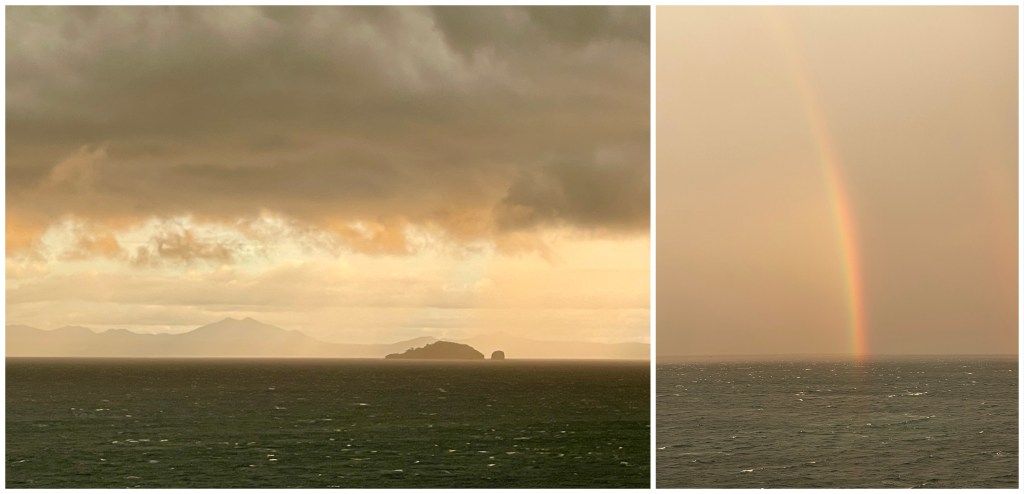
As we were departing Madagascar, storm clouds gathered and the ensuing thunder and lightning continued into the night. -
Follow up thoughts, before Madagascar
March 23
A few bits and pieces before Madagascar.
As we were preparing to depart from Mombasa, Karla was standing on the dock watching a number of Masai dancers perform. You’ll see pictures. She struck up a conversation with a policeman who was providing dock security. He asked her how many children she has and was interested in pictures. He was interested in showing pictures of his children, as well. Then he asked how many cattle she had. He was surprised when she admitted to having none. He asked how she could afford this cruise if she had no cattle. He was pleased to tell her that he had 12 and was rich. Perhaps we should rethink how we get our grass cut.
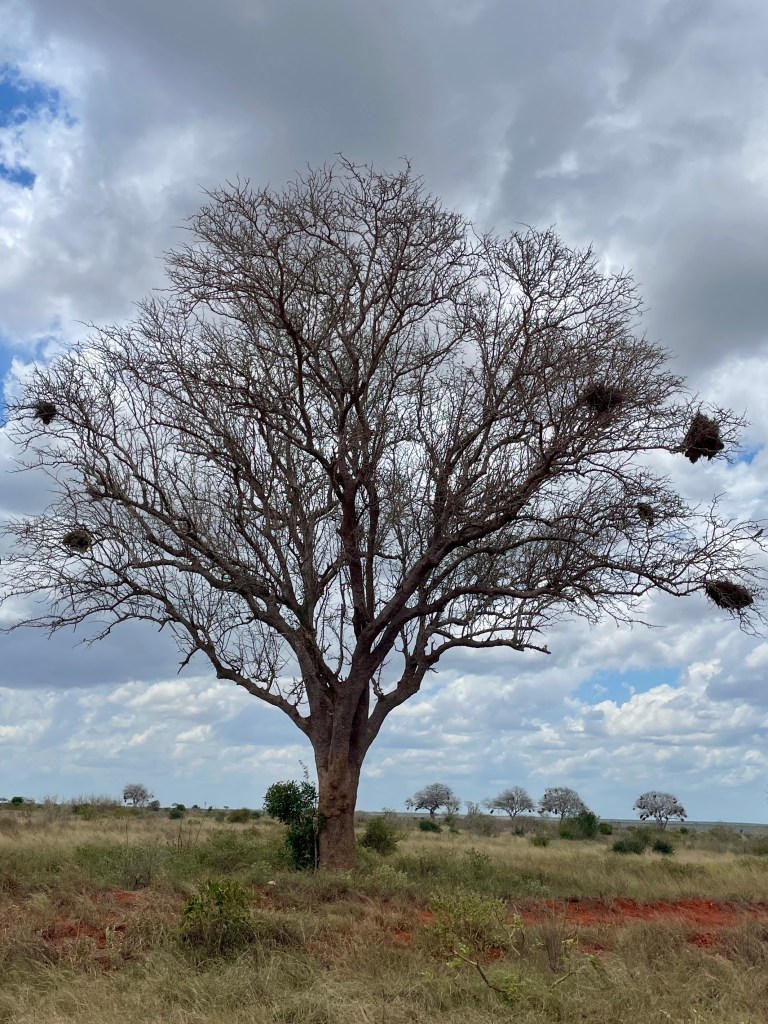
On our safari, we saw lots of black “balls” of vegetation. They looked like mistletoe in Oregon. We were informed that they were birds nests. The male birds construct the nests, hoping to attract a female. When a female comes by (perhaps a special female) she will inspect the nest. If it …and the male….are acceptable, she will stay in their new home. If she doesn’t like it, she will peck at the spot where it’s attached to the branch and knock it to the ground. Think about the young man who builds a new home for his fiance. She comes to see it and burns it down. That would probably be an indication that the relationship won’t work.
Poachers are a problem. With the price of elephant tusks and rhino horns, a good poacher could make a lifetime income from killing an elephant or rhino and extracting the tusks or horns. The game police used to be alerted by circling vultures, but the poachers adapted; they killed the vultures in large numbers. When the police were alerted to poachers by the sound of gunfire, the poachers adapted. Now they use tranquilizer darts and then saw off the valuable pieces. This would surely be a surprise to the animal when it recovers from the tranquilizer, but it sounds like they bleed to death before that happens. Somehow, this seems more offensive when we’re talking about “majestic” animals. There is lots of animal killing in the US that we worry less about.
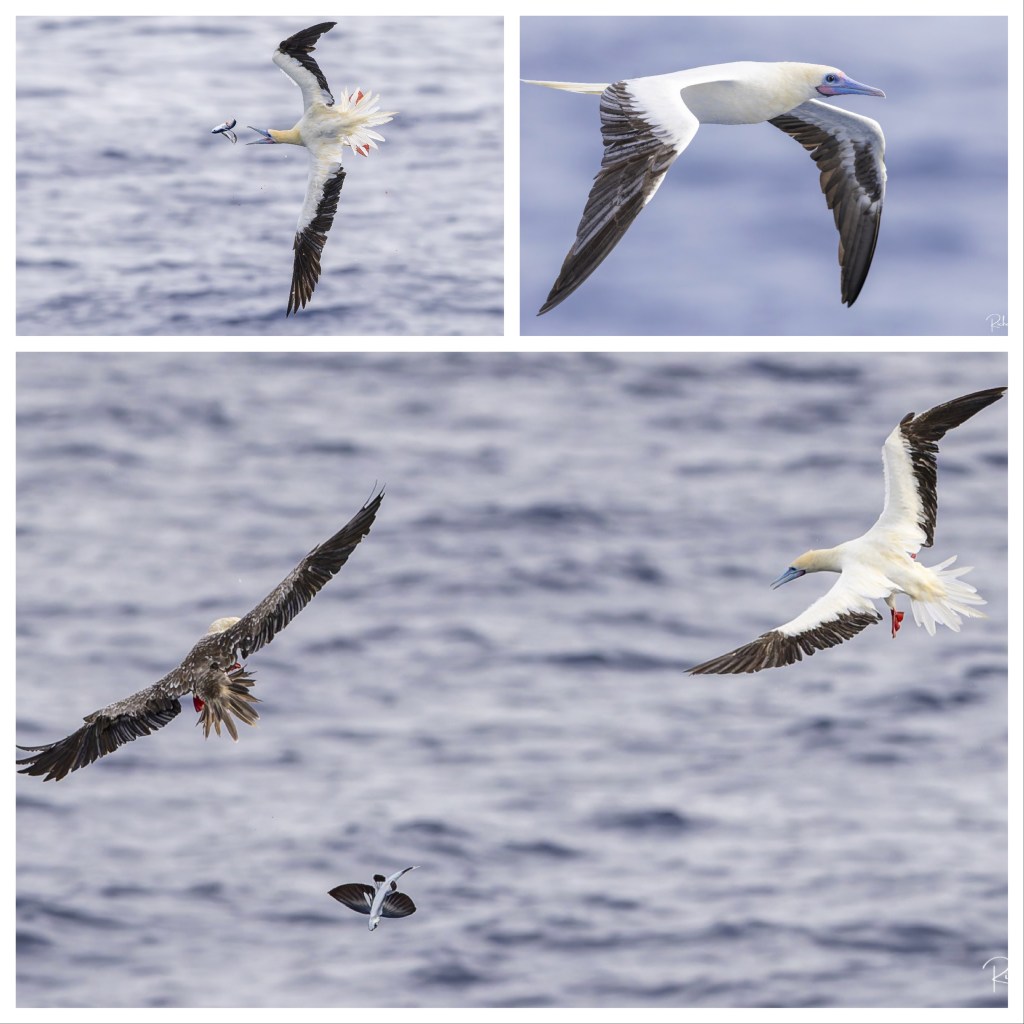
Our favorite lecturer on ship is a wildlife biologist. He holds court in the morning just to talk about wildlife sightings the previous day. We haven’t seen much but he’s entertaining. He “guarantees” us whales as we round South Africa and again as we near England. He has a camera that takes 30 photos per second and gets some good shots. He spends most of his free time deleting. Our major wildlife attraction is red footed boobies circling the front of the ship and then diving for flying fish. The boobies swallow the fish head first to avoid problems with fins and swallow rapidly to keep another booby from stealing their prey. Some of his photos are below.
.
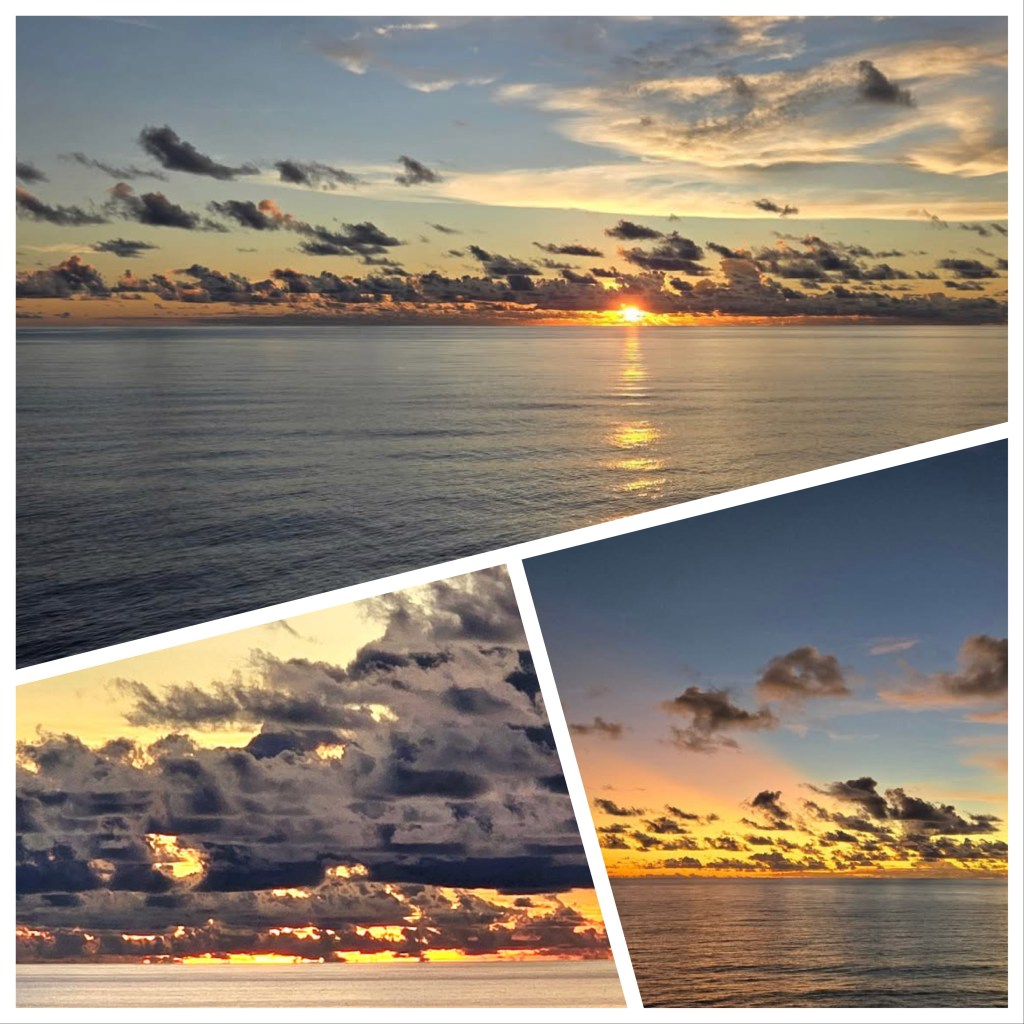
Sunsets over the Indian Ocean. -
Mombasa, Kenya
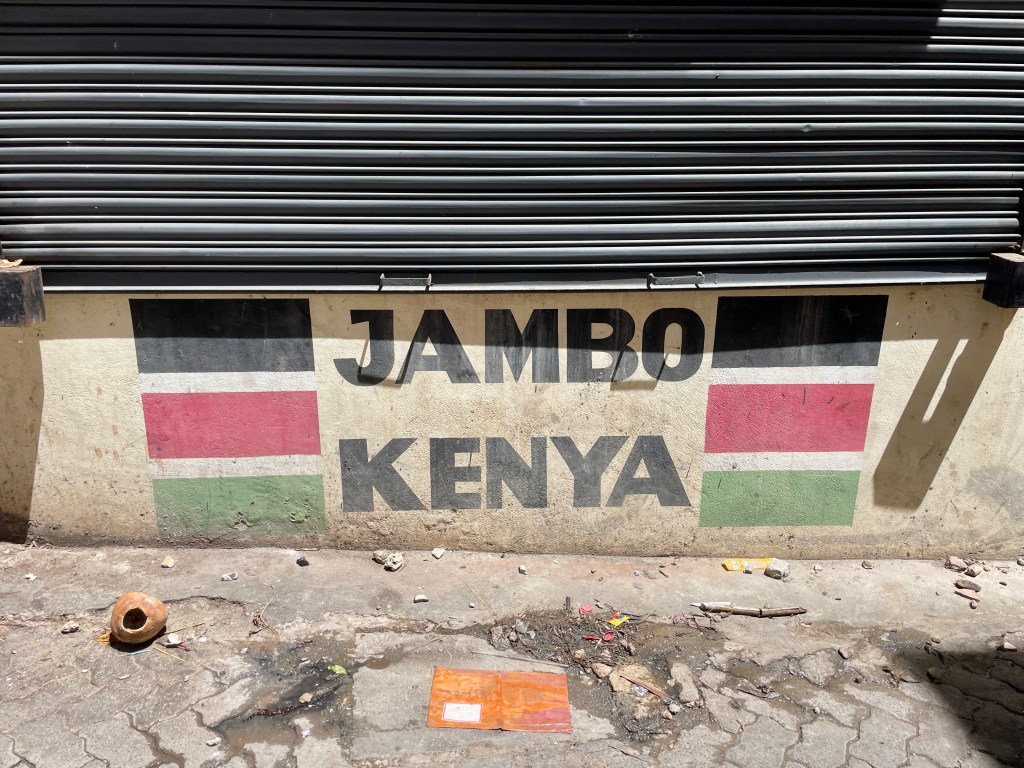
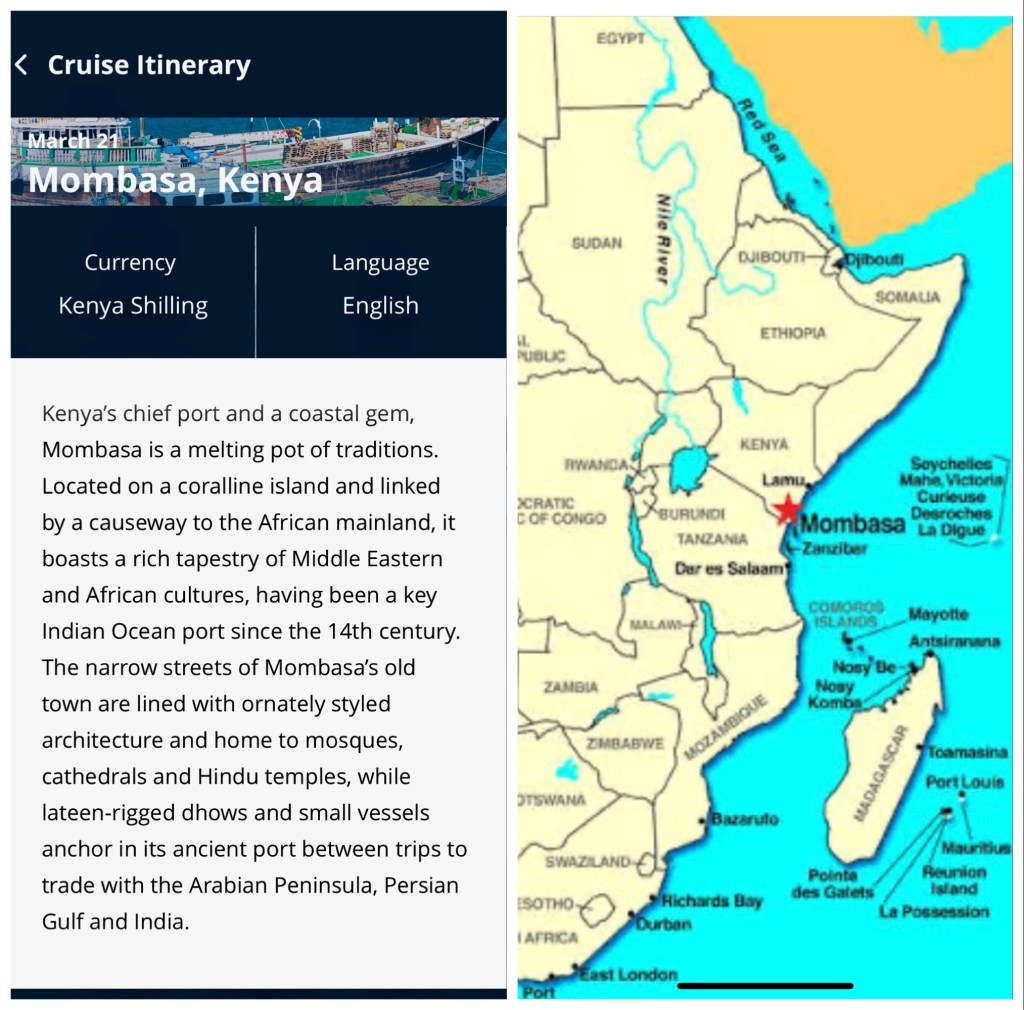
(9,316 miles from The Dalles, Oregon.)
March 19-21
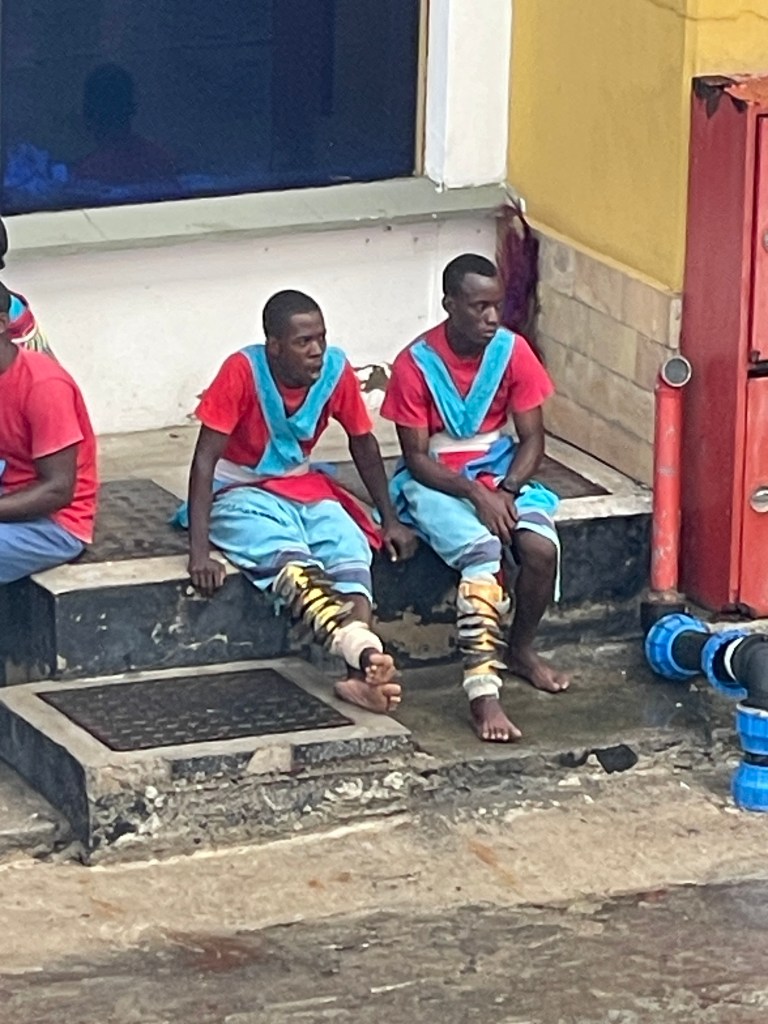
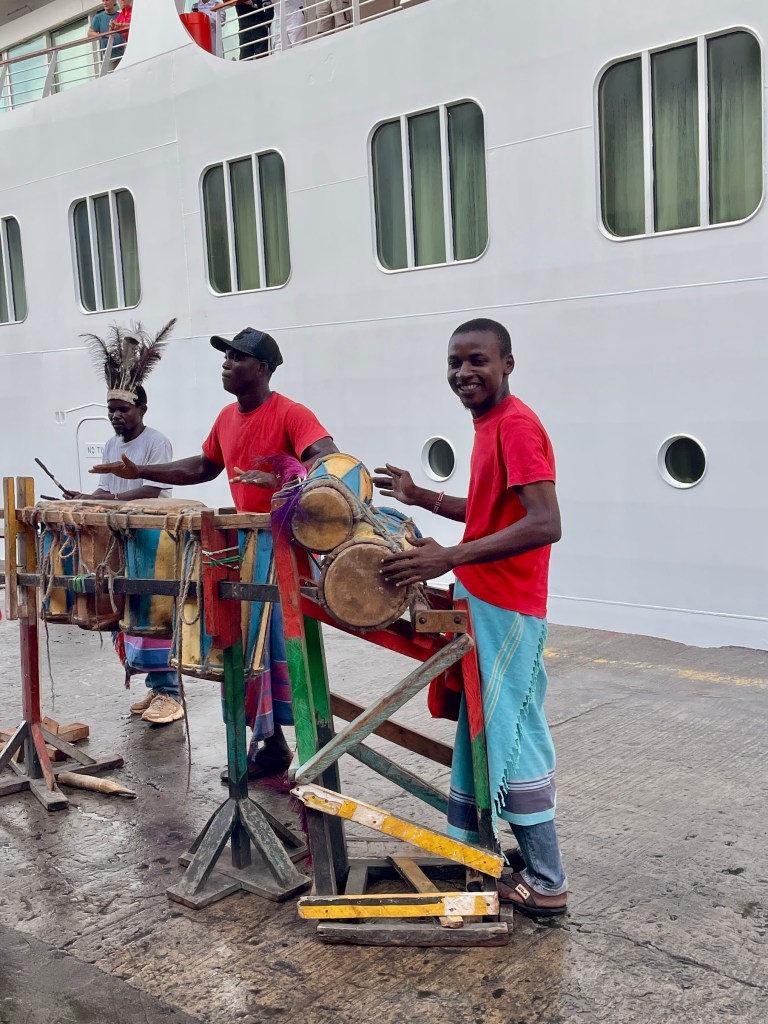
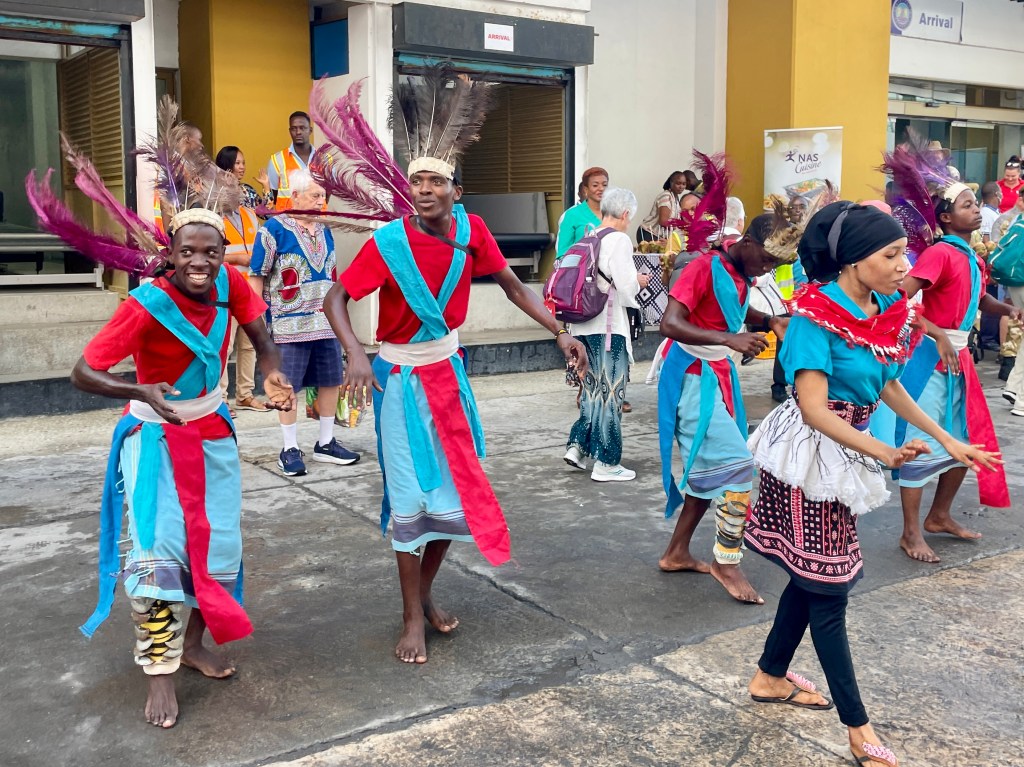
This group met the ship with music and dancing A great 3 days!
Kenya is a complicated place. It has a population of around 50 million with 5 ethnic groups each representing 10 to 17 percent of the population. There are 42 different tribes, each with its own language. Swahili is the national language, so tribal members speak their own language plus Swahili and English, which is taught in schools.
The region was populated by hunter-gatherers in the early years and then influenced by a series of trading powers. The Swahili coast, including what is now Kenya as well as some of Somalia, became prime trading territory in the first century for items like ivory, rhino tusks, palm oil, cowry shells and tortoise shells. Mombasa was the key port. Pre-European control was exercised by the Bantus, and Arabs before Islamic powers took over in the 7th century. Zheng He landed there with his Chinese fleet. Most of the early powers were focused on trade. When the Portuguese arrived, following Vasco de Gama’s discovery of the area, they were after tribute and control. In the 16th century they “sacked” the area and built Fort Jesus to defend their territory and to market slaves. The Omanis took over from the Portuguese and once again asserted Arab influence. In the late 19th century, The “more civilized” Europeans held a conference on how to split Africa among European powers. They set rules for the “scramble.” The Brits, French, Belgians,Germans, Spanish, Italians and Portuguese all got a share. The British controlled Kenya until independence in 1963.
Today, the country reflects the tribal bases as well as the complicated impacts of foreign powers. The country is growing relatively rapidly,(5-6 percent per year) but their is unemployment of 35-40 percent. The median age is 21 and 40 percent of Kenyans are under 15. Exports include coffee, tea, and flowers. And tourism…lots related to animals…is major. Mombasa, our stop, has about 2 million people.
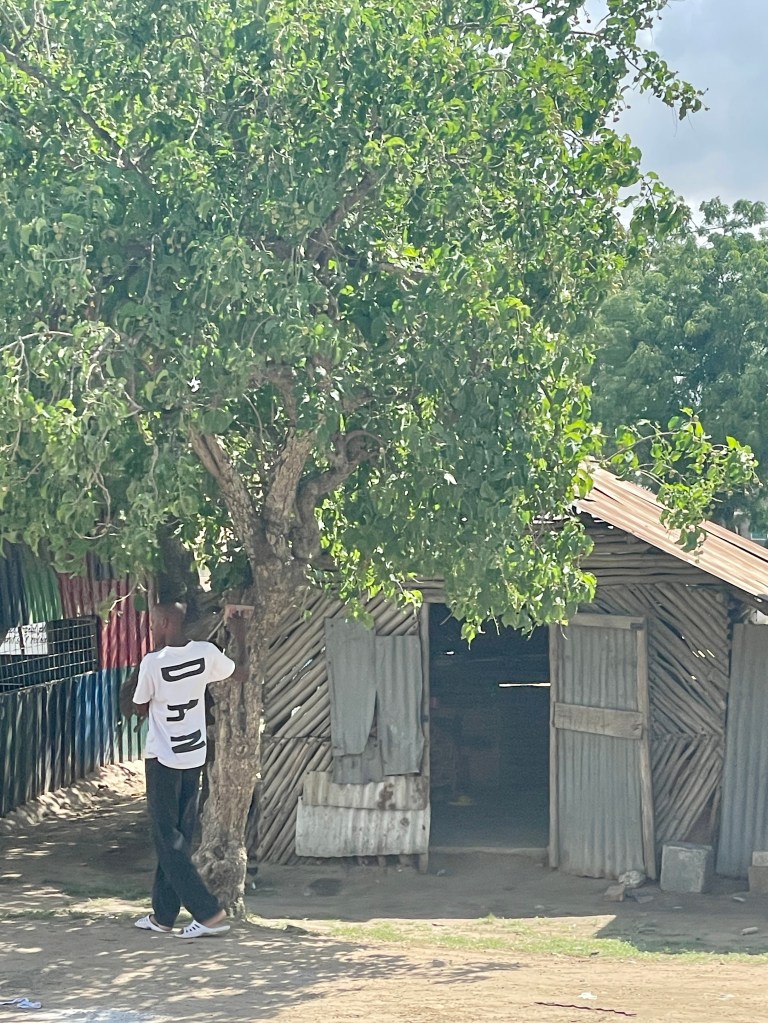
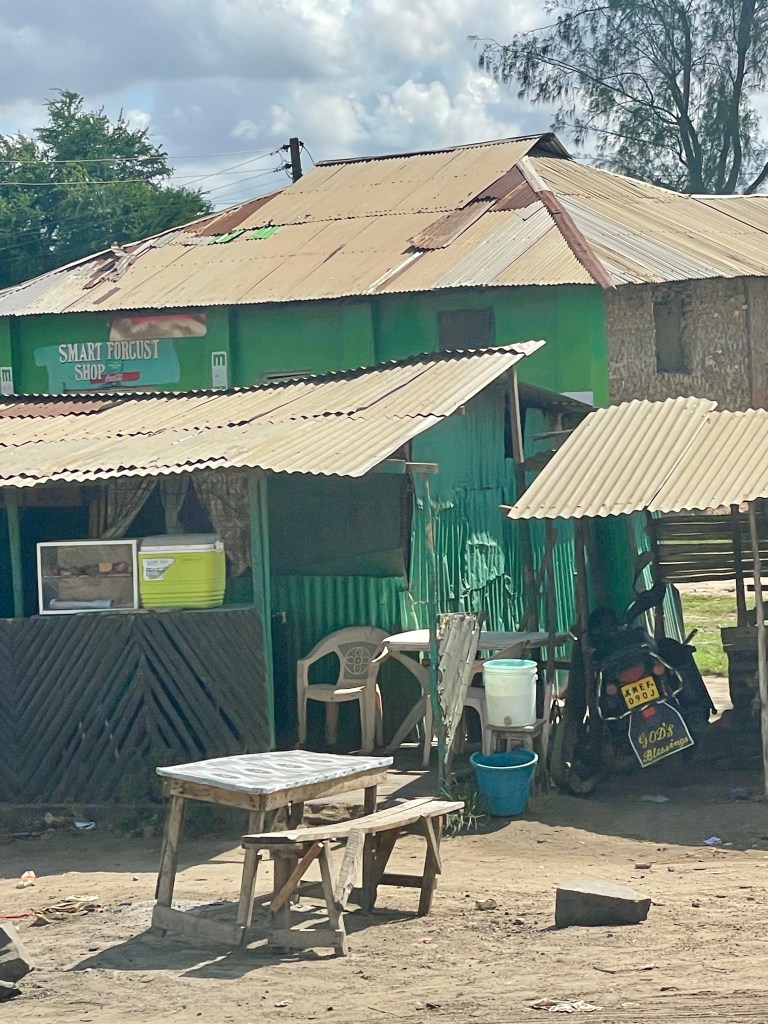
Seen on the drive to East Tsavo Game Park 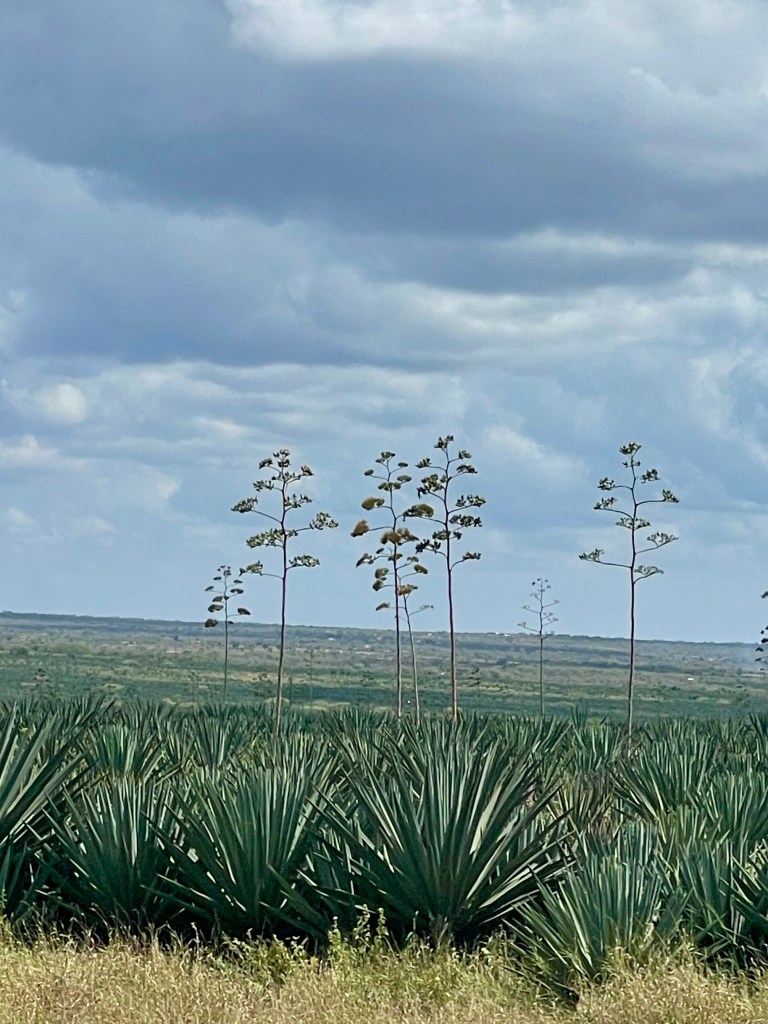
Sisal plant (agave relative), originally from Mexico; Kenya is a major global provider of sisal fiber that is used for ropes and twine 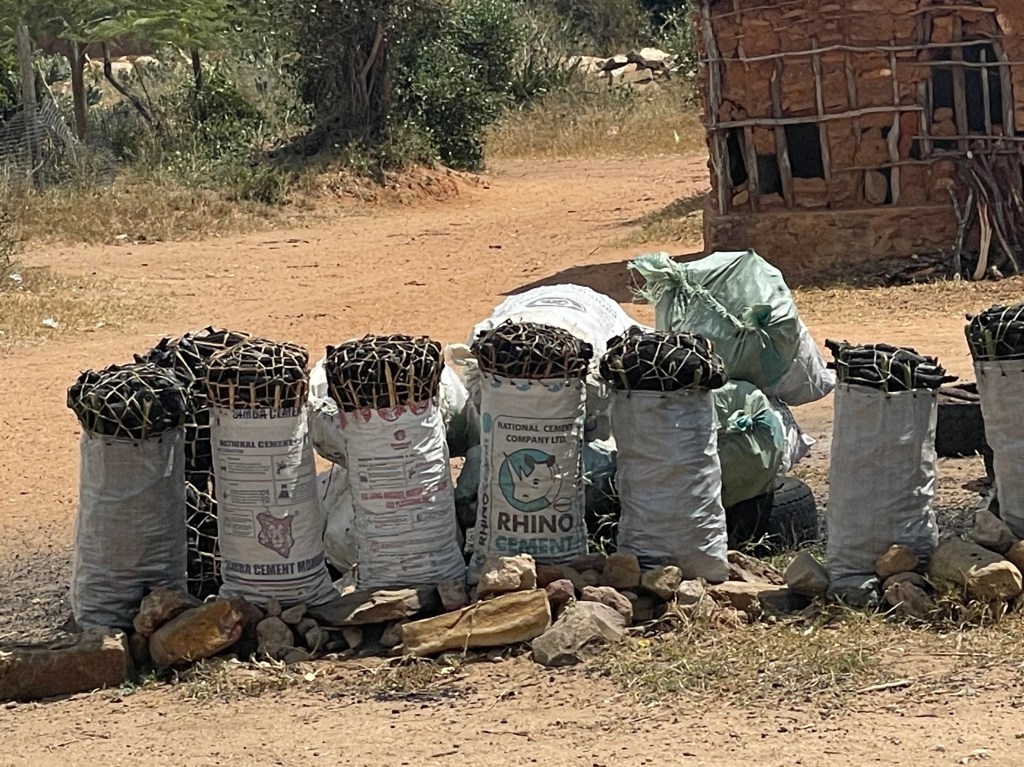
Charcoal made by villagers from cut trees and being sold roadside. 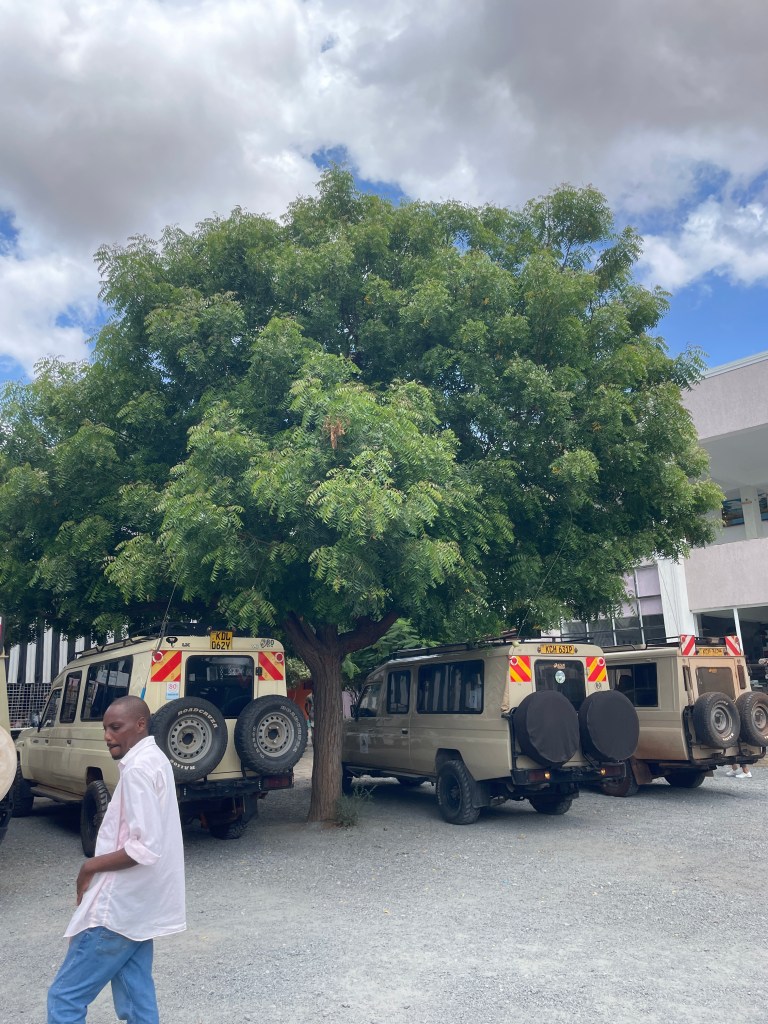
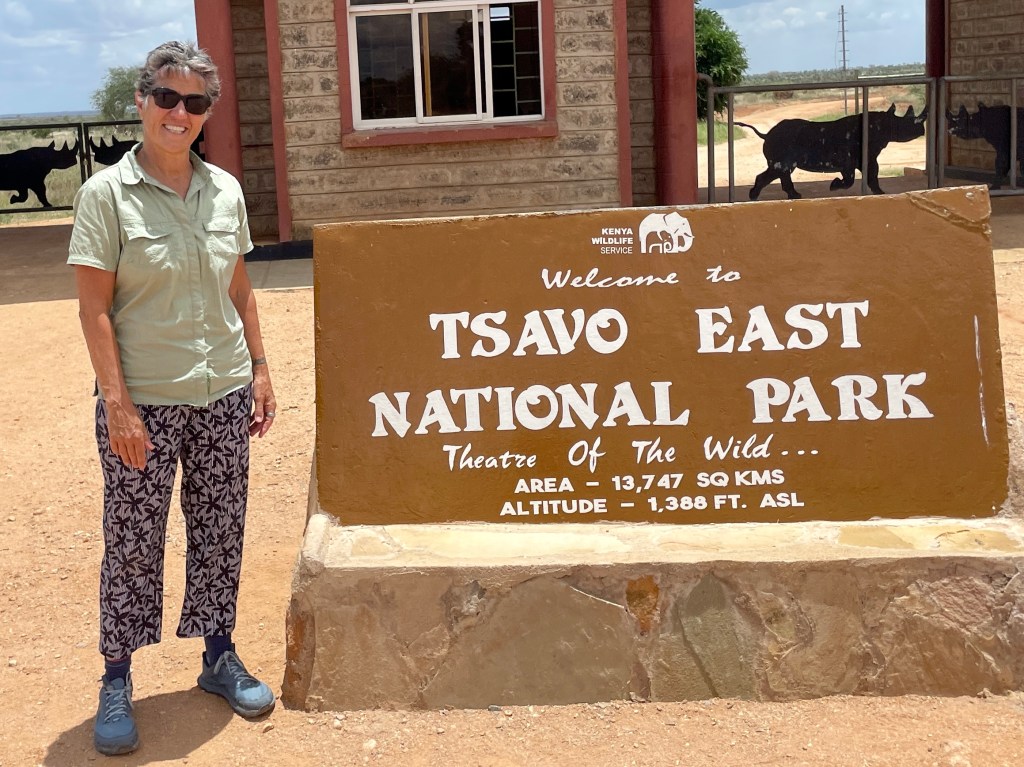
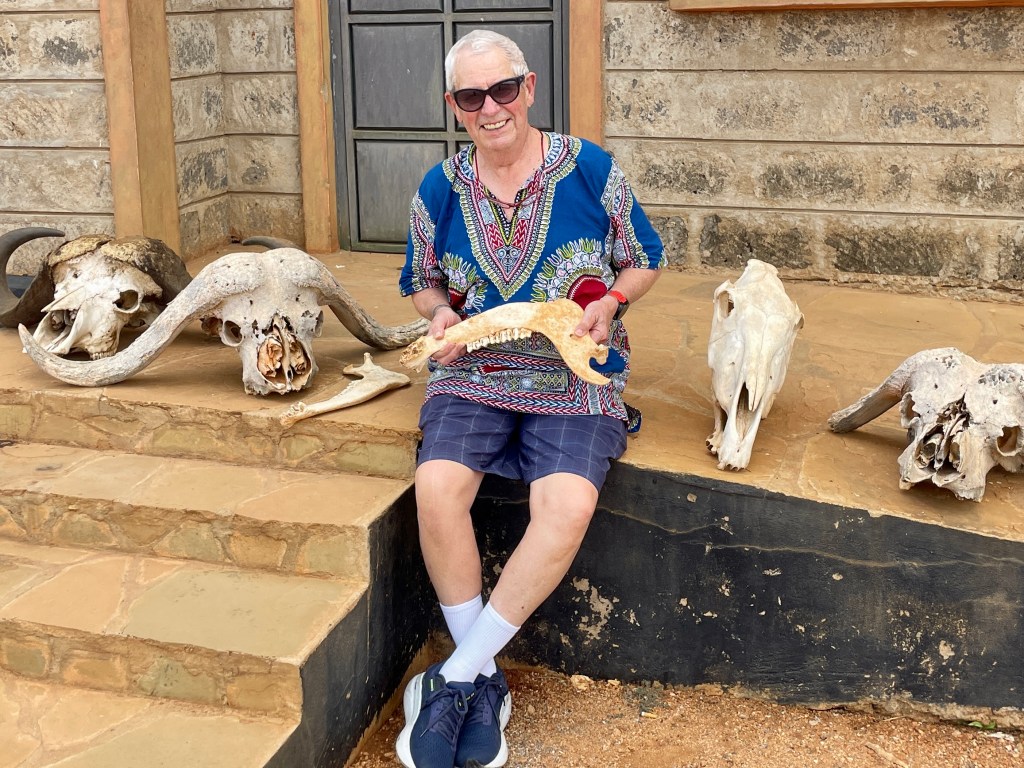
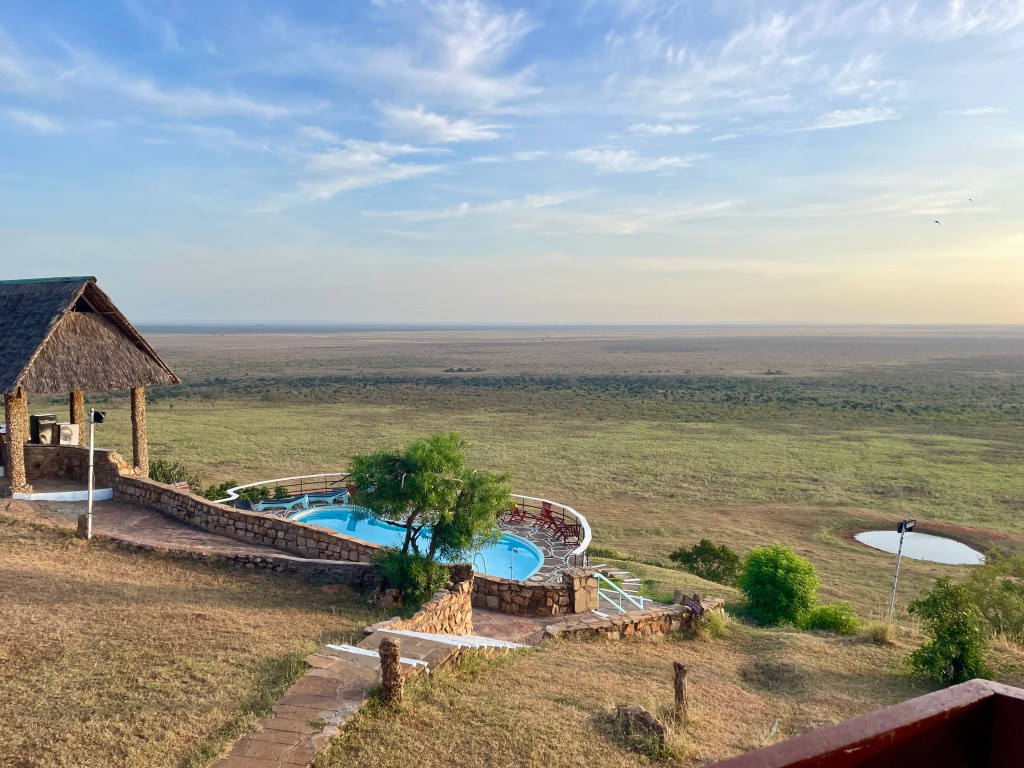
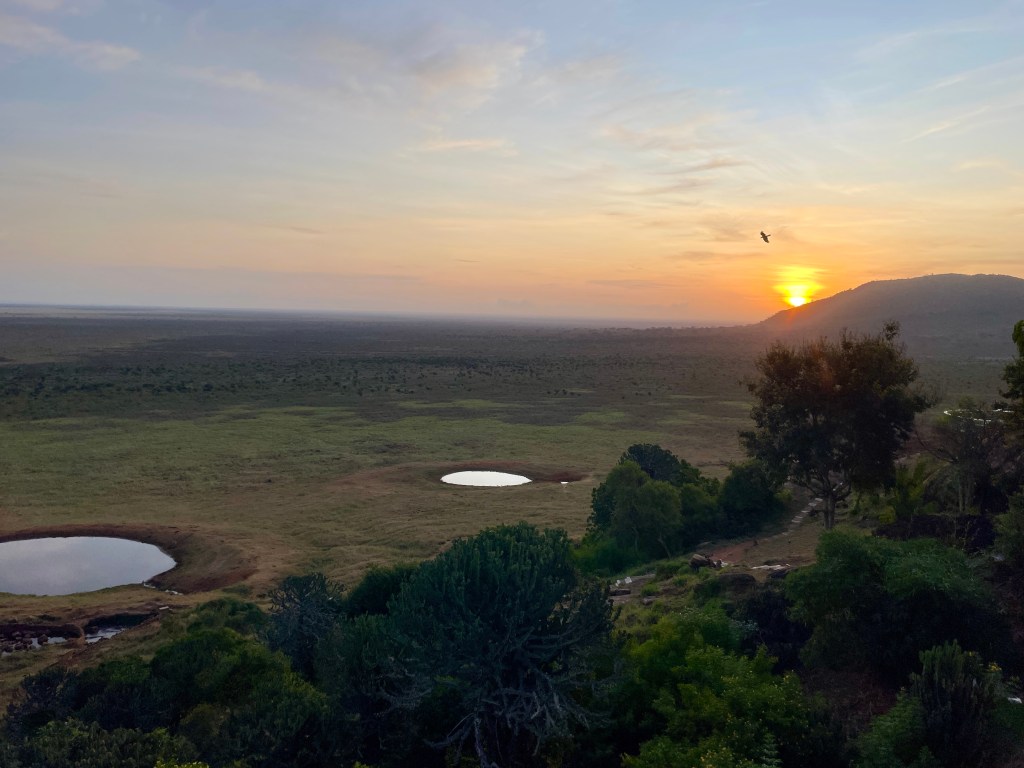
The Mwarubaini tree (or reem tree) that provides 40 different uses including antibacterial, skin infections and burns, intestinal support, and more. When Madagascar decided that they wouldn’t accept travelers from Zanzibar (fear of cholera), we added a day to our stay in Mombasa before heading directly to Madagascar. It would have been nice to see Zanzibar, but the extra day in Mombasa was welcome. Our group photographer prowled the internet (in Kenya, one prowls rather than searches) for an overnight safari. She found an opportunity to be driven to Tsavo East Park, stay in a park lodge (Voi Lodge) with a great view of watering holes, and then return to Mombasa after a long game drive the next morning. We had the best game experience ever. In fact, we changed a couple future excursions aimed at game parks….there’s nothing left to see. That’s not quite true, but it would be hard to match our experience. On our way back to Mombasa, we stopped by a Masai village for an informative visit.
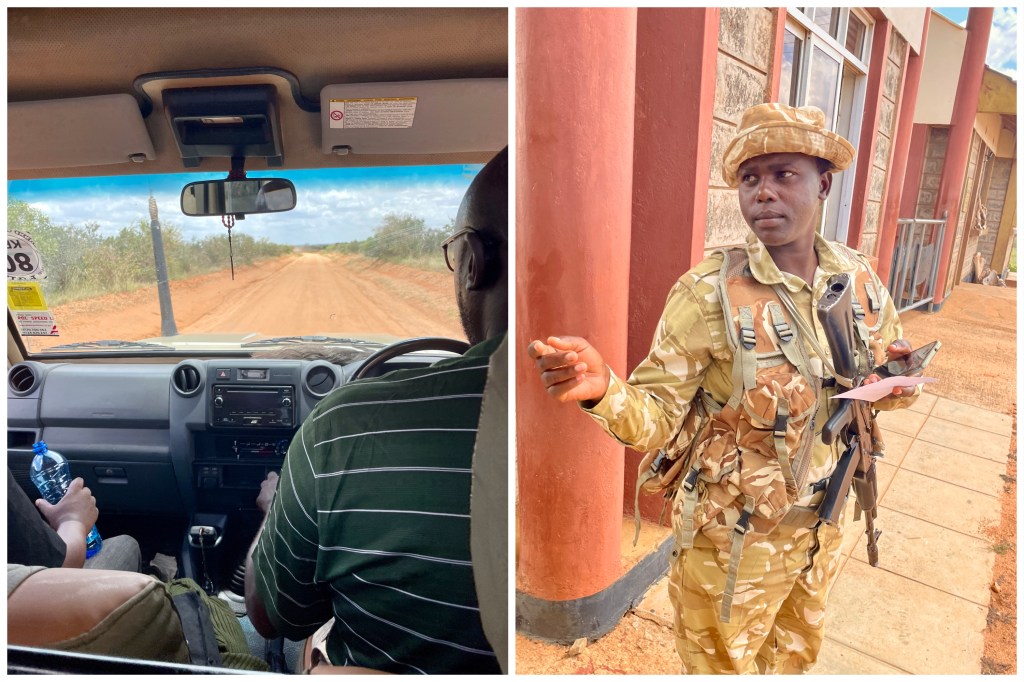
View from the back of the landrover, guide Kevin, and Kenyan wildlife officer. 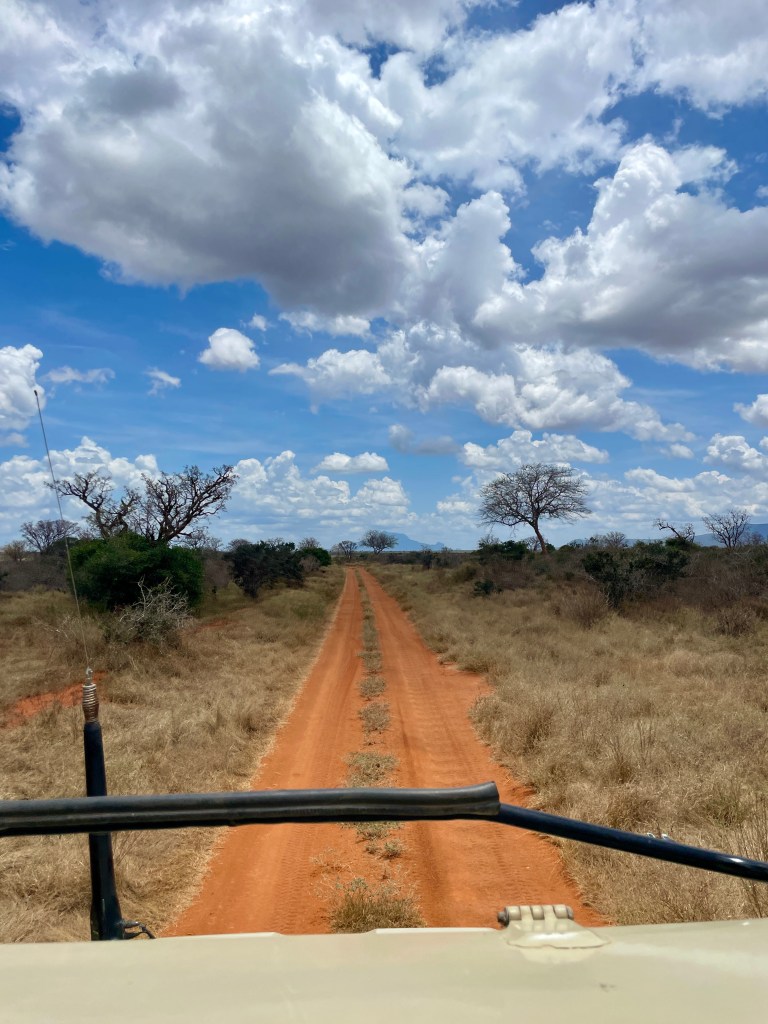
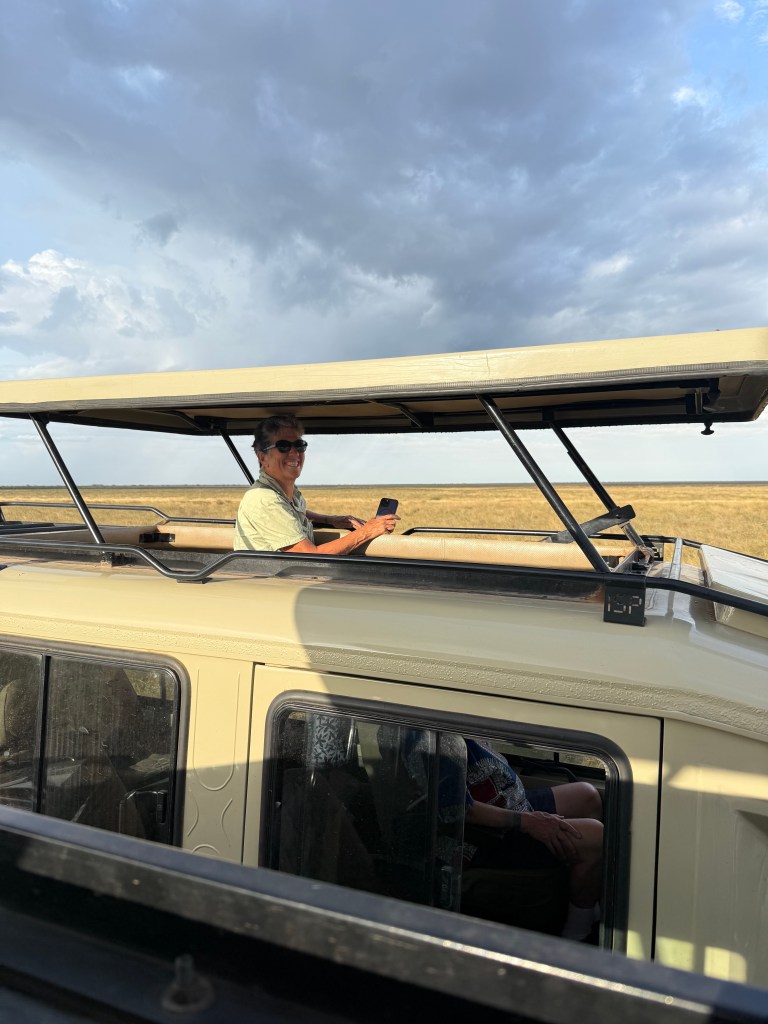
A bit about animals and safaris. The most famous game viewing, I think, is following huge migrations of thousands of animals….think Serengeti or Olduvai Gorge. More common are drives through varied countryside and viewing animals every few minutes. That’s what we did in South Africa with Maddy and Jackson and that’s what we did in Tsavo. Everyone wants to see the “Big Five.” “Big” represents the most desirable hunting trophies, not the size of the animal. For example, Hippos and Giraffes don’t make the list. …Lions, Elephants, Cape Buffaloes, Rhinos, and Leopards do. They probably would rather not be on the list, but don’t know it.
A bit about the Big Five:
-One can still hunt them for a price; sad but true.
-Lions. $55,000
-Rhinos. $25,000
-Elephants. $10,000
-Leopards. $6000
-Cape Buffaloes. $5000
That seems like a pretty good deal on leopards, but we left our rifles on the ship.
Lions used to number about 250,000; now, there are around 20,000. They live about 16 years .They eat about 18 pounds of meat per day and then sleep about 21 hours. When chasing their prey, they can run as fast as 50 miles per hour. Males can mate as often as 100 times per day, but each experience is only about 15 seconds. Sometimes males will kill newborn cubs…not for food, but to cause the female to want to create new ones.
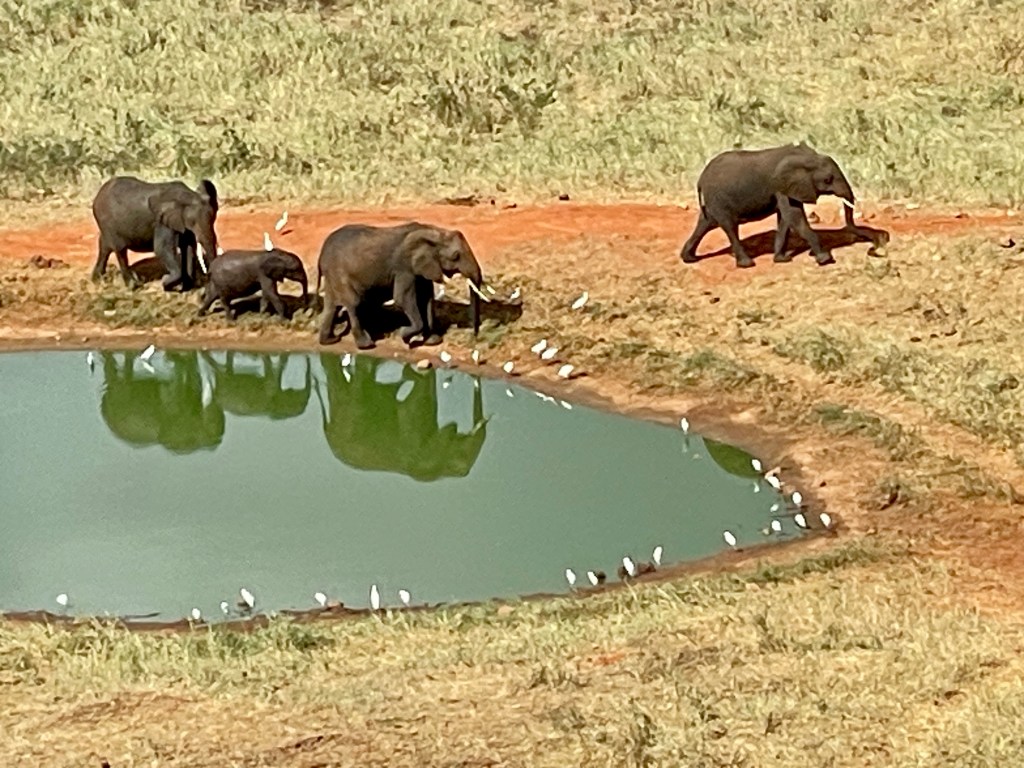
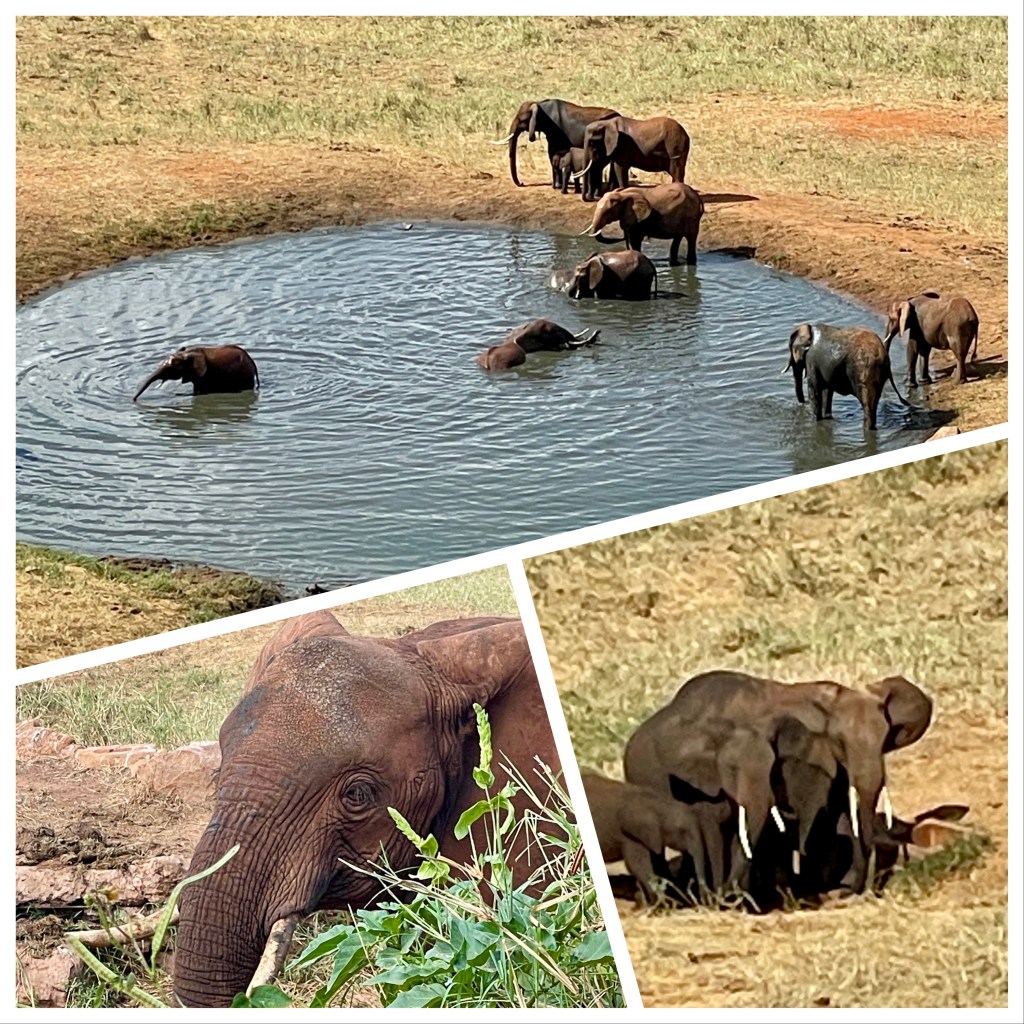
In the 19th century, there were an estimated 27 million elephants. Now there are 400-700,000. They live about 70 years, eating about 330 pounds per day. Both males and females have tusks and their tusks can be 10-11 feet long; they are right or left tusked, the same way people are right or left handed. African elephants have ears shaped very much like the continent of Africa.
Cape Buffaloes travel in matriarch-led herds. At 600 to 1800 pounds, and with big horns, they are menacing creatures. If threatened , they can run 35 miles per hour. In herds, they get in a formation like the US settlers used to circle their wagons when attacked.
Leopards are nocturnal and hard to find. They live up to 23 years. They like to be in trees and will carry their prey into trees for feeding. They can carry up to 4 times their body weight up a tree.
Rhinos are considered vulnerable or endangered, since about 90 percent of them have been killed. They can live to 50, but not if the Asians have their way. Their horns, owing to a variety of medicinal and sexual powers, bring about $60,000 per kilo. They seem plodding but can move at 30 miles per hour.
Given all of these large and dangerous creatures,which is responsible for the most human deaths? The answer is Hippos; number 2 is the Cape Buffalo. But, the most deadly creature is the mosquito which kills about 725,000 people per year.
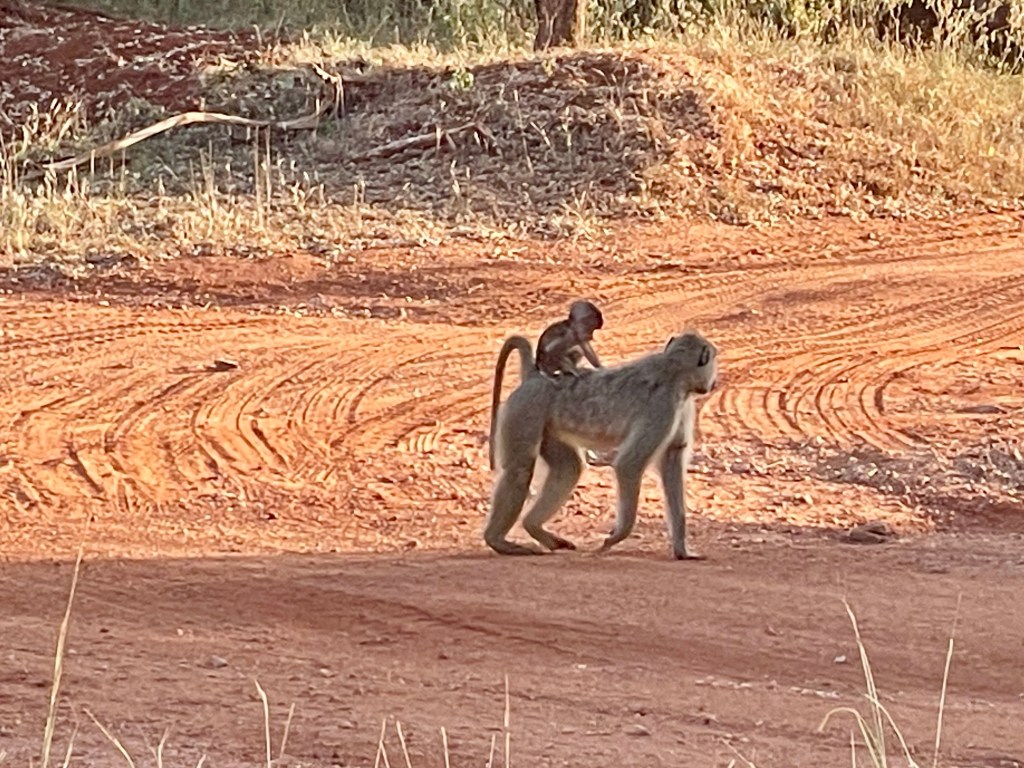
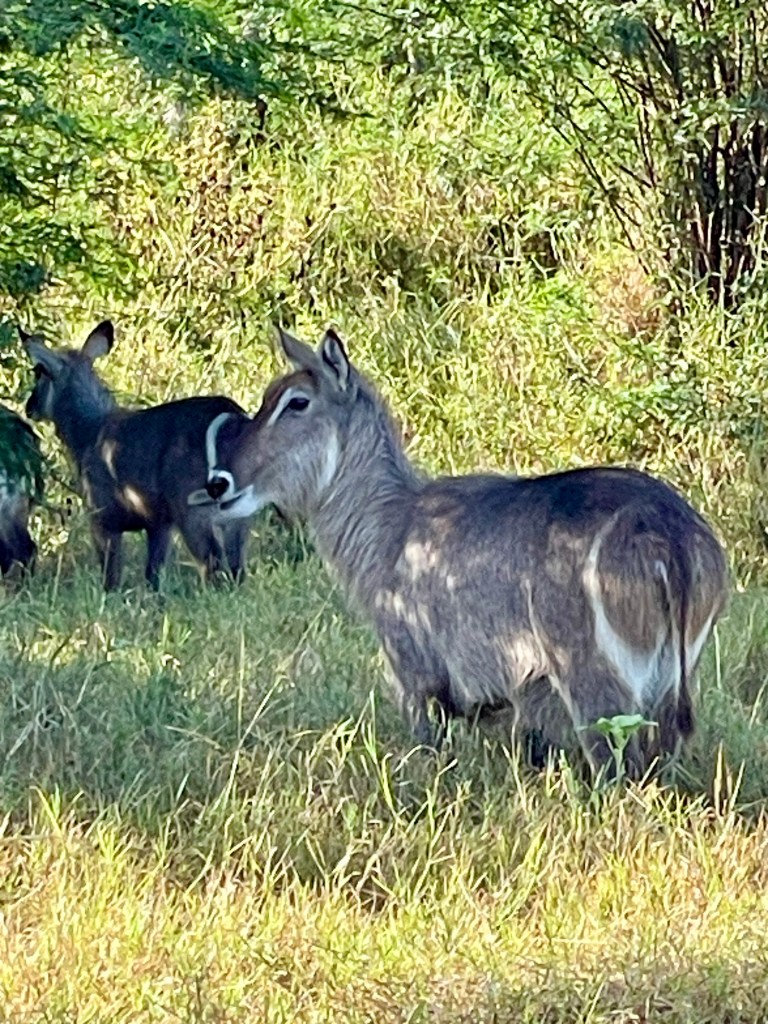
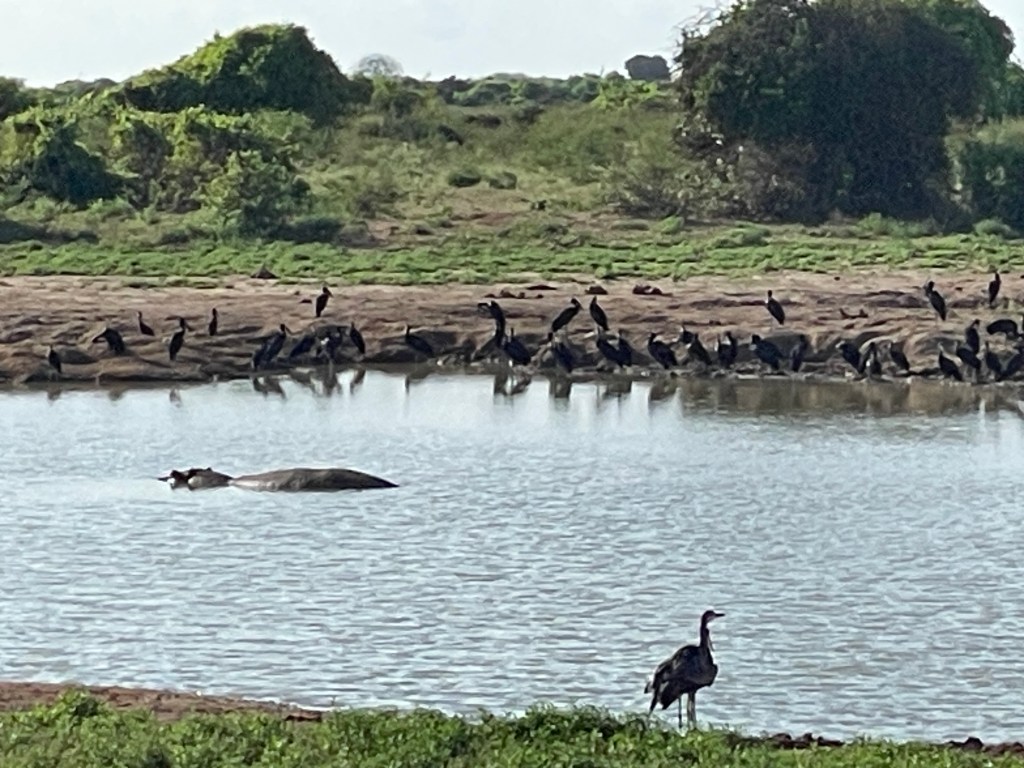
Our safari, with only Karla and I as passengers, was led by a driver/guide (Alex) and spotter (James). We had about 3 hours looking for animals on the way to the lodge, then 2-3 hours in the late afternoon and 4 hours the next morning. At first, there was some excitement when we spotted and stopped to watch an elephant 50 yards away. By the end, it was “just more elephants” and we would keep driving. We saw herds of elephants and Cape Buffaloes, lots of gazelles and impalas and similar creatures, giraffes, and hippos, mostly submerged. There were 25-30 different kinds of birds, all of which our guide identified. Our hotel room had a sign advising us to close the window at night to avoid visiting baboons; they were there too.

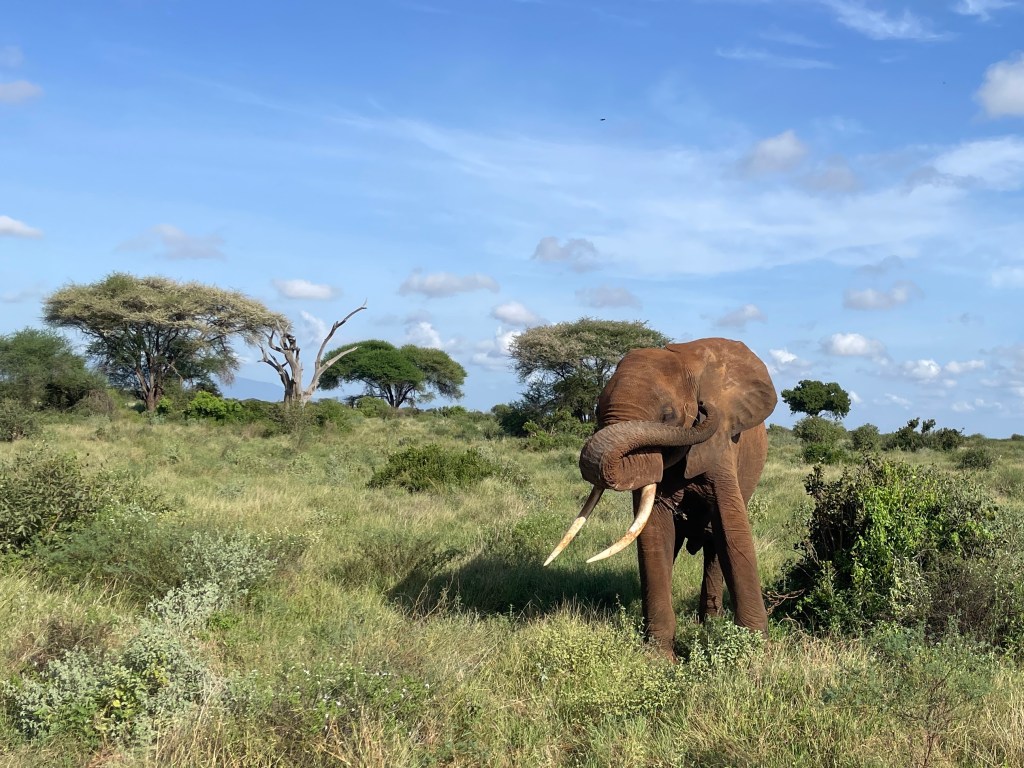
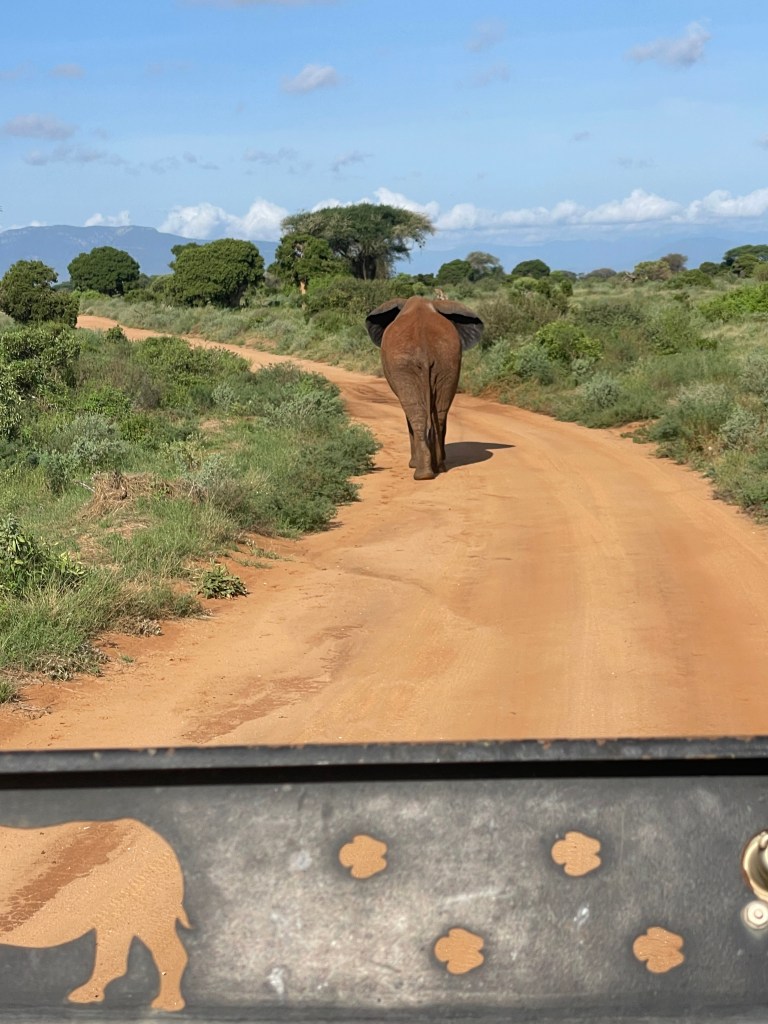
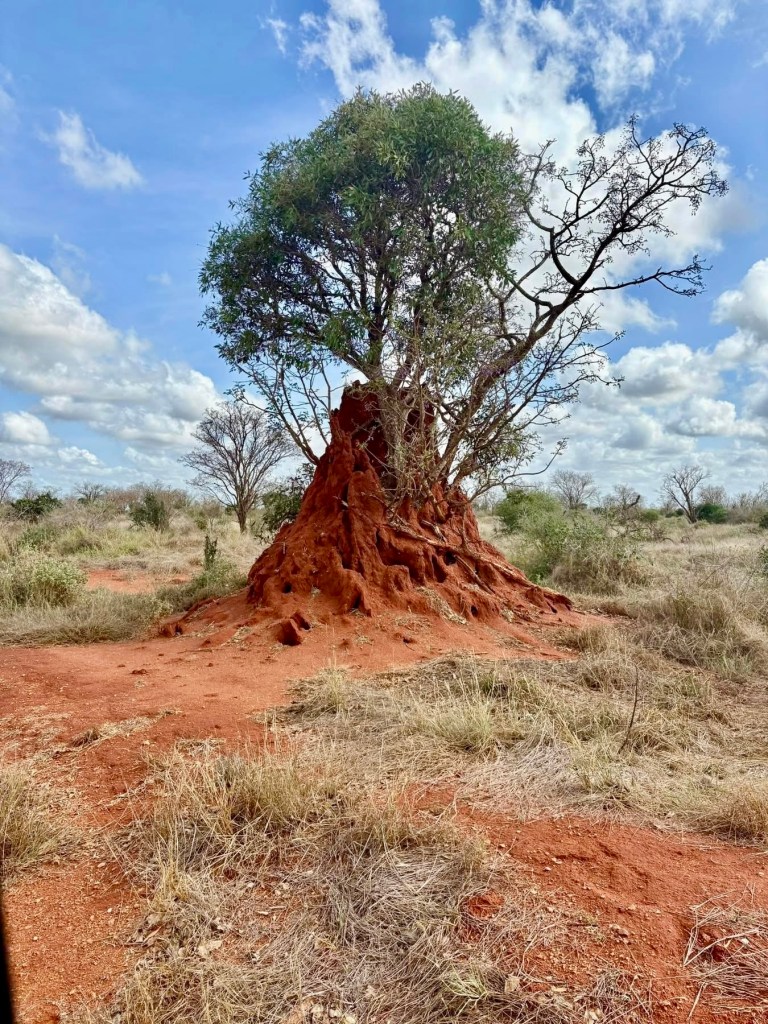
Termite mound 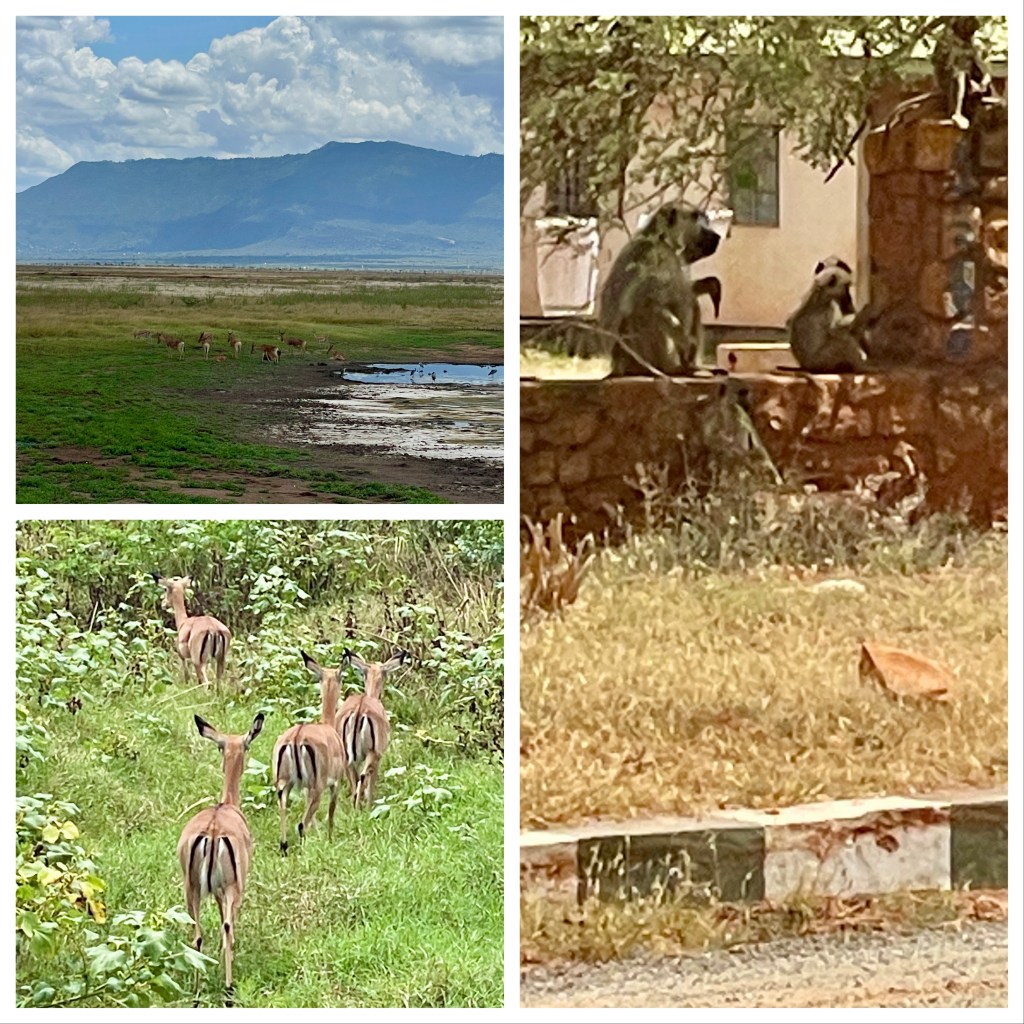
Impala and baboons 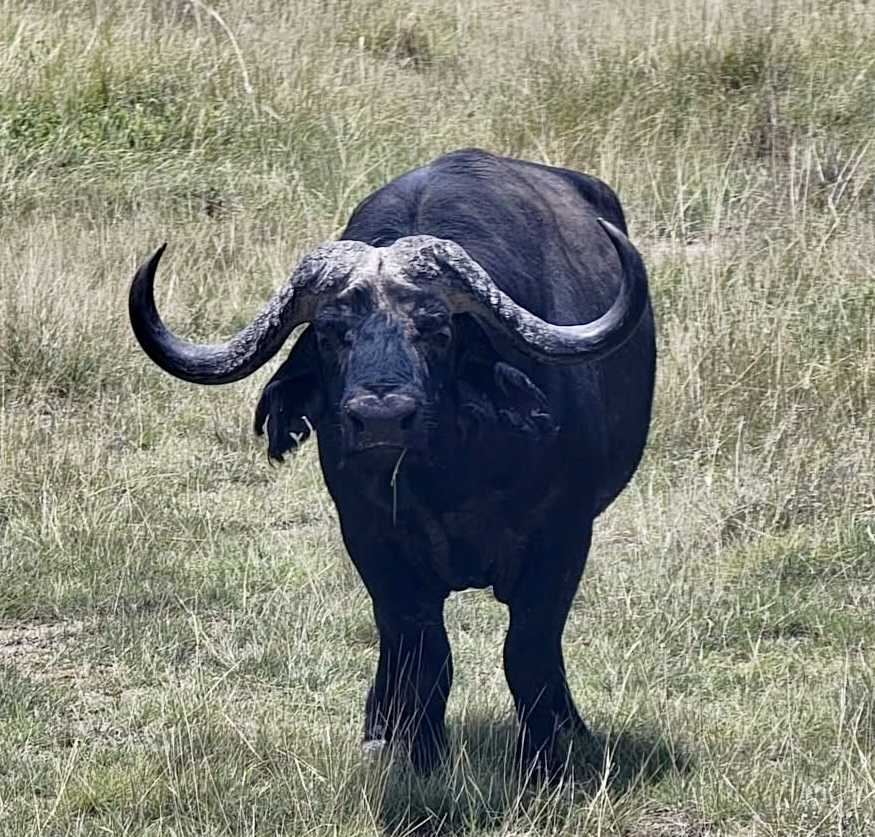
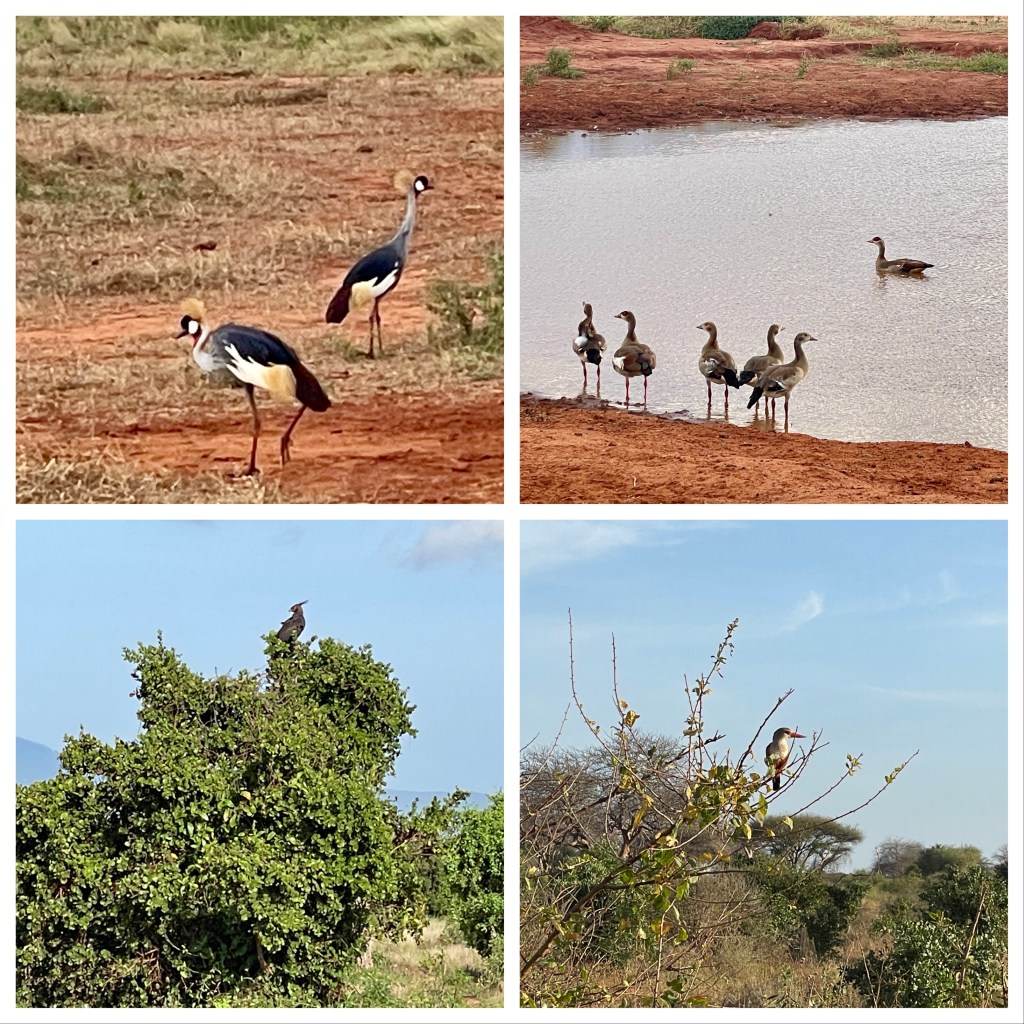
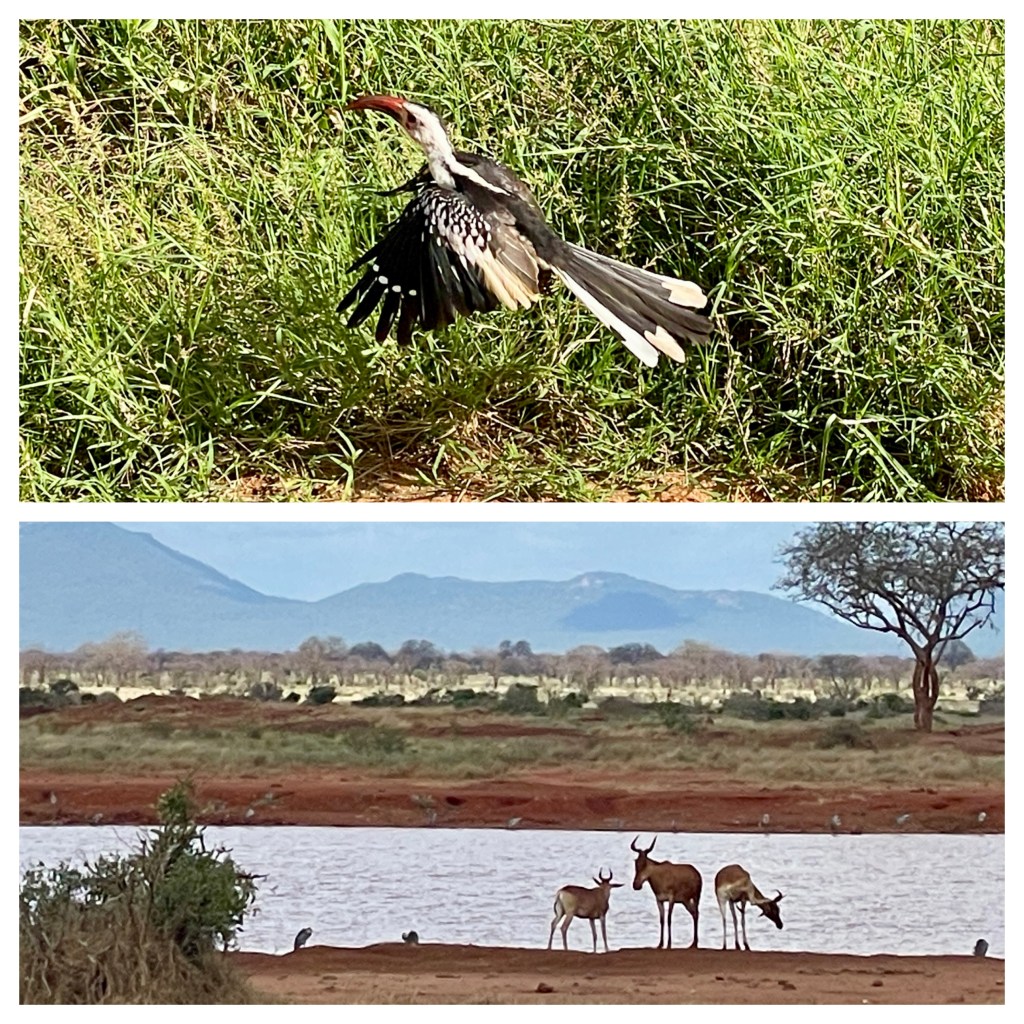
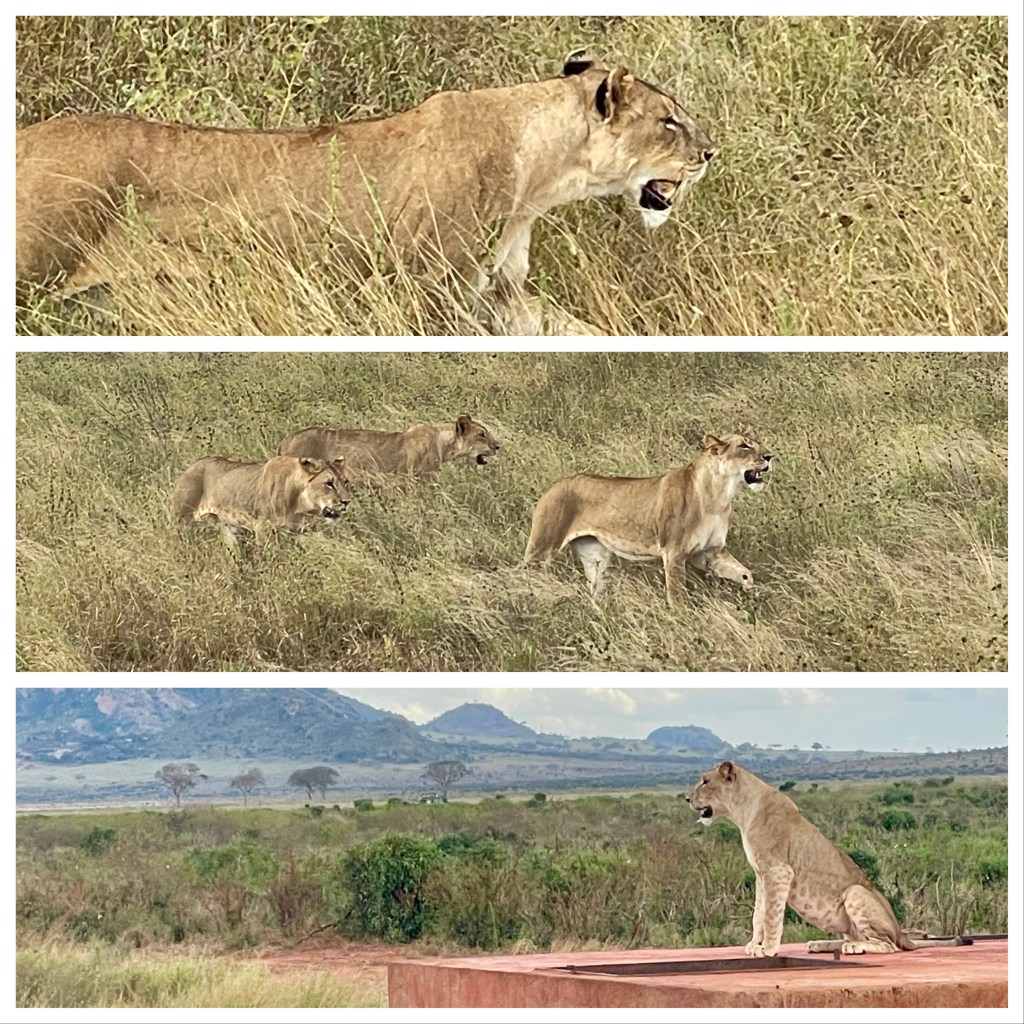
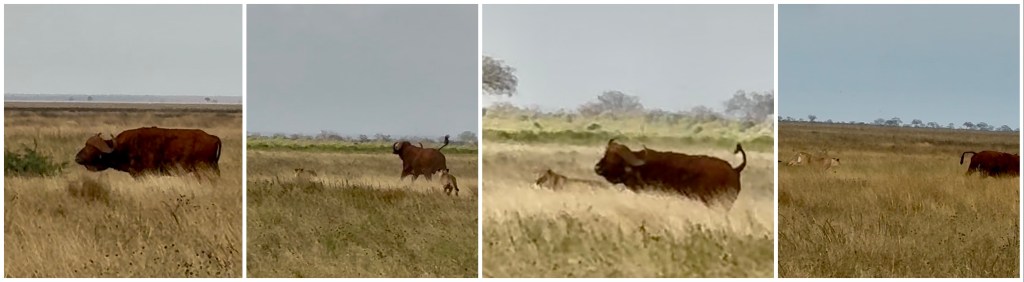
Top photo is the zazu bird from the Lion King Our number one experience was encountering 5 lionesses. Frequently, lions are not seen. There were 5-6 safari vehicles parked and watching the lions. Our driver saw that the lions were looking off in the distance. He saw a water buffalo, perhaps 200 yards away. He told us that we should drive farther up the road toward the water buffalo; he thought the lions were going to attack. He was right and we were well situated. The lions stealthily moved through the grass and closed the distance. At the right time, the lead lion charged at the water buffalo which took off running. I thought the lead lion would catch it and then the others would help bring it down. But the lion came up about a yard short before the water buffalo escaped. (The photos below don’t do it justice). The lion then looked like the cat that missed a bird. It had a look like, “I wasn’t really trying.” Our guide explained that, judging by the spots, the lions were only about 3 years old. They were just learning. I’m not sure how the water buffalo tells it. Lions are usually sleeping, not performing. Our guide said that it was very rare to experience.
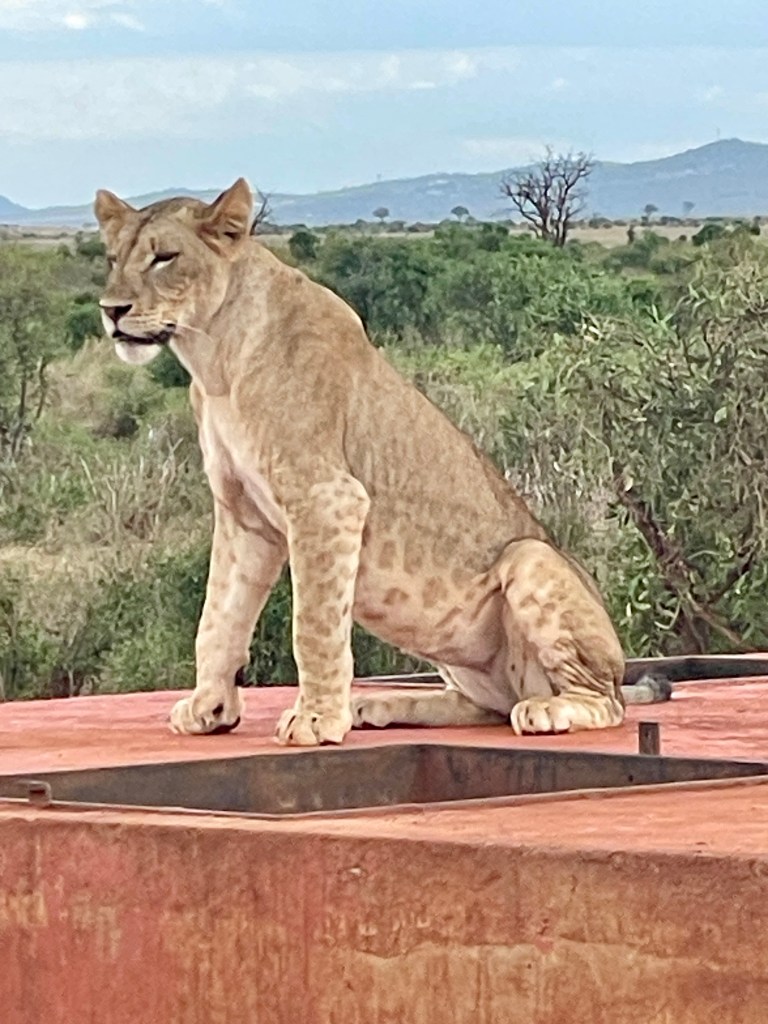
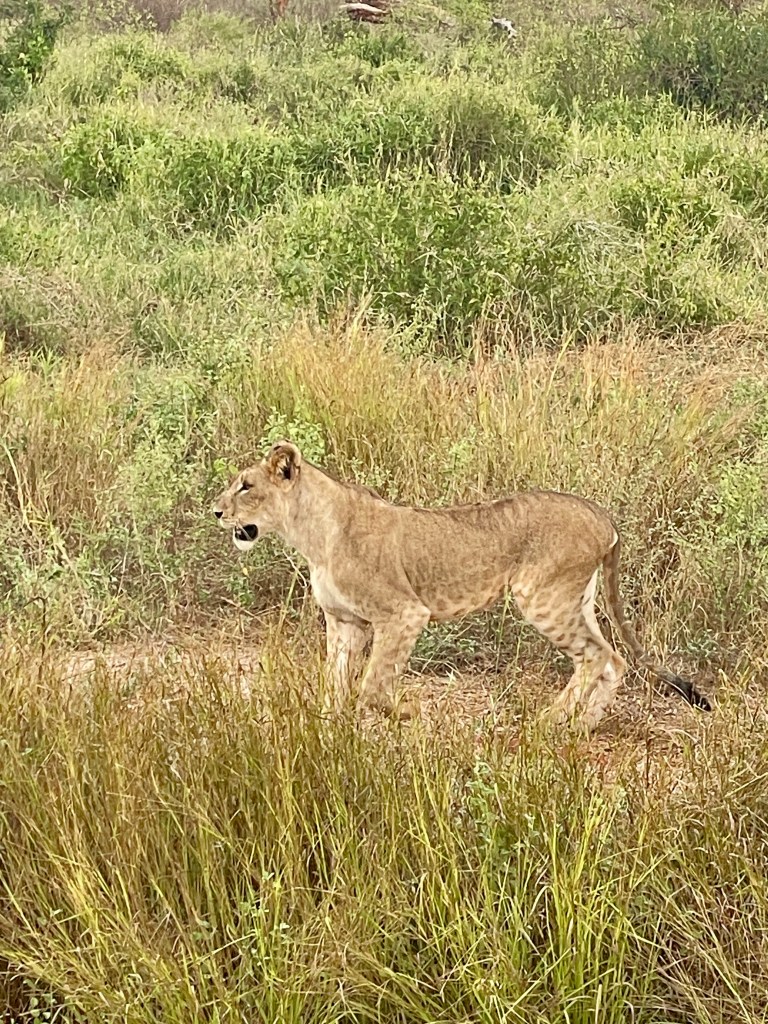
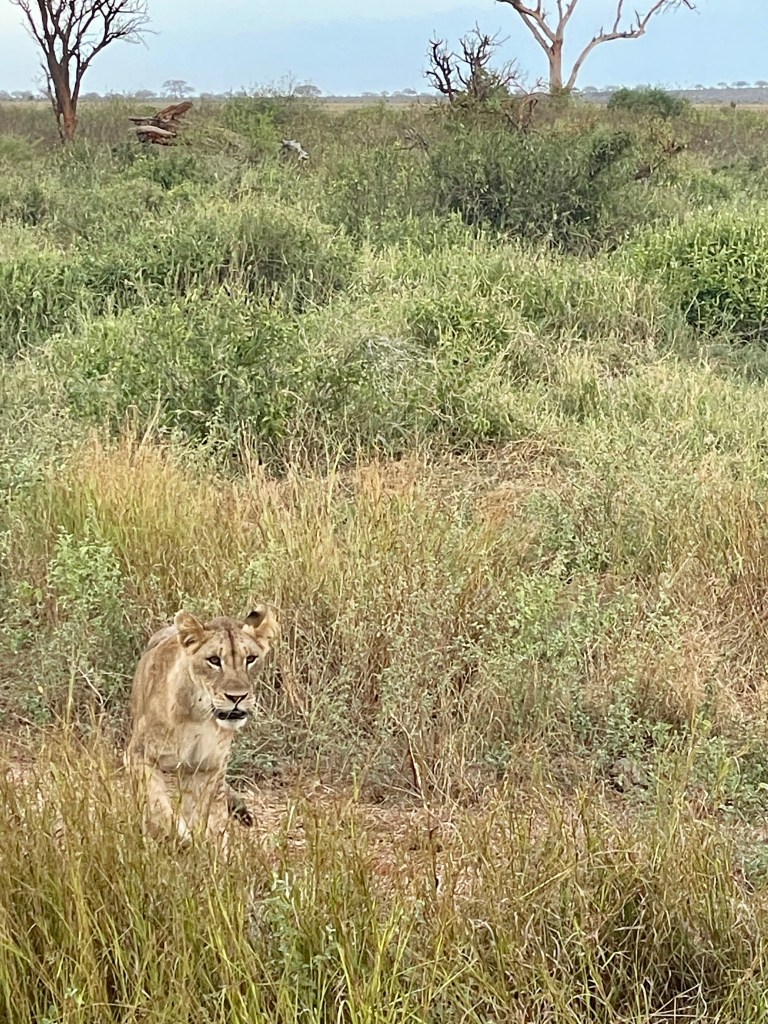
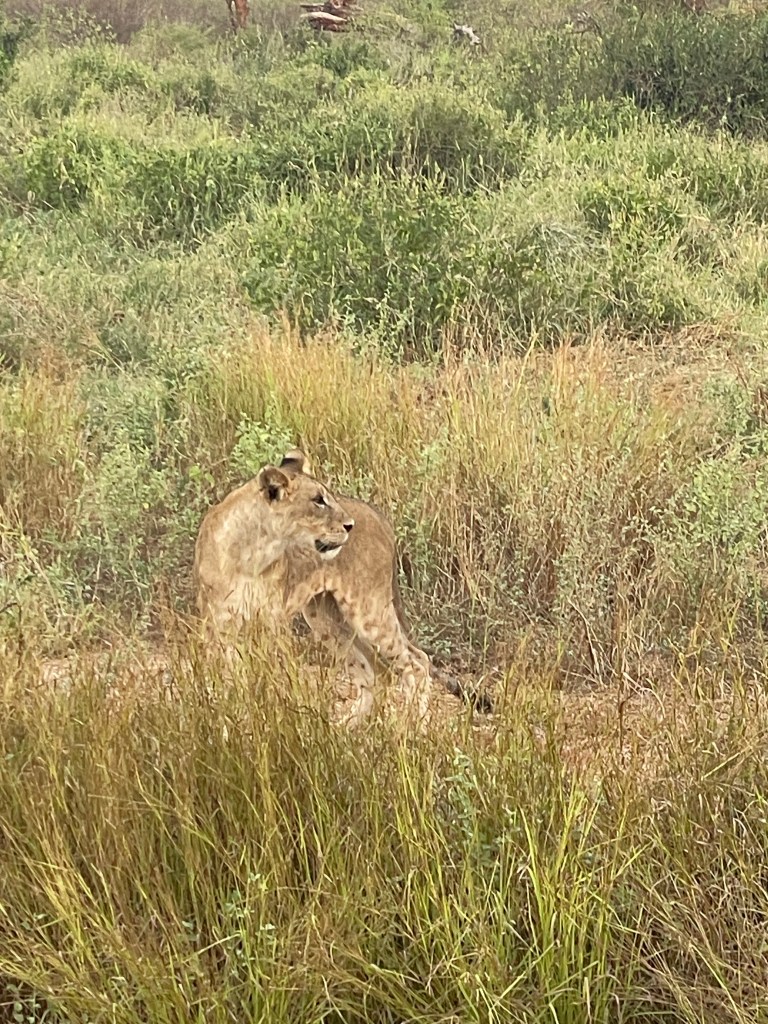
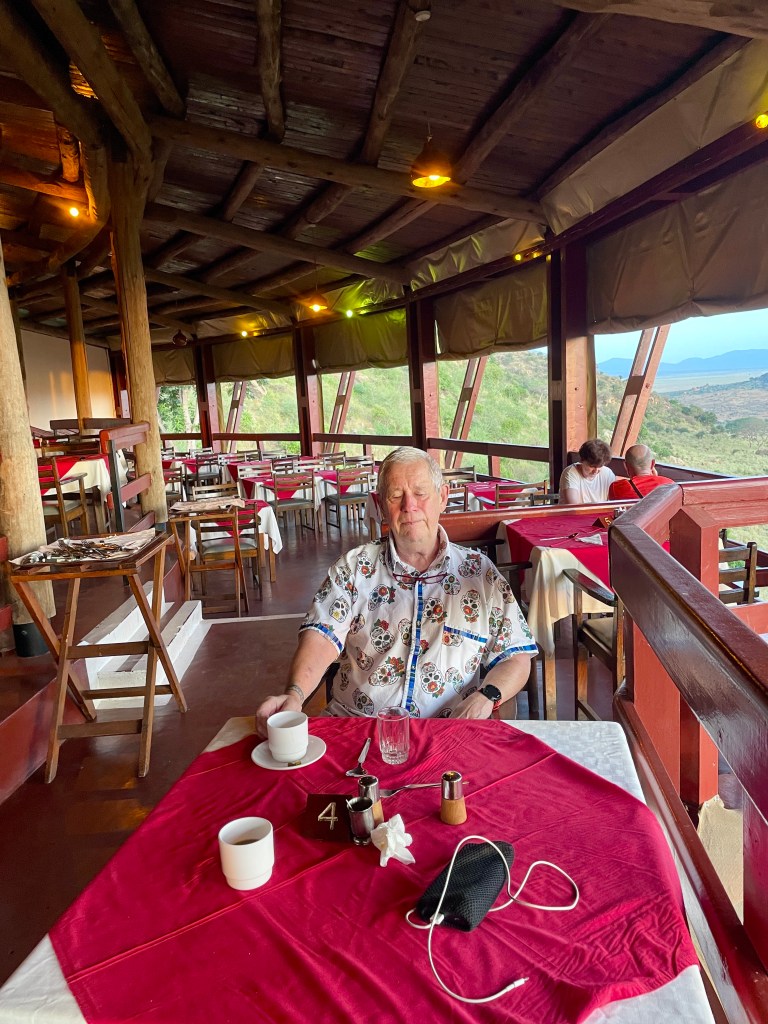
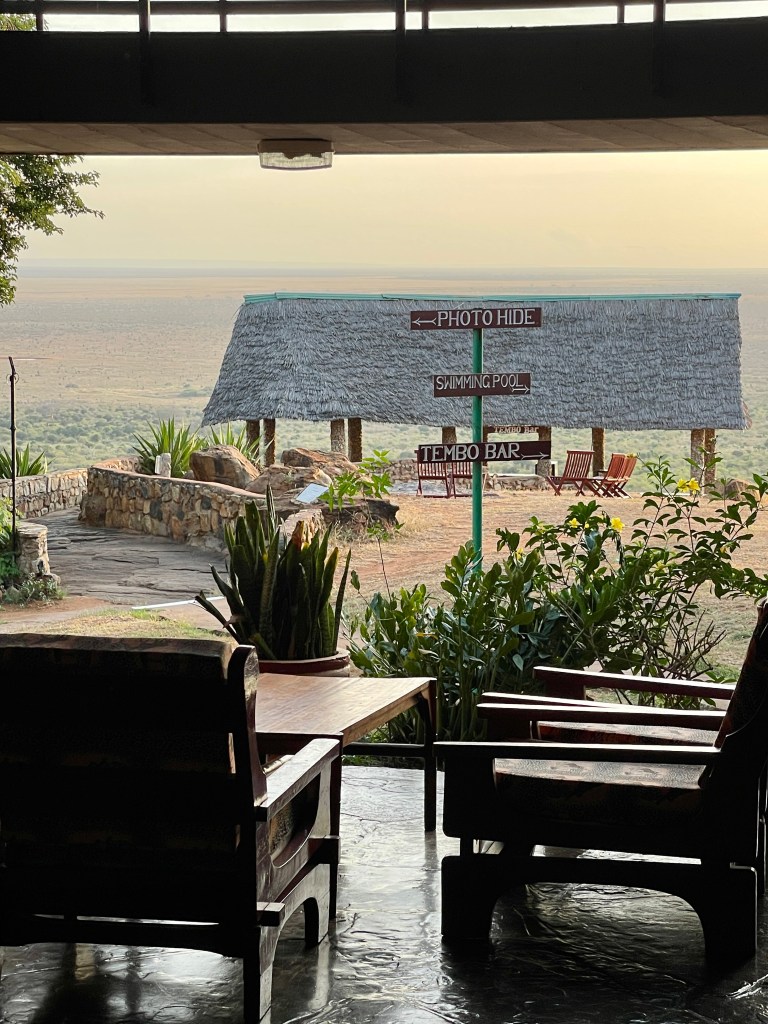
Back at the hotel, we enjoyed a bottle of wine one of our servers sent with us while watching elephants and water buffaloes enjoy the well placed watering holes. There were probably 100 animals entertaining us.
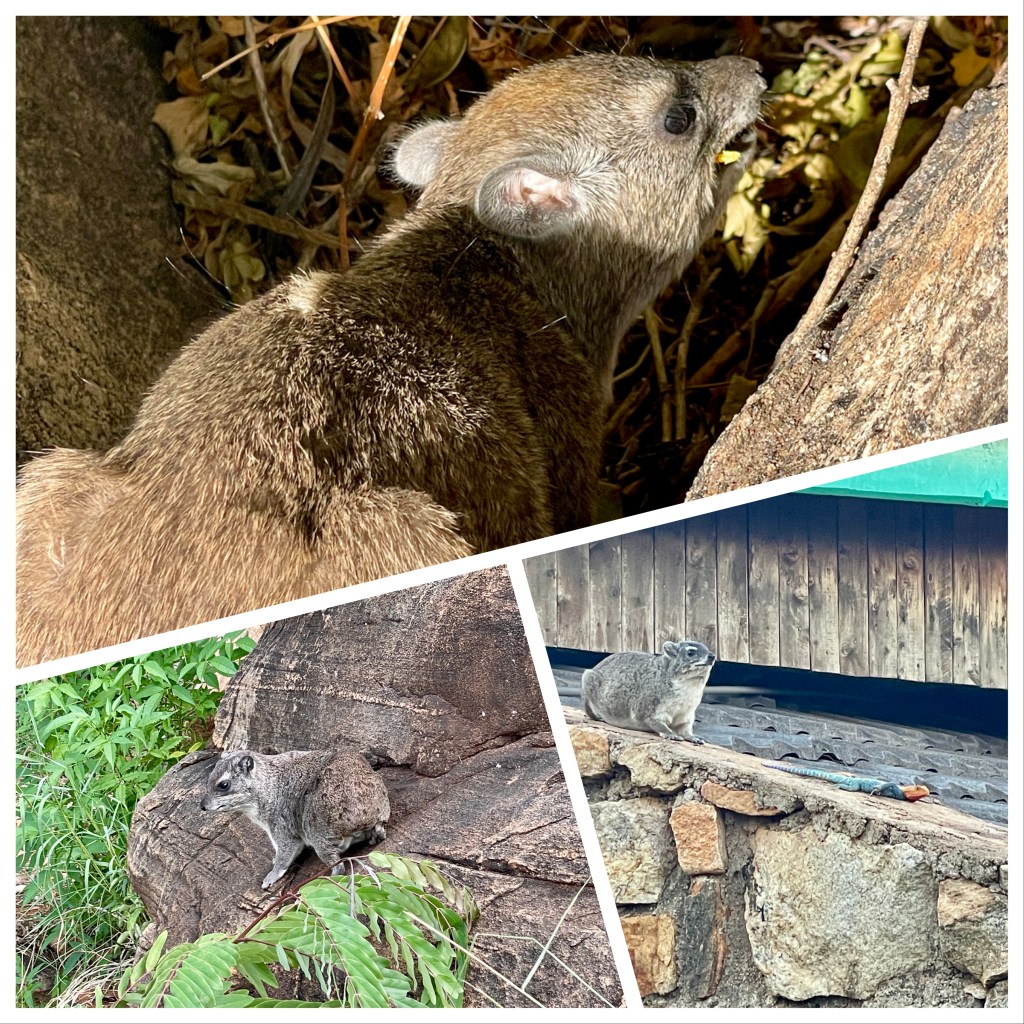
Hyrax, an herbivore that shares a common ancestor with the elephant. 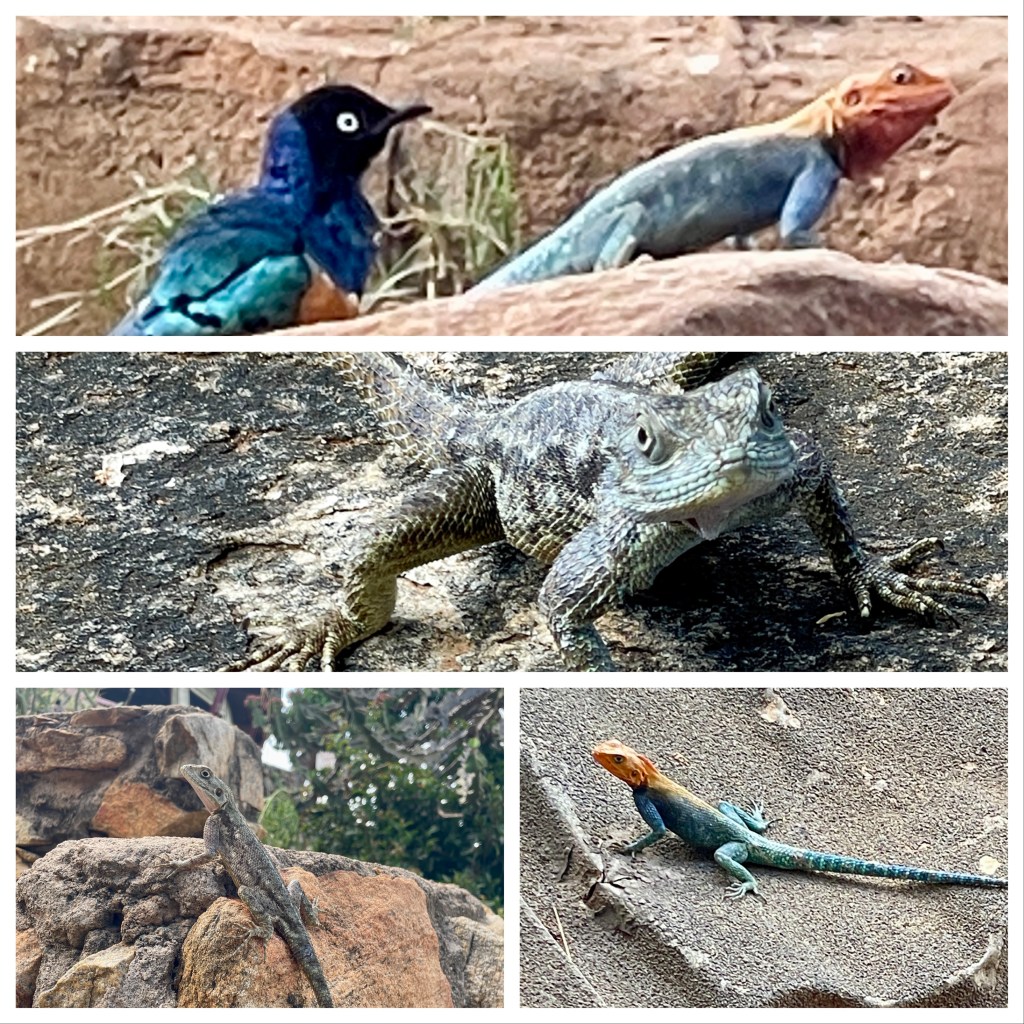

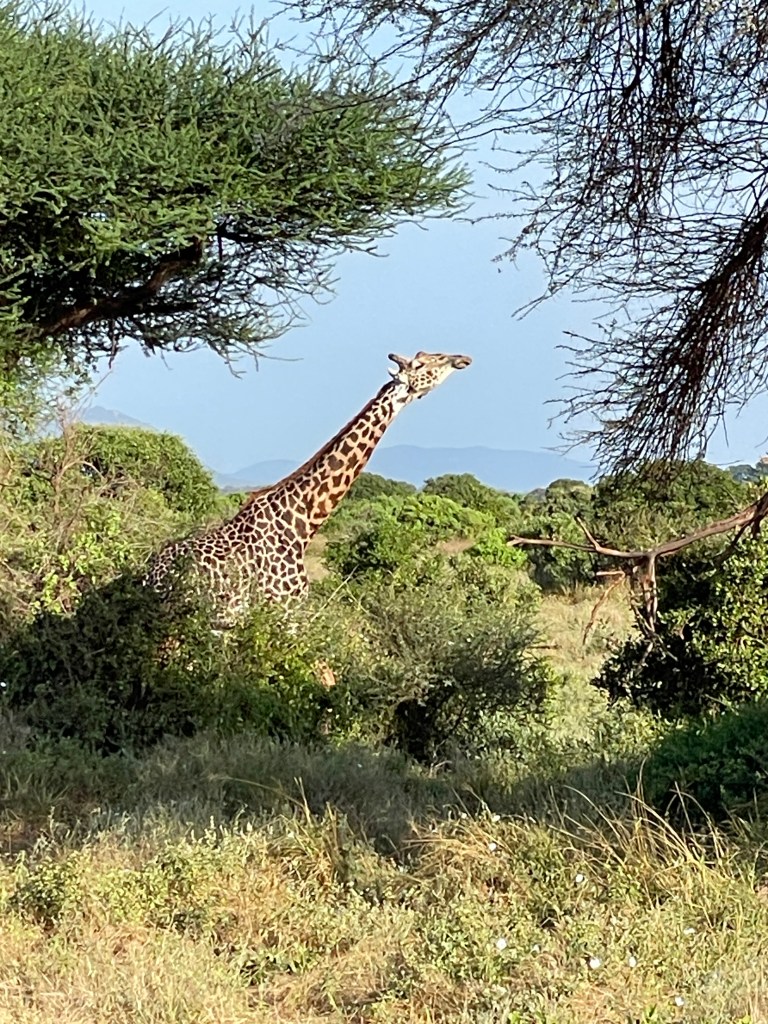
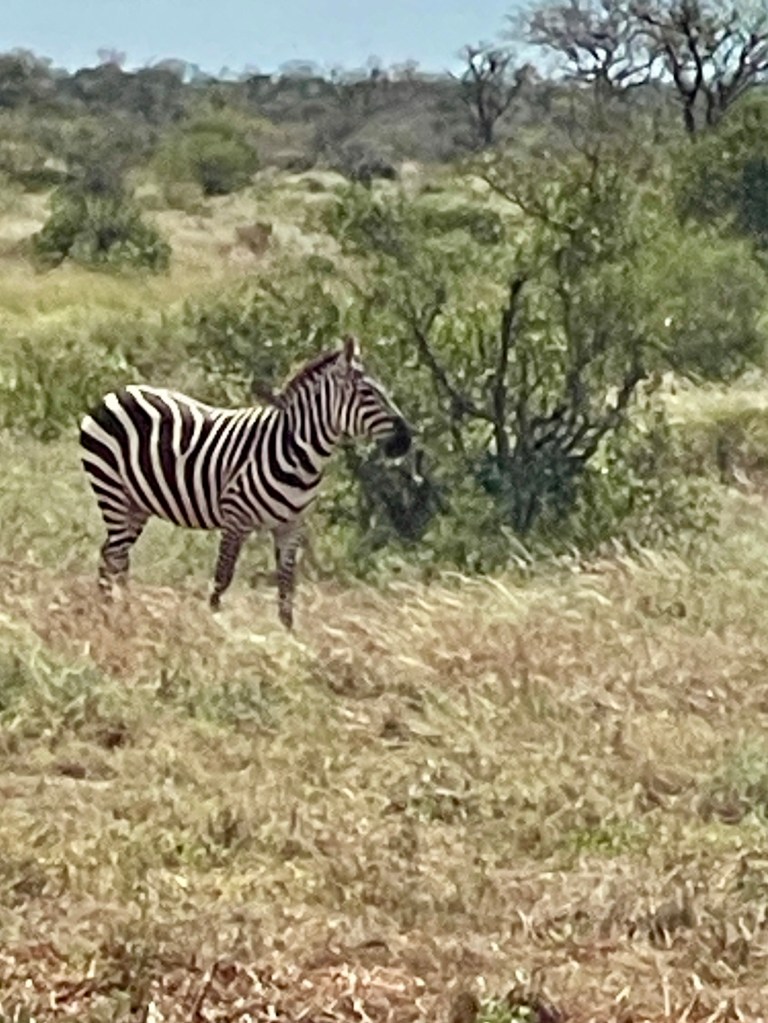
On the second day, the guide made sure that we saw a giraffe and hippo along with zebras, etc as well as lots of birds. It couldn’t have been much better. Rhinos, we were advised, were in the West Tsavo park, some 70 kilometers away.
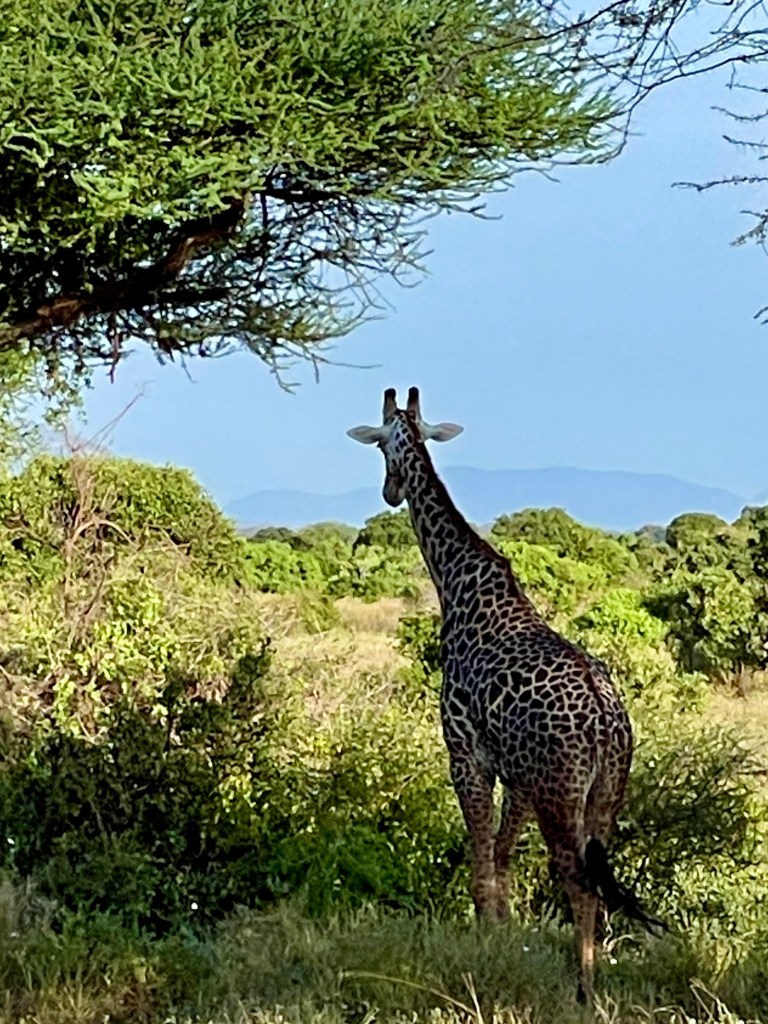
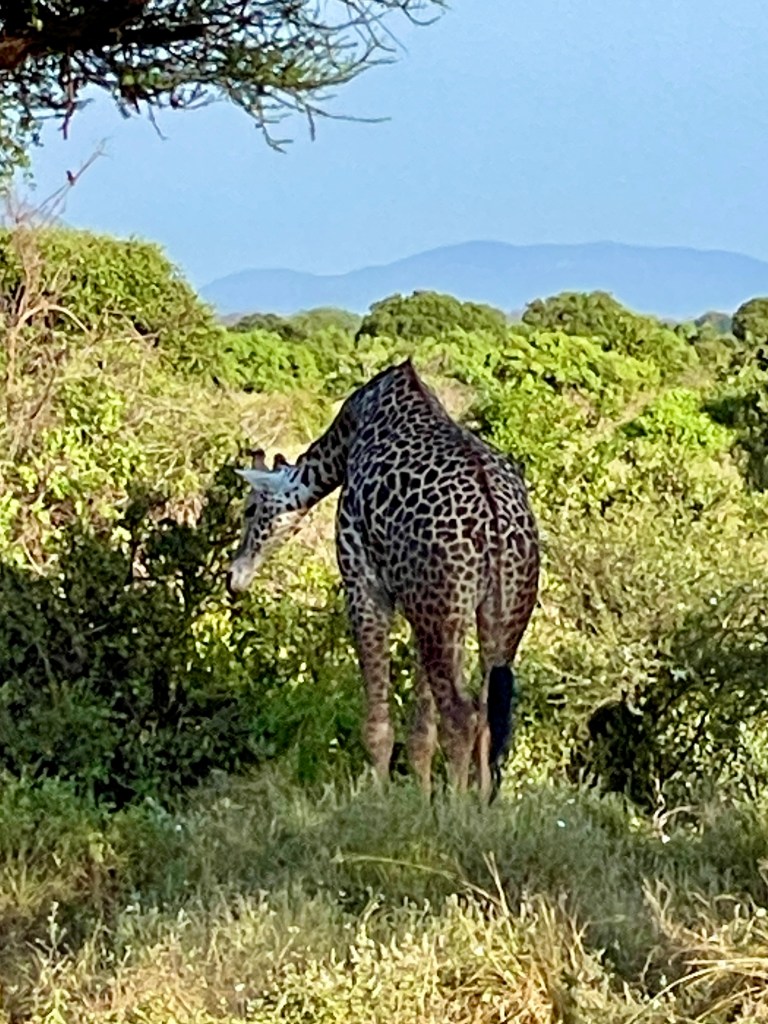
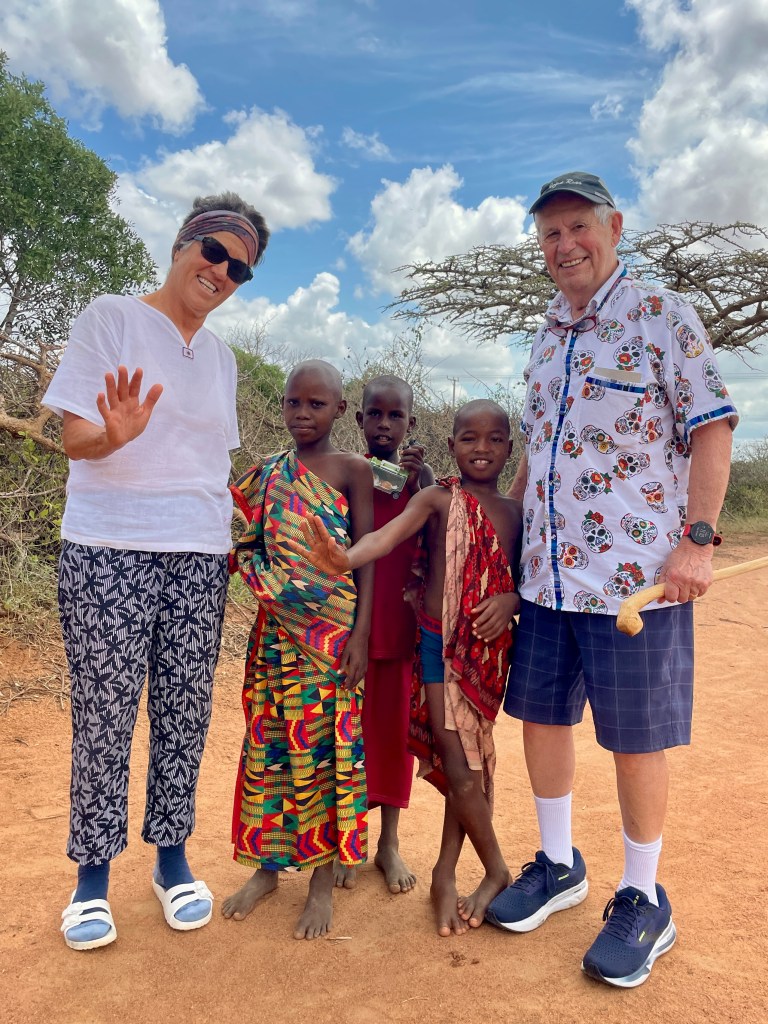
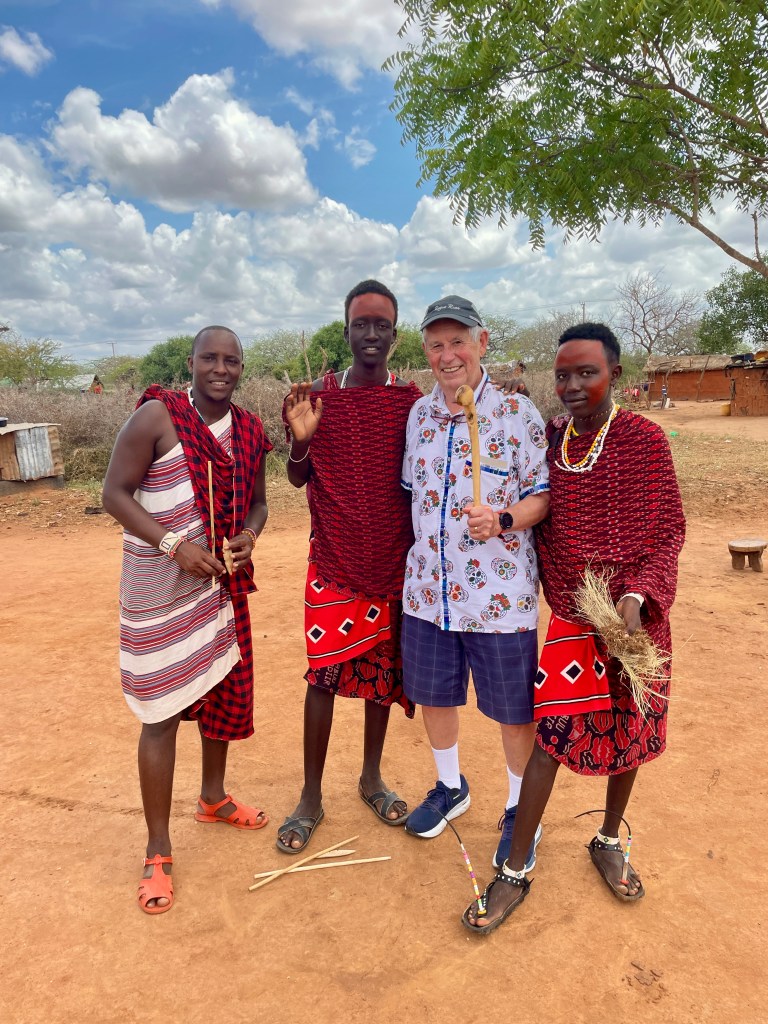
On the way back, we stopped at a Maasai Village. It was interesting to see their houses of sticks and cow dung. They are a semi-nomadic group with the men going out to shepherd their cattle and goats in the wild and the women and children staying in the village. Upon entering we were met by the chief’s son (one of 35 children from the chief and his 10 wives) and we were asked to make a donation ($20 each).
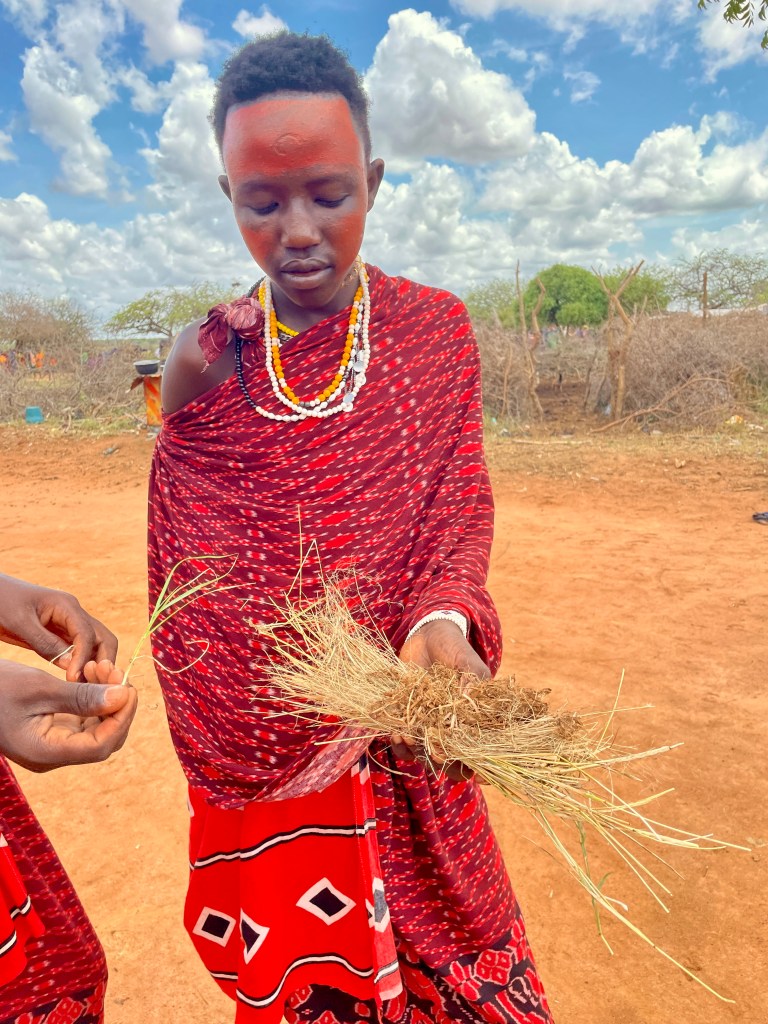
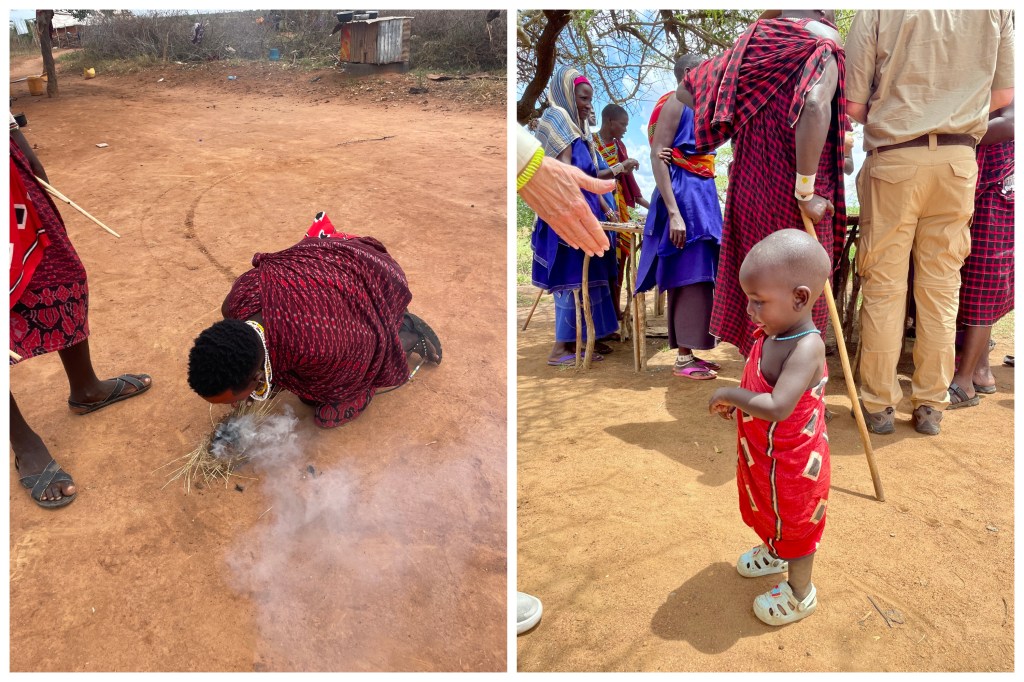
They showed us around, started a fire by rubbing sticks together, and then catching the sparks in a mixture of elephant dung and grasses. They also performed a tribal dance. The teacher showed us their school house which was a rickety building with dirt floors, some wooden bench seating, and a badly scratched blackboard. The teacher spelled his name for us in the dirt with a stick and asked Karla to spell hers and mine. The village school educates kids under 8, after 8 they go to a state school. Our guide noted that the government had gotten after the Maasai for not sending their kids to school.
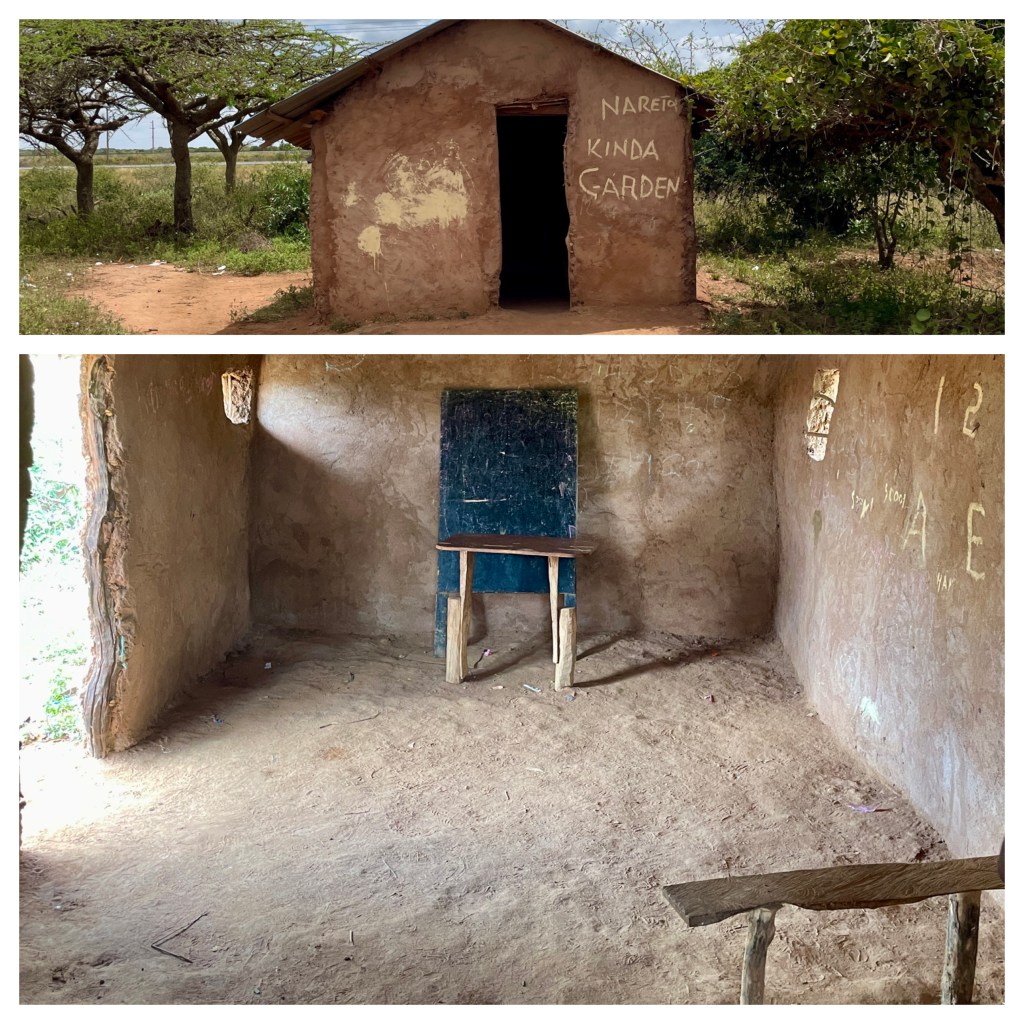
Sparse school 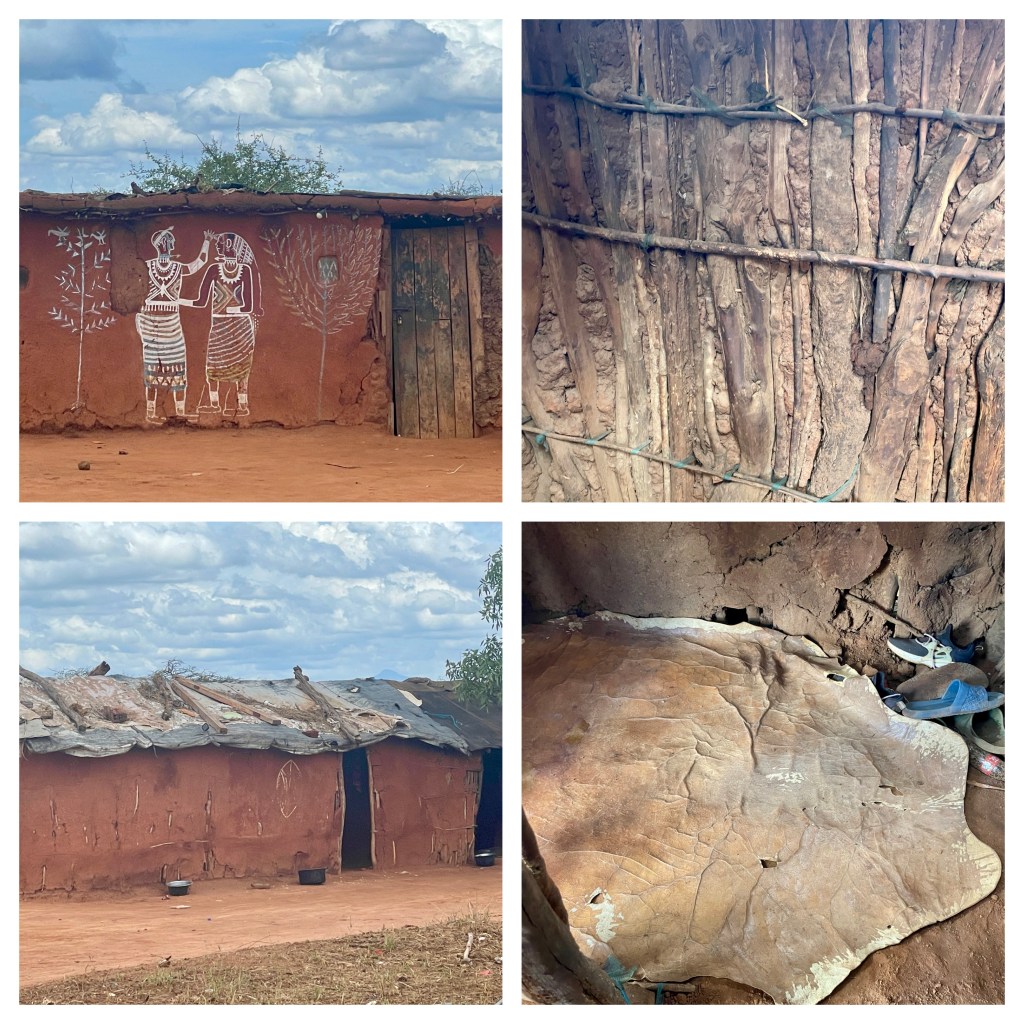
Maasai home; top right is view from inside of the stick and mud walls; bottom right is the cowskin that serves as a mattress. 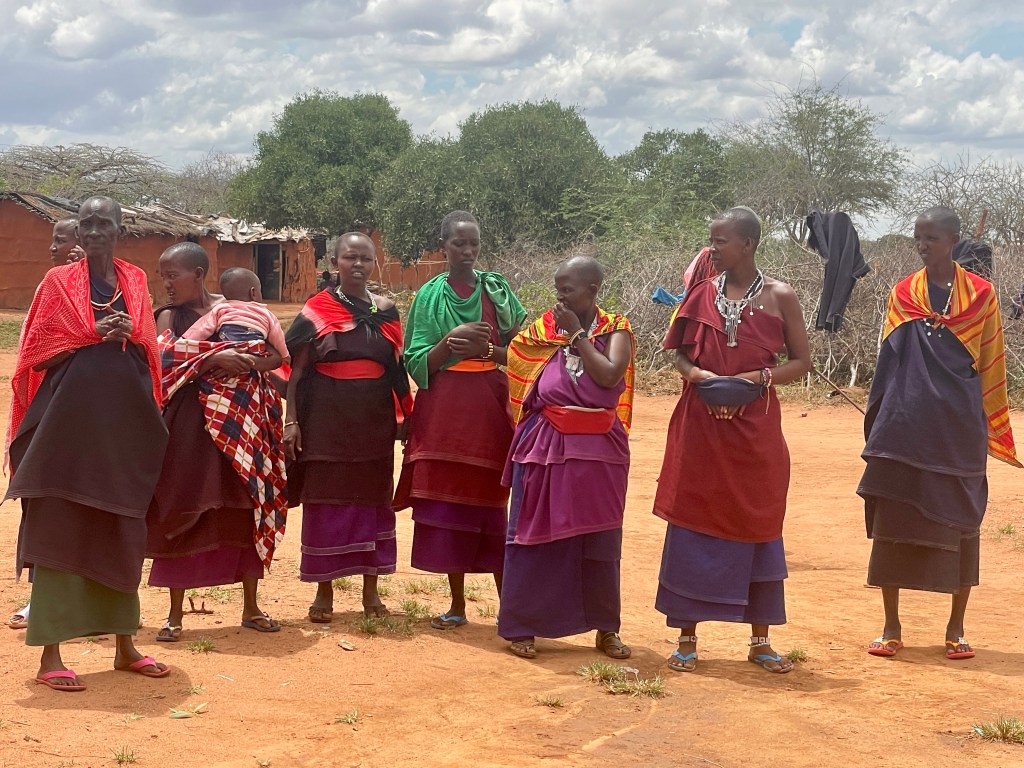
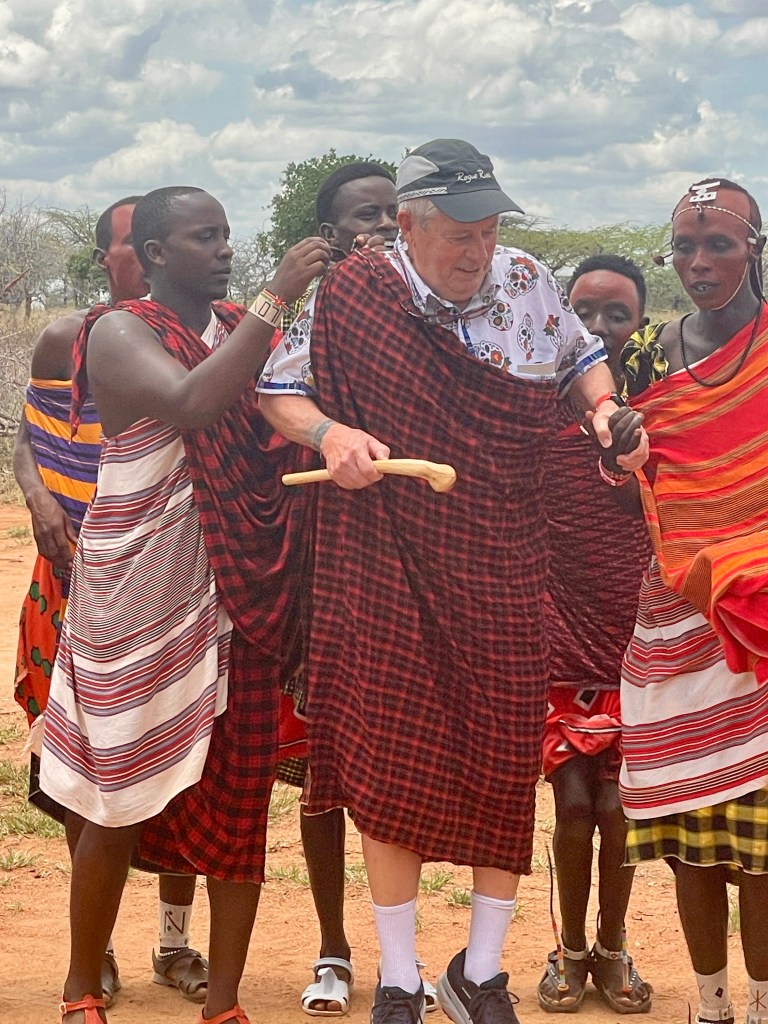

After our tour they were nice enough to take us to craft tables with bracelets for sale…at high prices. We declined.
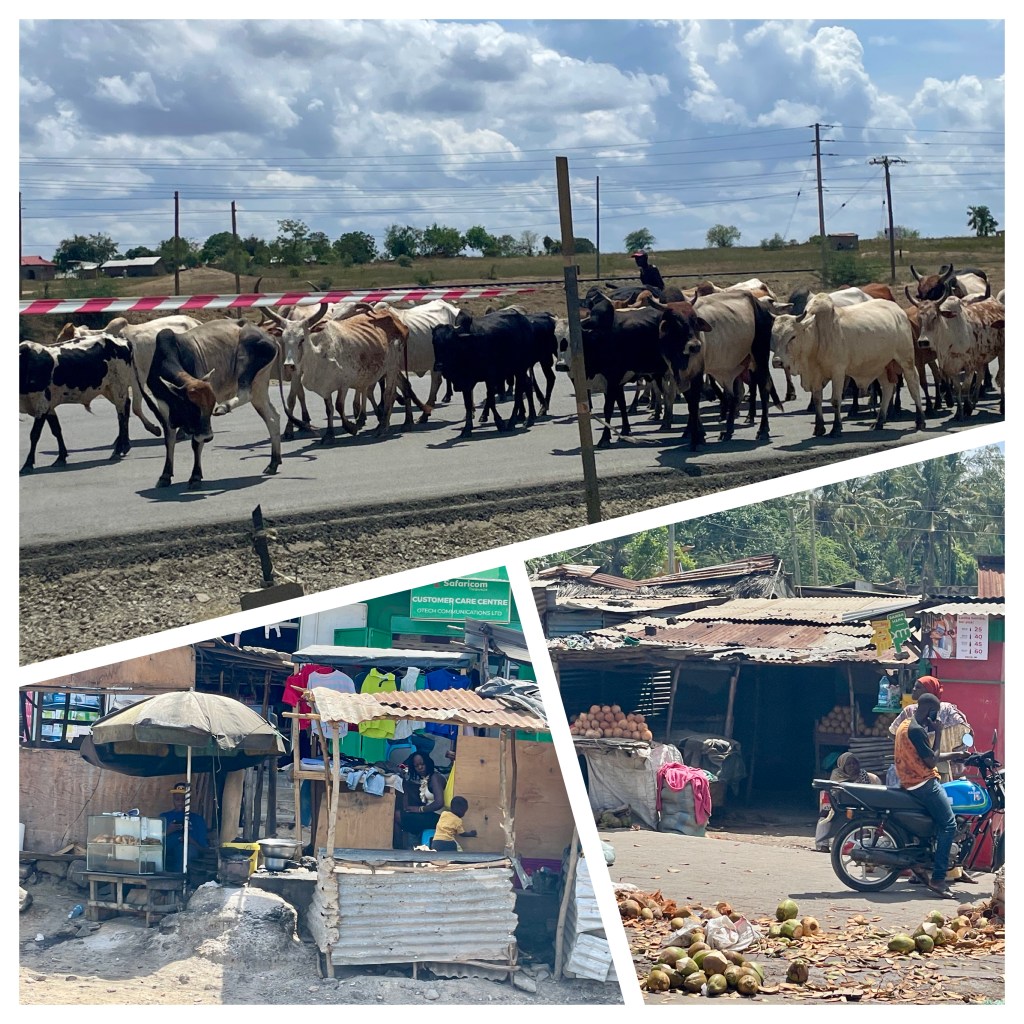
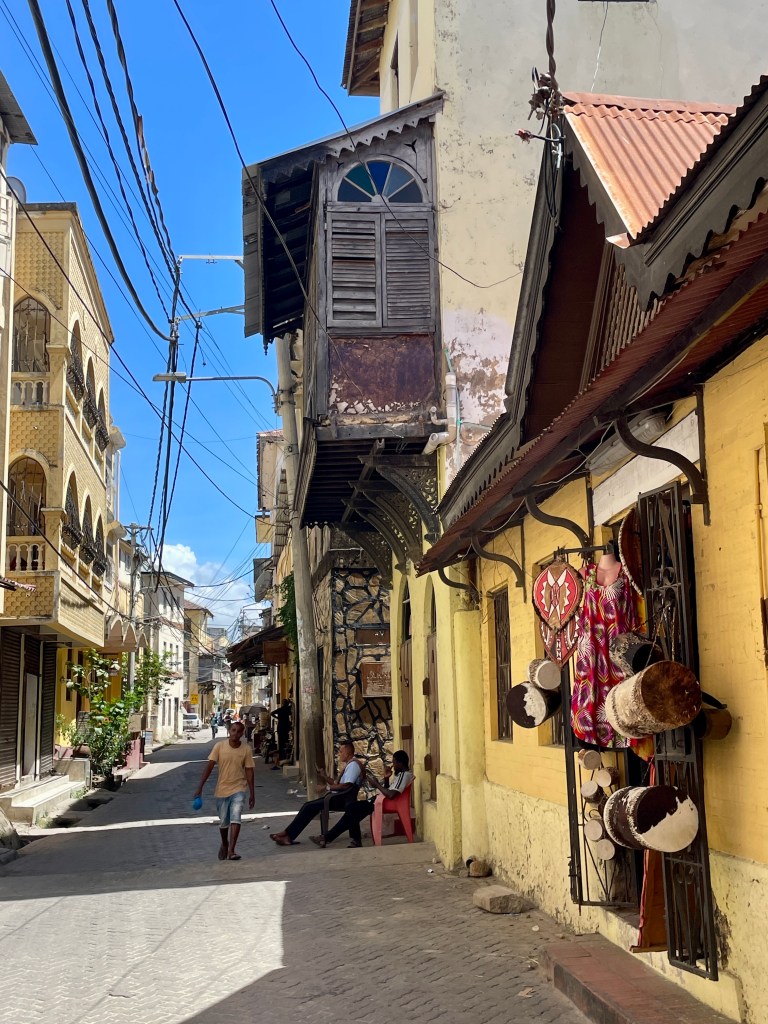
Sights as we drove back to Mombasa from Tsavo. Our 3rd day tour took us around town and to Fort Jesus, a Portuguese fort from the 16th century. It was a good tour, exposing us to lots of Mombasa.
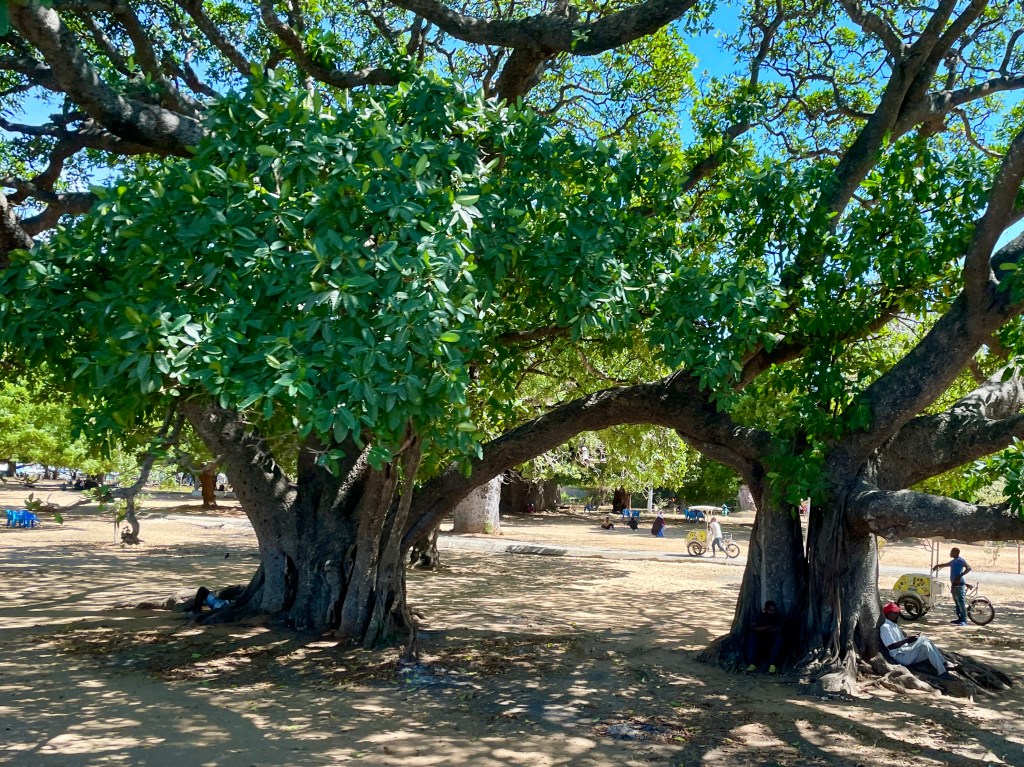
The tree of 10 uses (Reem tree). 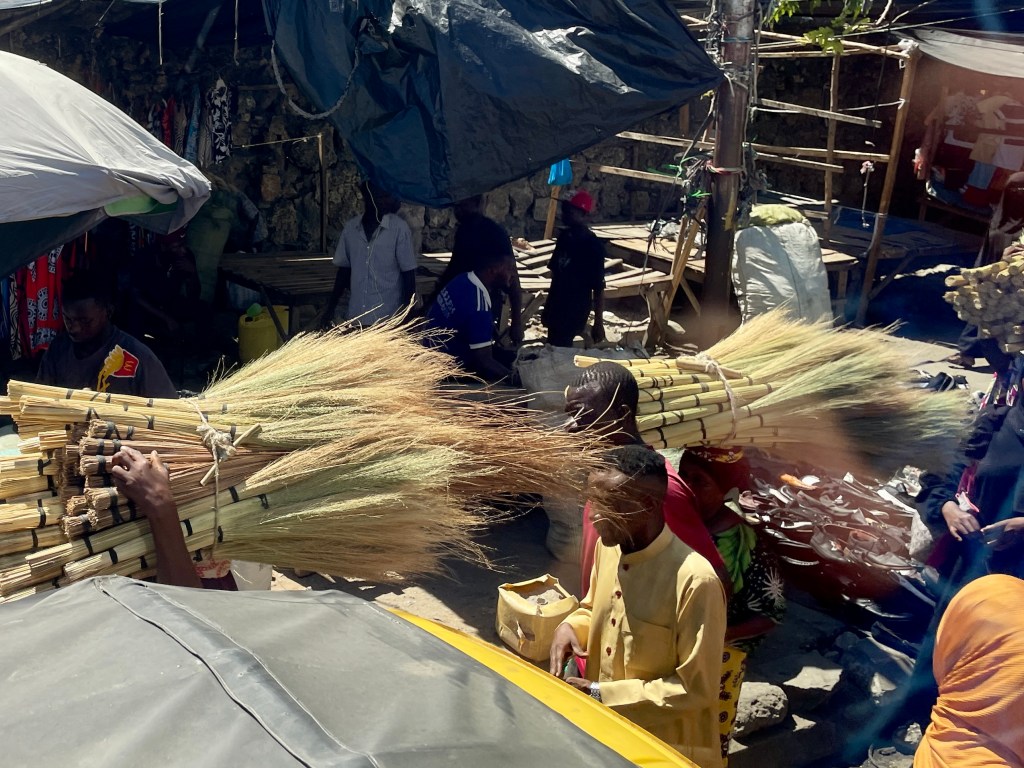
Broom material going to market 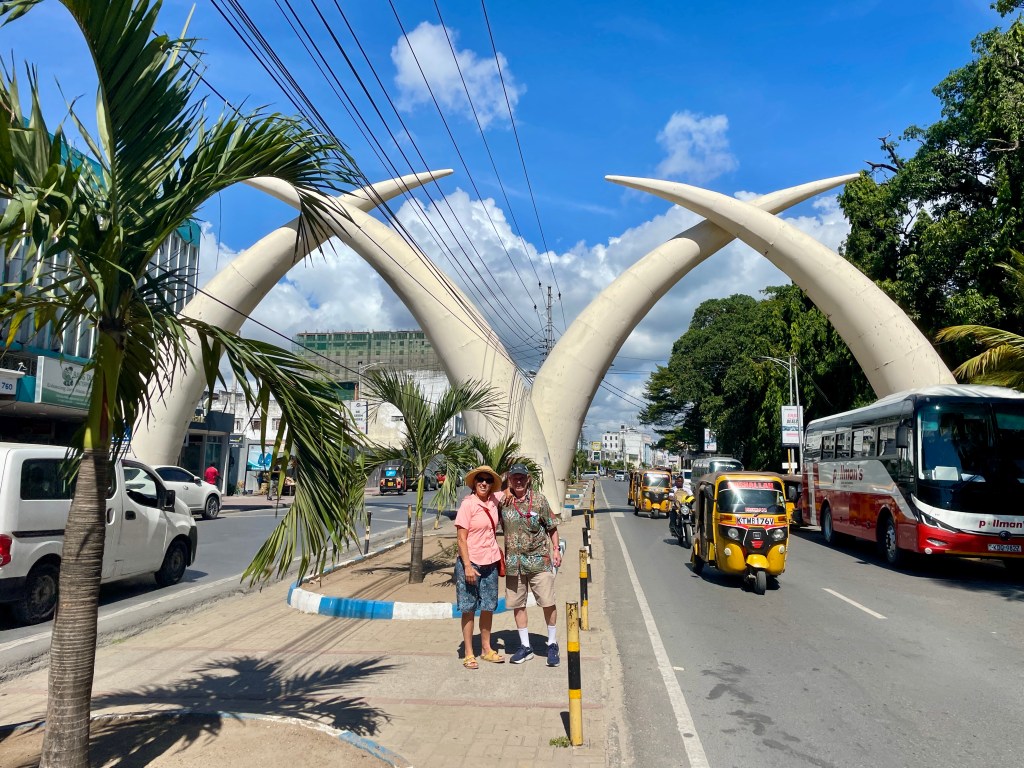
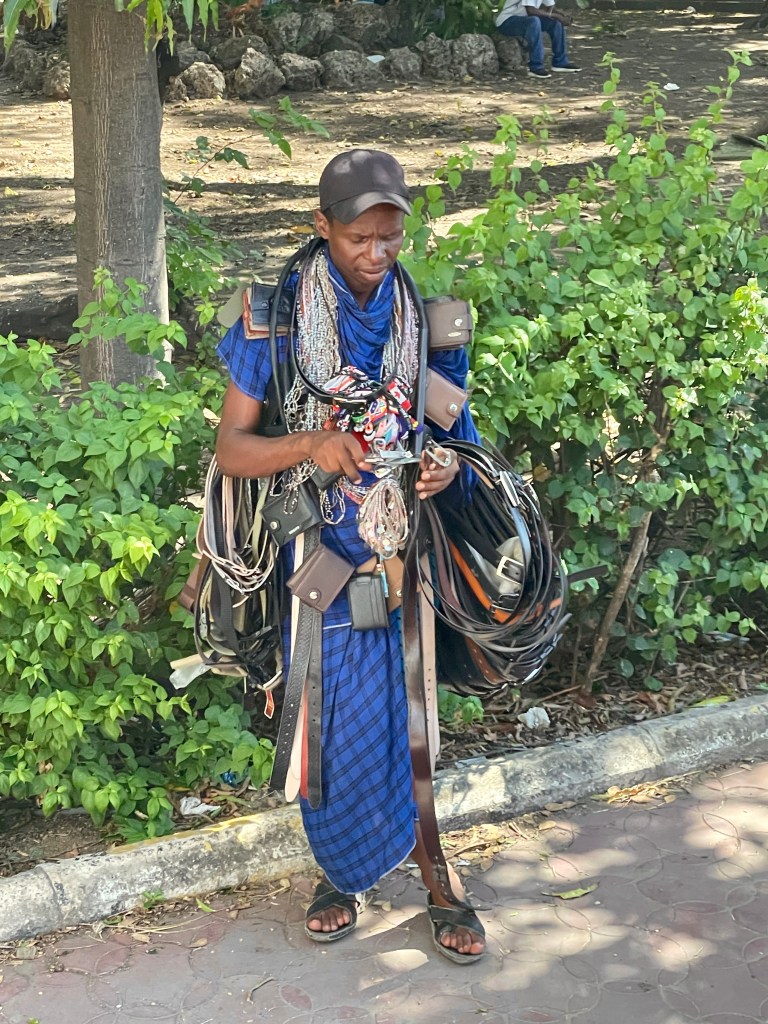
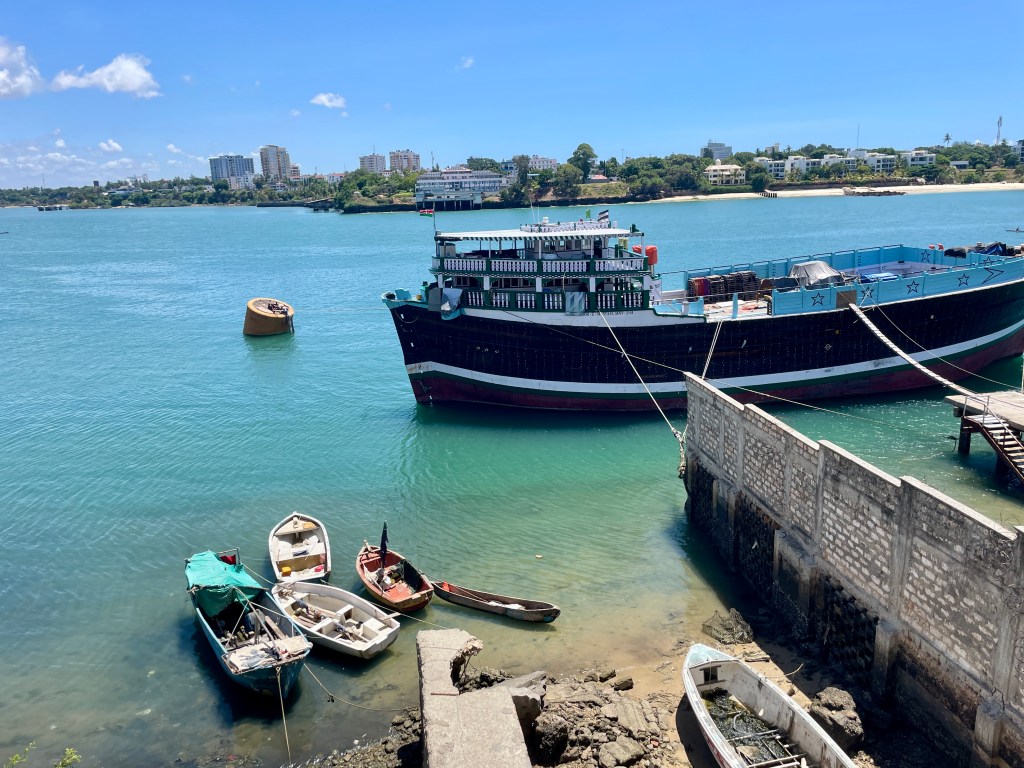
Outside the Fort 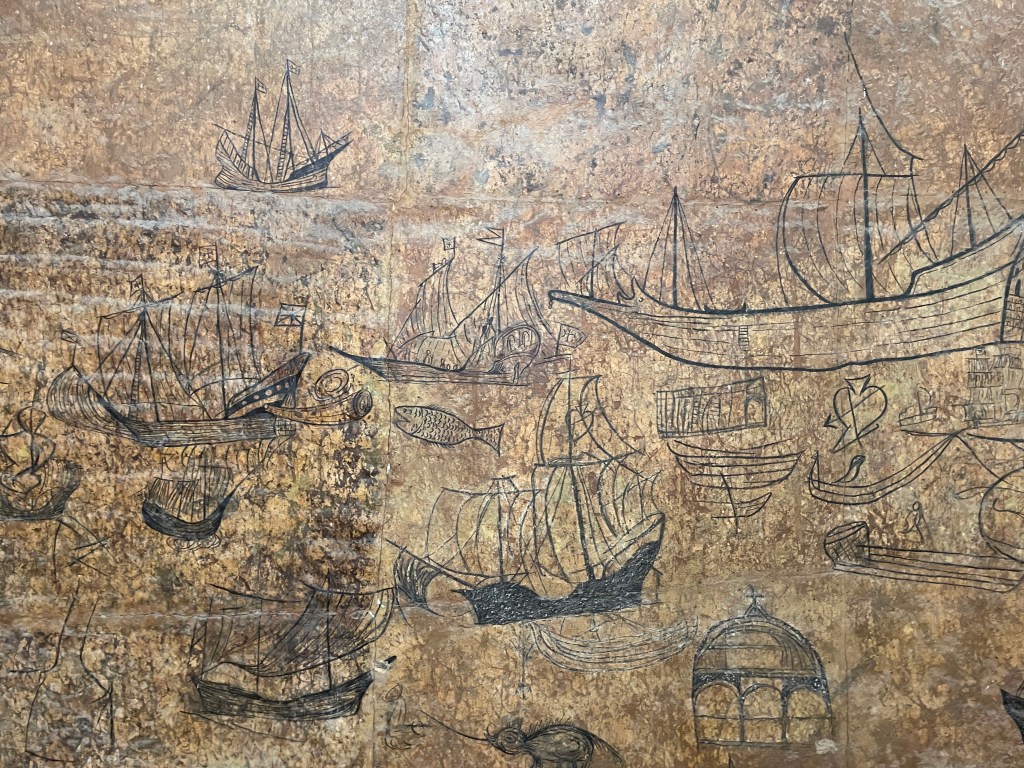
Wall drawing dating to 1600s on Fort Jesus wall 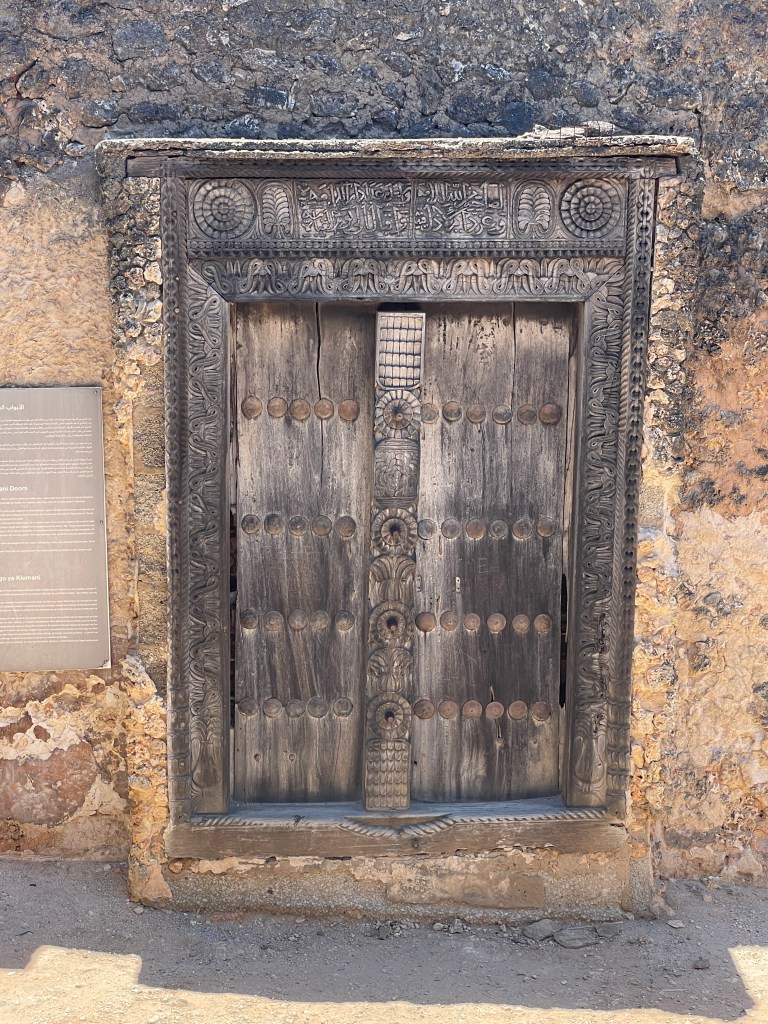
Omani door 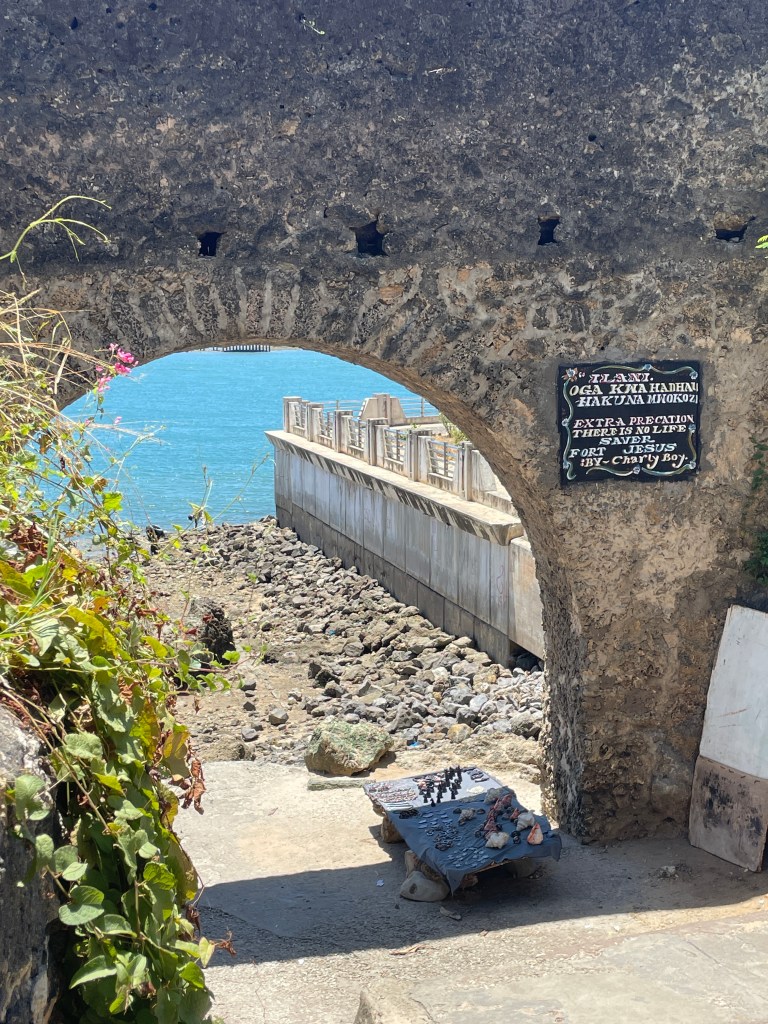
My top observations follow:
-There are lots of people living very close to the margin. Kenya is among the poorest countries in the world. We stand out as white in a sea of black. The ship’s port talk warned us all of potential crime and risks of walking alone in Mombasa. There is some logic to going after Americans who may be carrying about 6 months income, but we didn’t experience any problems. People were very pleasant and smiled a lot.
-I used to say in South America 50 years ago that you could get an insight into the economy by observing men shining shoes or the number of prostitutes. If one didn’t have a job, those were potential sources of income. In Mombasa, there are lots of people selling craft items or tending very small shops or driving tuk tuks. A guide told us that many of the tuk tuk and motorcycle drivers were renting the vehicles daily and could only keep what remains after their daily payment to the vehicle owner. It is a scrappy life. They are hard bargainers…but pleasant….because if they have a potential customer, they want to maximize their income.
-Their are thousands of “marginal” houses of sticks and mud or cow dung with corrugated tin roofs or siding. If situated strategically, the front of the house became a small shop. I don’t know how all of the small shops survive.
-There were lots of used clothes for sale. More developed countries send crates of clothing that are cleaned and displayed. It’s a poor spot for thrift shops.
-The people are very handsome and friendly. Frequently kids are in colorful costumes or school uniforms. They love to interact.
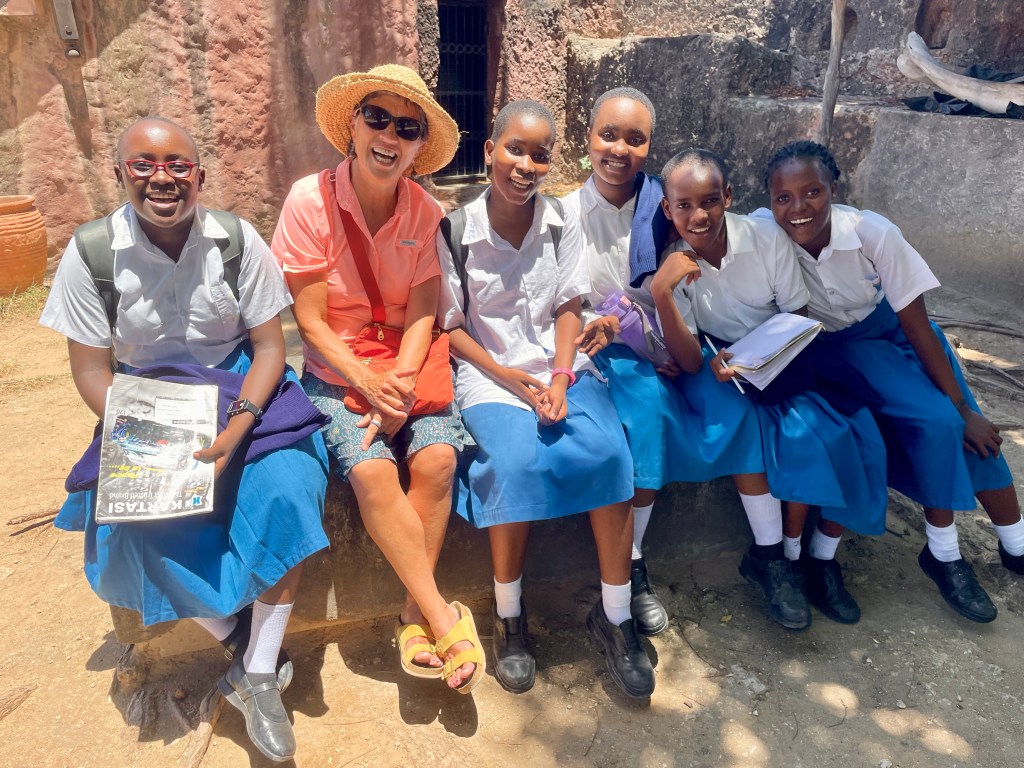
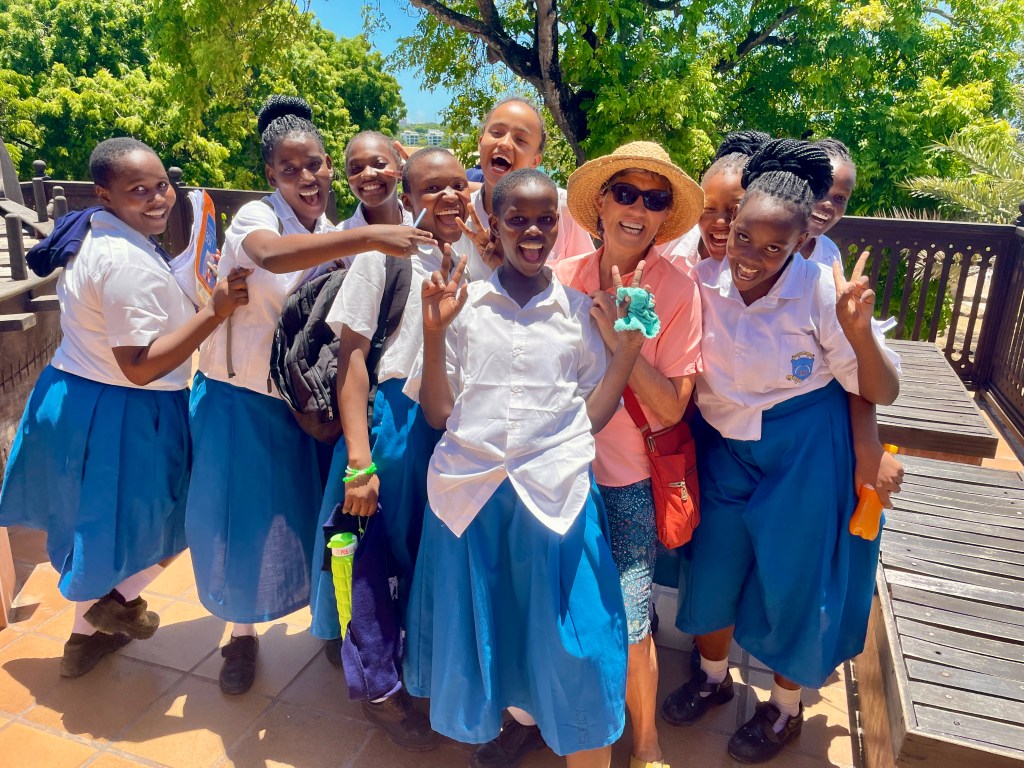
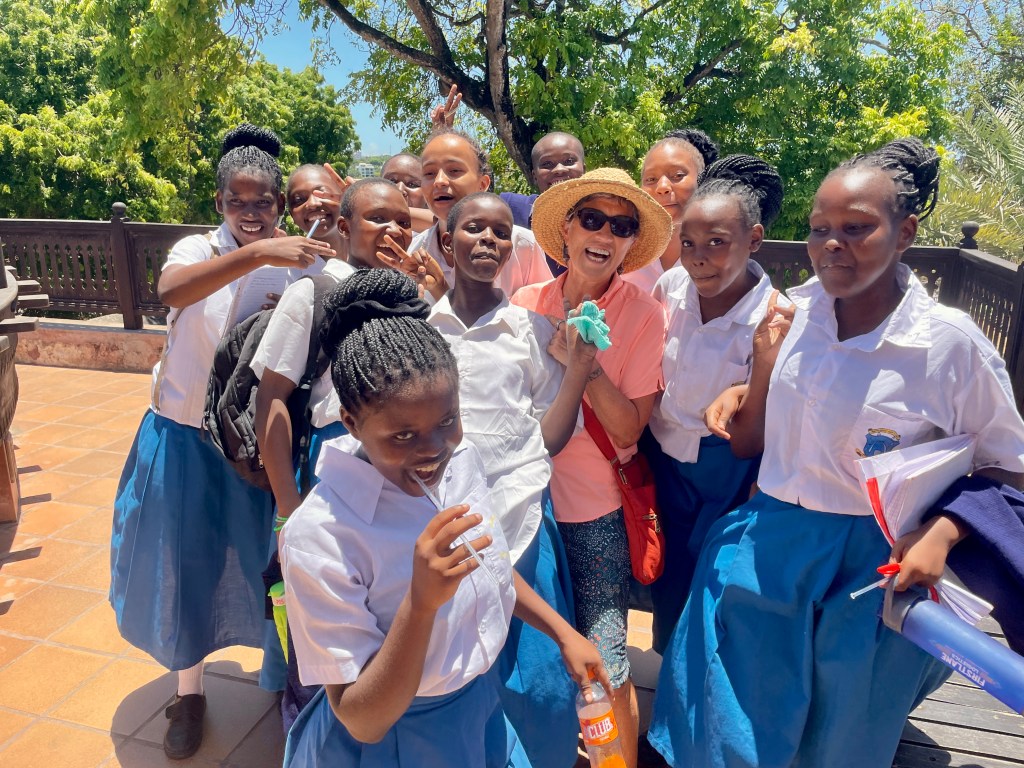
-At a wood carving co-op, we learned that each tribe tends to specialize in something….wood carving, marathon running, etc. At the co-op the carvers produced their wares and then they were sold at the large store on site or wholesaled elsewhere. There was an accounting system where each carver had a number. Each morning a carver could check the ledger to see how his sales were going. If they sold directly to a customer, they would be banned from the co-op for a year. The carver receives 80 percent of the proceeds. The other 20 percent goes to purchase wood for all of them or administrative fees.
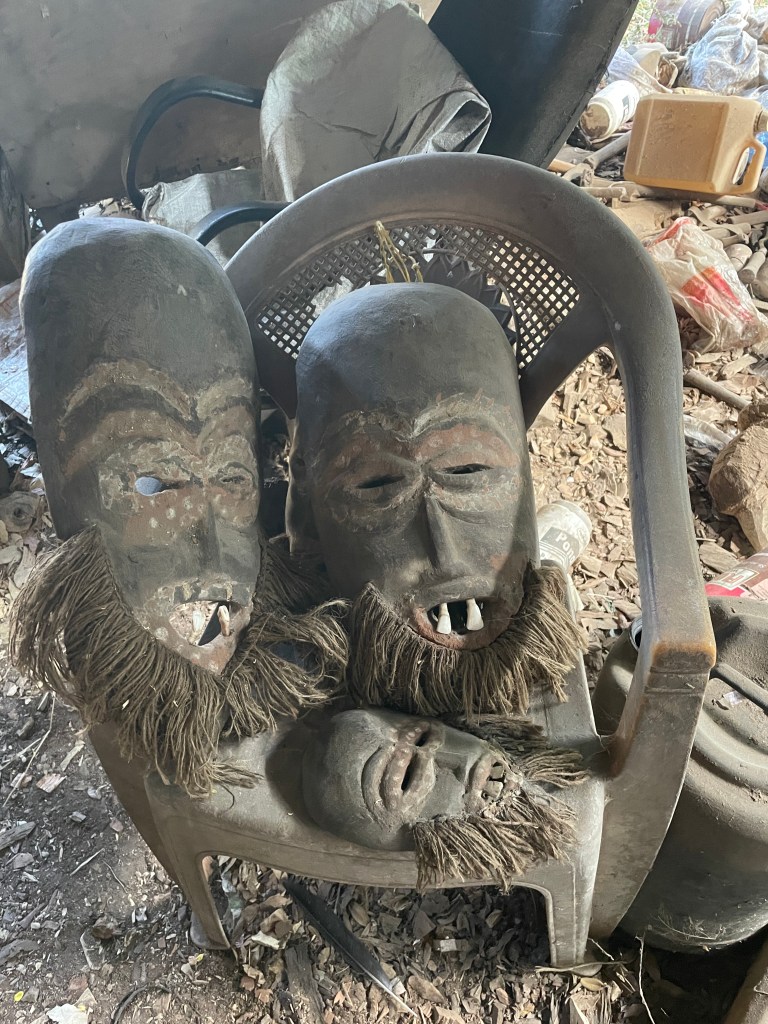
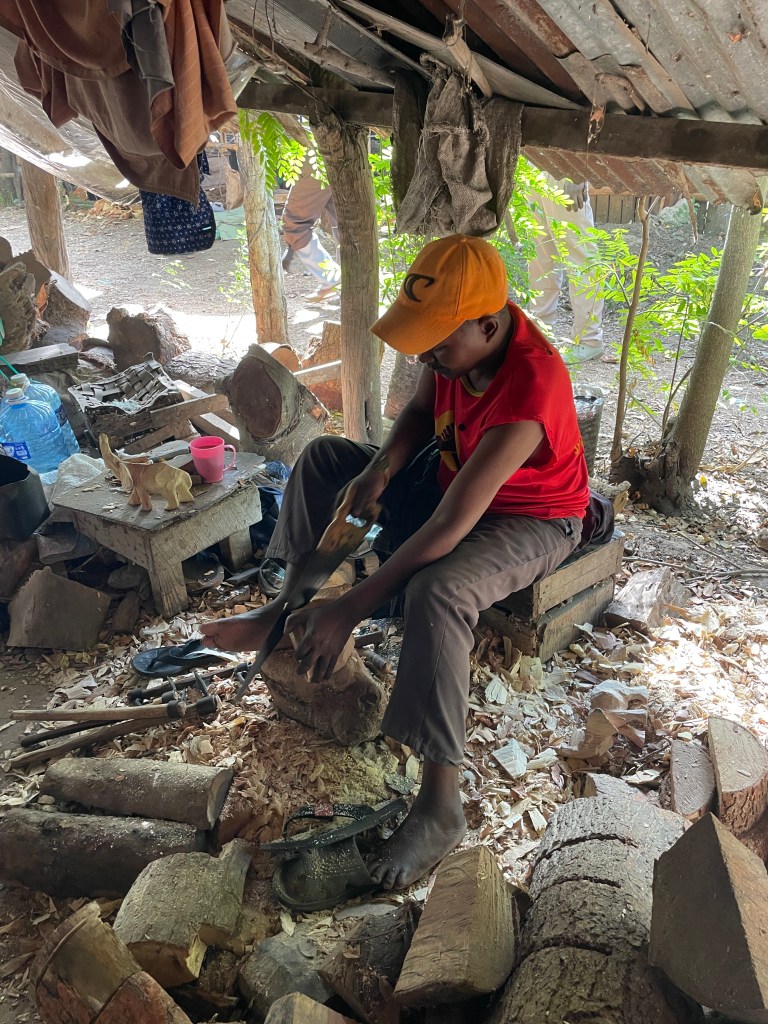
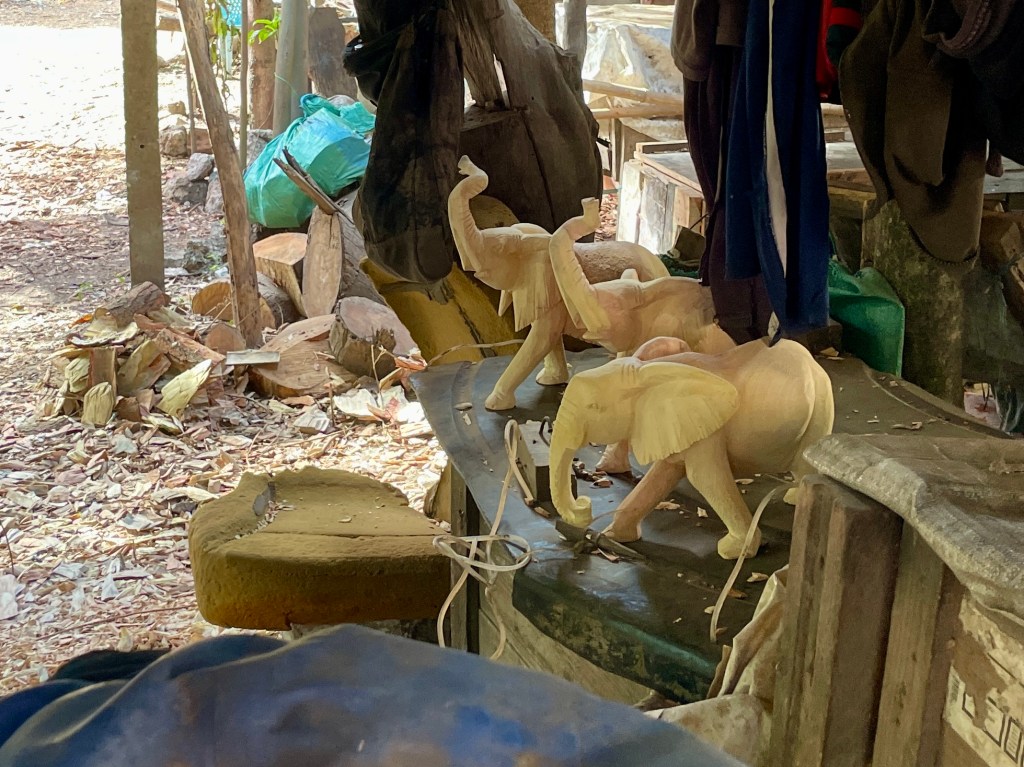
-We docked at the “old port.” The Chinese are building a major new one. After building a passenger rail line from Mombasa to Nairobi, they are also building roads that help get goods from Uganda and Rwanda to market. Guess who’s more popular, the US or China.
-We enjoyed the markets. I bargained aggressively and we bought perhaps 40 small soapstone carved animals. We’re giving them away to crew members who have been giving us such great service. I think the merchants know that we tourists are told to only offer half of what the merchant asks. Consequently, they might offer a carving for $5 when they would settle for $1. So many passengers would offer $2.50 and bargain from there. On one of our last deals, the merchant was interested in my ballpoint pen. ..for his kid, he said. To get it, he offered 2 carved animals for my pen and $20. I countered at $2 and the pen. He was dumbfounded., looking for a new floor of something like $10. I ended up paying $3. After a long bargaining session, one merchant asked if I were a policeman. I think that was a compliment.
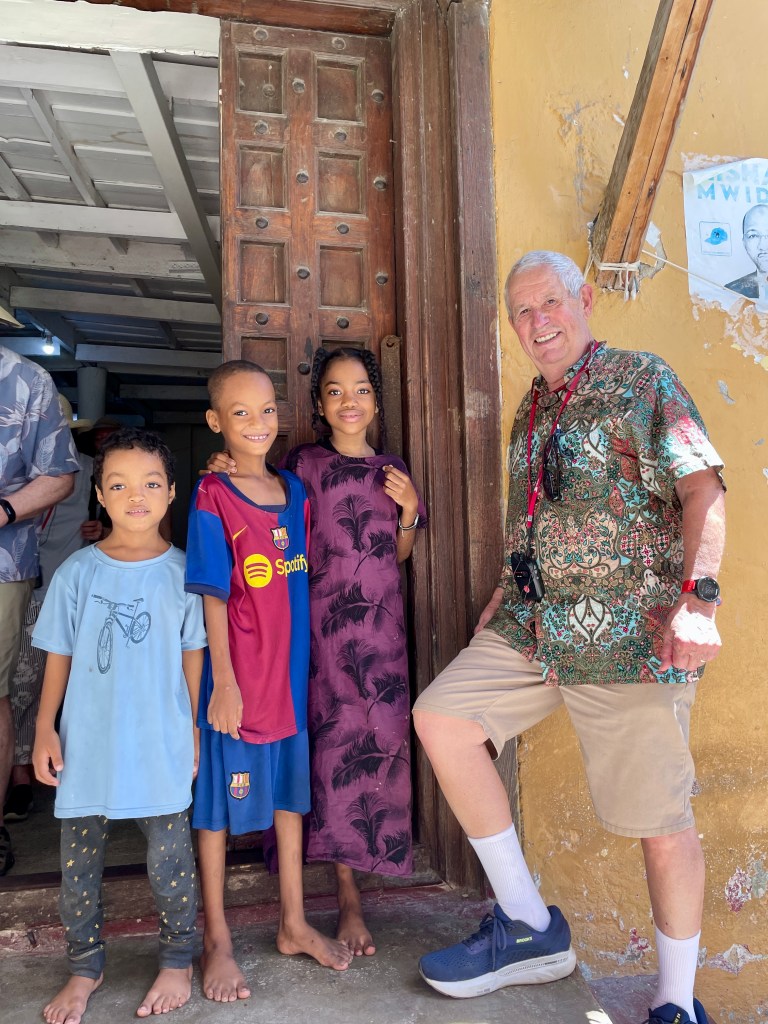
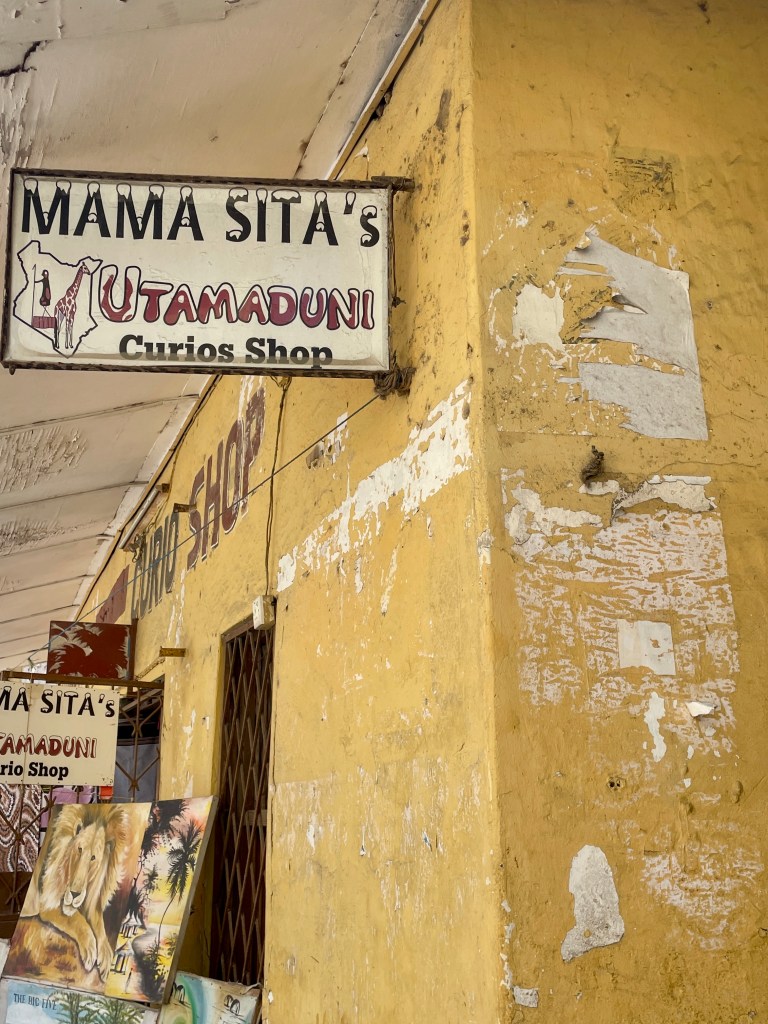
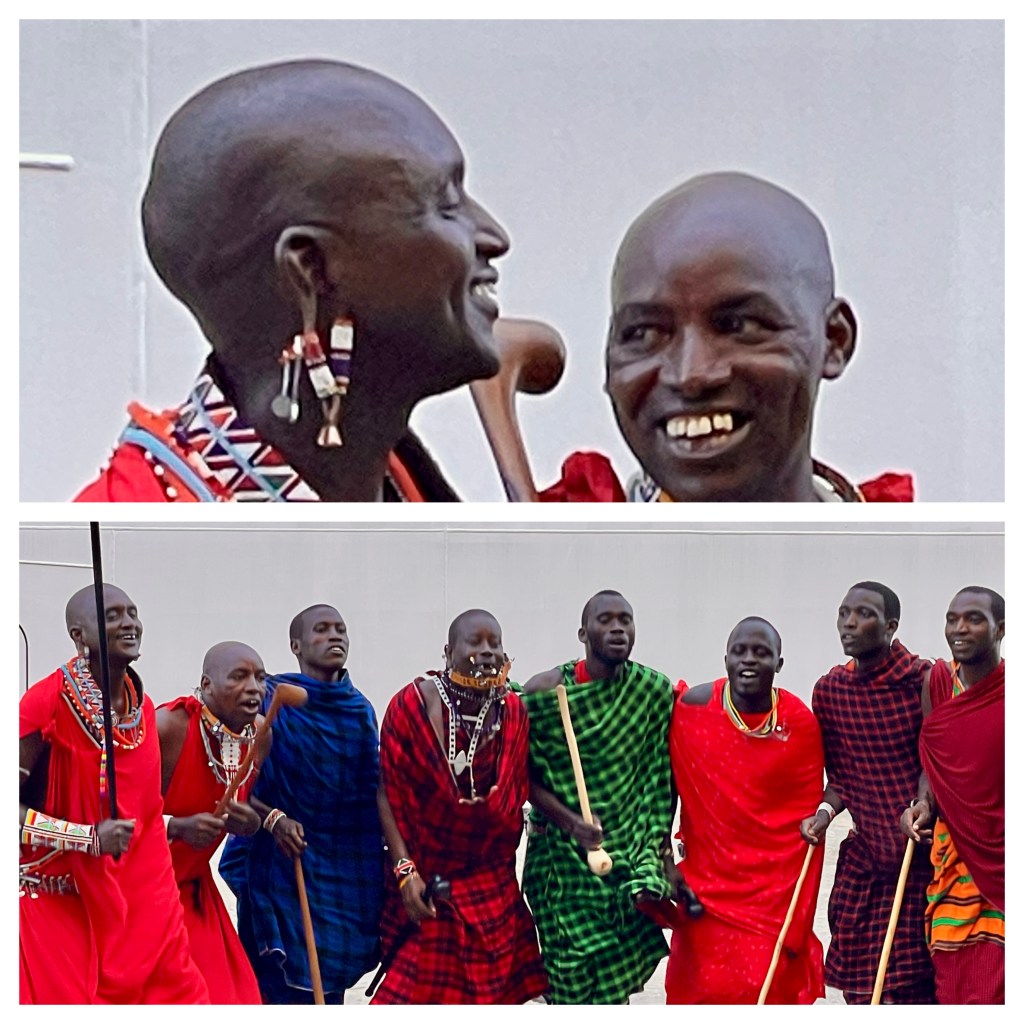
As the ship was nearing departure, this group of Maasai arrived and danced and sang for us. It was a real party. 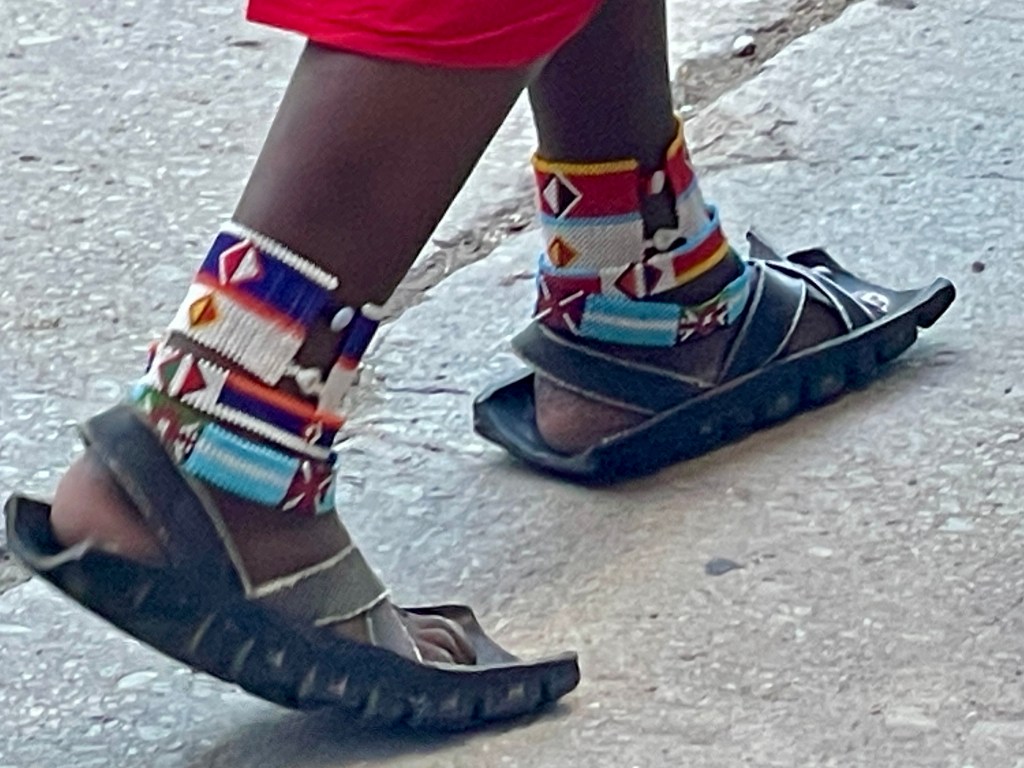
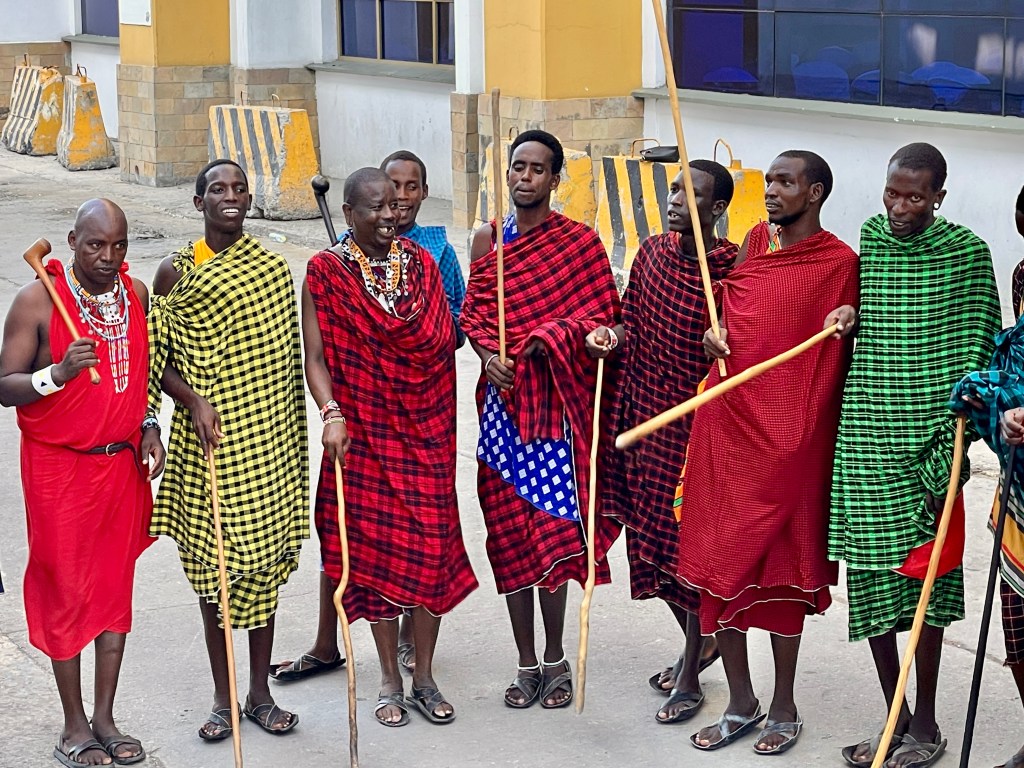
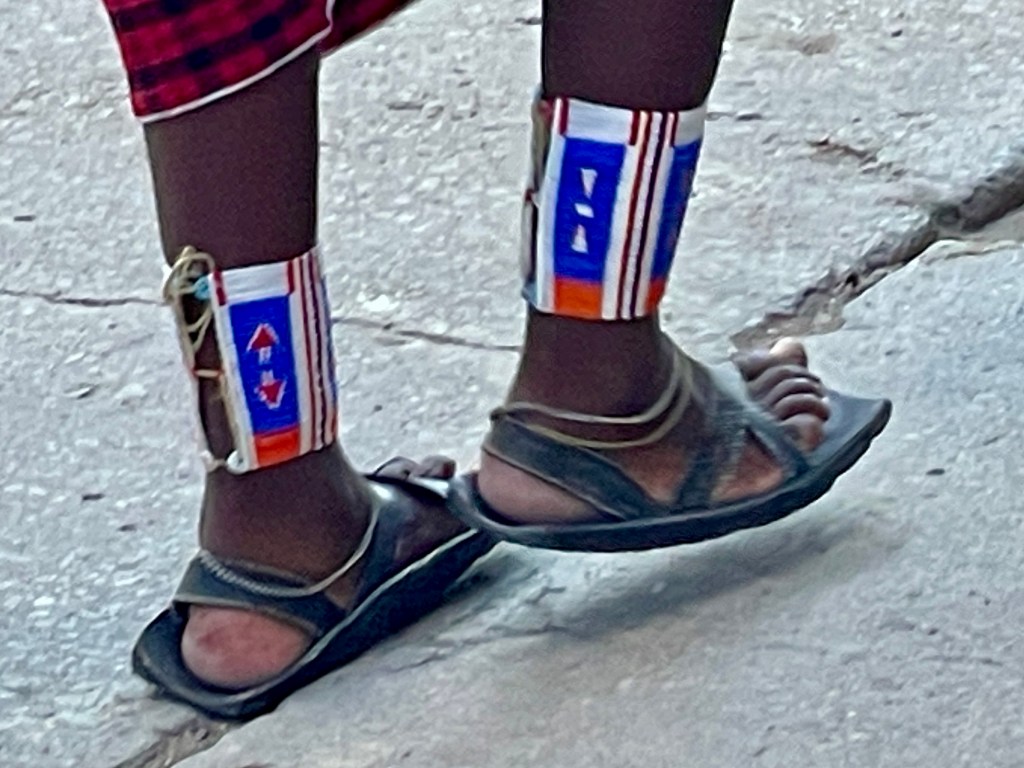
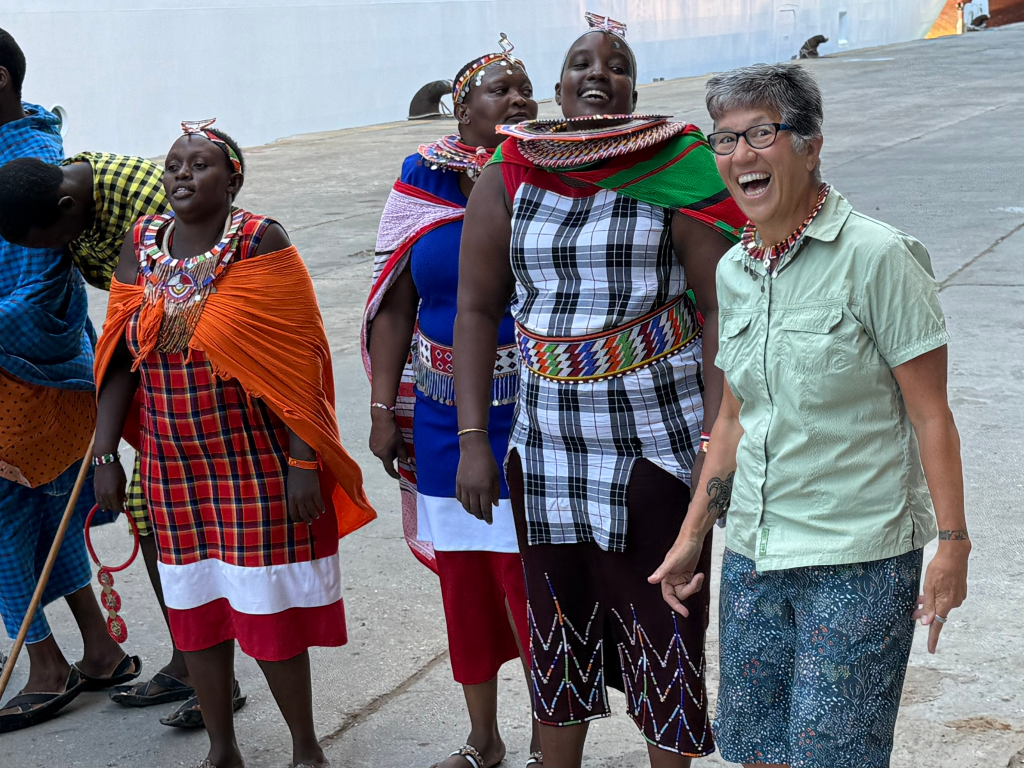
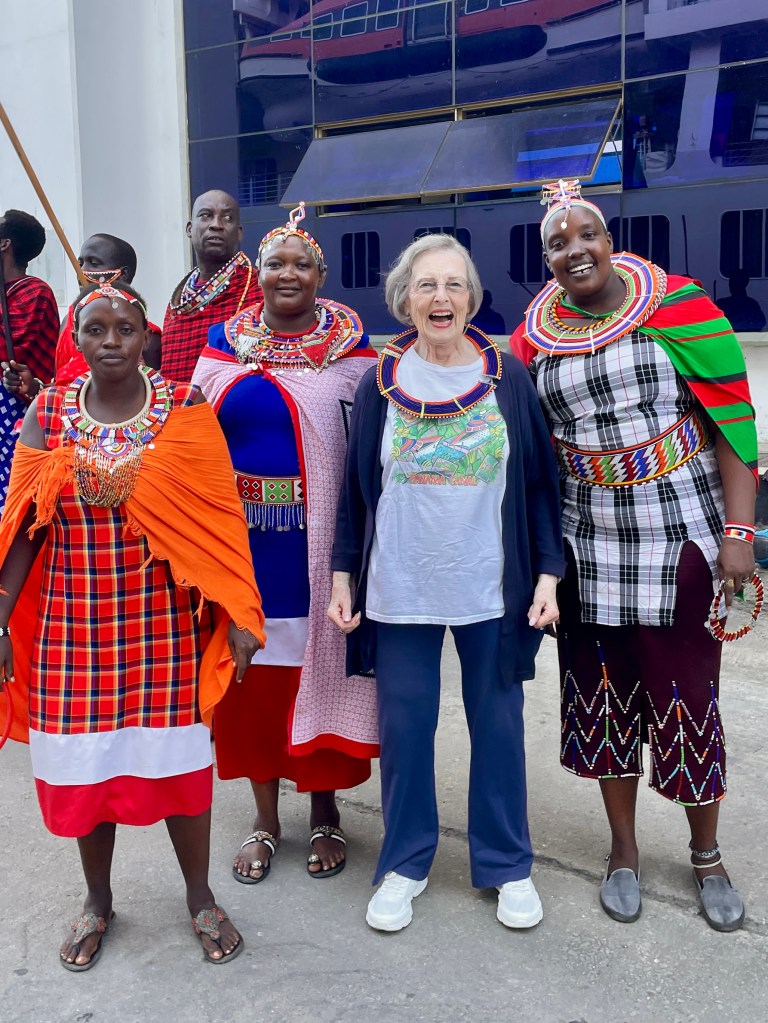
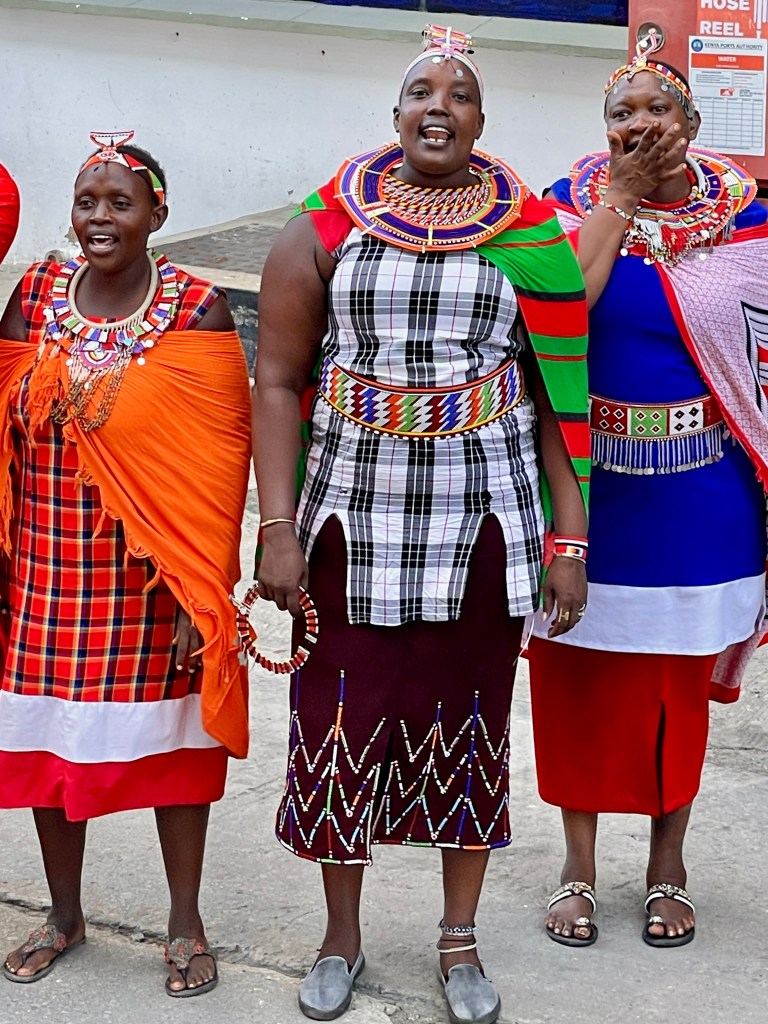
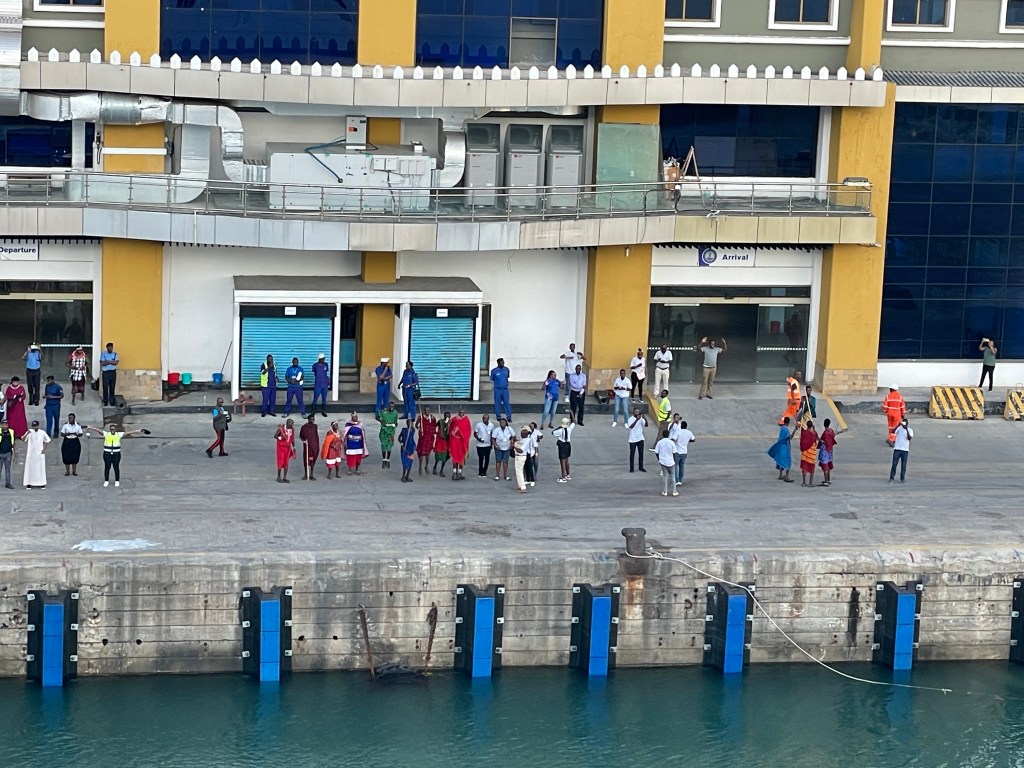
They continued as our ship pulled away. Such a memory of Kenya. -
Victoria, Seychelles
(9571 miles from The Dalles, Oregon).
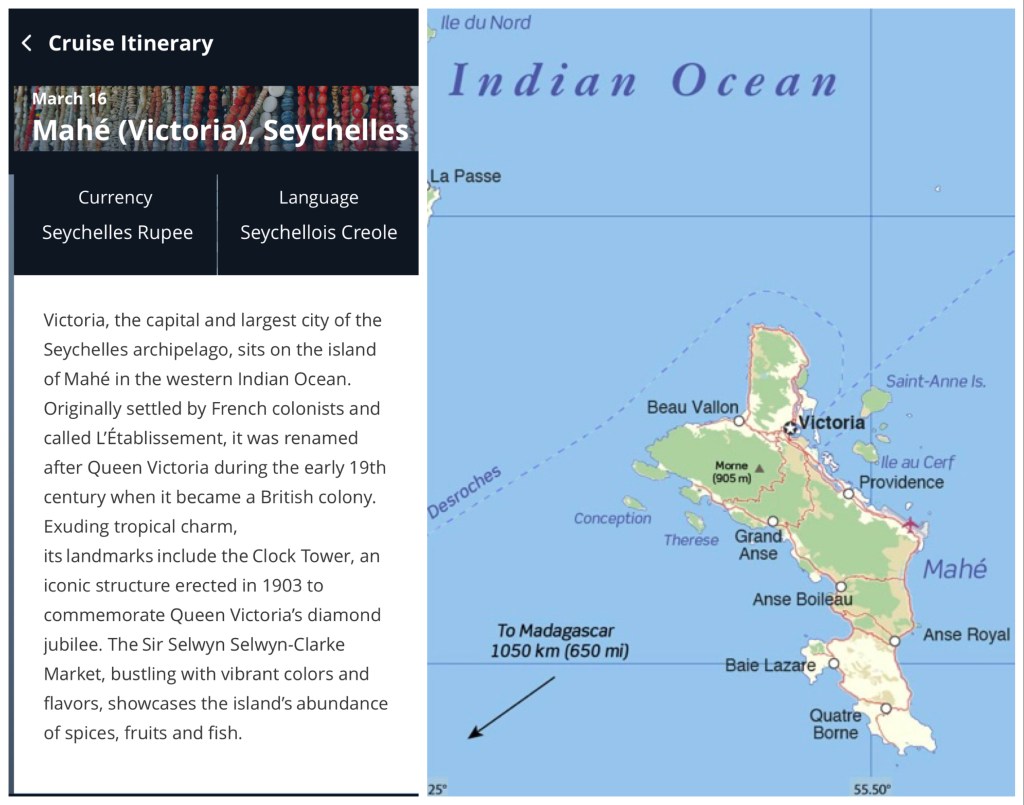
Map credit: Nations online 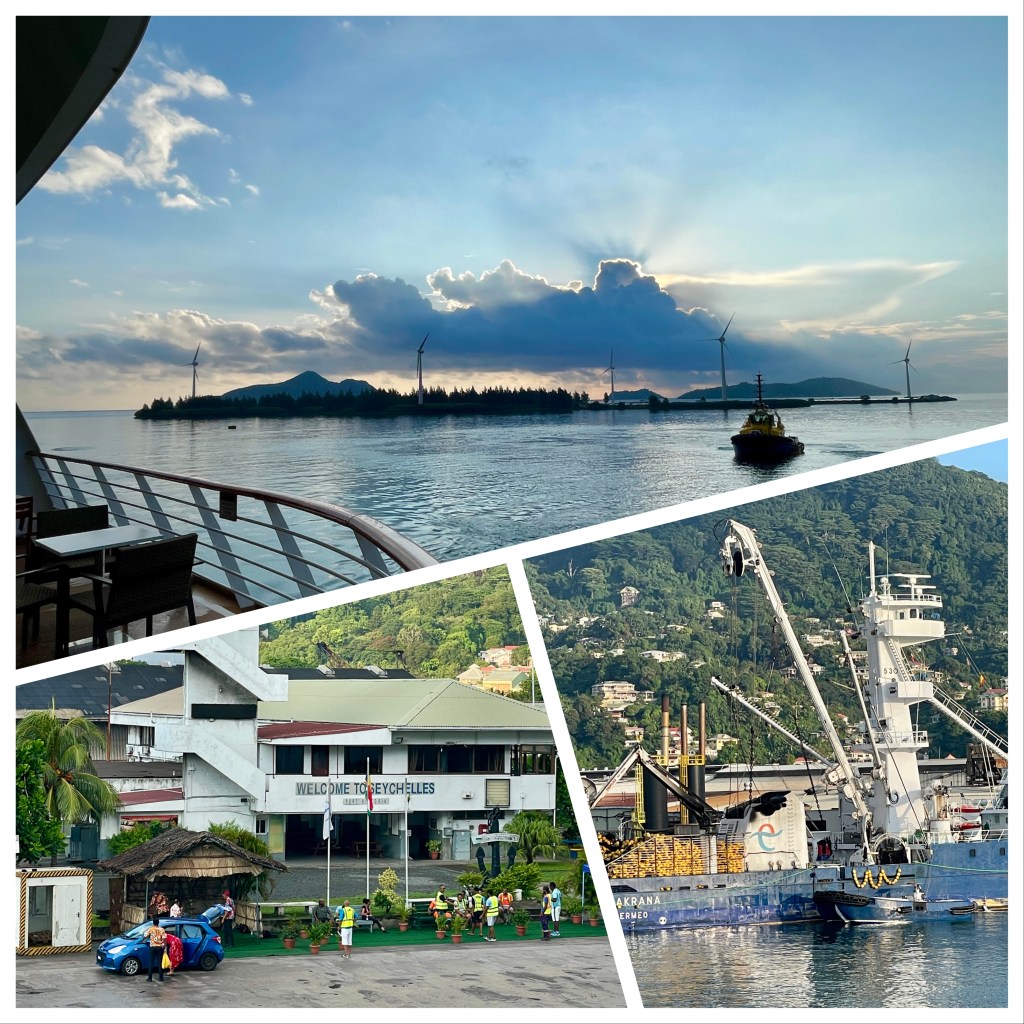
Our arrival– the rising sun, Victoria port building, and tuna boats. 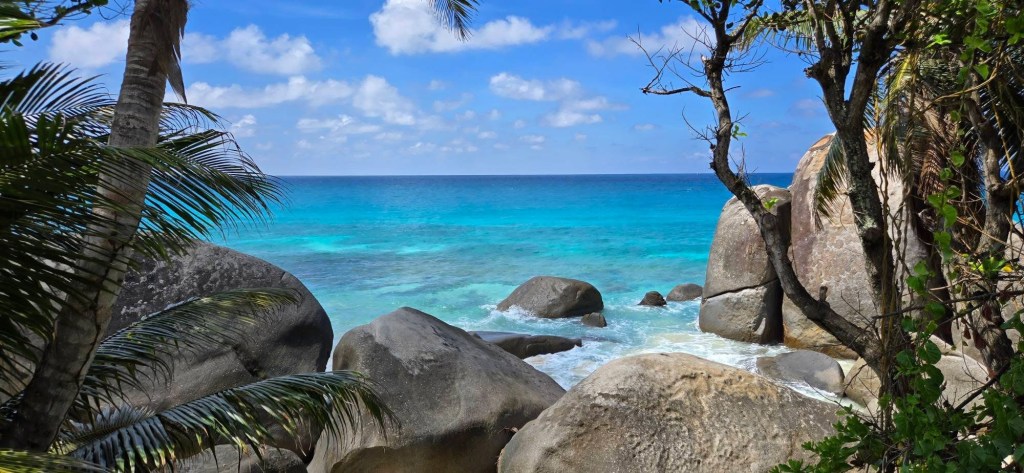
March 16
As we sailed through what is referred to as “the blue desert,” the only interesting stuff is revealed by bathymetry. I just learned that bathymetry is the measuring and study of underwater features and I had to use it. At about 3 miles of depth, there’s lots to study.
I was last in the Seychelles in 1970 on a Semester at Sea stopover. At that time, the population of the British Protectorate was about 50,000…half of what it is today. Our port, Victoria, has a population of about 25,000. As I recall the previous visit, I walked away from a transaction because the vendor wouldn’t accept my offer. I’m hopeful of finding her and agreeing to her terms.
The history of the 155 islands is different from those we have visited in the South Seas and Asia. They were not inhabited by early travelers and not colonized by the Portuguese, Dutch, and/or English. Vasco de Gama stopped by in the late 1400’s, but kept moving. Occasionally, pirates used the islands for a stopover. The French and British competed for control of the islands in the 19th century, with both countries leaving their languages, which are still spoken, along with Creole which came from the slaves imported to work sugarcane and other crops. In 1976, Seychelles became an independent country, the smallest in Africa. It now has the highest Human Development Index of any African country.
Parenthetically, I should add that on a previous cruise I stated that we would travel to the “shithole countries” and turn right. On this one, I would have stated that we would reach the “sc’s” and turn left. I didn’t realize that Seychelles was considered part of Africa. And, these are really beautiful islands so I don’t think that president trump’s description applies.
There isn’t much going on in Seychelles. The major employers have been fishing and services. Karla’s guide mentioned that tuna has been prosperous and attracted the Spanish, Korean and Chinese; he expressed concerns with over-fishing the waters and blamed the government for permitting their giant trawlers as long as the permit fees were paid.
There are a few agricultural products; coconuts stand out. The fastest growing employer is tourism and they are trying to attract foreign investment. Close to 50 percent of the land is in National Parks so that their assets can be preserved and attractive to tourists.
I took an excursion that focused on several high points in Victoria and then traveled around the northern part of the island, Mahe. The botanical gardens were very attractive and, besides the trees and plants, had lots of fruit bats and giant tortoises. Our stop in the center of Victoria was not much. It’s a small town and just about everything was closed on Sunday. We did appreciate the very scenic drive. I’m happy that we stopped, but it will be at least 50 more years before we return. It might have been better if shops were open; I would have liked ‘bat on a stick” or some other local delicacy.
Karla was enthusiastic about her boating/snorkeling adventure which I’ll let her describe. She, too, encountered beautiful islands and nice people.
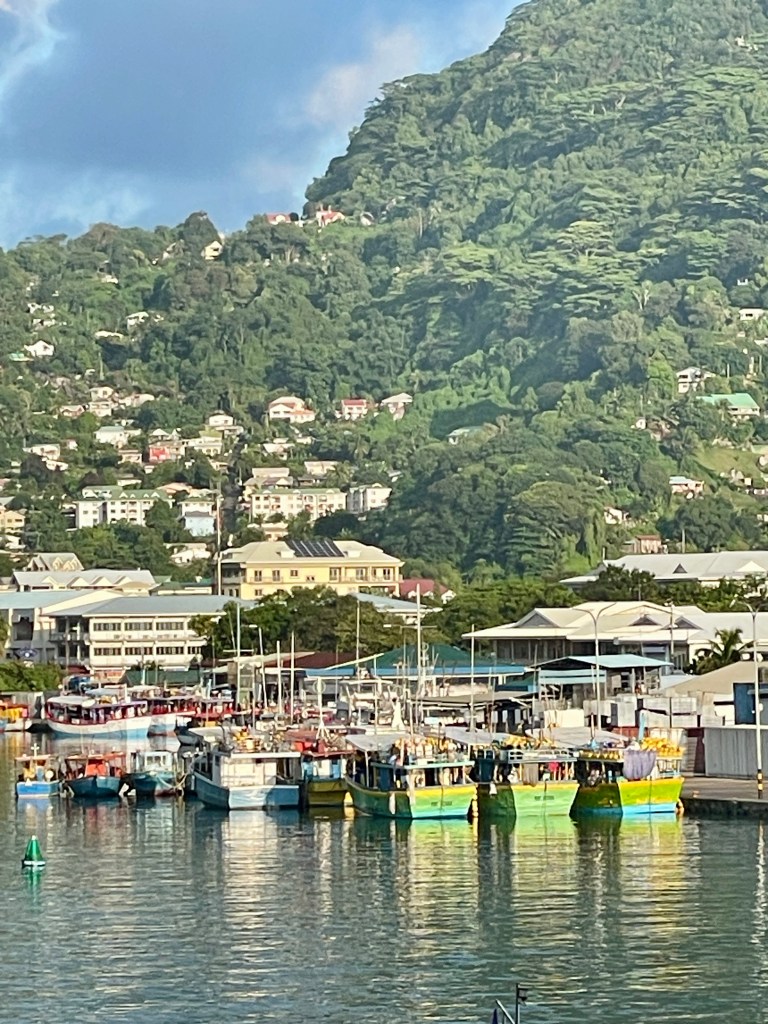
Tuna boats 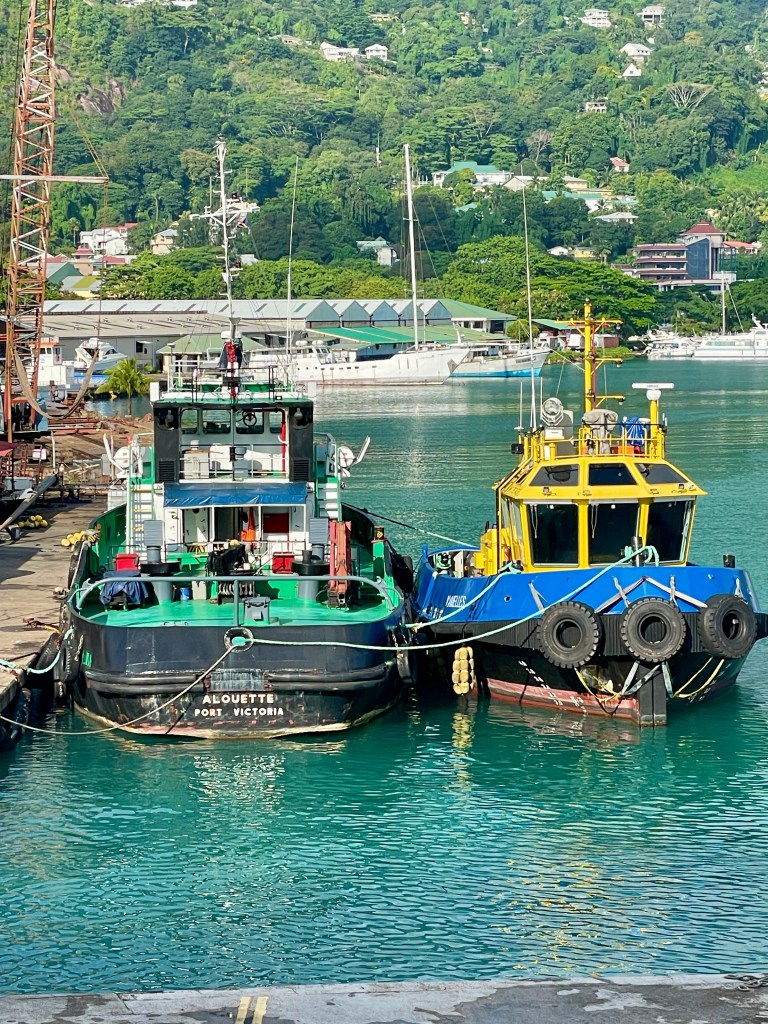
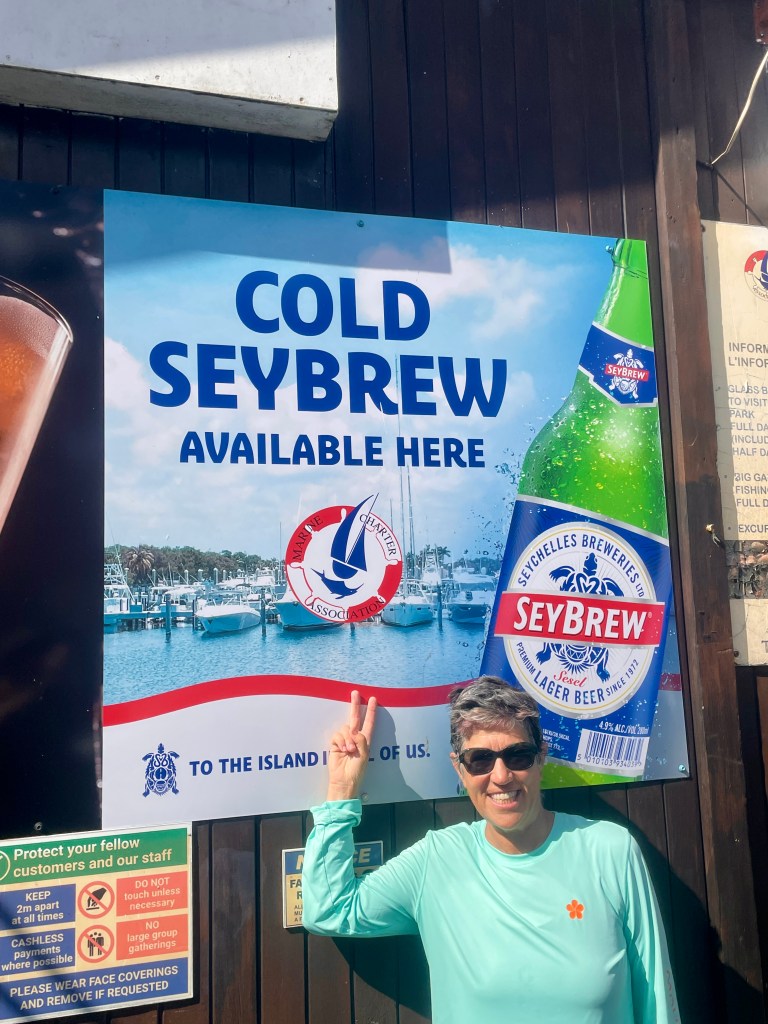
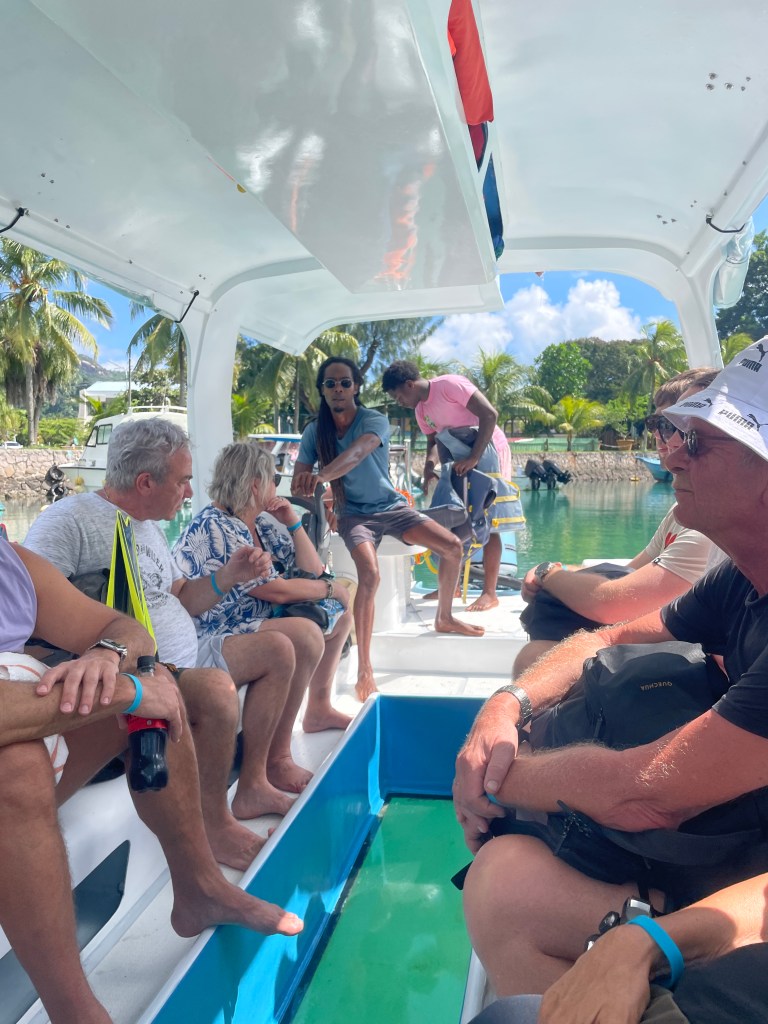
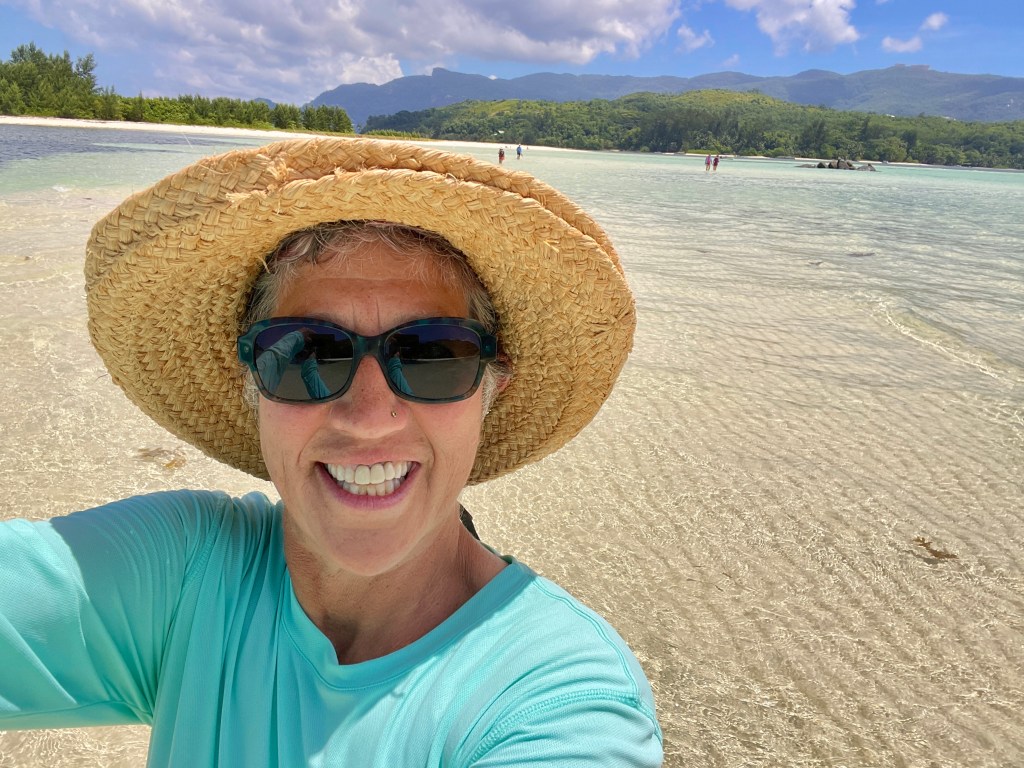
Karla here: rather than going with the somewhat overpriced and overattended Viking snorkeling excursion, I found one offered through trip advisor and contacted the local operator. For $120, they offered a shared trip with about 9 others, visit to the St. Anne Marine Sanctuary, fish feeding (we were given a couple slices of bread and threw pieces in the water), hike around the naturally shaded Moyenne Island and seeing the tortoises in their natural habitat, visit to a white sand beach, snorkeling, and a barbeque lunch with coconut fish curry, mango salad, grilled shrimp, chicken and fish. One of the best things about the trip was being able to hang on the bow of the boat and our small group– in contrast to a Viking excursion.
All very good. The easy, relaxed vibe from the beginning was all “island vibe”– the “dont worry, be happy” kind.
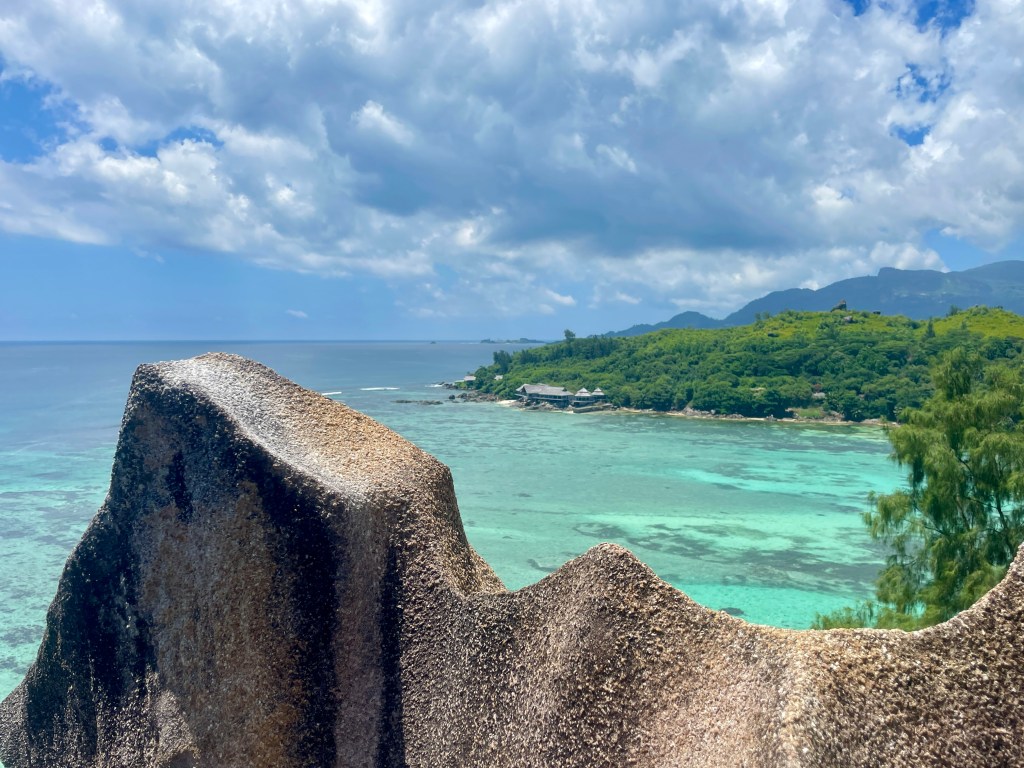
Moyenne Island hike 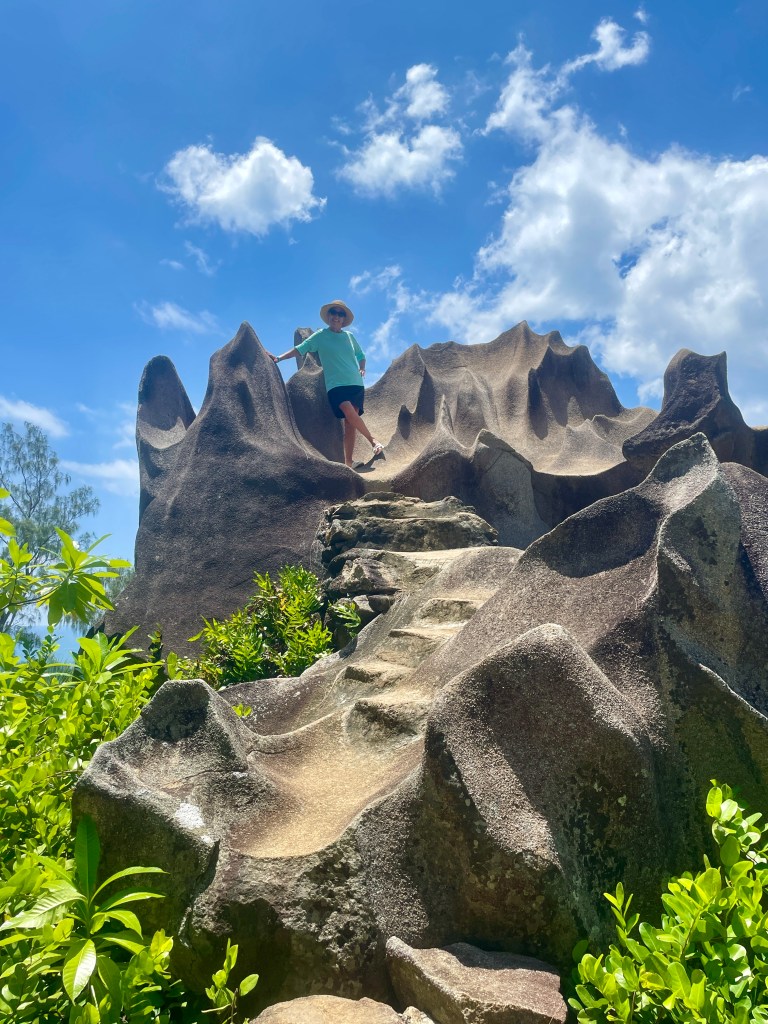
Clamshell rock 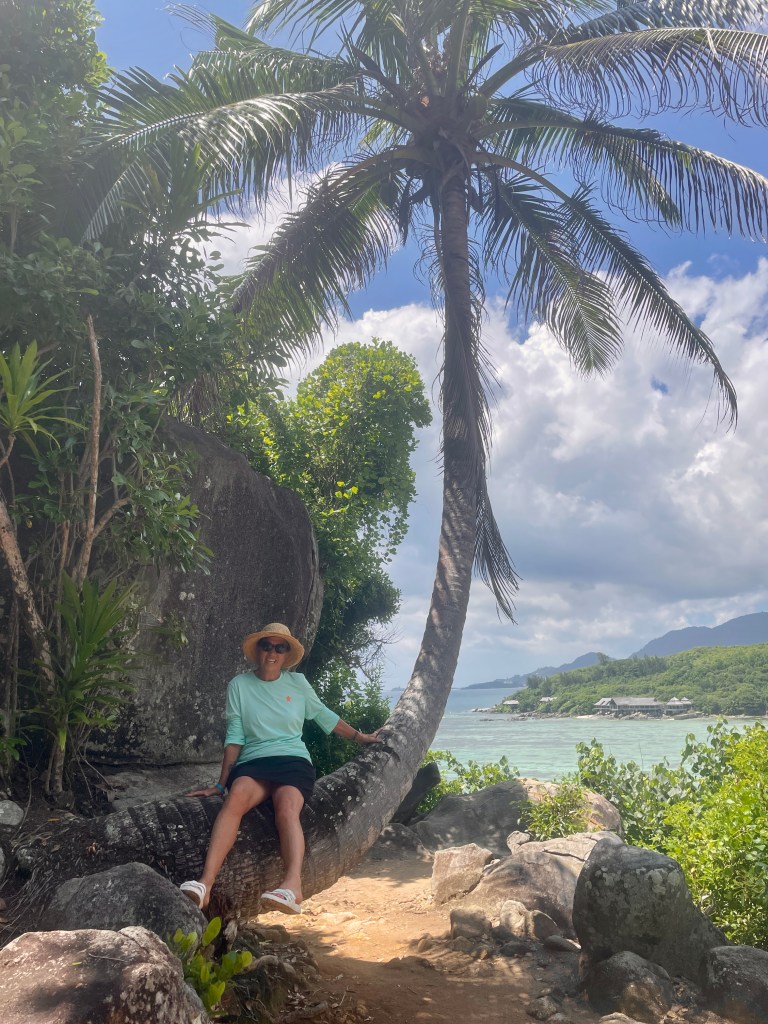

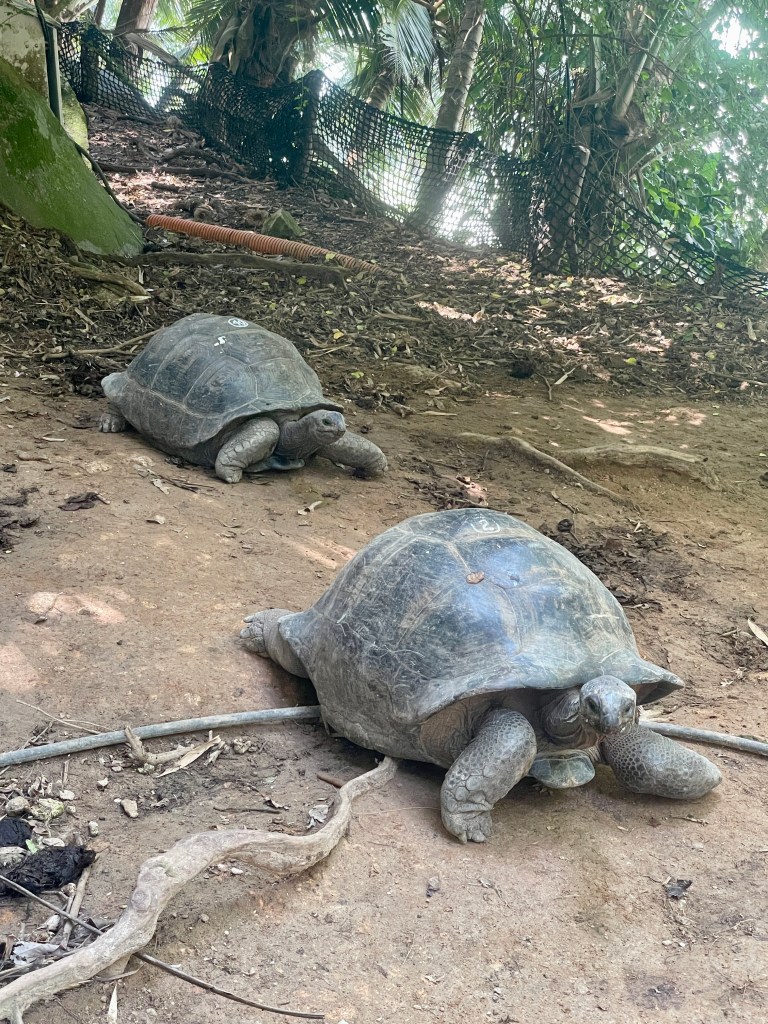
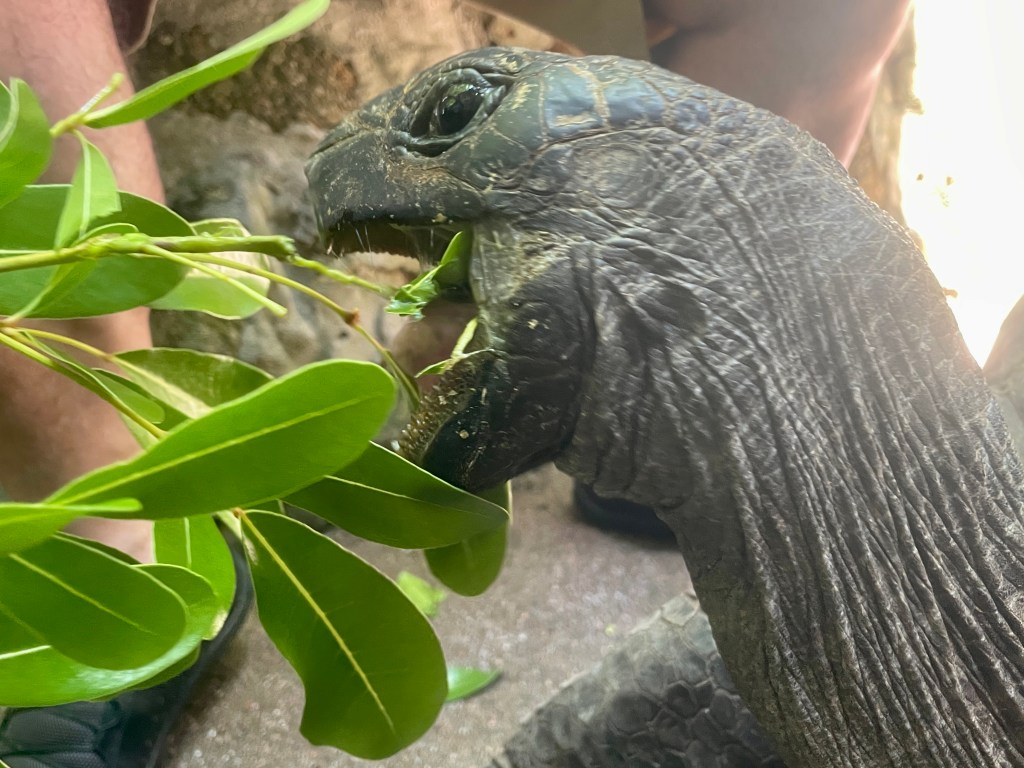
Aldabra Giant Tortoise 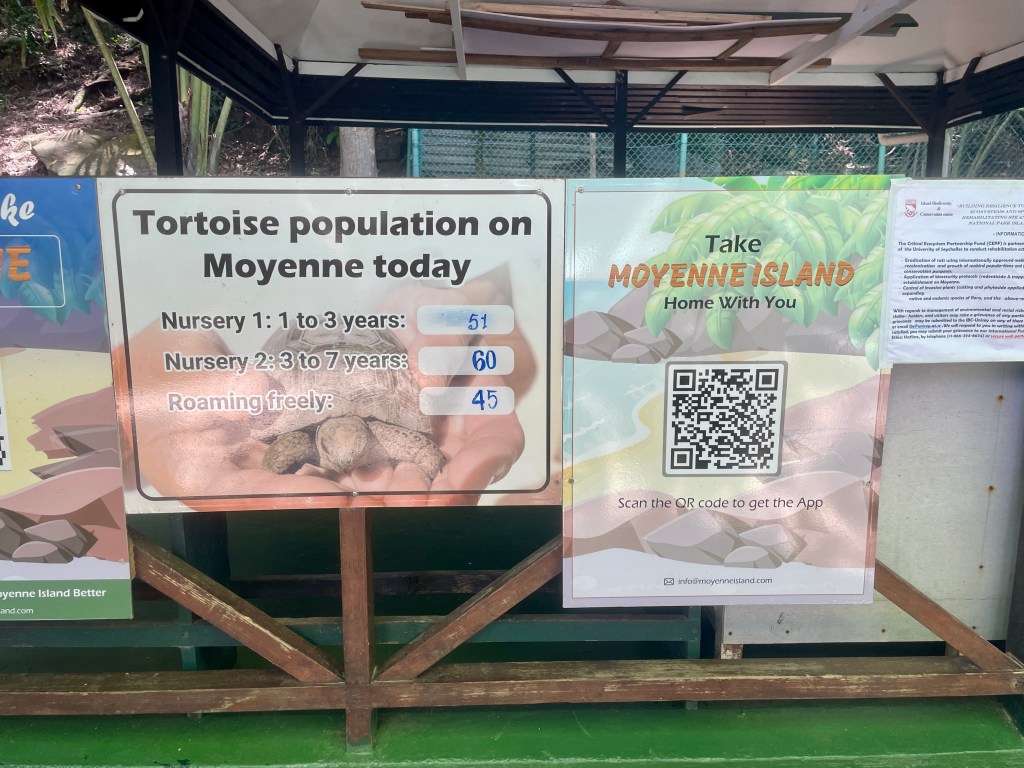
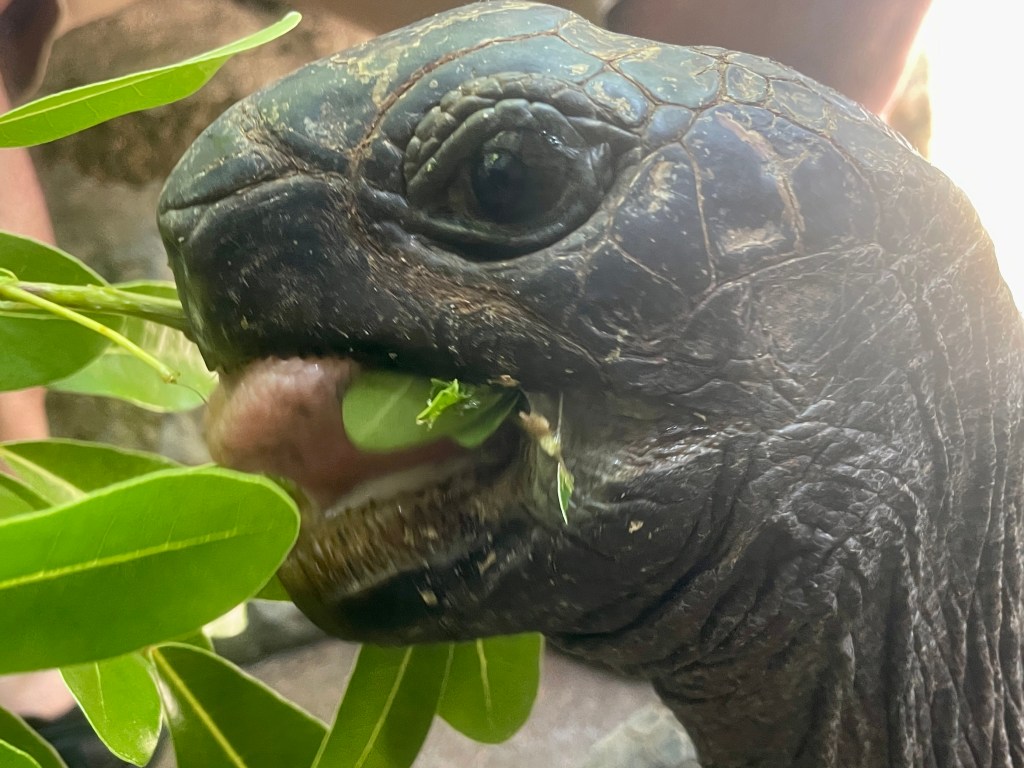
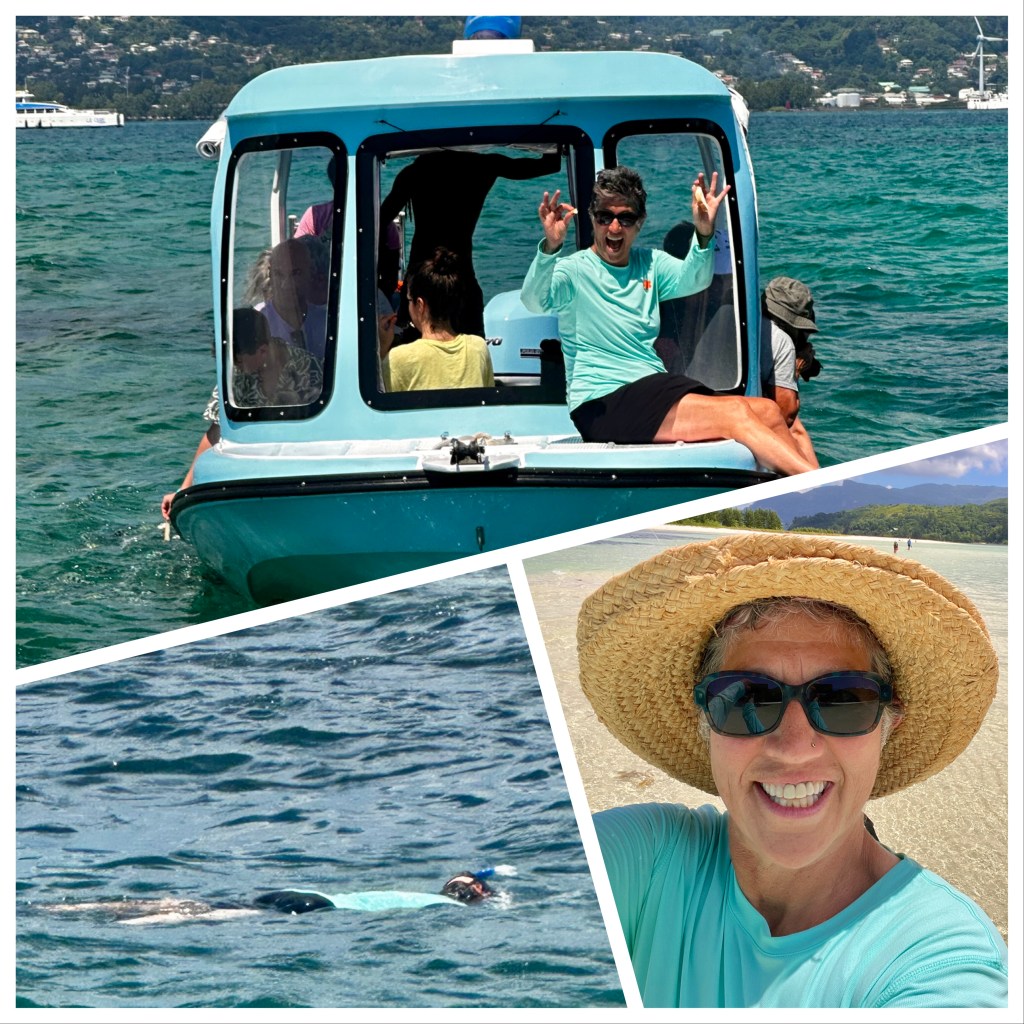
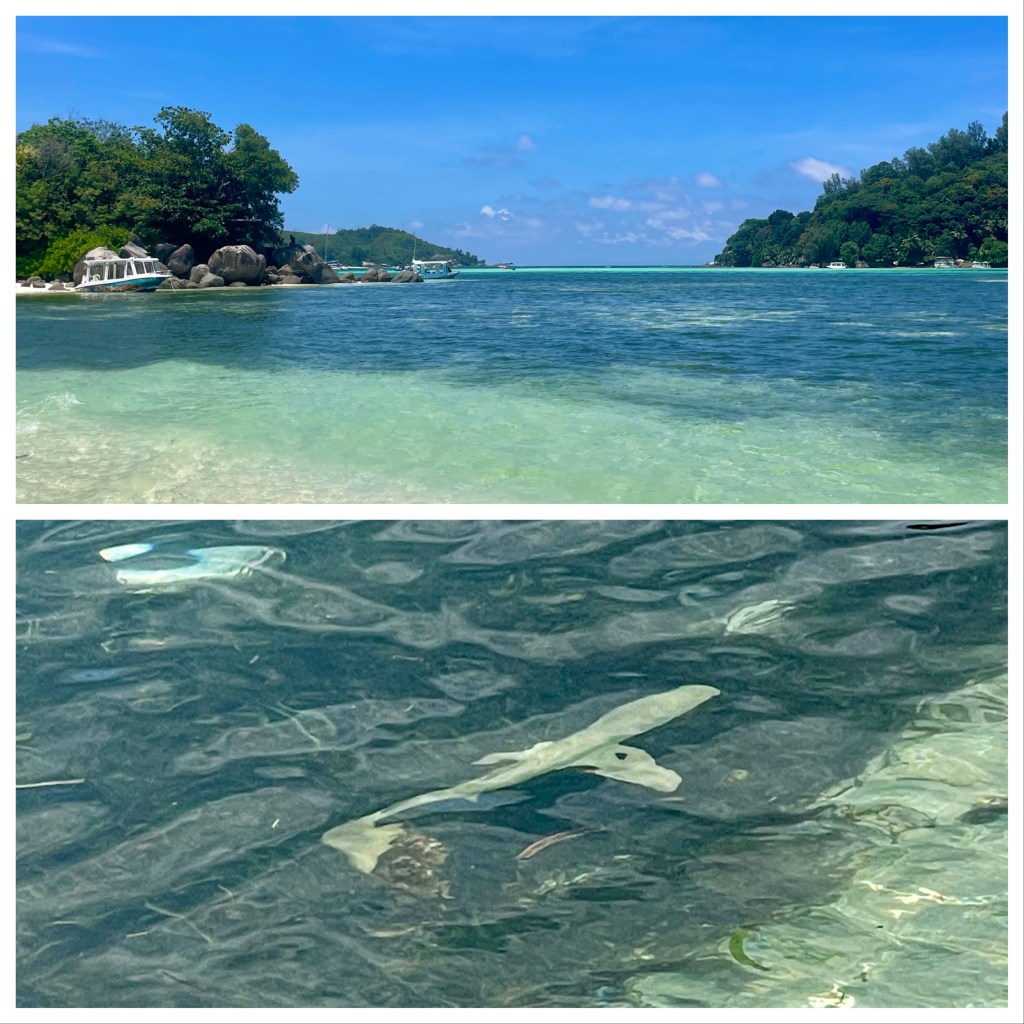
The sandbar above allowed beachcombers to walk to another island and I saw this little guy in about 3 feet of water. “Baby shark, do do do do do do.” 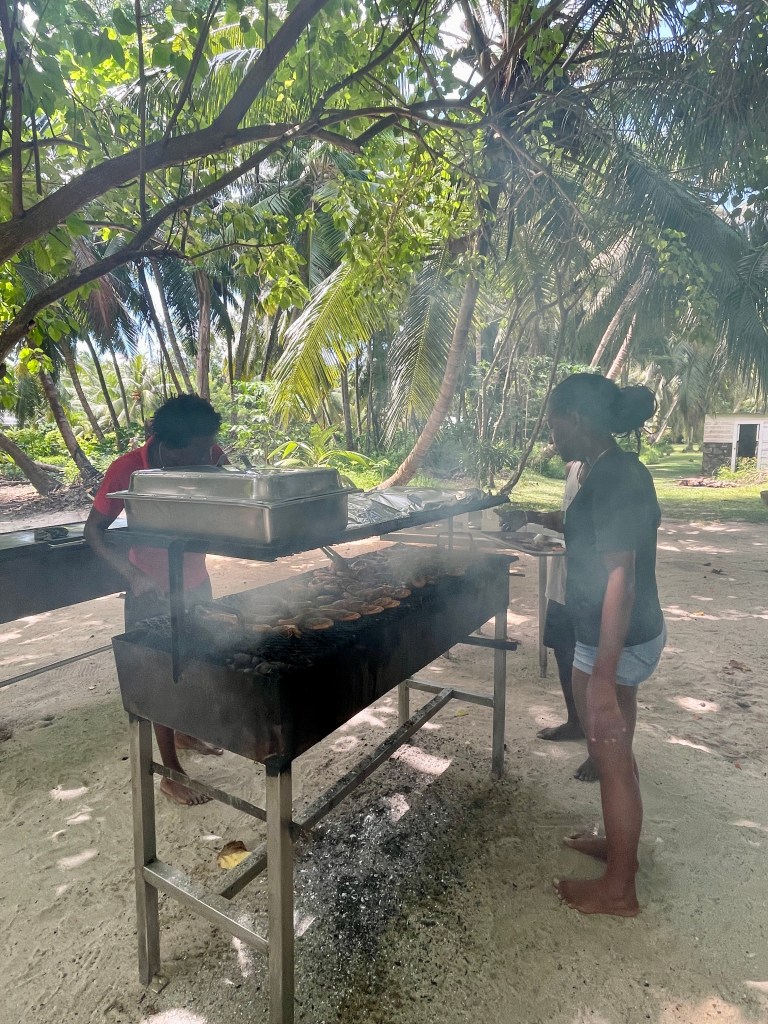
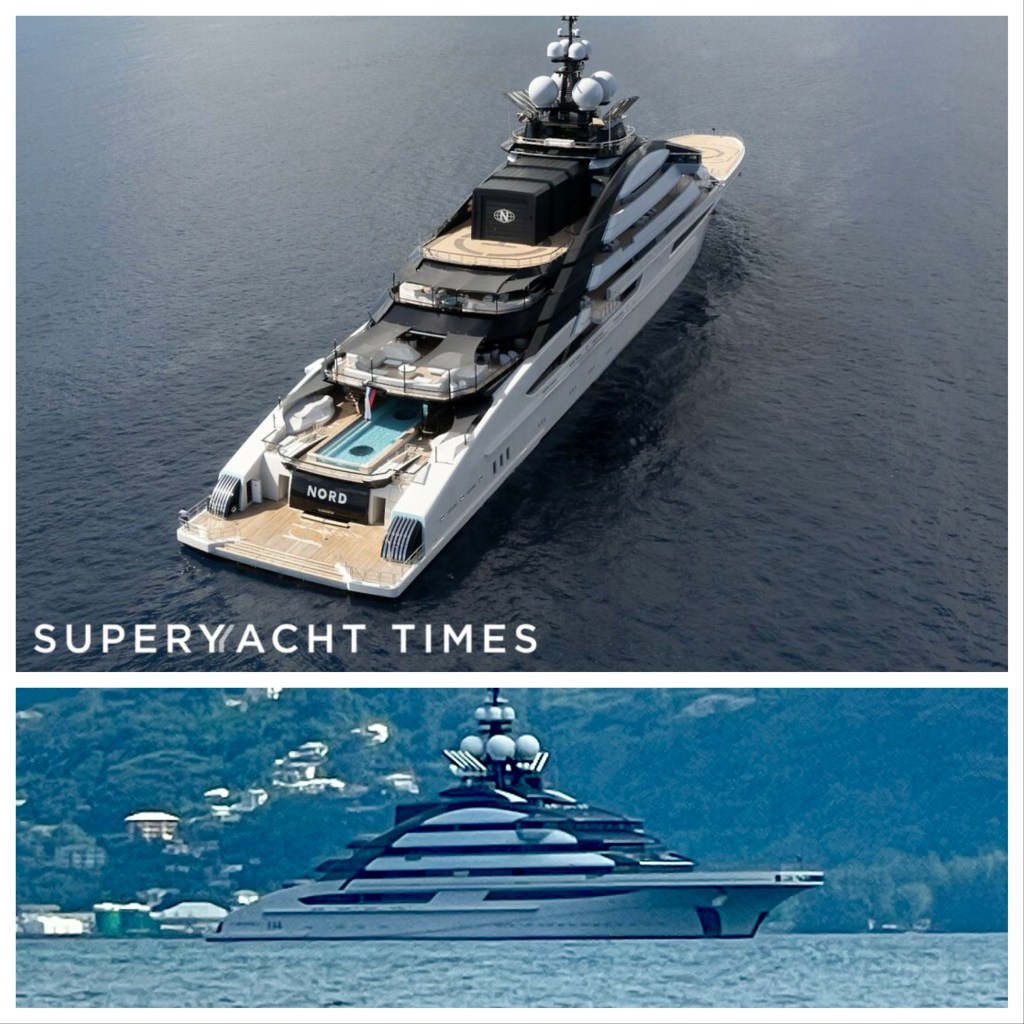
This is the Nord, a Russian superyacht owned by Russian Steel company owner. Our guides advised that it had been hanging out in Seychelles waters and given Seychelles laws, it could not be seized by international or American officials. The photo above is from a yacht website. Upon docking the ship was met by a zydeco band and a shipmate from New Orleans commented that it made him homesick.
Our guides, Perry and Dario, were both laid back and friendly. I’d highly recommend this visit if you are in the area. It is a long way from the US to the Seychelles but well worth the visit to this beautiful place.
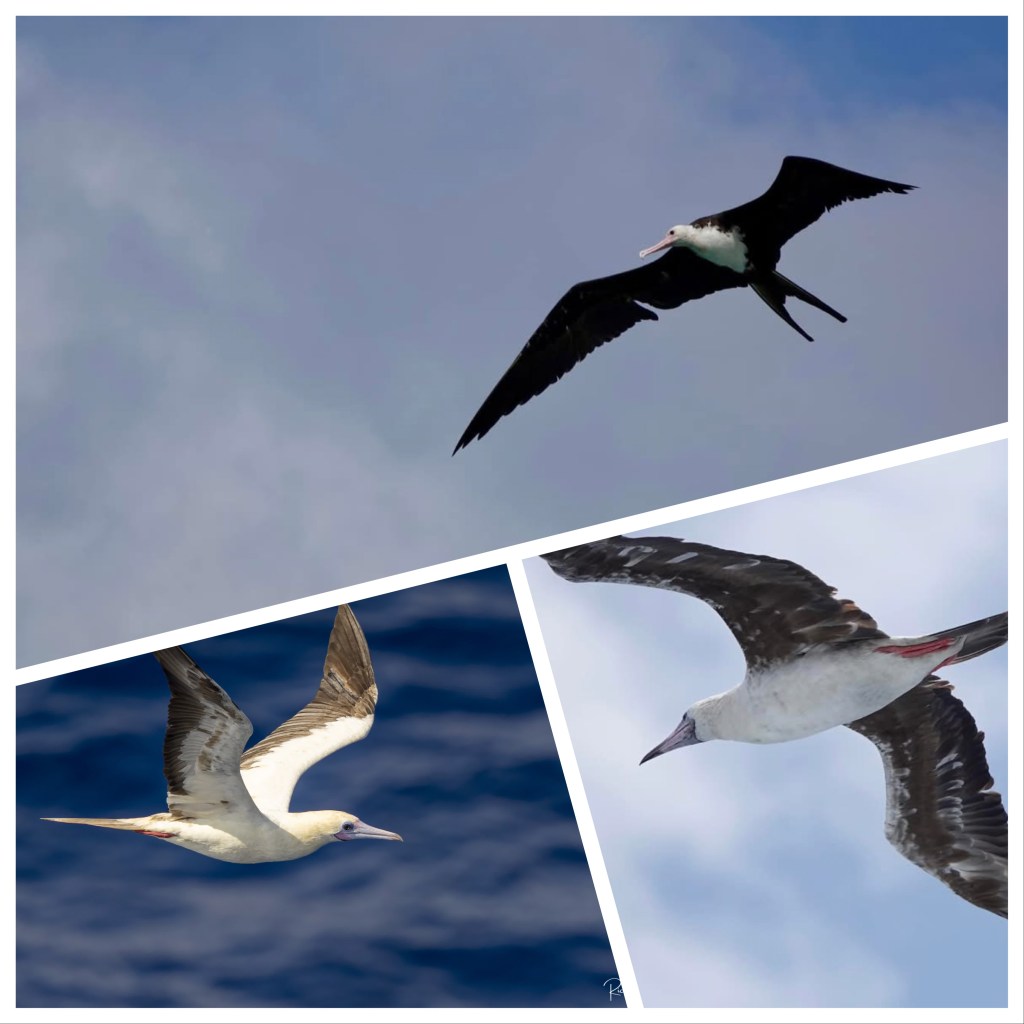
Pelagic or seagoing birds (photos by Richard Lovelock, our shipboard naturalist); red footed boobies and a Frigatebird. The birds were active in hunting the flying fish that leap away from our ship, thinking it a predator. -
Seychelles Bound– At Sea
March 15
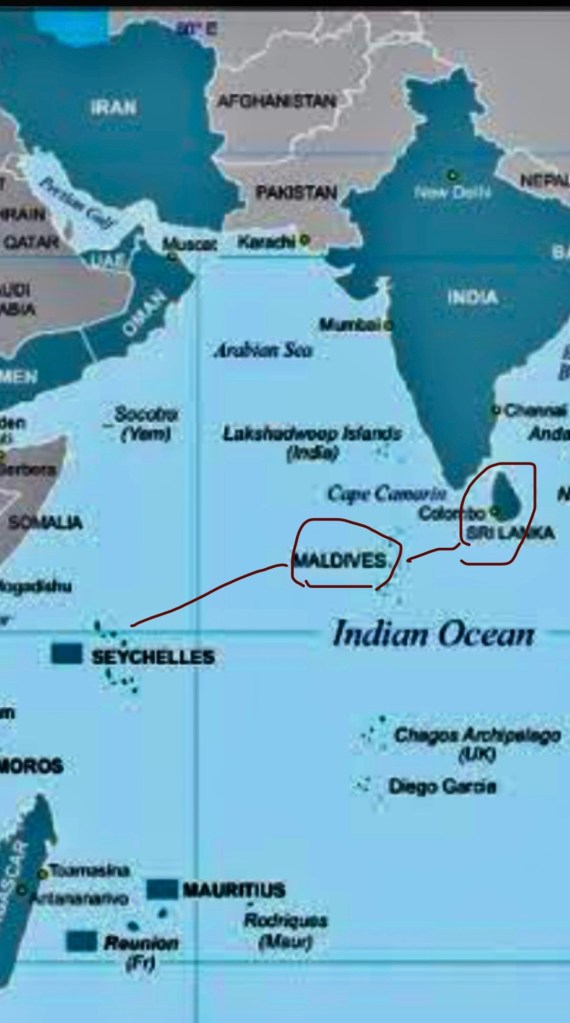
As we sail from the Maldives to the Seychelles, we are encountering the “flattest” water we have experienced. It has appeared to be a quiet lake for two days. The only disturbance was the bump when we crossed the equator.
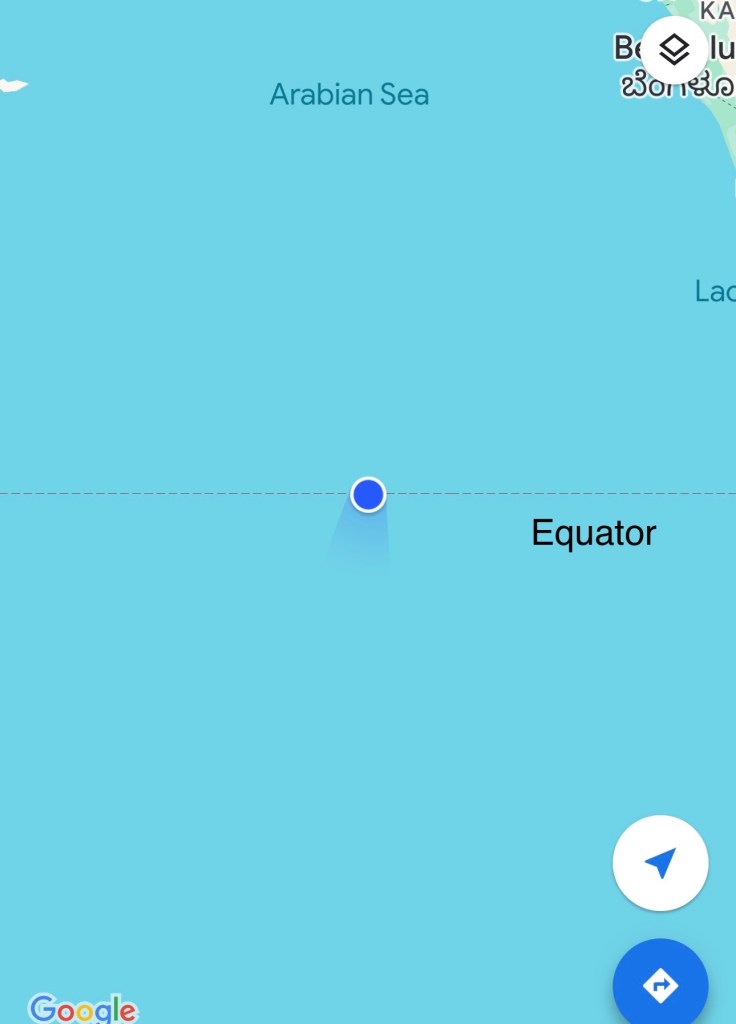
Our ship’s placement is the blue dot. Evidently, we are free of the gyres and currents in this area. That’s good for flatness, but bad for fish viewing. They prefer more turbulent waters as they circulate more food. It’s great to have such clear views, but it would be better if there were something to see.
Actually, we have seen lots of flying fish and a few dolphins. And, a few birds. Fortunately, we now have a wildlife specialist (Richard Lovelock) on board and he can explain what we can’t see. He’s very knowledgeable and entertaining and will be with us through London. He both gives lectures and holds 8am viewing sessions to prepare us for what’s coming.
Lots of Lovelock learnings:
-Flying fish can be 2 inches to 2 feet long. Ours are about 4 inches at this stage. They can glide as fast as 37 mph, usually to escape predators. Our ship and its vibrations appear to them as a giant predator so they take to the air. Mother Nature takes over and alerts birds to their presence. Lovelock says that birds can smell their presence (fish oil) as far as 20 miles. Not through yet, MN alerted a falcon to one of Lovelock’s ships where it stayed for 3 days….eating the birds that were trying to eat the flying fish.
-Speaking of birds, they can fly while sleeping. Some of them have been found on ship….perhaps after flying into windows. Their feet are made for swimming, not walking. They appear to be injured or drunk. Lovelock gets calls for the rescue. He carefully picks them up and flings them overboard. That used to be bad news for pirates, but is good news for the birds as they fly away.
-There are 90 species of whales, dolphins and porpoises. We are expected to see some as we near Africa. Evidently, they were 95% hunted out at one time, but are now coming back. There are some interesting whale facts:
-Blue whales used to number about 350,000. After dwindling to about 5000, there are now 25,000. They can grow to be 100 feet long. They move to cooler waters to feed…as much as 16 tons per day or 30 million calories of mostly krill. The Moms, after fueling up, swim to warmer waters to give birth. The little rascals are born weighing about 2.7 tons. They then drink about 100 gallons of milk per day. The mom doesn’t eat for about 6 months. She uses her stored food for milk production.
-Whales in Alaskan waters are attracted by salmon. For some reason 98 percent of their salmon are Chinook.
-Pilot whales travel in large pods which are led by a female. They actually go through menopause and then focus their energies on leadership. The other pilot whales follow her lead., even when she beaches herself. We don’t know why she does that. The followers, when returned to the water, will go right back to the beach if the leader is there.
-When we visited the Faroe Islands something like 15 years ago, the bay had a red hue. Then we saw motor boats hauling 2-3 whales by cable to a central spot. As it happens, every year or two, a lucky islander finds a pod of a couple hundred and herds them to the bay. Their throats are cut by chainsaw and then they are moved to the holding area and numbered. Jackson and I visited the spot and saw 224, all numbered. The “lucky islander” gets first choice and then they are distributed to the islanders, old folks homes, schools, etc. Faroe Islanders have the highest protein consumption in the world. I should add that as Jackson and I were observing we came across a baby whale in a big tub. Whale veal?
Lovelock, our naturalist, commented to Karla that the Faroe Islands are now among the richer countries and do not need to kill so many pilot whales and dolphins.
Incidentally, we are now sailing in an ocean of 15,000 feet depth. We could be moving over a Mt Hood equivalent and not see it. An Everest equivalent would be an island with a mountain of over 10,000 feet.
-
Male, Maldives
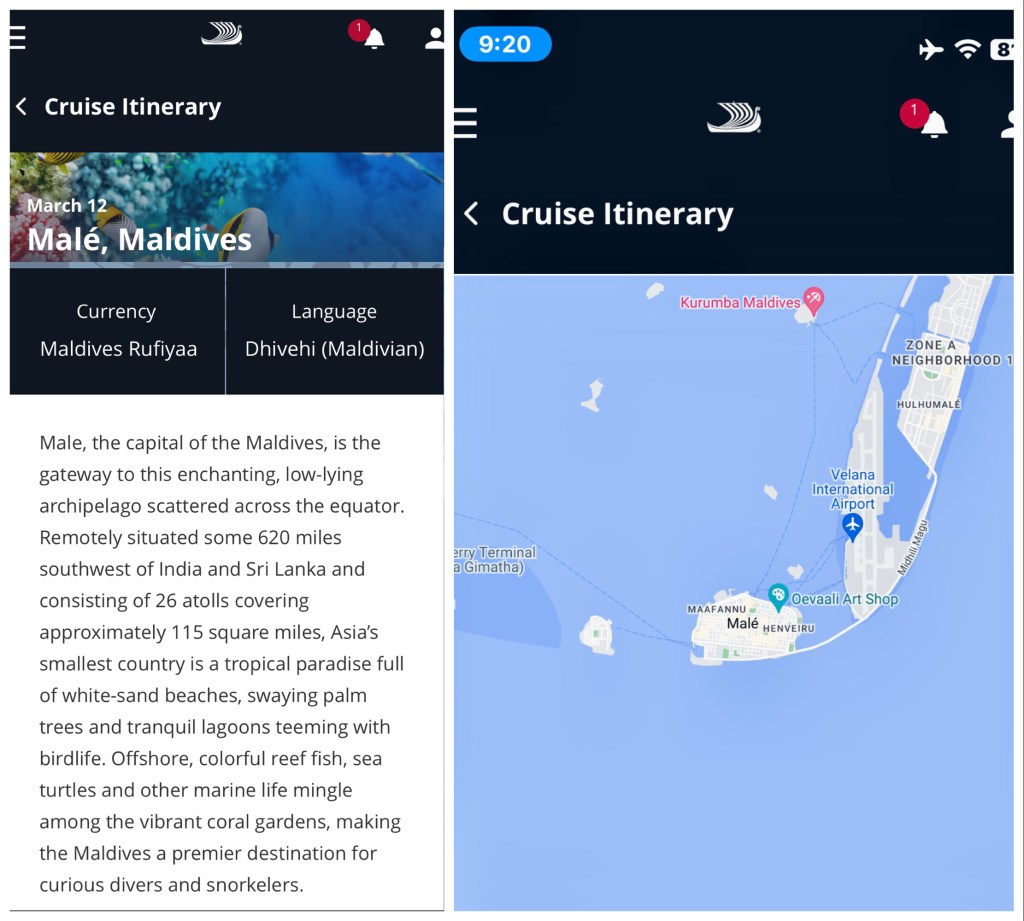
8,856 miles from The Dalles, Oregon.
March 12
New territory for us. The Maldives represent the smallest country in Asia. There are 2000 islands, 200 of which are populated. The population is around 500,000, half of whom live in the capital, Male. The islands are comprised of 115 square miles of land across 35,000 square miles of territory….across 500 miles. Interestingly, the average elevation is less than 5 feet above sea level; the highest point is about 8 feet. We’re not expecting a mountainous terrain.
There is evidence of life on Male 2500 years ago. From 950 CE on there have been visits from Buddhists (India and Sri Lanka) and Arabs and then the standard visits from the Portuguese, Dutch and British. Islam seemed to stick and the country was ruled by a Sultanate for centuries. In 1887 the Maldives became a British Protectorate. In 1965, they achieved independence. Hoping that trump doesn’t read this blog, I will disclose that the Sultan at that time was called, “Sultan of the Land and Sea, Lord of the 2,000 Islands and Sultan of the Maldives.” Can you imagine how the stationery would have to be changed.
In the 70’s a vote established a republic, ending 853 years of monarchy. Since that time they have faced problems of corruption, challenges of democratic reform, and the impacts of climate change. Climate change, in particular, is a concern. Warmer sea temperatures have killed coral. The President even held an underwater cabinet meeting to highlight concern for the future. A devastating tsunami in 2004 demonstrated the threat of rising seas for low lying islands.
Currently, the economy is doing relatively well. There are economic drivers of fishing, coconut production, pearls, spices and rapidly growing tourism. In fact, the number of resorts grew from 2 in 1972 to 92 in 2002.
Our plan was for me to plunge with (inside) a submarine while Karla went snorkeling. We were aimed at going down 80-100 feet so it seemed like we could scare fish in her direction. But, they were too far away. Those excursions were way more attractive than traveling to a beach and sitting for 5-6 hours….the alternative excursions.
The submarine adventure started with a tender trip followed by a boat trip to get to the sub. I could sense some apprehension among our ranks. Not lots of sub experience. A swimmer was circling the sub while we waited. I claimed to see him holding corks and duct tape. Nervous laughs. When we were seated, there was a life jacket presentation and then we took off. We descended to the side of a large underwater hill. Thousands of fish, some eels and a shark. Really a good experience.
Karla was able to snorkel at two sites. …fish, turtles and reef sharks. Also a good experience.
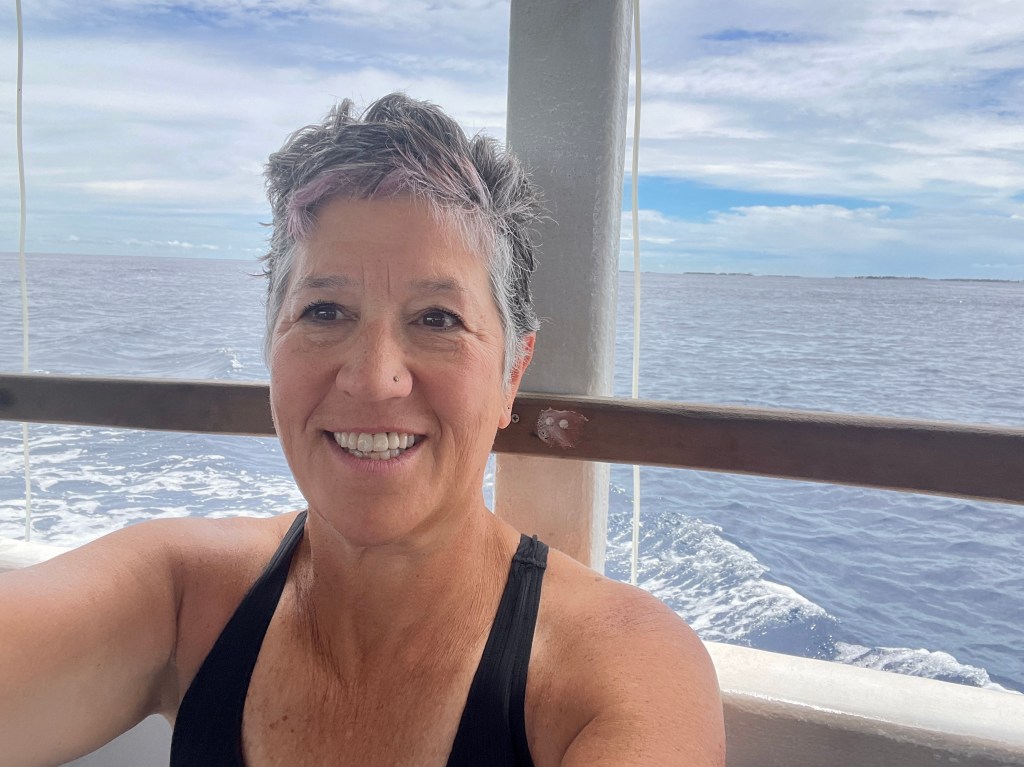
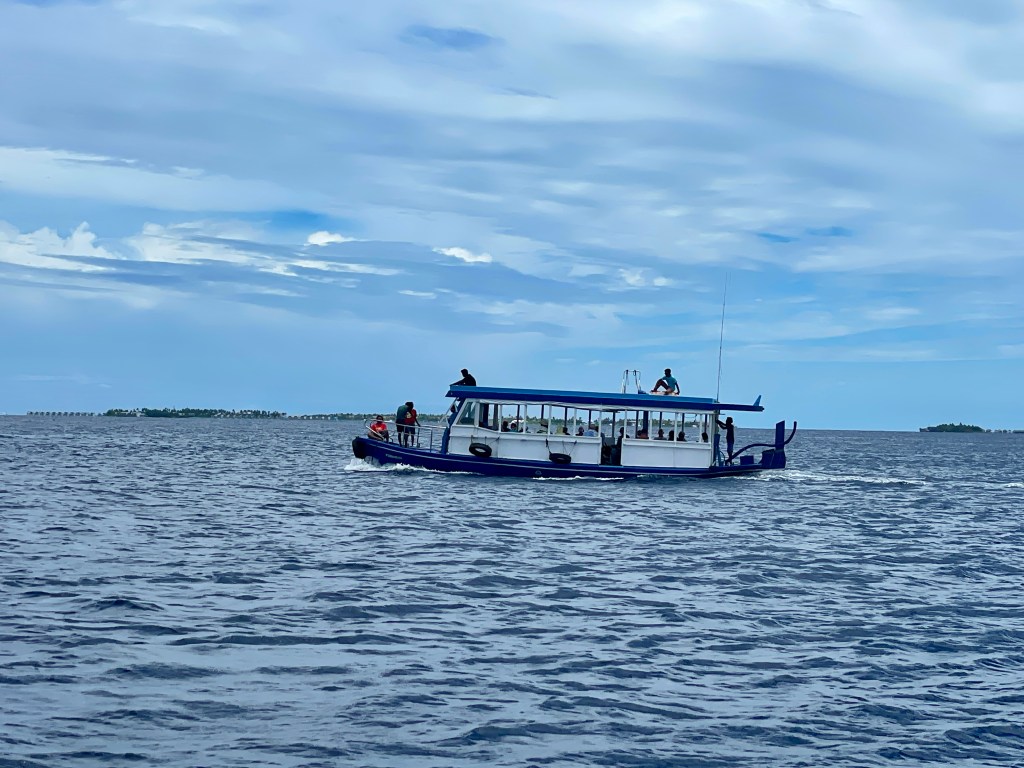
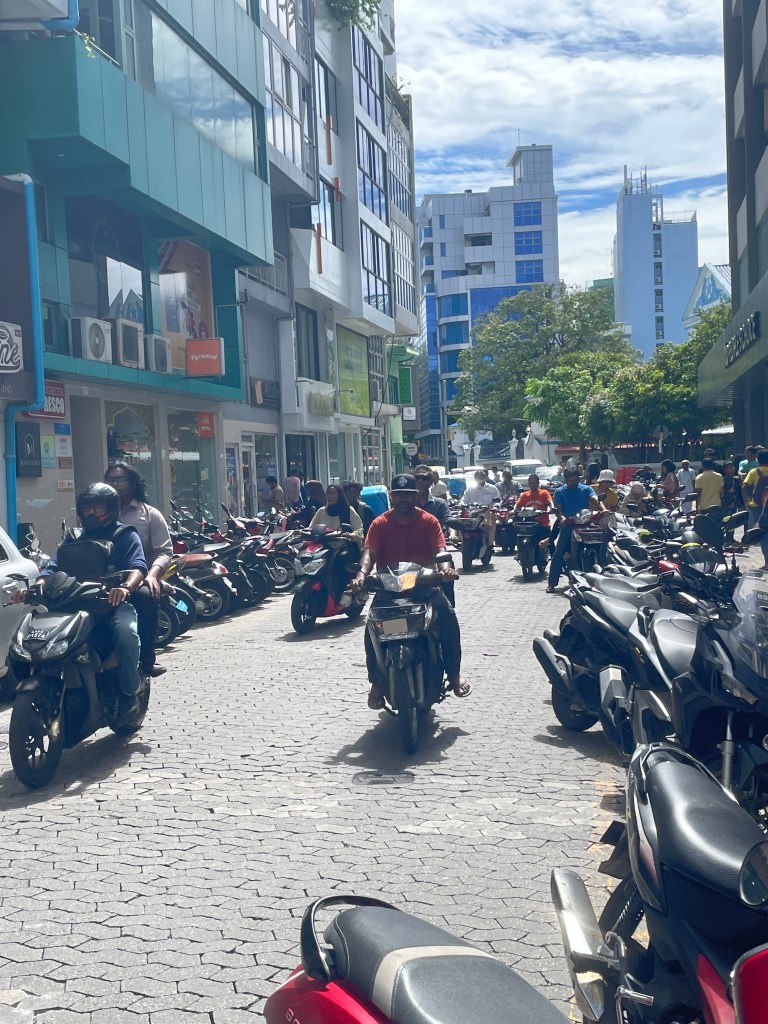
Once we were both back on board, we ventured into town to visit a couple tourist stores and a supermarket. This is Ramadan so many places were closed or on abbreviated schedules. Lots of motorcycles.
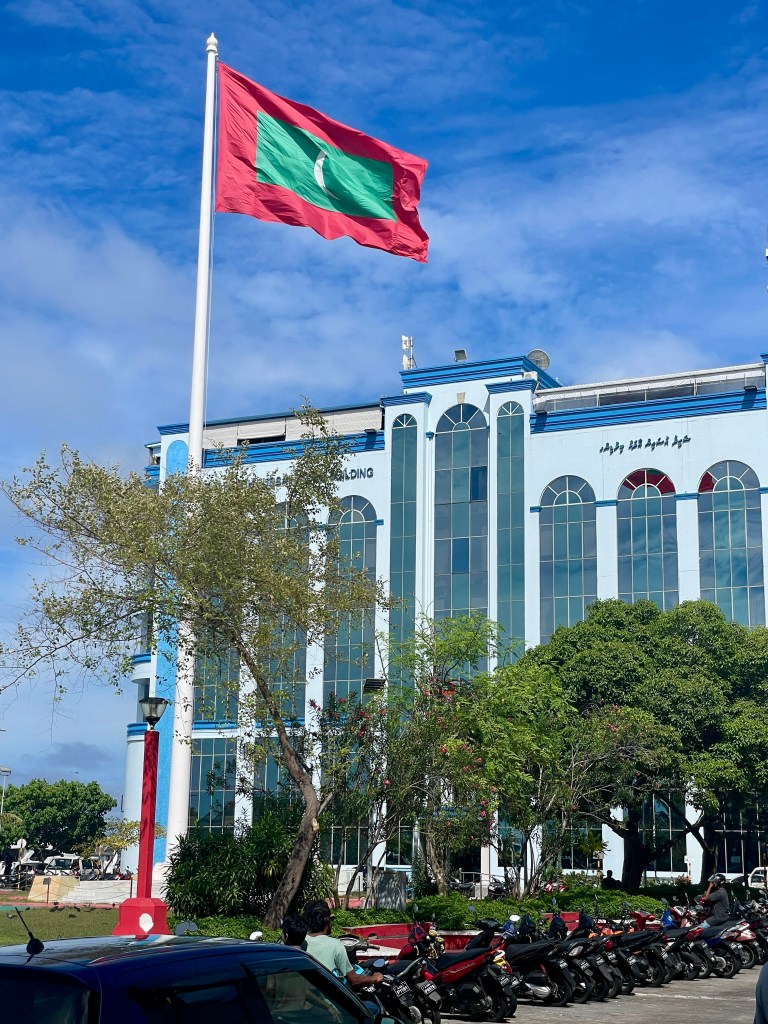
Maldives flag (green with crescent noting Muslim counMaldives flag: crescent noting Muslim country, green for peace, red background for history and strength. 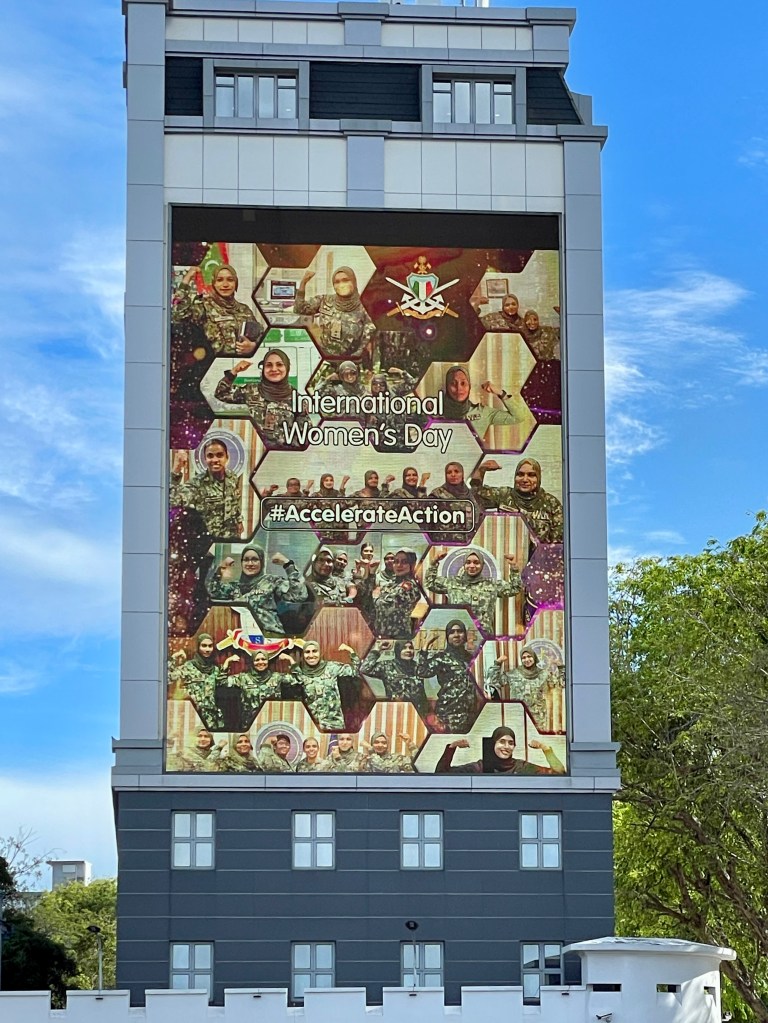
Electronic sign on the building noting International Women’s Day. , 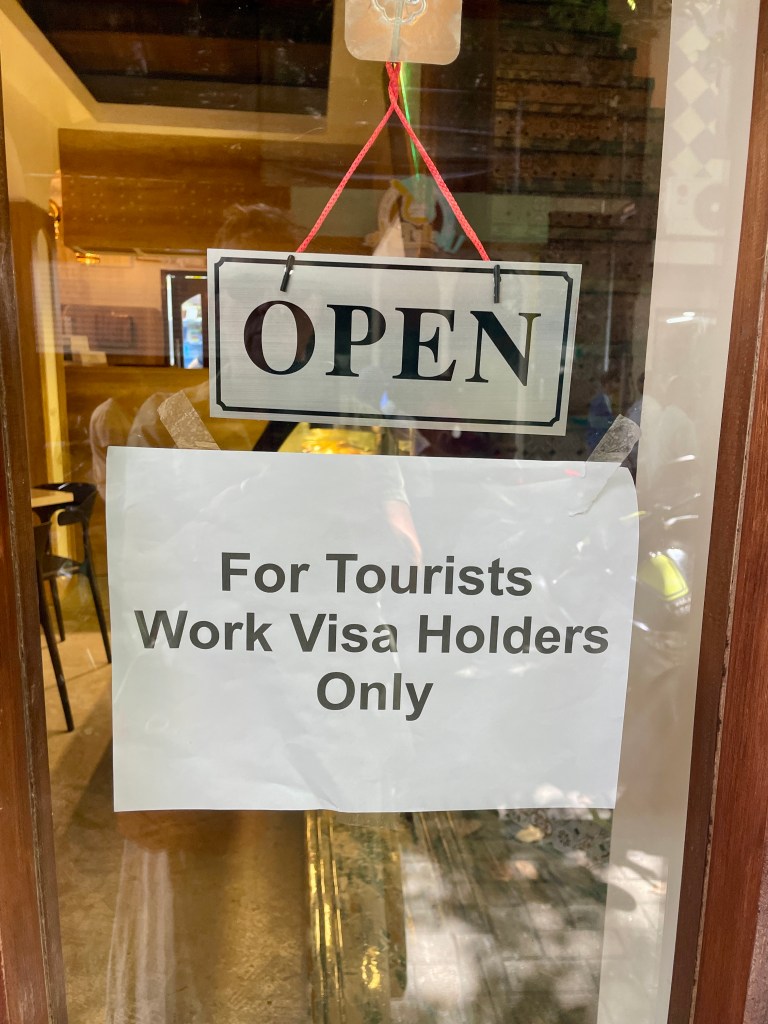
Sign at restaurant during Ramadan and fasting for the Maldivian people. Nothing too exciting. I returned to the ship while Karla searched for a beach. She collects shells and found a few. It is illegal to remove shells from the Maldives, but she added to her international crimes.
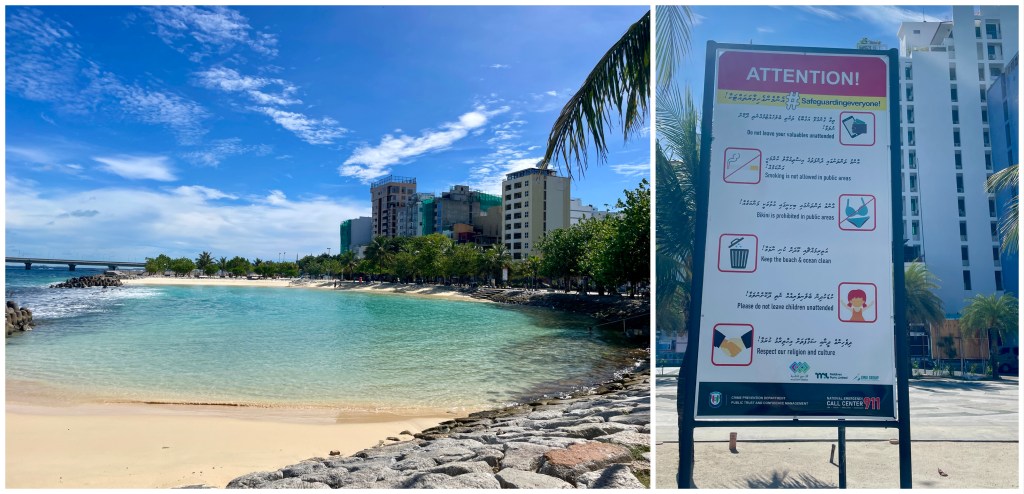
Beach in the city and posted rules (no bikinis, no smoking and a request that visitors respect the culture). 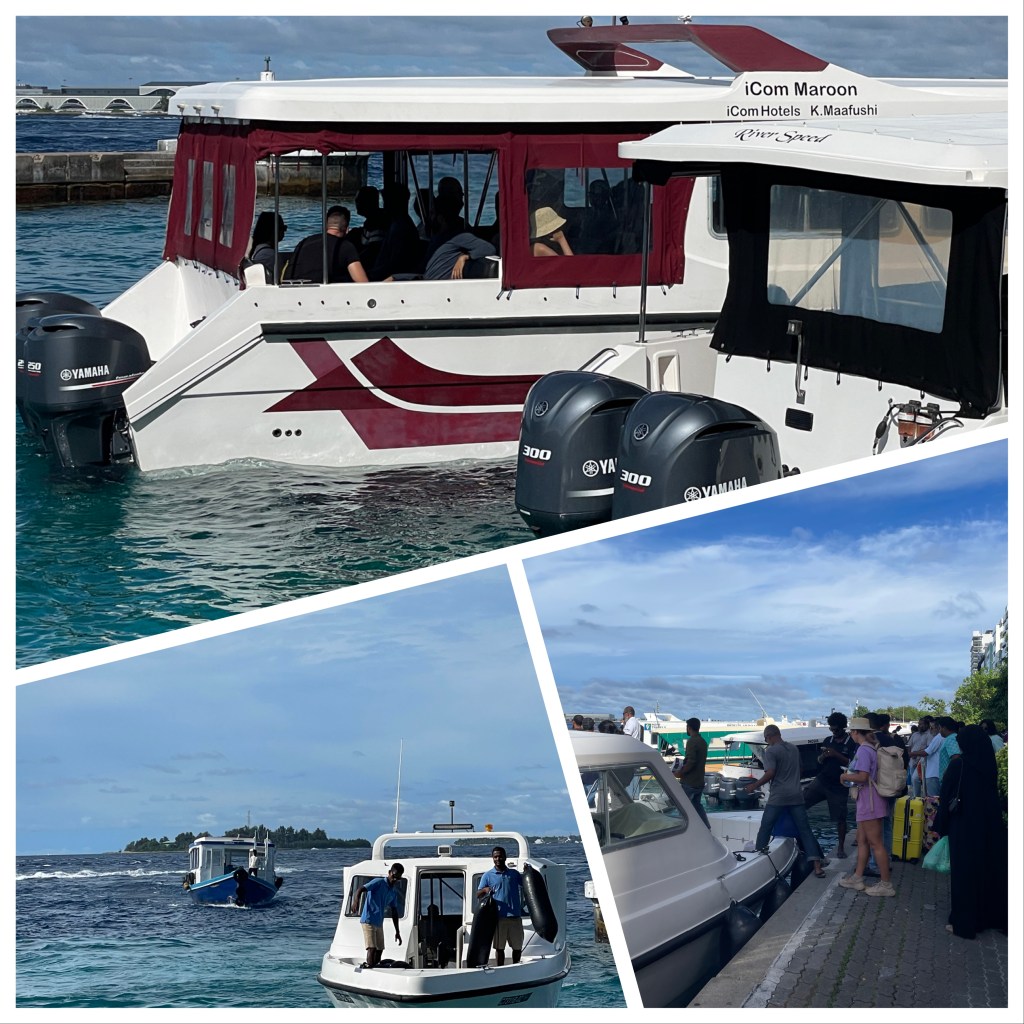
Lots of boat traffic and many ferries. High-end hotels have their own islands and ferry service. 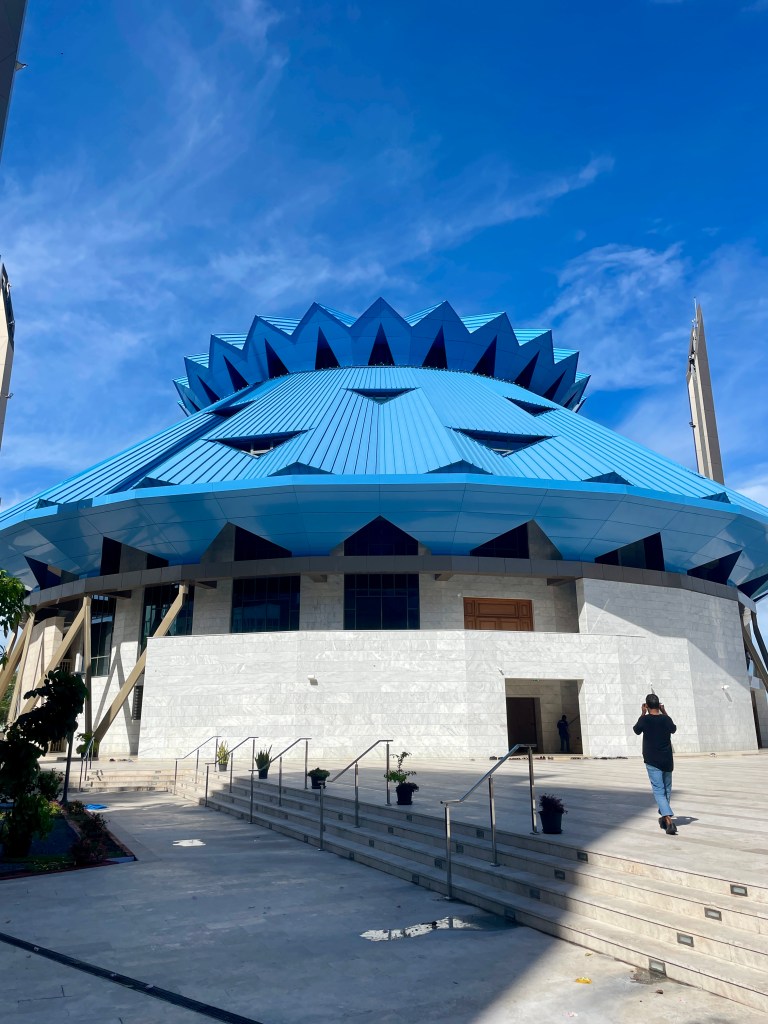
The King Salman Mosque, constructed to commemorate 50 years of independence for the Maldives in 2021. 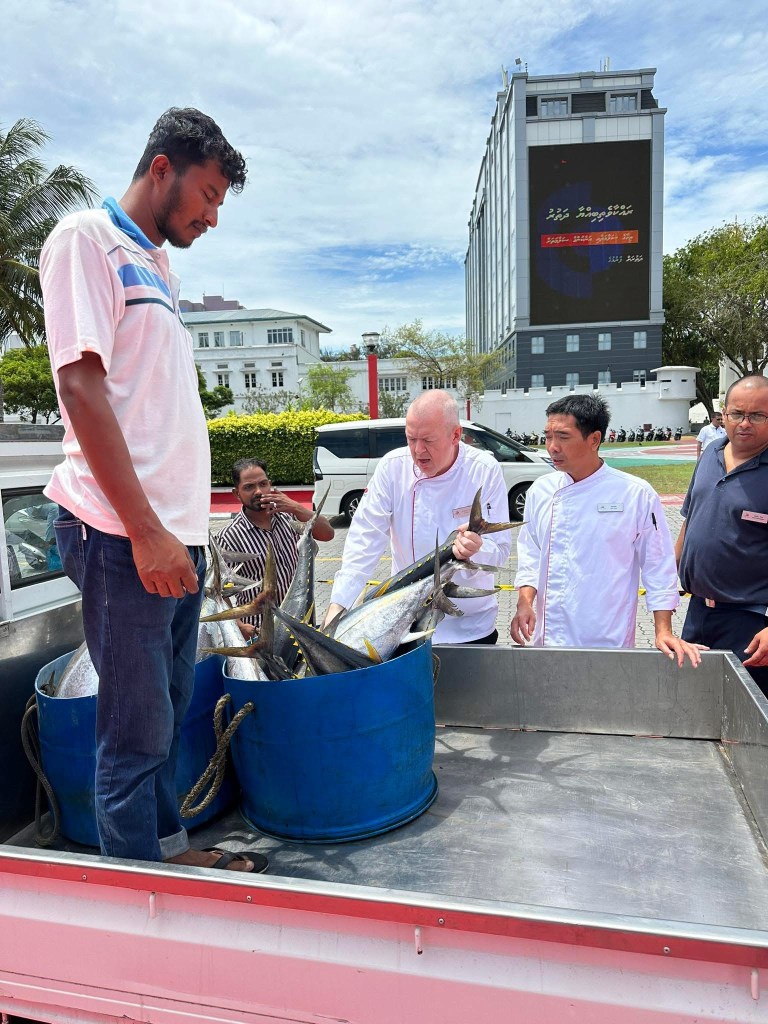
Chef buying local tuna; he complained that it should have been brought in an ice tub but also commented that the fish still had hooks in their mouths and was as fresh as it gets. We had a tuna centered lunch the following day. 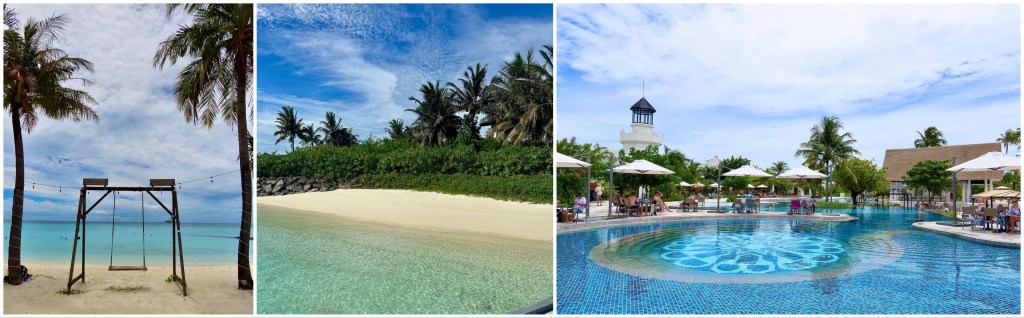
Viking offered an included excursion to this Hilton owned beachside resort. By all report, it was an excellent excursion to a nice property. Now, 3 sea days before the Seychelles.
-
Docked, Sri Lanka
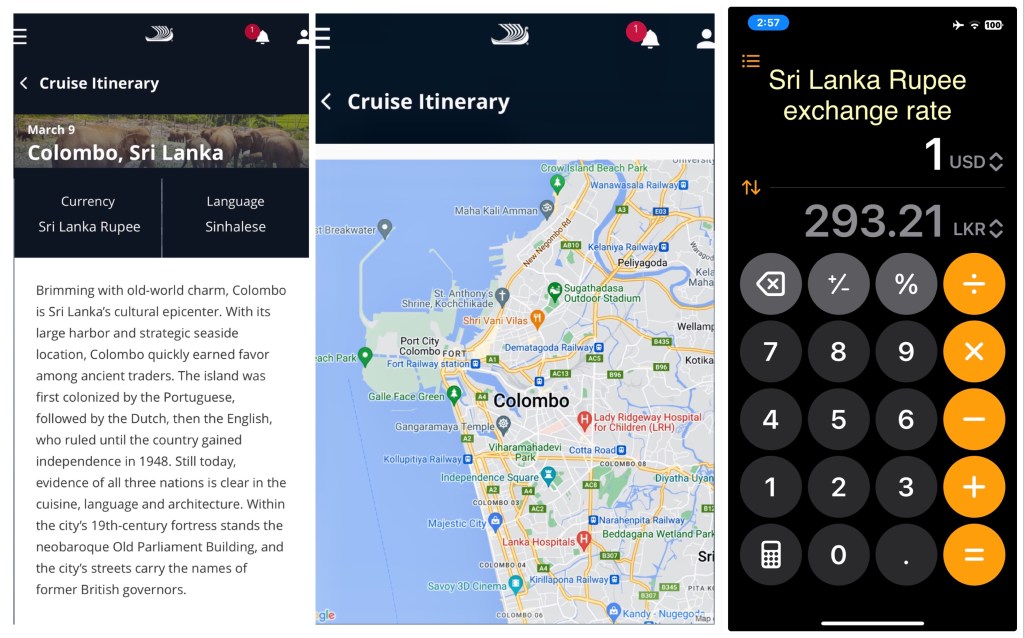
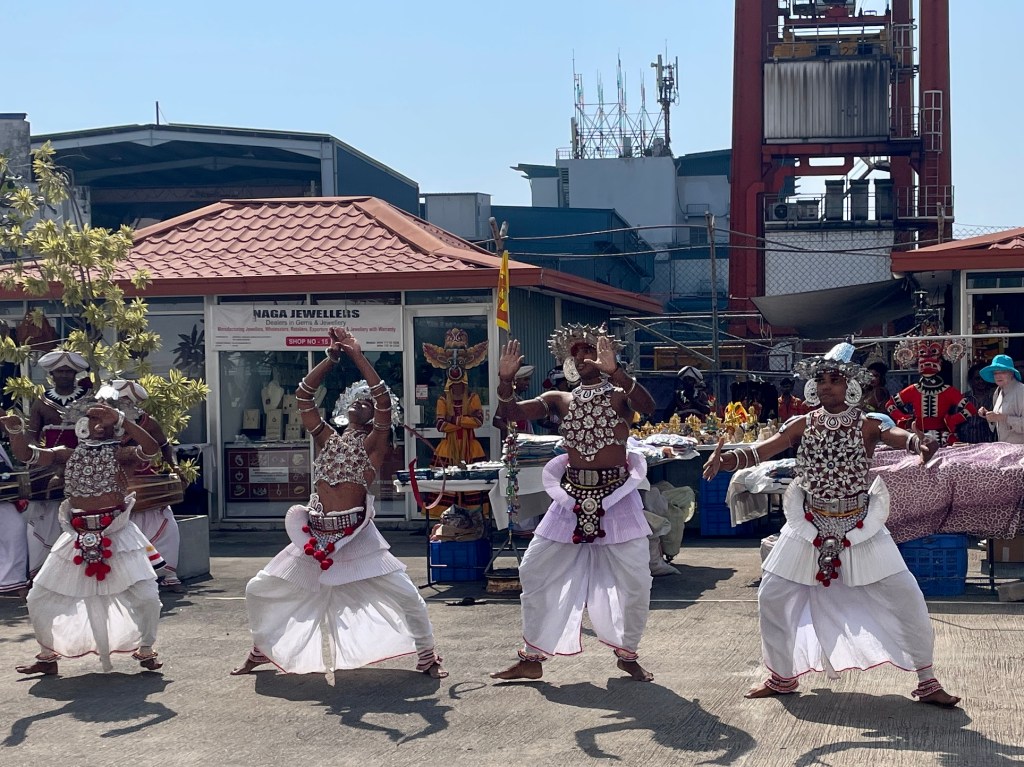
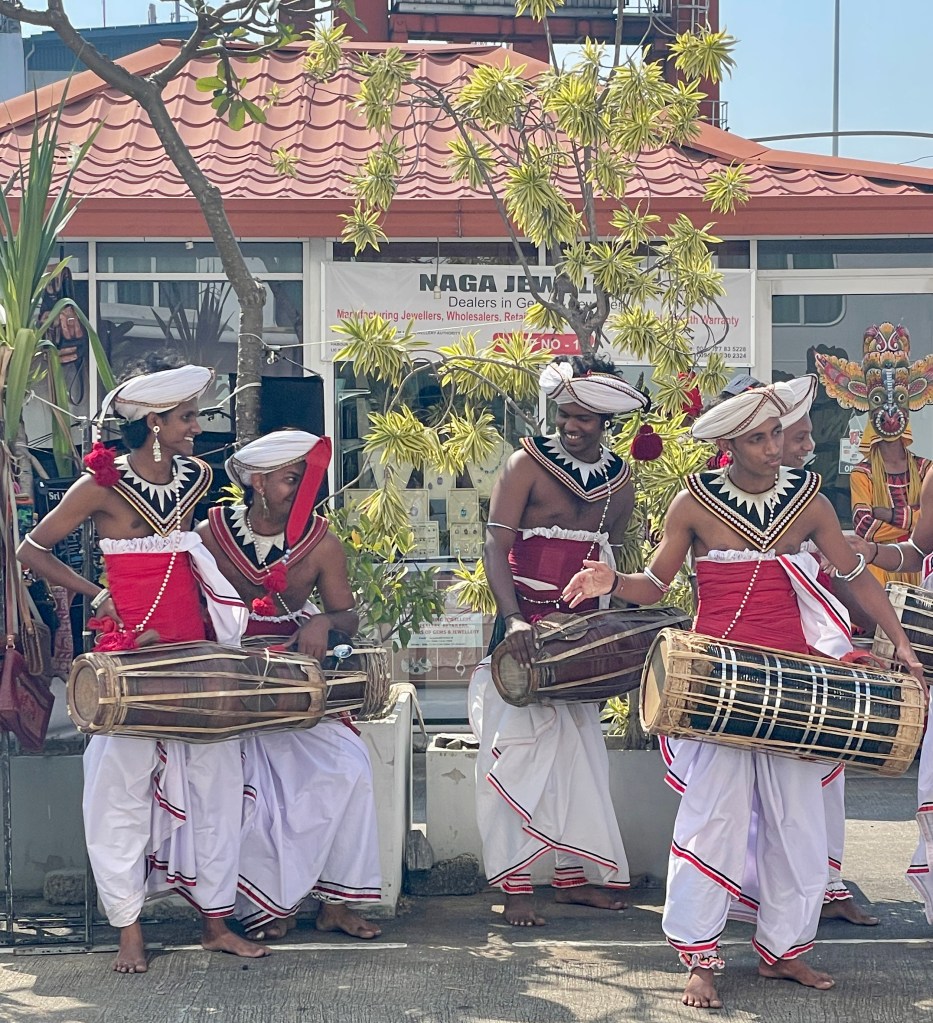
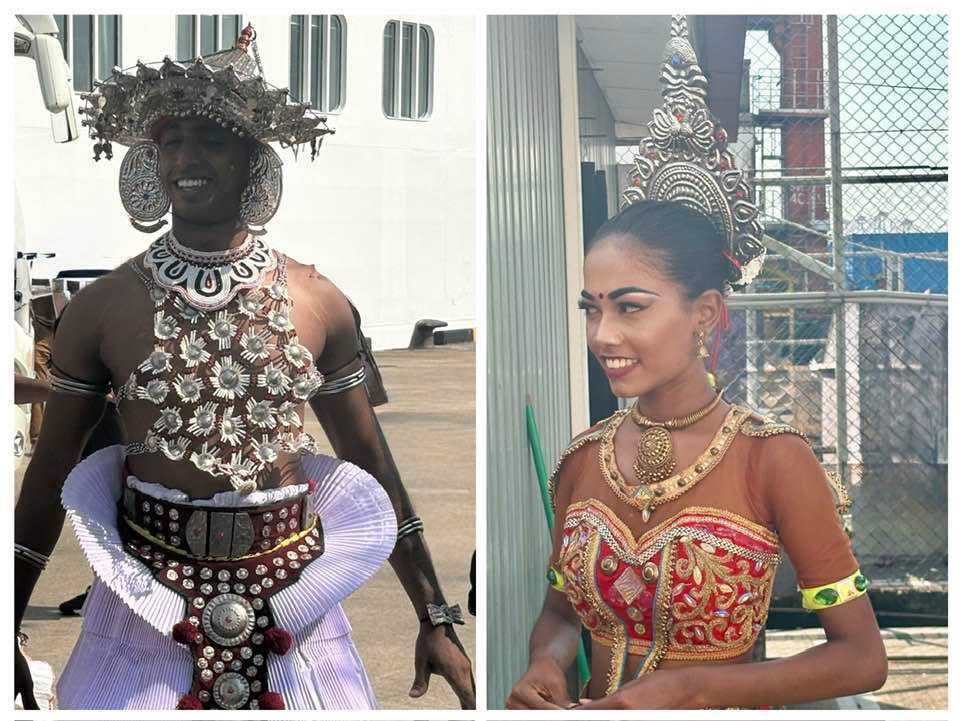
8,557 miles from The Dalles, Oregon.
March 10, 2025
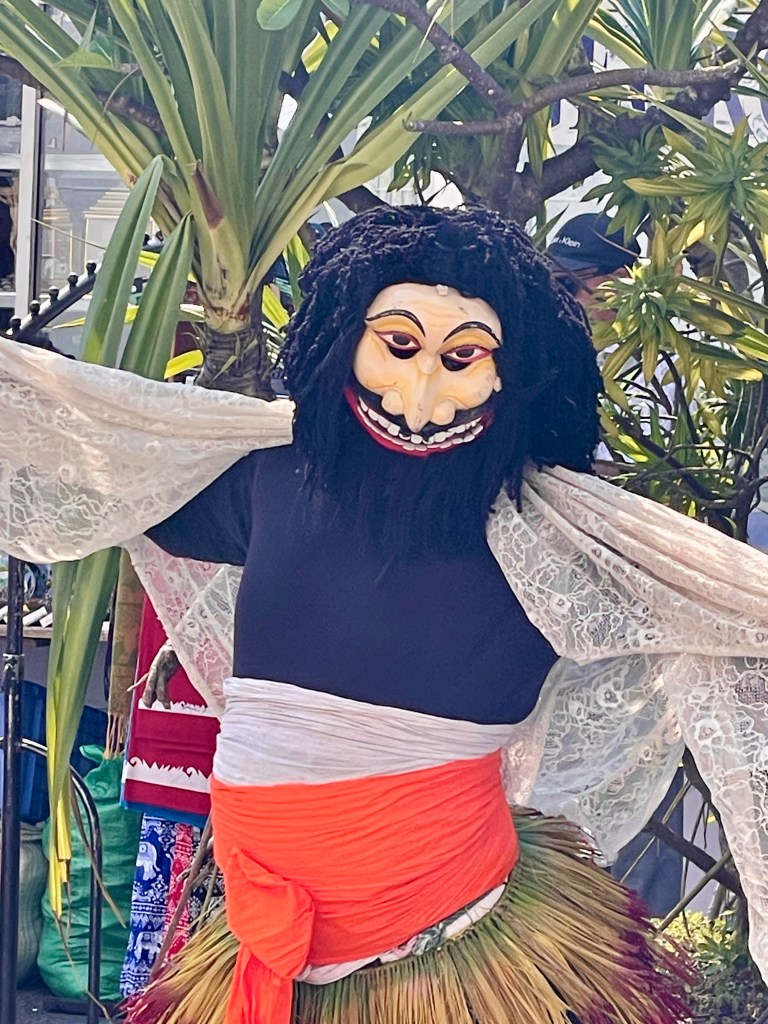
Remembering that I enjoyed Colombo 50+ years ago, I was looking forward to our tuk tuk ride around the city. We made our way through the dancing welcomers and well organized “tourist stalls” which featured gems, clothing, carvings, paintings and, of course, refrigerator magnets to our bus. The bus was among three that transported us to a location with perhaps 50-60 tuk tuks.
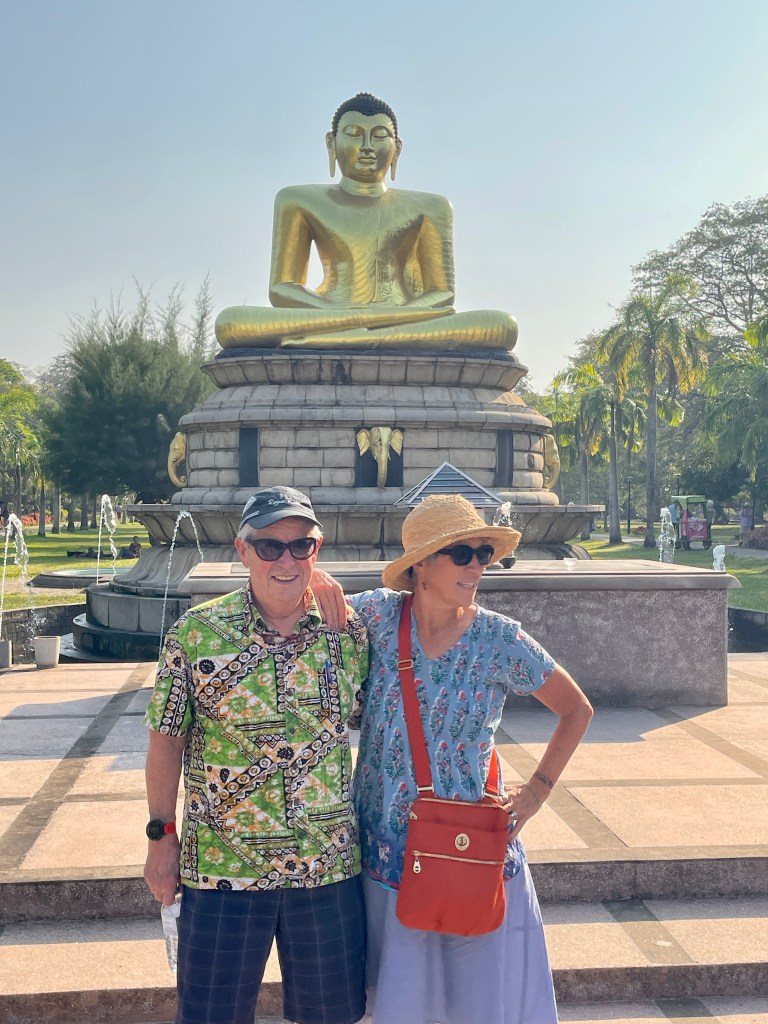
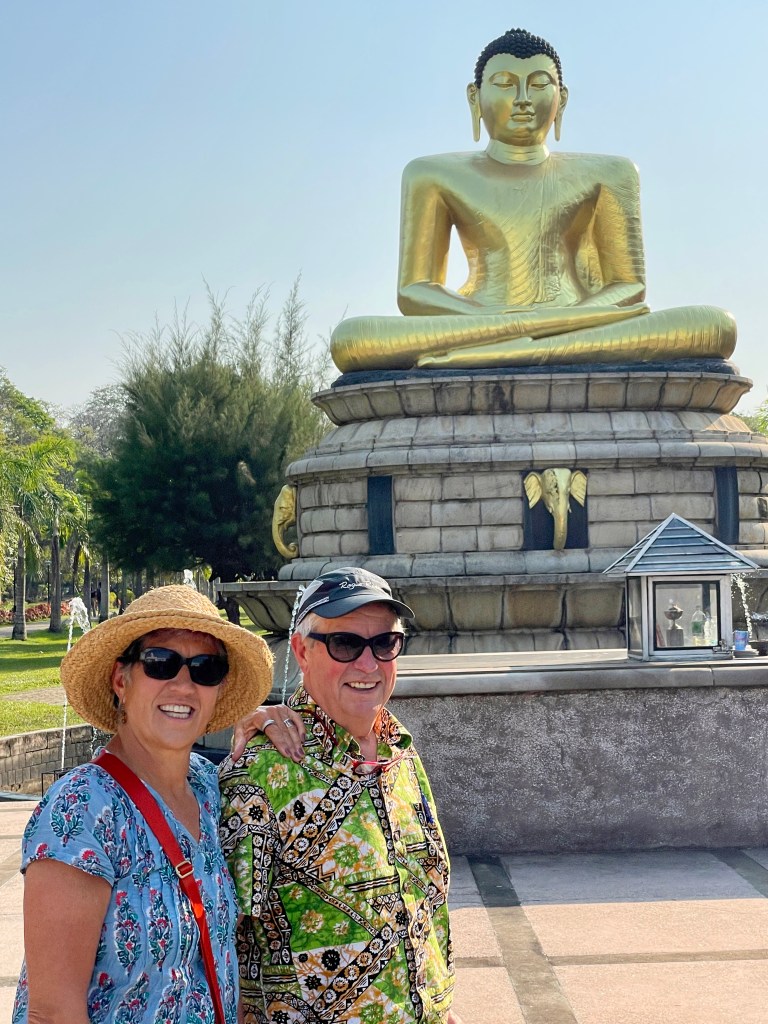
We took the photo with the Buddha and then retook it after learning it is rude to turn your back on the Buddha.
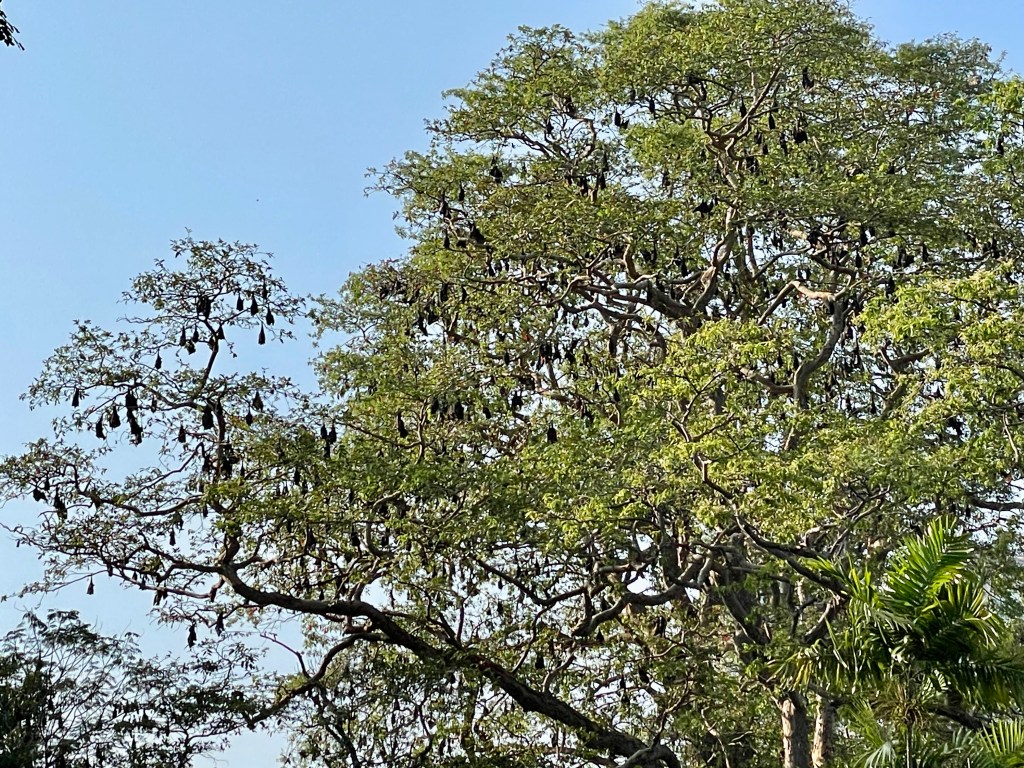
Fruit bats, aka flying foxes 
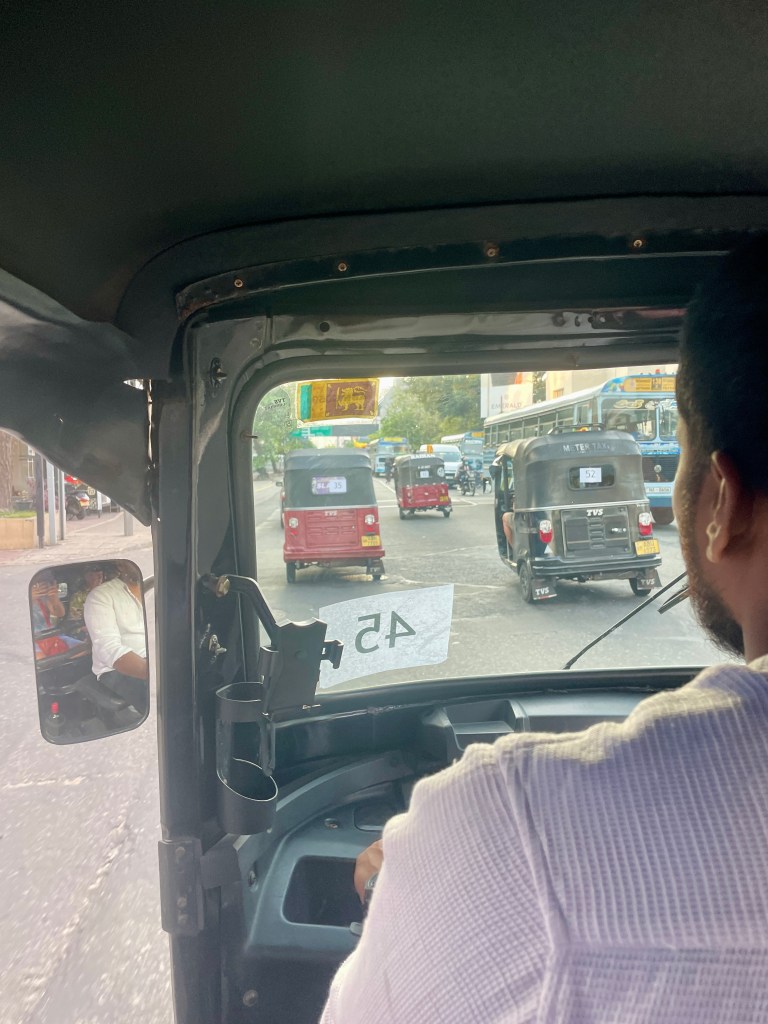
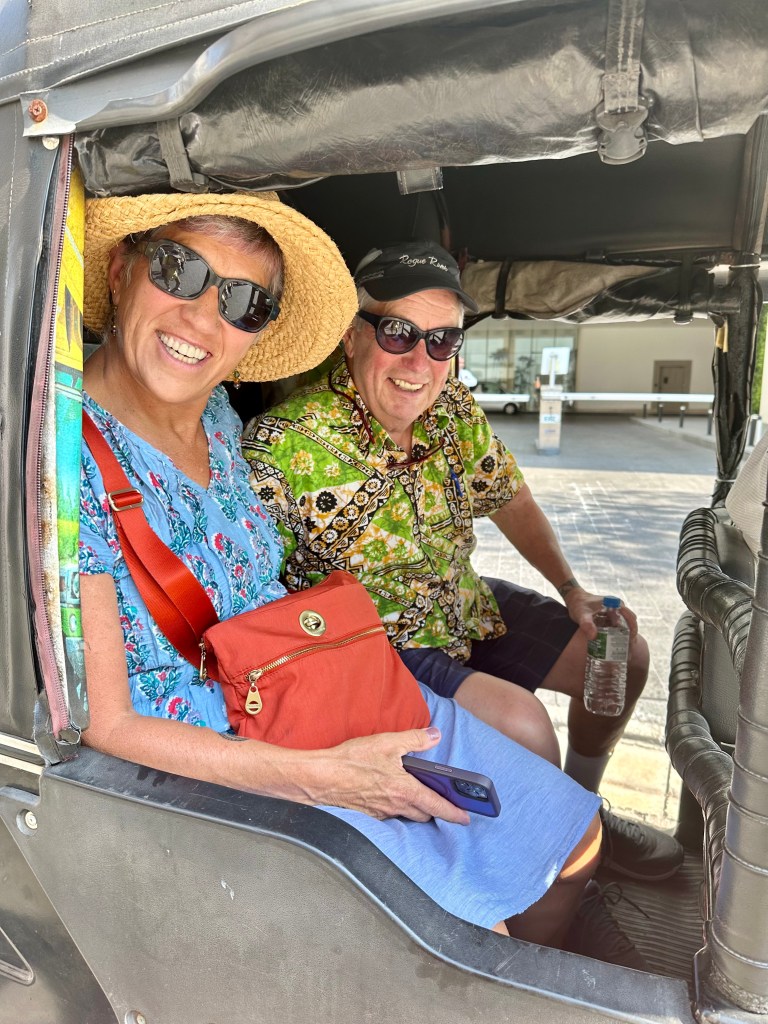
Tuk Tuk style 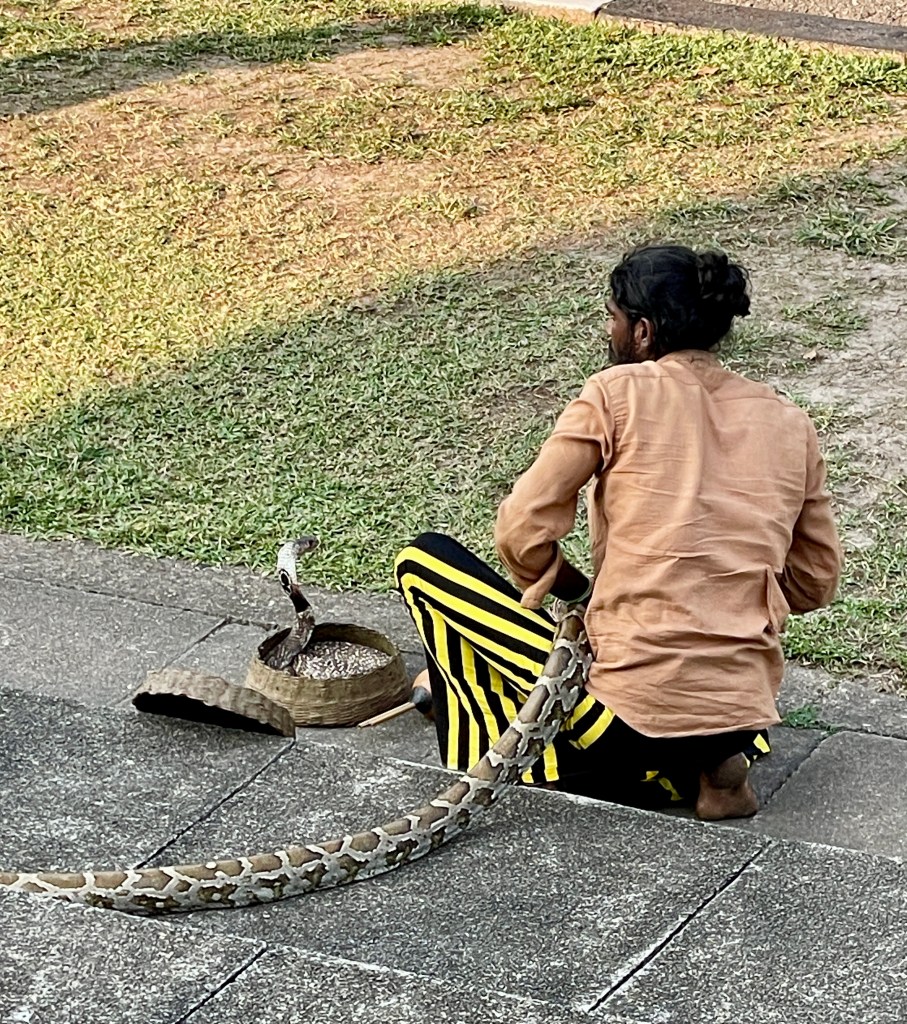
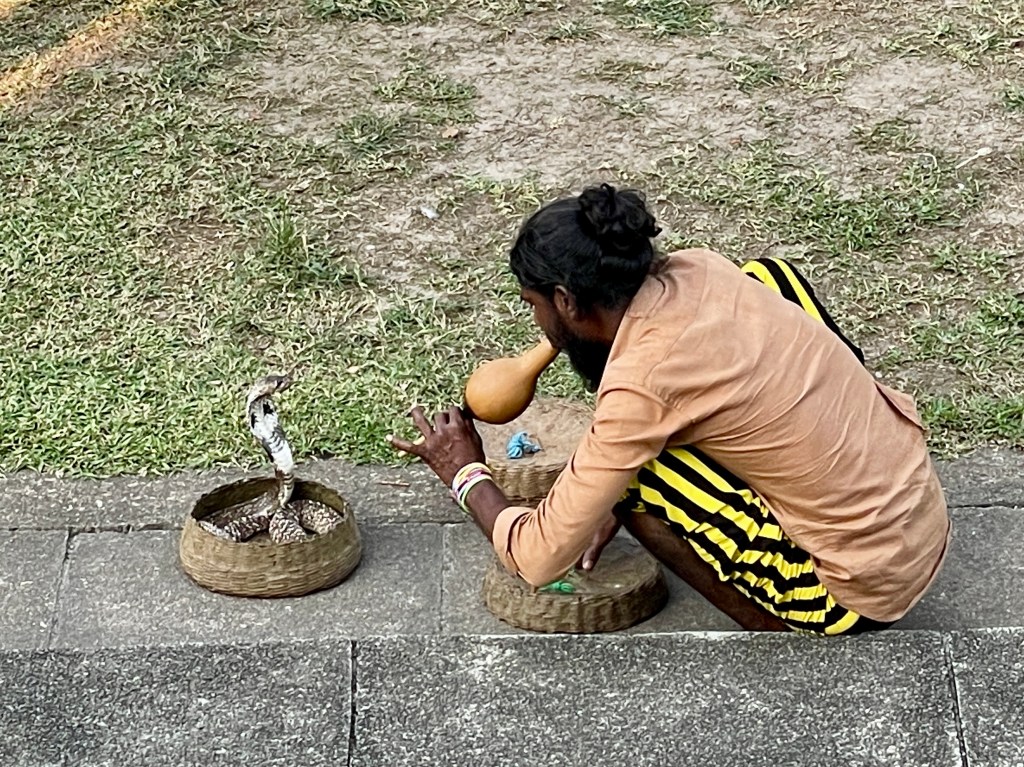
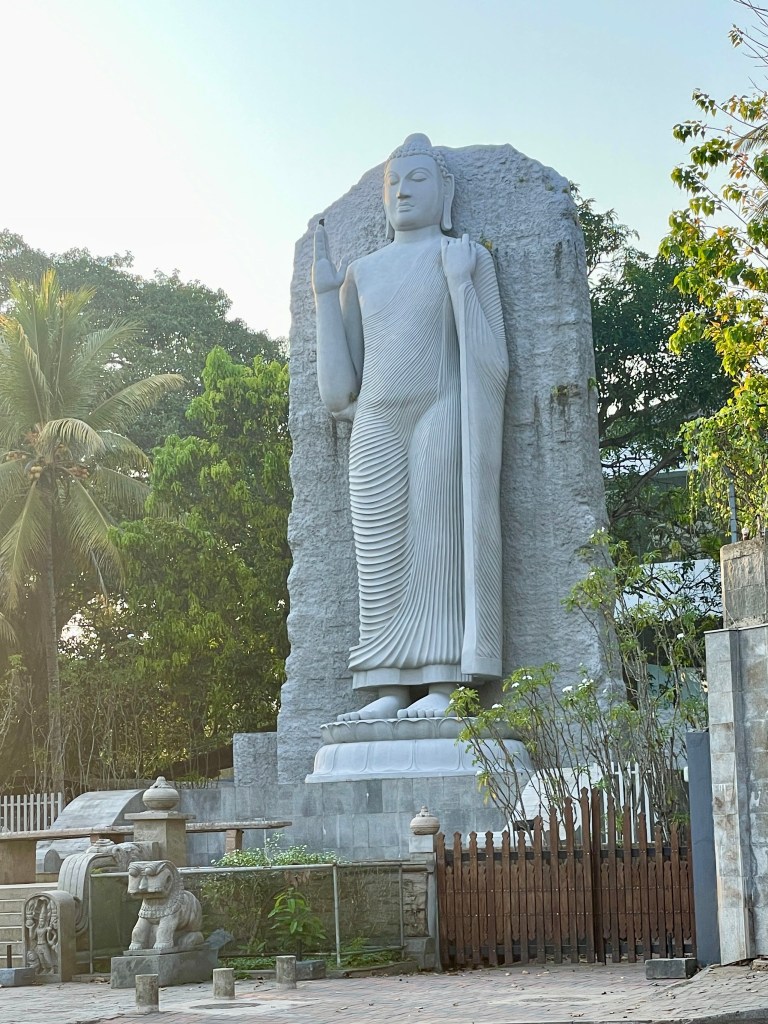
We were driven around by a nice young fellow who had limited English. He was able to stop, but didn’t do it very often. We passed by an interesting looking market, finally stopping at a park for a half hour walk. Then, we stopped at a monument honoring independence for another half hour. The sterile monument was spruced up with a couple pythons, 2 cobras, and a monkey. For $5 one could drape the python around her shoulders or pet or kiss the monkey, I think. We chose neither option. Colombo was low on air quality and interesting sites.
However, one of our friends took a walking tour of the city and said it was one of the best things he has done all cruise. He said that they had a great guide. It’s interesting to note how much difference a guide makes. Unfortunately, the guide couldn’t fix the air quality.
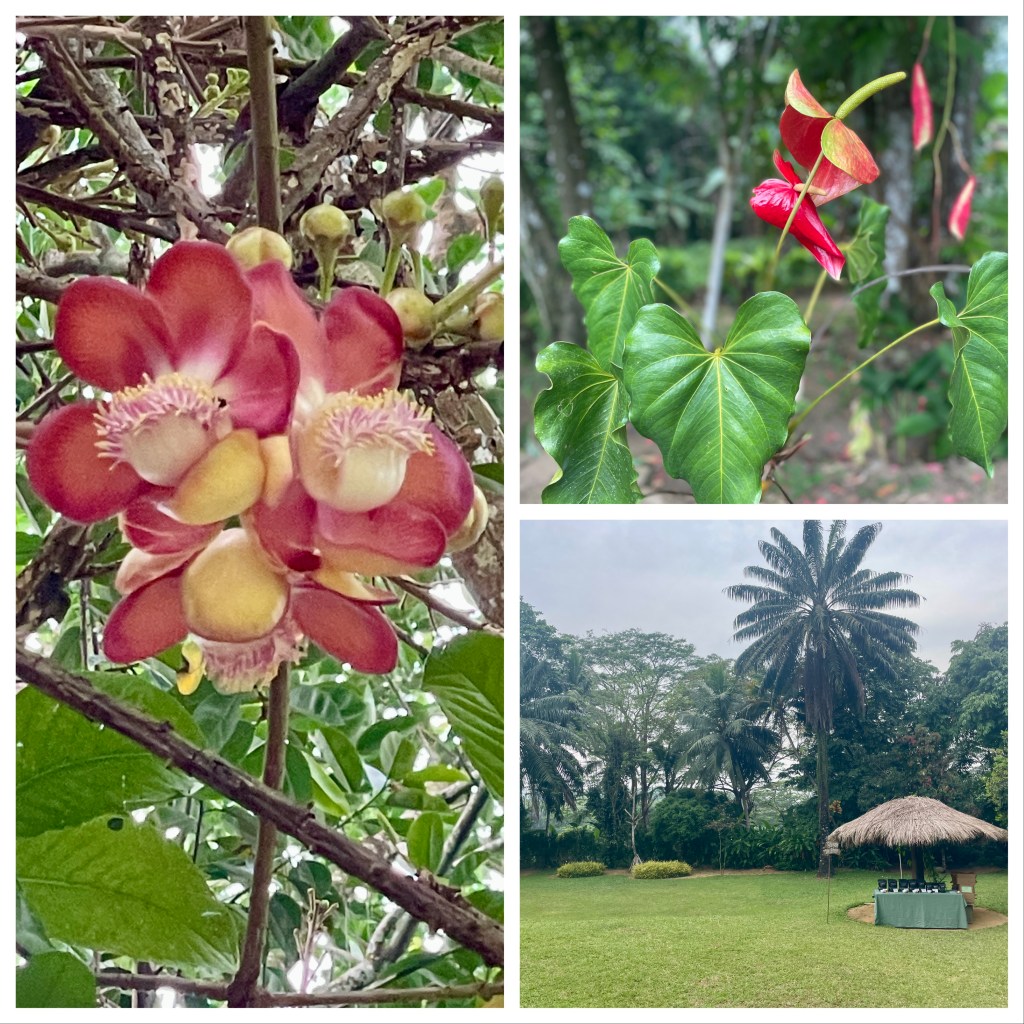
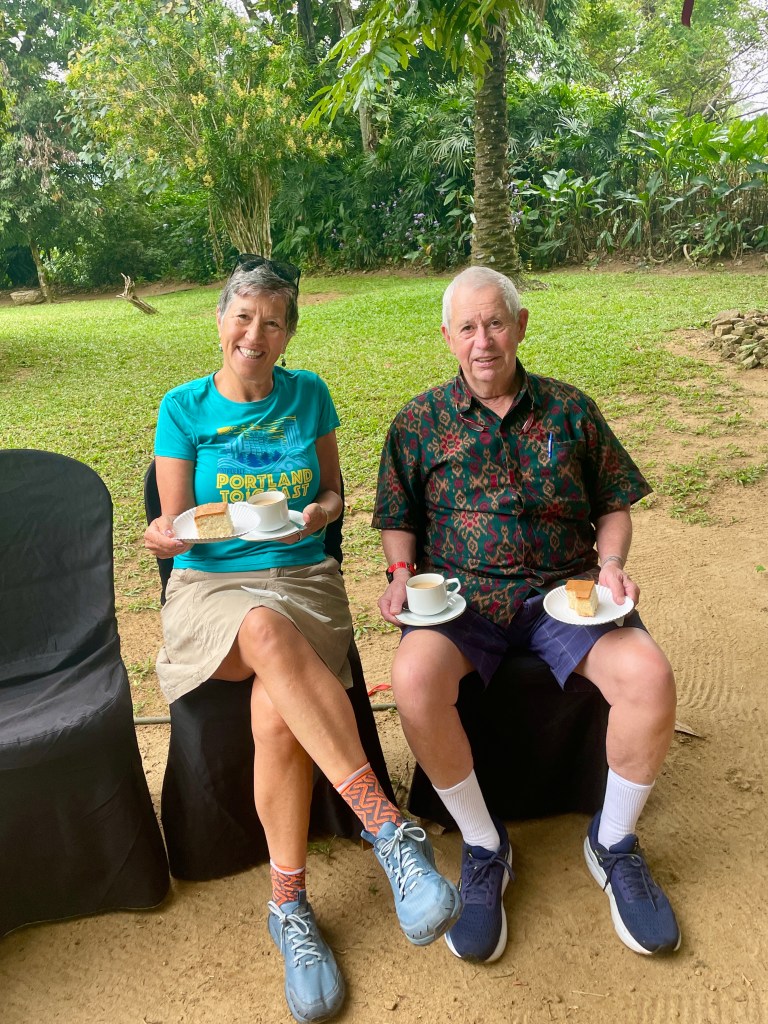
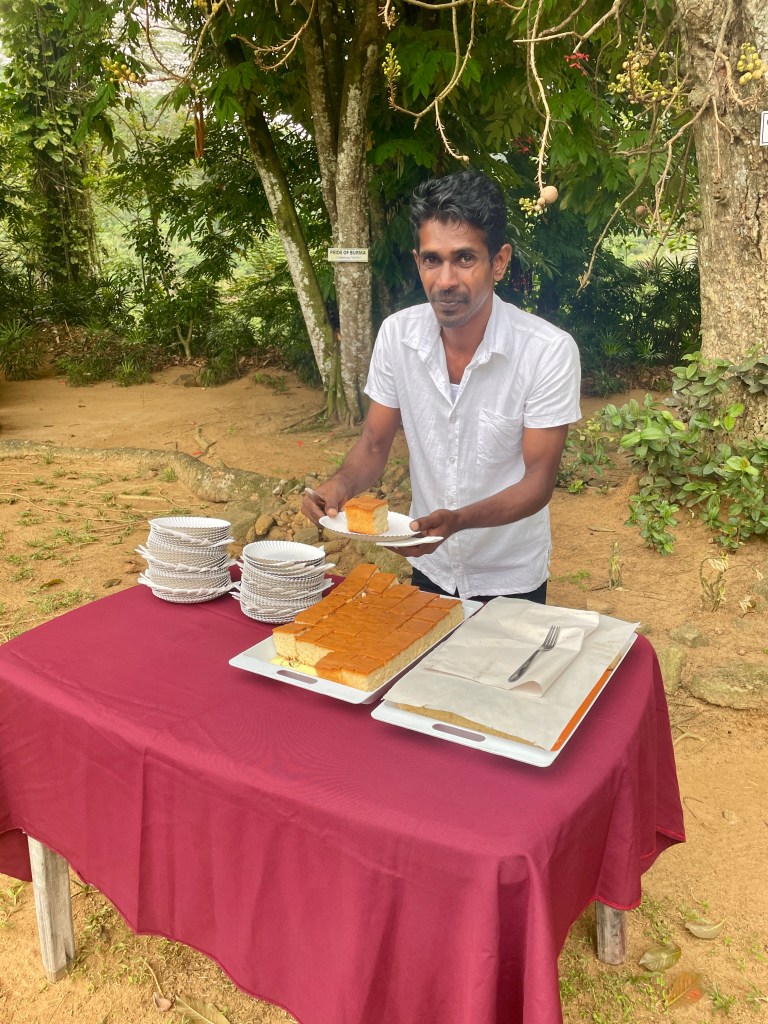
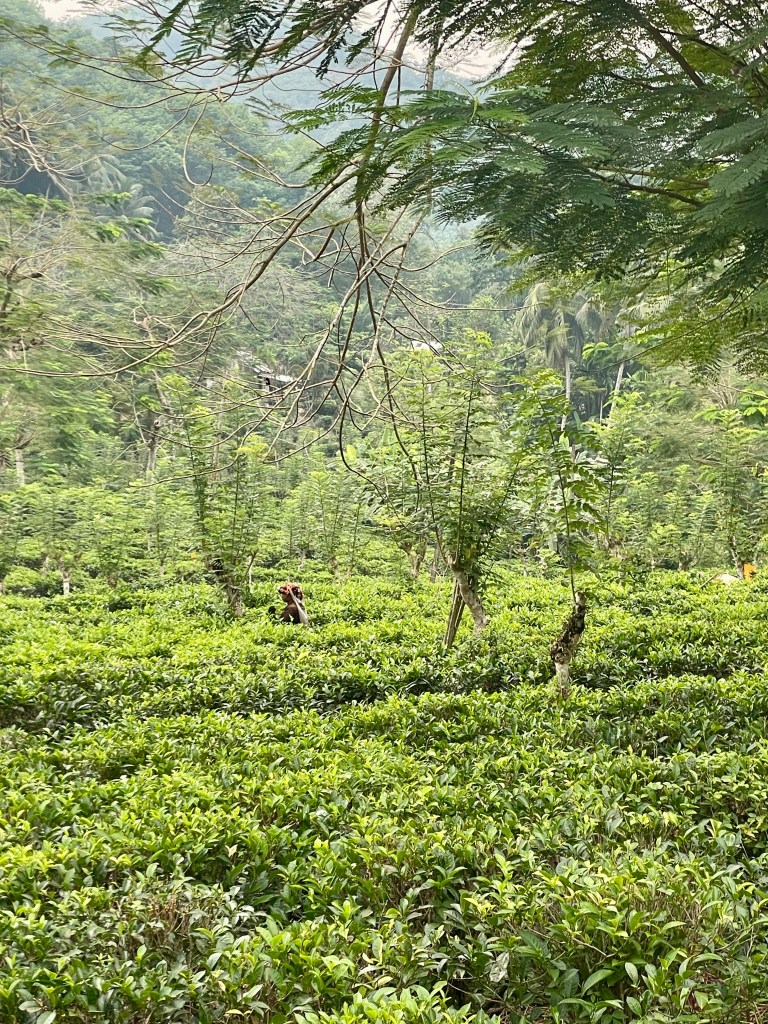
Our 2nd day featured a 2 hour ride to a tea and rubber plantation. A very scenic trip with a quality guide. We passed through a small town or two as well as lots of green, tropical scenery before arriving at a rural plantation. The grounds of the manor house were gorgeous. We were served some tea and butter cake and, to our surprise, given an opportunity to buy tea….which we did.
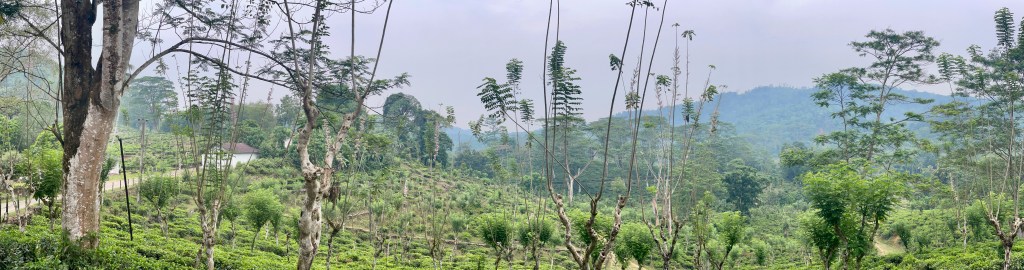
Pano 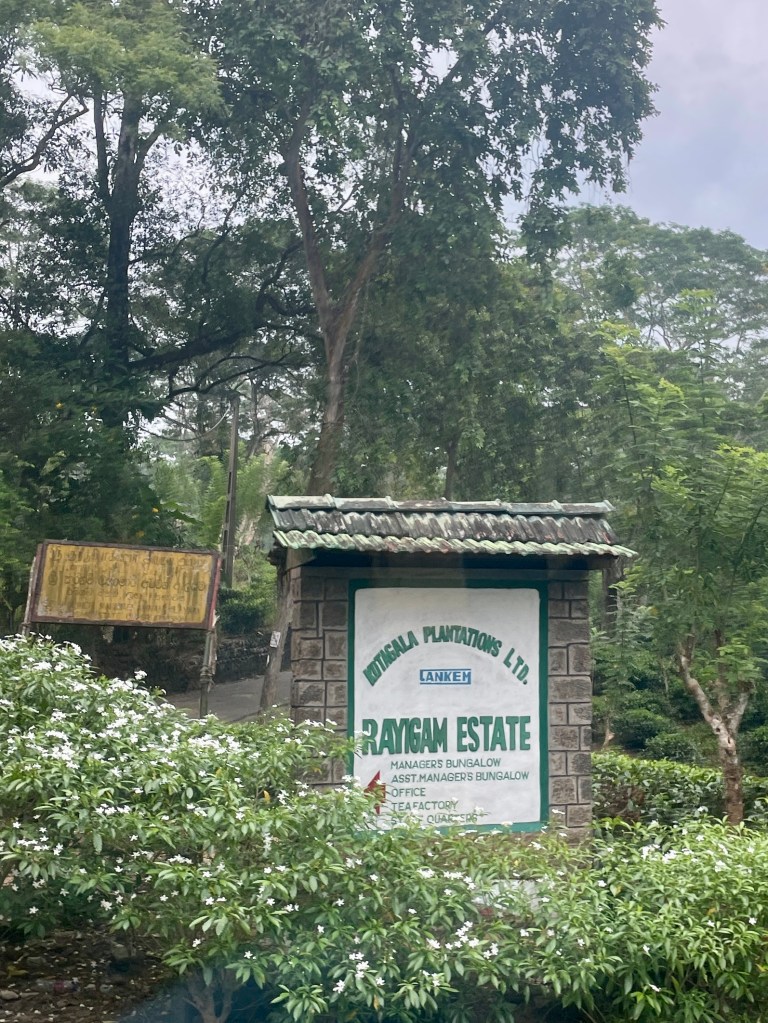
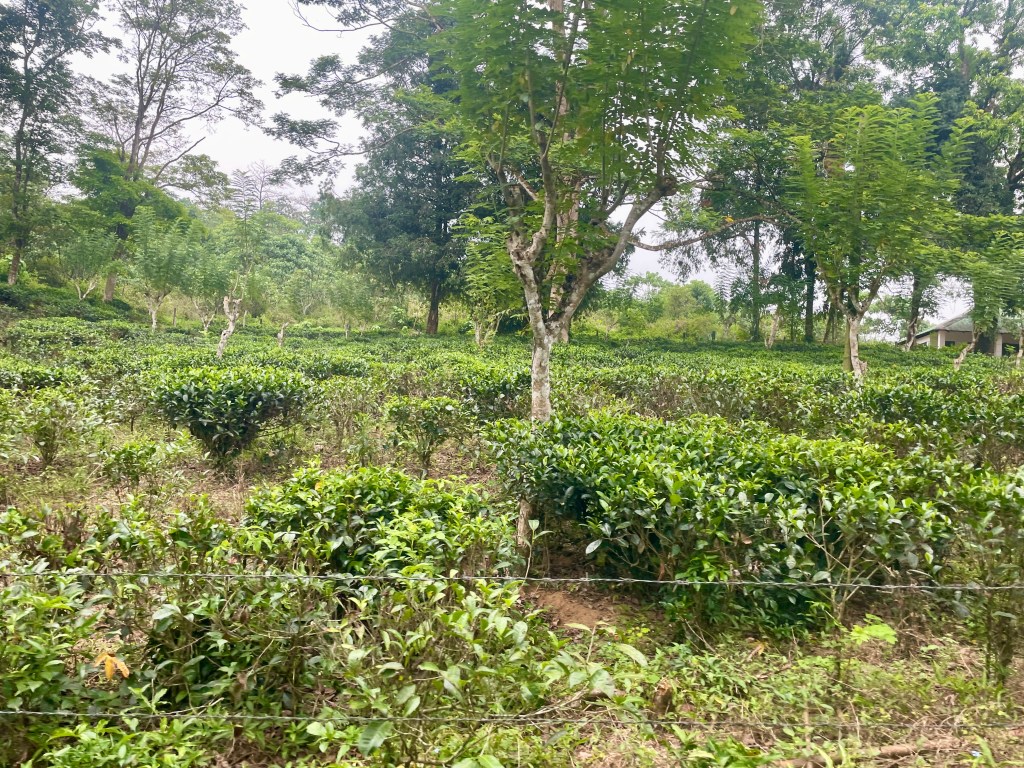
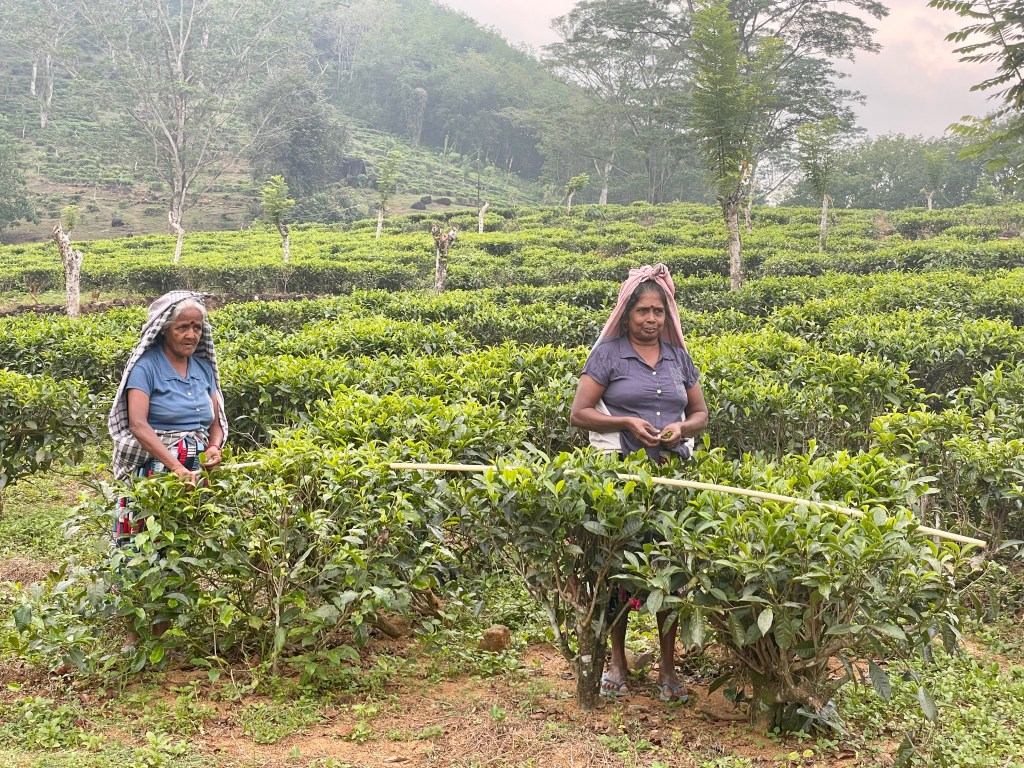
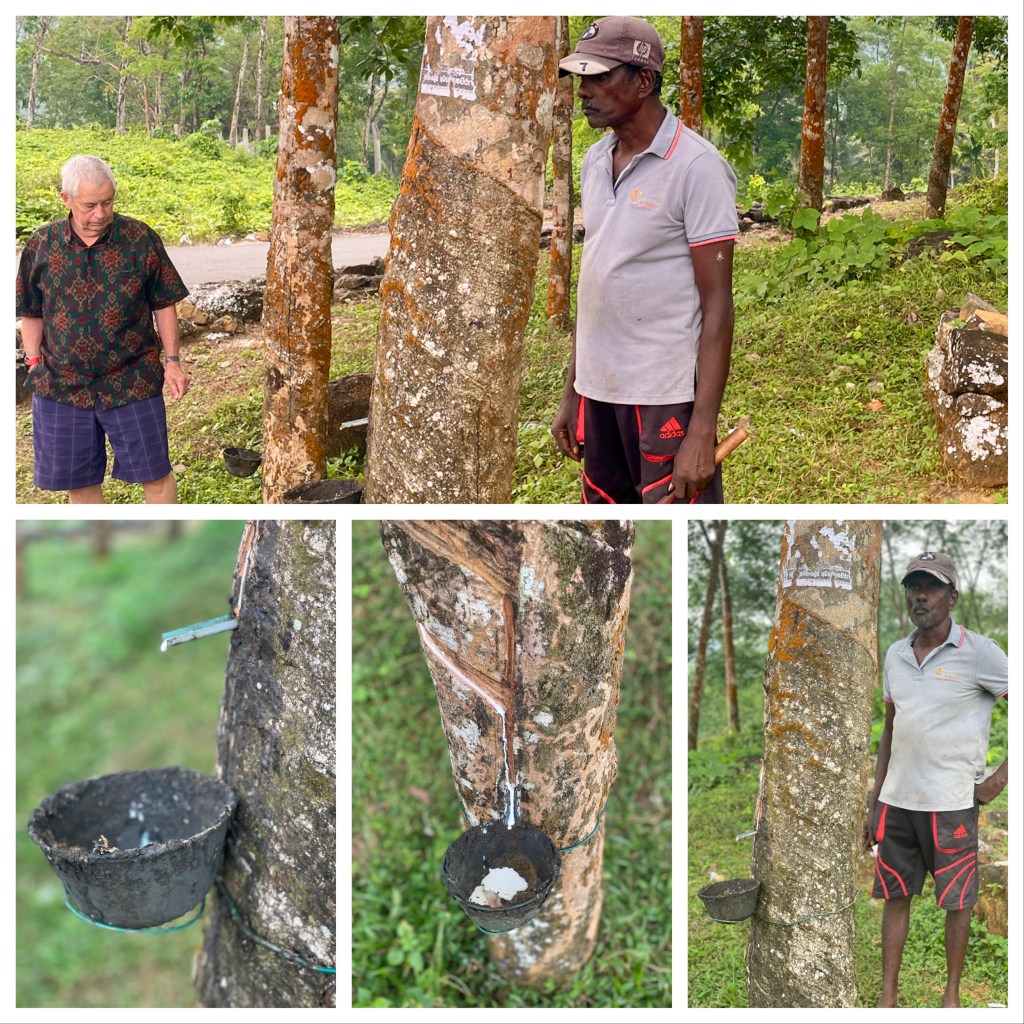
Then we moved on several miles to view the tea plants and rubber trees. There were demonstrations of ‘tapping” the rubber trees and of picking the tea leaves.
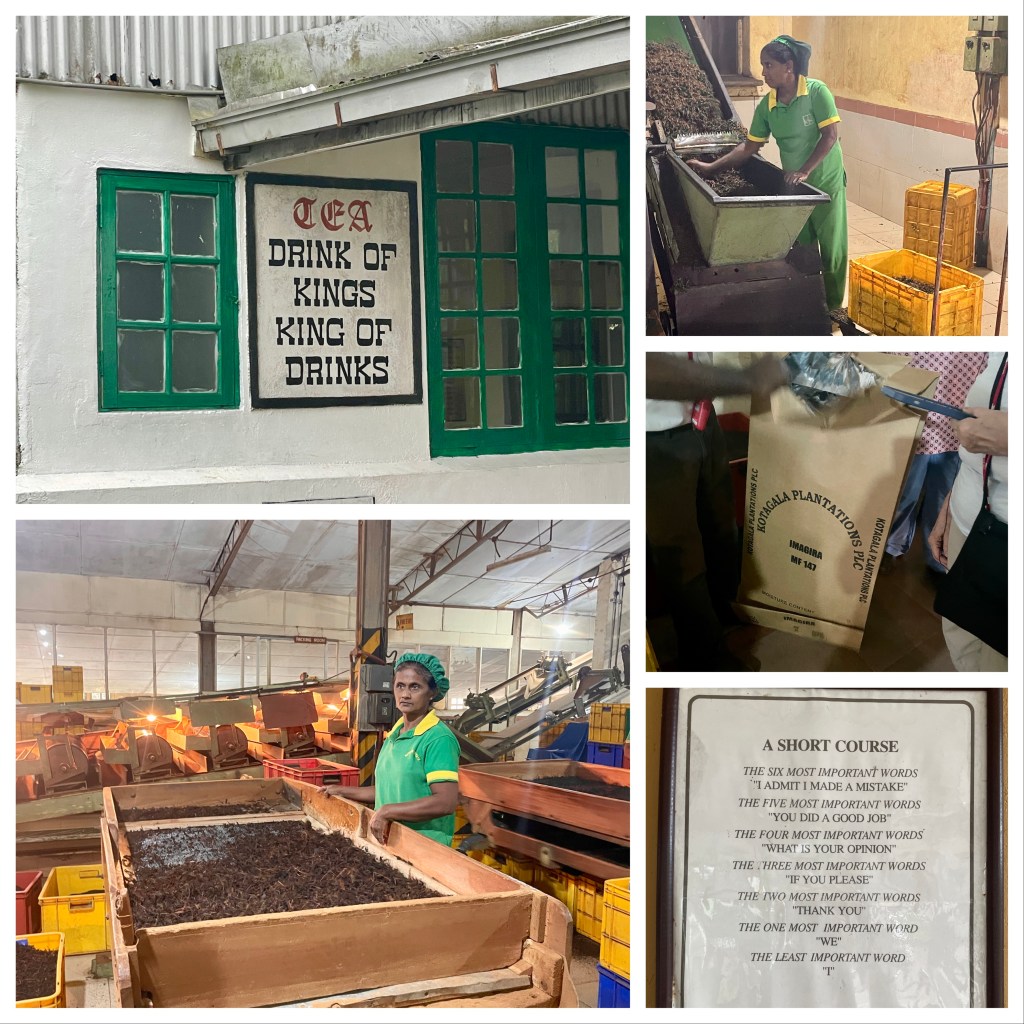
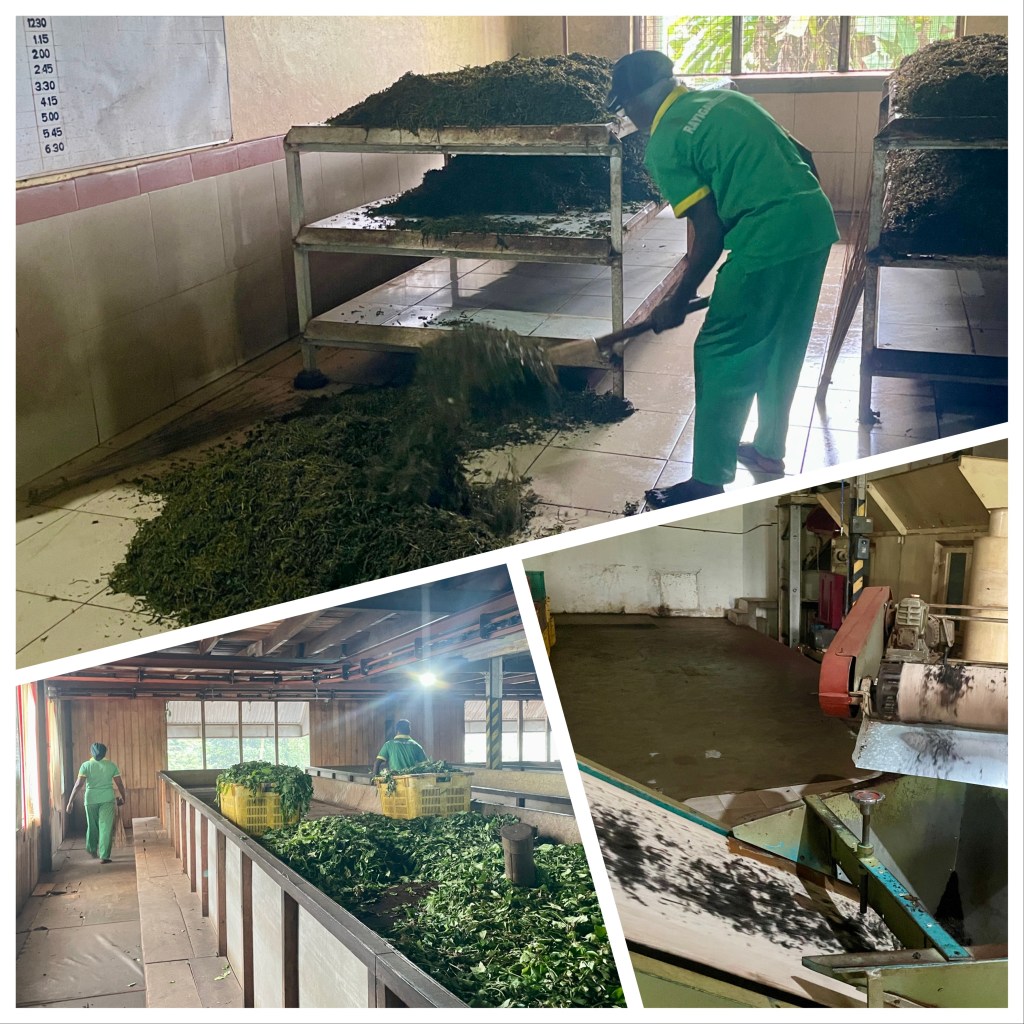
Then came a fun tour of the factory which had steps of drying, pressing, separating stems and packing. The process was very labor intensive. The machinery looked like it could have been there for a hundred years, with a few upgrades.
We learned a few things:
-There are tea zones of less than 2000 feet, 2000-4000 feet, and over 4000 feet. Each produces a different quality tea.
-The tea plants might grow to 30 feet high were they not pruned to their height of about 3 feet. Men do the pruning and fertilizing of the plants, using the rejected stems from the tea preparation process. Women do the plucking.
-There are about 3 million people dependent on the tea industry….of 22 million in the country.
We had a couple interactions with the locals:
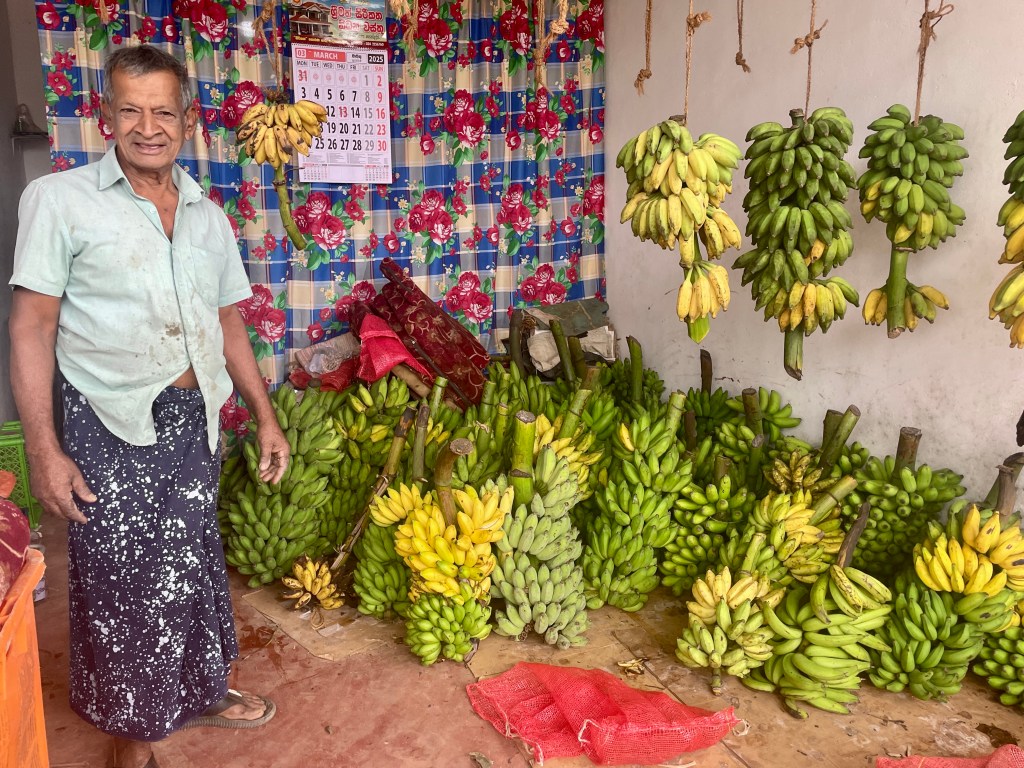
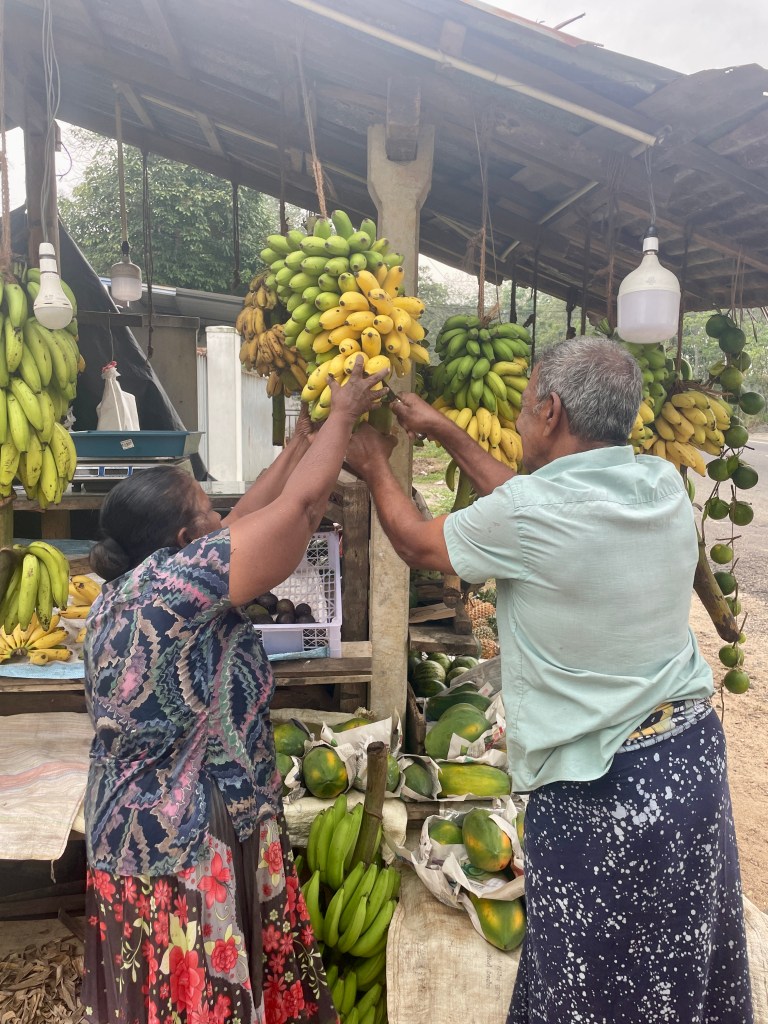
-Our bus stopped for a potty break and I wandered off to a banana stand. I tried to buy some bananas with a dollar. The merchant cut about 15-20 of a large stock. He attempted to give them to me, but I wanted him to take the dollar. Our guide came up and translated. He said that the merchant had never seen foreign currency; he was going to frame it. Our guide said that he would have to pay $1.50 equivalent to buy that many bananas. A nice experience.
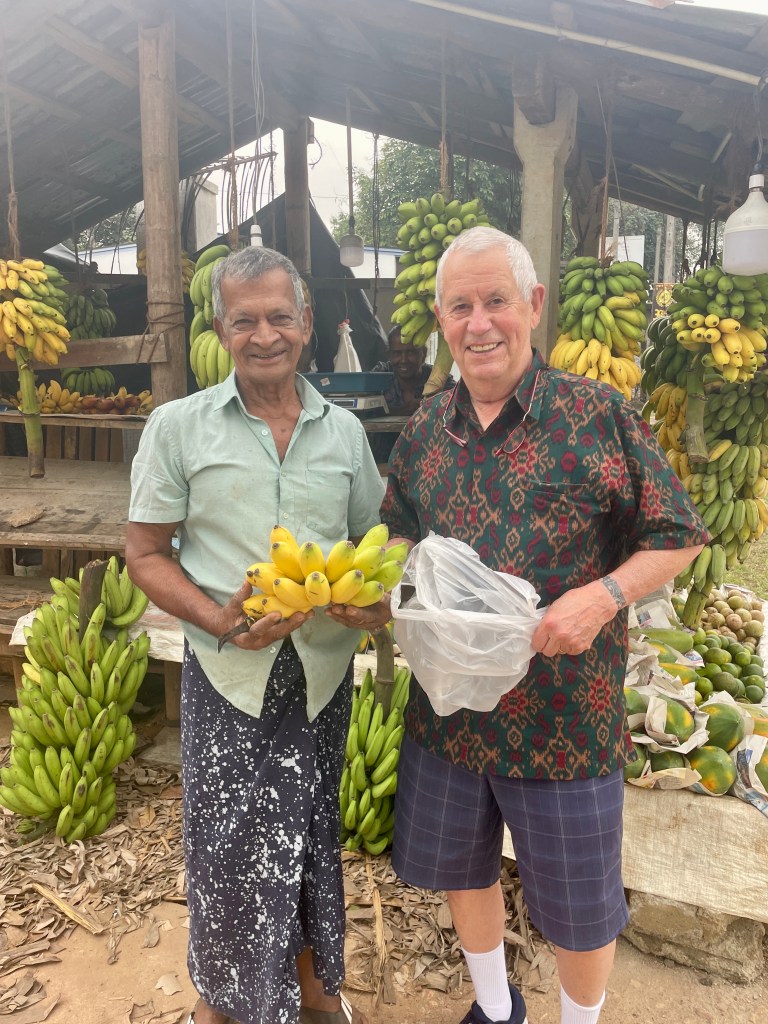
-I helped a woman “pluck” leaves and slipped her a dollar. She was happy to have the help. Then, we saw an older fellow (younger than I) and I asked if Karla could take a picture of us. He stood at the ready, but shook his head “no.” I remembered that Indians did that and that the negative shake was affirmation. We got the pictures.
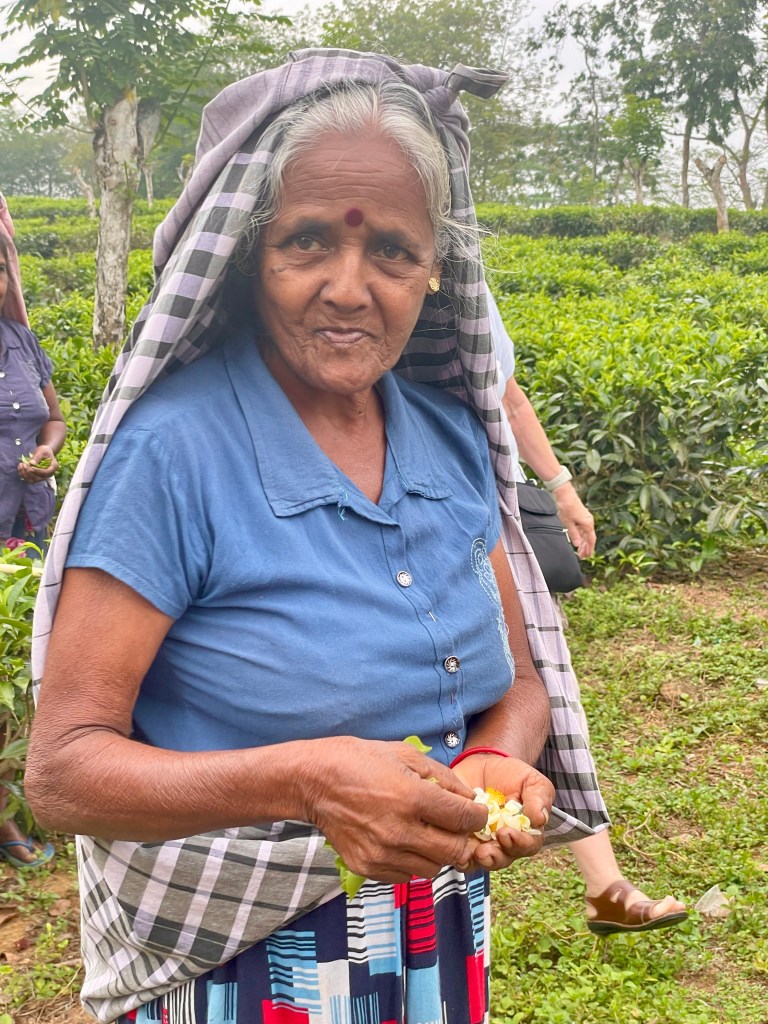
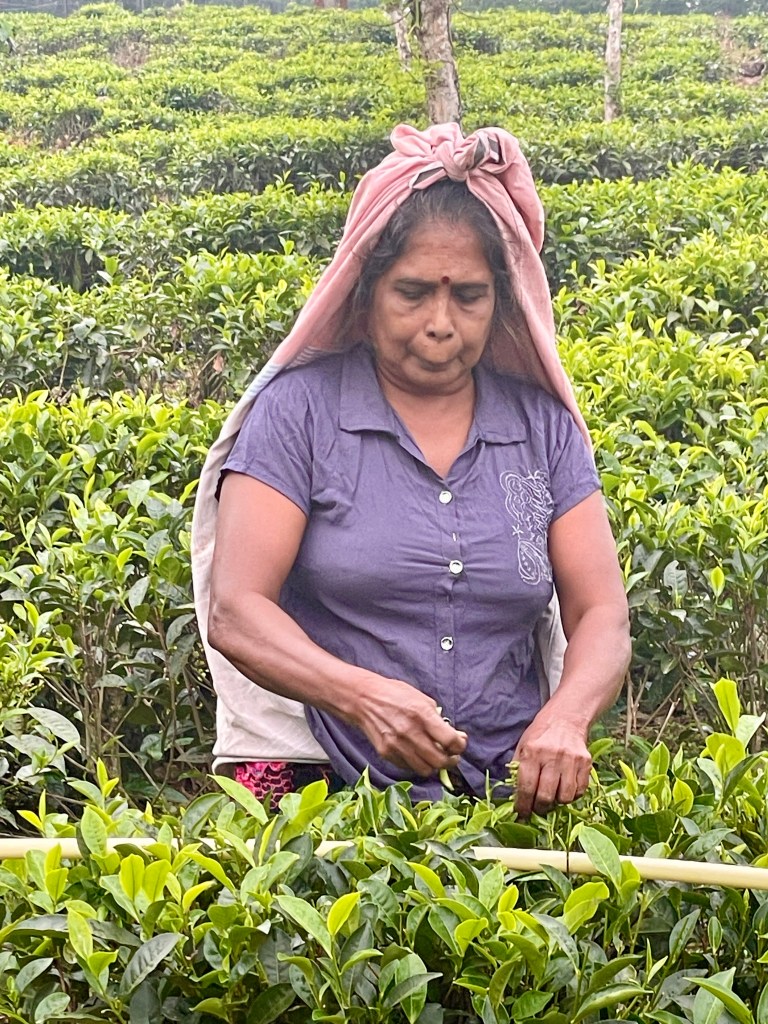
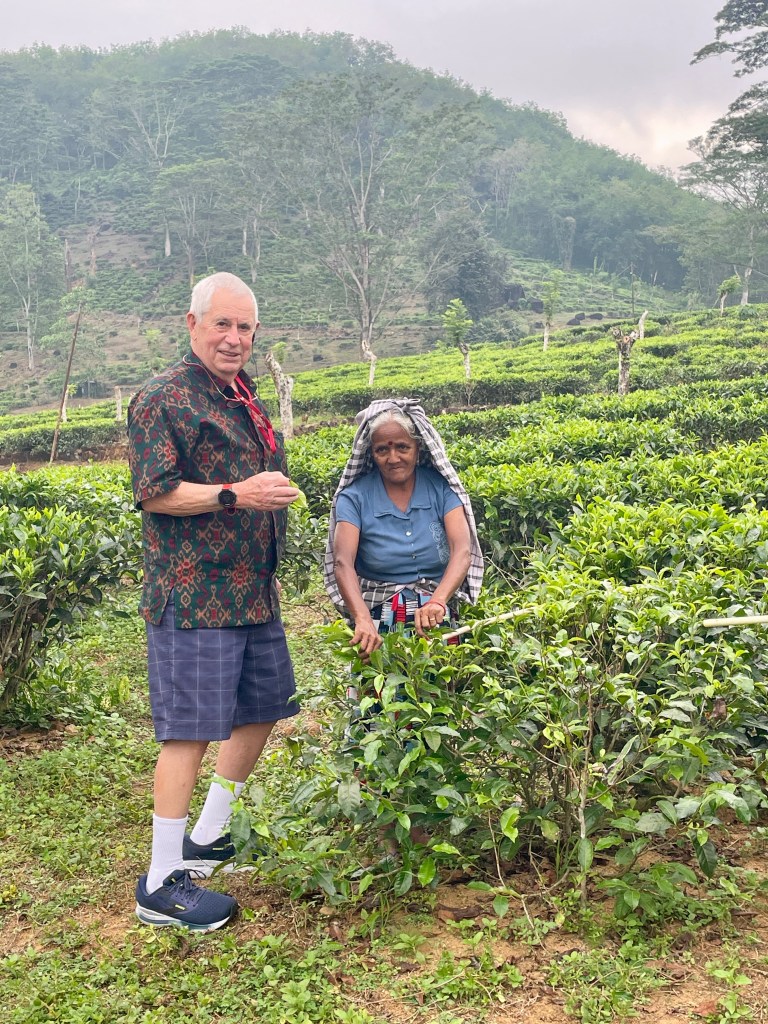
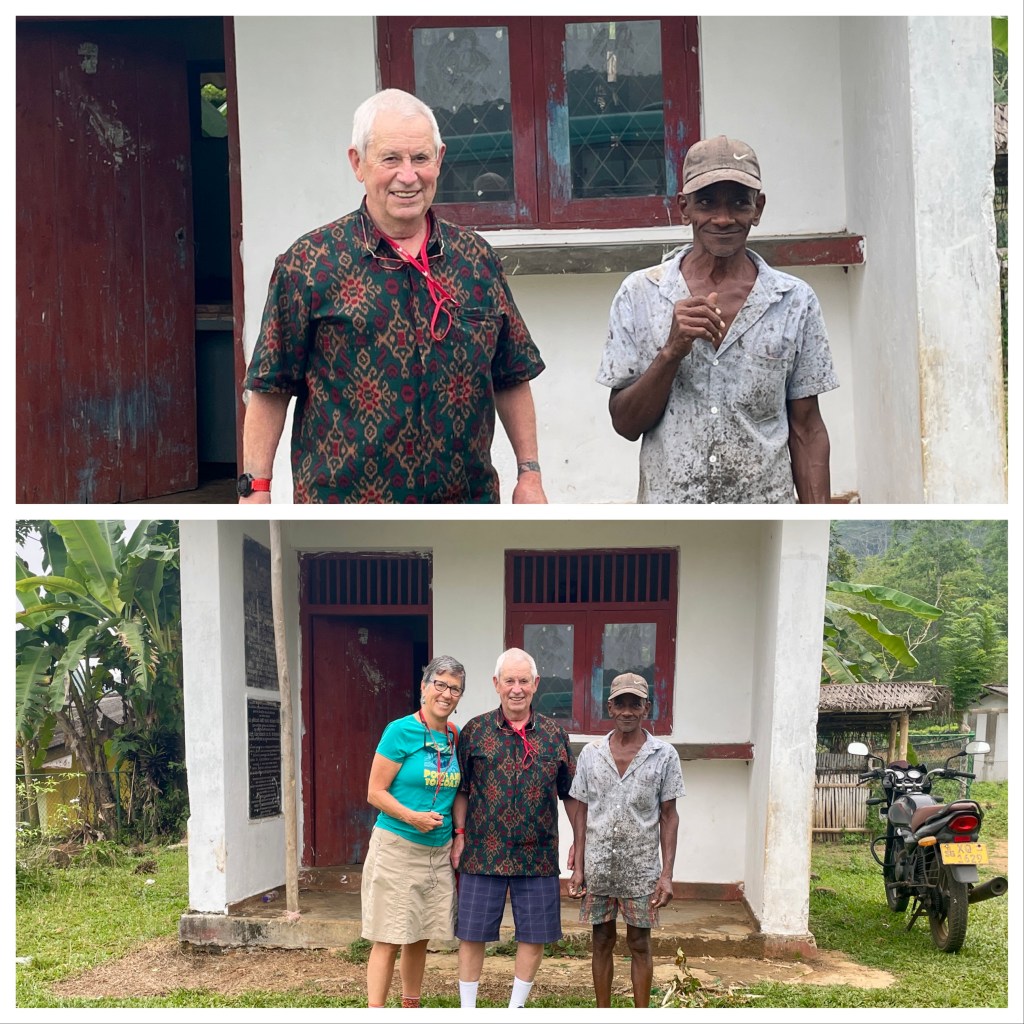
– We learned that yellow coconuts are the best for drinking. But, the milk goes through the system rapidly. We were told that it is used to combat urinary tract infections. I was pleased to hear that for our friend Dave Yaden. But then we learned that it is not recommended to combat STD’s. Sorry, Dave, I thought I could be helpful.
As we returned to the ship, we shopped some of the gem shops as one of our lecturers said we could not go wrong on Sri Lankan gems, including sapphires. We purchased two simple rings: one blue and one pink.
Karla and I agree that Sri Lanka is worth another visit….the non-Colombo part.
2009 Visit to Sri Lanka with Maddy and Jackson

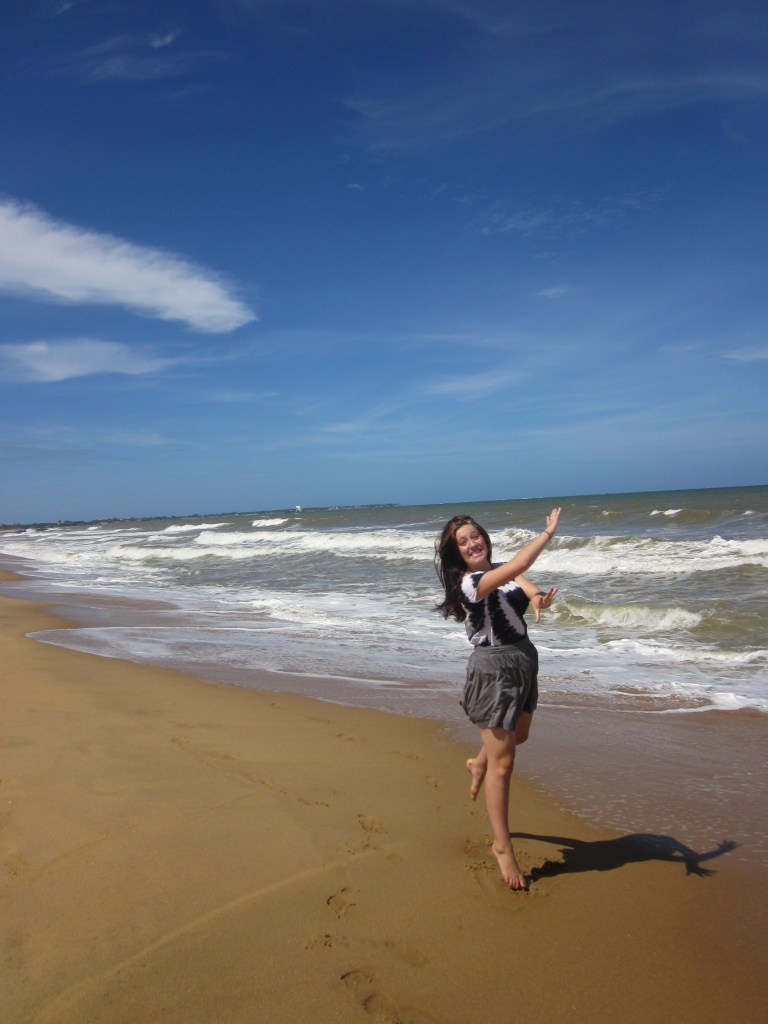
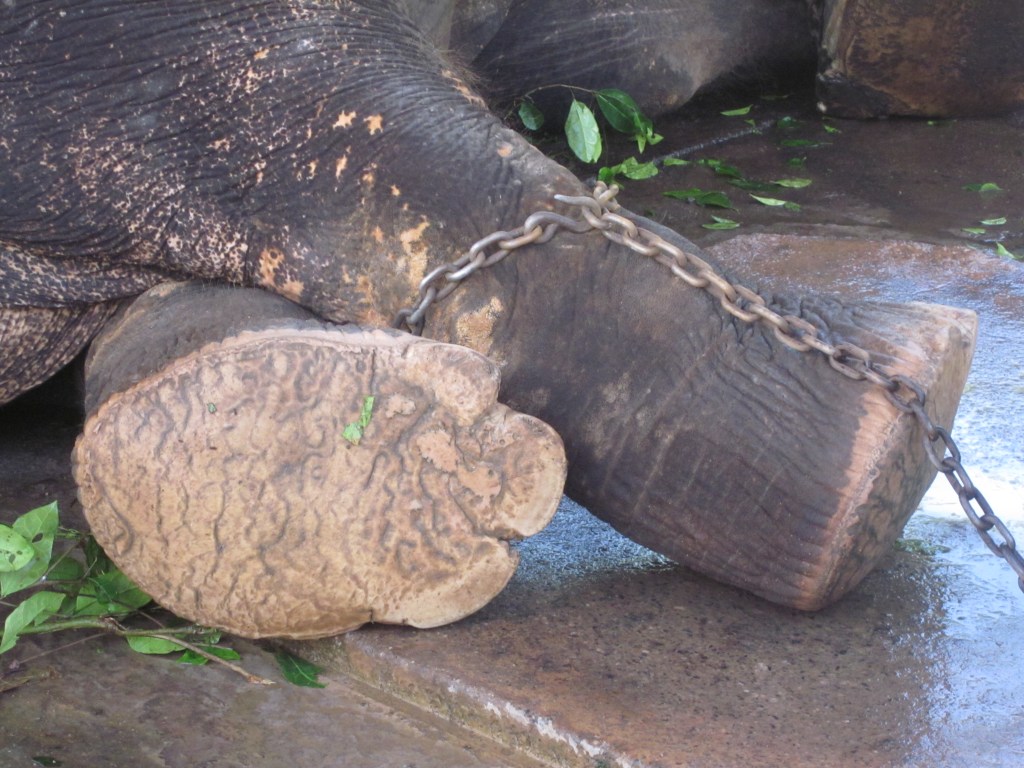
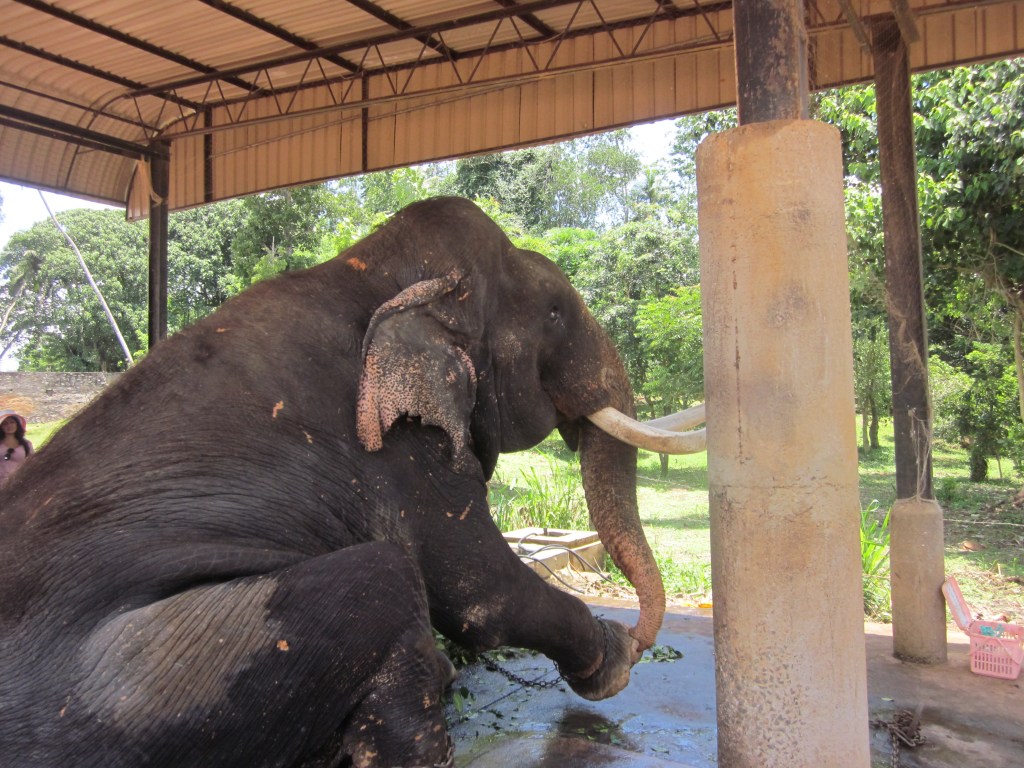
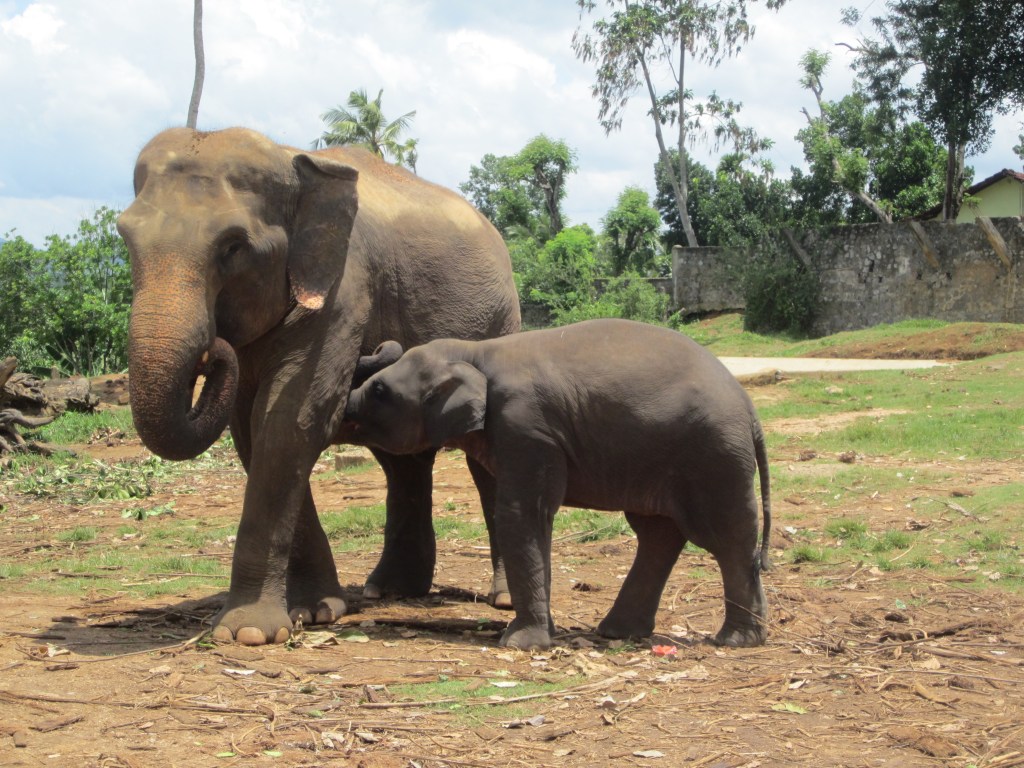
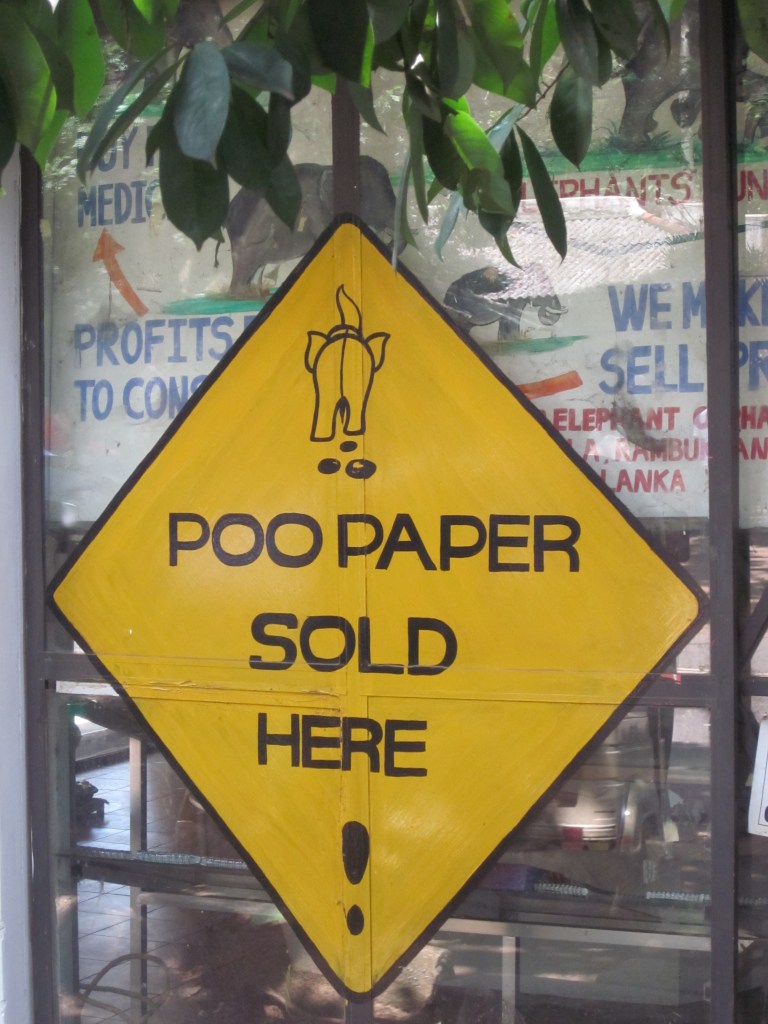
I 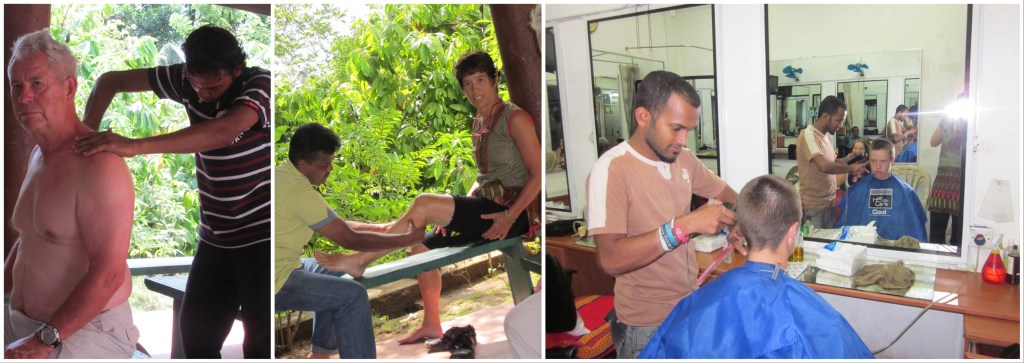
Massages and a haircut. -
Musings before docking in Colombo
March 9
We dock at 2pm so I have time for a few musings.
Yesterday was International Women’s Day….perhaps even in the US. More on that later. There was a special lunch featuring T-bone steaks and lobster. We skipped that meal. That’s a commentary on all the good food available.
Two of the Sri Lanka “must visits” are the Buddhist temple featuring a tooth from Buddha and, in another spot, a tree grown from a cutting off the original Bodhi tree under which Buddha sat and meditated. They both draw tens of thousands of visitors. Recently, on a visit to a temple, I’m pretty sure that I found another original tooth. I plan to turn it over to a small museum in Lyle. This might bring tens of thousands of visitors. Perhaps the gas station will reopen. The Lyle Hotel will fill up. Souvenir shops will abound. Karla might become Mayor! Just wait!
Some of the advance lectures stress the local value of respecting one’s elders. It seems like a good idea and I’ve talked to Karla about it. I’m not optimistic.
Also mentioned was the custom of seeking auspicious dates from astrologers for special occasions like weddings. When we attended Sahana’s wedding in India almost a year ago, it was aimed at March 28. The astrologer had recommended that date as auspicious. Originally, the astrologer had recommended November 29, but the wedding party couldn’t make it work. Quite a coincidence that the March date is my birthday and the November date is Karla’s birthday. Very auspicious!
Yesterday, the New York Tmes had a piece listing all of the words and phrases that the trump administration is discouraging (prohibiting?) in federal publications and websites. I’ll list about one third of them below:
advocacy,all-inclusive, at risk,barrier,biased, Black, clean energy, disability, diverse, equal opportunity, environmental quality, equity, excluded, female, gender, historically, institutional, minority, multicultural, political, pollution, privilege, pronoun, race, sex, social justice, victim, women (you should google it for more words.)
I am reminded of Newspeak in Orwell’s 1984….following most rules of English grammar, yet in a language characterized by a continually diminishing vocabulary—complete thoughts are reduced to single terms of simplistic meaning.
When I’m confused, I turn to the president to see what acceptable terms or phrases might be. A partial list follows:
“shithole countries”…..losers…..retards…vegetable (describing a stroke victim)….Pocahontas (one of Indian blood)…rigged….crooked….tariff…yuge, bigly…..stupid….covefe…..fake news…witch hunt…incredibly stupid. and “grab ’em by the pussy.”
Since we’re in international waters and the Captain is in charge I will not participate in “trump speak”…..until we’re home.
-
Colombo, Sri Lanka
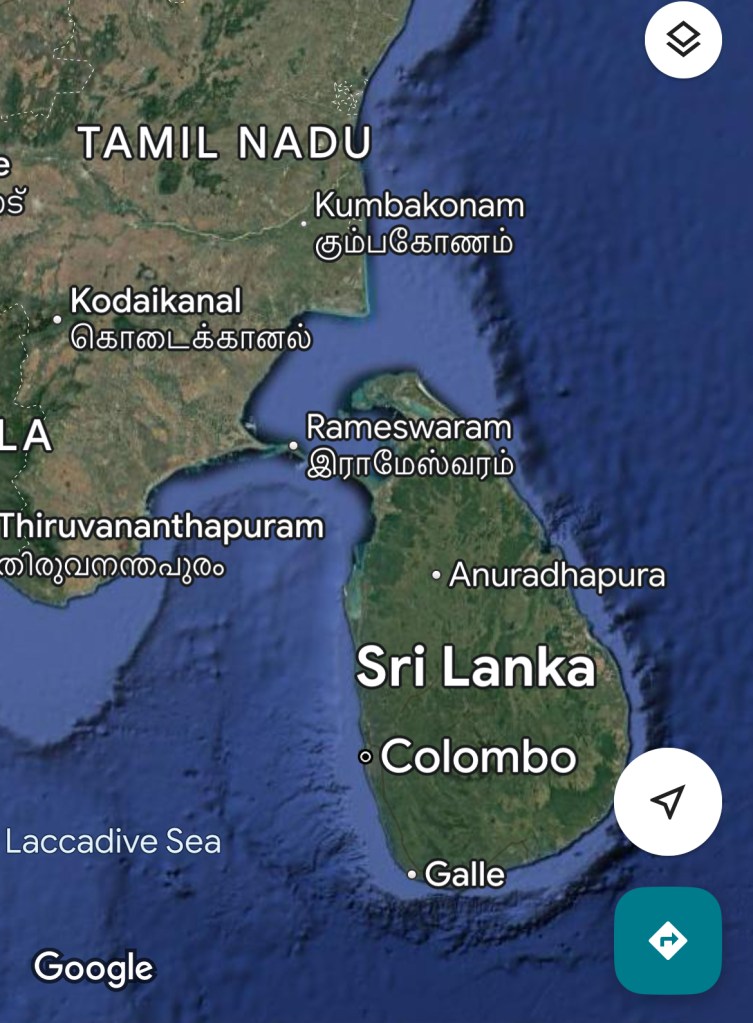
March 8, 2025 (Happy International Women’s Day)
We’re looking forward to Sri Lanka. I visited Colombo, Ceylon in 1971 on a Semester at Sea cruise. Karla and I and M and J also visited….on the coast with access to Kandy and Buddha’s tooth…on the last leg of a trip…China, Tibet, Bhutan, Nepal, Delhi, and Sri Lanka. It was all positive. Evidently, others were there before us; there are records back 500,000 years. Since today is International Women’s Day (perhaps not in the WOKE US), I will note that they had the first woman ruler in 47-42 BCE.
Ceylon was at the peak of its power between 453 and 1186. Then, like so many countries in Asia, they were discovered and had to deal with the Portuguese, Dutch and British. They all left their marks, which were frequently negative on the local population, but positive for the European traders. The Portuguese were attracted by cinnamon in the 16th century. In the 17th century, the Dutch saw an opportunity to establish coffee plantations as they had done successfully in Java. In 1799,the British struck a deal to take control, leaving Indonesia to the Dutch. British citizens were encouraged to expand the coffee economy by grants of free land and interest free loans. This, of course required the removal of the indigenous landowners. They did employ the locals to cultivate the crop. In 1827, cocoa was added to the mix. By 1848, there were 600 estates and 50,000 acres under cultivation.By the late 1860’s, Ceylon was one of the world’s top coffee producers. It was very successful until a fungal disease hit
While coffee production took a dive, cultivation of tea was on the rise. Around 1850, the Brits sent a spy to China to steal tea growing secrets. It was successful thievery and by 1873 Ceylon was exporting large quantities to London. The success attracted large tea growing operations that formed a Ceylon Tea Trading Association to preserve their positions. Some guy named Thomas Lipton took over a plantation and decided that he could sell tea in small packets…a novel idea. His motto, “from tea garden to teapot.” I’m not sure if Lipton ever made good, but Ceylon became the number one tea exporter in the world by 1965.
After World War 2, Ceylon achieved its independence…in 1948. They became the Republic of Sri Lanka in 1972. But, it hasn’t been easy. There was a 26 year Civil War from 1983 to 2009 between the Sinhalese majority and the Tamil minority..The majority prevailed, but they are working at making life easier for the Tamil communities. In 2004 there was a tsunami that killed 30,000 and displaced 500,000. Even more recently, 2019-2022, there have been serious economic problems and food shortages.
It’s a beautiful country of 22 million people. We have enjoyed the people and our experiences there. We hope that the economy is doing better. Our stop should provide a boost.
-
Subscribe
Subscribed
Have a WordPress.com account? Log in now.

