-
Luanda, Angola
April 11
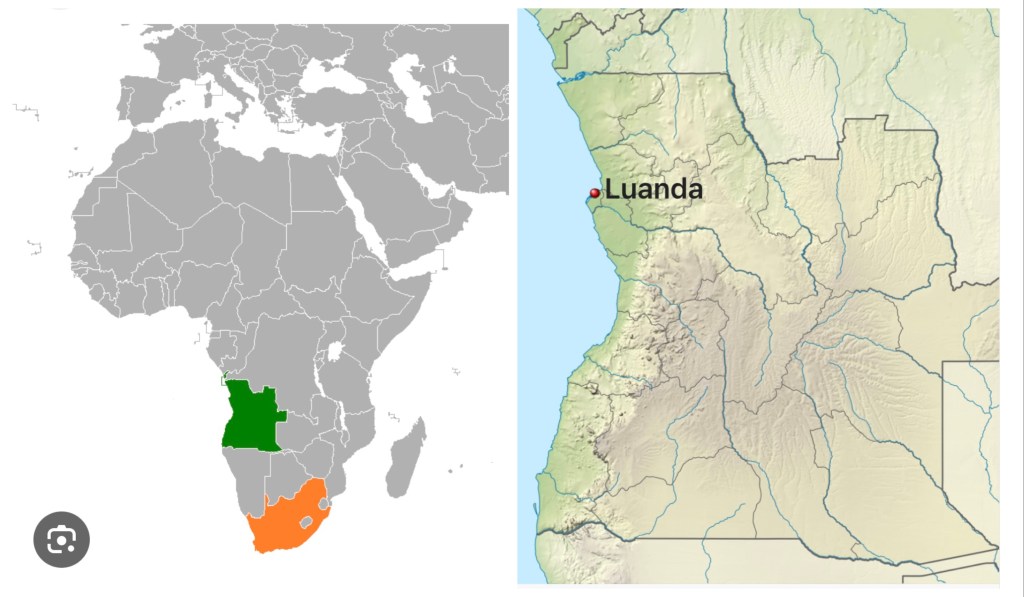
Angola in green on left 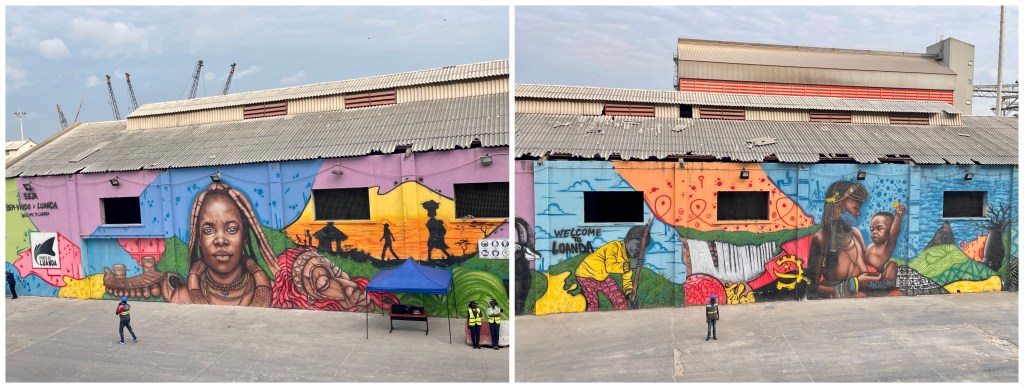
Mural at the Port 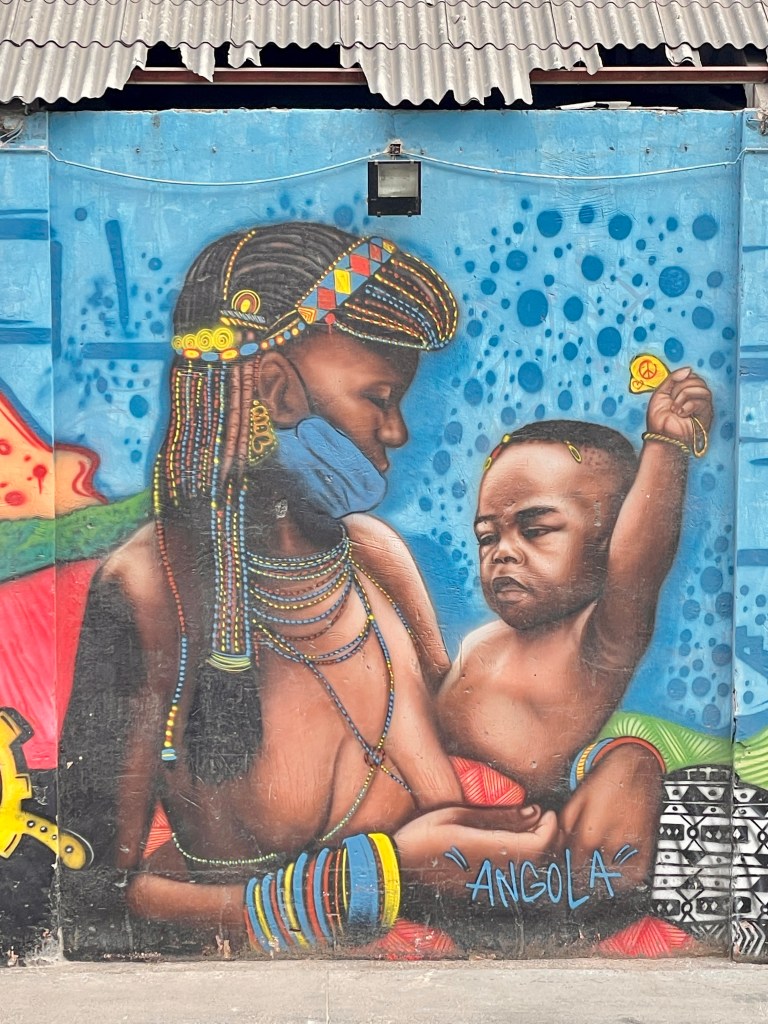
We’re enjoying 2 sea days with 65-70* temperatures and low key activities. Unfortunately, our ship’s weather news suggests temperatures of 108* in Luanda. We have an easy excursion planned, but our other activities may be limited….perhaps to Angolan beer.
Angola is similar to the countries that we’ve just visited, but different. It was defined early by the settlement of African tribes and then a “visit” by Portugal. It went through a fight for independence now has a predominantly African population base; only 2 percent Asian and 1 percent European among its 37 million people. While the economy is growing rapidly, most citizens have a low standard of living and there is considerable income inequality. It scores low on measurements of human rights, human development and economic opportunity.
It is different in that the Kingdom of Kongo had a strong presence when the Portuguese arrived. The Kingdom traded copper, ivory, salt, hides, and, most importantly, slaves. Kongo had prospered by enslaving tribes and the Portuguese were happy to help. They provided valuable foreign currency in exchange for slaves; Kongo had specialized in that particular export. Most European countries did not have such a willing slave trading partner.
The other big difference was in their anti-colonial struggle from 1961 to 1974. Their civil war had 3 battling parties that received attention and arms from outside parties. One group was supported by the Soviet Union and Cuba; Cuba even sent soldiers. Another faction was anti Communist and received support from the US and South Africa. Zaire backed another group and the Maoists became involved along the way. In 1975, Angola became a one party republic. From 1975 to 1991, they followed a Marxist-Leninist path and pursued central planning and the nationalization of private companies. In 1990 they had a conversion to social democracy. Their economic growth has been mostly in diamonds and oil; China is their top trading partner.
Our Department of State comments on their official corruption, limits on freedom, and excessive punishment. For good measure, there are warnings of armed robbery, assaults, carjackings and muggings. It sounds like Karla should do her hiking outside of dangerous urban settings; however, there are warnings of minefields left over from the civil war. They may be a deterrent.
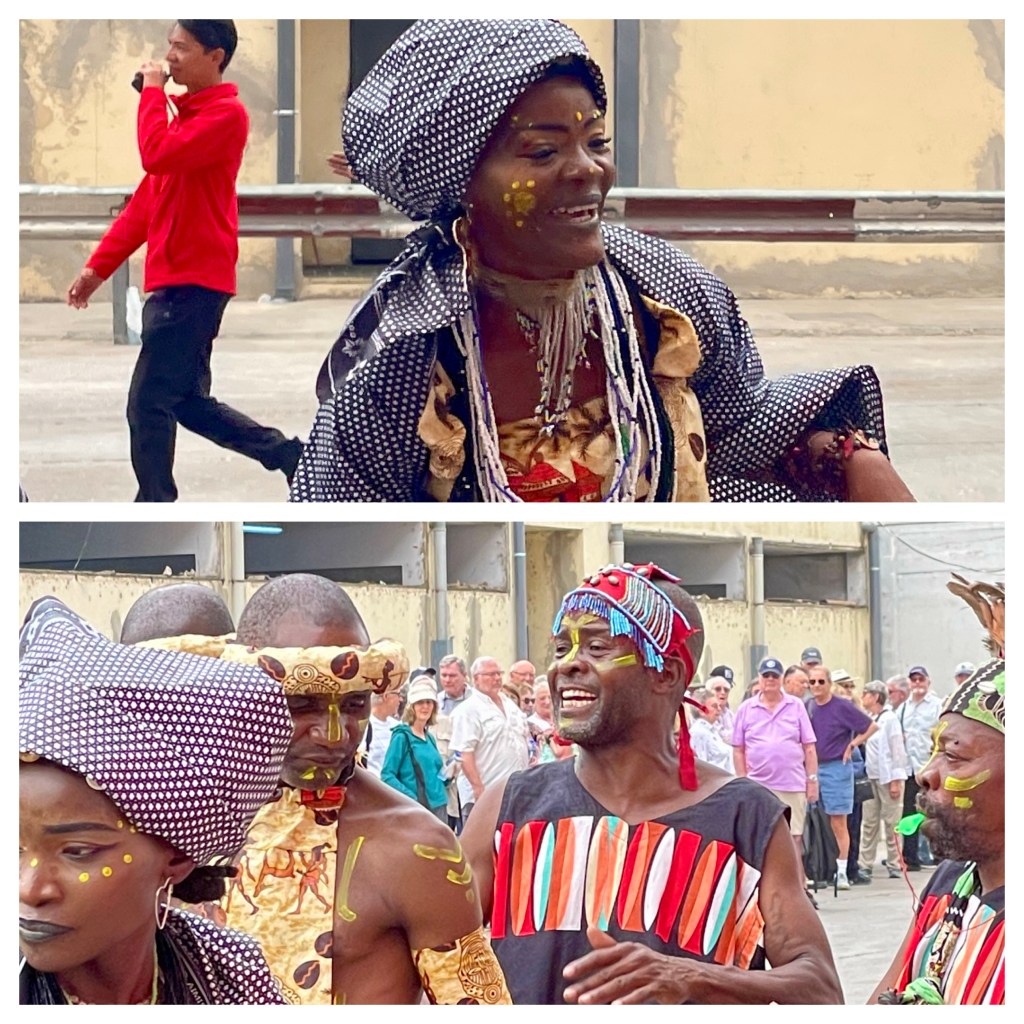
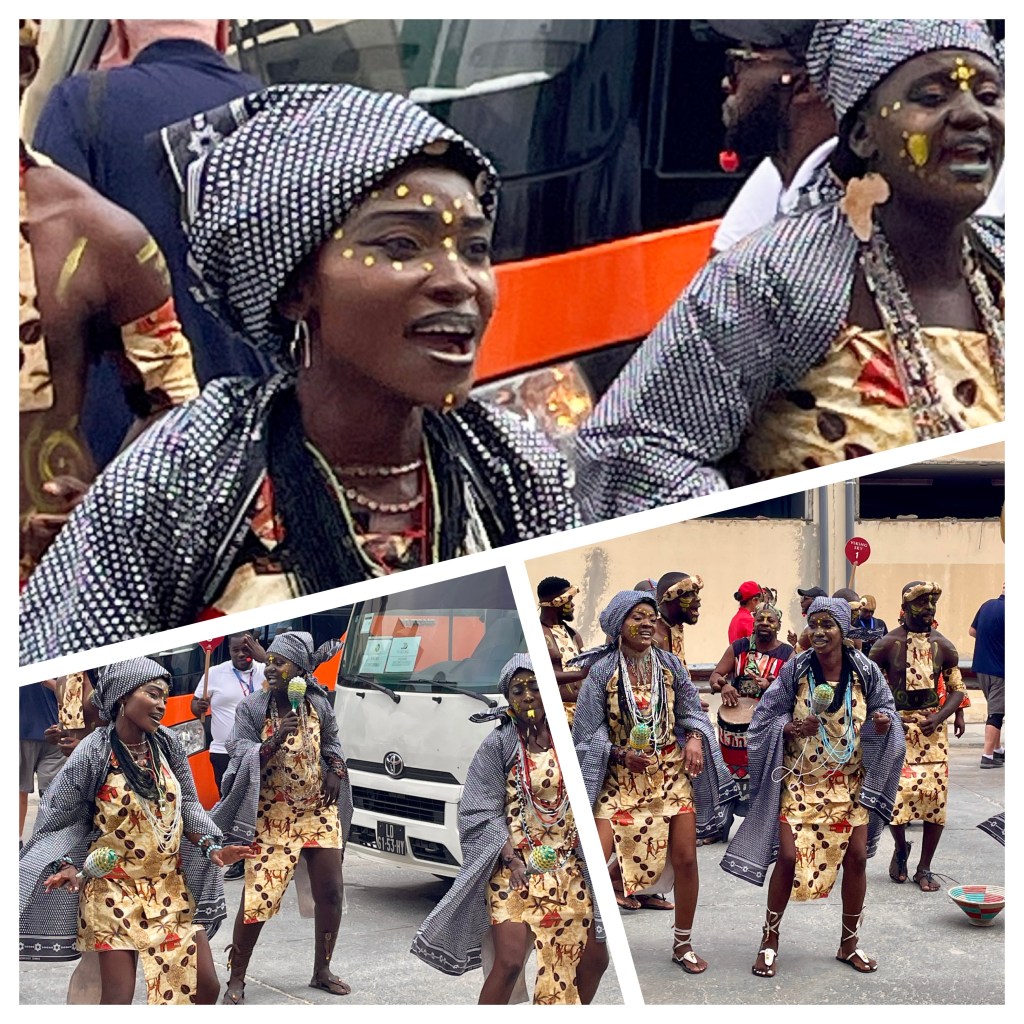
We were welcomed by energetic, well costumed and painted dancers. There are 36 native languages here and they must have spoken one or two of them. Since we don’t speak any, we just observed.
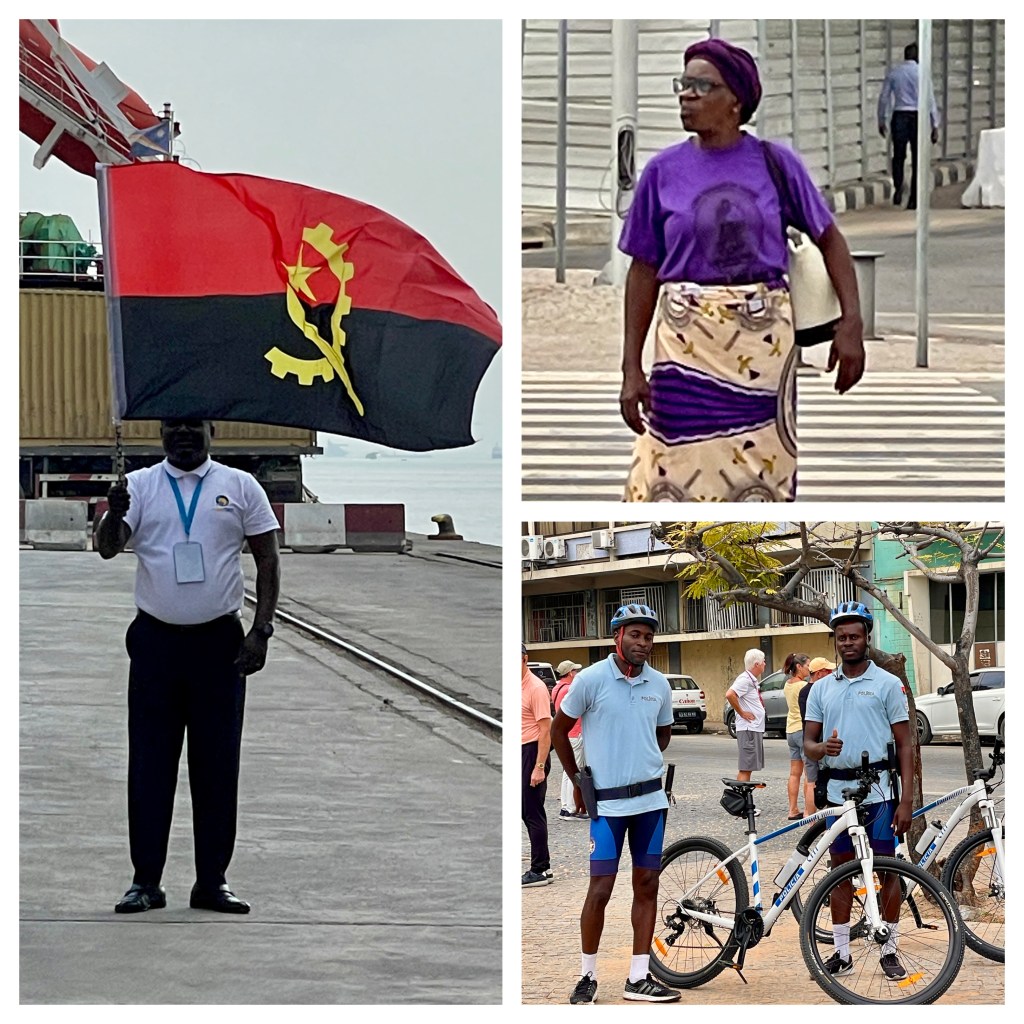
The Angolan flag was adopted by the previous Marxist government– sickle for ag workers, half cogwheel for industrial workers. The guys on bikes are the ever-present tourist police. 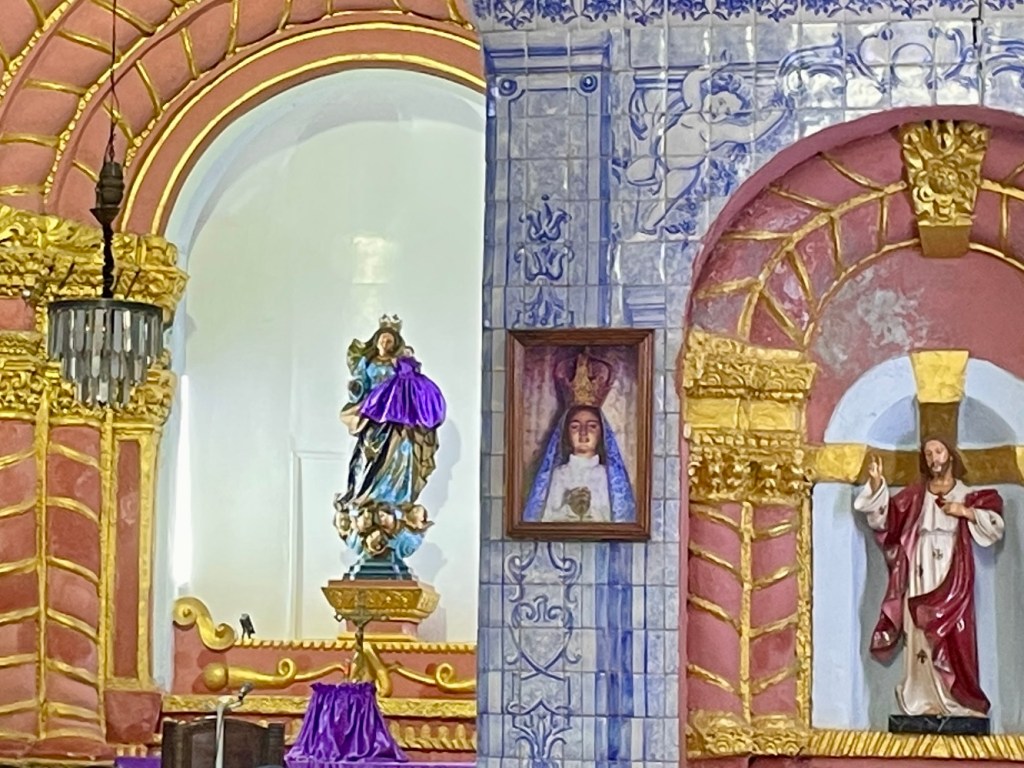
Historic Portuguese tiled church in downtown Luanda. 
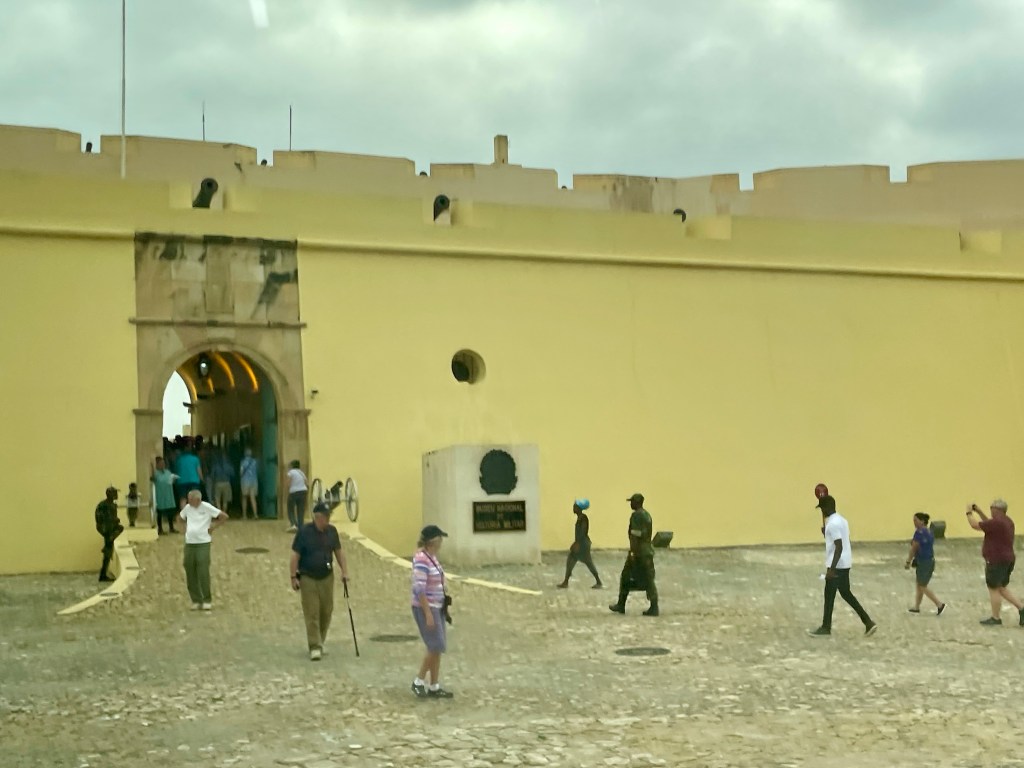
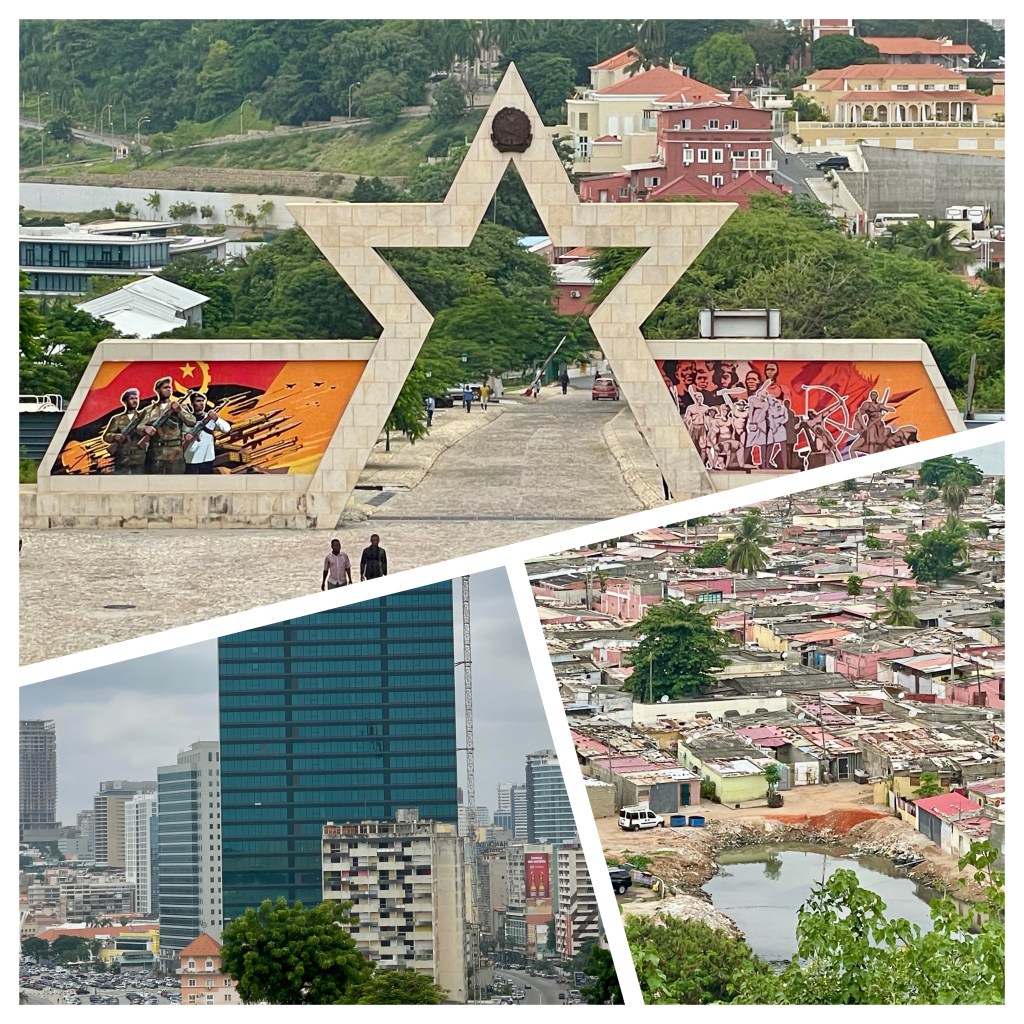
View from the fort– old and modern, shanty homes There were 7 buses full of Vikings as we departed on the standard excursion. We visited a church, a fort, and a seaside area. Everything took quite a while since the buses traveled together with a police escort. If a passenger was a bit late on one or two buses, it slowed us all down. The sites were nothing special, but it was fun to see Luanda. At the end of the tour, we took a shuttle to the mall. There were upscale shops that weren’t of much interest. But, on each floor, there were several tables of African clothes, fabric, etc. They still have some of their stock, but Karla does too. That assured that Luanda left us with a positive impression. We continued to be warned of the dangers, but the people we dealt with were very pleasant. I wouldn’t come back, but we were happy to have visited.
This is a good place to go back to our visit to Mombasa. Our standard excursion stopped by a central spot in the downtown to get pictures of well known large facsimiles of elephant tusks. It was uneventful and we moved on. A week later, the Crystal Symphony stopped at the same spot and was met by “50 youths armed with machetes.” The youth group made an effort to address income inequality by removing valuables from the busload of passengers. The local authorities apologized, but evidently the Crystal Symphony visit was cut short. We missed it by a week. We may be lucky to be moving on beyond Africa. The US cuts of food and medicine plus new tariffs don’t make us any friends. And, to a number of countries that see climate change as an existential threat, the US assertions that it doesn’t exist are not helpful.
-
Walvis Bay, Namibia
April 7-8

Our ship’s path along the west coast of Africa from Luderitz to Walvis Bay We have an atlas that belonged to my Dad. I believe that it’s from 1918. With some study, I might have been able to name the countries of Africa…French West Africa, Belgian Congo, Portuguese Angola, German South Africa, French Equatorial Africa, Italian Somalia….all results of “The Scramble.” Now, we have 21-23 countries in West Africa, comprised of 2000 groups/tribes and languages, wedged into a European concept of countries. Money in its many forms has forced together a variety of combinations of culture, language and spirituality. This outcome was not just the result of voracious Europeans (and Americans.) Pre-European African powers developed the institution of slavery and found willing buyers among the Europeans. About 15 million Africans “participated” in the slave trade, starting about 1518 in Cuba until the last slave ship to the US in 1860.
Namibia is a small desert country of 3 Million. There are 13 separate ethnic groups mixed with 75,000 residents of European descent. The cities seem to be constructed around a resource base until the economy shifts. Mining is major with diamonds, gold, zinc, uranium and tin. Fishing is important and, now, tourism. Walvis Bay has around 100,000 people.
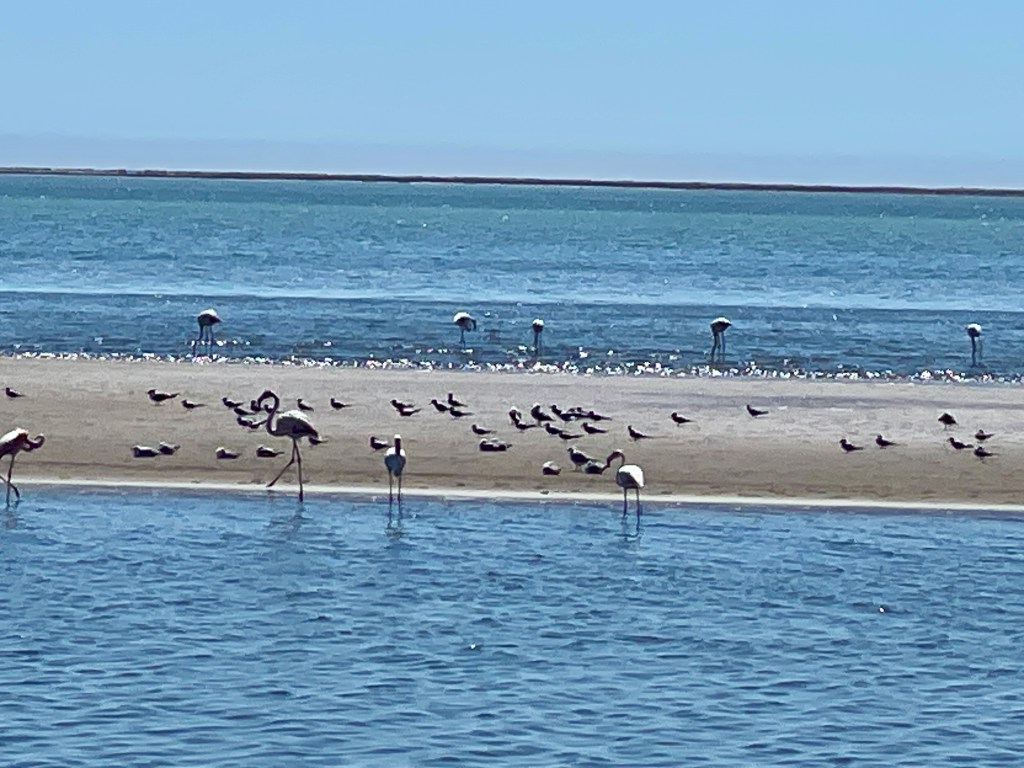
Our excursion on the first day was a visit to the bay followed by a visit to the dunes. In the evening, Viking sponsored a dinner in the desert for about 700 passengers. The 10 minute trip to the bay passed upscale houses which reminded us of neighborhoods in Arizona when we go to Spring Training. …flat, one storey, fenced, minimal vegetation. But, some were very expensive; million dollar homes with bay views. The bay featured at least 3 flamboyances of flamingos….hundreds in all.. They were fun to watch, but it was hard to relax for fear of being attacked.
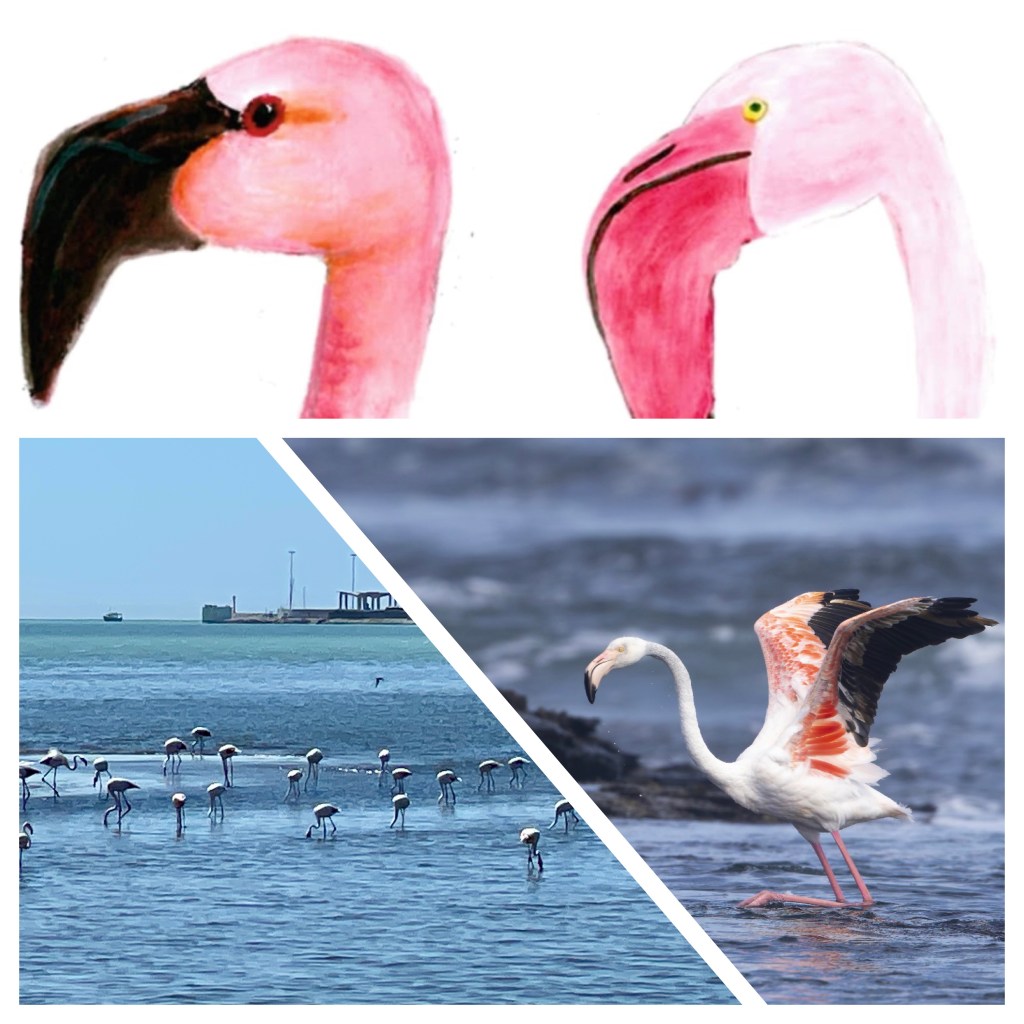
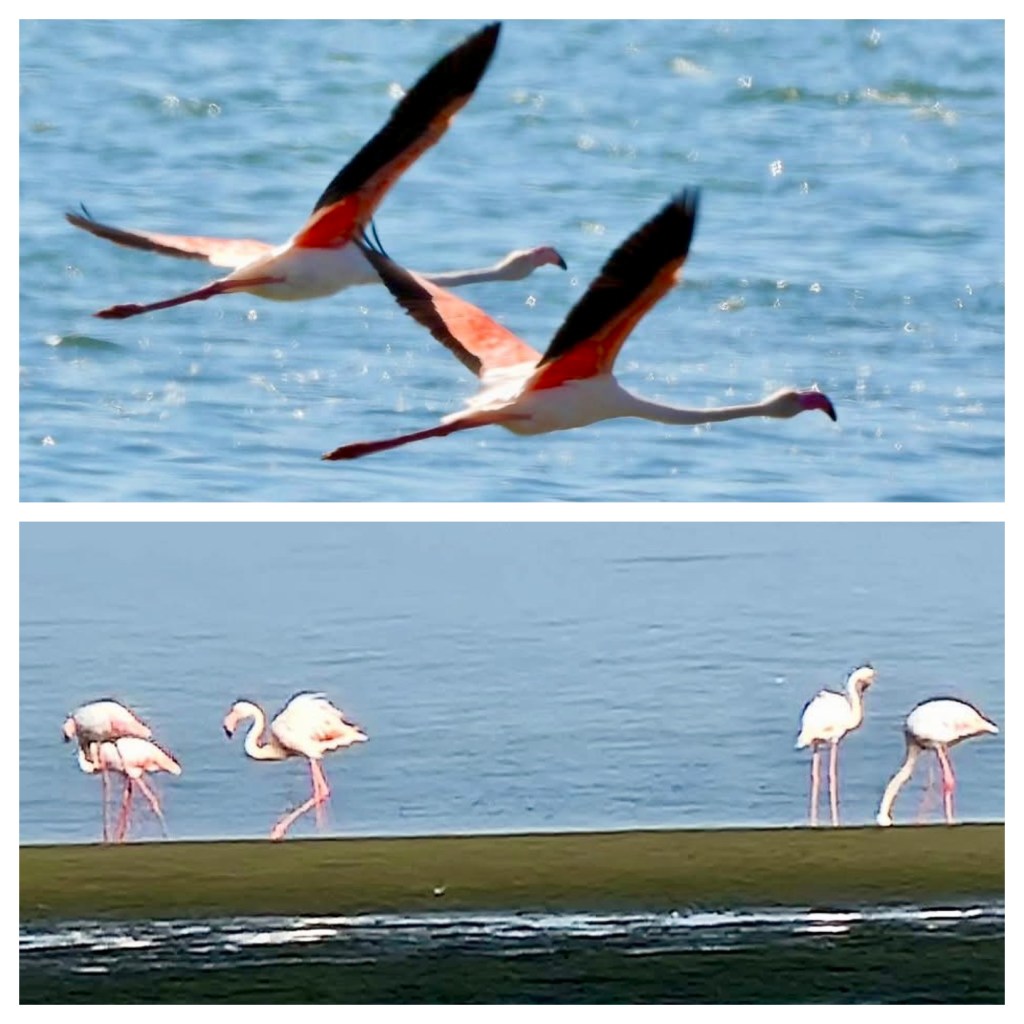
Photos by our resident naturalist, Richard Lovelock. 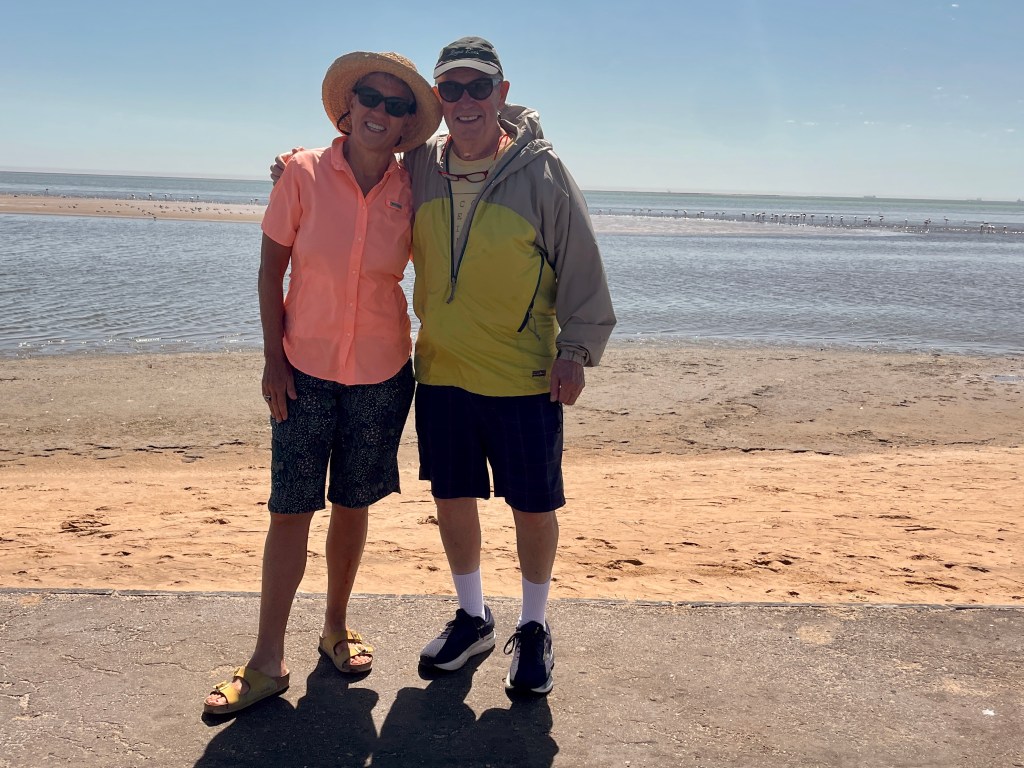
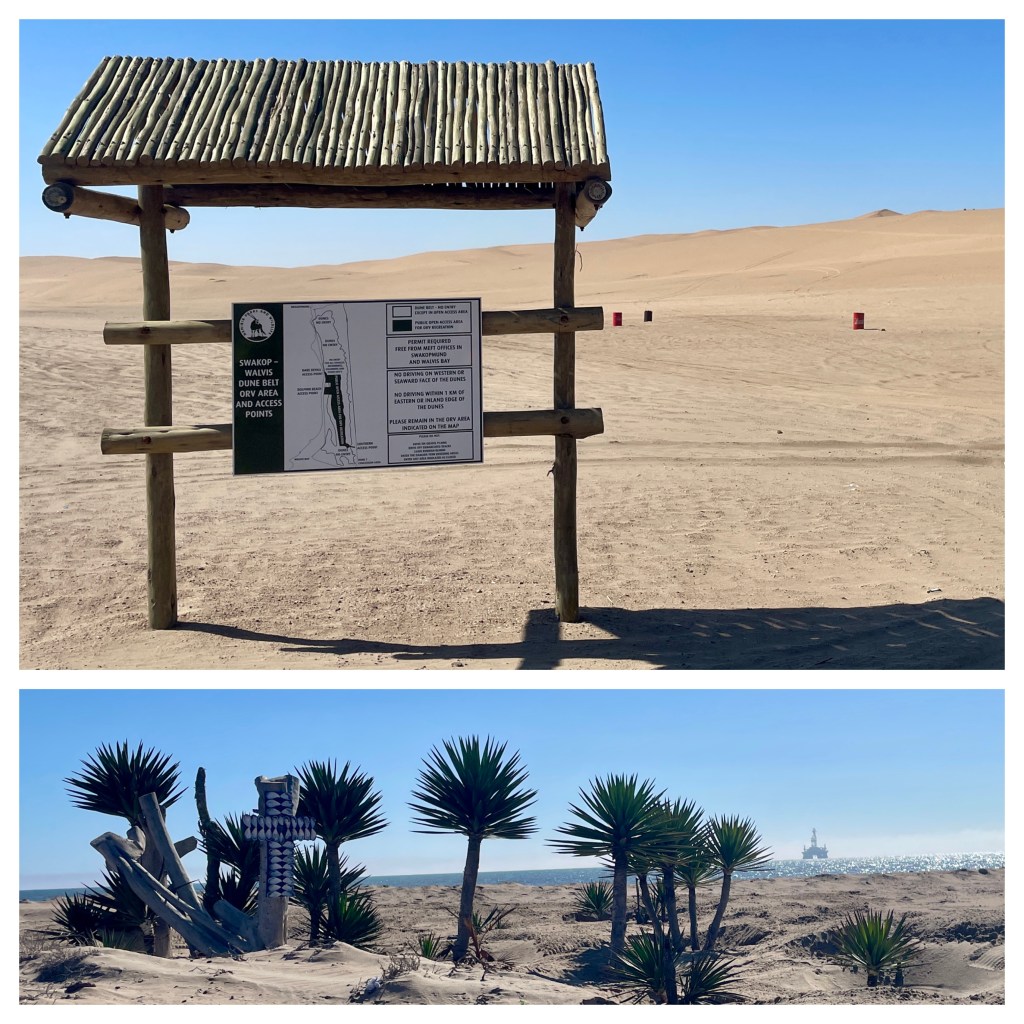
We all made it back onto the bus for a 30 minute ride to the dunes passing lots of “informal housing.” There we had over an hour to immerse ourselves in sand. Some climbed the dunes. We crossed the road and walked the beach. Karla found a few shells and we encountered a dead seal. It appeared to be too heavy to carry back to the chef so we left it to flies and other inhabitants. I chose sleep over the desert BBQ so I’ll let Karla describe that.
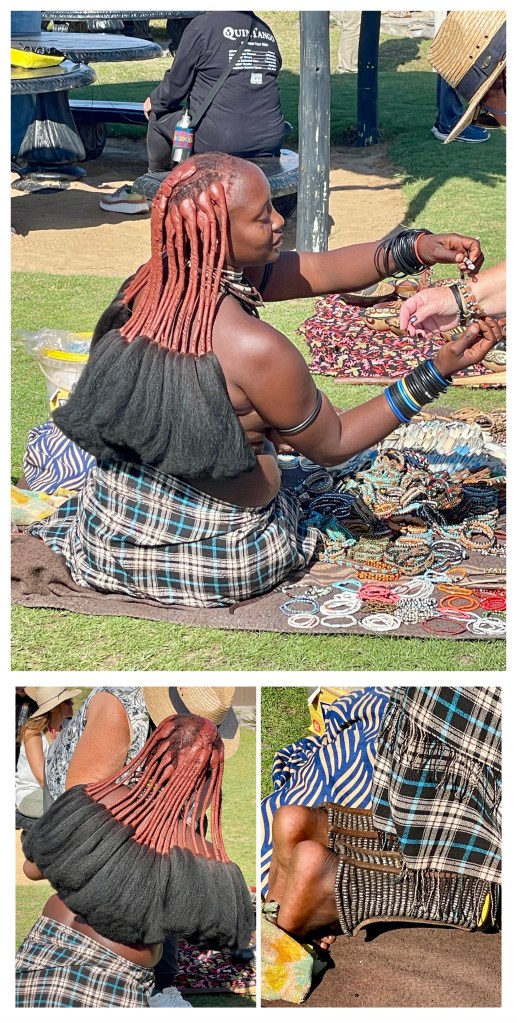
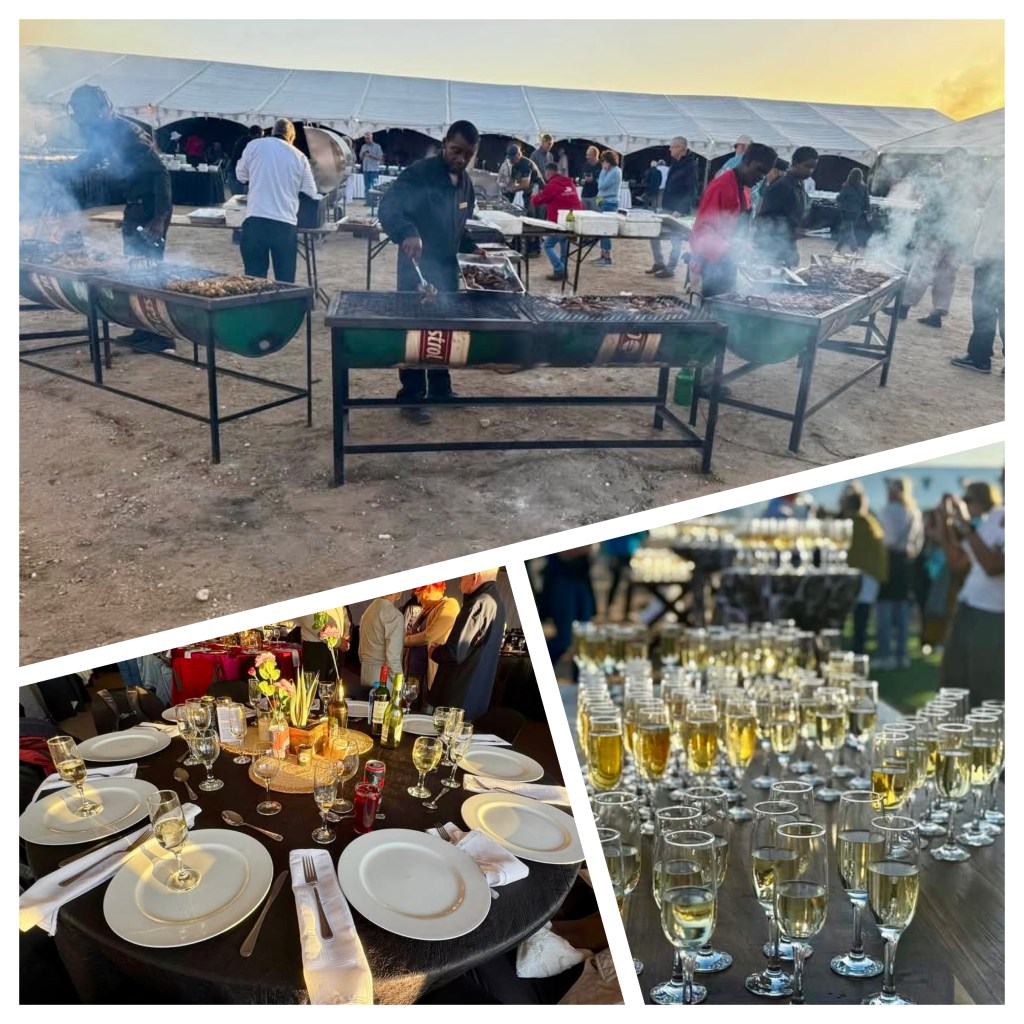
This Himba woman was selling bracelets and other jewelry. They use a red ochre paste to adorn their hair. Karla here: Viking did a nice job with all the logistics of the desert dinner for 700. After a bumpy 40 minute bus drive off the beaten path along the dunes, we came to an opening with white tents, about 20 bbq grills being tended, round tables that sat about 14 each, food lines, entertainment by marimba bands and fire dancers. It was about 30 minutes before sunset and the dunes invited climbers- I was keeping our friends, Richard and Kathleen company so opted against the dunes. Food was good– all brai (SA for BBQ) of lamb, beef and chicken, roasted stuffed squash for the veggies, green and potato salads, complemented by SA beer and wines. The weather coolish– in the 50s after the sun went down. A very pleasant evening. When we arrived back at the ship, about 100 crew lined the entryway, dancing and whooping to the loud rock n roll music being blasted. It was a wonder to find Fred asleep when I got back to the room about 10.
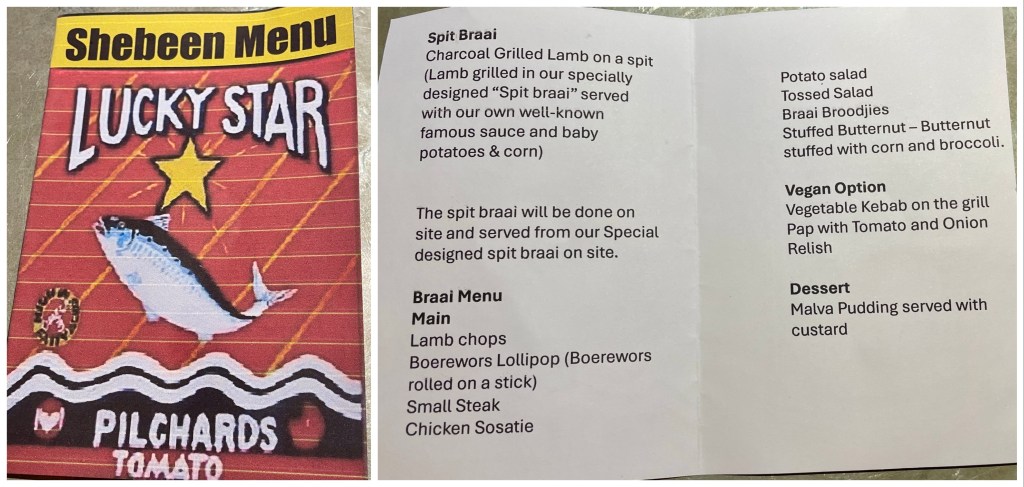
The menu for our incredible desert meal. Viking planned it with a caterer that had its business seeded from a prior Viking cruise. We were all transported by coach to the dunes and the outing was held by Dune 7– the highest sand dune at 383m (1256 feet). 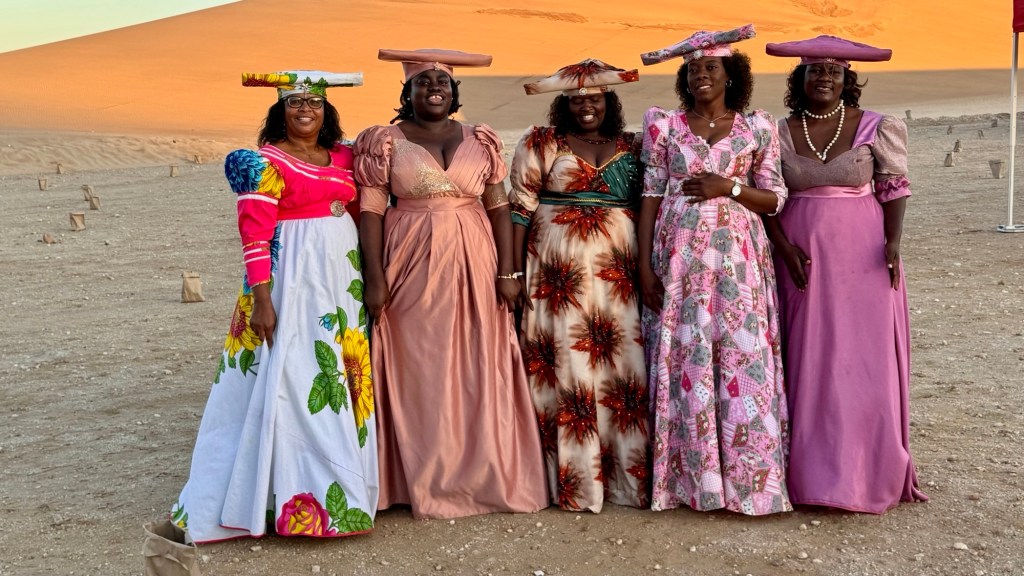
Herero women greeted us. The Herero are recognized by their brightly colored Victorian style skirts and cow-horn caps. 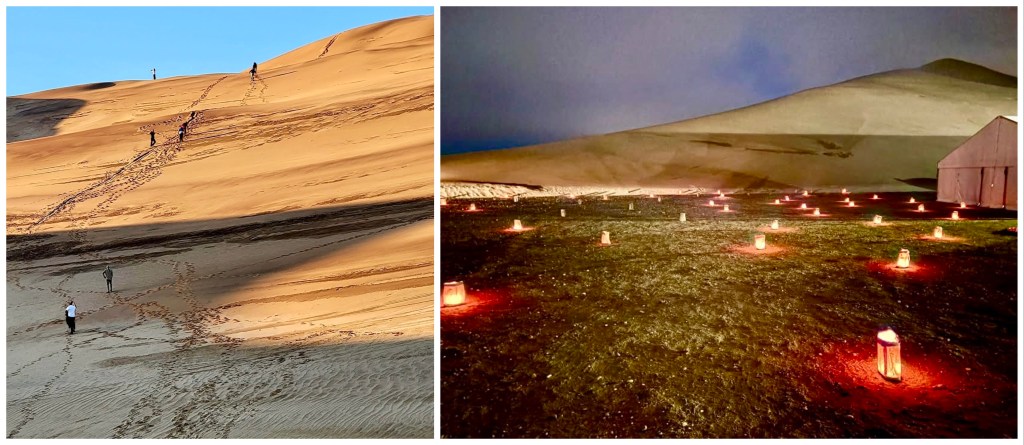
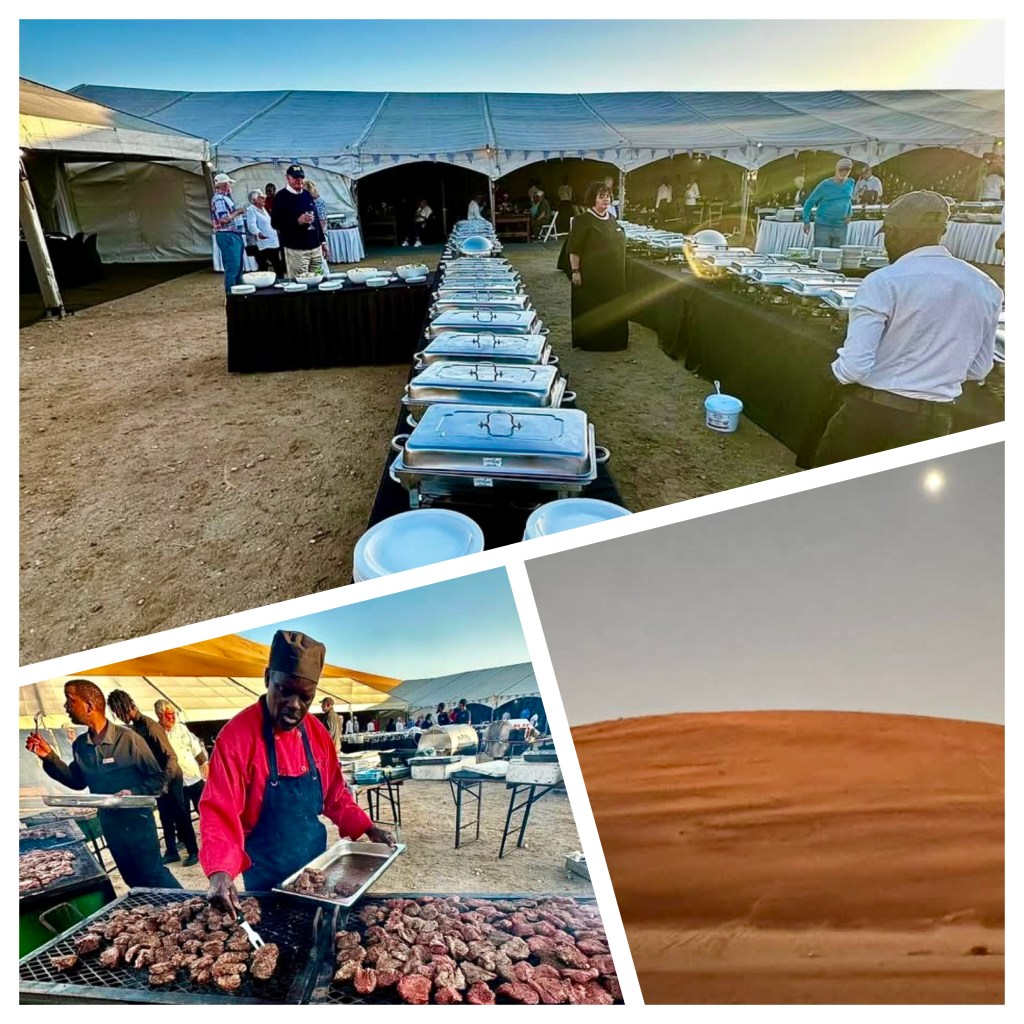
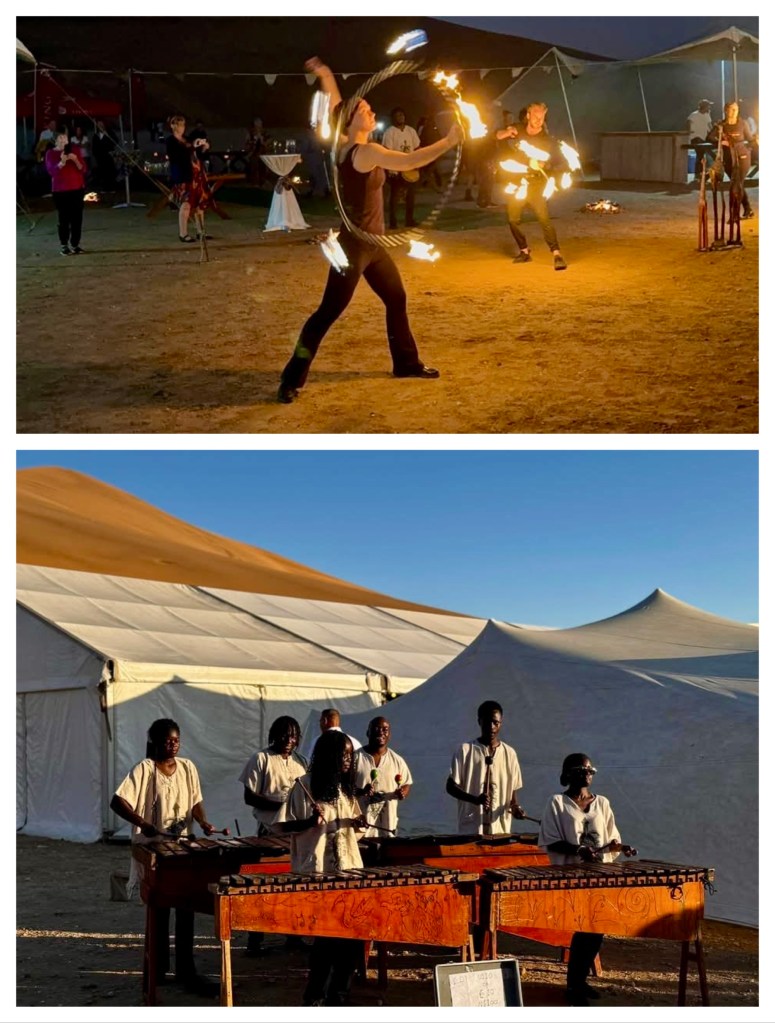
Fire dancers and marimba music 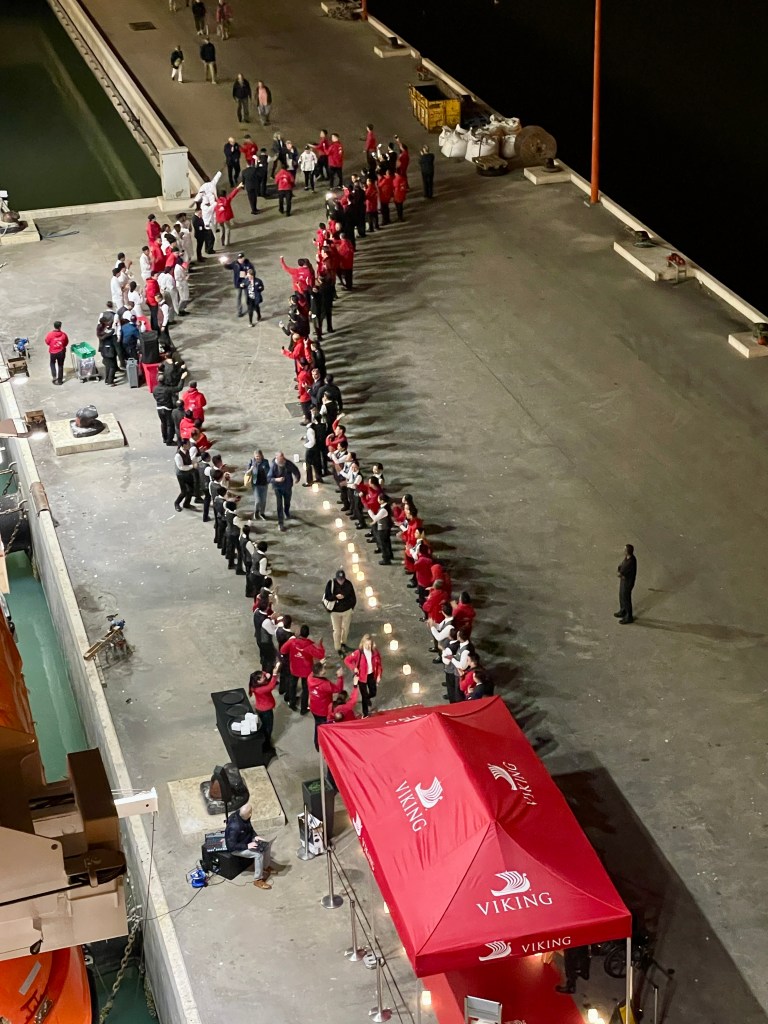
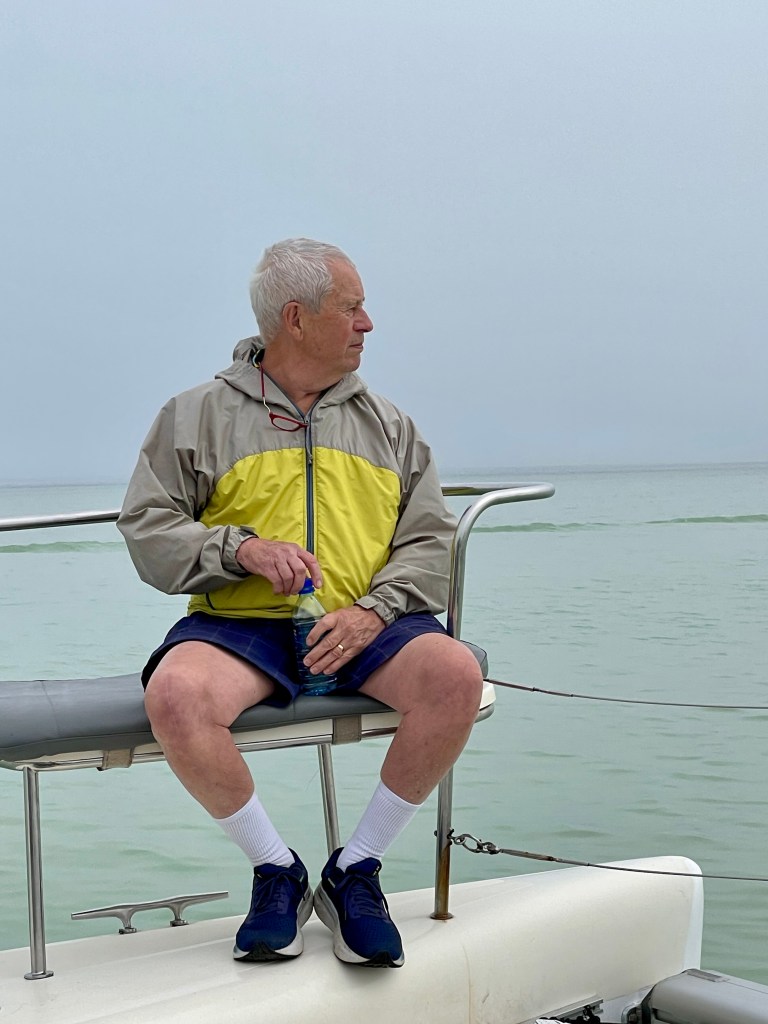
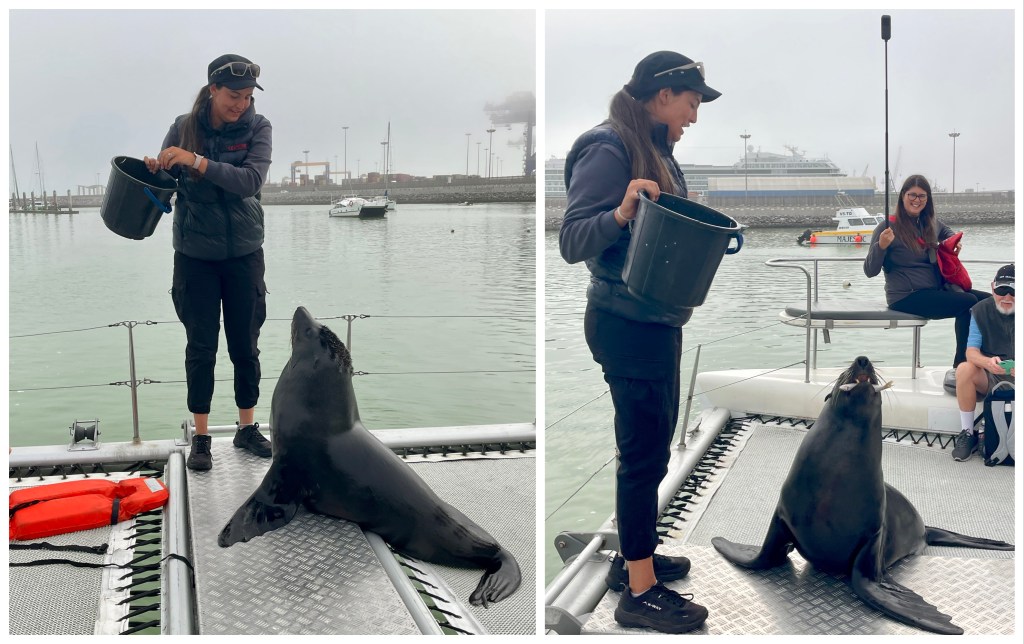
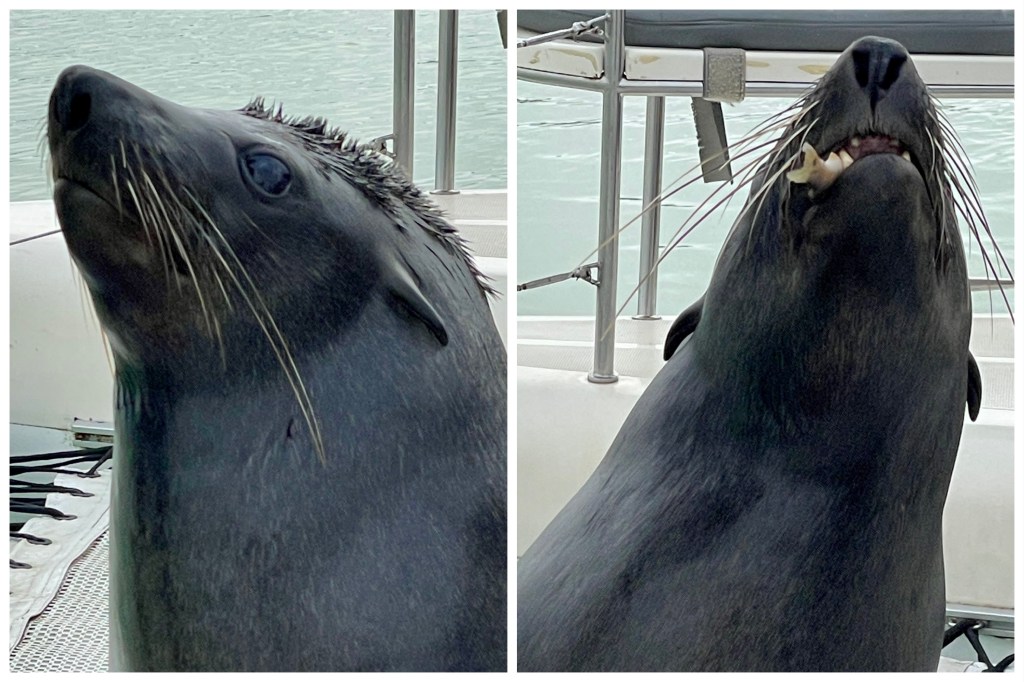
High energy crew dancing to blasting music formed a passage for our walk back to the ship from the coaches. Do I write enough about Karla’s good ideas? We had a morning without plans and she suggested a boat ride in the bay. Originally, I hadn’t scheduled it since we spend a fair amount of time on the water. We got on the waitlist and easily made the cut. There was plenty of room on the catamaran with only about 20 of us. We were hoping for wildlife that wanted to see us. Our hopes were rewarded early by a visiting seal that jumped on board, expecting and receiving fish from our hostess. As we sailed we saw several seals and dolphins. Everyone was into spotting shapes in the water. As the boat progressed, spotting became easier. We neared a sandy beach and saw plumps…and then colonies. By the time we were through, we saw thousands of seals on shore or splashing in the water. Very fun.
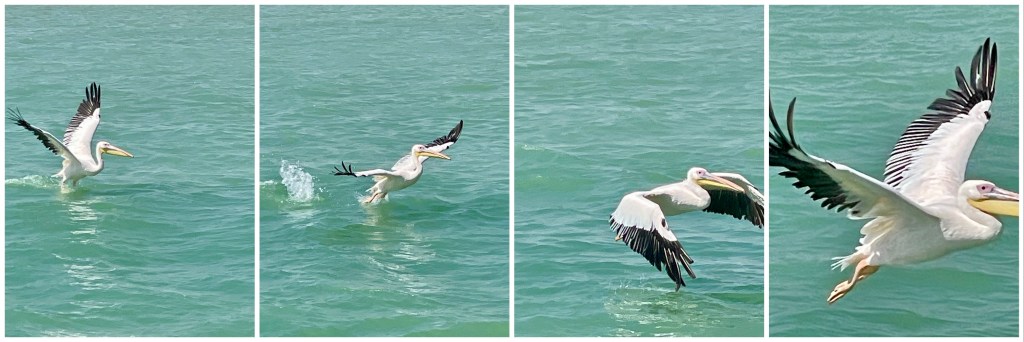
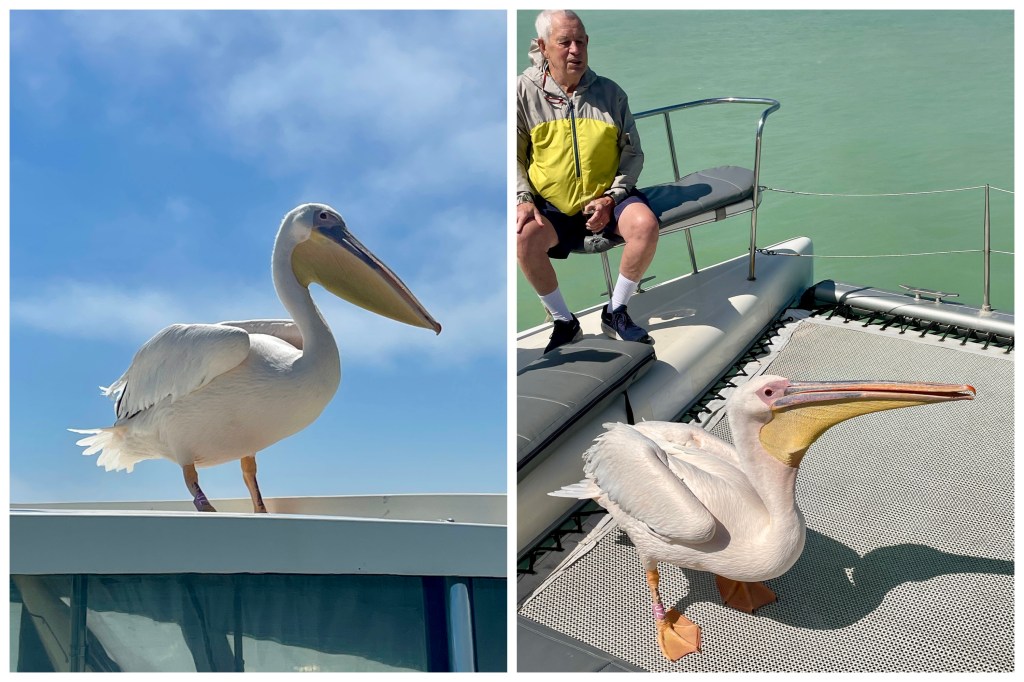
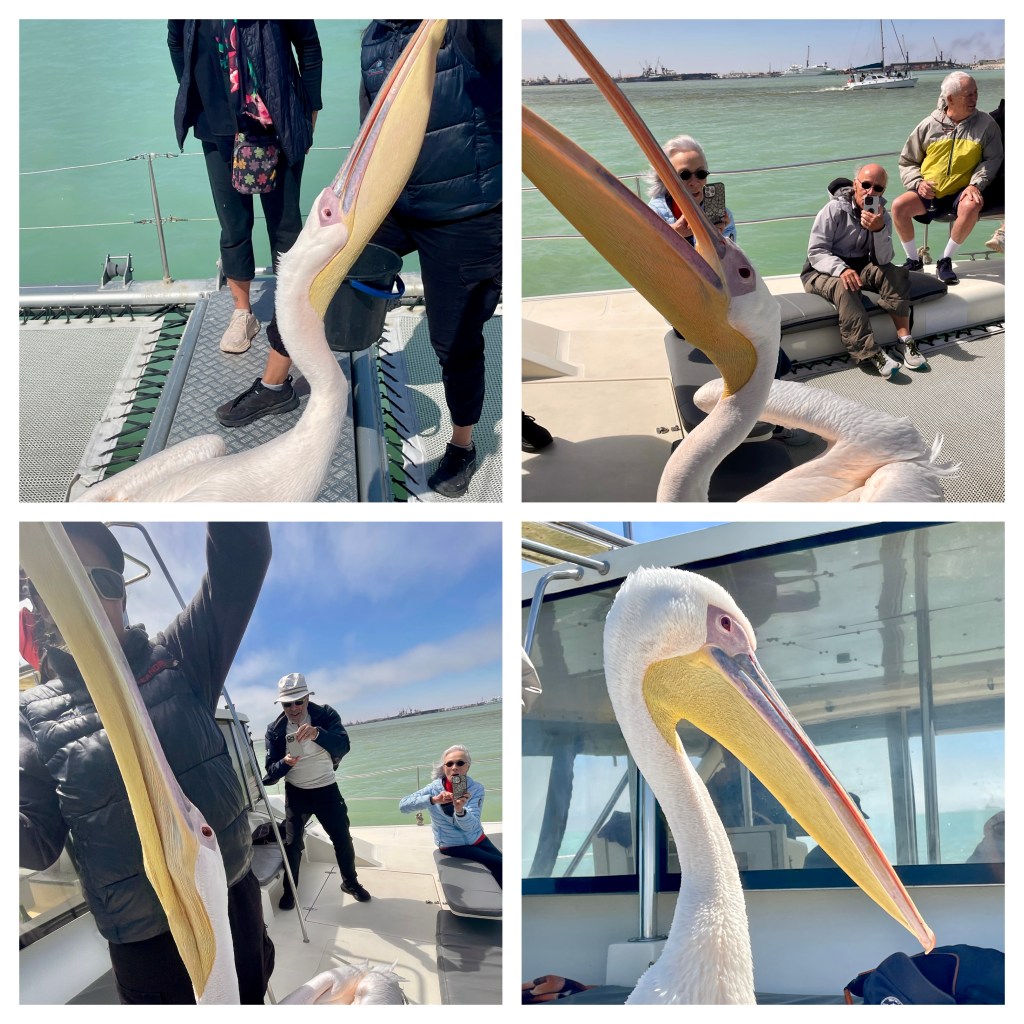
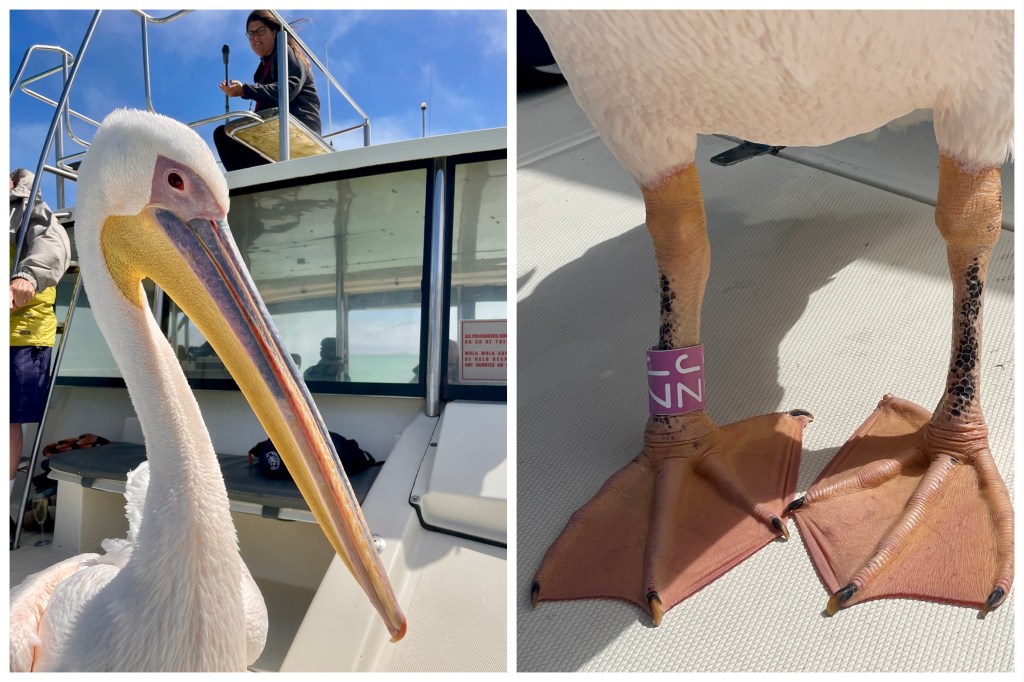
After feeding the seal near the dock, our hostess raised a few fish in the air to attract hungry seagulls. She was successful as they rescued fish from her hand. That was nice, but the winner was the pelican that came aboard. It ate some fish and then just hung out It made itself available for pictures and minor petting. Definitely a nice trip…I’m glad I thought of it.
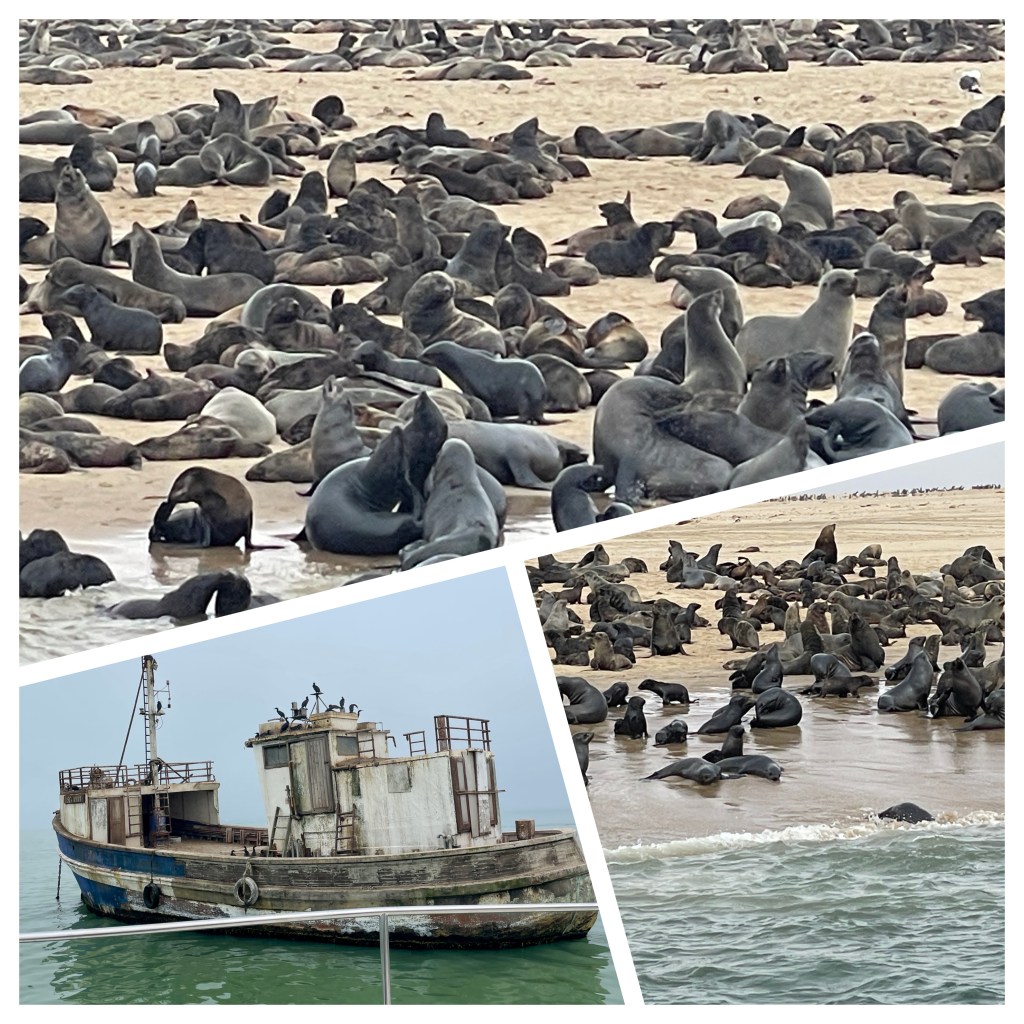
Lots and lots of seals; an estimated 50,000 cape fur seals call Walvis Bay home. Pups are born in November and December. There are an estimated million seals along the Namibian coast. Bottom left is an abandoned fishing boat, taken over by cormorants. Our guide said that if it were removed from the water, the owner would lose his fishing permits. 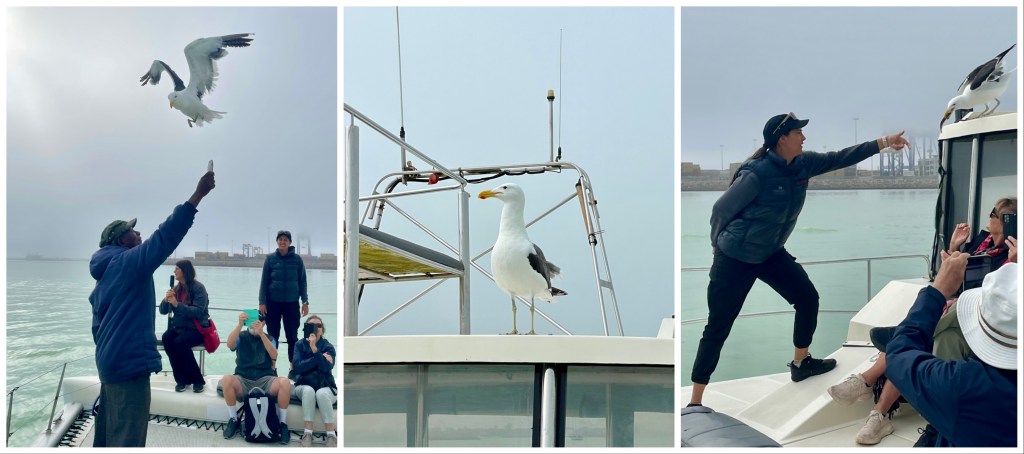
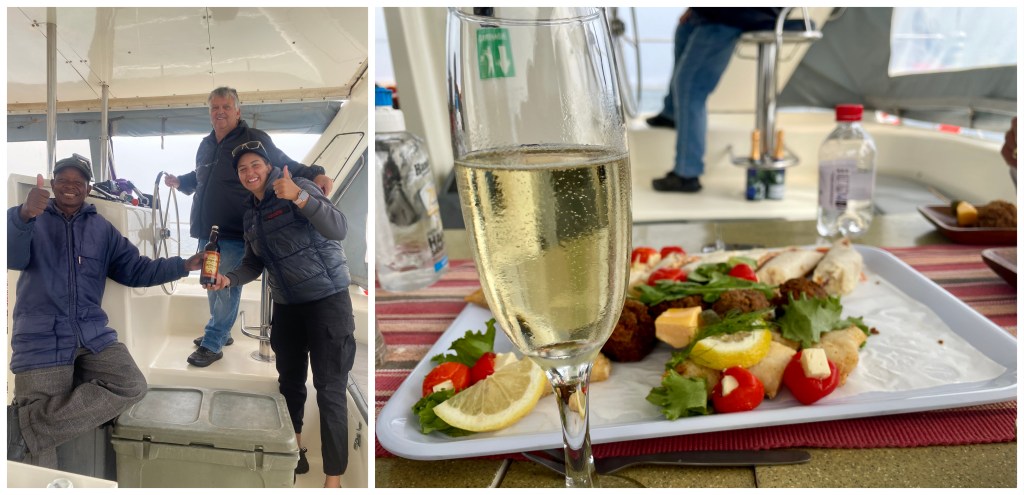
The crew and our snack! 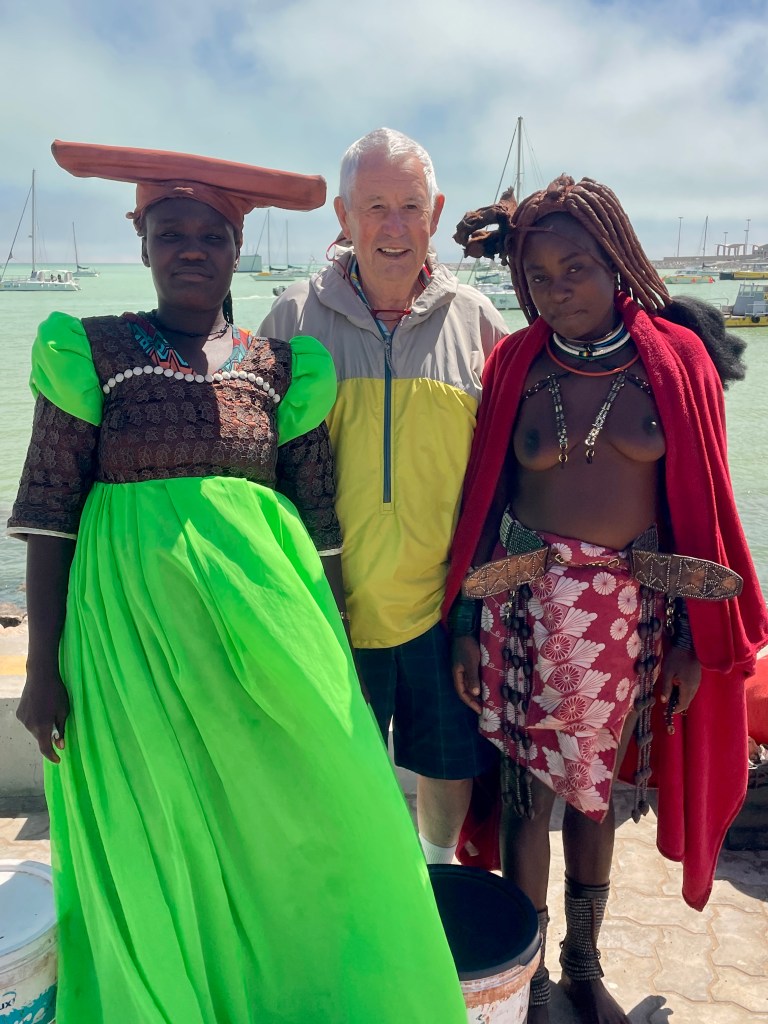
A couple of the vendors near the ship in traditional dress (Herero and Himba). -
Luderitz, Namibia (formerly German Southwest Africa)
April 6
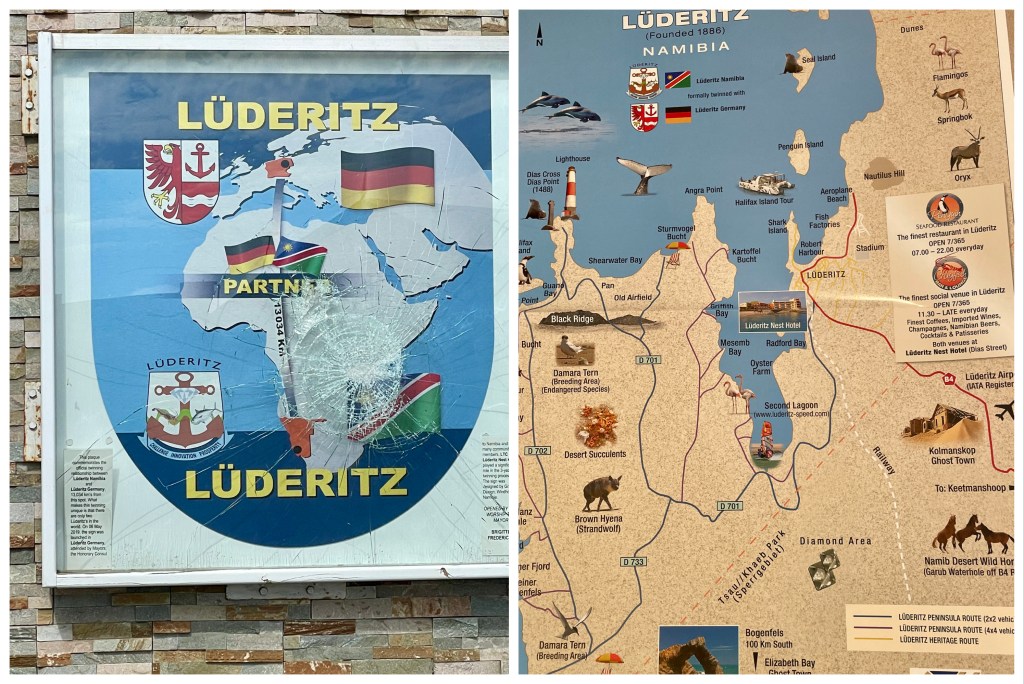
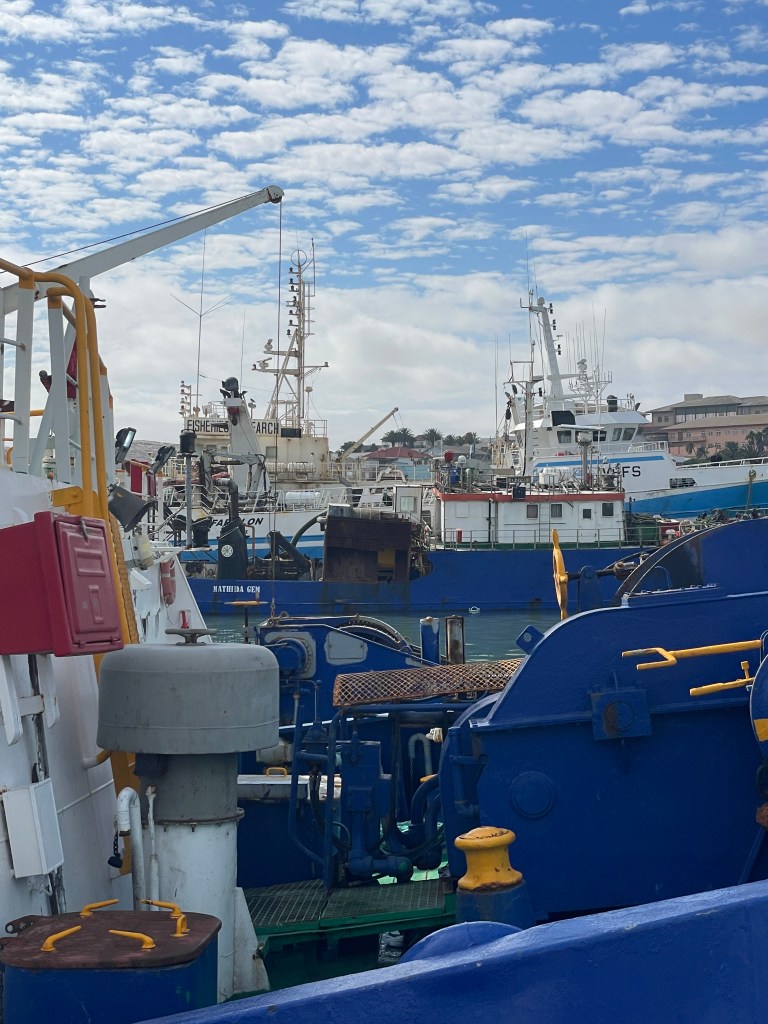
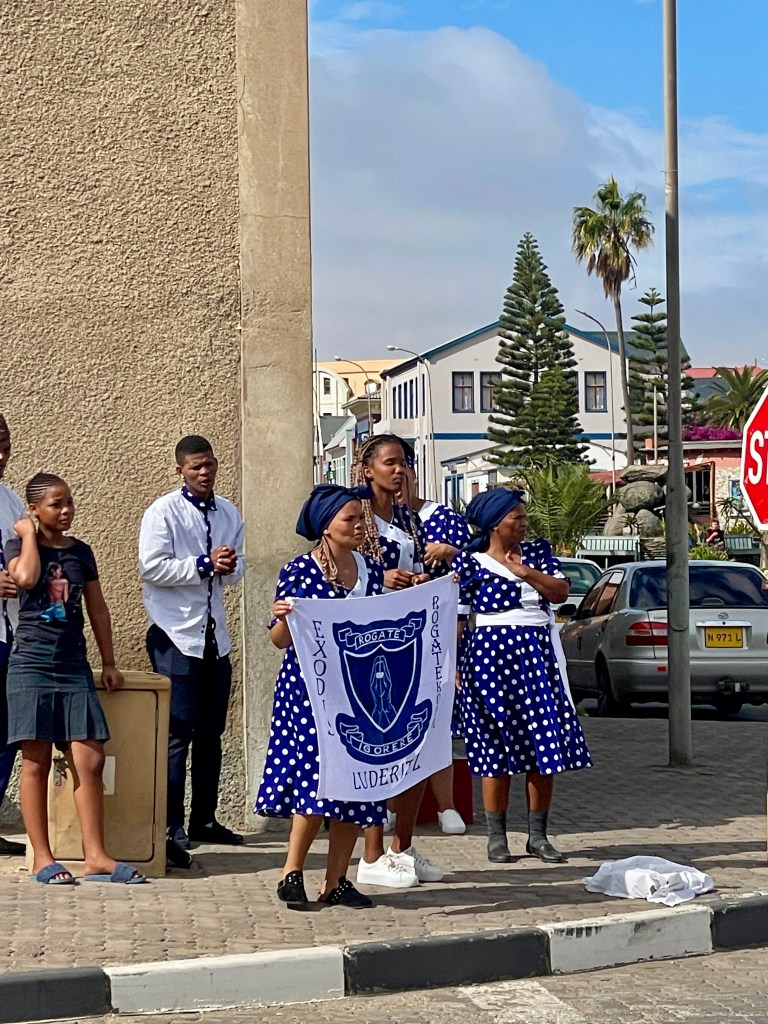
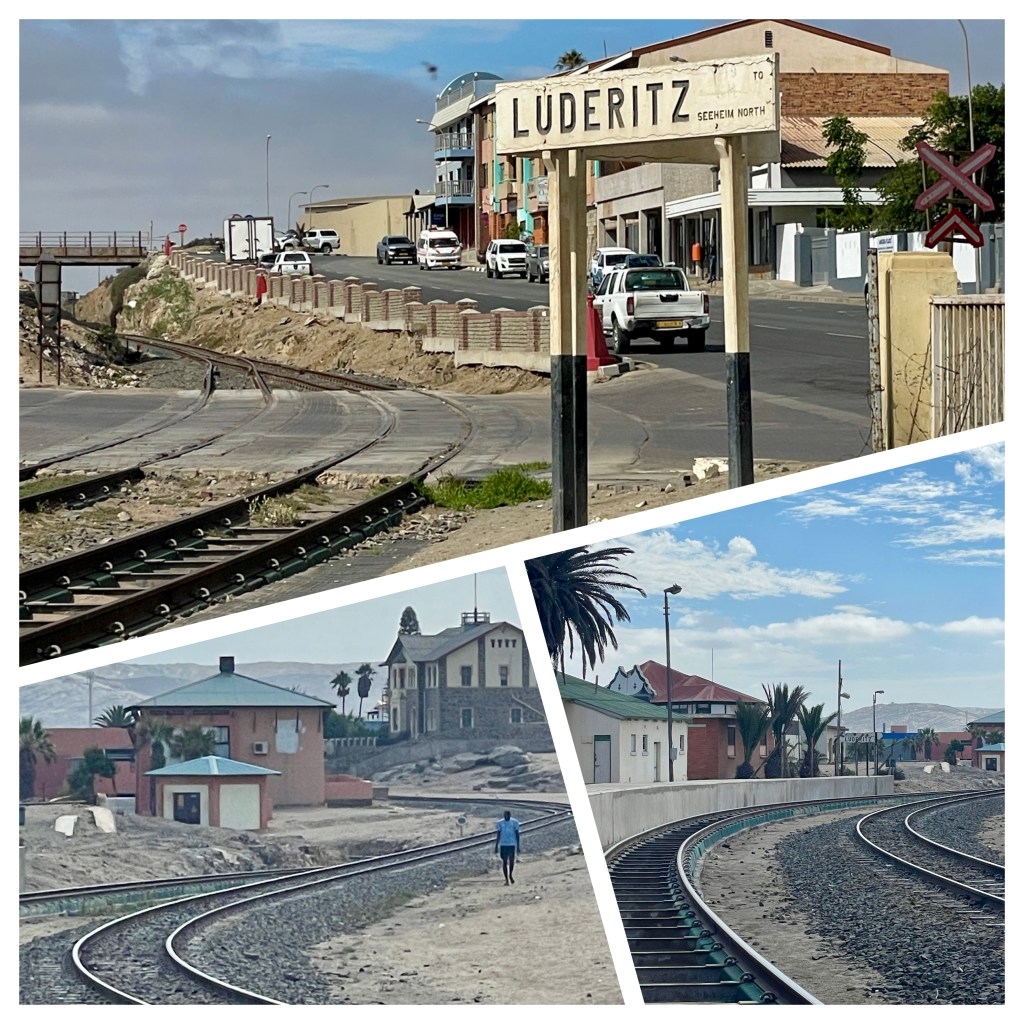
Situated on one of “the least hospitable coasts,” Luderitz is lots like a small, outdated western town designed by Germans. There are primarily dirt roads which host several turn of the century German Art Deco buildings. It has a railway station which used to be open when the railway operated. What used to be a power plant, now operates as a university. It used to be a center for whaling, seal hunting, fishing and guano harvesting. The port was an outlet for diamonds before the export site changed. One of the “things to do” is visit a nearby ghost town. A local monthly newspaper keeps people informed. Perhaps the 16,000 residents are very active during the week, but it was pretty slow on Sunday. Whereas most ports have had sales people and small stands set up, we saw only one blanket laid out with what looked like a few trinkets.
Our excursion was a walking tour of the town led by a local guide. He did fine with what he had to work with. We saw some turn of the century buildings, the main museum (which was closed), a church and a small museum that was open. While walking back to the ship, Karla spotted a Portuguese fish restaurant which had cold Namibian beer and excellent fish and chips. We returned to the ship and actually have a nice memory of our one and only visit.
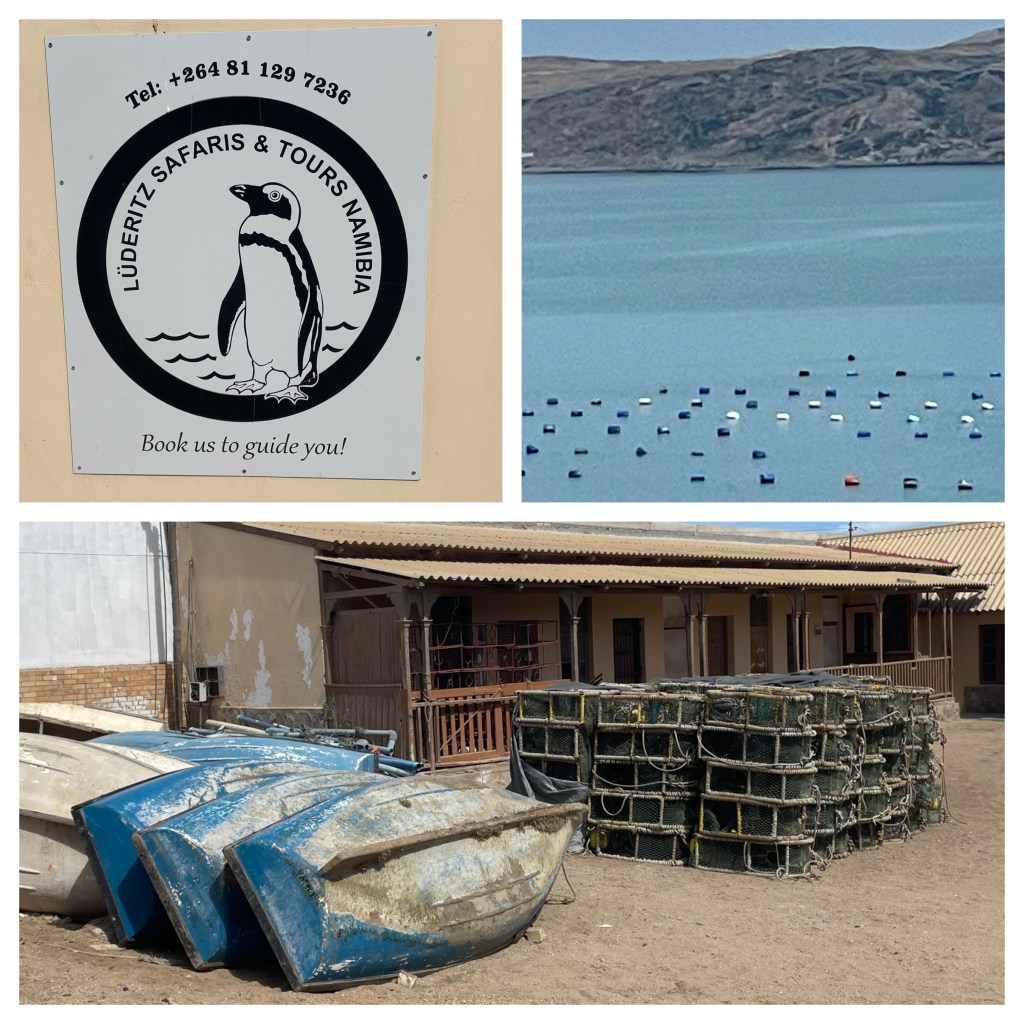
Top right: oyster beds, bottom: crayfish nets and boats. 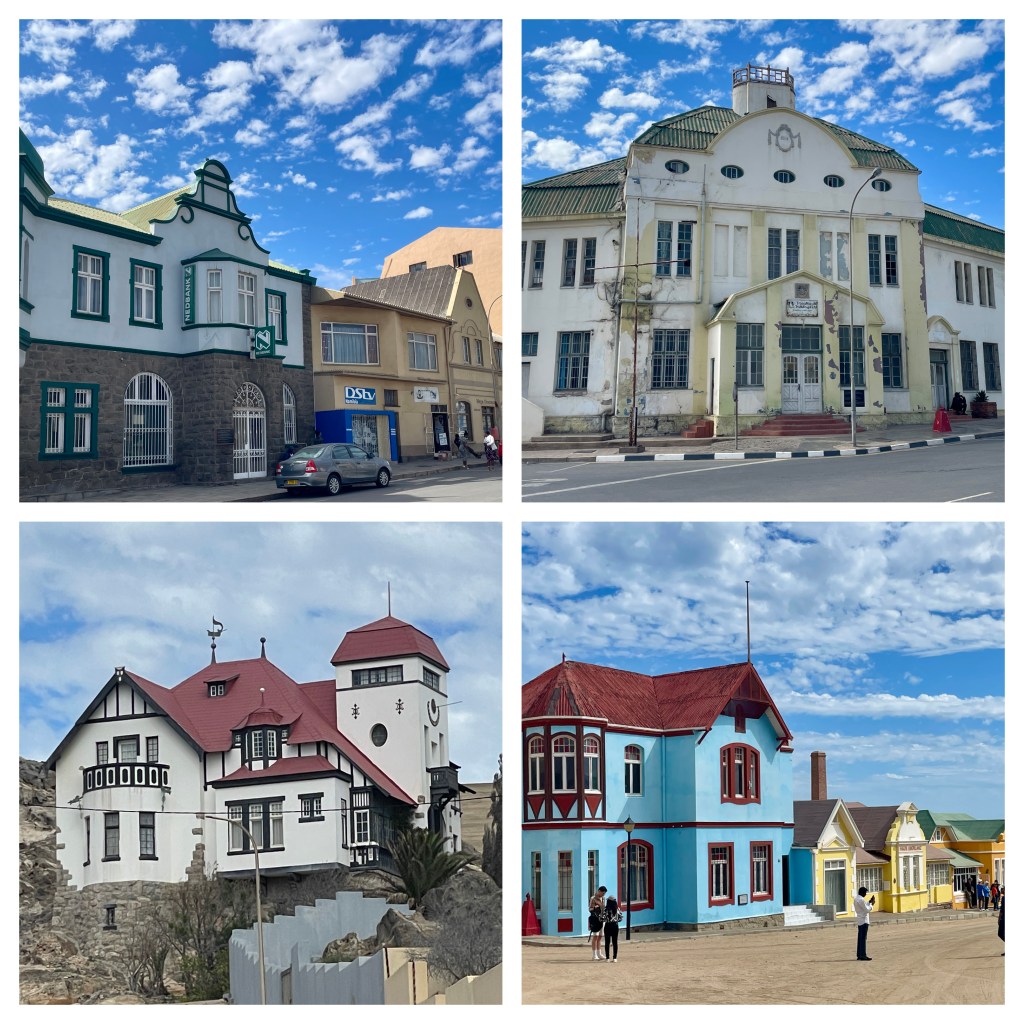
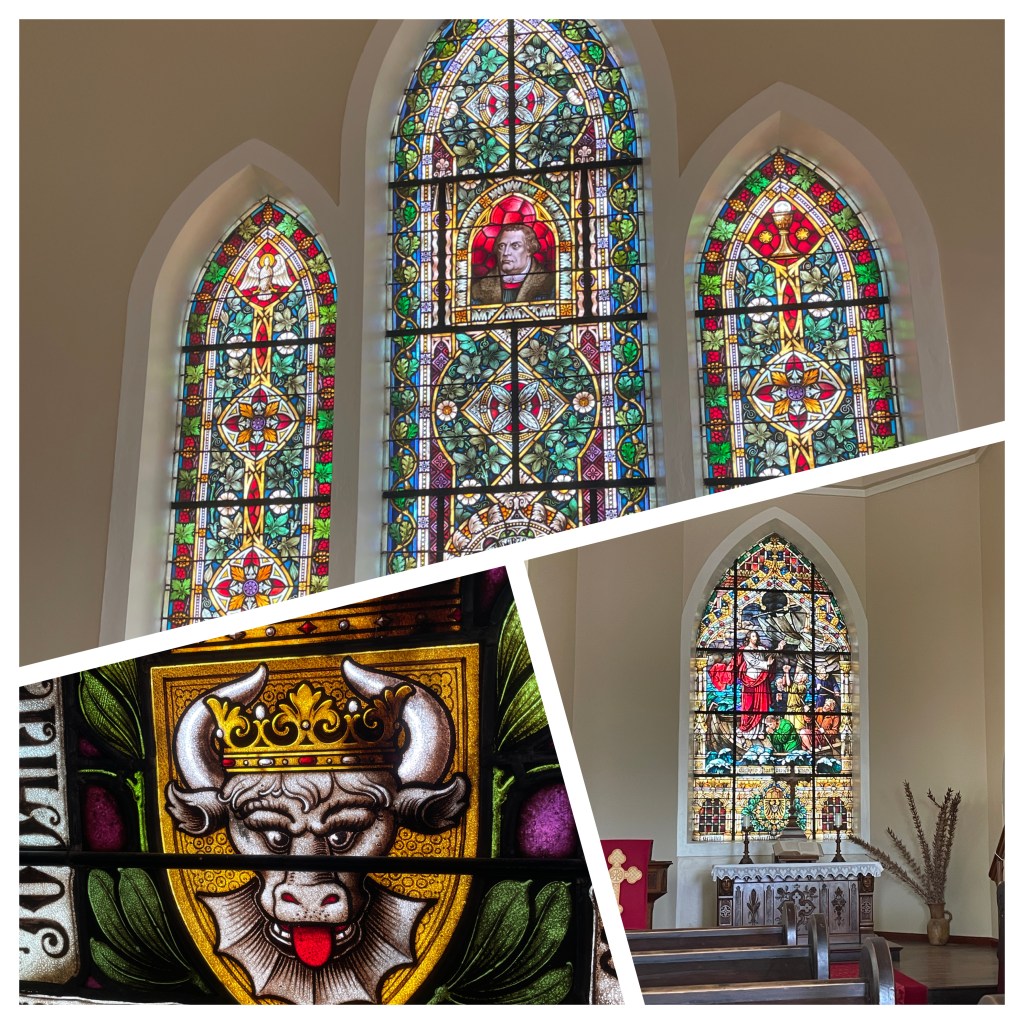
Lutheran church– see Luther peeking in the stained glass? Namibia, a country of 3 million, was originally occupied by several indigenous tribes When the Europeans were splitting up Africa, Namibia became German Southwest Africa in 1884. The locals didn’t appreciate their treatment and a war with the Germans ensued….from 1904 to 1908. The Germans established a concentration camp for captured natives on nearby Shark Island. The treatment of the native population was considered one of the first examples of genocide, with thousands killed. In 1920, the Germans acknowledged the atrocities. In 2021 they agreed to pay $1.1 billion over the next 30 years as compensation. I bet they learned their lesson; I can’t imagine the Germans doing something like that again.
After World War 1, the League of Nations assumed control, but South Africa was the administrator of the country. In fact, they applied their rules of apartheid until 1973. Namibia achieved independence in 1990.
Namibia currently has some of the highest income inequality in Africa. There is about 33 percent unemployment and a 40 percent poverty level. About 400,000 of the 3 million people live in “informal housing.” While Bloomberg described Namibia as one of the top emerging economies in 2013, the country is said to be plagued with government corruption and inertia. Still, there is hope for the future of agriculture (aquaculture– oysters), tourism, and mining of diamonds, gold, silver and uranium.
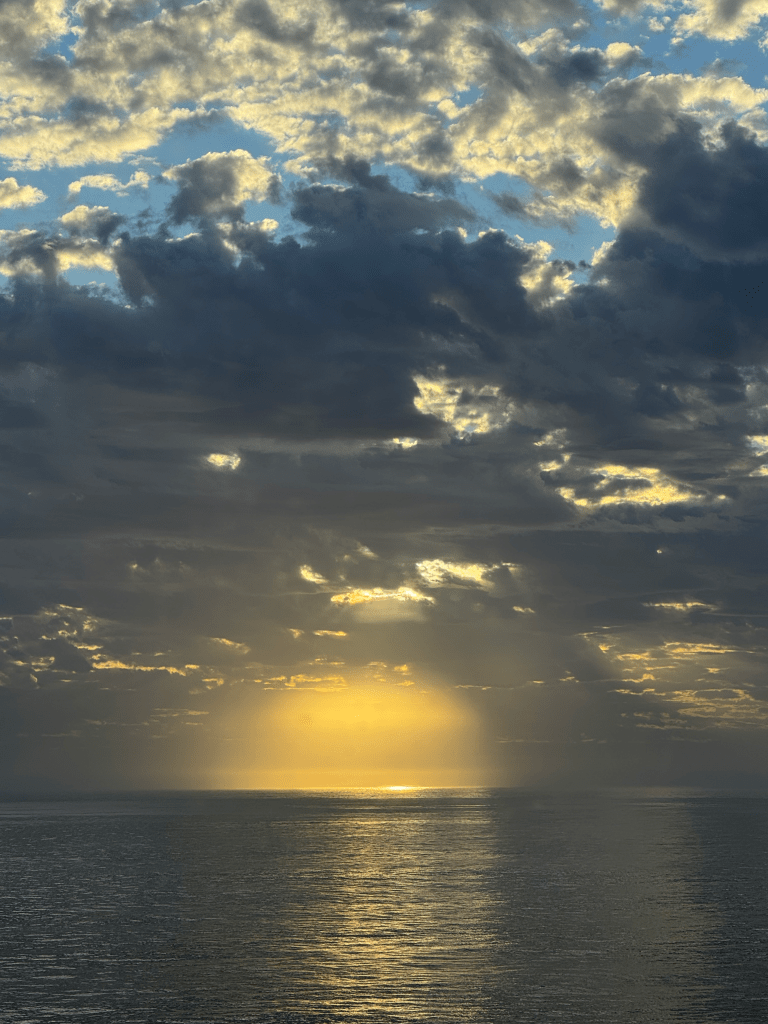
Beautiful sunset leaving Luderitz -
Capetown

Heaviside dolphins, photo credit Iok Hou Pang and Richard Lovelock 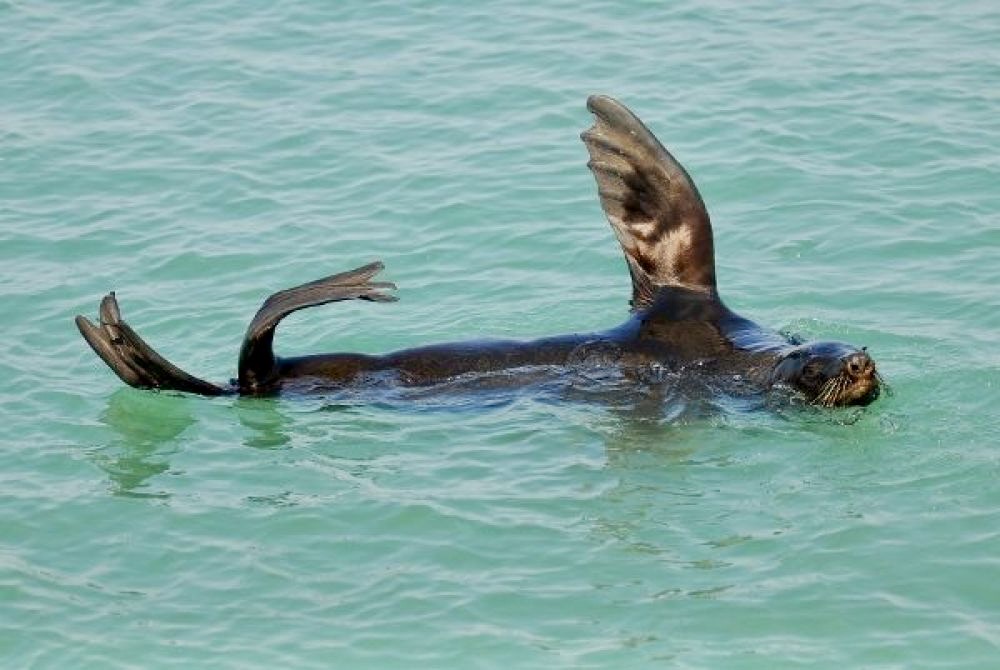
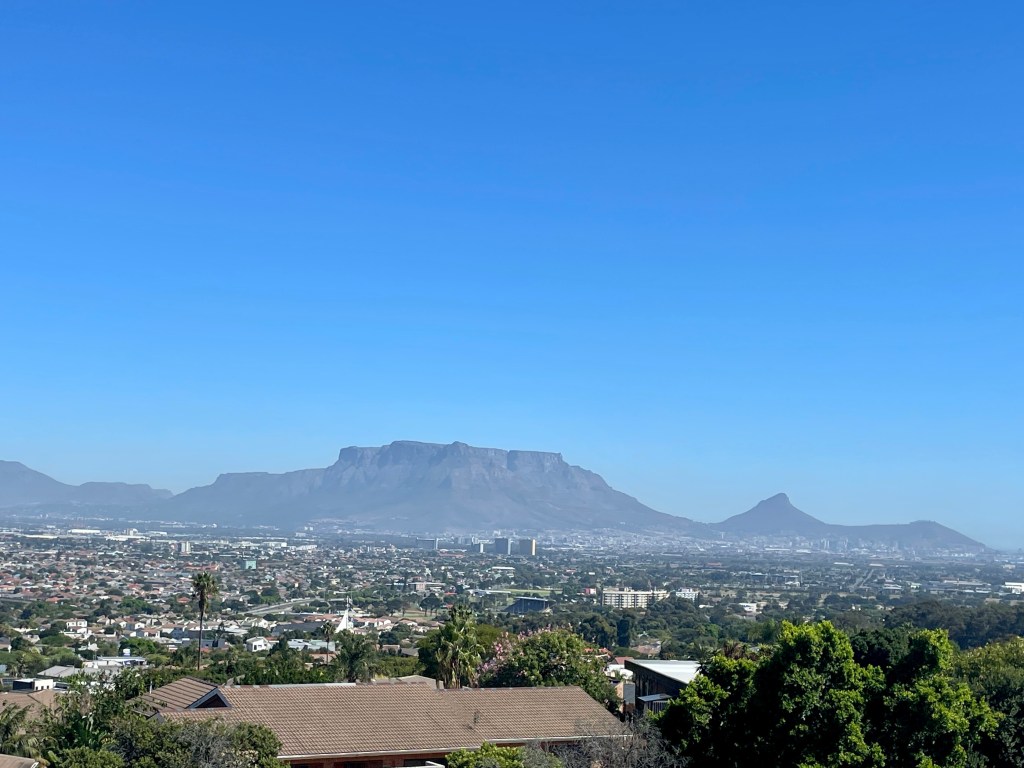
Table Mountain, Lion’s Head, Sentinel Hill April 5
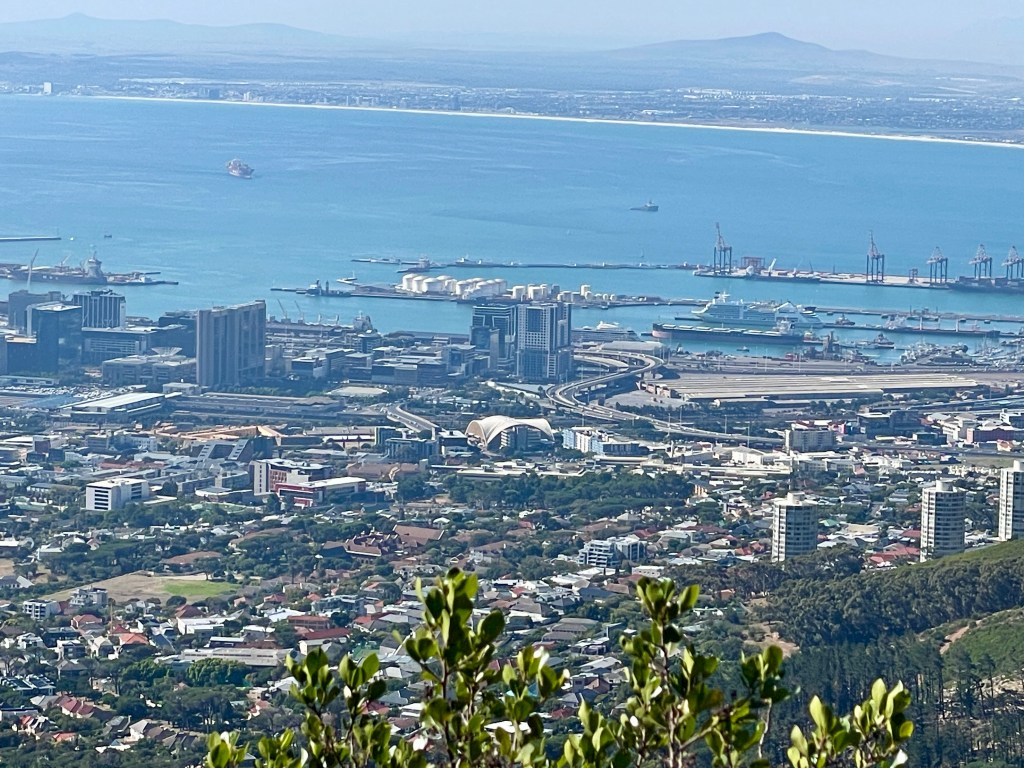
We arrived on a sunny morning in the shadow of Table Mountain. In the US it’s Liberation Day; here, it’s a normal Thursday. Our excursion was a relaxed drive to a winery and visit to the town of Stellenbosch. The setting was great and the wines were good. Stellenbosch is an upscale university and tourist town that could fit in Napa Valley. Everything was great so long as you didn’t look to the sides or under the surface.
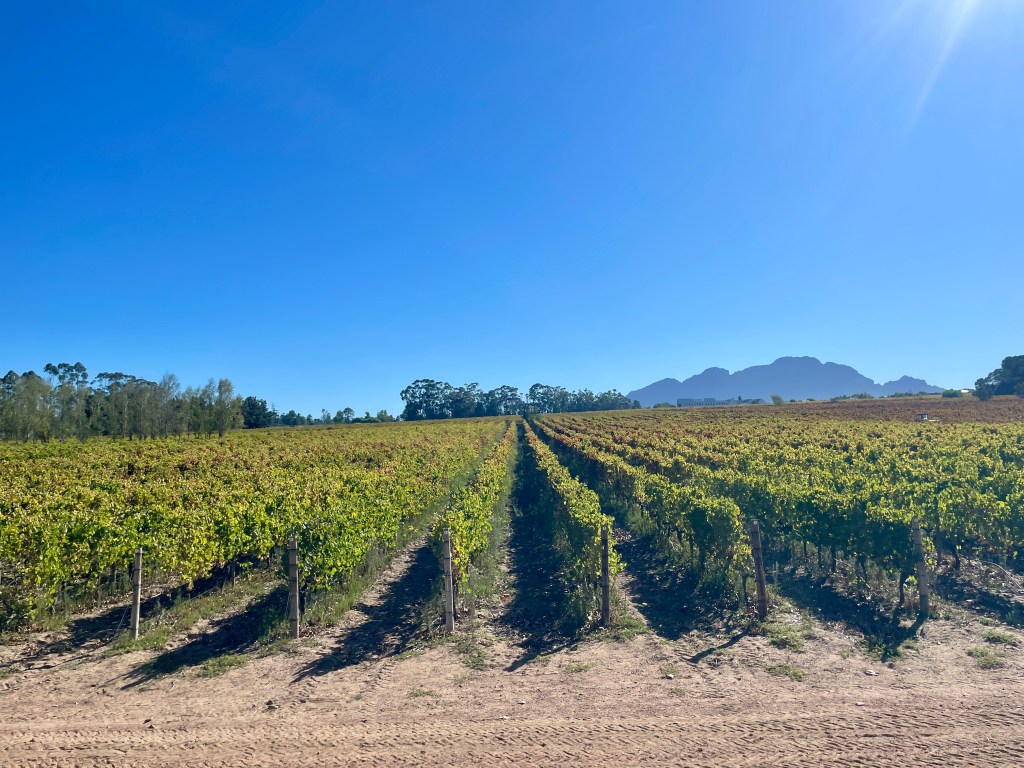
Stellenbosch Wine Region 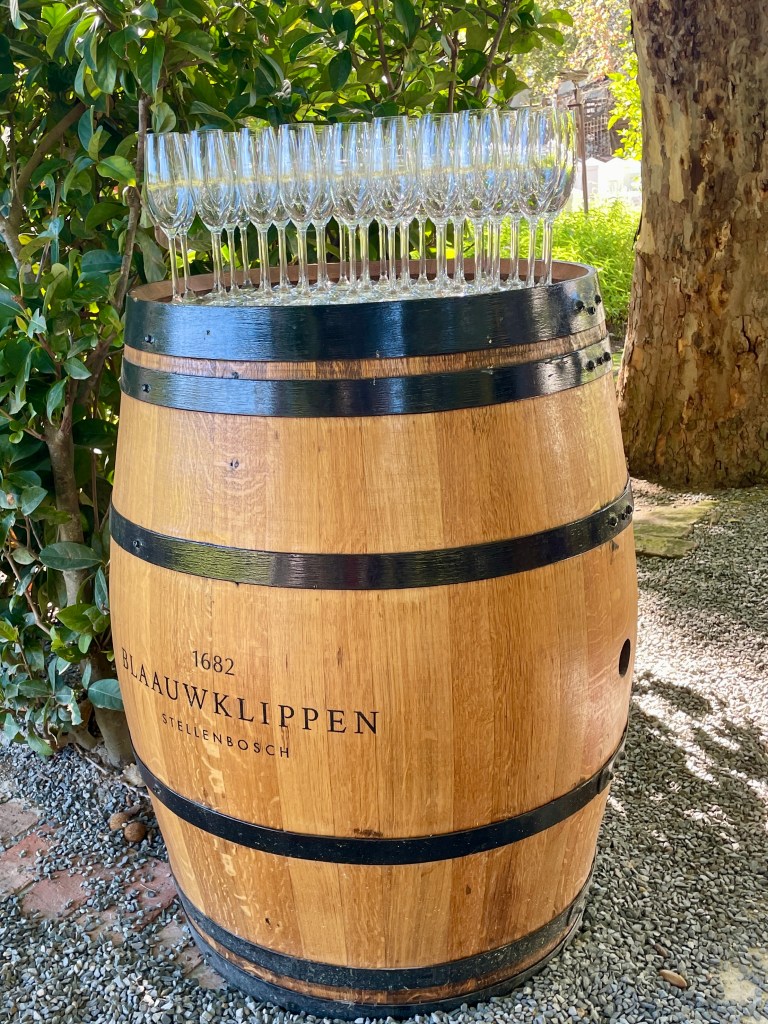
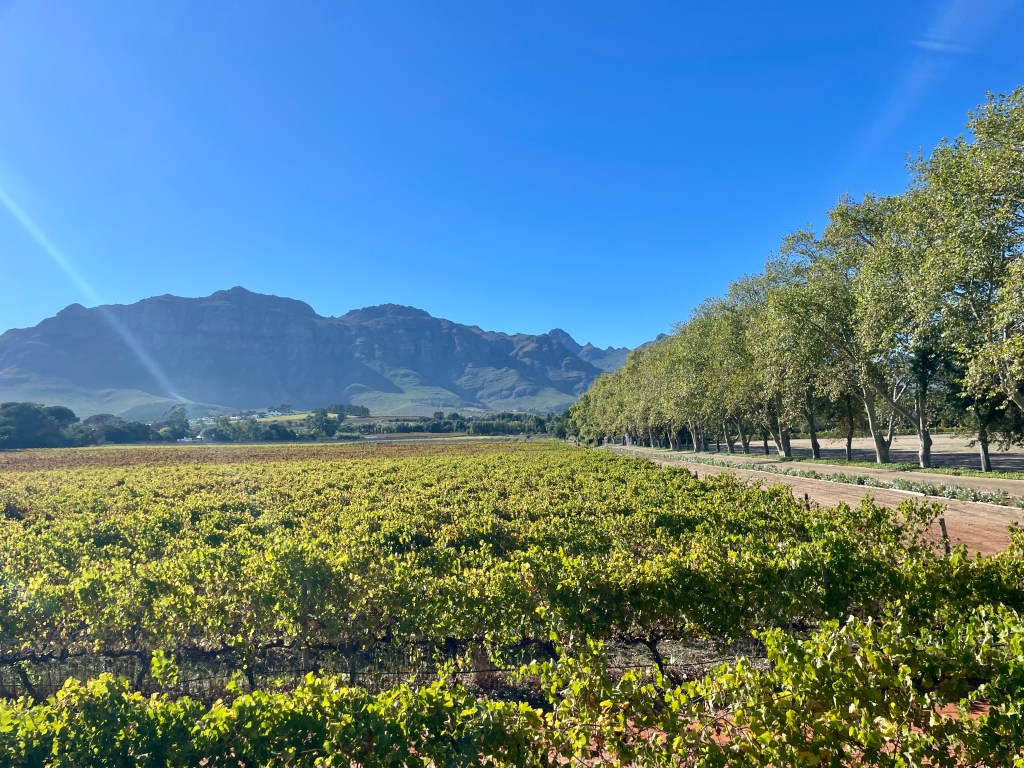
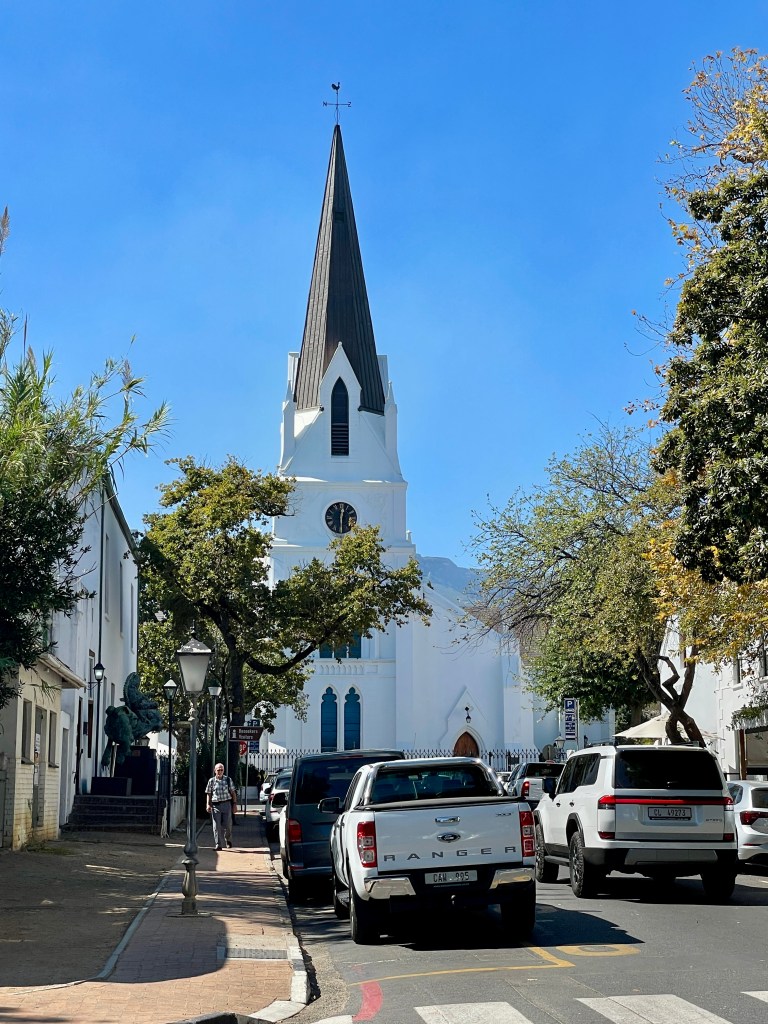
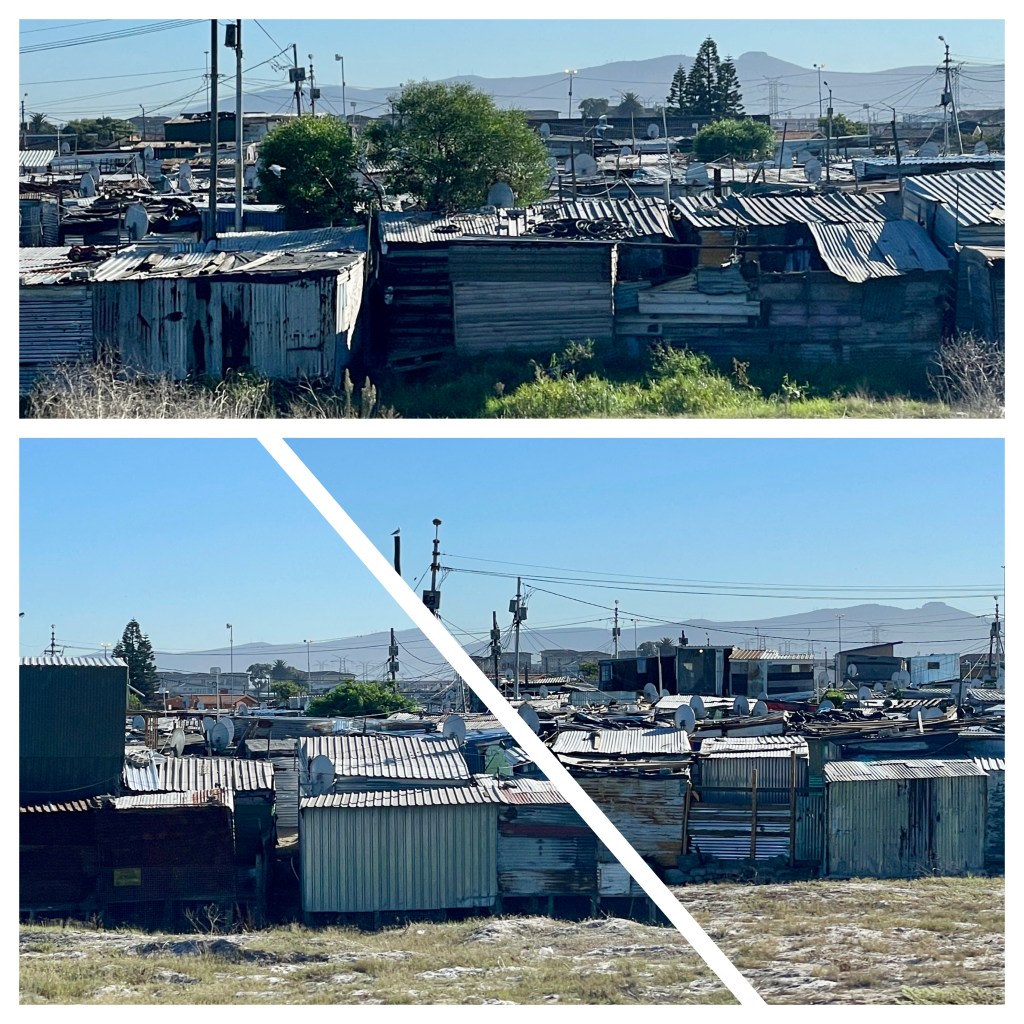
As we looked to the sides, we saw what used to be District 6, where Blacks were expelled and their homes destroyed. Then, we saw acres of side by side corrugated shacks where Blacks now live. There are some low income apartments that have been constructed, but the overall impression is shacks and litter. Lots of shacks had satellite dishes which, we were told, are very inexpensive. We talked to two Black women who were employees of the winery. They thought that things are getting better. It appears that Mandela’s party, the African National Union, has struggled and lost some support. Several people have mentioned corruption and ineffective government. Right now the ANU governs with the help of the Democratic Alliance, a “White” party, and progress appears to be slow.
Karla and I have been talking about the vestiges of colonialism. We’ve visited too many countries where western powers established a foothold, capitalized on the resources, and did little to improve the capacity of the indigenous population. Actually, it’s worse because it was not uncommon to enslave the population. Now, they have their independence, but, with little experience, are trying to govern semi-autonomous tribes with multiple languages and minimal governing resources. It makes us want to make the world better….but how?
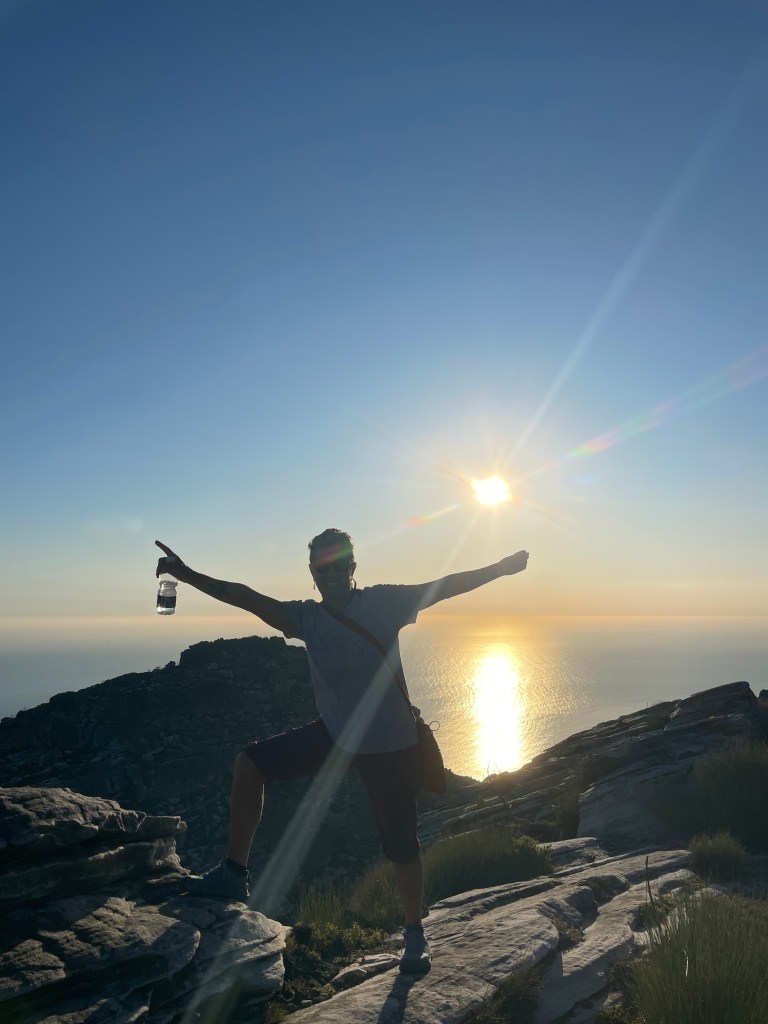
In the afternoon Karla wanted to climb Table Mountain. I knew better. Our tour guide advised against it for security reasons. At the time, no one mentioned the baboons that are known to attack single female hikers. Nor did they mention puff adders on the trail. Karla said it was the most difficult thing she has done in 10 years. (I was pleased not to be mentioned, but perhaps living with me is 2nd.) I’ll let Karla provide details.
Karla here: I checked the AllTrails app for the best approach up Table Mountain and identified the Platteklip Gorge to Upper Cable Station hike of 3.3 miles up with about 2500 elevation gain. It was rated hard and I found it very hard– 90 degree heat and a 3pm start did not ease the effort. AllTrails notes that “challenges include steep climbs and high rock steps.” There was very little shade and it was reasonably well traveled. I did hear from a local on the way back down, that I should be looking for puff adders and that adolescent baboons tend to pick on solo female hikers. I heard the baboons calling/hooting but did not see any. Another local hiker, when asked, volunteered that the snakes would not be out in the late cool shade of the day but that they are found along the trail. I miscalculated a bit and it was dark before I finished coming down. Thankfully, I had my cell phone flashlight to guide the way. I’d rate this 2-3x Kokohead. Glad to have done it. Beautiful views and great exercise.
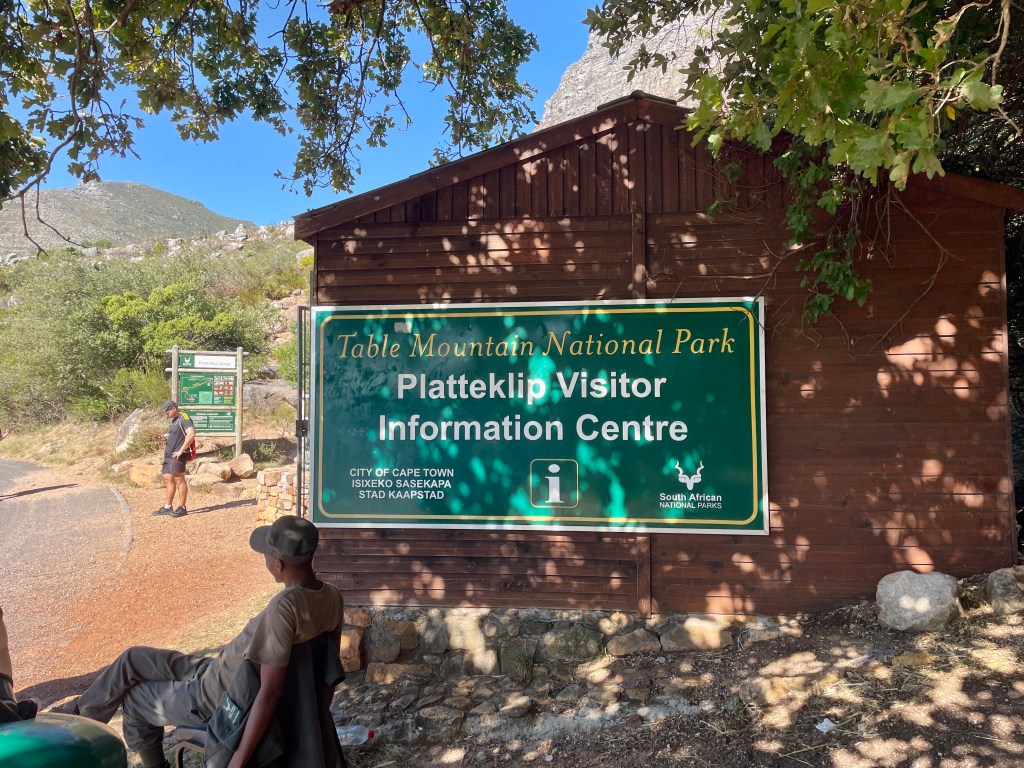
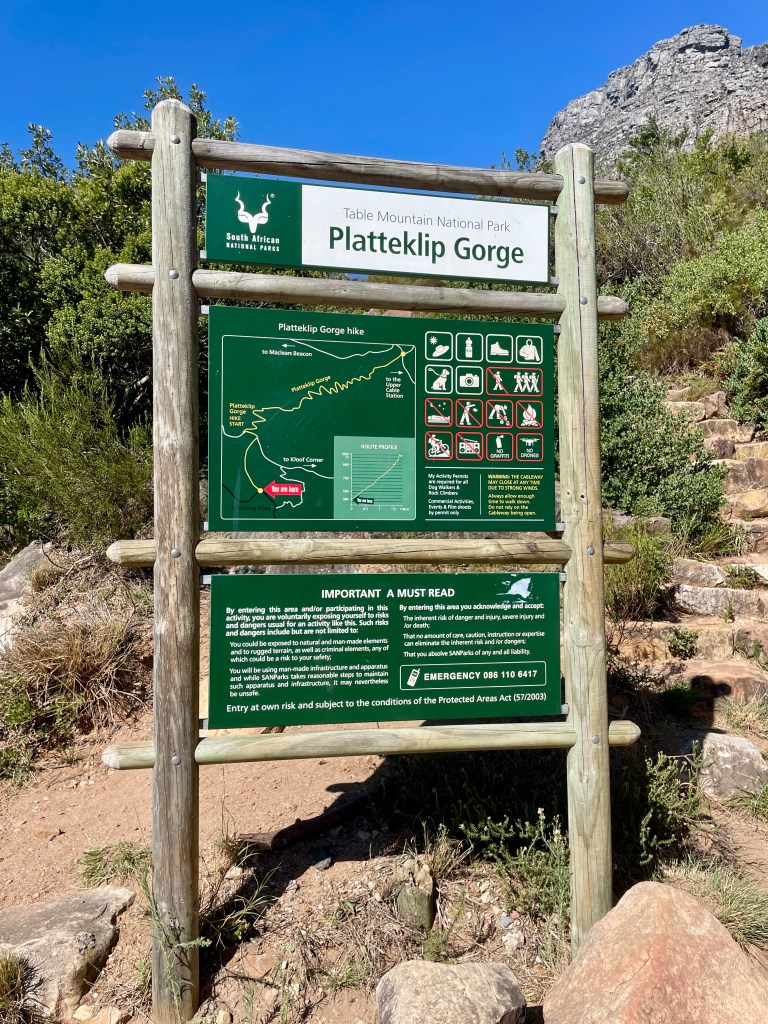
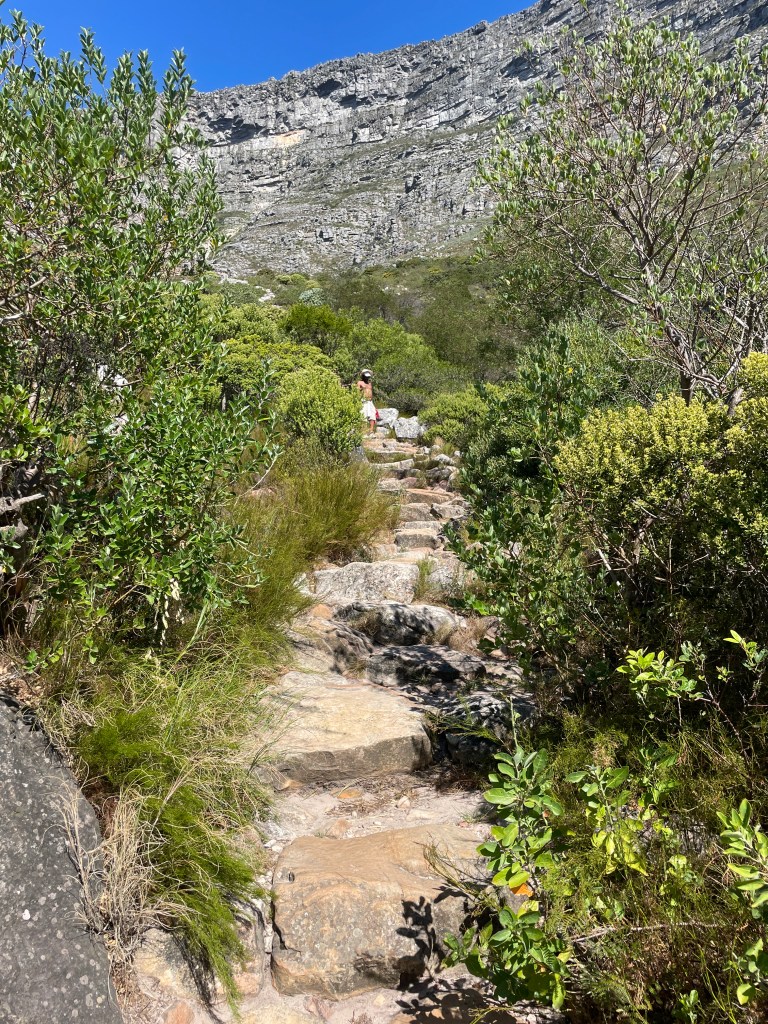
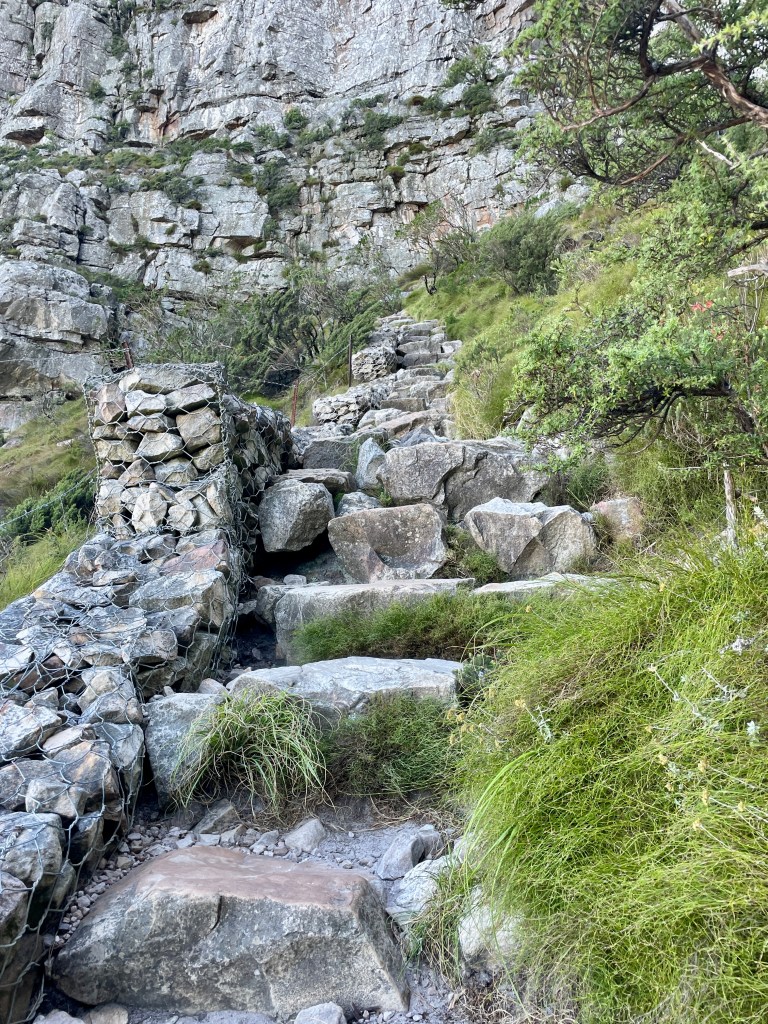
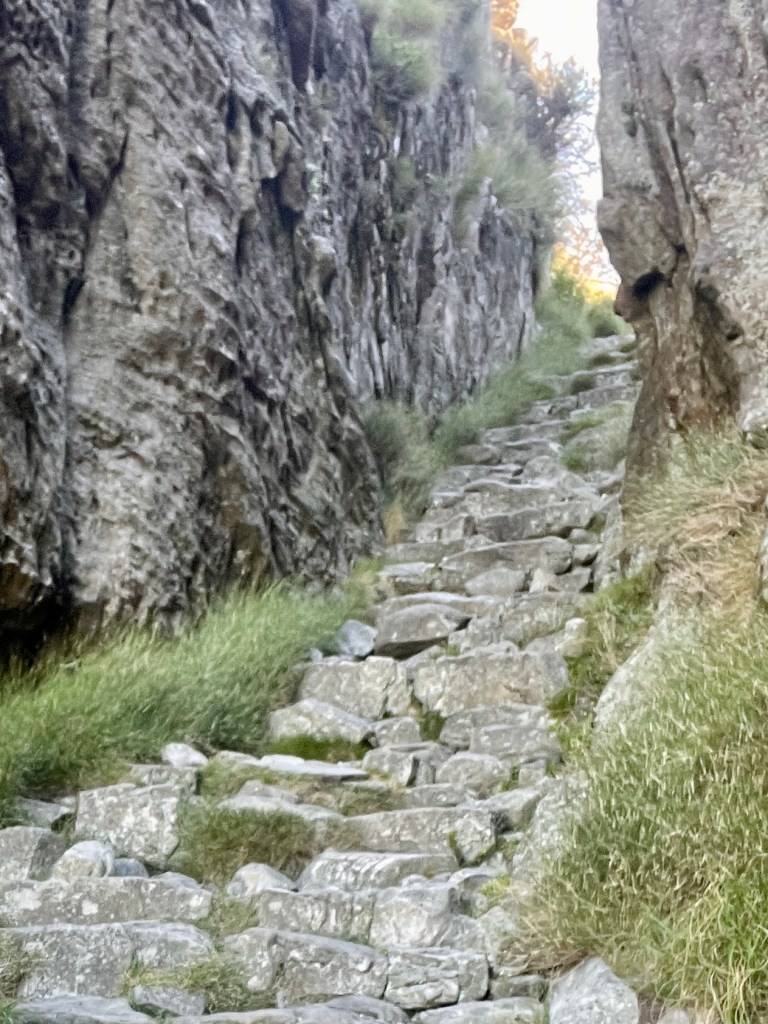
The trail 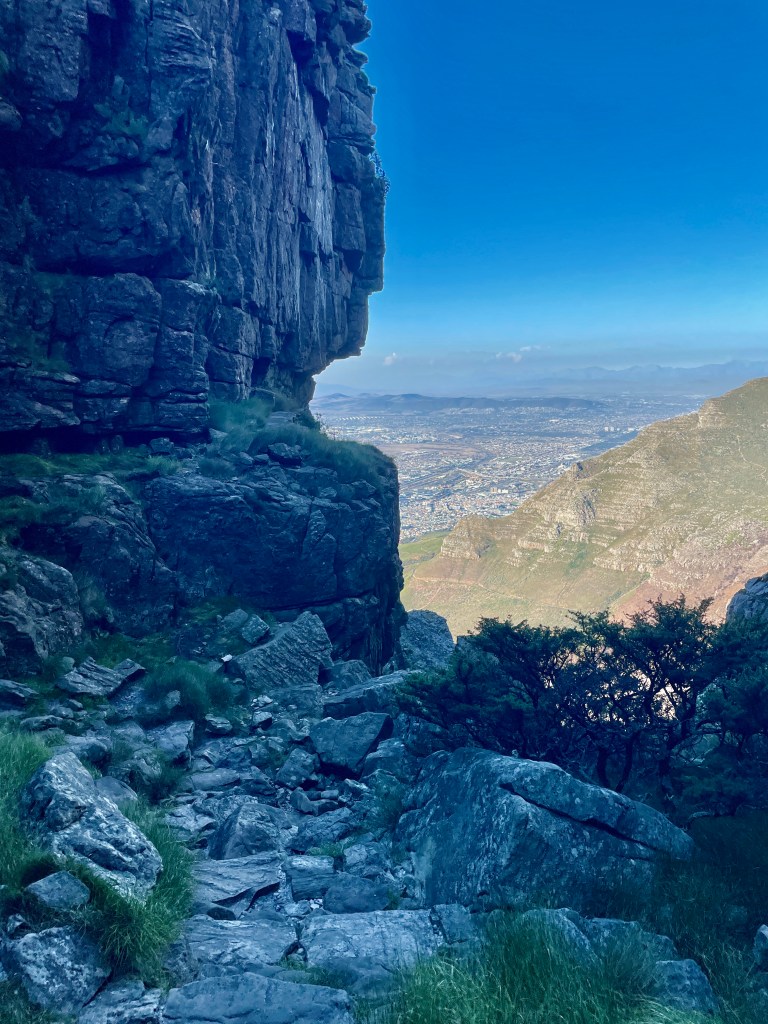
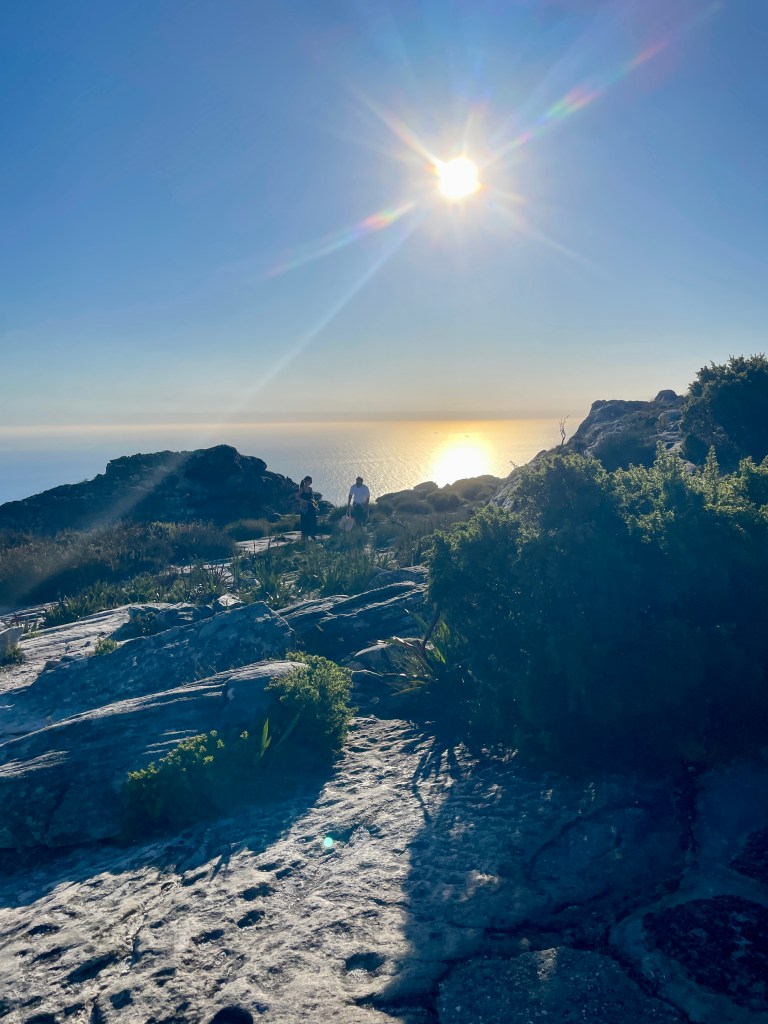
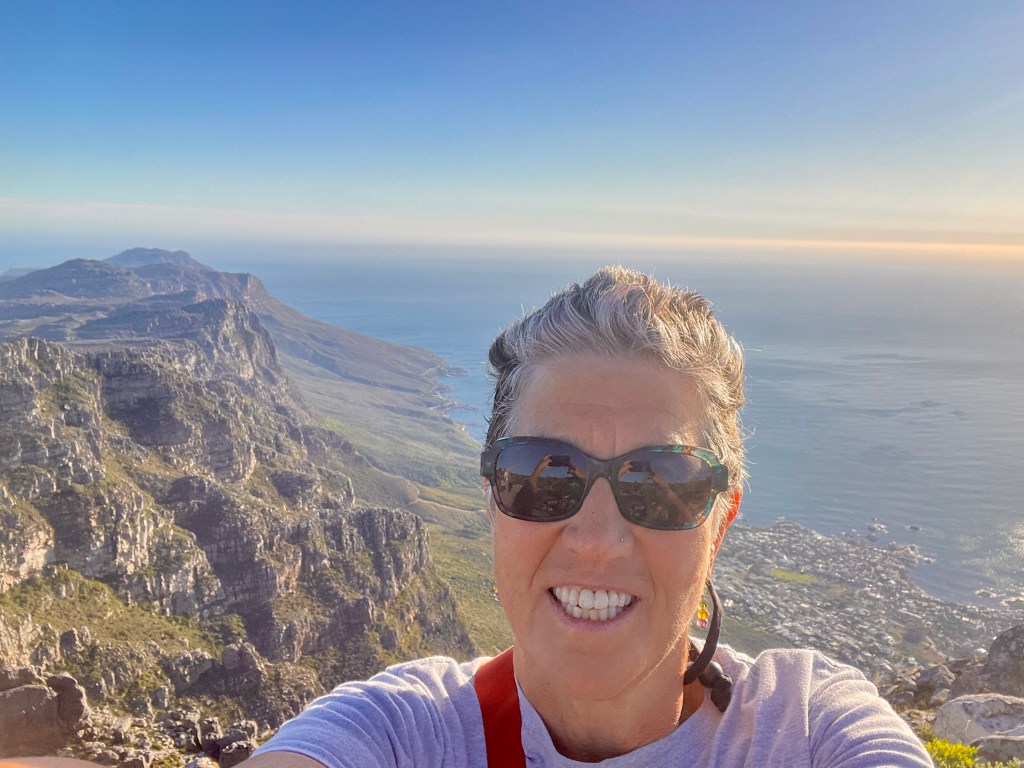
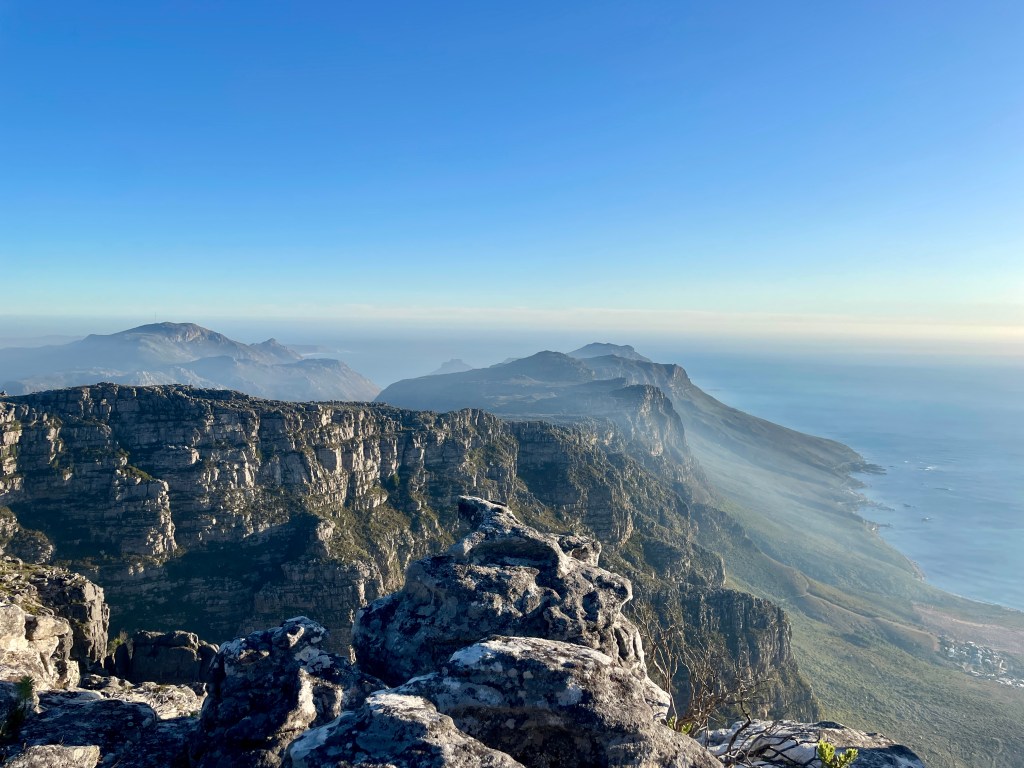
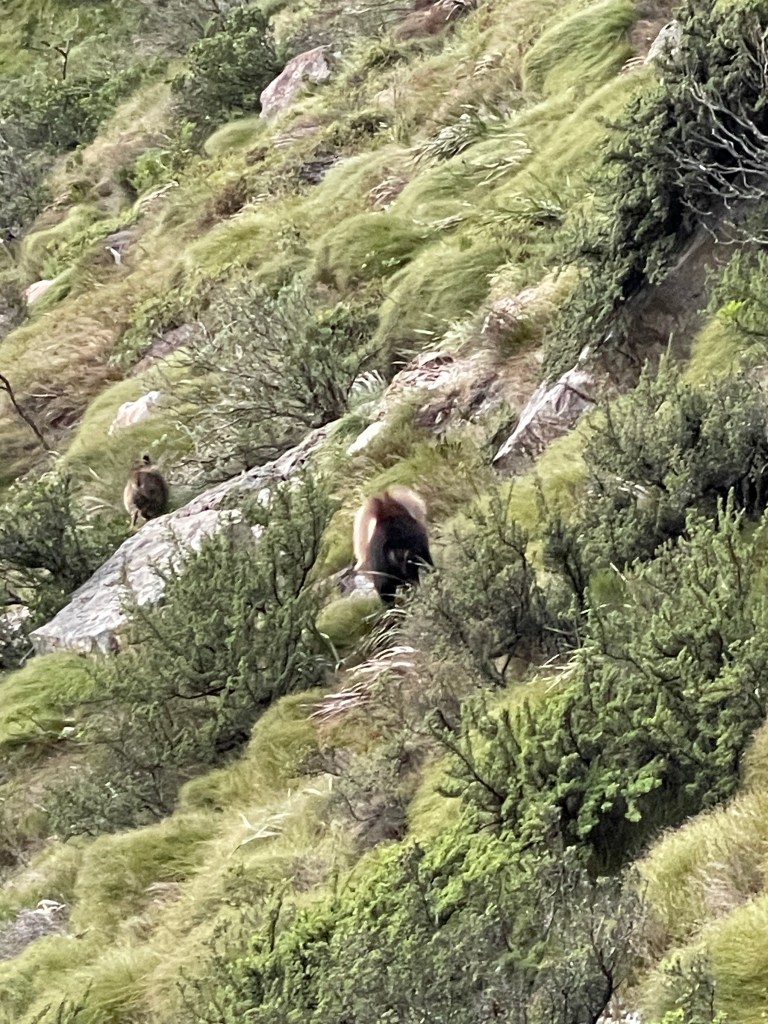
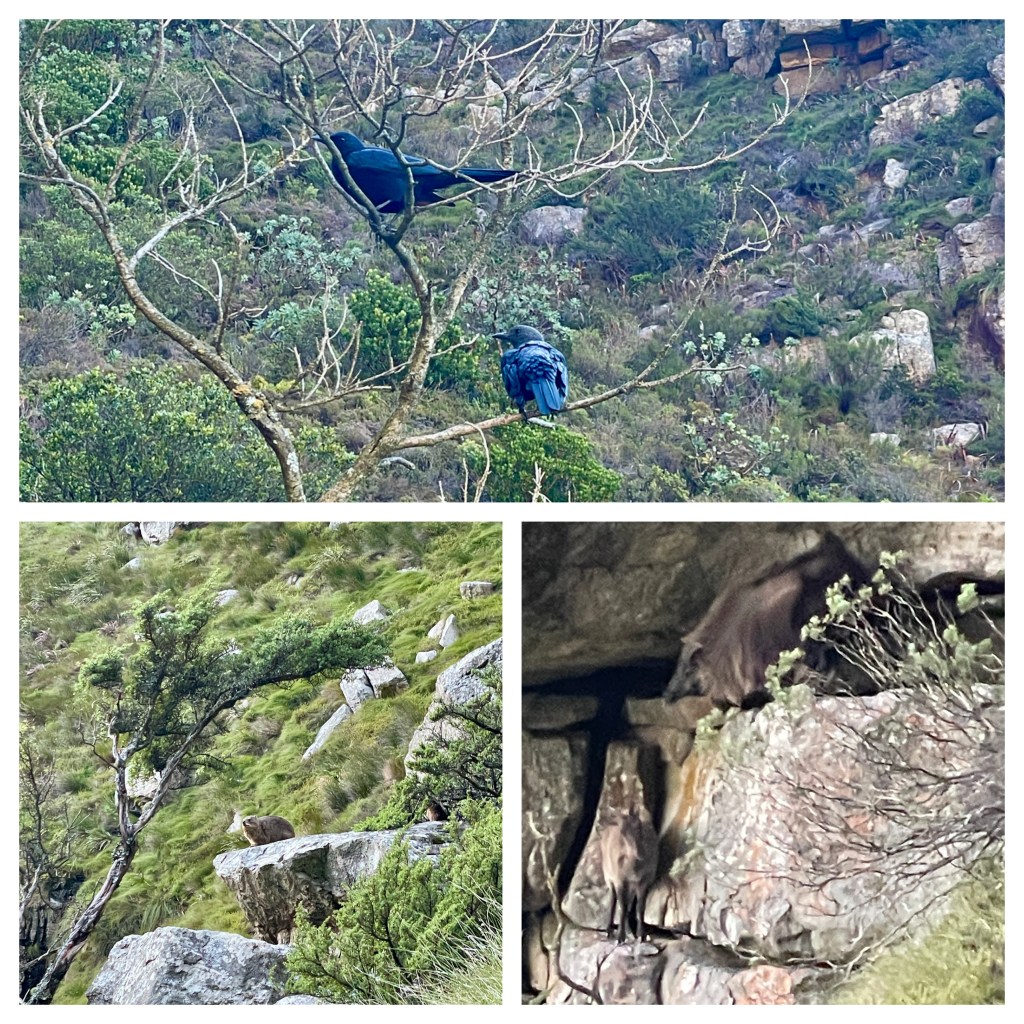
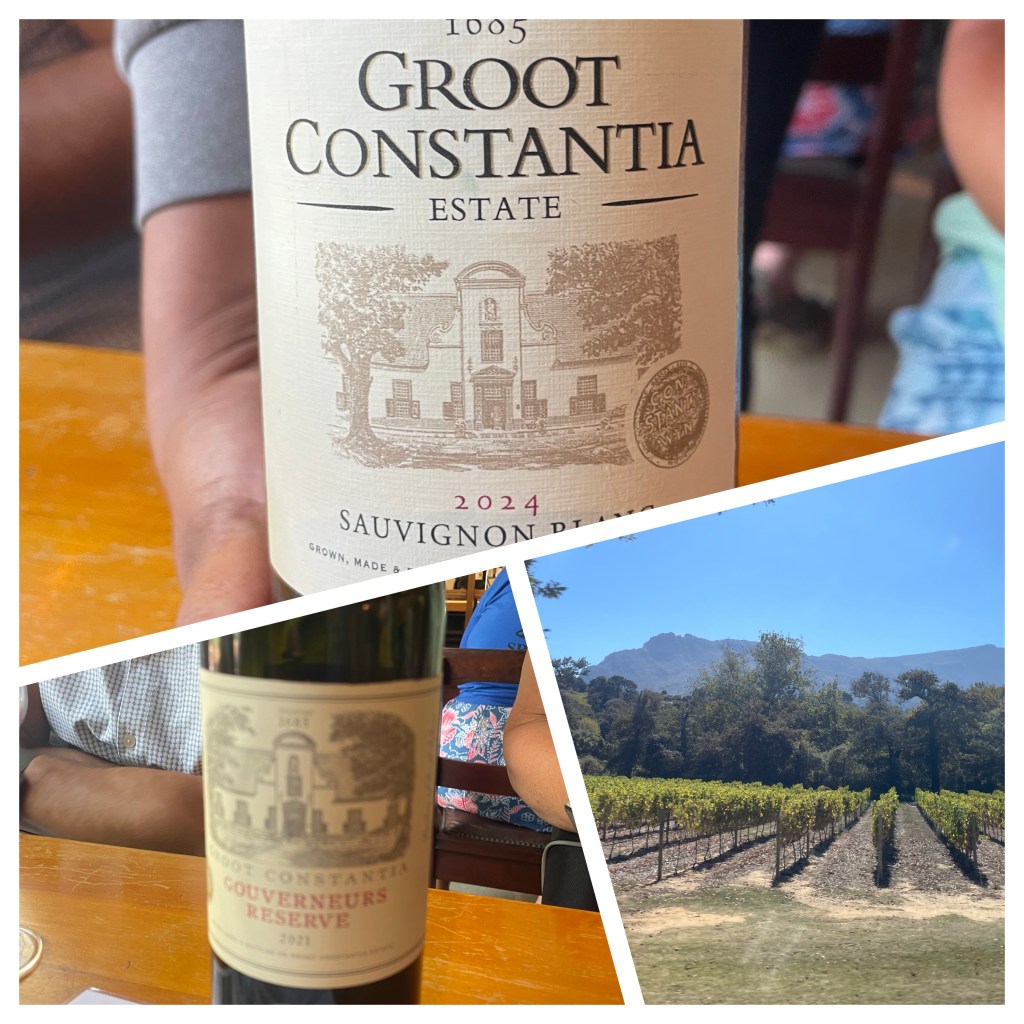
Birds, Rock hyrax, Himalayan goats. The Himalayan tahr was introduced when 2 tahrs escaped the Capetown zoo in the 1930s. They are identified as an invasive species, causing substantial damage to native vegetation. On the second day, we visited the very attractive Kirstenbosch Botanical Gardens. Our drive to the gardens missed the township housing. Then, on the drive to a Constantia winery (Groot Constantia), we passed lots of upscale housing and gated communities. We could have passed the day and missed the soft underbelly. Good wine tasting. Five different wines with a piece of chocolate to match each one. It’s easy to see why wine tourism is so important to the economy.
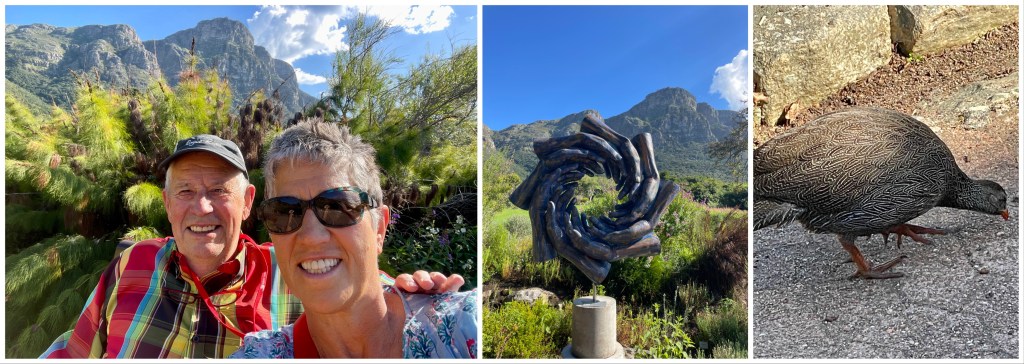
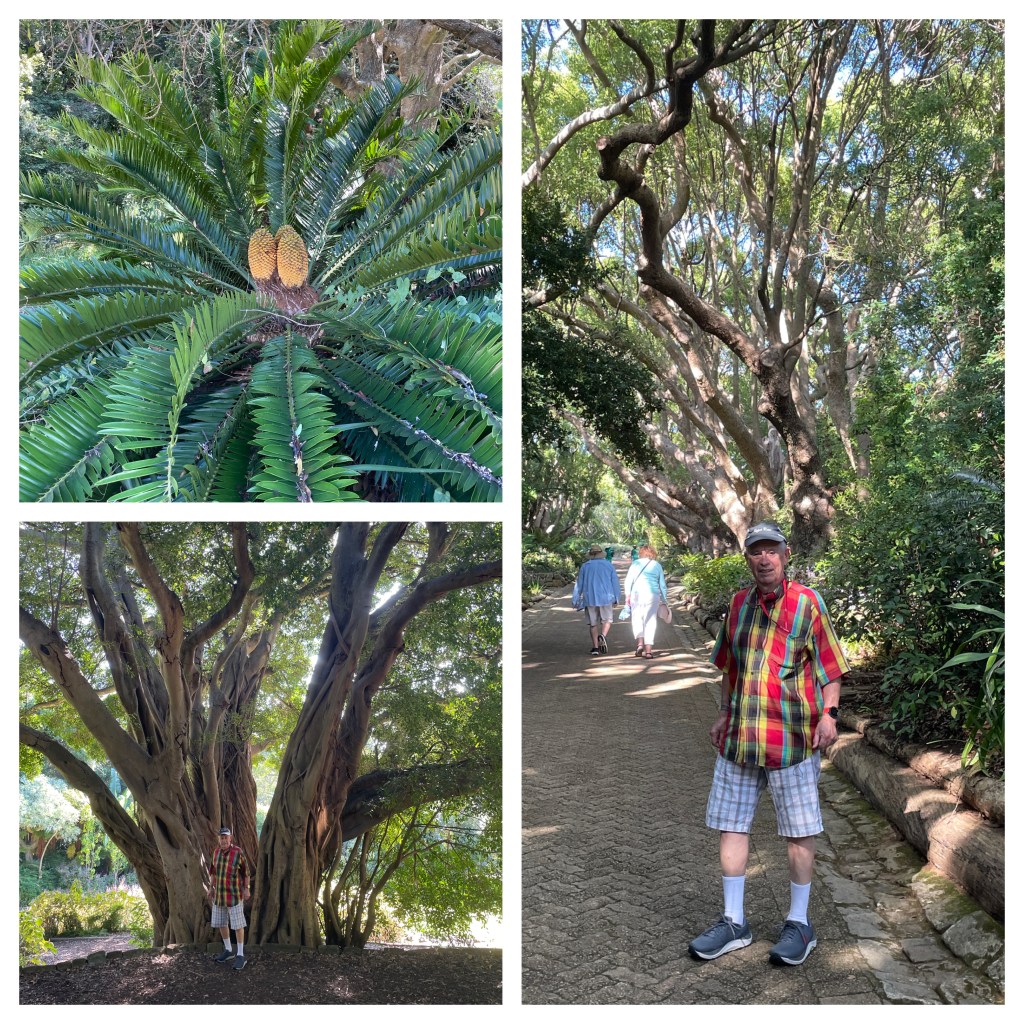
Botanical gardens 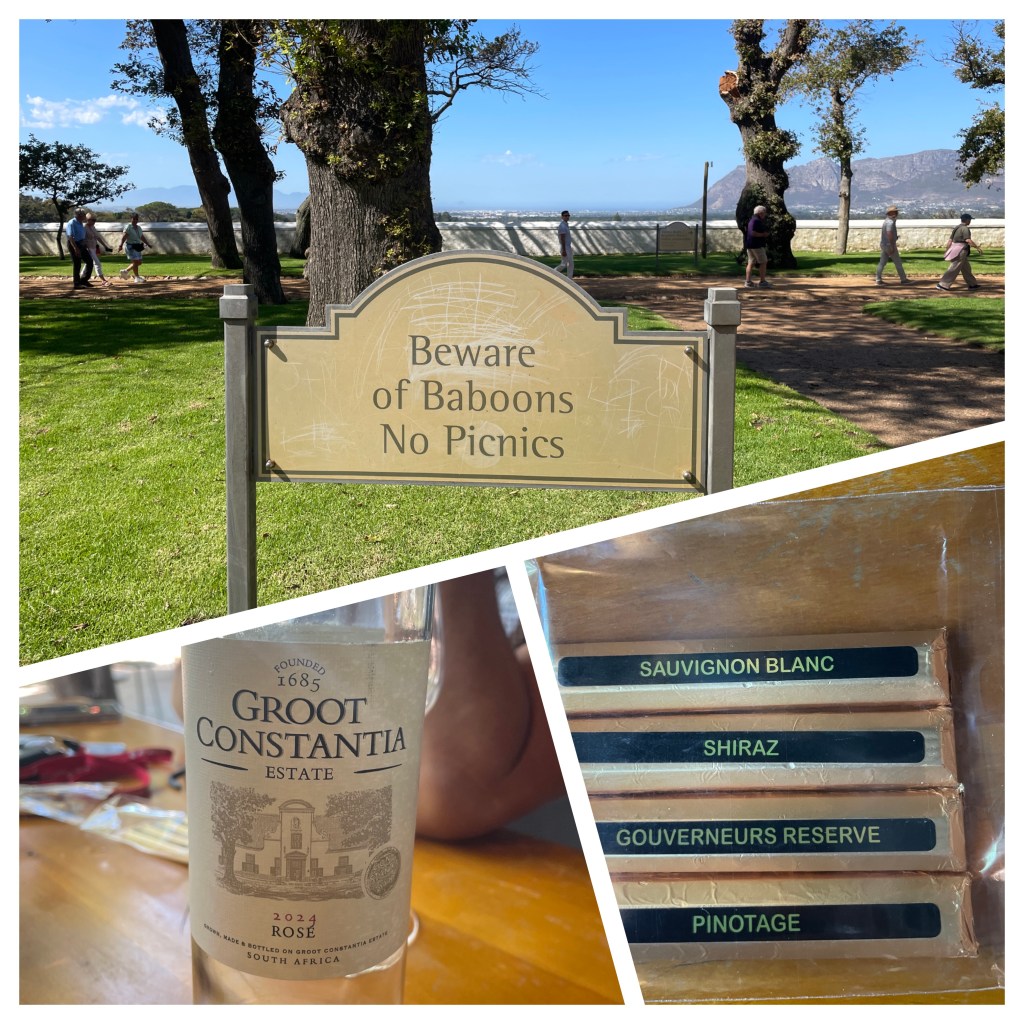
Upon return, we wandered the waterfront a while. There has been lots of development since our trip 20 years ago. It’s a major reason that many people rank Cape Town as one of their favorite cities.
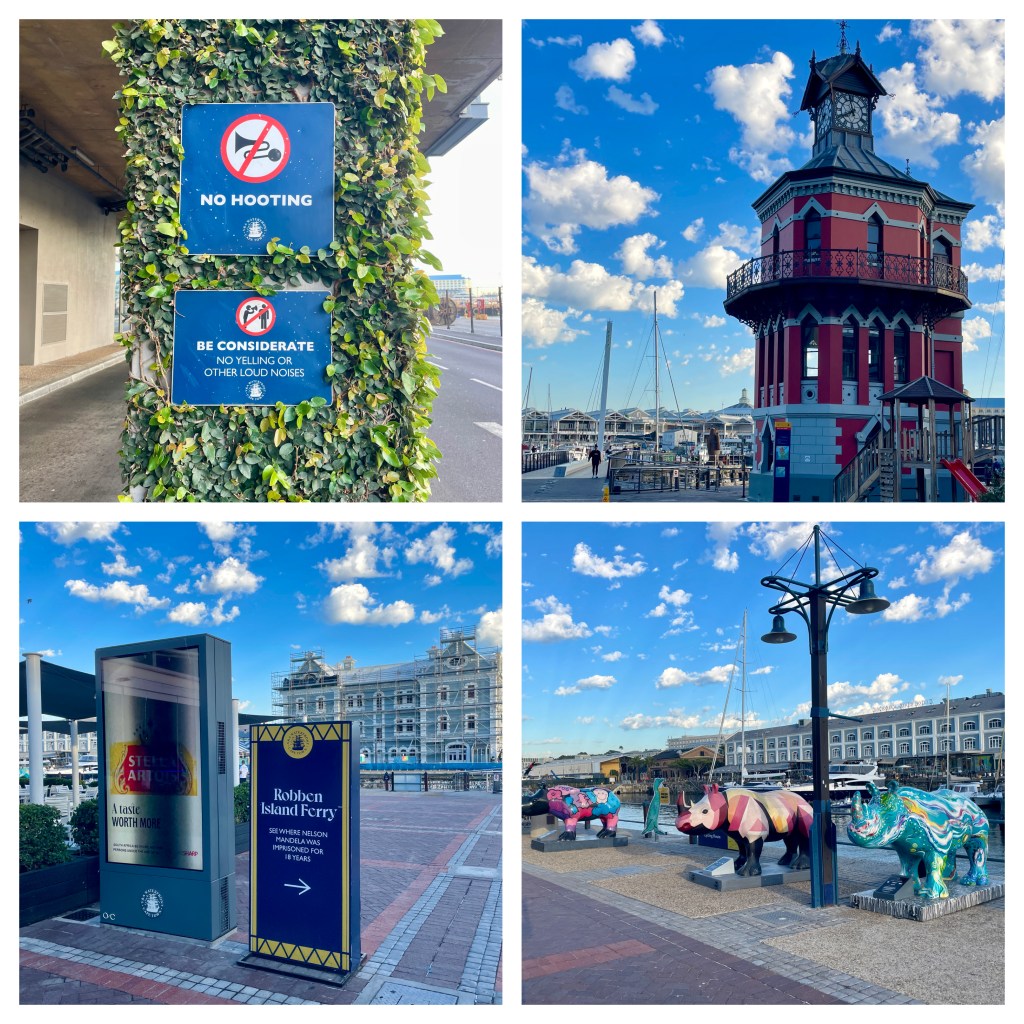
Clock tower, ferry to Robben Island (where Mandela was imprisoned), and fun sculptures. 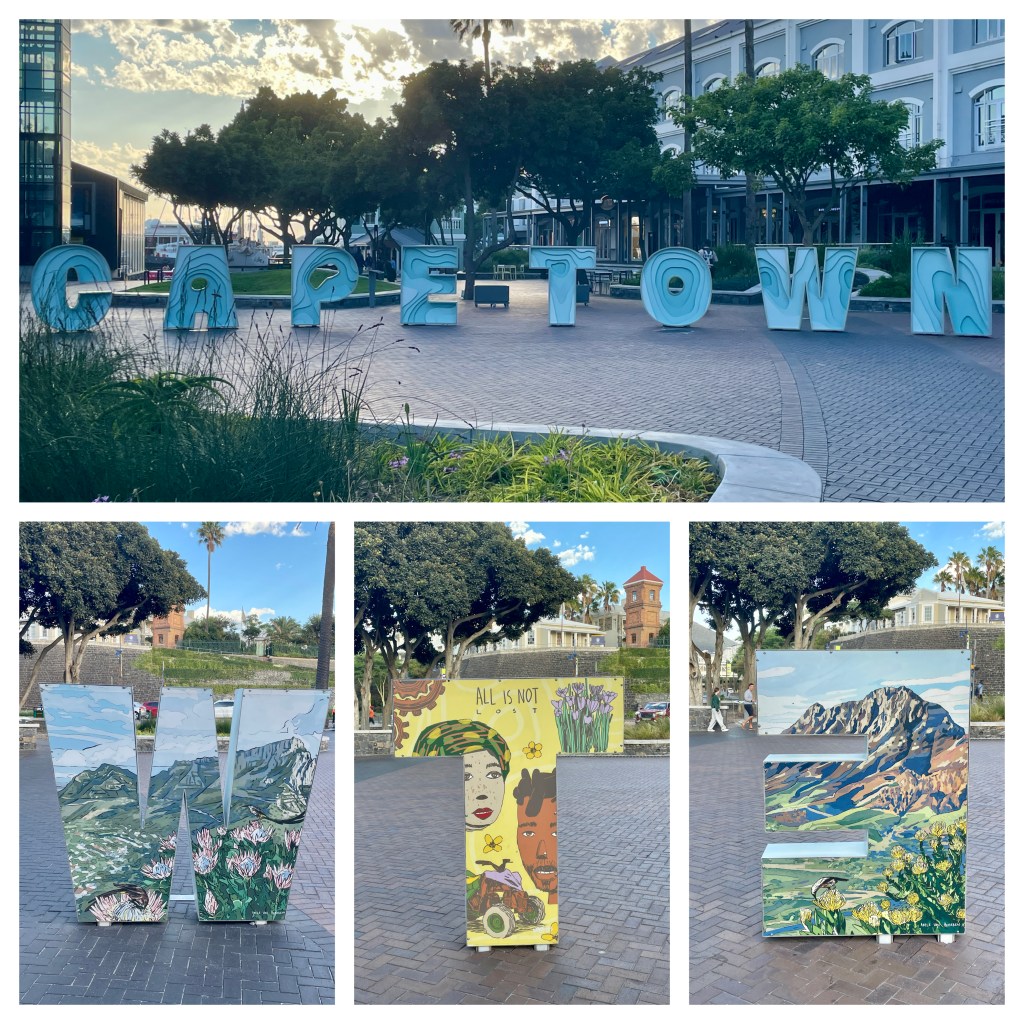
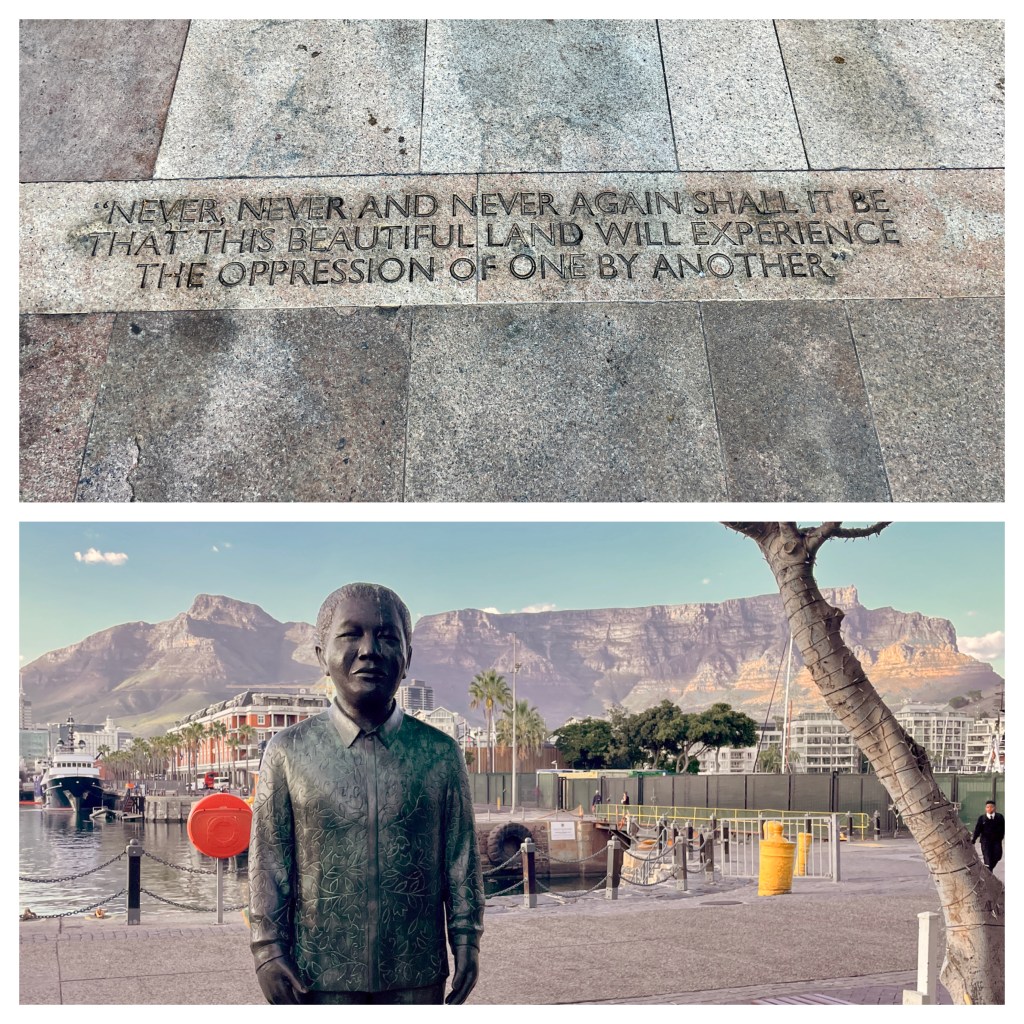
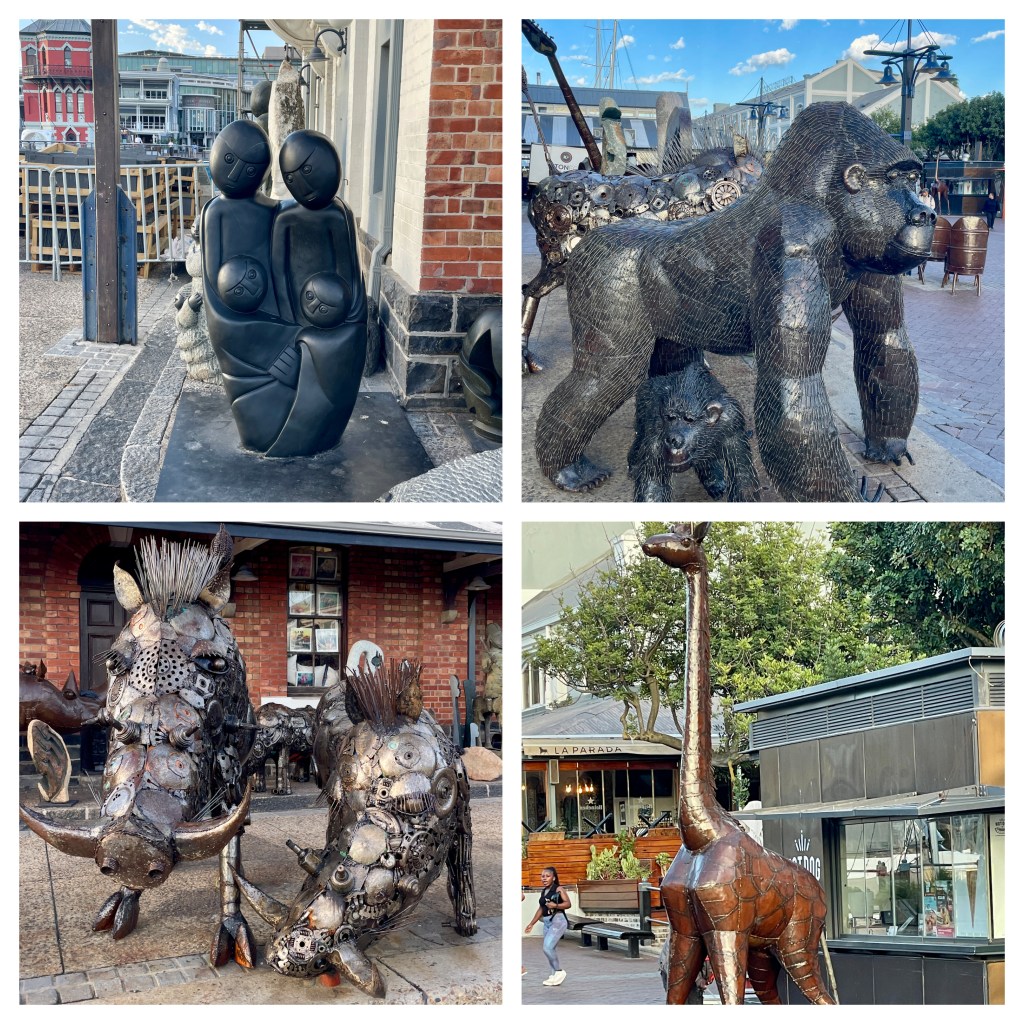
More quay-side sculptures At night, we joined John and Carolyn Soutter for dinner. I have known them since Hilary and their daughter Ann starting swim team 42 years ago. (She may set a New Zealand masters’ swimming record later this year). Our conversation with the Soutters felt like we talked to them yesterday. They are sailing from Cape Town to London….unless evicted from the ship earlier for misbehavior.
I was going to write a piece on apartheid, but a very good lecturer just boarded and gave his first of four apartheid lectures today. I will write a piece later; I want to sound smarter.
-
Looking forward to Cape Town
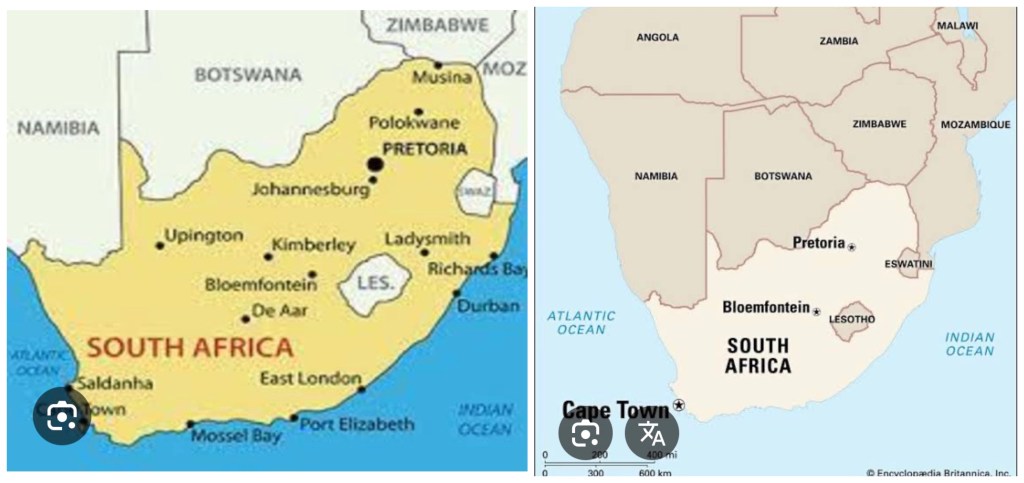
April 3
We’re looking forward to Cape Town, but my feelings are mixed. We have two trips through the countryside to visit wineries on our 2 days there. It was voted the number one city in the world to visit in 2014 and 2023. The setting is beautiful with Table Mountain and the coastal features. And, plenty to see outside of the city. So, why mixed feelings?
The positive side of the mix was a trip we took with Maddy and Jackson about 20 years ago. By chance, we had a room in a smallish hotel (the Cape Grace) that was chosen something like “the world’s best boutique hotel by Condé Nast. They delivered a VCR to our room and had all kinds of videos for kids, an unbeatable buffet breakfast, and free taxi service to a nearby gym. We traveled to nice wineries with play places for kids. A nice stop after 4 different safaris, including a very memorable stay at Kruger National Park.
The negative experience was a stop on a Semester At Sea cruise in 1970….apartheid years. Think about being raised through the optimism of the Kennedy years, the successful equal rights movements, and the Great Society legislation. You develop a sense of what fairness means. The injustices we witnessed were like a slap in the face. It was educational, but not endearing. The poverty, especially of Blacks, the high unemployment rates and shortage of opportunities in our Madagascar, Kenya and Mozambique visits all take me back to Capetown memories. (I should add that my feelings are amplified by stories from the US about masked, plainclothes people abducting a woman from the Boston area sidewalk and expulsions from the country with no due process and unfettered executive power.)
Cape Town, with its prime location, was destined to be a key player in the development of European trade. While people lived at the cape for 12-15,000 years, the first European visit was by Bartolomeu Dias in the late 1400’s. The Dutch East India company established a ship supply station that was used by the French, Danish, Dutch, English and Portuguese. They traded goods like tobacco, copper and iron for meat and other edibles. In the exchanges, a number of products were introduced including grapes, cereals,potatoes, apples and citrus. At the same time, labor shortages led to the import of slaves from Indonesia and Madagascar. It was the nation’s commercial hub until diamonds were discovered in the north in 1867, followed by the discovery of gold in 1886.
Britain’s victory in the Second Boer War firmly established power and in 1910, the Union of South Africa was established. Slavery had been abolished in 1833 and Cape Town moved ahead as an integrated society,…officially. However, with the election of an apartheid government, the Group Areas Act was passed. It classified and segregated urban areas. A famous District 6 was declared “White only” and 60,000 Blacks were removed…their houses destroyed. Organizations established workforces with “Colored labor preferred “(read, “not Black.”) The internal struggles against apartheid ultimately led to a new government…thanks to Nelson Mandela and others, In 1994 there were Democratic elections.
While Cape Town is considered to be one of the better run cities in South Africa,, there is still 20-25 percent unemployment and 60 percent of the population live in townships and settlements with limited health care, education and sanitation. There is clearly an apartheid legacy and there continues to be lots of income inequality, unemployment and crime. Fortunately, they are 82 percent Christian so it will all work out. Wait, they have always been predominantly Christian.
A vaguely related point. You may have read about trump’s conflict with South Africa. It’s a bit complicated, but goes something like this. In 1913, the Native Lands Act focused on the distribution of land. Less than one tenth of the land was allocated to Blacks and they were not entitled to formal ownership. Whites were about 7 percent of the population, but seemed to get a better bargain. The 1990 new constitution allowed for the return of land to the blacks without compensation. That’s obviously sticky and cannot be done easily. Trump has entered the fray….always sensitive to unfair treatment…and assailed the hateful rhetoric towards ‘racially disfavored landowners.” He has threatened serious sanctions and more recently called for a refugee center for 8000 Afrikaners prior to their immigration to the US. (I hadn’t understood that the US was looking for immigrants) A South African writer condemns his efforts, writing that South Africa is working toward solidarity, equality, and sustainability. Trump is responding with unilateralism, inequality and nationalism. He goes on to quote George Bernard Shaw, saying something close to…never wrestle with a pig…you’ll get dirty and the pig likes it.
-
Gqeberha (Port Elizabeth), South Africa
April 1
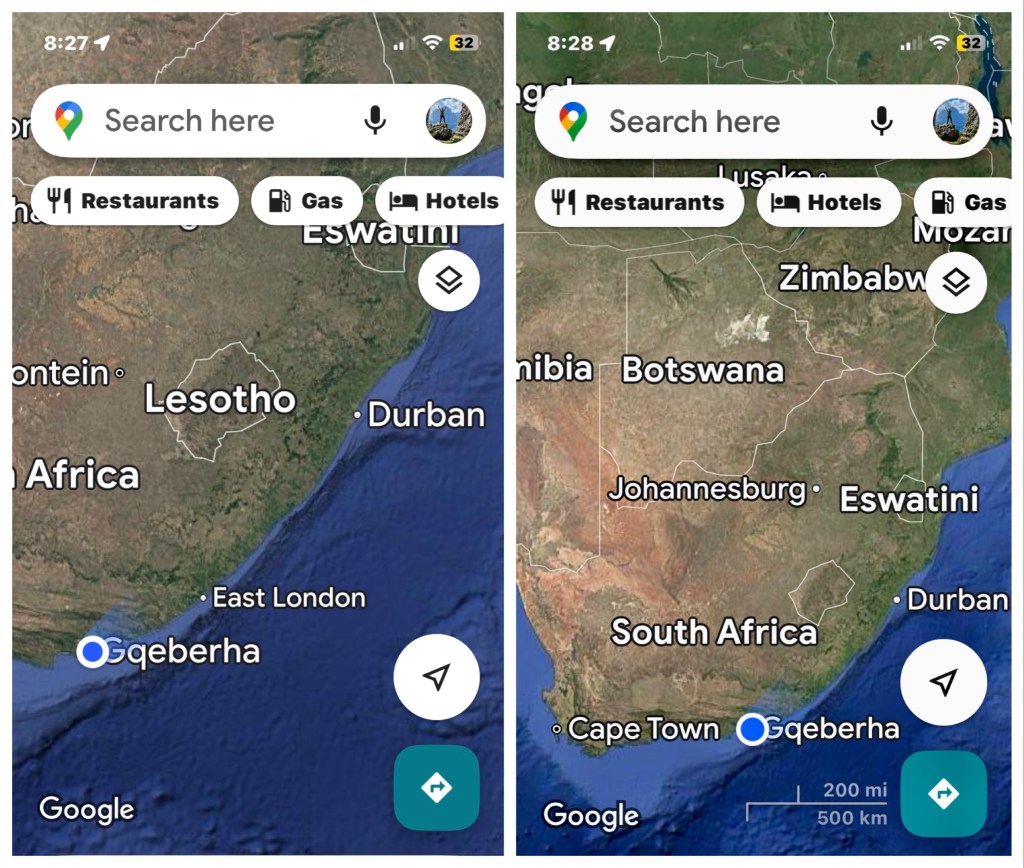
Our ship is the blue dot; you can see our path down the east coast, nearing Capetown and then headed up the west coast. 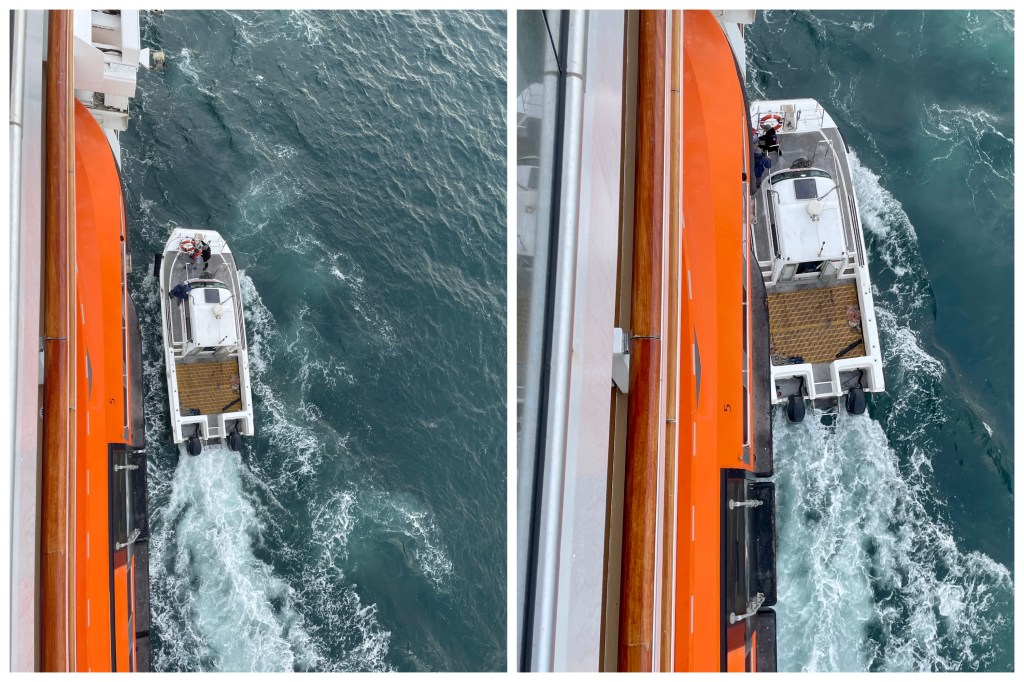
Waiting for high winds (26mph) to subside a bit caused delay in our docking. The pilot boat is challenged in sidling up to the ship to deliver the pilot. Gqeberha is South Africa’s 6th most populous city and 3rd largest port. While the area hosted hunter-gatherers as many as 10,000 years ago, it was settled by the British in 1820. A railroad was constructed to move goods from inland farms and factories in 1875. At that time there was trade in mohair, wool, and ostrich feathers. During the Boer War of 1899-1902 it was the base for British supplies. This city, as several previous visits, is a starting point for visiting game parks. That’s what we’ll be doing.
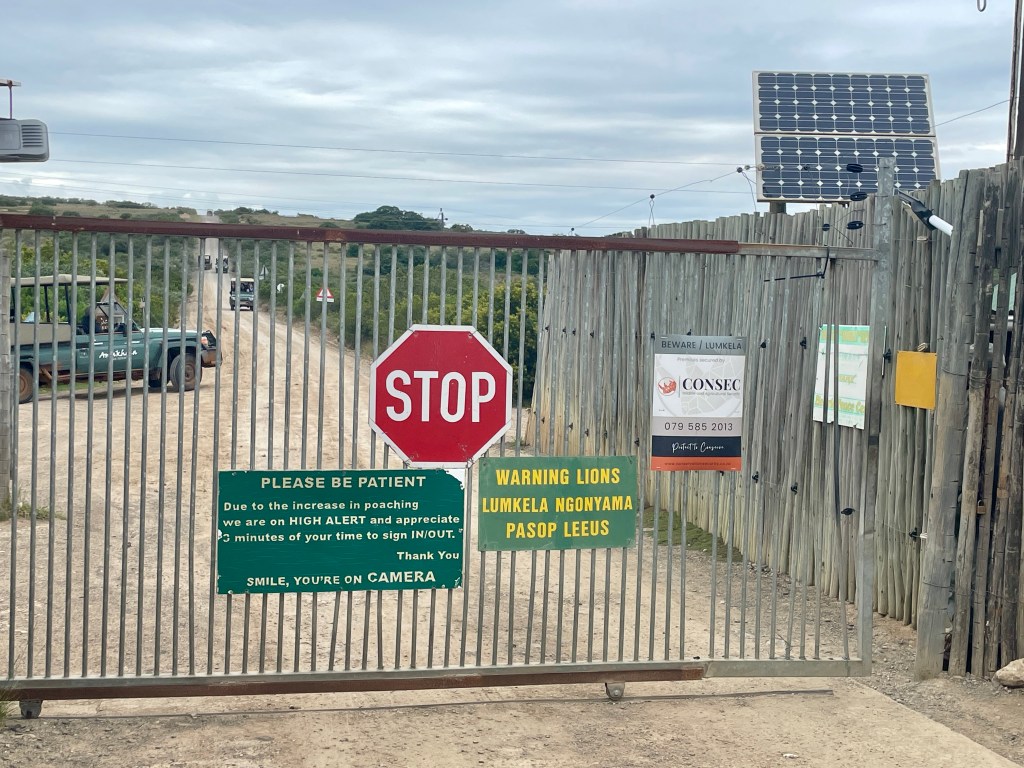
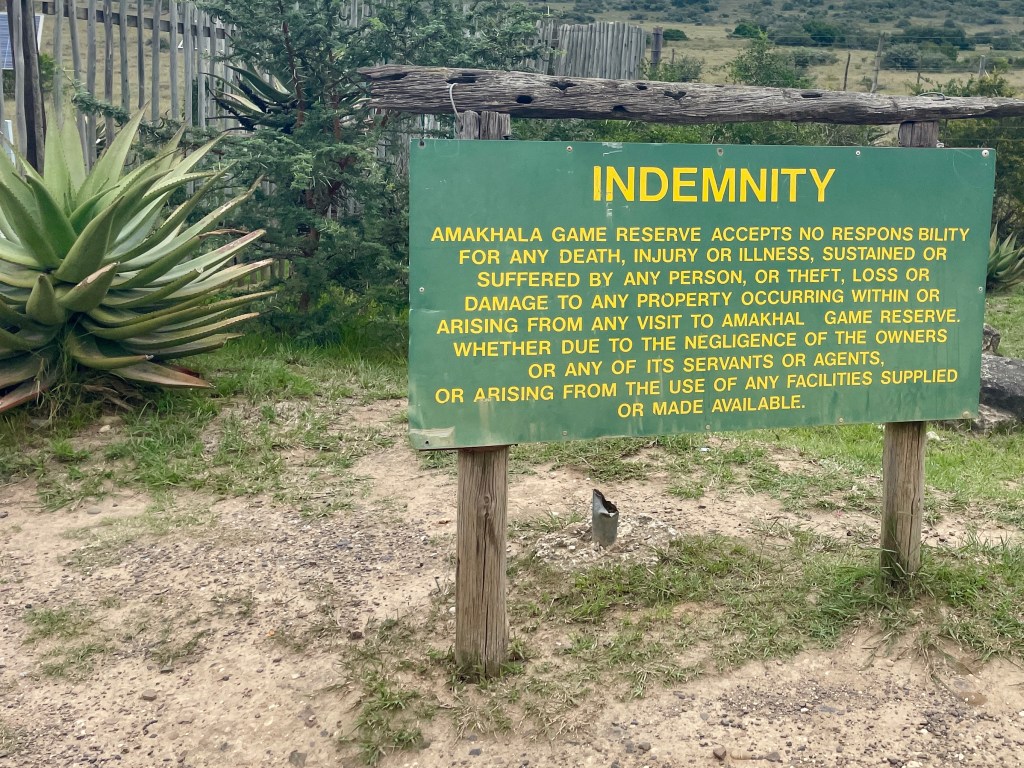
We’ll be travelling to the Amakhala Game Reserve. It used to be a farm for sheep and cattle, but the owners must have seen an opportunity. They say that it is now “home to lions, elephants, rhino, buffalo, cheetah, giraffes, zebra, wildebeest and more.” I wonder if they moved the sheep and cattle first. Evidently, if one has enough property, he can fence it and display animals. There are numerous private game parks.
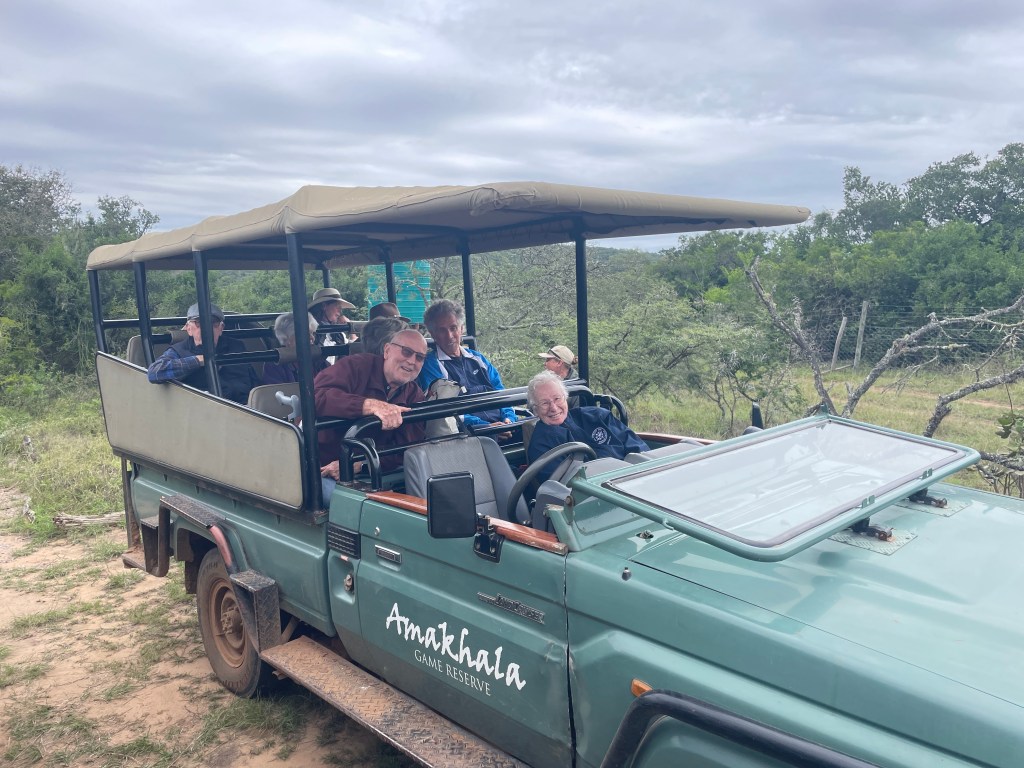
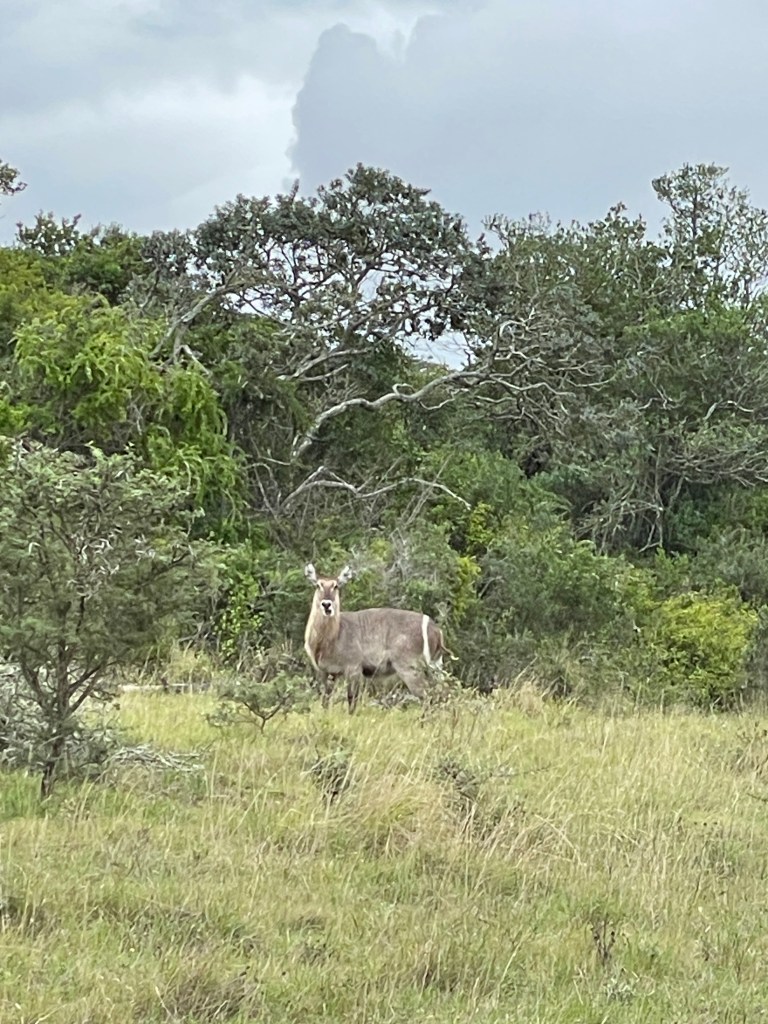
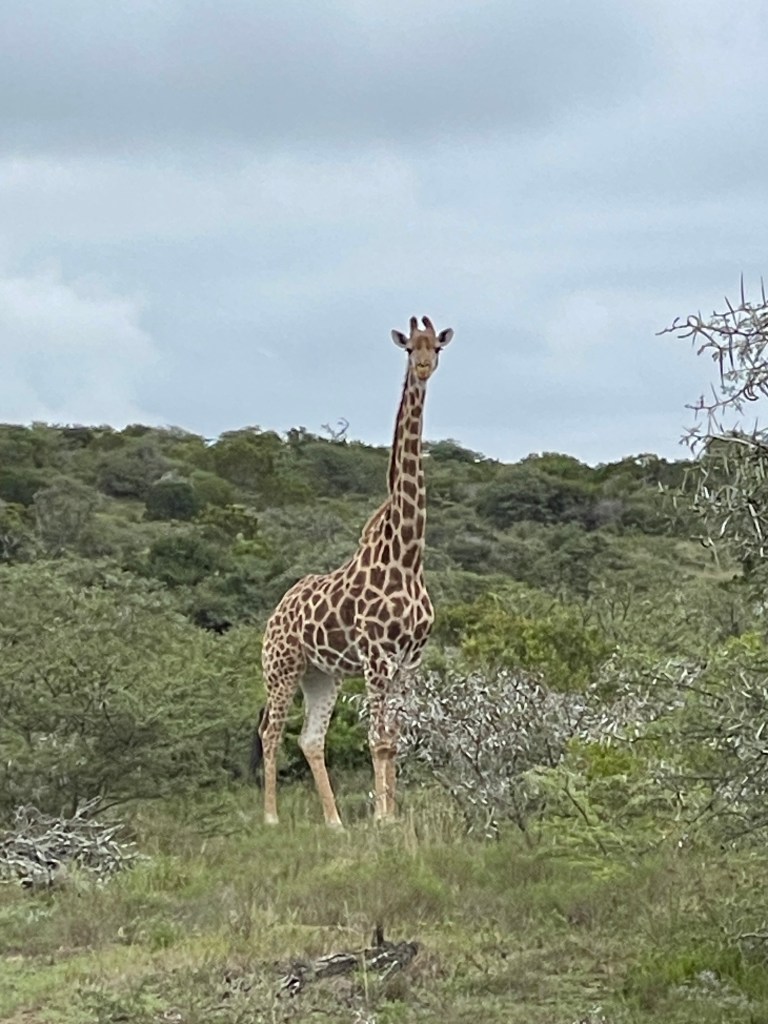
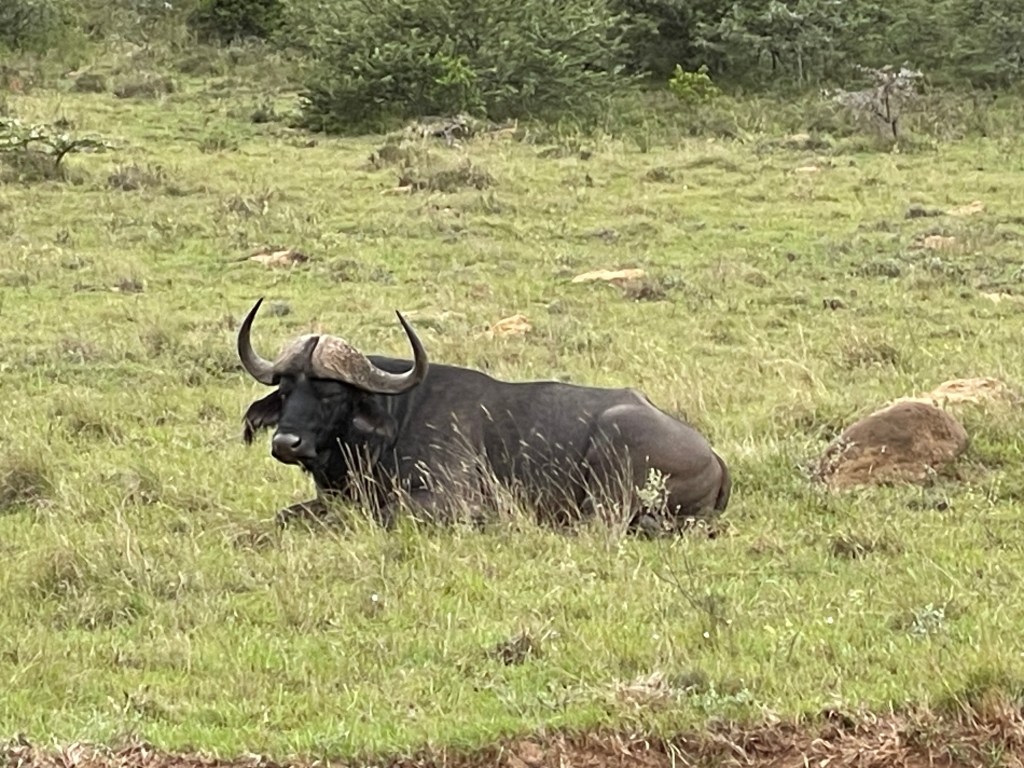
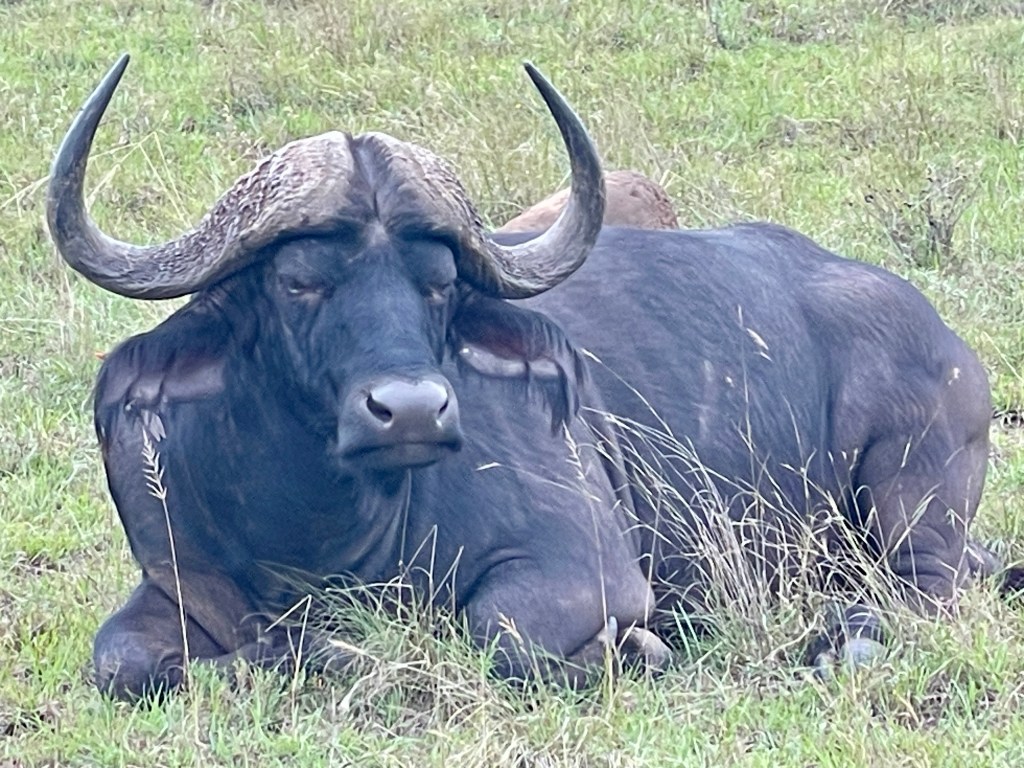
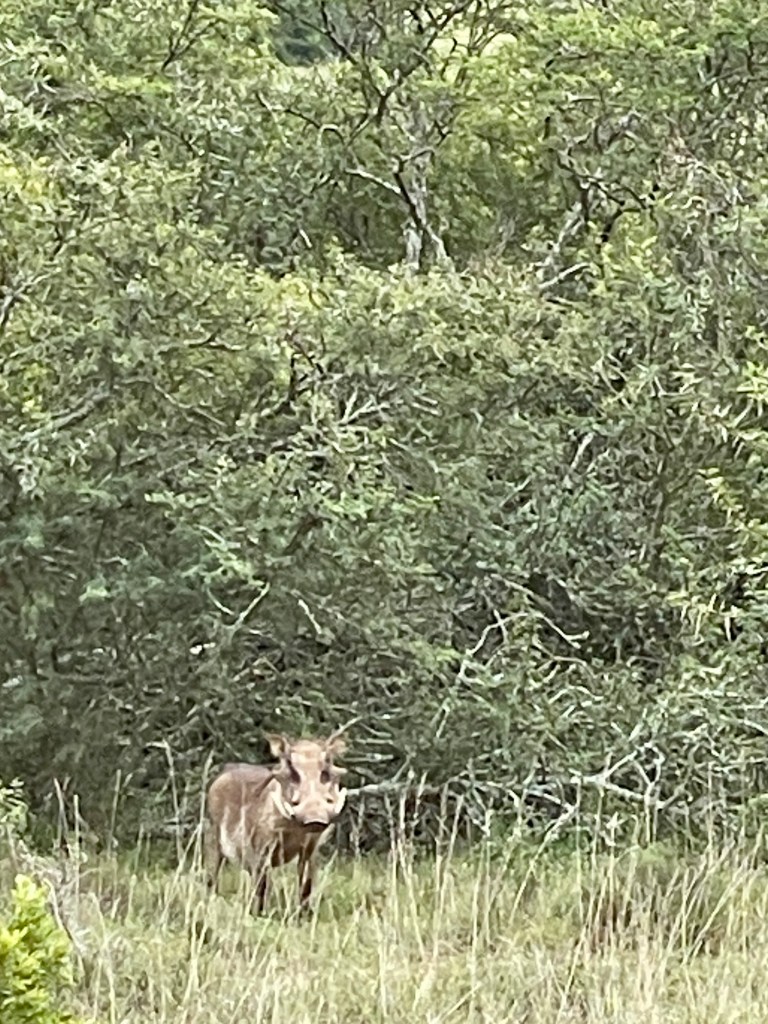
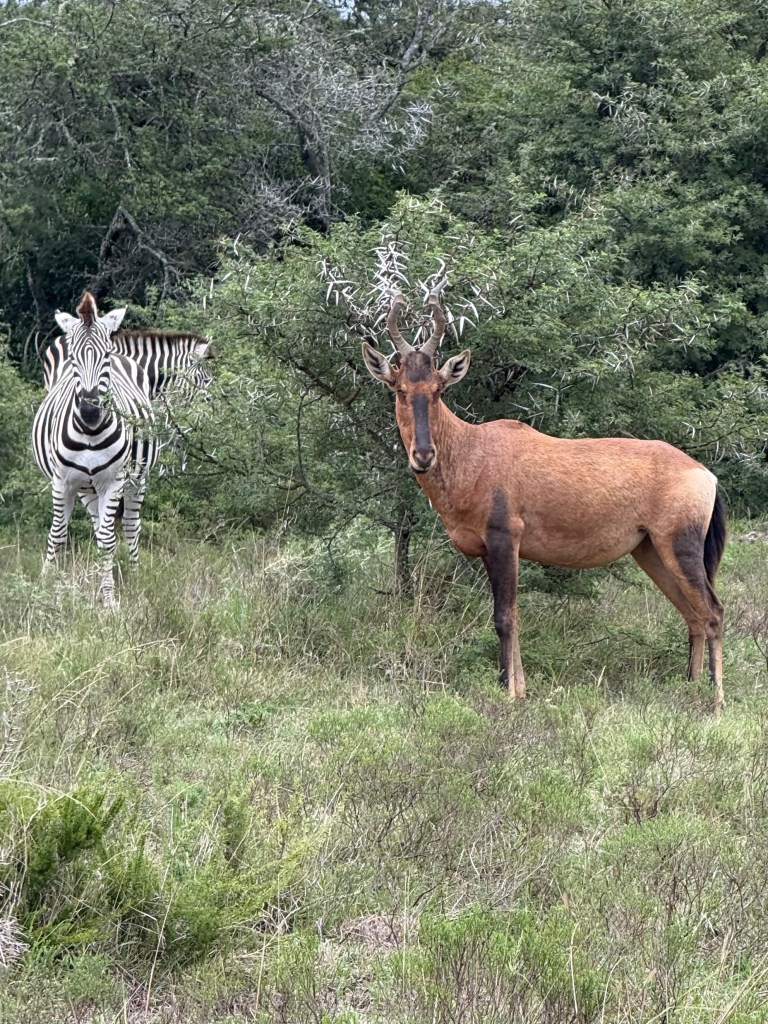
Fifty mile per hour wind gusts prevented us from docking when scheduled so we started our trip 2 hours late…hoping that it would still work. It did. After a bus trip of a bit over an hour, we mounted 10 person, 4×4 vehicles for about a 3 hour game drive. It was through partially-treed, rolling hills. We could travel 2-4 minutes without seeing an animal and then come upon several. I think that’s more fun than seeing large herds. We did not see a bask or conspiracy or bloat or shrewdness or pride….but we had seen crocs, lemurs, hippos, lions and apes before. We missed seeing a leap or coalition…still haven’t viewed a leopard or a cheetah.
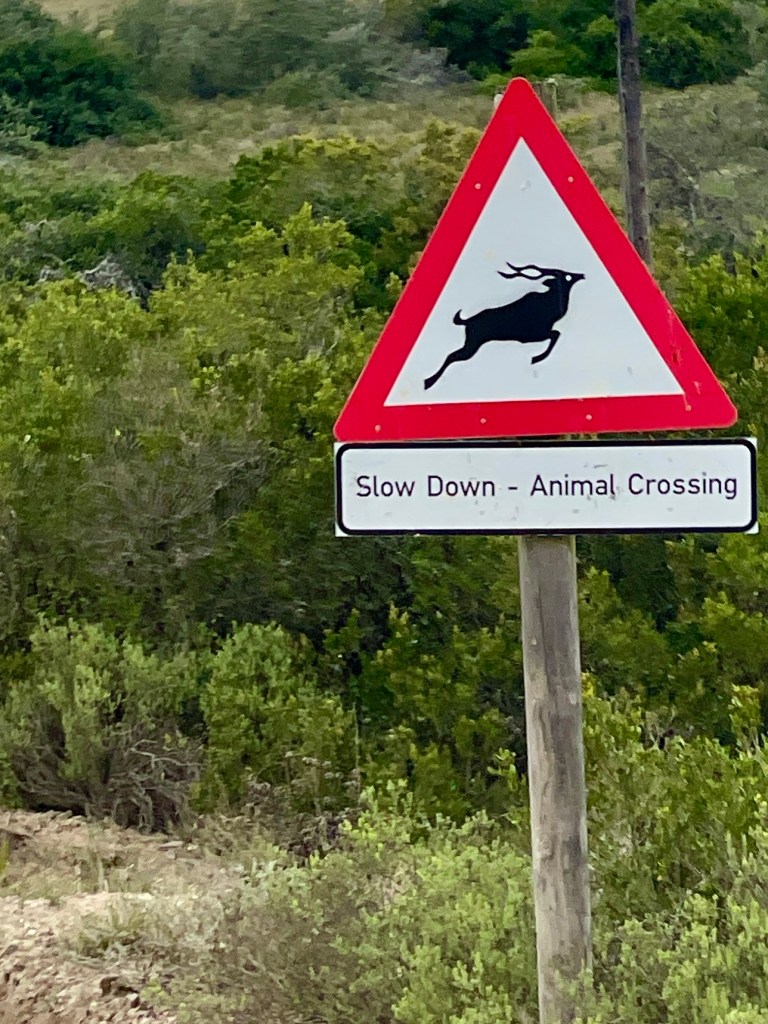
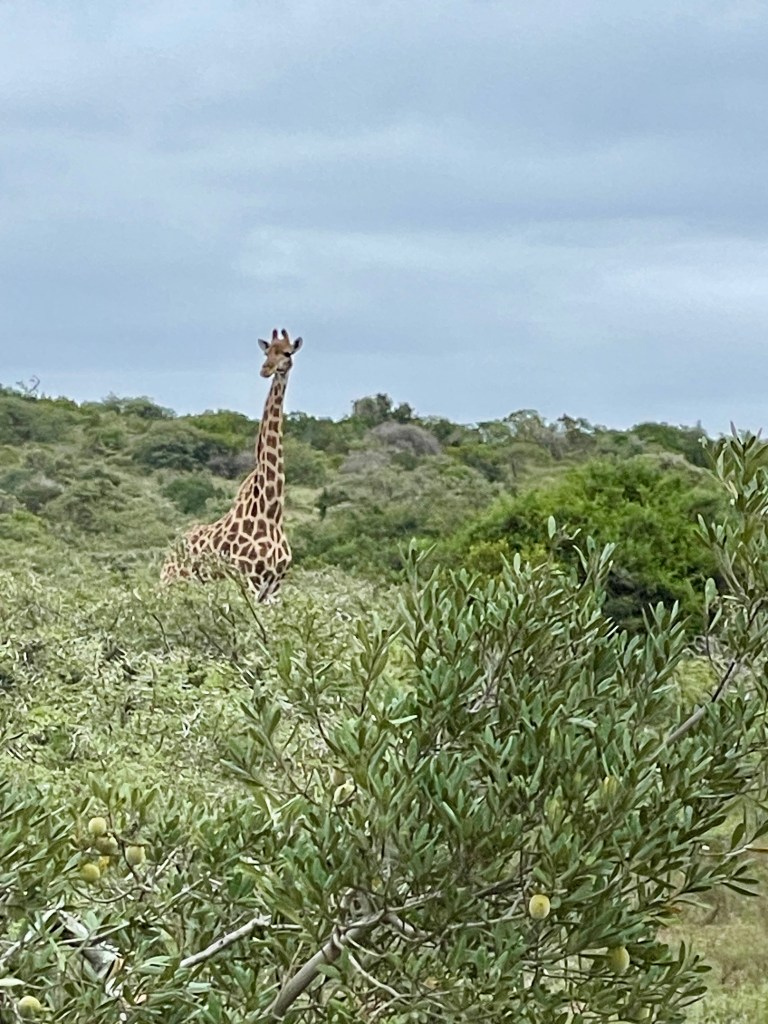
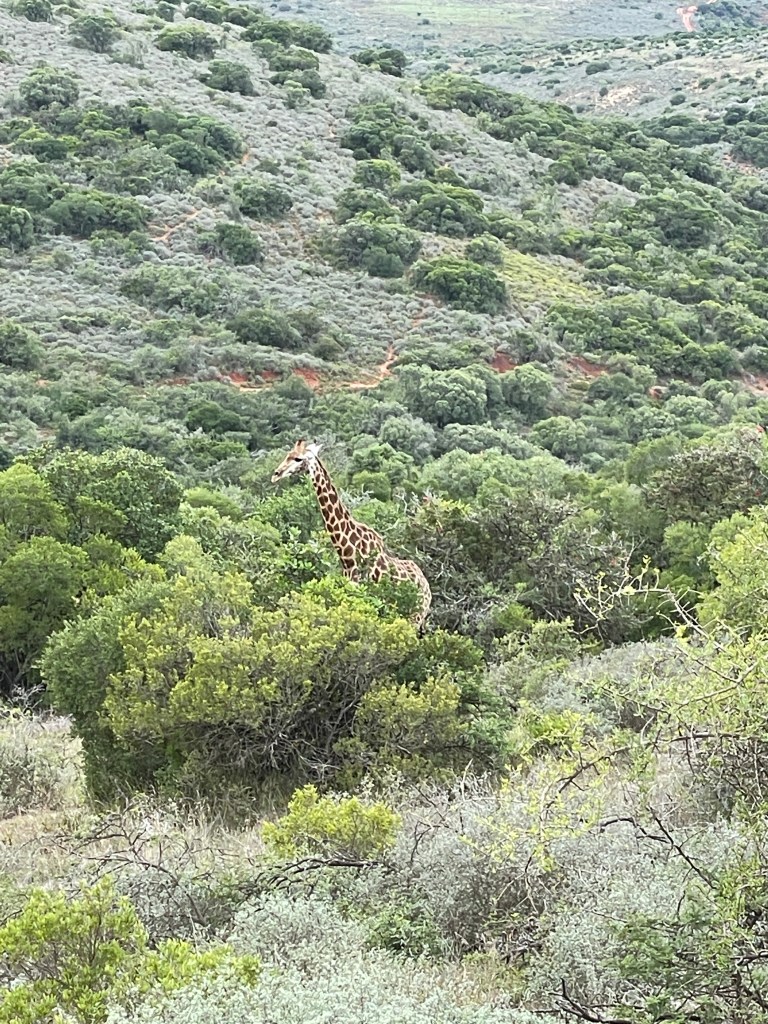
We did view a parade, a crush, several herds, a confusion, a tower, an obstinacy, a flock and a dazzle. For amateurs, those are elephants, rhinos, wildebeests, giraffes, buffalo, ostriches, and zebras. Gazelles, impalas, and hartebeests move in herds. Some people saw cheetahs. The most interesting snippet was watching giraffes looking around the countryside for a lost baby. (The guide said it was “found” by lions the previous day.) Evidently, the parents will look around for about two weeks. Karla joined the chorus of voices damning the lions. But, we didn’t see it. The baby giraffe may have started the altercation….perhaps sassing the lions.
We are continually surrounded by nice drivers and guides. There is an unemployment rate of 40 percent and the tourism industry helps it from going higher.
You’ll like Karla’s pictures.
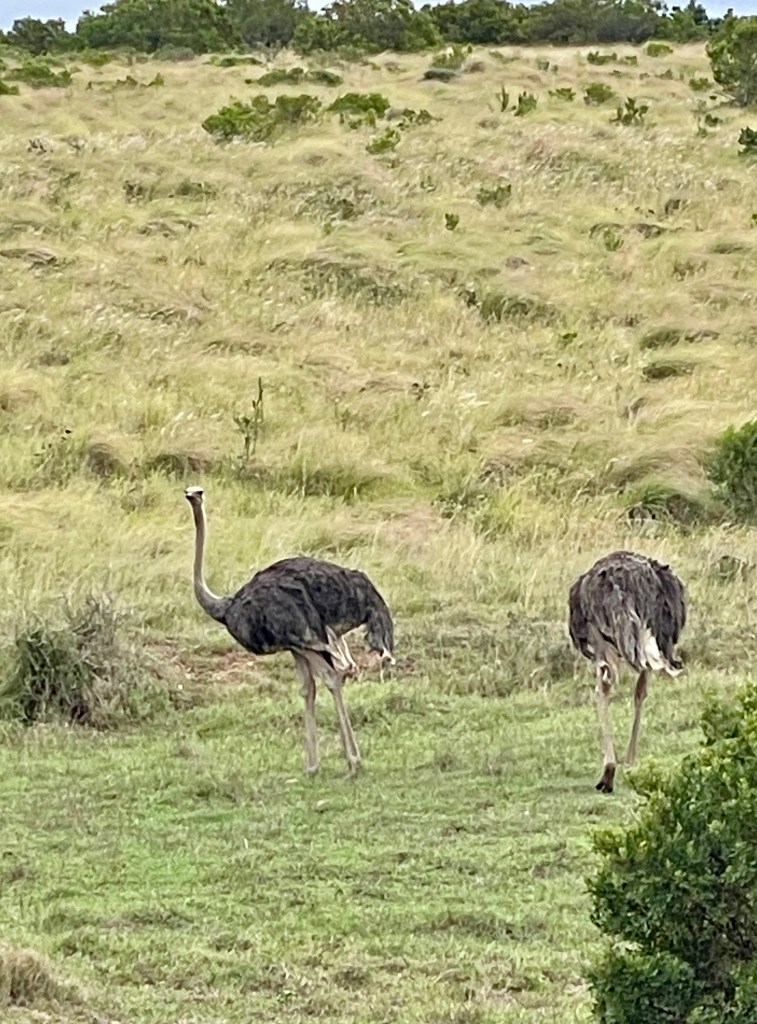
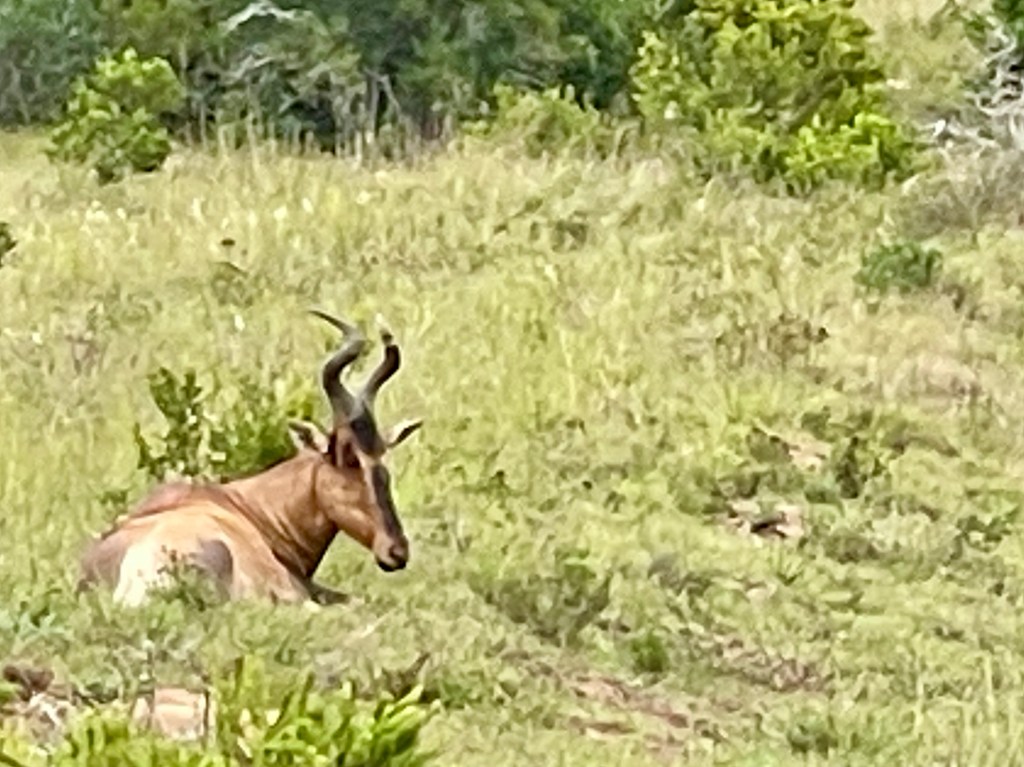
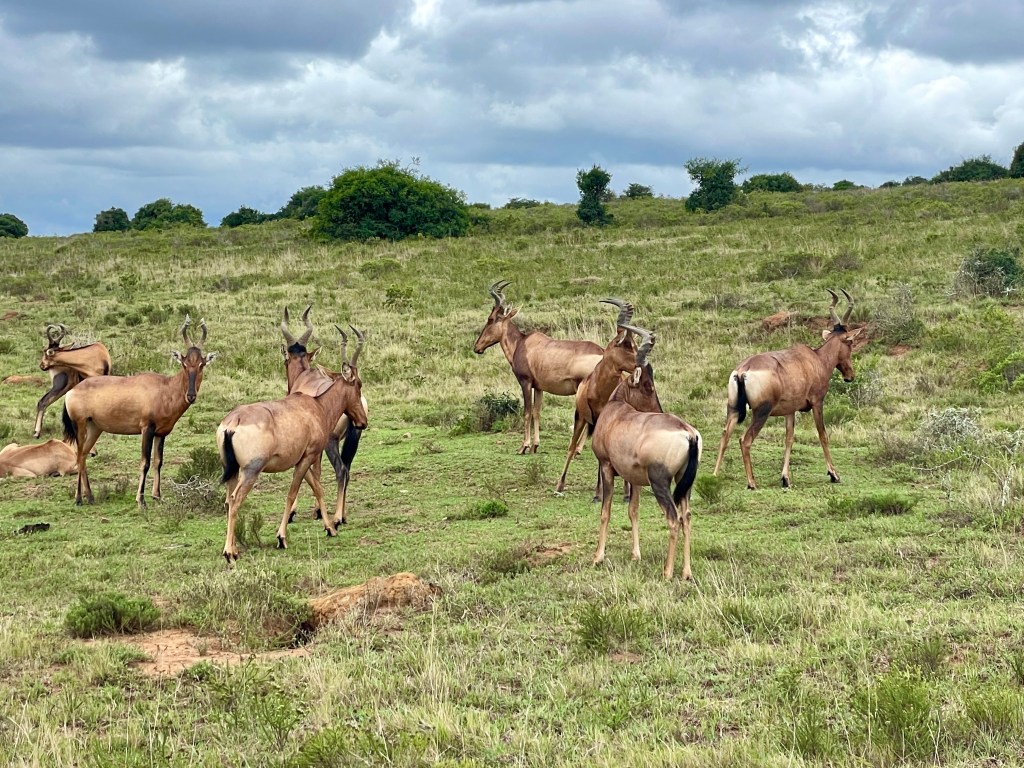
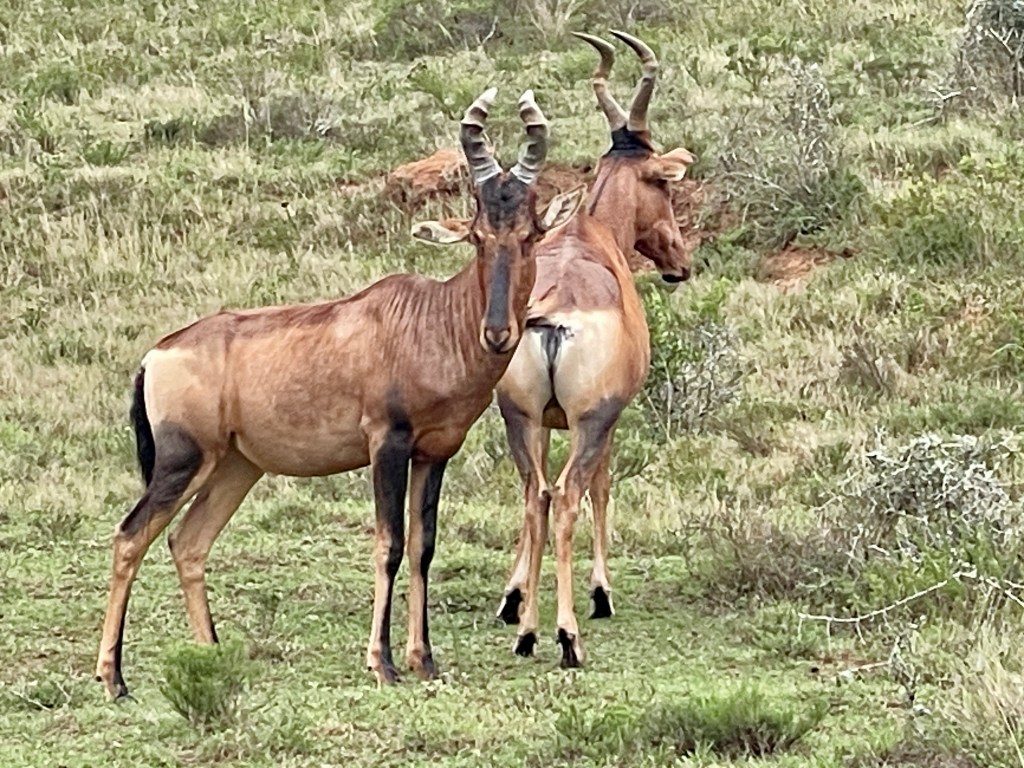
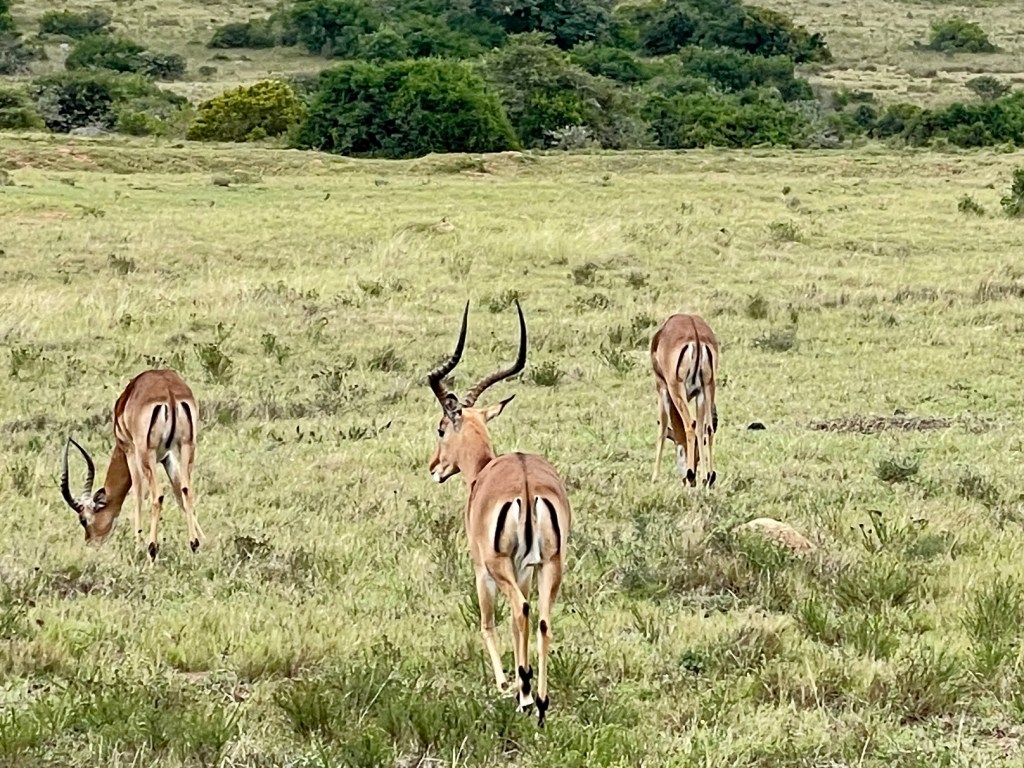
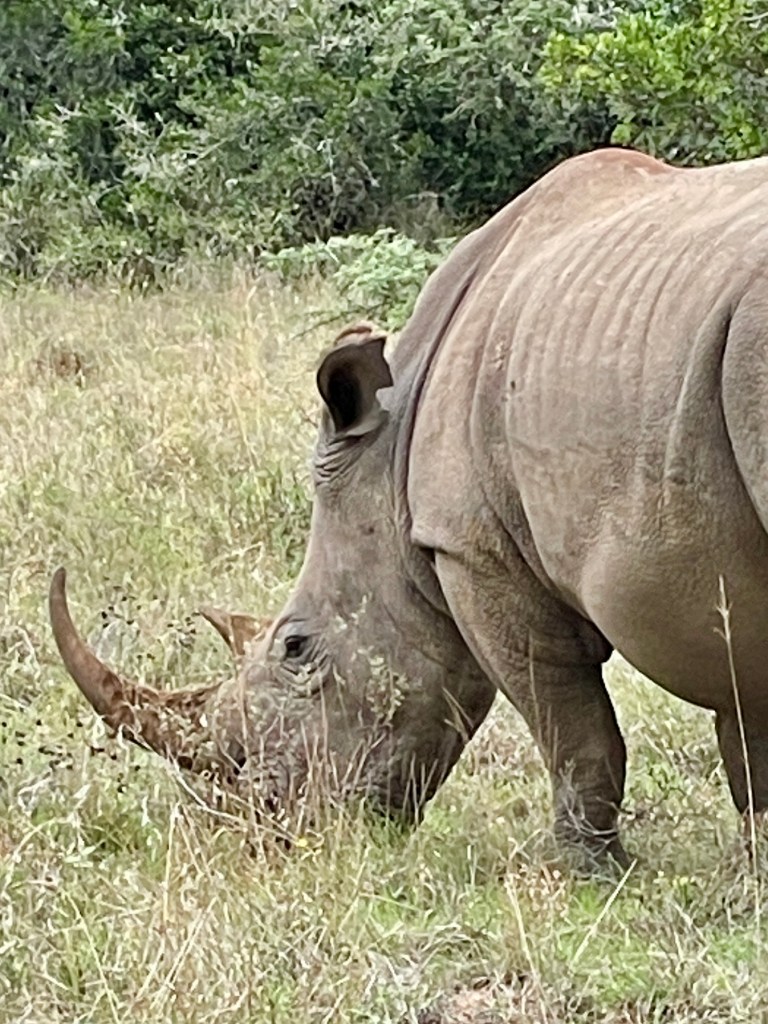
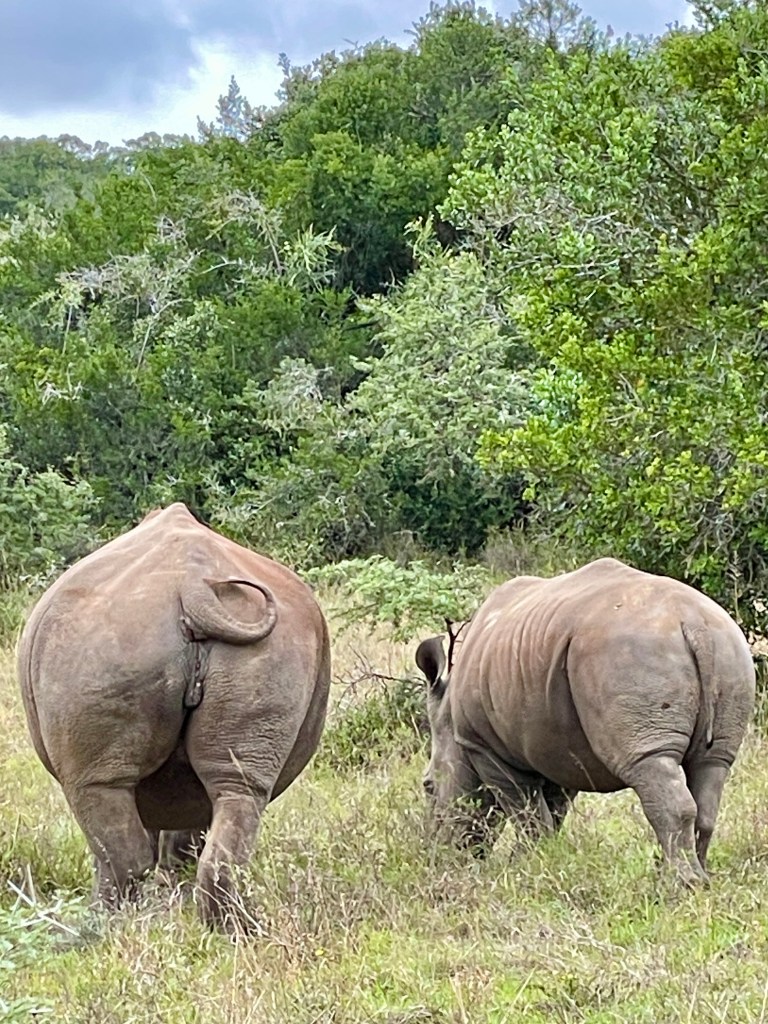
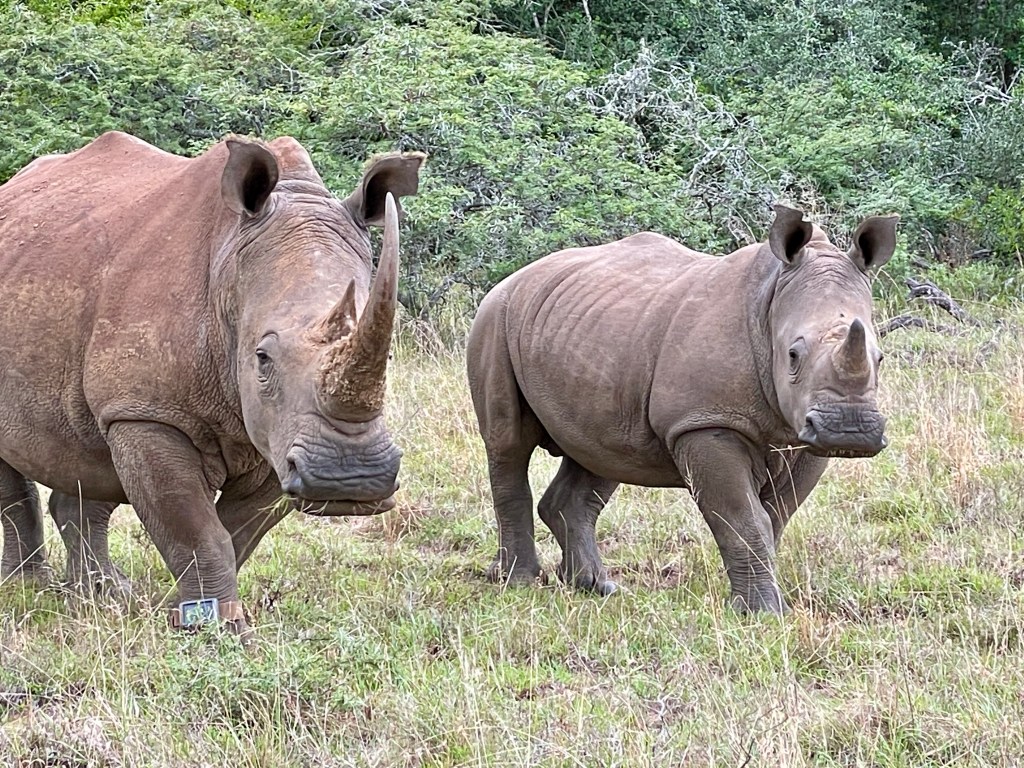

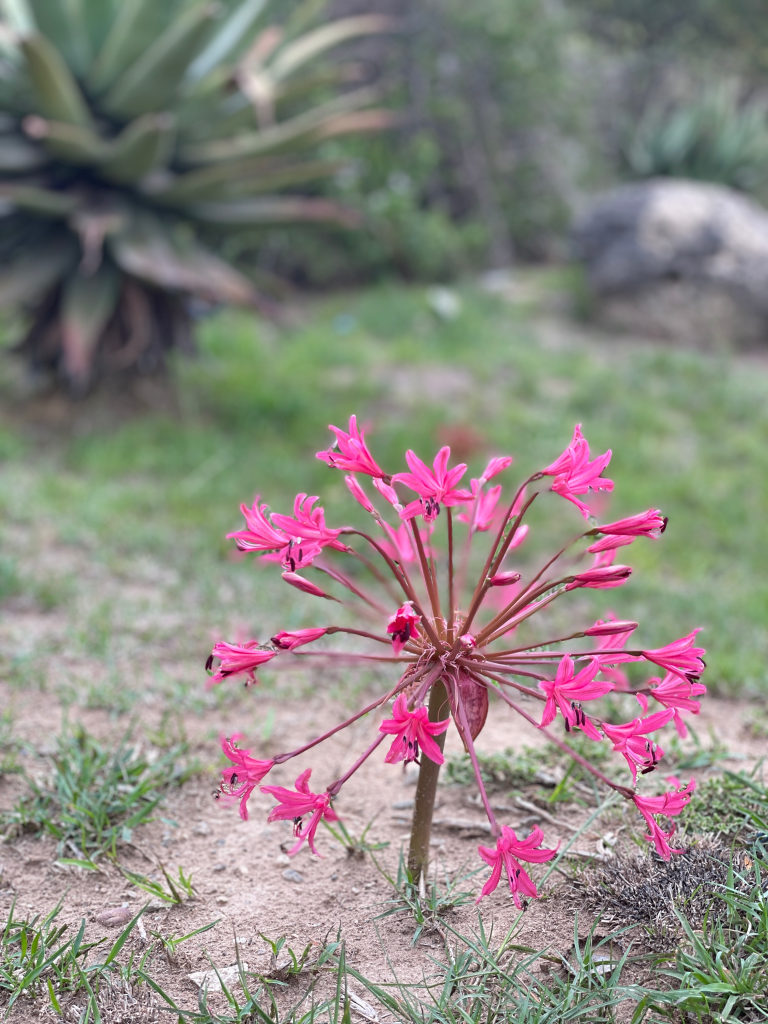
This splash of hot pink was dotted about the greenery. Dont know the flower. -
East London, South Africa
March 31 (day of visit)
As we prepare to depart from Durban, the Captain announced “the Stowaway Search,” something that occurs in every port in this area. We’re not aware of any “extra’ passengers”, but we wouldn’t know.
Like several South African ports, East London appears to be desirable as an entre to see wildlife in the interior. Google revealed a couple impressions:
-“Hotels seem geared to conferences, although why any right minded company would ever hold their conference in this area and in hotels with appalling WiFi is beyond me.”
-“Hotels with faded charms and well passed their best.”
-“Fossil fish and Dodo egg pretty well sum up East London. Old fashioned and waiting for better days to hatch.”
The city was founded in 1836. It now has a quarter million people, with the greater urban area having three times that number. It became a city in 1914. In 1870, the port began operating and it was boosted by the completion of a rail line in 1876. In the 50’s, like the rest of the country, it struggled with relocations related to placement of Blacks and Coloreds. It seems to take a long time to get over the past.
The economy has a strong motor industry, significant fishing, and production of clothing, textiles, pharmaceuticals, and food processing. Doesn’t sound too exciting, but we’ll see. While I’m waiting, I checked in with Truth Social to catch up with the US. This was trump’s entry:
“All these complaints! This is the GREATEST START of any administration…EVER! Why can’t people be happy? Now were hearing squeal from veterans. LOSERS. If I didn’t have these darn bone spurs, I would have been one of America’s GREATEST WARFIGHTERS. Upon return, I wouldn’t expect welfare from my country. Even here, I had to live on a small allowance from my GREAT DAD. So, I say to veterans, “Buck up, little Buckaroos.” Speaking of veterans, Pete Hegseth may be the greatest SEC DEF ever. Have you seen him on Fox? He really does TV. Now LAME STREAM MEDIA and that SNAKE Goldberg are slithering after him. He NEVER disclosed War Plans or Battle Plans..or something like that. That’s what they tell me; I wasn’t involved. Elon should be knighted. Why do naysayers and detractors complain about Teslas on White House grounds? We need to support a GREAT PATRIOT. I’m thinking of turning White House grounds into a used car opportunity. If you buy one, I’m offering special Trump license plates for only $1000 additional dollars. Remember, new car prices will be going up and used cars will be a great deal. There will be an extra discount if you purchase with Trump crypto currency. Guess what Baron’s summer job will be. Elon doesn’t like it, but we’ll reserve a special corner for Teslas. (Same deal on license plates and crypto.) Has anyone seen Melania?”
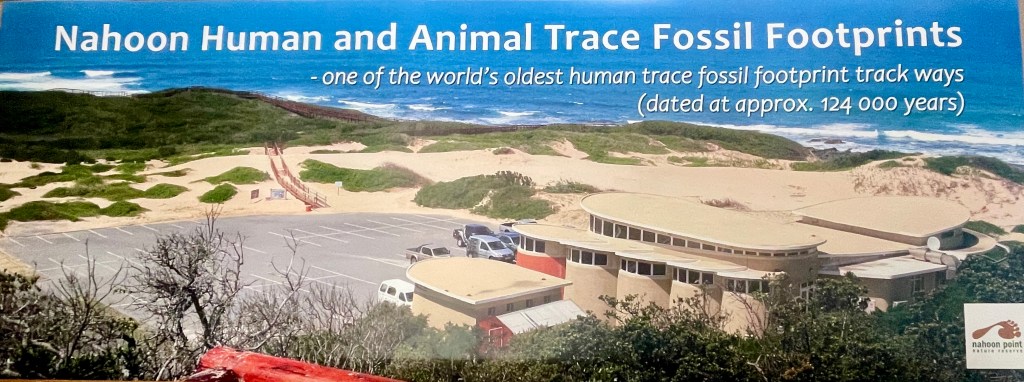
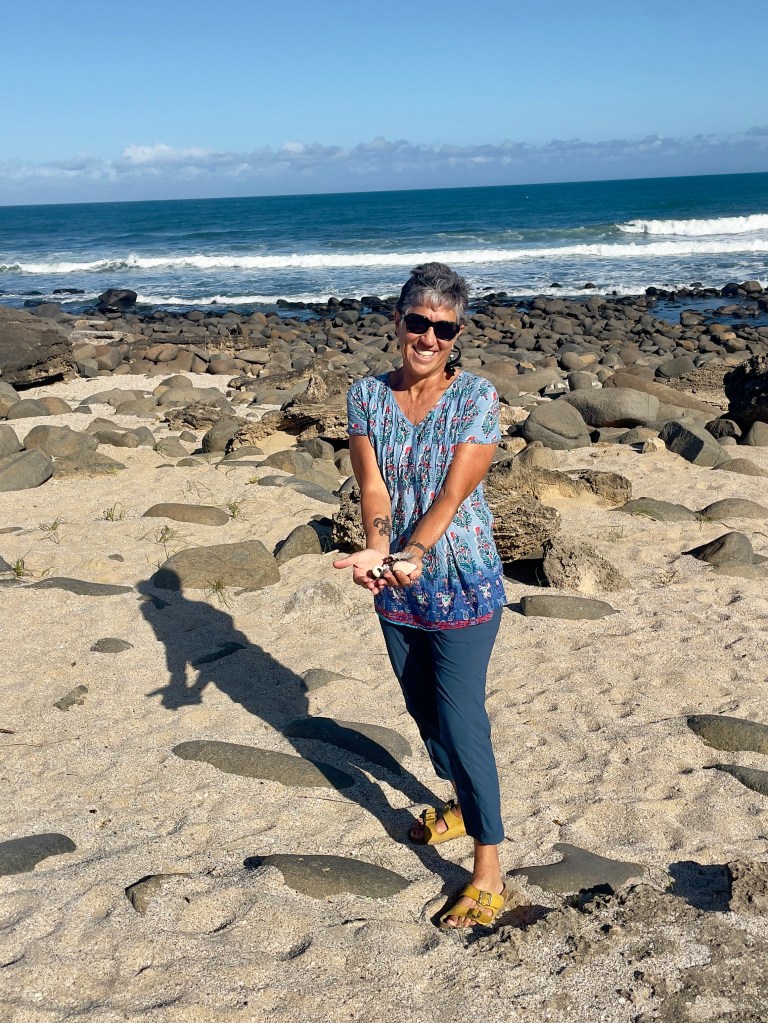
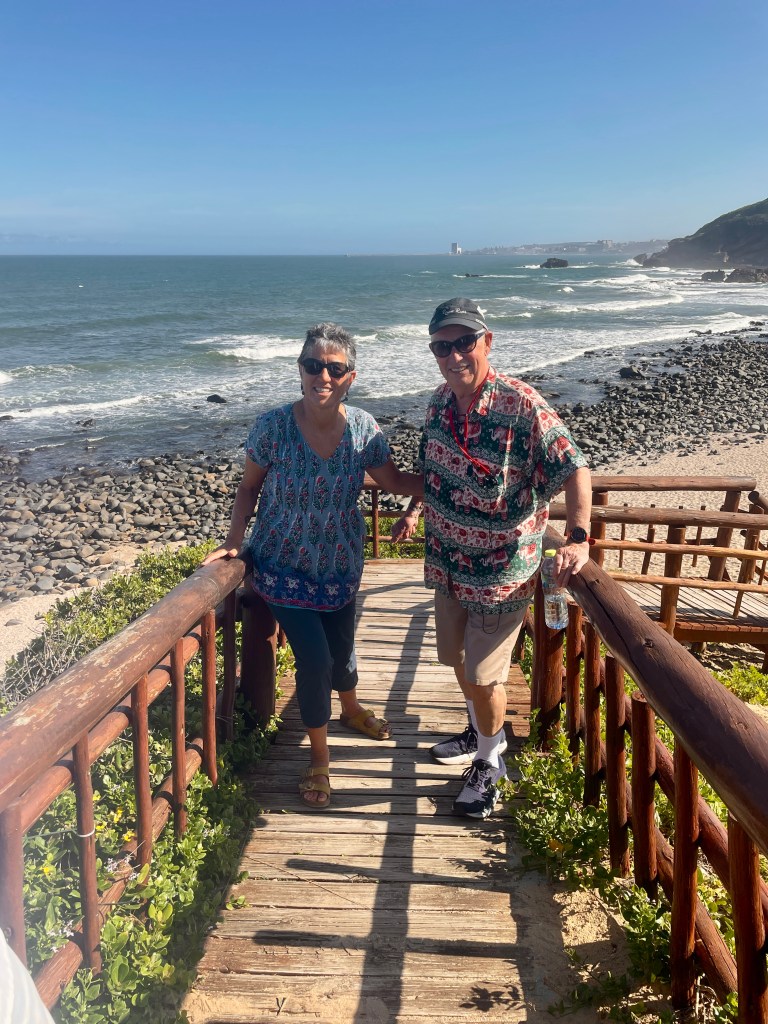
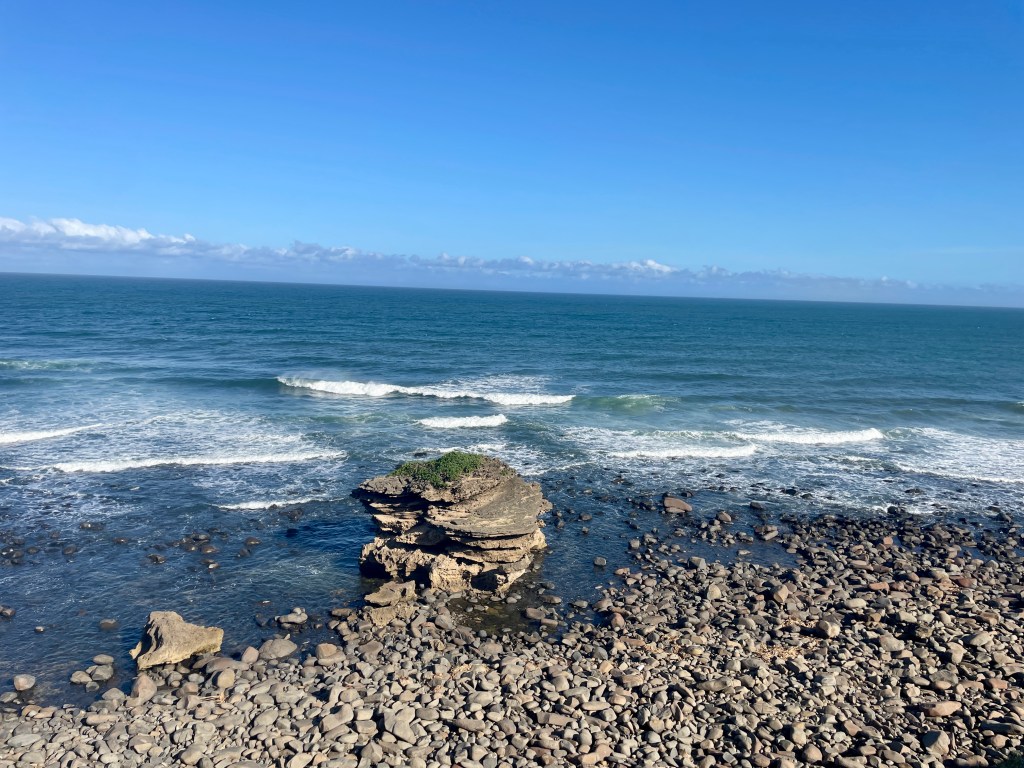
We weren’t expecting much from our excursion and we weren’t disappointed. It was billed as a visit to a museum and a visit to a beach. We did both. Actually, the museum and beach were both nice. But, we got little from our guide and the bus driver got lost. The drive took us through some nice residential neighborhoods (one by mistake)…and by a Black township, which was predictably pretty run down. It was a relaxing way to spend the day. Incidentally, the museum’s collection is known for a dodo bird egg found in the late 1800s and early hominid footprints that were found at the beach we visited (Nahoon Point Nature Reserve), encased in rock in the calcified dunes.
East London is probably a good base to go see wildlife. We’re doing that tomorrow.
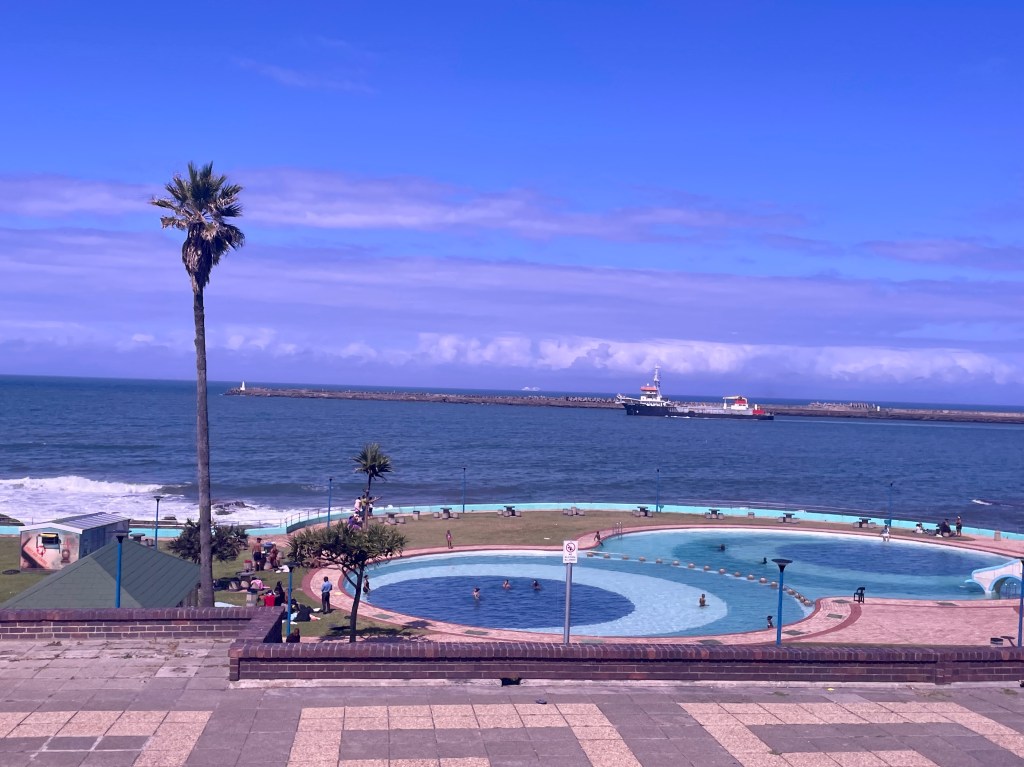
Near where our ship docked. Nice public swimming pool. 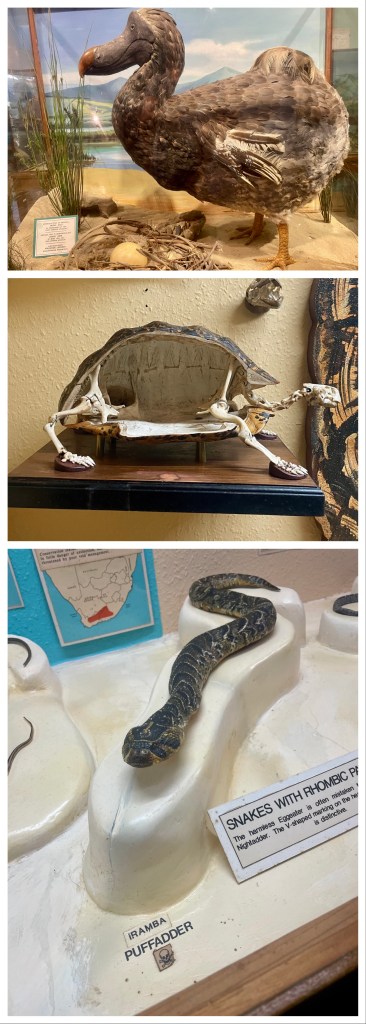
Dodo bird egg (replica– the real one is in the museum’s safe; cool side angle on turtle and stuffed puff adder, reminding us of Jackson’s close encounter some 20 years ago. 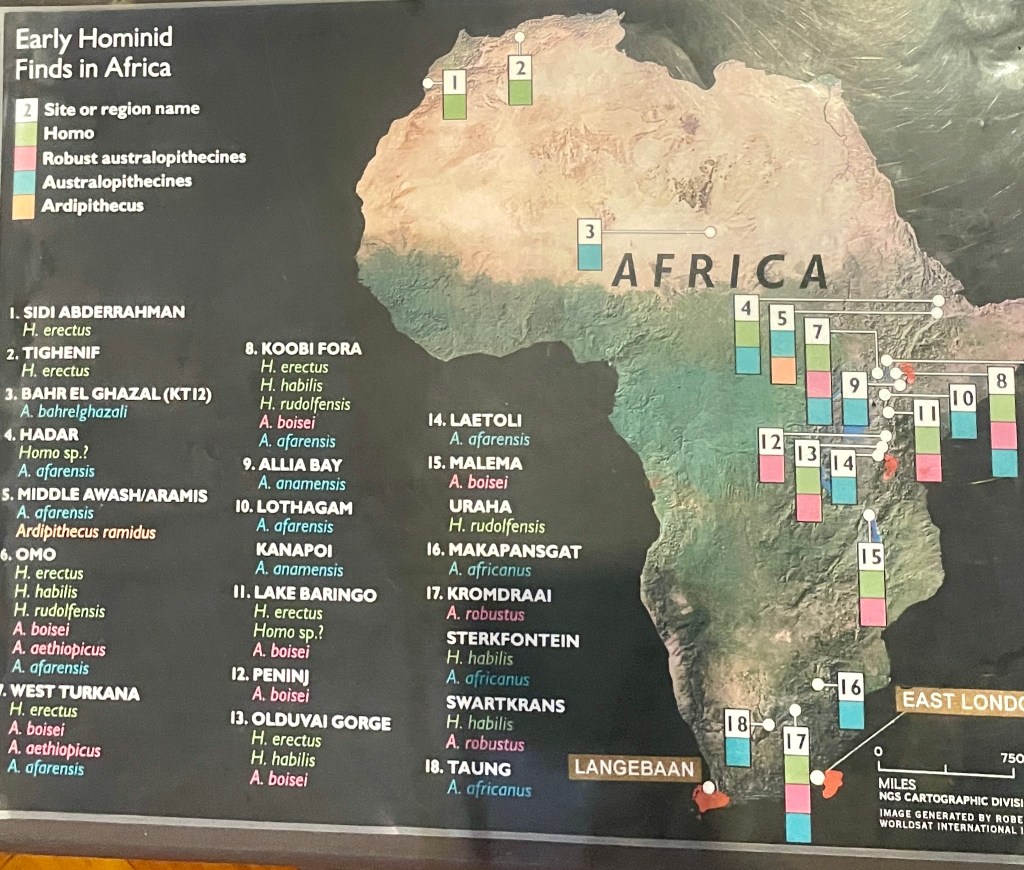
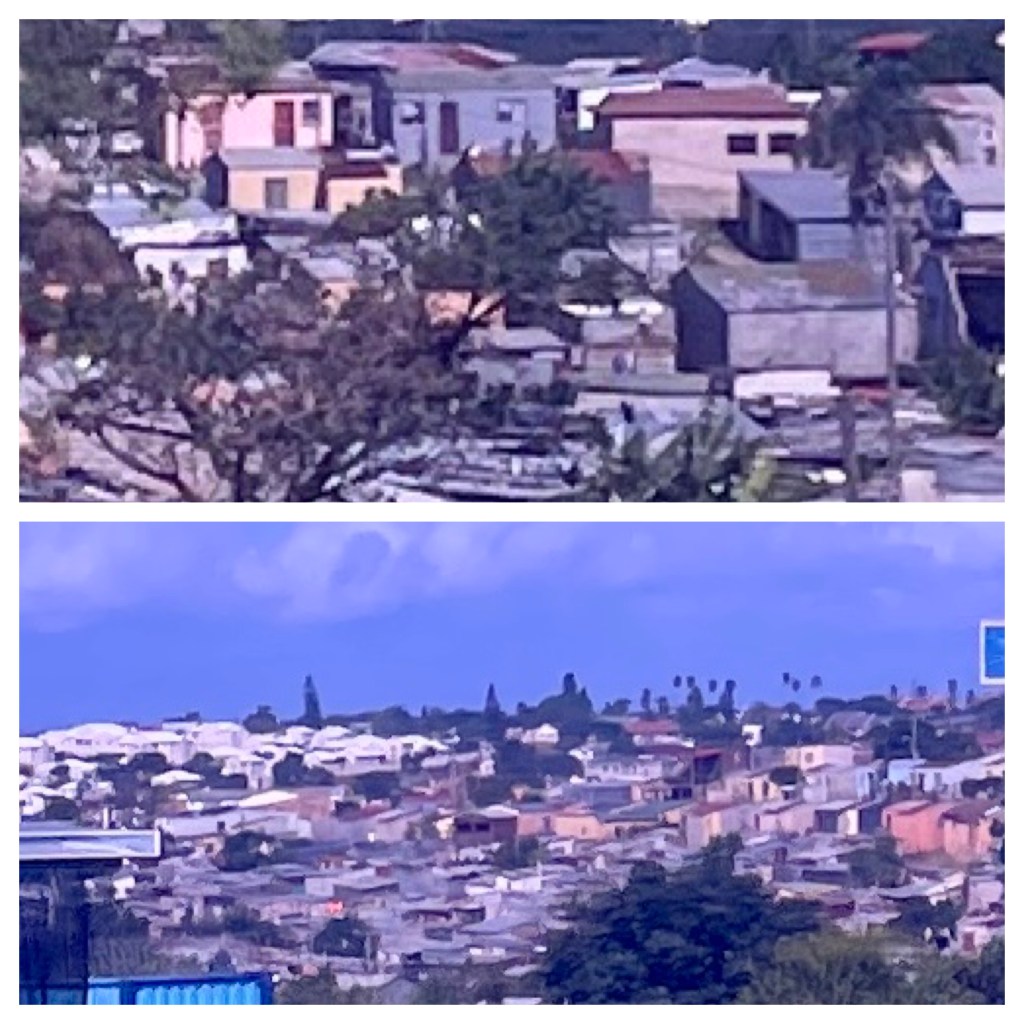
Black Townships; a lot of shanty houses 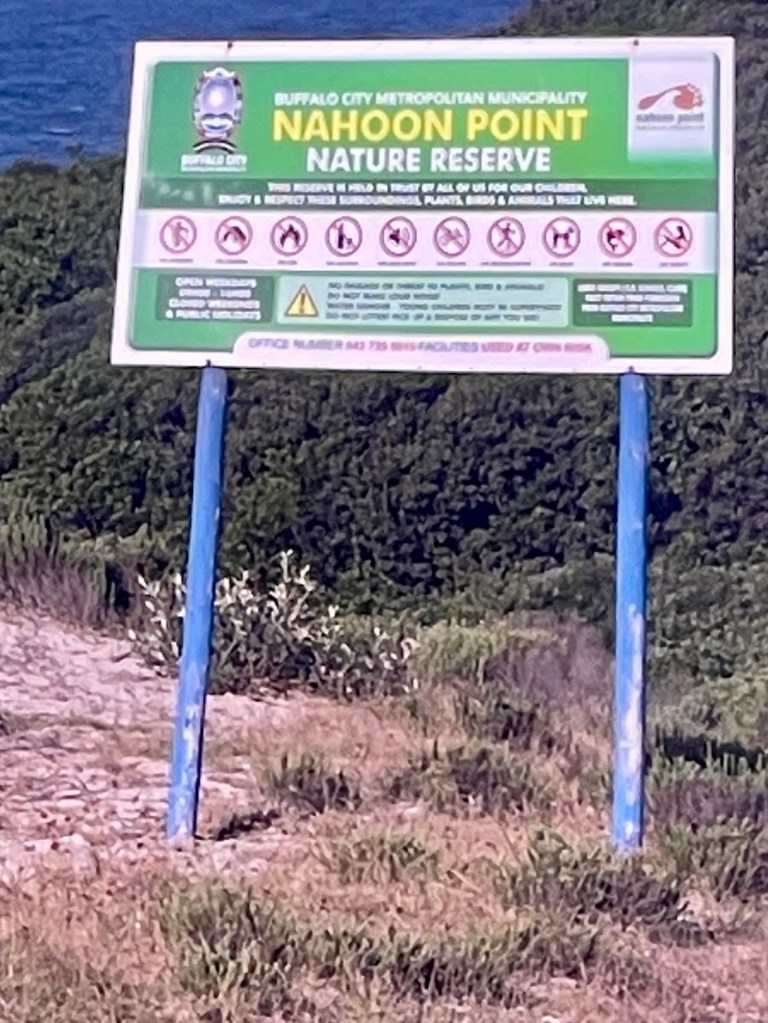
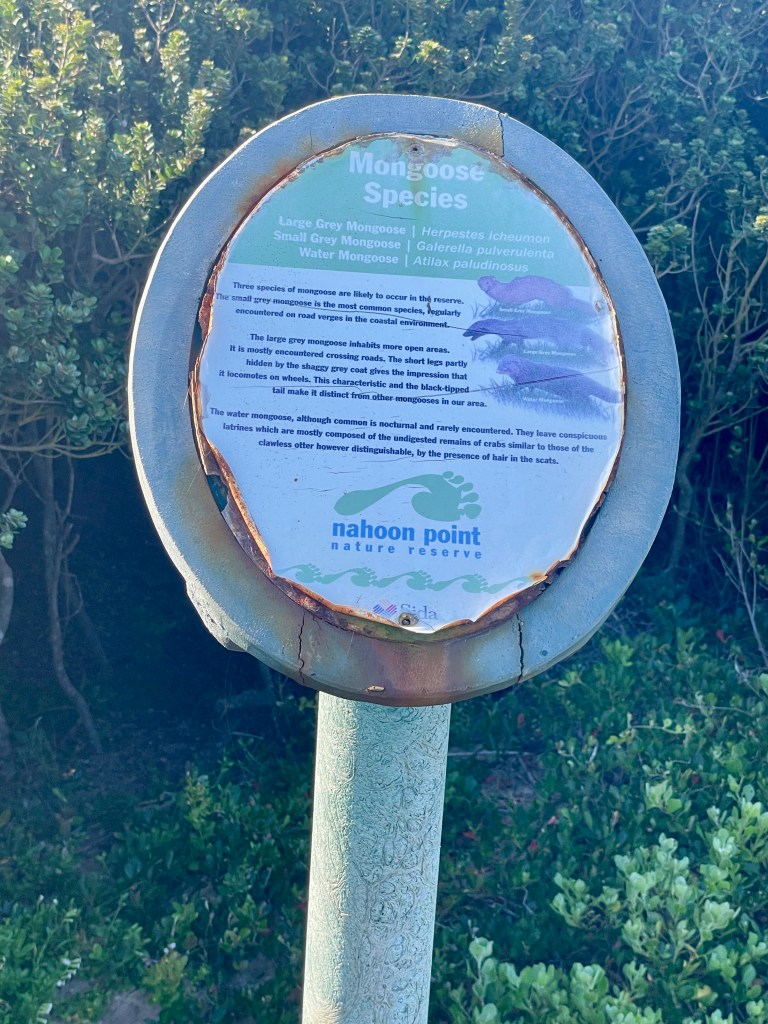
Mongoose sign -
Durban, South Africa
March 30 (10,578 miles from The Dalles)
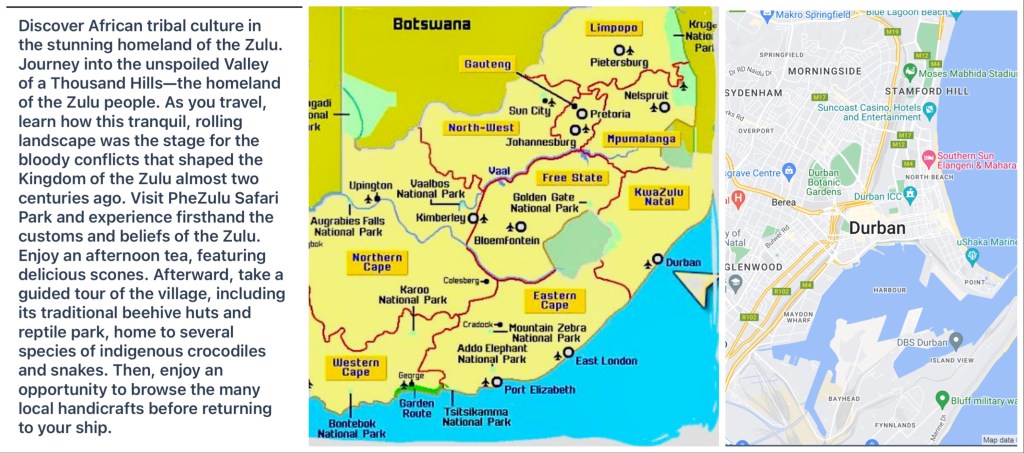
Left side is an explanation of our excursion. Durban is South Africa’s 3rd largest city with 4.2 million people. Of course, Vasco de Gama sighted it, but it was first settled by Europeans…British…in 1824, It was a trading post focusing on ivory. The Zulu king granted the land for the settlement. When it was determined that sugar cane would grow well, a number of Indians immigrated to farm the plantations. South Africa now has the largest population of Indians outside of India. With Durban’s role as the port for industrial exports from Johannesburg, it is South Africa’s busiest harbor.
This is my 3rd visit to Durban; once on Semester at Sea and once with Maddy and Jackson to visit animals. We continued the animal visiting tradition with an excursion titled “Valley of 1000 Hills.”
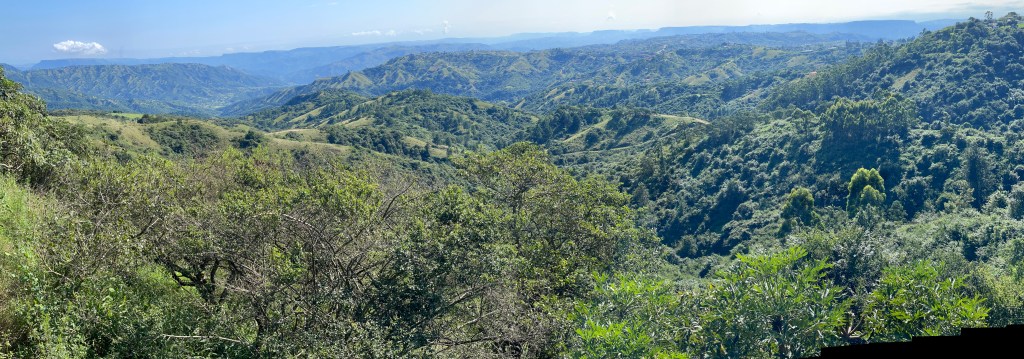
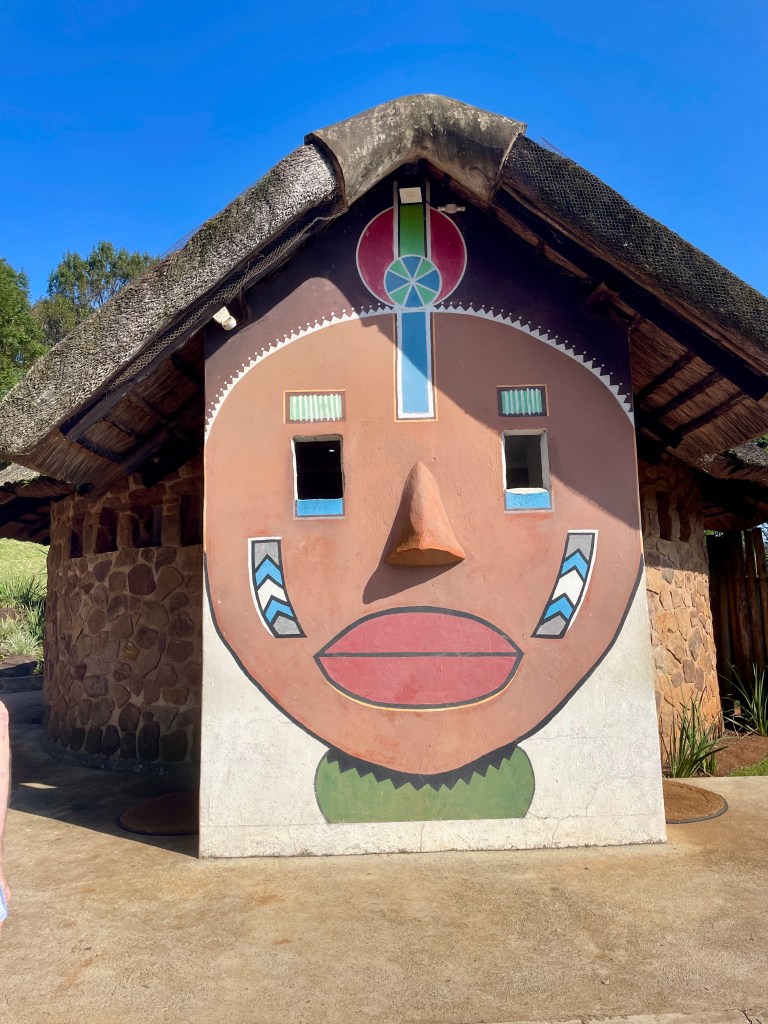
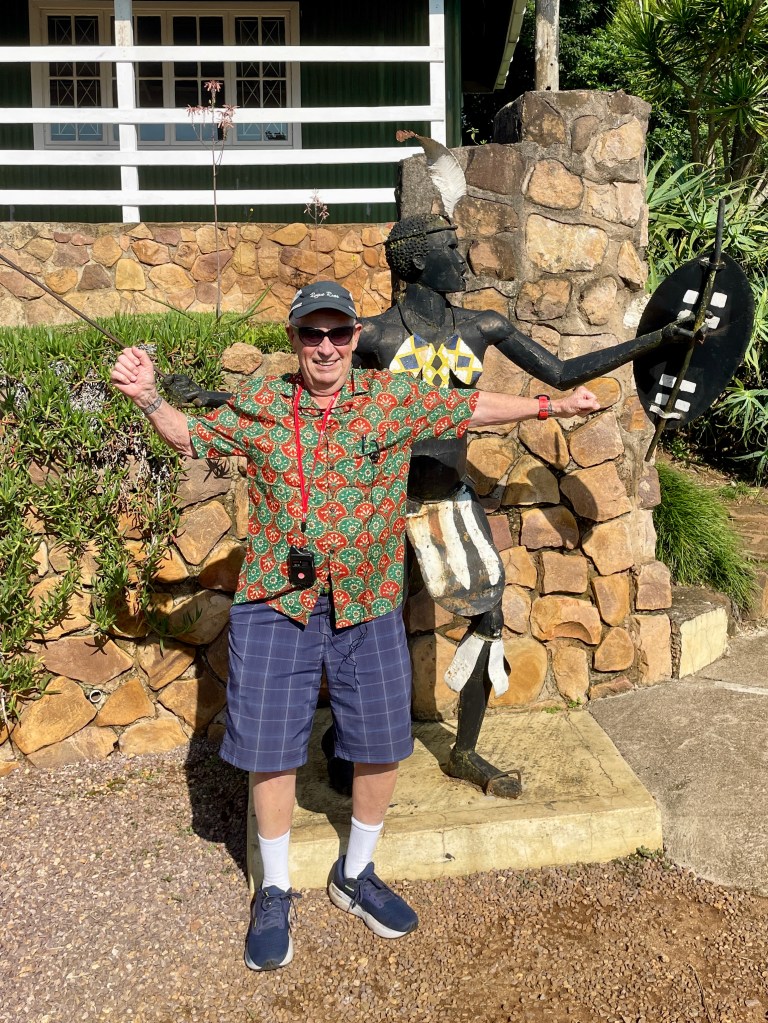
Specifically, we traveled to Phe Zuh Safari Park, a Zulu wildlife center. This was an excellent visit. There were more crocs than we had previously seen and an impressive array of snakes and spiders. We saw lots of Zulu dancing that was more authentic than we usually experience. And, surprisingly, there were a couple gift shops; these actually had some pretty good stuff.. After about 2 hours of animals, dancing, and shopping, we adjourned to the bus for a scenic return to the ship.
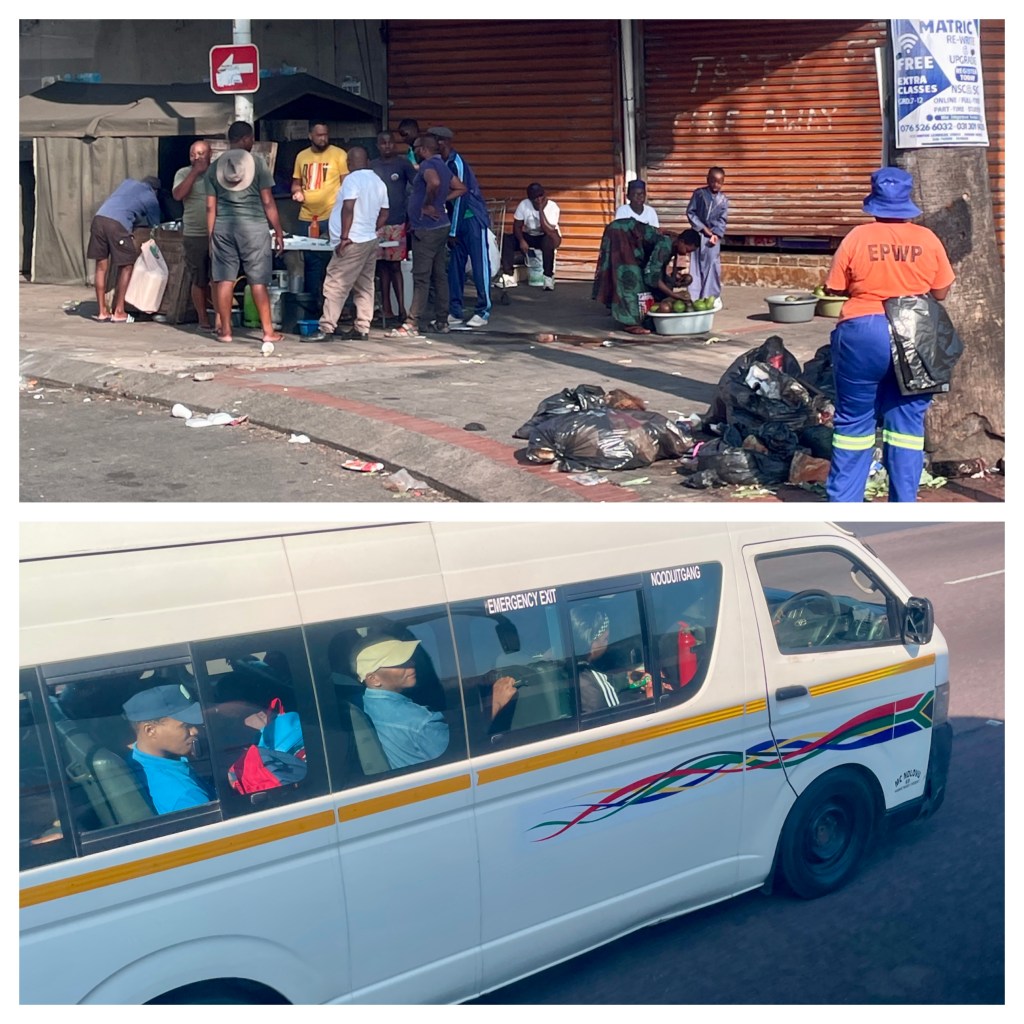
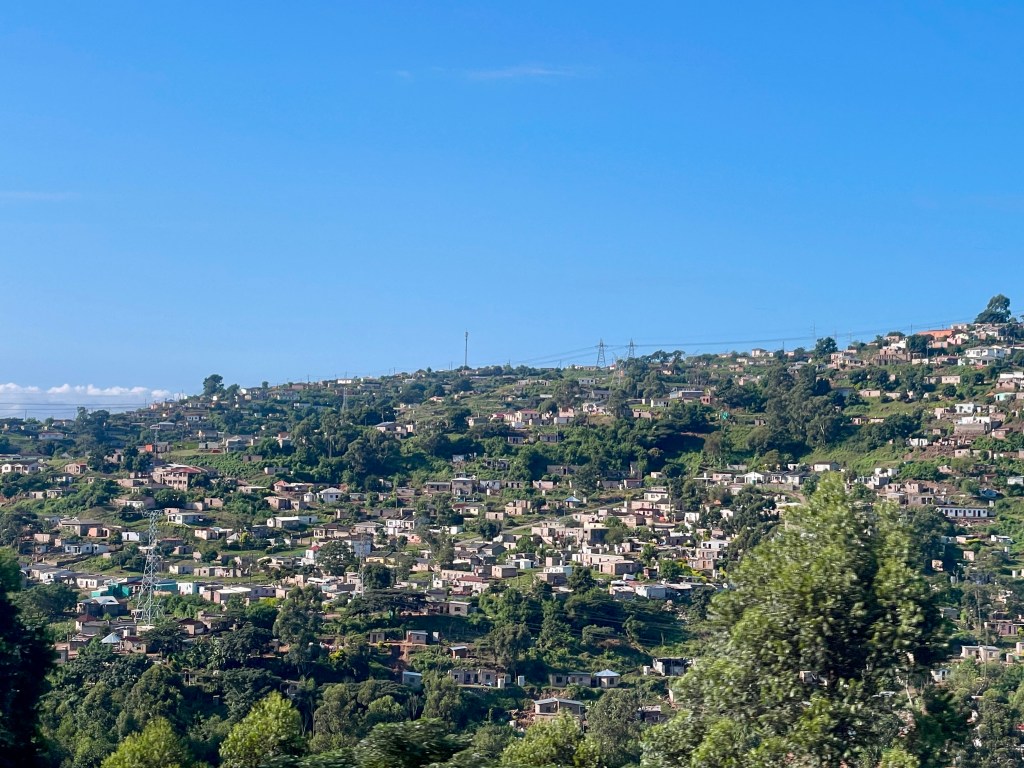
Top: Black area of Durban; below: the taxi vans that carry Blacks who do not have housing in Durban or a car and take these vans to come into the city. 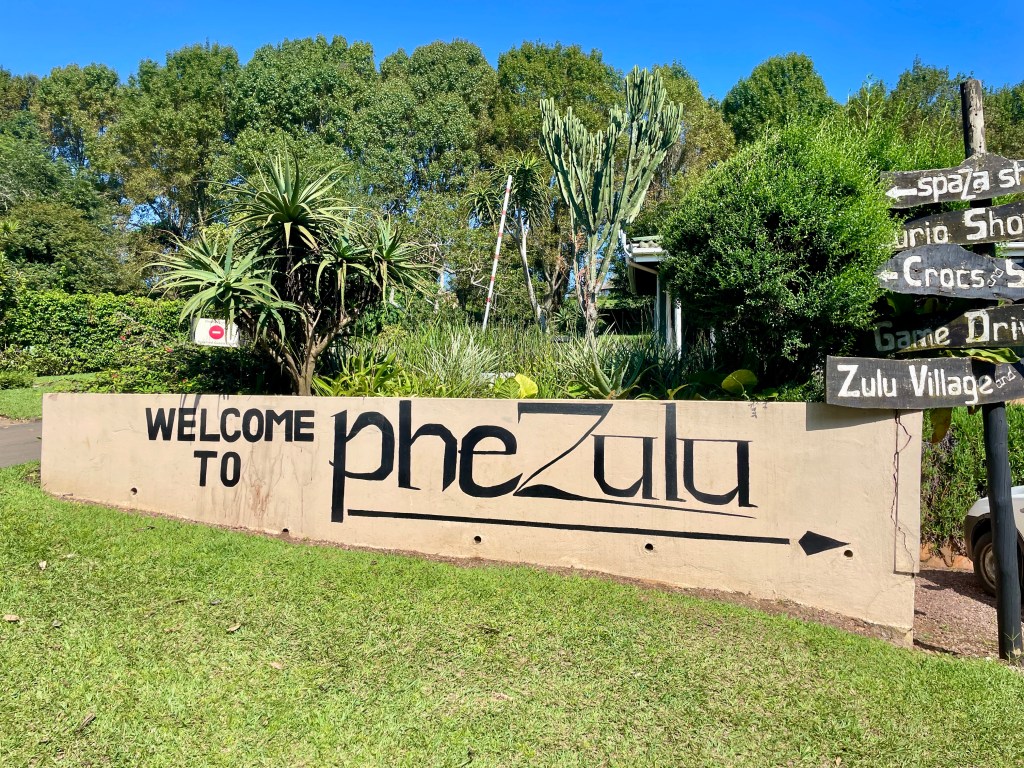
A few observations:
-On leaving the ship, we traveled some modern, well landscaped streets and attractive neighborhoods and saw nice open spaces. But, interspersed, were some marginal areas. There were several very sketchy slums that are referred to as “informal housing.” The housing was make-shift with corrugated tin roofs and lean to structures with lots of garbage and litter. This sounds way better than homeless or houseless. Our guide commented that what used to be “White neighborhoods” under apartheid have now become Black neighborhoods. He suggested that we not walk there, although other areas were completely safe.
-The area seems to be wrestling with its heritage. While apartheid is no longer thrives, there are still Indian and Black townships or what has evolved from them. One Black township was characterized by “shoe box” houses that were served by electricity and clean water, but looked somewhat marginal.
-The Zulus have maintained lots of their historical culture. Polygamy is still the custom. If a guy has 11 cattle or the equivalent value he can acquire a wife. Double that with an equal number of cattle or money. More wives, more kids and more cattle mean higher status.
-The crocs all seemed to be sleeping. However, they were separated by species and age. The older, bigger guys would eat the youngsters and strangers if they were put in the same enclosure. There was a separate enclosure for the teenagers and troublemakers. Evidently, unlike our culture, there is a difference between teenagers and troublemakers.
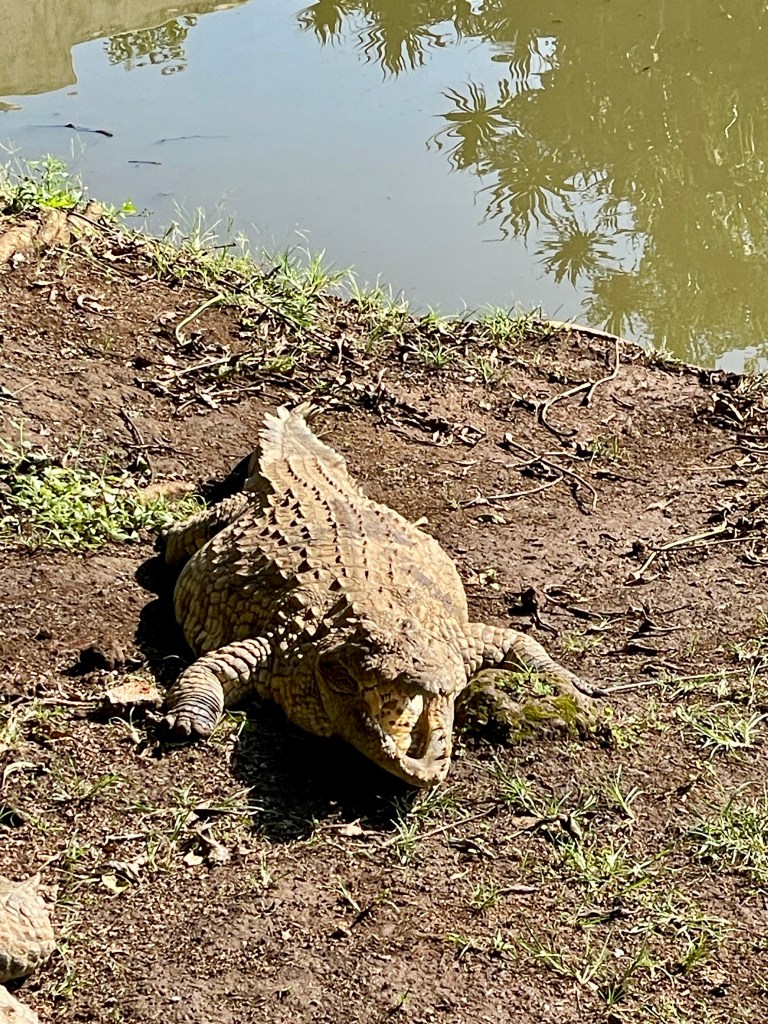
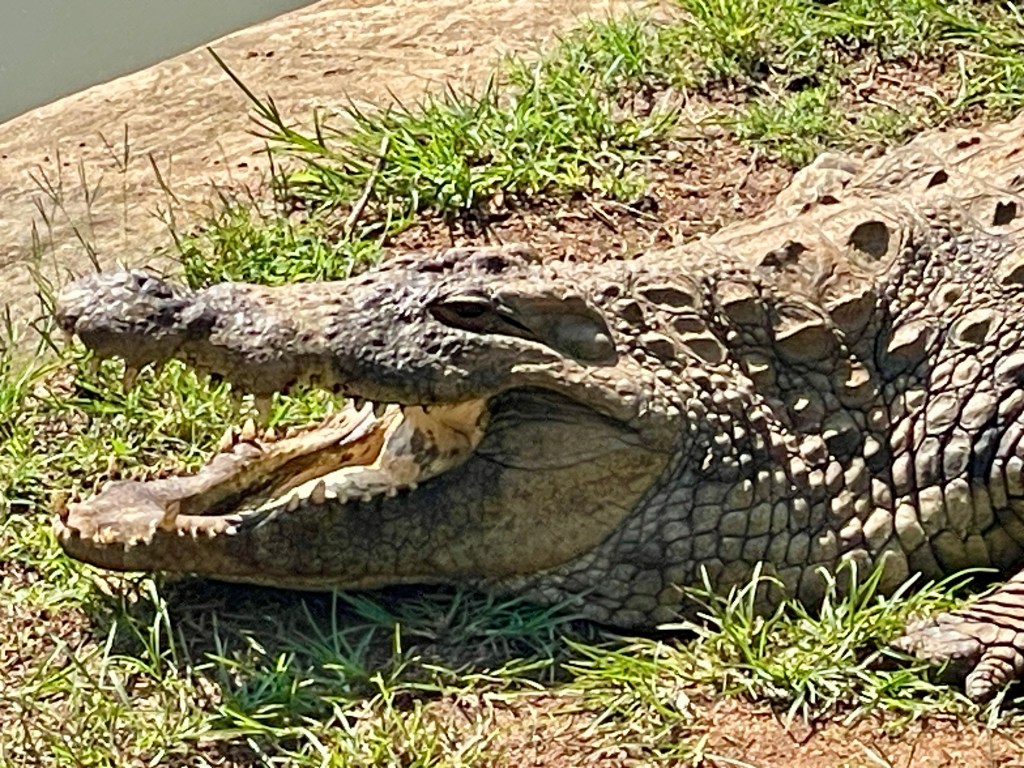
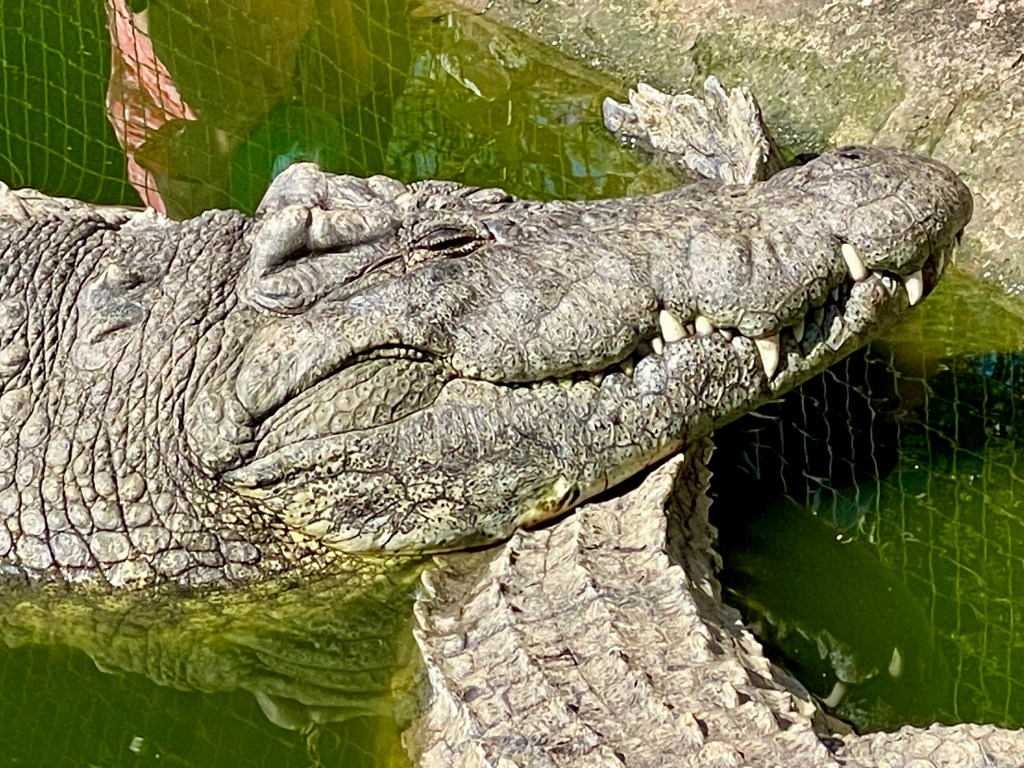
108 years old 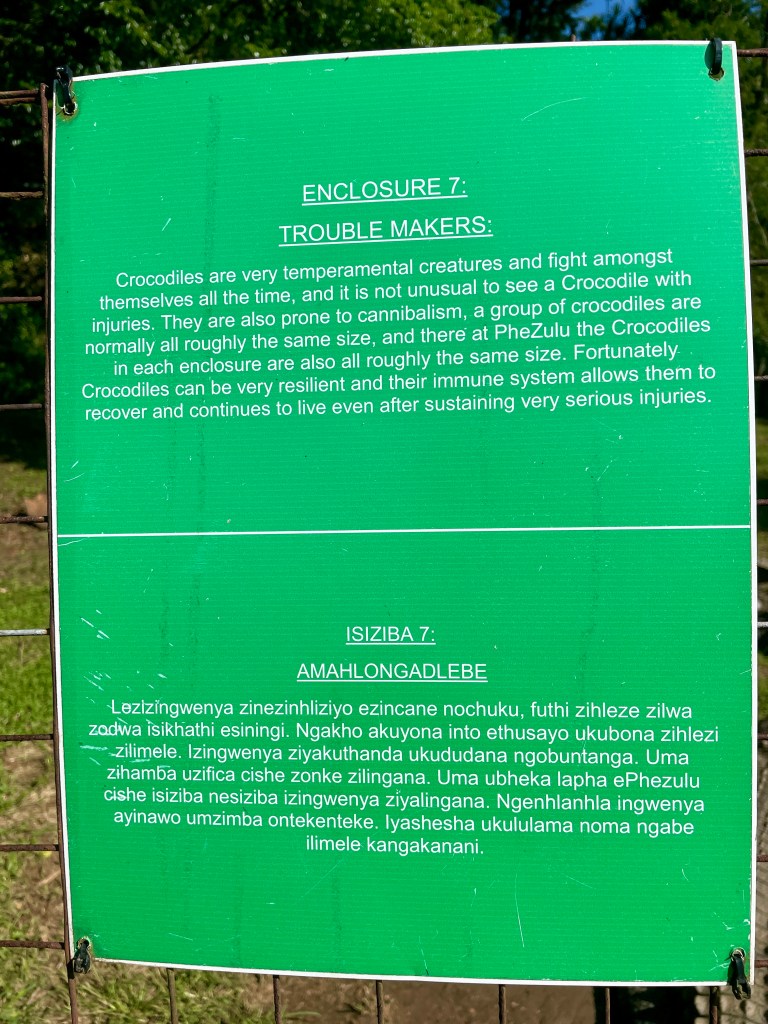
The troublemakers 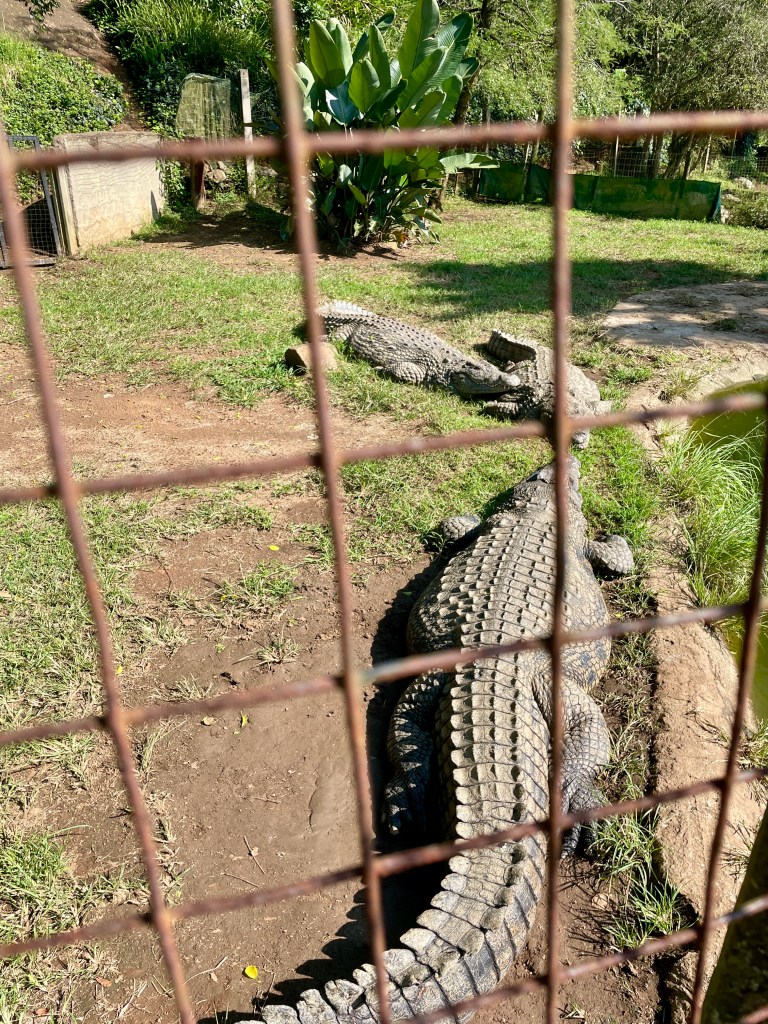
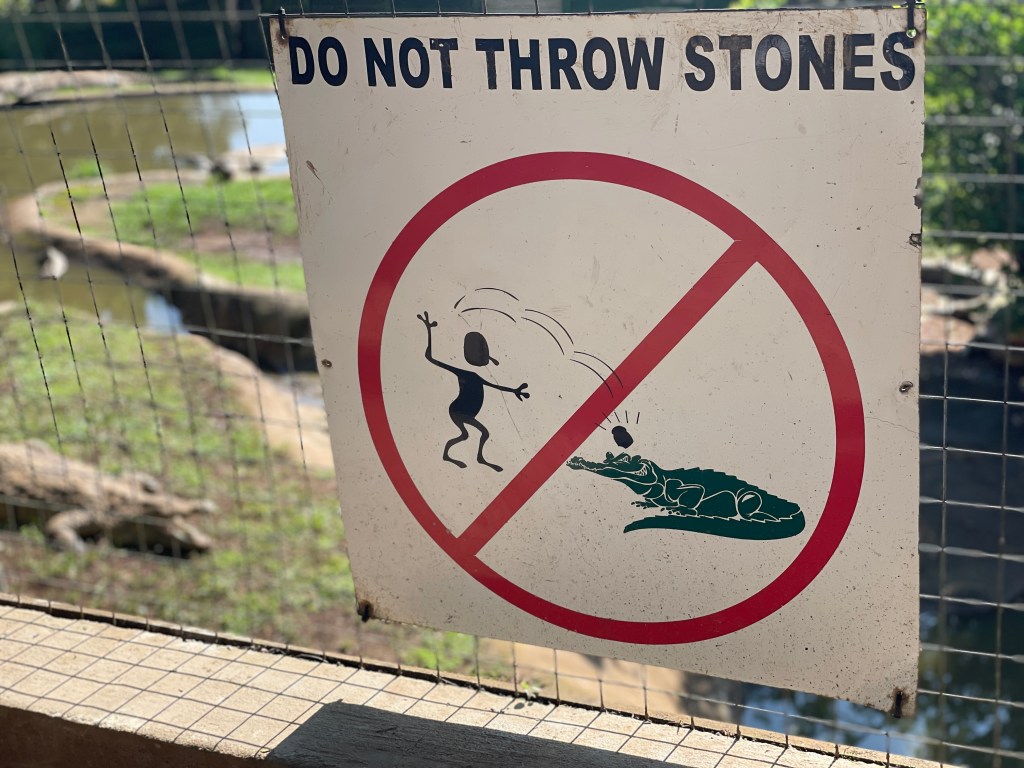
-The sex of crocs (and turtles) is determined by the soil temperature when the eggs are incubating. Warmer temperatures mean more males. What will happen as the globe warms? We’ll see. Our guide commented about the adaptability of the crocs over the millennia and surmised that they may adapt to climate change.
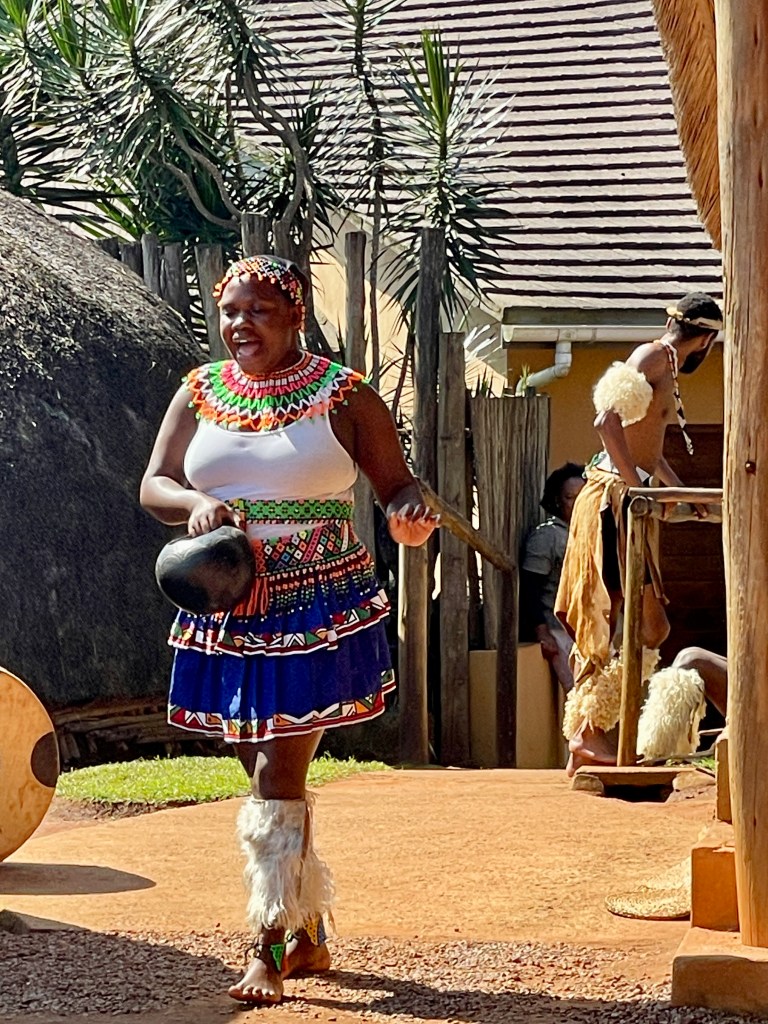
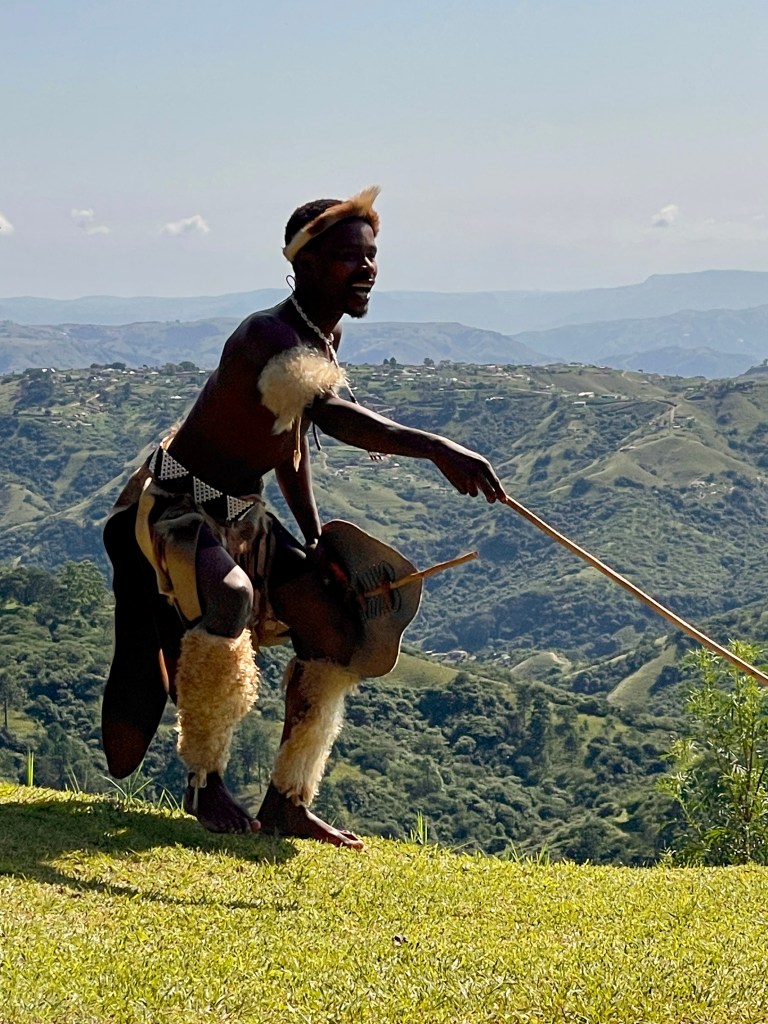
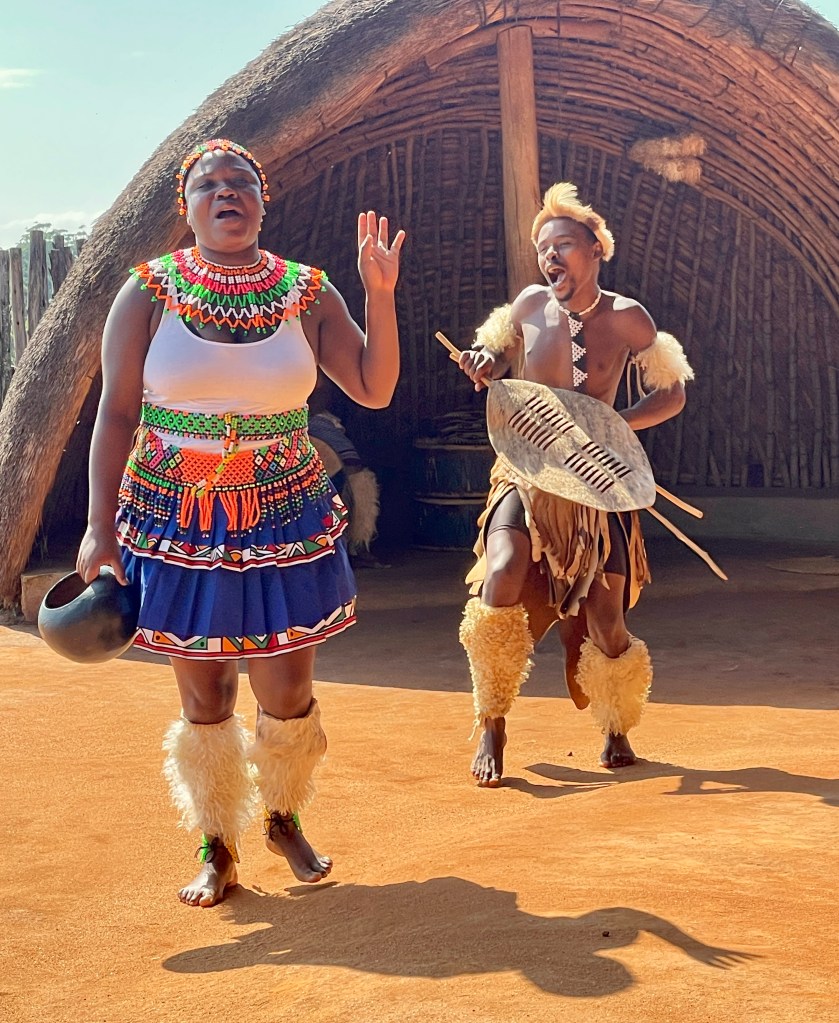
The story line was a young man professing his love for a young woman and once he assures her that he has 11 cows, she is persuaded and places a special necklace around his neck. The shamans (women in red below) have to bless the marriage first. They throw bones and “read” them. Then the cows are delivered and a wedding is held. 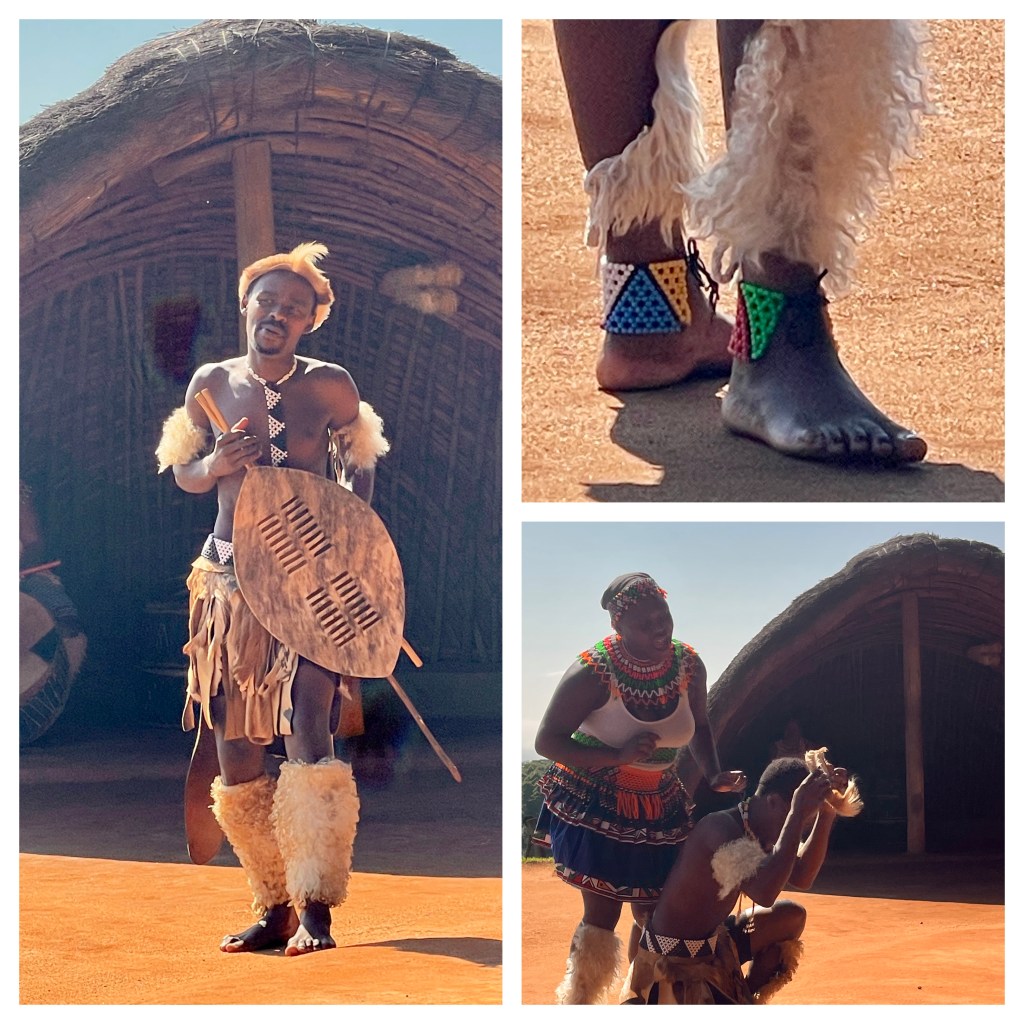
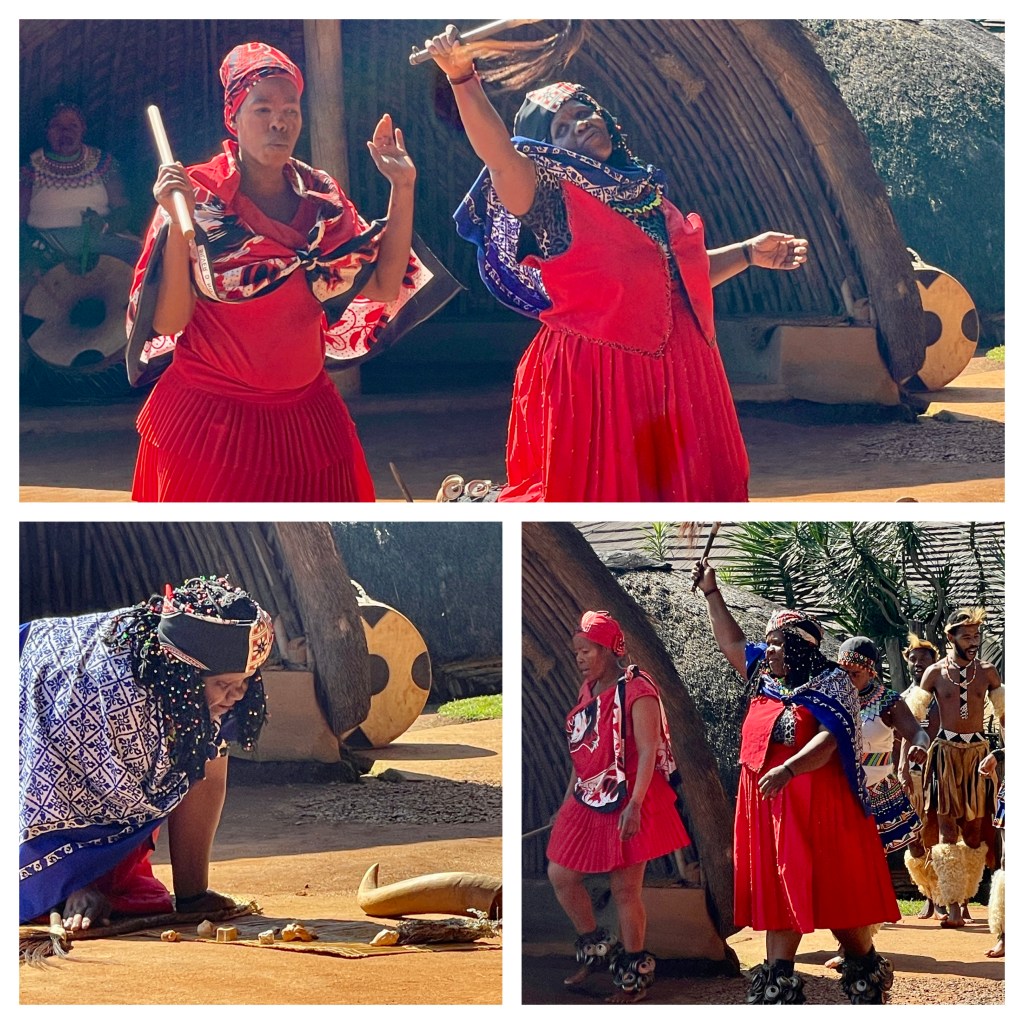
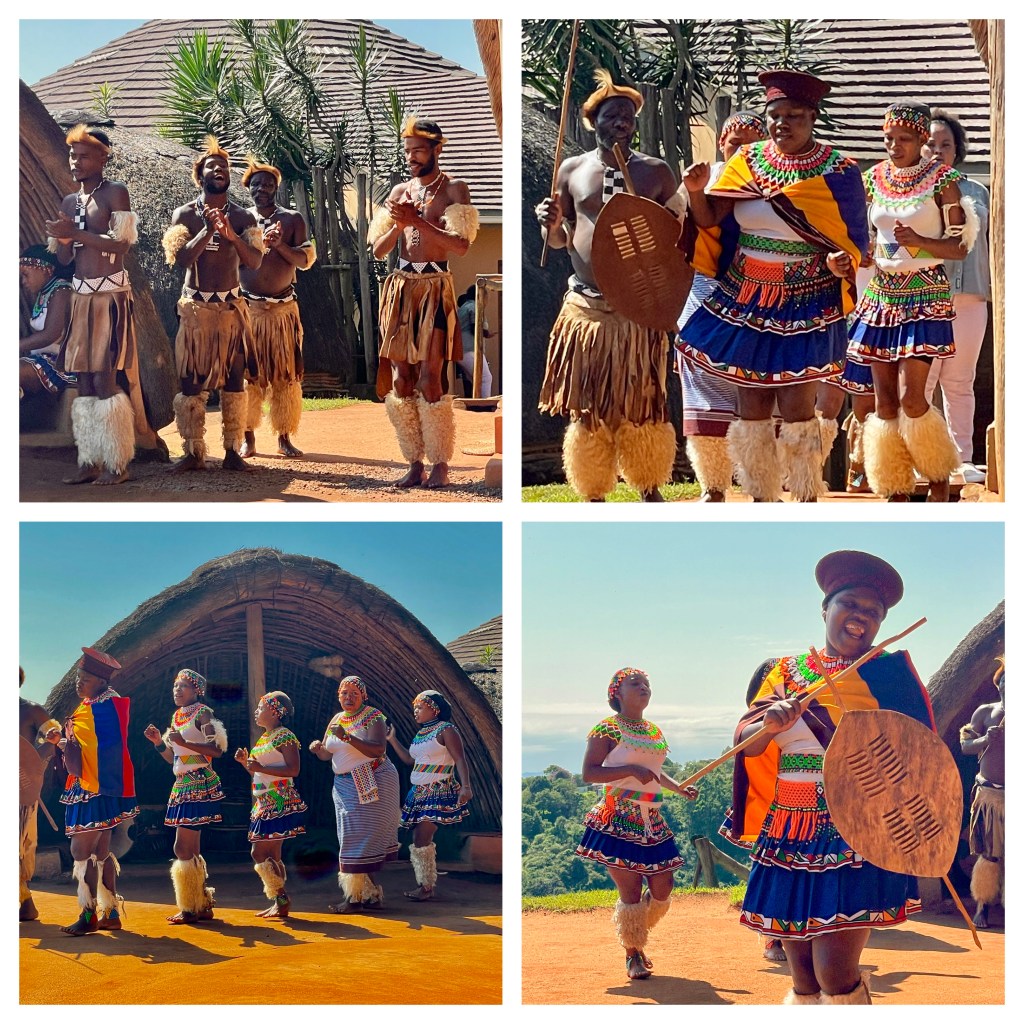
The pillbox hat indicates a married woman in Zulu culture. 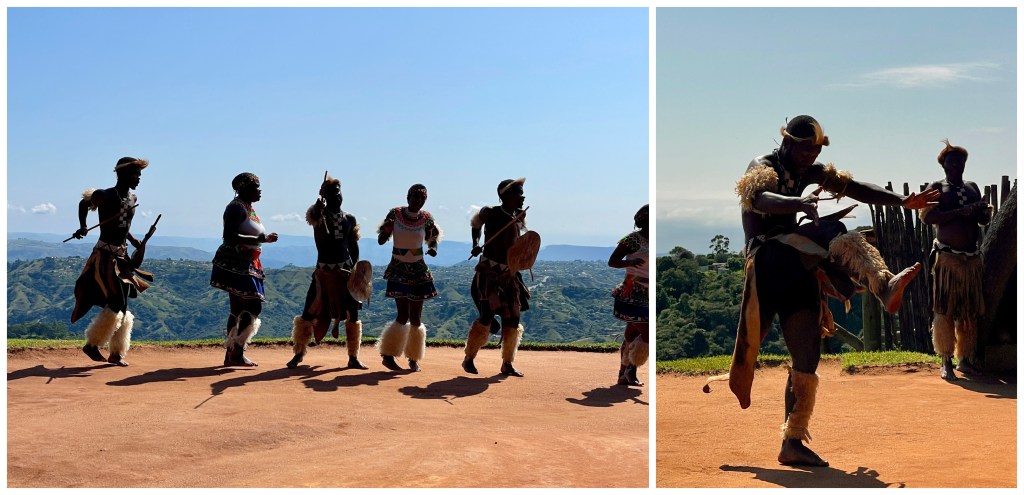
The male Zulu dancers perform incredible kicks above their heads. 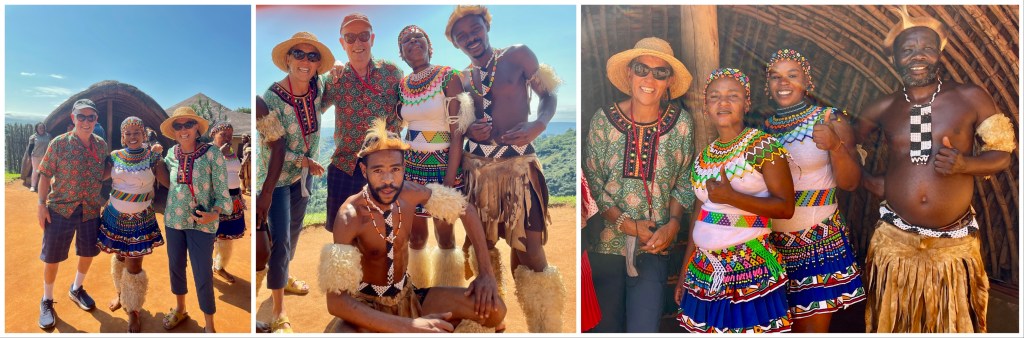
-We chatted with our guide Sifiso; a nice chap of 25 years. When Karla asked him his age, he had to think about it. He said he never celebrated birthdays since so many kids he grew up with didn’t or couldn’t afford to celebrate. He is studying to become a pilot. I’d bet on him.
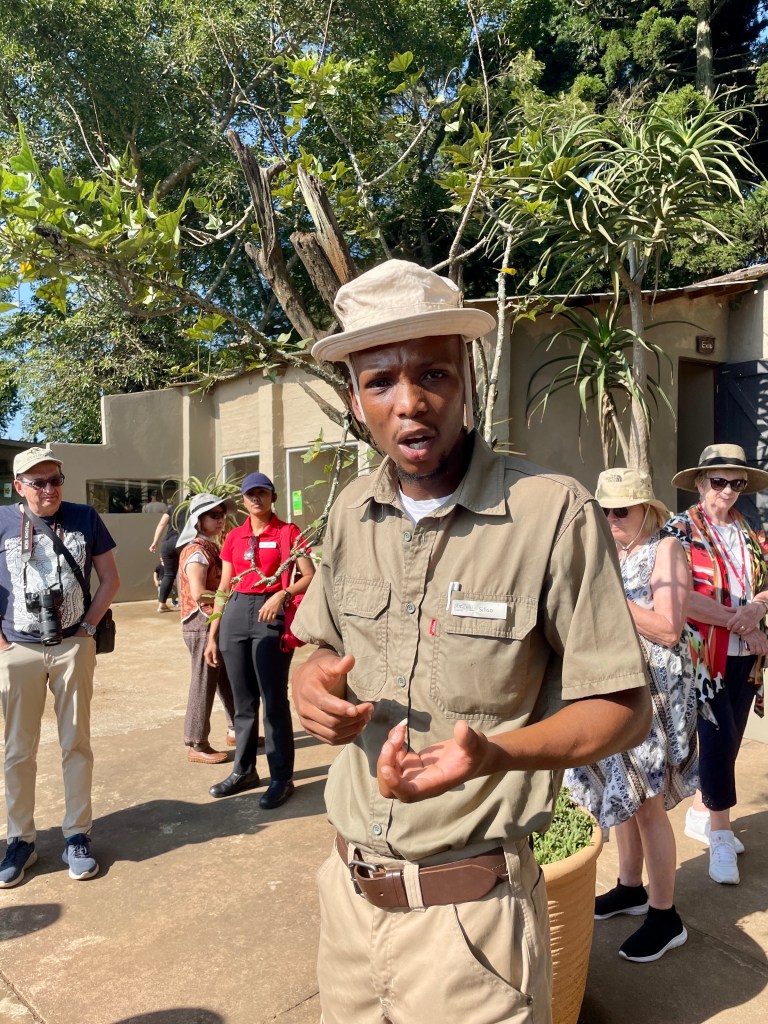
Once we were back at the ship, I took an exciting nap; Karla took the shuttle to a sterile part of town and found it less than exciting, but bought a hair band. The Zulus, the animals, and the scenery made it a nice visit.
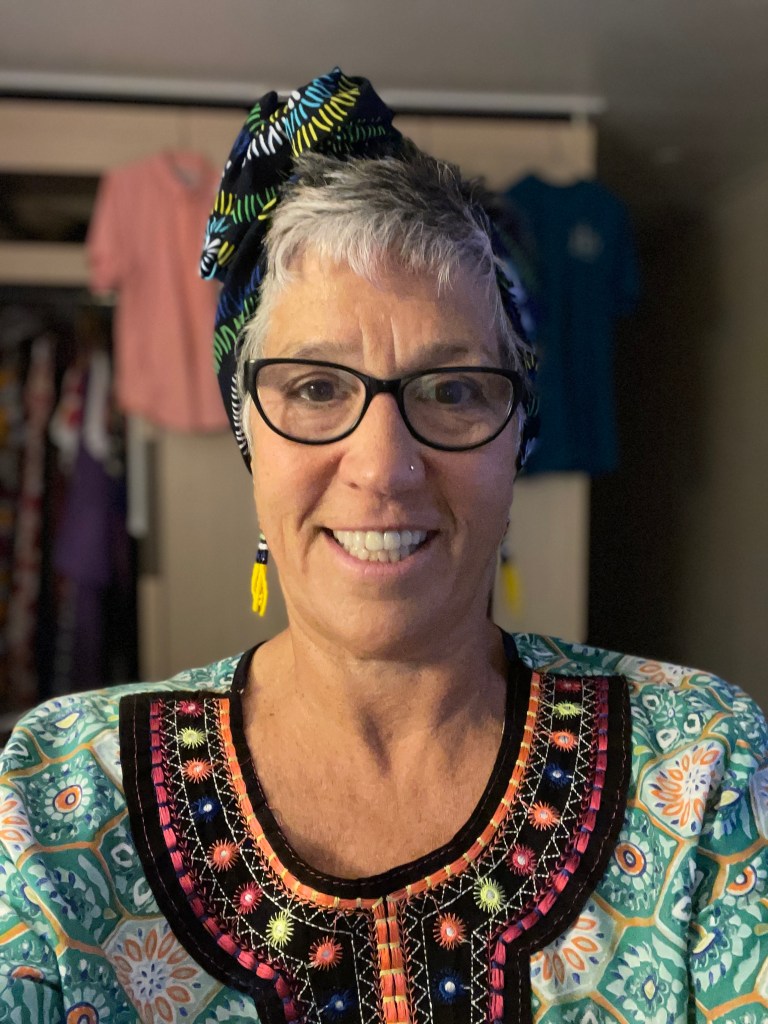
Purchases: headband and earrings -
Richards Bay, South Africa
March 29
10,568 miles from The Dalles
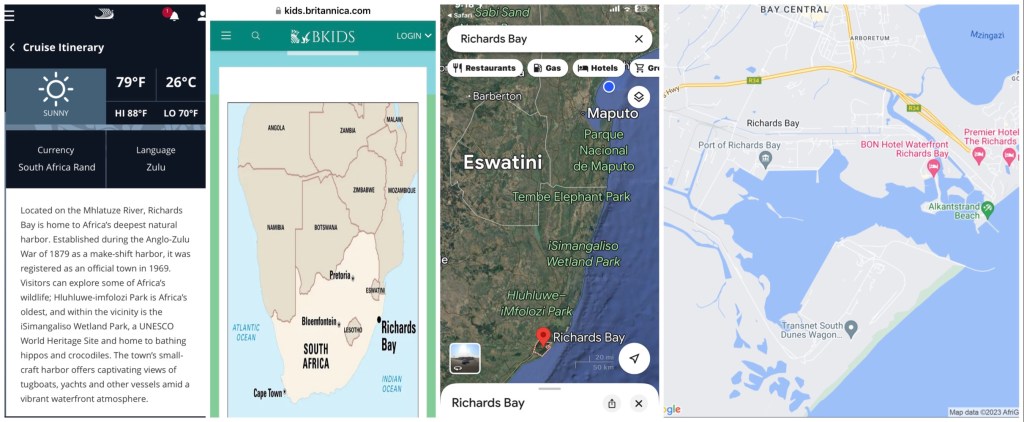
Our excursion:
I visited South Africa during apartheid in 1970 and we went on a number of safaris with Maddy and Jackson about 20 years ago Think about a country that began with 574 separate tribes numbering as many as 15 million. Then taking their lands, killing most of them and moving many of the remaining people to reservations on less desirable land. Then, enslaving millions to boost production and insisting on separate living facilities. Even today, eliminating programs intended to address past grievances. Enough of that, let me get to South Africa.
The earliest settlers were hunter gatherers and cattle herders. About 1000 BCE, the Bantus entered through the north in the form of 600 different tribes. They succeeded with better agricultural practices and by having mastered the use of iron. Life proceeded predictably until that pesky Vasco de Gama showed up in 1497. The Portuguese appreciated the location as a stopover as trading ships moved around the Horn to the Indian Ocean. The Dutch were the first Europeans to settle their,in 1652, and used their outpost for commercial purposes….not interested in expanding their footprint. A few (they say 9) left the “compound” and interacted with the locals. They were known as Boers and Afrikaners. By 1800, there were 17,000 Boers who controlled 26,000 slaves. They became a conservative religious enclave.
In Europe, in the late 1700’s, the French bested the Dutch and the weakened Dutch made it easier for the British to move in and control the valuable Cape location. The British ended the slave trade in 1807 and abolished slavery in 1833. The Boers, attempting to preserve their conservative life style, moved north in the “Great Trek.” About the same time the Zulus were consolidating power among the tribes of the north. They battled in the mid 19th century and , with superior weaponry, the Boars held their own. However diamonds were discovered in 1860 and gold in 1886. This caused the British to redraw the lines so that the Boers were moved away from the mineral deposits. Tensions rose and resulted in 2 Boer Wars, the second of which the British won in 1902. After burning some of their houses and placing many Boers in internment camps, new lands were granted to them….Orange Free State and Transvaal
In 1910 the Union of South Africa was created. In 1961, it became a Republic. The National Party imposed apartheid in 1948. Conflicts arose that led to famous events like the Sharpeville Massacre where police killed 60 and wounded 180 blacks…all shot in the back. Nelson Mandela, the troublemaker, received a life sentence for his treasonous efforts to achieve equal rights., He was released after 27 years in prison. By the mid 1980’s some of the measures began to be repealed. In 1994, there were national elections with Blacks having the right to vote.
The country now has a population mix of African (81%), Colored (8 percent), White (7%), and Indian/Asian (3 %) They are burdened by poverty, crime and inequality. There is unemployment of over 30 percent and it is known as a country with one of the most unequal income distributions. It’s still in flux.
Richards Bay is a deepwater port, developed relatively recently….a real difference from the Swahili coast. The harbor was established during the Anglo-Zulu War in 1879. The deepwater port development was initiated in 1965. The town was incorporated in 1969. In 1976, a railway and pipeline was connected to Johannesburg. In that same year, there was a forced removal of Zulus. Three suburbs were created…for whites. A suburb (township) for blacks was established 15 miles south. In 1985, a suburb was created for Indians and Coloreds. Seems complicated for a town of 20,000. The racial composition is currently 40 percent White, 38 percent African, and 20 percent Asian/Indian. Seventy-five percent are under 34. Unemployment is at about 40 percent.
The port has developed a coal export facility that has the capacity to be number 1 in the world. They also have 2 aluminum smelters and a fertilizer plant. When the port was created, there was lots of open land. A 100 year plan was created to prepare for more commercialization and industrialization. Tourism is picking up…not because there’s anything to see…but for its access to Zululand and game parks. It doesn’t sound too interesting, but the crime rate is high so there may be some excitement.
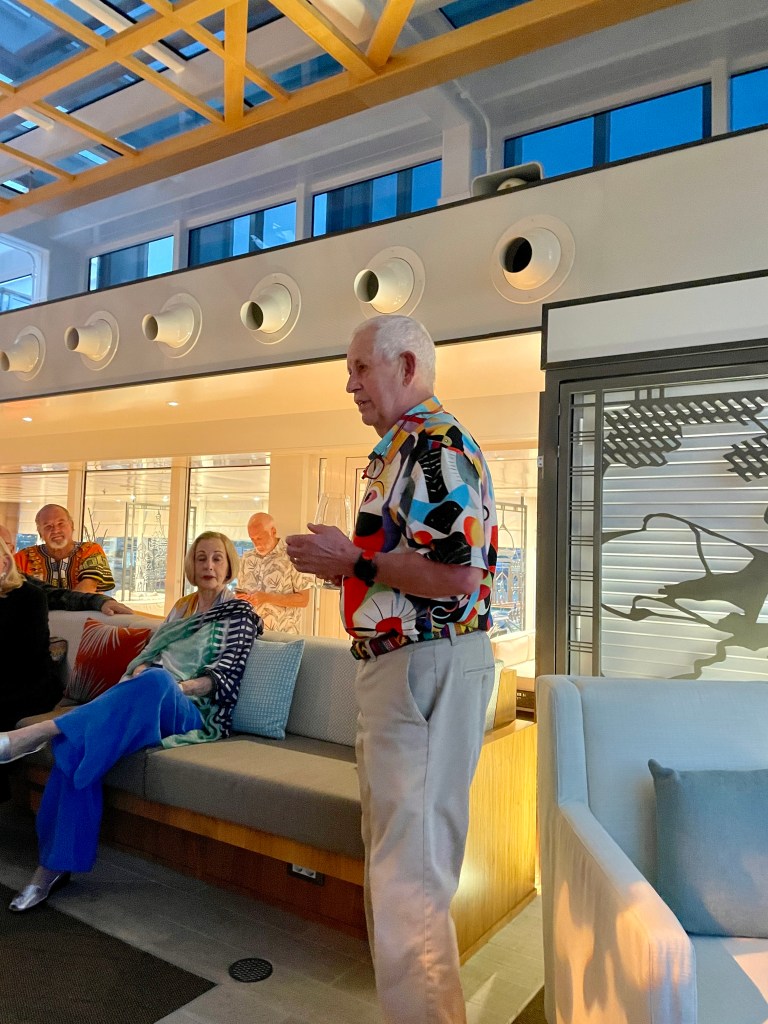
By the time we arrived at Richards Bay, I had recovered from a very nice birthday party with about 40 people. Karla did a great job making it all happen. One of the highlights was bringing in Grace, a friend from Kenya, to sing Happy Birthday with a Kenyan twist. She is a waiter in a ship restaurant and was prodded into singing before, at a dinner. Everyone enjoyed it. In the morning we honored a tradition of a couple who have bubbly wine every Saturday. Because of the ship arrival time and long excursions, Joanna and Mary were forced to do it at 10am to preserve the tradition. There are 10 of us in total who help with the consumption. Nice people and nice tradition.
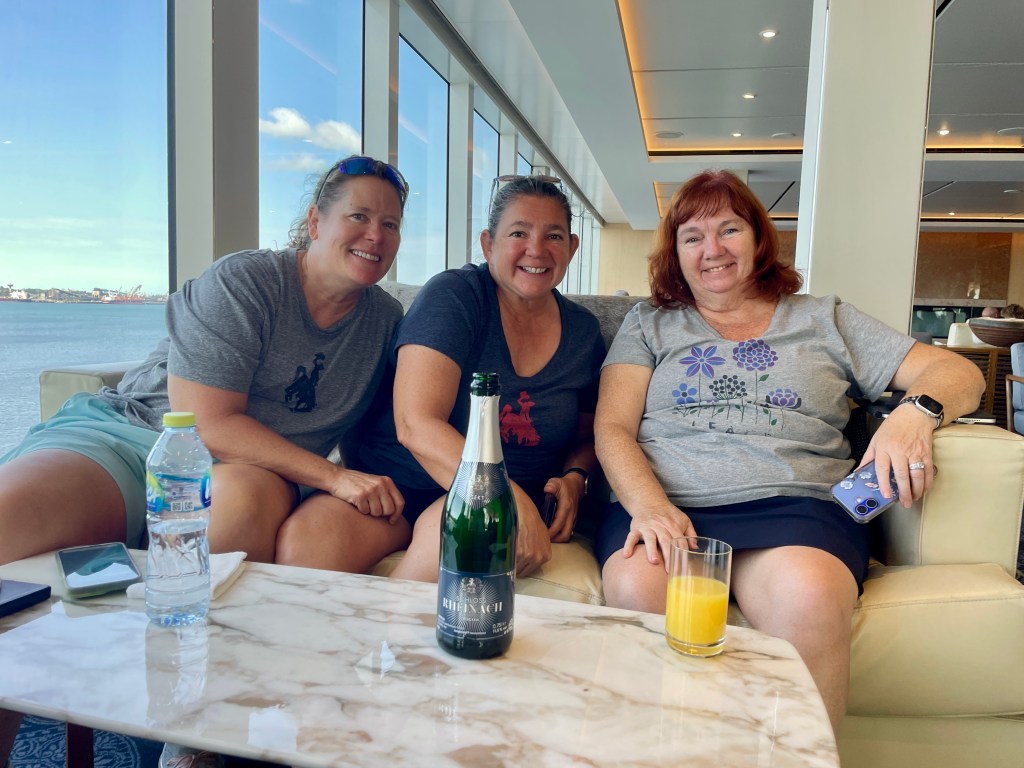
Starting the day with bubble Saturday, a tradition of our friends, Joanna and her wife, Mary. In the photo is another Mary, Mary McGinn. There was minor excitement before we left the ship. A pilot who was on board was. picked up by helicopter to be transferred to a new site. It was fun to watch.
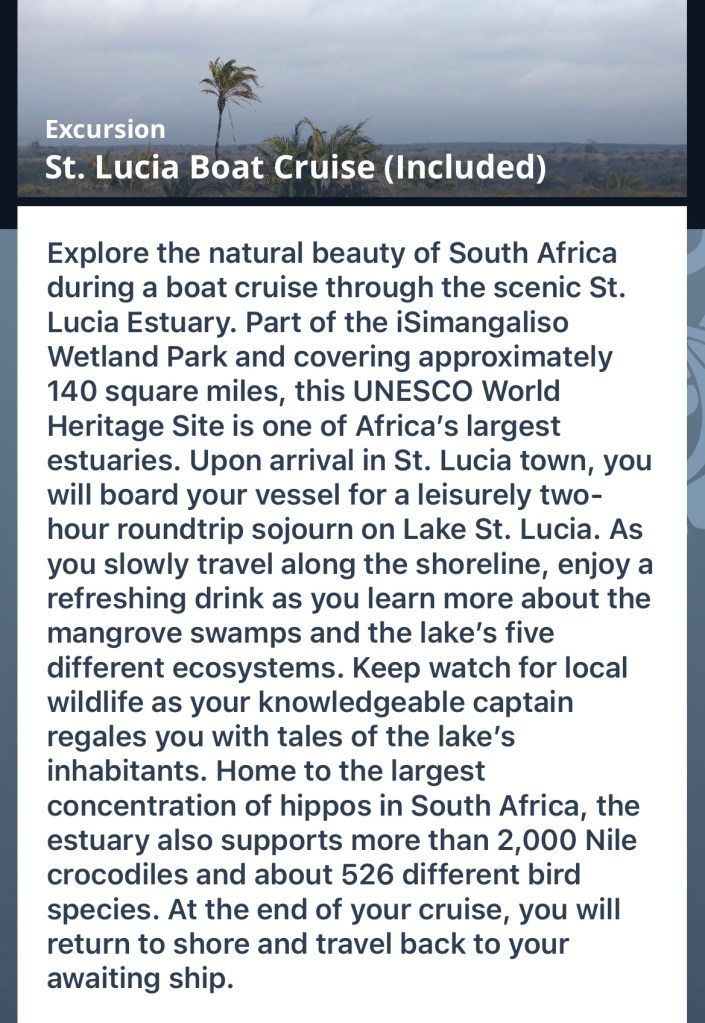
At the assigned time, we descended to the dock with face masks on . There is so much coal being moved that the dust can coat everything. All of the furniture was removed from the decks and we were advised to keep our deck door closed. Actually, it didn’t seem that bad. We inspected the 10-12 craft tables and then got on a bus to take us to Lake St. Lucia, about 1 1/2 hours away. We had an informative guide and appreciated the green countryside. The dominant feature was eucalyptus trees; there were thousands of acres. They let the trees grow for about 10 years and then use them for making paper or export wood chips.
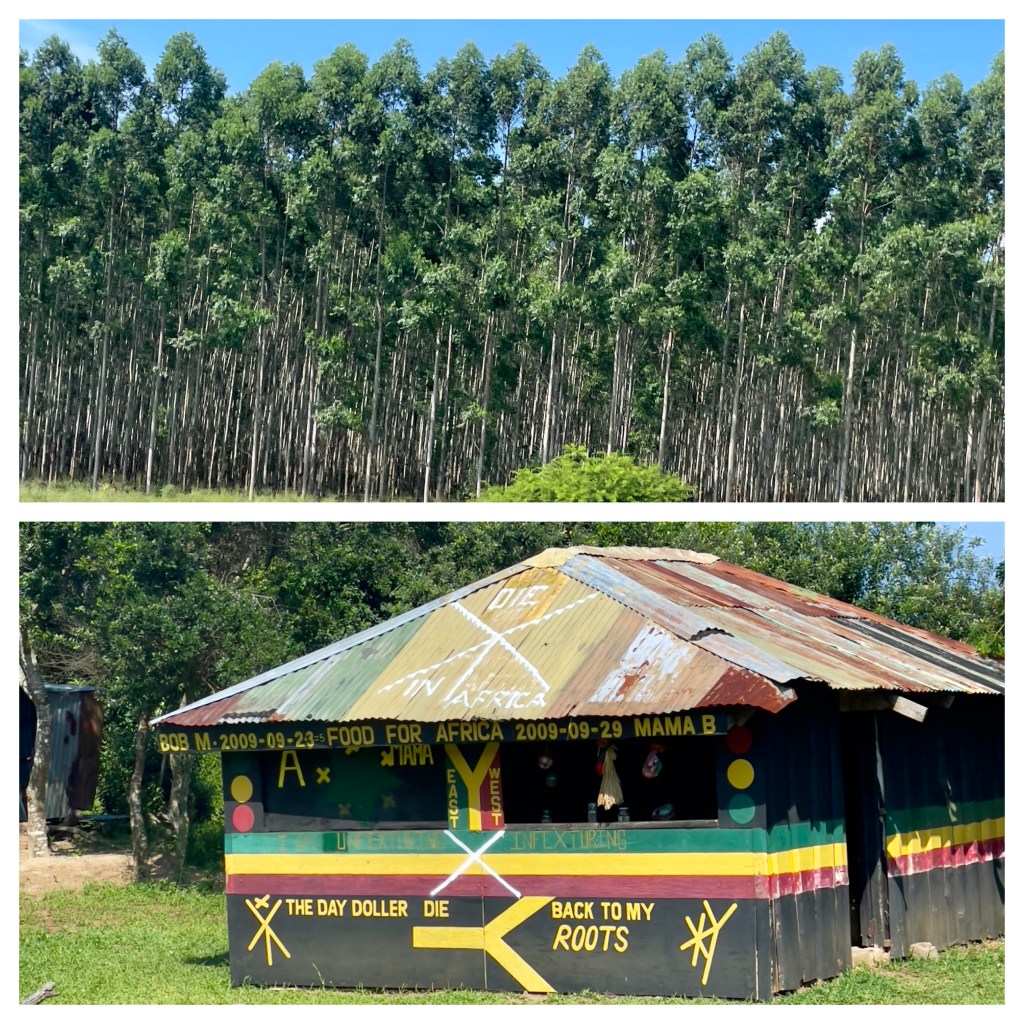
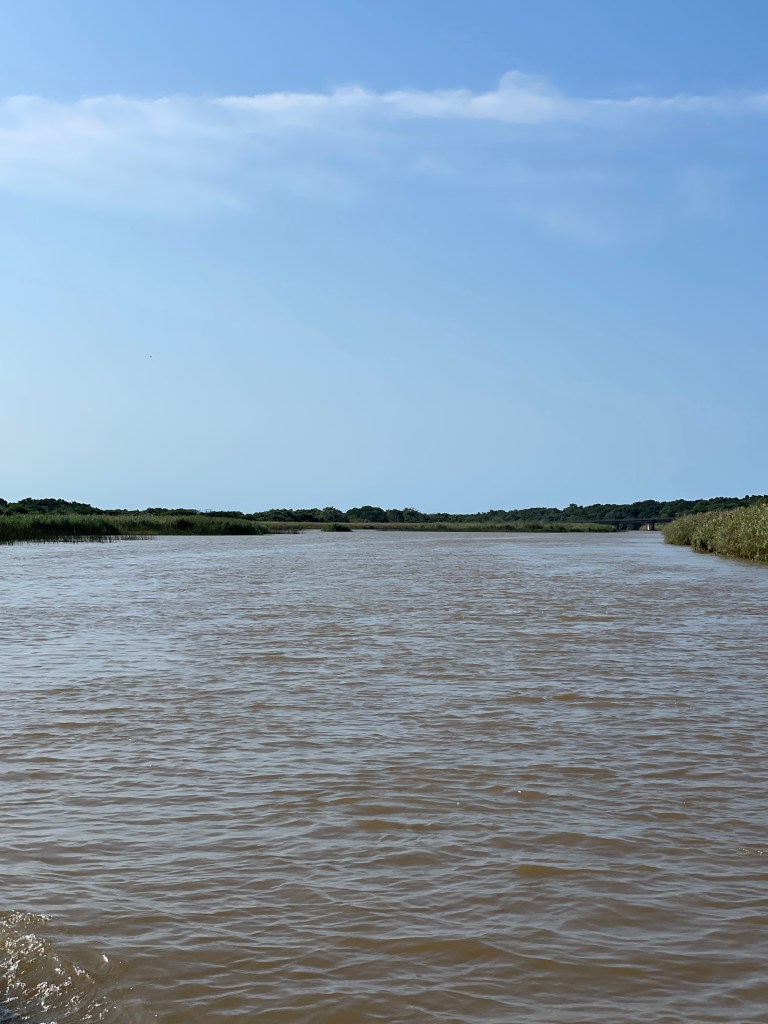
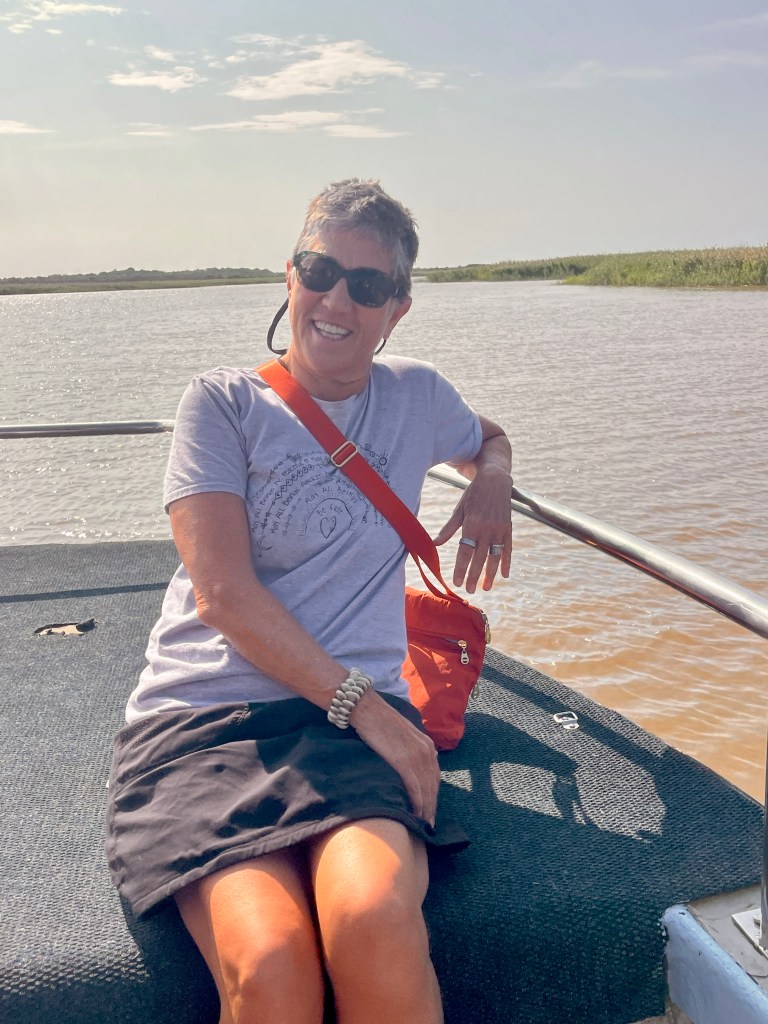
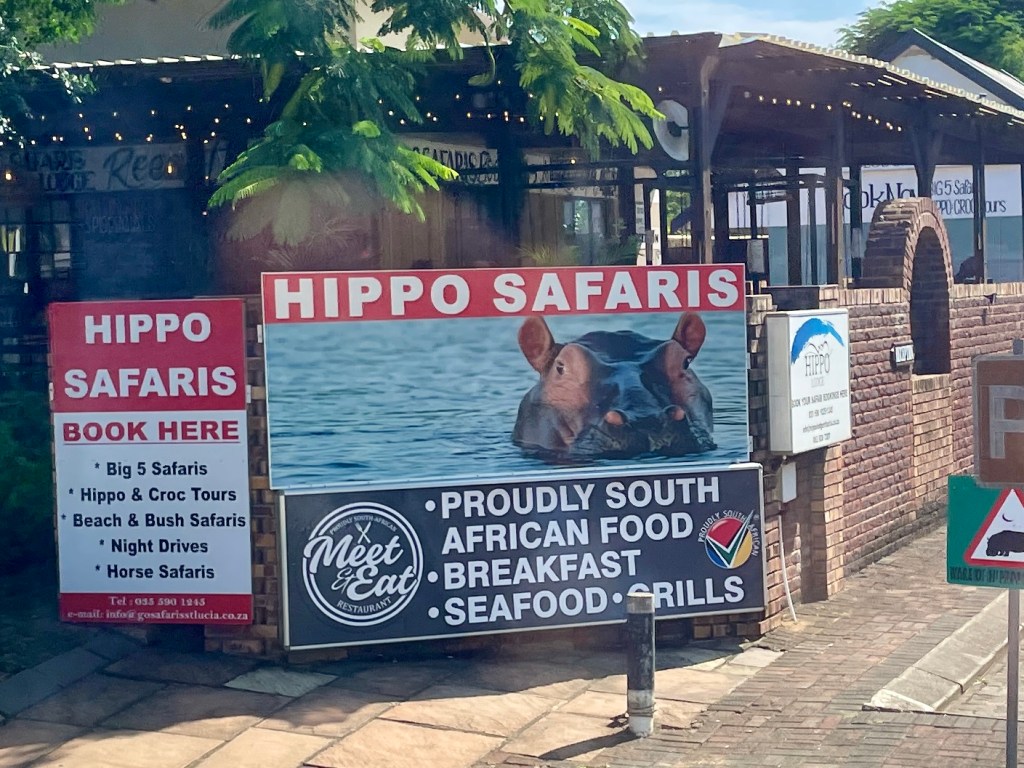
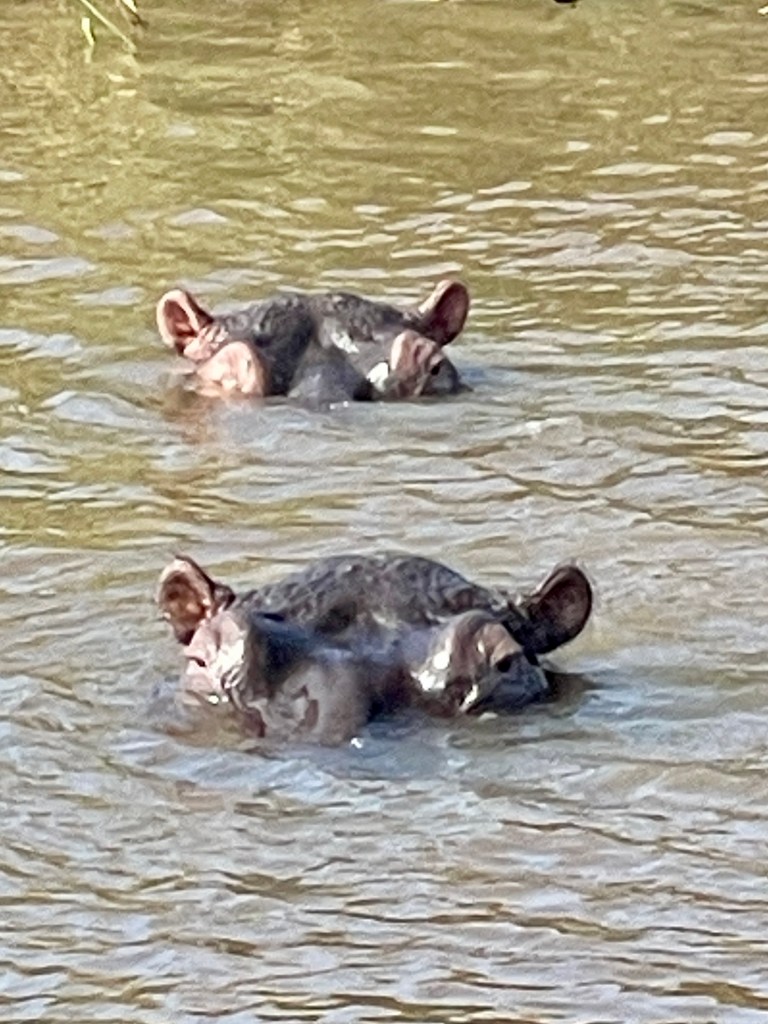
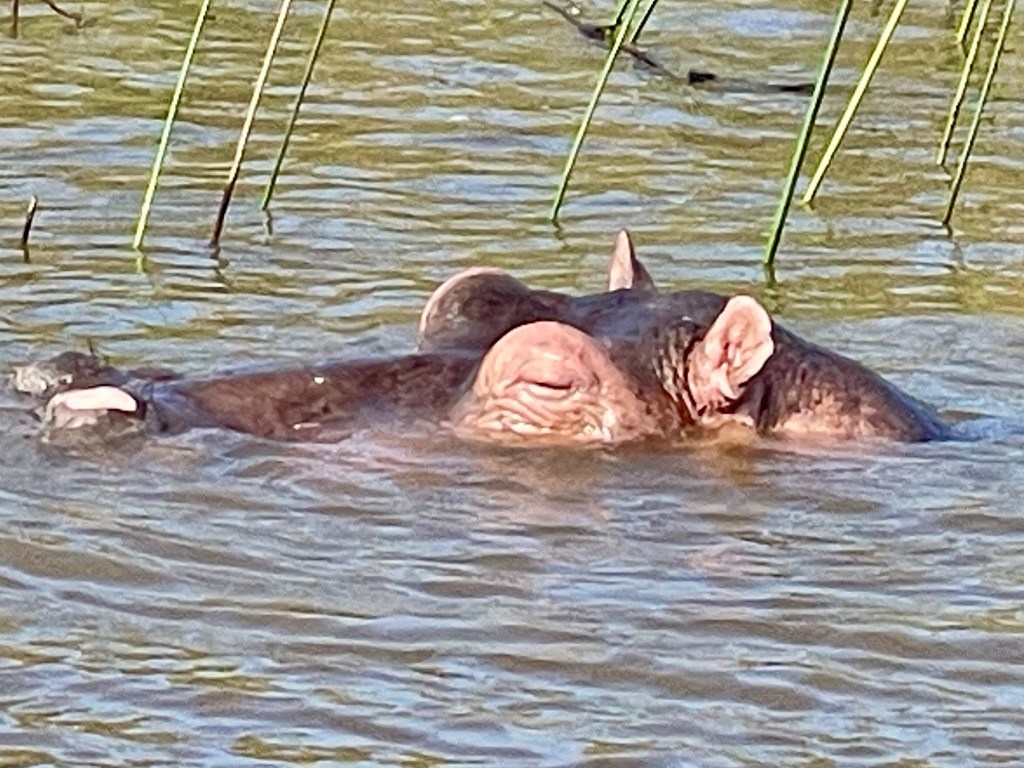
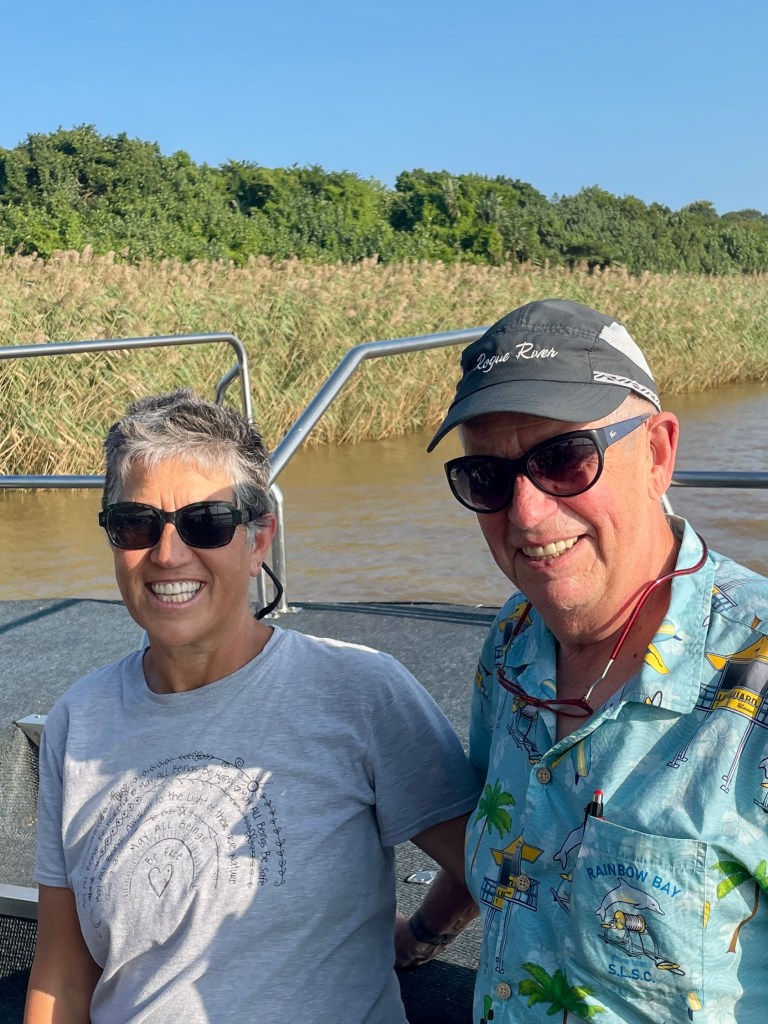
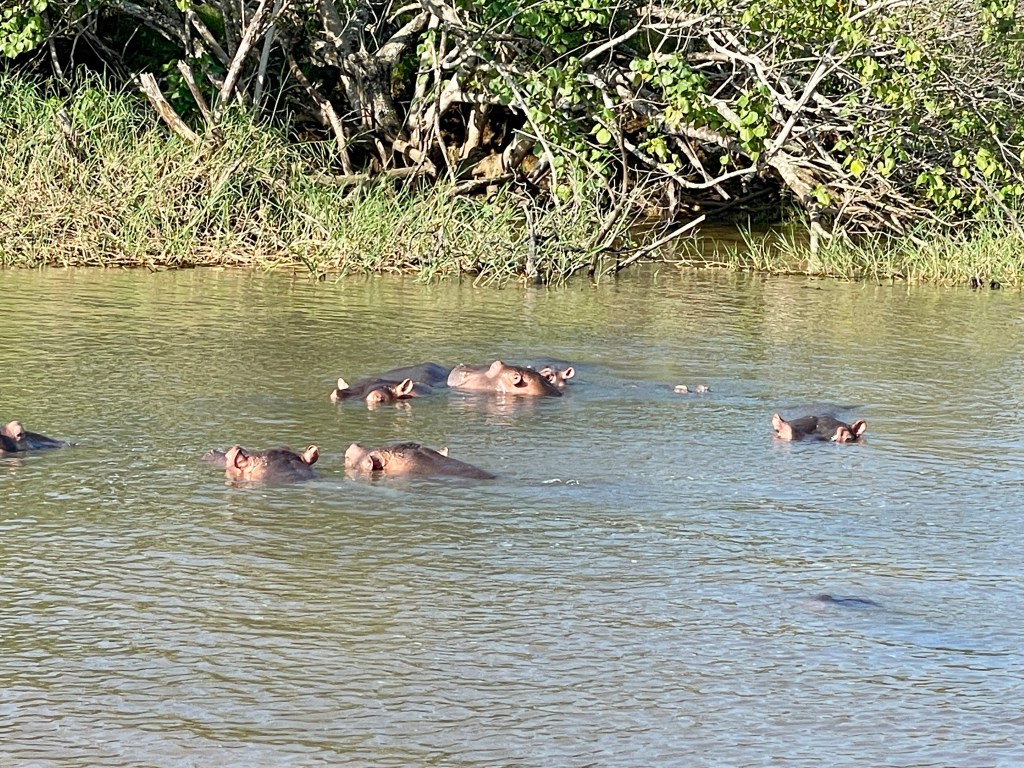
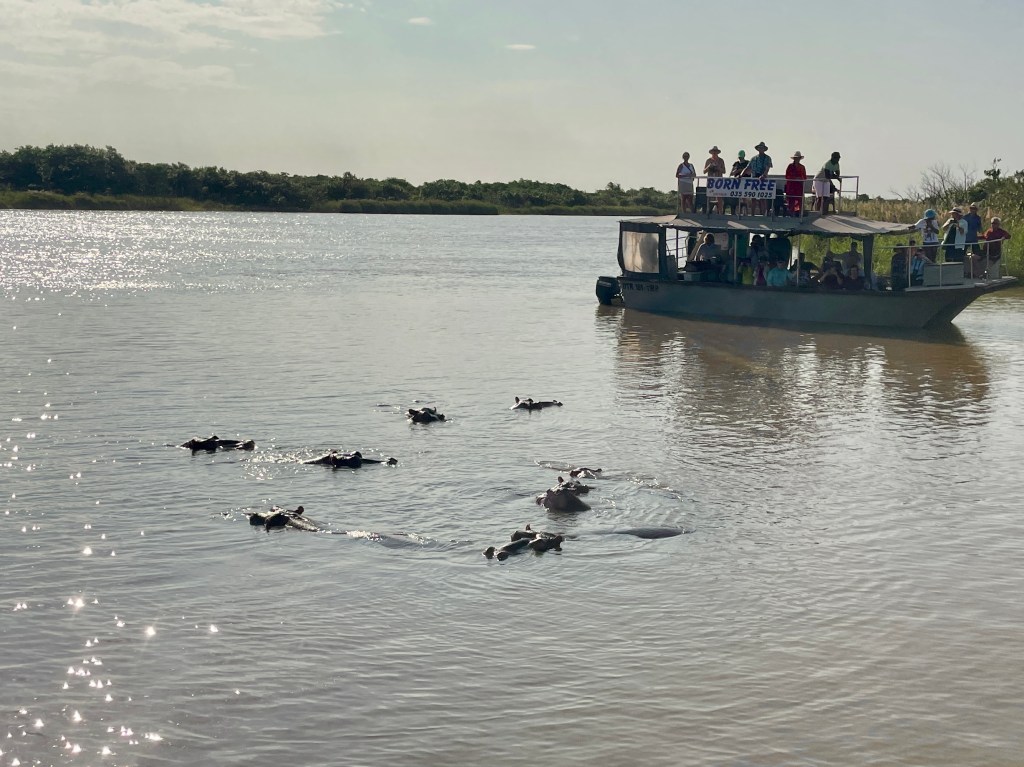
Eucalyptus tree farms over hundreds of acres; Zulu architecture Once we arrived at the lake….really an estuary….we boarded a flat bottom boat and made our way to hippo and croc territory. We saw a fair number of hippos, most primarily submerged. They are used to watching boat excursions. As expected, the only croc was sleeping…but still a croc. It was a bonus to have a warthog show up and a fish eagle visited as well. Karla rode on the front of the boat to help spot. The captain was pretty good and didn’t need much assistance, but I felt better with her there as backup. A pleasant and uneventful day completed with the 1 1/2 hour return to the ship. On to Durban tomorrow.
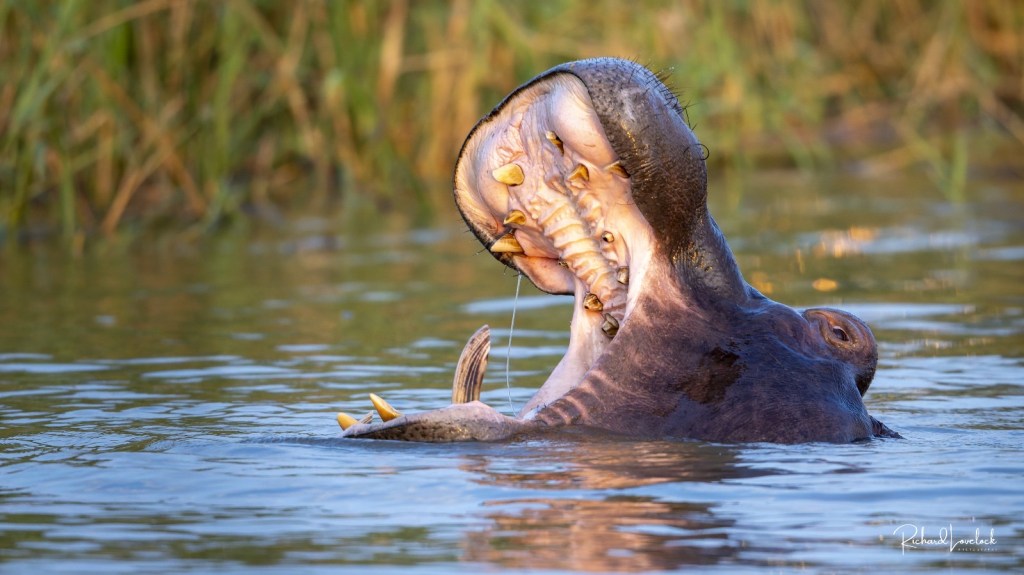
Photo by ship naturalist, Richard Lovelock 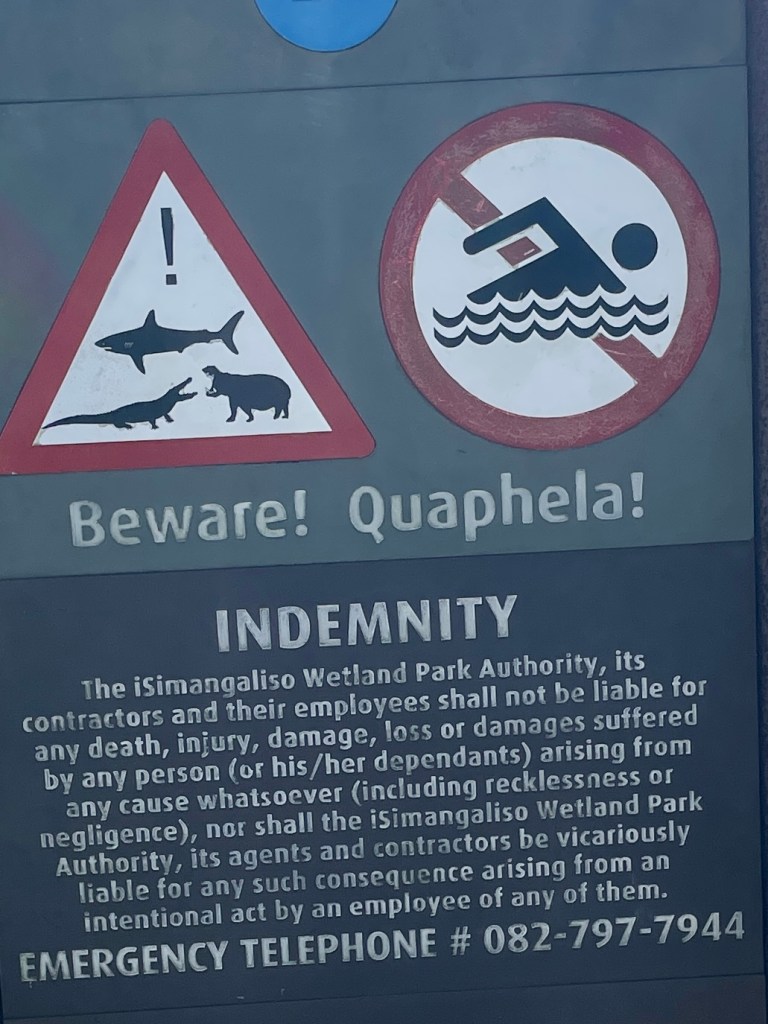
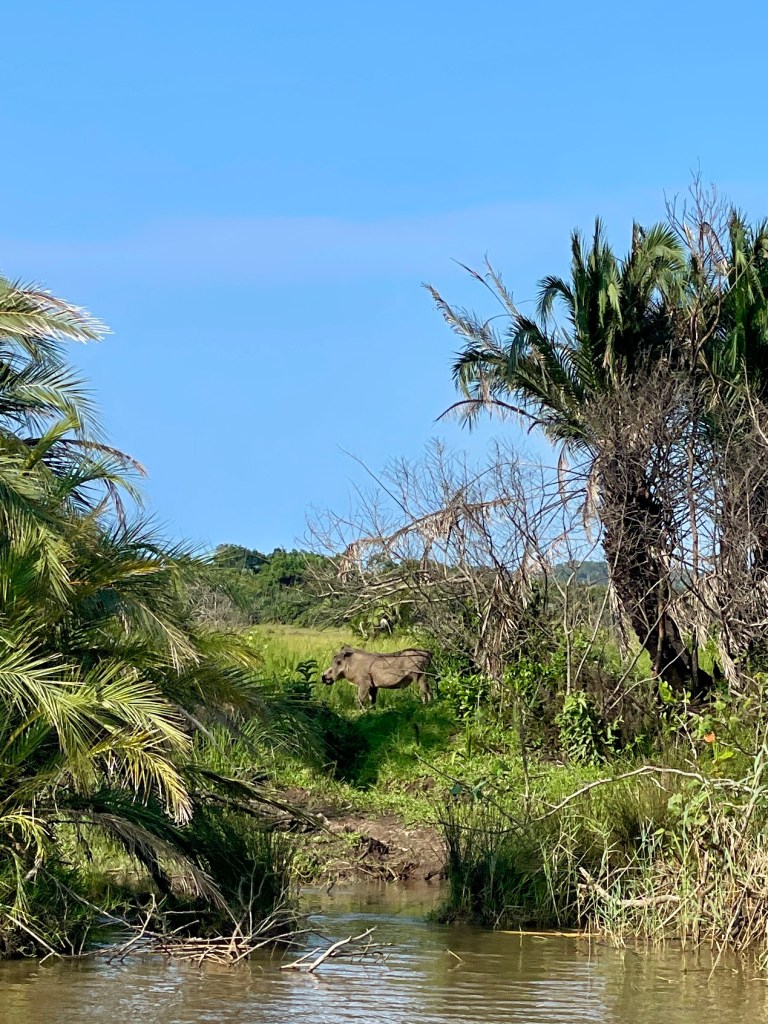
Warthog 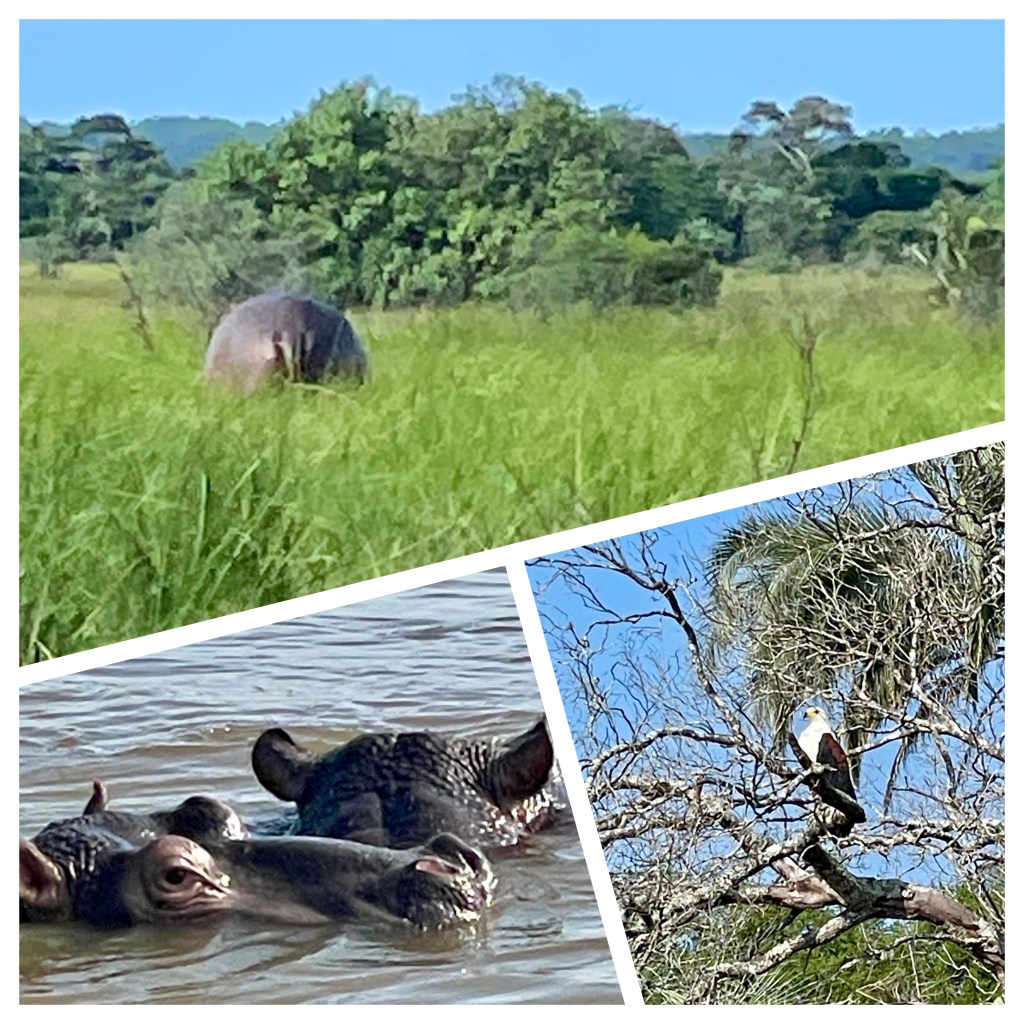
Hippo moon and fish eagle 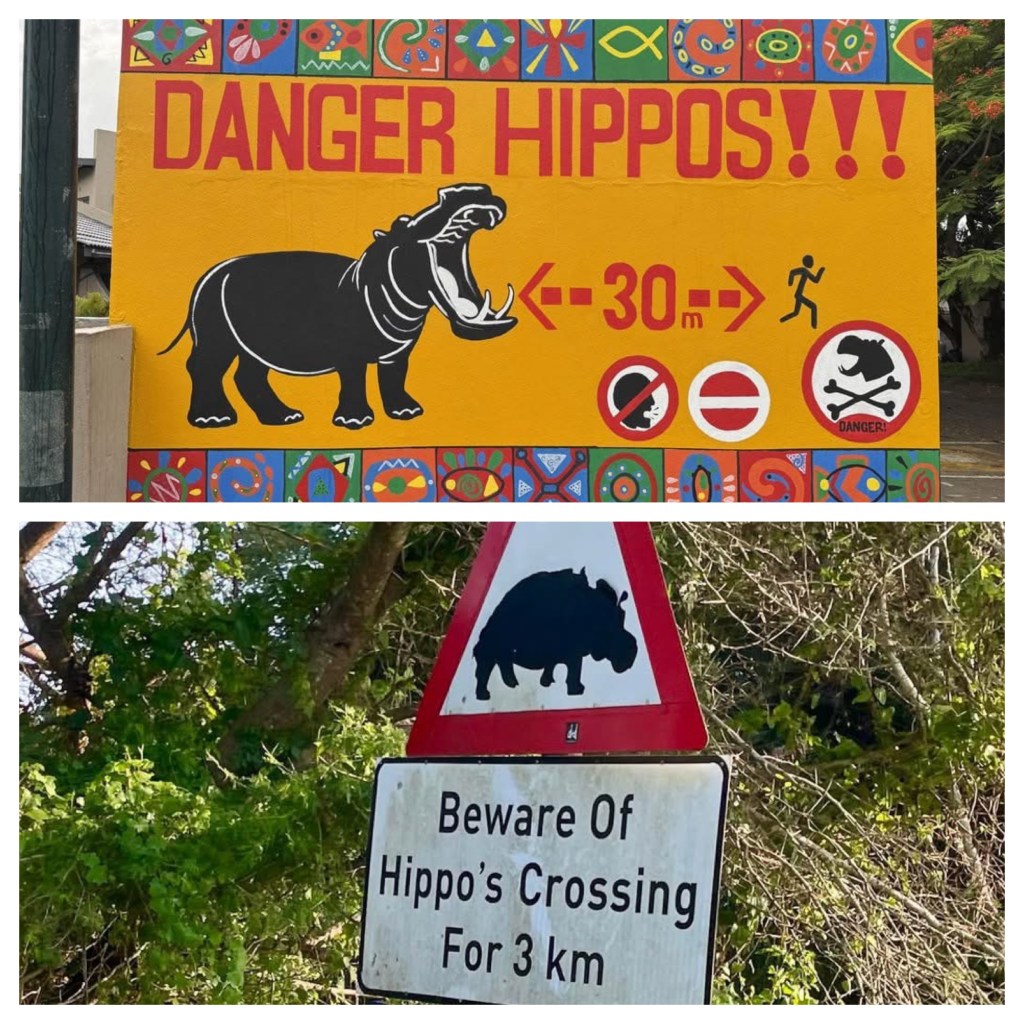
The grammar police has not caught up with the road sign. -
Maputo, Mozambique
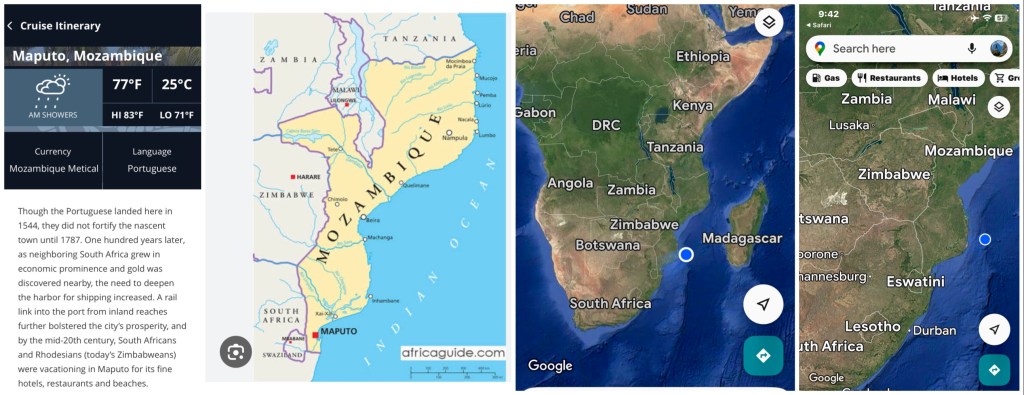
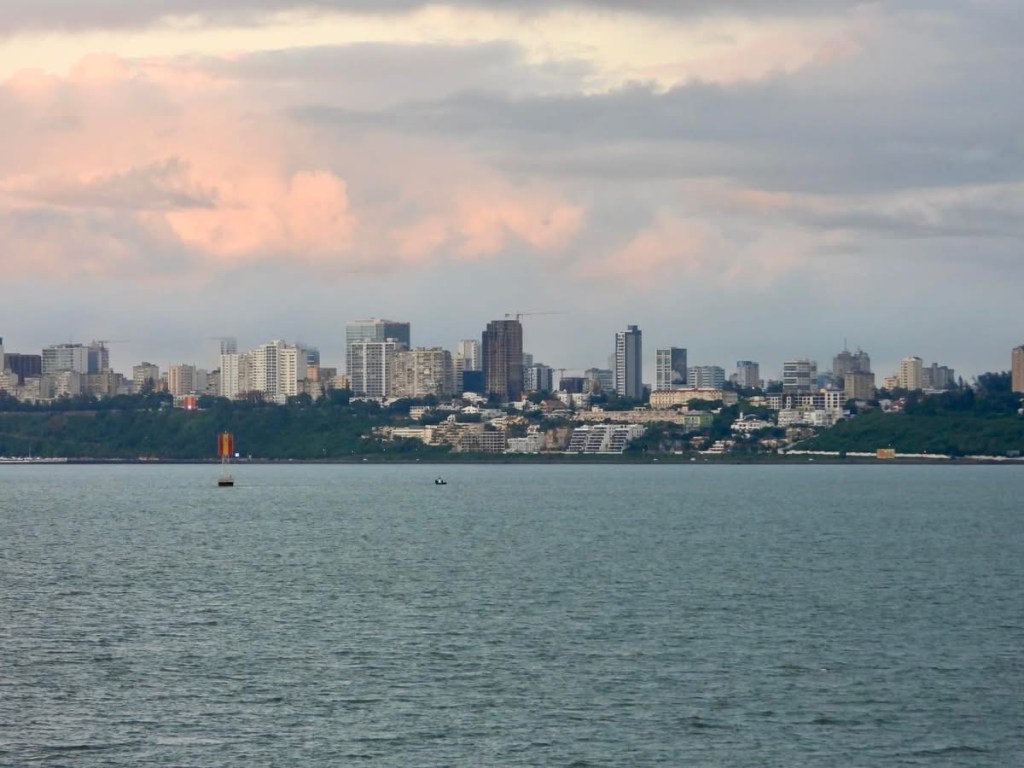
March 28
10,446 miles from The Dalles
I’ve always thought of Mozambique as a mysterious southern Africa country that I would never visit. After stops in Mombasa and Nosy Be, it feels that we may already have seen it. Developed as a trading area on the Swahili coast, it appears to be a different country only because someone drew lines there. Within the population of 35 million, there are 2000 ethnic groups and 46 languages. We get so accustomed to everyone speaking English at home that it’s hard to imagine the diversity.
Maputo was settled by Bantus who focused on agriculture and cattle. In the 7th through 11th centuries, it became a trading center for traders from Somalia, Ethiopia, Egypt, Arabia, Persia, and Indian merchants. Vasco de Gama landed there and laid the foundation for Portuguese settlers. The Portuguese developed a system of land grants to Portuguese who then were responsible for managing their plantations. In the 19th century, private companies financed by British entered to manage mines and plantations. They operated with slaves and forced labor. Their goods made it to Maputo for trade.
A war for independence from 1964 to 1975 resulted in independence in 1975. With little preparation to govern and such a diverse population, it’s not surprising that there was a Civil War from 1977 to 1992. Elections were held in 1994. So, a very young country and one with governmental challenges.
The economy is based on fishing, agriculture, chemical manufacturing, aluminum and oil and now, tourism. In 2013, 50 percent of the people were engaged in agriculture. There is a great deal of income inequality and heavy debt. It’s one of the poorer countries and scores low internationally in measures of GDP per capita, human development, life expectancy and food insecurity. But, they keep reproducing, with 5.5 kids per woman.
The UK had a recent level 4 (the highest) advisory against travel to certain areas in Mozambique– not Maputo– (against any non-essential travel to these parts). The US is at level 3, owing to health issues, crime, civil unrest, and terrorism. The American advisory was written in December 2024, following protests and civil unrest. Here is an excerpt:
If you decide to travel to Mozambique:
- Avoid all but emergency travel between sunset and sunrise.
- Avoid demonstrations and crowds
- Have evacuation plans that do not rely on U.S. government assistance
- Have travel documents up to date and easily accessible.
- Keep a low profile.
- Be aware of your surroundings.
The Australian government advises:
We advise: Reconsider your need to travel to Mozambique overall due to the volatile security situation and the threat of terrorism, violent crime and kidnapping. Higher levels apply in some parts of the country.
If I were the type of person to do so, I bet I could cause some real turmoil between now and disembarkation tomorrow.
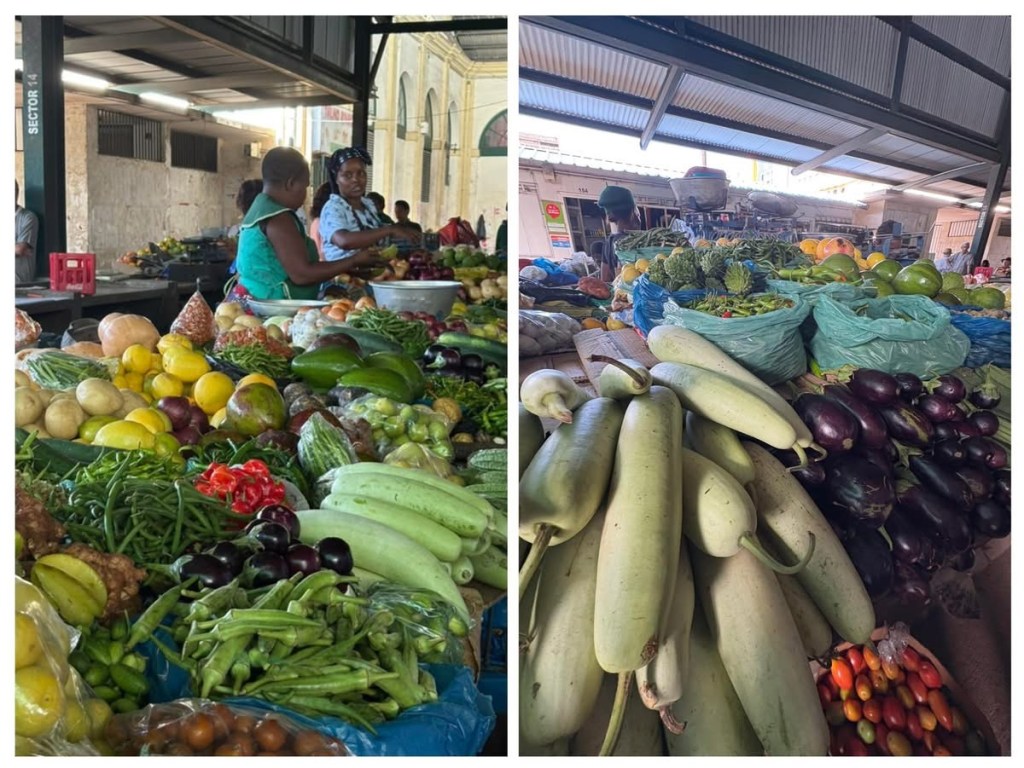
Our excursion was a low key trip around town with brief stops at the train station, a central market, a fort, and, finally, an impressive craft market. Whether by intention or not, we avoided any low income neighborhoods; the parts of the city we visited were attractive. At every stop, we were visited by street merchants with key chains, hats, belts, refrigerator magnets, etc. Starting prices for everything were $10-$20. We didn’t buy much, but I suspect most items would sell for $2-3. The craft market was loaded with baskets, paintings, textiles, carvings, etc. But, we don’t need much. We returned to the ship for naps to help battle colds that are sweeping the ship. Karla has arranged a birthday party for me at 5:30. I hope that people bring cards with money in them.
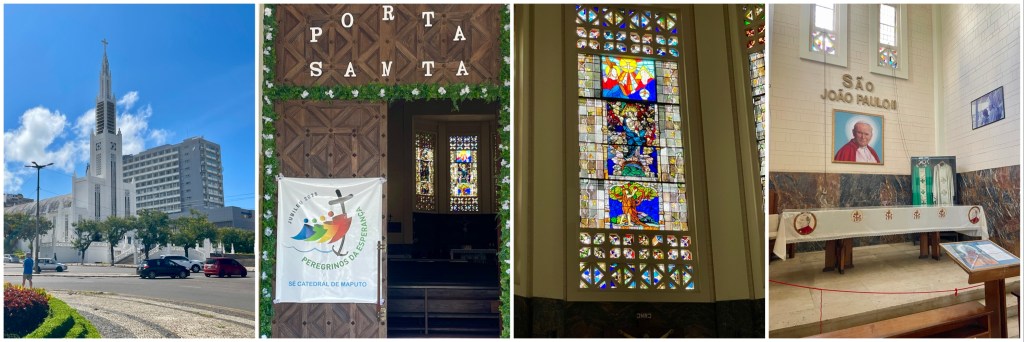
Catholic cathedral 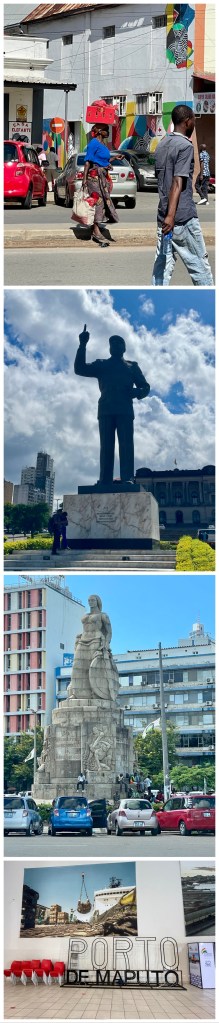
Middle: Statue honoring WWI soldiers who died; above that Former President, Samora Machel statue 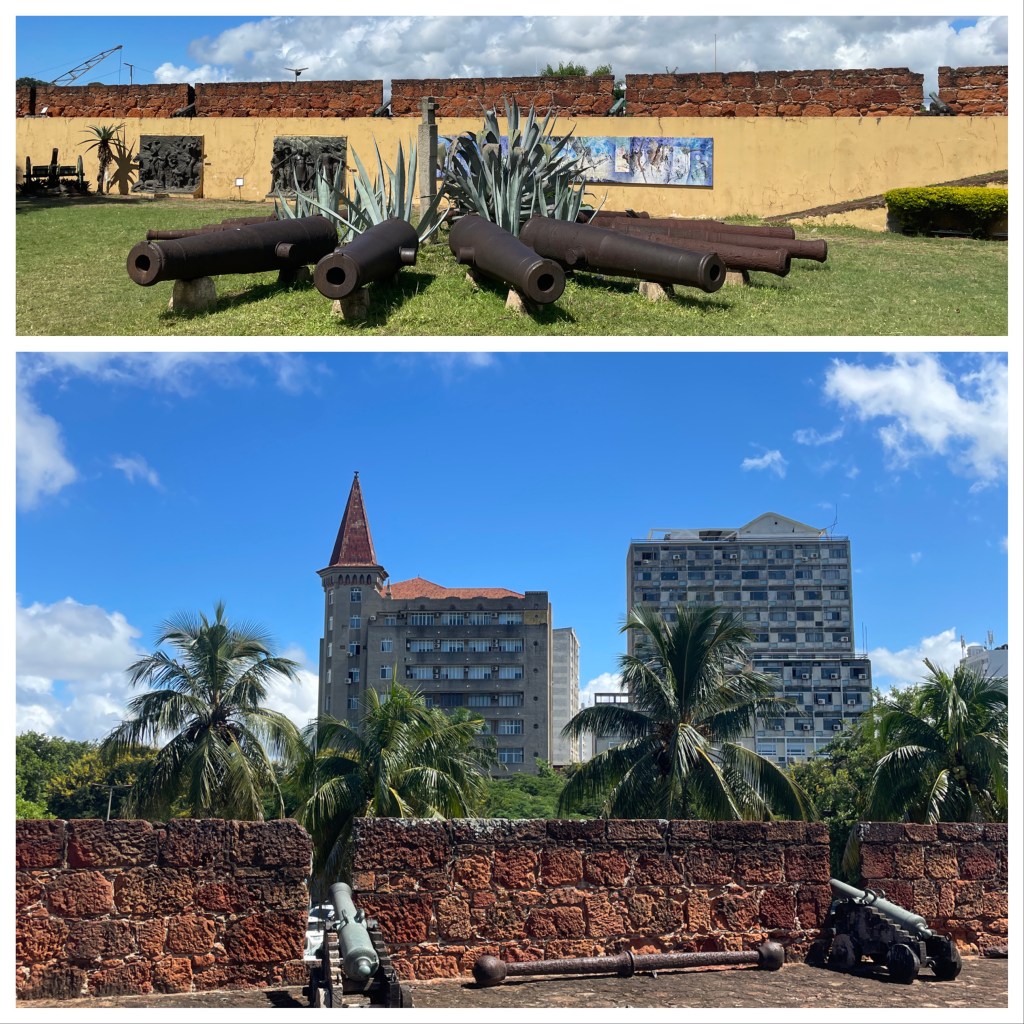
Fort built by the Portuguese in the mid 19th century at the site of earlier forts. 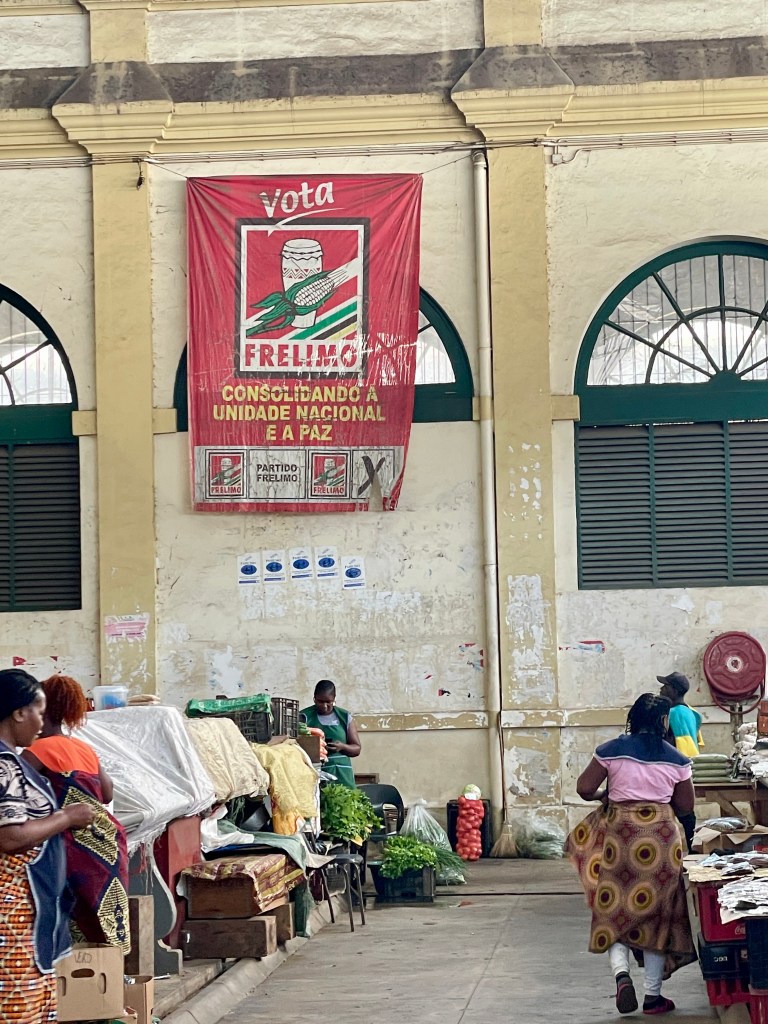
Outside the central market of Maputo 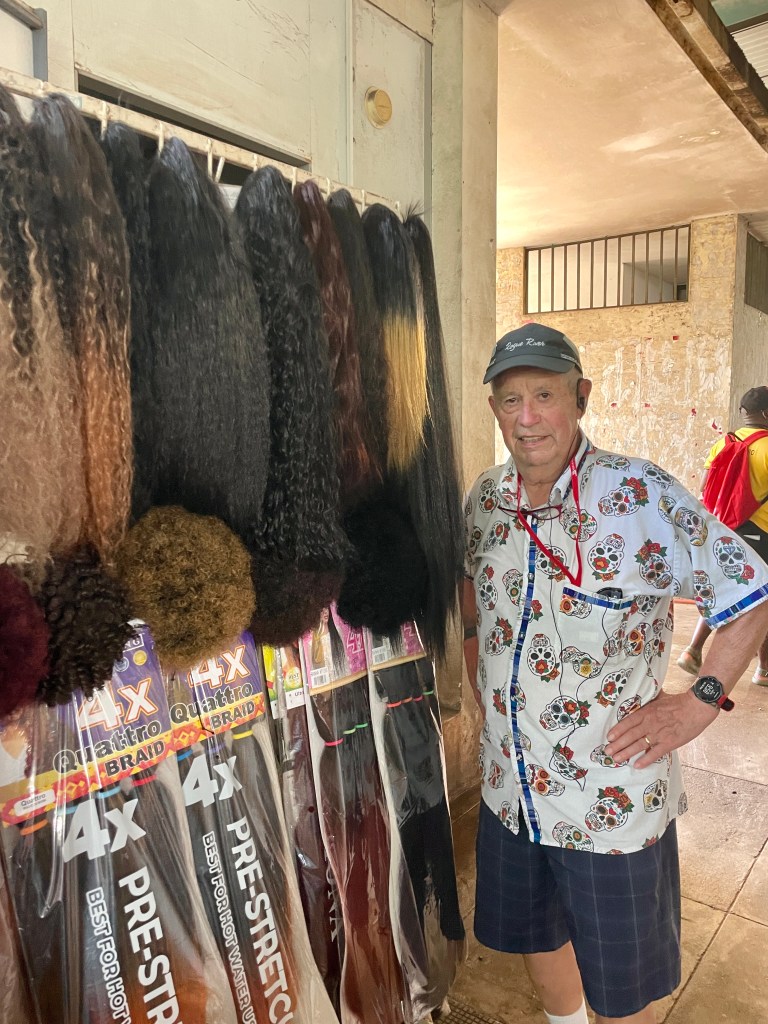
Hair extensions and wigs 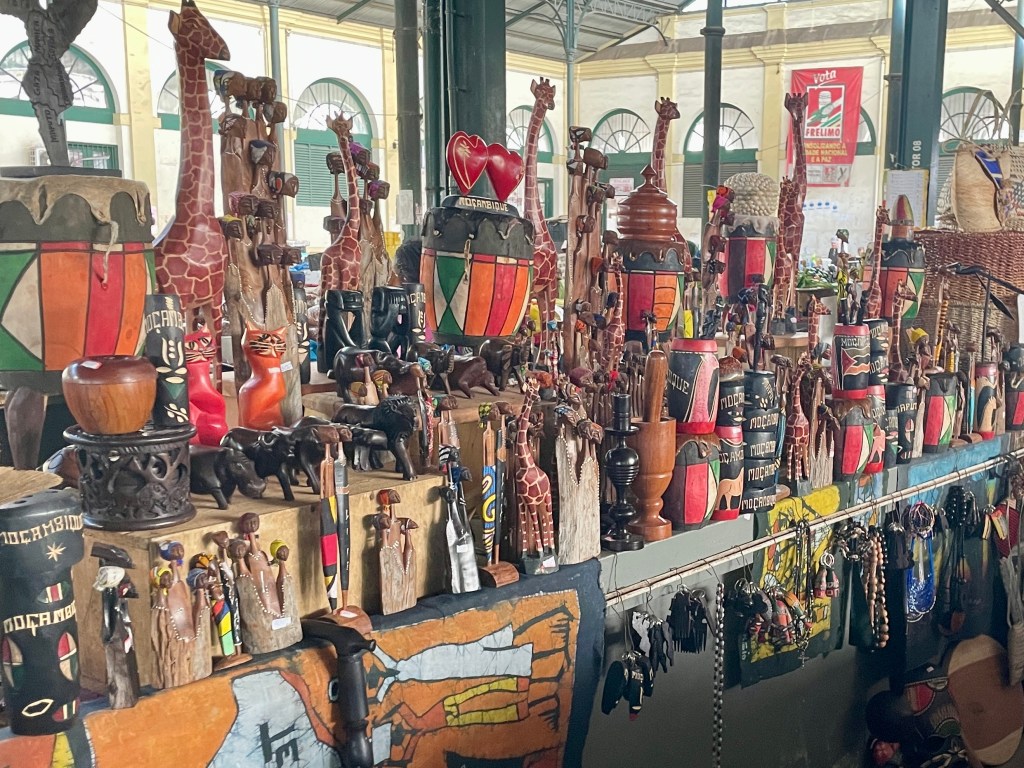
Carvings 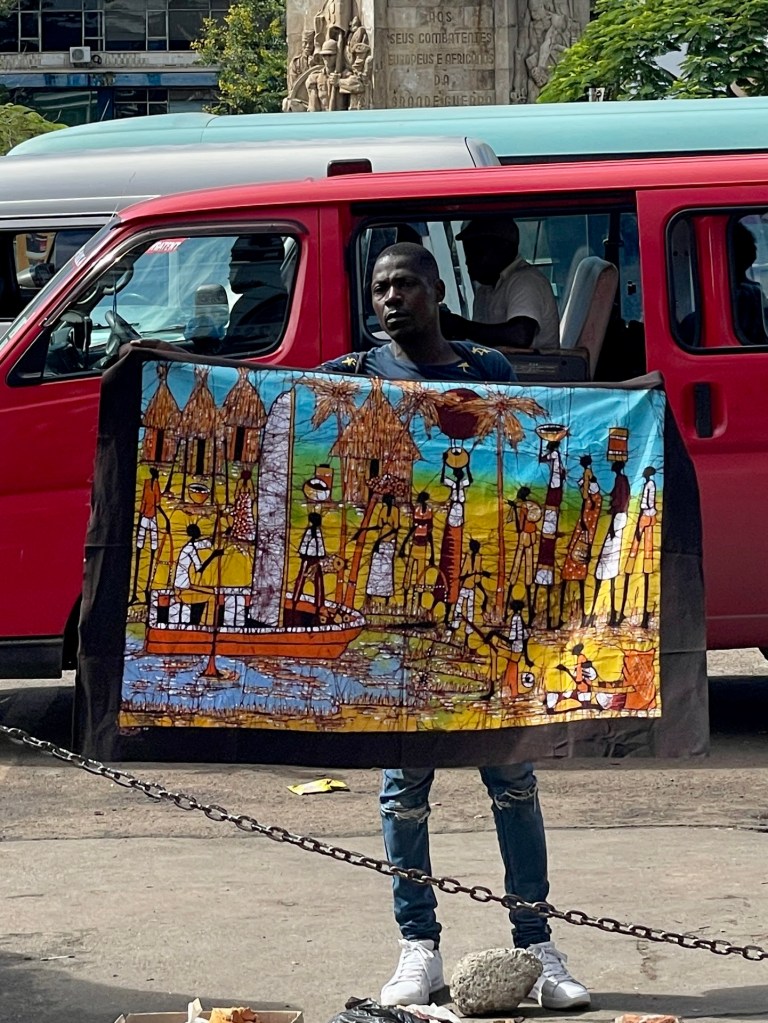
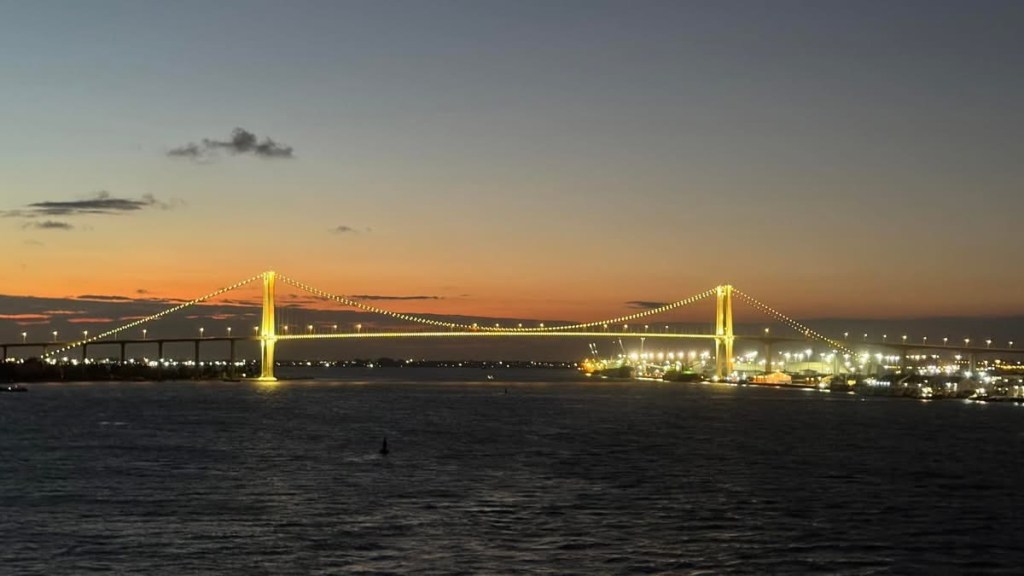
The largest suspension bridge in Africa, built and financed by the Chinese. Fred’s 83rd
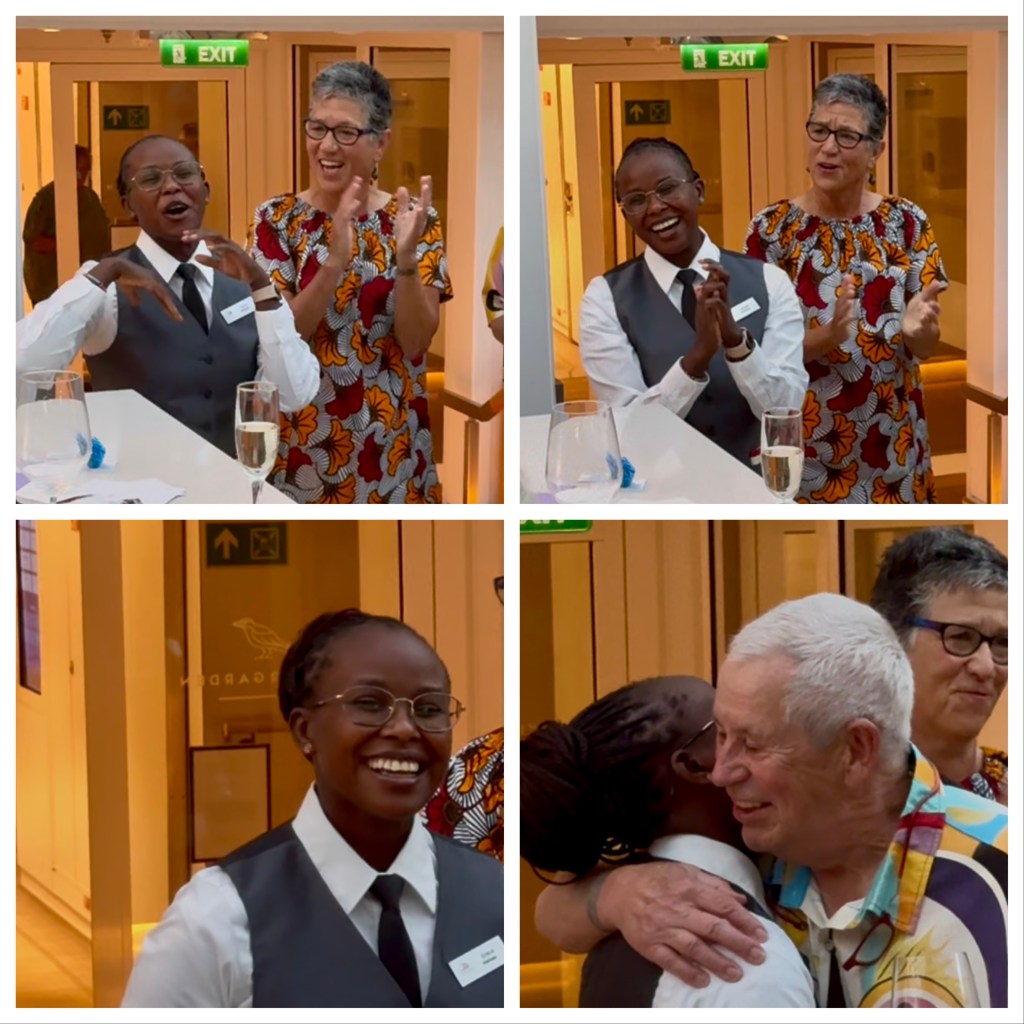
The incredible Grace sang for us. 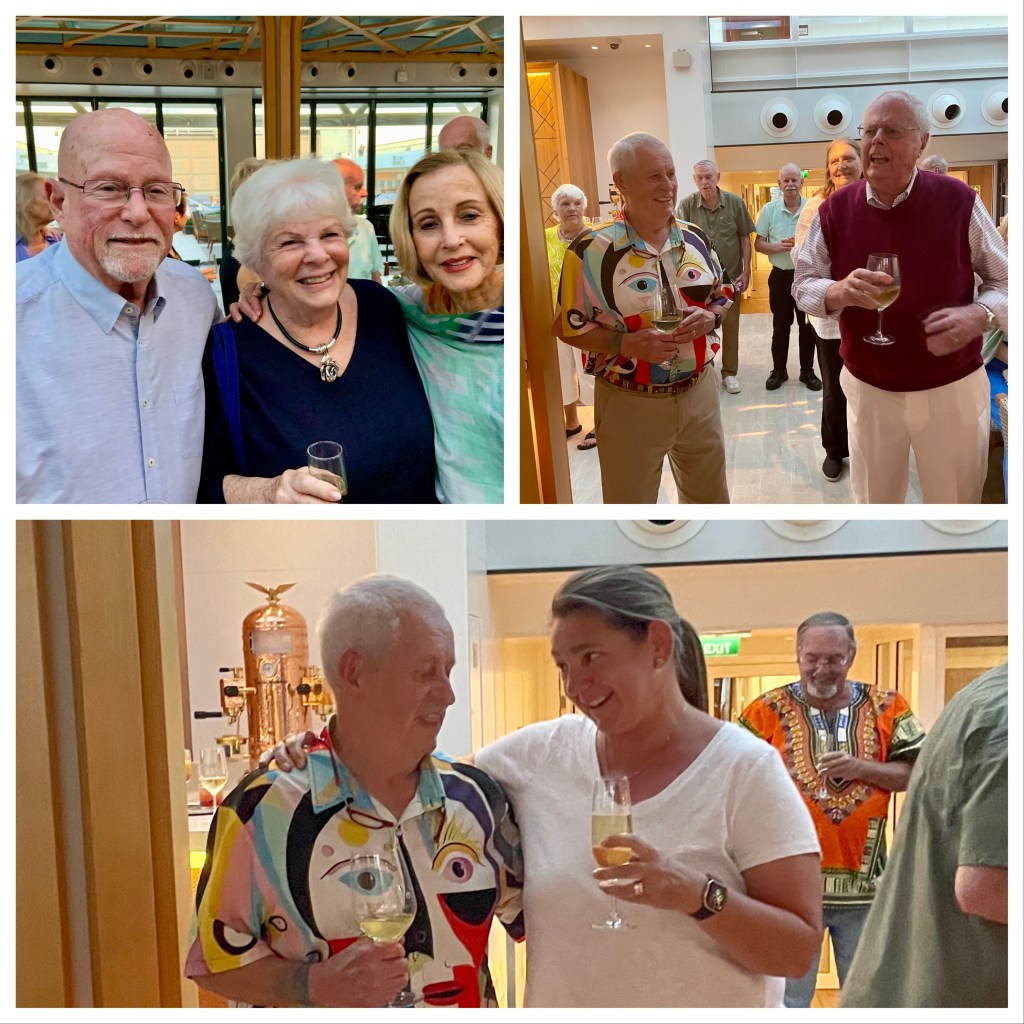
Friends top left clockwise: Sandy, Dave, and Judy, Richard and his toast about Fred’s baseball knowledge (Orioles in the 1960s), and Joanna. 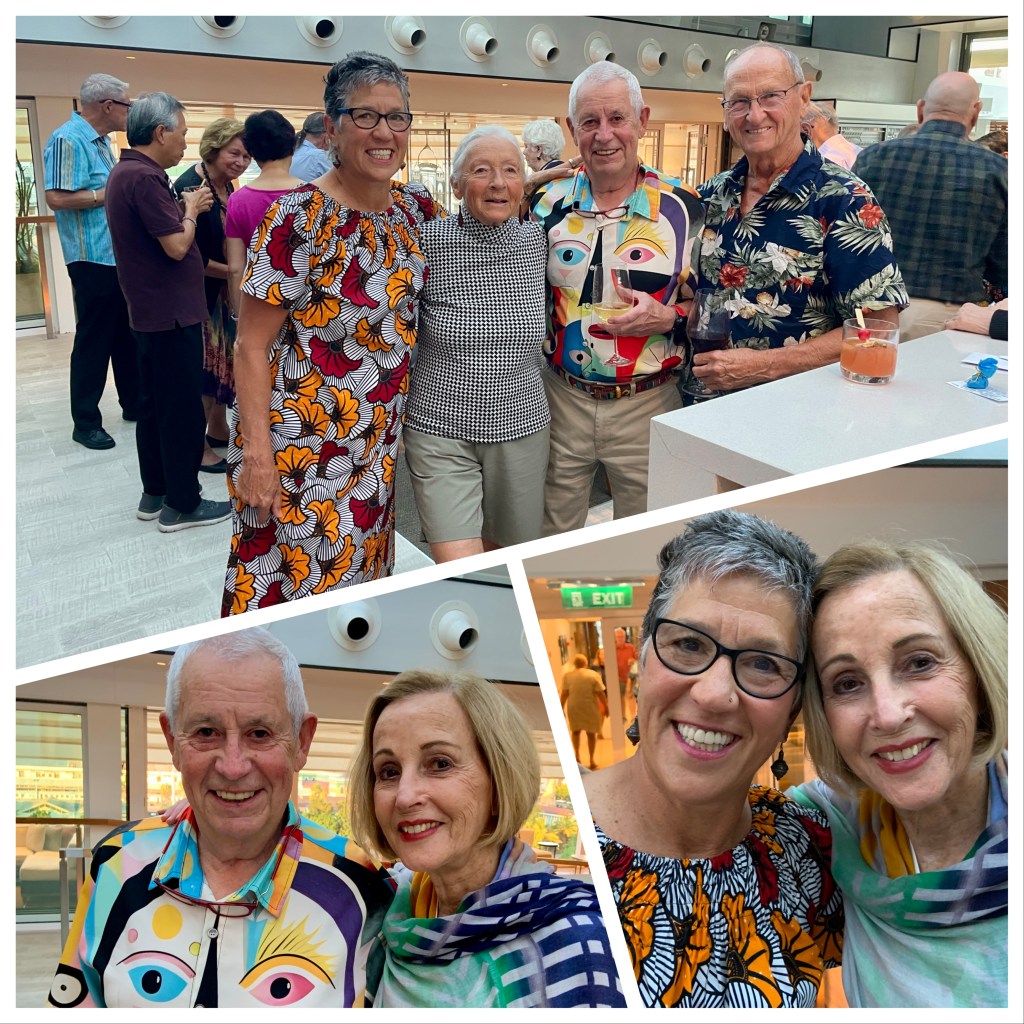
Above with Wally and Justyne and below with Judy.
-
Subscribe
Subscribed
Have a WordPress.com account? Log in now.

