-
Morocco
April 23-26–Agadir and Casablanca
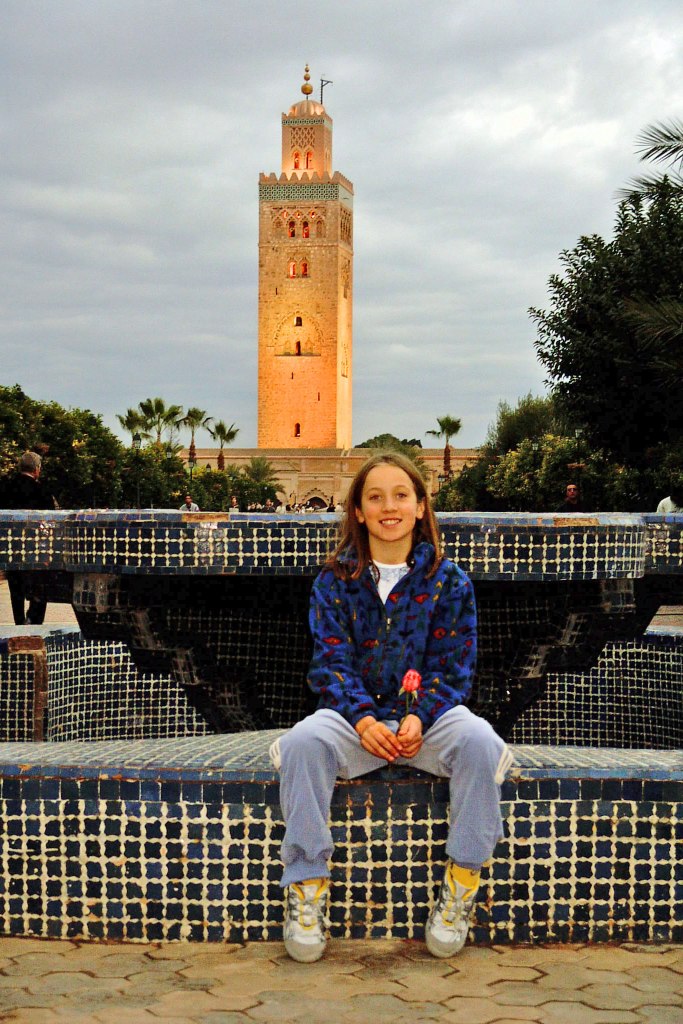
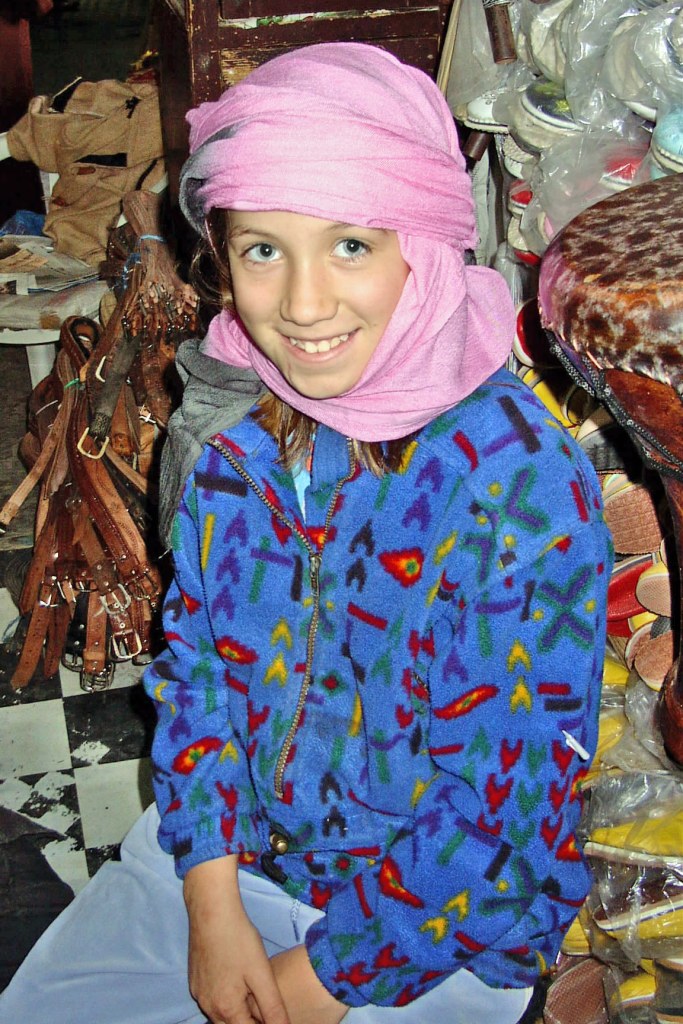
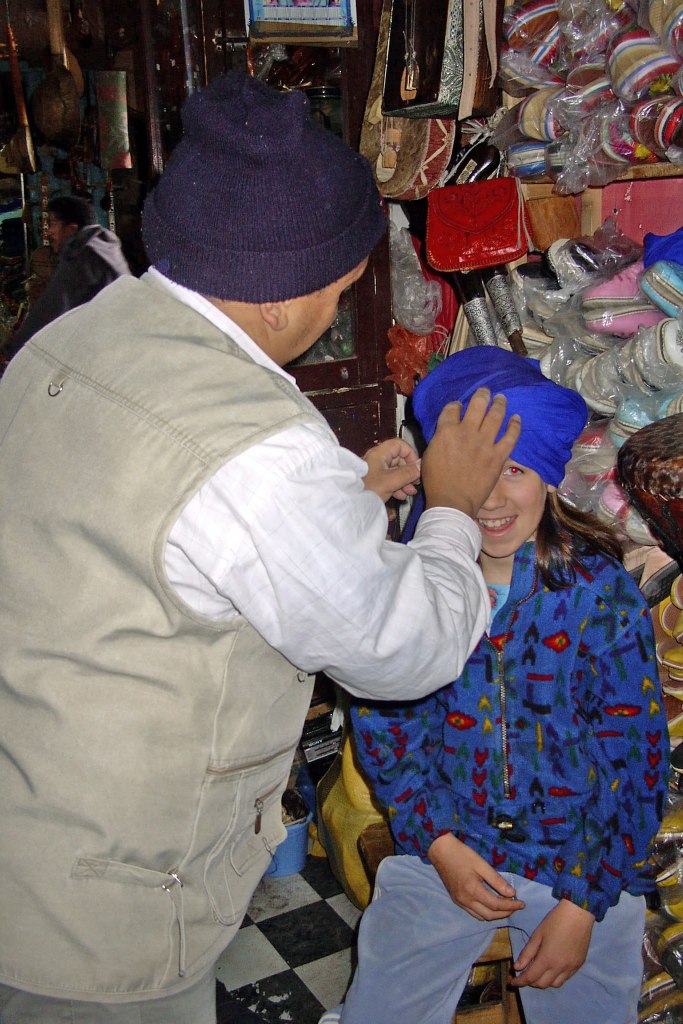
We’ve visited Morocco 3-4 times, including with Maddy and Jackson when we lived in Spain. We especially enjoy Marrakech, but will only visit Agadir and Casablanca on this trip. Several hundred passengers will be taking the 4 hour bus ride from Agadir, our first stop, to Marrakech. We’re not excited about 4 hours on the bus; plus, it would get in the way of Karla’s hammam visit. I support that; I want to see her cleaned up and relaxed.
We’re both noticing a bit of travel fatigue in the passenger group. A couple got evicted for the husband’s aggressive behavior. There are lots of stories of laundry wars as passengers compete for the washers and dryers. The Catholics and Protestants battled over whether there should be a joint Easter service. A woman accused Karla of looking at her cards in beginners bridge; Karla was correctly counting cards (she says). Bus passengers get cranky over the order of departing from the bus and on relative levels of air conditioning or microphone volume. I’m pretty sure that the negativism is coming from trump supporters. I continue to travel with a positive person so it doesn’t bother me much. (Although maybe she cheats at cards.) We are starting to think of what needs doing when we return. And, we’ve both packed one of two suitcases.
Morocco has about 37 million people..mostly Muslim…who speak Arabic and Berber. The area has been inhabited for around 300,000 years. It has been ruled by dynasties for most of that time. For a while, they were squeezed by Portuguese from the west and the Ottomans from the east, but the area has been mostly under control of the Alawi Dynasty since 1631. In 1912 the Spanish and French asserted some control, but Morocco became independent in 1956. It is now ruled by a King and has an elected Parliament. The King can issue “dahirs” which have the force of law and can dissolve Parliament. (It’s trump’s dream.)
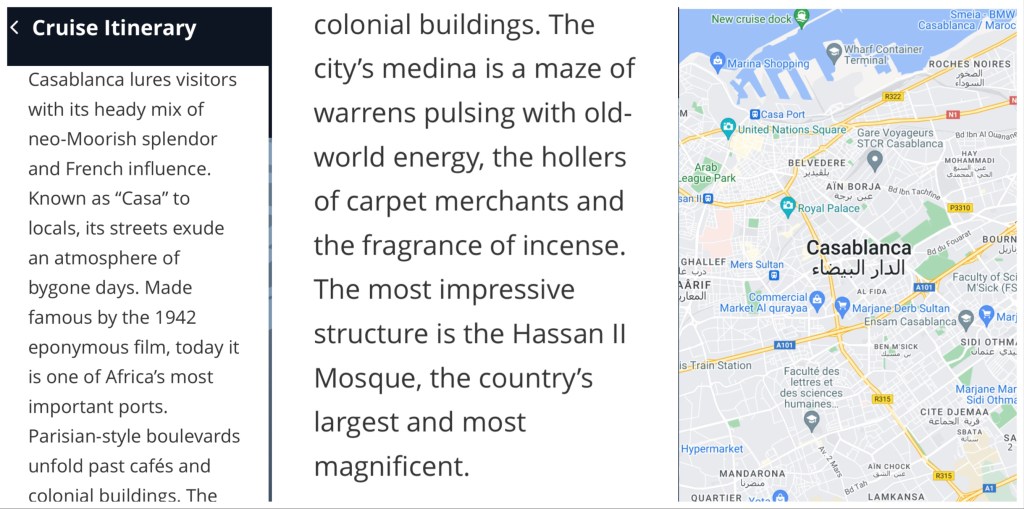
Casablanca is the business and economic center of the country with about 6 1/2 million people. Over half the nation’s industrial labor force lives there. Beyond financial entities, they trade in phosphate, lumber, fishing and fish canning. We’ve found it a bit sterile, but Rick seemed to like it…if you can believe Casablanca, the movie. We’ve been to Rick’s Place, but it was nothing special.
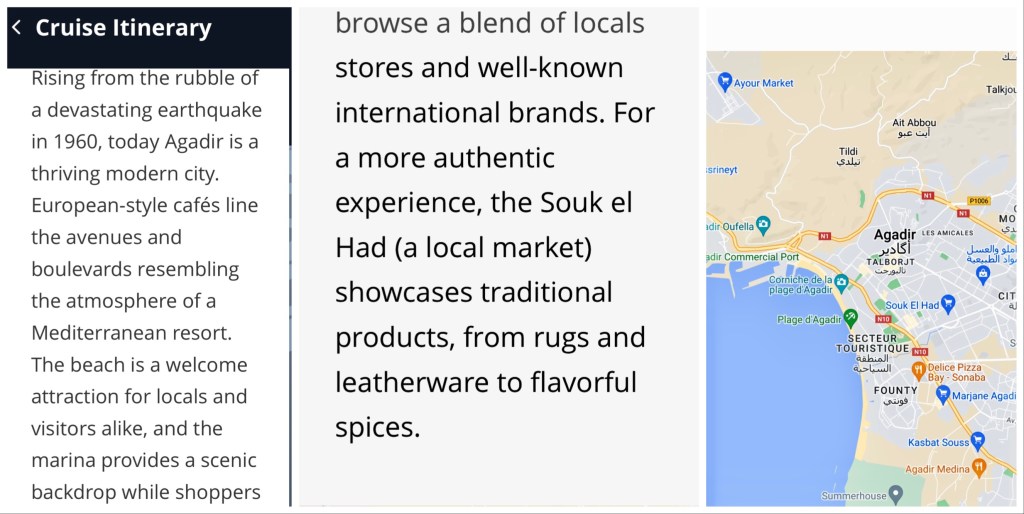
Agadir, a city of 1 million, is about 300 miles south of Casablanca. It has had a spotty history. The city was destroyed by an earthquake in 1731 and became a ghost town.. A rebuilt Agadir was again destroyed by an earthquake in 1960 which killed about 15,000 people. The city was reconstructed a bit farther south. It is now Morocco’s largest coastal resort with about 6 miles of beach. It is a center for tourism and a major fishing port. It exports sardines, citrus fruits and vegetables. A major marketing draw is the Souk El Houd, with over 6000 shops. I need to prepare for Arab traders.
We took a “standard excursion” after Karla’s cleansing…which she may describe.
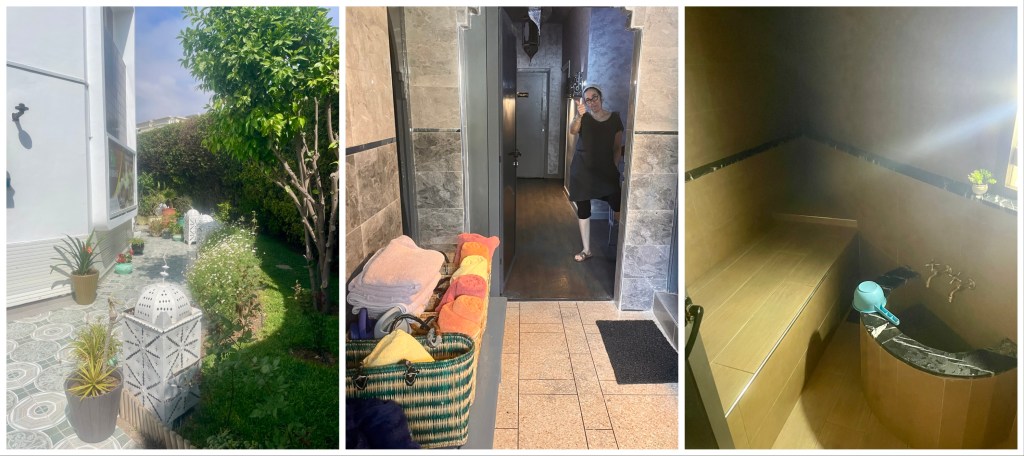
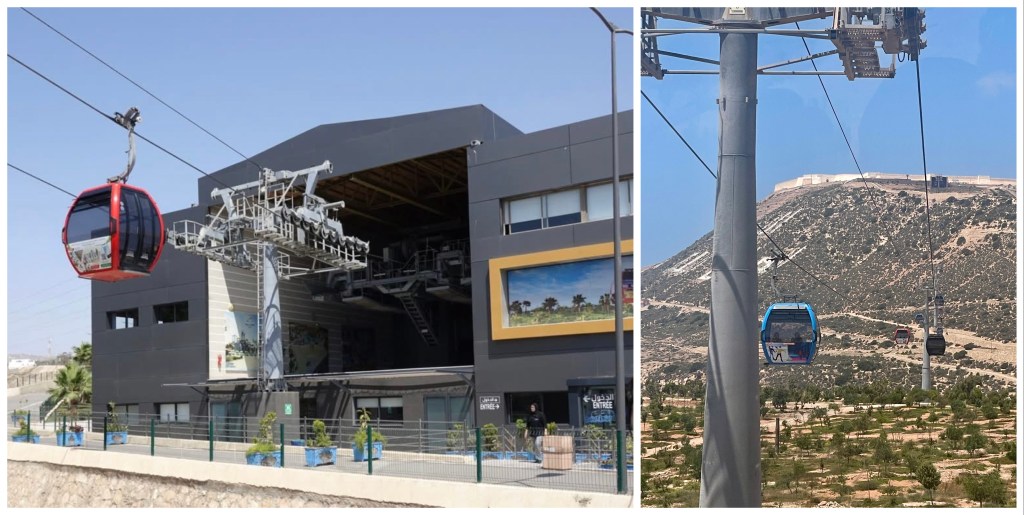
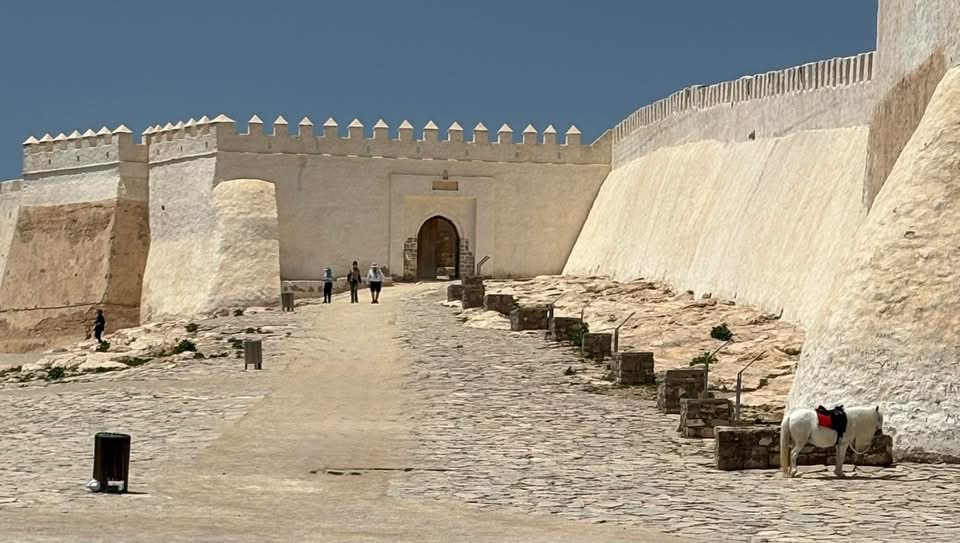
Hammam where I got a nice cleansing, scrubbing (exfoliation) and massage. The first stop was a tram ride to the top of a hill where a kasbah (castle) can be found. It provided a nice view of the city as well as the land where the pre-earthquake city was located. Our guide told us his story of losing all but his mother in the earthquake and also told us of the open spaces below the kasbah where many bodies were buried in mass graves as the rubble was cleared.
Besides the castle…which had innards destroyed in the quake…tourists could ride smelly camels or hold snakes for photos. Of course, there were tourist tables. After that we visited a mosque, botanical garden, small veggie market…all pretty standard. The tour was OK, as was the cold beer Karla stopped for as we entered the ship, ready to head to Casablanca.
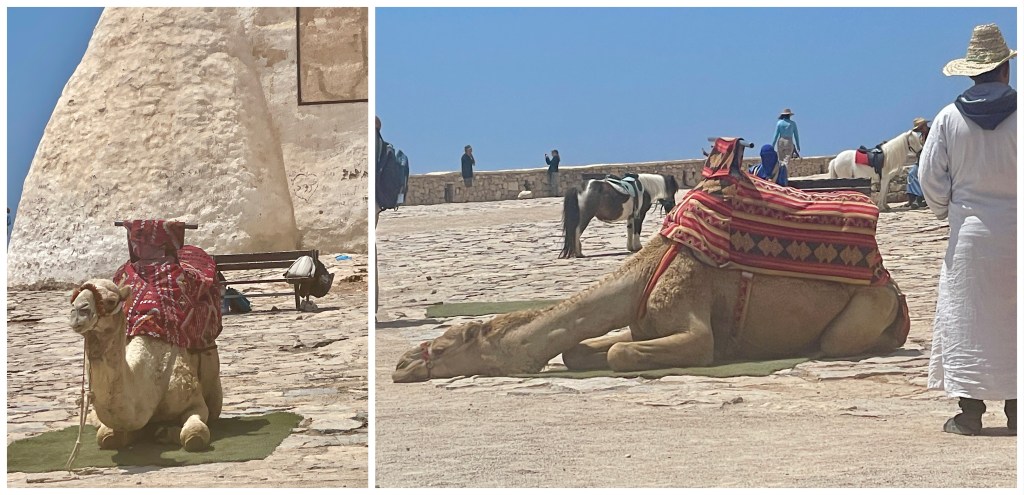
Camels awaiting riders at the Casbah 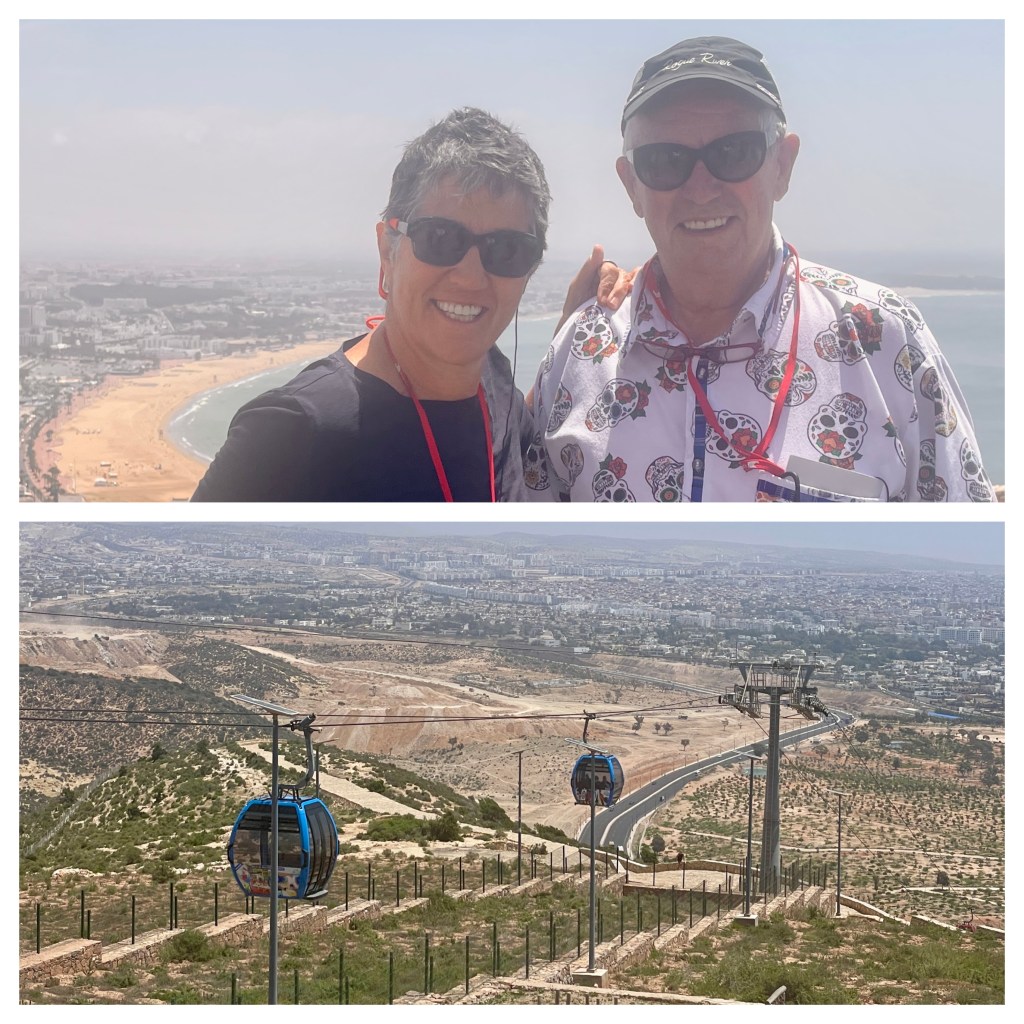
The fields without housing are a memorial site where a lot of the earthquake victims were buried (bulldozed). By law, there can be nothing built and a large open air mosque is located on the site. 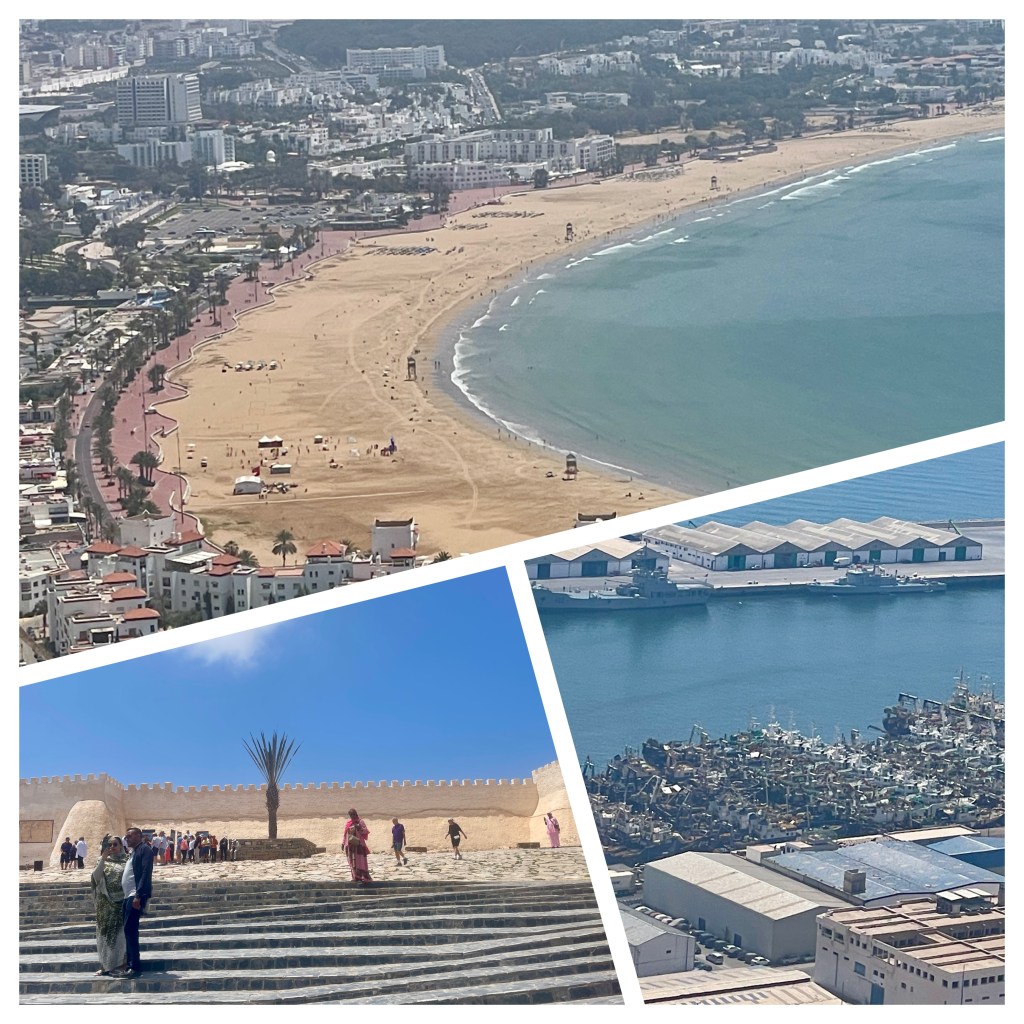
Views on top; impressive fishing fleet bottom right. 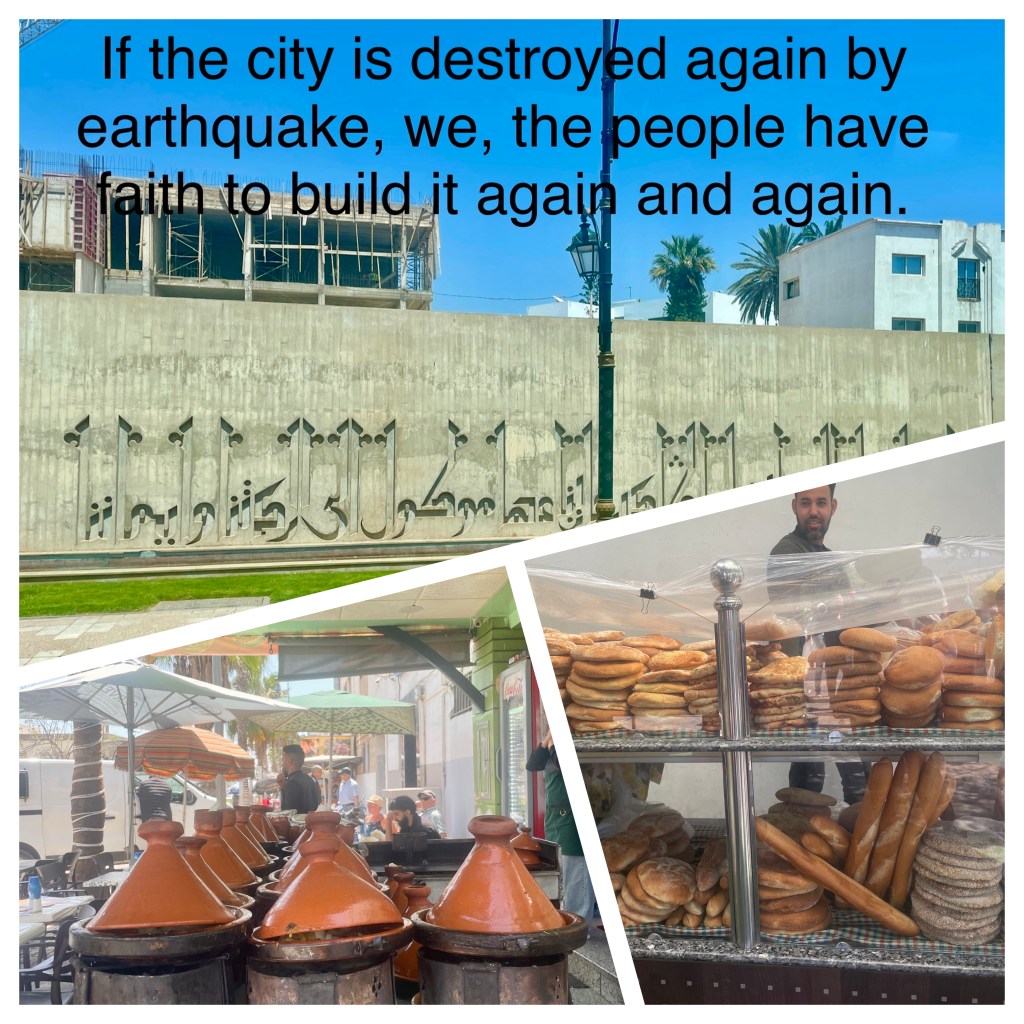
Translated caption on wall; tajin cooking; bread stall. 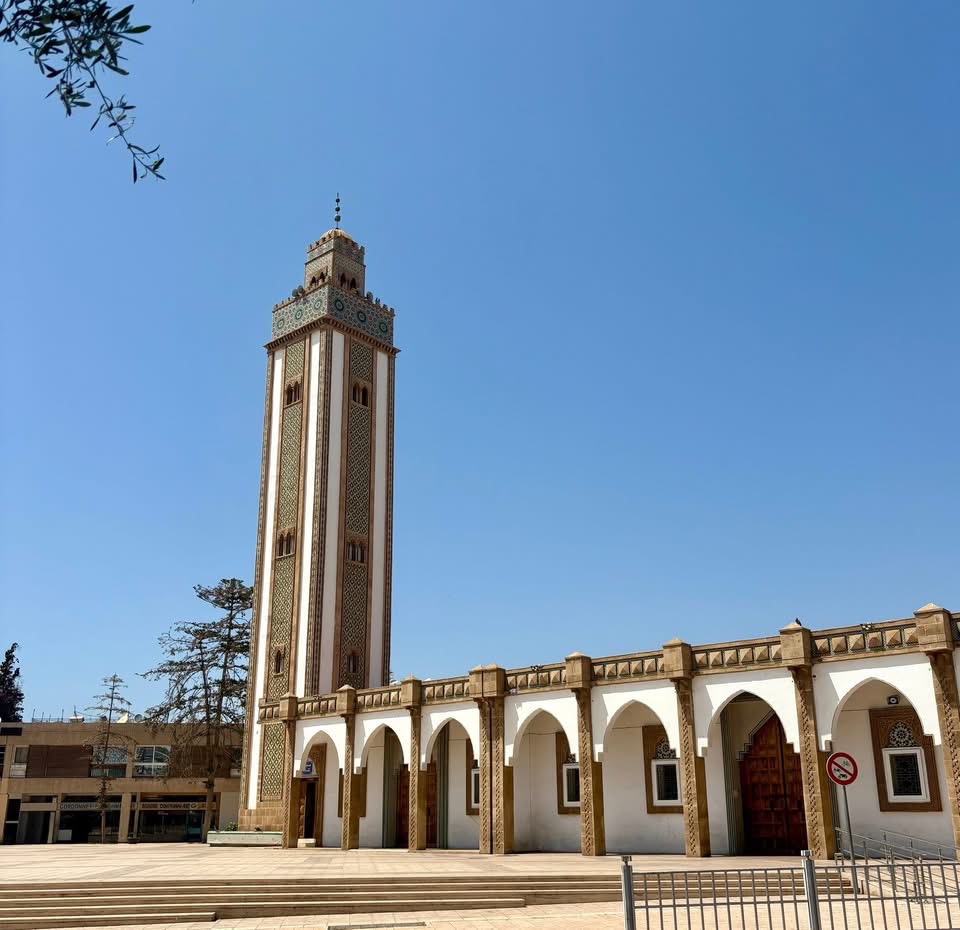
Main mosque in Agadir Since we have visited Casablanca, we decided not take the standard tour. Instead, we walked into town and visited the “Old Medina,” a tangled network of hundreds of small stalls. We arrived early enough so that many still were not open. That didn’t matter since we weren’t looking to buy. We were told that lots of the treasures are from China, India and Nepal so we didn’t miss much. It was fun to see (and smell) all of the fish, fruits and vegetables. It was less fun to see all of the chickens thrown from trucks into a big container and then taken to one stop kill-defeather-slice stalls for sale to passing customers. Probably a Colonel Sanders process we never see. We walked back to the ship and found that some event had delayed the excursions…meaning we had the ship mostly to ourselves. That’s OK. Fifteen thousand steps in the bank and plenty of time for reading.
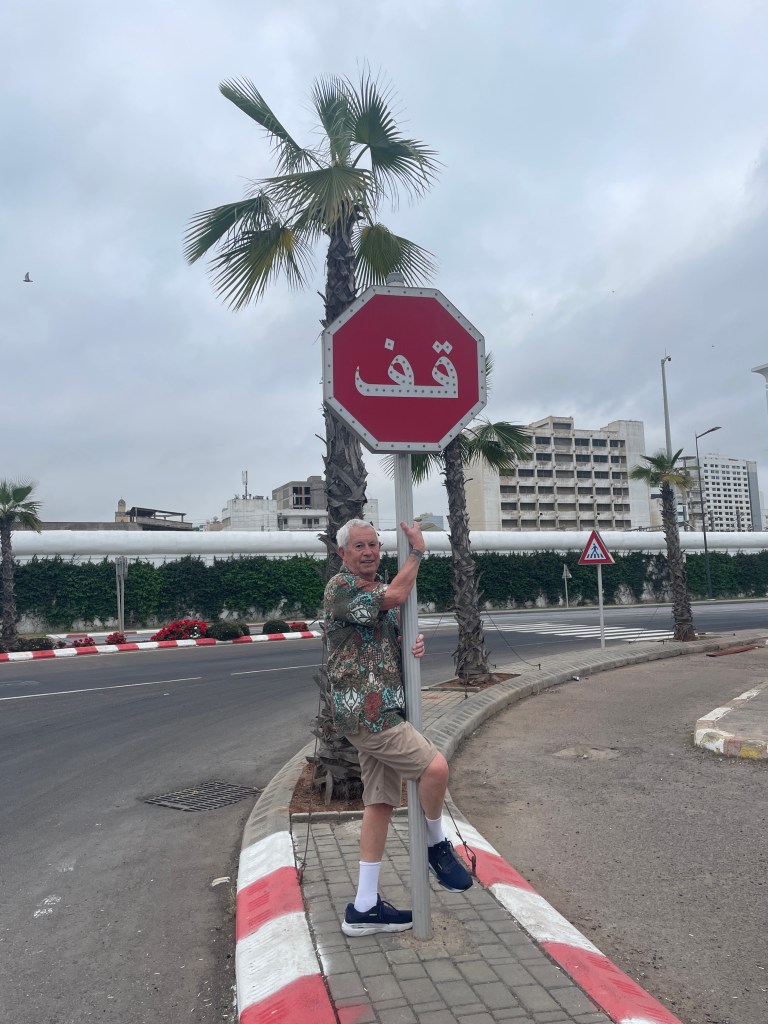
Silly pole dancing practice 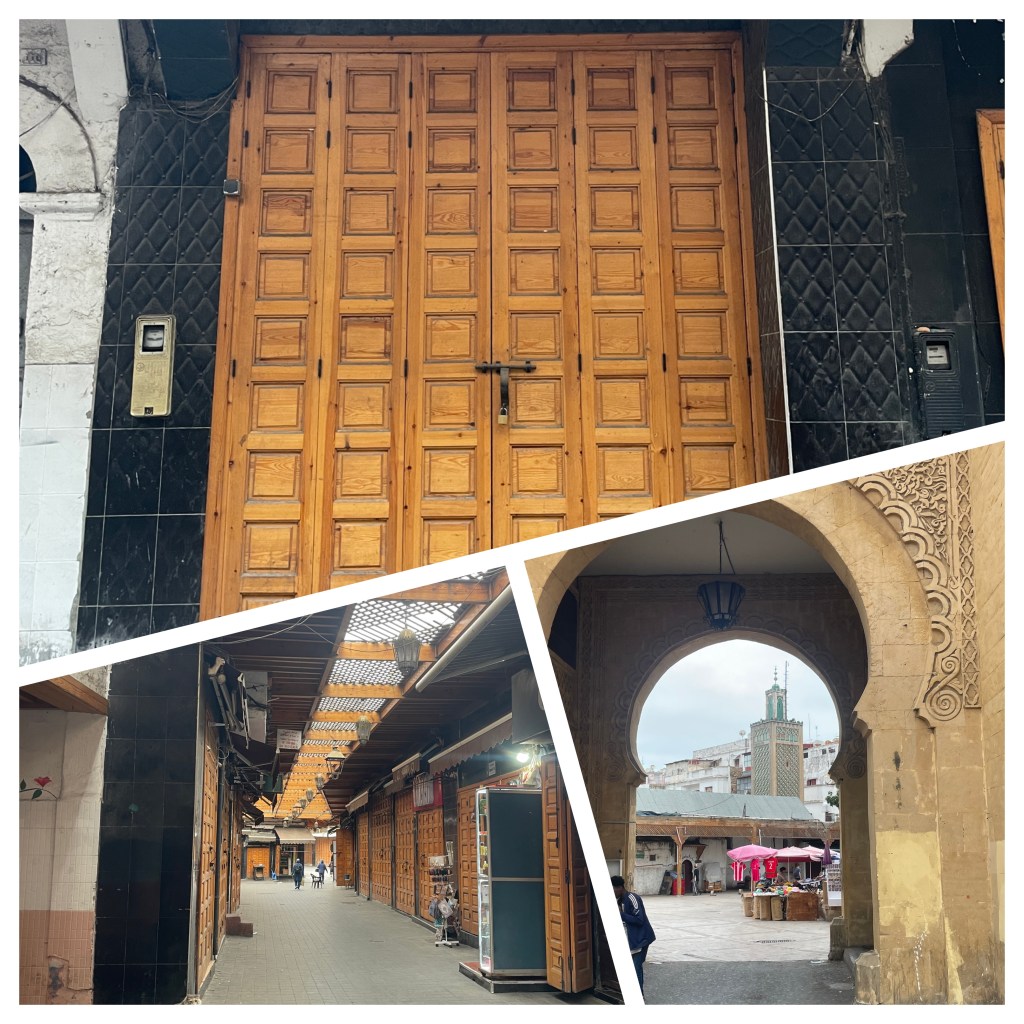
Inside the Casablanca Medina 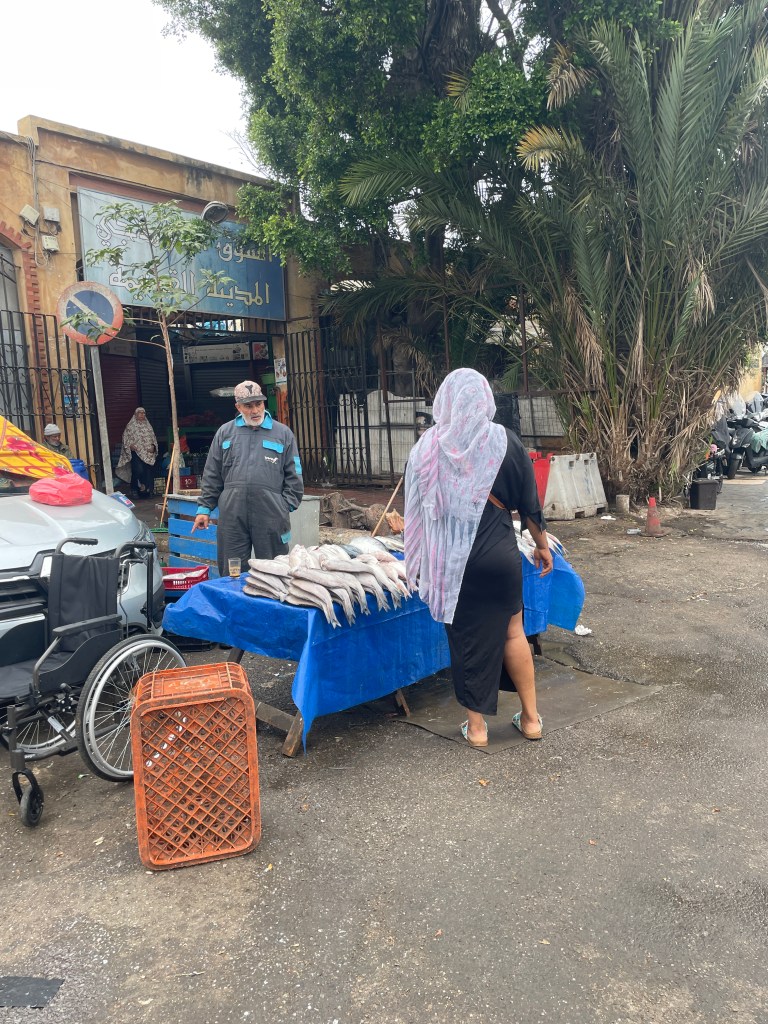
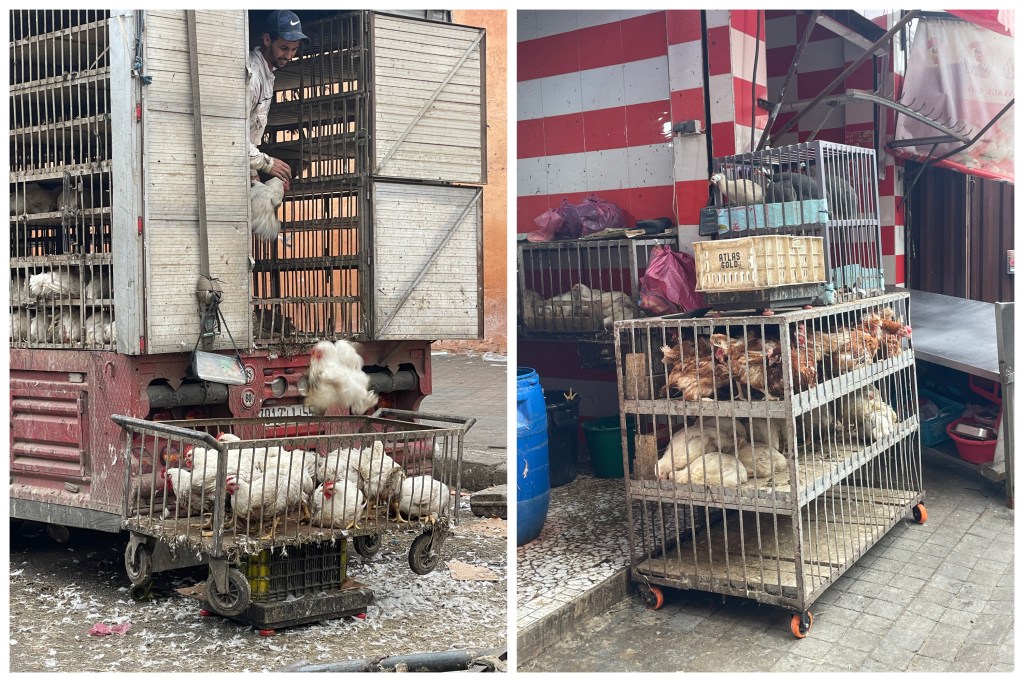
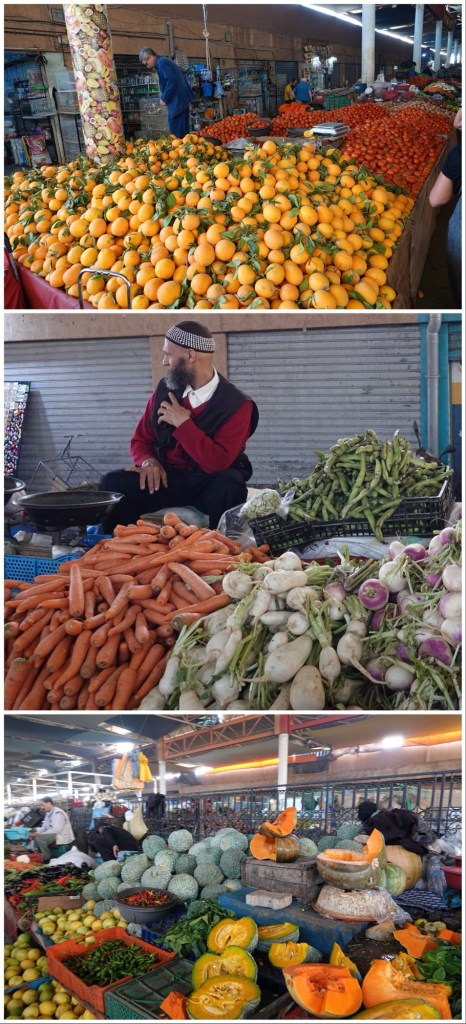
Almost all Morocco’s fruits and veggies are grown in the country (photos by RB). 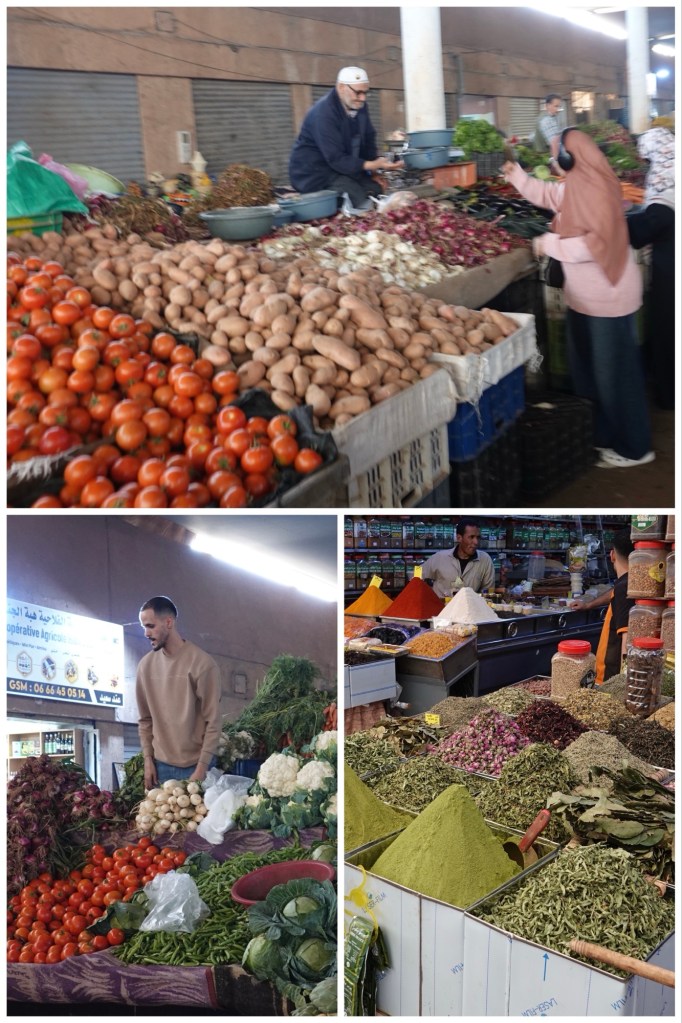
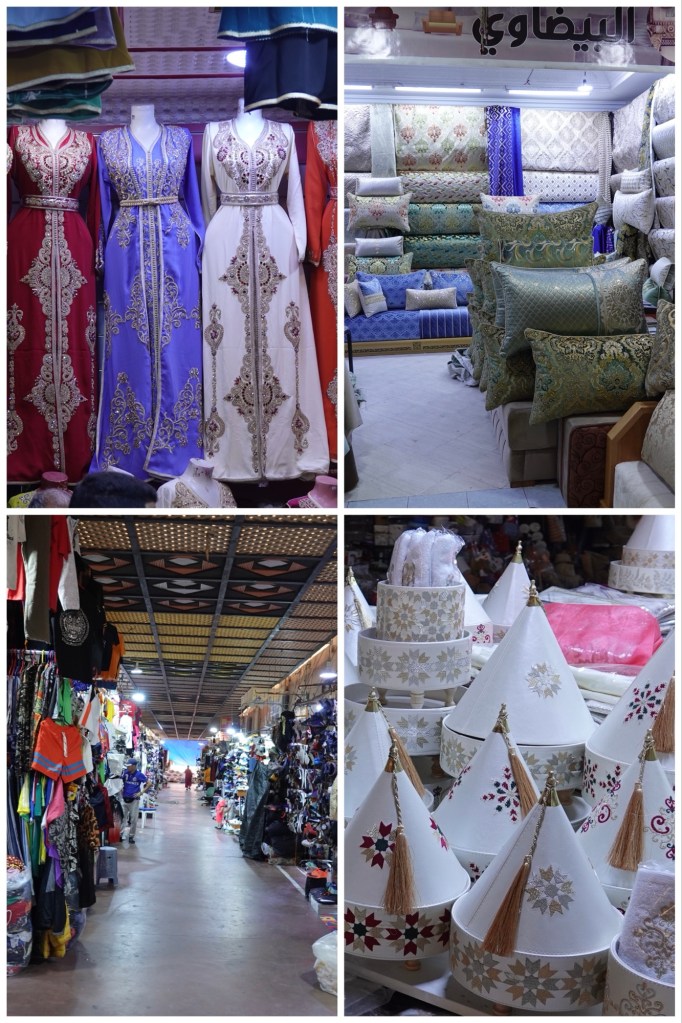
Photo credit: RB 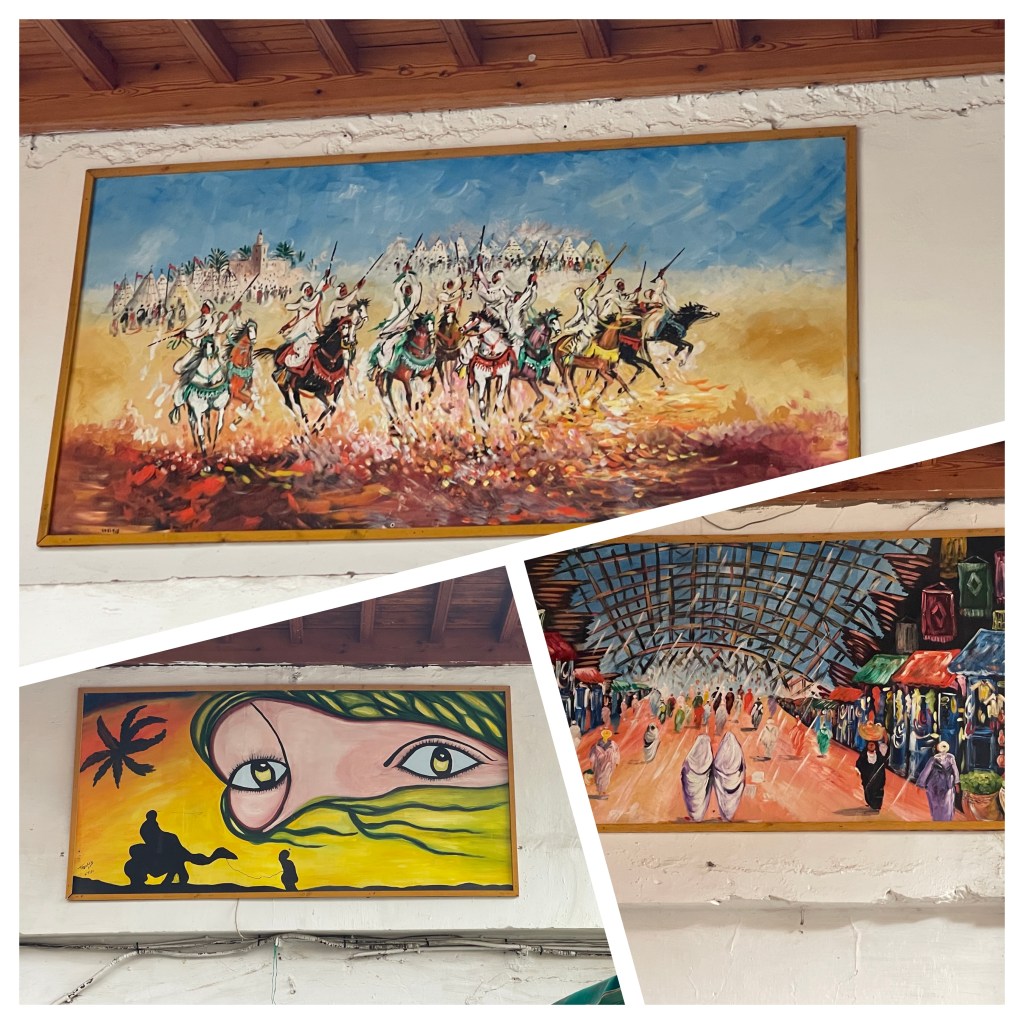
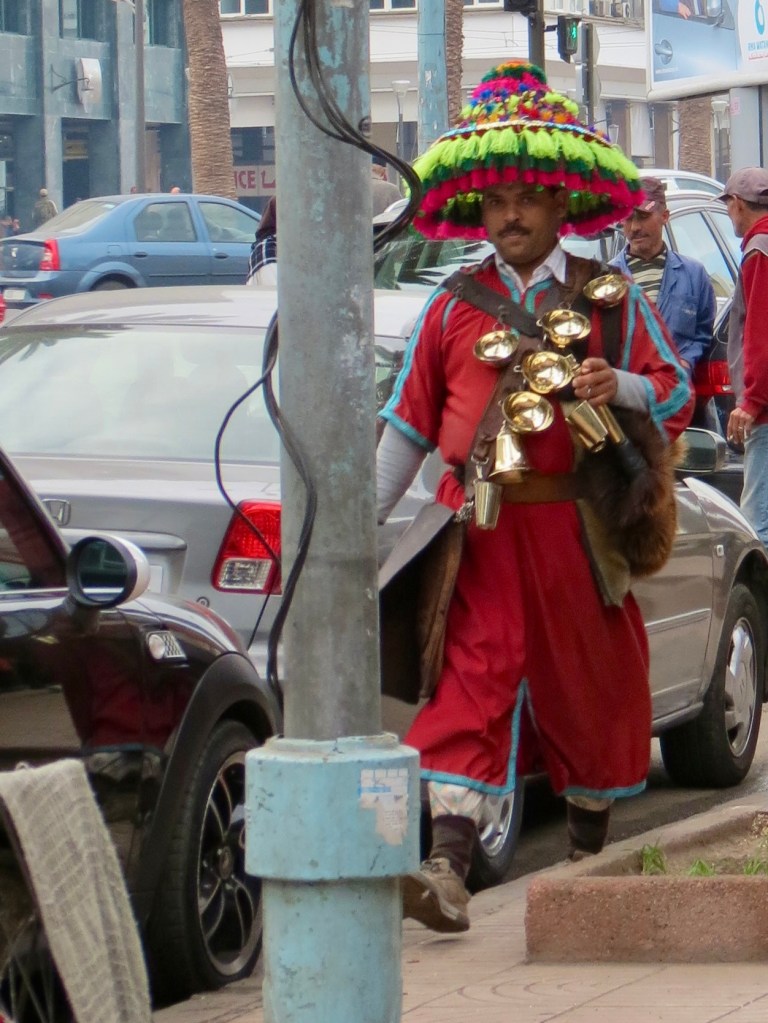
Medina wall art 2012 Visit
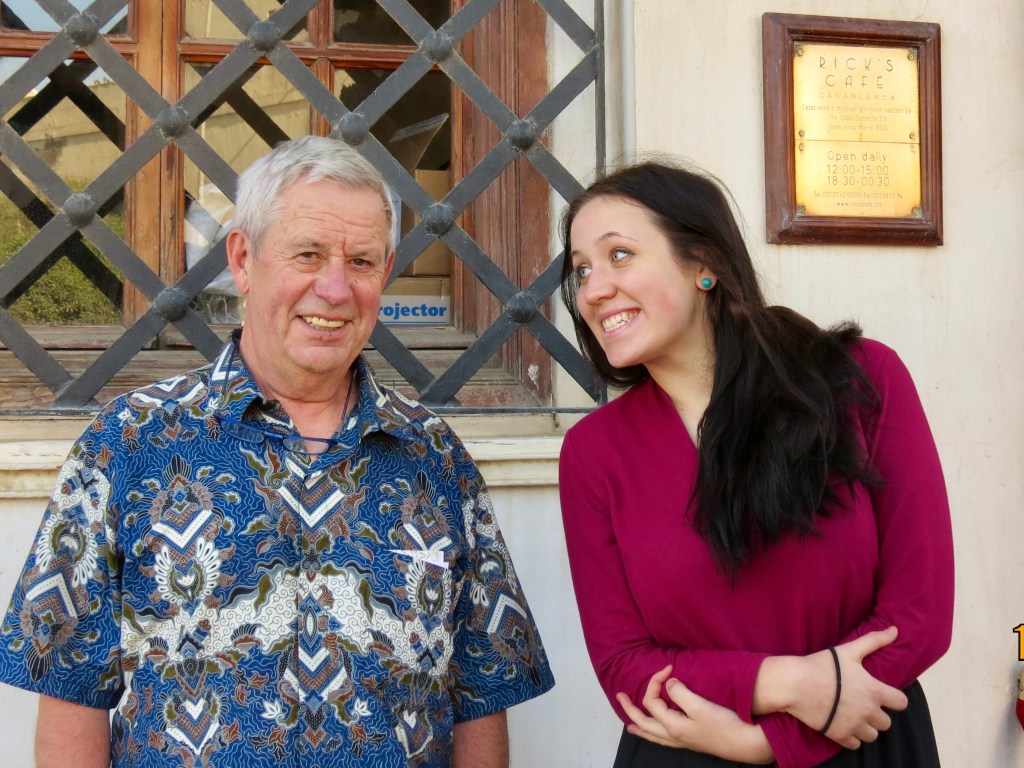
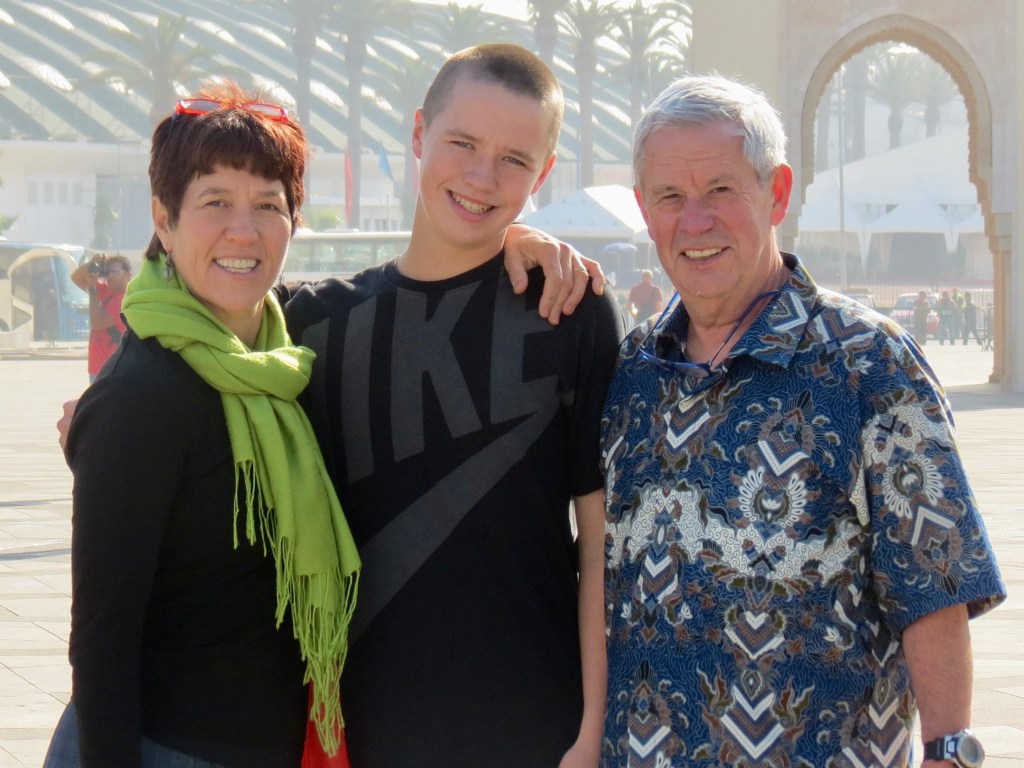
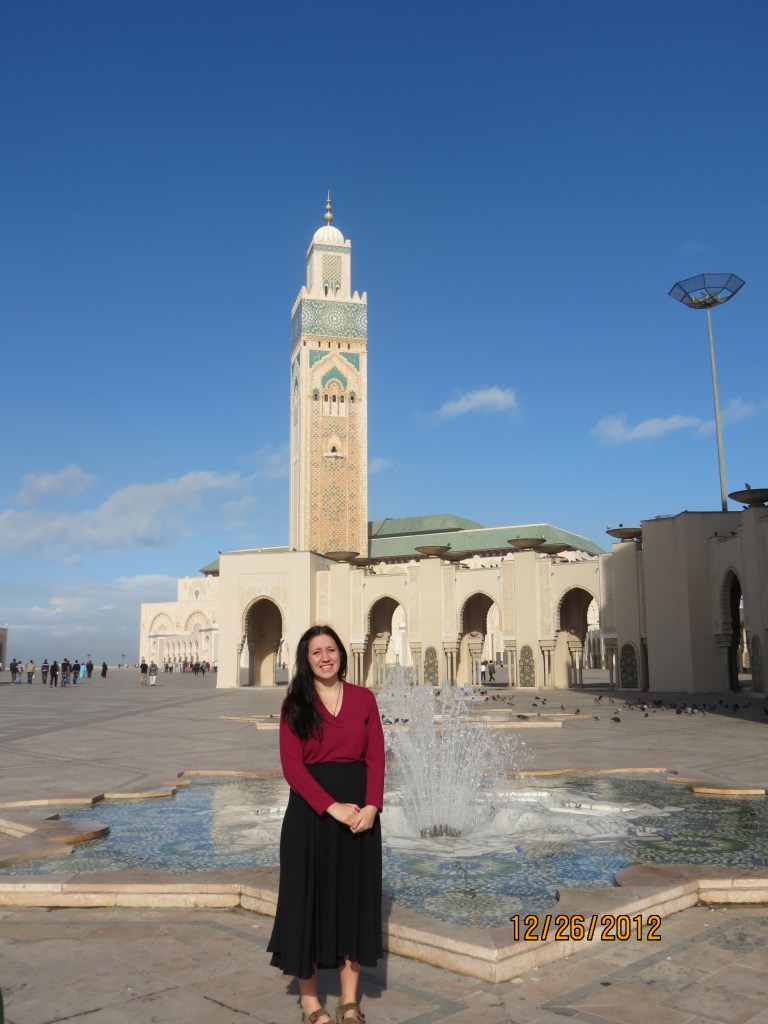
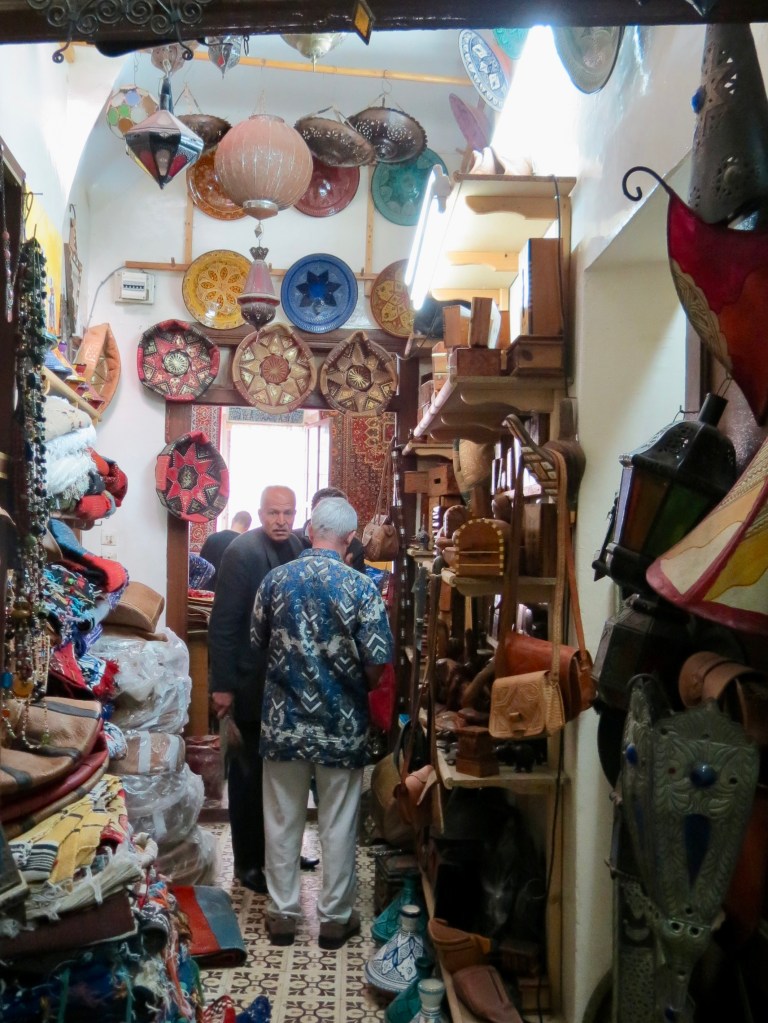
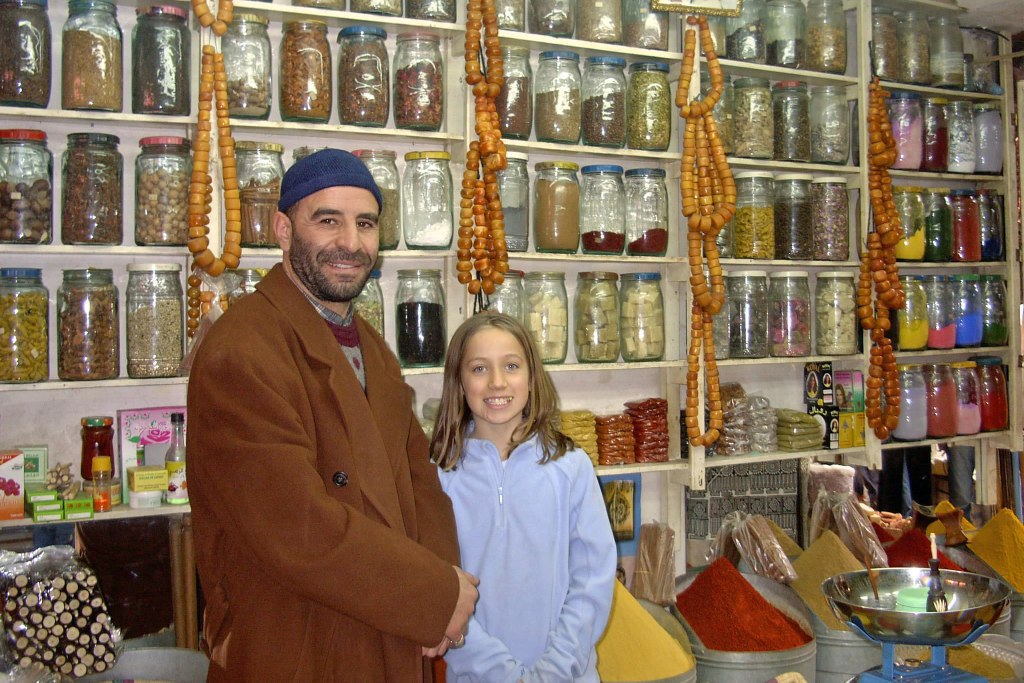
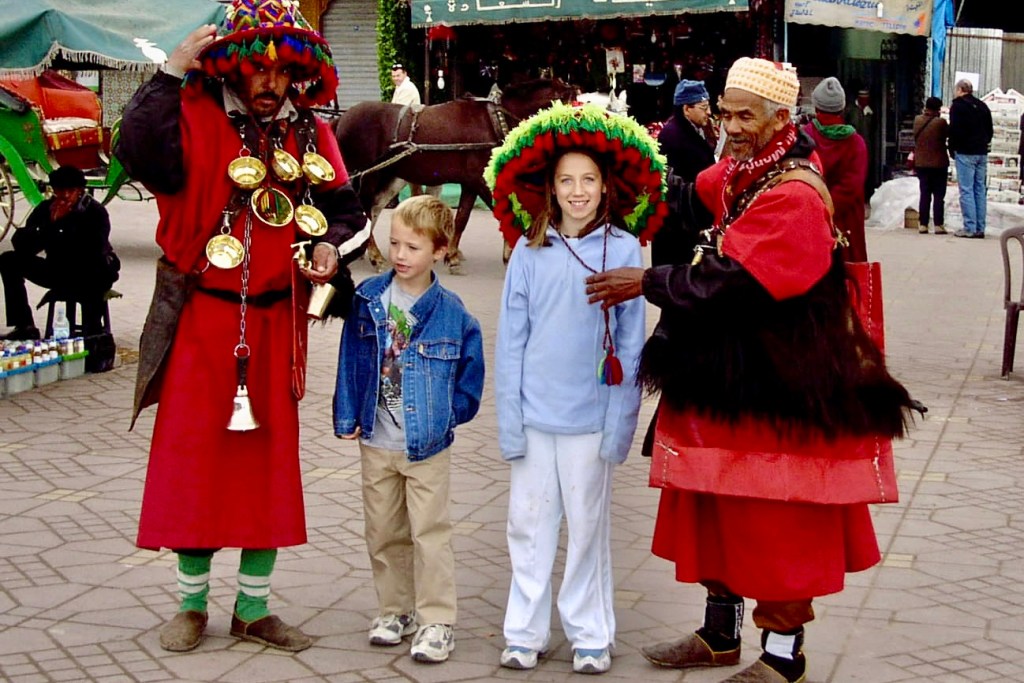
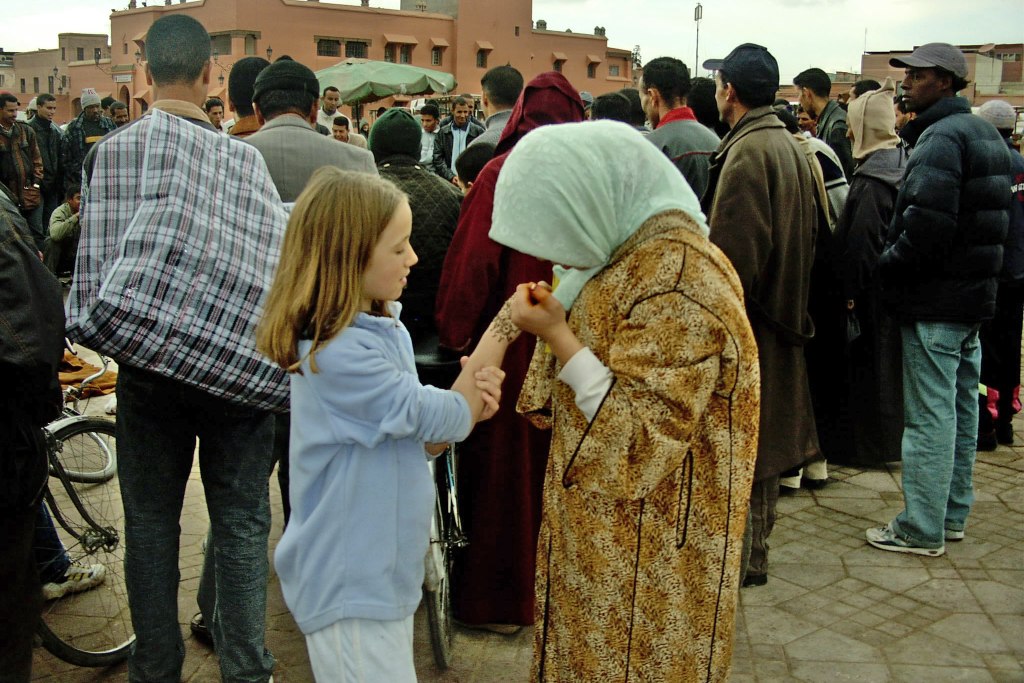
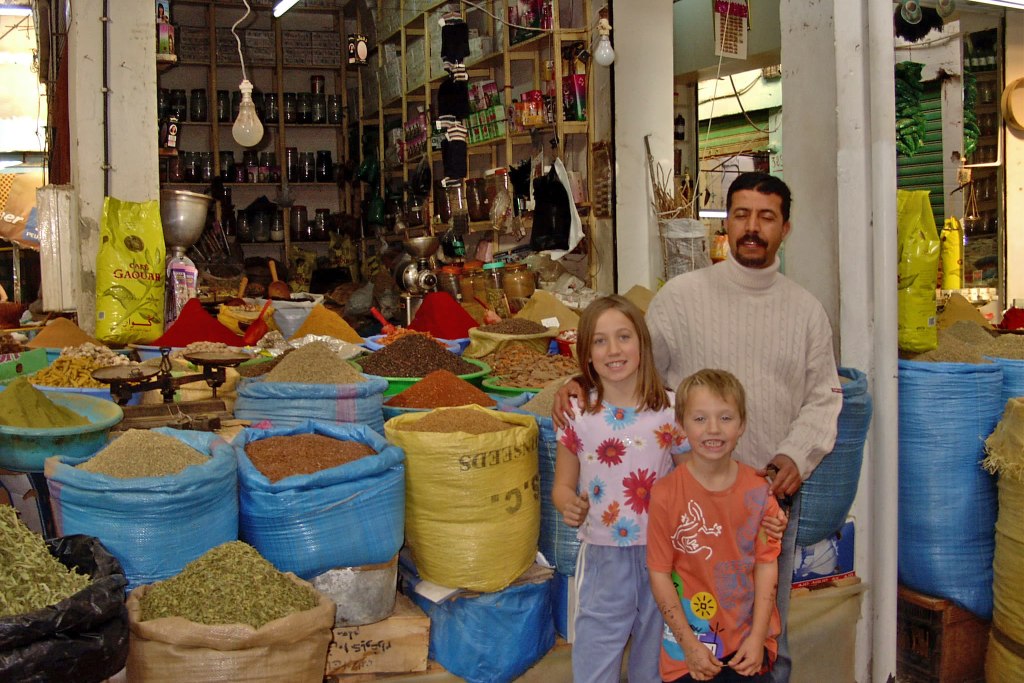
2005 Visit
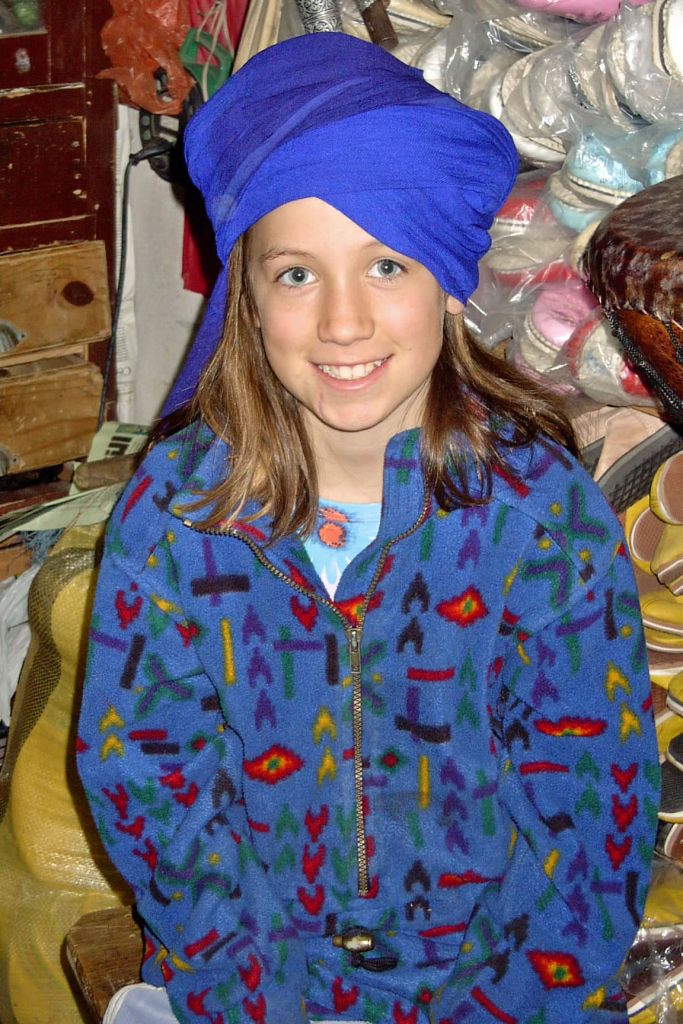
Toshiba Digital Camera 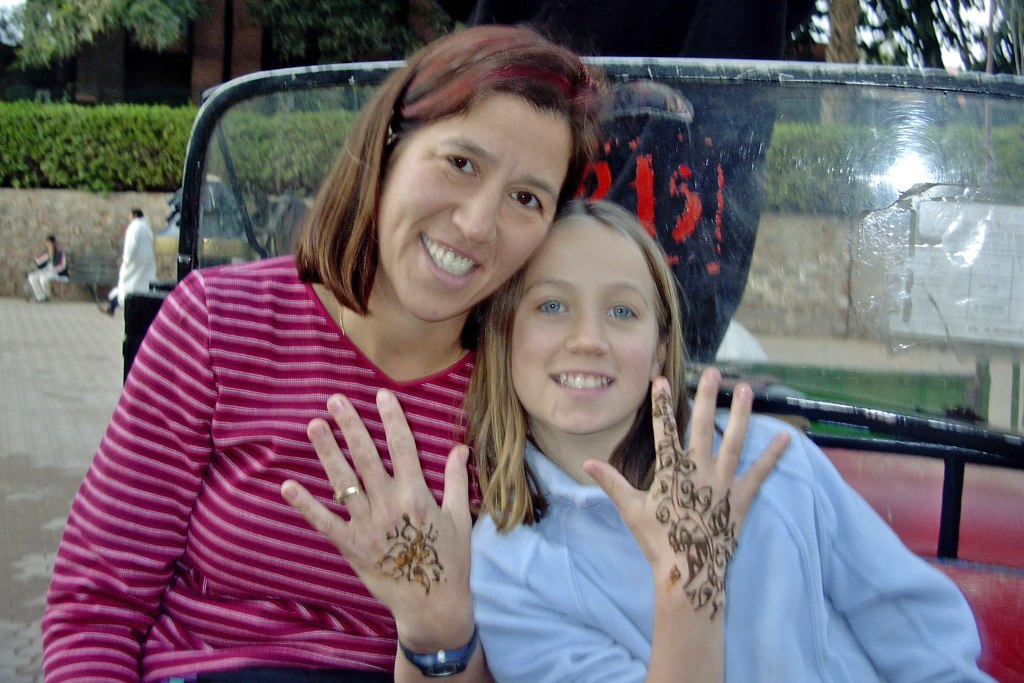
-
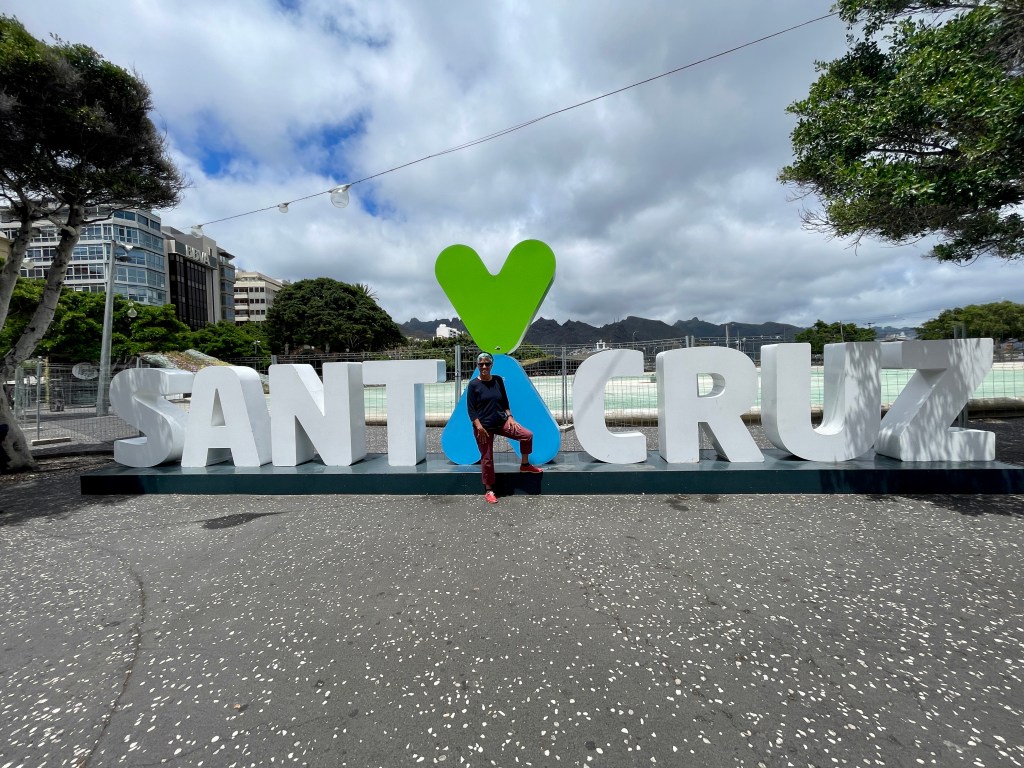
Santa Cruz de Tenerife, Canary Islands
April 22

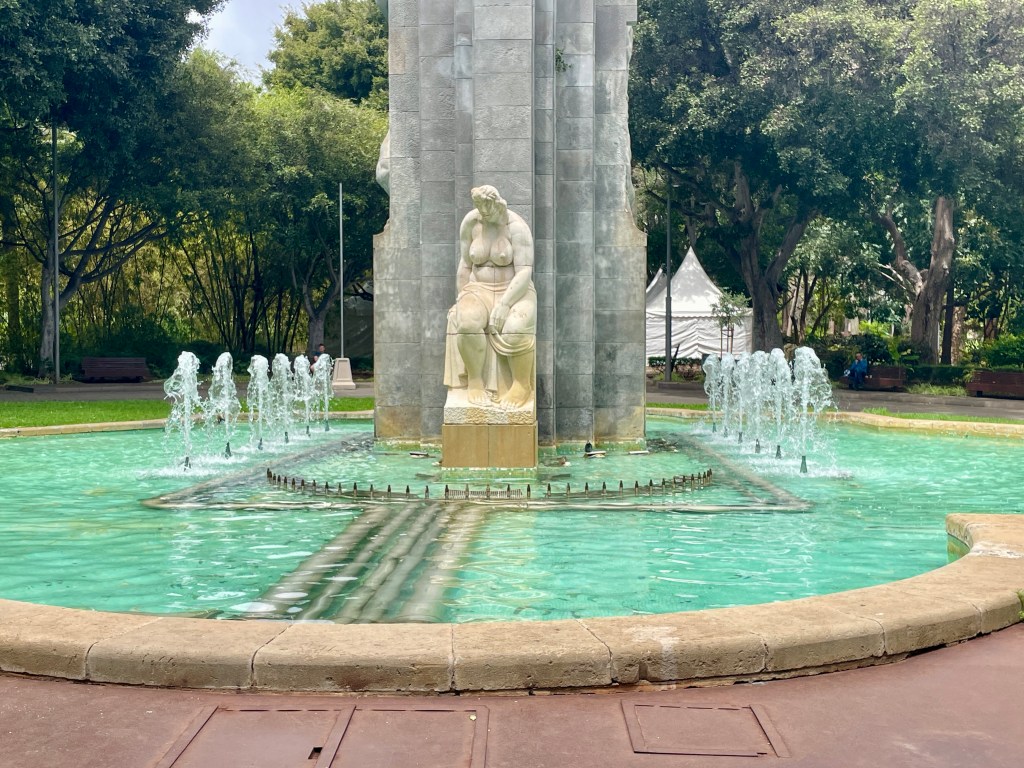
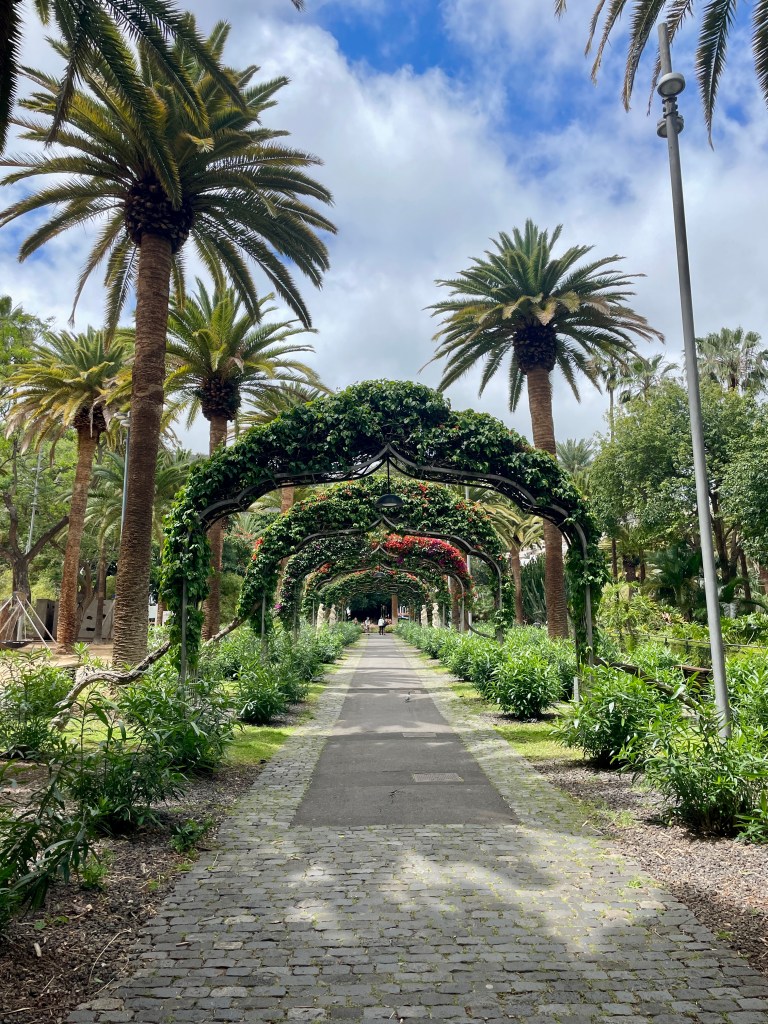
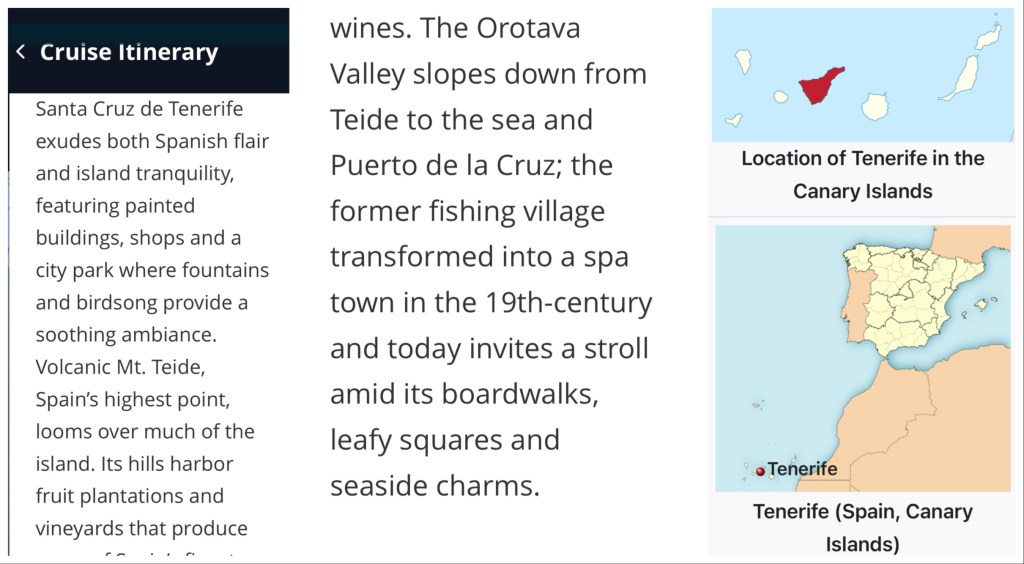
We last visited the Canary Islands 12 years ago with Maddy and Jackson. That was on our last ever cruise with Holland America. The Canaries have a population of about 1 million; 200,000 of them live in Santa Cruz de Tenerife, one of the 2 capitals. The islands are an autonomous community of Spain. It’s markedly different than the African countries we’ve just visited. ..an upscale tourist vacation spot for Europeans.
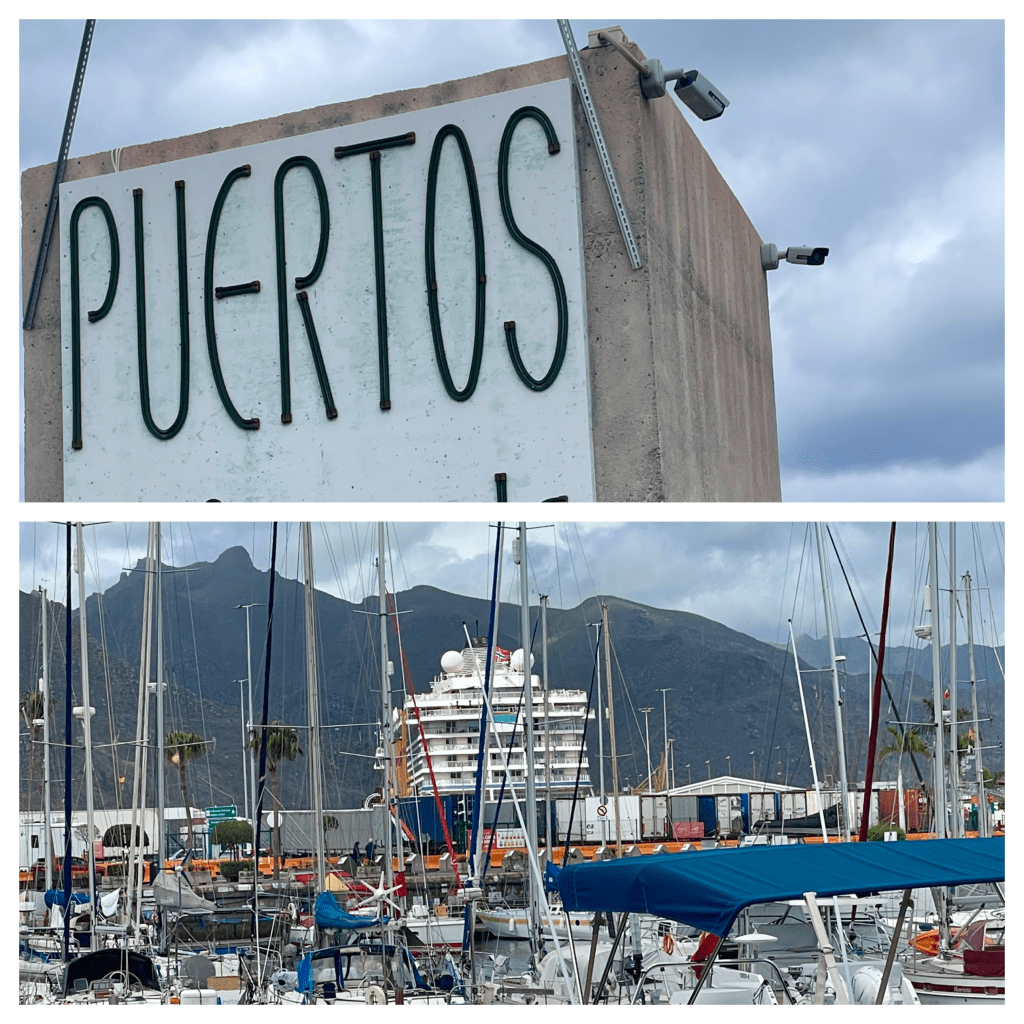
Our ship in the background The islands were populated by Guanche Berbers as early as 200 BCE who lived primarily on agriculture, fishing and shellfish. The Spanish conquered the islands in 1494-96 and were able to dispense with a majority of the residents by spreading smallpox and influenza. The Spanish settlers planted sugar cane, wine grapes, plantains, and cochineal (these are bugs that live on cactus used for dyes.) The location became a critical supply spot for ships going to the Americas and around Africa, providing water, vegetables and meat. With the construction of the Suez Canal and decline of the slave trade, the economy declined. A number of residents emigrated to Cuba and Venezuela, Tourism has grown since the late 20th century and the economy is doing much better.
We entered the port with choppy waters, 20 mile winds and a forecast of rain. We prepared for our whale watching excursion with plenty of clothes. However, we had a low wind, 75* day with no rain. We saw plenty of pilot whales…short fin, of course…on a relaxing 4 hour cruise. It included sangria and a rendition of paella (Canarian rice). The day was pleasantly uneventful. Karla went to town upon our return and found it to be some flavor of charming.
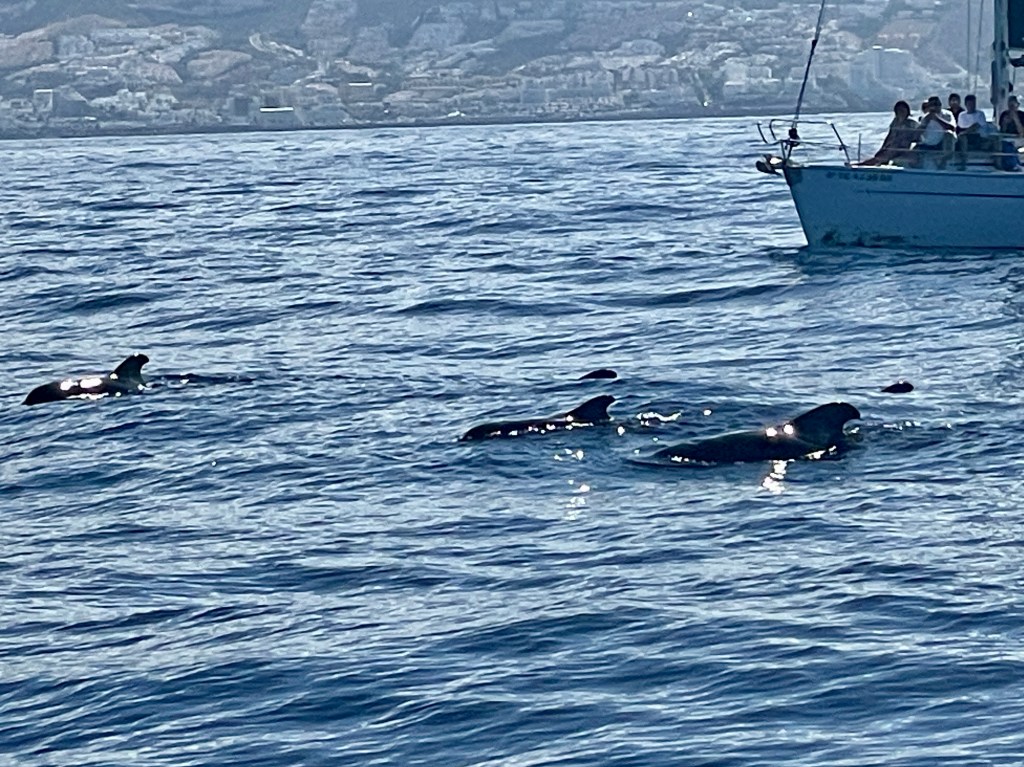
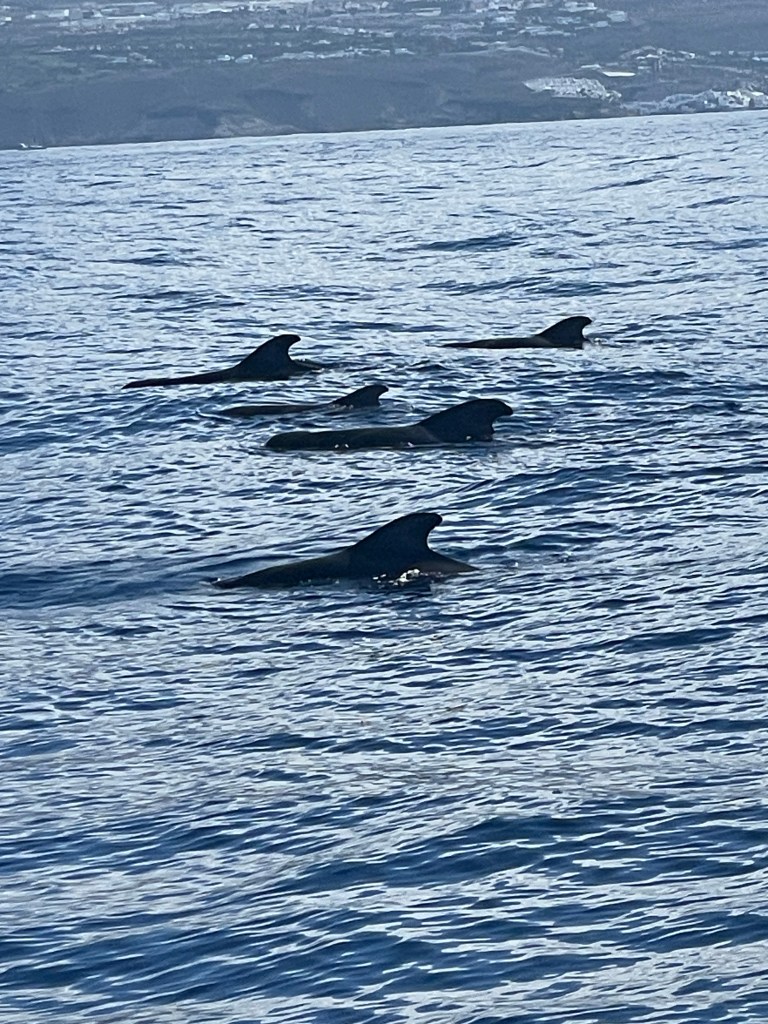
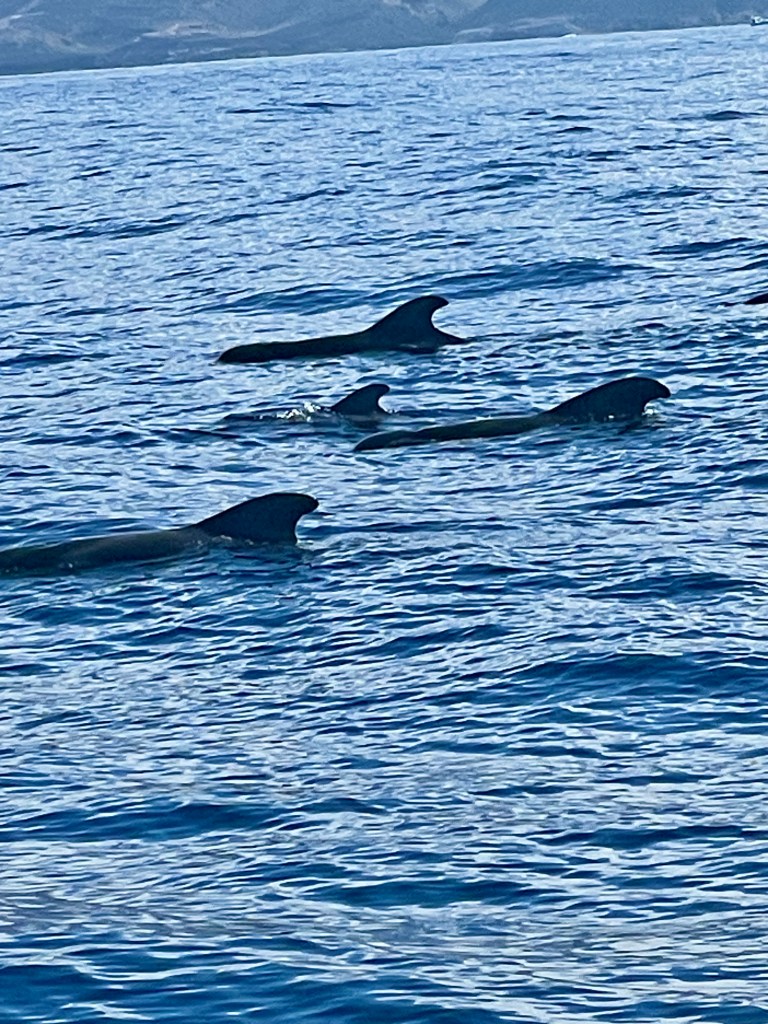
Short fin pilot whales floating on the surface in sleep; like birds and other sea mammals they sleep with half a brain in sleep mode and the other not. 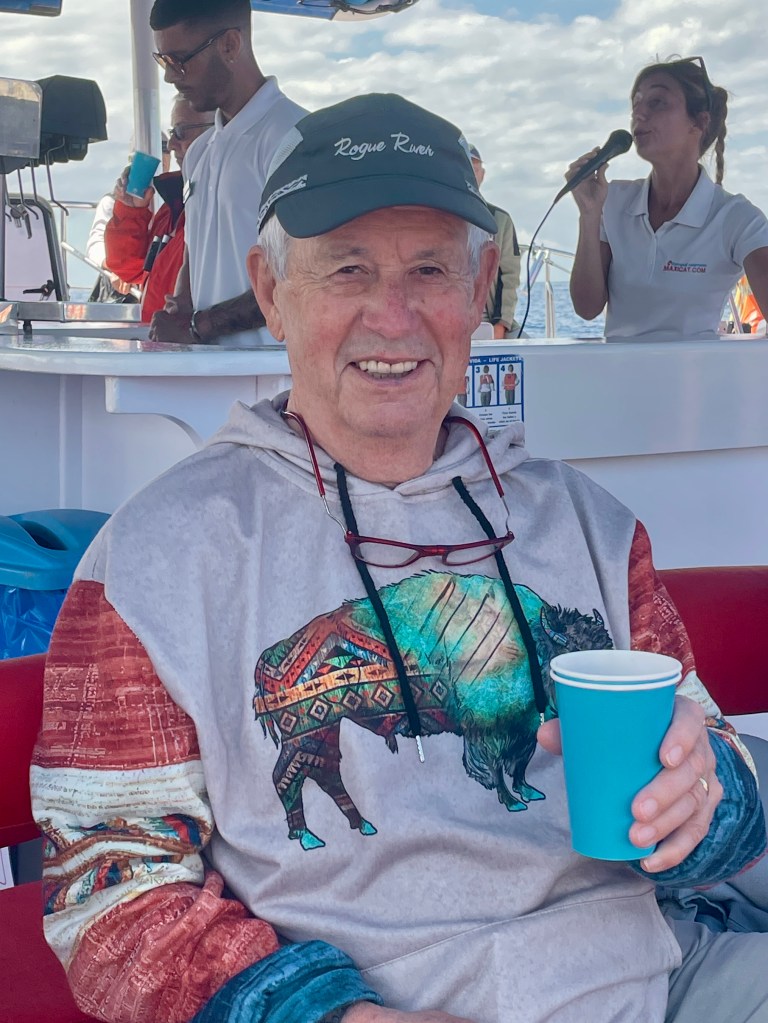
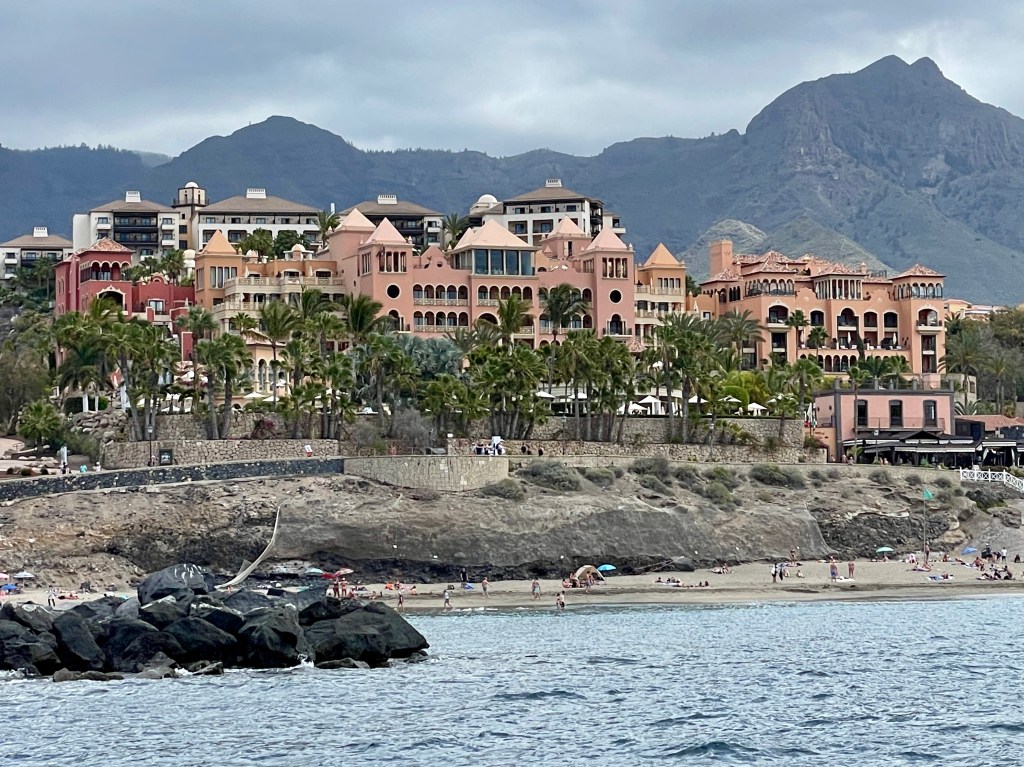
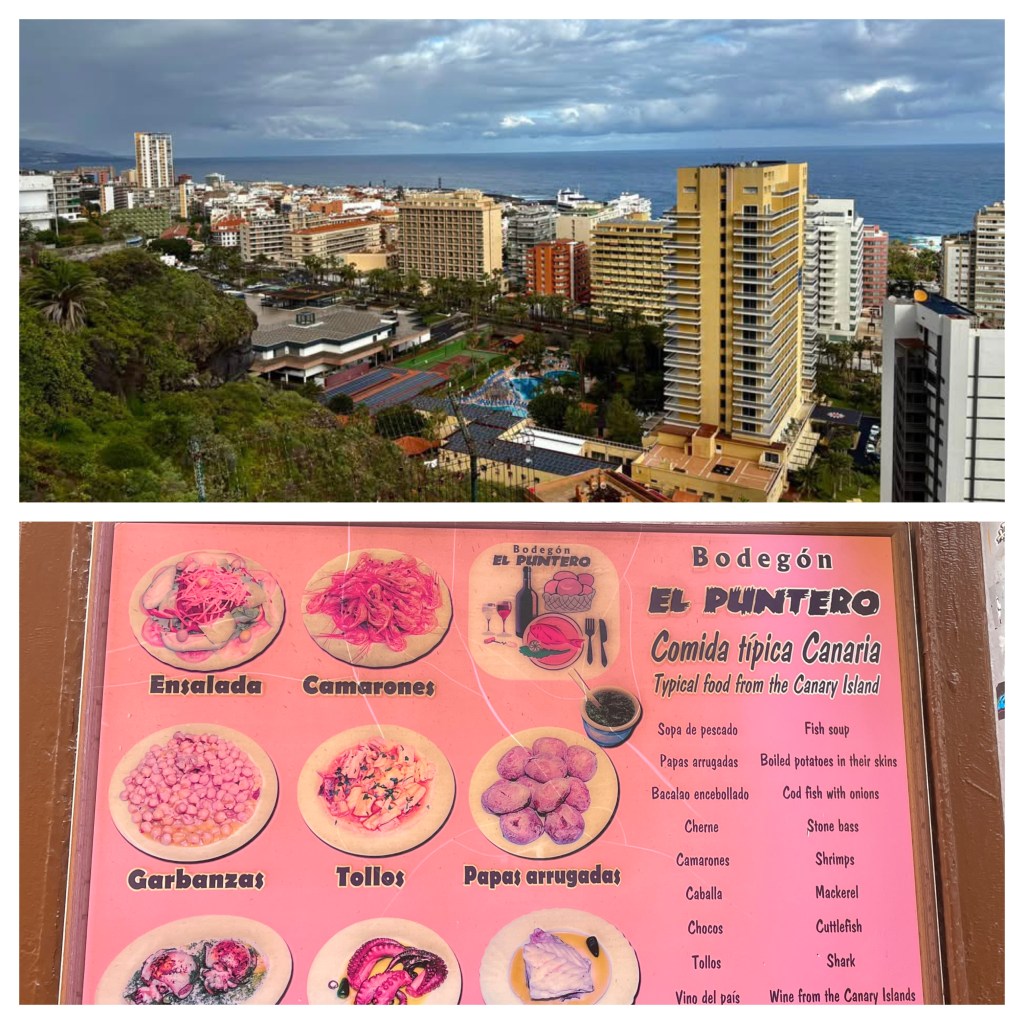
Waterfront condos and hotels; taste of Canaries 
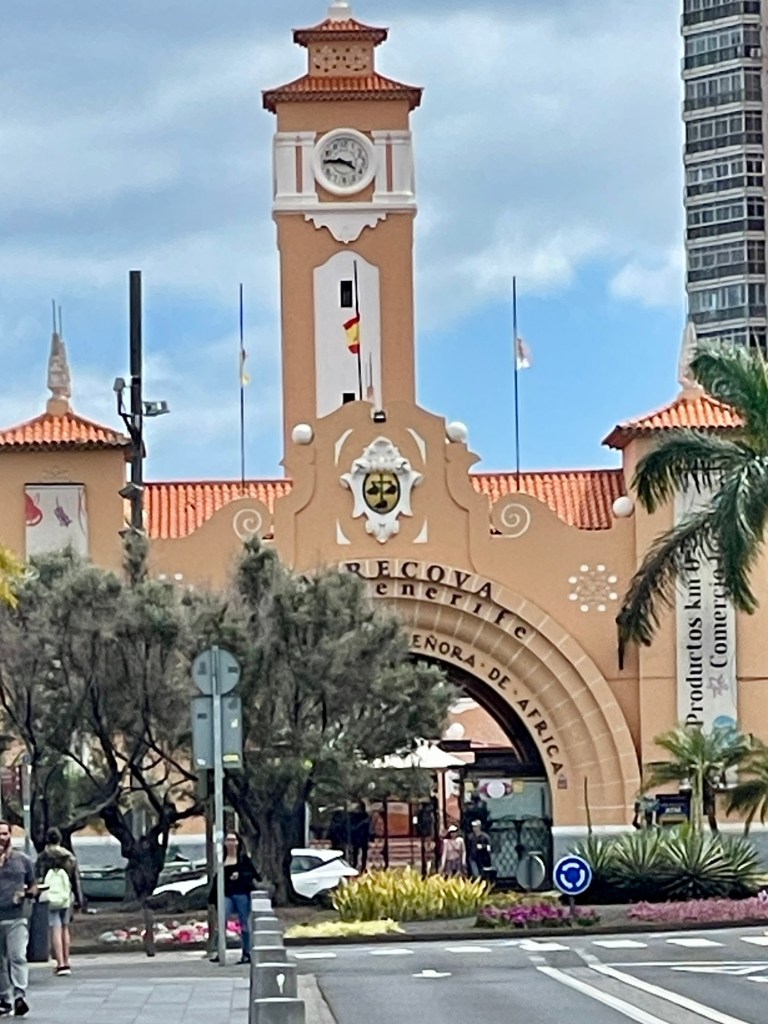
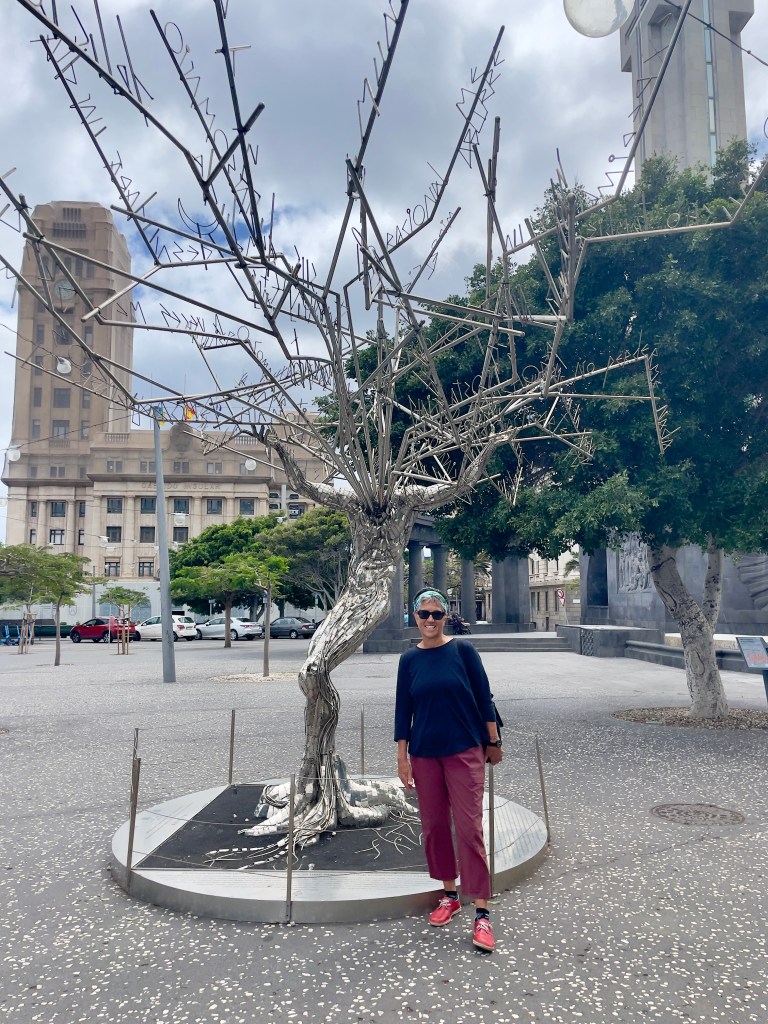
Nice downtown; top right pedestrian street and memorial to those who died due to terrorism; below the African market and a statue of an Atlas carrying the worries of the world on his shoulders. (the worries are the branches). I stayed on the ship to review trump’s most recent Truth Social posting….which follows.
“Everything is going GREAT! People are saying that this is the most impressive start for a president… EVER. The stock market is a bit yippy, but that’s driving people to buy Trump Crypto so it’s OK. It will get better once we dump Powell. I see that the Pope died. He was OK on some things, but BAD on immigration. I’m talking to Elon about putting some money into the next pope election. Think of what we could do if we could shake up the Vatican and get rid of the waste, fraud and abuse. What about JD as the next pope? Or, Pete? He has run a. couple non-profits so could bring experience and it might calm his critics. I bet he could get the Vatican to pay its fair share of defense costs. Then, there’s Easter. I know that Jesus wrote the Bible and everything, but he could have done better. I’m not saying he was a loser, but he died with next to no estate. If I were in his sandals, I would have made a deal with the Jews or Romans or whoever and beat the rap. Then, a bread and wine franchise could have dominated the market….especially with negligible raw material costs. He could have been successful rather than wandering around in old robes. Closer to home, we’re cutting off aid to Africa. Those Africans used to come to America and work hard. Now, lots of African countries have 30-40 percent unemployment. If they don’t work hard, why should we help. My father gave me a couple bucks to get me going. Why don’t their fathers do that too?”
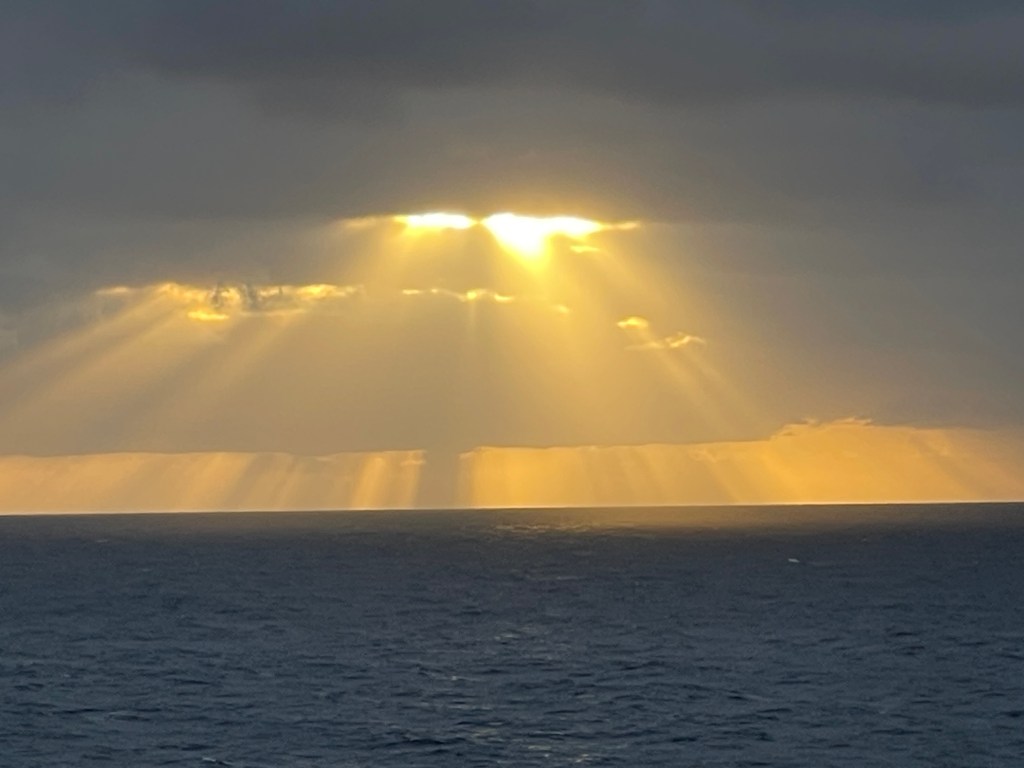
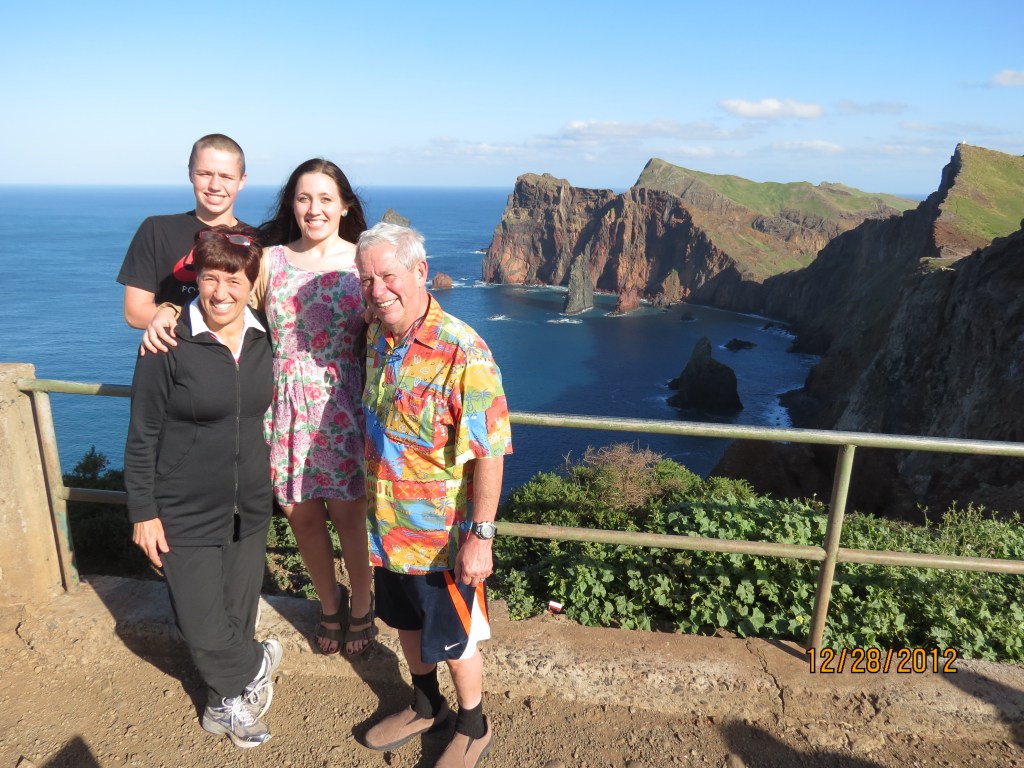
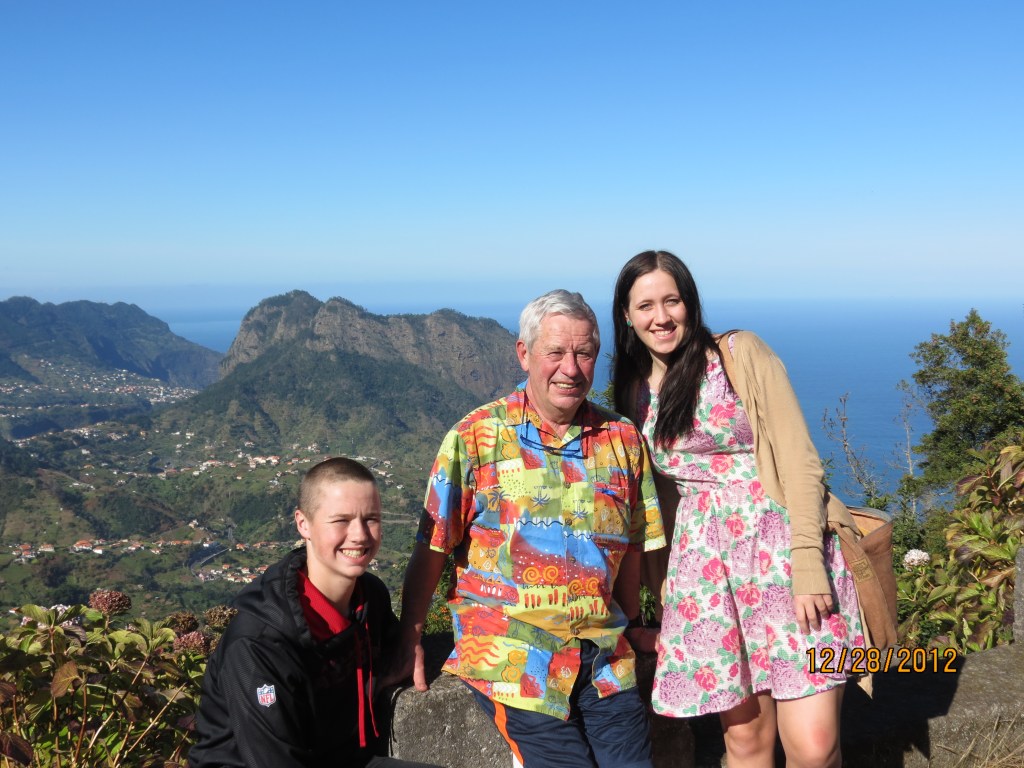
Sunset as we departed. 2012 Visit with Kids
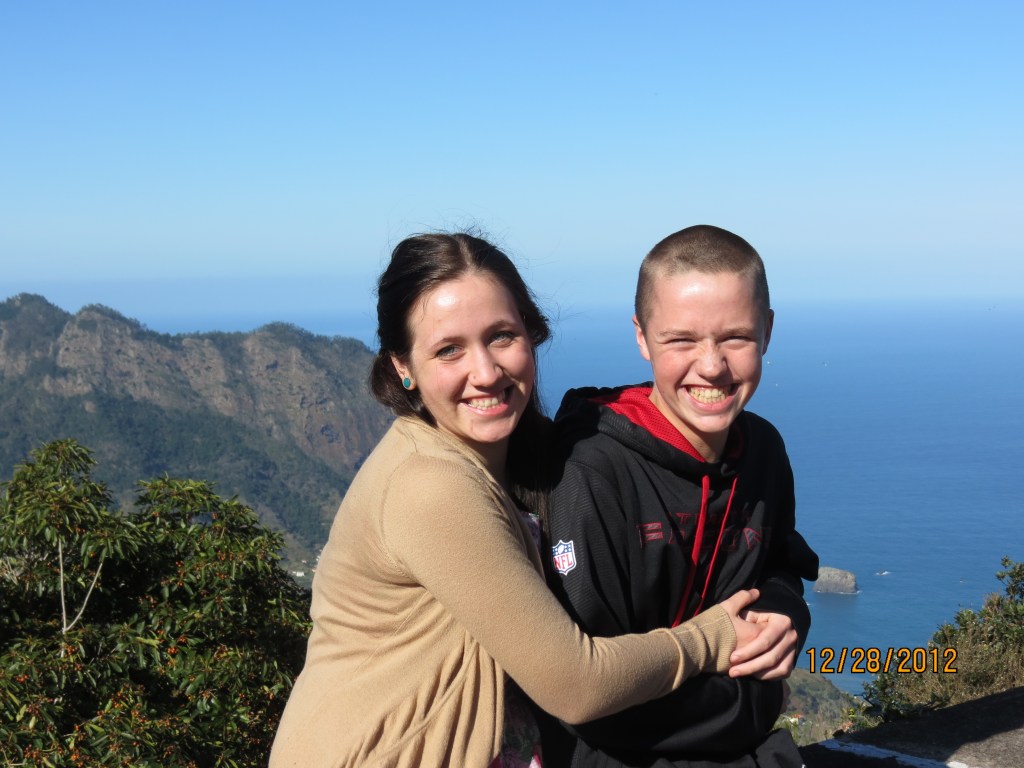
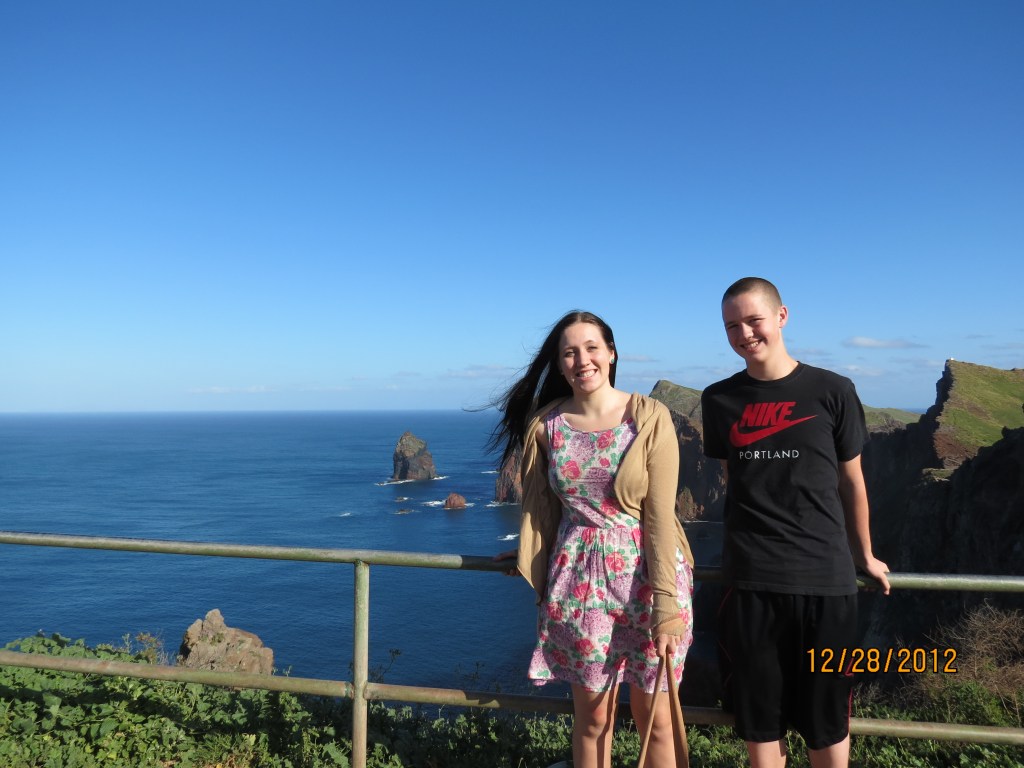
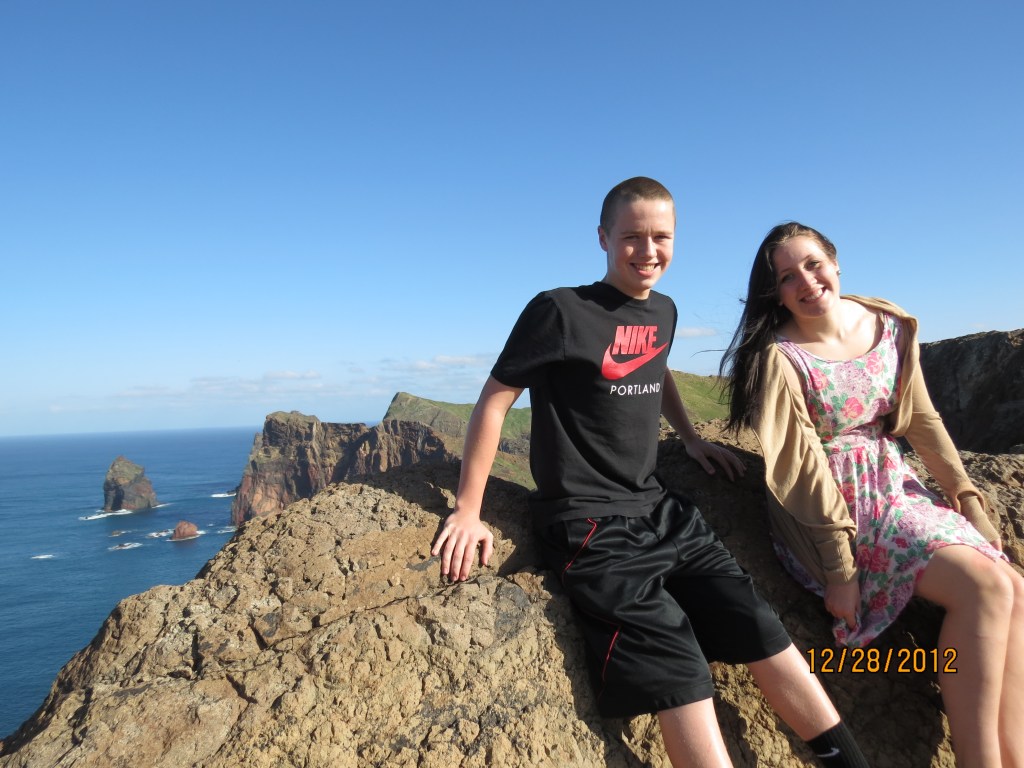
-
Who owns the future?
April 21
In reading press accounts and columns while sitting in the US, I did not appreciate China’s efforts to control the future. Implicit in lots of articles is that the US is “the leader of the free world” and dominant in international affairs. The analysis of “trump tariffs” is starting to raise questions, although probably not for most Americans. Our experience on this cruise provides some insight.
In visiting Darwin, Australia, we learned that China has a long term lease on the port. When we arrived in Sri Lanka, we saw similar arrangements. Then, in just about all of our African stops, we learned that China was a major player in the ports we visited as well as related infrastructure. As we sit in Cabo Verde, we are told of China’s infrastructure investments as well as their construction of a university….and free Mandarin lessons. In checking Dr. Google, I read that China has investments in 129 ports around the world, many in Africa. These investments are part of their “Belt and Road Plan,” embodied in a formal 2015-2025 document. Expenditures of $900 billion per year are designed to create a “New Silk Road” and promote cooperation through infrastructure investments and enhancing trade routes. China’s plan is to move Asia, Africa, and Europe closer together and build mutual understanding and trust. They invest in/contribute to 150 countries and organizations. Additionally, when we visited Latin America, we learned that they are the continent’s number 1 trading partner. There are now plans to continue/complete the initiative by 2049. Pretty impressive; they seem to be everywhere.
Now, let’s look at the US. We have essentially eliminated our foreign aid program as we “Make America Great Again.” We have antagonized virtually every trading partner with a sophomoric tariff program. And, we are questioning the value of NATO, withdrawing from international Climate Change organizations, and threatening to take control of Panama, Gaza, Canada and Greenland. We are signaling to the world that we have a new set of values:
-no more diversity and equity programs;
-anti-immigration;
-kidnap people off the streets;
-send “undesirables” to foreign prisons without due process;
-go after law firms that have represented opposing views;
-cut funding for universities when they express contrary views;
-and, little things like erasing information on Jackie Robinson’s war record, restoring Mel Gibson’s gun rights, talking of pardoning Pete Rose, advocating the death penalty for Hunter Biden, insisting that a whole list of words like DEI and climate change can no longer be used in federal documents.
Thomas Friedman, who argues that the future belongs to whoever succeeds in addressing technology (AI), globalization, and climate change will win in the future, says that he has never been so afraid about our country’s future. Secretary of the Treasury, Bessent says China is playing with a “pair of 2’s” Maybe, if deuces are wild.
Trump continues to tout his successes; mostly assertions rather than results. Remember, “We’ll build a wall and Mexico will pay for it,”..”I’ll solve Ukraine on Day 1,””tariffs are a huge money maker that foreigners will pay for.” “We’re in a meritocracy and I hire the best people.” The rest of the world sees this; I don’t think most Americans do. As the stock market falls and the experts say a recession is more likely, trump talks of a necessary, short term adjustment. Someone wrote that it looks like a confused program searching for a bygone era.
A bit more on our tariff war. There is an argument to be made that we need to address our trade relations with China. But, the analysis and strategy are lacking. First, US citizens pay tariffs; trump still doesn’ seem to understand that. Then, there is no real analysis of tariff levels; why increase tariffs on all of our trading partners? Shouldn’t we get them on our side to deal with China? It is estimated that our tariffs could cost the average American family about $2000 per year; trump talks as if this is new money coming from foreigners.
Tariffs will clearly impact the cost of resources for American businesses. Looking at specific products, China buys airplanes and agricultural products from us; they can purchase them from other suppliers. China supplies most of the rare earths and magnets required for manufacturing airplanes, cars, computers and other products. They can/have cut us off. The consequences could be major. In addition, as our friend, Kris, was quick to remind us, China owns a significant portion of our national debt. A quick google search reveals that as of the end of November 2024, China owns approximately $768.6 billion in U.S. Treasury securities, almost 9% of the total U.S. debt held by foreign countries (foreign countries own about 23% of the US debt). If China were to dump the debt it holds for less than its value, it could devalue the dollar and have economic consequences that reveberate.
Analysts argue that China is better prepared for a trade war than the US. And, they have made much more significant steps in creating international friends. Trump announced Liberation Day with great fanfare and now has backed off for 90 days. Who knows what’s next? International markets don’t like uncertainty, but that’s what we have.
Right now, I’d bet on China.
-
Easter
April 20
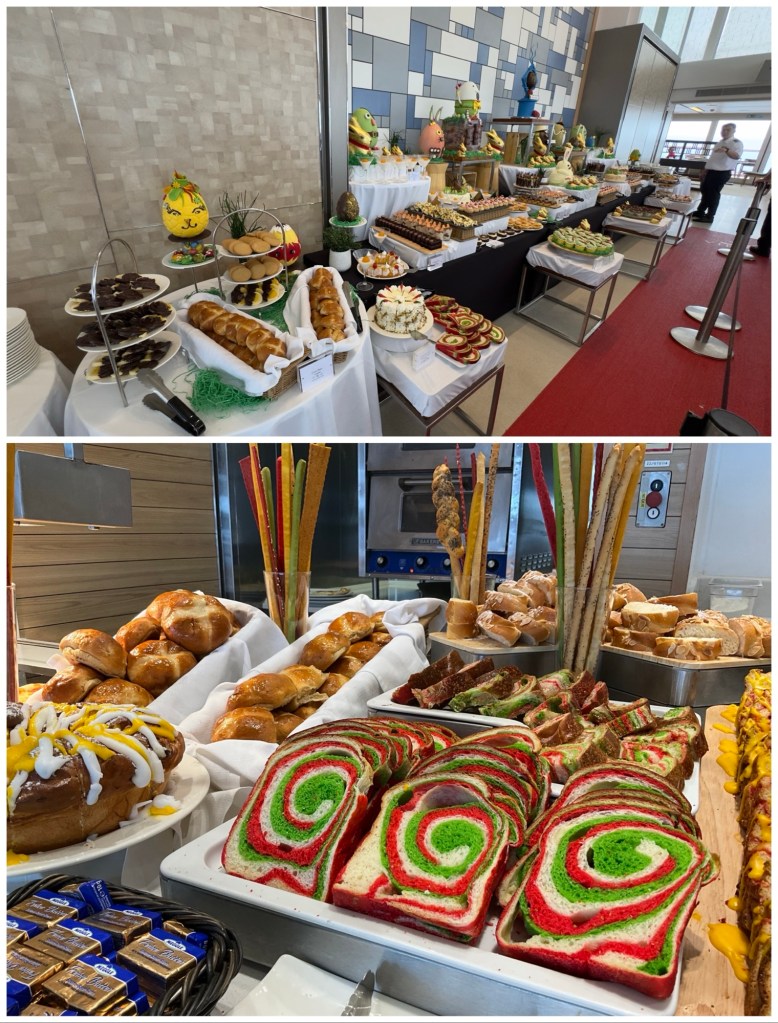
It looks like Easter will be on a Sunday this year…a sea day. This will mark the 83rd consecutive year that I’ve missed sunrise services. Karla plans to attend both the Catholic and Protestant services so we’ll average one service each. At home, we might have celebrated with the Easter Aardvark bringing healthy fruits and vegetables to kids…..not candy and chocolate eggs. As it happens, aardvarks are not welcome on board; Karla purchased a box of 22 Cadbury chocolate eggs for crew members. Viking also held an Easter Brunch that was over the top– again. Photos below are courtesy of Ted Brooks.
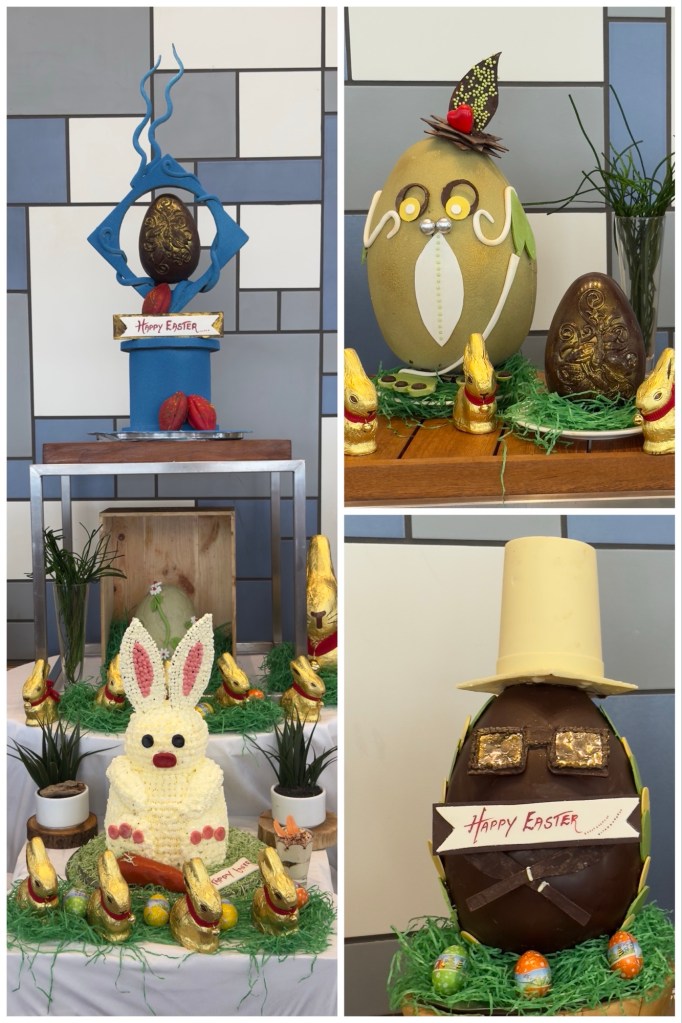
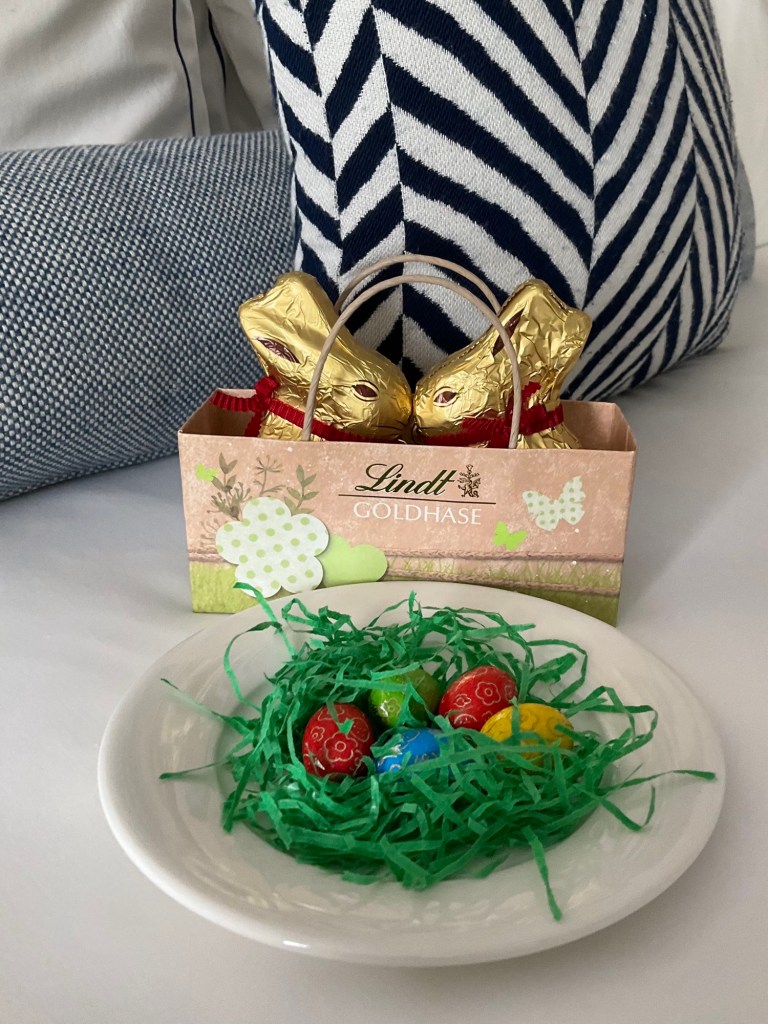
Passengers and crew found these chocolate bunnies and eggs displayed in their rooms. For me, the most interesting part of Easter has been the battle aboard ship between Catholics and Protestants. Do-gooders like Karla…and Karla, in particular.., tried to arrange a joint service and invite crew members as well. The Catholics were firmly against it. Even an agreement to have separate communions failed to rescue the idea.
When I’m confused, I, of course look to biblical lessons:
-welcome the strangers;
-be kind and respectful to others;
-it’s easier for a camel to get through the eye of a needle than for a rich man to enter the Kingdom of God.
The monied Catholics on board may have missed those messages, but with communion, should be forgiven. I’m reminded that Hitler was raised Catholic and Mussolini insisted that Catholicism be taught in schools and that a crucifix be placed in front of each school classroom. There’s something to be said about strong, uncompromising leadership…but, I’m not sure what it is.
Happy Easter to everyone….humans and aardvarks.
Postscript: both the Catholic and Protestant services went off without a hitch, and more importantly, to positive acclaim, with many (50-75 in attendance at each service).
-
Cape Verde
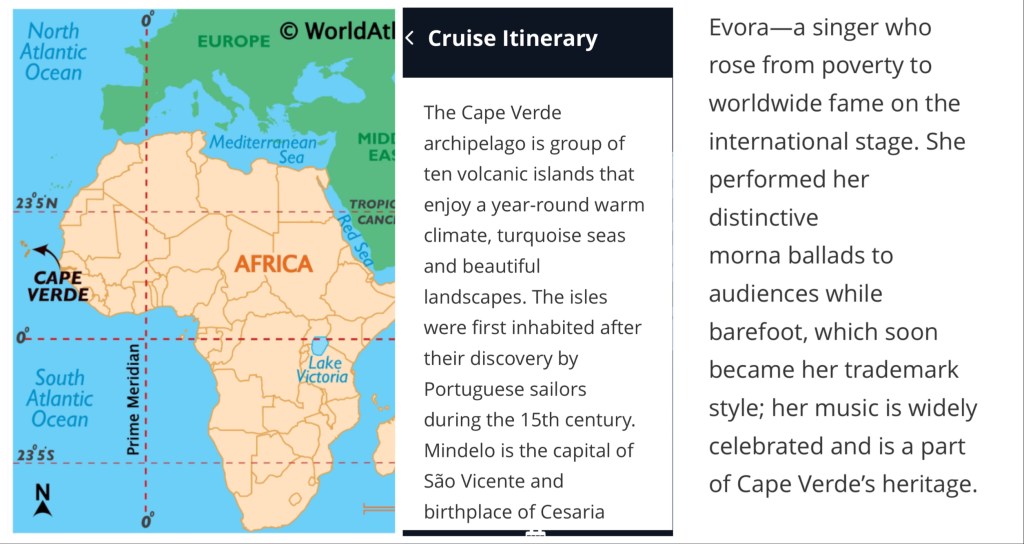
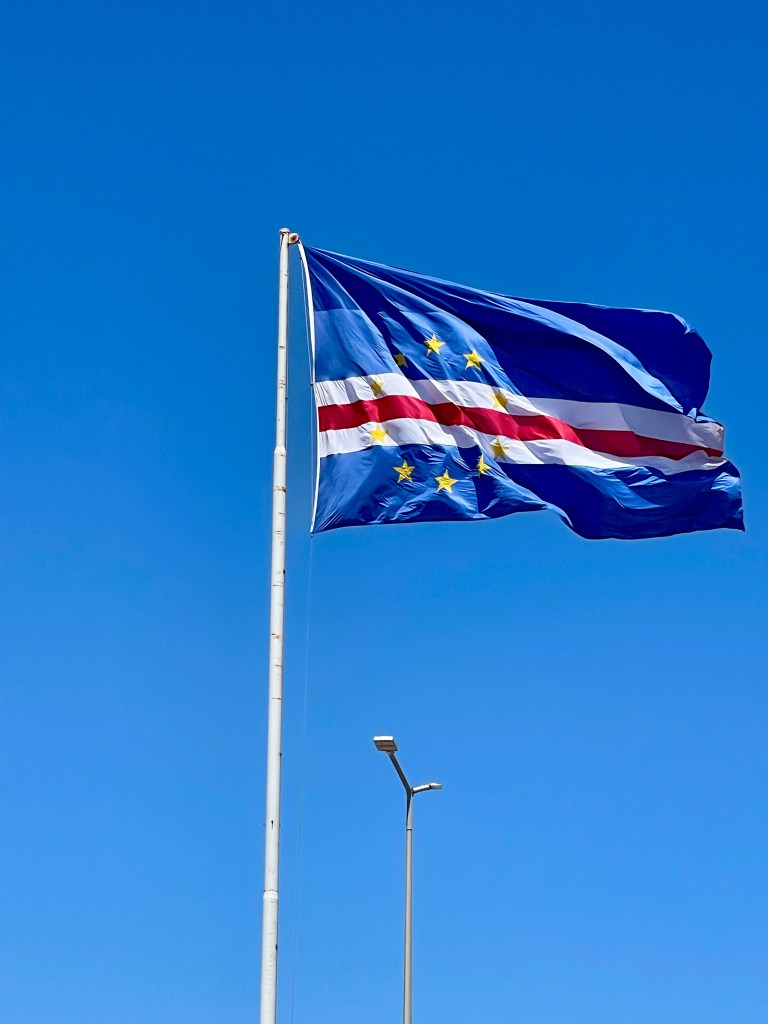
April 18, 19
Macaronesia is a collection of islands about 350-400 miles off the coast of West Africa which are part of the mid-Atlantic range. The islands include the Azores, Canary Islands, Madeira, and Cape Verde. We will be visiting Praia, on the island of Santiago, and Mendolo on Sao Vicente Island….both part of Cape Verde. Then, after 2 sea days, we visit Tenerife of the Canary Islands.
Praia and Mindelo were actually discovered by the Portuguese; there were not settlers prior to their arrival. Following a Portuguese settlement in 1615, the islands became important supply stops for ships going around Africa or traveling to the Americas. Pirates found them useful stopovers as well. When the Suez Canal was constructed in 1869, it saved about 8 1/2 days on voyages to India and the South Seas. Diesel-powered ships added to the speed advantage. Cape Verde lost its advantage. However, World War 2 renewed interest in their strategic location. Both the Germans and Allies competed for ports. Investments by the Allies greatly improved the infrastructure and added shops, restaurants, hospitals and other structures for use by soldiers.
Praia, with about 150,000 people has about 56 percent of the Cape Verde population. The economy is driven by agriculture, public administration, health care, education and tourism. While 90 percent of their food is imported, Cape Verde exports bananas, coffee and, sugar cane. Tourism represents 37 percent of the economy. Interestingly, the strategic location is also popular with cocaine traffickers as they move their product to the Americas and around Africa. There is double-digit unemployment and informal housing…here called favelas. There is very limited fresh water which limits economic and population growth. Climate change and related droughts are challenges for the future. Fortunately for Praia, the Chinese are there to help. They are constructing a desalination plant, a sports stadium, a university, and a parliament building.
Mindelo had similar gains and losses related to location. It is known for music and colorful architecture and island greenery. The economy depends on fishing, shipping, and tourism. Over 90 percent of the people on Sao Vicente live in Mindelo.
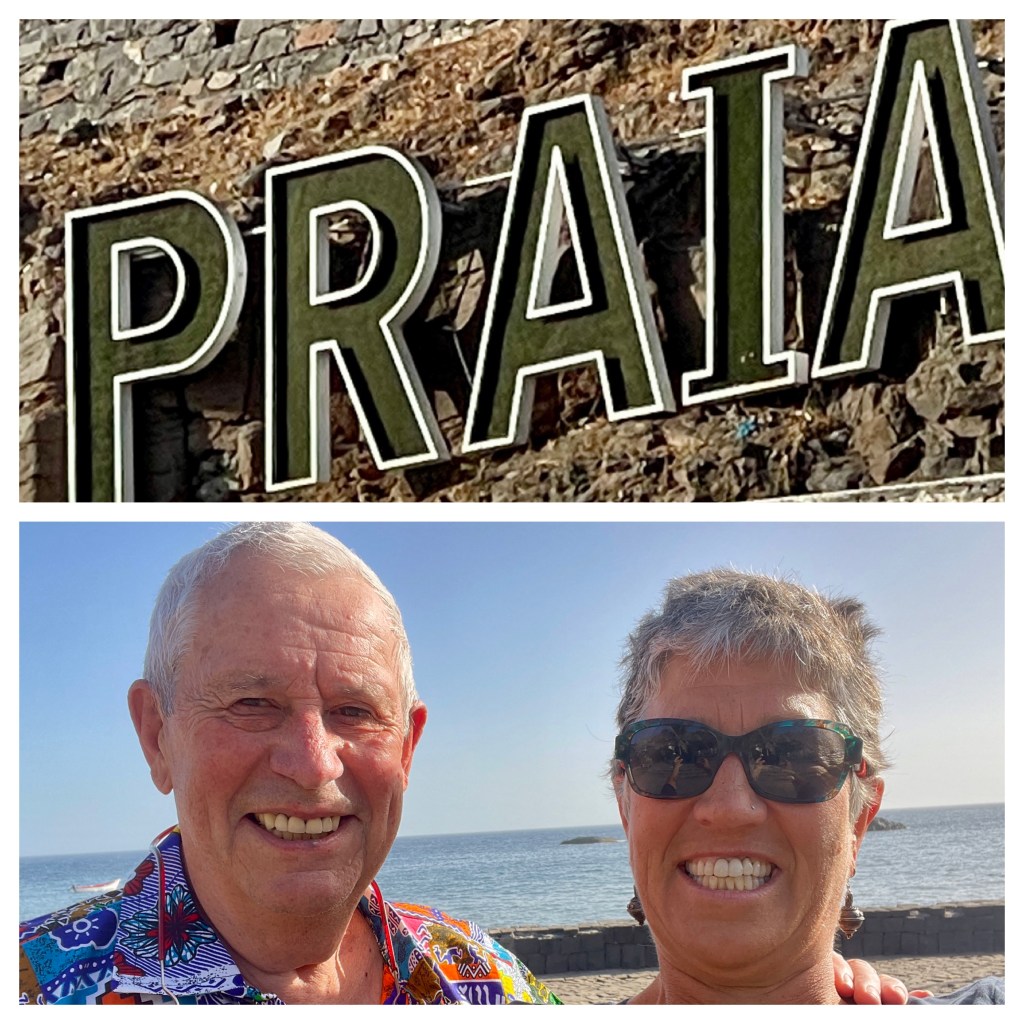
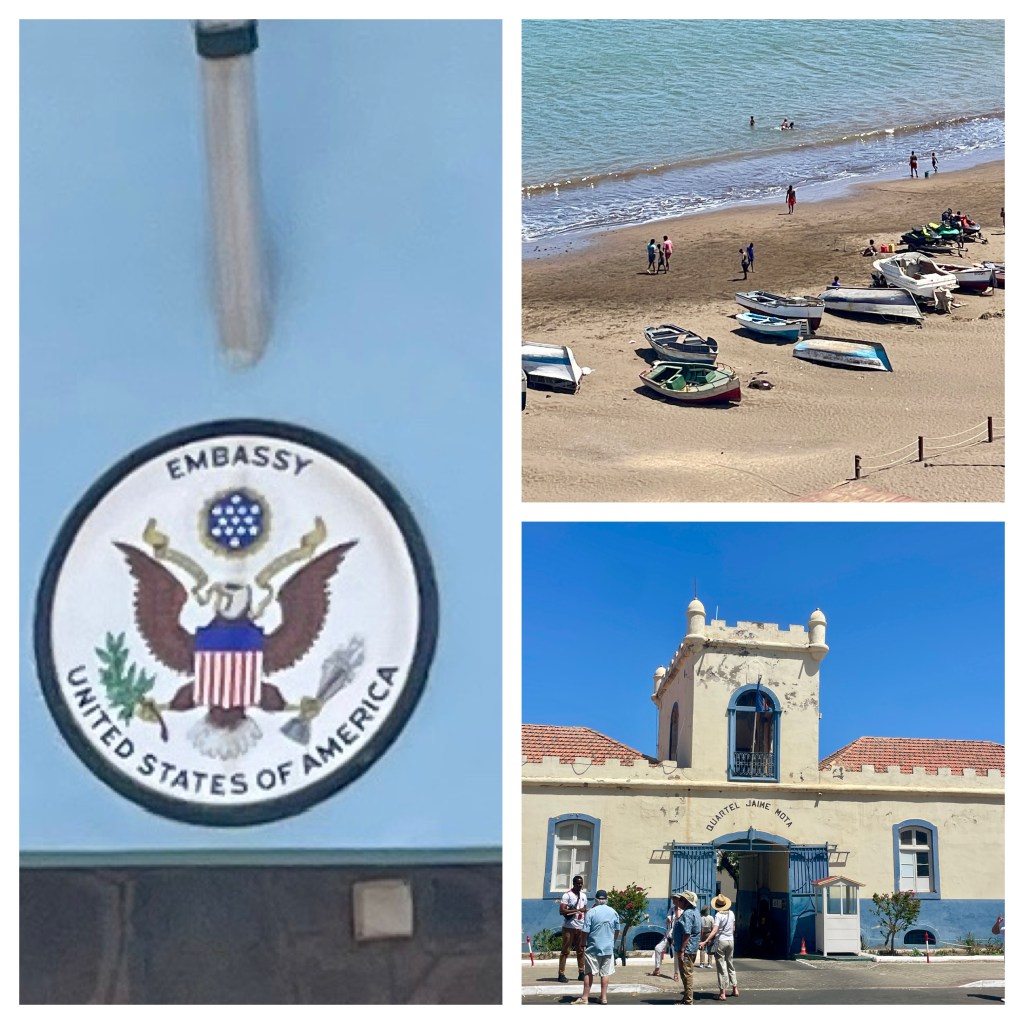
We had a nice excursion in Praia. Our first stop was a pleasant pedestrian street. It would have been fun to visit without all of the Good Friday closures. We proceeded to a fort which was placed on a strategic hill guarding “Old Town.” Old Town is located on a protected bay that was a focus for traders, ship suppliers, slavers, and pirates.
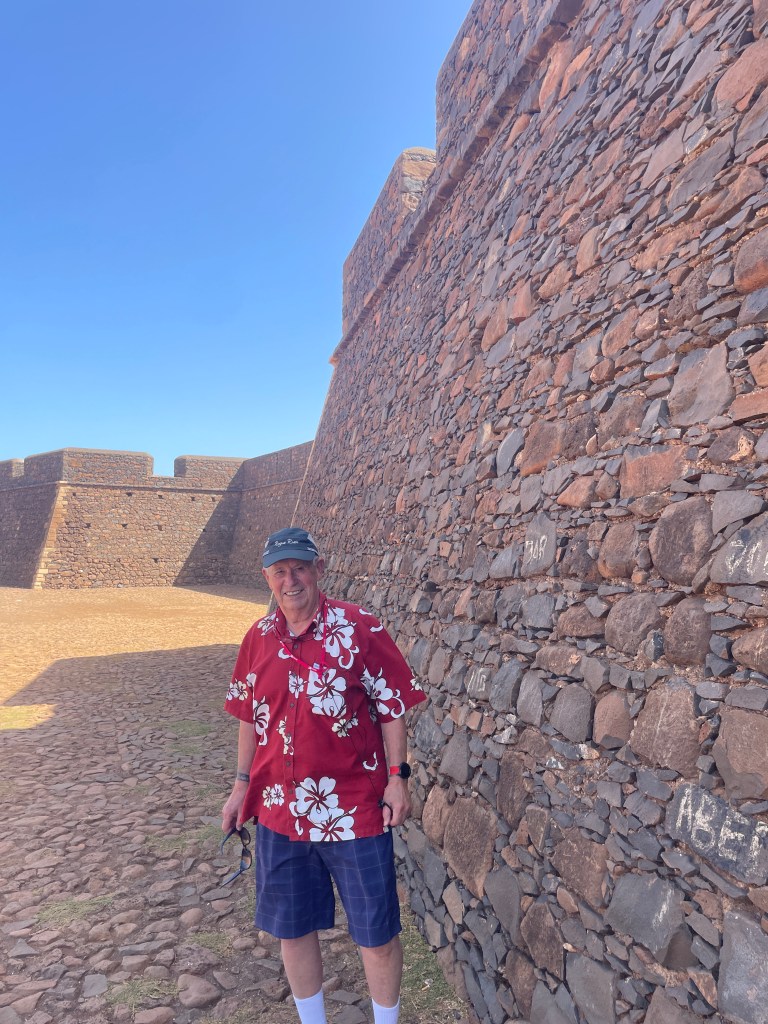
16th century San Felipe Fort, established to protect the old town. The short trip from the fort to the town was blocked by a parade of locals. In front was a priest, a Jesus surrogate carrying a cross, two surrogate Roman soldiers walking behind Jesus and whipping him occasionally, Jesus’ mother, Mary, and perhaps 200 citizens walking and reciting. It looked like it could have been from the Middle Ages. Karla was able to get us off the bus to walk with the parade; we said that we would meet the bus in town. A fun experience. The small town had a number of “tourist stalls” and a nice covered restaurant that provided us with beer. We purchased a couple things, the best of which was a shirt for me that was acquired for a few dollars and an older pair of Karla’s shoes. (She knew about the trade.)
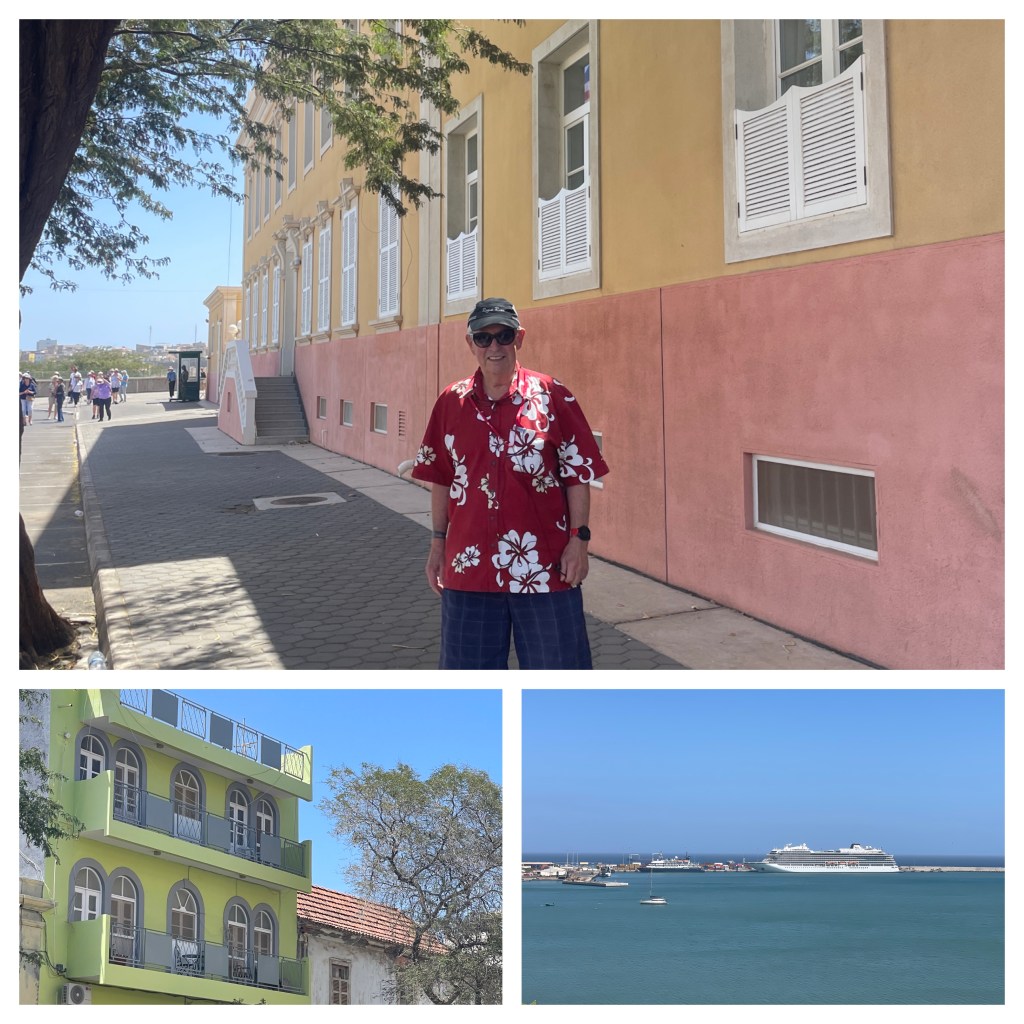
Colorful buildings in Praia; presidential palace in pink. 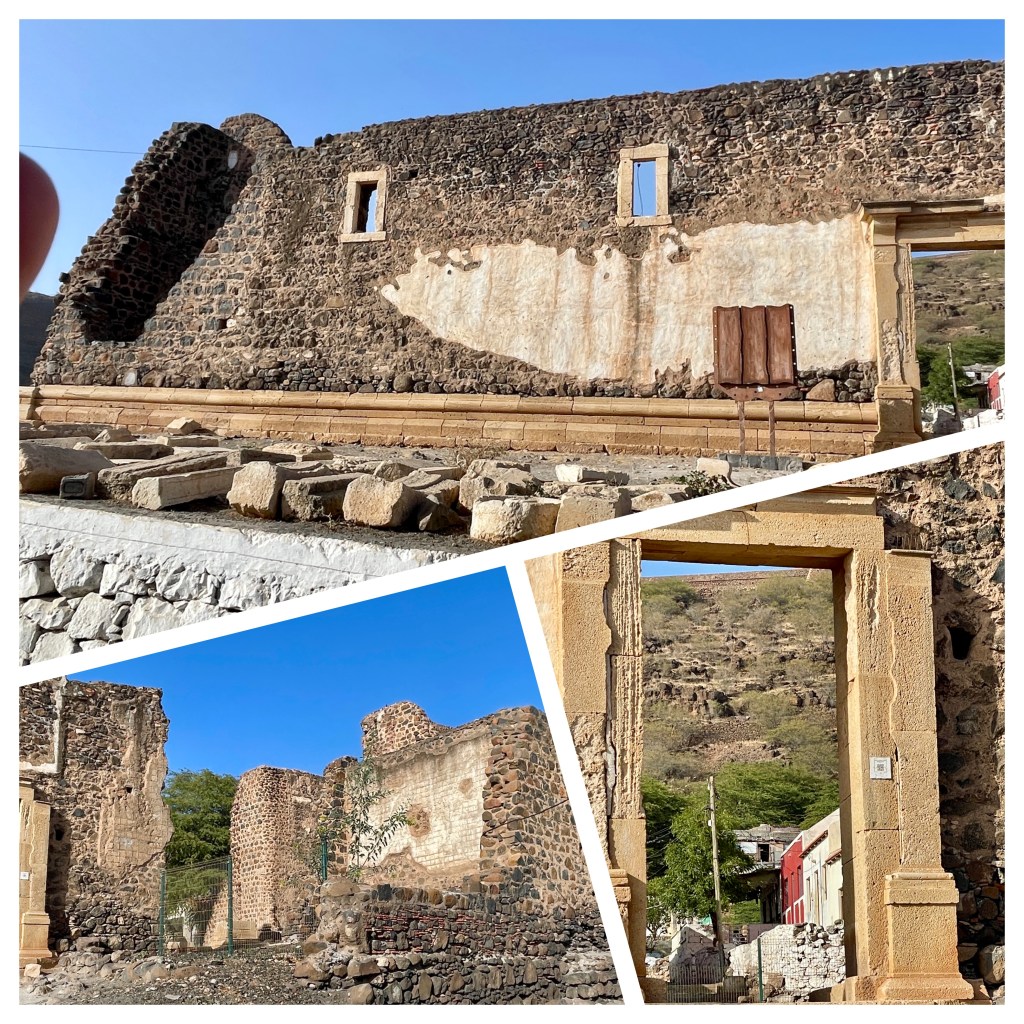
16c. Old Town cathedral that was destroyed in the early 1700s by pirates and privateers. 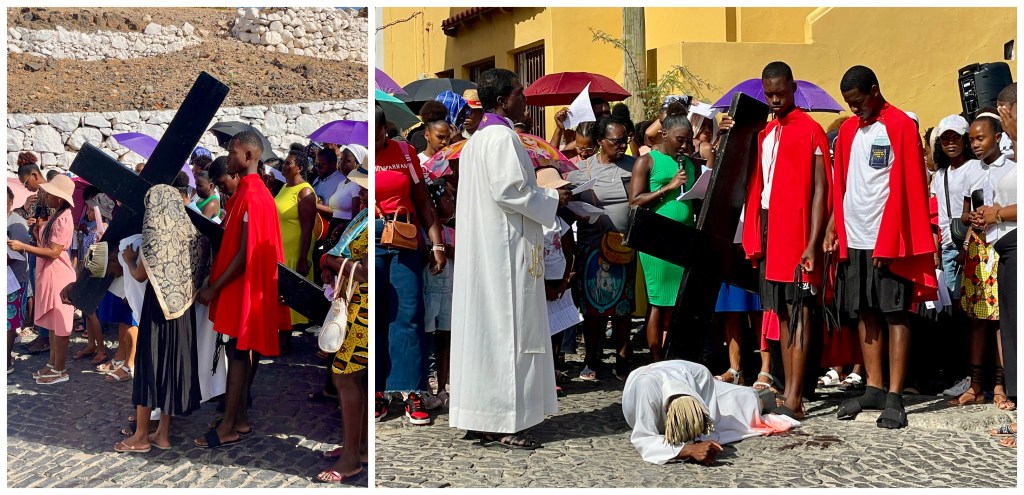
Good Friday procession; stations of the cross. 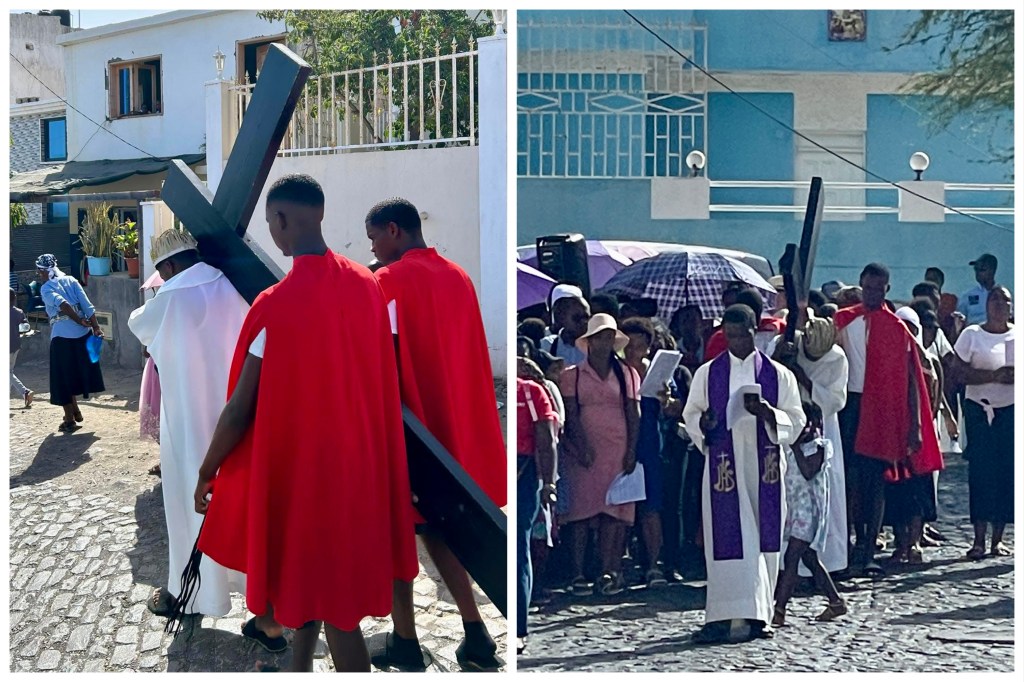
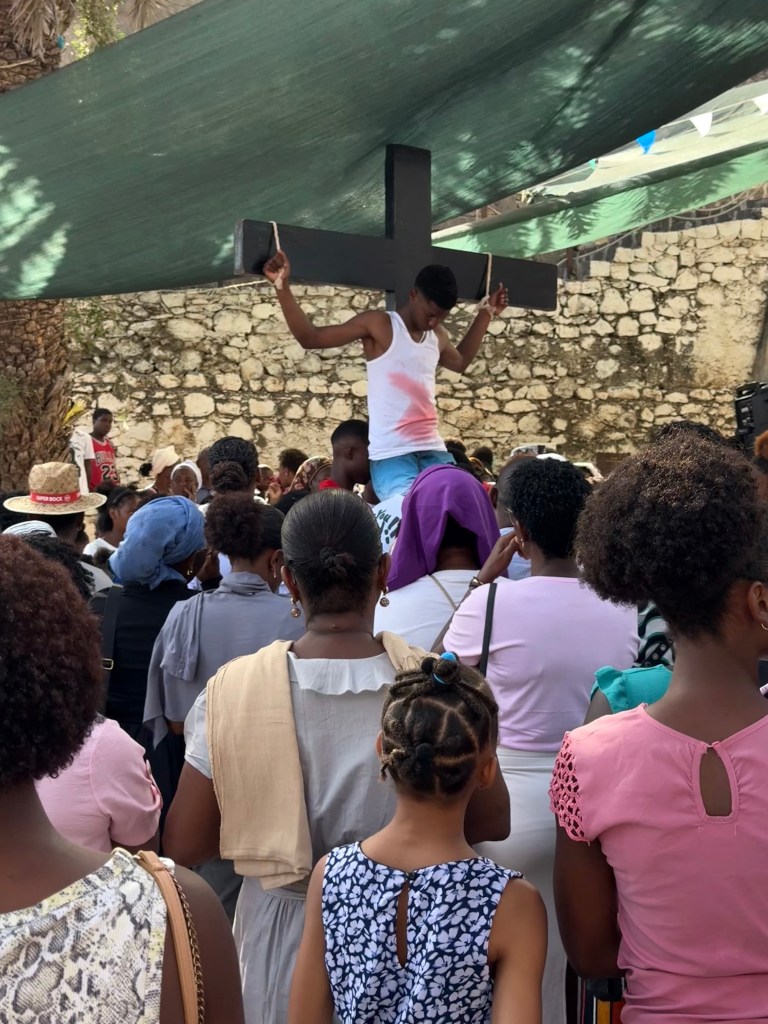
The procession ended at the church with simulated crucifixion 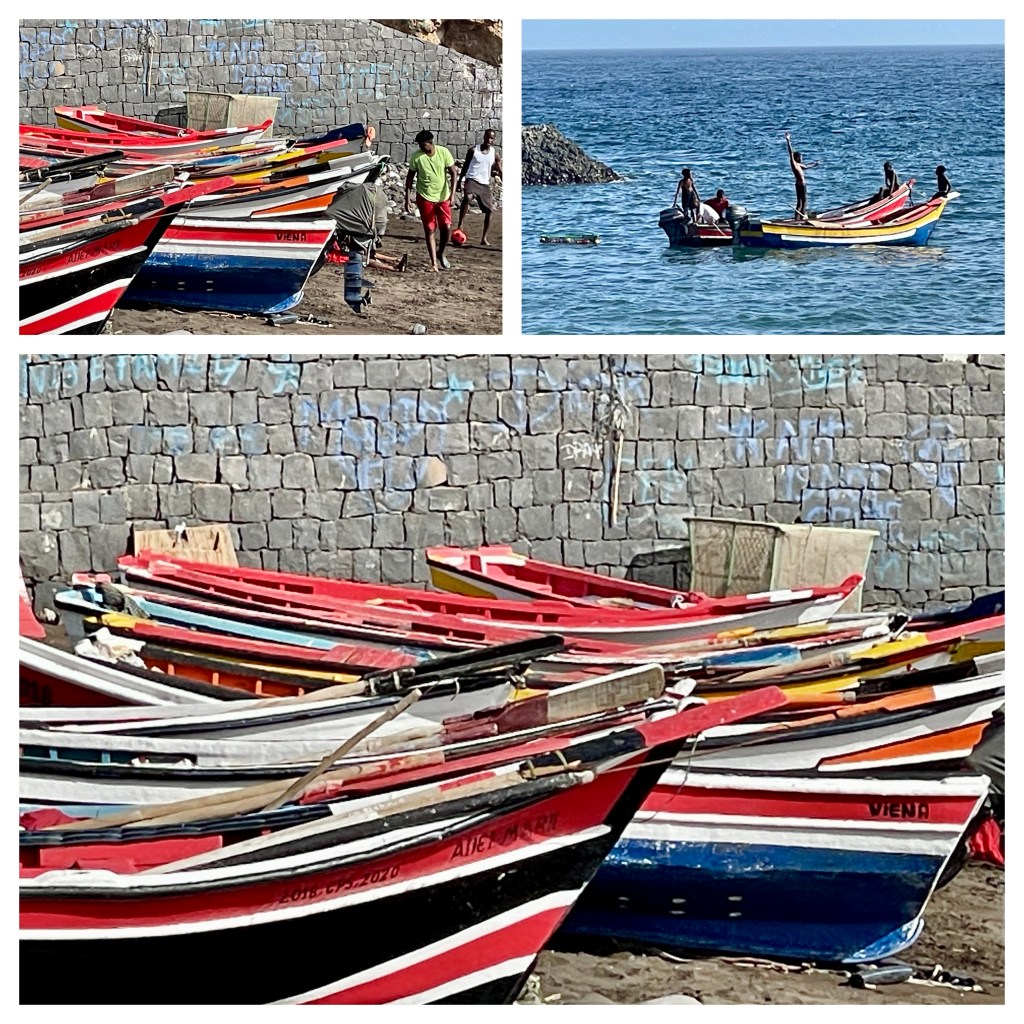
Old town beach, boats, fishing and market. 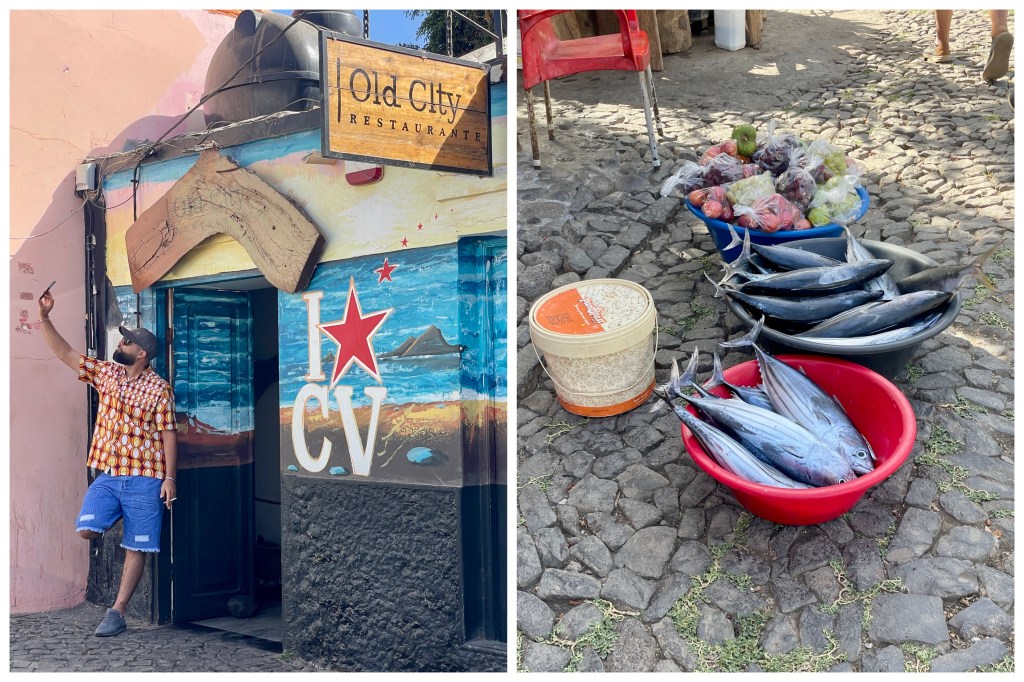
Our experience was positive enough for us to cancel our excursion on Mindelo. We had been here before and there’s a limit to how much time we wanted to spend driving around a barren volcanic island. We recalled an impressive Senegalese market from our previous visit and thought that we would walk there. We passed a nice fish market and then arrived at the African market, finding it about twice the size that we encountered a few years ago (Covid times). It helps that we have downsized and were not interested in purchasing the attractive masks, carvings, clothing etc. A nice visit; we have positive feelings about Cape Verde.
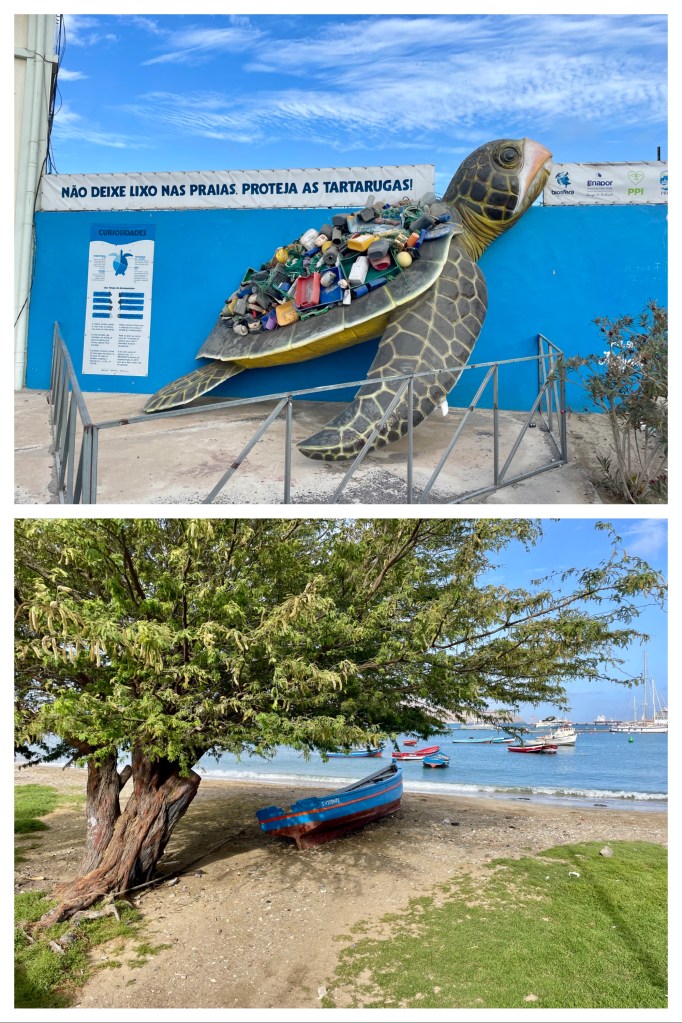
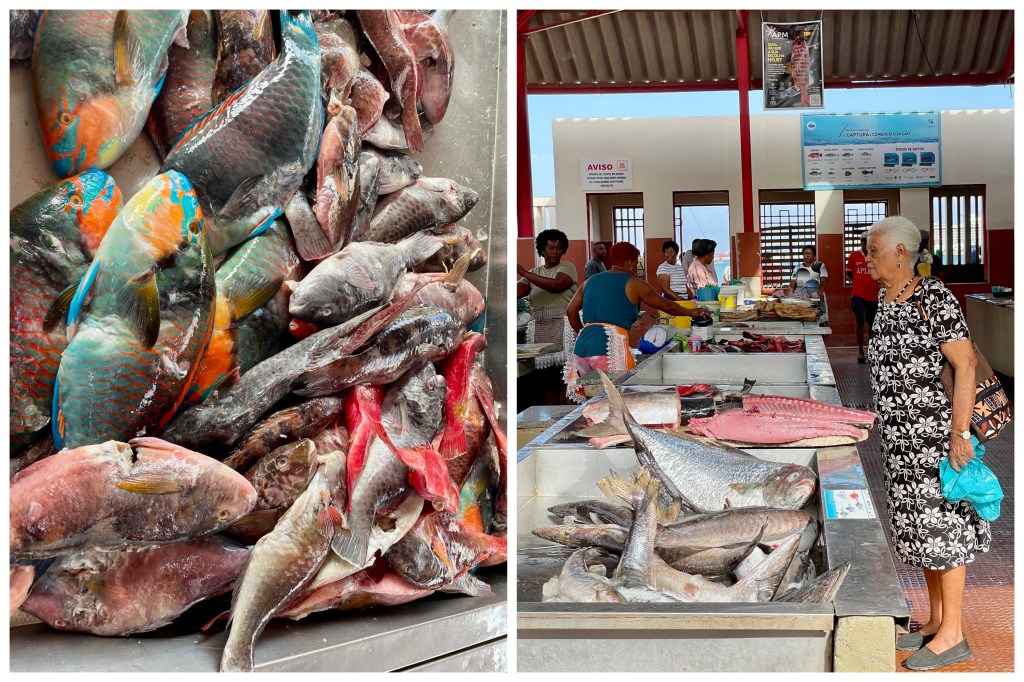
Mindelo fish market 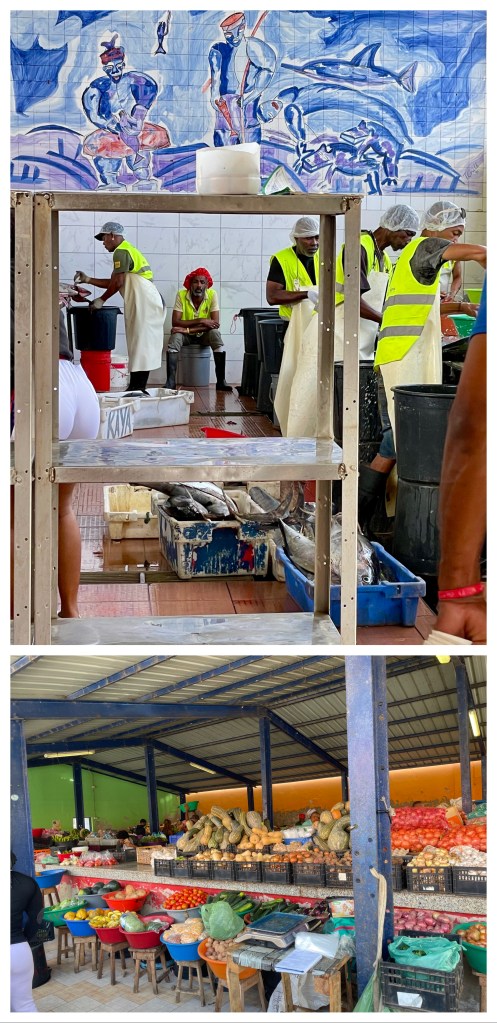

Mindelo Cultural Center (top) 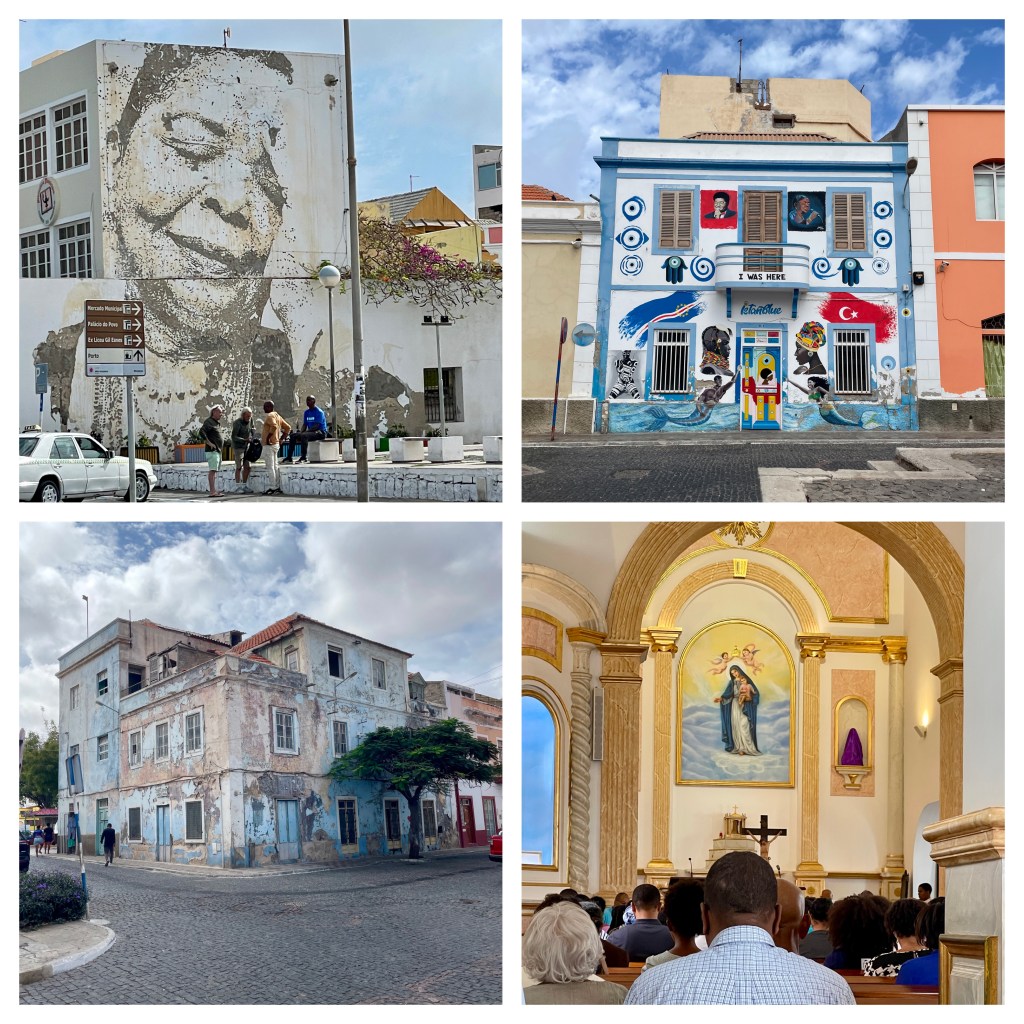
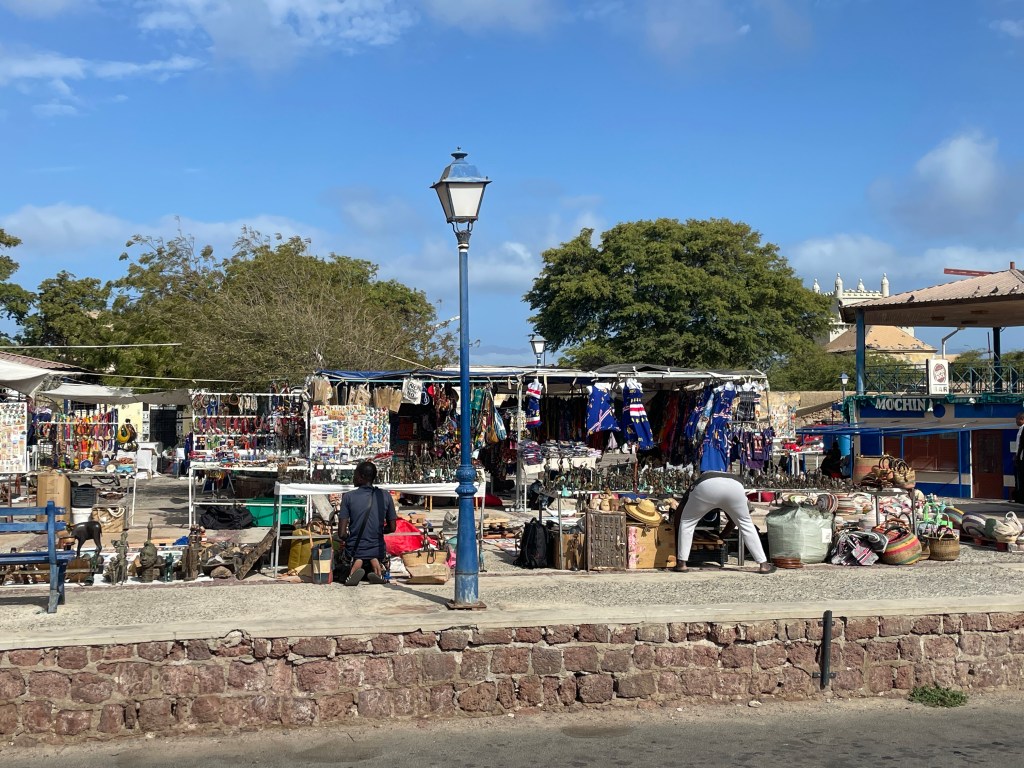
African market– Mindelo 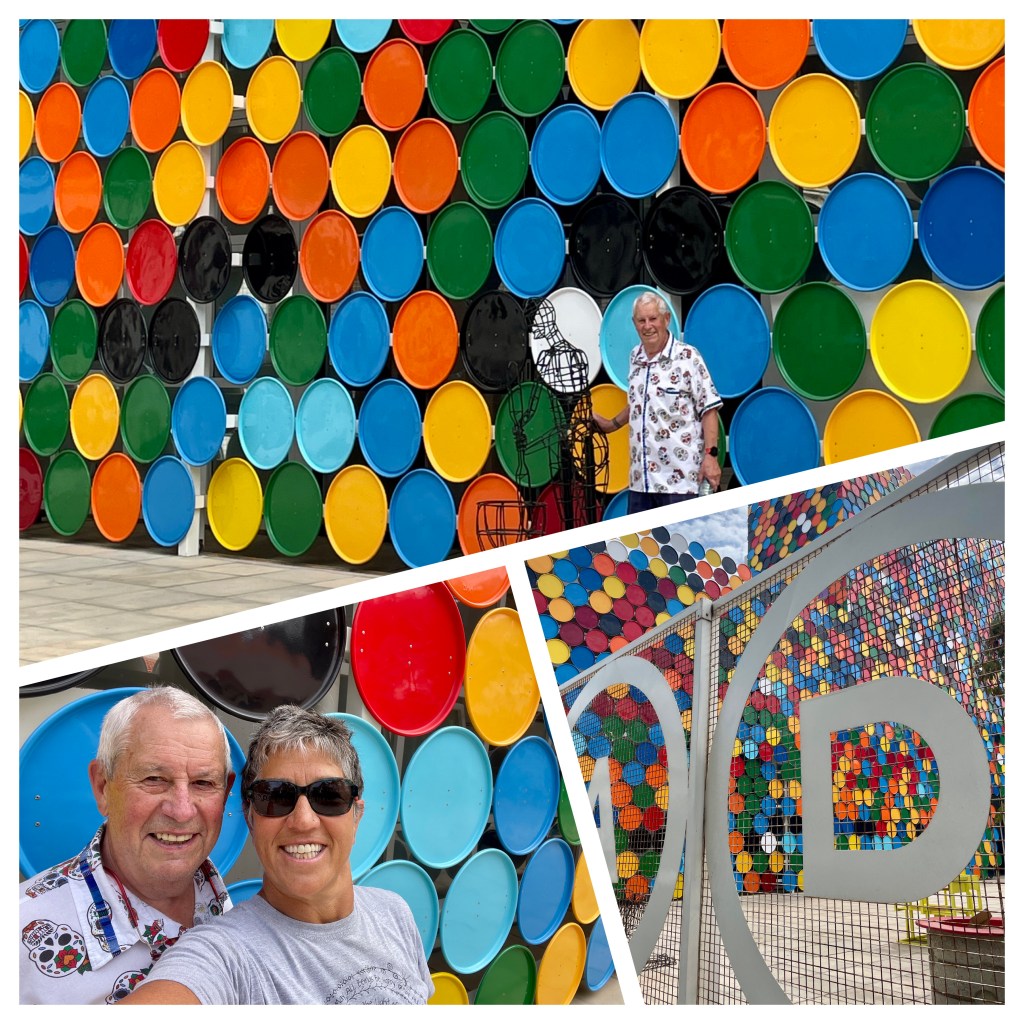
Mindelo modern art museum 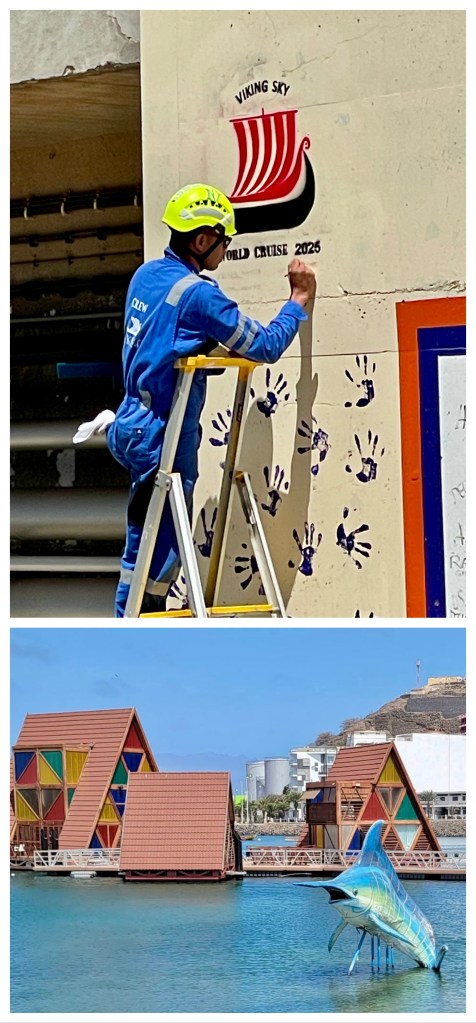
Adding the ship name to the port. 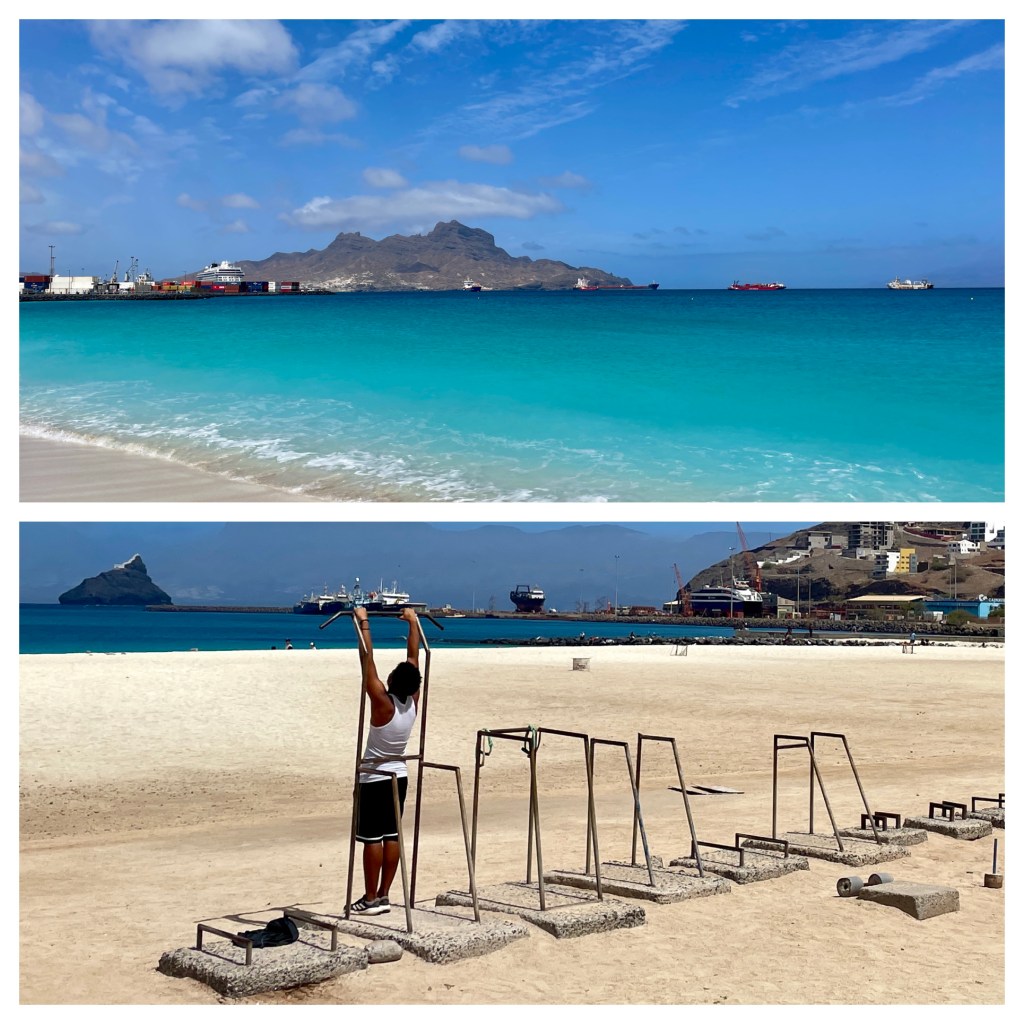
-
Wildlife Update
April 18
Richard, our wildlife specialist, recounted his sightings yesterday. (He spends lots of time on deck with a monster camera.)
-a giant manta ray…..perhaps 25 feet across;
-a large turtle;
-a pilot whale;
-a whale shark; and,
-thousands of flying fish…lots of large glides.
As we get near Europe, we should be entering one of the best humpback whale breeding grounds. I’m looking forward to watching them breed, but fear that their modesty will keep them underwater and out of sight.
-
Wildlife
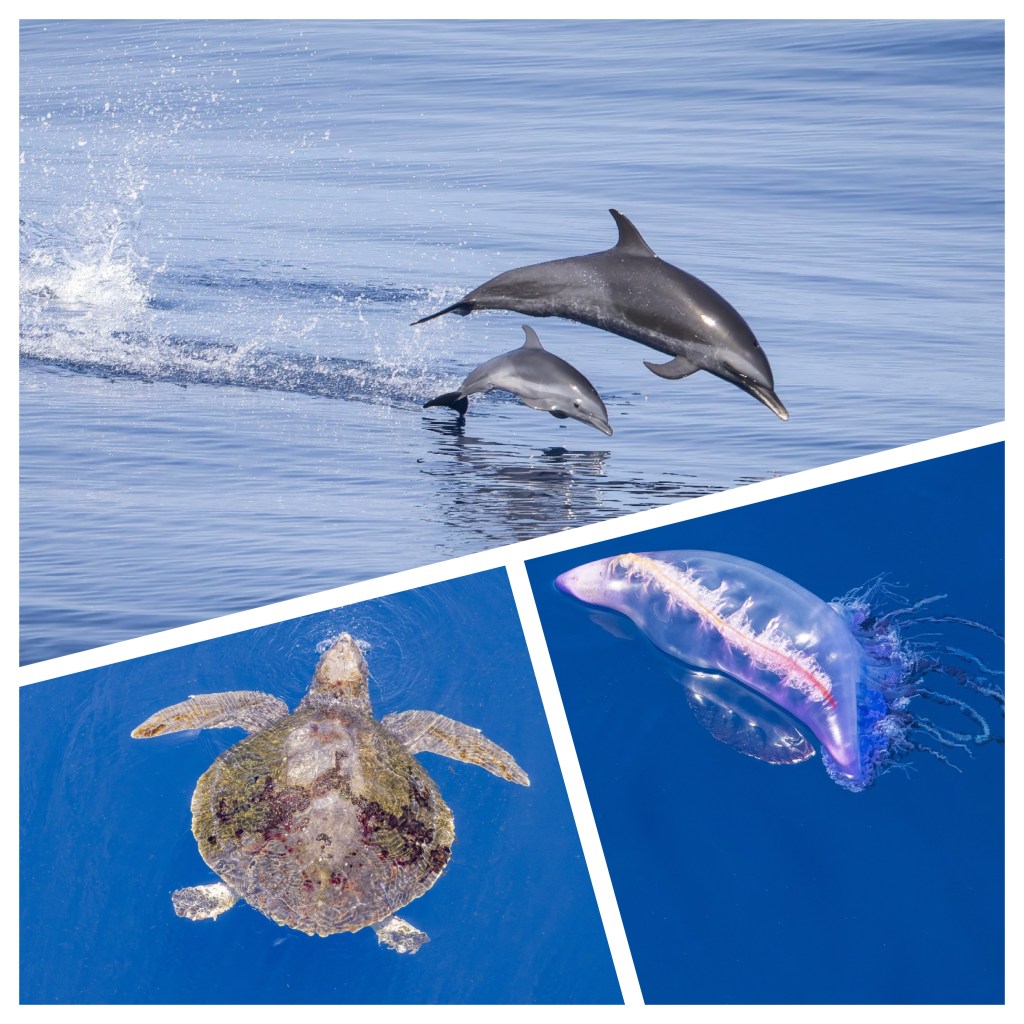
Dolphins, turtles and Portugese man o’ war or blue bottles April 17
Not much.
However, we have an excellent wildlife specialist on board who gives briefings each morning on what we might have seen. Occasionally, he mentions a “spotting” from the previous day. And, participants of dubious veracity comment on the dark spots on the distant horizon that may be whales. But, we have seen a few creatures and learned about some that we have not yet seen. It is comforting to know that we’re near the continental shelf where currents stir up food and that we’re on a whale migration path. As we near Cape Verde, the specialist is optimistic.
Among our sightings:
-We have seen pelagic birds, including some gams of Albatross. Most of our readers surely know this, but…did you know that pelagic birds can fly continuously at sea? Their brains are constructed so that half can sleep while the other can tend to flying. (like dolphins and whales). They can land on ships or islands, but don’t have to do so. Recall that South Sea boat people would sometimes take birds on board and then release them at critical times and watch their direction of flight. That would show where land existed since they flew to land. It would be a good trick to give them pelagic birds that would fly around and never look for an island. What if Noah released a pelagic bird?
-The whales we have not yet seen could be traveling in pods, gams, herds or schools. Dolphins, which we have seen, were grouped in pods.
-We have seen several turtles, although no bales or clutches yet; only individuals. They eat jellyfish, which we’ve seen. However, we have not yet seen a smack, swarm or bloom. And, did you know that some turtle flesh can be poisonous as a result of eating (smacking on?) too many jellyfish.
-We continue to see glides of flying fish. It’s more fun when we see Red footed Boobies diving for them, but they provide some variety.
Our specialist continues to be enthusiastic and optimistic.
-
Musings: GNP and Income Distribution
April 15
About 55-60 years ago, when I was studying and teaching economics, I objected to the focus on Gross National Product as a measure of a country’s wellbeing. At that time, it may have been a good indicator in the US, but it missed the mark in Latin America. There, growing GNP didn’t seem to do much for most citizens. Classical economic assumptions led people readily to GNP as a measure…The economy was self-regulating….everyone is rewarded for hard work…people’s choices will allocate resources properly and efficiently. People who weren’t doing well economically must not be working hard enough. Consistent with this thinking was the “trickle down” approach. Making wealthy people wealthier was a good thing; they would use their wealth efficiently…investing and creating jobs….and the benefits would trickle down to everyone. But, observing Latin America, it didn’t seem to work. Despite growing economies, there were still huge disparities in income distribution.
Since that time….and I had moved on from teaching….someone invented the Gini coefficient. The Gini coefficient is a number between 0 and 1 that measures income disparities in countries.. Zero is perfectly equal distribution. One is a situation where one person has all the income. For those interested in more equal income distribution, a lower number is desirable. The “best” numbers are in the 25-30 range….countries like the Czech Republic, Ukraine, Iceland and Canada. In the middle range…around 40 ….are countries like Burkina Faso, Saudi Arabia, Bulgaria, Bolivia and the United States.
The highest Gini coefficients are South Africa (63), Namibia (59) and Angola, Mozambique,and Zimbabwe … each around 50. I raise this point as it is consistent with our observations on this trip. We visited African countries that had experienced Colonialism and continue to have the greatest wealth disparities. Well-meaning helpers who want to improve the economies of these countries frequently focus on increasing Gross National Product, but that does little for most citizens. In Angola, the GNP is growing at a good rate. It’s based primarily on oil and diamond exports. Guess who would benefit from doubling the production of oil and diamonds…I bet the Gini coefficient would change very little.
South Africa gets attention because it implemented Apartheid and made conditions very explicit. The other countries we visited appeared to have similar conditions….lots of poverty and unemployment, townships with informal housing. little optimism about the future and struggling governments. It’s hard to imagine things changing soon. The US approach of scrapping foreign aid will not help.
-
Perspective taking– great trip, and . . .
April 14
I had planned to use our 6 sea days to step back and reflect on our visits to African countries, Colonialism and 1984 (Orwell.) As I was organizing thoughts,I realized that rather than 3 items it was one longer related rant. Here goes….
My starting point
Having been raised in Southwest Portland in the 40’s and 50’s, I have an orientation or perspective on the world..conscious or not. As a kid, I recognized that my parents had lived through the Great Depression. And, I was born during the early part of World War 2. The Depression led to values like being careful with your money and cleaning your plate every meal. I don’t remember much from the war, but I do recall rationing…bacon, in particular…and collecting tinfoil for the war effort. As we came out of the war years, we all knew that, with the growing economy, we had the opportunity to do better than our parents. I remember my mom telling us that she had one school dress; she was really worried after spilling something on her “school dress” in chemistry class. And, both parents thought that providing for their kids was their number one priority. Despite having a racist uncle from Jackson, Mississippi, we were raised to believe that we’re all equal…or at least should be provided with equal opportunities.
Jackie Robinson broke through in 1947, followed by a growing number of quality Black ballplayers. Even though we were told that Blacks couldn’t run distances, Abebe Bikila from Ethiopia won the 1960 and 1964 Olympic marathons….the first while barefooted. We were making progress and I was encouraged by the optimism of the Kennedy years, the excitement about the Peace Corps, the emphasis on international aid programs, and the prospects for President Johnson’s Great Society. It was hard not to be inspired by Martin Luther King’s leadership. Moving through my career as a manager, it was easy to get on board with what came to be known as DEI programs. What could go wrong?
It was very common for kids to live in the same city in which they grew up. Get a job with a company and retire 40 years later. The company was part of one’s identity. From top to bottom, everyone wanted their company to be successful. CEO’s earned an average of 20 times the front line worker. (Japan was 11:1, Germany 12:1 and France 15:1) Last year, in the US, the CEO/front line ratio was 361:1. Computers were irrelevant, but there was some concern that “automation” might replace some jobs. But, it took people to produce automated systems so it would probably be alright. We learned in school that, in Latin America, the countries couldn’t be successful because of the great income inequality; the top 10 percent had 50 percent of the wealth. Today,in the US, the top decile now has 70 percent of the wealth. Since 2020, the top 1 percent has “earned” 2/3 of the income. Minorities are disproportionately represented in the lowest decile.
While the capitalist system was expected to reward those who worked hard and earned accordingly, it was recognized that not everyone started from the same place or had the same opportunities. Recall George Bush’s opponent, Ann Richards, saying George was born on third base and thought that he had hit a triple. One of the jobs of government was to address the disparate starting points and different opportunities. The political parties argued over how much government involvement was necessary, but the role was recognized. Level the playing field.
Colonialism and Africa
Human life started in Africa and over the centuries developed into about 3000 separate tribes…many with their own language. The tribes had governance, economies, disagreements, wars, slavery and whatever else is expected from groups. But, they were not “discovered” until Western Europeans started to sail around Africa, looking for a route to the East. First, the Europeans established coastal trading posts and then supply stations. The tribes generally controlled inland territories and participated in mutually beneficial trade with the Europeans. As late as 1870, Europeans controlled only 10 percent of the continent. But, as the extensive resources of the continent were recognized and industrial processes were improved, Europeans appreciated the advantages of greater control. The Berlin Conference of 1884, known as “the Scramble,” was held to divvy up the continent among civilized Europeans. Belgium, France, the UK, Germany, Italy, Portugal and Spain were all to get their shares. By 1914, 90 percent of Africa was controlled by Europeans. There were lots of different models and situations, but there was generally a combination of political control, occupation, exploitation, religious conversion, and destruction of indigenous societies and customs.
Some extreme examples of harsh treatment stand out. The slave trade moved something like 15 million Africans to the New World. Trevor Noah states that more people were killed in the Belgian Congo than during the Holocaust….but they didn’t keep records. Forced labor and slavery were common within Africa so that the abundant natural resources could be tapped. Traditional cultures were disrupted and new political systems imposed. The erosion of local authority and loss of cultural identity plus the imposition of Christianity all took a toll. The challenge for the Europeans was to control the natives and exploit the resources, not develop institutions that prepared the Africans to govern. ( While I’m writing about Europeans and Africa, the model is not appreciably different than how Americans treated the 724 Native American nations as they moved West.)
When African nations began achieving independence after World War 2, they had to deal with various flavors of economic underdevelopment, political instability, social inequality, and ethnic rivalries….to name a few things. Even when national growth rates are high…like with the export of oil and diamonds….the benefits are not widely shared. Government corruption appears to be common.
Our visits to Madagascar, Mozambique, Kenya, South Africa, Namibia, and Angola reinforced the impression of struggling economies. We found unemployment rates of 30-50 percent, perhaps a higher number living below the poverty line, lower life expectancies and higher infant mortalities. Frequently we were warned of security concerns. And, we saw some of the more prosperous areas…like Cape Town. But, even there, we saw acres and acres of “informal housing.” It was generally warm so that clothing was not a big problem, but jobs, food and the future were. It was possible for us to enjoy the animals and visit upscale malls…and buy beautiful clothes…but we were never far from the challenging lives of the majority of residents. Given my (our) values it wasn’t possible to get over that.
The US and 1984
Not long ago, I was proud of the role that our government played in addressing problems of less developed countries. Our foreign aid programs addressed hunger, disease and birth control. While we saw the problems in countries that we visited, it felt good to know that we (our government) was trying to help. And, with the existential threat of climate change, we had a leadership role in addressing it. Now, our administration has shut down foreign aid. ….what does it do for us? And, climate change is a phrase erased from our government documents…it doesn’t exist.
But, our reduced international role is only part of the problem. I reviewed the lessons of Orwell’s 1984 which focused on the dangers of totalitarianism, propaganda, and erosion of personal freedoms. Five indicators of a movement toward totalitarianism are mentioned:
– Manipulation of truth and history;
-Surveillance and control;
-Loss of individuality;
-Power and propaganda;
-Language as a tool of control
There are 10 steps leading to totalitarianism listed in another publication:
-Construct an internal enemy;
-Isolate and demonize the enemy;
-Enlist and create sources and distribution of information;
-Monitor and discredit those who challenge;
-Subvert and malign sympathizers of the enemy;
-Solicit collaborators from the enemy;
-Pathologize the enemy;
-Criminalize the enemy;
-Reward mindlessness and apathy;
-Maintain silence.
It is hard to read through these lists and not be concerned. So many words and phrases can no longer be used in government documents…federal funding is cut off for states and institutions focusing on DEI…citizens are removed from the streets and expelled from the country….citizens are sent to foreign prisons with no due process…law firms are threatened for representing adversaries of the government…press outlets are expelled for stating different views…lies and big lies are common….those, like inspectors general of federal agencies, who are charged with looking into wrongdoing are terminated. And this list doesn’t even deal with the threats to the international order. Take over Canada, Panama and Greenland….Hit everyone with tariffs…withdraw from international climate action efforts…take over Gaza….hang Ukraine out to dry. We have a new King in town.
Starting with the values of the 50’s and 60’s….looking for a level playing field…helping less developed countries…”ask not what your country can do for you, but what you can do for your country.”….it’s very discouraging. The international aspect makes it more so. We’re having a good time, but it’s impossible to avoid the cloud that hangs over us….within our country and in the countries we’re visiting. We can do better.
.
-
Null Island
April 14
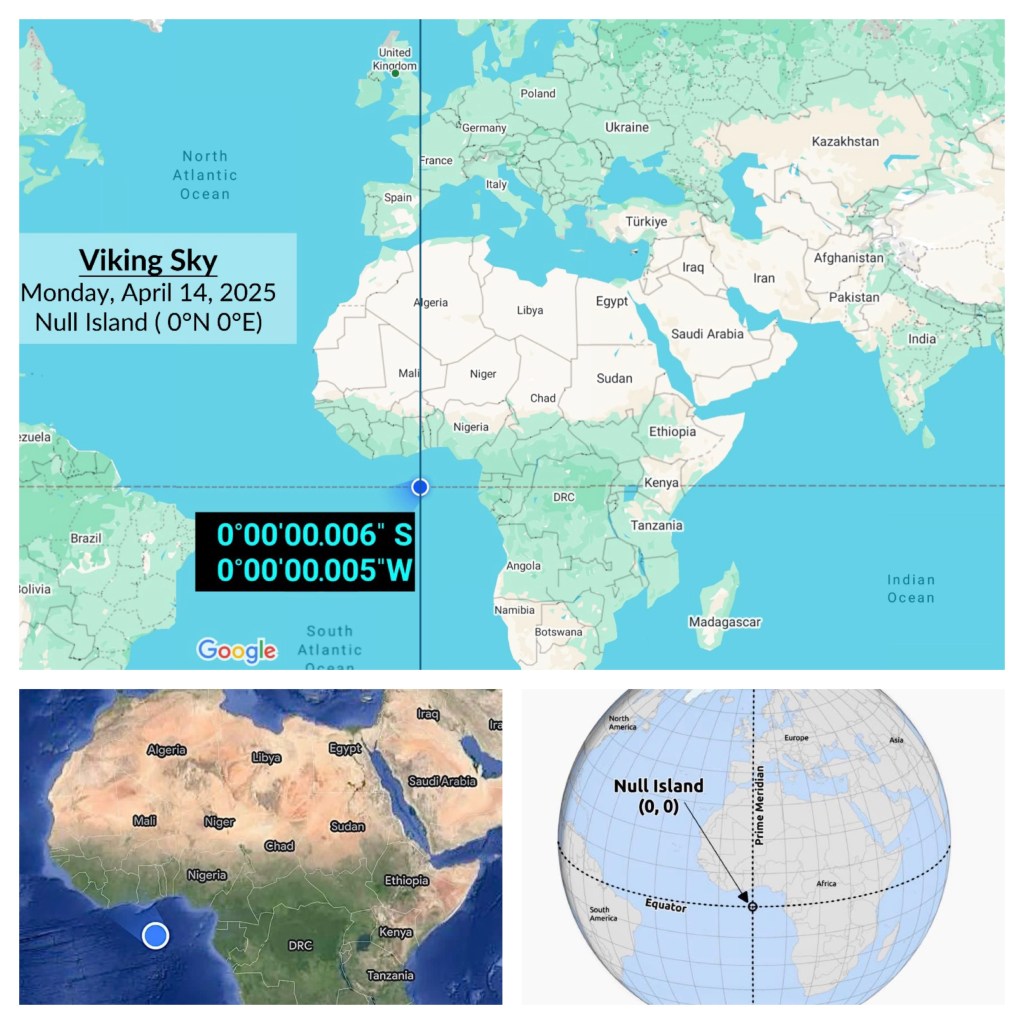
Imagine our excitement as we arrive at Null Island! We noticed the ship slowing and then circling. We had heard that the trump family was selling waterfront timeshares here, but had never actually seen it. That may be because there’s nothing here. There used to be a buoy, but it mysteriously disappeared. Now, it’s just a place on the map where the equator and prime meridian intersect…..zero degrees longitude and zero degrees latitude. It’s about 370 miles from Africa; Ghana being the closest country. The water is over 16,000 feet deep so plan on difficult construction if you purchase a piece of the “island.”
-
Subscribe
Subscribed
Already have a WordPress.com account? Log in now.
 Millers World Cruise 2025