-
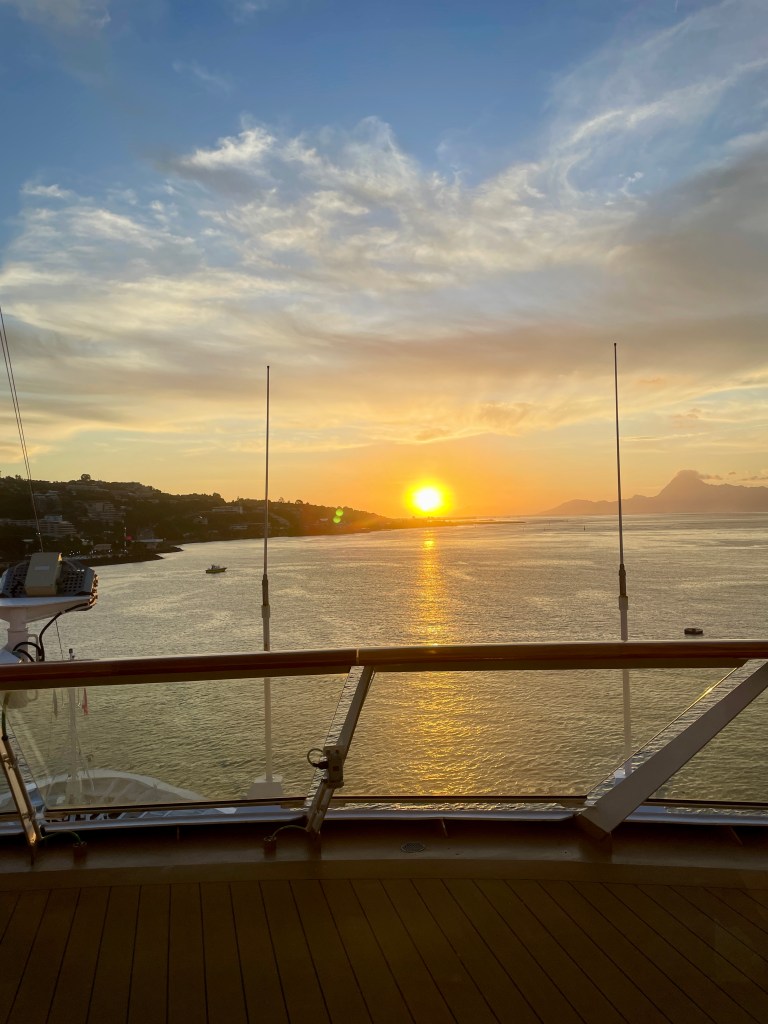
Tahiti -Bora Bora
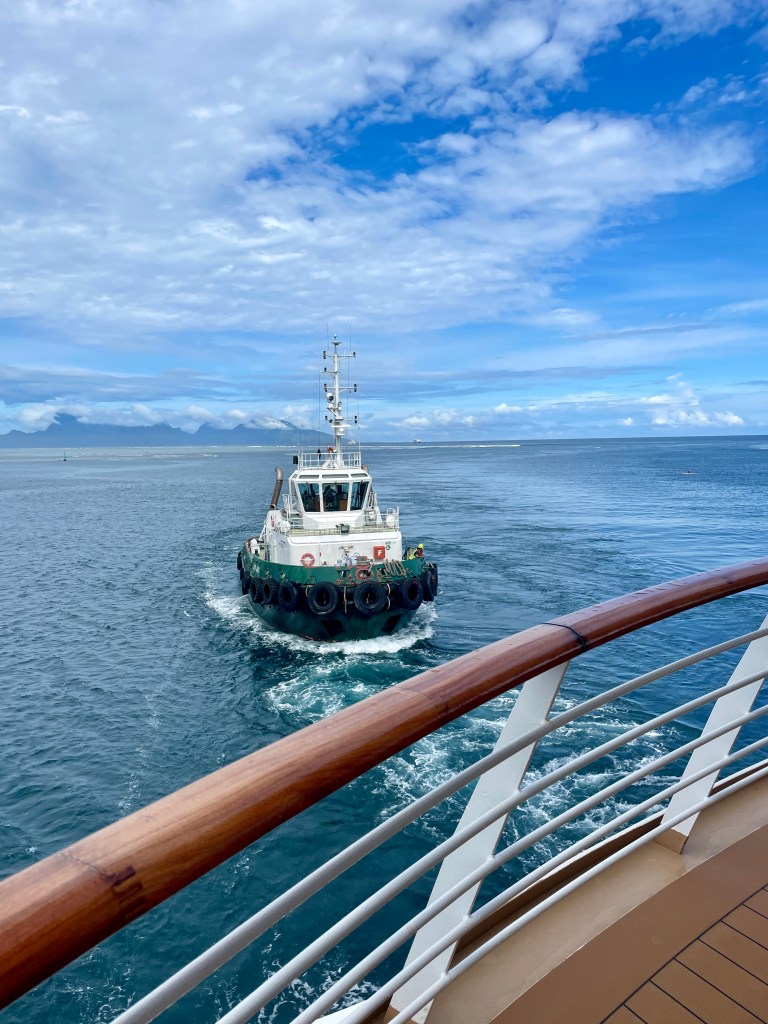
Tug assist 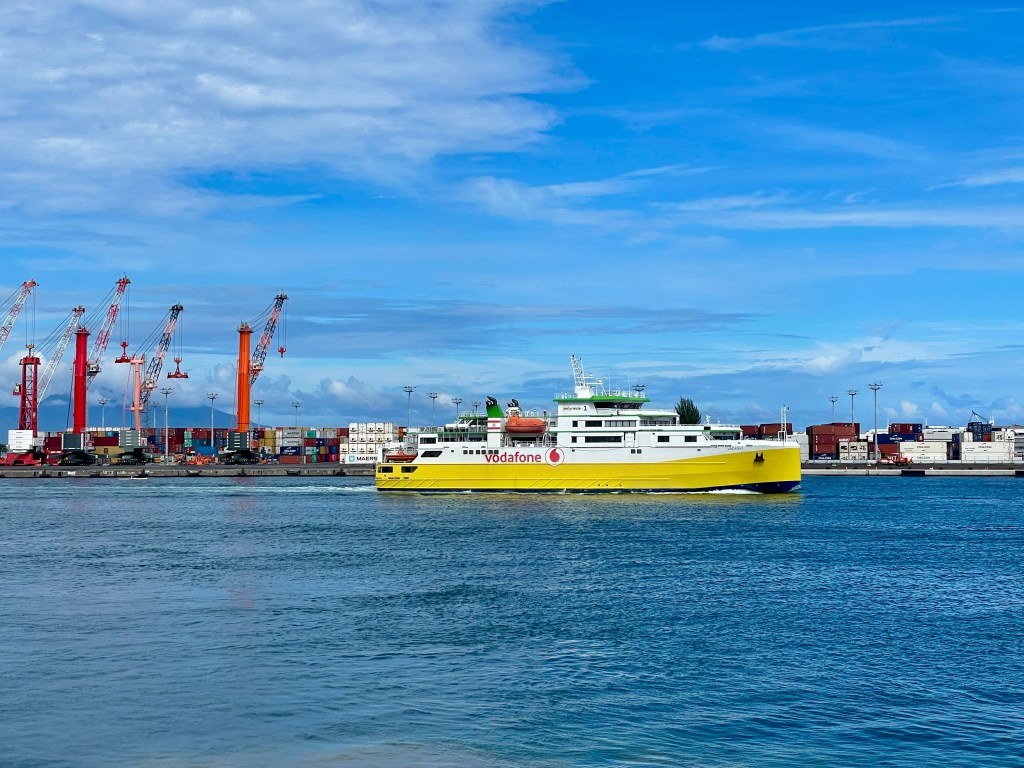
Ferry with colorful port cranes 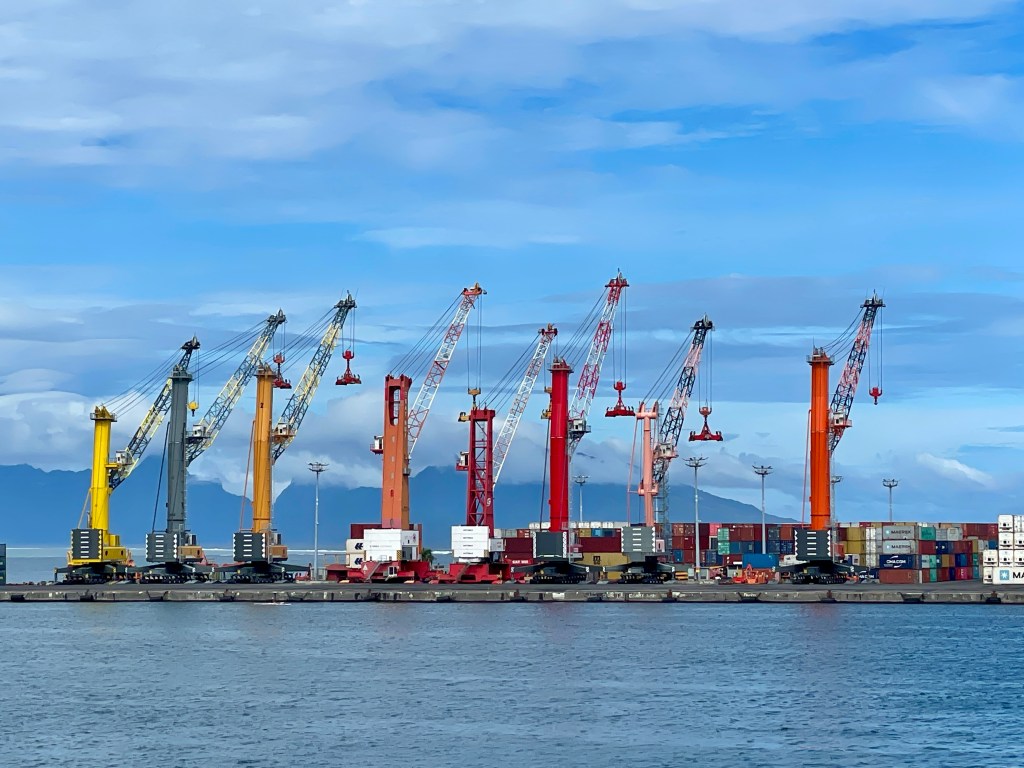
Jan. 18-20
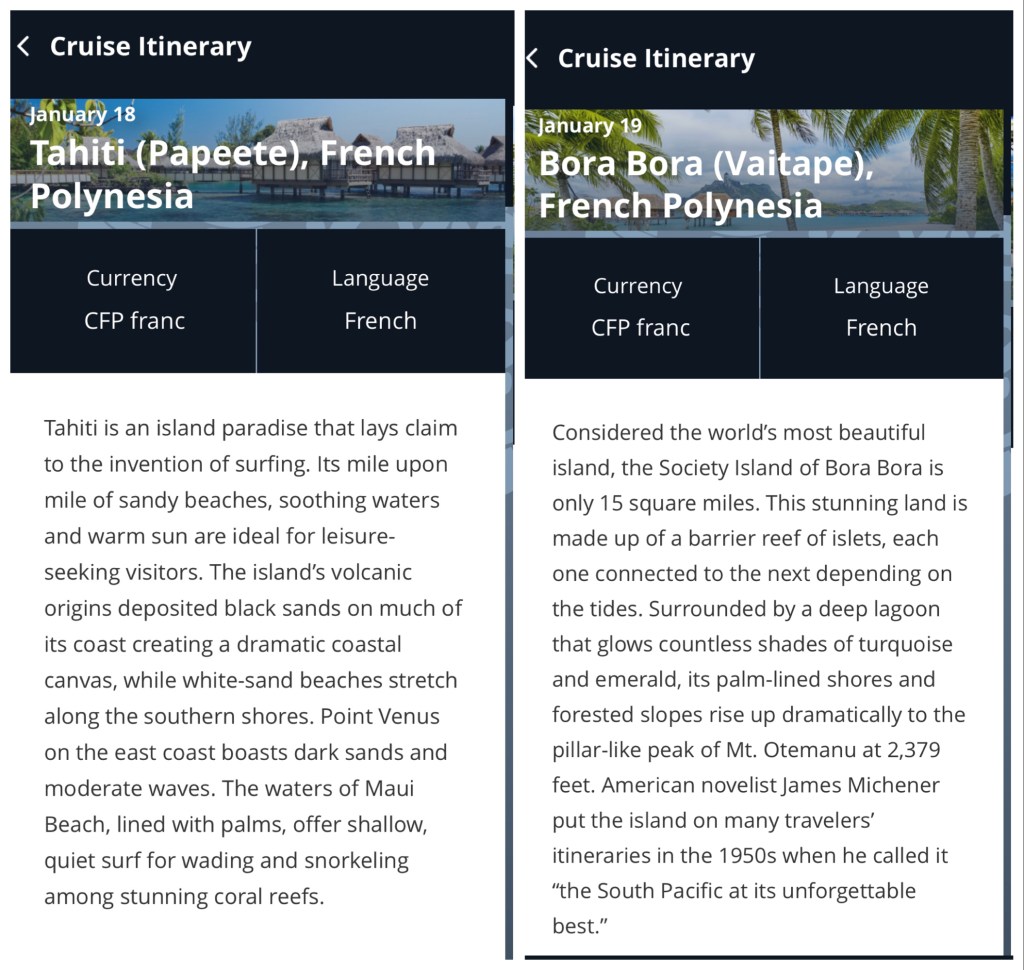
Our revised itinerary was able to accommodate our medically-needy passenger by traveling straight to Tahiti and cutting out Bora Bora. This evidently upset some passengers because it was a change. The captain was firm, saying that it was his decision and he was comfortable with it. Later, he reinstated Bora Bora and deleted Moorea from our destinations. That was probably a good idea since a ferry can reach Moorea easily from Tahiti for those who wanted to visit Moorea. We don’t hang out with complainers, but they are around.
We arrived at Tahiti about 7am. After a bit of a wait, an ambulance arrived and picked up our departing guest. He looked pretty chipper as he was carried off in a stretcher. We may never know more since Viking is good about guarding health information. (We learned later that he’d had a heart attack. Doctor friends advised there are some triage things the ship doctors can do).
Our first day in Tahiti was pleasant and uneventful. We walked around Papeete and didn’t see anything too spectacular. The high point was the market, but it wasn’t too high. Predictably, they sold lots of fruit, colorful cloth, wooden carvings, ukuleles, and black pearls. Pearls seemed to be everywhere on the islands. Karla took a long walk along the waterfront.
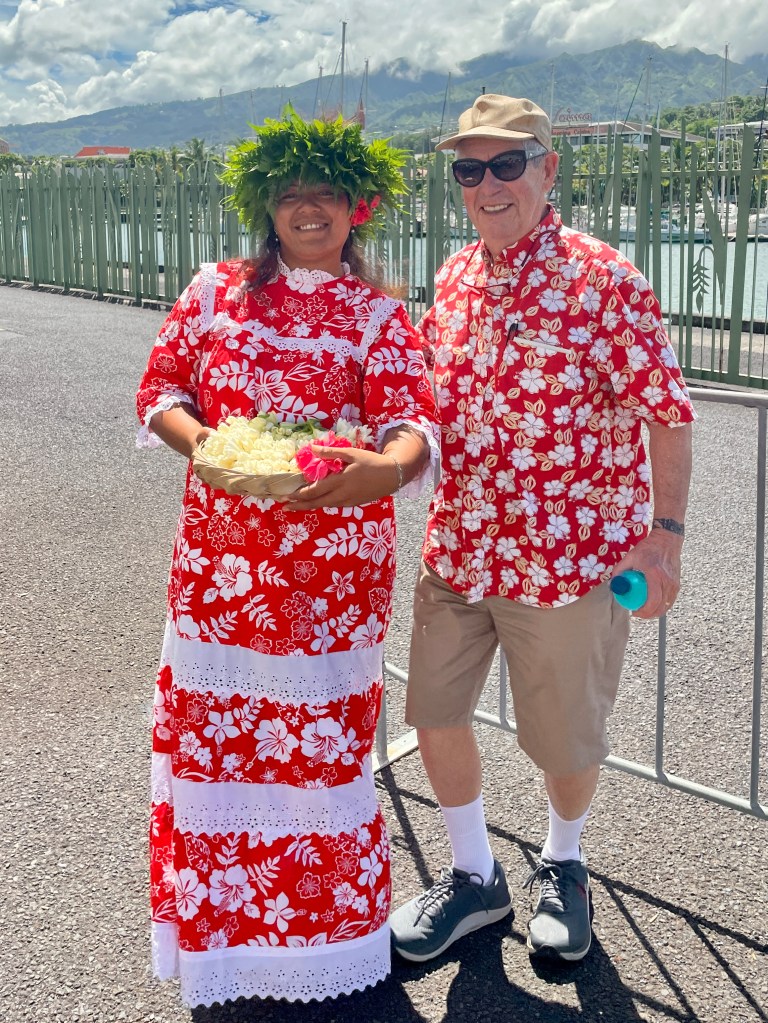
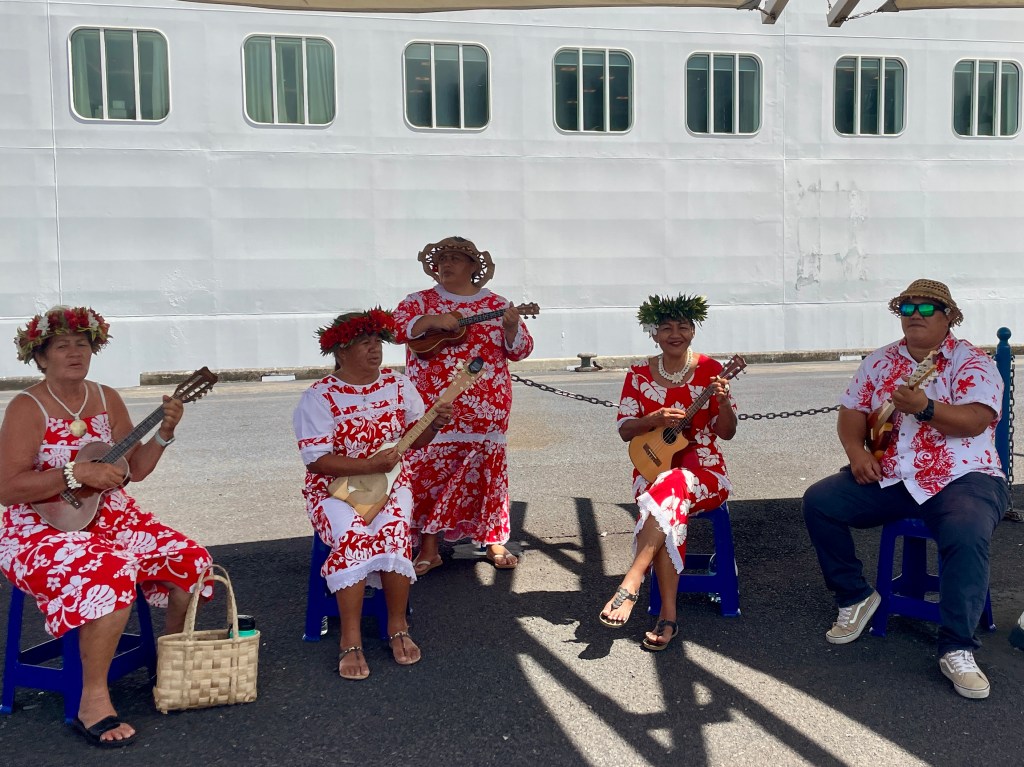
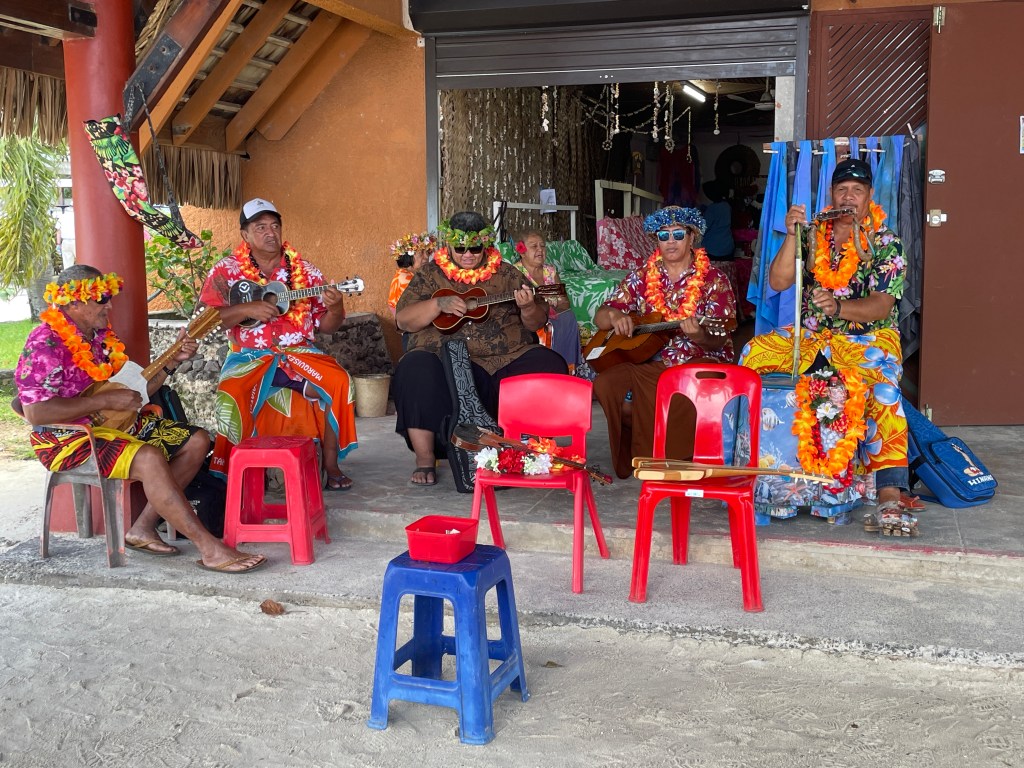
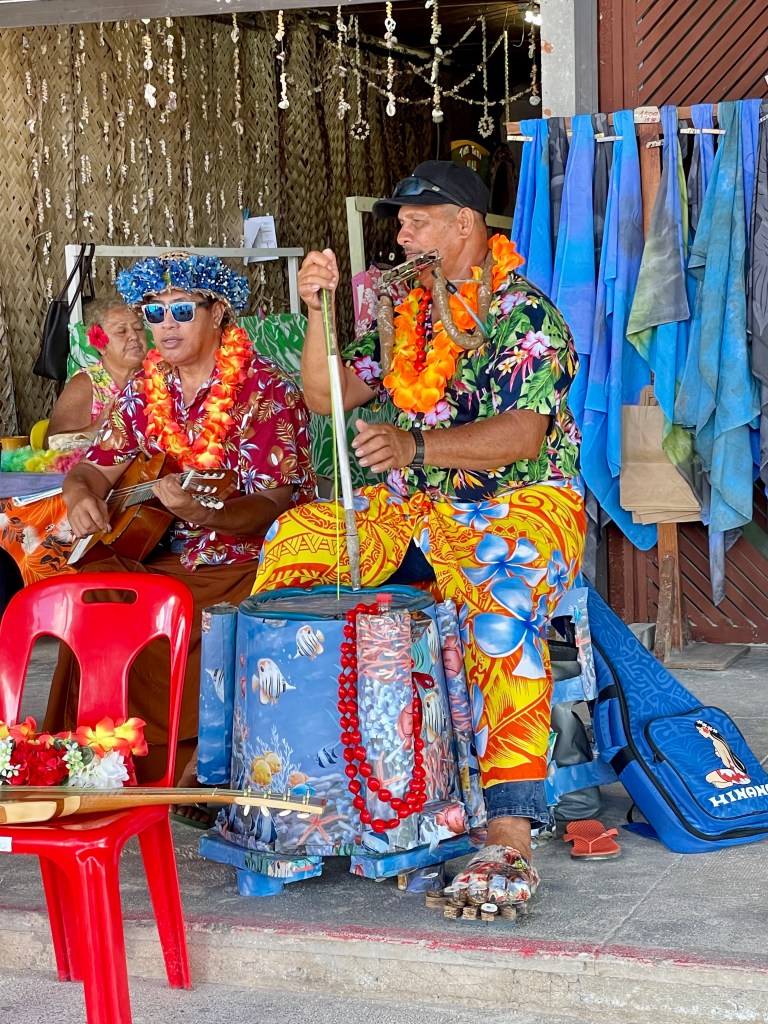
Often, we’d be greeted in port by local musicians 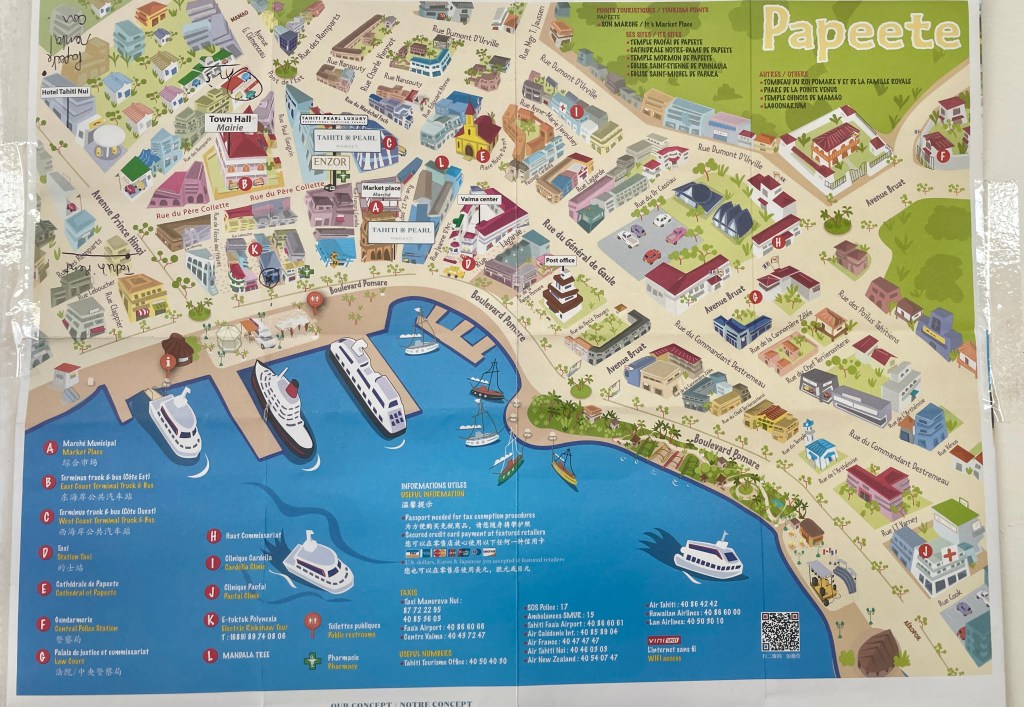
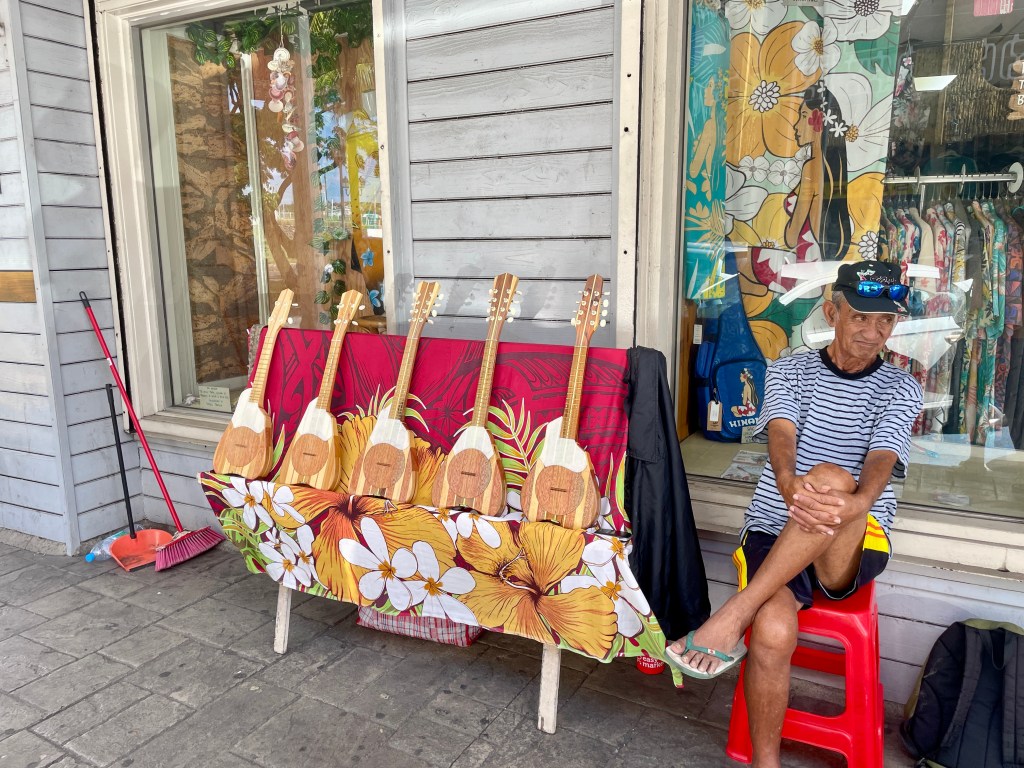
Homemade ukeleles for sale 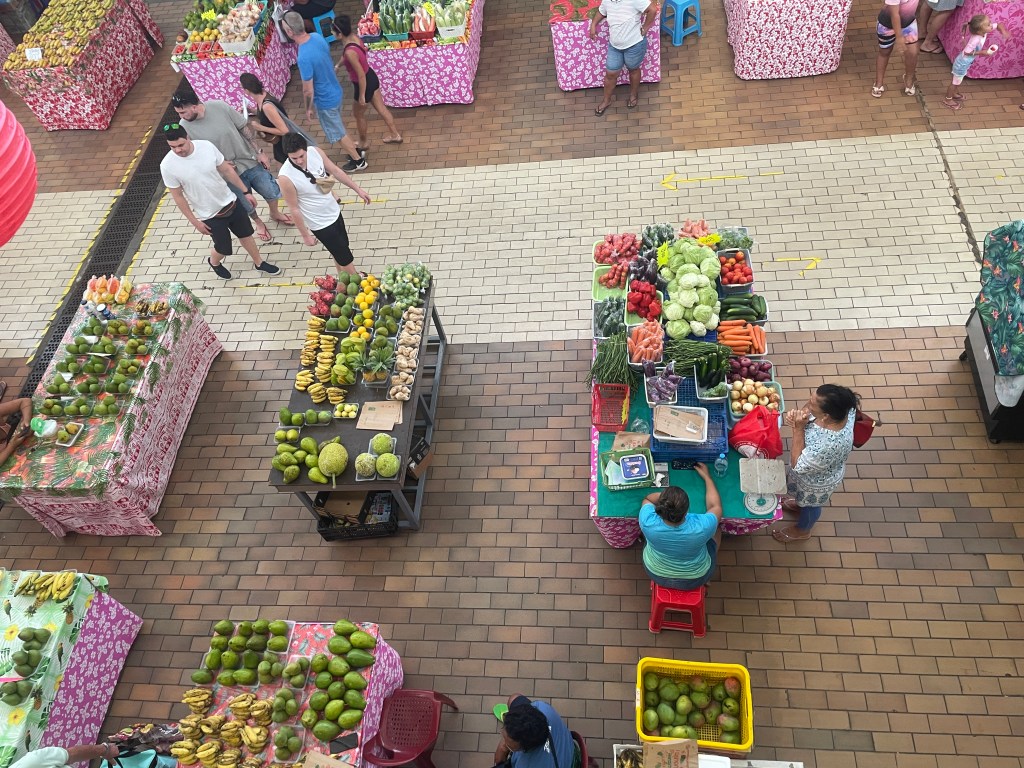
Central market 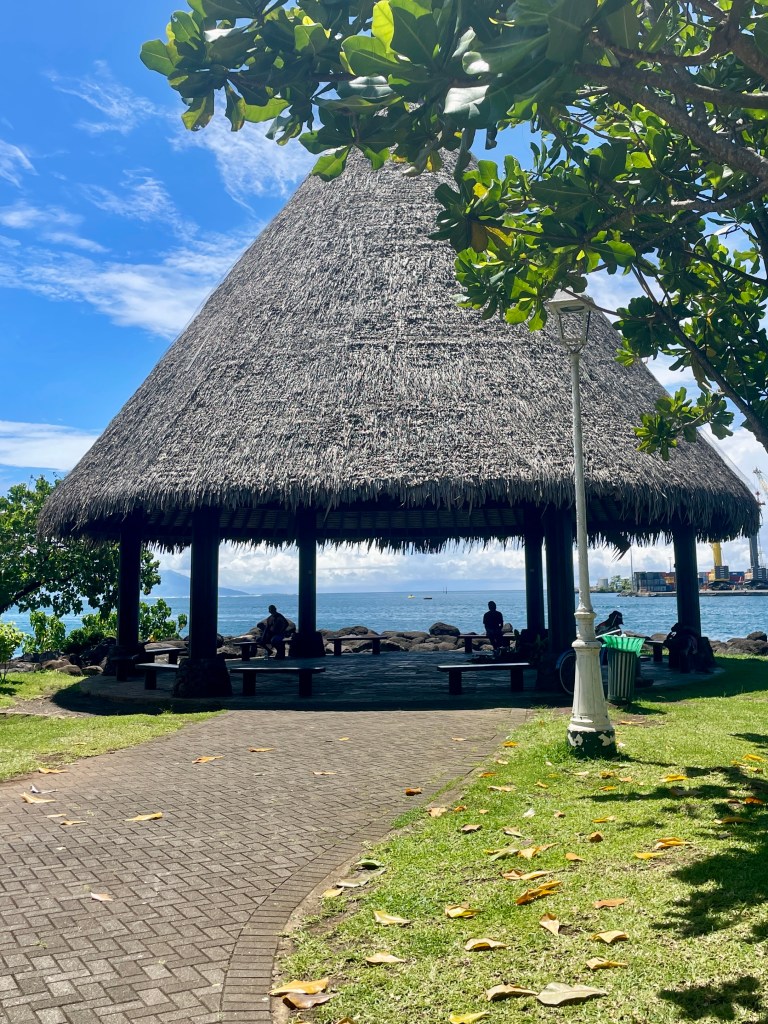
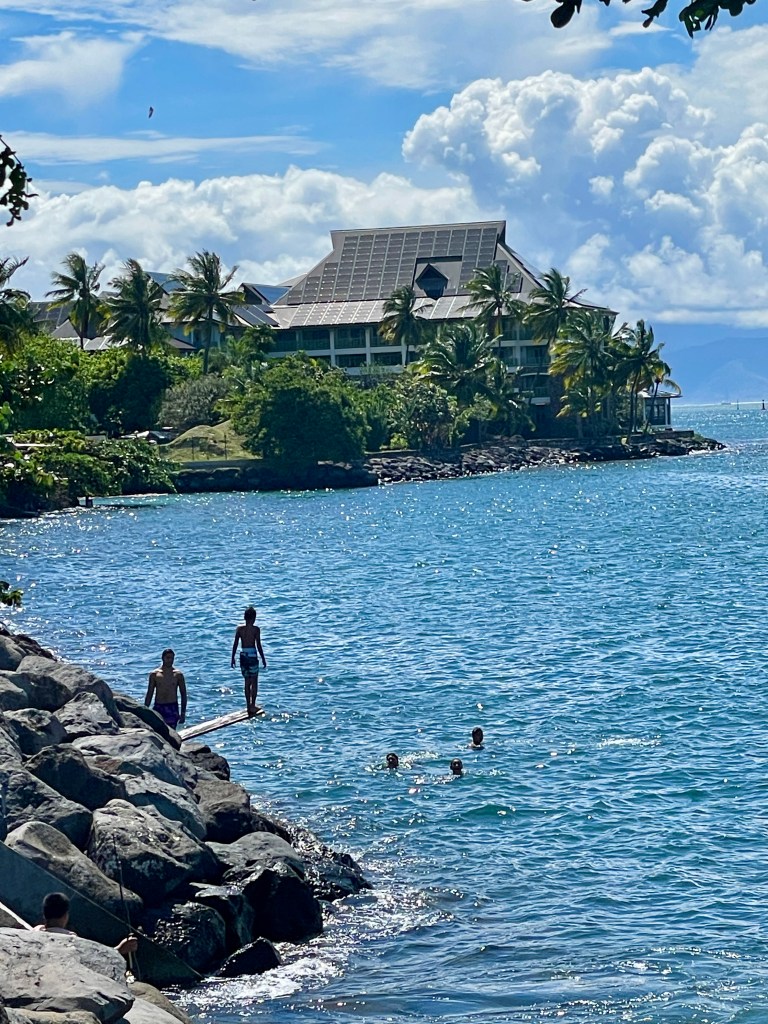
Along the seawall 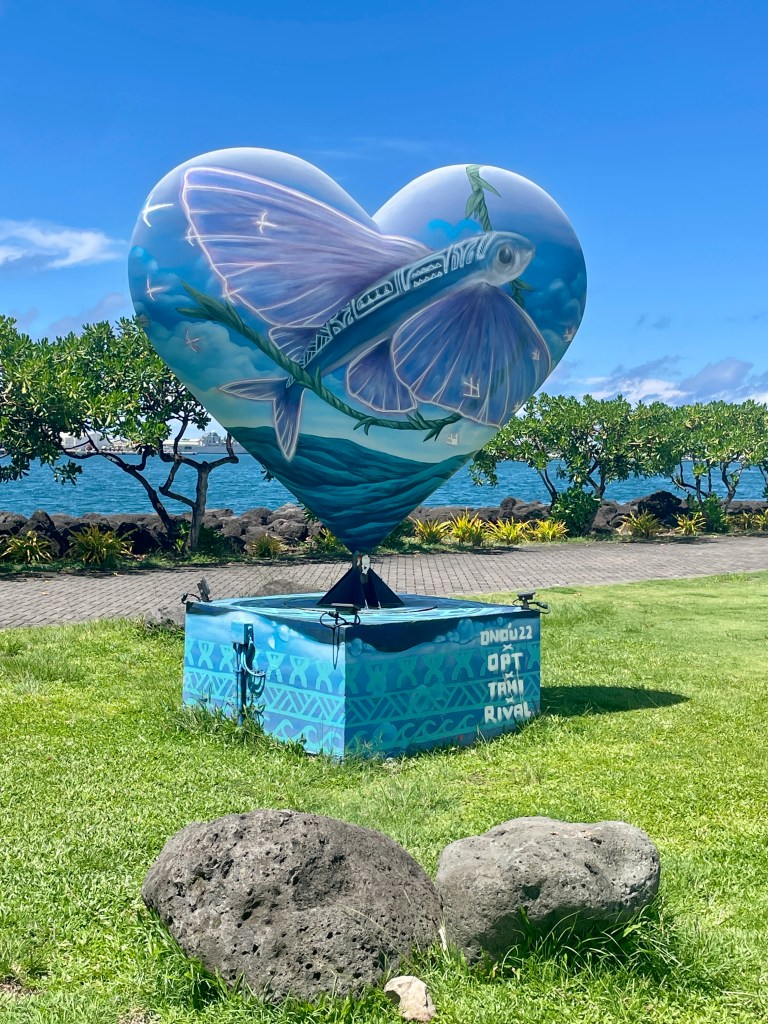
Flying fish 
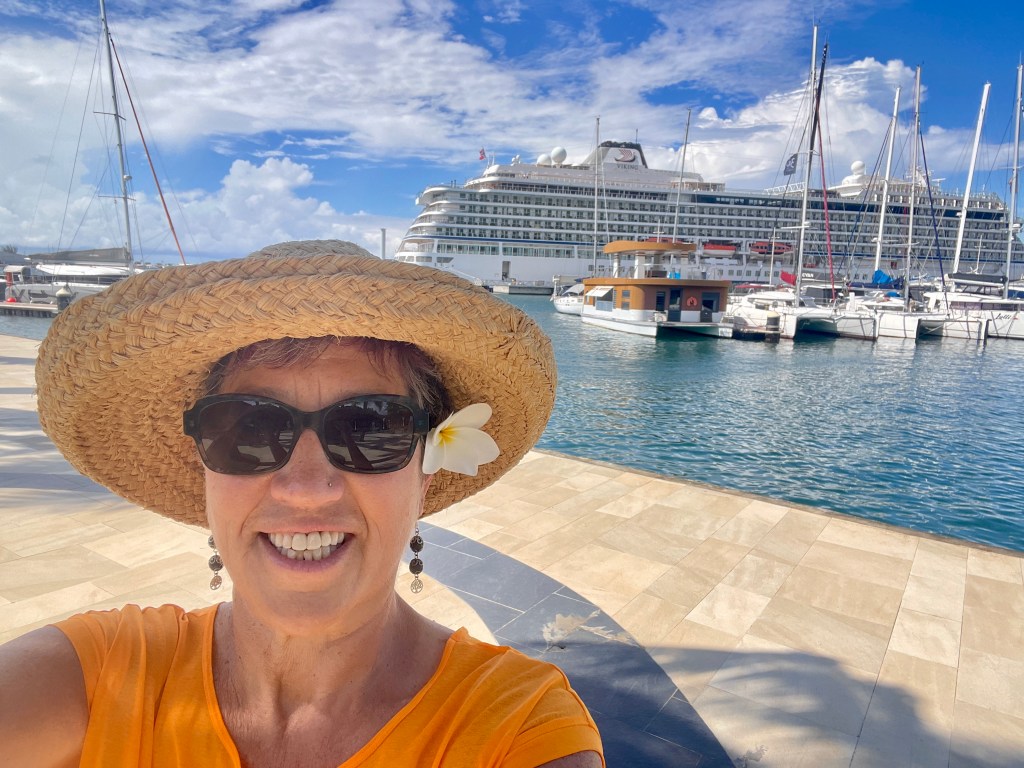
Our ship in the background 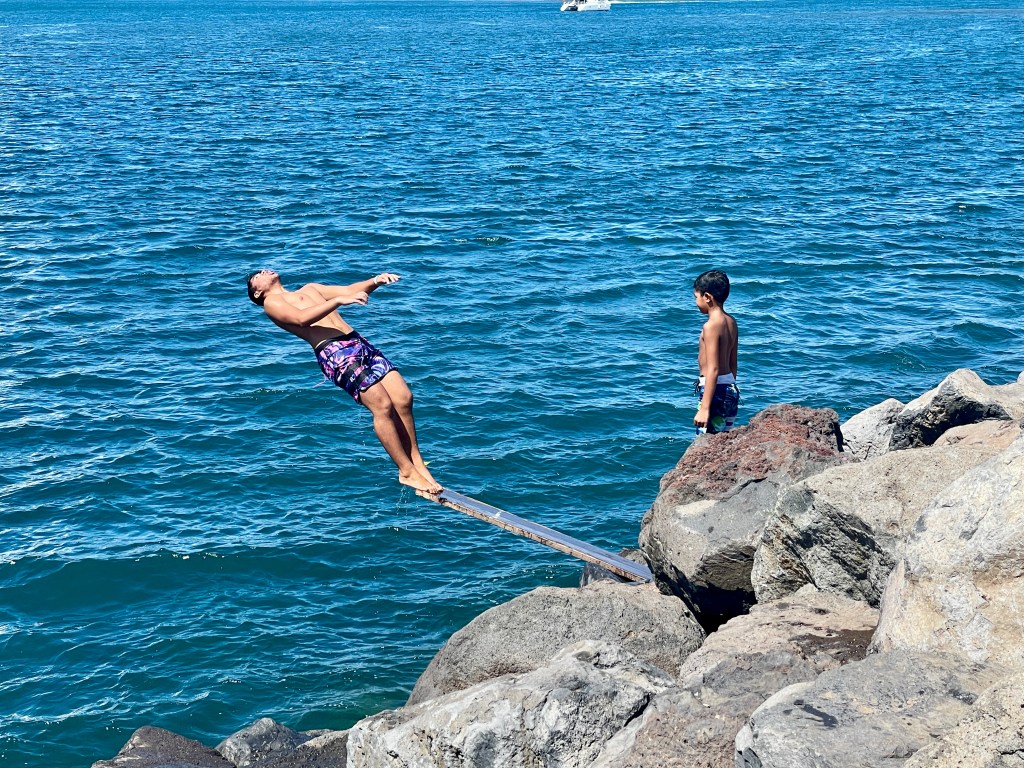
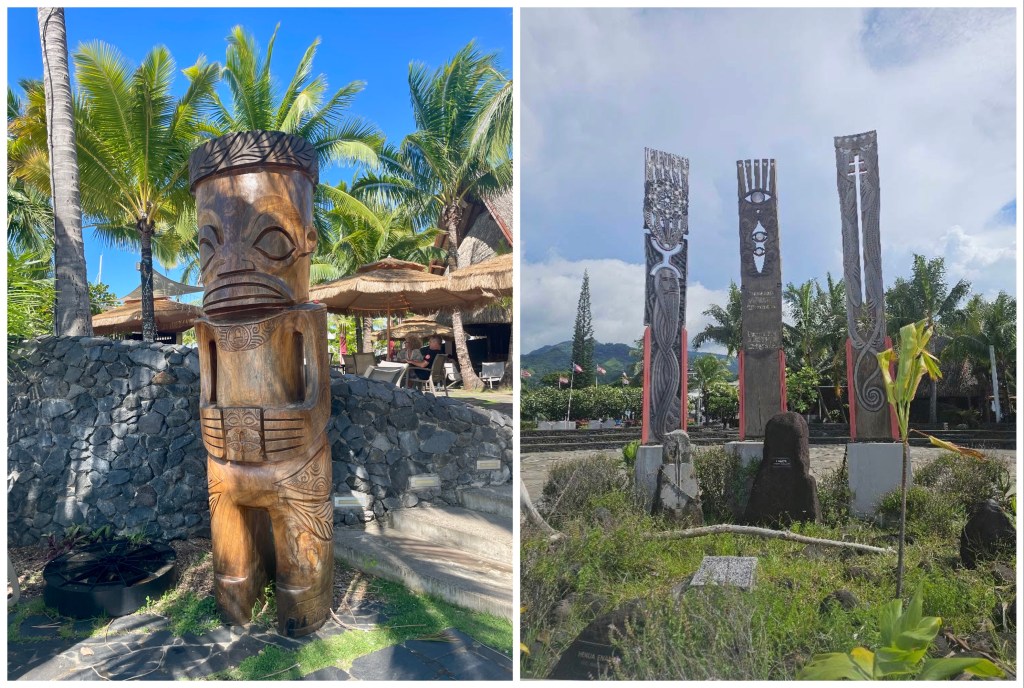
Tiki protection and a memorial to those harmed by the use of the South Pacific as a bombing range (by the Americans and French) post WWII. A professional dance team showed up on board the early evening– just before we left and offered a really nice performance. In the evening, Viking showed South Pacific on the pool deck, the movie from the 50’s. It was fun to hear the old songs, but we found our way to bed about half way through.
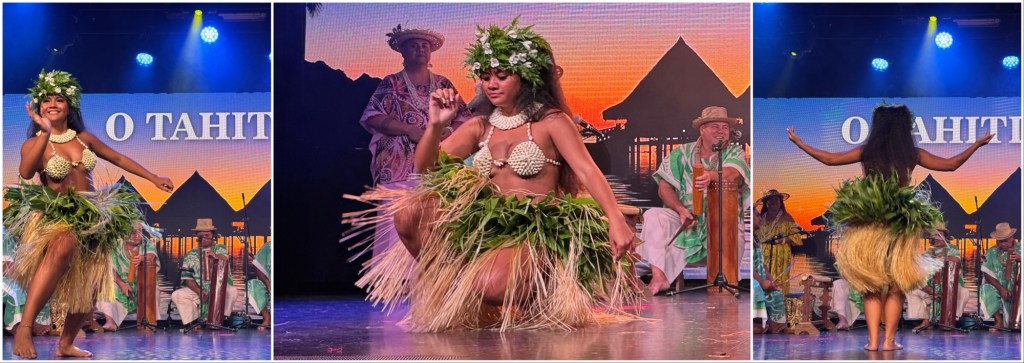
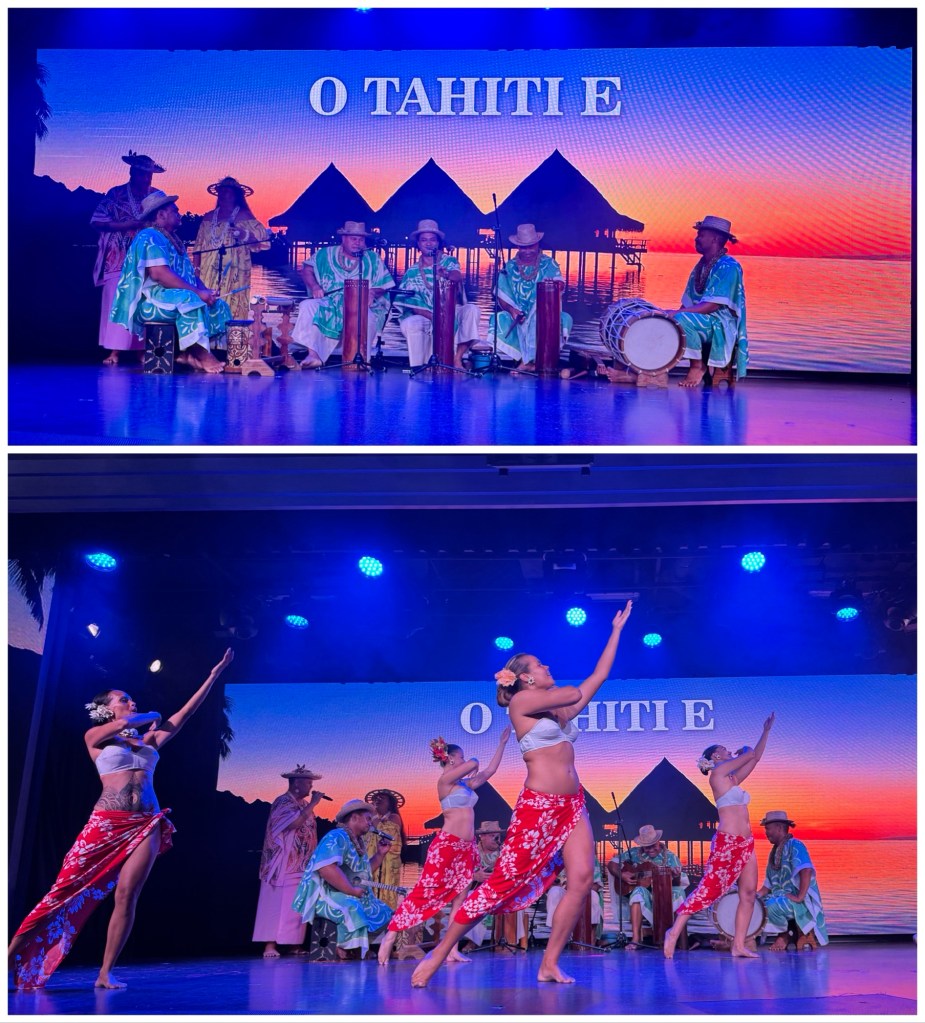
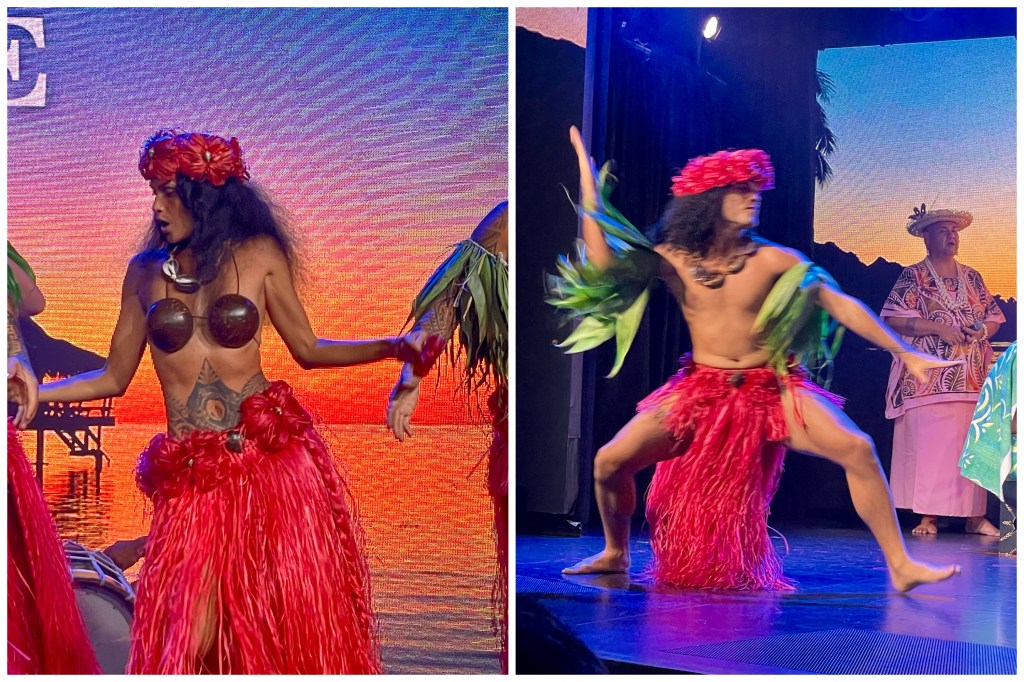
The next day we arrived at Bora Bora and rode the tender on to the mainland. Our mission was to find the tattoo artist who decorated our wrists on a previous cruise. His shop had been taken over by a black pearl vendor…one of many and we were told he’d moved back to Tahiti.
We decided to take an “included” excursion….a bus trip around the island. We knew there wouldn’t be too much to see when the guide said, “…and, there’s a gas station on the left.” We made several stops including watching for land crabs and stopping for pictures of multi-colored water. Lots of passengers didn’t get off for the stops. When the guide said that we could stay an extra 5 minutes at a stop, there were lots of “no’” responses from the passengers.
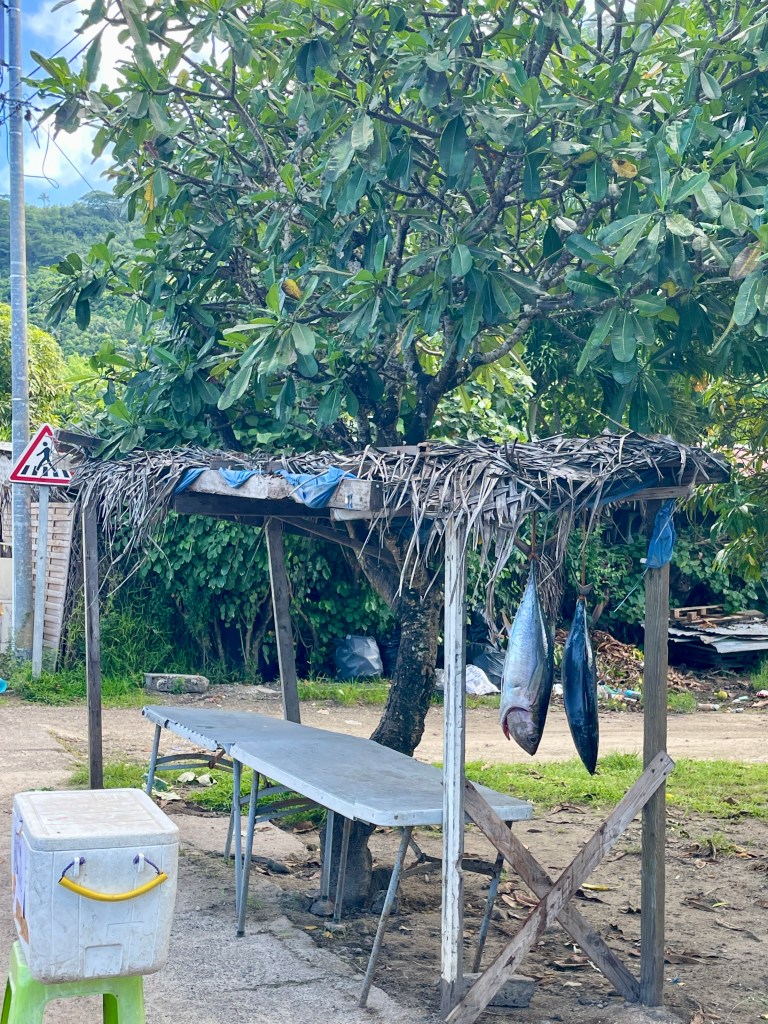
Fish for sale–looked like tuna 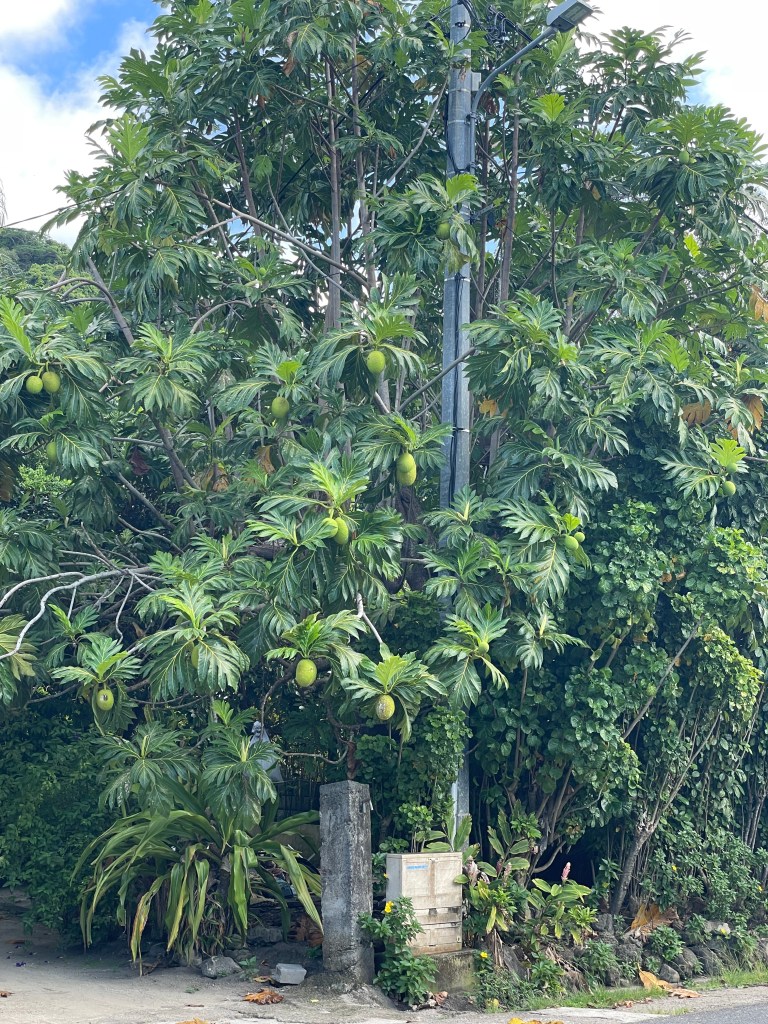
Jackfruit 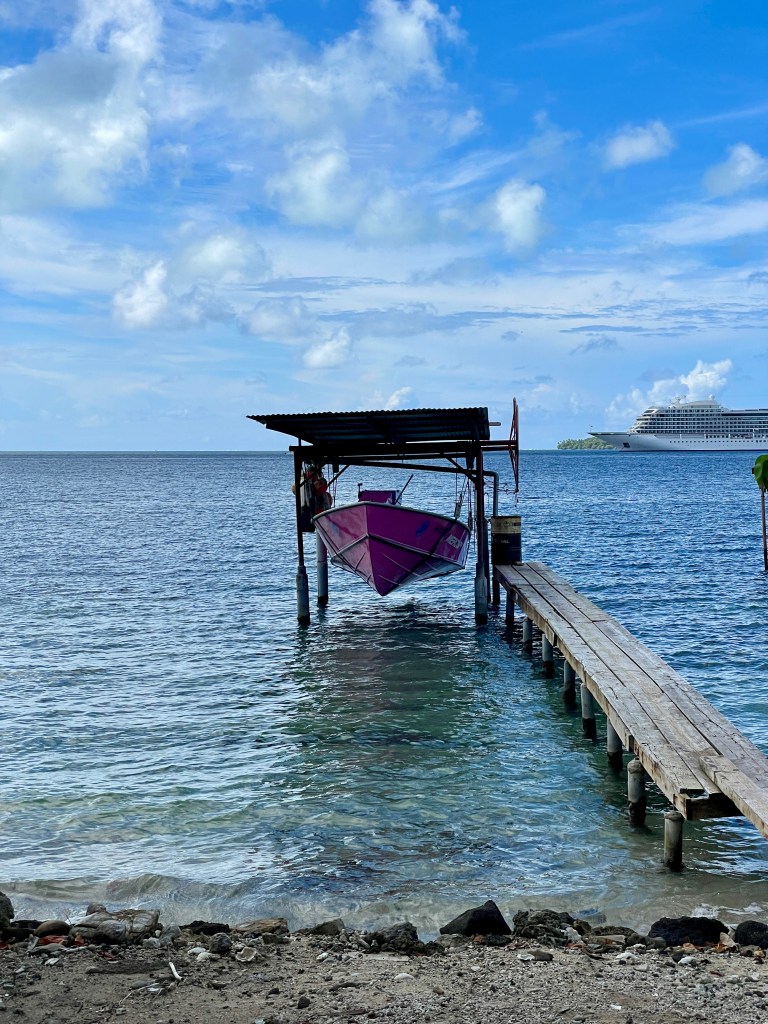

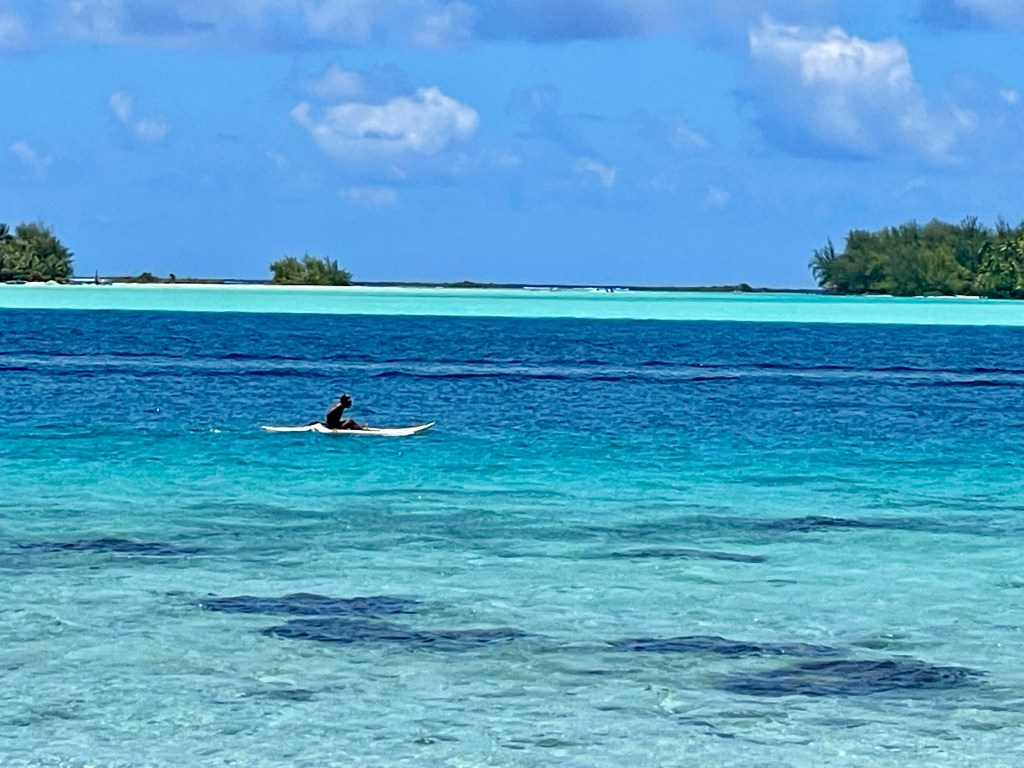
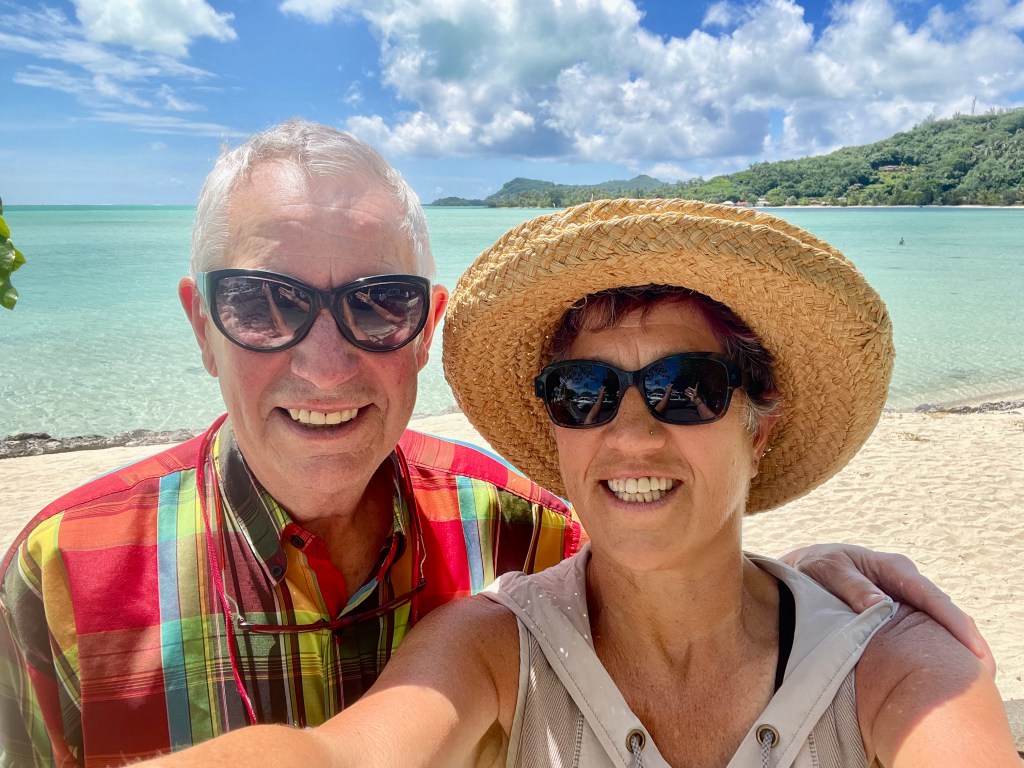
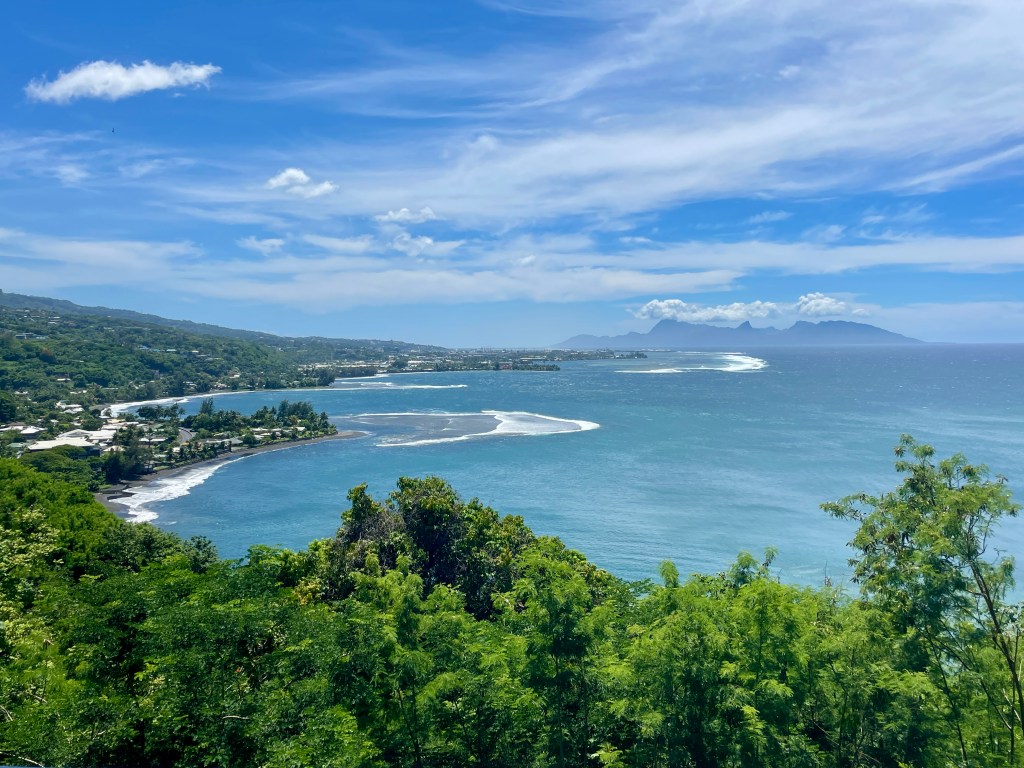
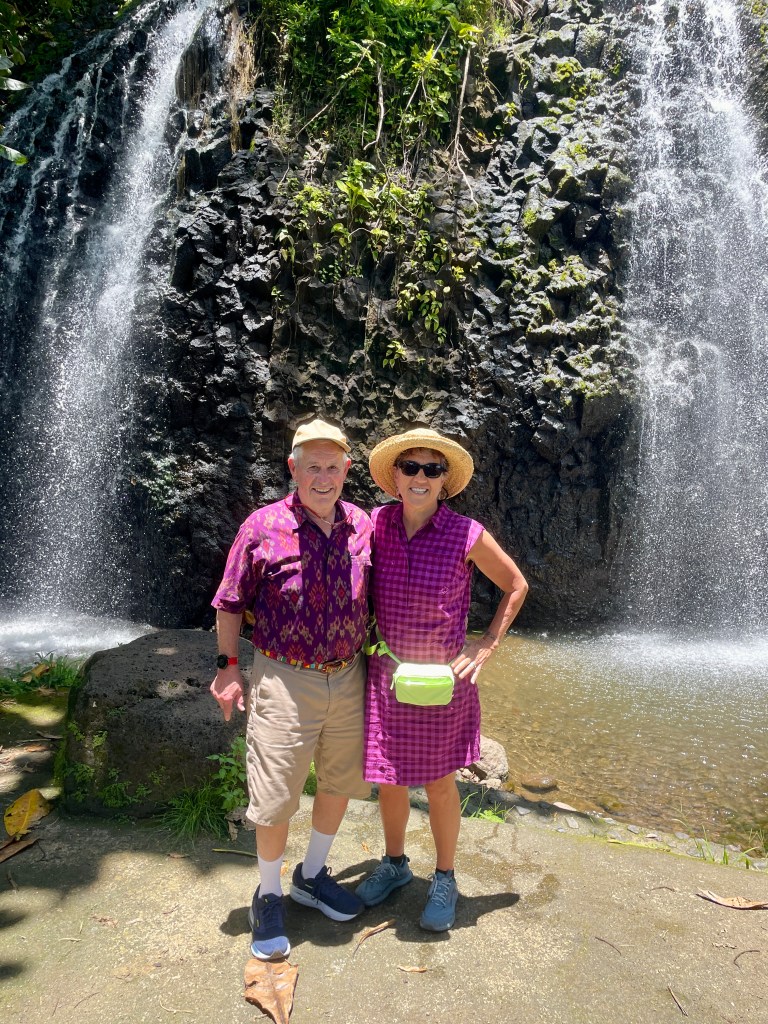
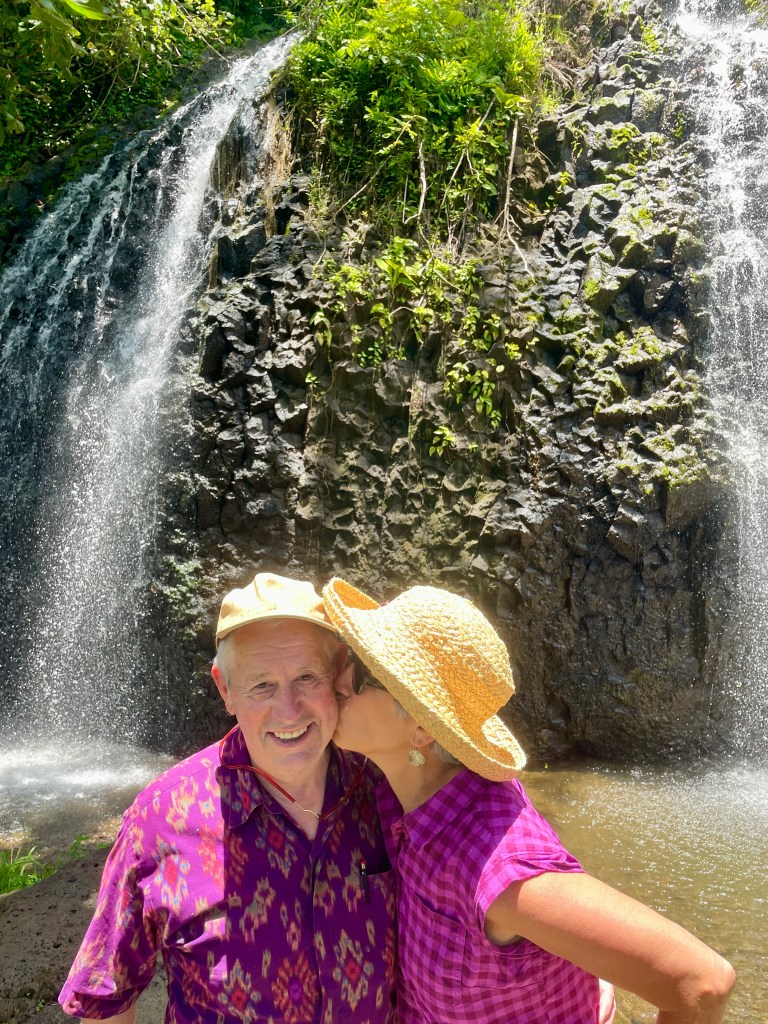
The next morning, we were docked once again in Tahiti. We checked two tattoo shops, neither of which worked for us. One was closed and the other couldn’t accommodate our schedule. With nothing better to do, we arranged to join 6 other passengers for a trip around the island. That was a worthwhile 4 hours. There was nothing spectacular, but we saw the small towns, and stopped at a region’s site, a cave, some waterfalls, and nicely-manicured view sites.
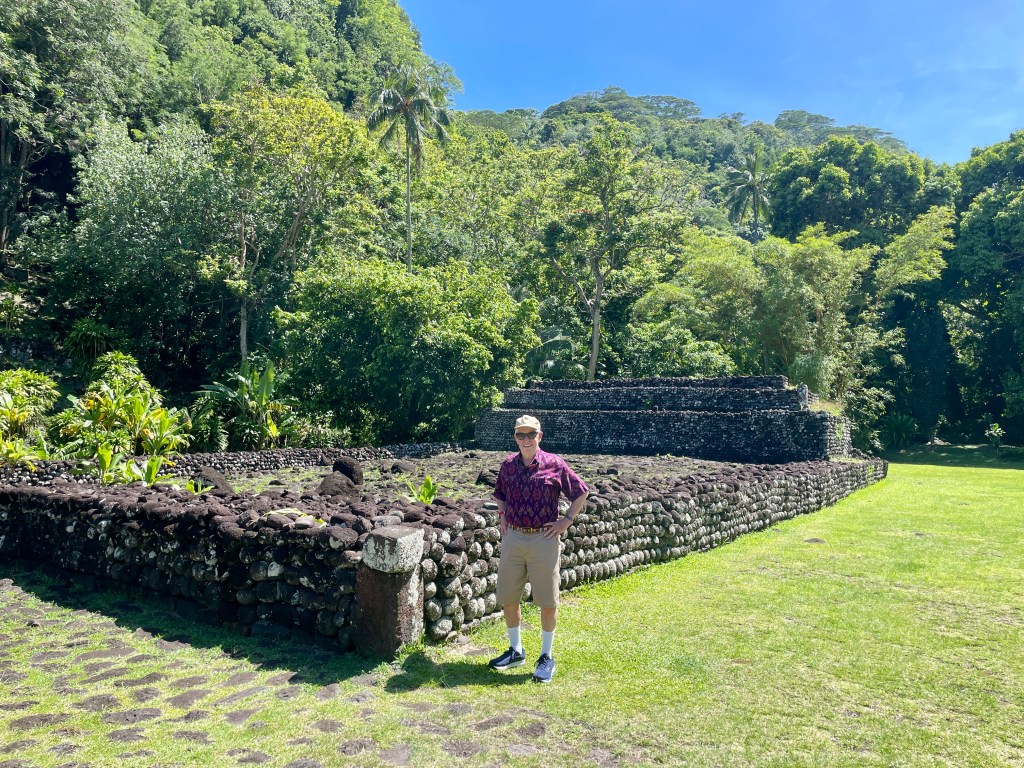
Marai 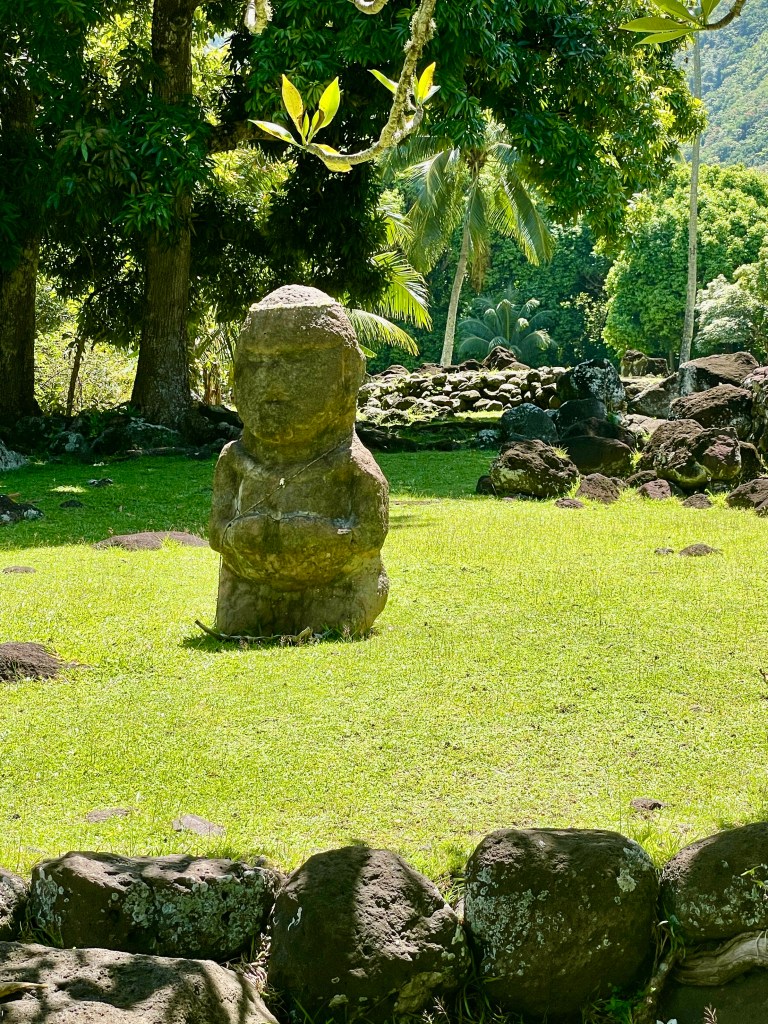
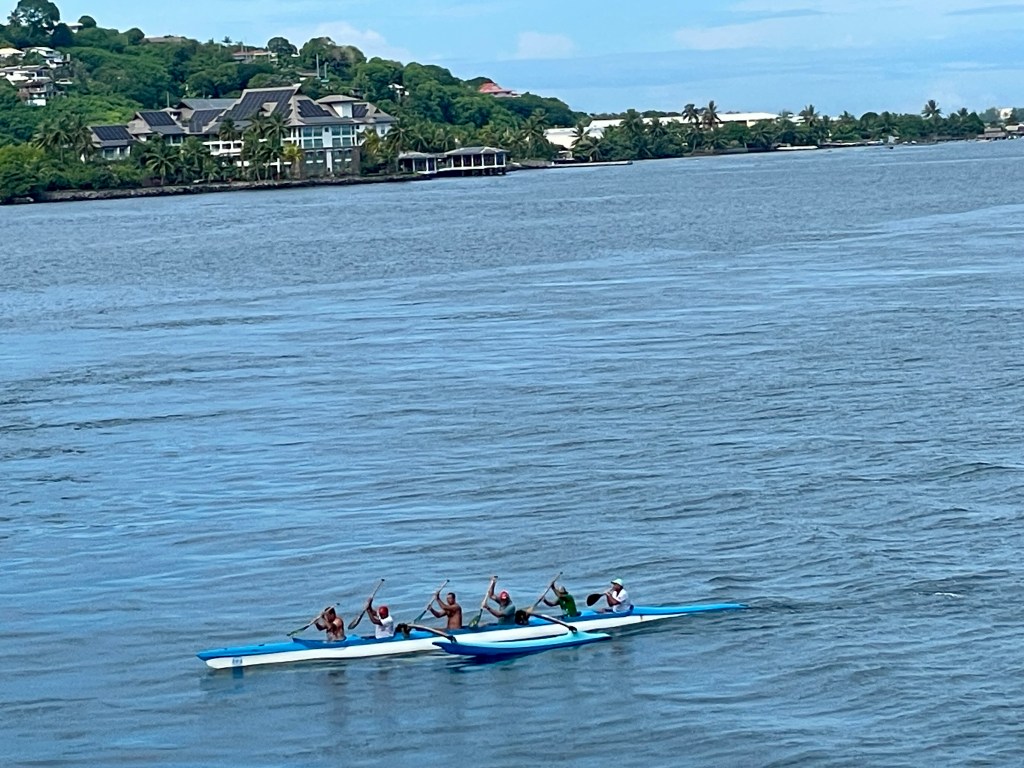
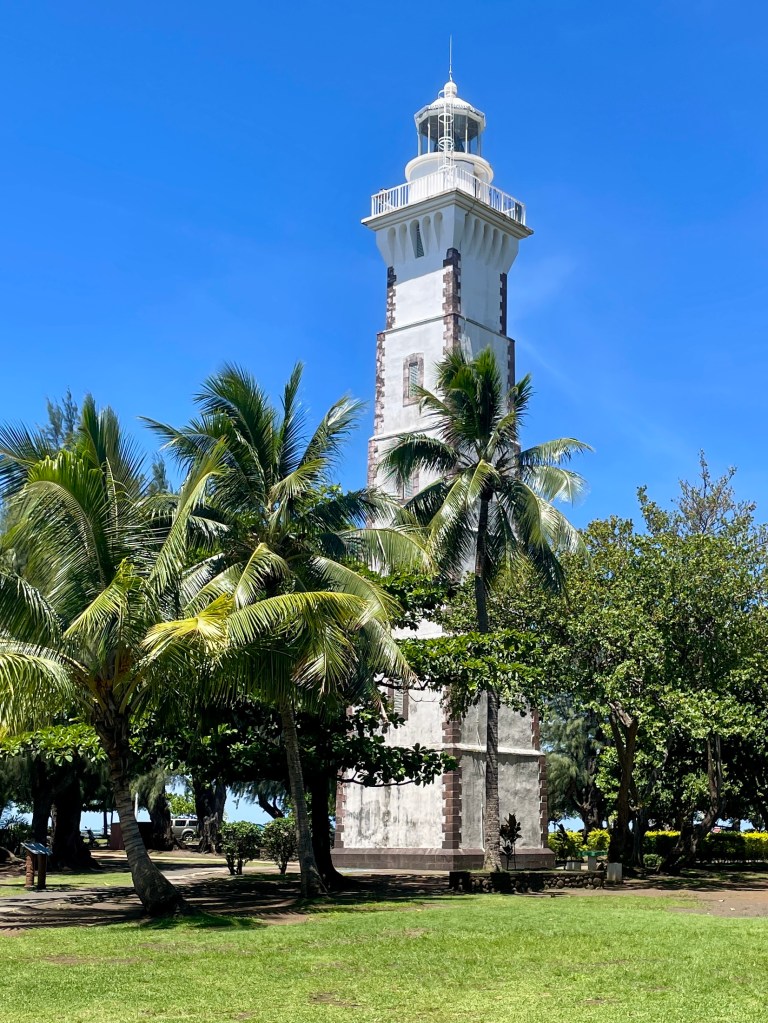
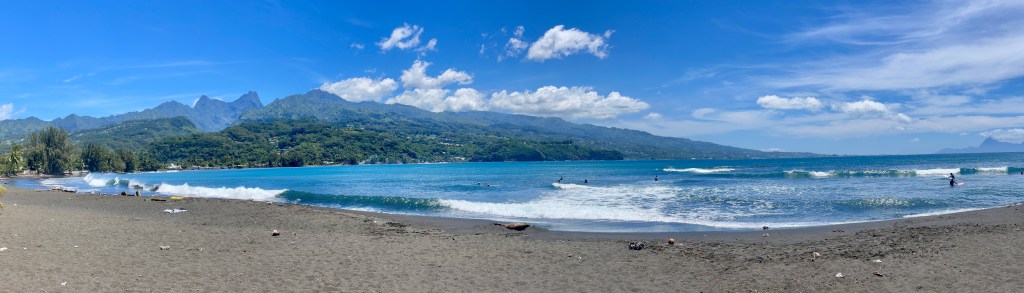
Captain Cook built an observatory on the site of this lighthouse to observe the transit of Venus. Just to be fair to the French Polynesia Chamber of Commerce, I should say more about the islands. They really are beautiful. The volcanic hills/mountains are covered with lush green vegetation. They are surrounded by water with beautiful shades of green and blue, depending on depth and frequent coral reefs. For people who want to sit on a beach in the sun, it may be just right. There are some beach bungalows that can be rented for $2,000/ night for those who really enjoy it. But, it seems to me that beyond sitting and sunning the options are limited…..the exception being diving or snorkeling. The islands we visited had a road around the island, but none across the hills in the middle. Houses were modest on the flatlands adjoining the sea, but the flatlands were not extensive. Circling the island was scenery intensive….not lots of cultural experiences.
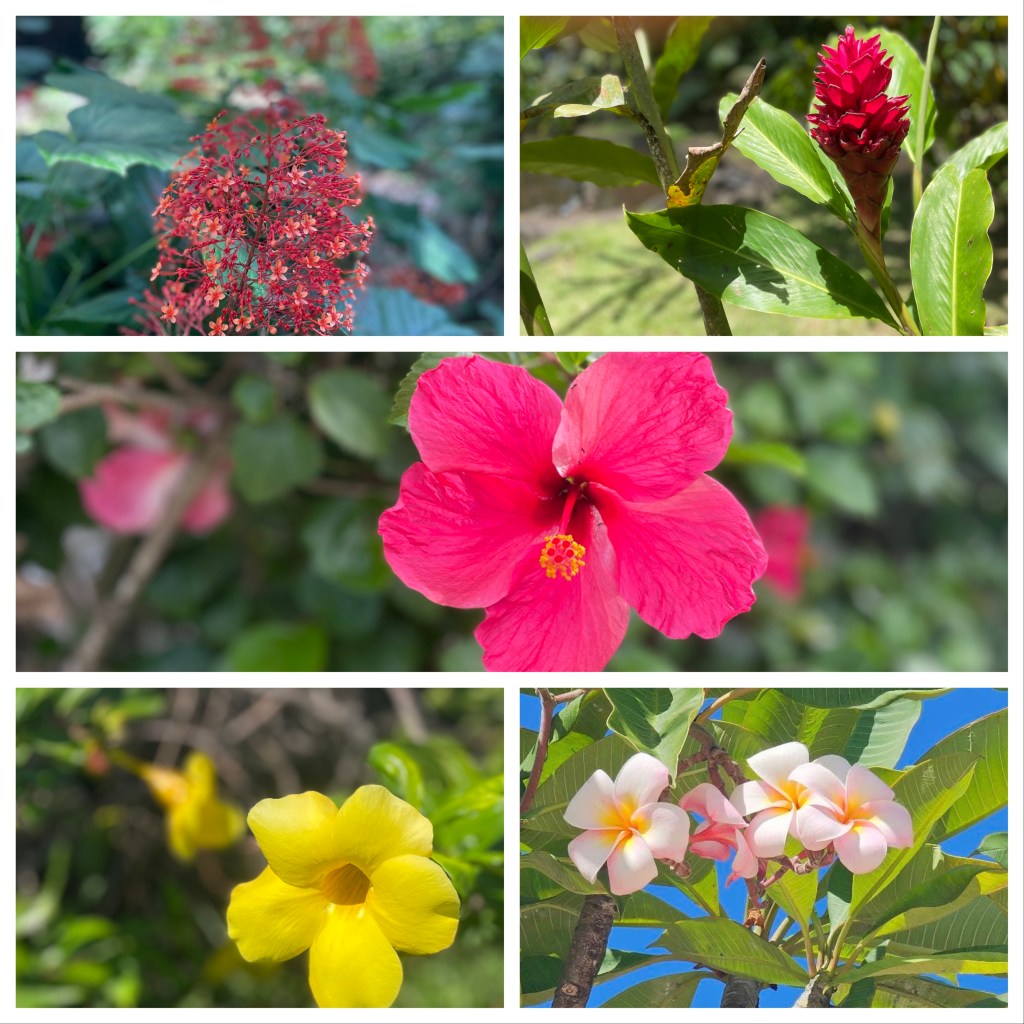
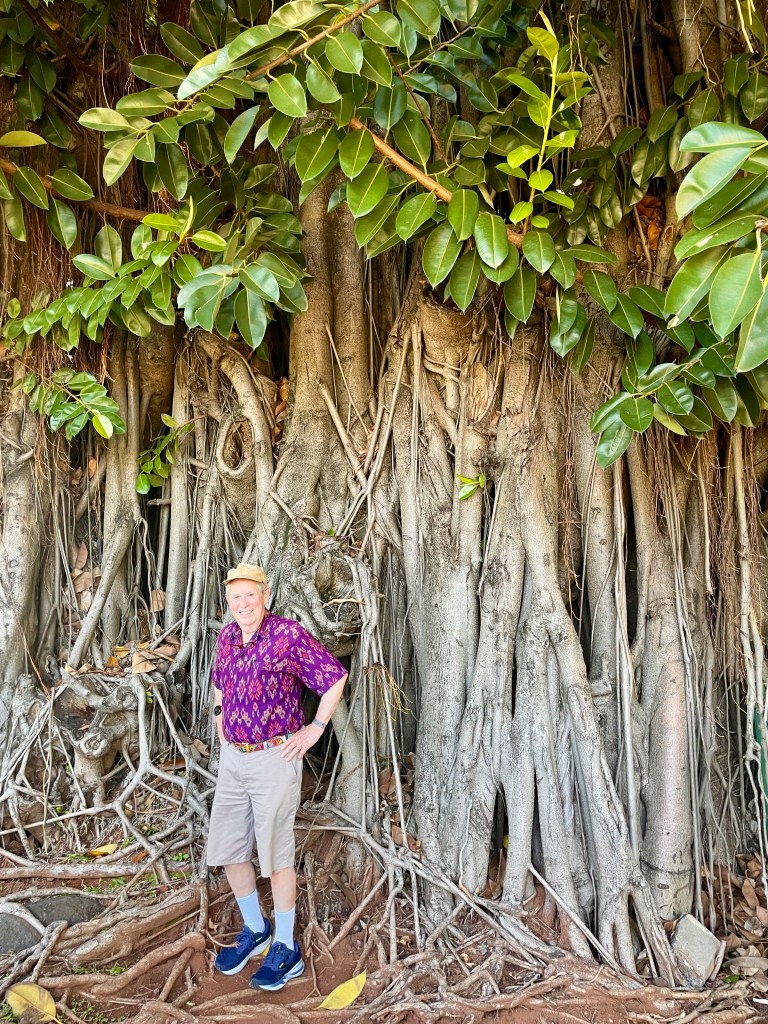
We enjoyed the stops, but I’d say the islands are best seen on the way to something else rather than as a destination.
-
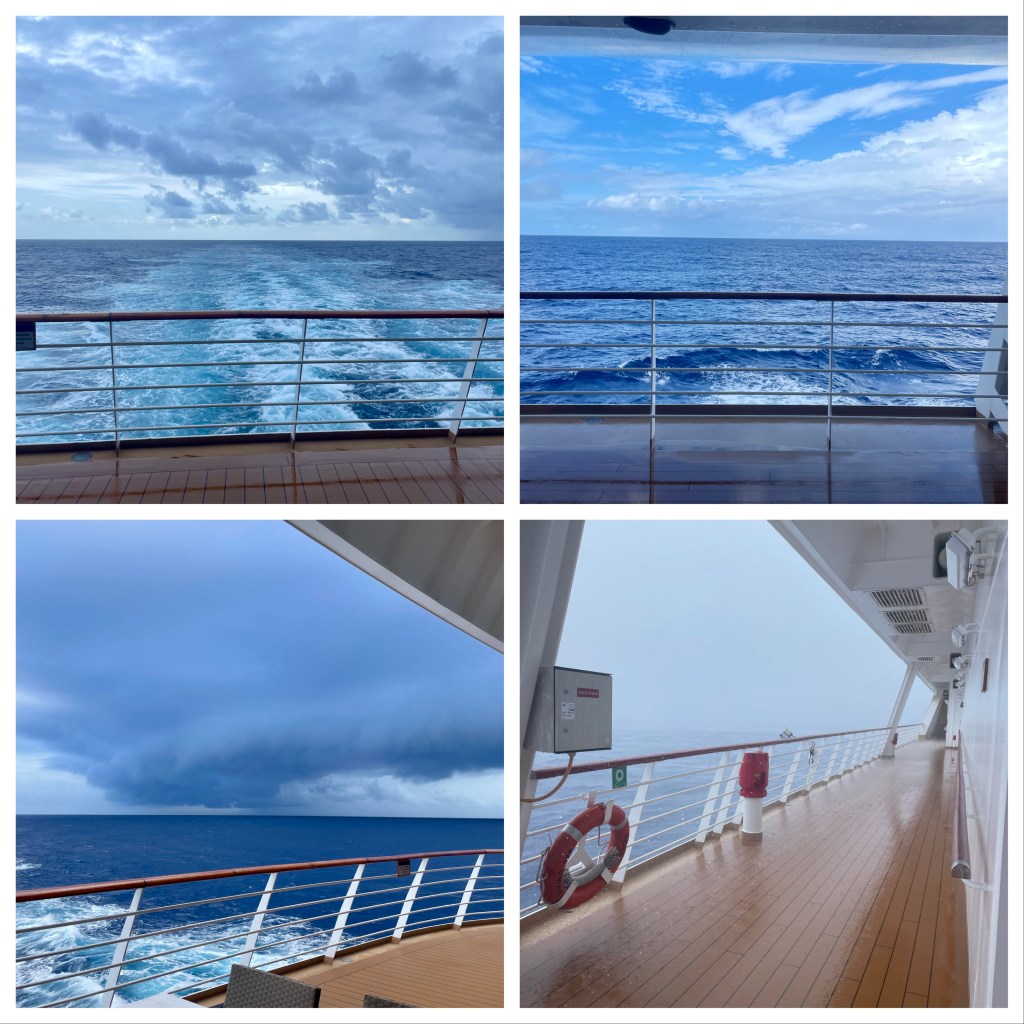
Tahiti bound
Jan. 17
We are “streaking” across the South Pacific to get our medical emergency to Tahiti. Evidently, top speed is 19-20 knots (23 mph.) It’s a steady 80-81 degrees with 15-20 mph winds. The sun is interrupted by occasional thunderstorms. Easy day.
Natural and Unnatural Disasters.
What could go wrong in the peaceful islands of Polynesia? I’ll deal with several threats: (1) Merchants and missionaries; testing atomic weapons and climate change. I’ll use the Marshall Islands to touch on all three.
The Marshall Islands are comprised of 5 main islands, 1225 islets, and 24 atolls. About 37,000 people live on the islands; fewer people than in previous years for reasons to be explained. They were settled by Polynesians around 50-30 BCE. For centuries, they led a comfortable island existence, living on fishing and the coconuts, taro, breadfruit and chickens the early settlers brought with them. Not many records exist prior to the arrival of Spaniards in the mid-1500’s. The British came in the late 1700’s. Missionaries and business enterprises arrived in the 1850’s. German copra traders emerged in the 1870’s and 80’s. European countries competed for business opportunities throughout the islands. These commercial and religious interests brought with them influenza, measles, typhoid fever, and syphilis Additionally they provided access to alcohol. Those “gifts” were threat #1. (The United Church of Christ and Assemblies of God are the major religions today.)
Germany annexed the islands in 1885, Japan took them over in 1914 and controlled them with a South Seas Mandate until WWll. The United States assumed control after the War. Following their use for nuclear tests, the Marshall Islands became independent in 1979..
There were 67 nuclear tests between 1946 and 1958. The first A-bomb test was on Bikini atoll in 1946. In 1952 the first hydrogen bomb was exploded on Eniwetok. The 67 tests represented the equivalent explosive power to 1.6 Hiroshima bombings every day for 12 years. While citizens were moved off of Bikini, a number of neighboring island were not warned of the explosions. Radiation was measured over 7000 square miles. The Atomic Energy Commission acknowledged that 3 islands were contaminated. According to documents revealed later they knew of 12. On the island of Rongelap, islanders experienced burns, lesions, and hair loss. A third of the population had thyroid abnormalities. Ninety per cent of the children had thyroid tumors. One “scientific project” extracted teeth for study. In 1956 the AEC Director of Health and Safety sent scientists to the island to study “the natives”…comparing them to mice.
Bikini was resettled and then evacuated again. An International Nuclear Claims Tribunal suggested compensation to Marshall Islanders of $2.3 billion. The Us has paid $150 million as a final settlement. There obviously has been cultural dislocation and there are higher cancer rates….even reports of “jellyfish babies” born without bones.
One other “gift” was, the Runit Dome on an atoll. It’s a nuclear waste site in an unlined crater covered by non- load bearing concrete. It contains radioactive soil and debris, some plutonium, and nuclear waste shipped from the US. This is relevant as we look at climate change. Increasing sea levels,storm surges, and an increased number of typhoons is causing relocations in a number of islands beyond just the Marshalls. It is not just a problem with flooding or covering islands and atolls. Drinking water is frequently accumulated below the island. Increased saltwater levels can destroy these reservoirs There are a number of South Sea Islands examining what happens to their identity if their island goes underwater.
The only saving grace is that president elect trump says that climate change isn’t a problem….so what, if the sea level increases 1/3 inch over 500 years….and maybe it will create more waterfront property. He actually said all those things..I don’t think that will make the islanders feel better.
-
Somewhere in the South Pacific– Tahiti bound
Jan. 16
We’re making our way through 5 consecutive sea days. Our standard day is 6am green drink and latte and then exercise. We compare the activities and events that we have chosen for the day…some together, most not….and then meet for lunch and at the end of the day. That has worked well for us. But, yesterday, I started to worry. Karla went to a sea knot tying exhibition. Think about that. I did.
In times of confusion, I turn to David Sedaris. In a recent book, he related two stories which I will personalize for the ease of understanding.
-Karla and Fred are on deck. Fred is stumbling clumsily. A friend of Karla’s walks by and Karla asks, “How can I keep him from stumbling like that?” The friend says, “You’ll probably have to shoot him again.”
-Fred and Karla are walking to the room after an early dinner. Karla says, “Tonight, I want you to make me feel like a real woman!” When they get to the room, Fred grabs the laundry bag, pulls out 2 shirts, and says, “Here, iron these.”
What might she be planning?
Yesterday, on our way to see a “pre-port lecture. (There is a lecture on each port we visit a day or two before arrival) ” we were informed that we would not be stopping in Bora Bora. There is a medical emergency on board and we’re sailing directly to Tahiti, which is large enough to have more facilities. On a previous cruise, a helicopter came to transport a person to medical facilities. Evidently, we’re out of helicopter range. We hope the 2-3 day wait isn’t a problem. We have Dr.s on board, rooms for patients, and even morgue spaces, but, of course, everyone hopes they aren’t needed.
A person died last cruise in Cape Verde, a Catholic country that does not allow cremation, so the body needed to be shipped to Southern California. It was not logistically easy for his wife, but she did it and returned to the ship later in the voyage. In Captain Cook’s day they had a more fish-friendly solution, but I guess we’re more “civilized.”
Early Navigation
As we move through the Pacific and see nothing but water in all directions, we have to wonder how the early settlers populated the islands of the South Pacific. There have been a variety of theories through the years and lots of research. It is estimated that the first inhabitants of Polynesia arrived from Taiwan about 3500-5000 years ago. There are 1000 plus islands in the Polynesian triangle which has “points, in Hawaii, New Zealand and Easter Island” Most are not populated. Think about families setting forth on a voyage with provisions….including dogs, chickens and pigs….Why are they doing it and how do they know where they’re going? The Tahiti area was settled more recently…1200-1400, but we have the same questions.
Researchers point to a number of indicators that were important.
-Most important seem to have been the stars; they were familiar with the north Star, and other celestial configurations.
-They watched birds, knowing that their presence indicated land somewhere nearby.
-Some boats evidently carried frigate birds which could be released. If they returned to the boat, there was no land nearby. If they didn’t return, there was land somewhere.
-Ocean swells and their direction were helpful.
-Floating stuff (we say flotsam and jetsam) indicates that land is near.
-Evidently, land masses have an odor that some can pick up; and the salinity changes when near a land mass.
However it was done; it was remarkable. Adding to the complexity, some islands had sweet potatoes (from South America) and chicken with DNA from India. There developed specialized Wayfinders who mastered the variety of “signals” and could lead expeditions. The settlers developed their gods and religions and ways of life. Evidently, there is lots of similarity in Polynesian languages. There is lots more to learn.
-
AT SEA-Stateside distractions
January 13
Back on ship for 5 days at sea. I wanted to check up on news, but our WiFi is. struggling. So, I checked Truth Social to see what I could learn from the president elect. Luckily, I found his current “truth.” It follows:
“Get ready for the hugest inauguration in history. While democrats are mismanaging the wildfire in California (it would be put out by now if I were in office) we will have a swearing in THE LIKES OF WHICH YOU HAVE NEVER SEEN BEFORE. Day 1 will be a day to remember. Donny thinks we can take control of Greenland. I wonder if we should make it a state. A famous scholar asked me, “Sir, why don’t we have more states?” I said, we could add Greenland, Canada, and Panama. And, what about Hawaii? Secretary-elect Hegseth says we could. take control of Hawaii even while we still have gays and women in the military. My Steven Miller says it would be a great place to purge immigrants since there are so few natives left. While I’m at it, what about a star for Taiwan? Soon, I will be selling models of United States flags with 53 or 54 stars…. I’m not sure. Elon says I should get more. Better get your flag soon! Some woke democrats don’t think I can do it. But, people said Covid was a challenge; I HANDLED IT! People said I couldn’t get Mexico to pay for the wall; I BUILT IT! When we rename the Gulf of Mexico to the Gulf of America, I wonder if we should claim those countries touching it. In fact, think about ONE AMERICA. Why do we have the United States of, Central and South? This will be THE GREATEST administration in history….except maybe 43.”
-
Hawaii
January 12
Honolulu
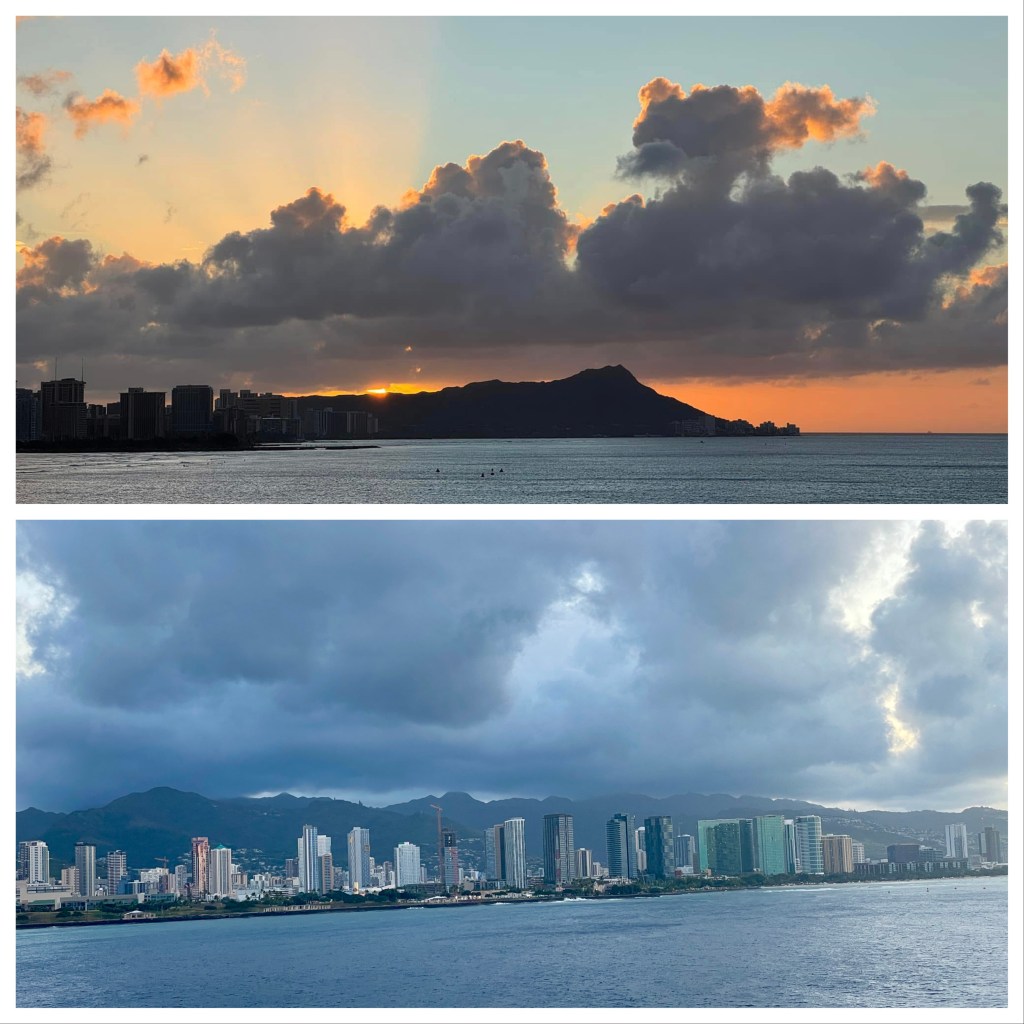
View from the ship after our long Pacific voyage from LA I Know, Let’s Pick on the Old Guy
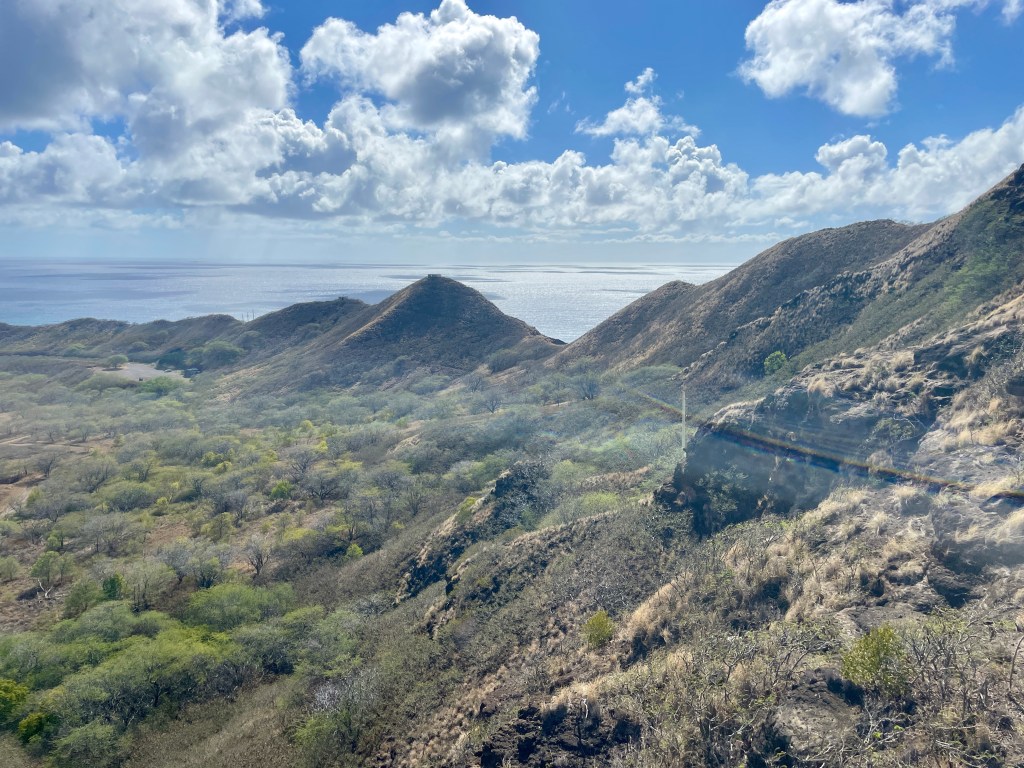
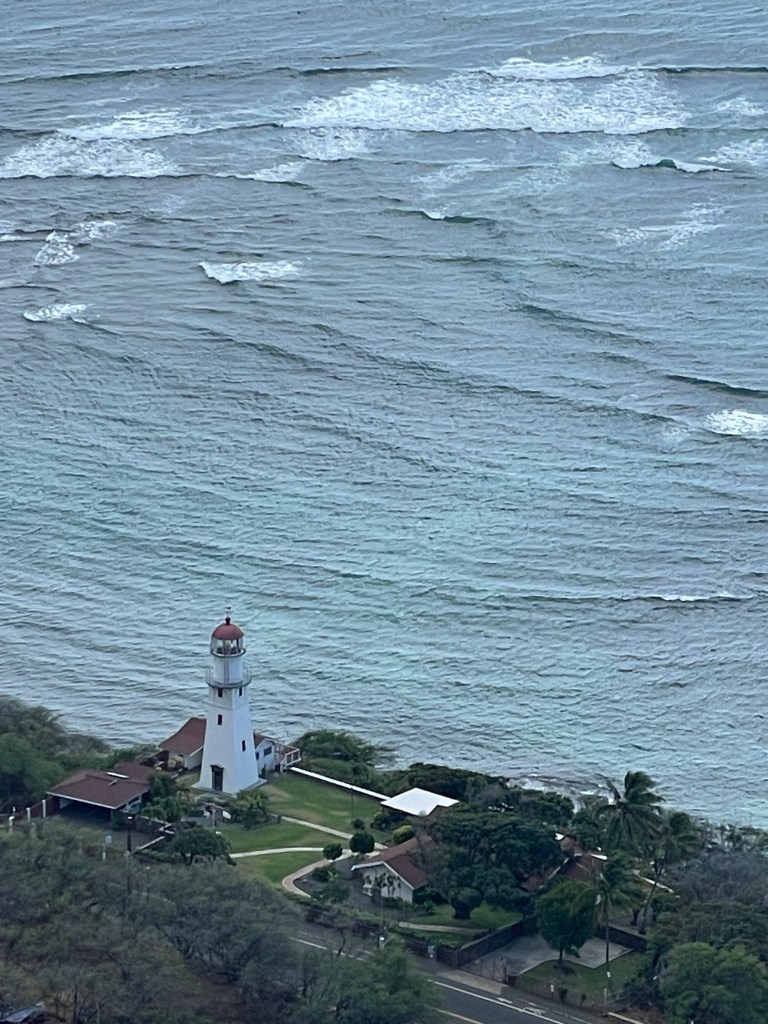
Hawaii was a nice break from five sea days. We docked in Honolulu on the 11th and at Nawiliwili on Kauai on the 12th. We decided to scrap the general orientation excursion in favor of hiking. Our group hike planner. (GHP) who is also group photographer…got a permit from the state for an 11:00am hike of Diamond Head, a large volcanic crater. I thought that sounded like too much in 75-80 degrees. So, following the GHP’s suggestion, I signed on for Koko Head at 8:00 in the morning. We took an Uber with another couple from the ship to the trailhead and started in.
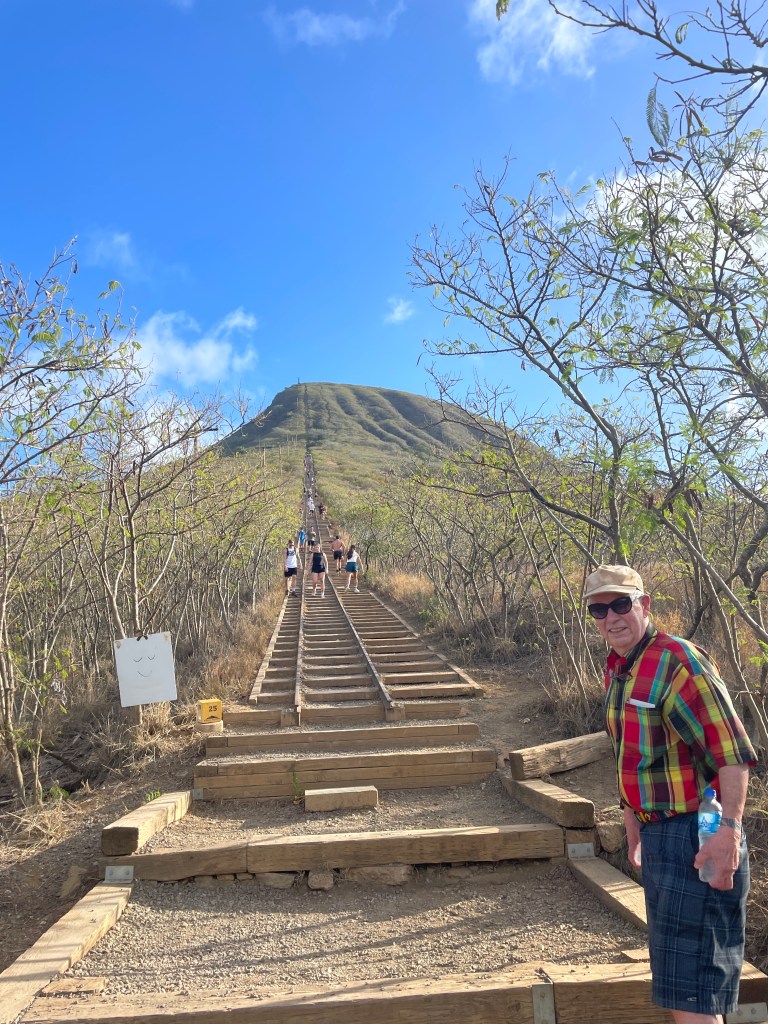
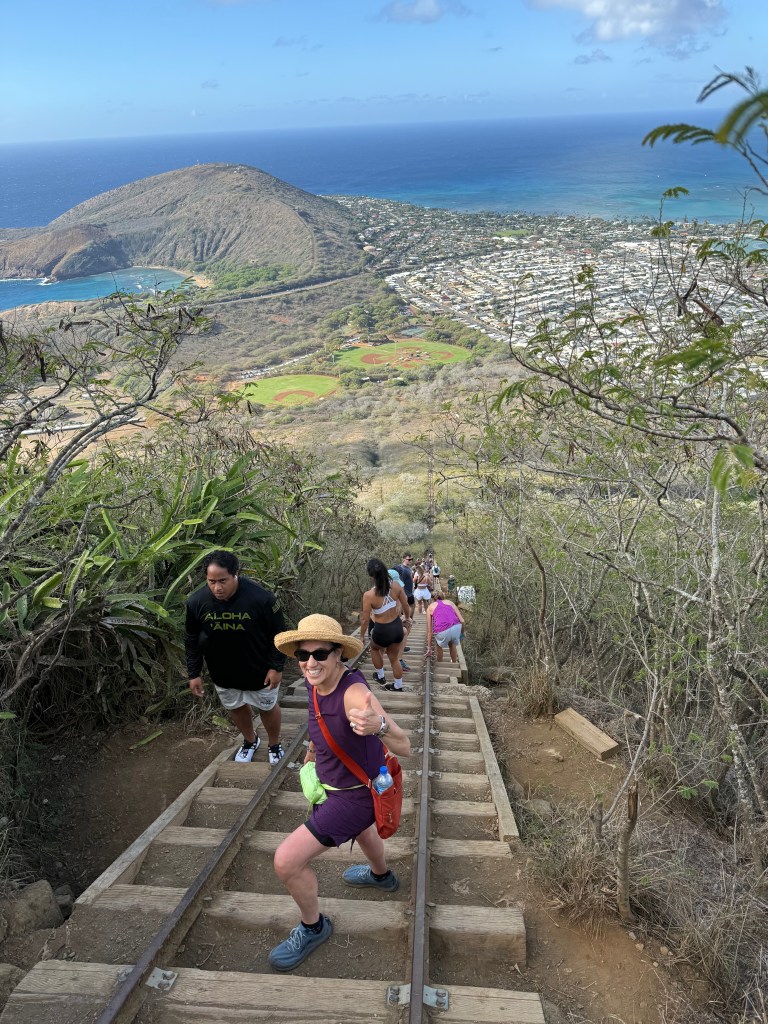
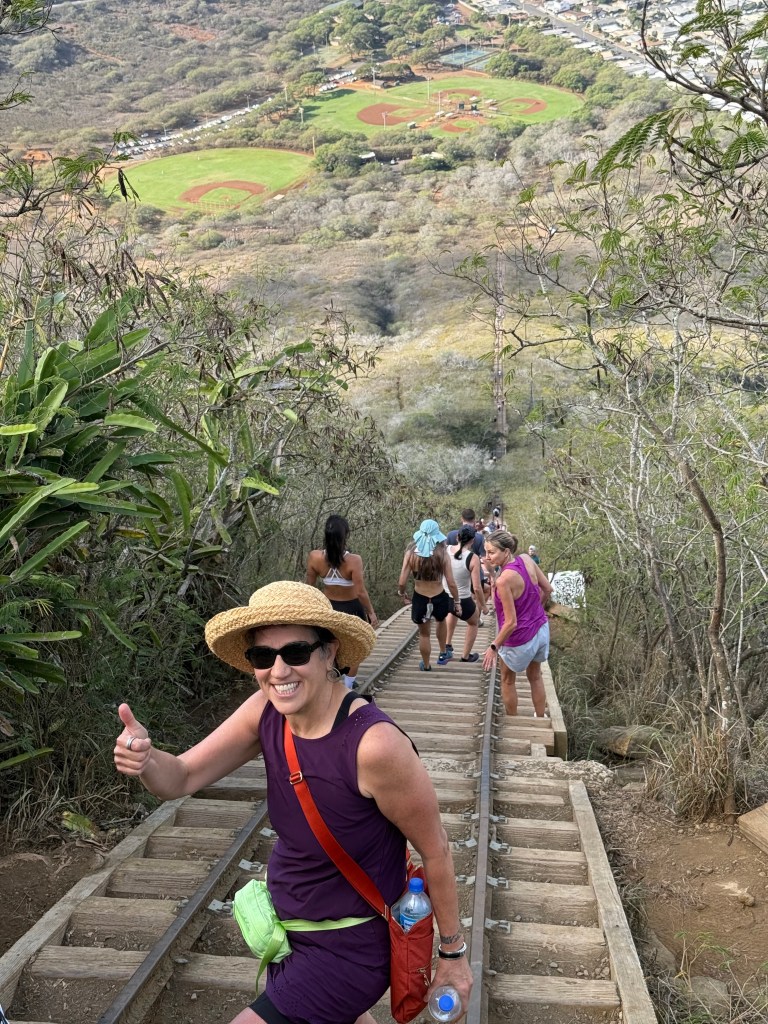
Kokohead Trail The trail followed a WW ll rail line straight up the Hill. The hike is essentially walking up rail ties with rock between them; over 1000 steps. I was determined to do it, but my determination waned as I got about 2/3 the way up. My knees didn’t like it and I still had to go down. That may have been harder. I returned to our starting point with some difficulty, but no trips or falls. Our GHP made it up and back and agreed that it was challenging. She made it to Diamond Head by 11 and completed that also….saying it was easier than the first hike I returned to the ship. We walked around Waikiki in the afternoon. Lots of people, traffic and high prices.
I decided to check the details on the Koko Head hike to see what had inspired our GHP to recommend it. Here are some descriptions:
-Steep, no shade…over 1000 steps over old railroad ties.
-“super difficult, pretty dangerous..downright miserable”
-super steep, incredibly challenging….some 25-50 degree inclines
-loose dirt, wooden steps….tripping hazards.
Happy to have sampled it. And, I will admit that the GHP was supportive.
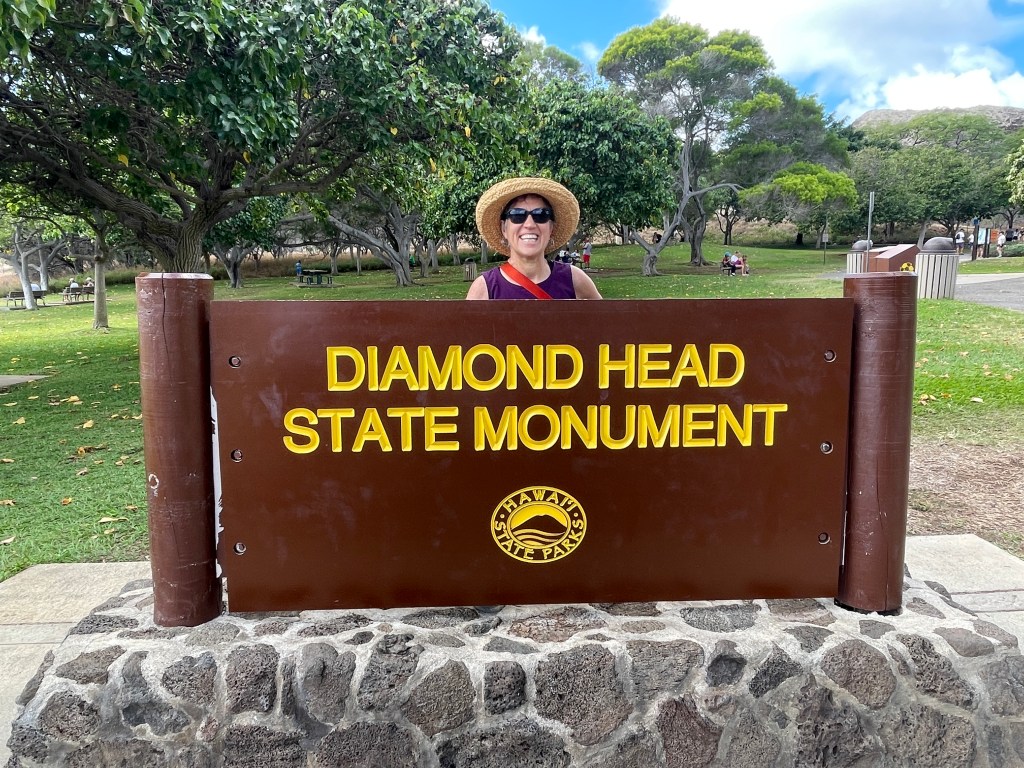
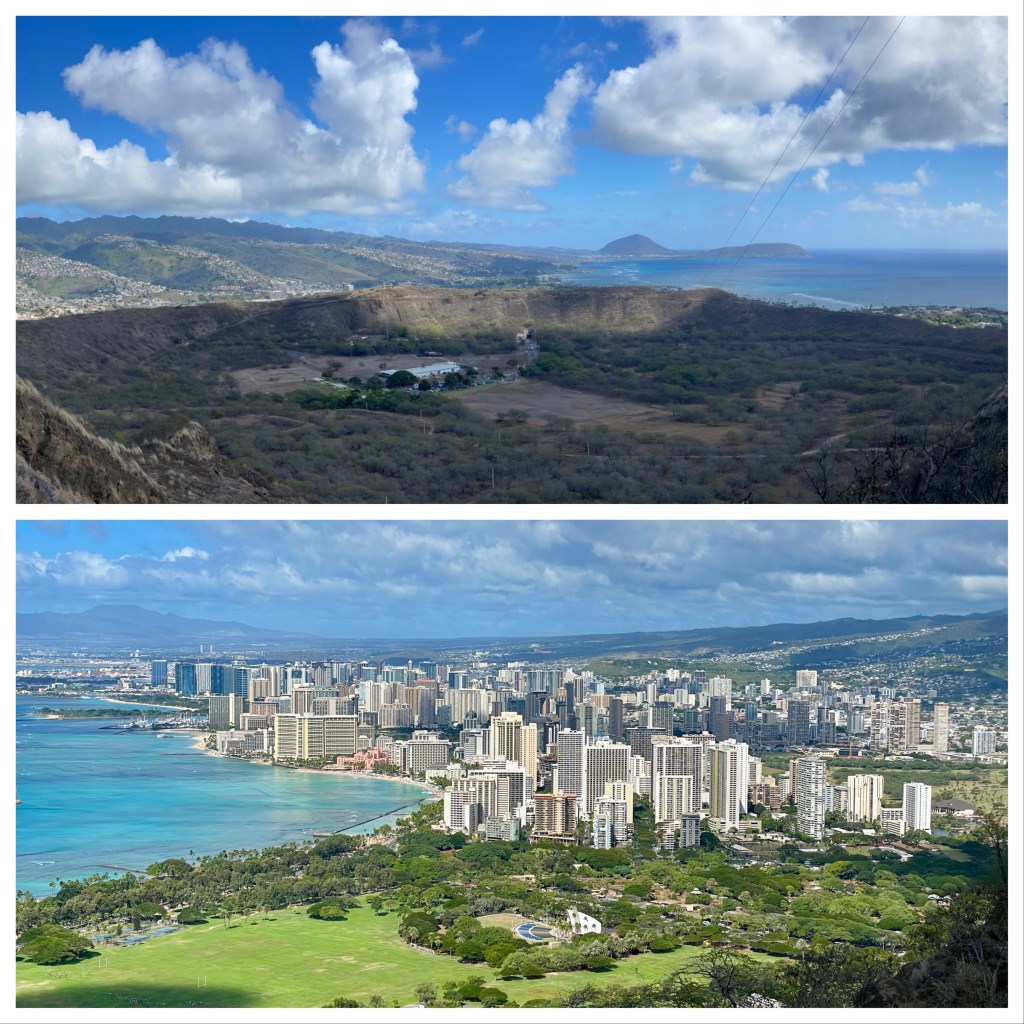
Diamondhead crater (top); view of city 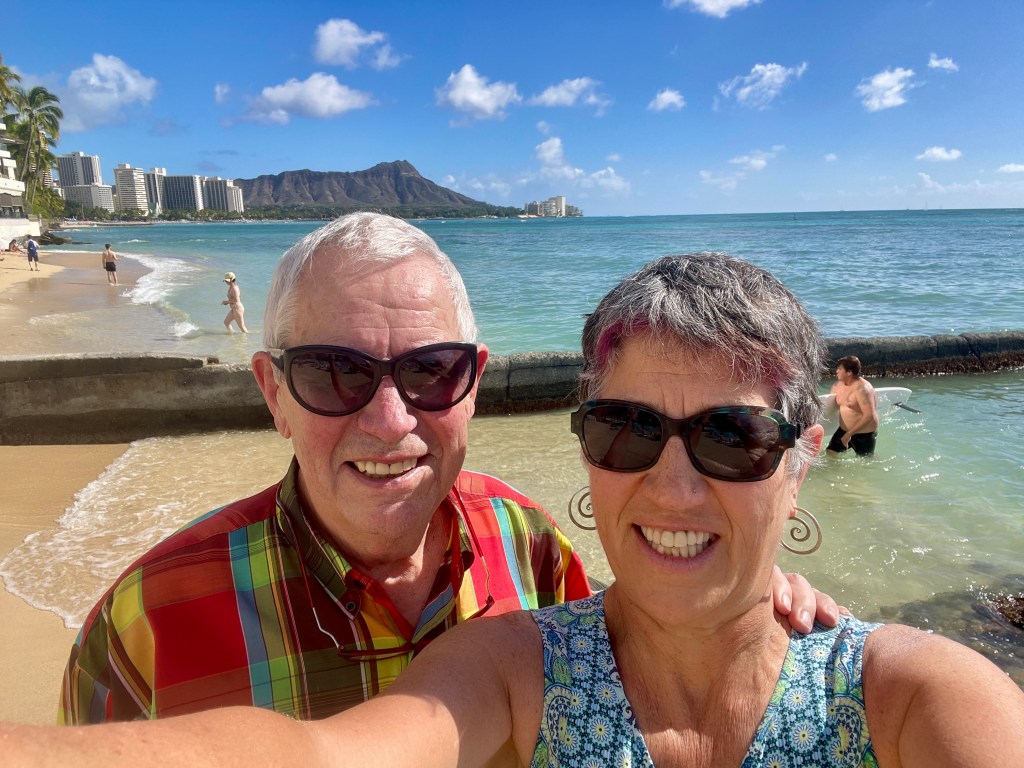
Waikiki Beach In Nawiliwili (Kauai), we opted for a plantation tour. It was pleasant and interesting and sparked an interest in learning a bit more about Hawaiian history. The Kilohana plantation estate is a nicely manicured 30,000 acres, with a wide variety of trees, crops and animals. A train transported us through the estate before we were treated to a music and dance show. Following that, we had time for the obligatory visit to a variety of tourist shops. We rejected the opportunity for a 10:30 am mojito.
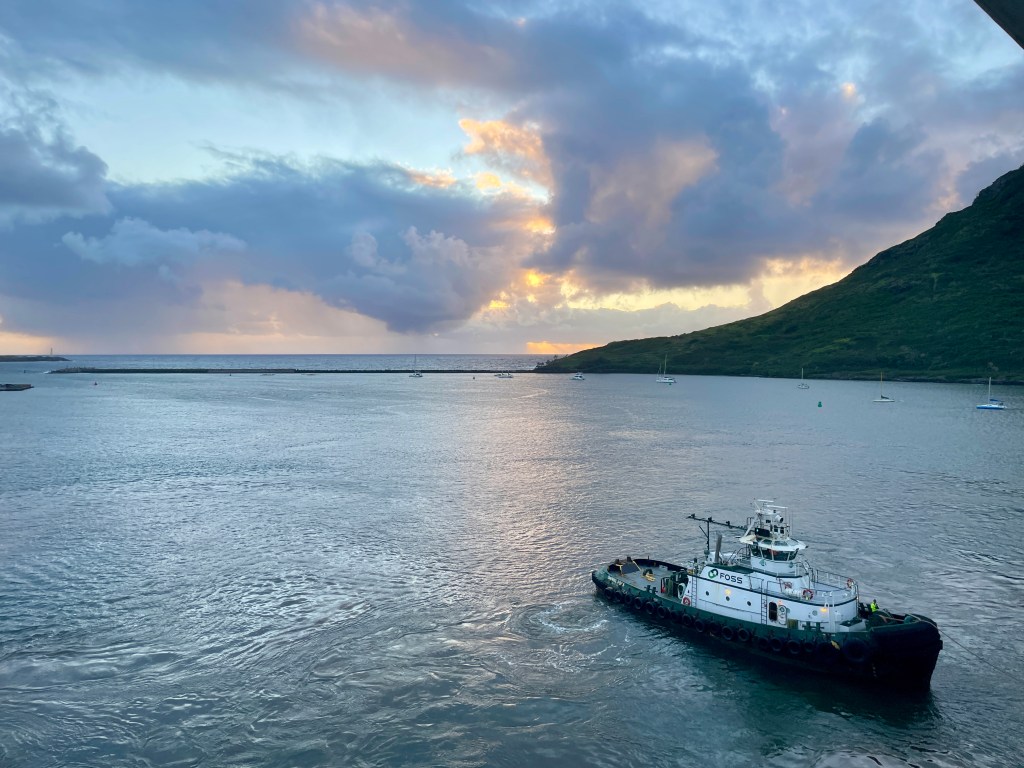
Arriving Kauai with help from the tug 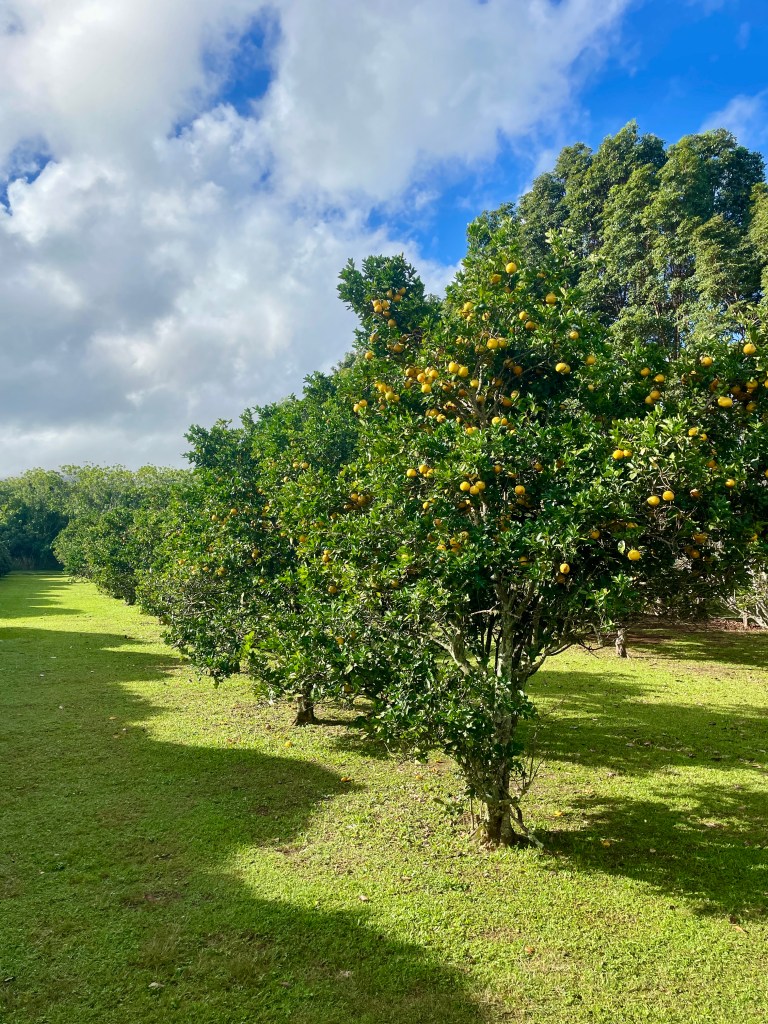
Oranges 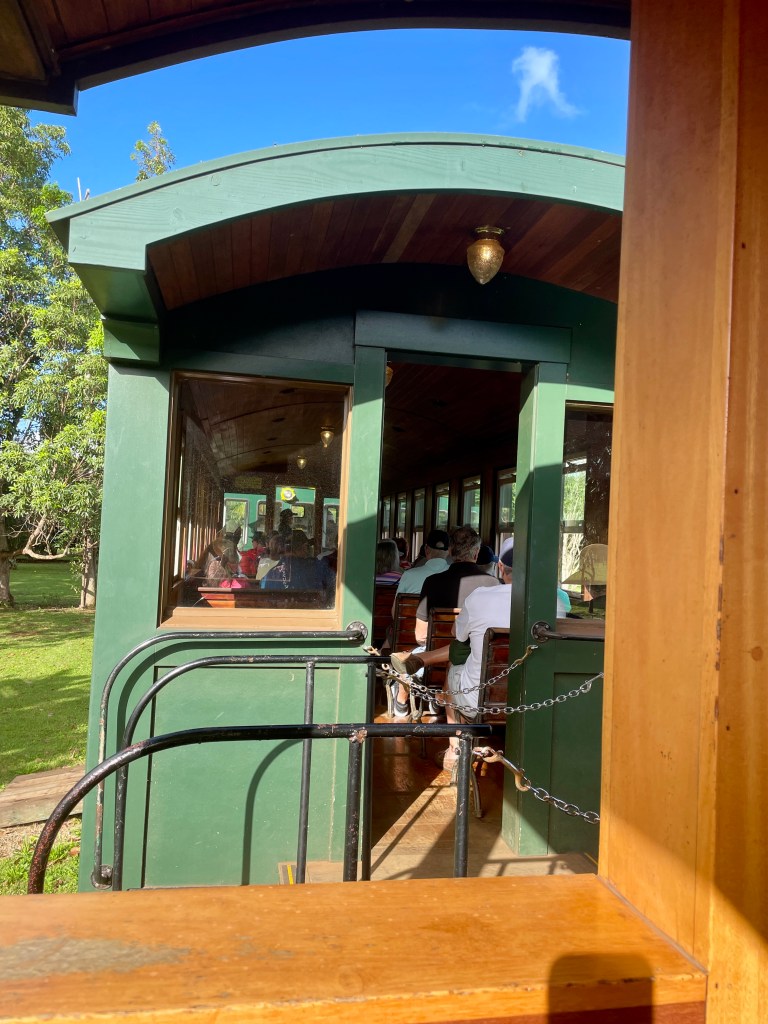
Plantation train 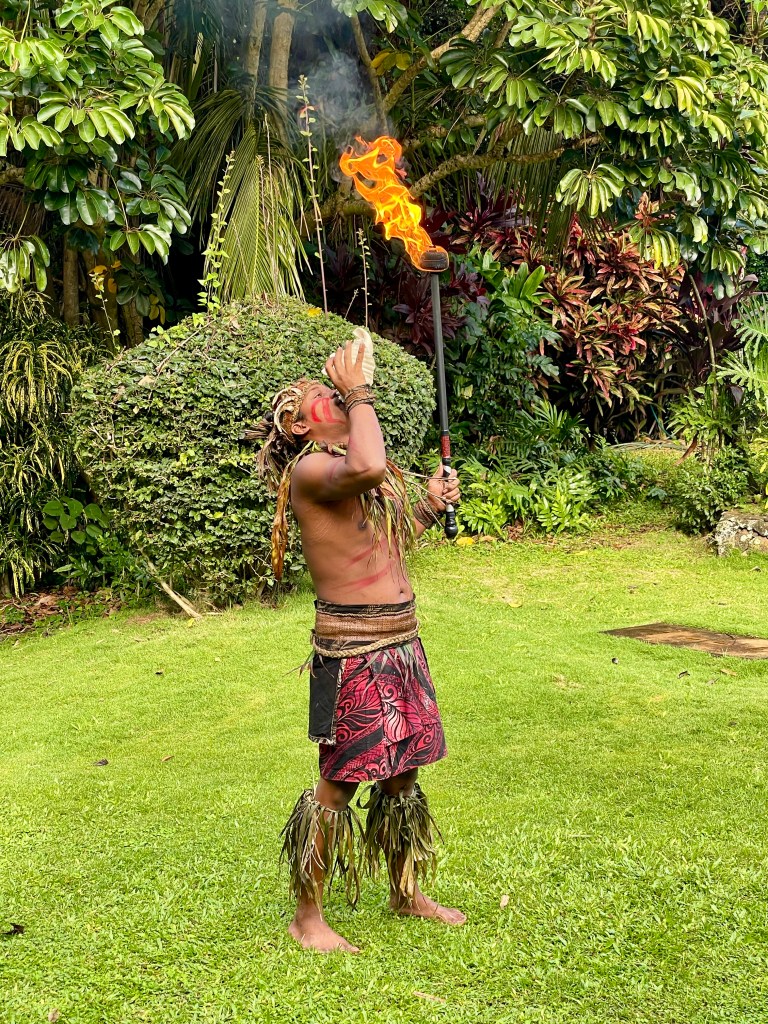
Calling the tourists to the performance 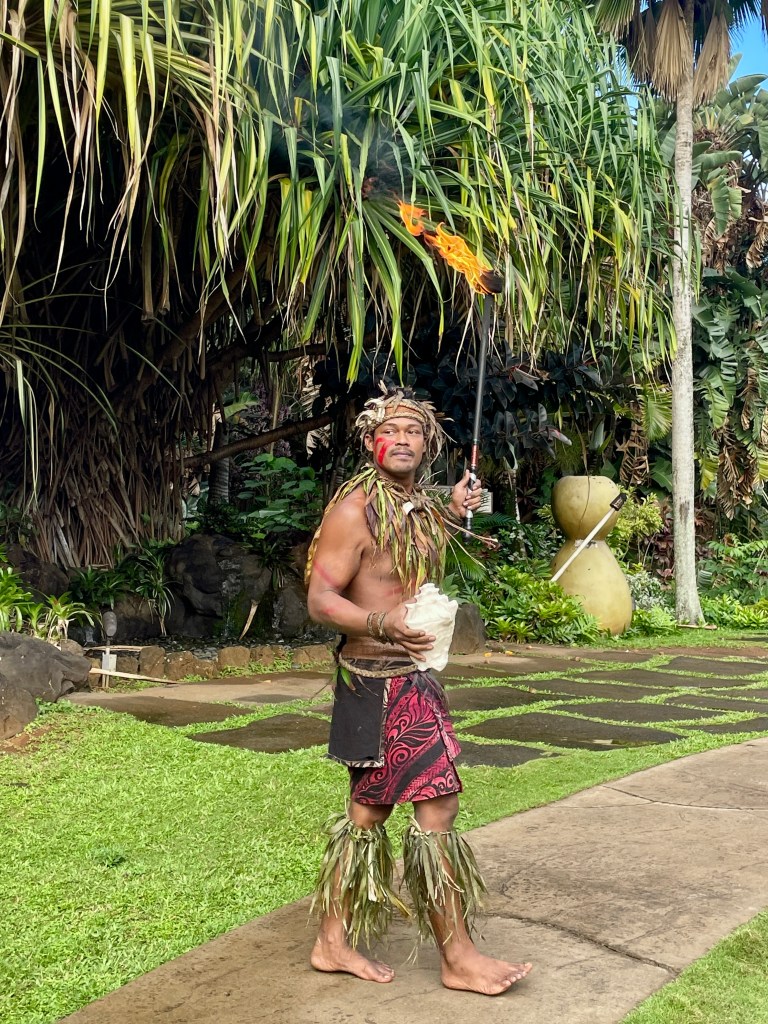
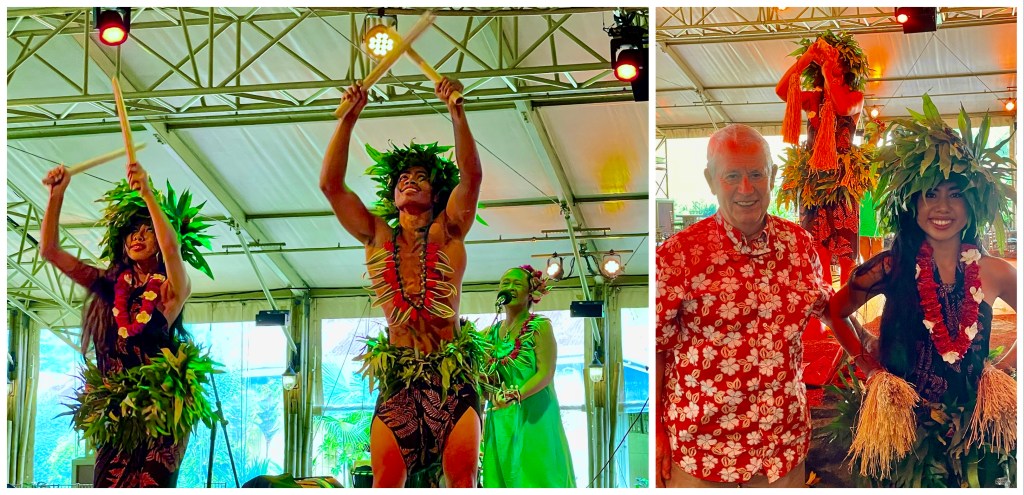
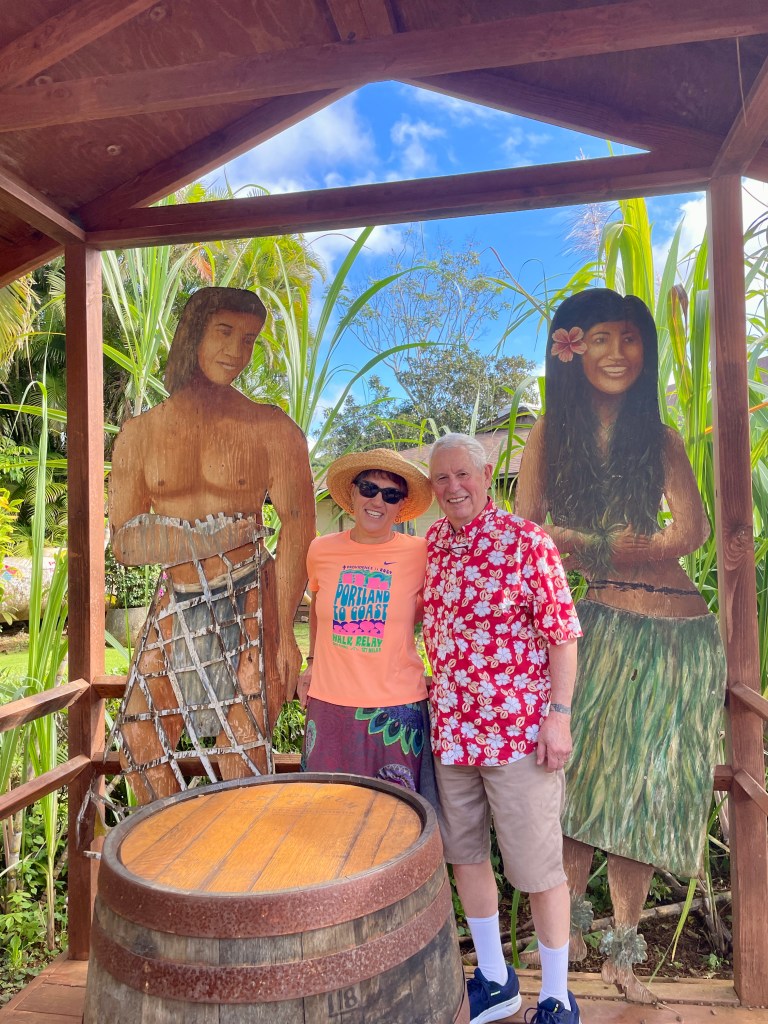
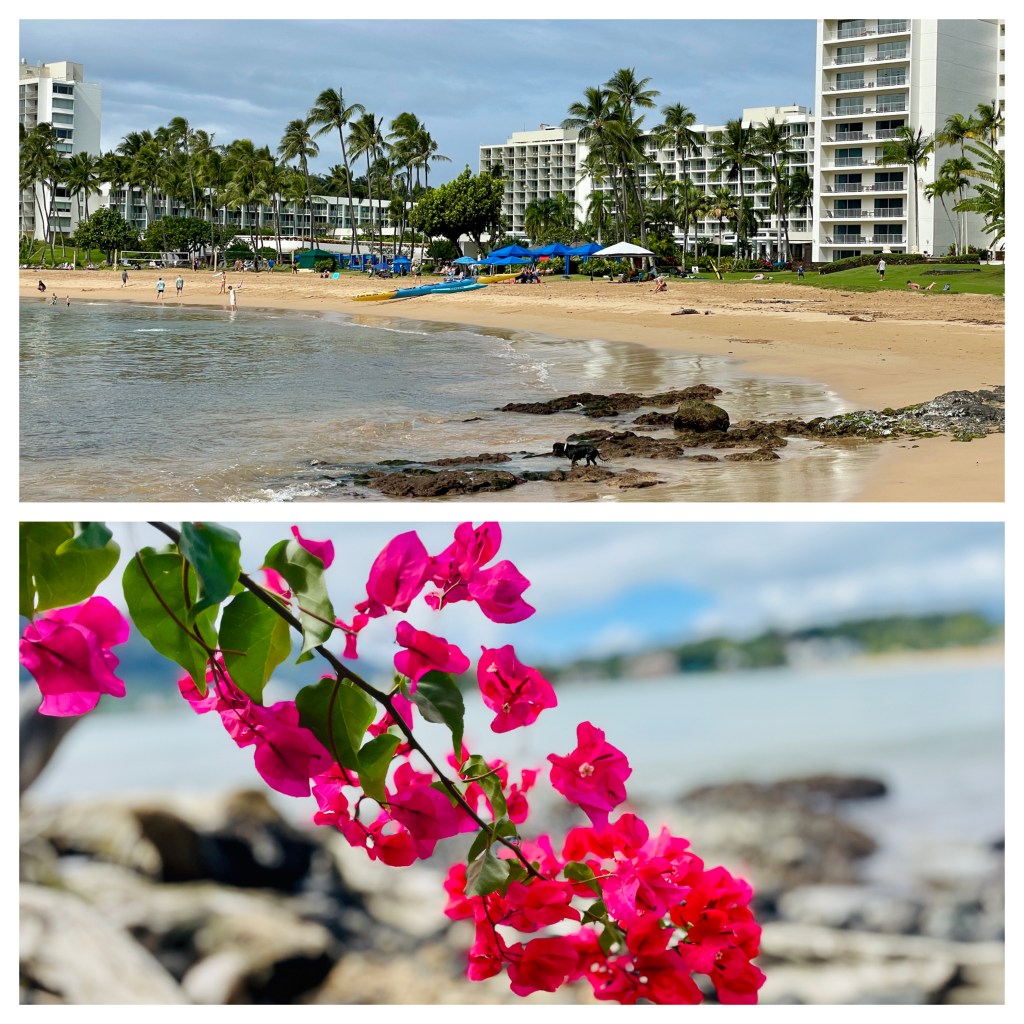
Kauai’s beautiful flowers 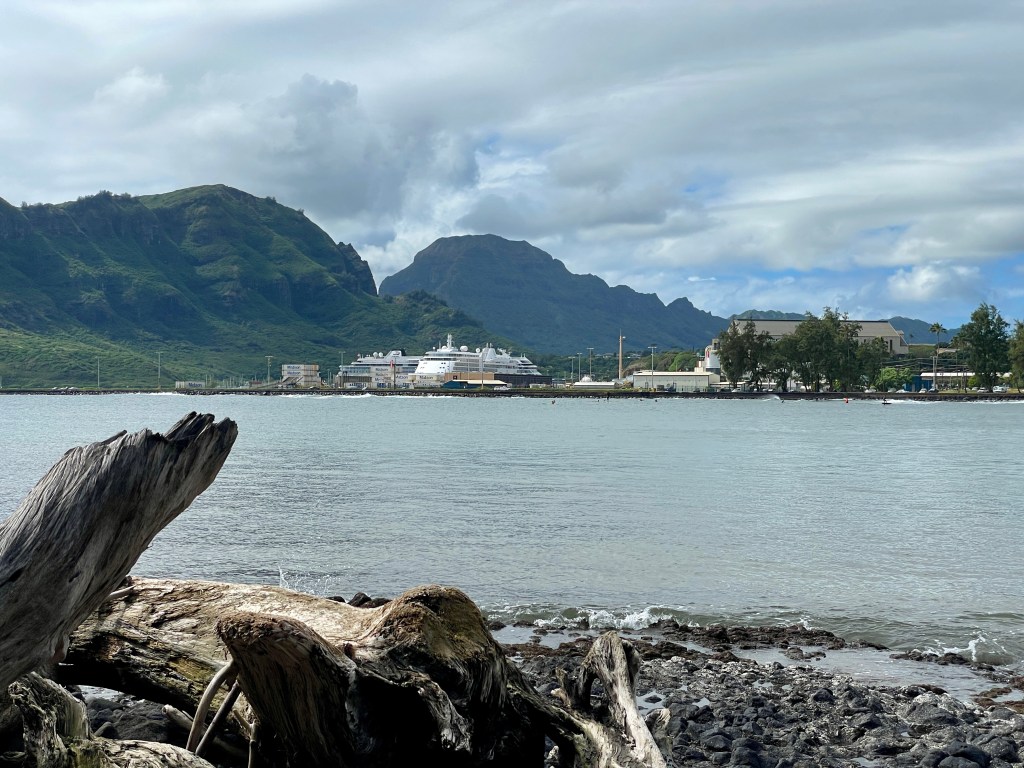
Kauai coast In the afternoon, we walked into a small town and noted the variety of tourist shops…entering none of them. There are some interesting hikes in the area, but semi-tired legs, a warning of the scarcity of ubers, and the need to be on ship by 4:30 convinced us to reject that option. Karla, needing more steps, walked on the beach while I returned to the ship. She only got 7-8 miles today, while I managed 5-6.
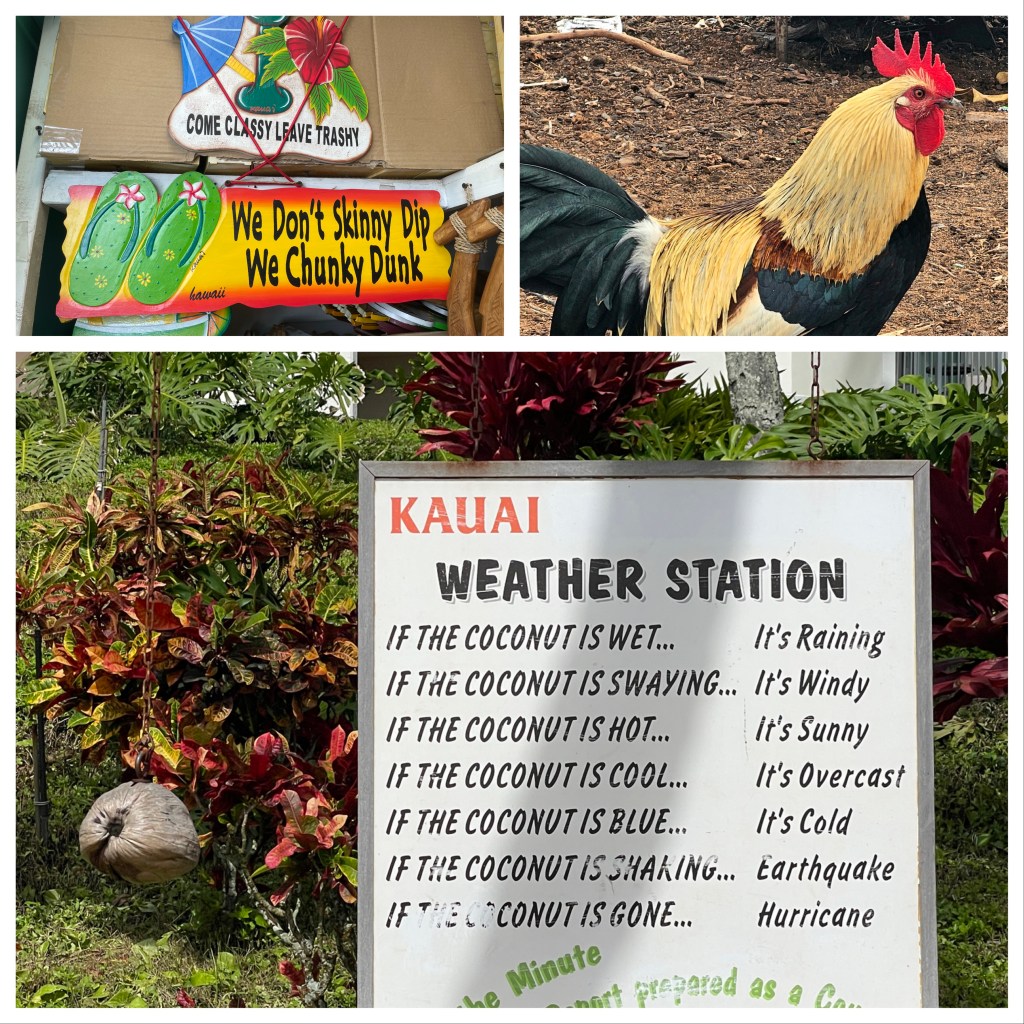
One of the interesting features was the number of chickens wandering freely in parks, lawns and grassy spots. The plantation had hundreds of wandering chickens. We were told that early settlers brought the chickens as a food source. On the island, there are no natural predators beyond Kentucky Fried Chicken and their competitors. They were acting like normal domesticated chickens before a significant hurricane in 1992. That spread the chickens in all directions and they converted to free range. Now, they mix pleasantly with the tourists and add a nice feature.
A related point; when the hurricane hit, the usual warnings were broadcast. While most citizens took appropriate action, Stephen Spielberg did not. He was in town filming Jurassic Park. He placed his crew on top of their hotel and filmed the hurricane. Some of the segments show up in the movie. It’s hard to stage that kind of footage, but nature helped.
History
Hawaiian history is lots less complicated than that of Europe. Whereas lots of European countries have histories including conquests by Phoenicians, Carthaginians, Celts, Vikings, Romans, Ottomans, etc, the Hawaiians had a much simpler story. Geologists will say that the 137 islands (7 populated) were created by volcanic activity….which is still going on. Some of us with a more religious orientation, have at least 2 other explanations. One is that a god threw a calabash (squash) in the air. It broke and the top part became the sky; the body fell and created the islands; the seeds became the people. Alternatively, the god Maui, was fishing and hooked the islands and pulled them to the surface. It’s hard to decide. I could be more convinced if there were a talking snake involved.
However it happened, the Polynesians traveled to and populated the islands between 940 and 1200. (More on their navigation later.) The settlers took advantage of the fertile volcanic soil and established an enviable economy with farming and fishing. They evidently, led a pleasant enough existence until they were “discovered” by Captain Cook in 1778. That led to mixed results. The islanders were able to dispatch Cook, but could could not shed themselves from the foreigners.
Missionaries descended on the islands to save souls….and dollars. Missionaries were involved in establishing 6-7 large sugar plantations. While they found it very profitable, it was at the expense of the many family farms. The Hawaiians had been doing fine producing what they needed to live. They were not attracted to working on plantations for money; their lives had not required it. So, the missionaries and others imported labor from China, Korea, Japan, Portugal, etc.
A decade or two later, whalers arrived. After some very profitable years they pretty much decimated the whale population. They, and others, did bring other things. These included syphilis, TB, smallpox and measles. The native population fell from about 300,000 to 40,000. The plantation owners continued to do well, but were plagued by efforts by native Hawaiians to assert their independence. A Missionary Party was formed to represent their interests. In 1893, the plantation/economic forces were able to wrest the islands from Queen Lila Uokalani, who was working to unite the native population. With the help of US Marines, the queen was detained.
Hawaii became a territory of the US. It was important as a base in the 1898 Spanish-American War. As the US worked to civilize the Territory, they took such steps as seeking an oath of allegiance from the natives. And, they made teaching the native language in schools illegal. (It sounds like our approach to Native Americans). As we know, the US established a major military base in Pearl Harbor in the late 30’s, We needed a presence there. What could possibly happen? Hawaii became a state in 1959, not necessarily because the native population wanted it. (In fact, during our plantation train ride, the narrator commented that she considered Hawaii to be illegally occupied).
Now, the economy imports 90% of its food. Prices are something like 60% higher than large US cities in the continental US. (I looked for protein bars in a local grocery store. $4.59 each. About 3 times as much as I pay in the Dalles.) They do sell lots of hotel rooms and tourist amenities. But, it’s a long way from self sufficient farmers and fisherman. We might come back for hikes and scenery, but Hawaii isn’t at the top of our lists.
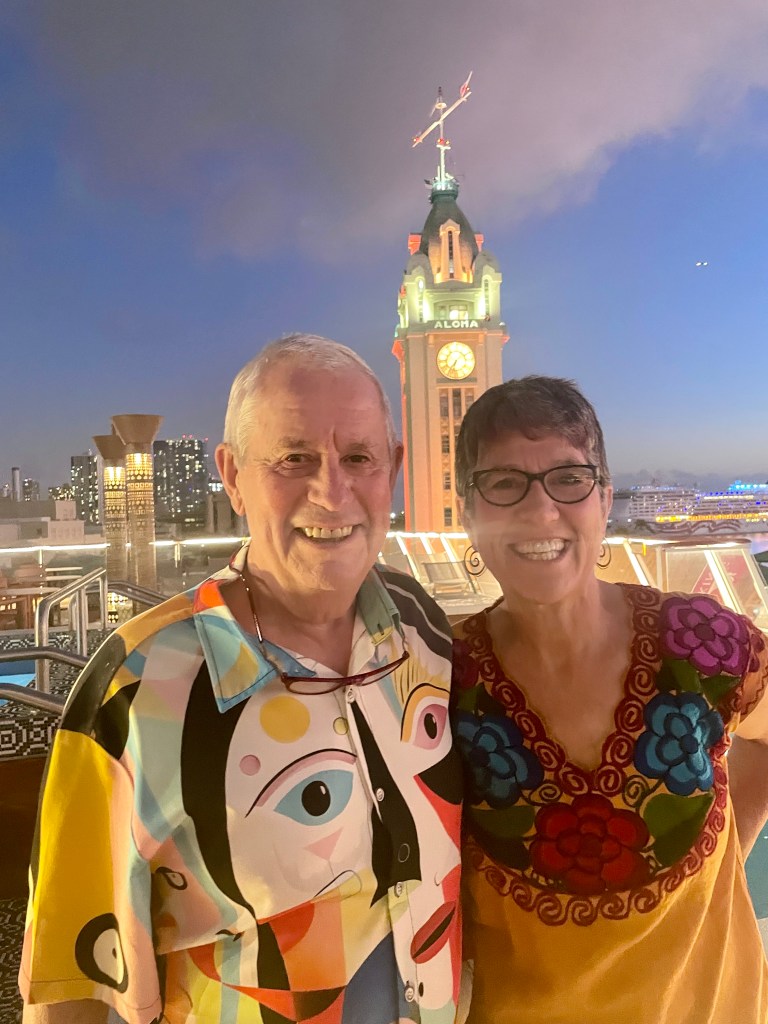
On deck before ship departs for Kauai (Aloha Tower behind). 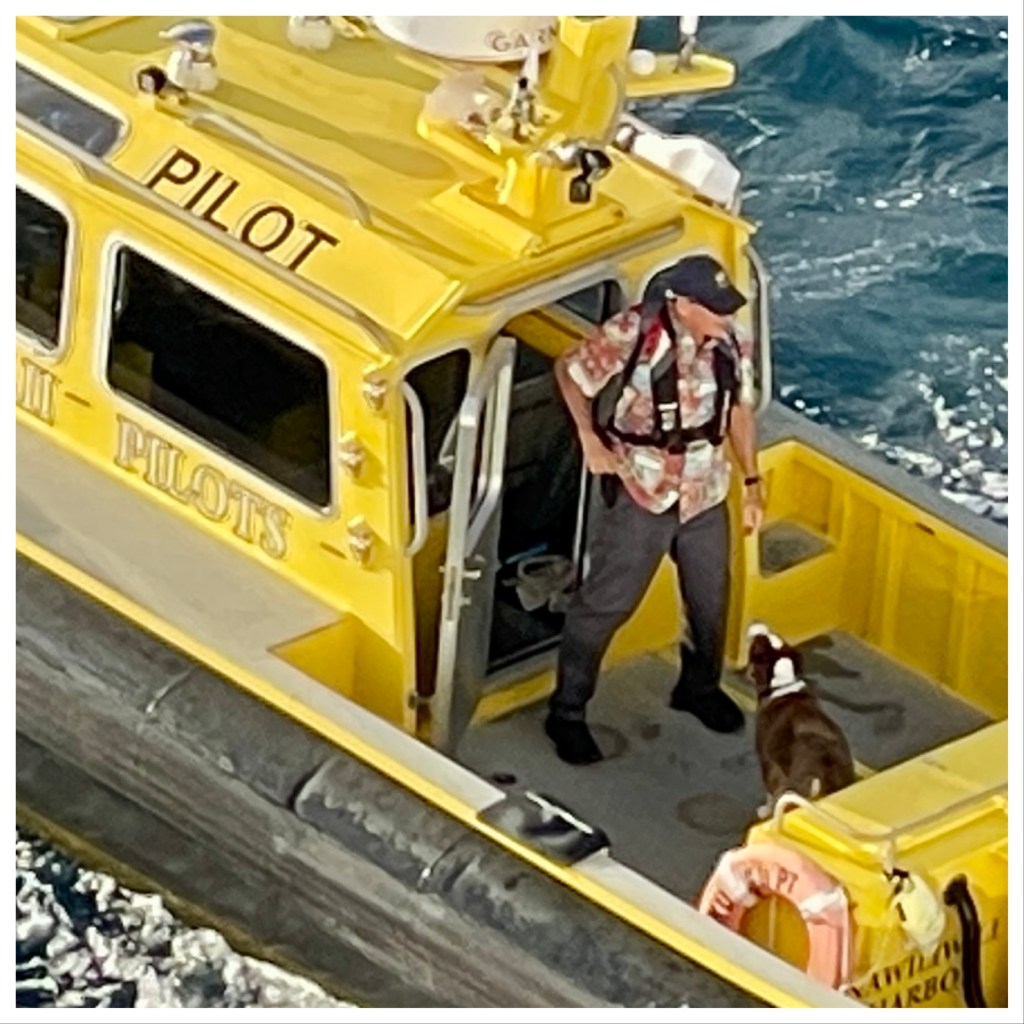
We see lots of working tugs– this one with a helper dog. -
Winds and Currents and Gyres, OH MY!
January 10
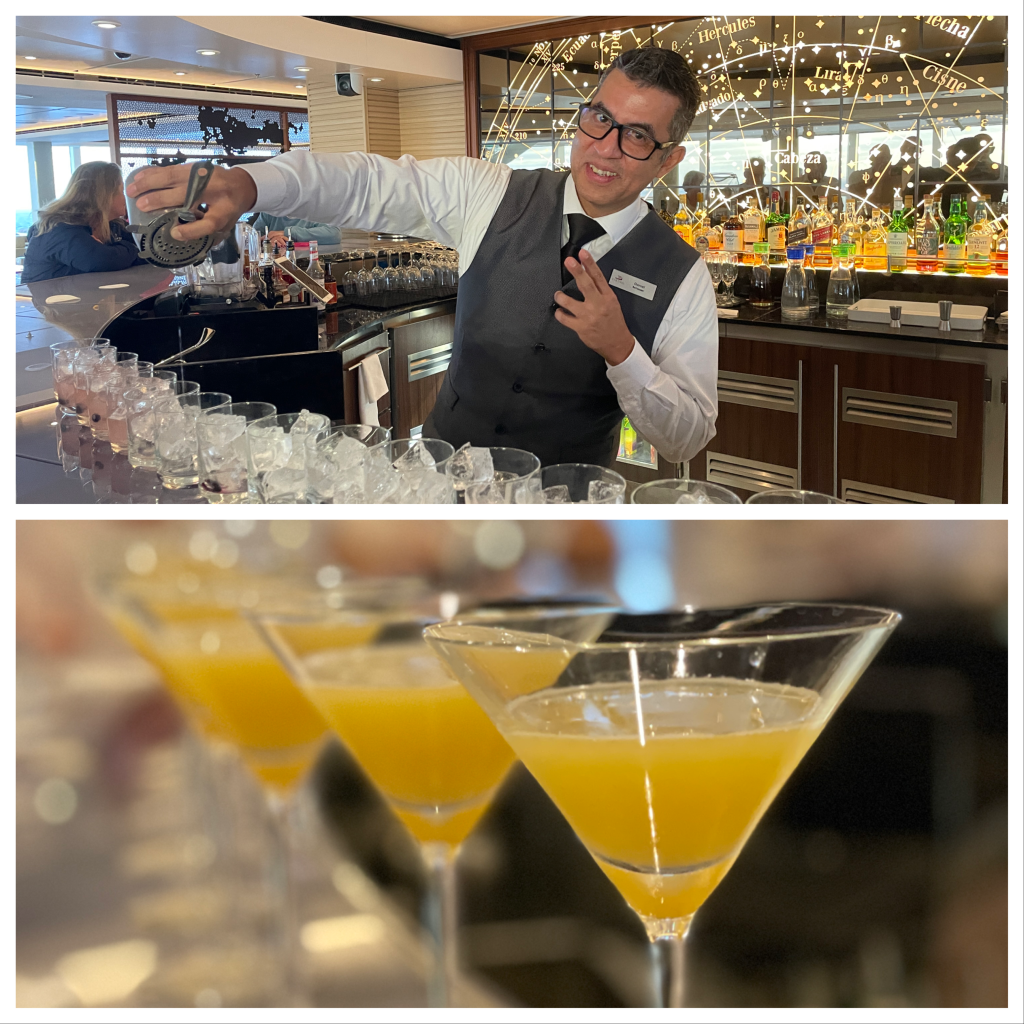
We are a day away from Hawaii. Ship life has been pleasantly predictable. Every day begins with a healthy green drink and latte….along with computer “work.” Then exercise. After that, Karla looks for activities like beginners bridge, line dancing, choir, hula, etc. I focus on reading and educational sessions in the theater. So far, I have resisted the pressure to improve my hula. An added feature is the “alphabet drink group.” It started when the ship left Ft. Lauderdale. A bartender prepares a drink starting from one beginning with A on day 1. Then, B on day 2, etc. About 20 of us are now on R.
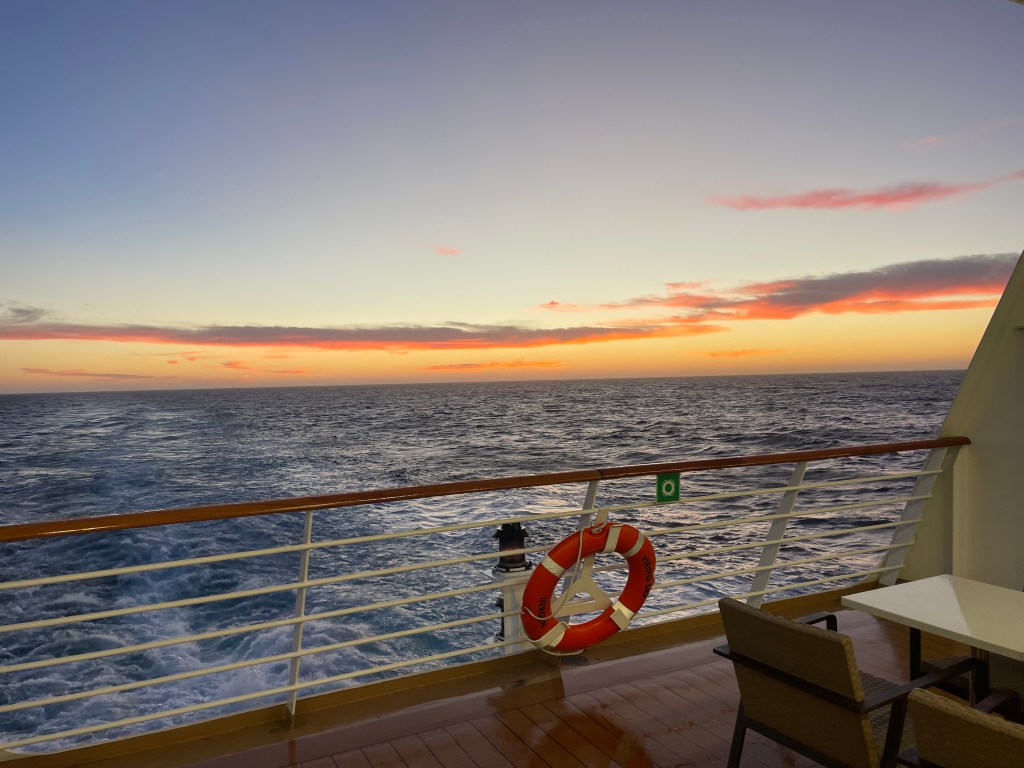
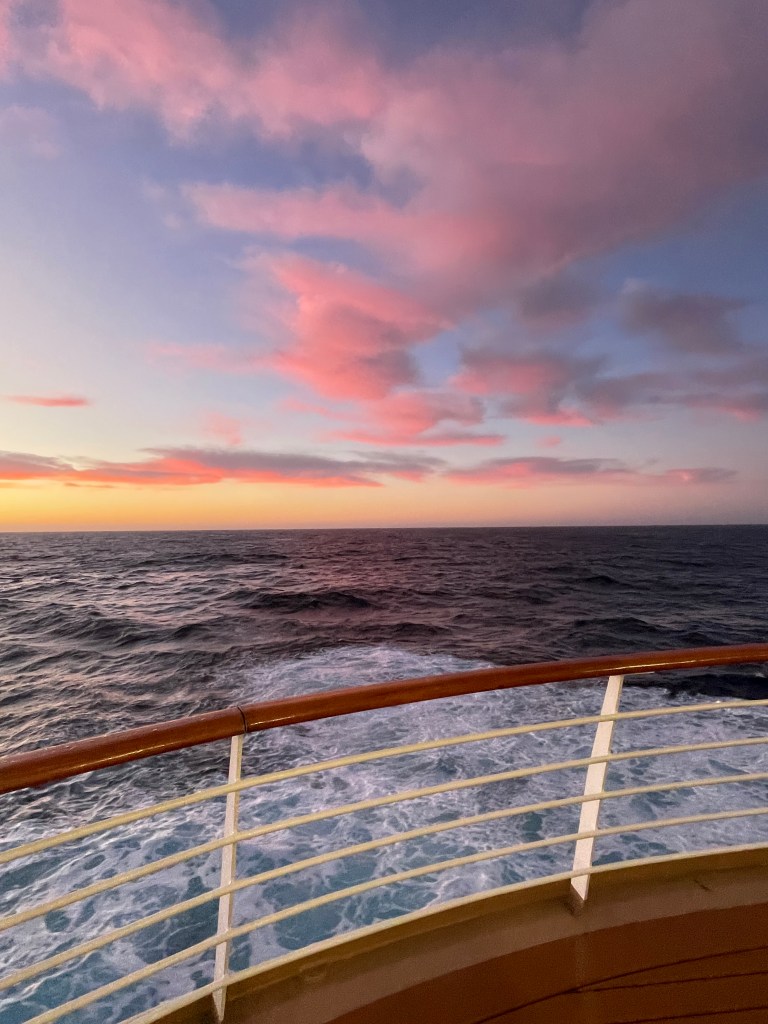
The Pacific Ocean is complicated. It occupies 1/3 of the earth’s surface. We have taken 5 days to get to Hawaii. After stops at Kauai and Maui, it will take another 5 days to get to Bora Bora. Following steps at several South Sea islands, we have 5 more days to get to New Zealand ports. We have seen lots of water, but no animals.
I am relatively certain that the sea is flat. Every day it looks that way, I know that the same people who say that there is a problem with climate change argue against a flat earth, but I know what I see. Google says that a person can see about 3 miles before the earth’s curvature obscures the view. Before I’m convinced, I’d like to hear from an eminent scientist….like RFK Jr.
I used to assume that the ocean was like a lake….a body of water over a relatively flat basin. In fact, lots of people thought that way before the 30’s and 40’s. Once submarines entered the war arsenal, it was necessary to chart the underwater features. It turns out that the ocean covers lots of hills, valleys and mountains that are remarkably similar to the geography above water. An interesting example is the answer to, “What is the world’s tallest mountain?” Most people respond Mt. Everest at a little over 29,000 feet. That is the highest above sea level. But Mauna Loa, in Hawaii, is the tallest (not highest) at 55,700 feet. Obviously, lots of it is underwater. Only 13,100 feet are above the sea.
There is so much going on in the ocean that we don’t see from our deck. The ocean is the number one storage unit for the sun’s energy. Currents are created as warmer surface water and colder deeper water interact. Sometimes the currents can be stronger than the winds. Then there are gyres…..circular currents in each of major oceans. These each “capture” a huge amount of waste plastic and orphaned fishing nets. The Great Pacific Garbage Patch, as it is called, is twice the size of Texas.
The water movement is a critical part of the food chain as it encourages plankton and other small creatures to move in the water. Whales and other fish like that. Adding to the movement of tides that are produced by both moon and sun gravitational pulls. This is all very confusing, but seemingly true. It still looks flat and uncomplicated to me.
While other passengers are listening to ship lectures to prepare for our arrival, I decided to go to the experience of Captain Cook, the European who “discovered” the 10’s of thousands people living on the islands. His entourage was described as “boats of wood; men of steel.” Cook was at sea almost 4 years with 2 ships in his “fleet.” A few observations:
-First of all, these men of steel may have been sissies. They complained about the food. I know from our experience that ship food is very good. If they didn’t like what they were served, they could have had the sushi, have chosen from the duck, steak or pork offerings, hit the salad bar or gorged on the desserts. Plus all of the wine or beer they desired.
-Cook was sometimes greeted by hostile natives surrounding the ships in their canoes. It’s wise to see if the natives are hostile before departing the ship.
-In some areas, scantily clad and anxious young women would row out in their canoes and hope to be invited aboard. These liaisons were satisfying for the participants, but frequently resulted in spreading venereal disorders. Captain Cook discouraged this custom and instituted VD checks. There was flogging for the violators.
-Sometimes, the natives would bring animals for gifts or for trade. I think the captain will discourage pets so anything we trade for will be donated to the kitchen. While Cook had beads and other trinkets, the natives preferred something of iron. Crew members were known to remove nails from the ship for trade to the young women or for goods from the shore. (I have located several iron items on our ship, but they all look pretty heavy.)
-When natives came aboard, they were sometimes “light fingered’” walking off with items they liked. Private property wasn’t a custom. In our case, outsiders can’t board the ship without ID cards.
-Finally, there was cannibalism in some areas. In fact Cook discontinued the cruise after being stoned and slashed and partially eaten.
Karla and I will plan our strategy. She plans to do a couple hikes. It will be warm and hilly. I may stay closer to the ship to sort through the aggressive visitors, young woman, cannibals, and, of course, threats of venereal disorders.
-
Trip preparation
January 6
Our preparation seems to have been successful. We were all packed; the house was clean. We don’t think anything was forgotten. Our motto has been “passports, tickets, money.” If you’ve got those, everything else can be fixed. We have a sense of comfort with our friend Claudia (through yoga and massage) living at our house for the next 4 months. And, we’re only a phone call or email away.
On January 4, our friend, Janet, dropped us off at the airport Red Lion about noon. We had the luxury of free time since our flight to Los Angeles was at 6am the following day. We walked around downtown, had a relaxing lunch, and saw Wicked. We couldn’t remember how long it has been since we had free time and just wandered around. There’s a lesson there. We never really have to do anything, but we schedule obligations. I make lists to check off. Karla invites responsibilities through non-profits, helping our Indian friends on the Klickitat, and volunteering at a thrift store and seeking a variety of do-gooder activities. We enjoy it all, but perhaps my list should include “doing nothing.”
On January 5, we got a Red Lion shuttle to the airport and got in a flow that would end on the ship. It’s nice to have only a 2 hour flight in the same time zone. Viking was there to receive us and we were herded to a bus and to the ship. Check-in was easy and we were in our rooms and unpacked by 2:30. From there we had “nothing to do.” So, we checked the Viking Daily to see what lectures, receptions, and other events were coming up. I, of course, started to make a list.
We had heard that there were 80 passengers from previous cruises. Also, about 400 people got on in Los Angeles. About an equal number disembarked after sailing from Ft. Lauderdale to LA. We learned that some travelers are staying on through New York. We know people getting on in South Africa. (John and Carolyn Soutter.) We saw about 10 people we knew.. They seemed like old friends.
In traveling from the airport to the ship, we were reminded of why we don’t/wouldn’t live in LA. In our last blog, I compared The Greater Lyle/Dallesport metropolis with Los Angeles. My careful analysis found GLD to be superior. That remains so. Unfortunately, our relaxed day in Portland didn’t encourage us to live there. On a Portland Saturday afternoon, it was sparsely populated. The percentage of apparently houseless people was high. Three panhandlers found us in a relatively short time. Drugs seemed too plentiful. It’s not like that in Lyle.
Our ship has been free of panhandlers so far. But, there are other threats. One of our friends who traveled from Ft. Lauderdale mentioned lots of coughing in the theater. We wonder about Covid. We read that 3 cruise lines had been struggling with Norovirus (Vomiting. …Cunard, Princess, and, of course, Holland America.) There have been no reports of scurvy that used to plague some cruises. And, so far, there have been no publicized cases of venereal disease; this used to be a problem on earlier cruises.
We are starting 5 consecutive “sea days.” before our stops in Hawaii (Oahu and Kauai). That seems like too many, but we’re enjoying settling in and seeing friends from previous cruises. Karla is getting plenty of walking and socializing. I’m starting my walking and gym routines. And, I’m able to fulfill my obligations to Wordle, Connections and Spelling Bee. We plan to stay a while.
-
Potential missed opportunities
December 29
Actually, part of me will miss being out of the country. We have not seized the opportunities to attend trump university or to purchase trump wine and steaks and, more recently, a trump bible, trump sneakers, trading cards or a guitar. I hear that he is coming forth with an inaugural special of emplasticated fingernail clippings and hair trimmings for only $50. And, there will be an annual subscription with semi-monthly distributions guaranteeing at least 50 percent orange hair. I fear that in our absence dedicated MAGA followers will snatch them up before we have an opportunity.
-
Searching for blog content
Now that we’ve decided on a blog, I worry that I’ve used my best stuff on the last two cruises. Fortunately, there is only one copy of each, and few people have read them. Still, though, I feel a need for inspiration. So, I turn to one of the most prolific writers of modern times…donald j. trump. I want to benefit from the musings of a stable genius. He seems to have developed an approach he calls “The Weave.” It captures a variety of ideas, seemingly unrelated and frequently untrue, and appeals to a large following. For example, in responding to a reporter before the election who asked him why Americans should support him, he wove the following; (Spellings are his.)
“I golfed with Lindsay Graham. When we were golfing. I said there’s no way Comrade Kamalala is qualified. We can’t have a barely educated, untested girl running our country. It would be a disaster THE LIKES OF WHICH WE’VE NEVER SEEN. It can’t happen unless the process is rigid. how would American citizens and foreign leaders take her seriously. Lindsay thinks I’ll win Florida. We have child care there, but I don’t use it. Donnie and Eric don’t either. They’re doing great. They also worry about immigrants pouring through our open borders. I’m going to get MEXICO to pay for our soldiers to go to Mexico and stop the flow from prisons and insane asylums. We do use migrants at Mar a Lago and the grounds look GREAT! We’ve got no windmills on site. I wonder if they would scare the sharks. I asked our groundskeeper (through a translator) and he said, “Sir, no one has ever asked that question.” I wonder if Hannibal Lecter eats dogs and cats? Maybe he could solve the Springfield problem. I can’t imagine that I won’t get the votes to win. Americans have the CONSTIPATIONAL RIGHT to vote freely and fairly. They should not be subject to rigid erections again!”
I doubt that I can replicate that, but he sets an example.
-
Pronouns
The next big decision….should we do a blog? I am troubled by pronouns. I know that modern writers know how to handle they/them, but it’s still hard for me. I heard the City of Portland style guide has moved to using third person plural pronouns in city publications (and communications). Examples;
-i encounter friends from a previous cruise. They ask if we want to have dinner. I need to check with Karla, so say, “I’ll ask them.” They ask (Them ask?) “Are you traveling with more people?” I say, “No, just them.” The rumor starts that there’s an elderly gentleman, likely Mormon, I think, traveling with multiple wives.
-Karla found a friend for a walk. They went walking with them. I asked them how it went. They said their friend met their husband and they went walking together.
I don’t think I can do it, even if it invites ridicule by younger readers. But I’ll still attempt a blog if only as a backdrop for our group photographer’s pictures.
-
Subscribe
Subscribed
Already have a WordPress.com account? Log in now.
 Millers World Cruise 2025