April 6
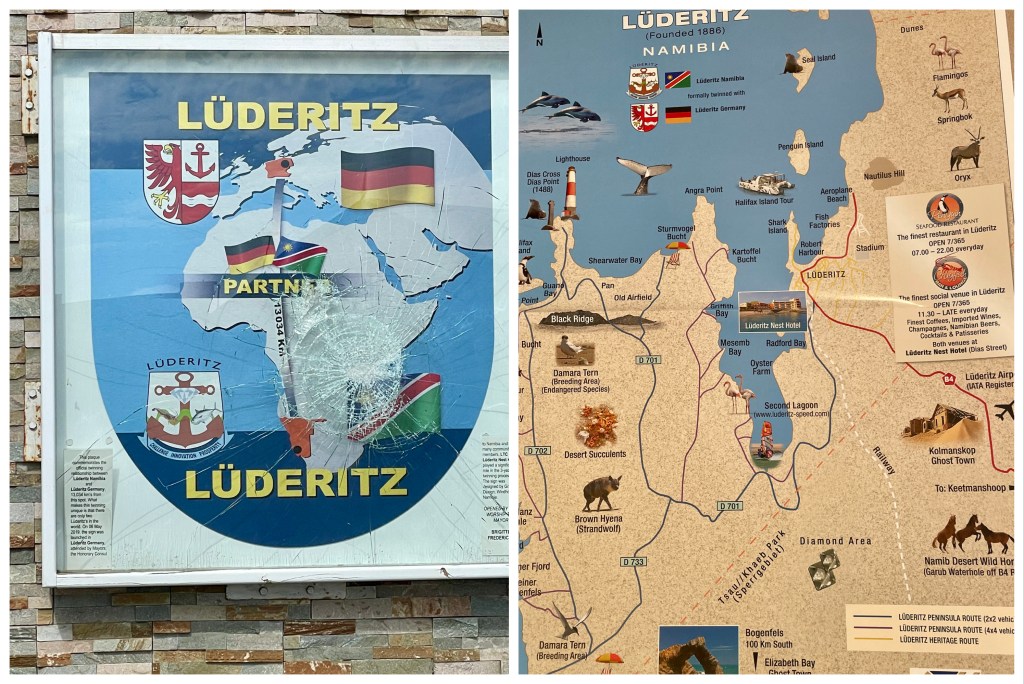
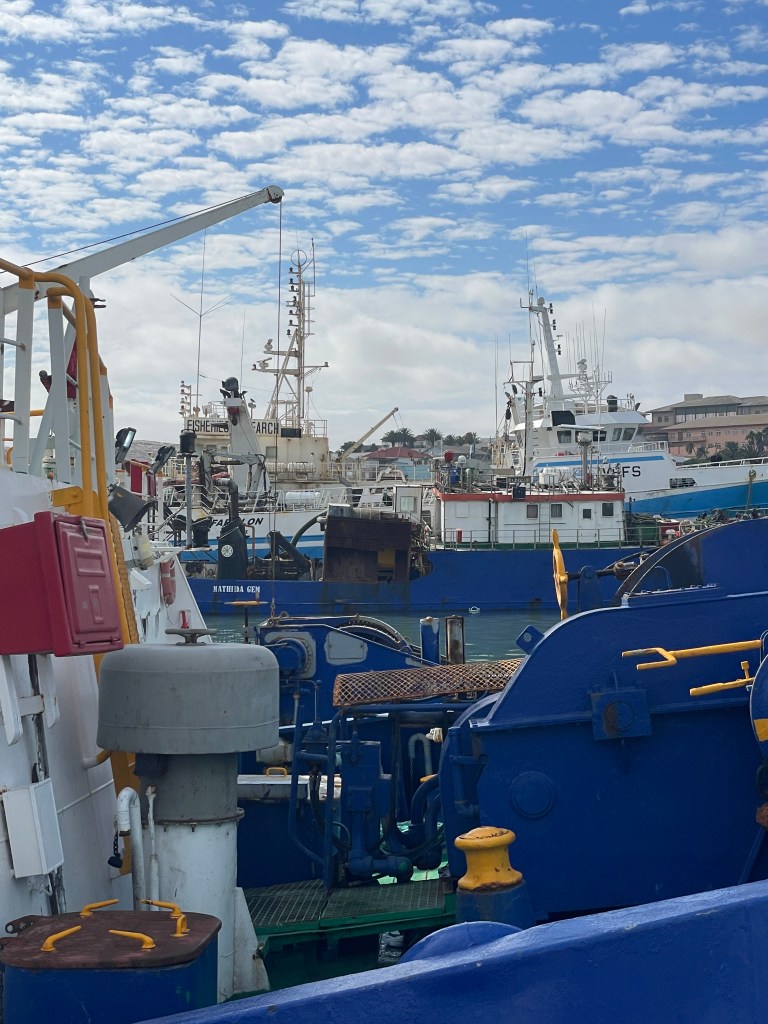
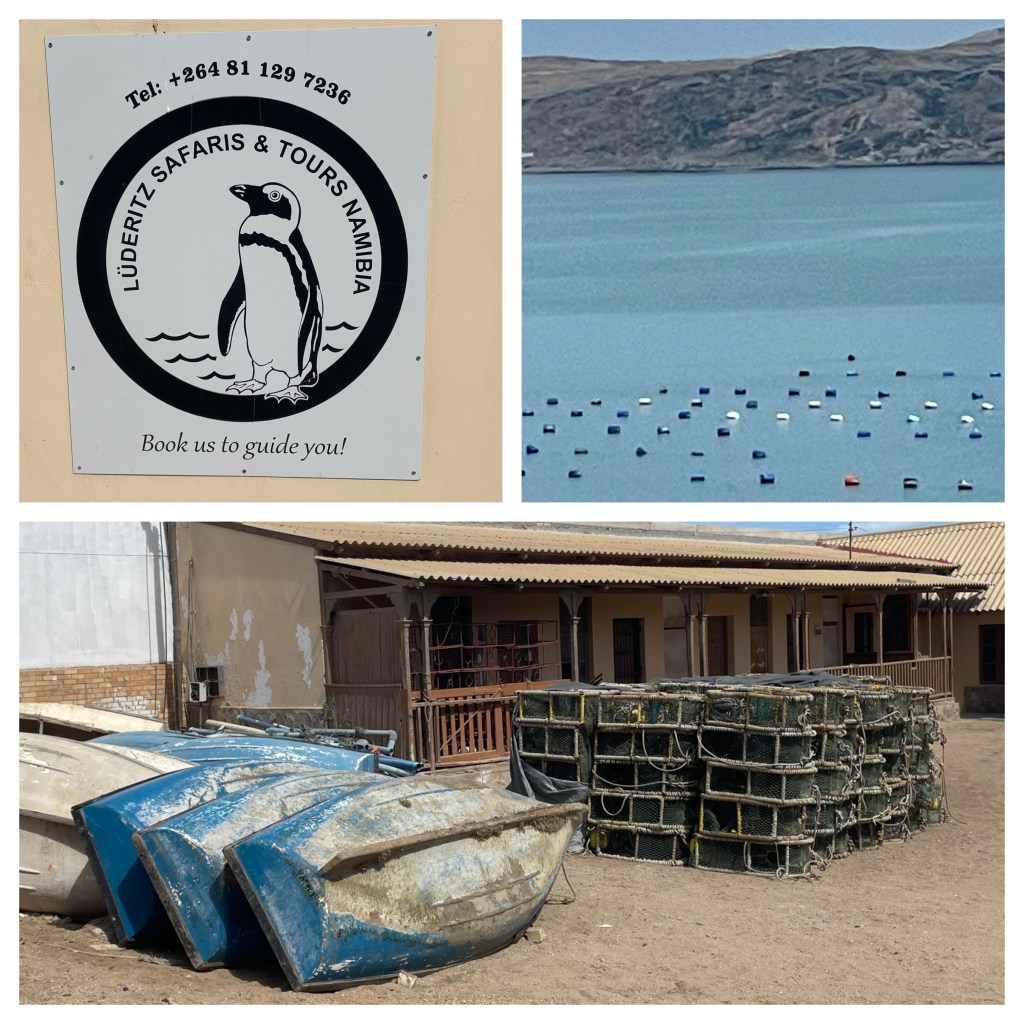
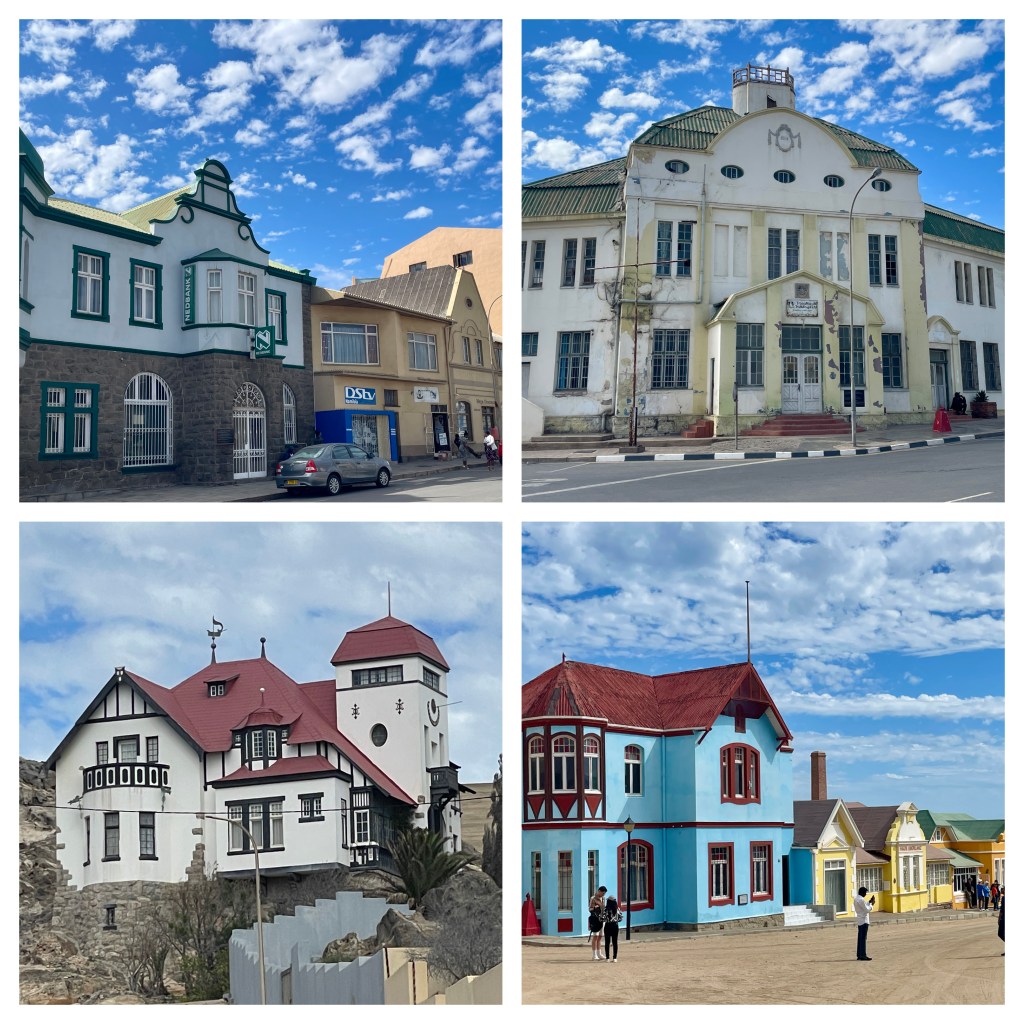
Situated on one of “the least hospitable coasts,” Luderitz is lots like a small, outdated western town designed by Germans. There are primarily dirt roads which host several turn of the century German Art Deco buildings. It has a railway station which used to be open when the railway operated. What used to be a power plant, now operates as a university. It used to be a center for whaling, seal hunting, fishing and guano harvesting. The port was an outlet for diamonds before the export site changed. One of the “things to do” is visit a nearby ghost town. A local monthly newspaper keeps people informed. Perhaps the 16,000 residents are very active during the week, but it was pretty slow on Sunday. Whereas most ports have had sales people and small stands set up, we saw only one blanket laid out with what looked like a few trinkets.
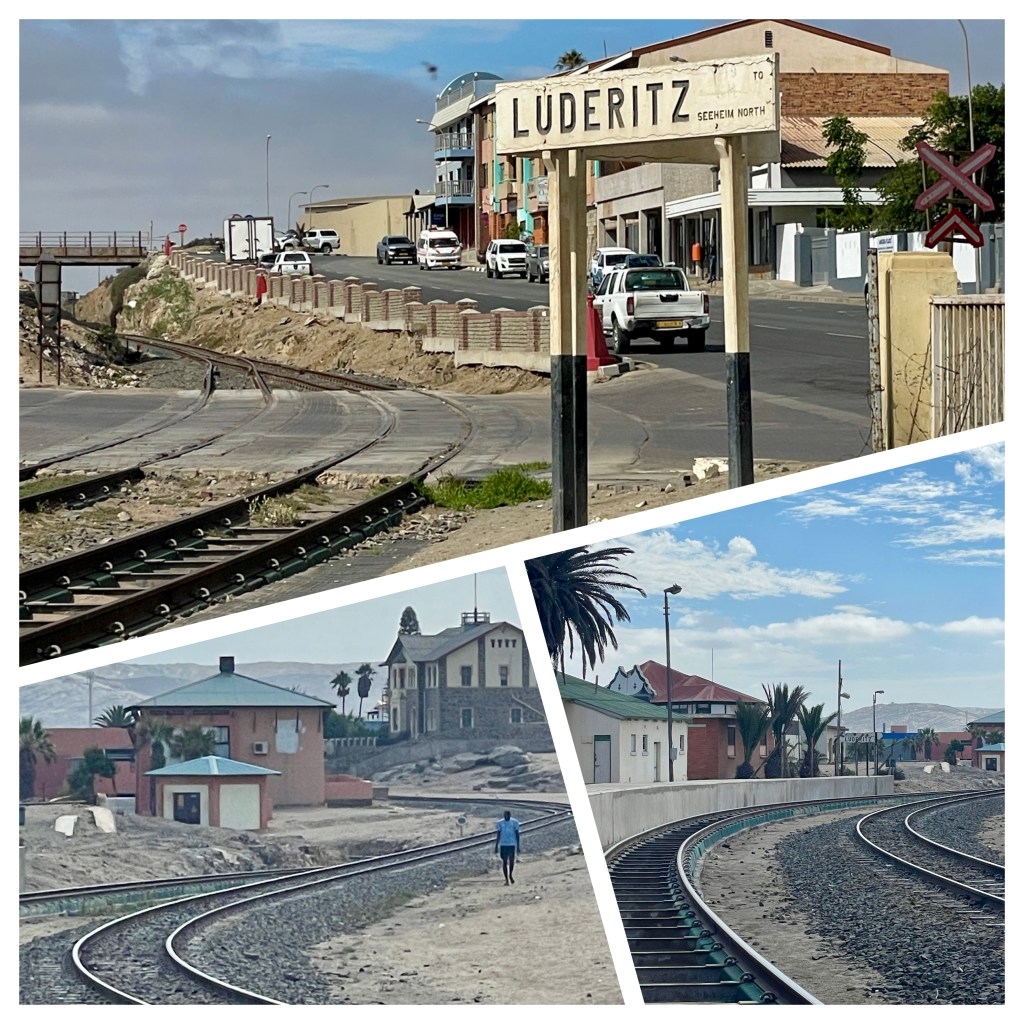
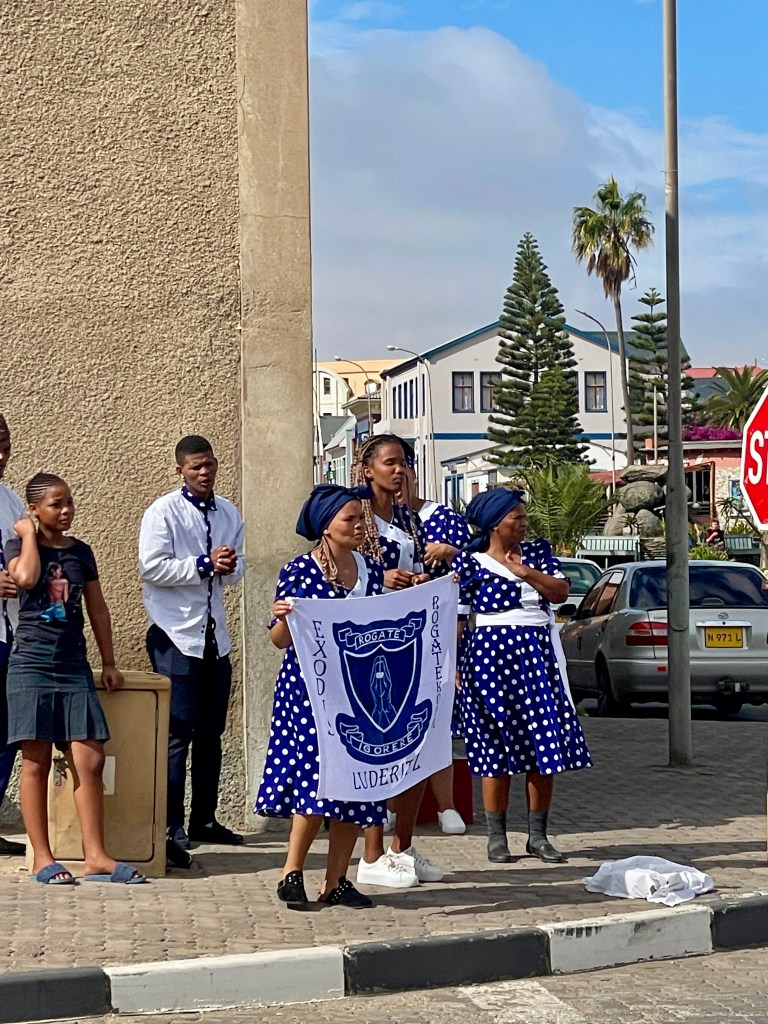
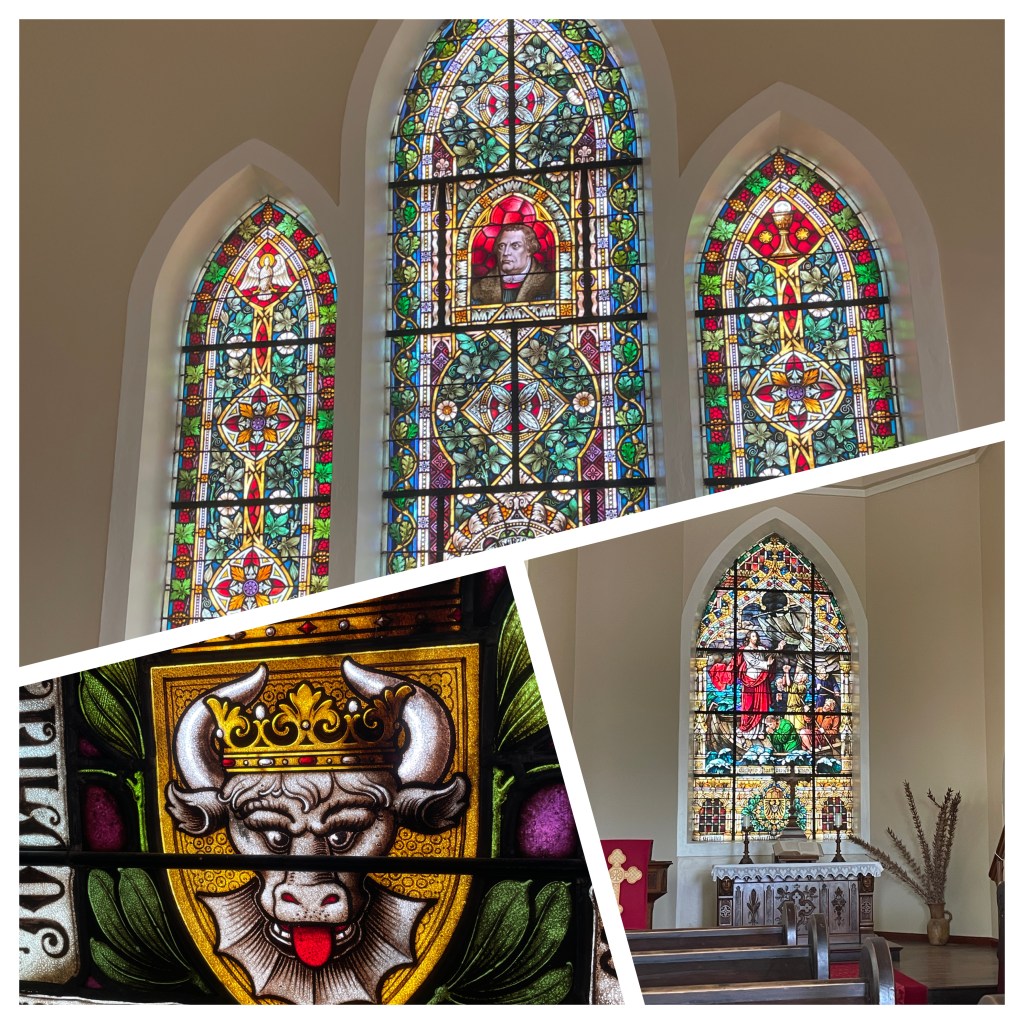
Our excursion was a walking tour of the town led by a local guide. He did fine with what he had to work with. We saw some turn of the century buildings, the main museum (which was closed), a church and a small museum that was open. While walking back to the ship, Karla spotted a Portuguese fish restaurant which had cold Namibian beer and excellent fish and chips. We returned to the ship and actually have a nice memory of our one and only visit.
Namibia, a country of 3 million, was originally occupied by several indigenous tribes When the Europeans were splitting up Africa, Namibia became German Southwest Africa in 1884. The locals didn’t appreciate their treatment and a war with the Germans ensued….from 1904 to 1908. The Germans established a concentration camp for captured natives on nearby Shark Island. The treatment of the native population was considered one of the first examples of genocide, with thousands killed. In 1920, the Germans acknowledged the atrocities. In 2021 they agreed to pay $1.1 billion over the next 30 years as compensation. I bet they learned their lesson; I can’t imagine the Germans doing something like that again.
After World War 1, the League of Nations assumed control, but South Africa was the administrator of the country. In fact, they applied their rules of apartheid until 1973. Namibia achieved independence in 1990.
Namibia currently has some of the highest income inequality in Africa. There is about 33 percent unemployment and a 40 percent poverty level. About 400,000 of the 3 million people live in “informal housing.” While Bloomberg described Namibia as one of the top emerging economies in 2013, the country is said to be plagued with government corruption and inertia. Still, there is hope for the future of agriculture (aquaculture– oysters), tourism, and mining of diamonds, gold, silver and uranium.

 Millers World Cruise 2025
Leave a reply to John Soutter Cancel reply