January 12
Honolulu
I Know, Let’s Pick on the Old Guy
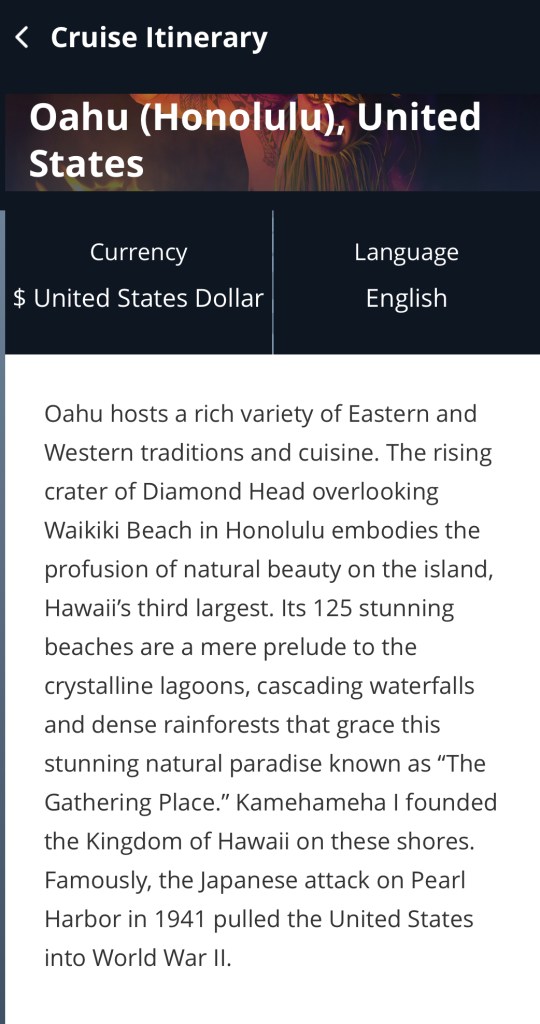
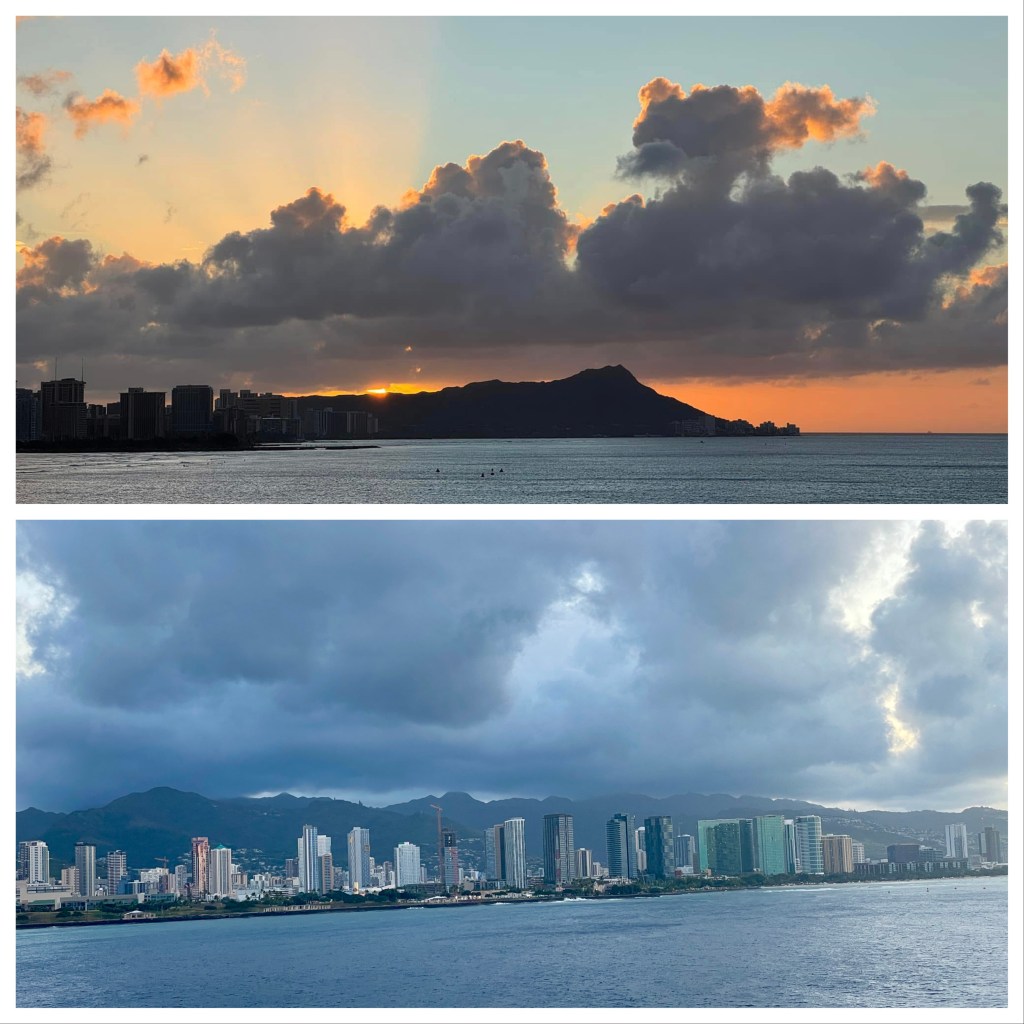
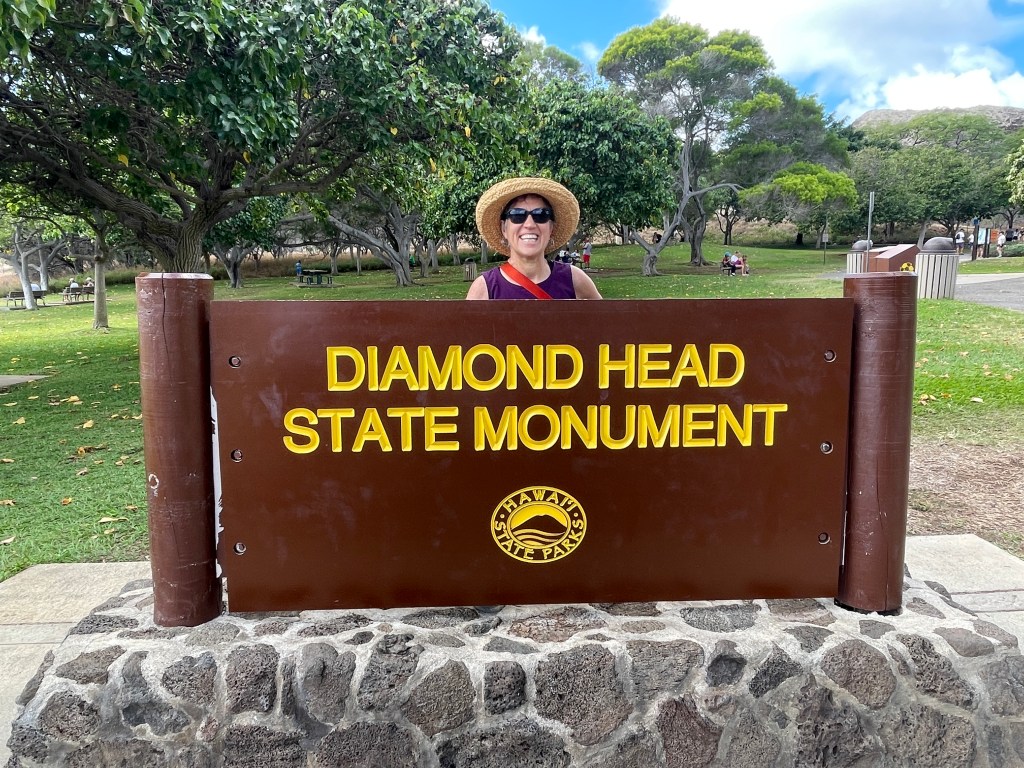
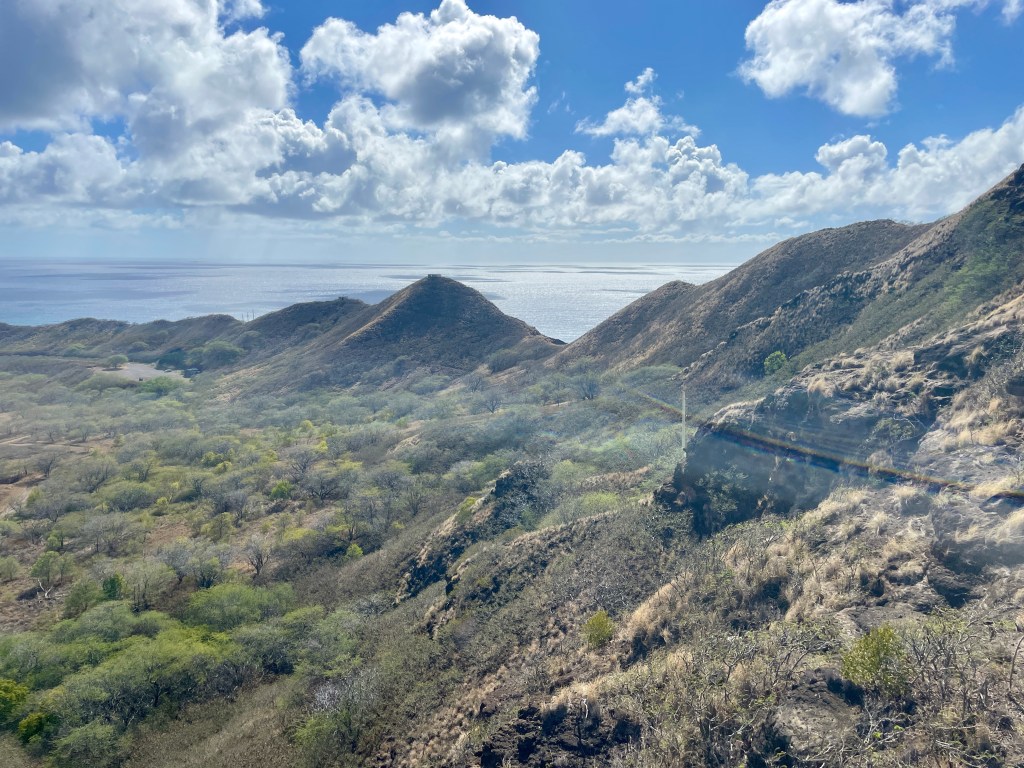
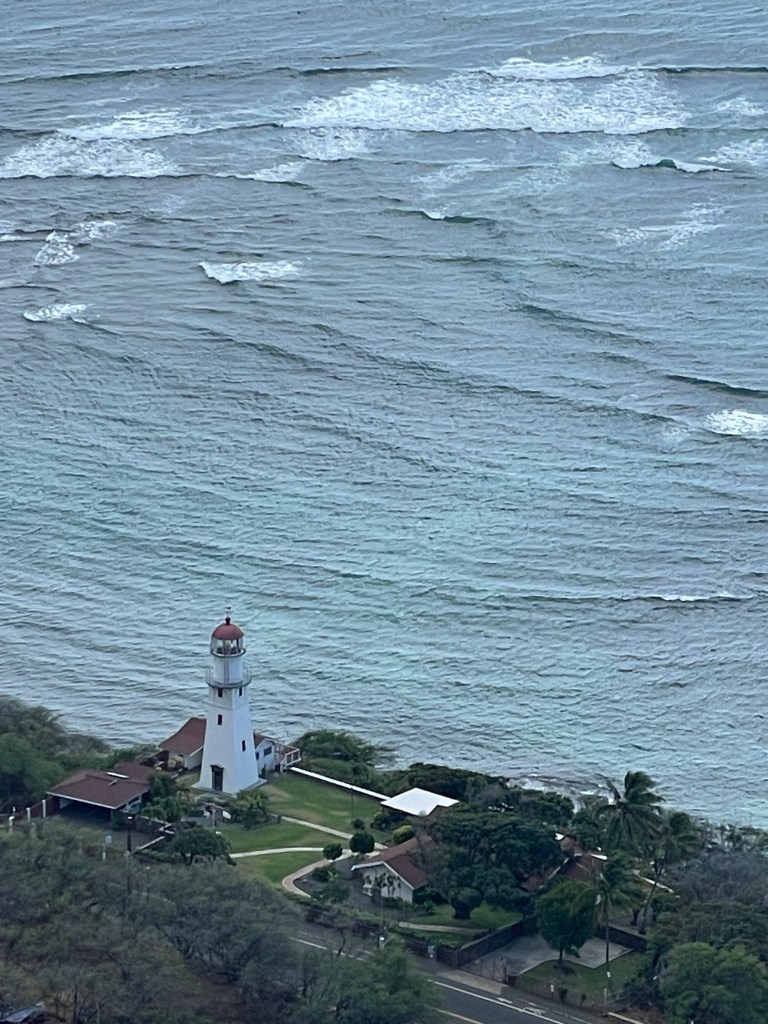
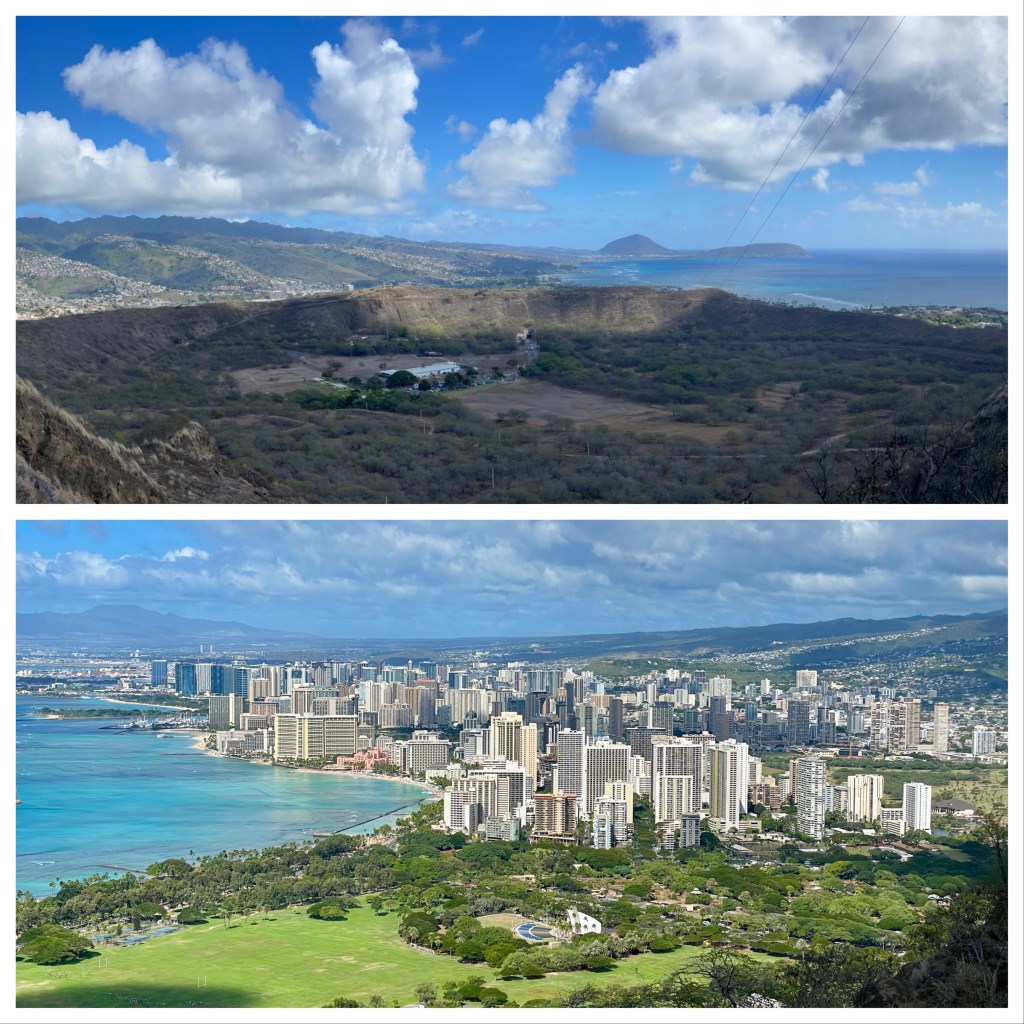
Hawaii was a nice break from five sea days. We docked in Honolulu on the 11th and at Nawiliwili on Kauai on the 12th. We decided to scrap the general orientation excursion in favor of hiking. Our group hike planner. (GHP) who is also group photographer…got a permit from the state for an 11:00am hike of Diamond Head, a large volcanic crater. I thought that sounded like too much in 75-80 degrees. So, following the GHP’s suggestion, I signed on for Koko Head at 8:00 in the morning. We took an Uber with another couple from the ship to the trailhead and started in.
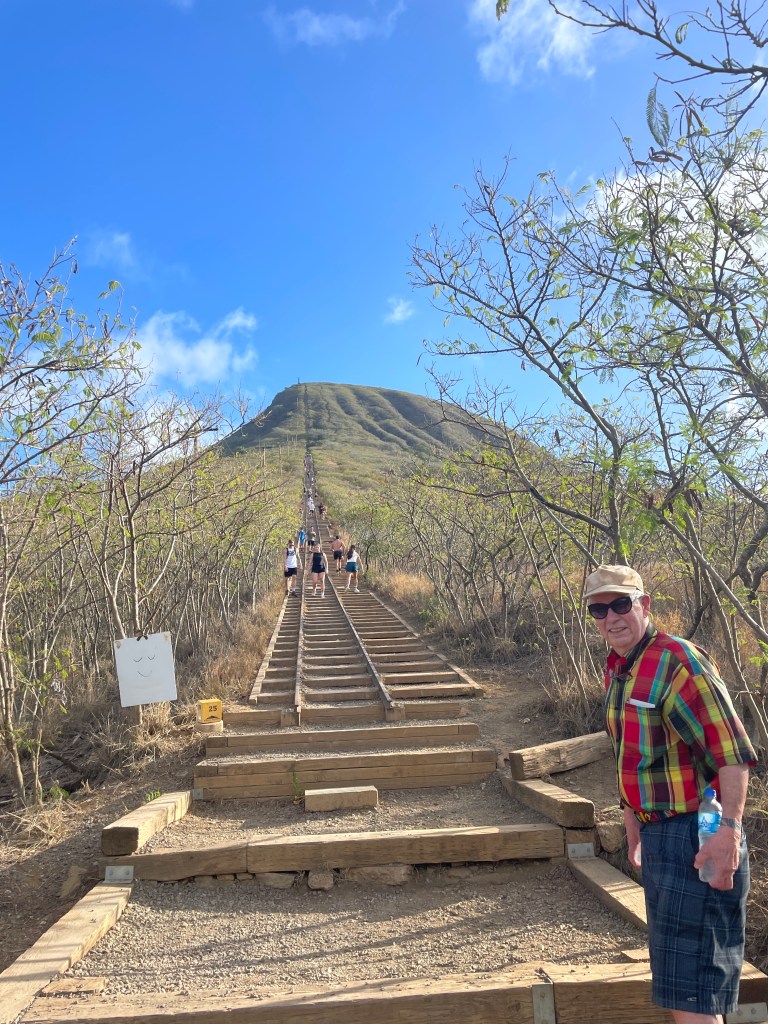
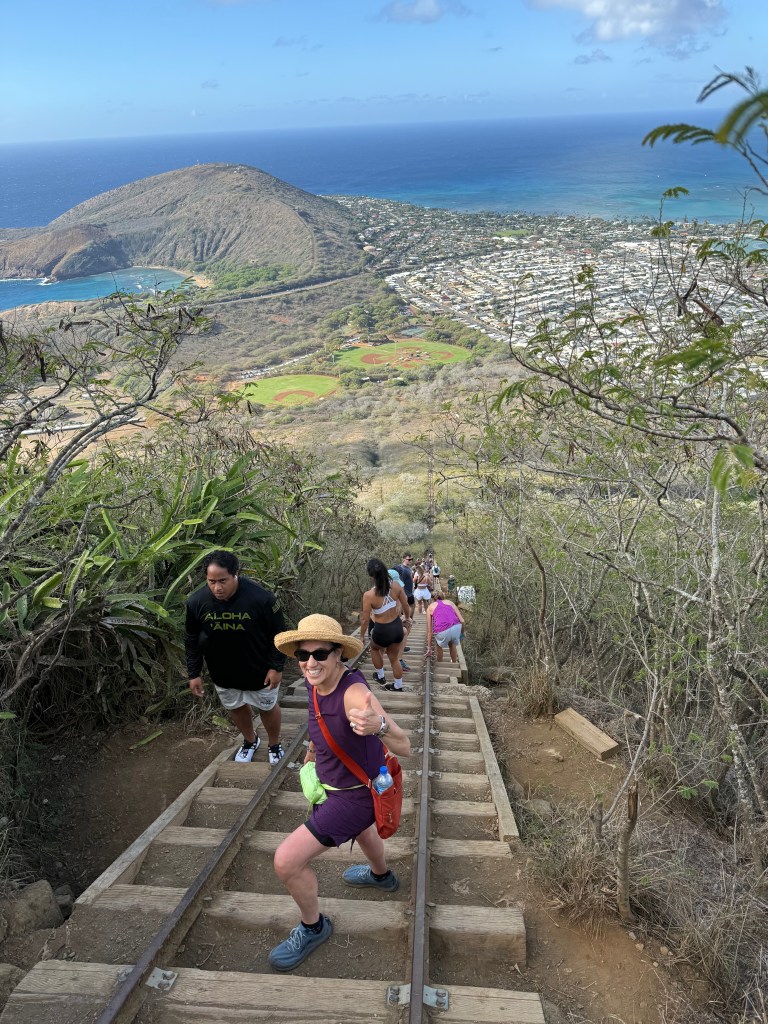
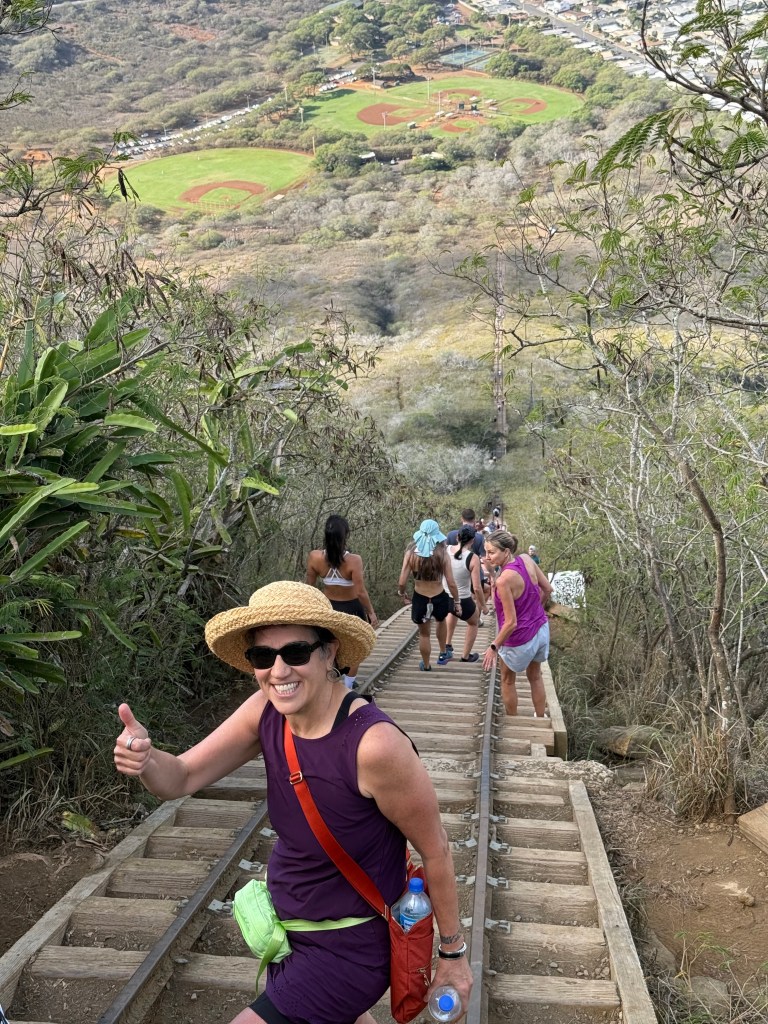
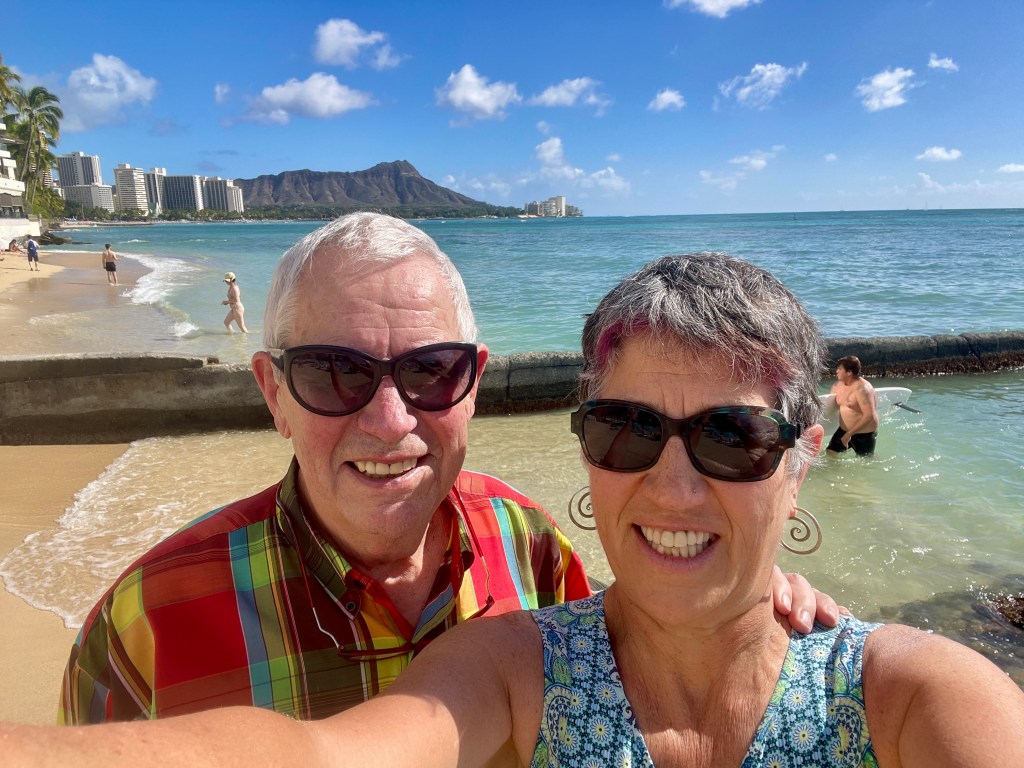
The trail followed a WW ll rail line straight up the Hill. The hike is essentially walking up rail ties with rock between them; over 1000 steps. I was determined to do it, but my determination waned as I got about 2/3 the way up. My knees didn’t like it and I still had to go down. That may have been harder. I returned to our starting point with some difficulty, but no trips or falls. Our GHP made it up and back and agreed that it was challenging. She made it to Diamond Head by 11 and completed that also….saying it was easier than the first hike I returned to the ship. We walked around Waikiki in the afternoon. Lots of people, traffic and high prices.
I decided to check the details on the Koko Head hike to see what had inspired our GHP to recommend it. Here are some descriptions:
-Steep, no shade…over 1000 steps over old railroad ties.
-“super difficult, pretty dangerous..downright miserable”
-super steep, incredibly challenging….some 25-50 degree inclines
-loose dirt, wooden steps….tripping hazards.
Happy to have sampled it. And, I will admit that the GHP was supportive.
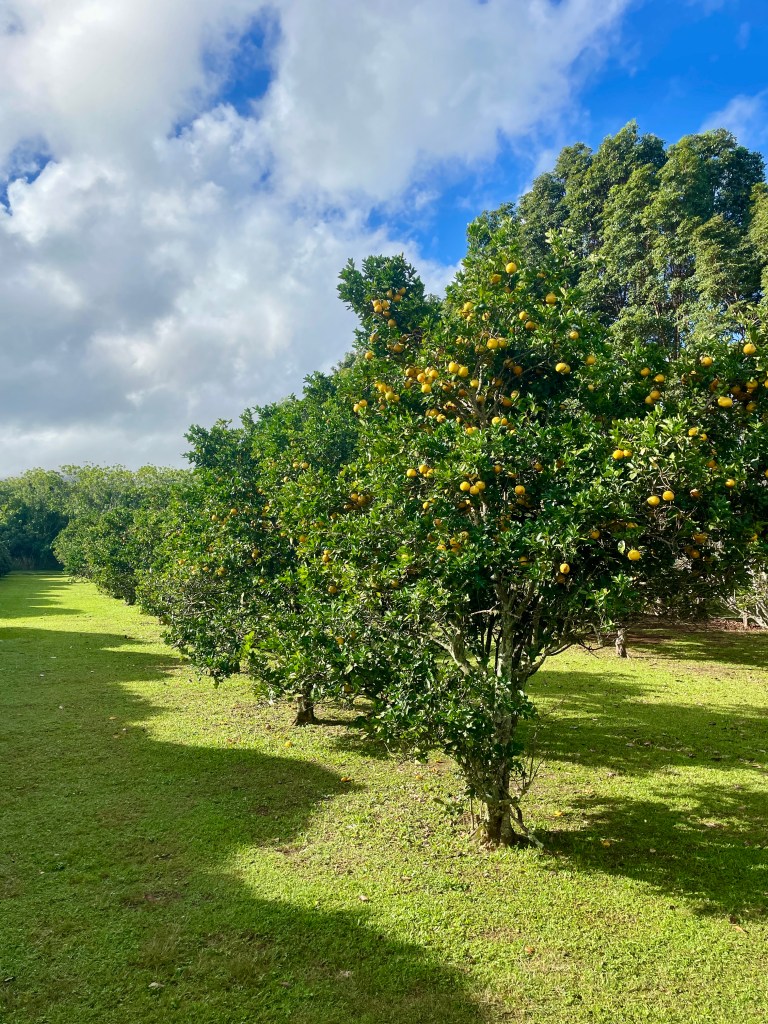
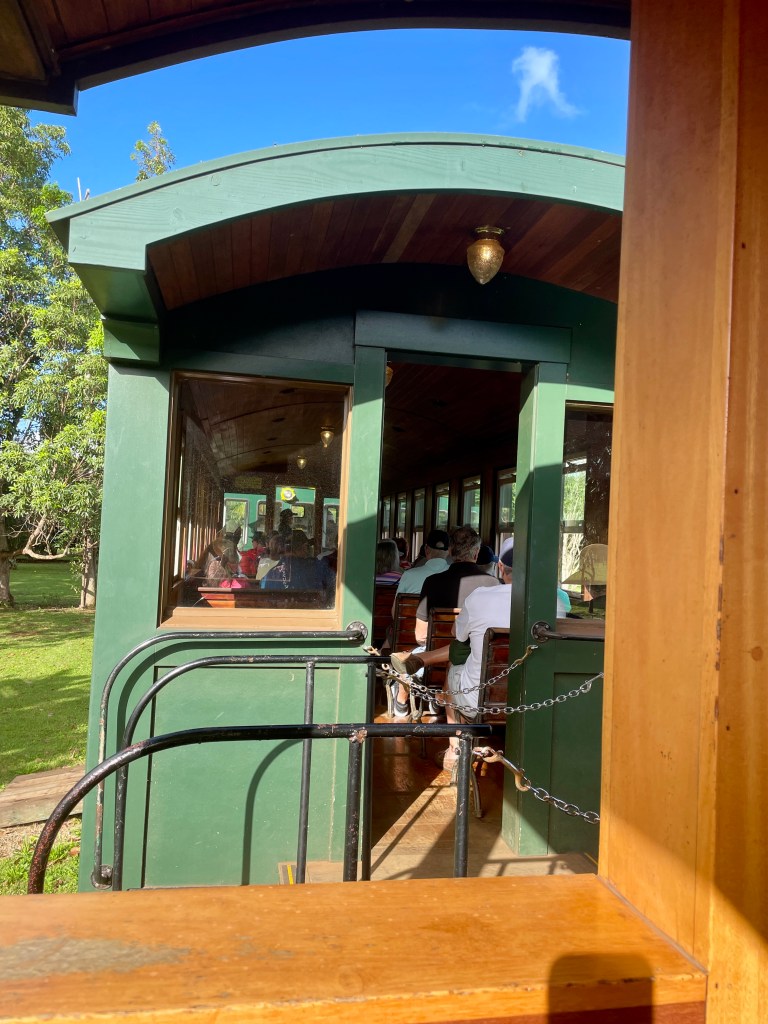
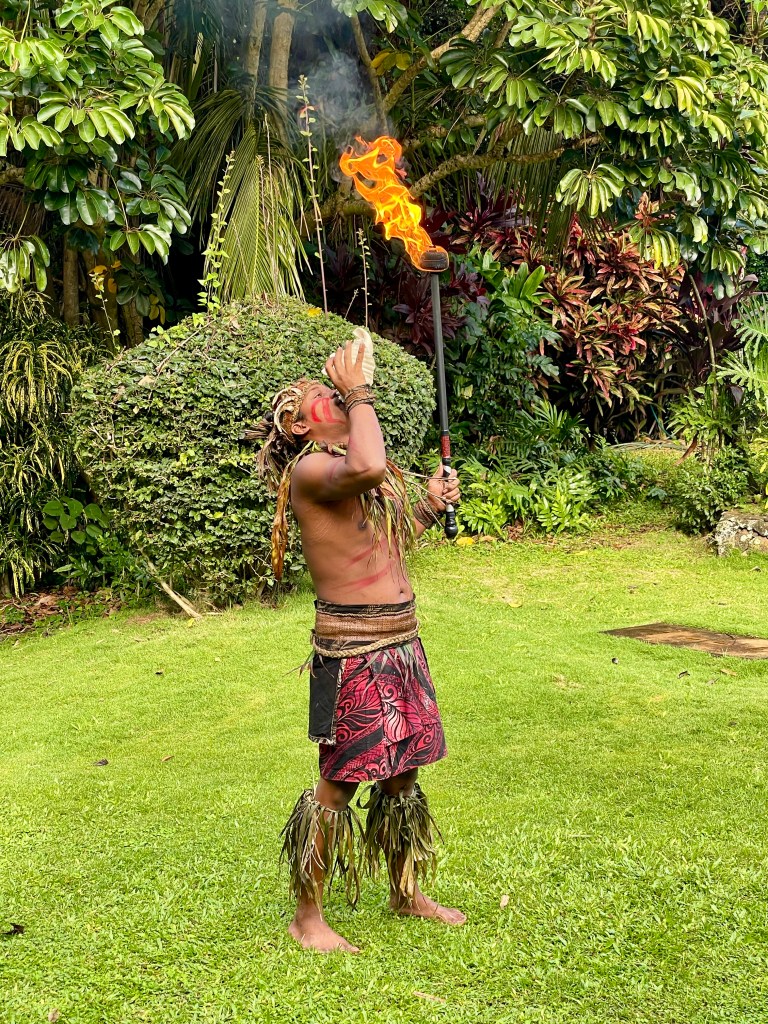
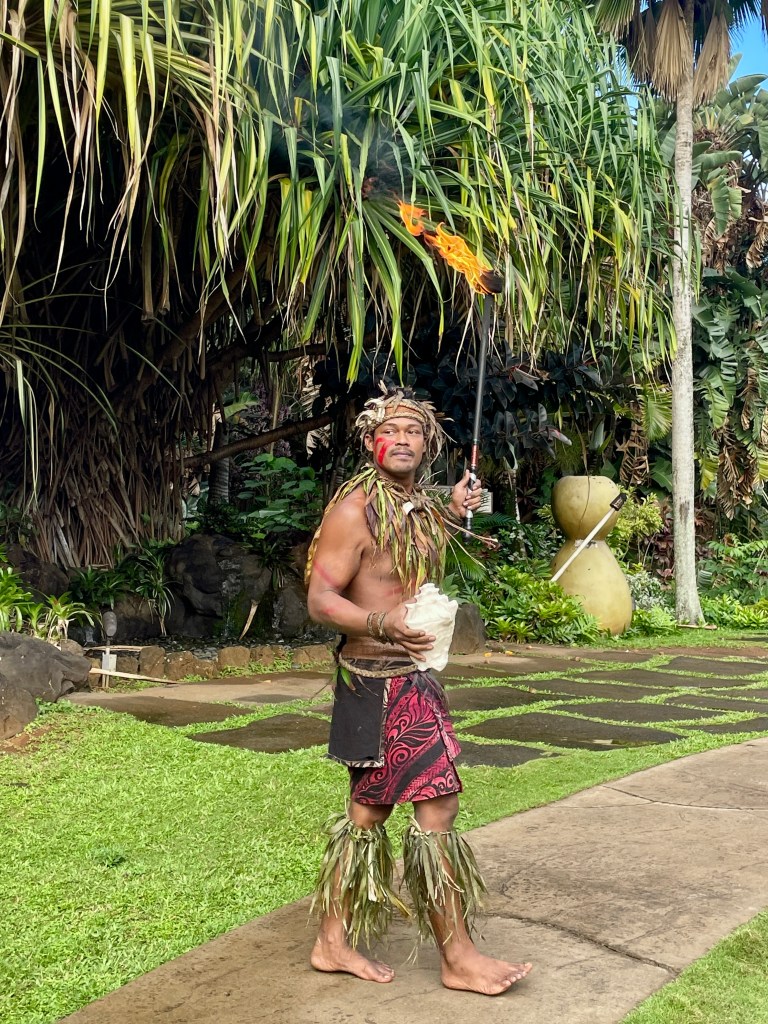
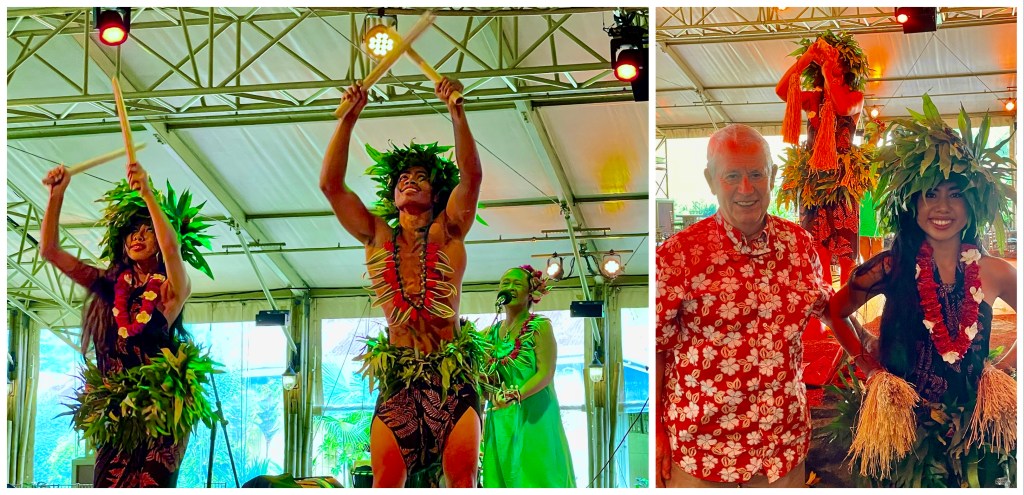
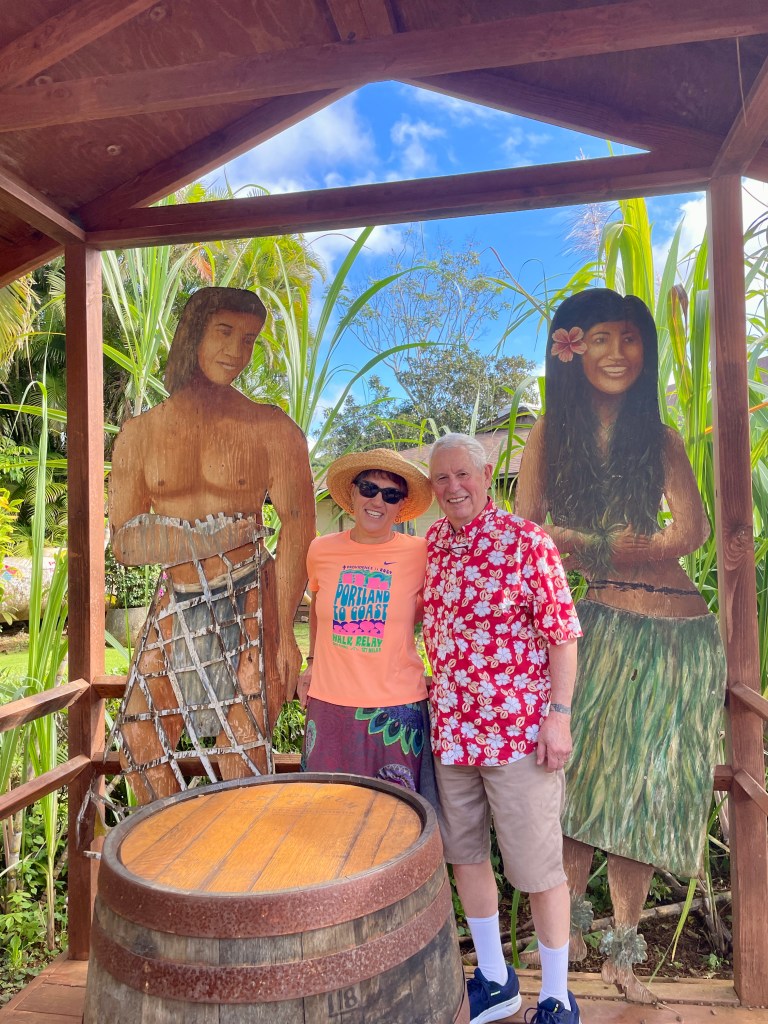
In Nawiliwili (Kauai), we opted for a plantation tour. It was pleasant and interesting and sparked an interest in learning a bit more about Hawaiian history. The Kilohana plantation estate is a nicely manicured 30,000 acres, with a wide variety of trees, crops and animals. A train transported us through the estate before we were treated to a music and dance show. Following that, we had time for the obligatory visit to a variety of tourist shops. We rejected the opportunity for a 10:30 am mojito.
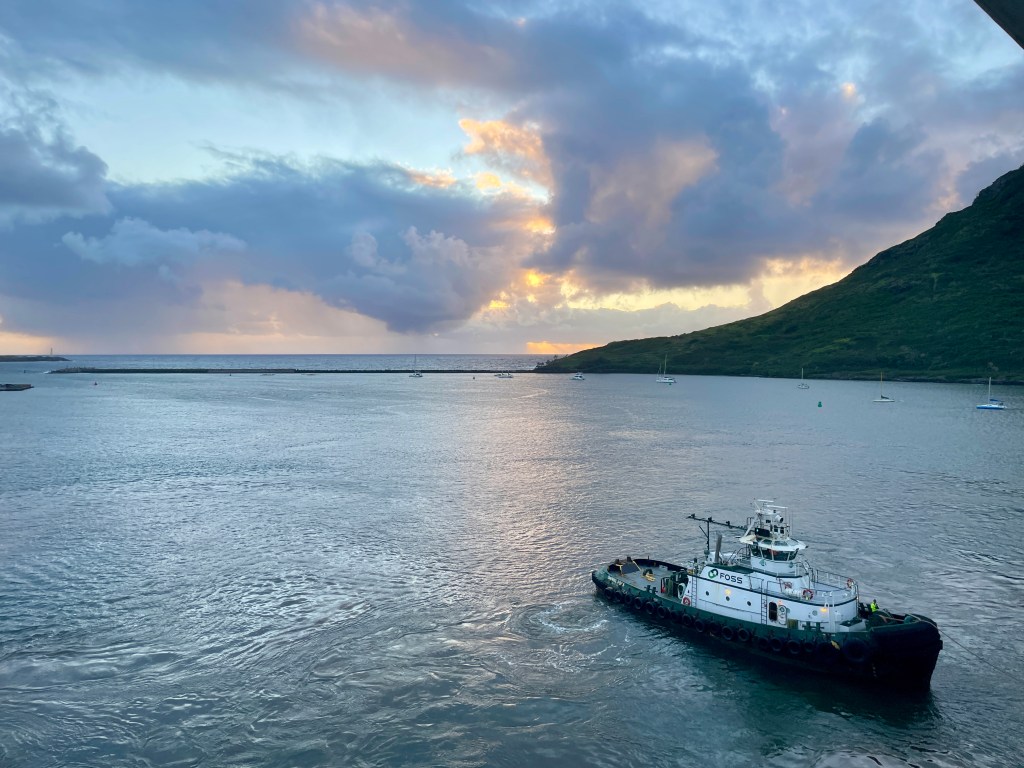
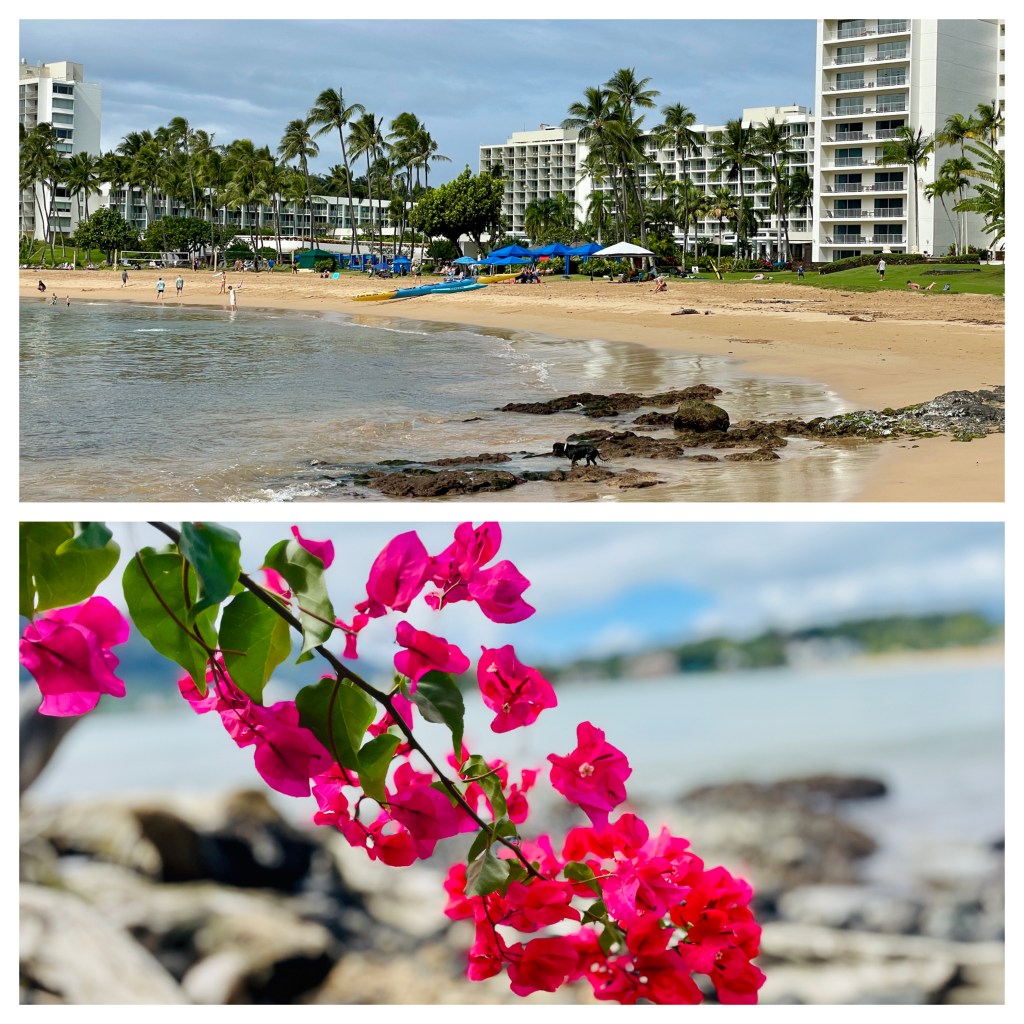
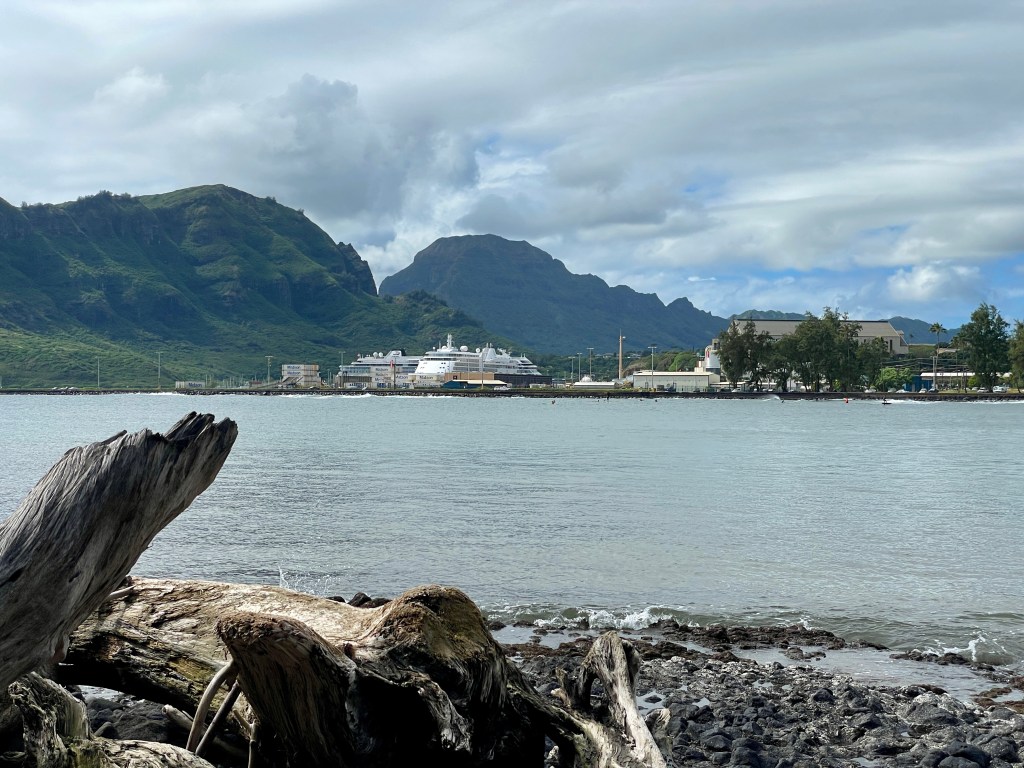
In the afternoon, we walked into a small town and noted the variety of tourist shops…entering none of them. There are some interesting hikes in the area, but semi-tired legs, a warning of the scarcity of ubers, and the need to be on ship by 4:30 convinced us to reject that option. Karla, needing more steps, walked on the beach while I returned to the ship. She only got 7-8 miles today, while I managed 5-6.
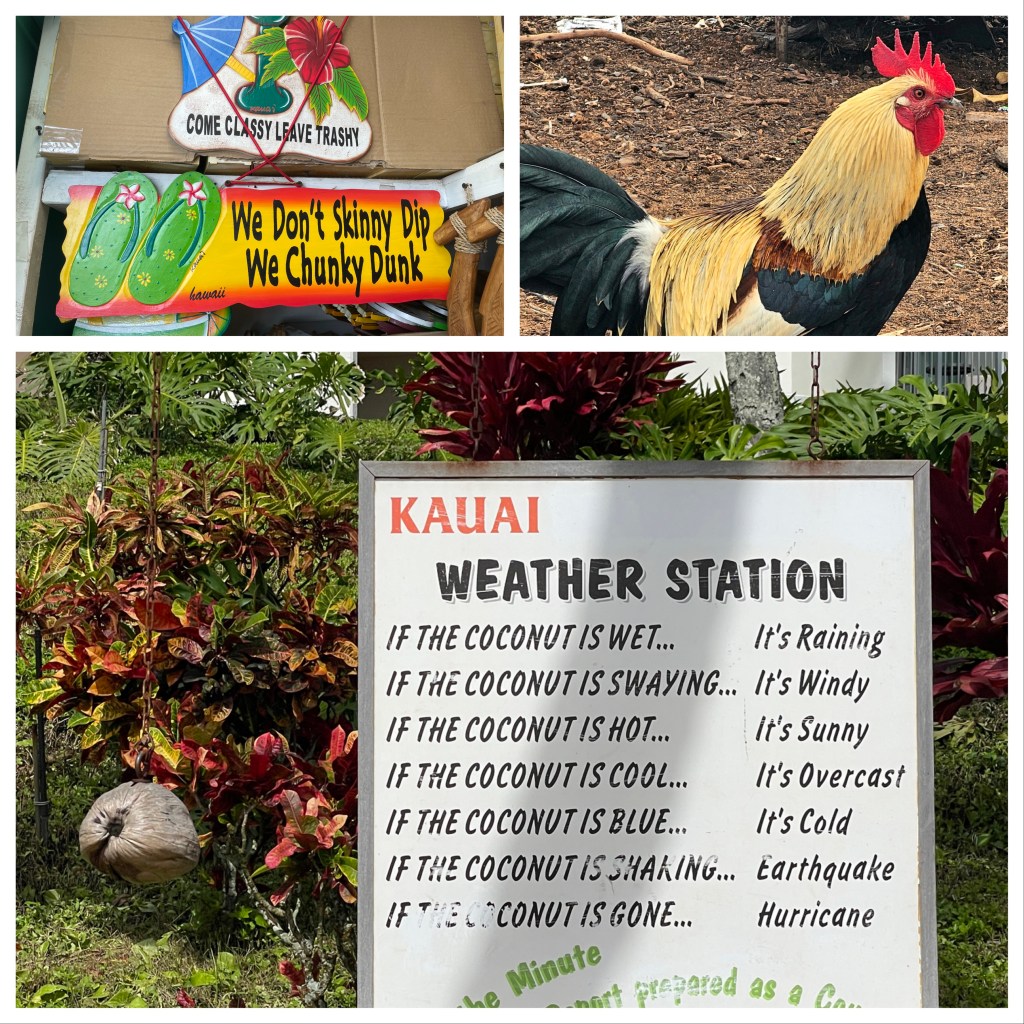
One of the interesting features was the number of chickens wandering freely in parks, lawns and grassy spots. The plantation had hundreds of wandering chickens. We were told that early settlers brought the chickens as a food source. On the island, there are no natural predators beyond Kentucky Fried Chicken and their competitors. They were acting like normal domesticated chickens before a significant hurricane in 1992. That spread the chickens in all directions and they converted to free range. Now, they mix pleasantly with the tourists and add a nice feature.
A related point; when the hurricane hit, the usual warnings were broadcast. While most citizens took appropriate action, Stephen Spielberg did not. He was in town filming Jurassic Park. He placed his crew on top of their hotel and filmed the hurricane. Some of the segments show up in the movie. It’s hard to stage that kind of footage, but nature helped.
History
Hawaiian history is lots less complicated than that of Europe. Whereas lots of European countries have histories including conquests by Phoenicians, Carthaginians, Celts, Vikings, Romans, Ottomans, etc, the Hawaiians had a much simpler story. Geologists will say that the 137 islands (7 populated) were created by volcanic activity….which is still going on. Some of us with a more religious orientation, have at least 2 other explanations. One is that a god threw a calabash (squash) in the air. It broke and the top part became the sky; the body fell and created the islands; the seeds became the people. Alternatively, the god Maui, was fishing and hooked the islands and pulled them to the surface. It’s hard to decide. I could be more convinced if there were a talking snake involved.
However it happened, the Polynesians traveled to and populated the islands between 940 and 1200. (More on their navigation later.) The settlers took advantage of the fertile volcanic soil and established an enviable economy with farming and fishing. They evidently, led a pleasant enough existence until they were “discovered” by Captain Cook in 1778. That led to mixed results. The islanders were able to dispatch Cook, but could could not shed themselves from the foreigners.
Missionaries descended on the islands to save souls….and dollars. Missionaries were involved in establishing 6-7 large sugar plantations. While they found it very profitable, it was at the expense of the many family farms. The Hawaiians had been doing fine producing what they needed to live. They were not attracted to working on plantations for money; their lives had not required it. So, the missionaries and others imported labor from China, Korea, Japan, Portugal, etc.
A decade or two later, whalers arrived. After some very profitable years they pretty much decimated the whale population. They, and others, did bring other things. These included syphilis, TB, smallpox and measles. The native population fell from about 300,000 to 40,000. The plantation owners continued to do well, but were plagued by efforts by native Hawaiians to assert their independence. A Missionary Party was formed to represent their interests. In 1893, the plantation/economic forces were able to wrest the islands from Queen Lila Uokalani, who was working to unite the native population. With the help of US Marines, the queen was detained.
Hawaii became a territory of the US. It was important as a base in the 1898 Spanish-American War. As the US worked to civilize the Territory, they took such steps as seeking an oath of allegiance from the natives. And, they made teaching the native language in schools illegal. (It sounds like our approach to Native Americans). As we know, the US established a major military base in Pearl Harbor in the late 30’s, We needed a presence there. What could possibly happen? Hawaii became a state in 1959, not necessarily because the native population wanted it. (In fact, during our plantation train ride, the narrator commented that she considered Hawaii to be illegally occupied).
Now, the economy imports 90% of its food. Prices are something like 60% higher than large US cities in the continental US. (I looked for protein bars in a local grocery store. $4.59 each. About 3 times as much as I pay in the Dalles.) They do sell lots of hotel rooms and tourist amenities. But, it’s a long way from self sufficient farmers and fisherman. We might come back for hikes and scenery, but Hawaii isn’t at the top of our lists.


Leave a Reply