April 30
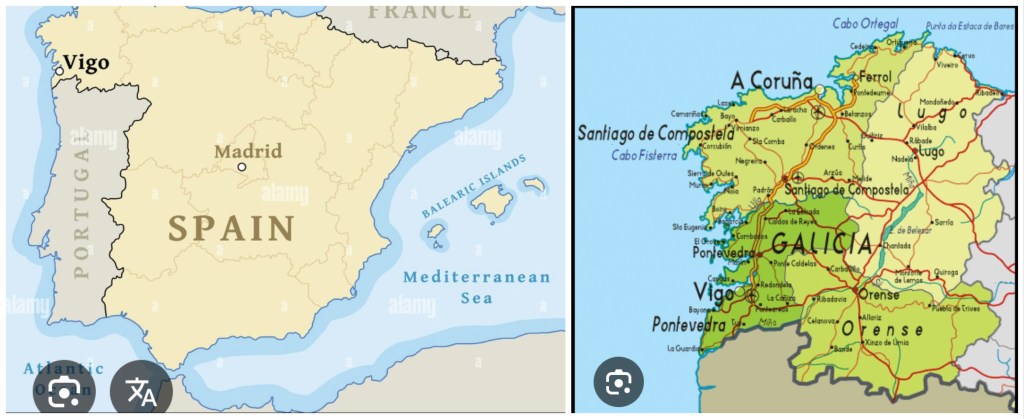
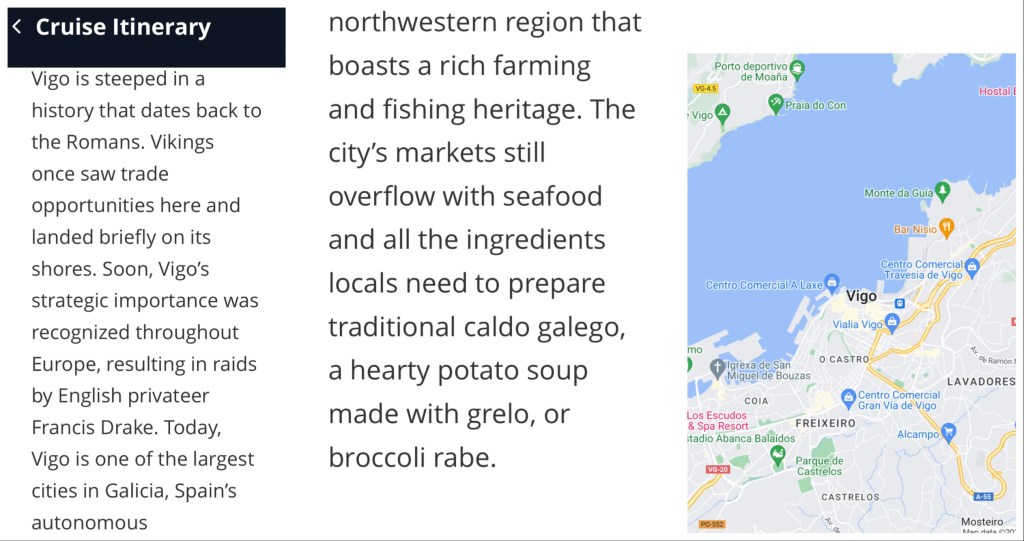
When foreigners think of Spain, they generally think of Madrid, Barcelona, Valencia, or Seville. However, if discussing Galicia, in western Spain, Vigo makes the list. With 300,000 inhabitants…550,000 in the urban area…it is the most populous city in Galicia. It has a prime location on the coast, but given it’s historically small population, it didn’t receive much attention from foreign raiders. The Vikings raided Vigo several times, as did Sir Francis Drake. In 1702, as the Spanish were at war with Scotland, the British occupied the city for a while. And, in 1808, The French annexed Spain, Galicia included. But, it was the first city freed with Napoleon’s demise.
In 1947, Vigo became a Free Trade Zone and the economy picked up. Today, Vigo is home to some of the world’s largest fishing and shipbuilding companies. It is one of the main fishing ports in the world and exports lots of processed and canned fish. Other principal exports include cars, granite, wood and processed food.
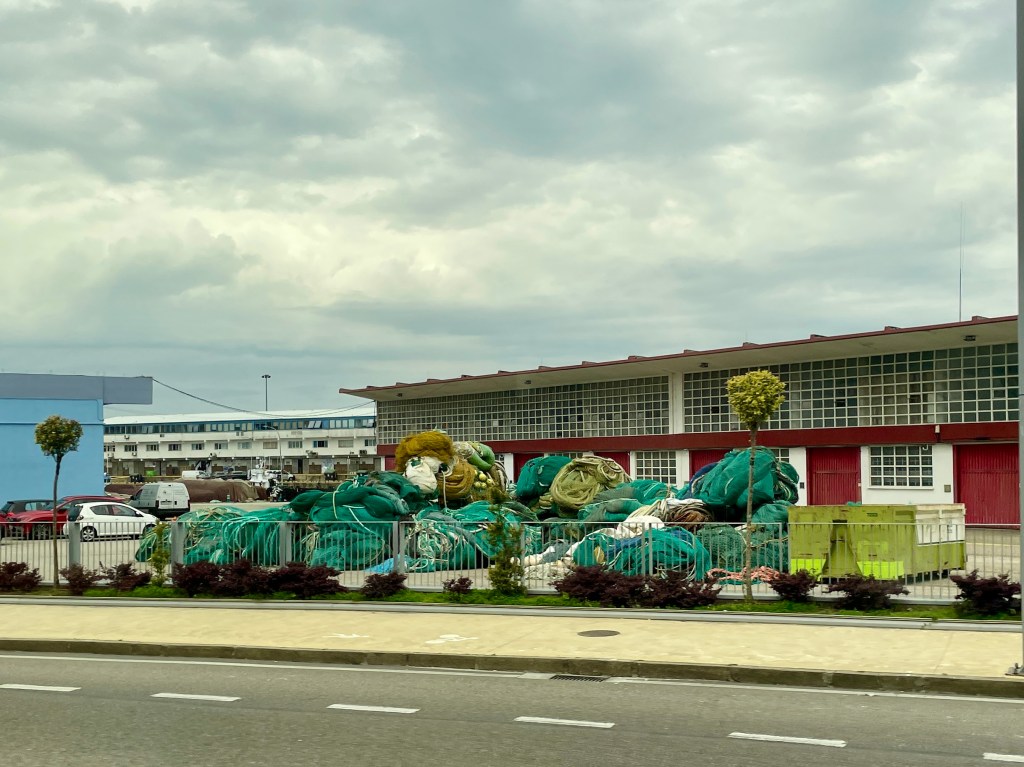
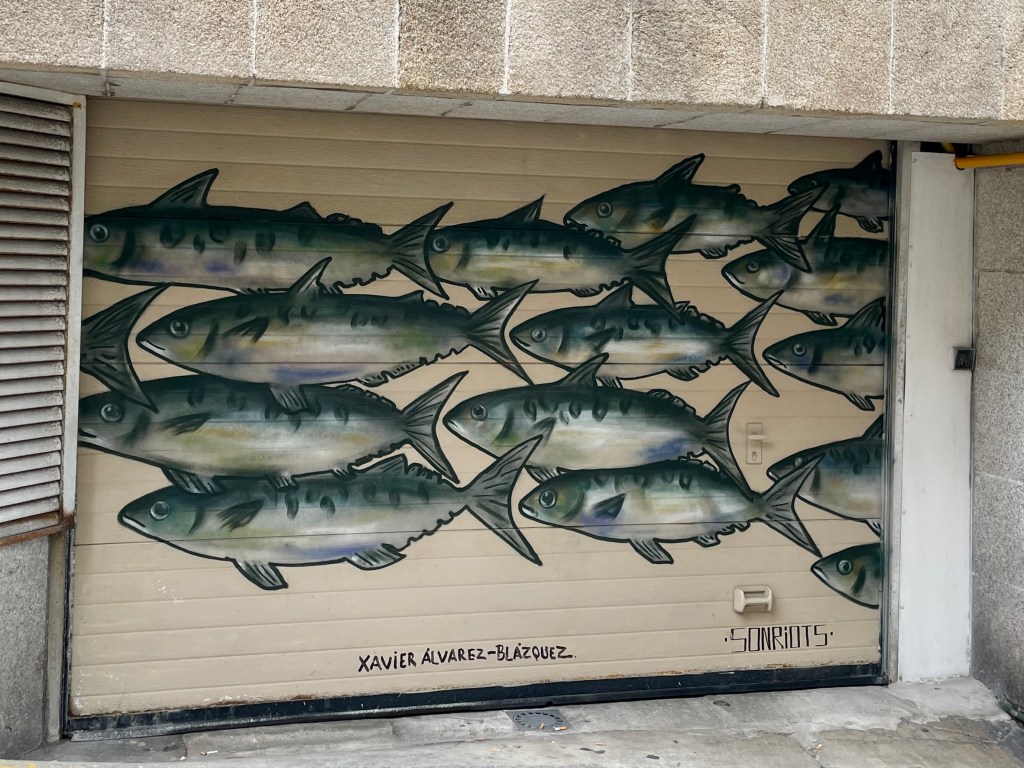
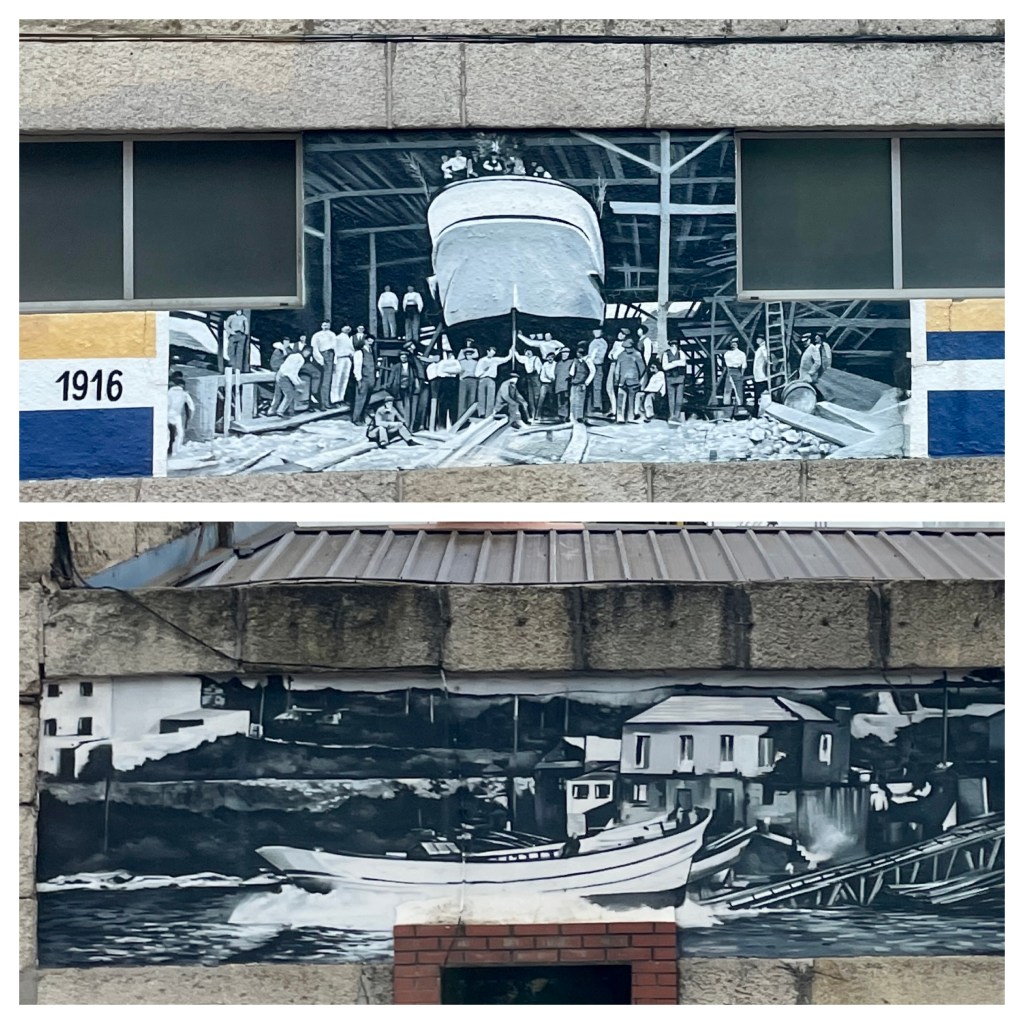
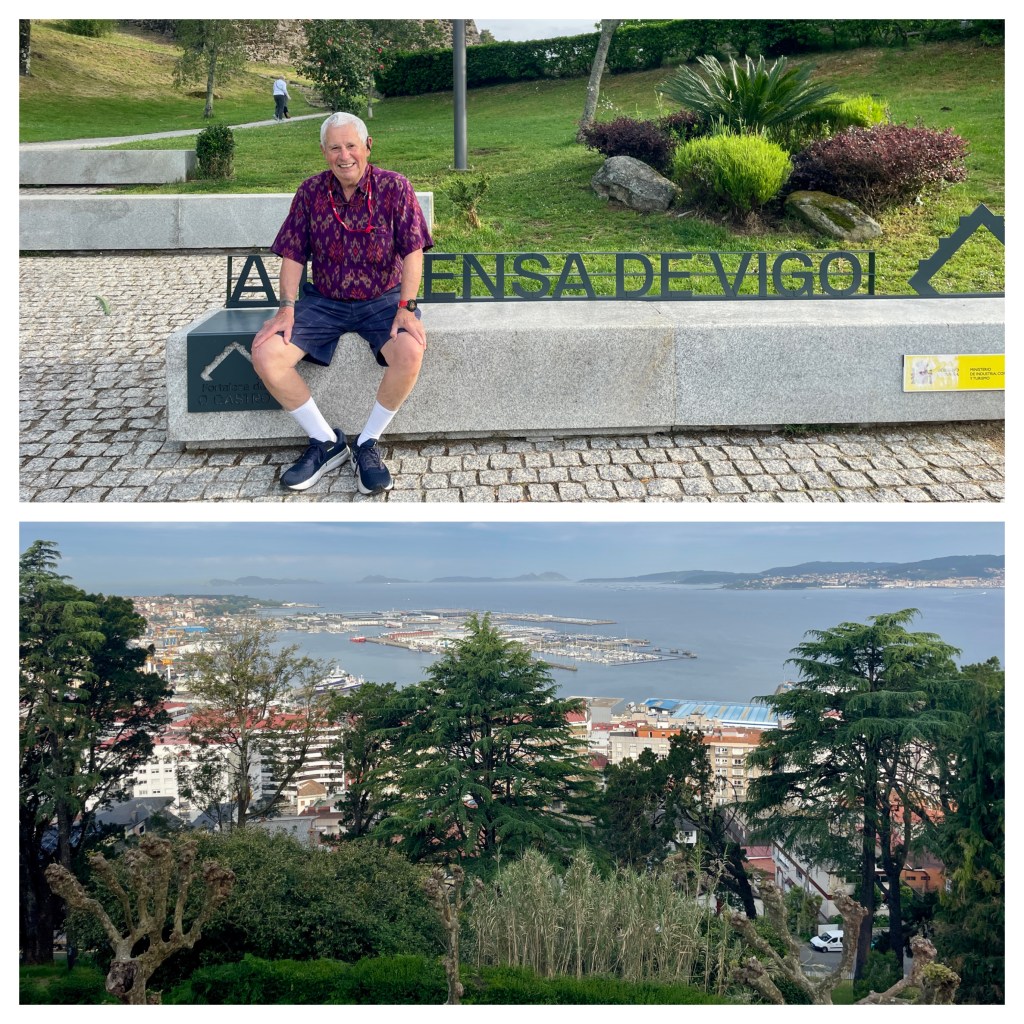
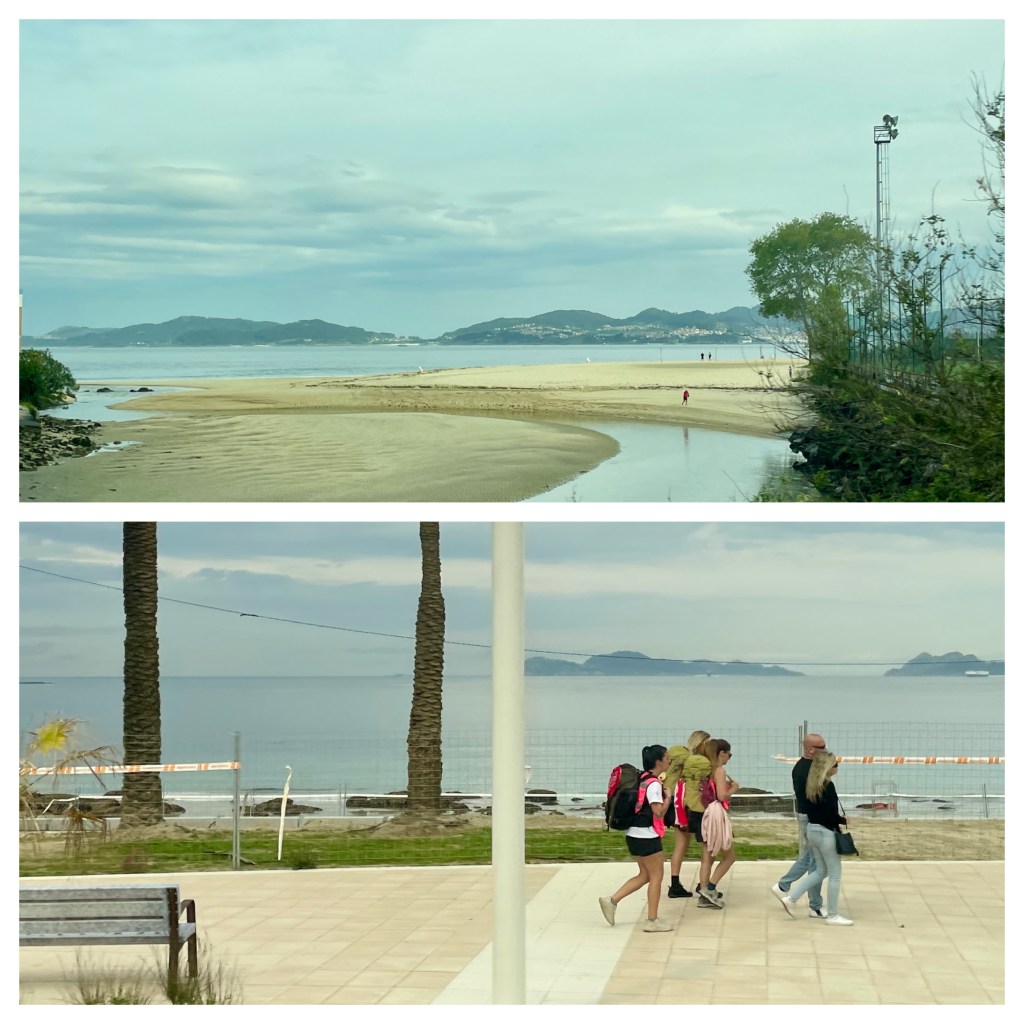
I’ve said before that a good guide can make an excursion successful. However, there are limits. Our 2 1/2 hour bus trip took us to 2 forts/castles…neither of which we could enter. It also took us by a coastal area with rocks and sand; we,ve seen some of that before on a 4 month ocean cruise. It did allow us 45 minutes in a botanical garden which was impressive.
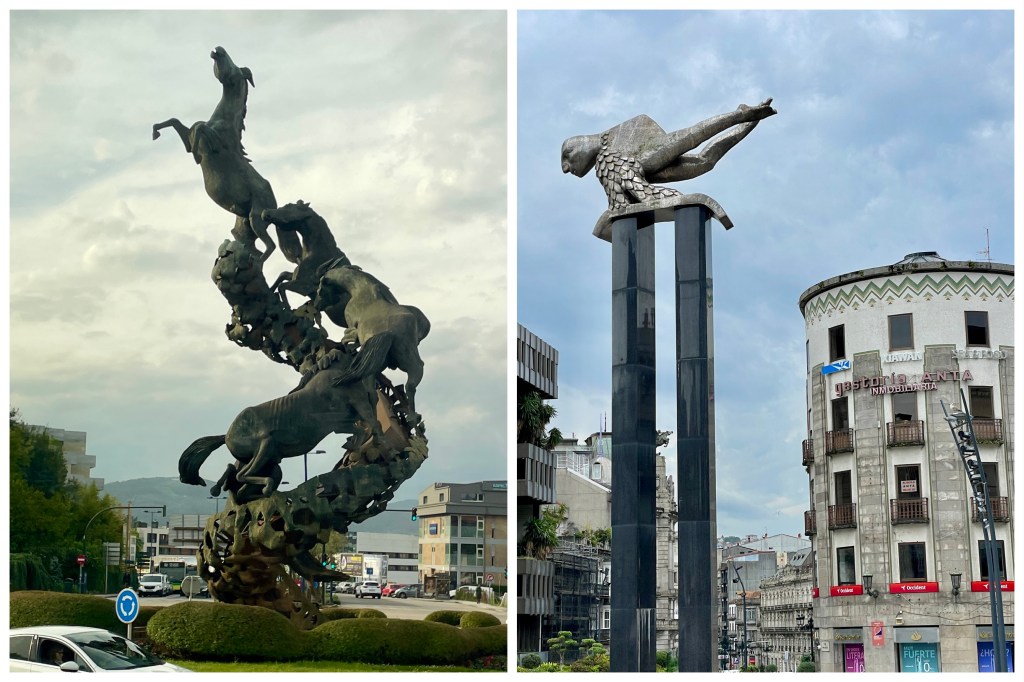

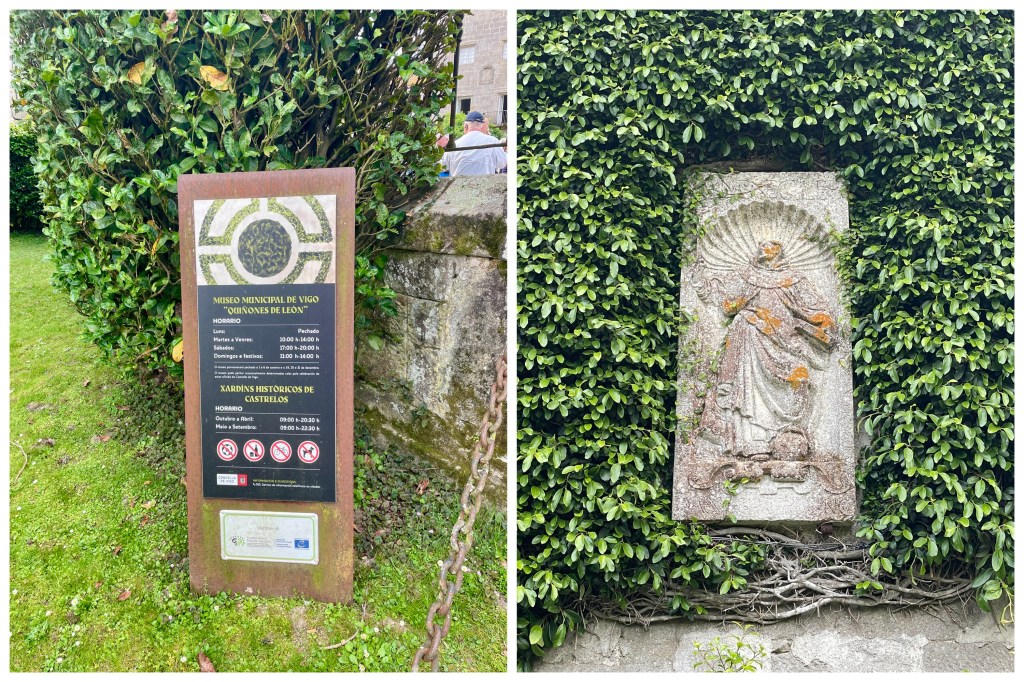
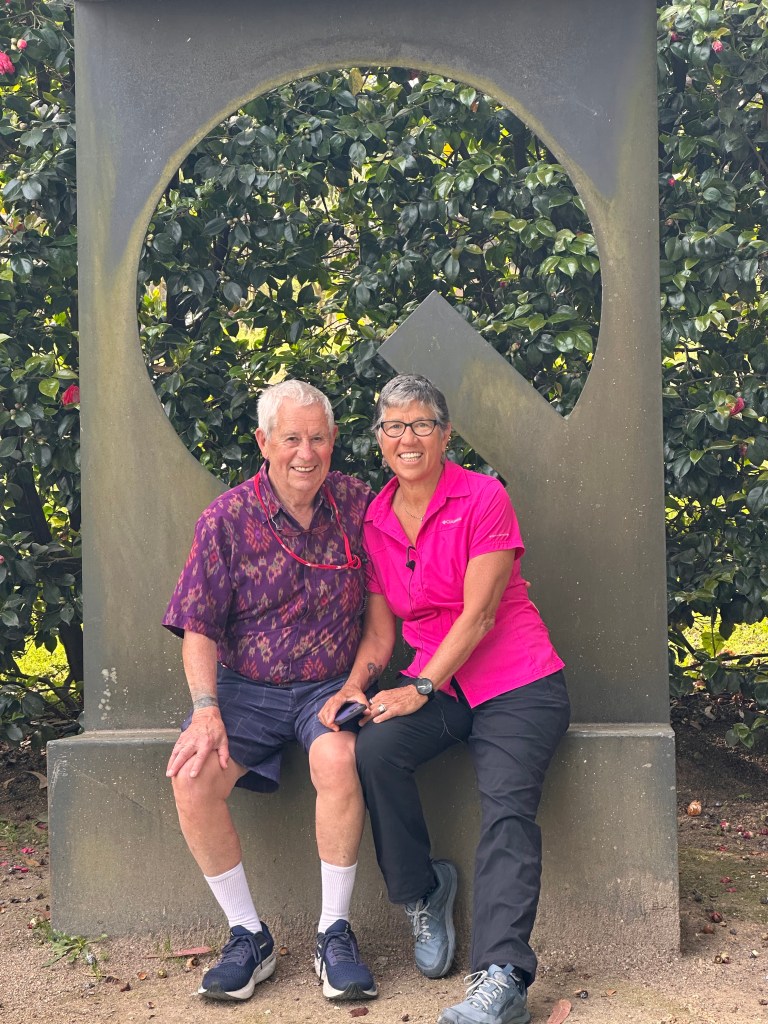
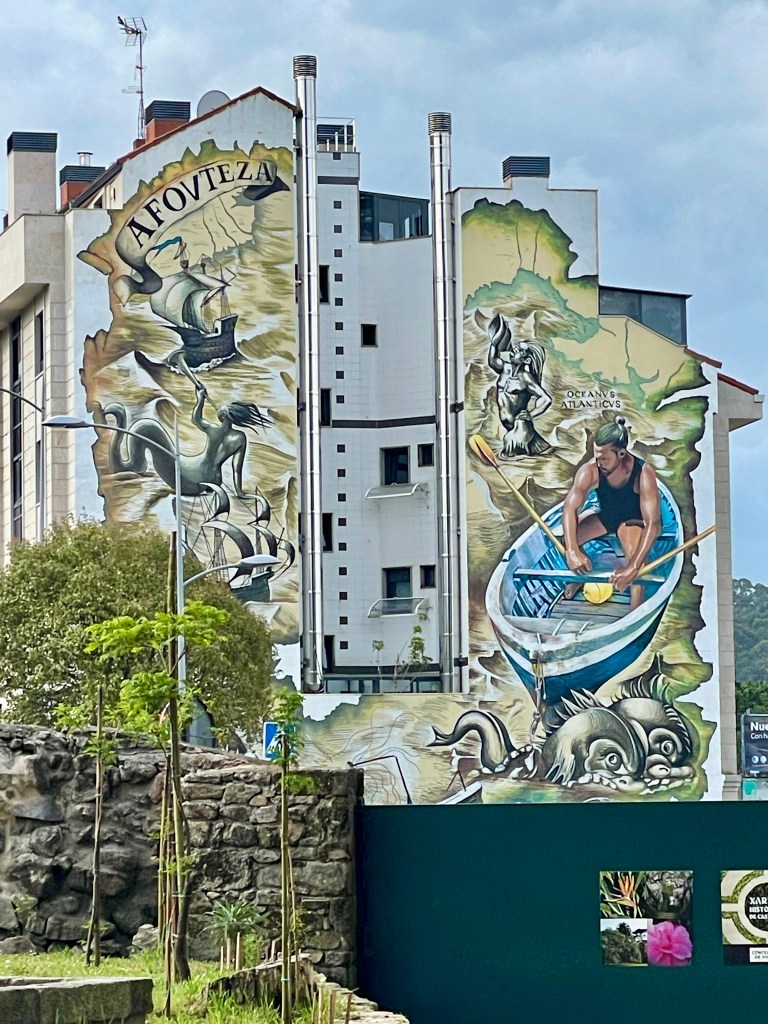
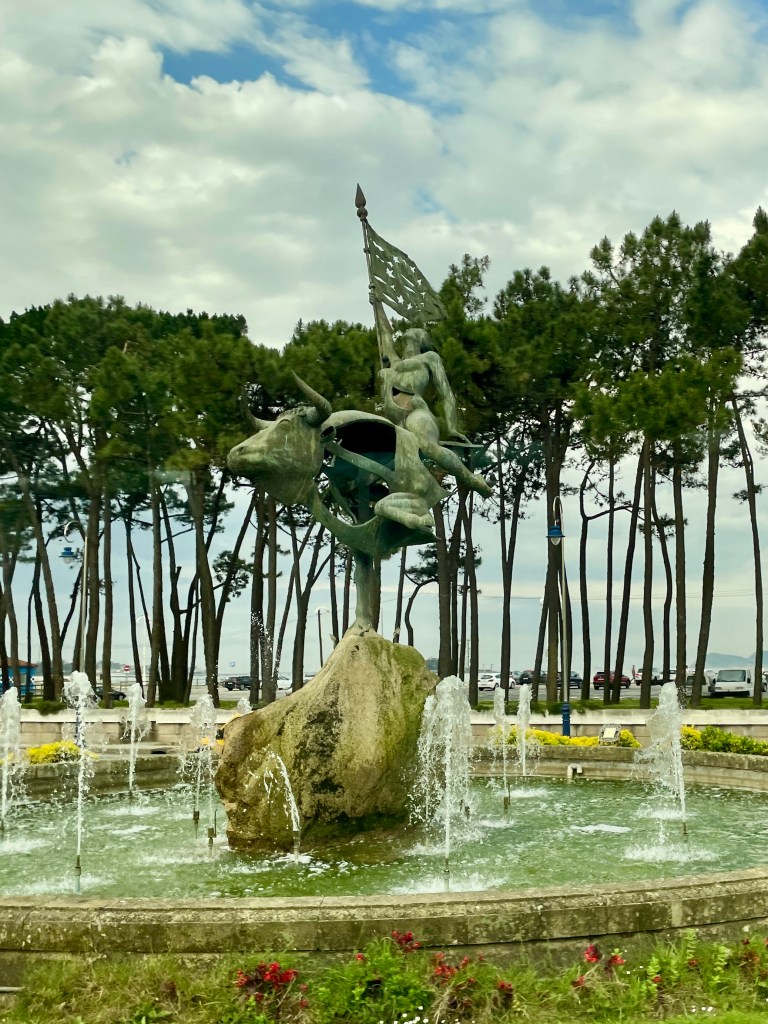
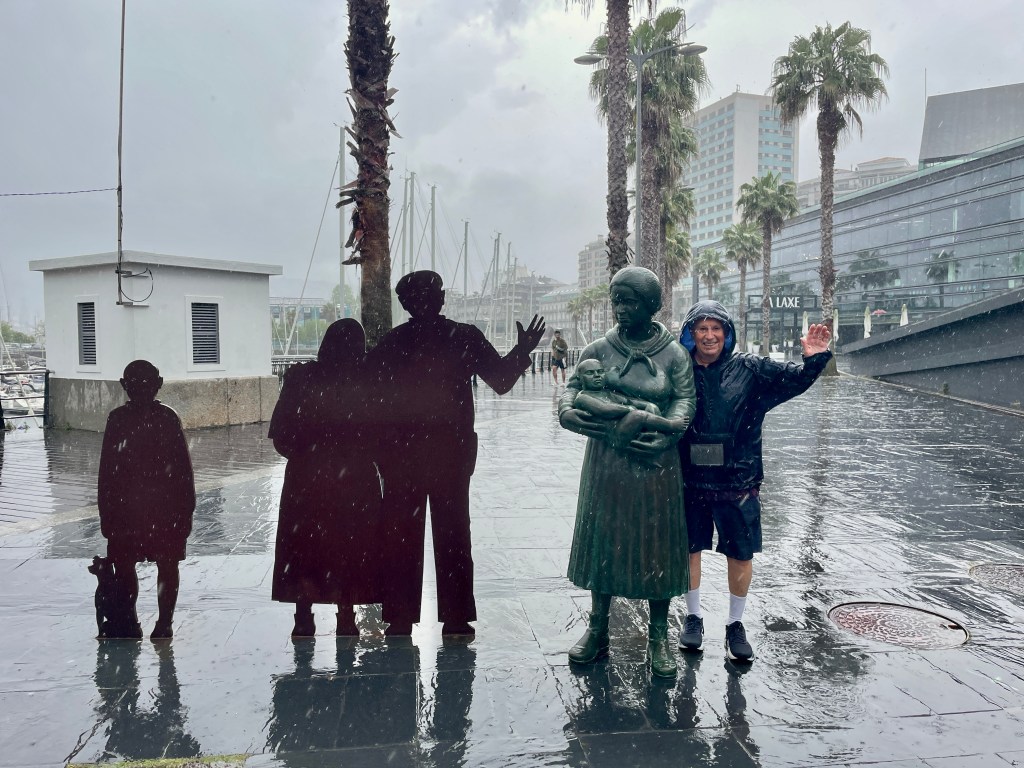
I was ready to list Vigo on the low side of ports visited until Karla and I took a walk in search of the old city at the end of our excursion. We found a great old town with winding streets, plazas and lots of shops. We stopped at a restaurant that was a bit out-of-the-way. We wanted to try the local wines and seafood. Our mussels were good and squid great…as were the wines. We tried the regional whites: Godello, Albarino, and Treixadura, which we liked in that order. We sat at an outside table and were offered to move inside when the clouds darkened. The heavy rain storm didn’t bother us because we’re northwesterners. (The restaurant owner tried to give us an umbrella, but we persuaded him that we weren’t sissies.)
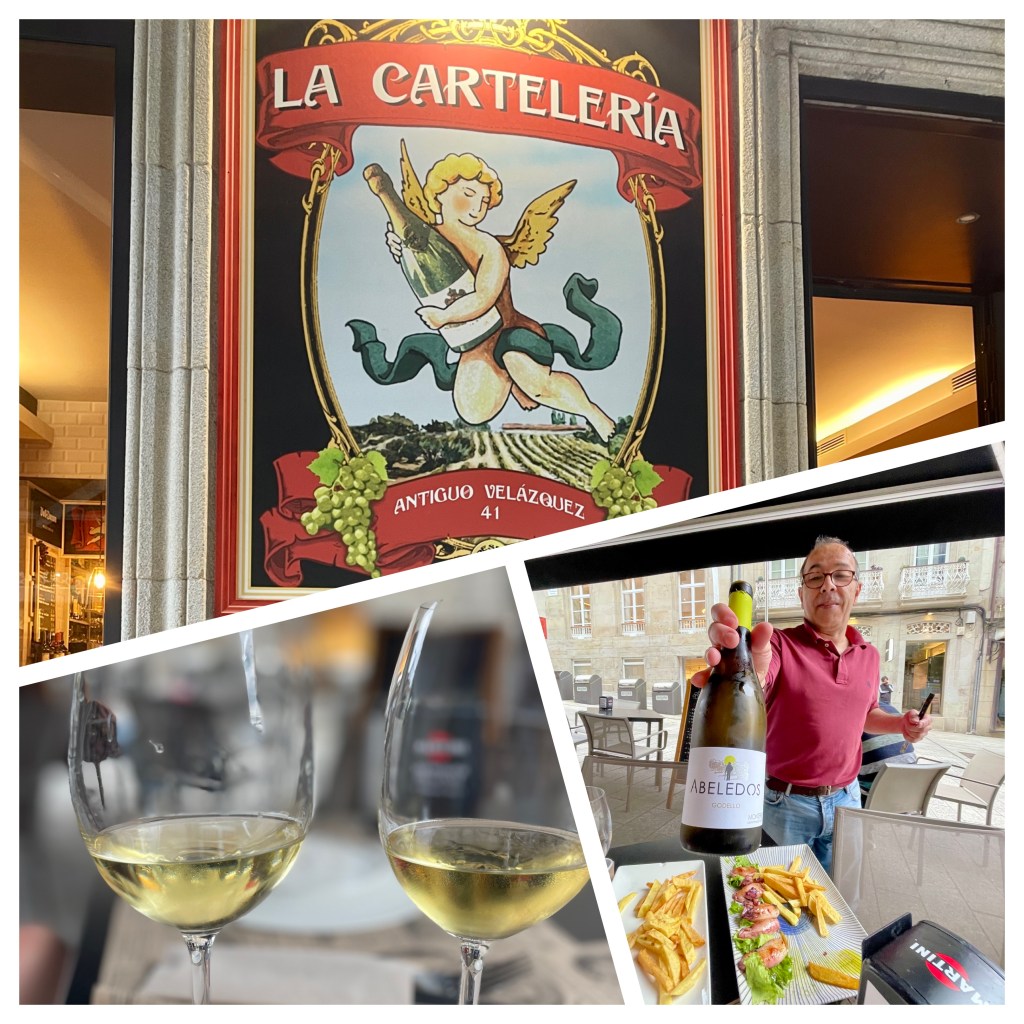
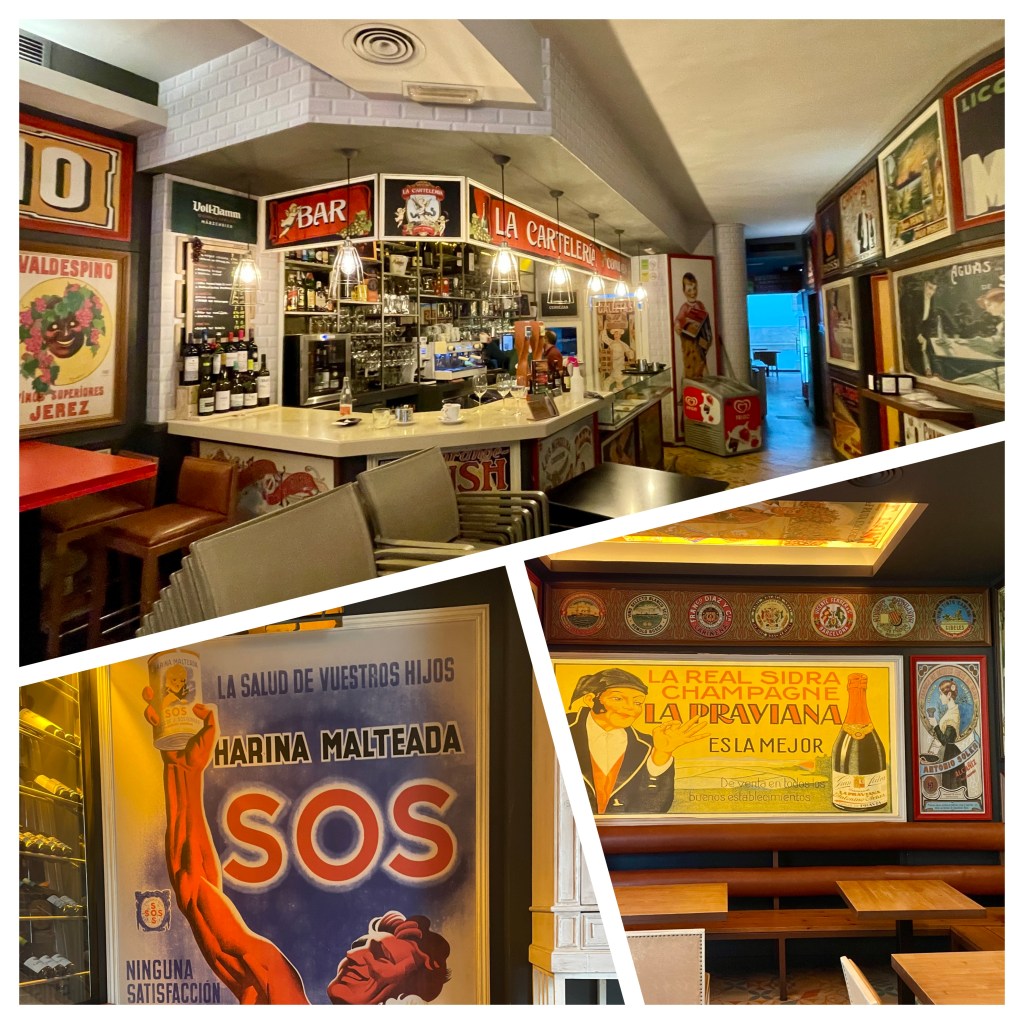
Our walk and the food/drink experience moved Vigo up our desirability ranking. Karla is talking about hiking the Portuguese stretch of the Camino. Santiago de Compostela, the terminal point for the Camino is less than a two hour drive from Vigo. A start in Oporto and a finish at Santiago would make an interesting coastal walk.
On an unrelated note, one of our favorite waiters, Tinashe, told us that he was leaving the next day and disclosed that he and a wine stewardess who we like are getting married in the relatively near future, upon return to Zimbabwe. We gave them a monetary wedding present. Karla saw Karen this afternoon and she said that we could watch the July ceremony on zoom. In the discussion, Karen commented that Tinashe will need to provide a negotiated number of cows…the price being negotiated and determined by a number of factors relating to Karen’s family efforts to raise a marriageable daughter. It gets complicated, but some of the cows need to be female if Karen wants to have kids. Tinashe can pay the dowry in cows or cash but at least one cow (a bull) has to be included in the deal. Karen mentioned the price of a cow is about $200-250. The successful negotiation and payment of the dowry concludes the tribal wedding and Karen mentioned they will also have a “White wedding,” where vows and rings are exchanged. This is a complicated world.

 Millers World Cruise 2025
Leave a comment