April 11
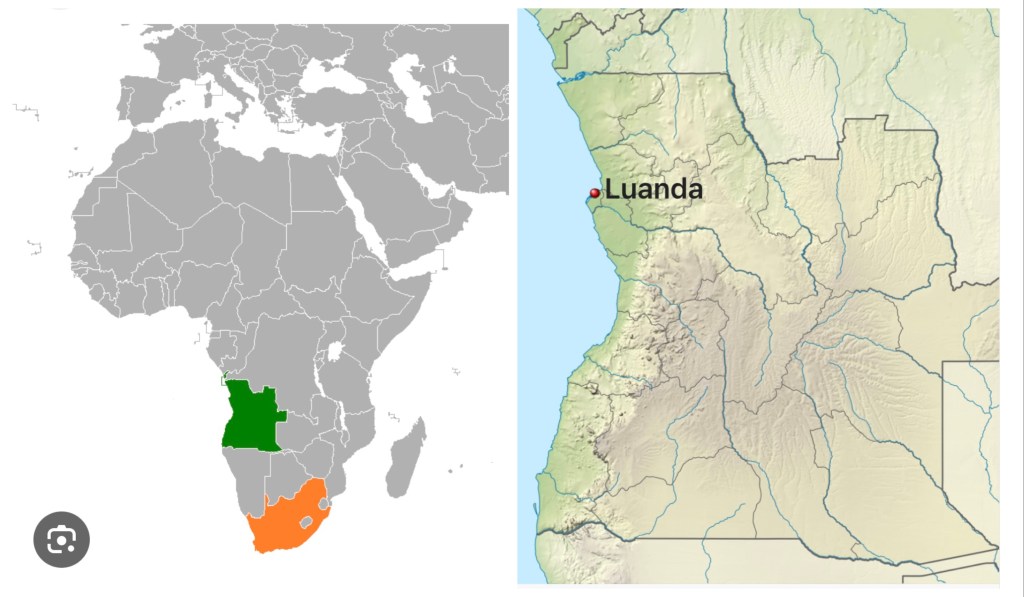
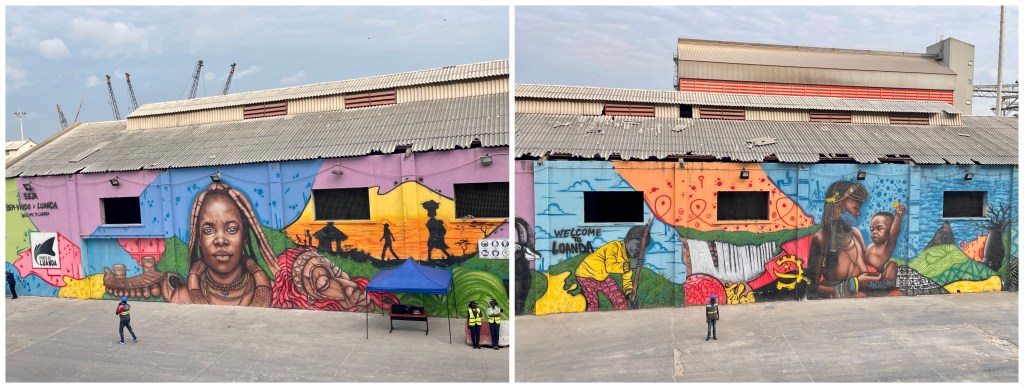
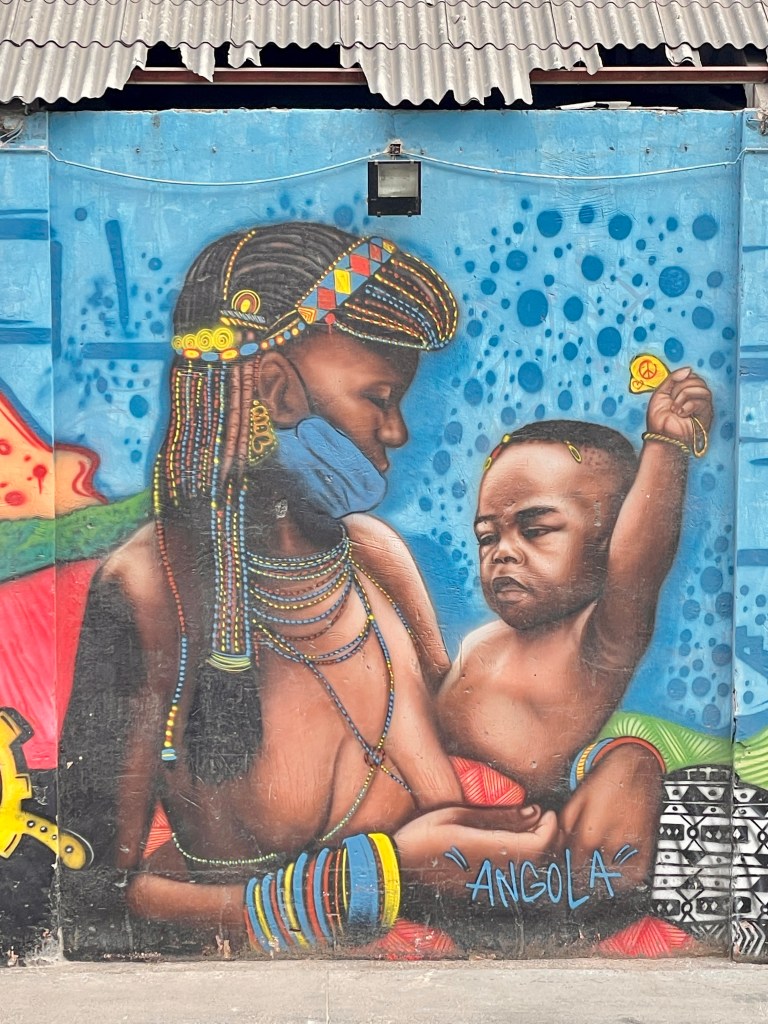
We’re enjoying 2 sea days with 65-70* temperatures and low key activities. Unfortunately, our ship’s weather news suggests temperatures of 108* in Luanda. We have an easy excursion planned, but our other activities may be limited….perhaps to Angolan beer.
Angola is similar to the countries that we’ve just visited, but different. It was defined early by the settlement of African tribes and then a “visit” by Portugal. It went through a fight for independence now has a predominantly African population base; only 2 percent Asian and 1 percent European among its 37 million people. While the economy is growing rapidly, most citizens have a low standard of living and there is considerable income inequality. It scores low on measurements of human rights, human development and economic opportunity.
It is different in that the Kingdom of Kongo had a strong presence when the Portuguese arrived. The Kingdom traded copper, ivory, salt, hides, and, most importantly, slaves. Kongo had prospered by enslaving tribes and the Portuguese were happy to help. They provided valuable foreign currency in exchange for slaves; Kongo had specialized in that particular export. Most European countries did not have such a willing slave trading partner.
The other big difference was in their anti-colonial struggle from 1961 to 1974. Their civil war had 3 battling parties that received attention and arms from outside parties. One group was supported by the Soviet Union and Cuba; Cuba even sent soldiers. Another faction was anti Communist and received support from the US and South Africa. Zaire backed another group and the Maoists became involved along the way. In 1975, Angola became a one party republic. From 1975 to 1991, they followed a Marxist-Leninist path and pursued central planning and the nationalization of private companies. In 1990 they had a conversion to social democracy. Their economic growth has been mostly in diamonds and oil; China is their top trading partner.
Our Department of State comments on their official corruption, limits on freedom, and excessive punishment. For good measure, there are warnings of armed robbery, assaults, carjackings and muggings. It sounds like Karla should do her hiking outside of dangerous urban settings; however, there are warnings of minefields left over from the civil war. They may be a deterrent.
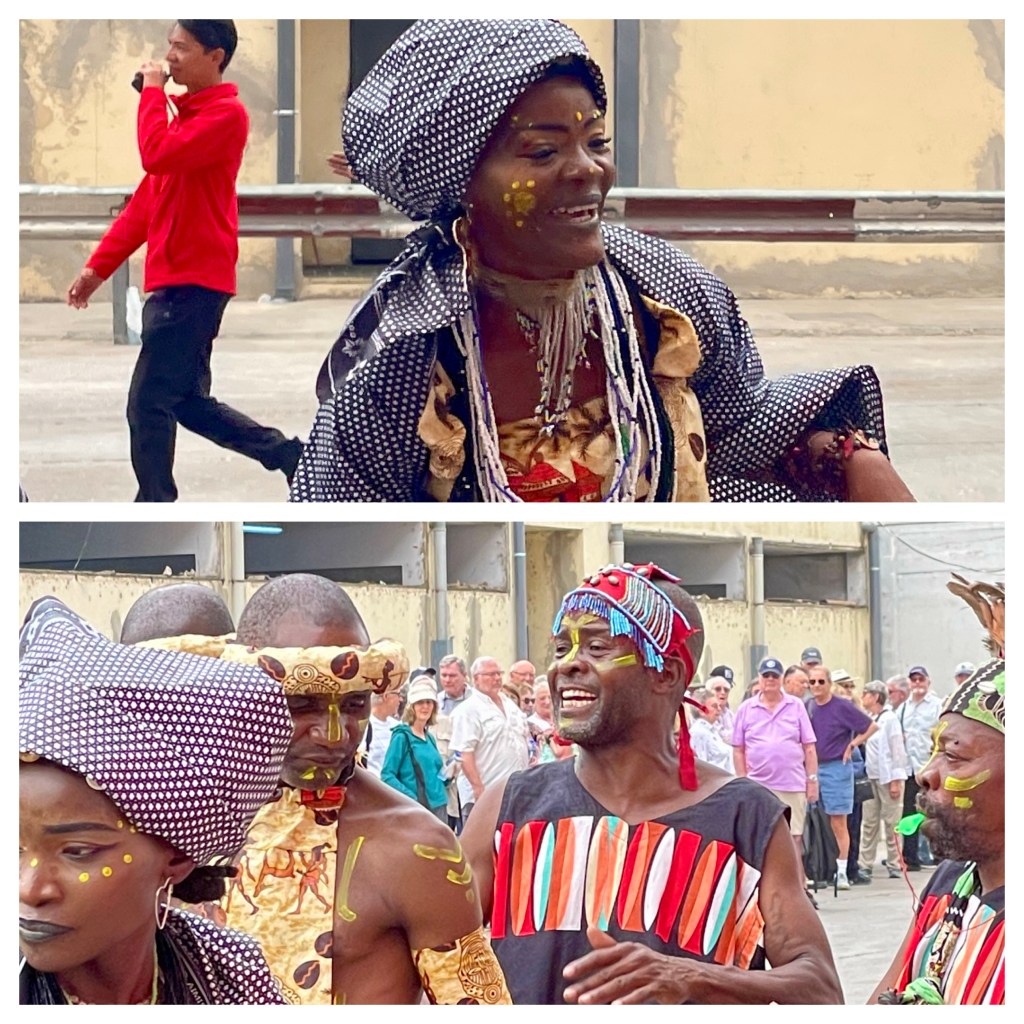
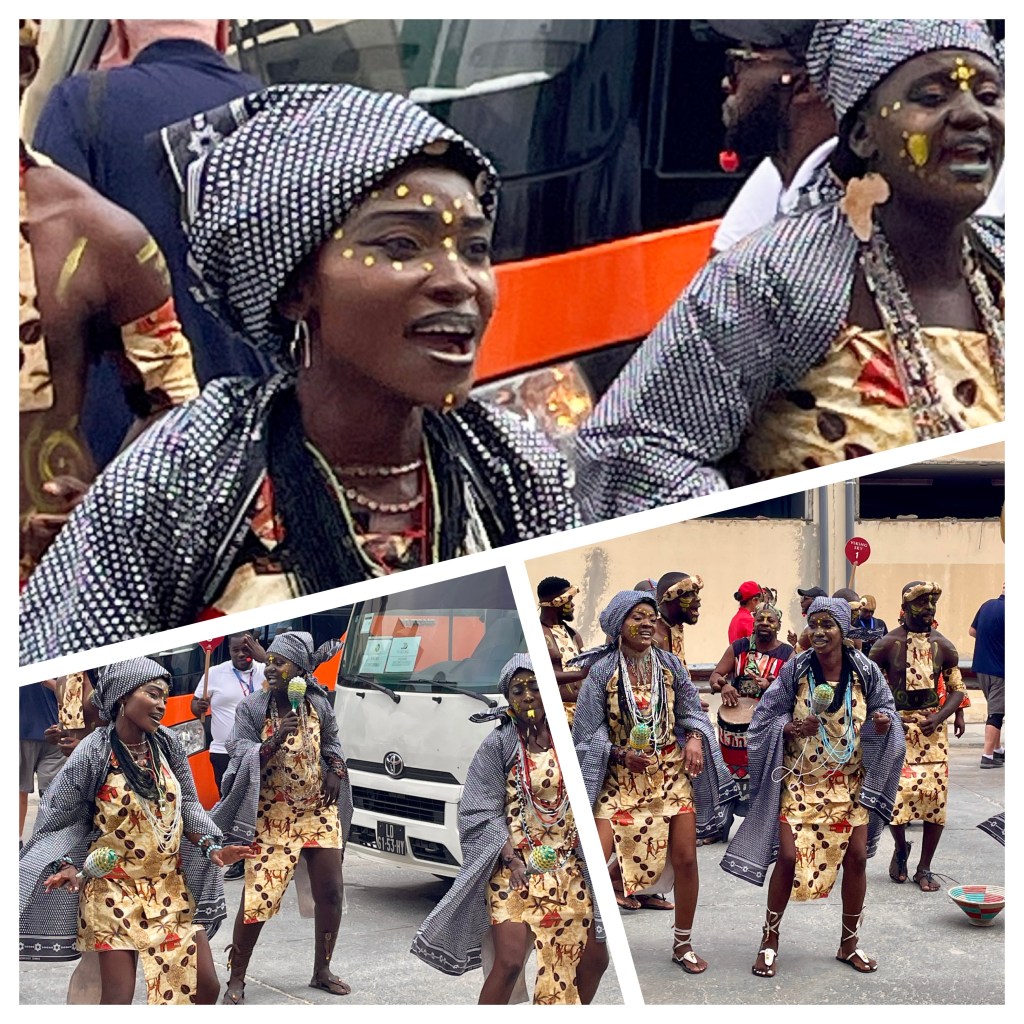
We were welcomed by energetic, well costumed and painted dancers. There are 36 native languages here and they must have spoken one or two of them. Since we don’t speak any, we just observed.
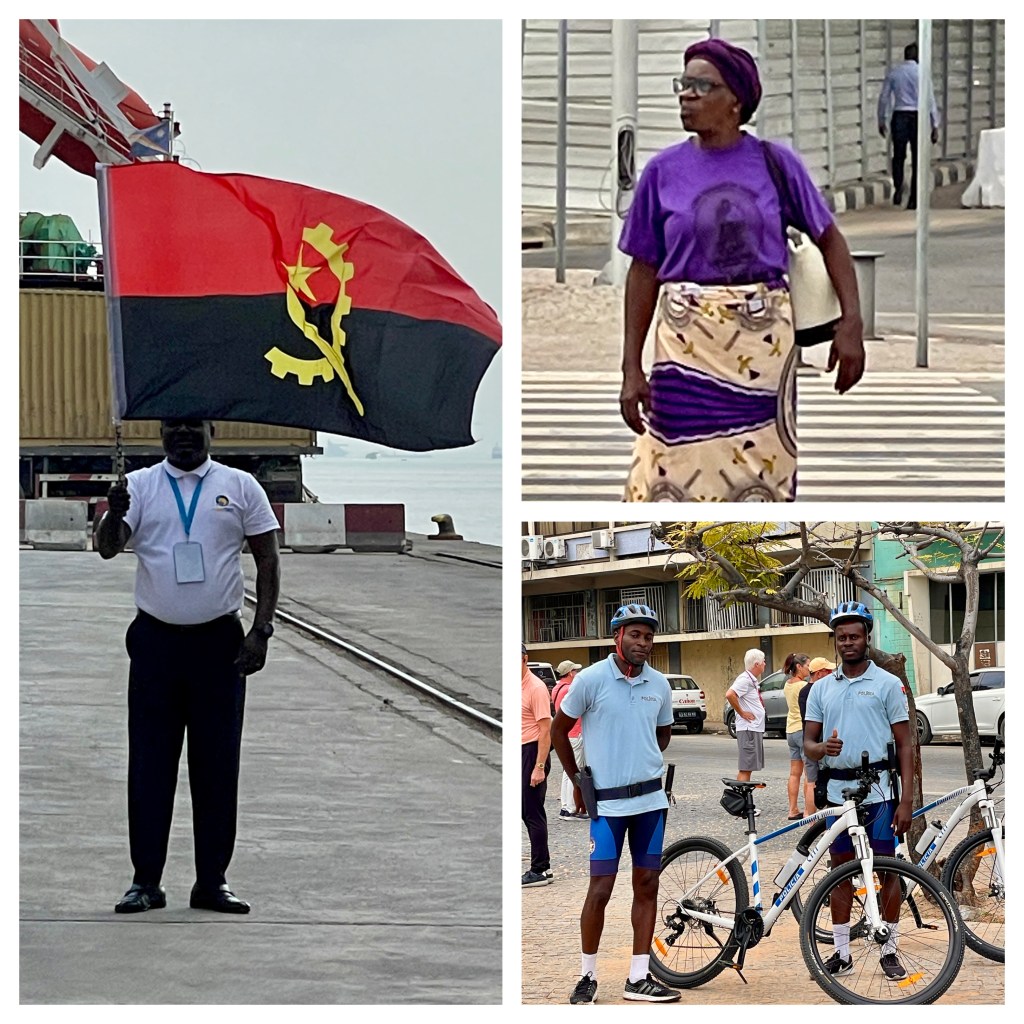
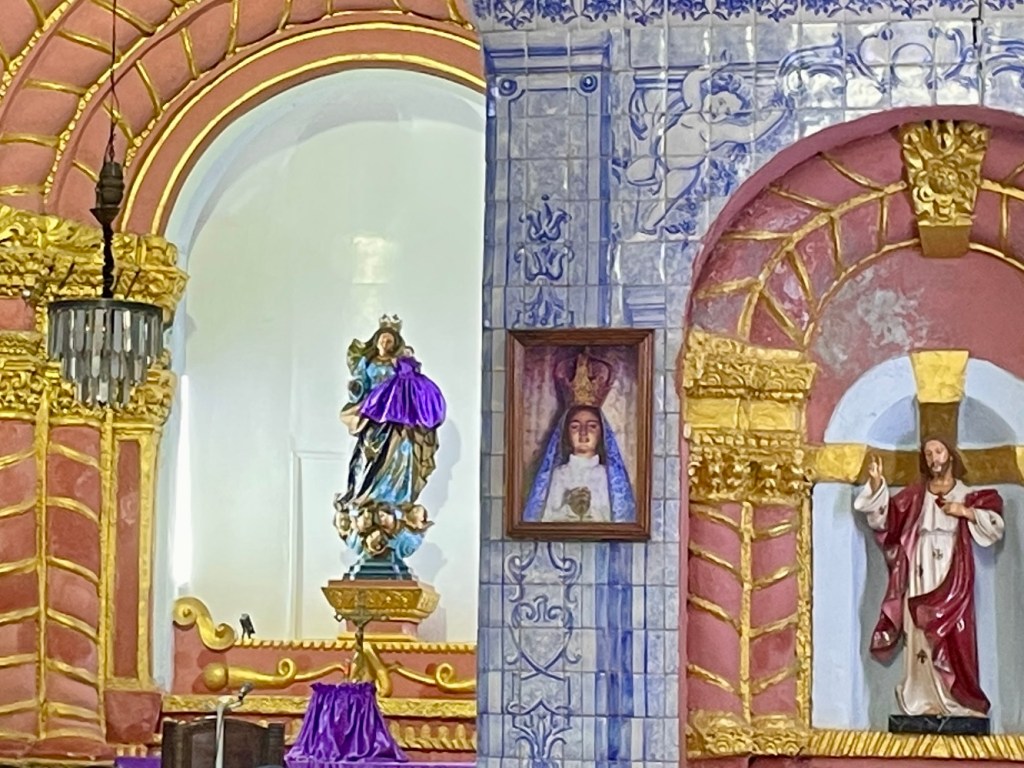
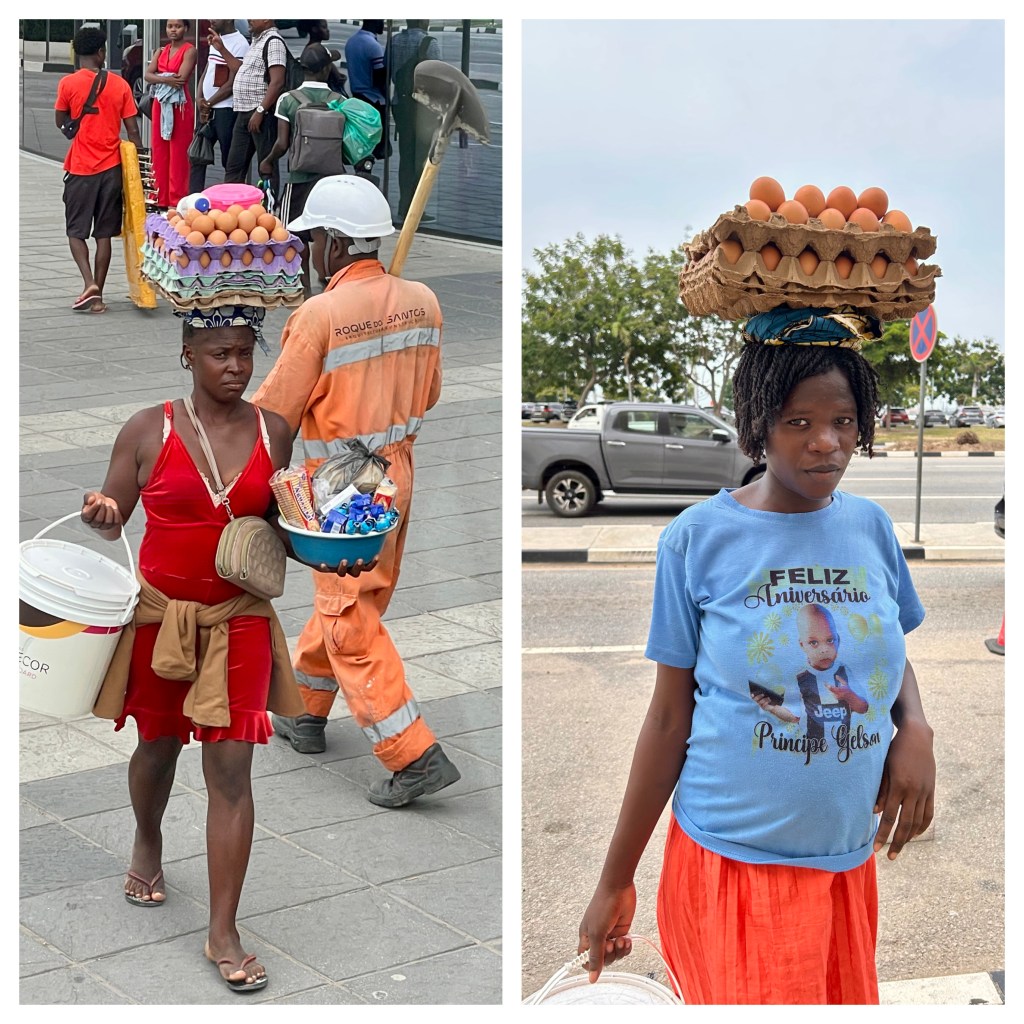
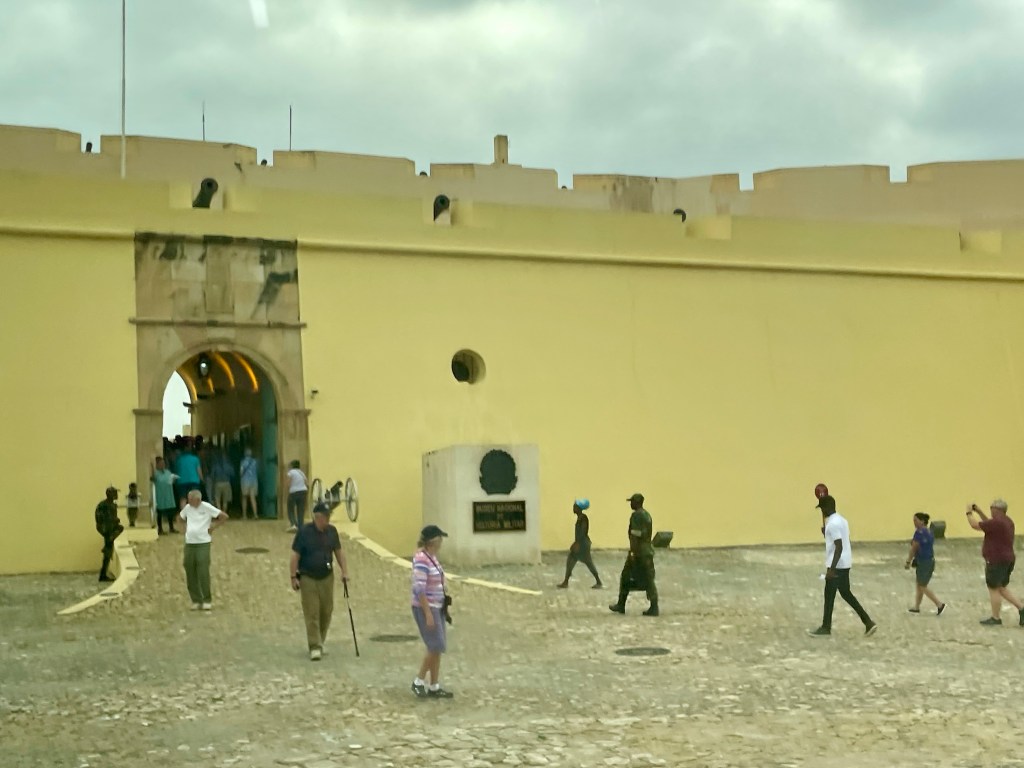
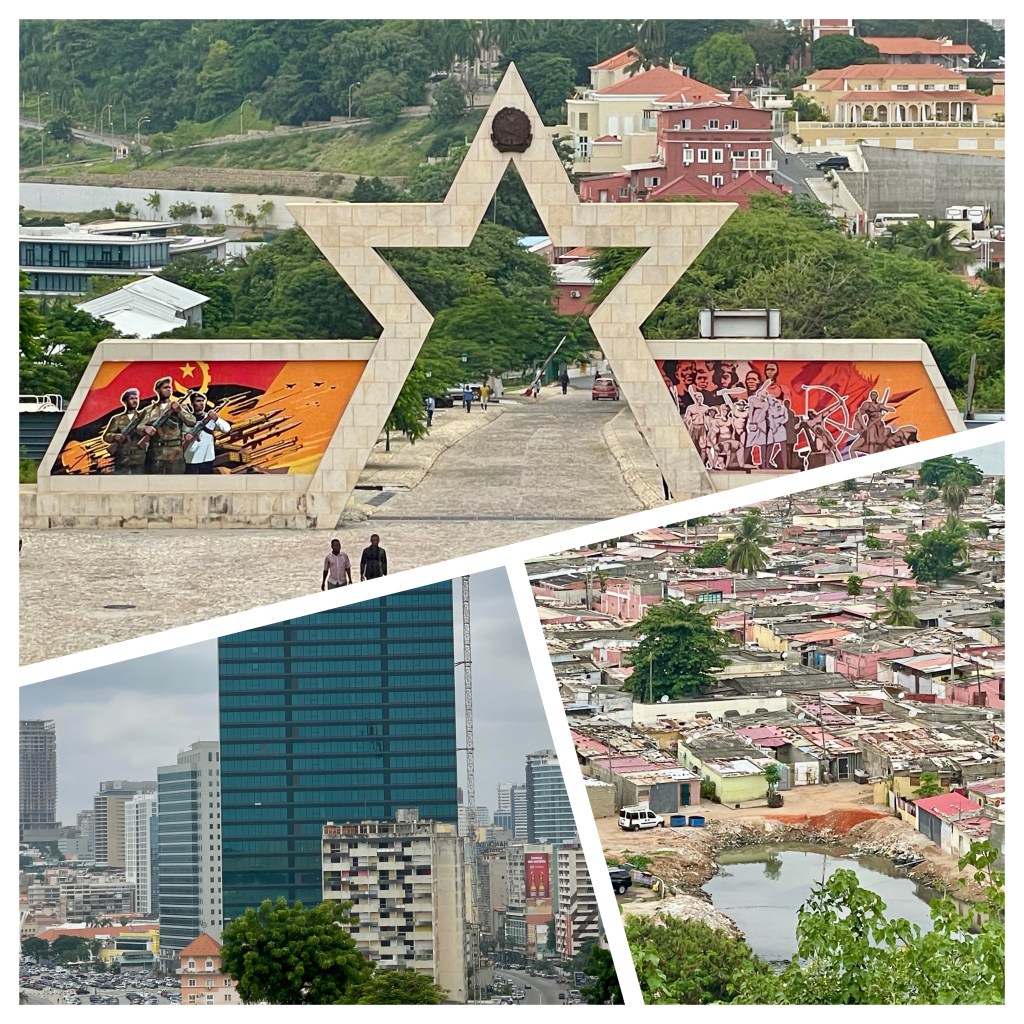
There were 7 buses full of Vikings as we departed on the standard excursion. We visited a church, a fort, and a seaside area. Everything took quite a while since the buses traveled together with a police escort. If a passenger was a bit late on one or two buses, it slowed us all down. The sites were nothing special, but it was fun to see Luanda. At the end of the tour, we took a shuttle to the mall. There were upscale shops that weren’t of much interest. But, on each floor, there were several tables of African clothes, fabric, etc. They still have some of their stock, but Karla does too. That assured that Luanda left us with a positive impression. We continued to be warned of the dangers, but the people we dealt with were very pleasant. I wouldn’t come back, but we were happy to have visited.
This is a good place to go back to our visit to Mombasa. Our standard excursion stopped by a central spot in the downtown to get pictures of well known large facsimiles of elephant tusks. It was uneventful and we moved on. A week later, the Crystal Symphony stopped at the same spot and was met by “50 youths armed with machetes.” The youth group made an effort to address income inequality by removing valuables from the busload of passengers. The local authorities apologized, but evidently the Crystal Symphony visit was cut short. We missed it by a week. We may be lucky to be moving on beyond Africa. The US cuts of food and medicine plus new tariffs don’t make us any friends. And, to a number of countries that see climate change as an existential threat, the US assertions that it doesn’t exist are not helpful.
 Millers World Cruise 2025
Leave a comment