April 7-8

We have an atlas that belonged to my Dad. I believe that it’s from 1918. With some study, I might have been able to name the countries of Africa…French West Africa, Belgian Congo, Portuguese Angola, German South Africa, French Equatorial Africa, Italian Somalia….all results of “The Scramble.” Now, we have 21-23 countries in West Africa, comprised of 2000 groups/tribes and languages, wedged into a European concept of countries. Money in its many forms has forced together a variety of combinations of culture, language and spirituality. This outcome was not just the result of voracious Europeans (and Americans.) Pre-European African powers developed the institution of slavery and found willing buyers among the Europeans. About 15 million Africans “participated” in the slave trade, starting about 1518 in Cuba until the last slave ship to the US in 1860.
Namibia is a small desert country of 3 Million. There are 13 separate ethnic groups mixed with 75,000 residents of European descent. The cities seem to be constructed around a resource base until the economy shifts. Mining is major with diamonds, gold, zinc, uranium and tin. Fishing is important and, now, tourism. Walvis Bay has around 100,000 people.
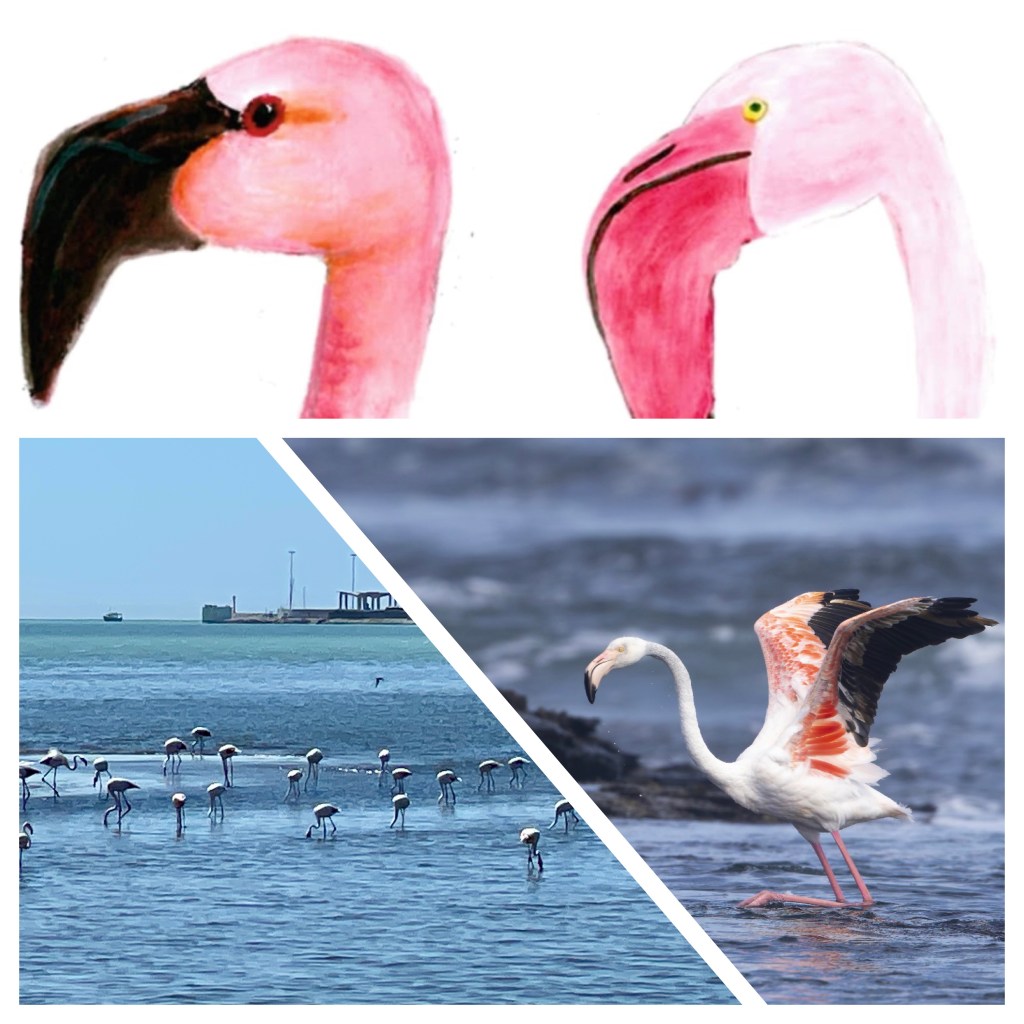
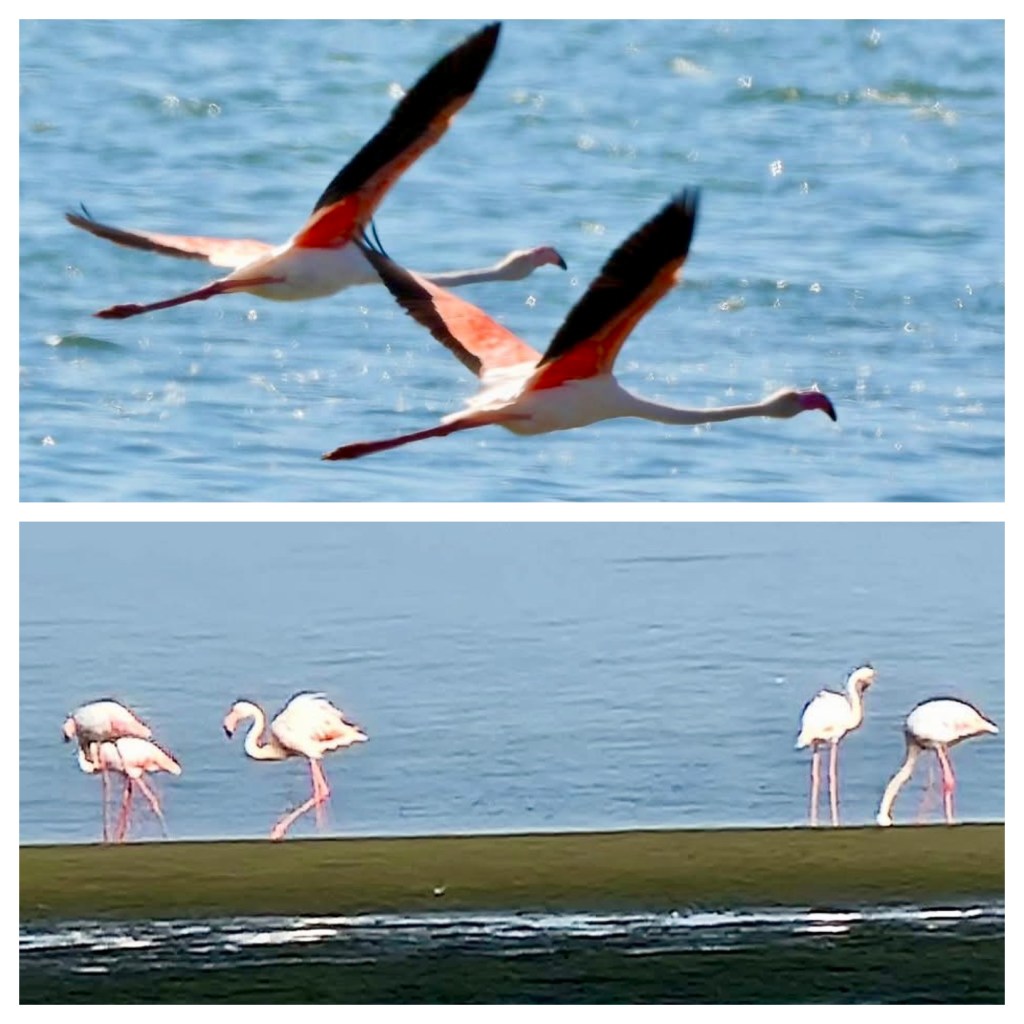
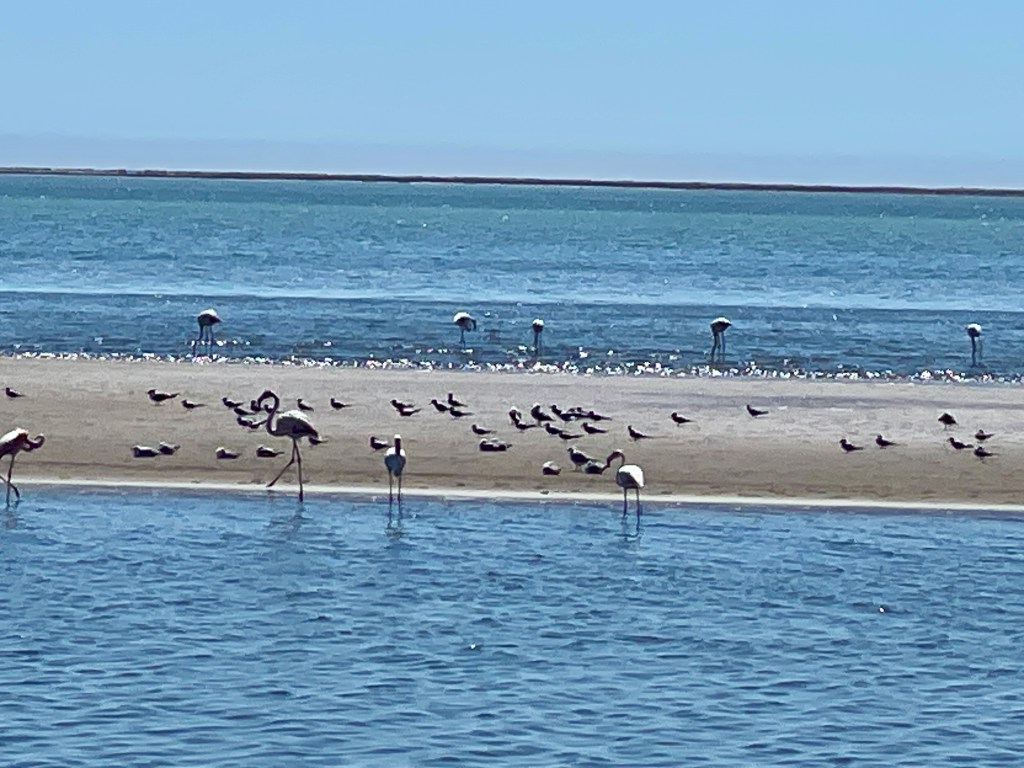
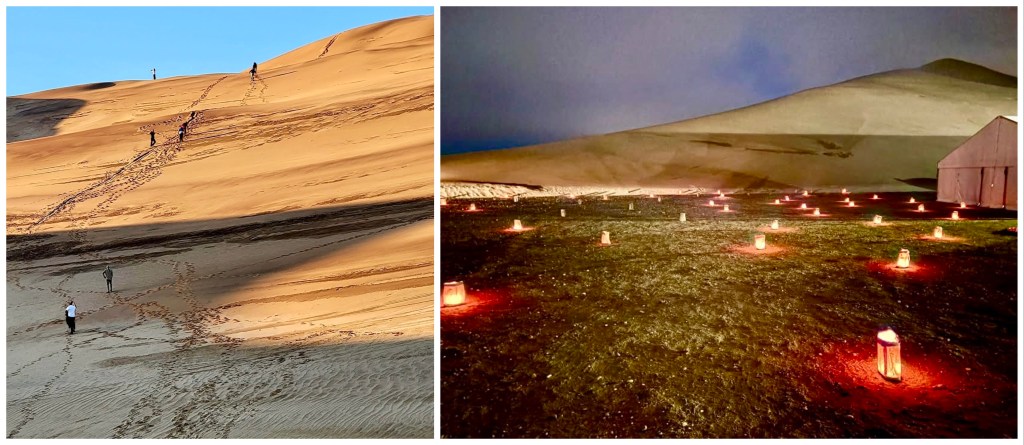
Our excursion on the first day was a visit to the bay followed by a visit to the dunes. In the evening, Viking sponsored a dinner in the desert for about 700 passengers. The 10 minute trip to the bay passed upscale houses which reminded us of neighborhoods in Arizona when we go to Spring Training. …flat, one storey, fenced, minimal vegetation. But, some were very expensive; million dollar homes with bay views. The bay featured at least 3 flamboyances of flamingos….hundreds in all.. They were fun to watch, but it was hard to relax for fear of being attacked.
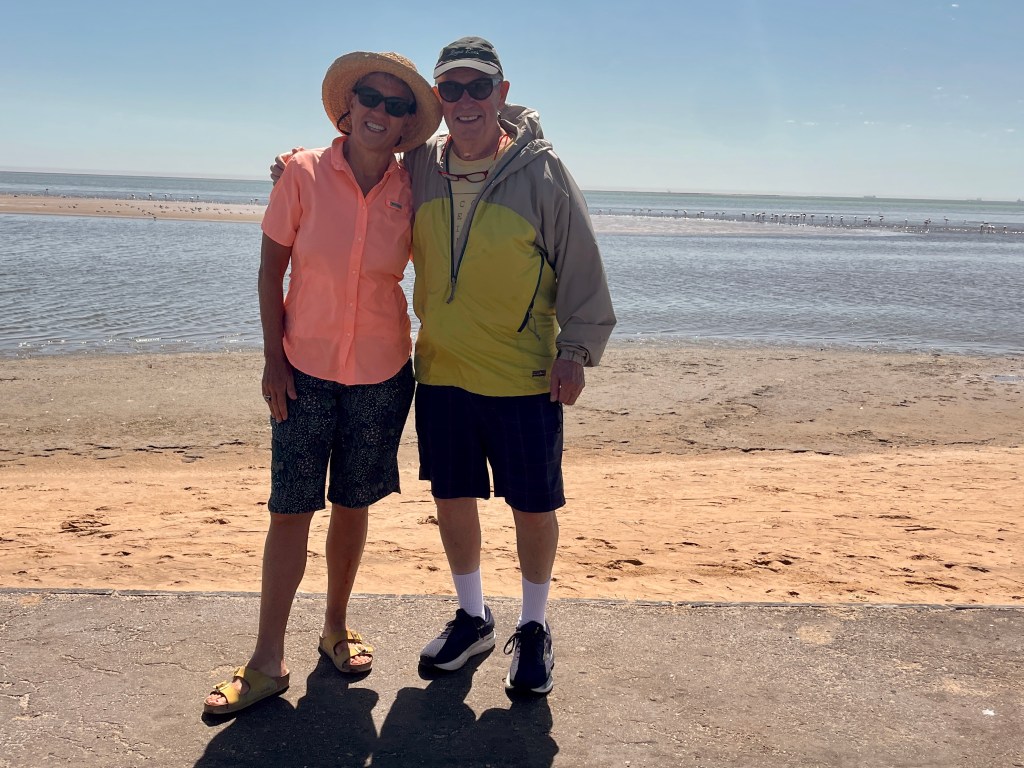
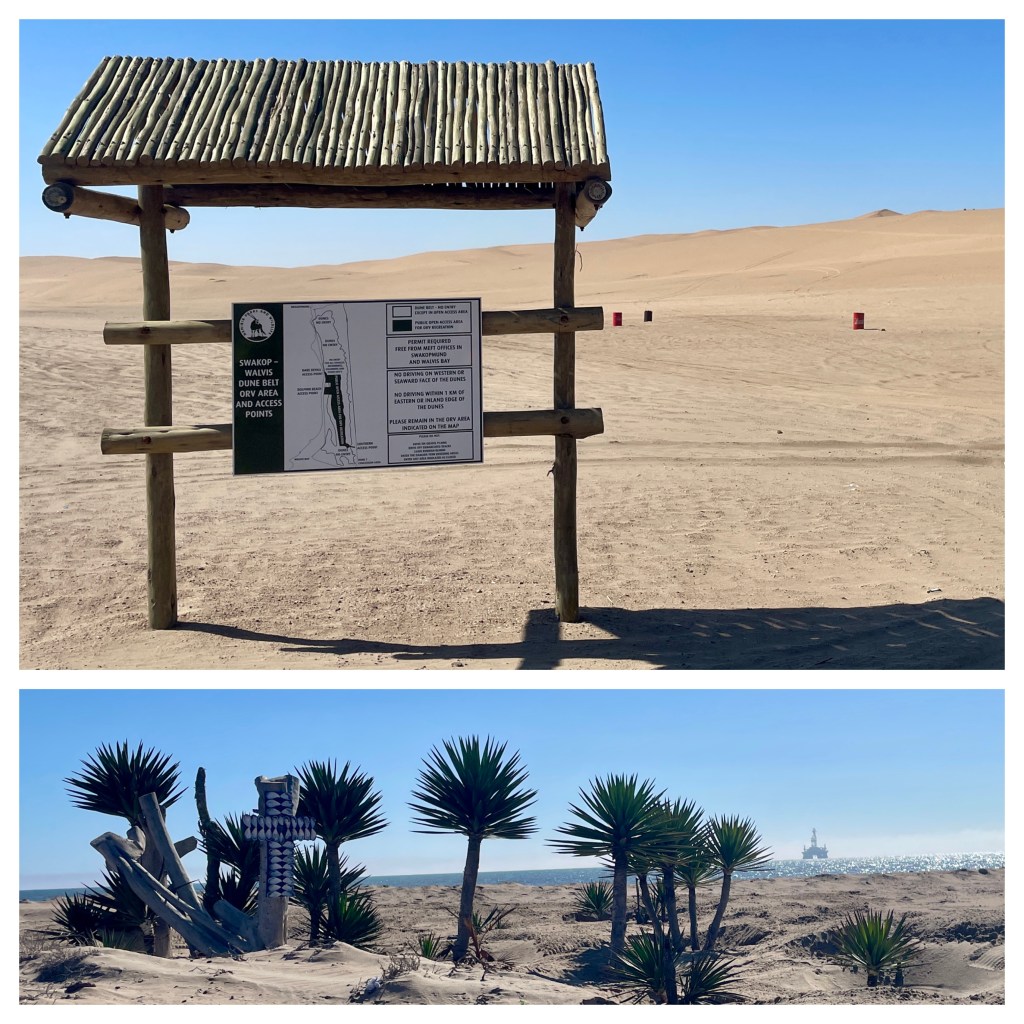
We all made it back onto the bus for a 30 minute ride to the dunes passing lots of “informal housing.” There we had over an hour to immerse ourselves in sand. Some climbed the dunes. We crossed the road and walked the beach. Karla found a few shells and we encountered a dead seal. It appeared to be too heavy to carry back to the chef so we left it to flies and other inhabitants. I chose sleep over the desert BBQ so I’ll let Karla describe that.
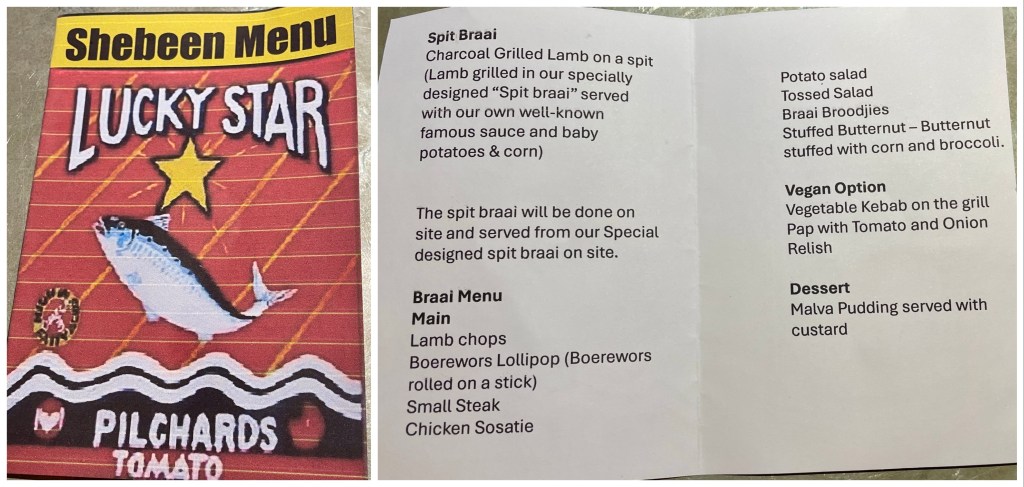
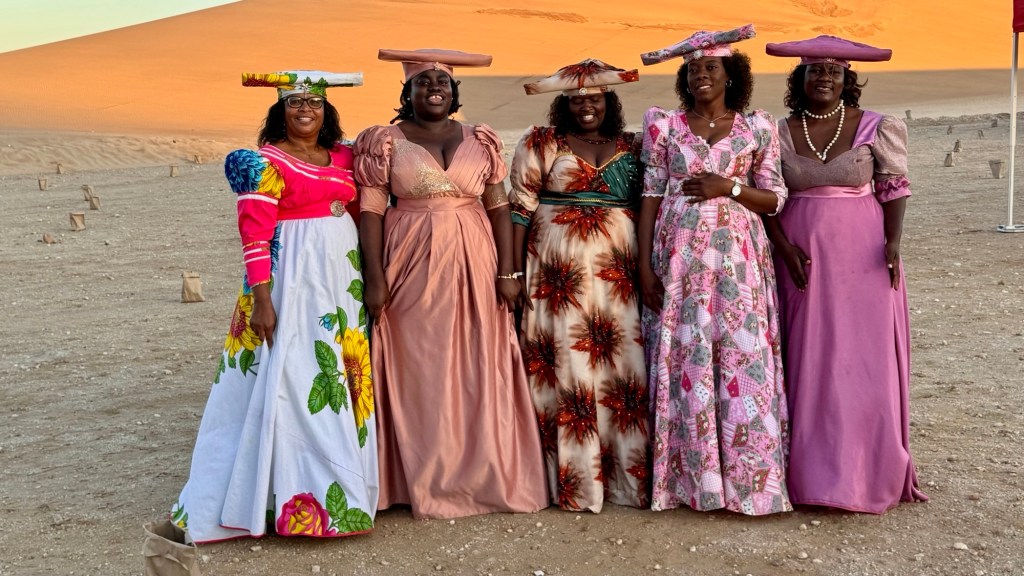
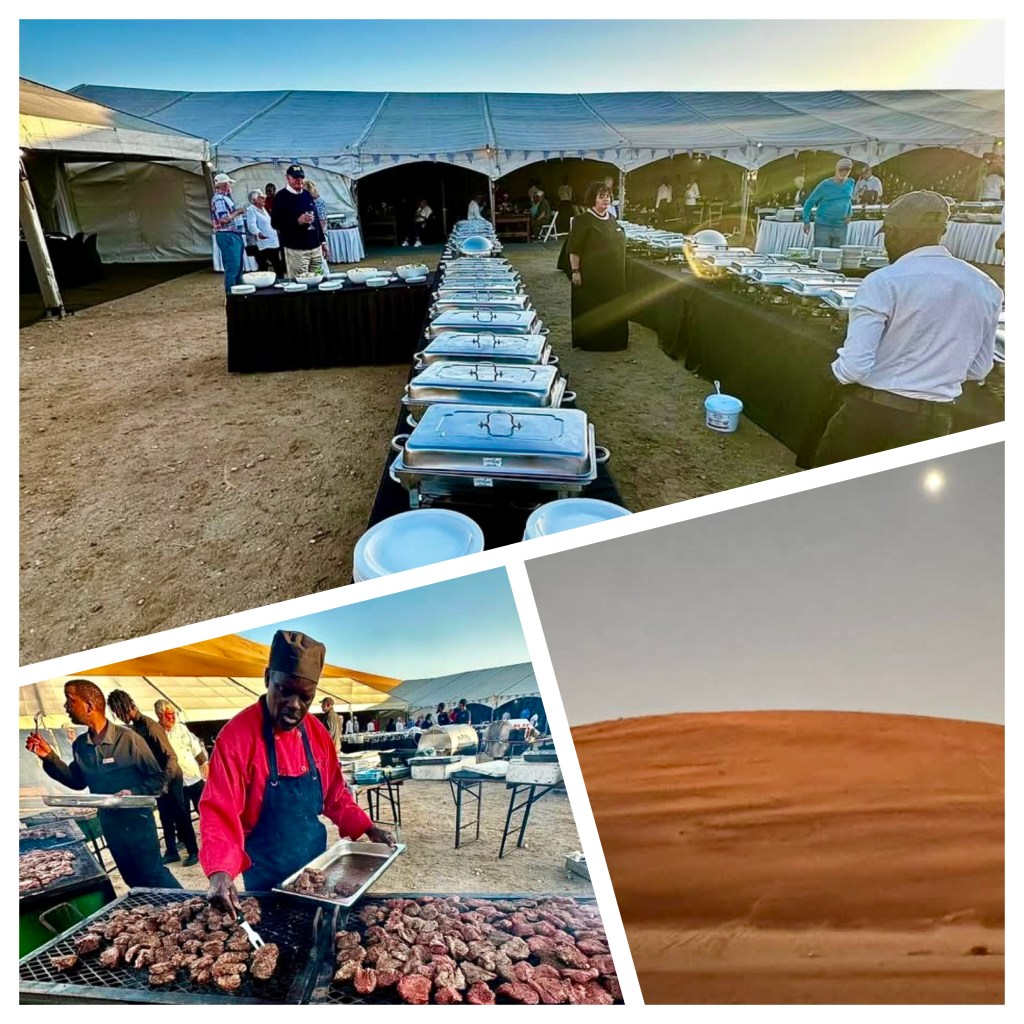
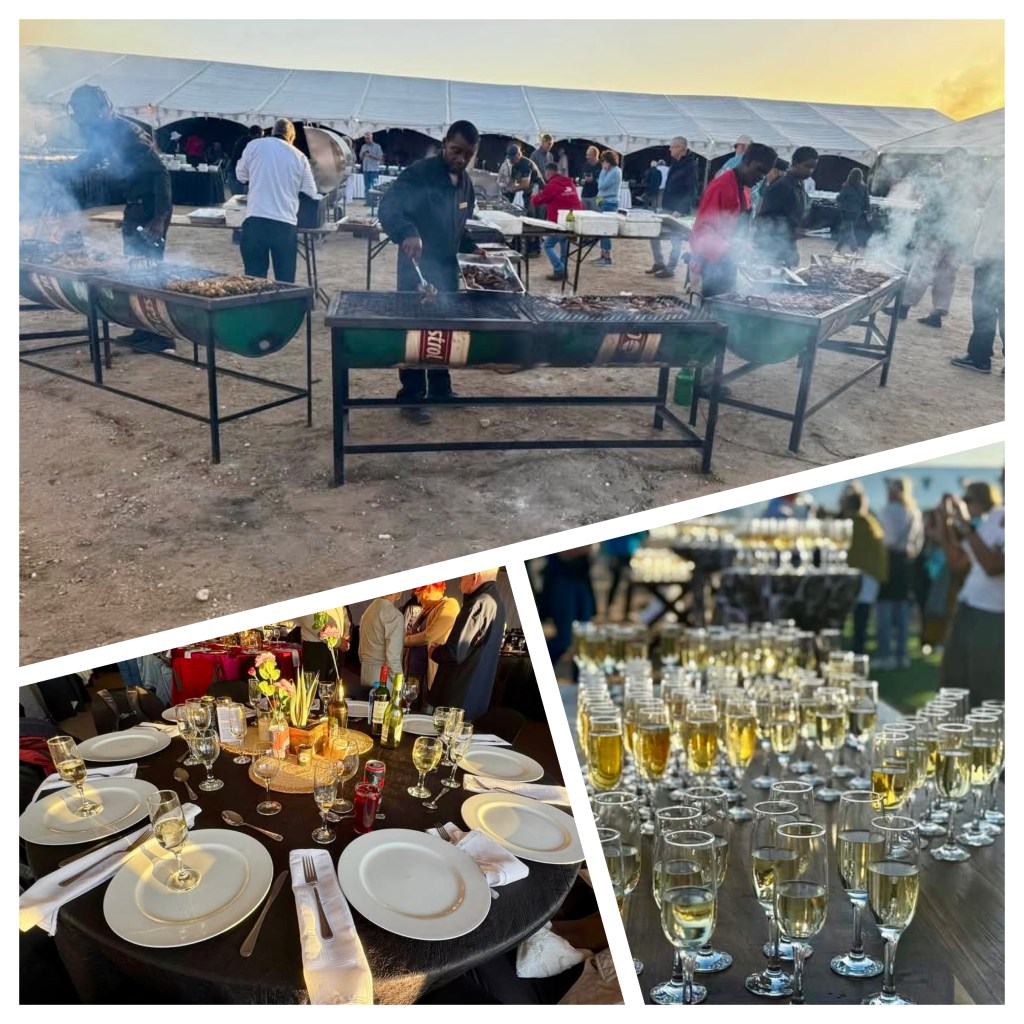
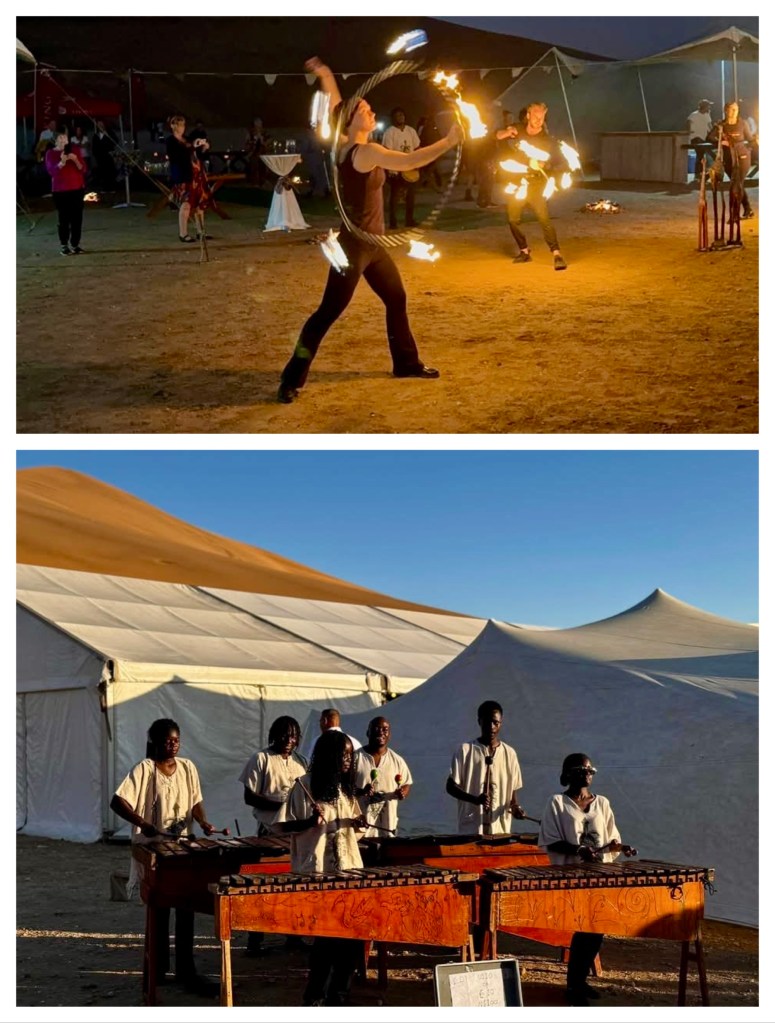
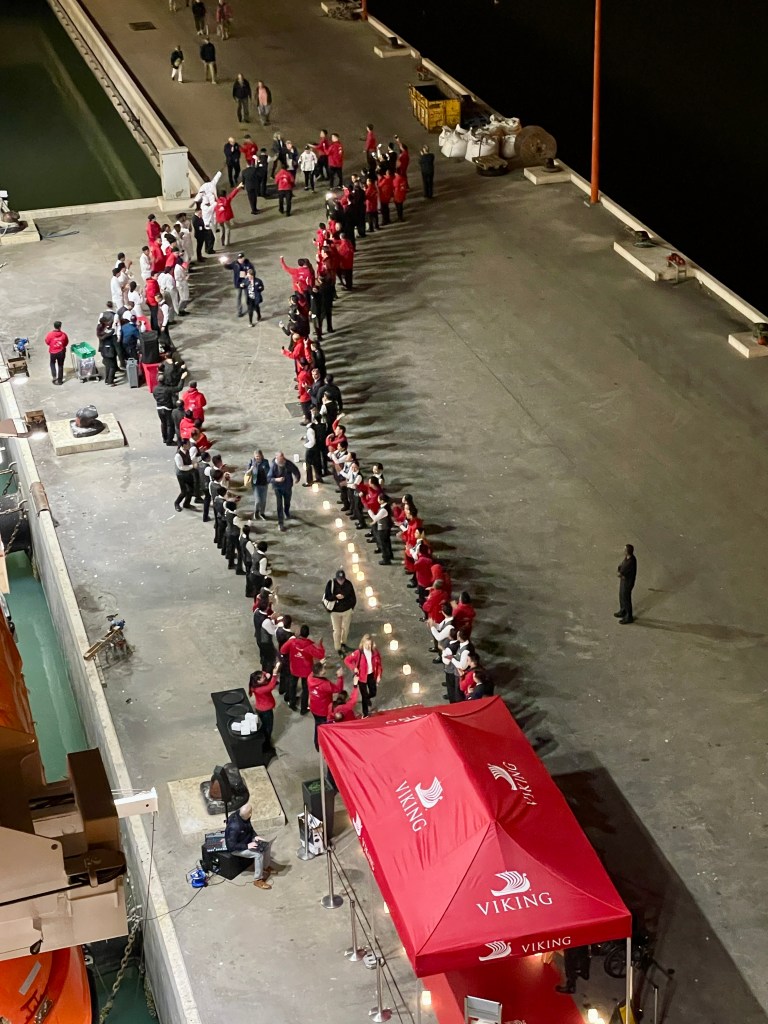
Karla here: Viking did a nice job with all the logistics of the desert dinner for 700. After a bumpy 40 minute bus drive off the beaten path along the dunes, we came to an opening with white tents, about 20 bbq grills being tended, round tables that sat about 14 each, food lines, entertainment by marimba bands and fire dancers. It was about 30 minutes before sunset and the dunes invited climbers- I was keeping our friends, Richard and Kathleen company so opted against the dunes. Food was good– all brai (SA for BBQ) of lamb, beef and chicken, roasted stuffed squash for the veggies, green and potato salads, complemented by SA beer and wines. The weather coolish– in the 50s after the sun went down. A very pleasant evening. When we arrived back at the ship, about 100 crew lined the entryway, dancing and whooping to the loud rock n roll music being blasted. It was a wonder to find Fred asleep when I got back to the room about 10.
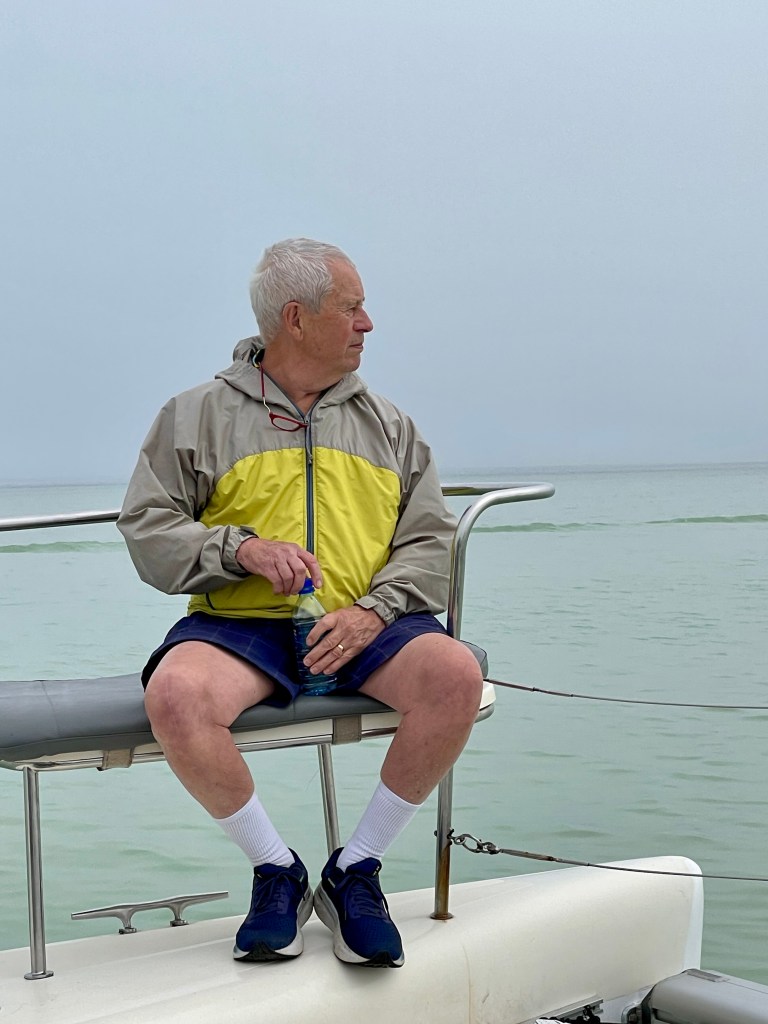
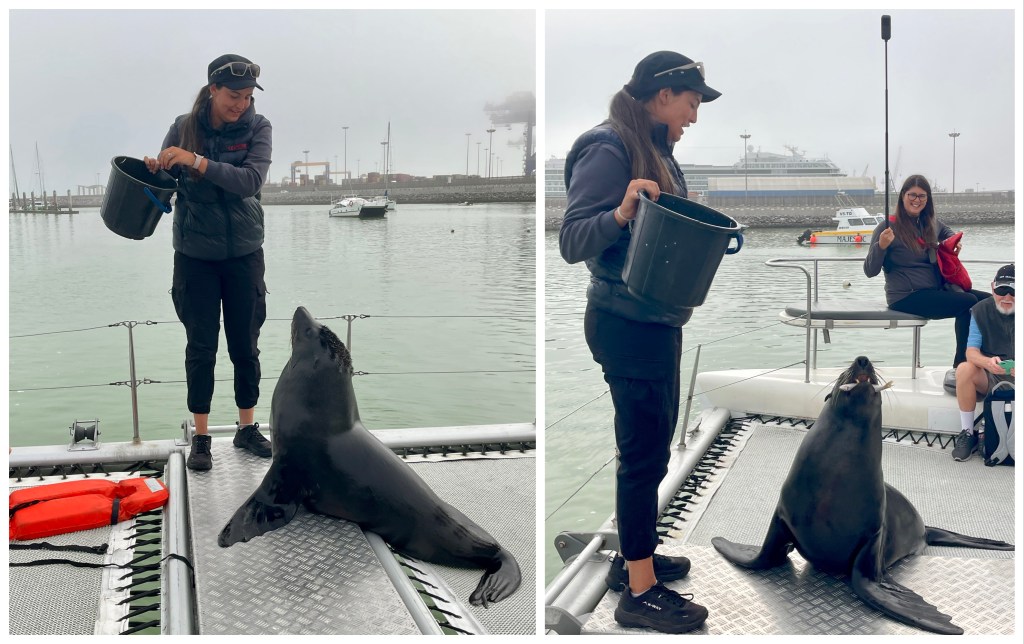
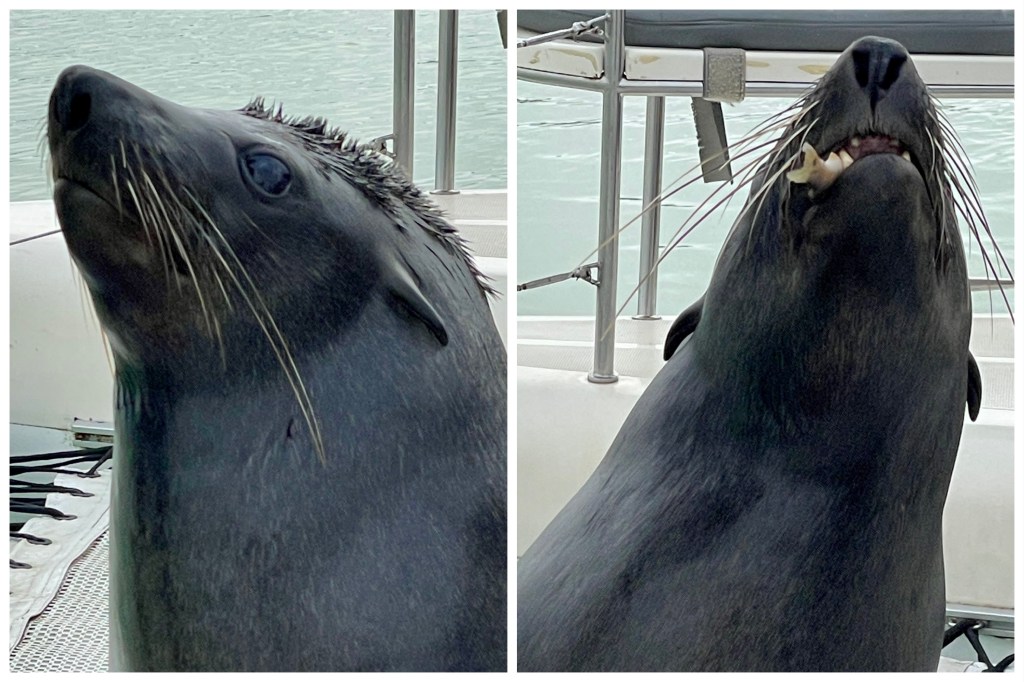
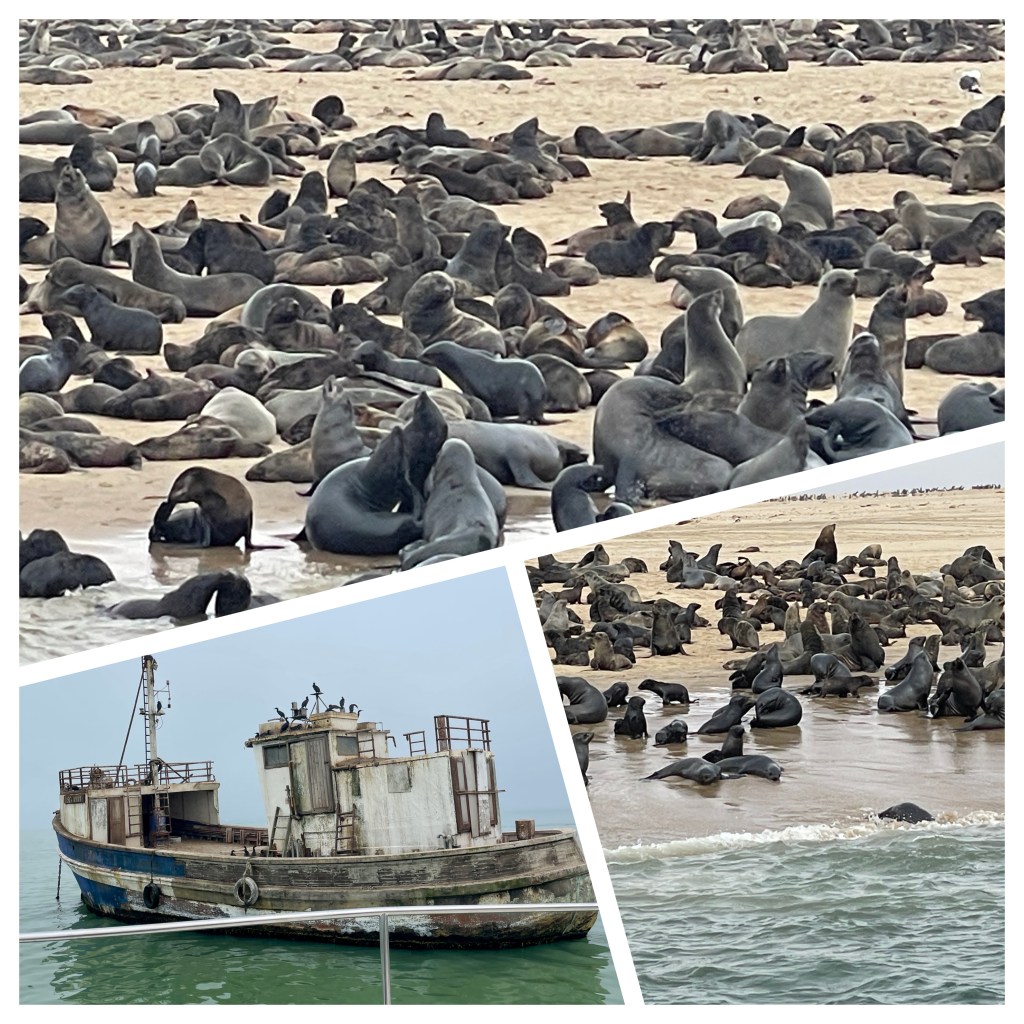
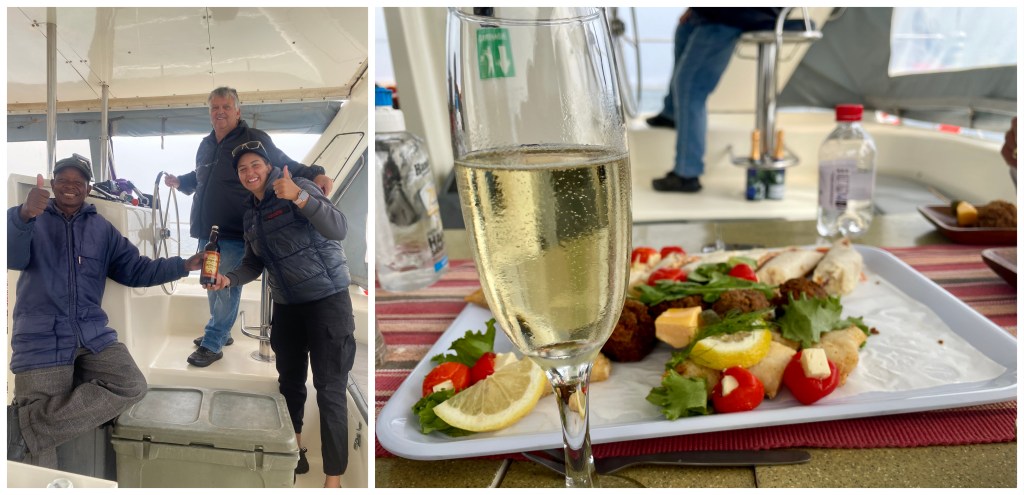
Do I write enough about Karla’s good ideas? We had a morning without plans and she suggested a boat ride in the bay. Originally, I hadn’t scheduled it since we spend a fair amount of time on the water. We got on the waitlist and easily made the cut. There was plenty of room on the catamaran with only about 20 of us. We were hoping for wildlife that wanted to see us. Our hopes were rewarded early by a visiting seal that jumped on board, expecting and receiving fish from our hostess. As we sailed we saw several seals and dolphins. Everyone was into spotting shapes in the water. As the boat progressed, spotting became easier. We neared a sandy beach and saw plumps…and then colonies. By the time we were through, we saw thousands of seals on shore or splashing in the water. Very fun.
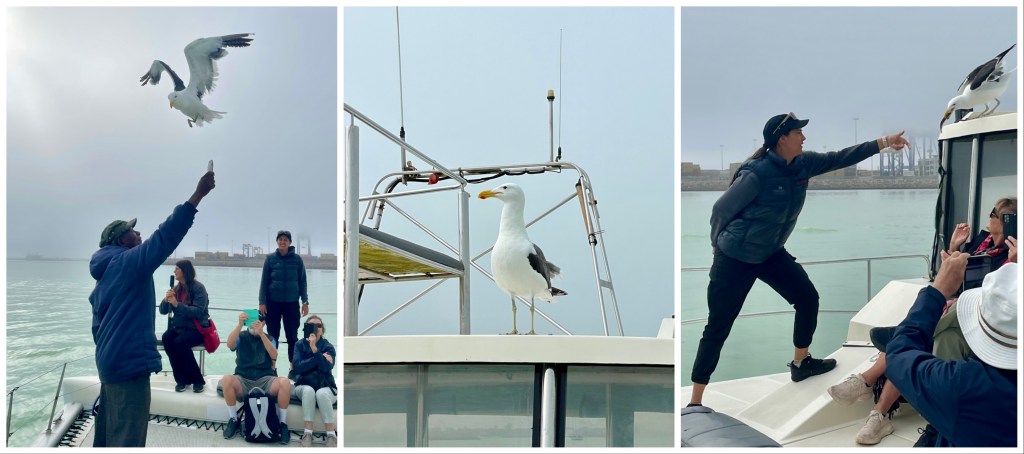
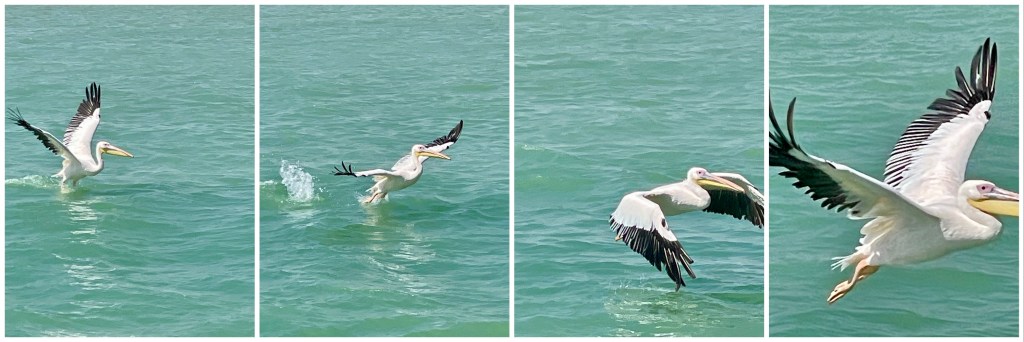
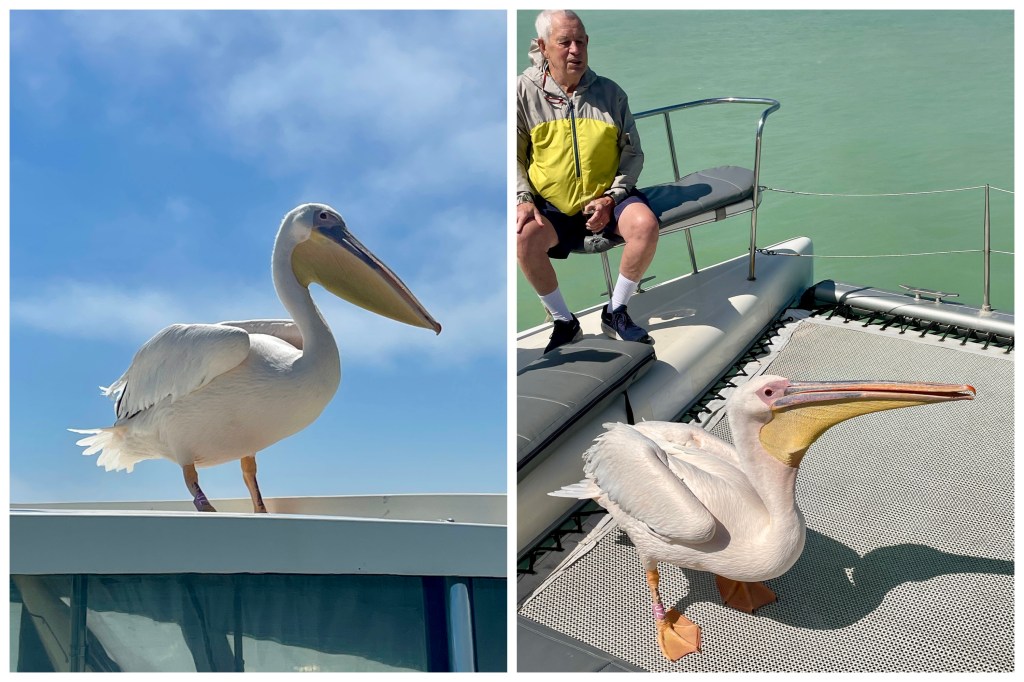
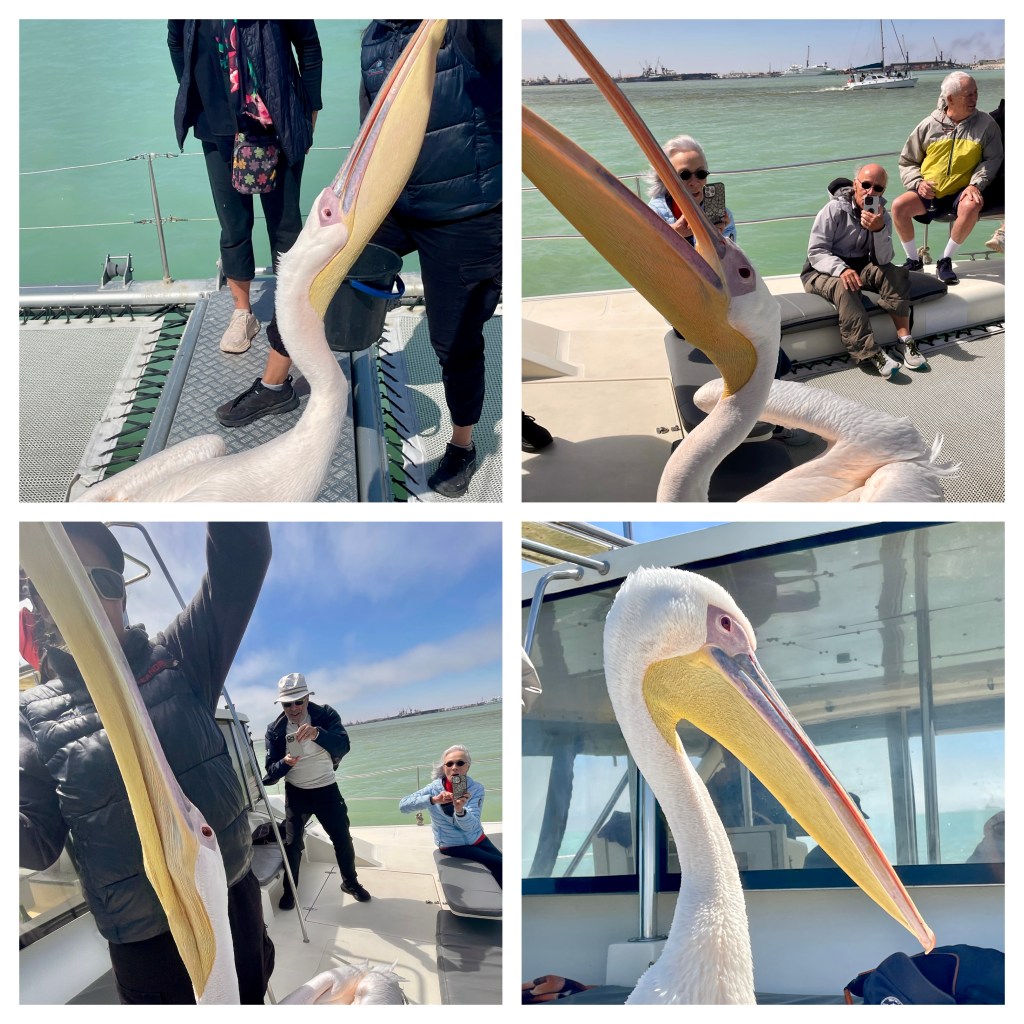
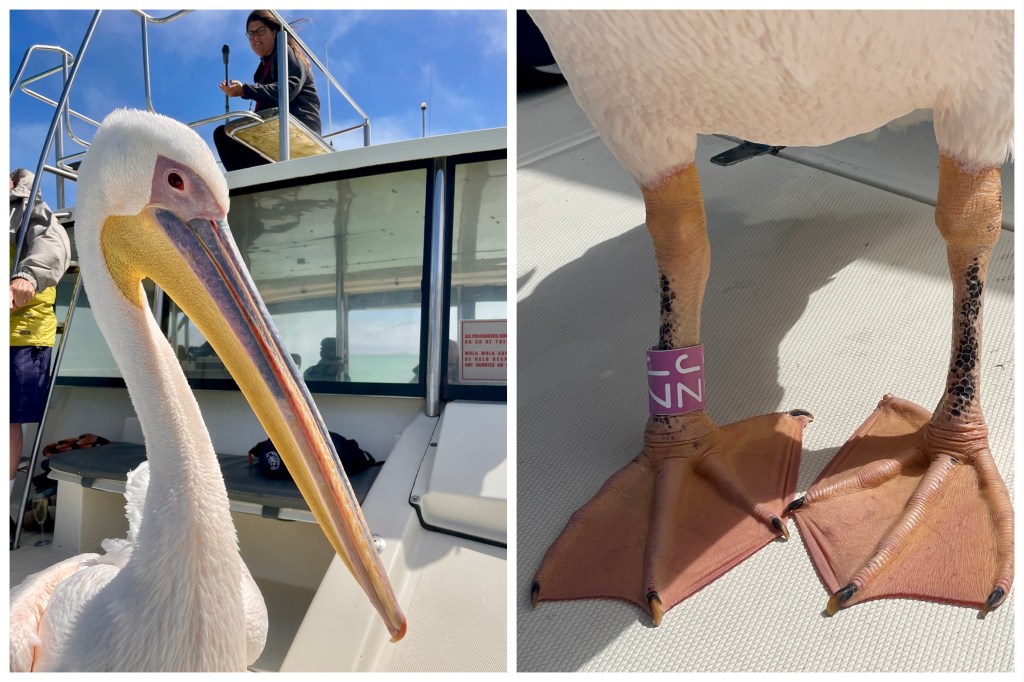
After feeding the seal near the dock, our hostess raised a few fish in the air to attract hungry seagulls. She was successful as they rescued fish from her hand. That was nice, but the winner was the pelican that came aboard. It ate some fish and then just hung out It made itself available for pictures and minor petting. Definitely a nice trip…I’m glad I thought of it.
 Millers World Cruise 2025
Leave a comment