April 3
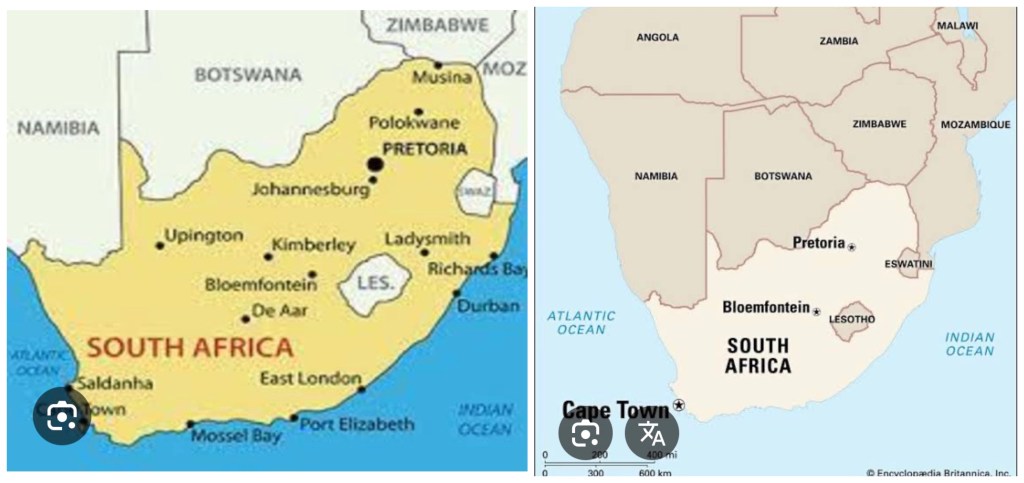
We’re looking forward to Cape Town, but my feelings are mixed. We have two trips through the countryside to visit wineries on our 2 days there. It was voted the number one city in the world to visit in 2014 and 2023. The setting is beautiful with Table Mountain and the coastal features. And, plenty to see outside of the city. So, why mixed feelings?
The positive side of the mix was a trip we took with Maddy and Jackson about 20 years ago. By chance, we had a room in a smallish hotel (the Cape Grace) that was chosen something like “the world’s best boutique hotel by Condé Nast. They delivered a VCR to our room and had all kinds of videos for kids, an unbeatable buffet breakfast, and free taxi service to a nearby gym. We traveled to nice wineries with play places for kids. A nice stop after 4 different safaris, including a very memorable stay at Kruger National Park.
The negative experience was a stop on a Semester At Sea cruise in 1970….apartheid years. Think about being raised through the optimism of the Kennedy years, the successful equal rights movements, and the Great Society legislation. You develop a sense of what fairness means. The injustices we witnessed were like a slap in the face. It was educational, but not endearing. The poverty, especially of Blacks, the high unemployment rates and shortage of opportunities in our Madagascar, Kenya and Mozambique visits all take me back to Capetown memories. (I should add that my feelings are amplified by stories from the US about masked, plainclothes people abducting a woman from the Boston area sidewalk and expulsions from the country with no due process and unfettered executive power.)
Cape Town, with its prime location, was destined to be a key player in the development of European trade. While people lived at the cape for 12-15,000 years, the first European visit was by Bartolomeu Dias in the late 1400’s. The Dutch East India company established a ship supply station that was used by the French, Danish, Dutch, English and Portuguese. They traded goods like tobacco, copper and iron for meat and other edibles. In the exchanges, a number of products were introduced including grapes, cereals,potatoes, apples and citrus. At the same time, labor shortages led to the import of slaves from Indonesia and Madagascar. It was the nation’s commercial hub until diamonds were discovered in the north in 1867, followed by the discovery of gold in 1886.
Britain’s victory in the Second Boer War firmly established power and in 1910, the Union of South Africa was established. Slavery had been abolished in 1833 and Cape Town moved ahead as an integrated society,…officially. However, with the election of an apartheid government, the Group Areas Act was passed. It classified and segregated urban areas. A famous District 6 was declared “White only” and 60,000 Blacks were removed…their houses destroyed. Organizations established workforces with “Colored labor preferred “(read, “not Black.”) The internal struggles against apartheid ultimately led to a new government…thanks to Nelson Mandela and others, In 1994 there were Democratic elections.
While Cape Town is considered to be one of the better run cities in South Africa,, there is still 20-25 percent unemployment and 60 percent of the population live in townships and settlements with limited health care, education and sanitation. There is clearly an apartheid legacy and there continues to be lots of income inequality, unemployment and crime. Fortunately, they are 82 percent Christian so it will all work out. Wait, they have always been predominantly Christian.
A vaguely related point. You may have read about trump’s conflict with South Africa. It’s a bit complicated, but goes something like this. In 1913, the Native Lands Act focused on the distribution of land. Less than one tenth of the land was allocated to Blacks and they were not entitled to formal ownership. Whites were about 7 percent of the population, but seemed to get a better bargain. The 1990 new constitution allowed for the return of land to the blacks without compensation. That’s obviously sticky and cannot be done easily. Trump has entered the fray….always sensitive to unfair treatment…and assailed the hateful rhetoric towards ‘racially disfavored landowners.” He has threatened serious sanctions and more recently called for a refugee center for 8000 Afrikaners prior to their immigration to the US. (I hadn’t understood that the US was looking for immigrants) A South African writer condemns his efforts, writing that South Africa is working toward solidarity, equality, and sustainability. Trump is responding with unilateralism, inequality and nationalism. He goes on to quote George Bernard Shaw, saying something close to…never wrestle with a pig…you’ll get dirty and the pig likes it.
 Millers World Cruise 2025
Leave a comment