March 30 (10,578 miles from The Dalles)
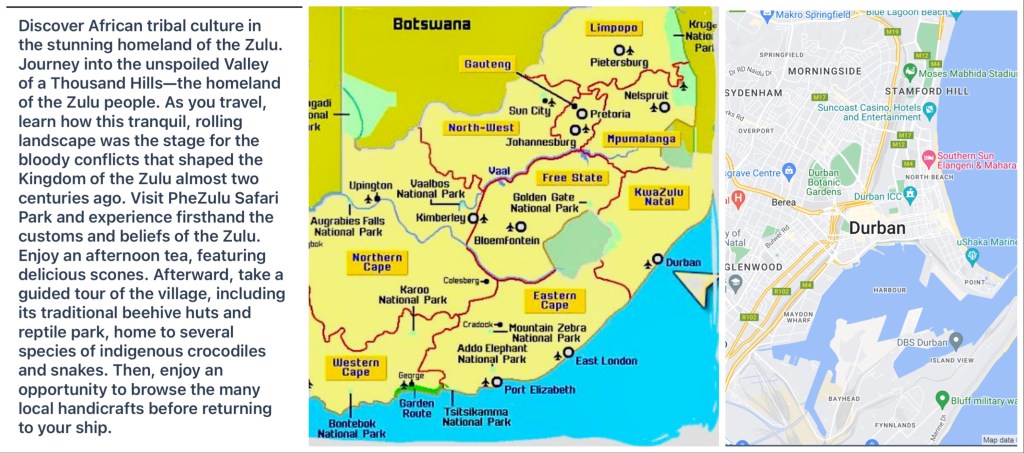
Durban is South Africa’s 3rd largest city with 4.2 million people. Of course, Vasco de Gama sighted it, but it was first settled by Europeans…British…in 1824, It was a trading post focusing on ivory. The Zulu king granted the land for the settlement. When it was determined that sugar cane would grow well, a number of Indians immigrated to farm the plantations. South Africa now has the largest population of Indians outside of India. With Durban’s role as the port for industrial exports from Johannesburg, it is South Africa’s busiest harbor.
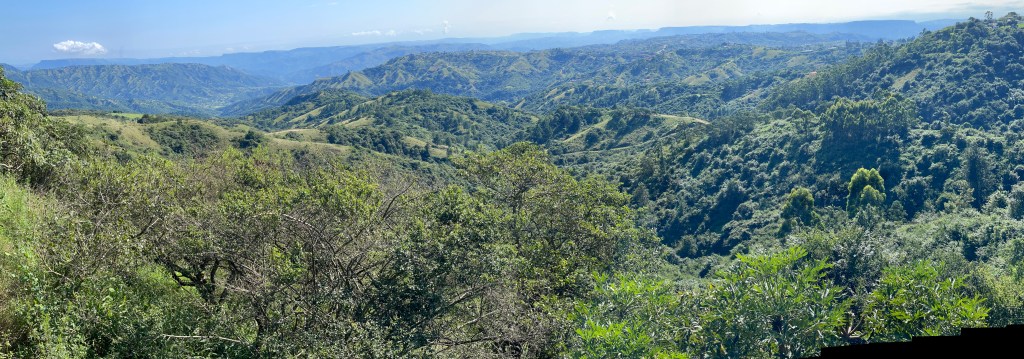
This is my 3rd visit to Durban; once on Semester at Sea and once with Maddy and Jackson to visit animals. We continued the animal visiting tradition with an excursion titled “Valley of 1000 Hills.”
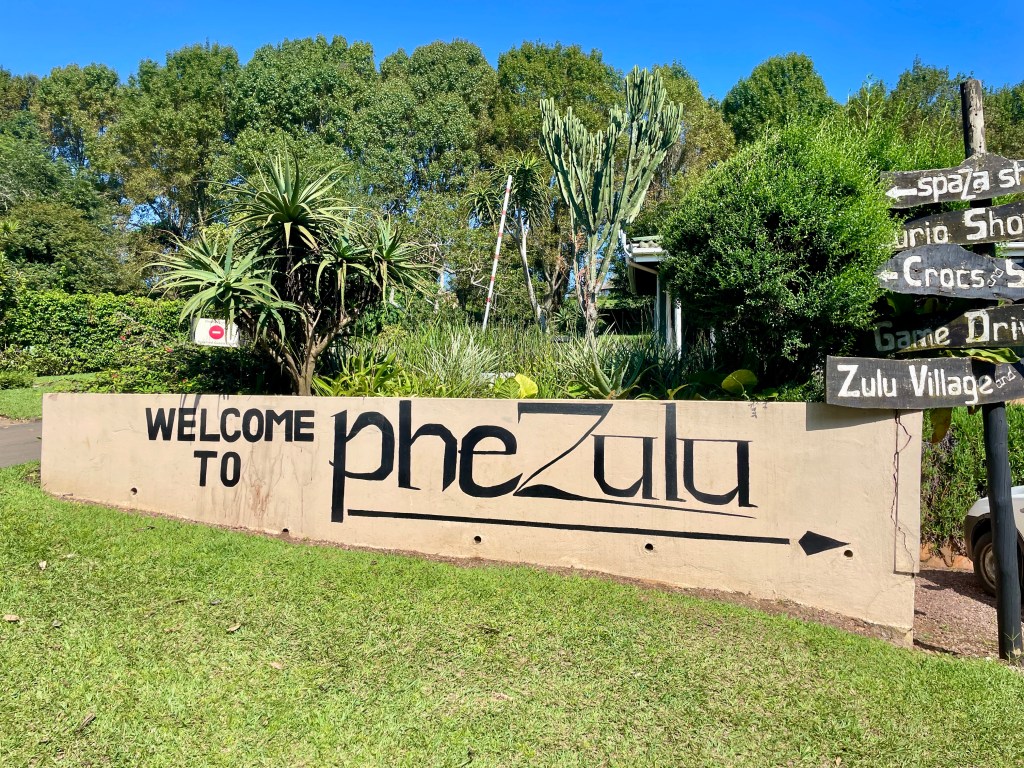
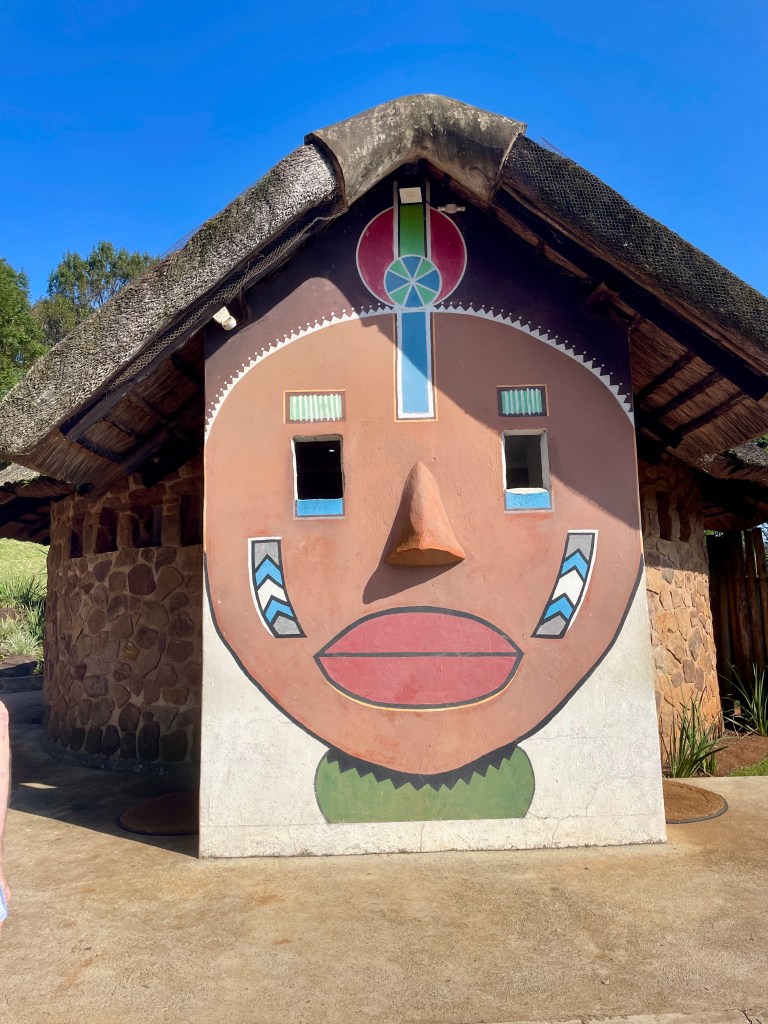
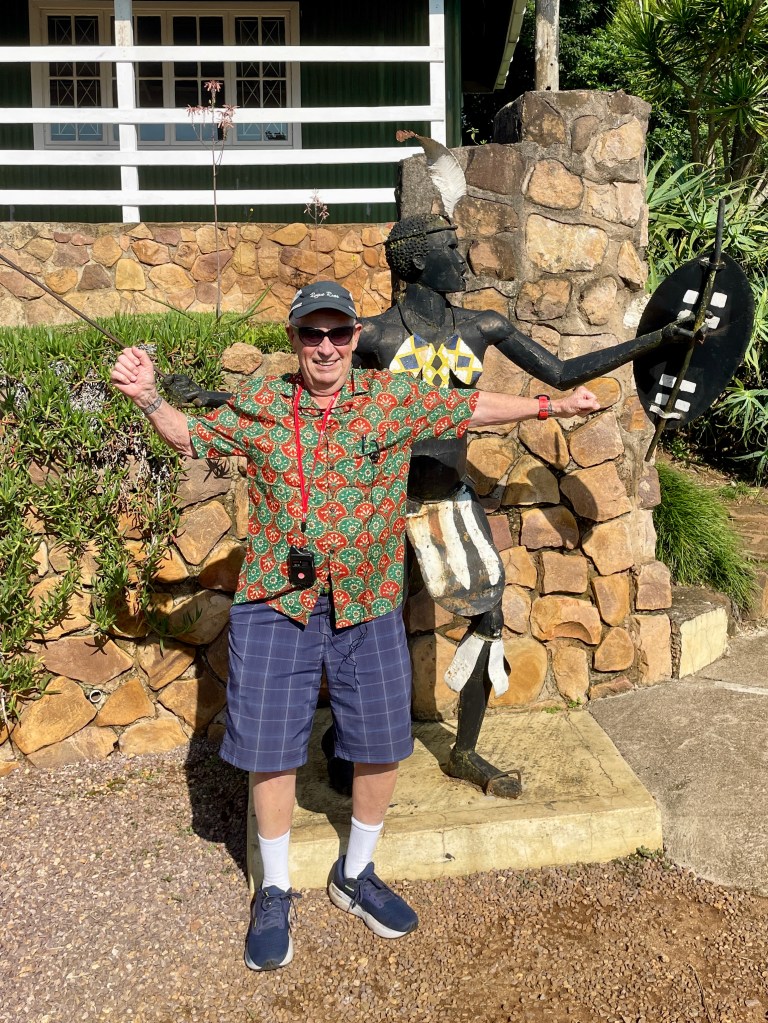
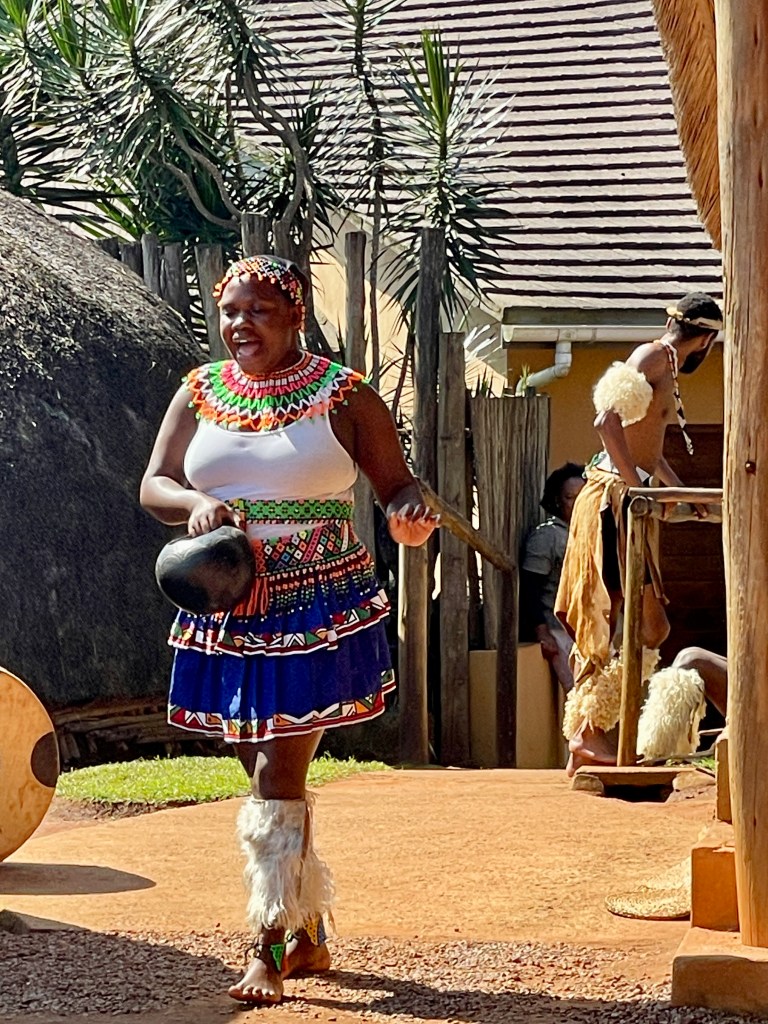
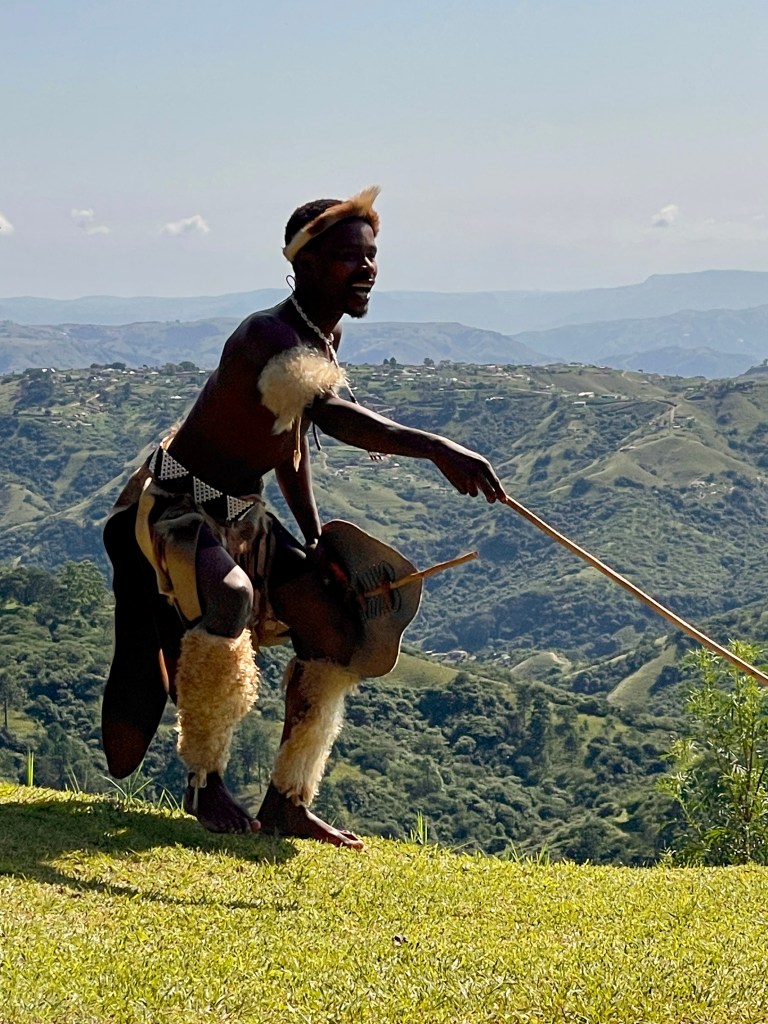
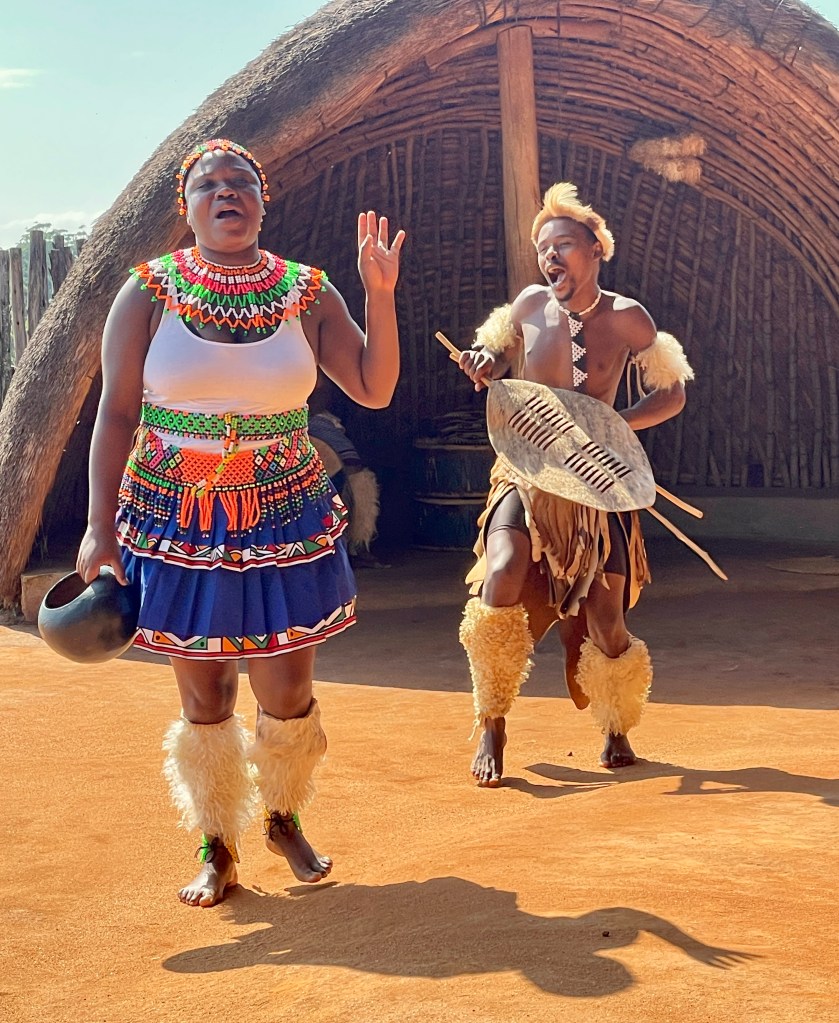
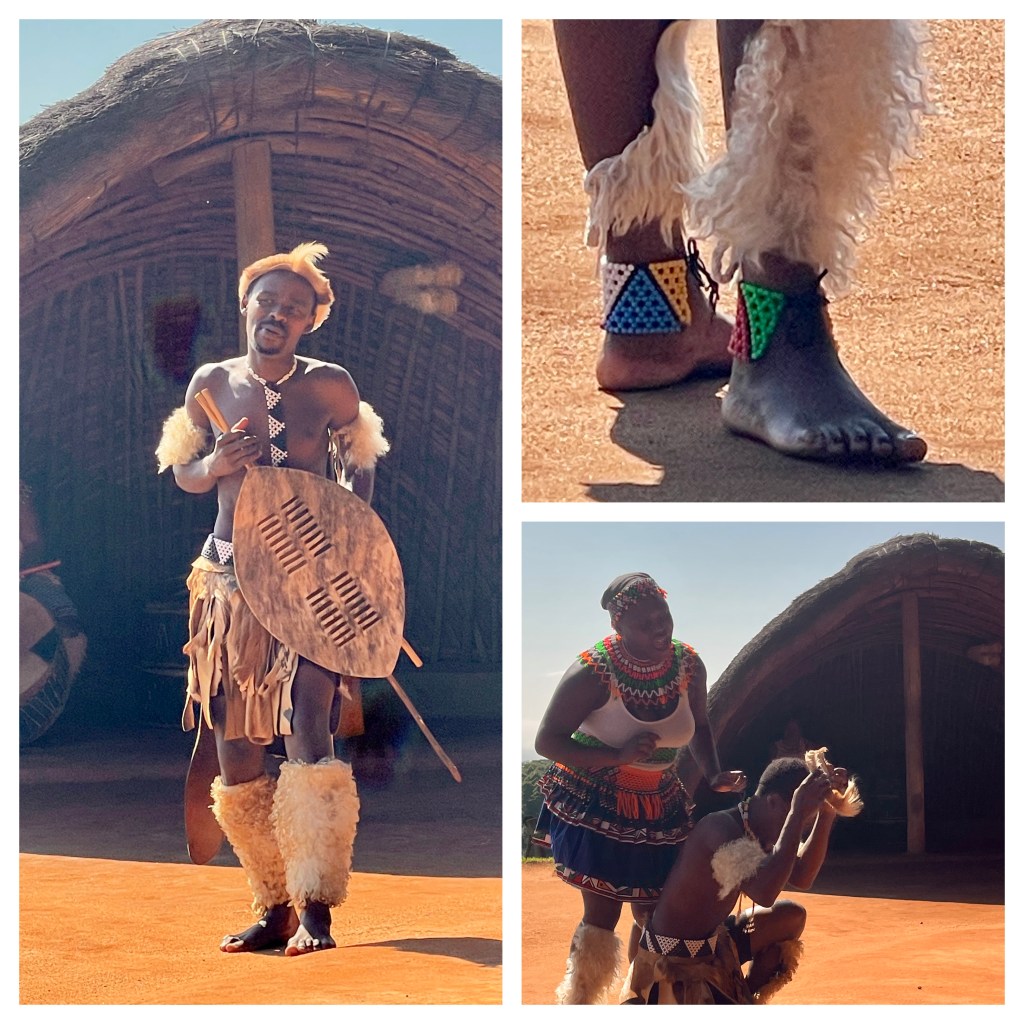
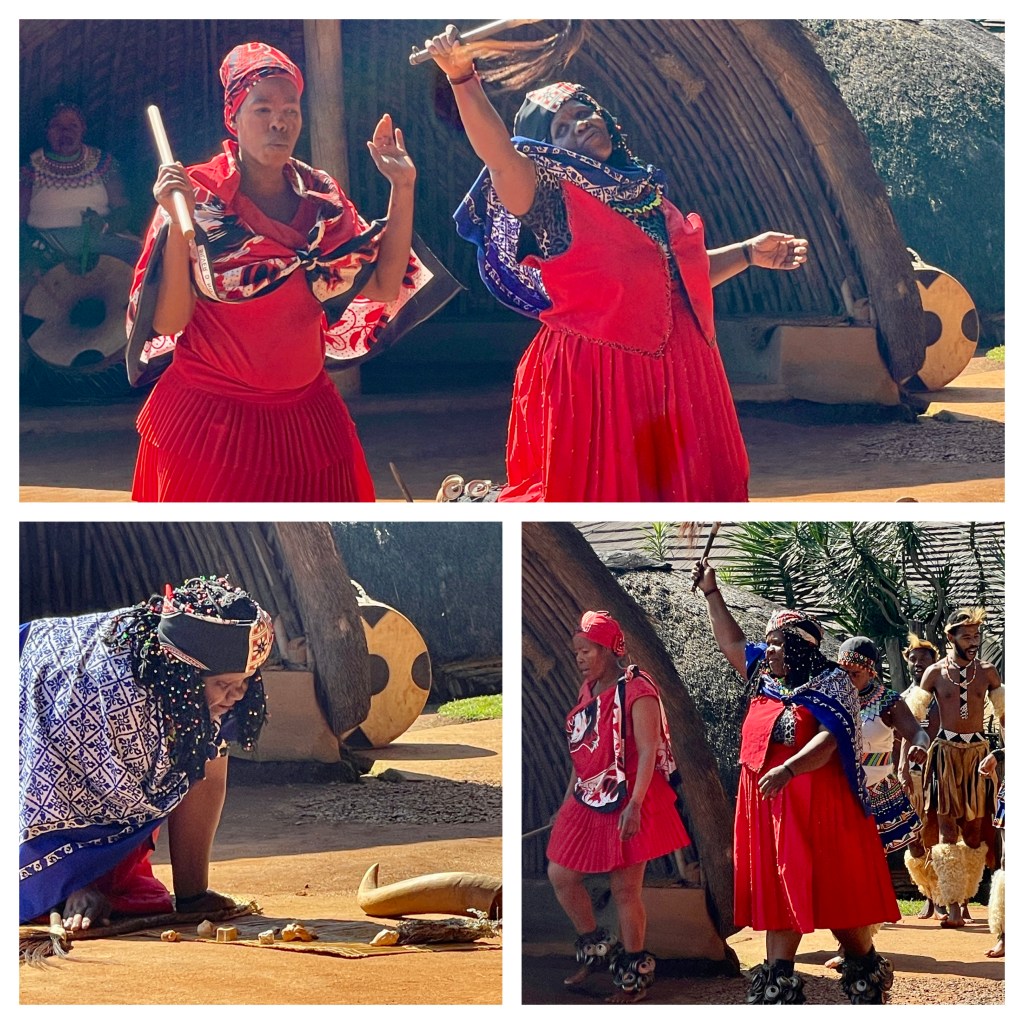
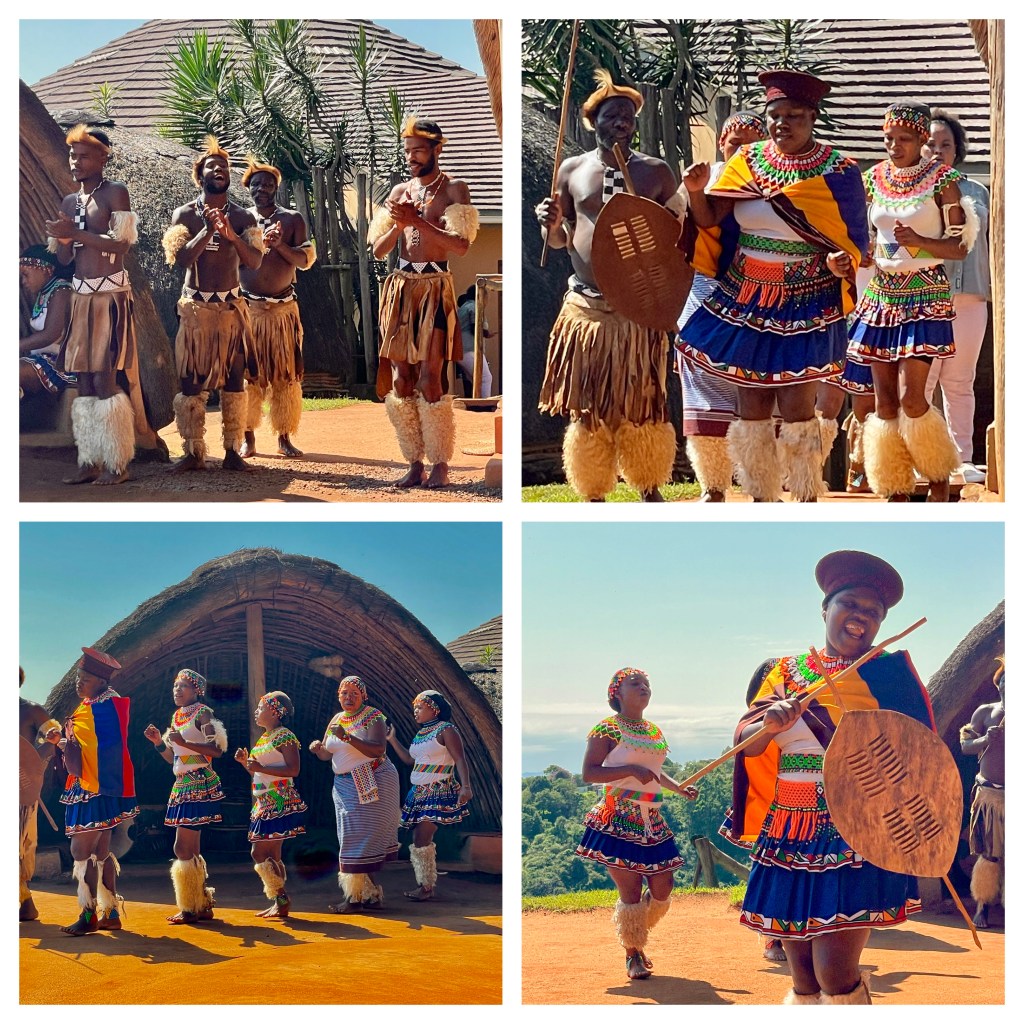
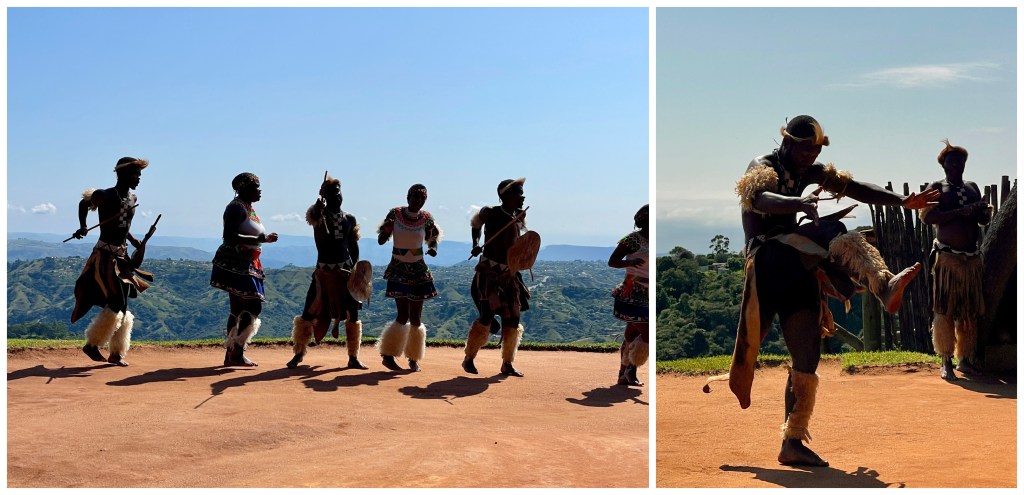
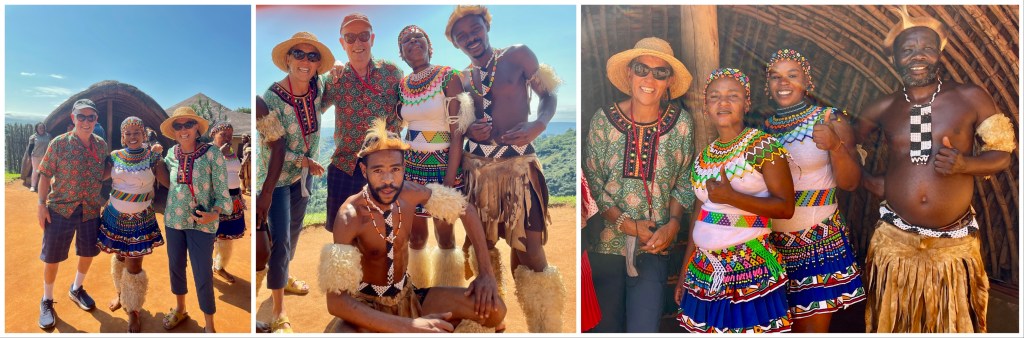
Specifically, we traveled to Phe Zuh Safari Park, a Zulu wildlife center. This was an excellent visit. There were more crocs than we had previously seen and an impressive array of snakes and spiders. We saw lots of Zulu dancing that was more authentic than we usually experience. And, surprisingly, there were a couple gift shops; these actually had some pretty good stuff.. After about 2 hours of animals, dancing, and shopping, we adjourned to the bus for a scenic return to the ship.
A few observations:
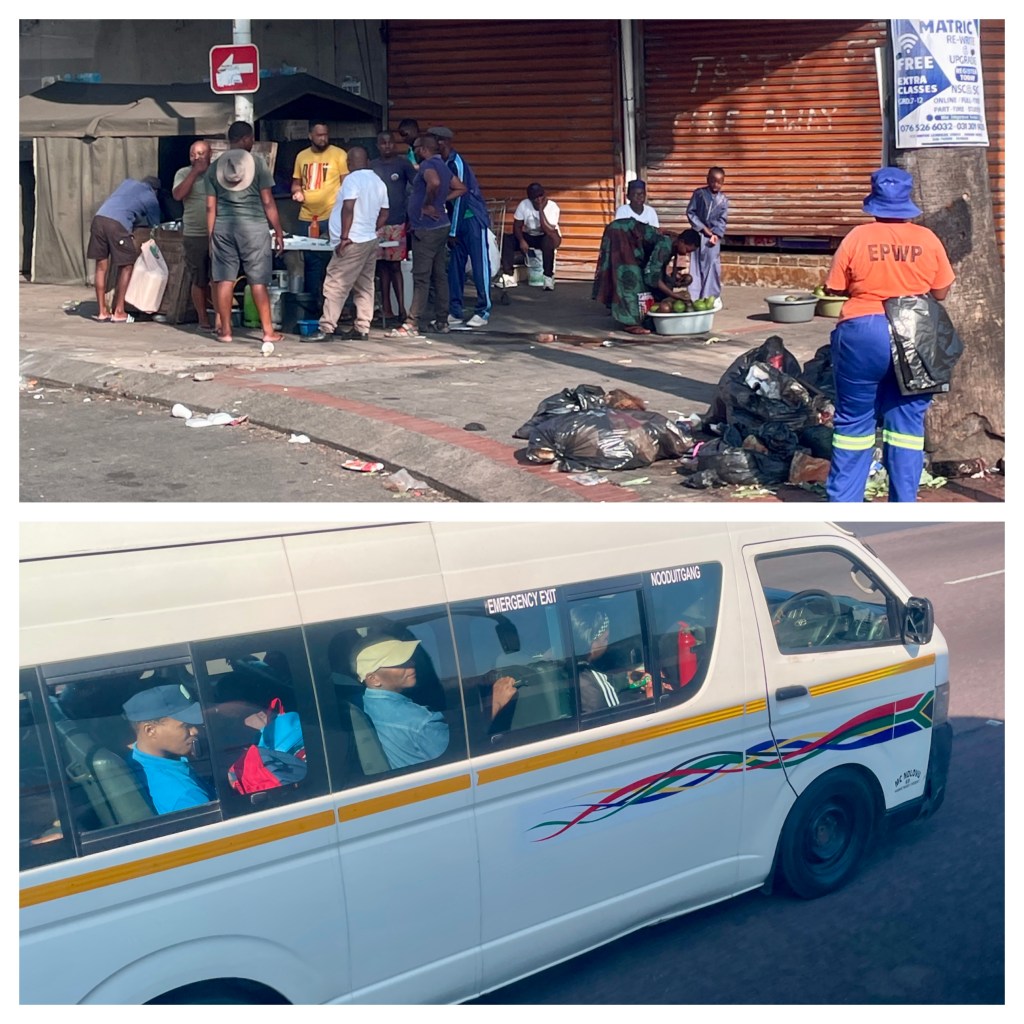
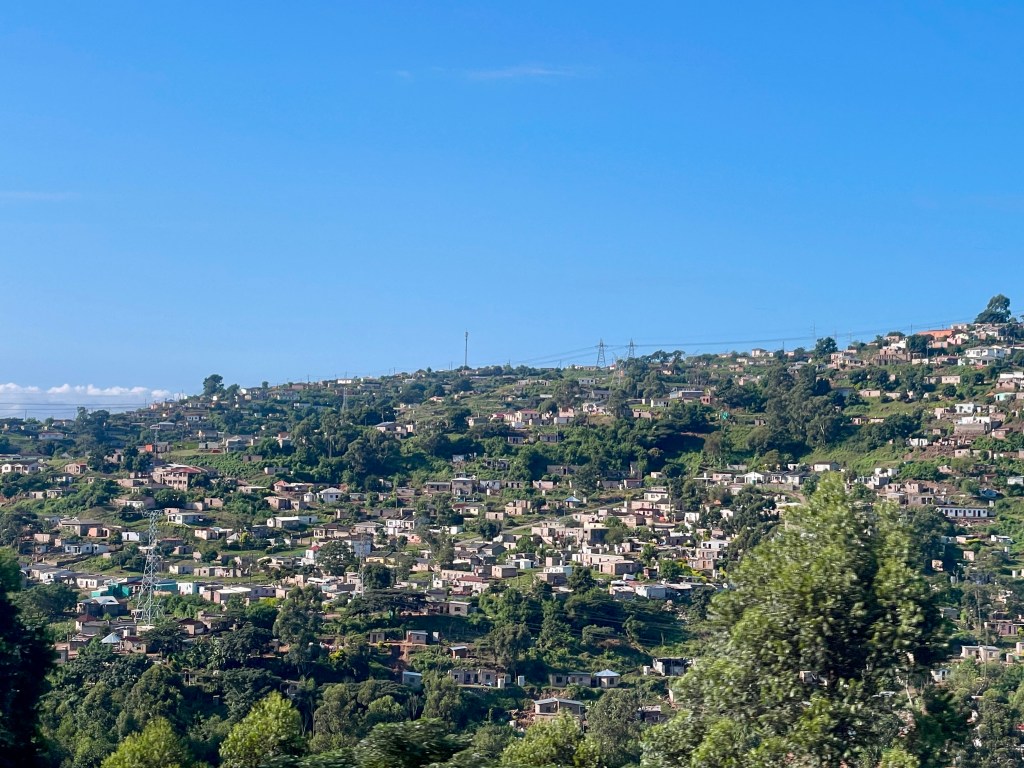
-On leaving the ship, we traveled some modern, well landscaped streets and attractive neighborhoods and saw nice open spaces. But, interspersed, were some marginal areas. There were several very sketchy slums that are referred to as “informal housing.” The housing was make-shift with corrugated tin roofs and lean to structures with lots of garbage and litter. This sounds way better than homeless or houseless. Our guide commented that what used to be “White neighborhoods” under apartheid have now become Black neighborhoods. He suggested that we not walk there, although other areas were completely safe.
-The area seems to be wrestling with its heritage. While apartheid is no longer thrives, there are still Indian and Black townships or what has evolved from them. One Black township was characterized by “shoe box” houses that were served by electricity and clean water, but looked somewhat marginal.
-The Zulus have maintained lots of their historical culture. Polygamy is still the custom. If a guy has 11 cattle or the equivalent value he can acquire a wife. Double that with an equal number of cattle or money. More wives, more kids and more cattle mean higher status.
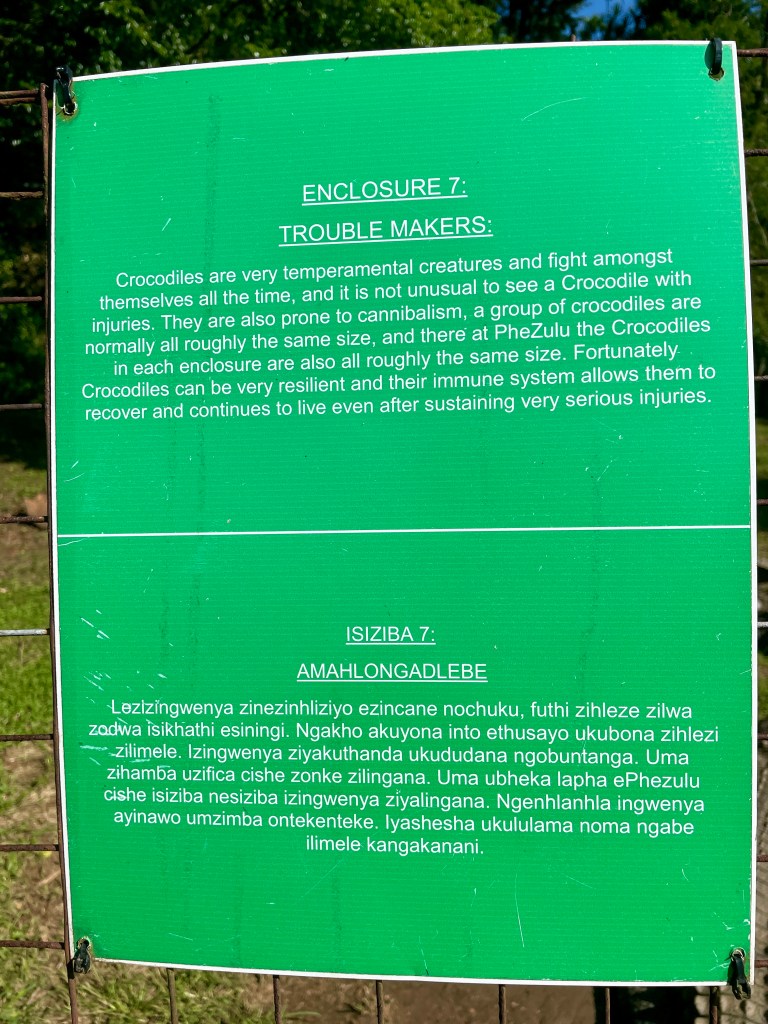
-The crocs all seemed to be sleeping. However, they were separated by species and age. The older, bigger guys would eat the youngsters and strangers if they were put in the same enclosure. There was a separate enclosure for the teenagers and troublemakers. Evidently, unlike our culture, there is a difference between teenagers and troublemakers.
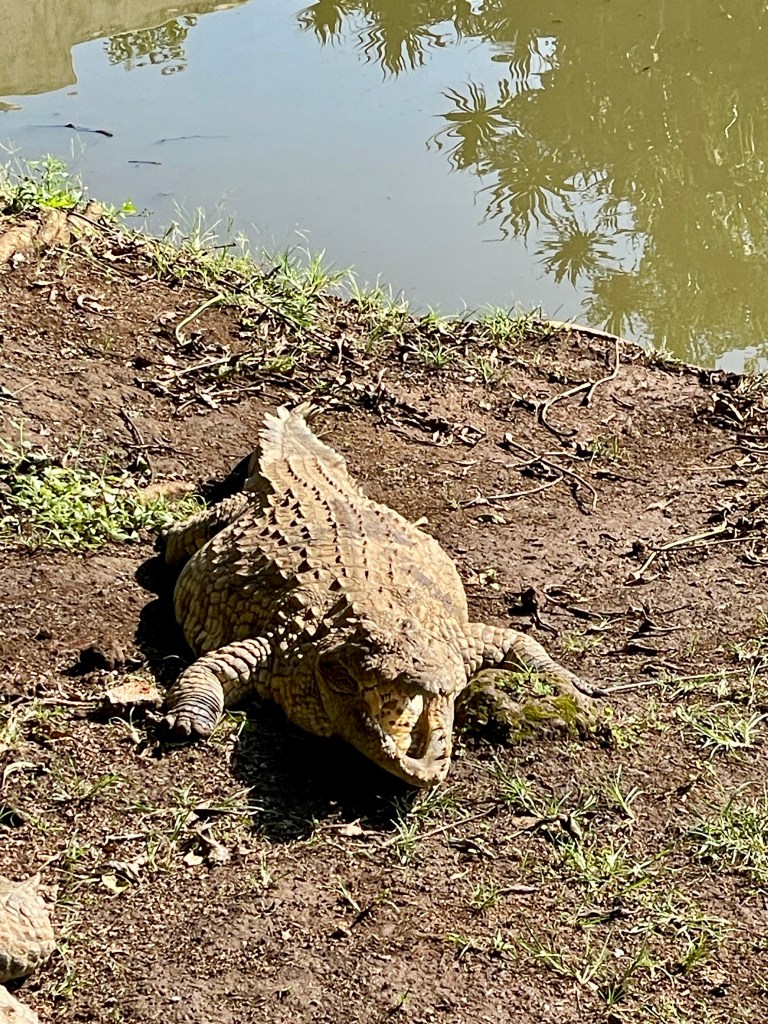
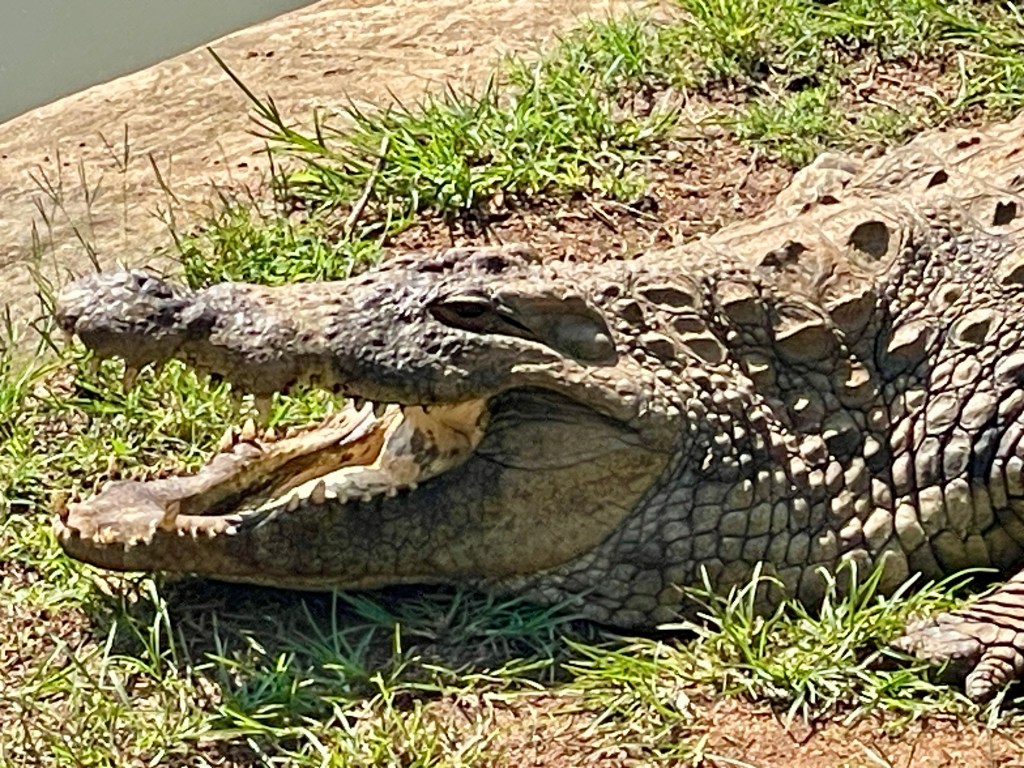
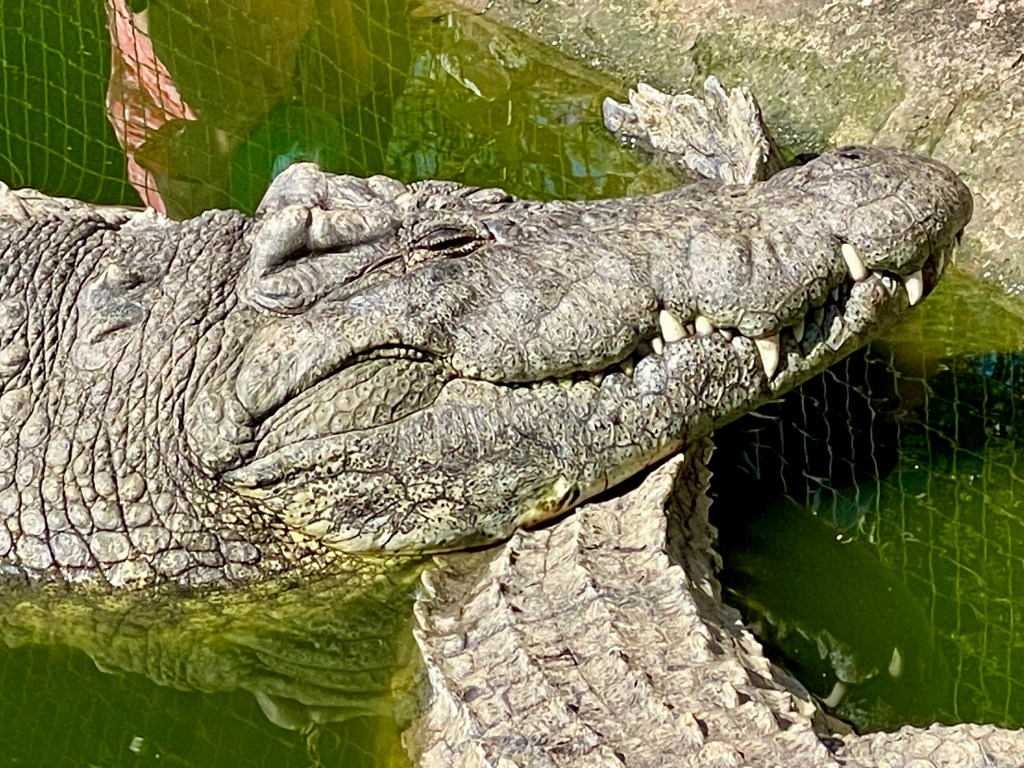
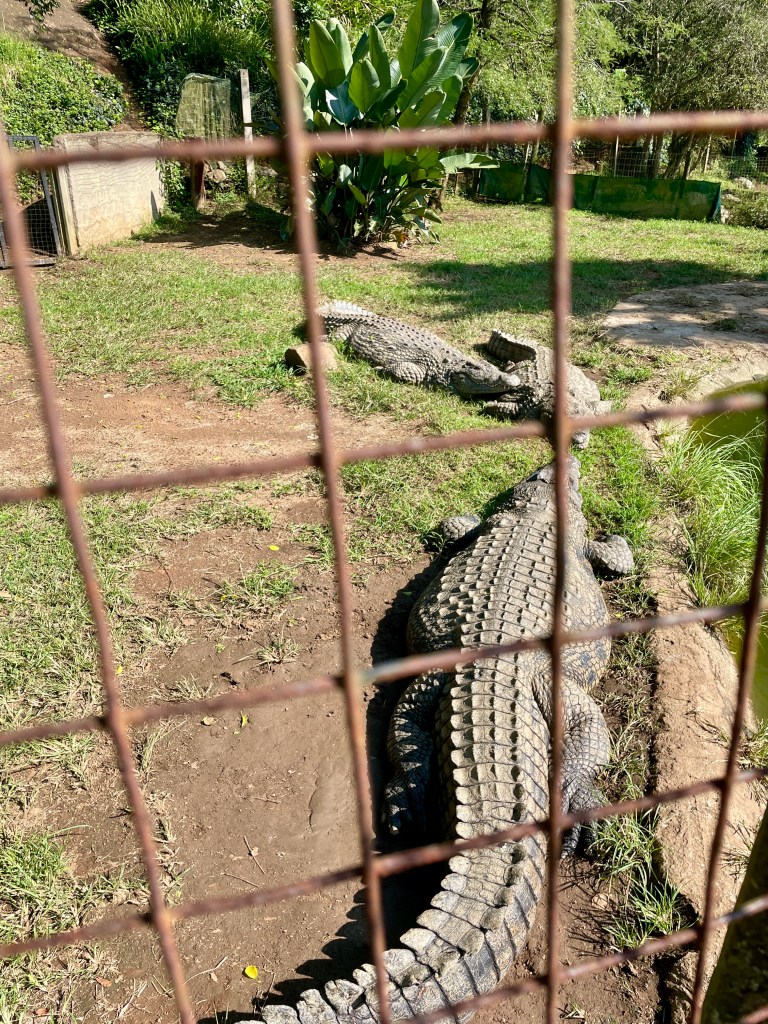
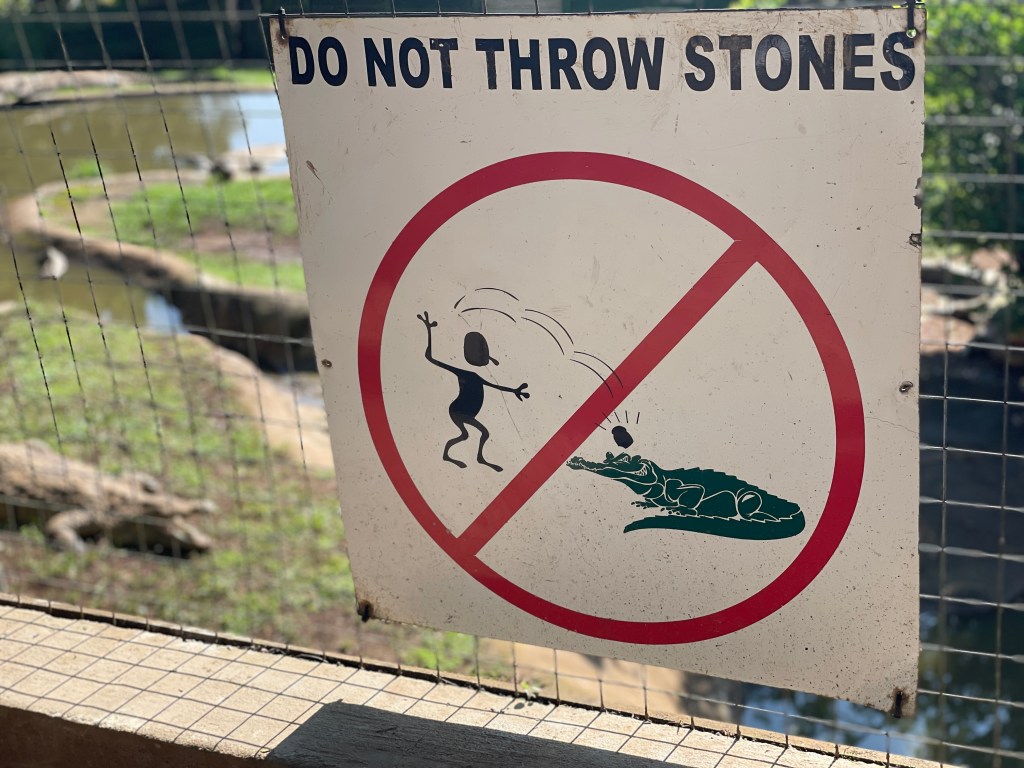
-The sex of crocs (and turtles) is determined by the soil temperature when the eggs are incubating. Warmer temperatures mean more males. What will happen as the globe warms? We’ll see. Our guide commented about the adaptability of the crocs over the millennia and surmised that they may adapt to climate change.
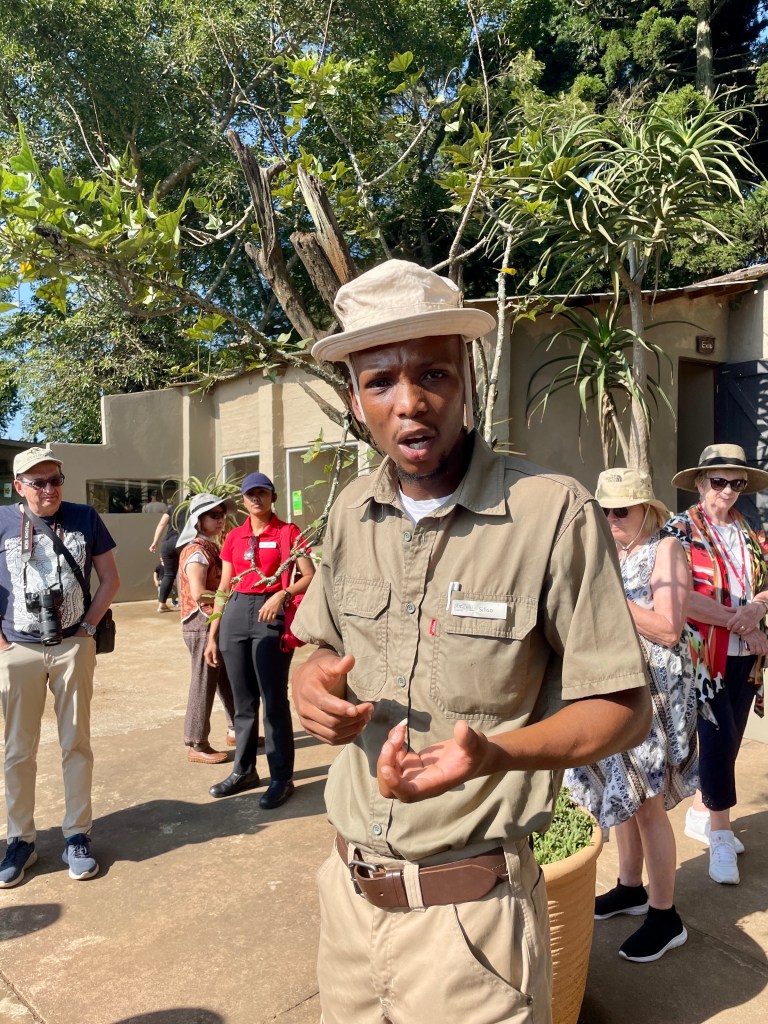
-We chatted with our guide Sifiso; a nice chap of 25 years. When Karla asked him his age, he had to think about it. He said he never celebrated birthdays since so many kids he grew up with didn’t or couldn’t afford to celebrate. He is studying to become a pilot. I’d bet on him.
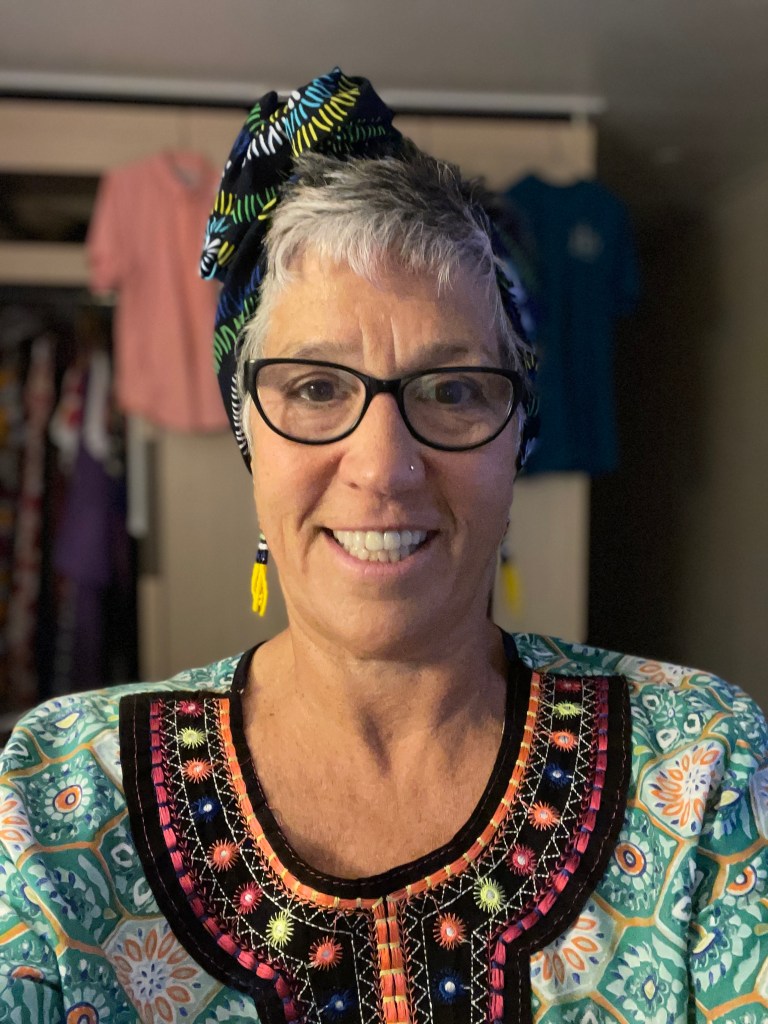
Once we were back at the ship, I took an exciting nap; Karla took the shuttle to a sterile part of town and found it less than exciting, but bought a hair band. The Zulus, the animals, and the scenery made it a nice visit.
 Millers World Cruise 2025
Leave a comment