March 23
A few bits and pieces before Madagascar.
As we were preparing to depart from Mombasa, Karla was standing on the dock watching a number of Masai dancers perform. You’ll see pictures. She struck up a conversation with a policeman who was providing dock security. He asked her how many children she has and was interested in pictures. He was interested in showing pictures of his children, as well. Then he asked how many cattle she had. He was surprised when she admitted to having none. He asked how she could afford this cruise if she had no cattle. He was pleased to tell her that he had 12 and was rich. Perhaps we should rethink how we get our grass cut.
On our safari, we saw lots of black “balls” of vegetation. They looked like mistletoe in Oregon. We were informed that they were birds nests. The male birds construct the nests, hoping to attract a female. When a female comes by (perhaps a special female) she will inspect the nest. If it …and the male….are acceptable, she will stay in their new home. If she doesn’t like it, she will peck at the spot where it’s attached to the branch and knock it to the ground. Think about the young man who builds a new home for his fiance. She comes to see it and burns it down. That would probably be an indication that the relationship won’t work.
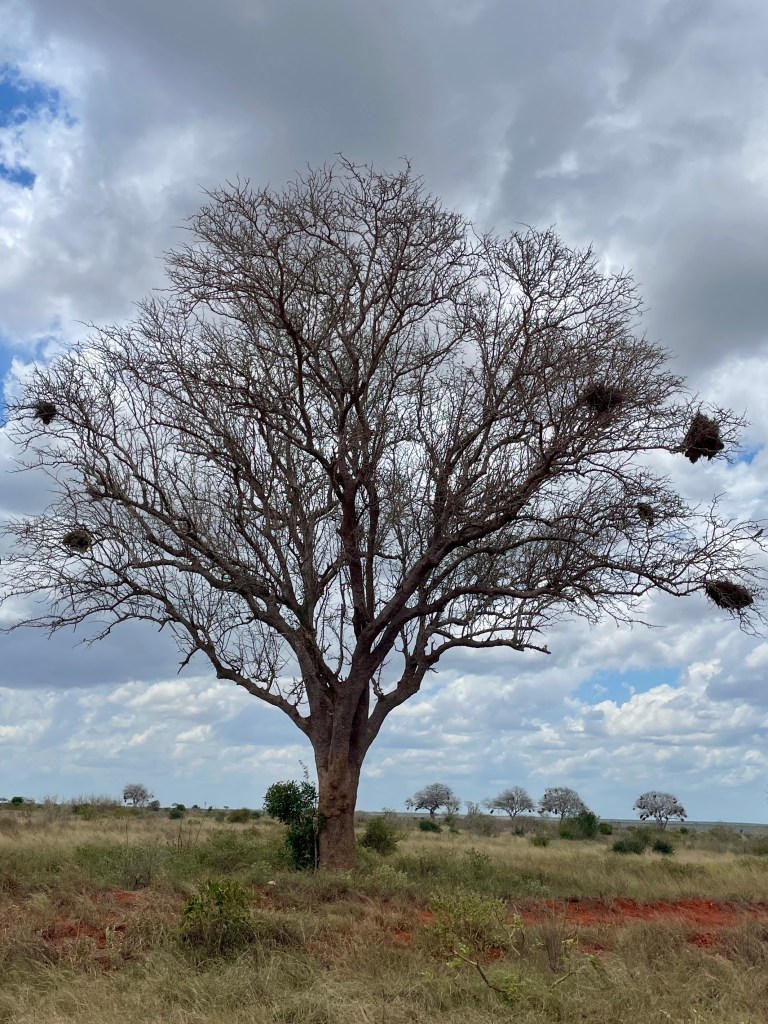
Poachers are a problem. With the price of elephant tusks and rhino horns, a good poacher could make a lifetime income from killing an elephant or rhino and extracting the tusks or horns. The game police used to be alerted by circling vultures, but the poachers adapted; they killed the vultures in large numbers. When the police were alerted to poachers by the sound of gunfire, the poachers adapted. Now they use tranquilizer darts and then saw off the valuable pieces. This would surely be a surprise to the animal when it recovers from the tranquilizer, but it sounds like they bleed to death before that happens. Somehow, this seems more offensive when we’re talking about “majestic” animals. There is lots of animal killing in the US that we worry less about.
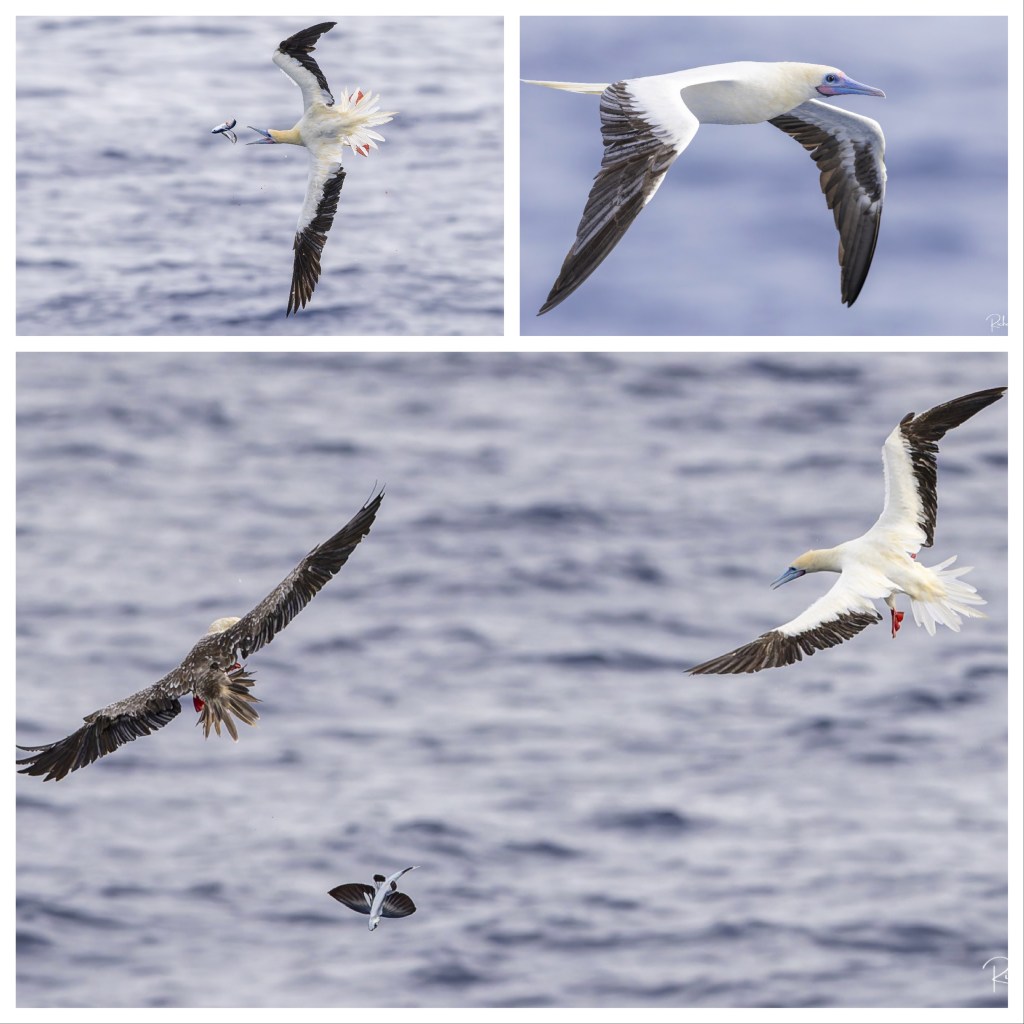
Our favorite lecturer on ship is a wildlife biologist. He holds court in the morning just to talk about wildlife sightings the previous day. We haven’t seen much but he’s entertaining. He “guarantees” us whales as we round South Africa and again as we near England. He has a camera that takes 30 photos per second and gets some good shots. He spends most of his free time deleting. Our major wildlife attraction is red footed boobies circling the front of the ship and then diving for flying fish. The boobies swallow the fish head first to avoid problems with fins and swallow rapidly to keep another booby from stealing their prey. Some of his photos are below.
.
 Millers World Cruise 2025
Leave a comment