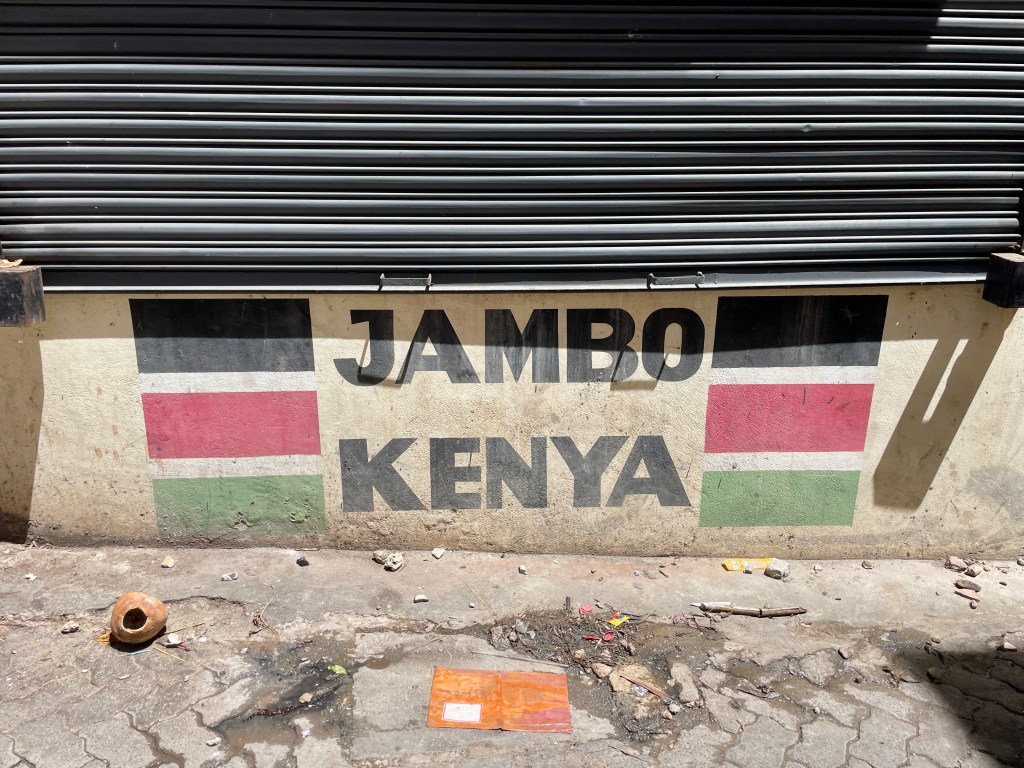
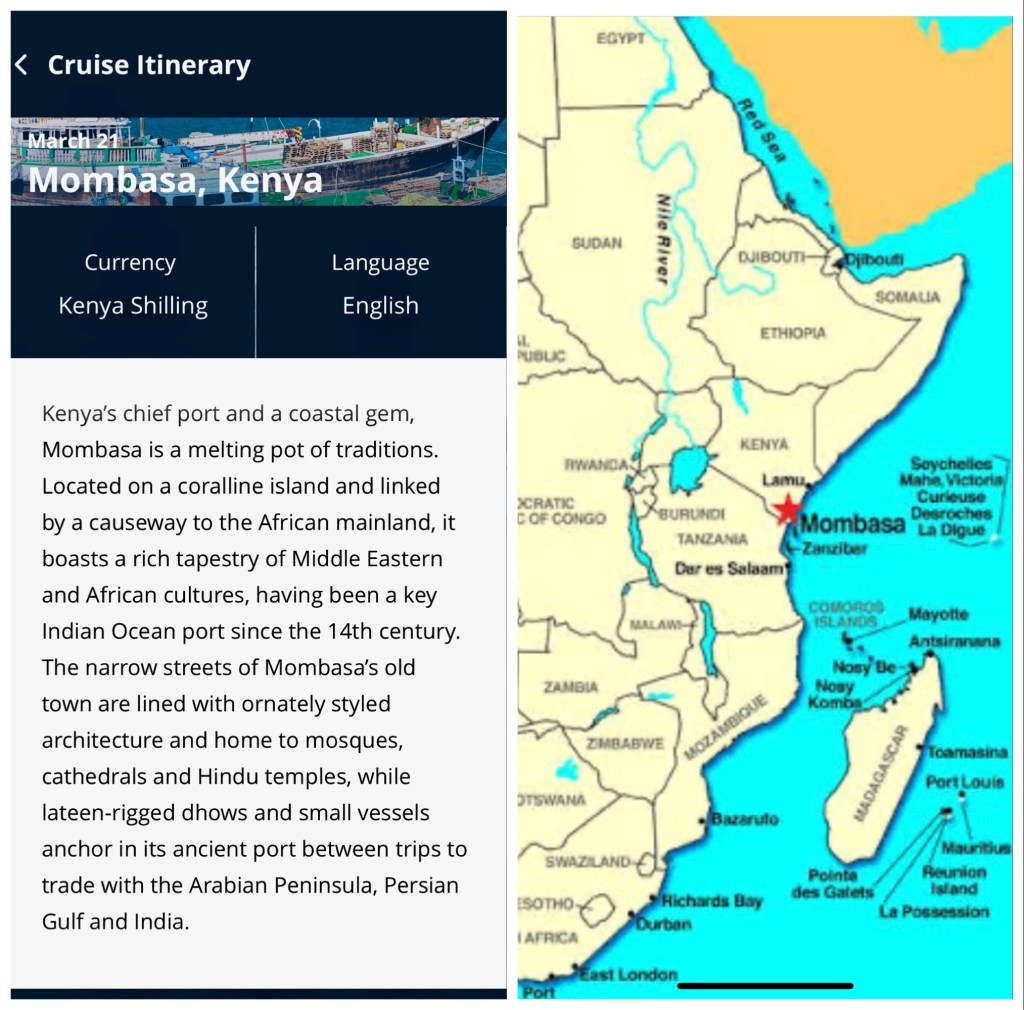
(9,316 miles from The Dalles, Oregon.)
March 19-21
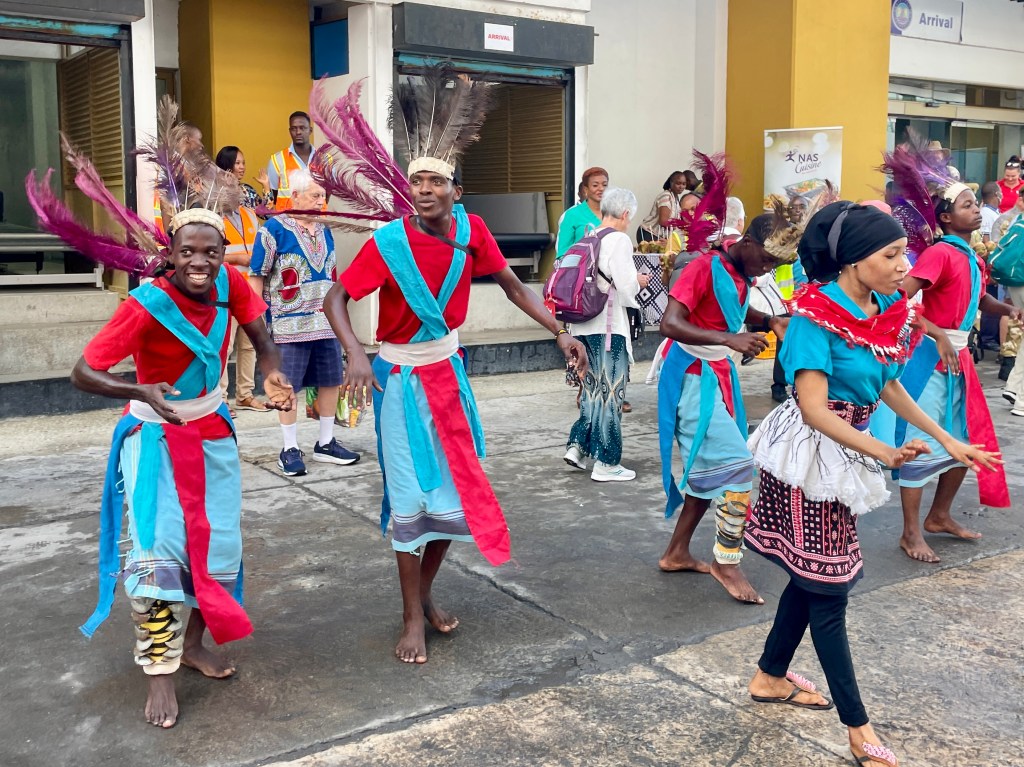
A great 3 days!
Kenya is a complicated place. It has a population of around 50 million with 5 ethnic groups each representing 10 to 17 percent of the population. There are 42 different tribes, each with its own language. Swahili is the national language, so tribal members speak their own language plus Swahili and English, which is taught in schools.
The region was populated by hunter-gatherers in the early years and then influenced by a series of trading powers. The Swahili coast, including what is now Kenya as well as some of Somalia, became prime trading territory in the first century for items like ivory, rhino tusks, palm oil, cowry shells and tortoise shells. Mombasa was the key port. Pre-European control was exercised by the Bantus, and Arabs before Islamic powers took over in the 7th century. Zheng He landed there with his Chinese fleet. Most of the early powers were focused on trade. When the Portuguese arrived, following Vasco de Gama’s discovery of the area, they were after tribute and control. In the 16th century they “sacked” the area and built Fort Jesus to defend their territory and to market slaves. The Omanis took over from the Portuguese and once again asserted Arab influence. In the late 19th century, The “more civilized” Europeans held a conference on how to split Africa among European powers. They set rules for the “scramble.” The Brits, French, Belgians,Germans, Spanish, Italians and Portuguese all got a share. The British controlled Kenya until independence in 1963.
Today, the country reflects the tribal bases as well as the complicated impacts of foreign powers. The country is growing relatively rapidly,(5-6 percent per year) but their is unemployment of 35-40 percent. The median age is 21 and 40 percent of Kenyans are under 15. Exports include coffee, tea, and flowers. And tourism…lots related to animals…is major. Mombasa, our stop, has about 2 million people.
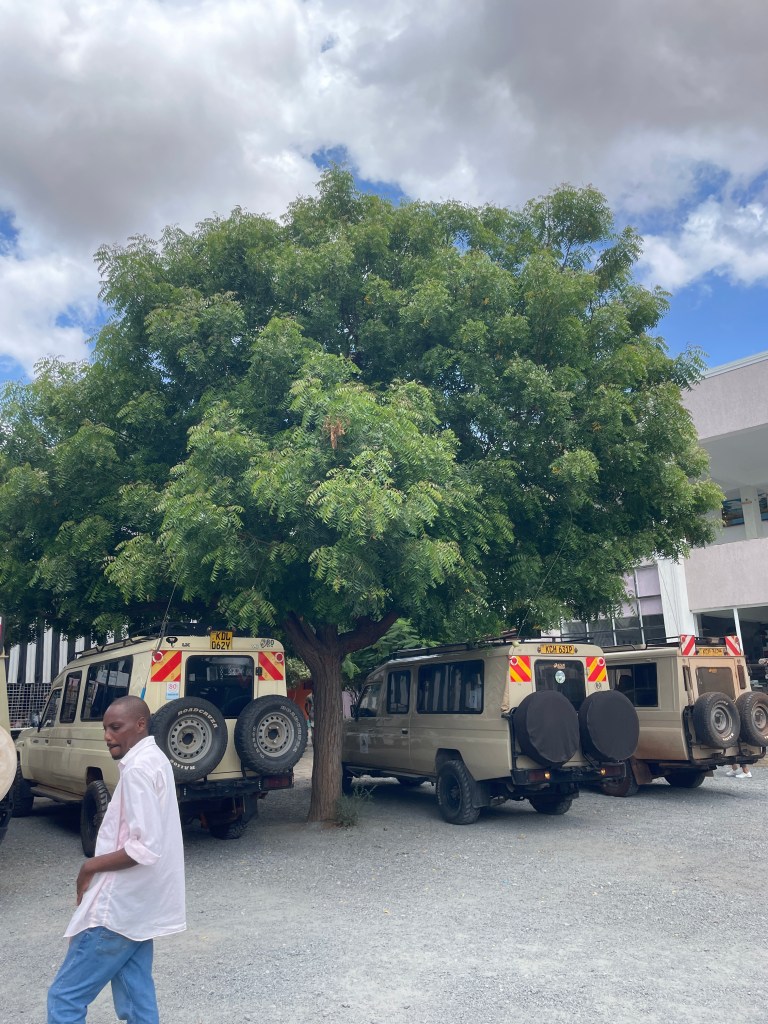
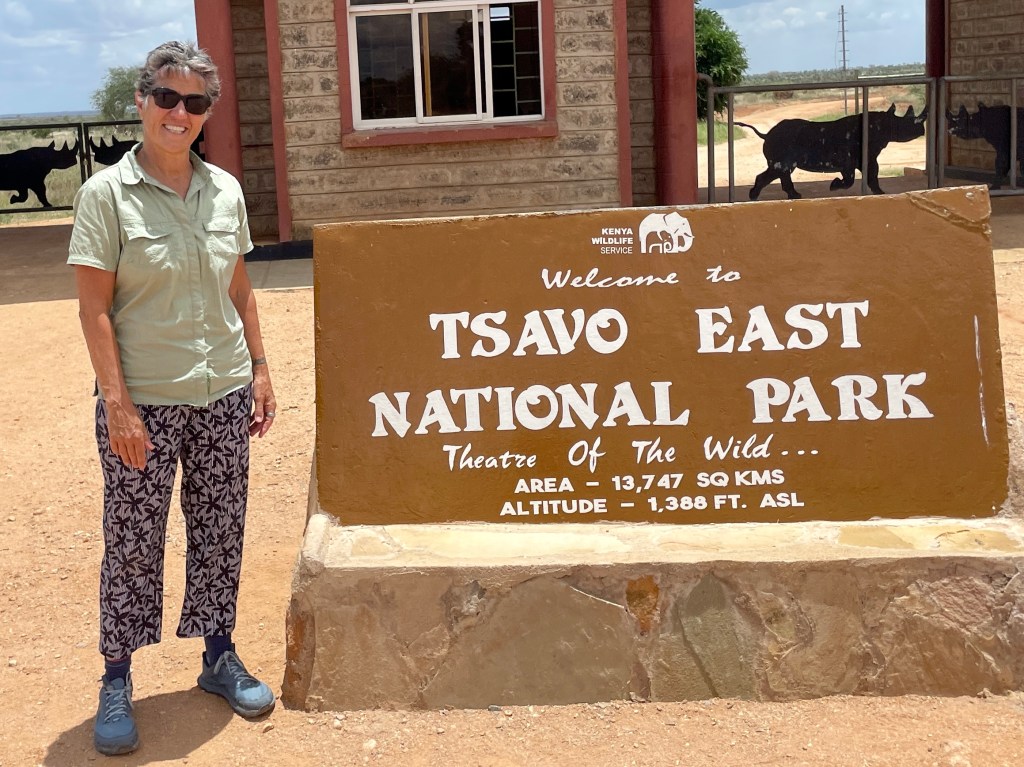
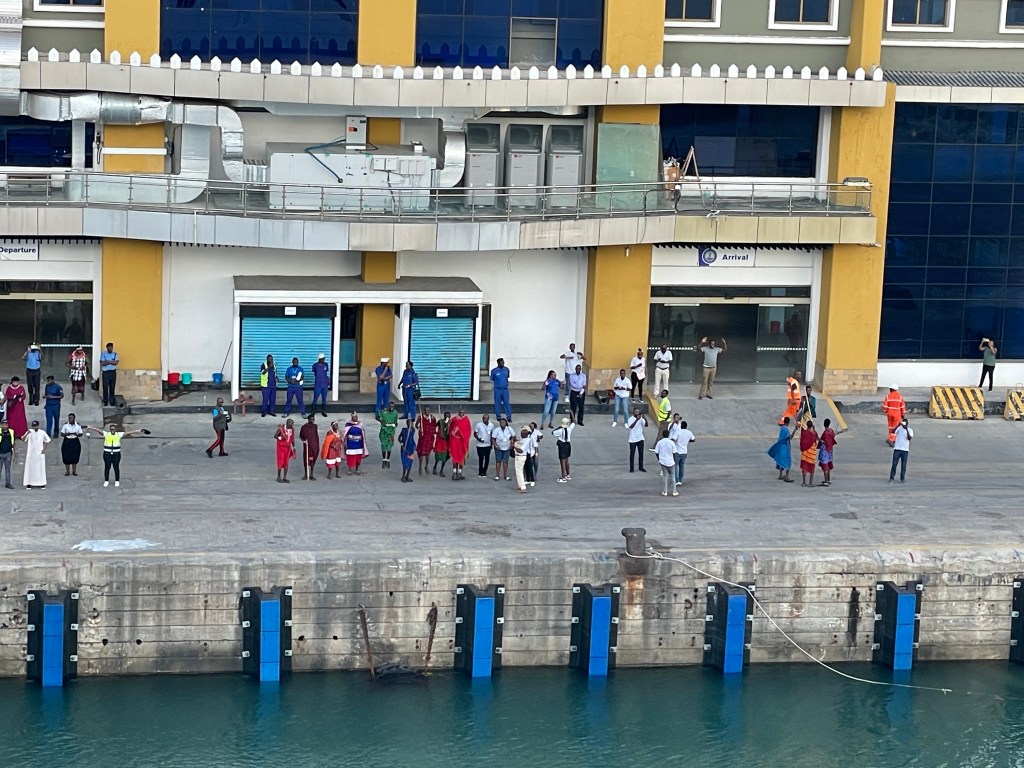
When Madagascar decided that they wouldn’t accept travelers from Zanzibar (fear of cholera), we added a day to our stay in Mombasa before heading directly to Madagascar. It would have been nice to see Zanzibar, but the extra day in Mombasa was welcome. Our group photographer prowled the internet (in Kenya, one prowls rather than searches) for an overnight safari. She found an opportunity to be driven to Tsavo East Park, stay in a park lodge (Voi Lodge) with a great view of watering holes, and then return to Mombasa after a long game drive the next morning. We had the best game experience ever. In fact, we changed a couple future excursions aimed at game parks….there’s nothing left to see. That’s not quite true, but it would be hard to match our experience. On our way back to Mombasa, we stopped by a Masai village for an informative visit.
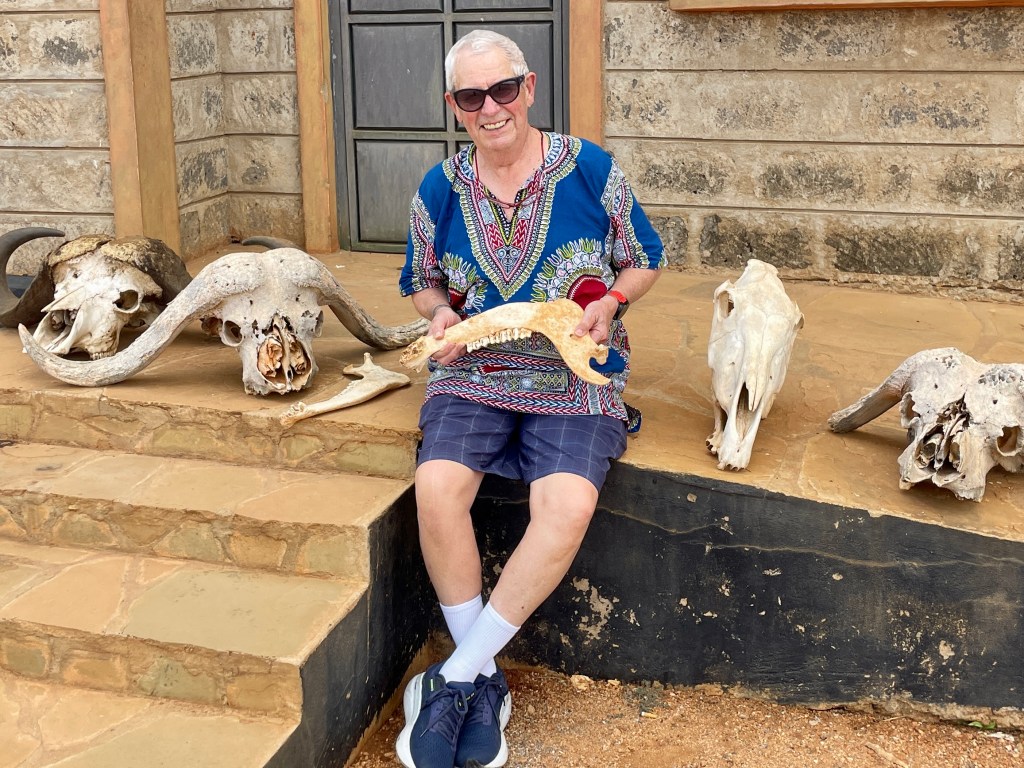
A bit about animals and safaris. The most famous game viewing, I think, is following huge migrations of thousands of animals….think Serengeti or Olduvai Gorge. More common are drives through varied countryside and viewing animals every few minutes. That’s what we did in South Africa with Maddy and Jackson and that’s what we did in Tsavo. Everyone wants to see the “Big Five.” “Big” represents the most desirable hunting trophies, not the size of the animal. For example, Hippos and Giraffes don’t make the list. …Lions, Elephants, Cape Buffaloes, Rhinos, and Leopards do. They probably would rather not be on the list, but don’t know it.
A bit about the Big Five:
-One can still hunt them for a price; sad but true.
-Lions. $55,000
-Rhinos. $25,000
-Elephants. $10,000
-Leopards. $6000
-Cape Buffaloes. $5000
That seems like a pretty good deal on leopards, but we left our rifles on the ship.
Lions used to number about 250,000; now, there are around 20,000. They live about 16 years .They eat about 18 pounds of meat per day and then sleep about 21 hours. When chasing their prey, they can run as fast as 50 miles per hour. Males can mate as often as 100 times per day, but each experience is only about 15 seconds. Sometimes males will kill newborn cubs…not for food, but to cause the female to want to create new ones.
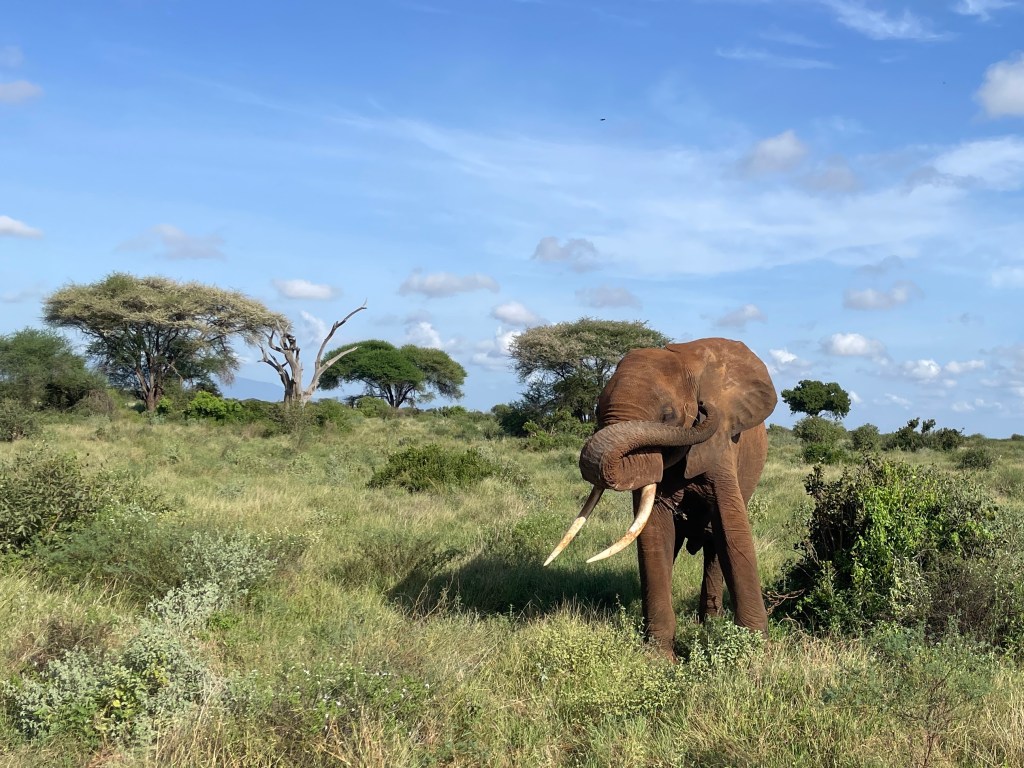
In the 19th century, there were an estimated 27 million elephants. Now there are 400-700,000. They live about 70 years, eating about 330 pounds per day. Both males and females have tusks and their tusks can be 10-11 feet long; they are right or left tusked, the same way people are right or left handed. African elephants have ears shaped very much like the continent of Africa.
Cape Buffaloes travel in matriarch-led herds. At 600 to 1800 pounds, and with big horns, they are menacing creatures. If threatened , they can run 35 miles per hour. In herds, they get in a formation like the US settlers used to circle their wagons when attacked.
Leopards are nocturnal and hard to find. They live up to 23 years. They like to be in trees and will carry their prey into trees for feeding. They can carry up to 4 times their body weight up a tree.
Rhinos are considered vulnerable or endangered, since about 90 percent of them have been killed. They can live to 50, but not if the Asians have their way. Their horns, owing to a variety of medicinal and sexual powers, bring about $60,000 per kilo. They seem plodding but can move at 30 miles per hour.
Given all of these large and dangerous creatures,which is responsible for the most human deaths? The answer is Hippos; number 2 is the Cape Buffalo. But, the most deadly creature is the mosquito which kills about 725,000 people per year.
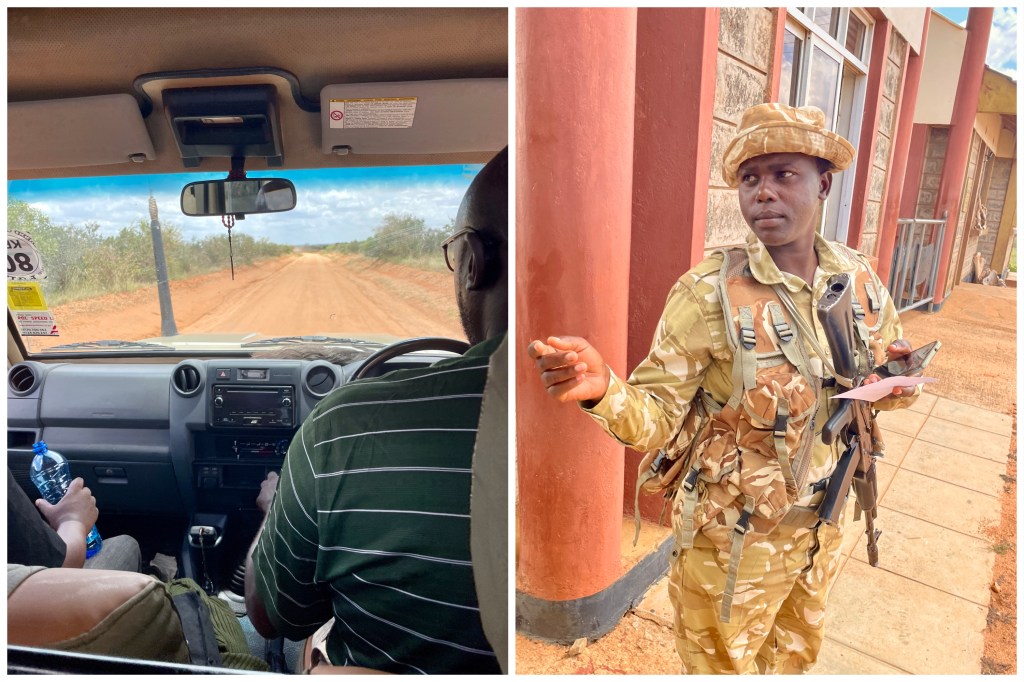
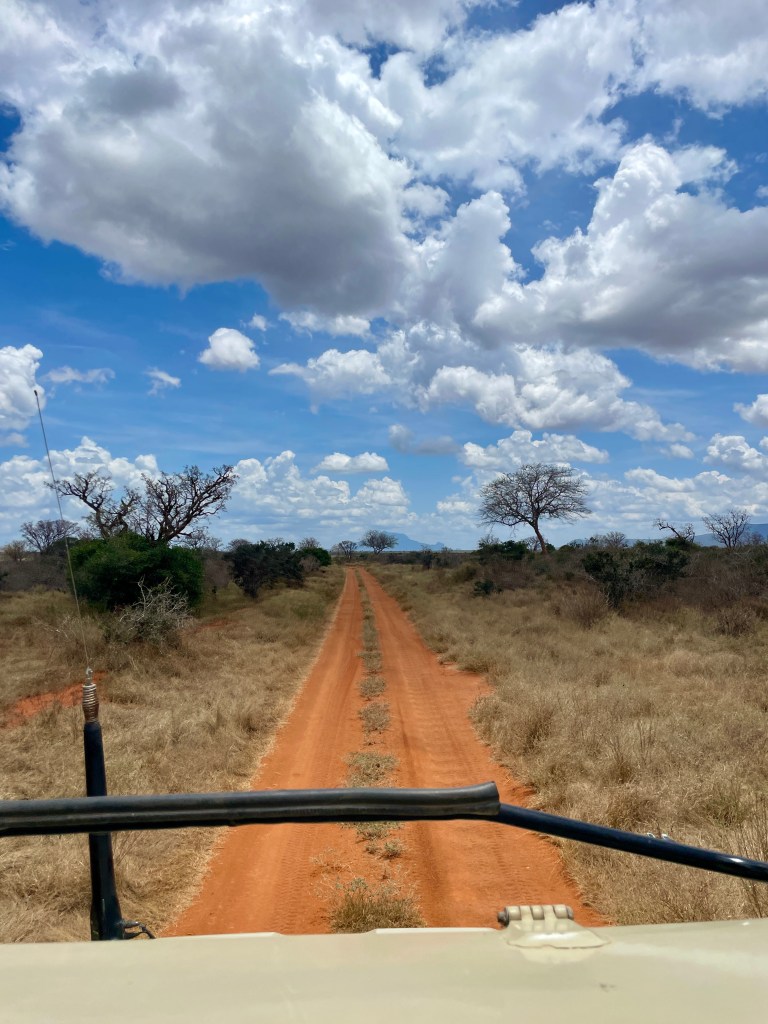
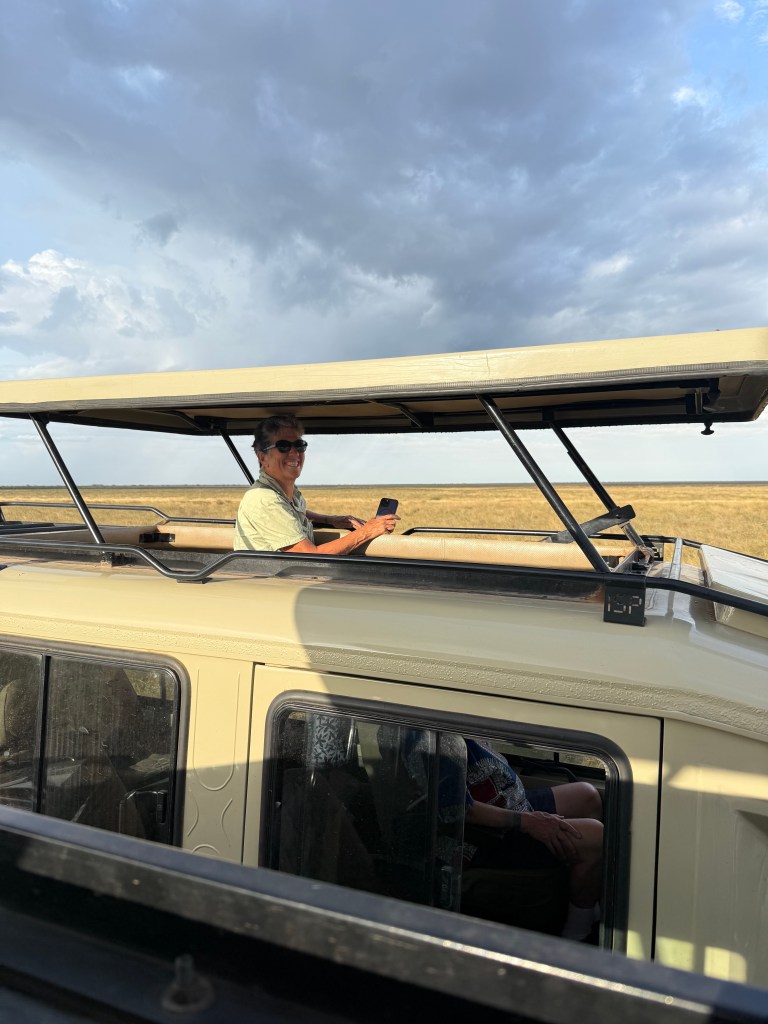
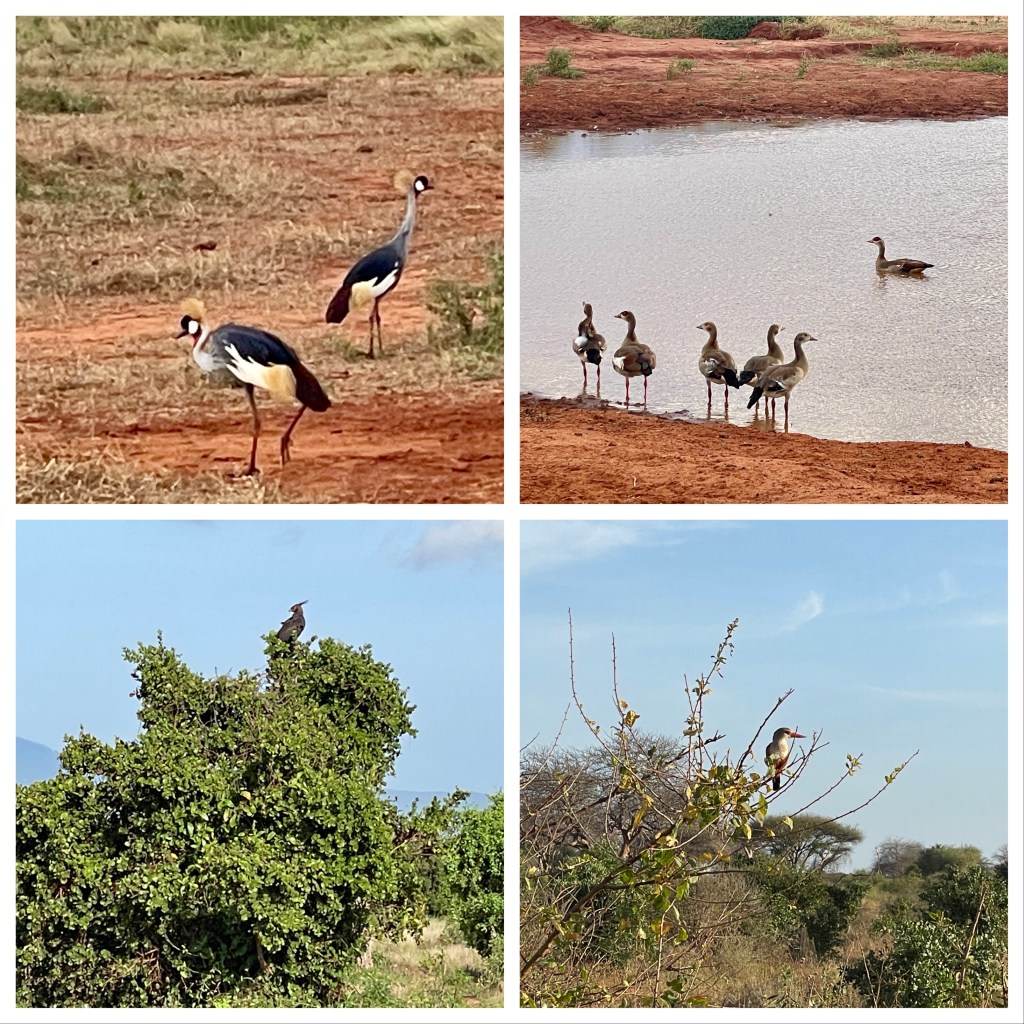
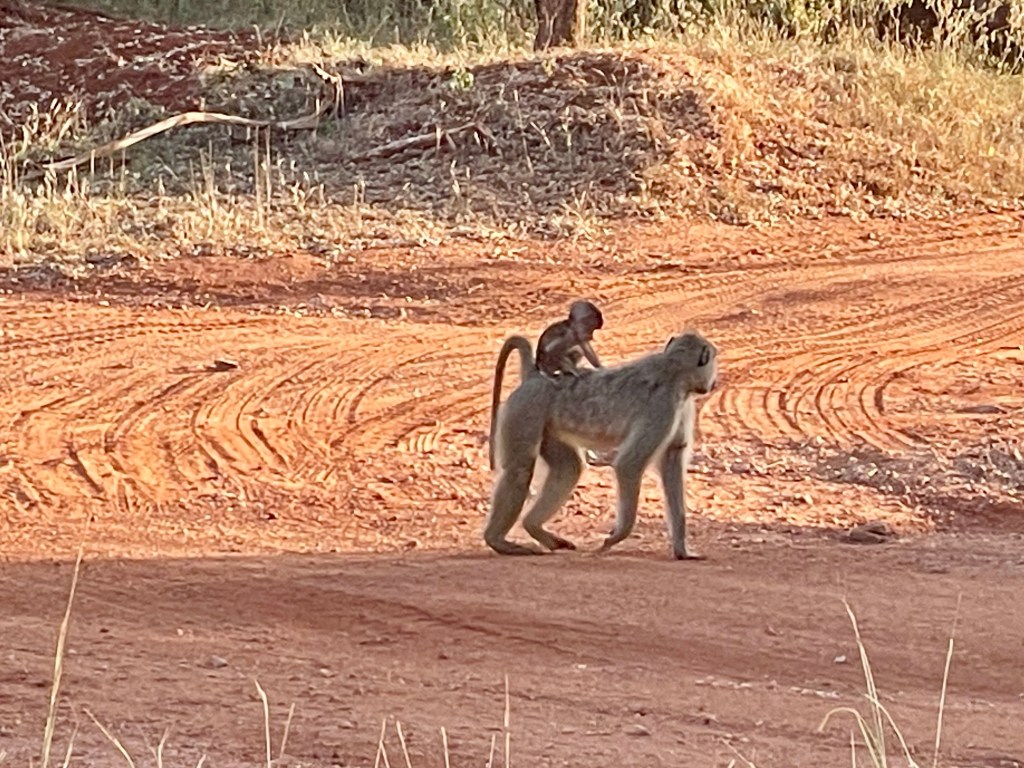
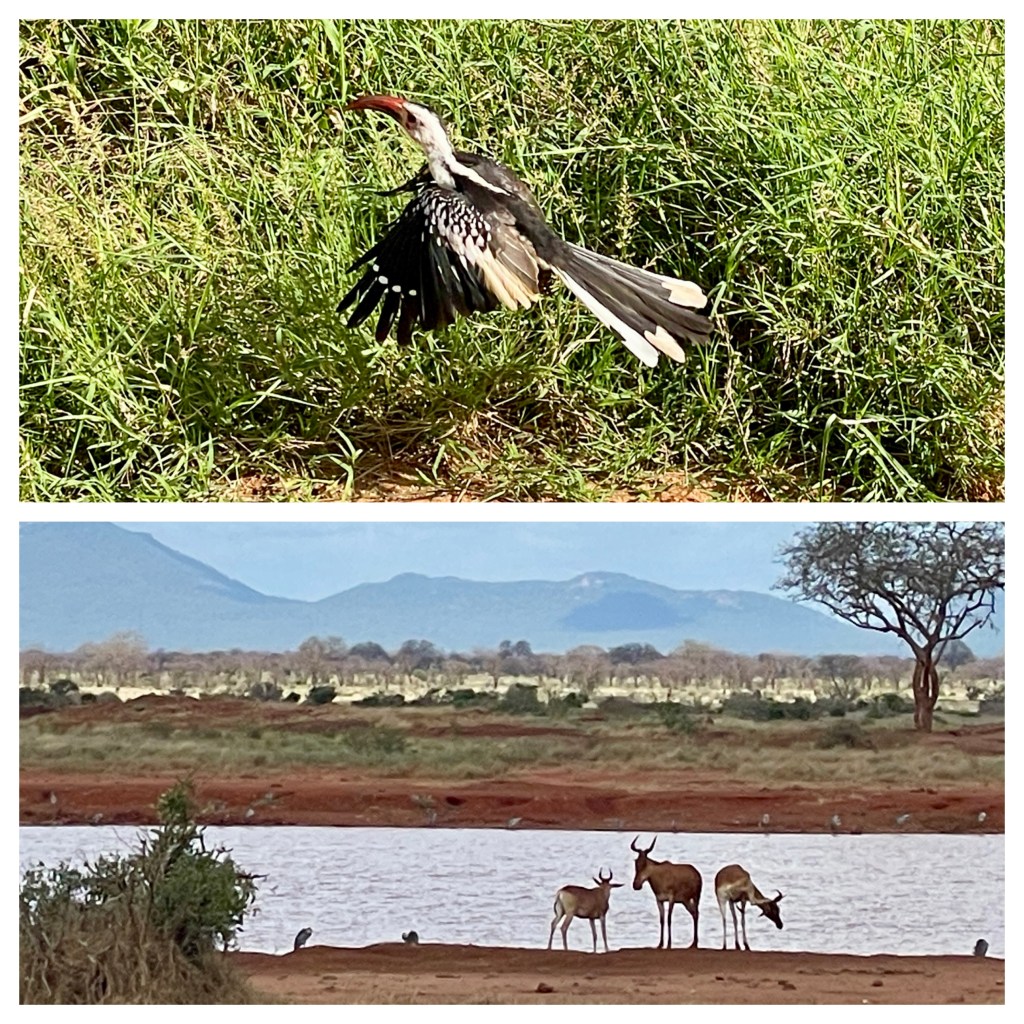
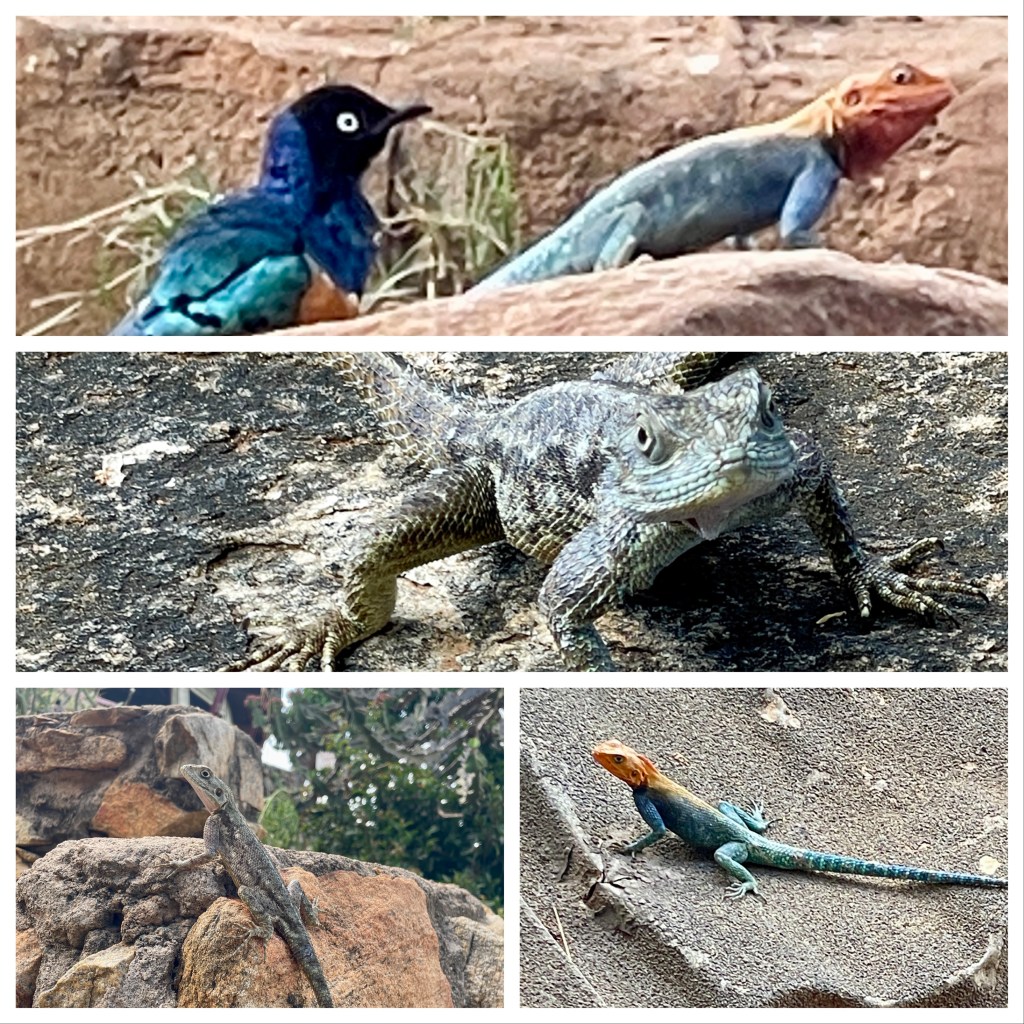
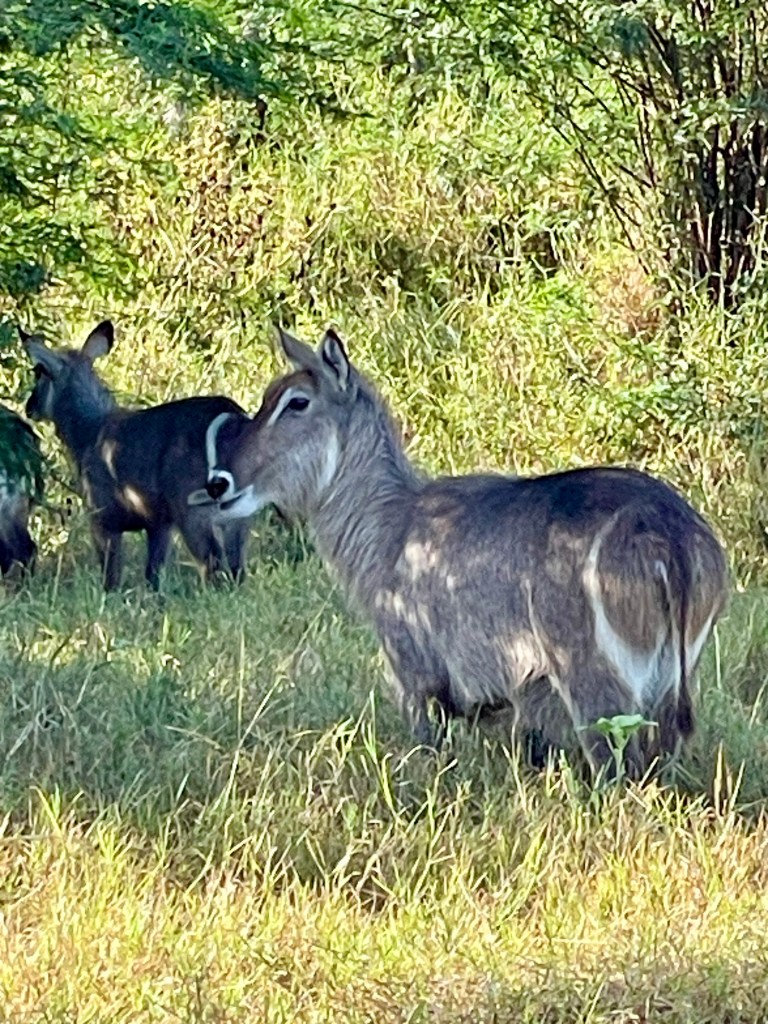
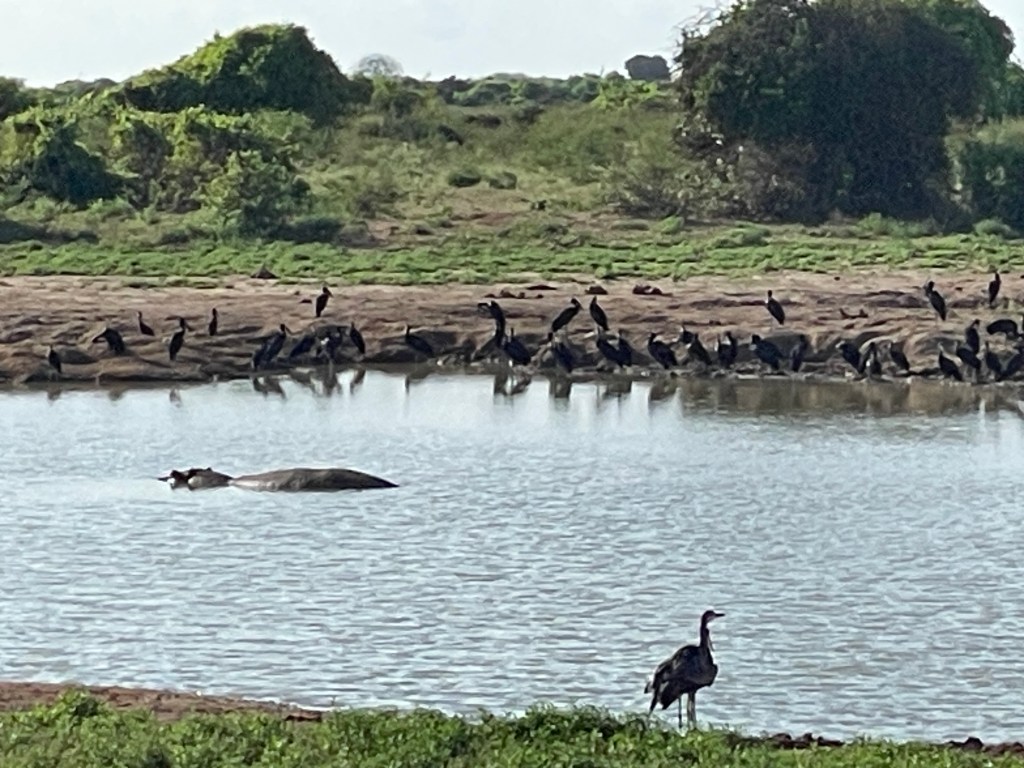
Our safari, with only Karla and I as passengers, was led by a driver/guide (Alex) and spotter (James). We had about 3 hours looking for animals on the way to the lodge, then 2-3 hours in the late afternoon and 4 hours the next morning. At first, there was some excitement when we spotted and stopped to watch an elephant 50 yards away. By the end, it was “just more elephants” and we would keep driving. We saw herds of elephants and Cape Buffaloes, lots of gazelles and impalas and similar creatures, giraffes, and hippos, mostly submerged. There were 25-30 different kinds of birds, all of which our guide identified. Our hotel room had a sign advising us to close the window at night to avoid visiting baboons; they were there too.

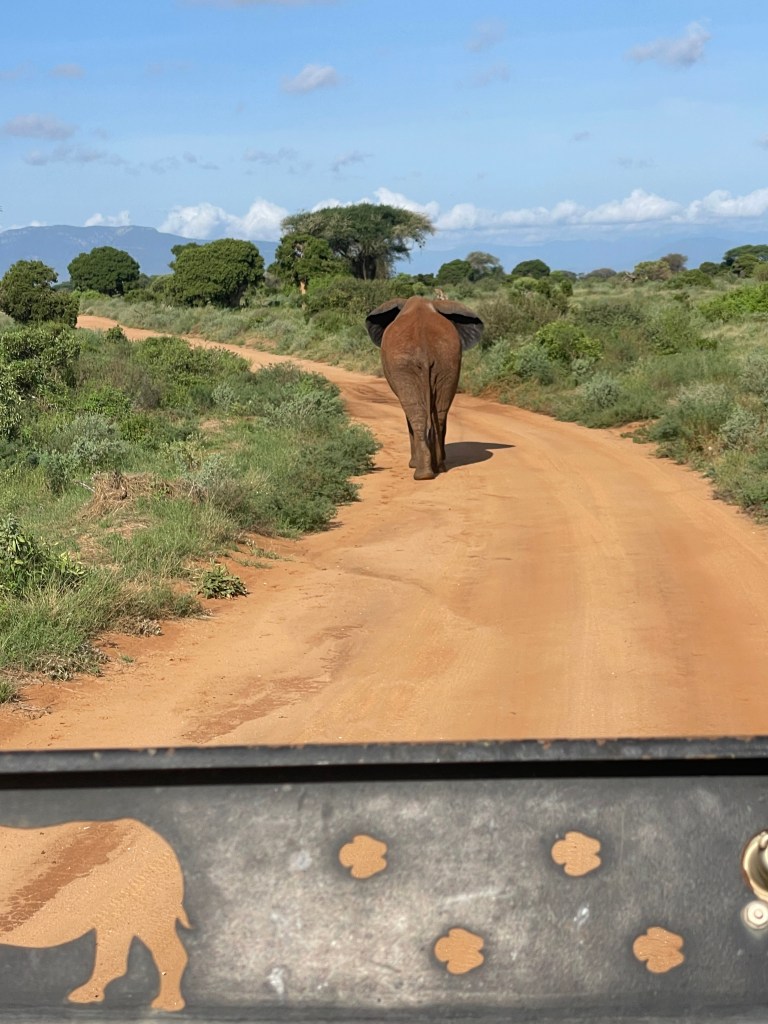
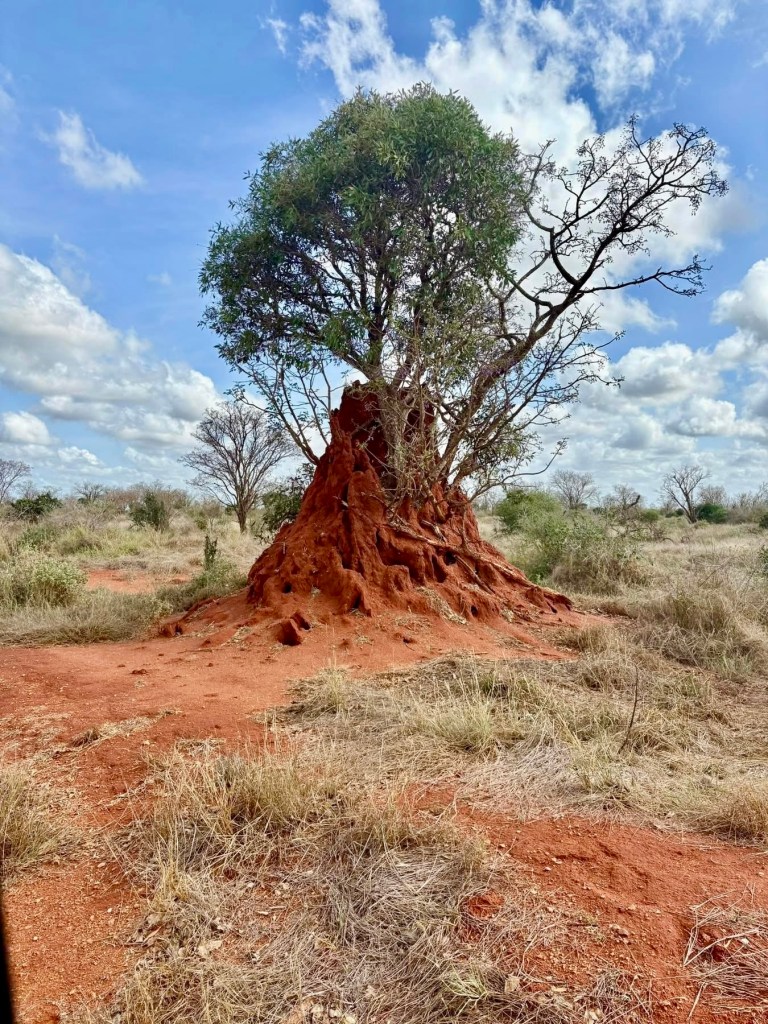
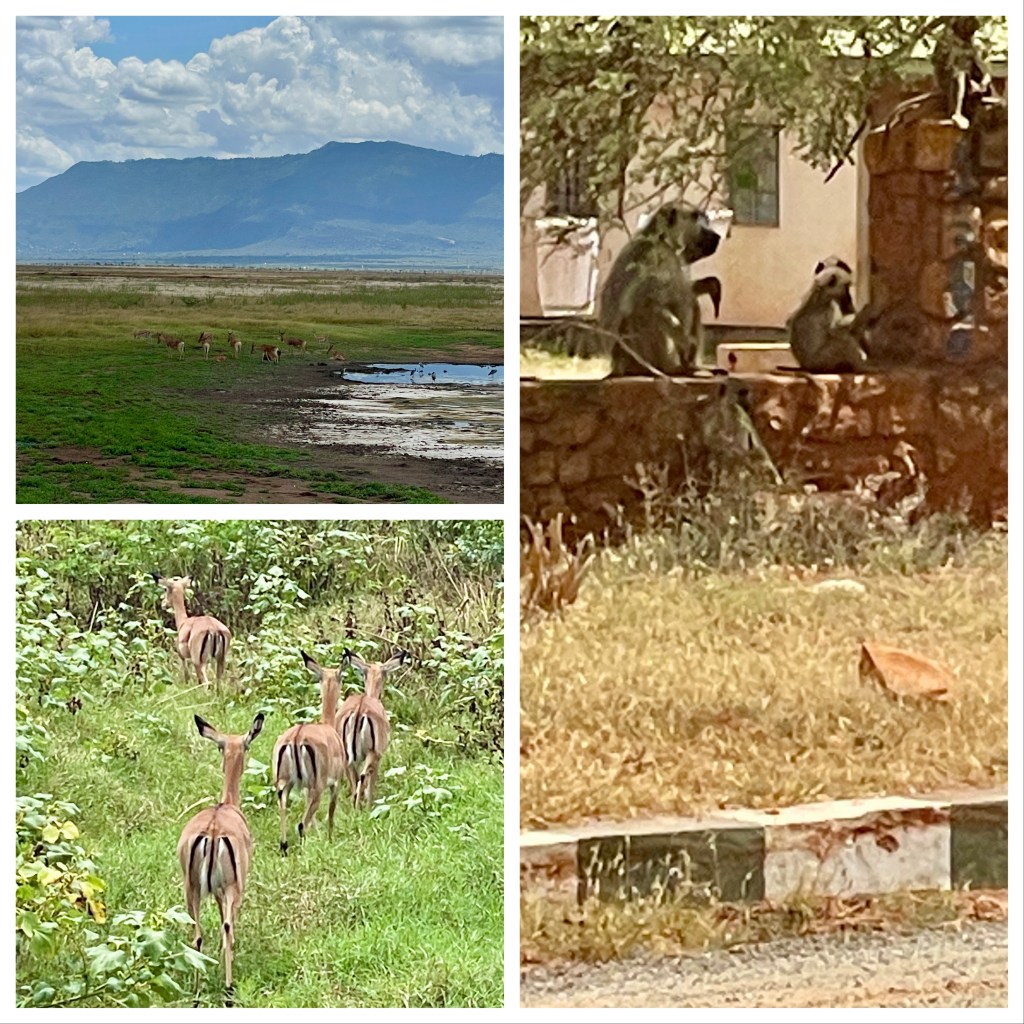
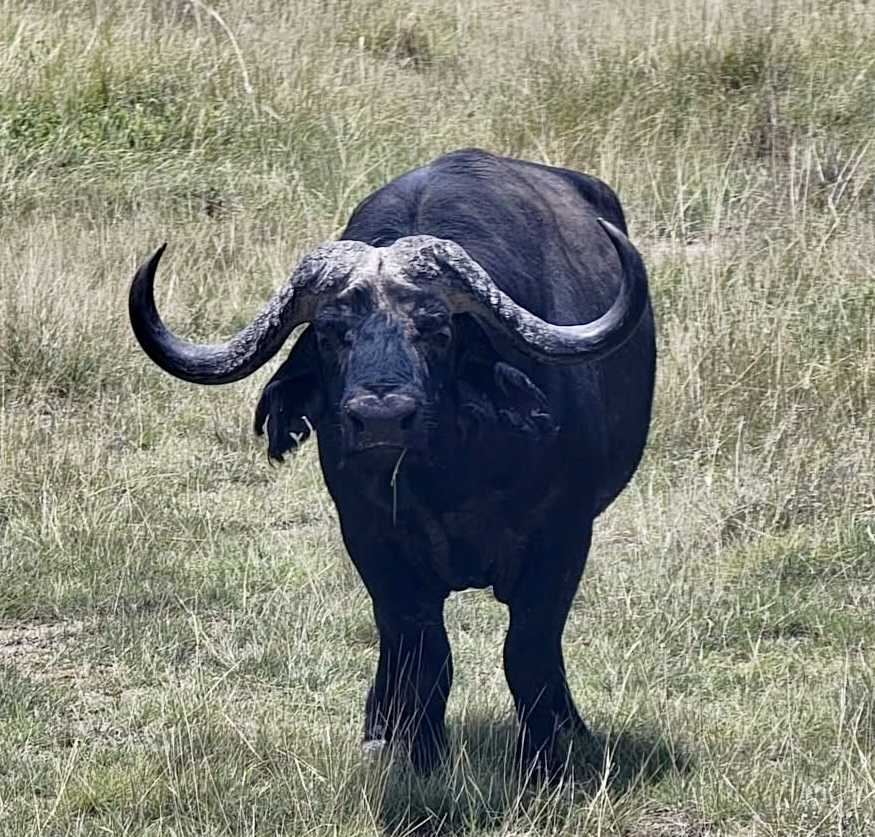
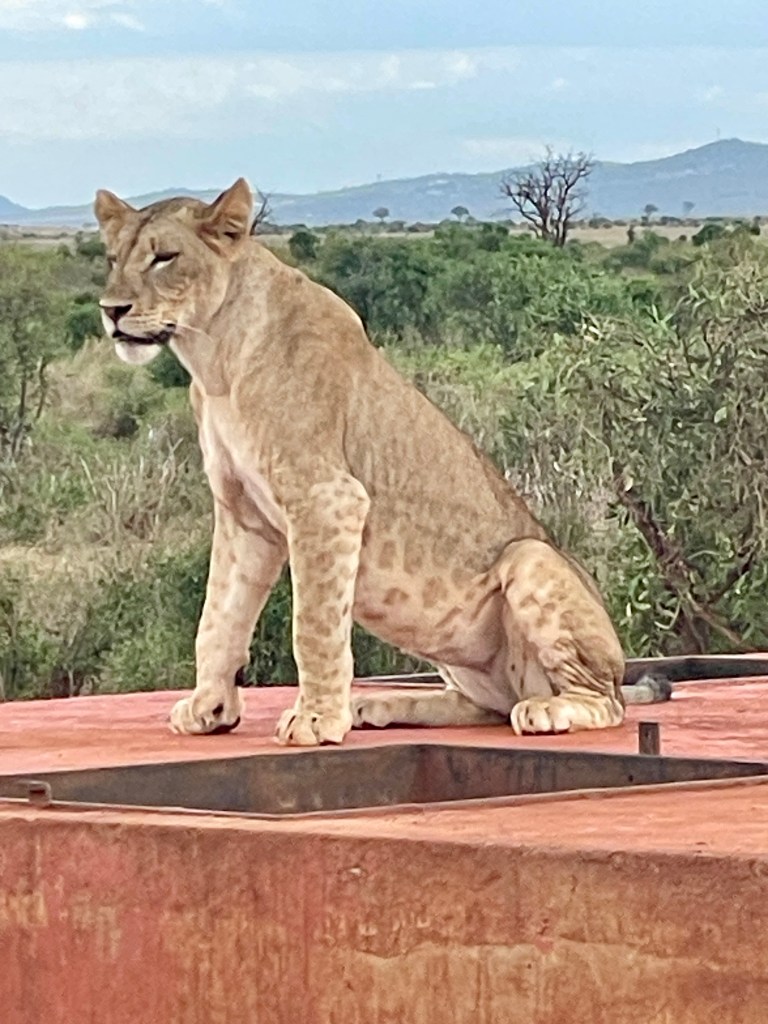
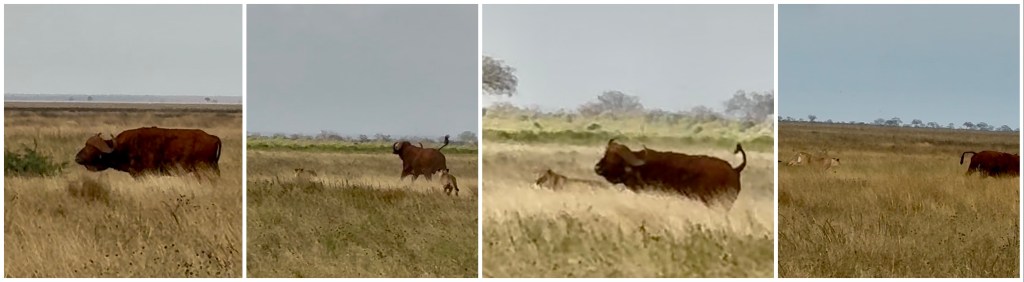
Our number one experience was encountering 5 lionesses. Frequently, lions are not seen. There were 5-6 safari vehicles parked and watching the lions. Our driver saw that the lions were looking off in the distance. He saw a water buffalo, perhaps 200 yards away. He told us that we should drive farther up the road toward the water buffalo; he thought the lions were going to attack. He was right and we were well situated. The lions stealthily moved through the grass and closed the distance. At the right time, the lead lion charged at the water buffalo which took off running. I thought the lead lion would catch it and then the others would help bring it down. But the lion came up about a yard short before the water buffalo escaped. (The photos below don’t do it justice). The lion then looked like the cat that missed a bird. It had a look like, “I wasn’t really trying.” Our guide explained that, judging by the spots, the lions were only about 3 years old. They were just learning. I’m not sure how the water buffalo tells it. Lions are usually sleeping, not performing. Our guide said that it was very rare to experience.
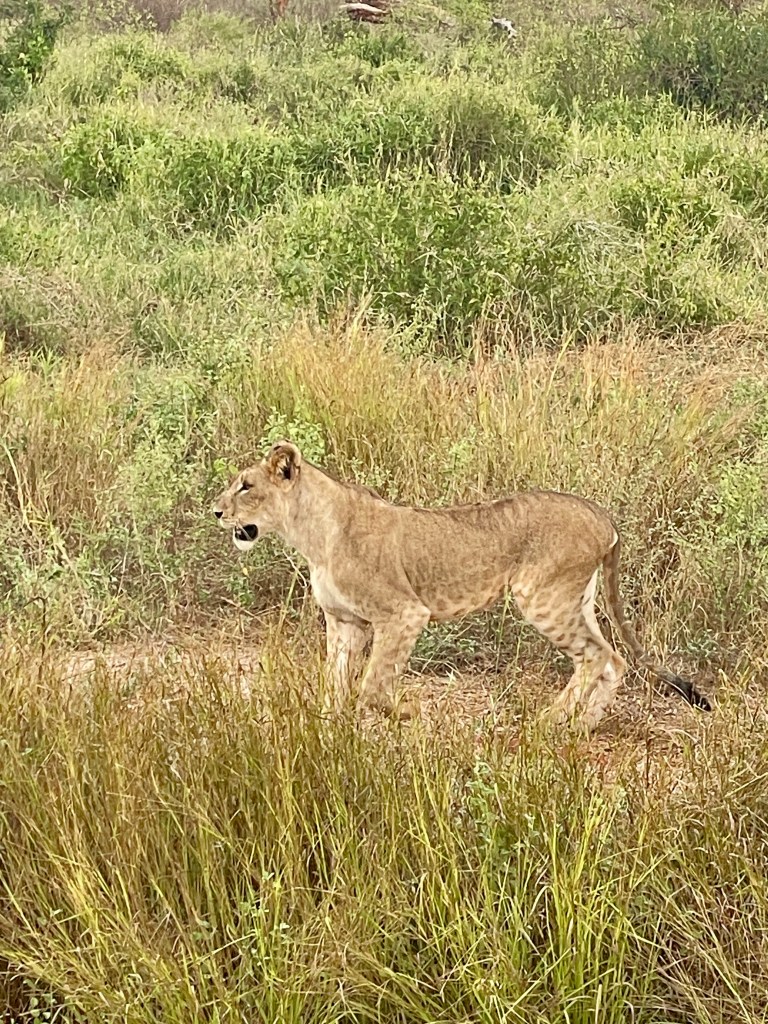
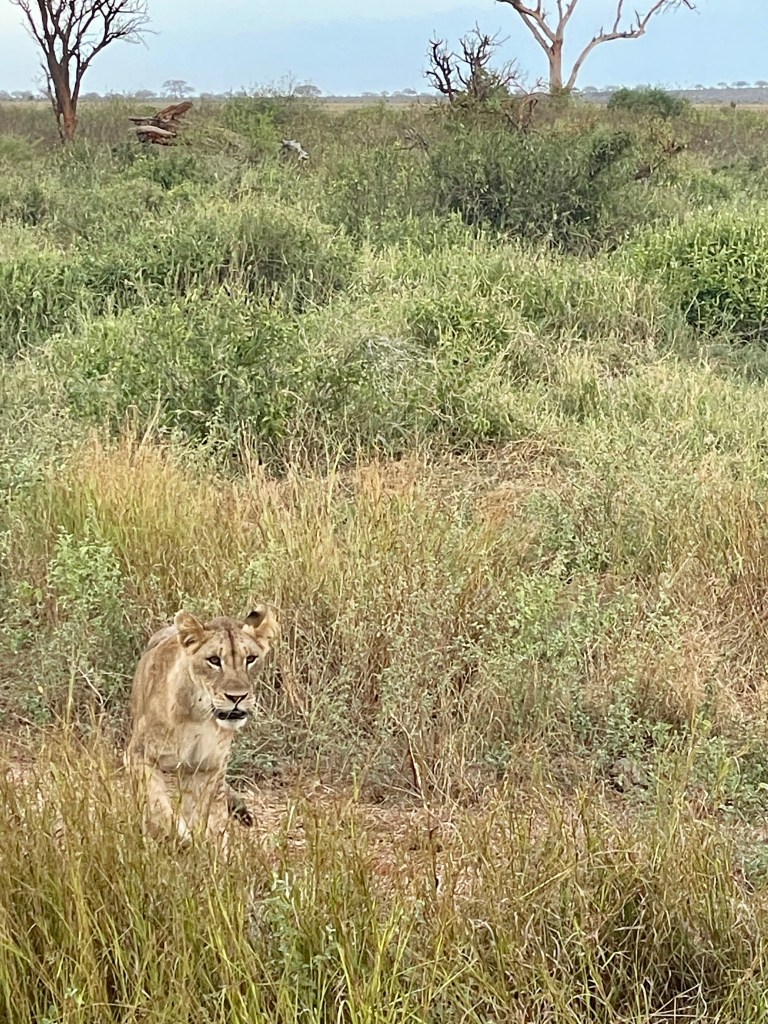
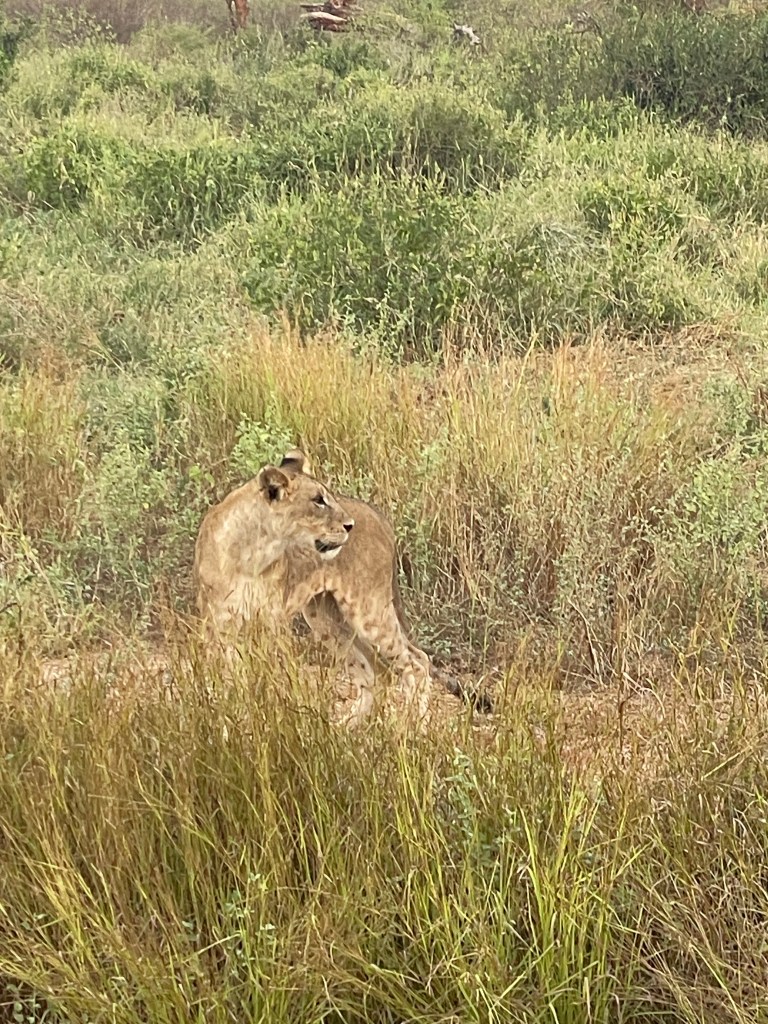
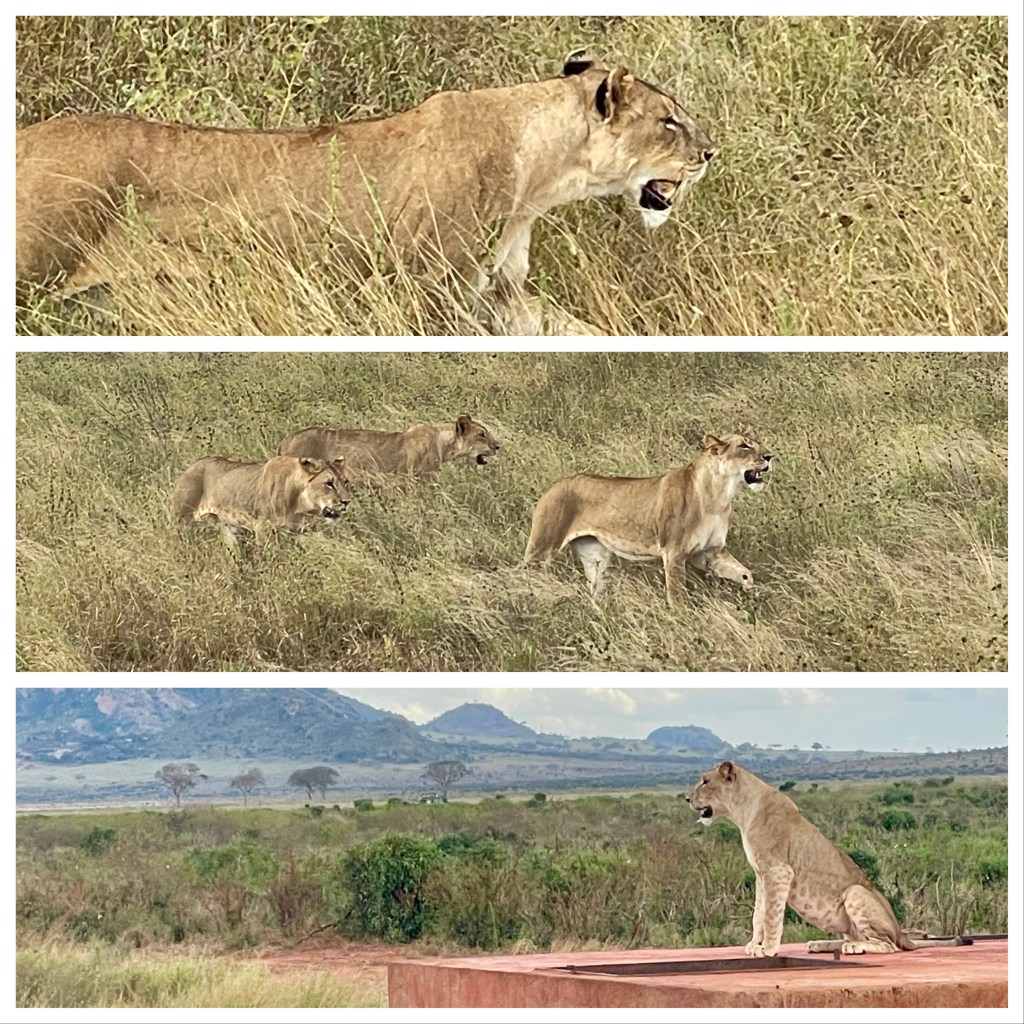
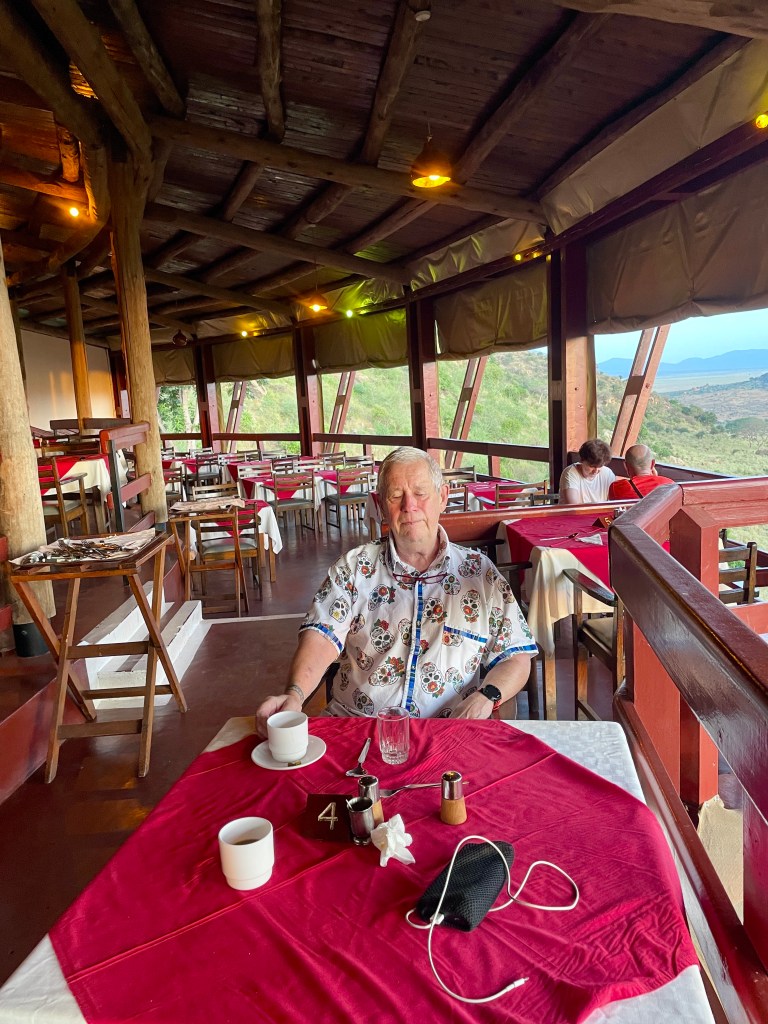
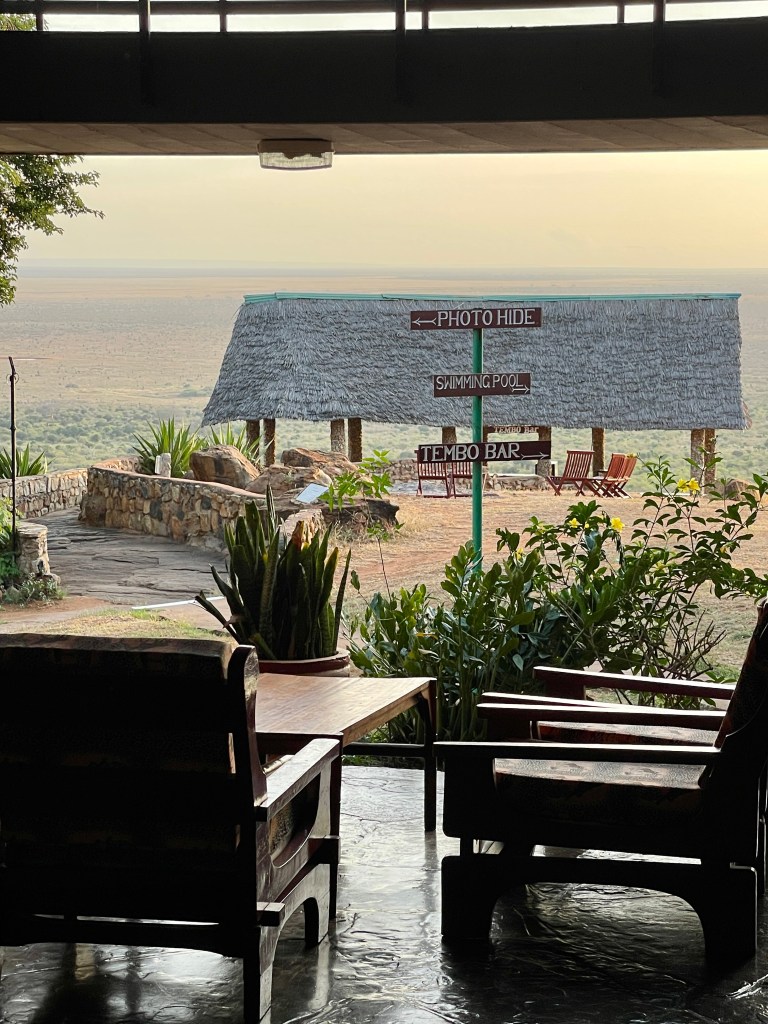
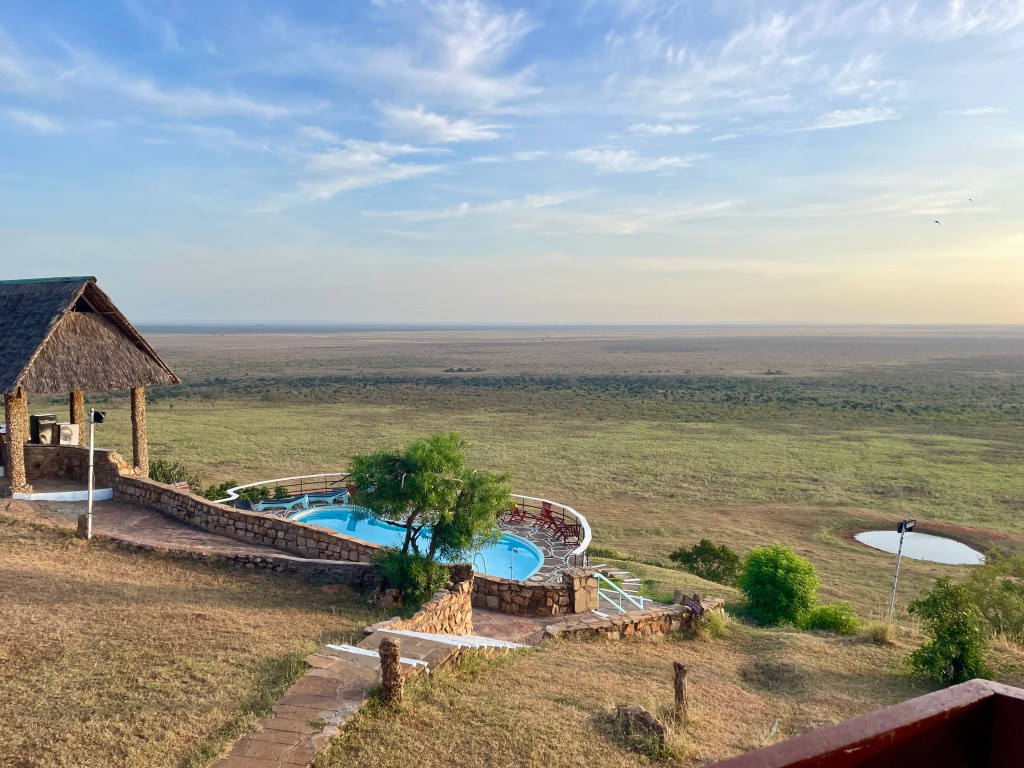
Back at the hotel, we enjoyed a bottle of wine one of our servers sent with us while watching elephants and water buffaloes enjoy the well placed watering holes. There were probably 100 animals entertaining us.
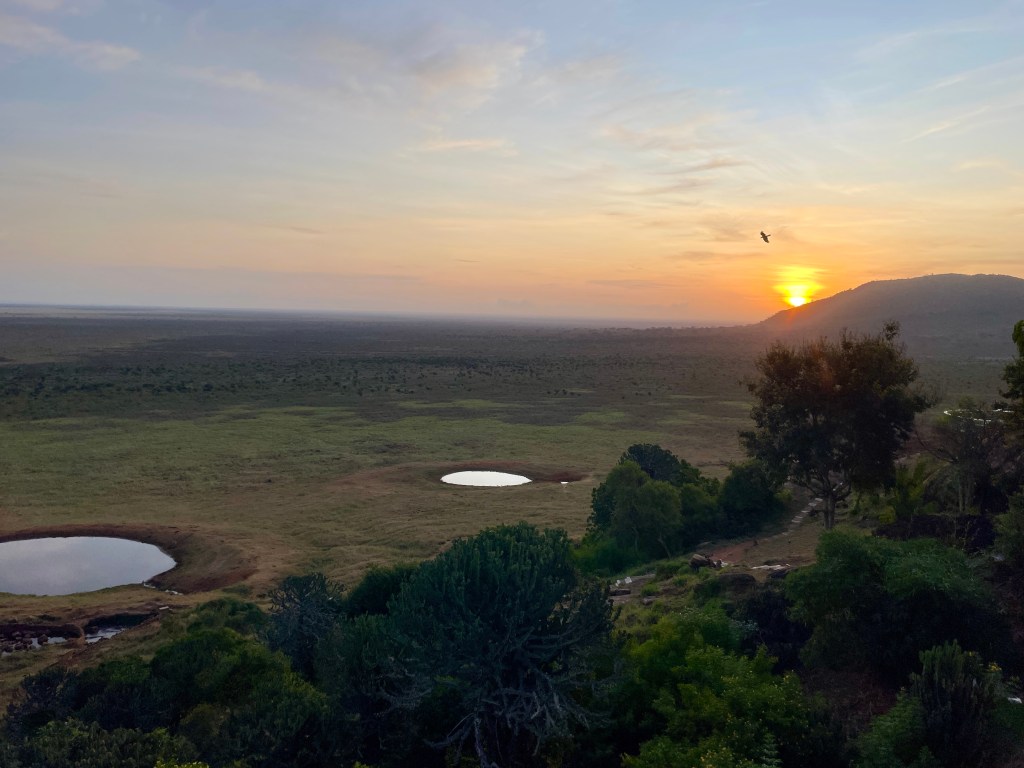
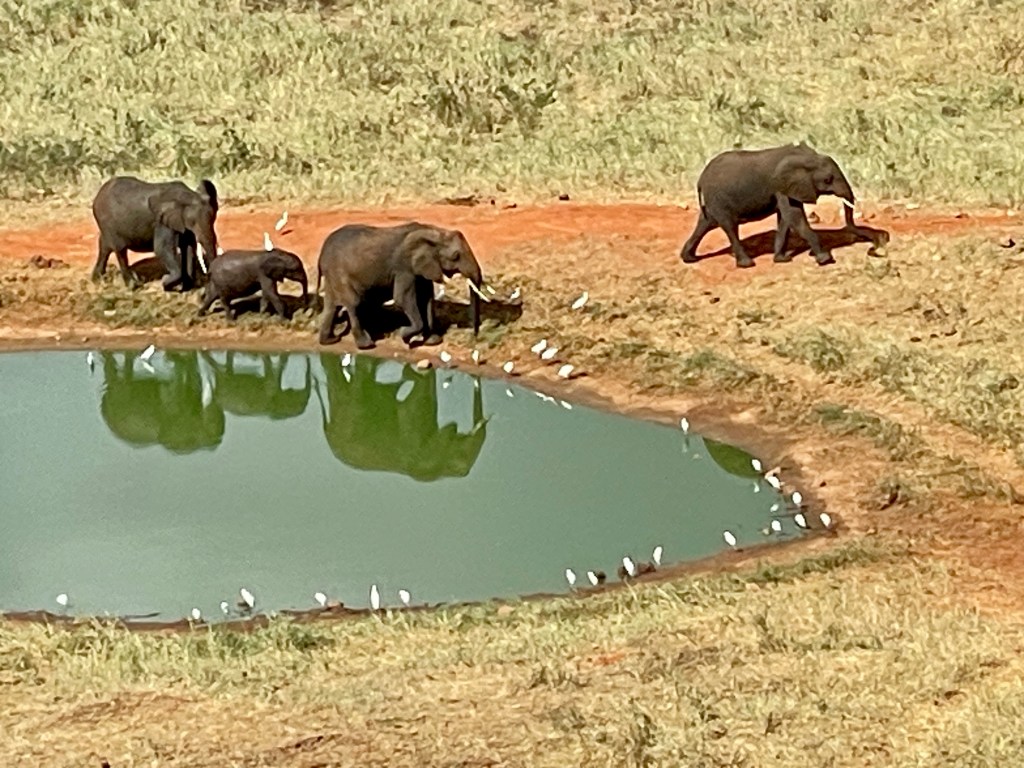
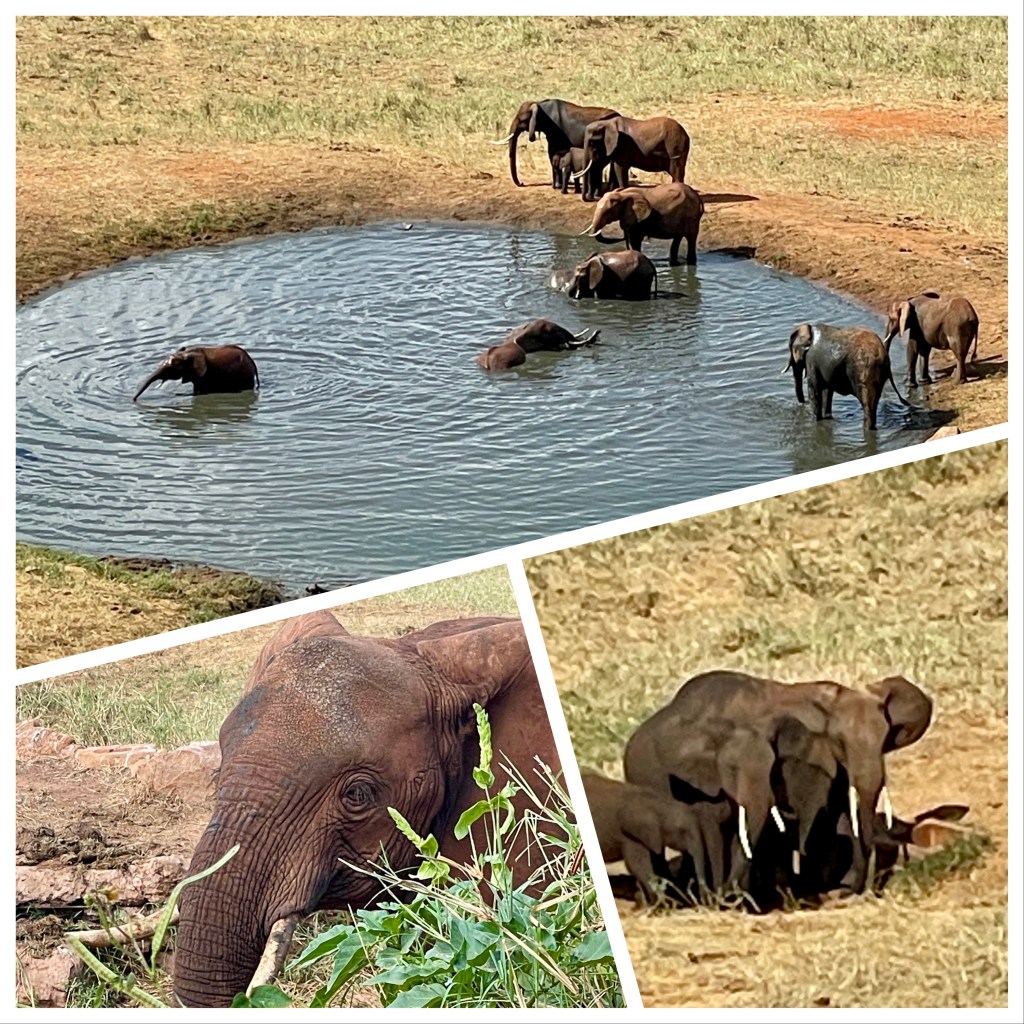
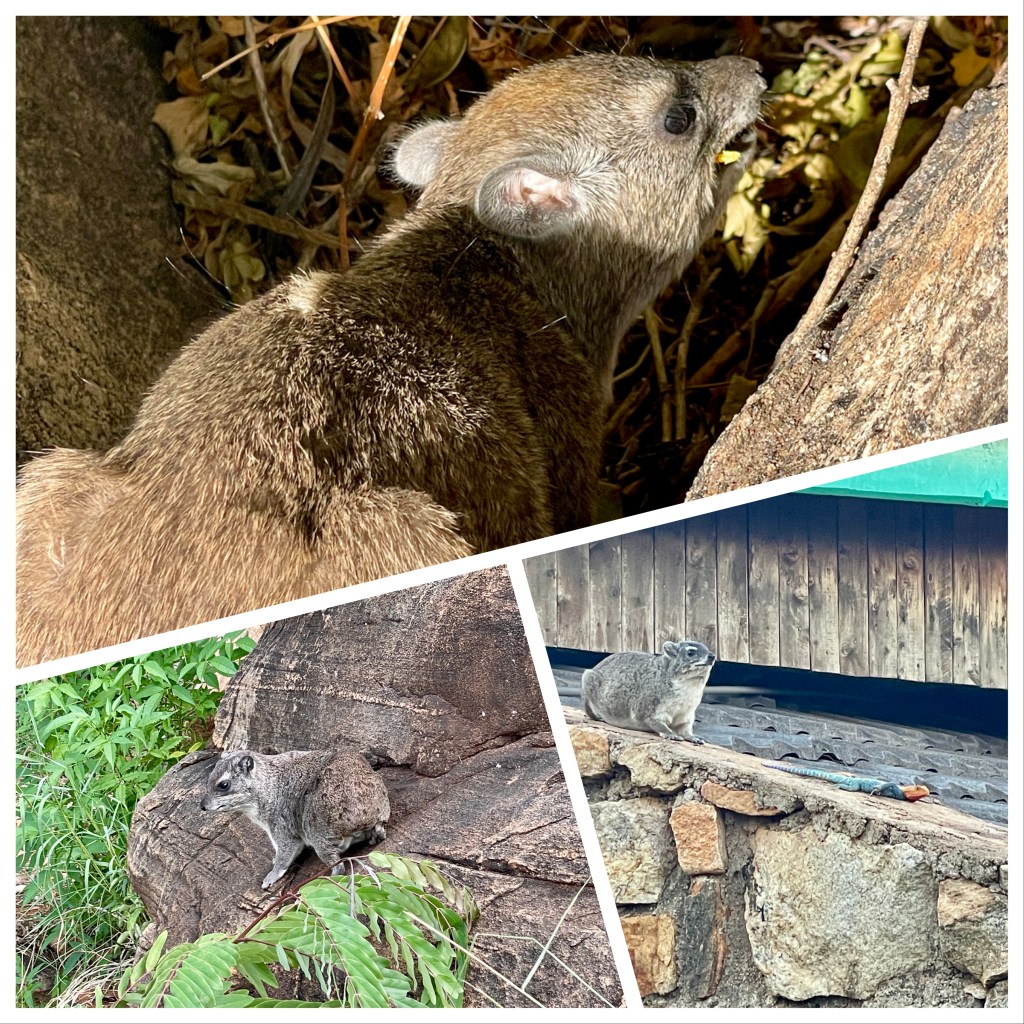

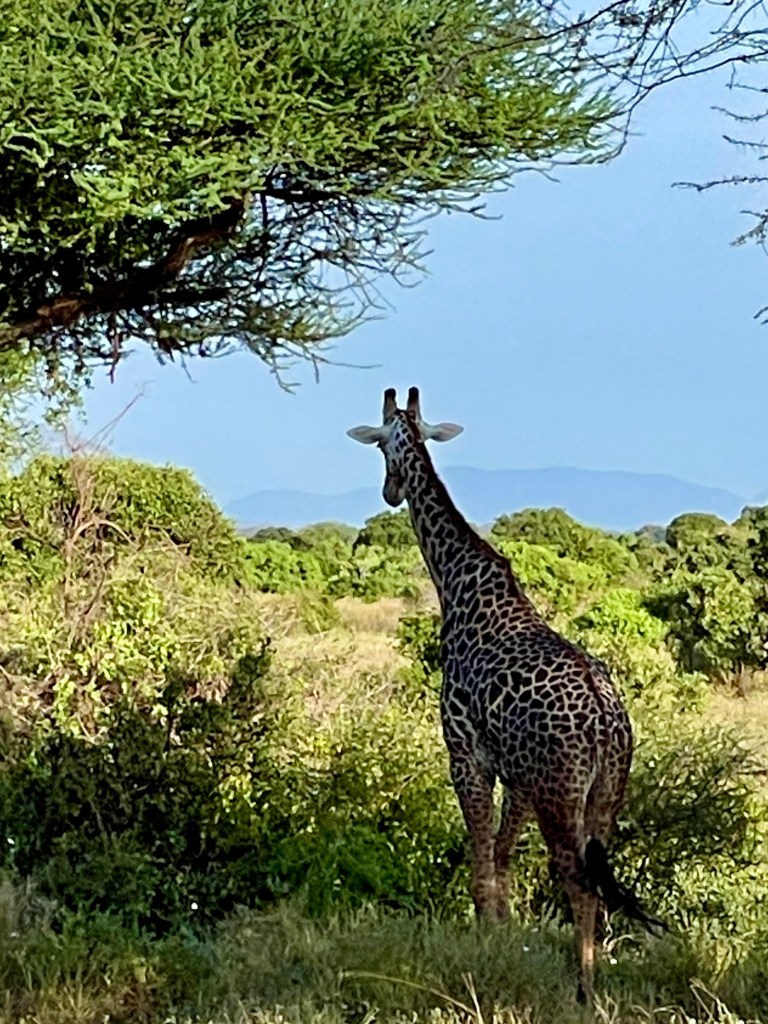
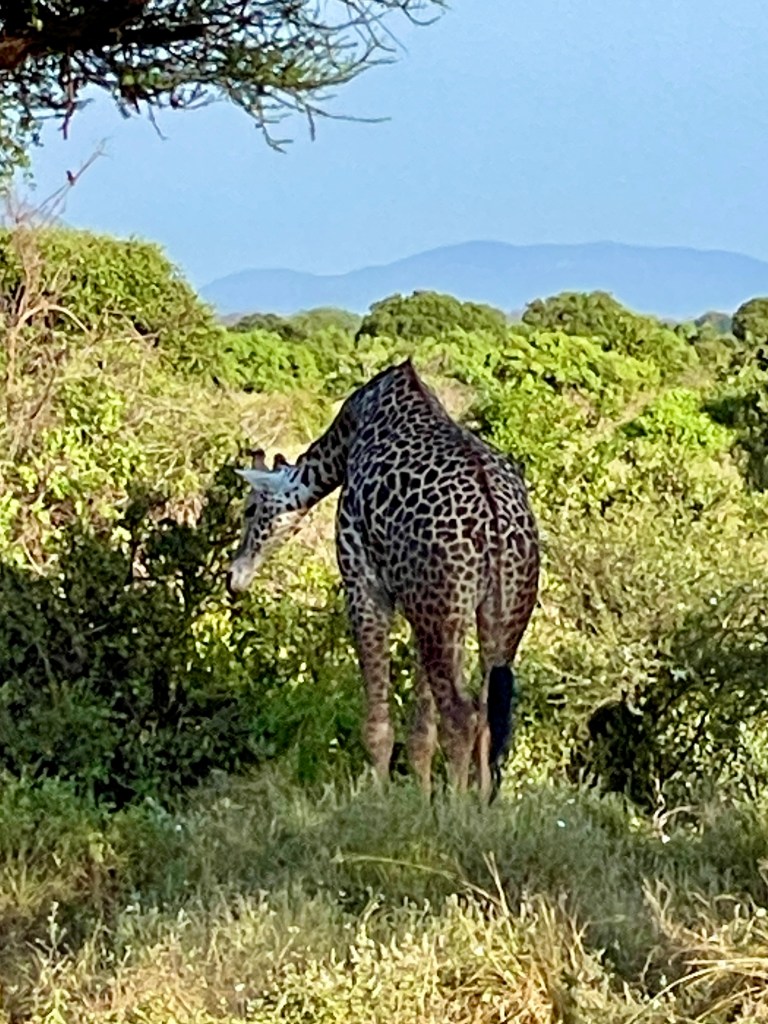
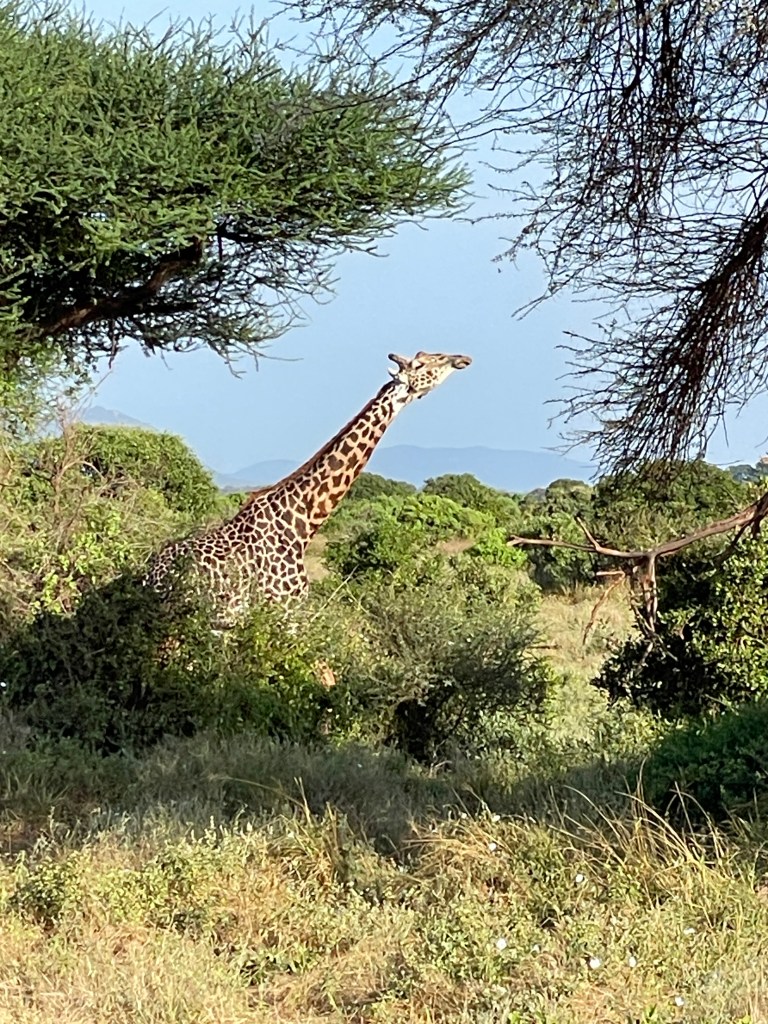
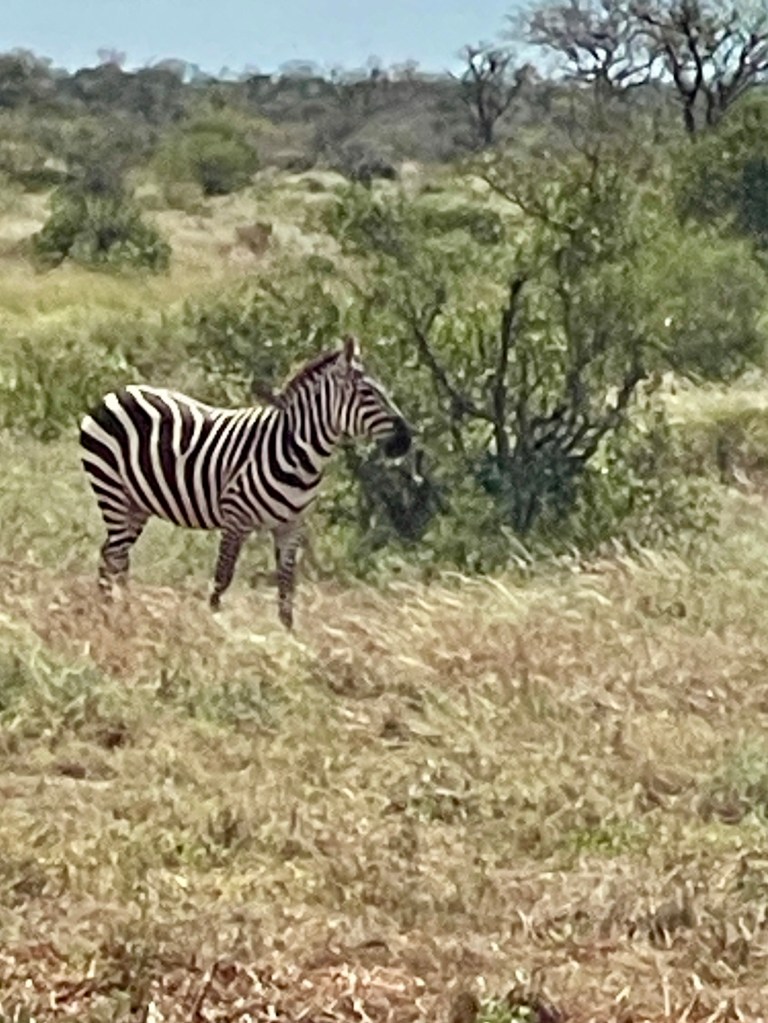
On the second day, the guide made sure that we saw a giraffe and hippo along with zebras, etc as well as lots of birds. It couldn’t have been much better. Rhinos, we were advised, were in the West Tsavo park, some 70 kilometers away.
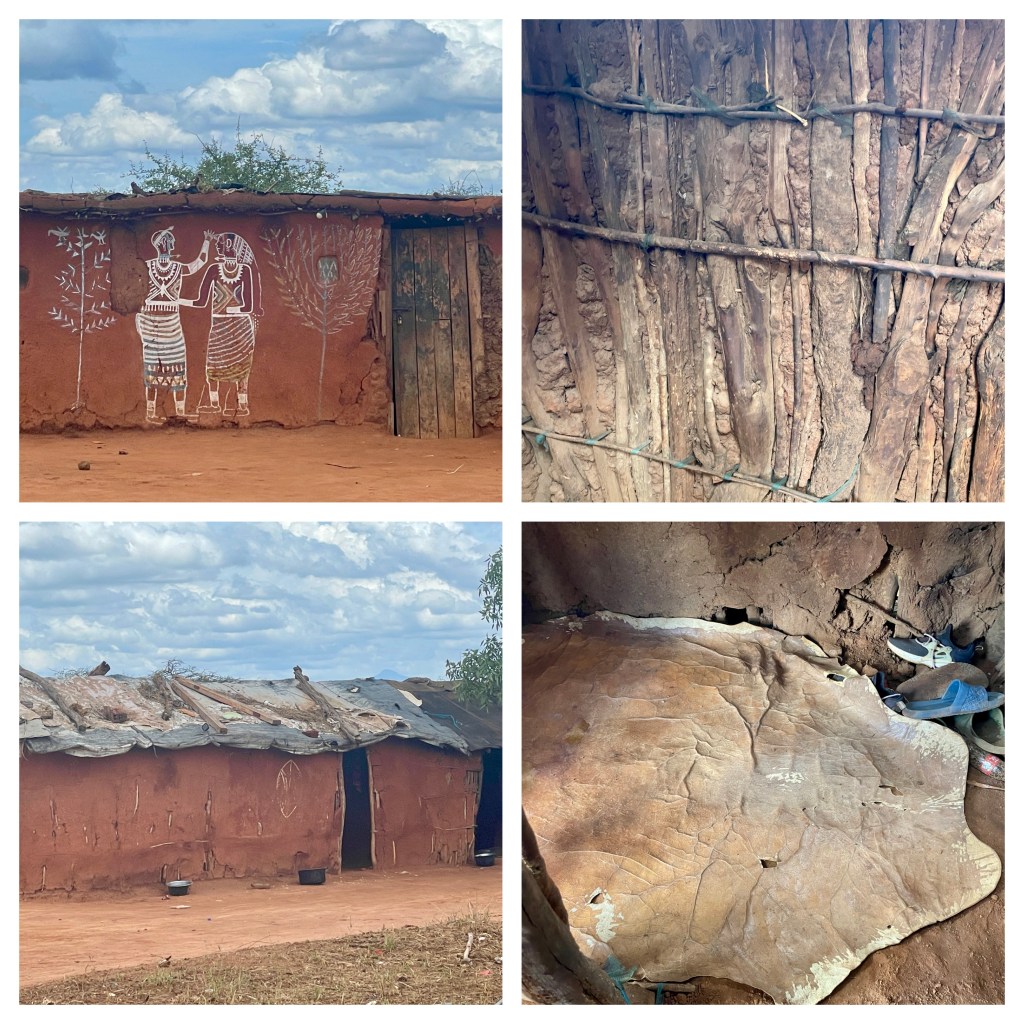
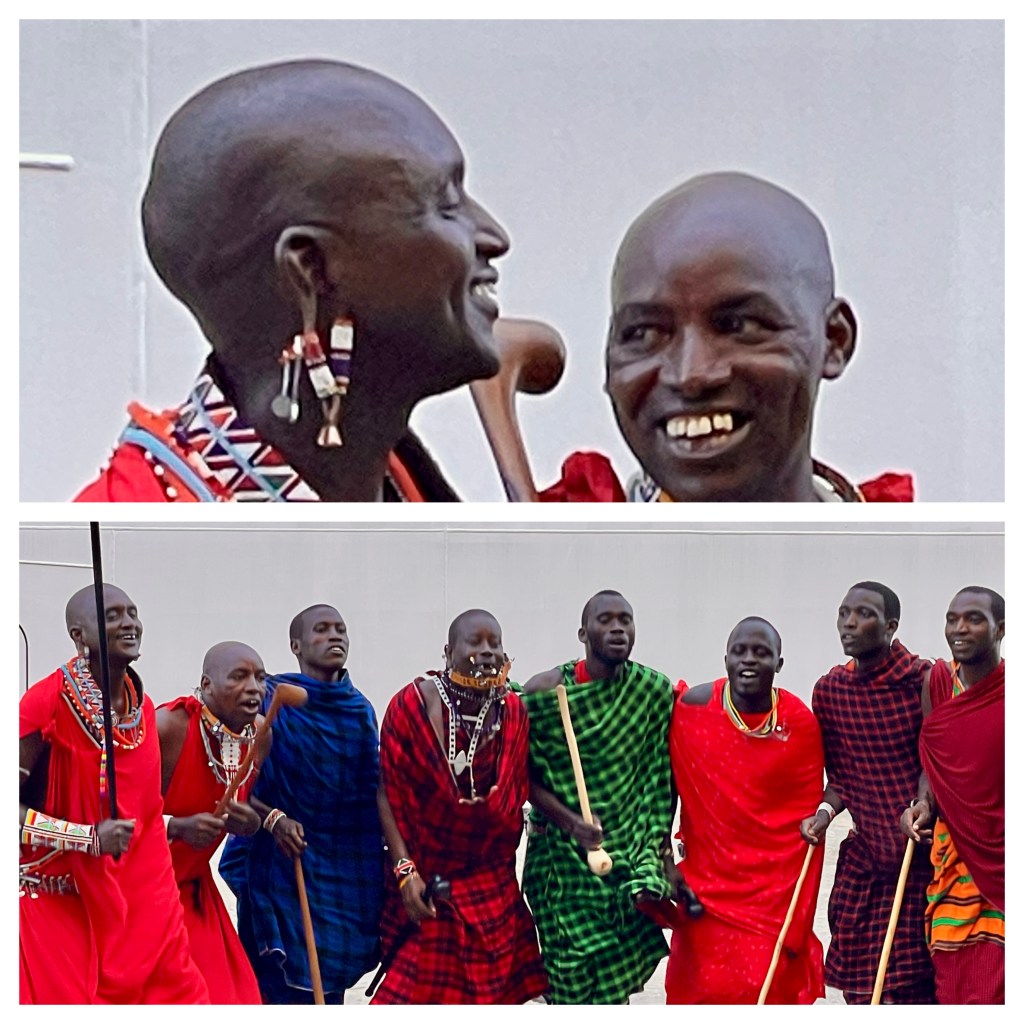
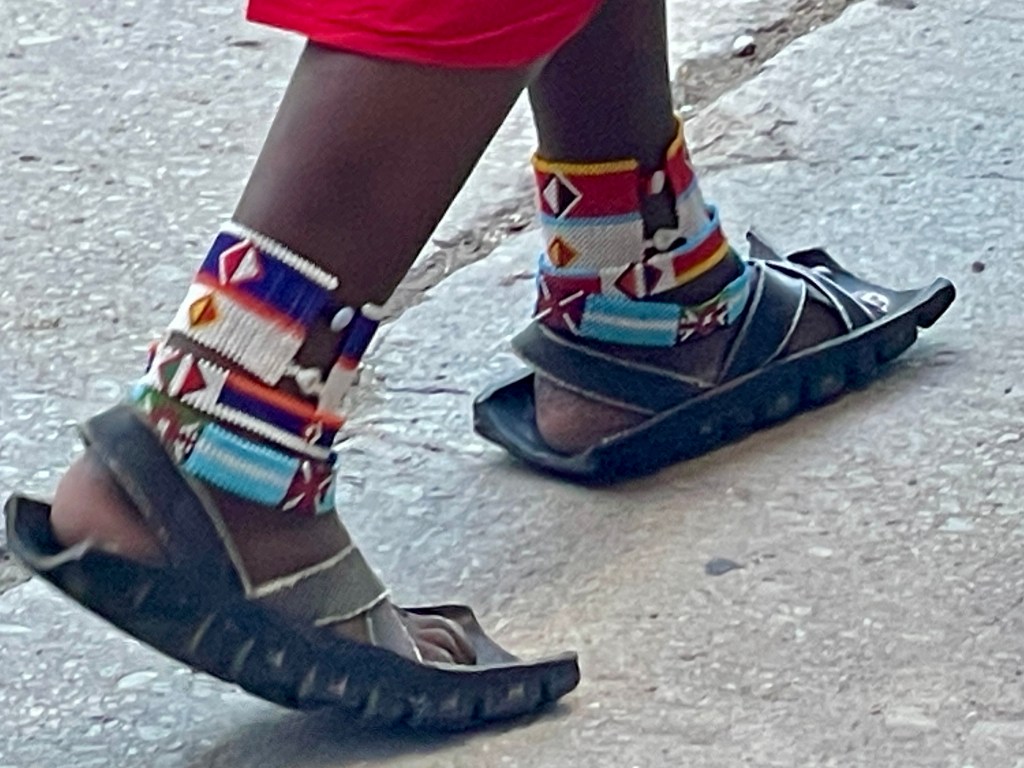
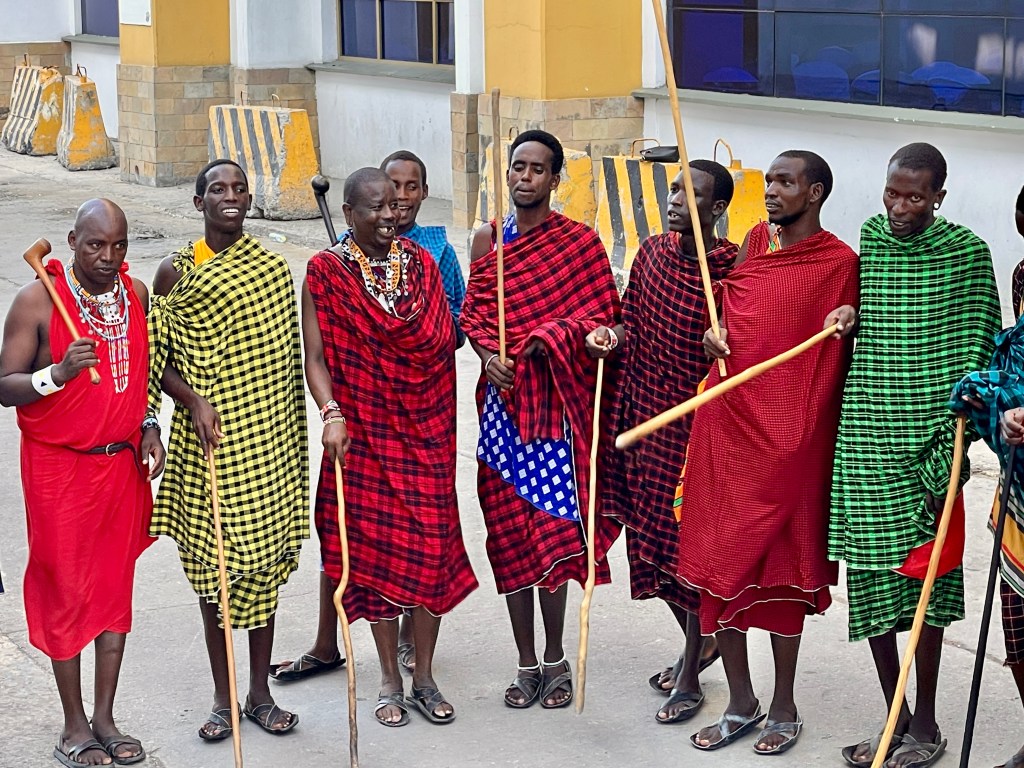
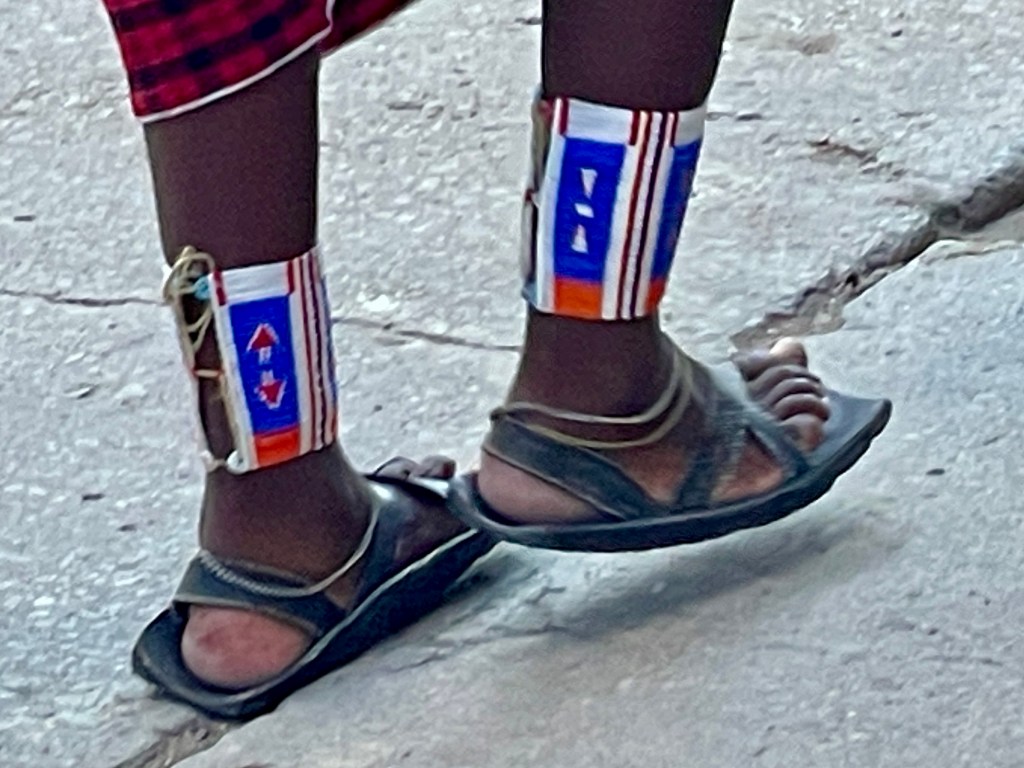
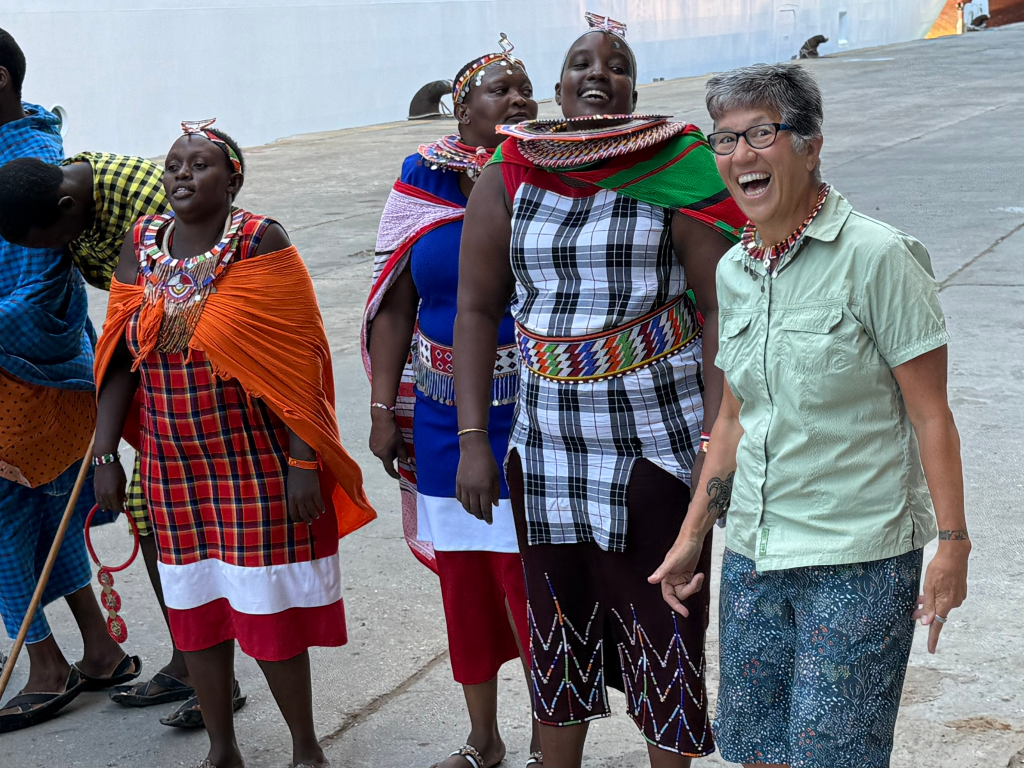
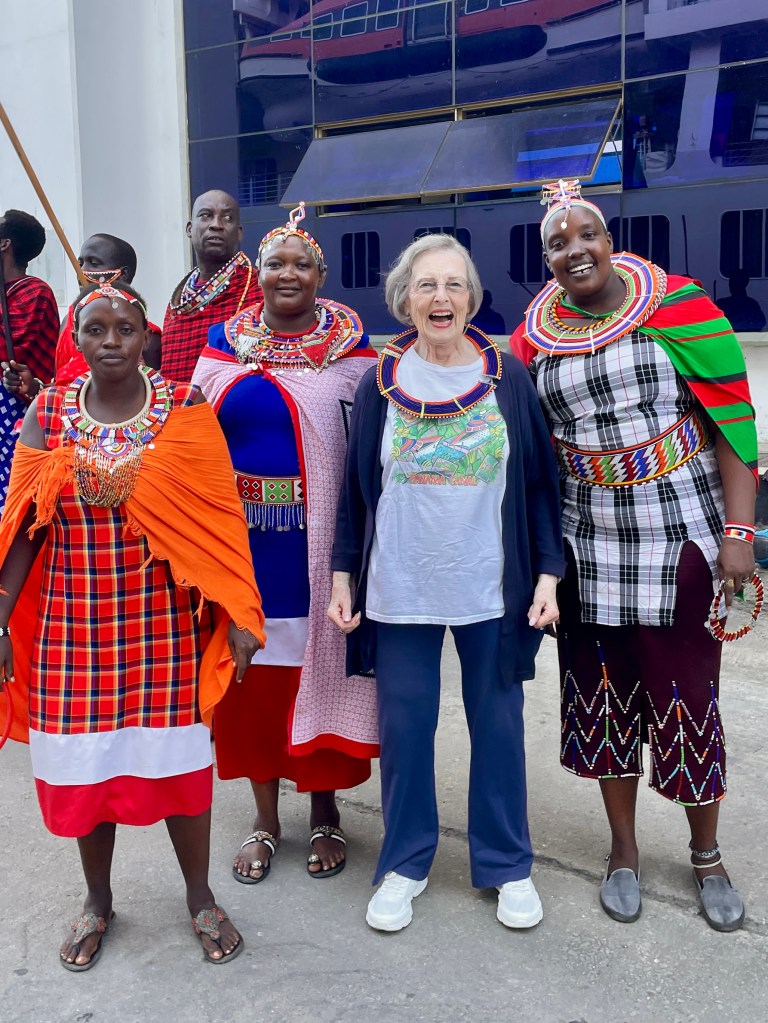
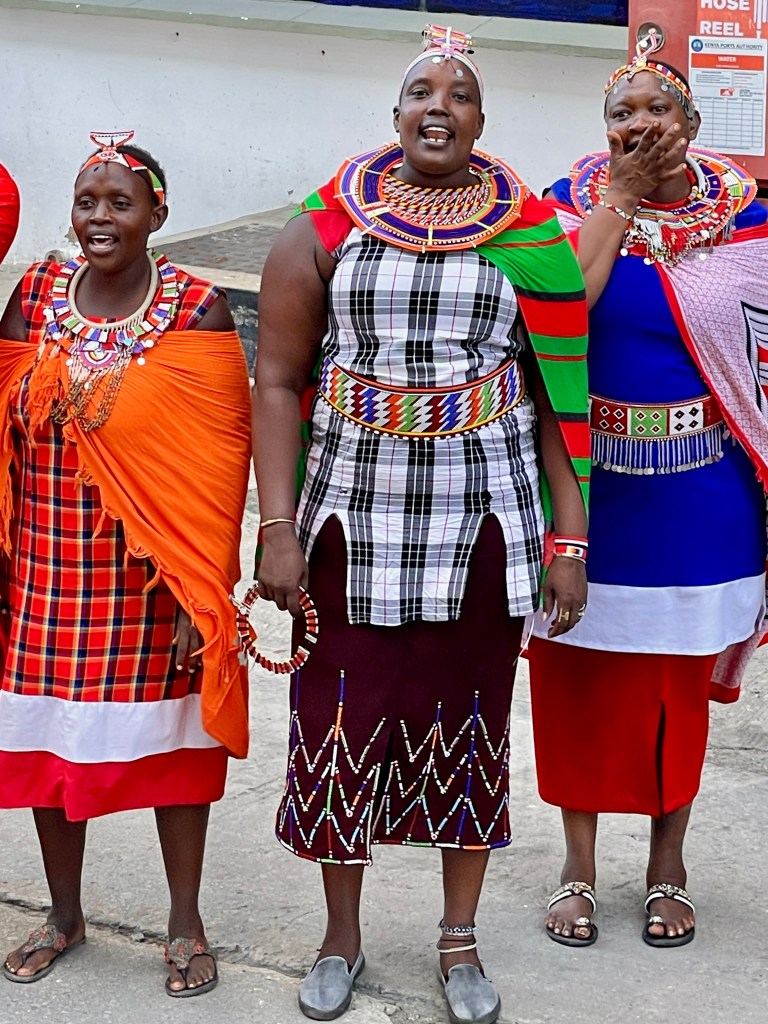
On the way back, we stopped at a Maasai Village. It was interesting to see their houses of sticks and cow dung. They are a semi-nomadic group with the men going out to shepherd their cattle and goats in the wild and the women and children staying in the village. Upon entering we were met by the chief’s son (one of 35 children from the chief and his 10 wives) and we were asked to make a donation ($20 each).
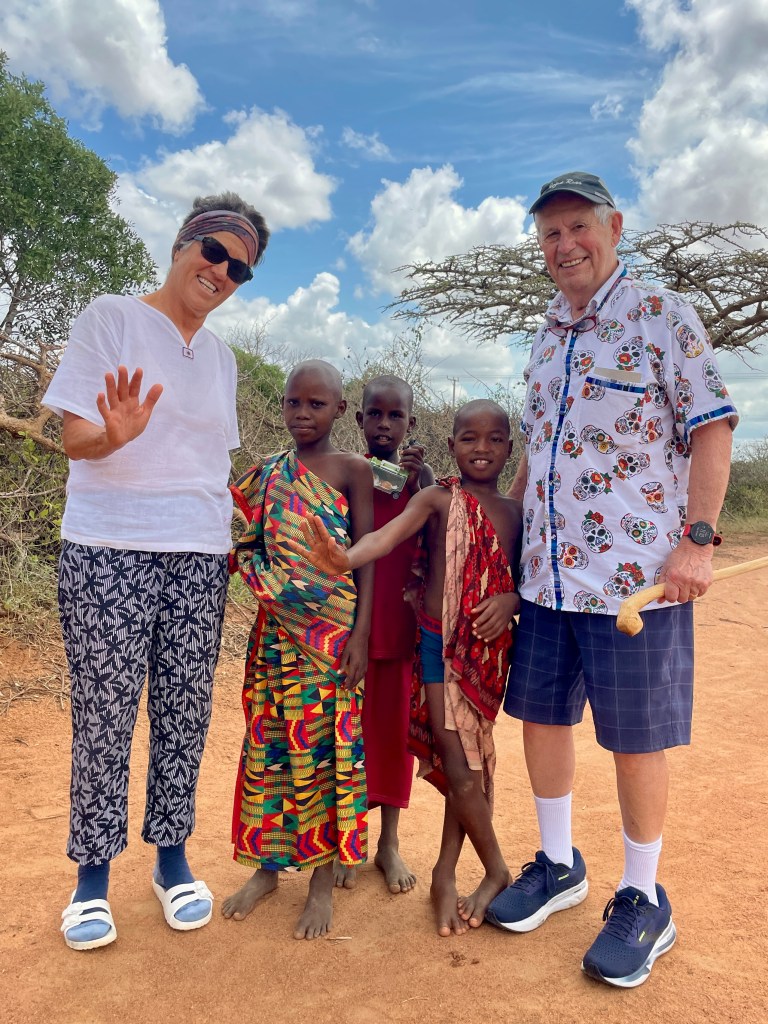
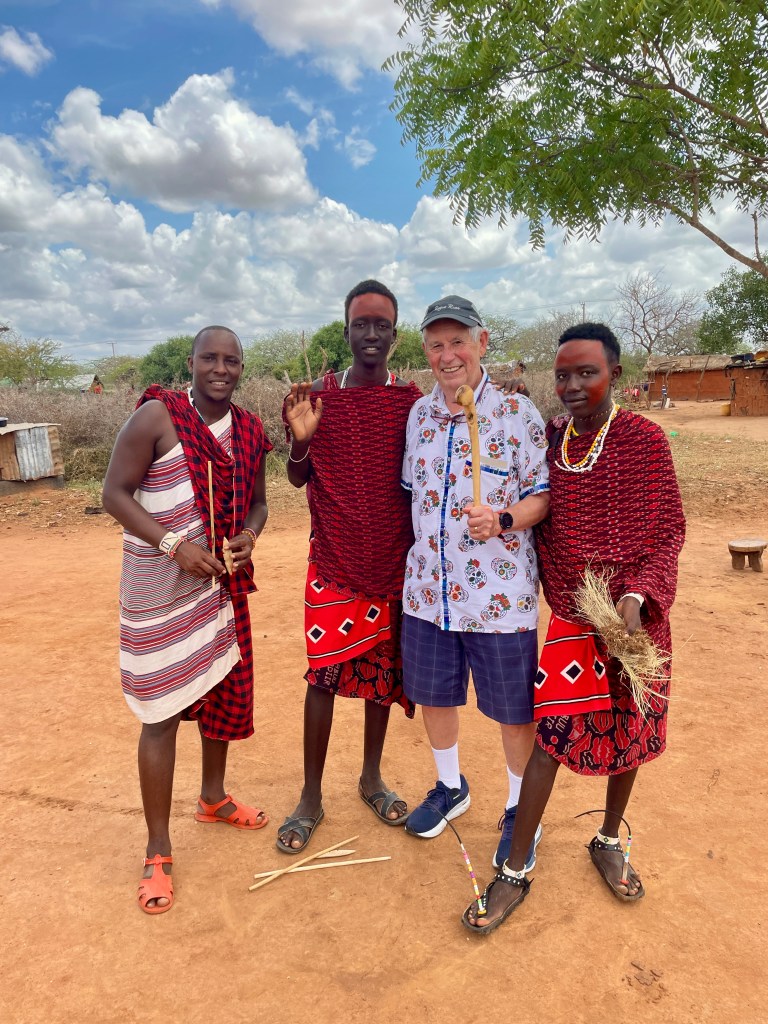
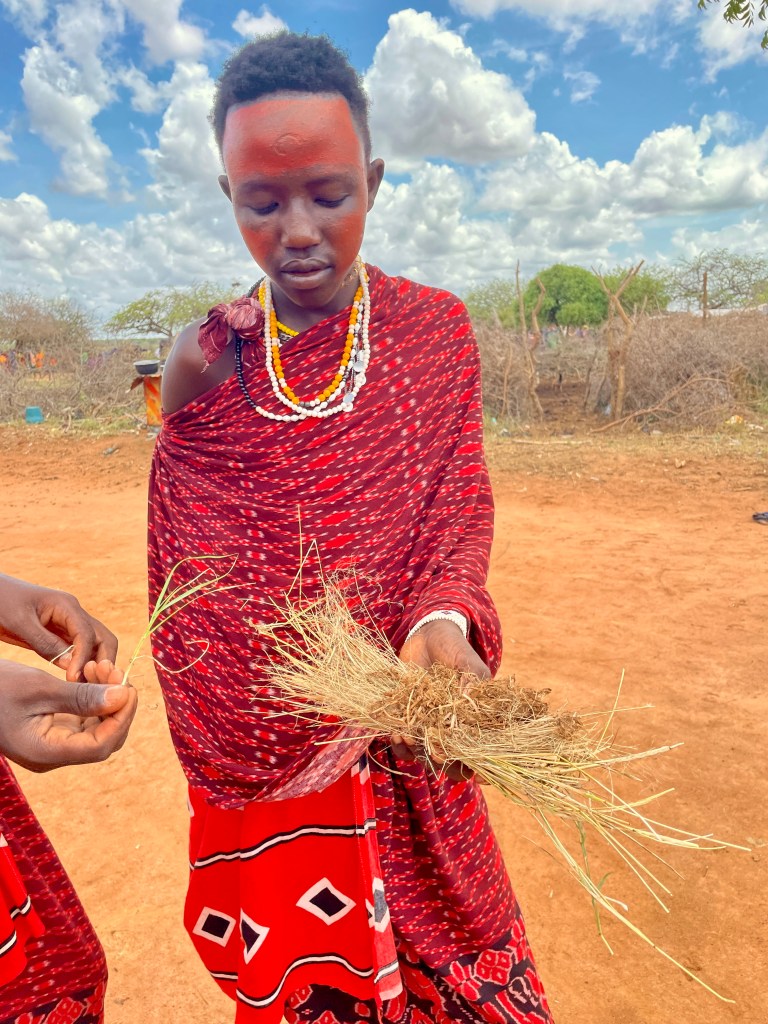
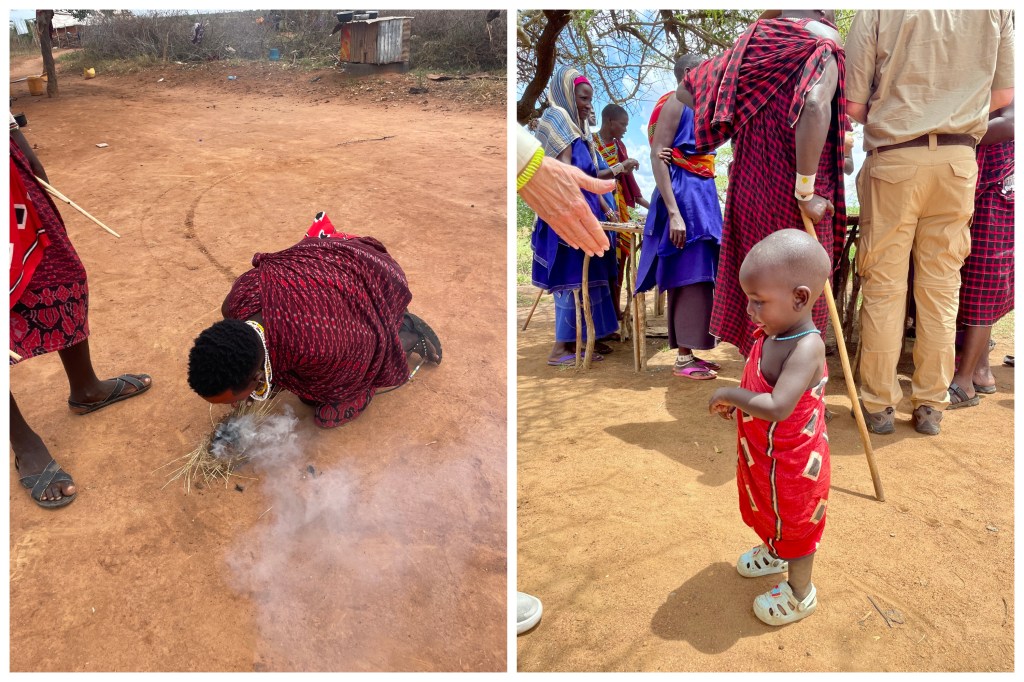
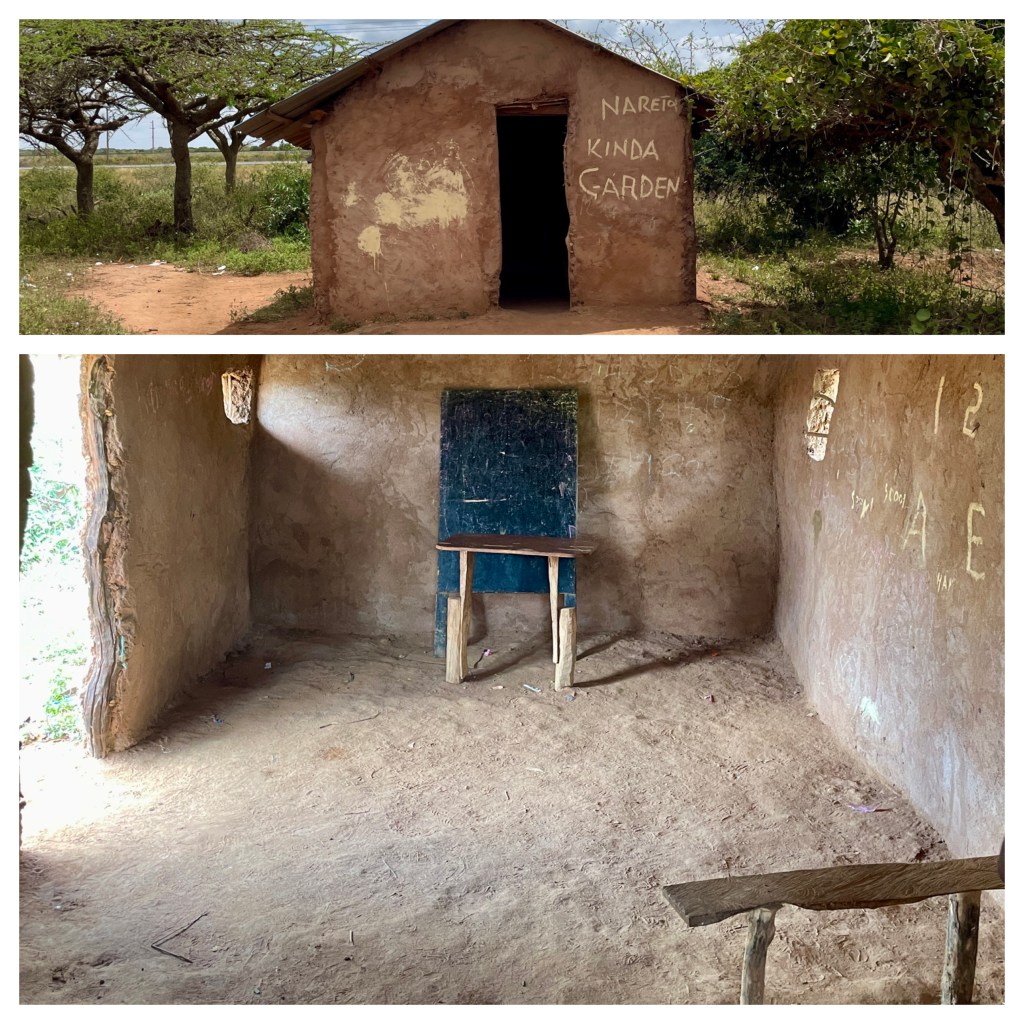
They showed us around, started a fire by rubbing sticks together, and then catching the sparks in a mixture of elephant dung and grasses. They also performed a tribal dance. The teacher showed us their school house which was a rickety building with dirt floors, some wooden bench seating, and a badly scratched blackboard. The teacher spelled his name for us in the dirt with a stick and asked Karla to spell hers and mine. The village school educates kids under 8, after 8 they go to a state school. Our guide noted that the government had gotten after the Maasai for not sending their kids to school.
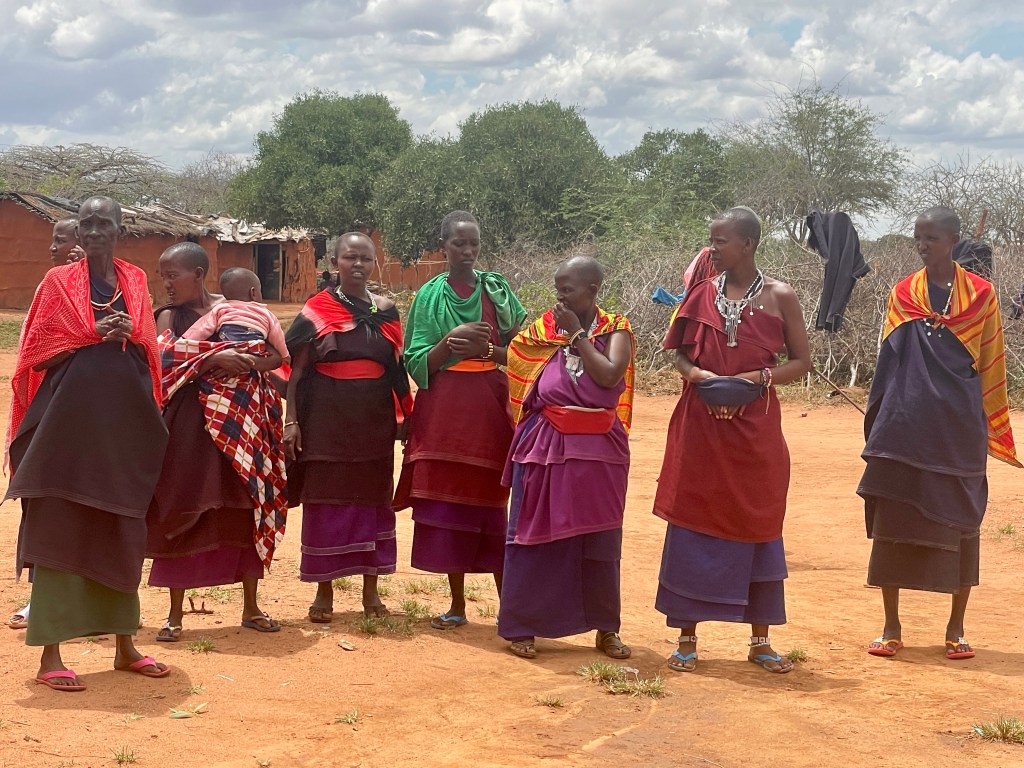
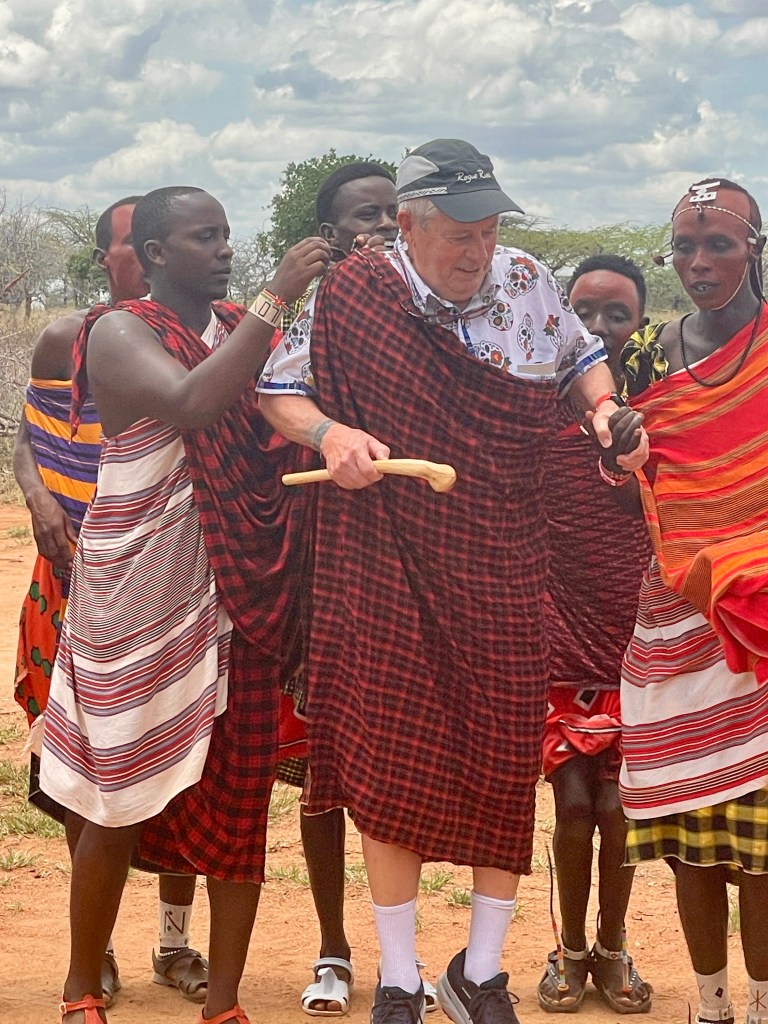

After our tour they were nice enough to take us to craft tables with bracelets for sale…at high prices. We declined.
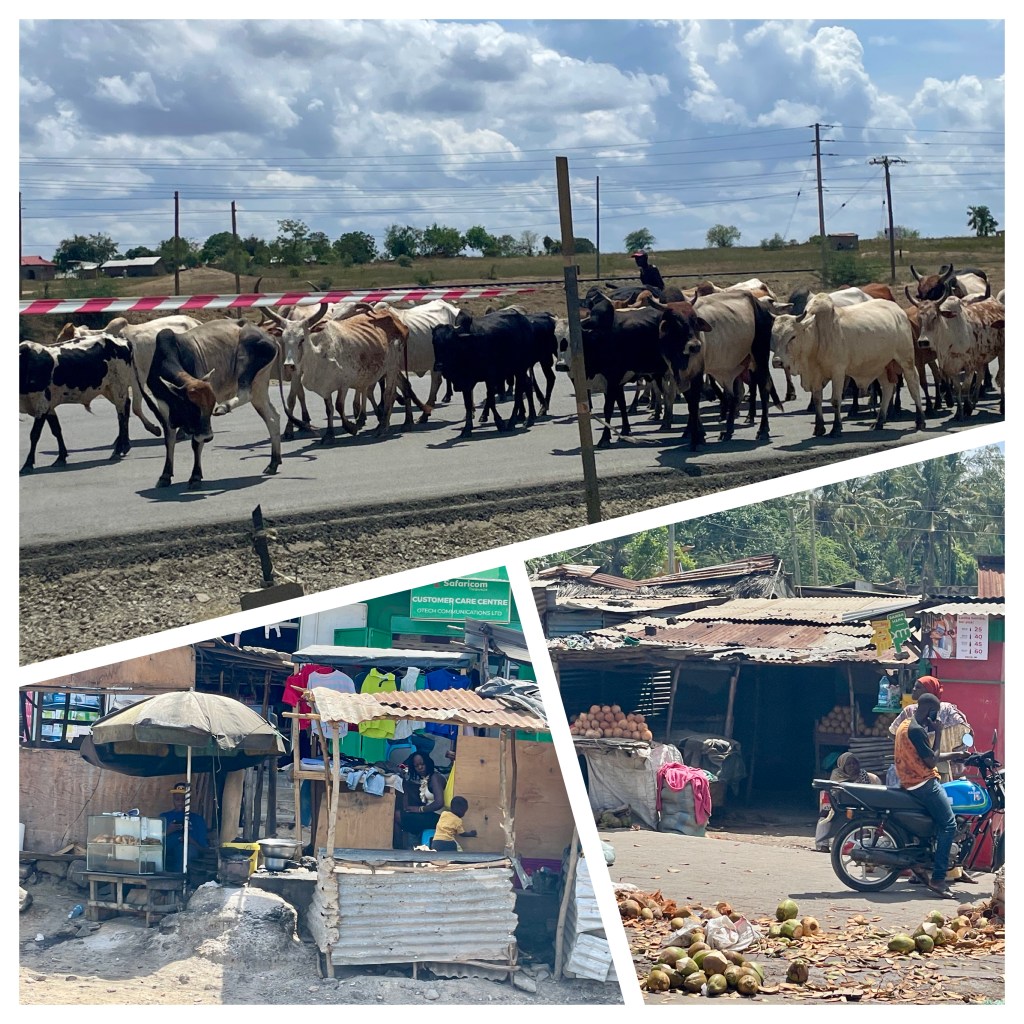
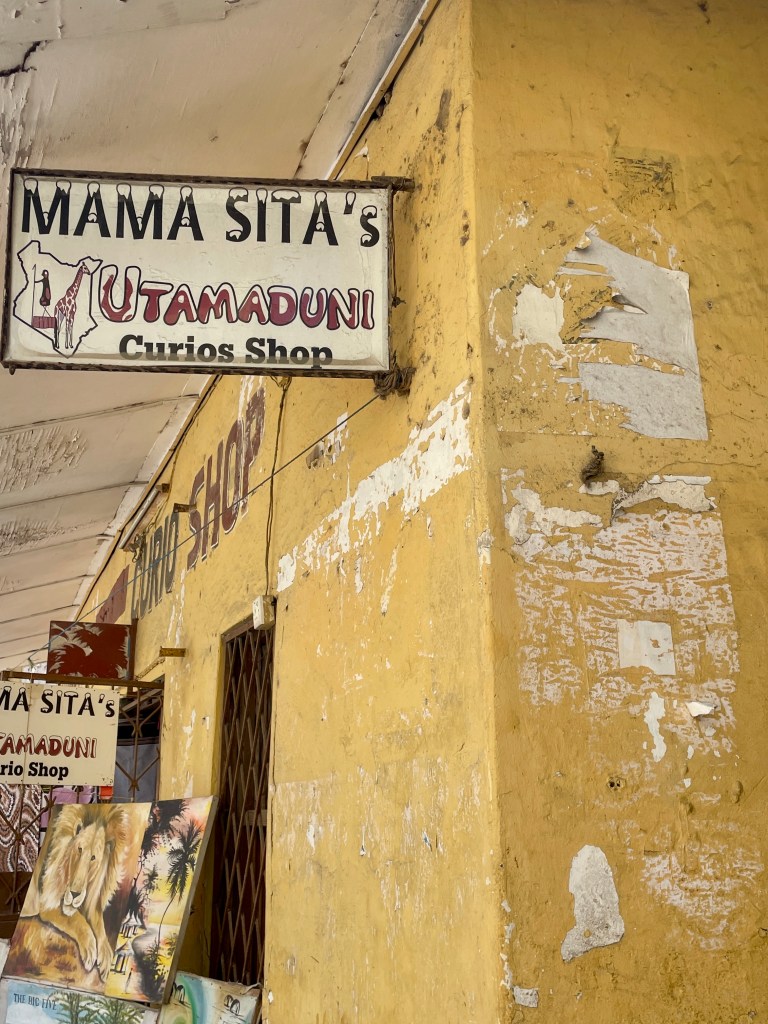
Our 3rd day tour took us around town and to Fort Jesus, a Portuguese fort from the 16th century. It was a good tour, exposing us to lots of Mombasa.
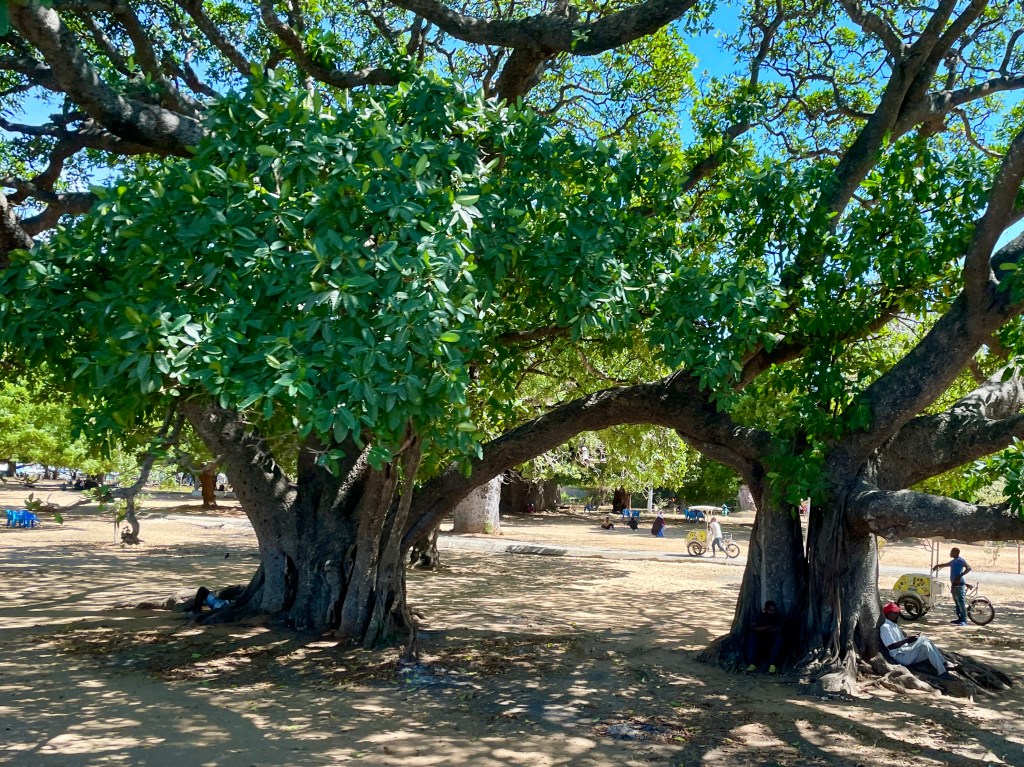
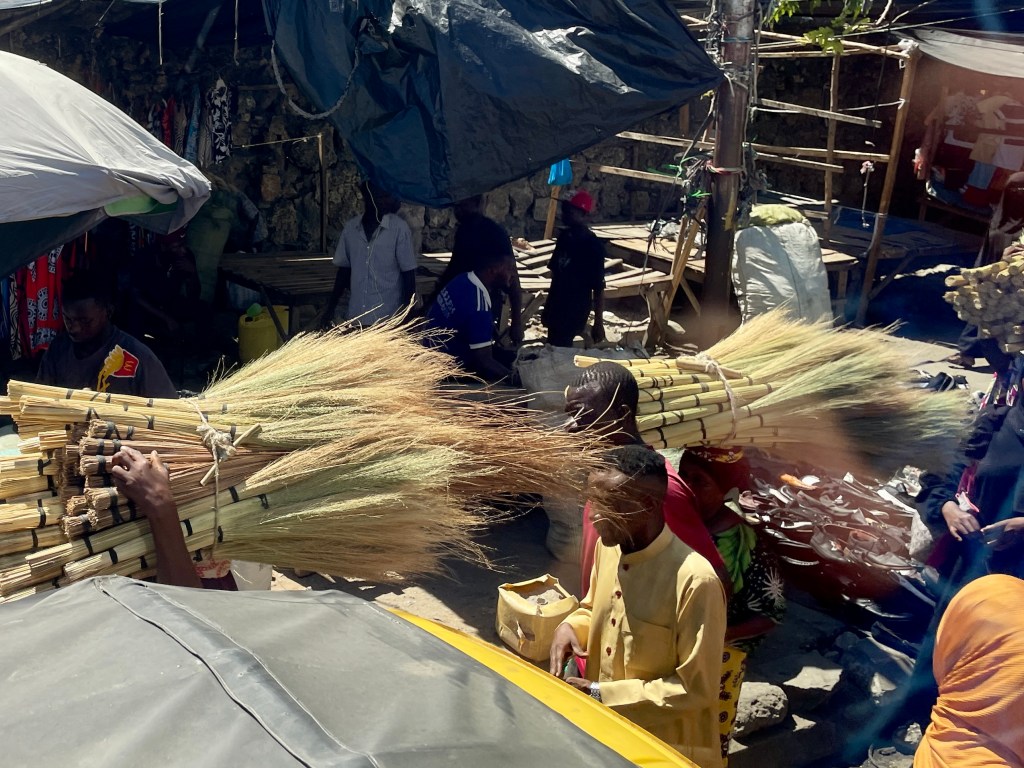
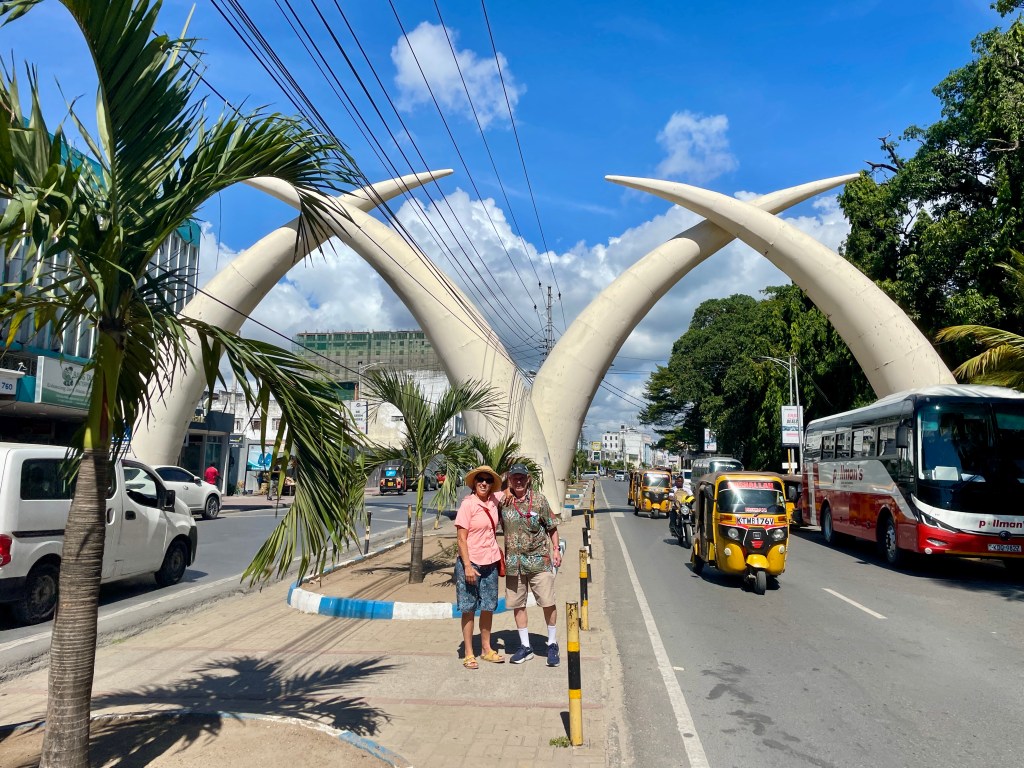
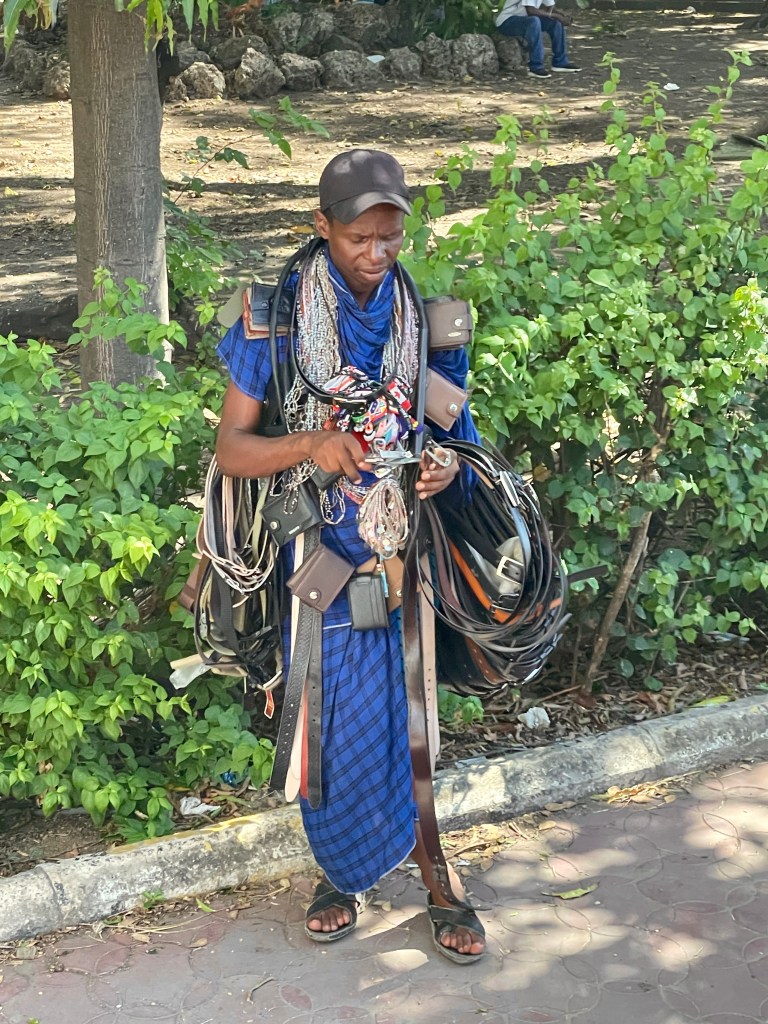
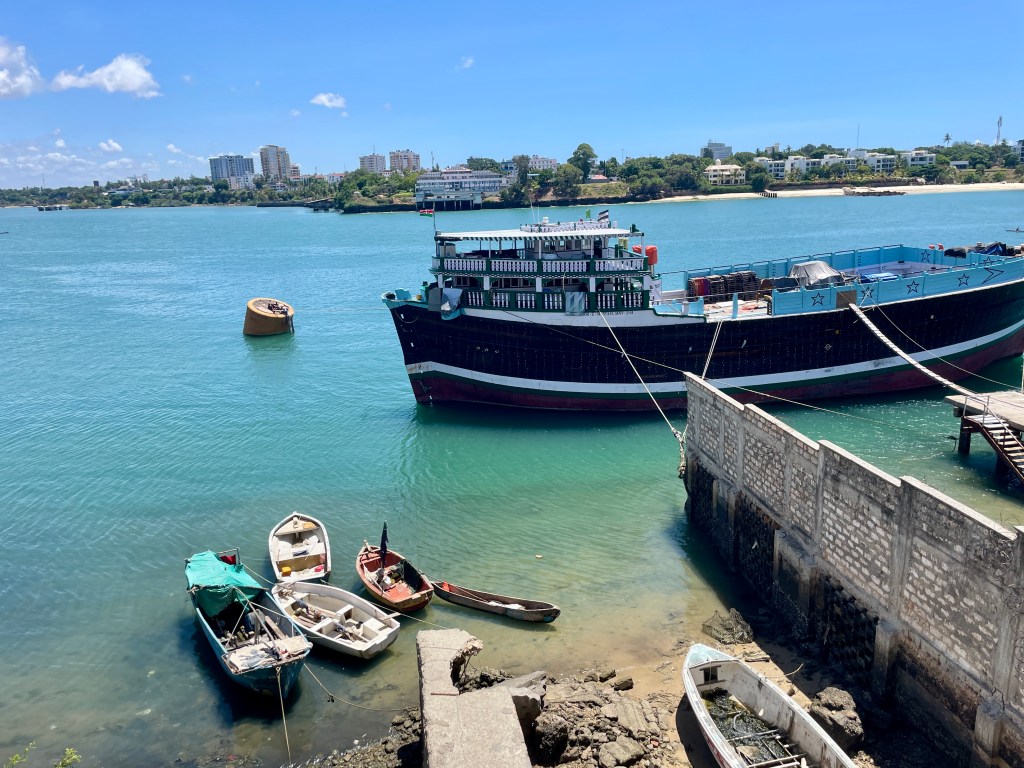
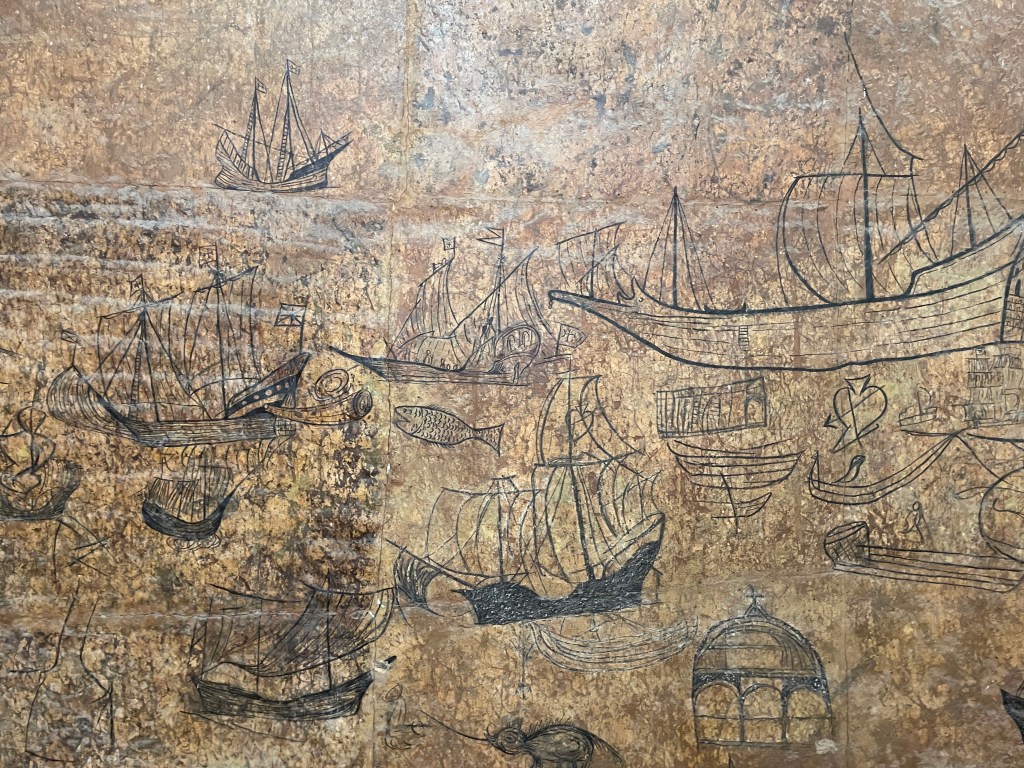
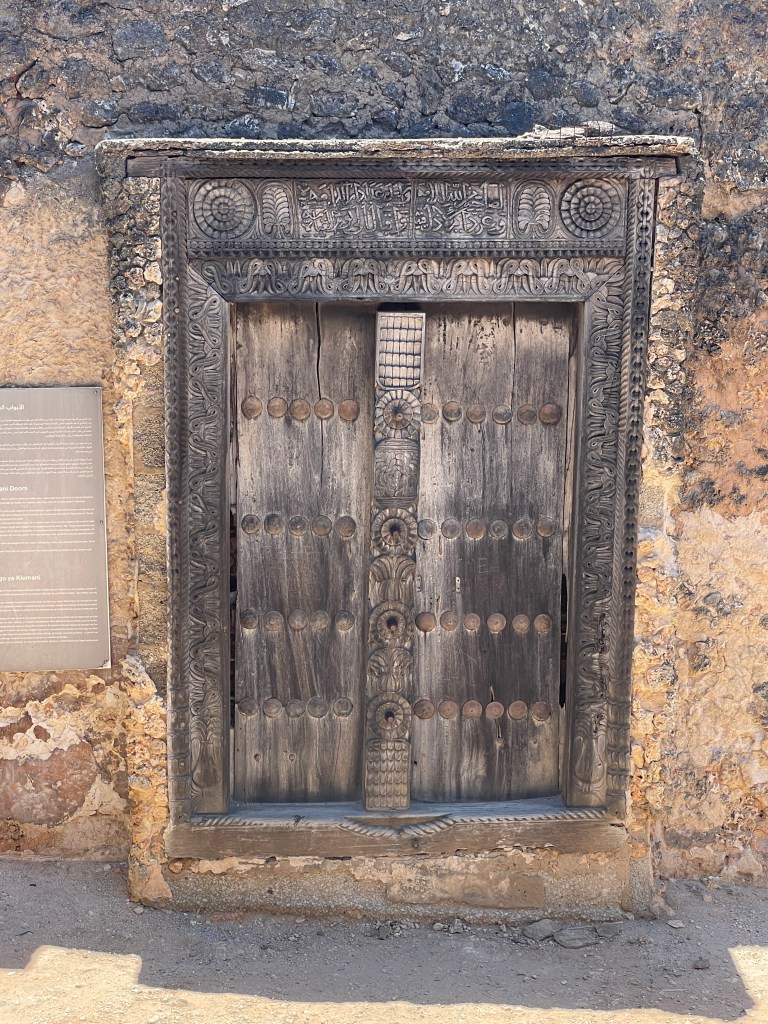
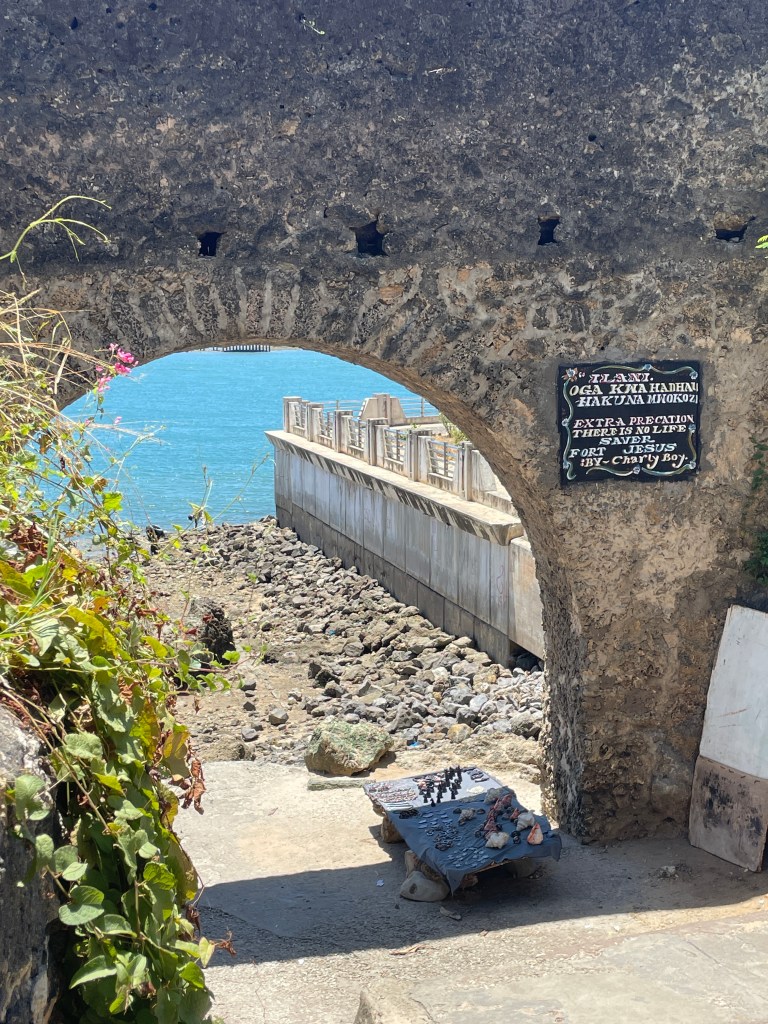
My top observations follow:
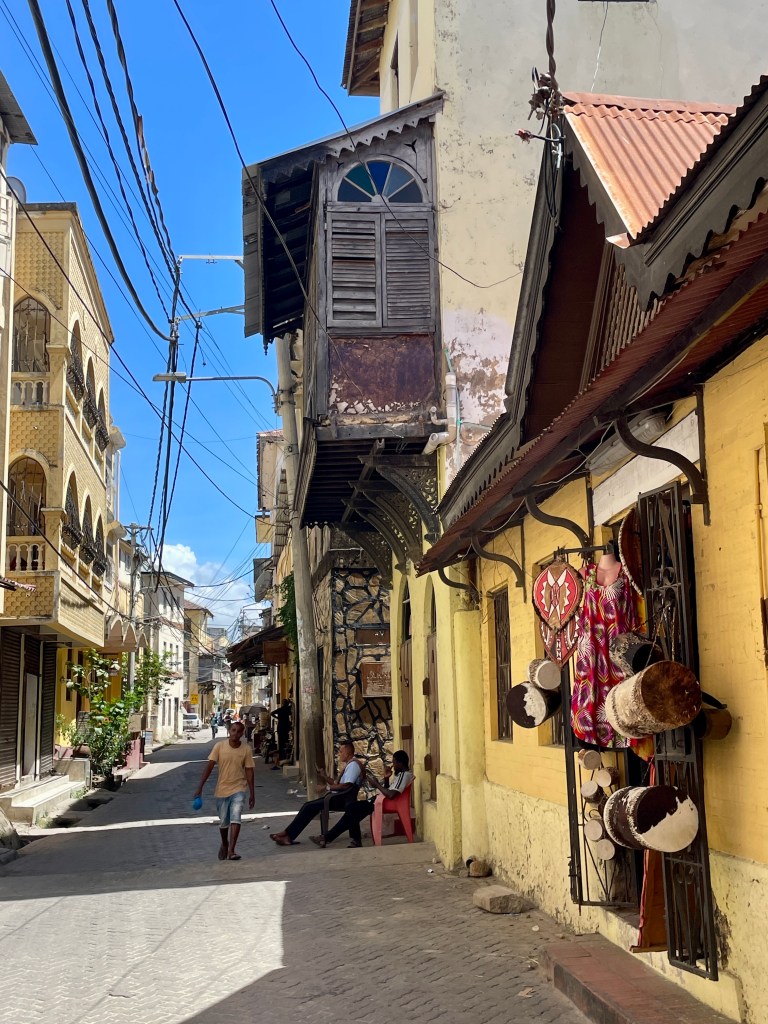
-There are lots of people living very close to the margin. Kenya is among the poorest countries in the world. We stand out as white in a sea of black. The ship’s port talk warned us all of potential crime and risks of walking alone in Mombasa. There is some logic to going after Americans who may be carrying about 6 months income, but we didn’t experience any problems. People were very pleasant and smiled a lot.
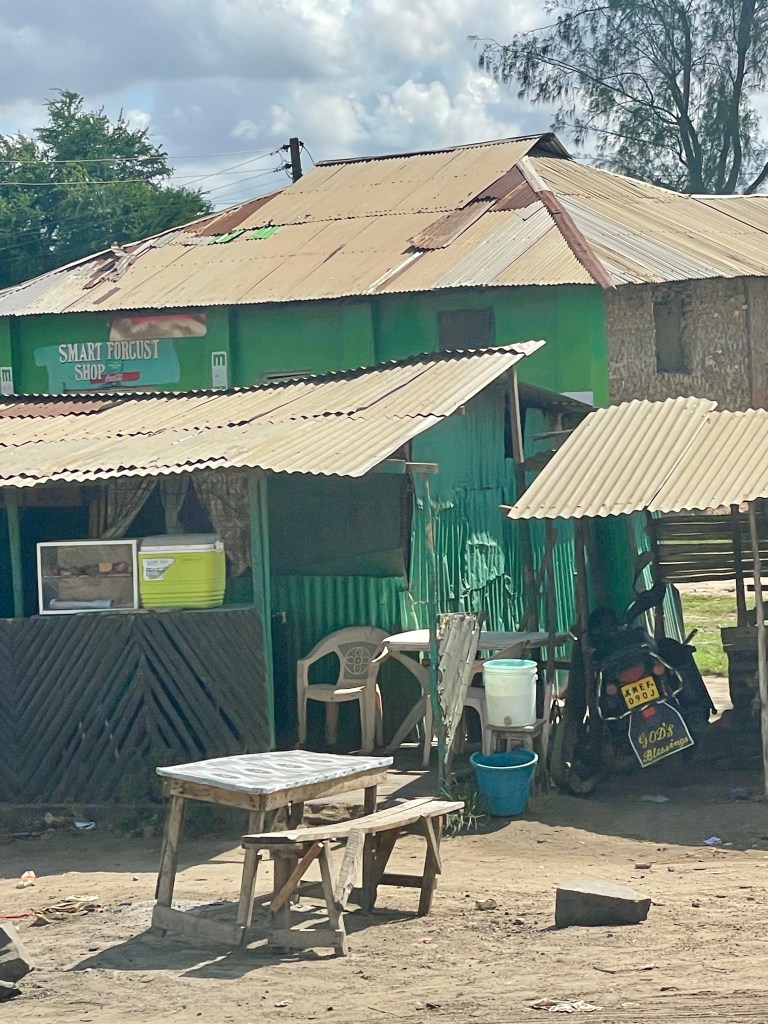
-I used to say in South America 50 years ago that you could get an insight into the economy by observing men shining shoes or the number of prostitutes. If one didn’t have a job, those were potential sources of income. In Mombasa, there are lots of people selling craft items or tending very small shops or driving tuk tuks. A guide told us that many of the tuk tuk and motorcycle drivers were renting the vehicles daily and could only keep what remains after their daily payment to the vehicle owner. It is a scrappy life. They are hard bargainers…but pleasant….because if they have a potential customer, they want to maximize their income.
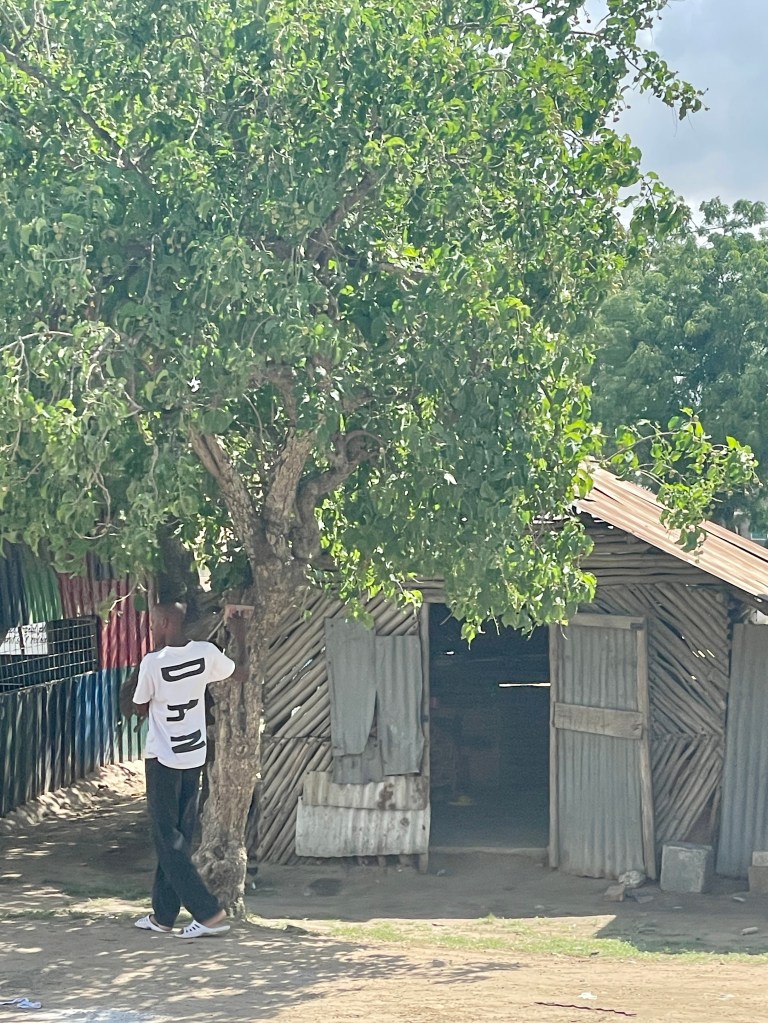
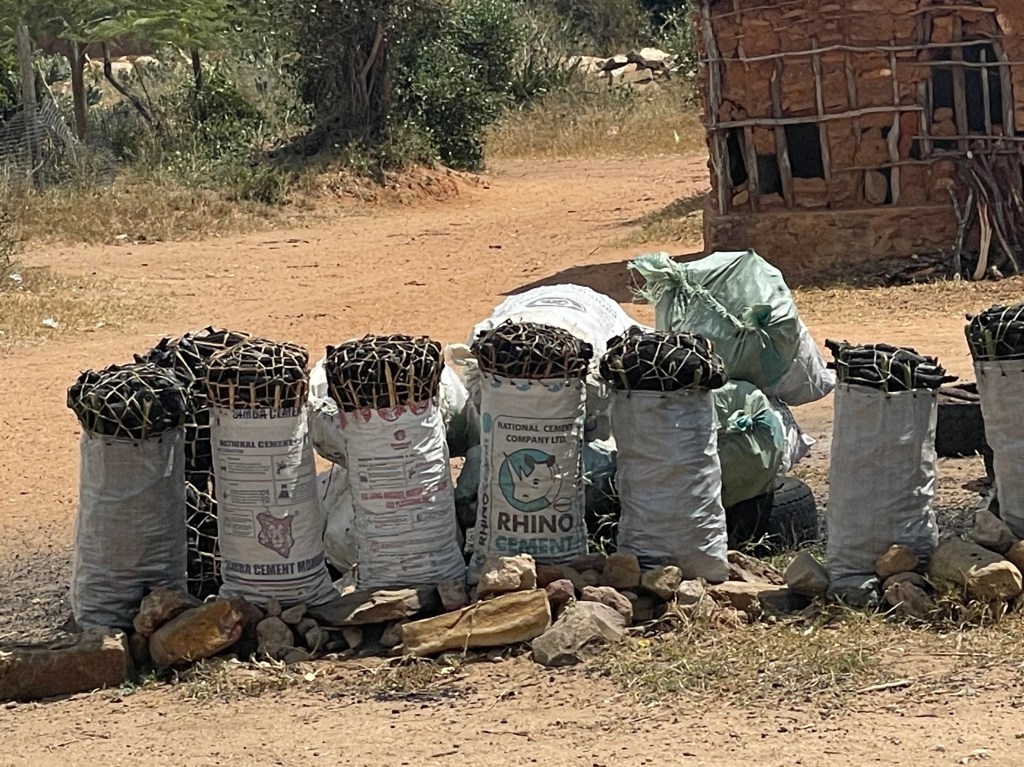
-Their are thousands of “marginal” houses of sticks and mud or cow dung with corrugated tin roofs or siding. If situated strategically, the front of the house became a small shop. I don’t know how all of the small shops survive.
-There were lots of used clothes for sale. More developed countries send crates of clothing that are cleaned and displayed. It’s a poor spot for thrift shops.
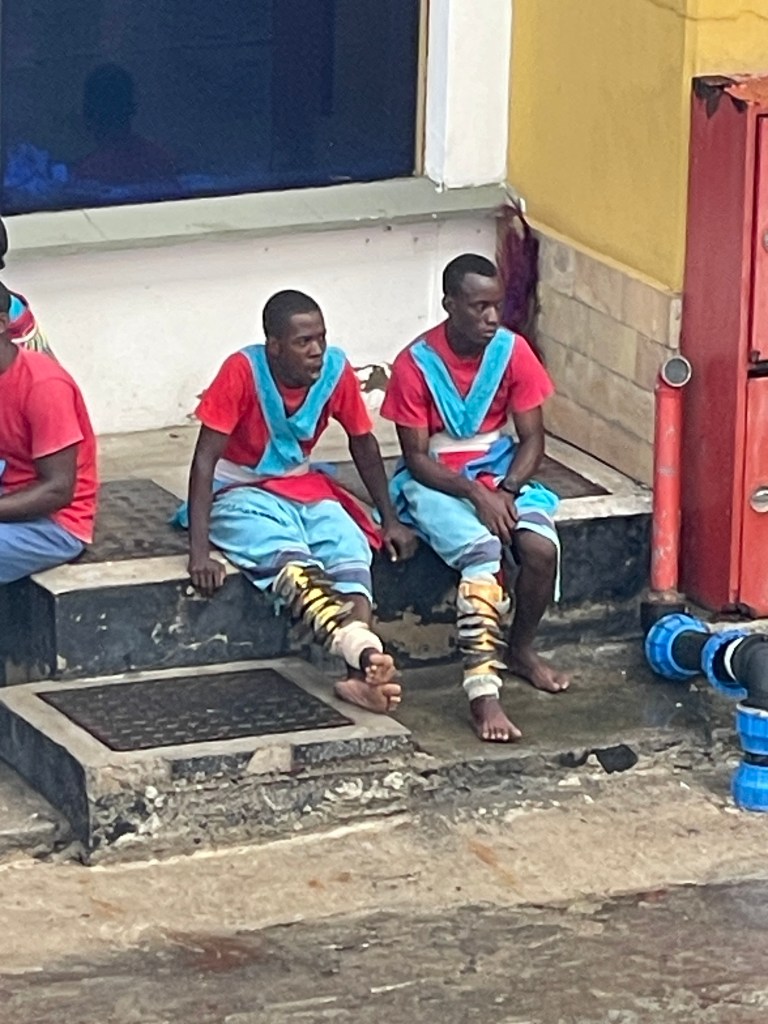
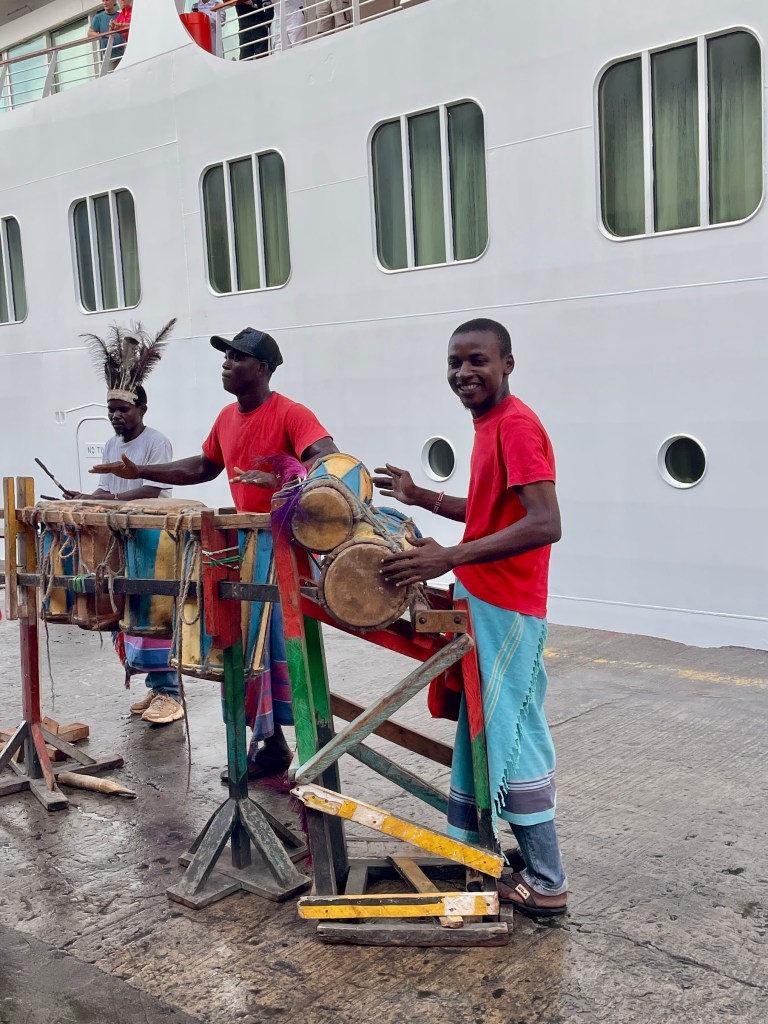
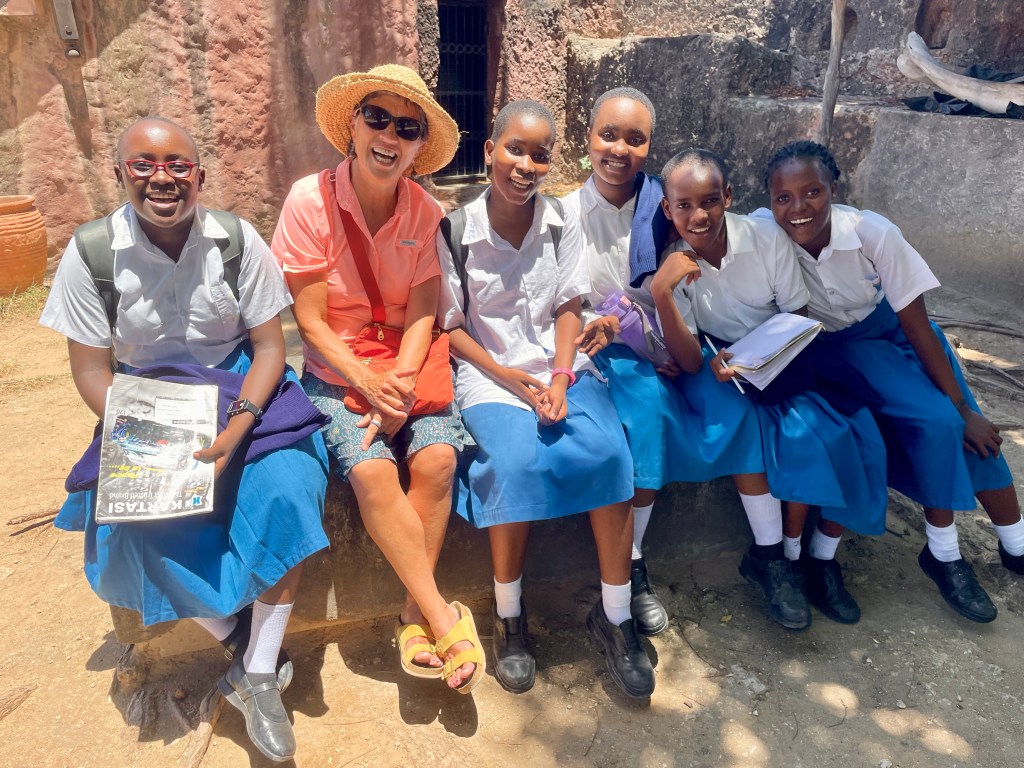
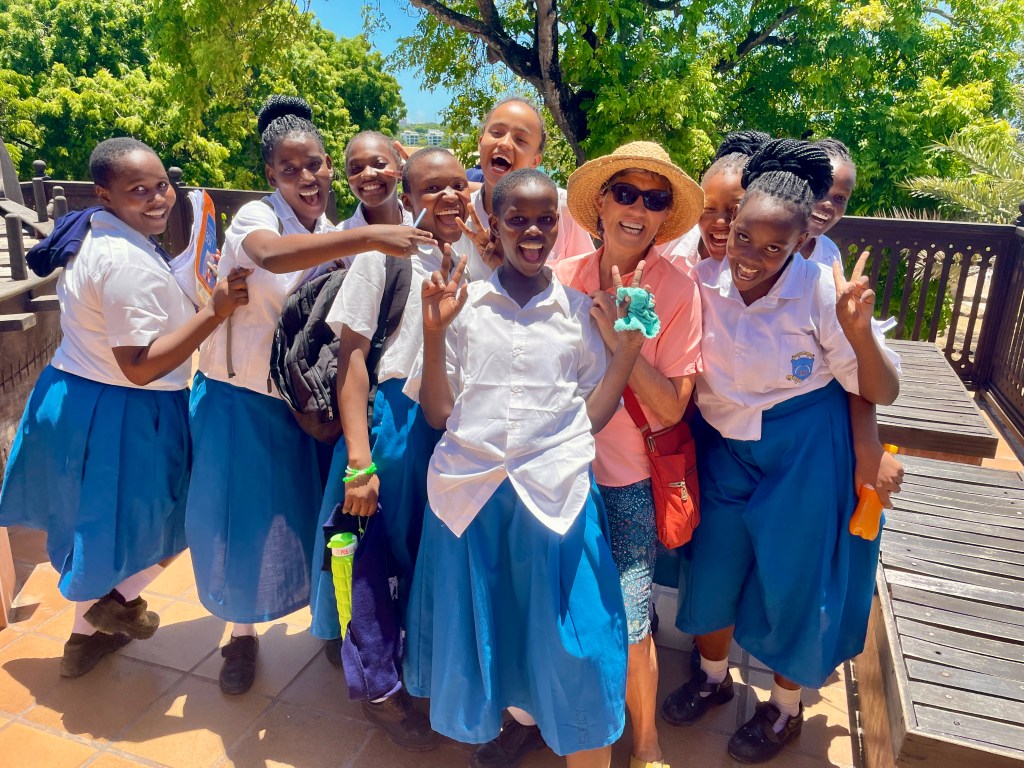
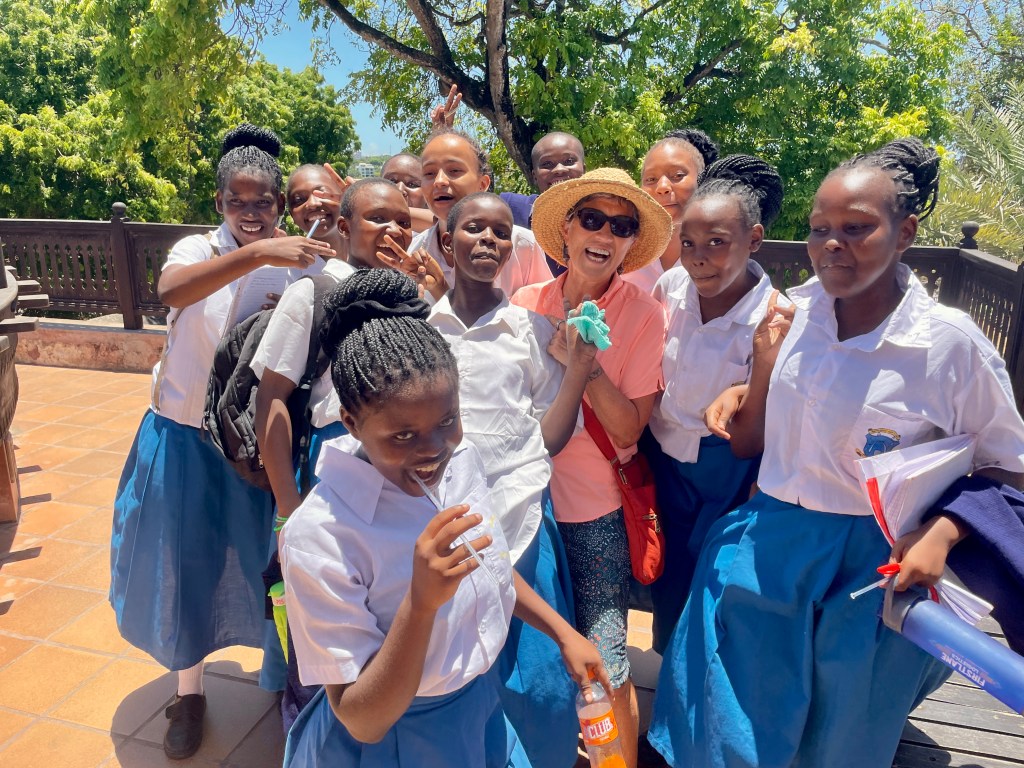
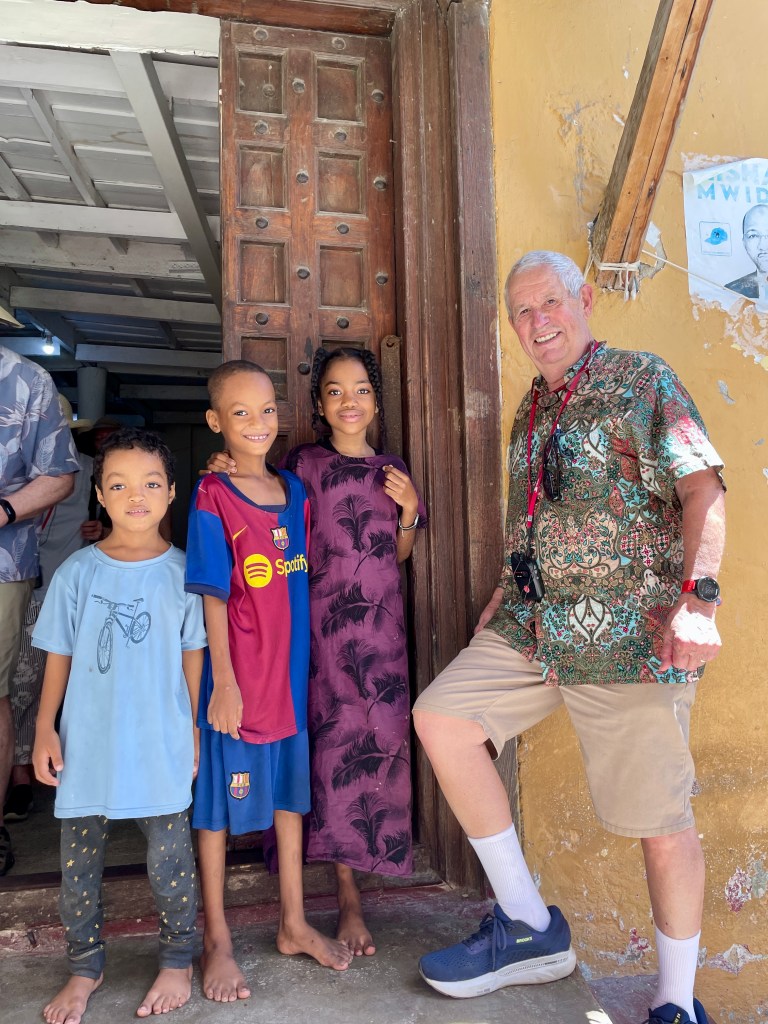
-The people are very handsome and friendly. Frequently kids are in colorful costumes or school uniforms. They love to interact.
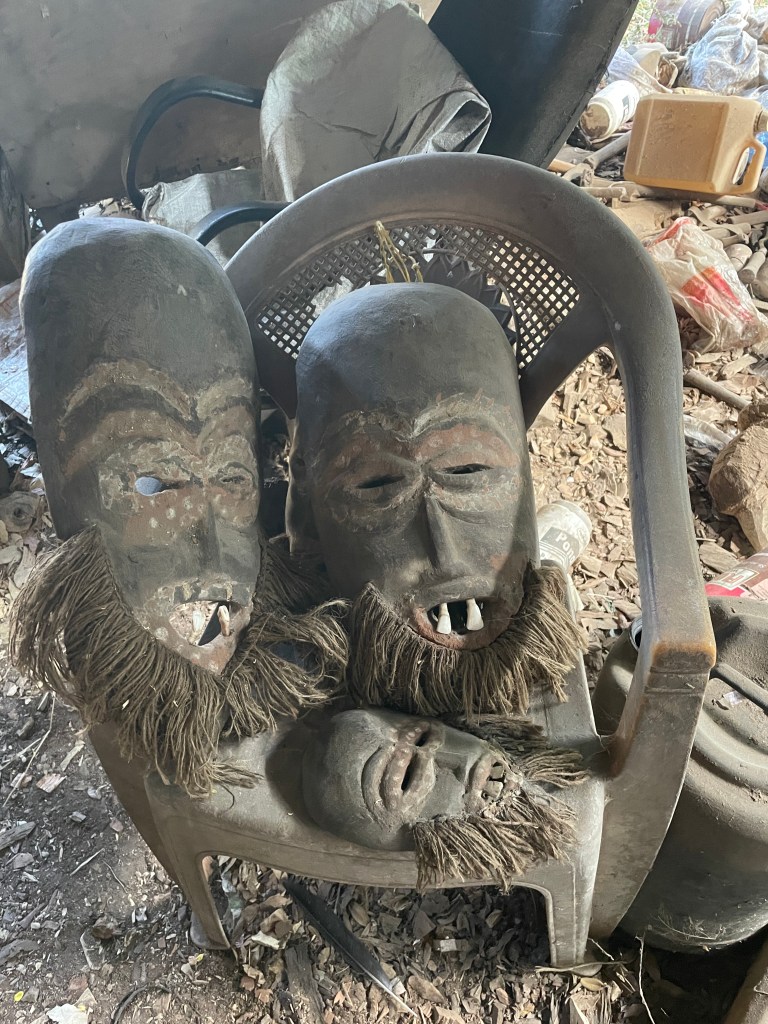
-At a wood carving co-op, we learned that each tribe tends to specialize in something….wood carving, marathon running, etc. At the co-op the carvers produced their wares and then they were sold at the large store on site or wholesaled elsewhere. There was an accounting system where each carver had a number. Each morning a carver could check the ledger to see how his sales were going. If they sold directly to a customer, they would be banned from the co-op for a year. The carver receives 80 percent of the proceeds. The other 20 percent goes to purchase wood for all of them or administrative fees.
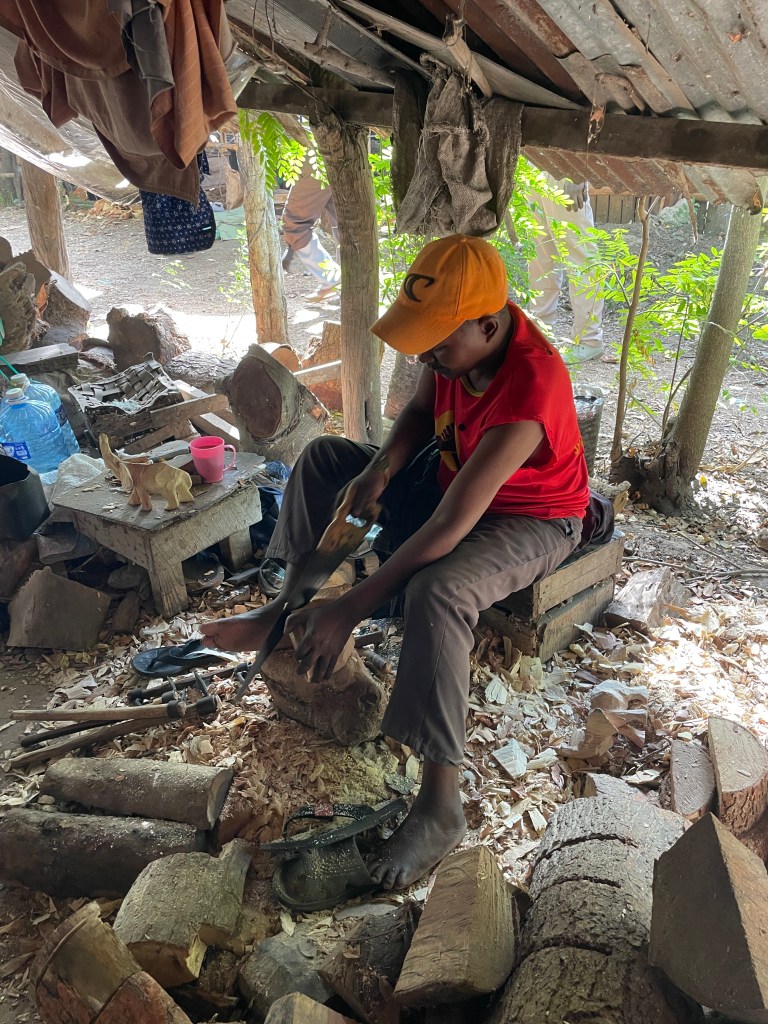
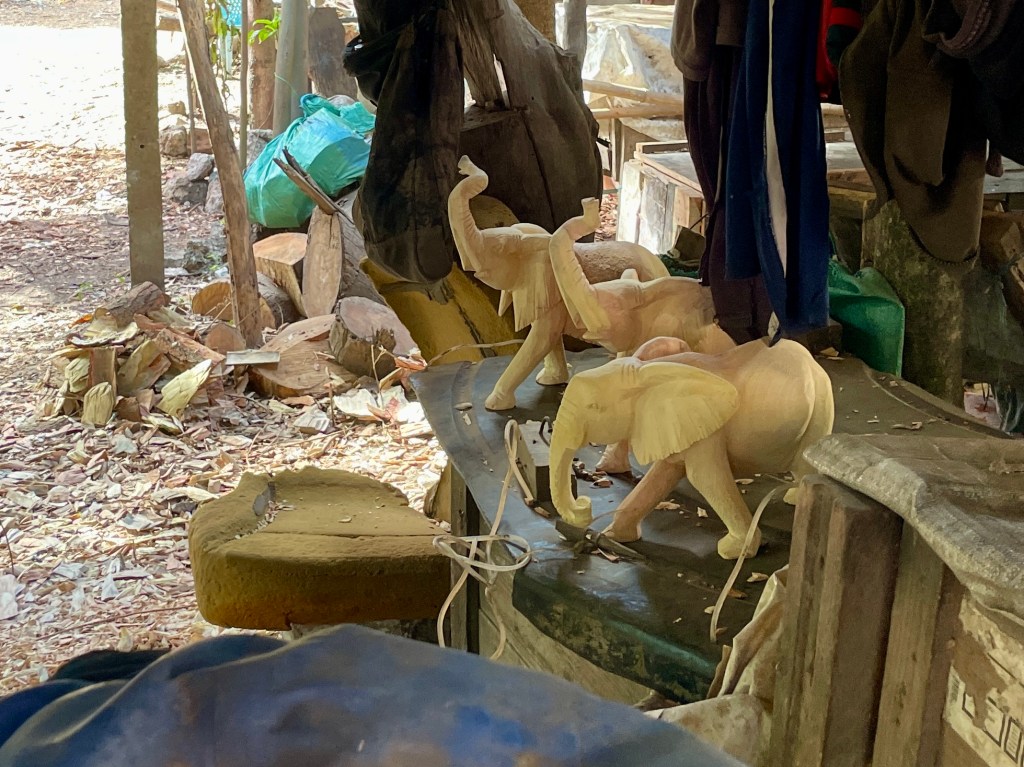
-We docked at the “old port.” The Chinese are building a major new one. After building a passenger rail line from Mombasa to Nairobi, they are also building roads that help get goods from Uganda and Rwanda to market. Guess who’s more popular, the US or China.
-We enjoyed the markets. I bargained aggressively and we bought perhaps 40 small soapstone carved animals. We’re giving them away to crew members who have been giving us such great service. I think the merchants know that we tourists are told to only offer half of what the merchant asks. Consequently, they might offer a carving for $5 when they would settle for $1. So many passengers would offer $2.50 and bargain from there. On one of our last deals, the merchant was interested in my ballpoint pen. ..for his kid, he said. To get it, he offered 2 carved animals for my pen and $20. I countered at $2 and the pen. He was dumbfounded., looking for a new floor of something like $10. I ended up paying $3. After a long bargaining session, one merchant asked if I were a policeman. I think that was a compliment.
 Millers World Cruise 2025
Leave a comment