March 8, 2025 (Happy International Women’s Day)
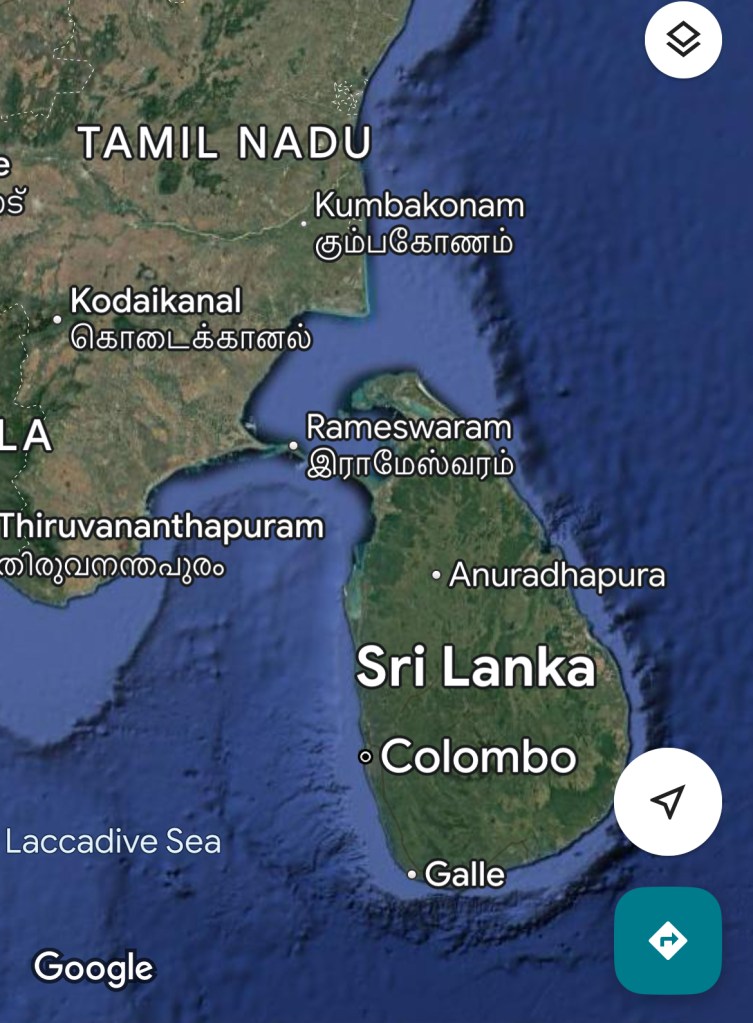
We’re looking forward to Sri Lanka. I visited Colombo, Ceylon in 1971 on a Semester at Sea cruise. Karla and I and M and J also visited….on the coast with access to Kandy and Buddha’s tooth…on the last leg of a trip…China, Tibet, Bhutan, Nepal, Delhi, and Sri Lanka. It was all positive. Evidently, others were there before us; there are records back 500,000 years. Since today is International Women’s Day (perhaps not in the WOKE US), I will note that they had the first woman ruler in 47-42 BCE.
Ceylon was at the peak of its power between 453 and 1186. Then, like so many countries in Asia, they were discovered and had to deal with the Portuguese, Dutch and British. They all left their marks, which were frequently negative on the local population, but positive for the European traders. The Portuguese were attracted by cinnamon in the 16th century. In the 17th century, the Dutch saw an opportunity to establish coffee plantations as they had done successfully in Java. In 1799,the British struck a deal to take control, leaving Indonesia to the Dutch. British citizens were encouraged to expand the coffee economy by grants of free land and interest free loans. This, of course required the removal of the indigenous landowners. They did employ the locals to cultivate the crop. In 1827, cocoa was added to the mix. By 1848, there were 600 estates and 50,000 acres under cultivation.By the late 1860’s, Ceylon was one of the world’s top coffee producers. It was very successful until a fungal disease hit
While coffee production took a dive, cultivation of tea was on the rise. Around 1850, the Brits sent a spy to China to steal tea growing secrets. It was successful thievery and by 1873 Ceylon was exporting large quantities to London. The success attracted large tea growing operations that formed a Ceylon Tea Trading Association to preserve their positions. Some guy named Thomas Lipton took over a plantation and decided that he could sell tea in small packets…a novel idea. His motto, “from tea garden to teapot.” I’m not sure if Lipton ever made good, but Ceylon became the number one tea exporter in the world by 1965.
After World War 2, Ceylon achieved its independence…in 1948. They became the Republic of Sri Lanka in 1972. But, it hasn’t been easy. There was a 26 year Civil War from 1983 to 2009 between the Sinhalese majority and the Tamil minority..The majority prevailed, but they are working at making life easier for the Tamil communities. In 2004 there was a tsunami that killed 30,000 and displaced 500,000. Even more recently, 2019-2022, there have been serious economic problems and food shortages.
It’s a beautiful country of 22 million people. We have enjoyed the people and our experiences there. We hope that the economy is doing better. Our stop should provide a boost.
 Millers World Cruise 2025
Leave a comment