Feb. 17
An interesting stopover. Not just about Darwin, but Karla’s activities. We are friends with a 90 year old couple who are very sharp and seemingly healthy. He’s a retired Presbyterian minister; she a retiree from the State Department’s foreign service. Kathleen was on a bumpy tender ride (a week prior in Mooloolaba) which launched several passengers out of their seats. One launchee landed on Kathleen and caused serious pain to her leg. The ship Doc recommended an ultrasound and an MRI at the Darwin hospital to determine if there was a break or muscle tear. Karla, with her positive aggressiveness, offered to accompany them to the hospital to provide another set of eyes and mouths. Richard welcomed the offer. It became more important when he came down with pneumonia and was confined to his room. Karla received an education in the Australian healthcare system which I’ll let her describe.
Karla here: the Darwin public hospital emergency department triaged Kathleen upon our arrival and assigned us to a category which determined priority and waiting time. Interestingly, the hospital needed proof of the Australian visa which was provided after an email to Viking’s ship reception. They collected the $250 payment in advance. About 2 hours after waiting, we were called into an inner waiting room along with about 5-7 others. There were mostly aboriginal people in the waiting room. Within another hour, Kathleen was seen by an ER doc and provided an ultrasound but no MRI as the hospital had only 1 MRI machine and it was fully booked. The initial result was a very large hematoma but no muscle tear; the radiologist report was to be ready within a couple days and Viking medical needed to request it. The sympathetic ER doc had his supervisor examine Kathleen as well to confirm his findings and recommendations. The challenge with the injury is if the pressure (causing pain) continues and it does not begin to drain. The hospital ER bay seemed lower tech than I expected; not lots of bells and whistles, and I was startled to see a cockroach skiddle across the floor.
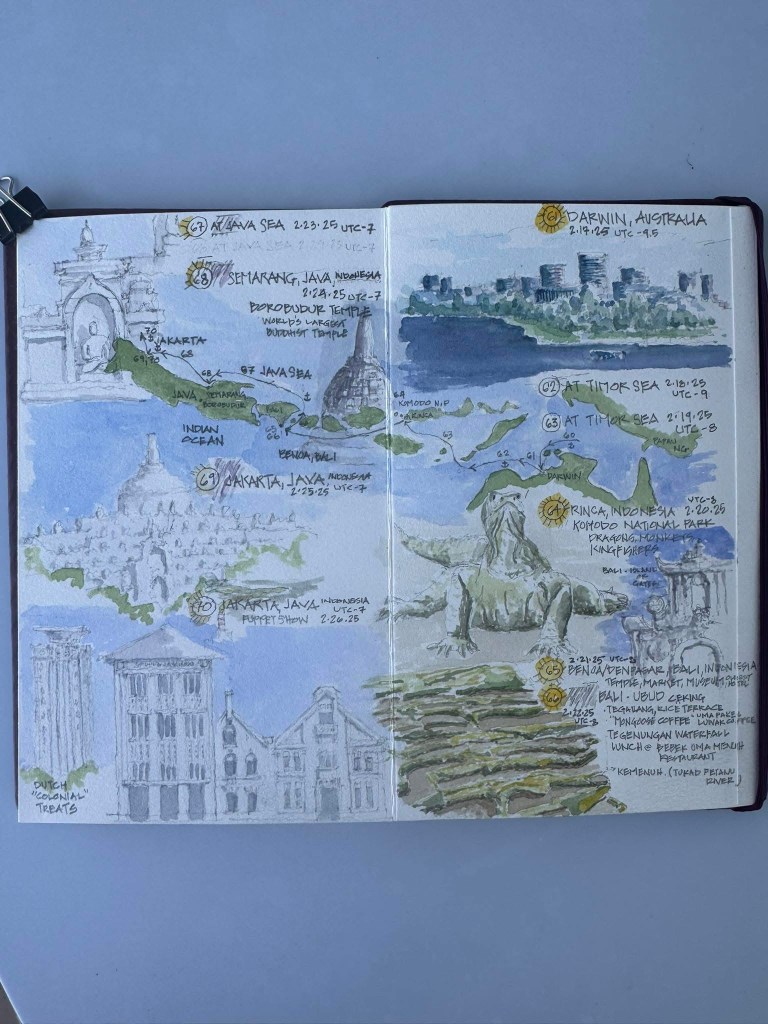
Back to Fred: Left on my own, I was fearful, but decided to venture out. A visit to a museum was followed by a walk around town and visit to an Op Shop. So many colorful, aboriginal-informed designs and color clothes! The quality of the Op Shop offerings was definitely higher. When Karla returned from hospital duty, she replicated the walk and also found colorful clothes and a manicure. We’re now very colorful! At the time of our walkabouts, we had to deal with 90* and about 85-90% humidity. Those numbers would discourage us from spending too much time here.
Darwin is a pleasant city of about 140,000 people. About 40 percent of the diverse population were born overseas. About 2/3 are Australian or English, but we see lots of Aboriginal people on the street.
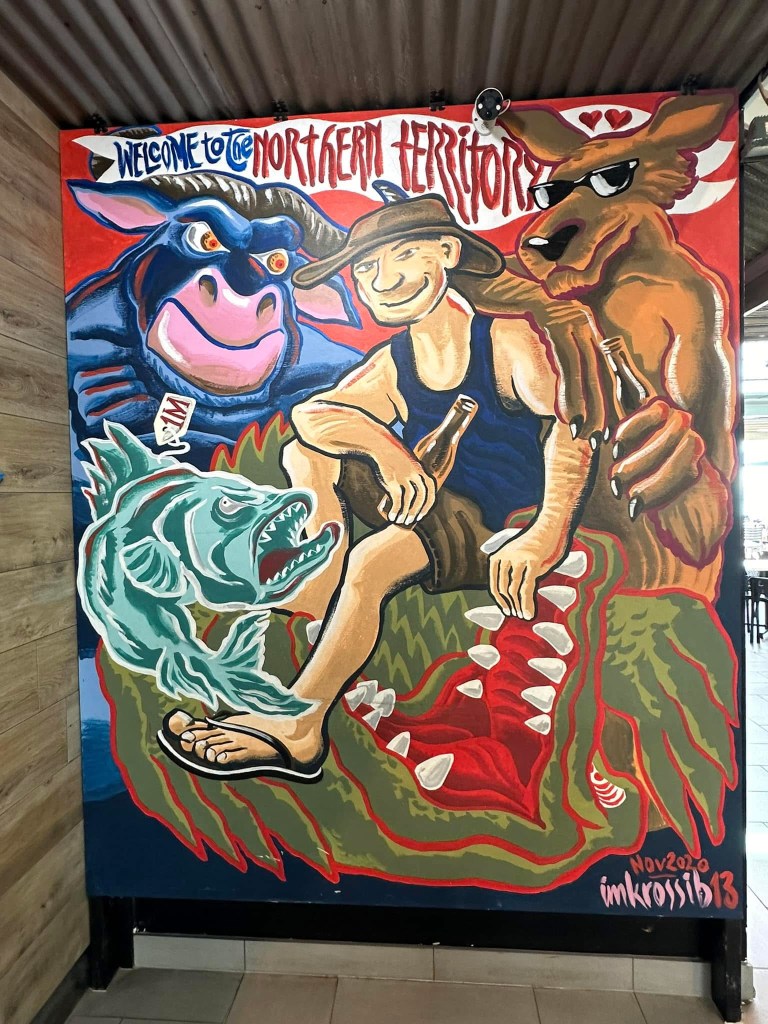
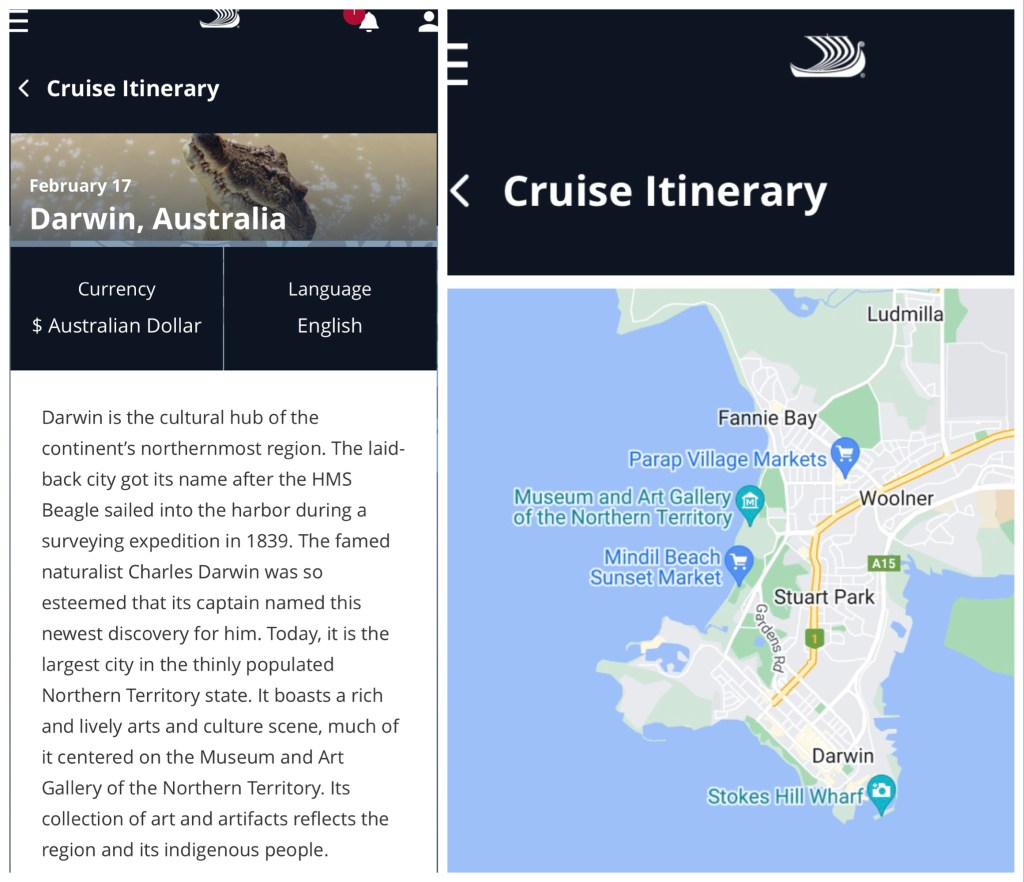
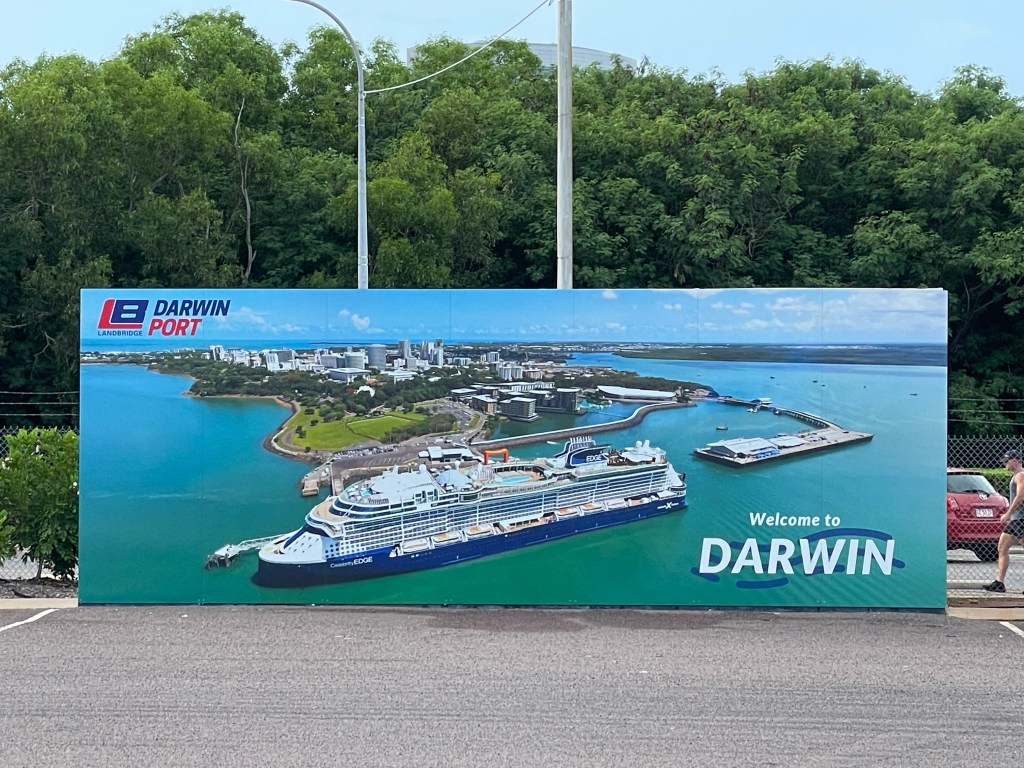
Since Darwin is relatively secluded, it has an abbreviated settlement history. It was visited by the HMS Beagle (Darwin’s ship without Darwin) in 1839. The captain of the ship chose to name the site Darwin. It was settled in 1869 and then populated by more English and Chinese because of the discovery of gold. The city has been rebuilt several times as a result of cyclones and World War 2. The cyclones of 1897 and 1937 were damaging. The 1974 Cyclone Tracy, with its 135 mph winds, was devastating, destroying 70% of the buildings/80% of the houses. In February of 1942, the Japanese followed their successful visit to Pearl Harbor with 188 planes and more bombs than were dropped on Pearl Harbor. With sea temperatures of 78* in July and 89* in December, they are likely to see more cyclones, although building codes were revamped to make them more cyclone proof.
The economy is now based on offshore mining of oil and natural gas, mining of gold, zinc, bauxite, and manganese, and tourism. It’s laid back and easy to visit. A few fun facts:
-The Aboriginees Act of 1905 established a Chief Protector of Aboriginees. He protected them by separating the children from their families in order to teach them the proper language and culture. Lots of the parents, because of the belief that they carried diseases, were assigned to “lock hospitals” and leprosariums. The Aboriginees are doing better now, but many we see on the streets don’t appear to be doing too well.
-One source sites problems with alcohol abuse. There were 6000 arrests in 2009. (Pretty high number for a population of 140,000.) There were 350 broken jaws or noses that same year. You can understand why I wanted Karla with me.
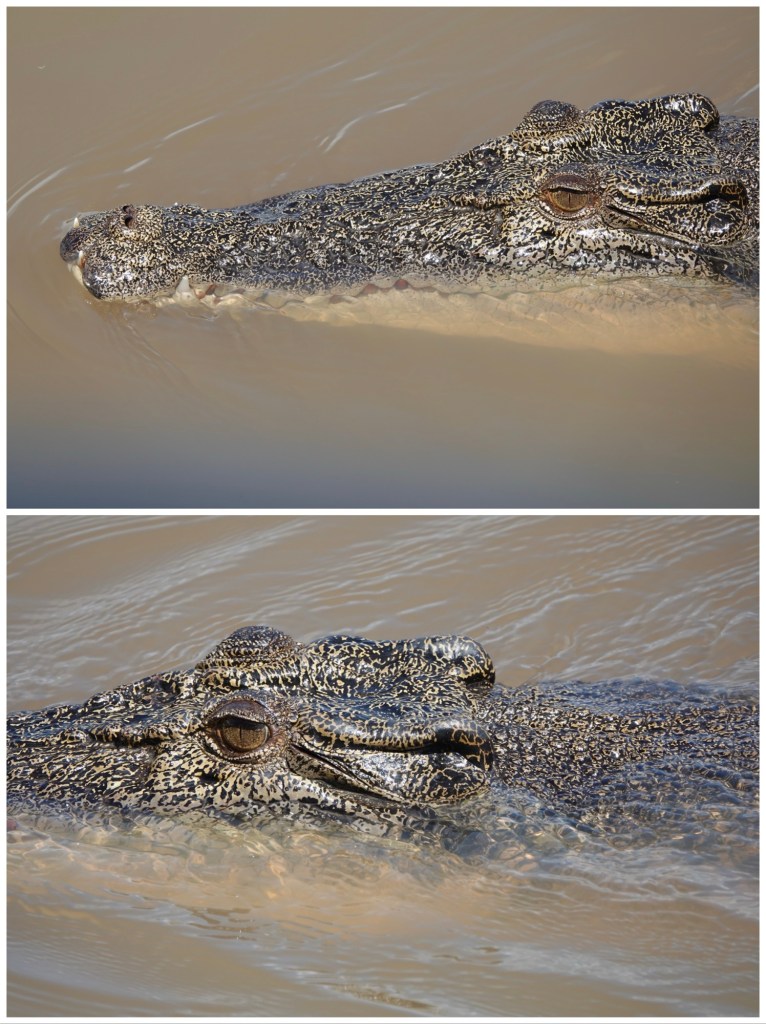
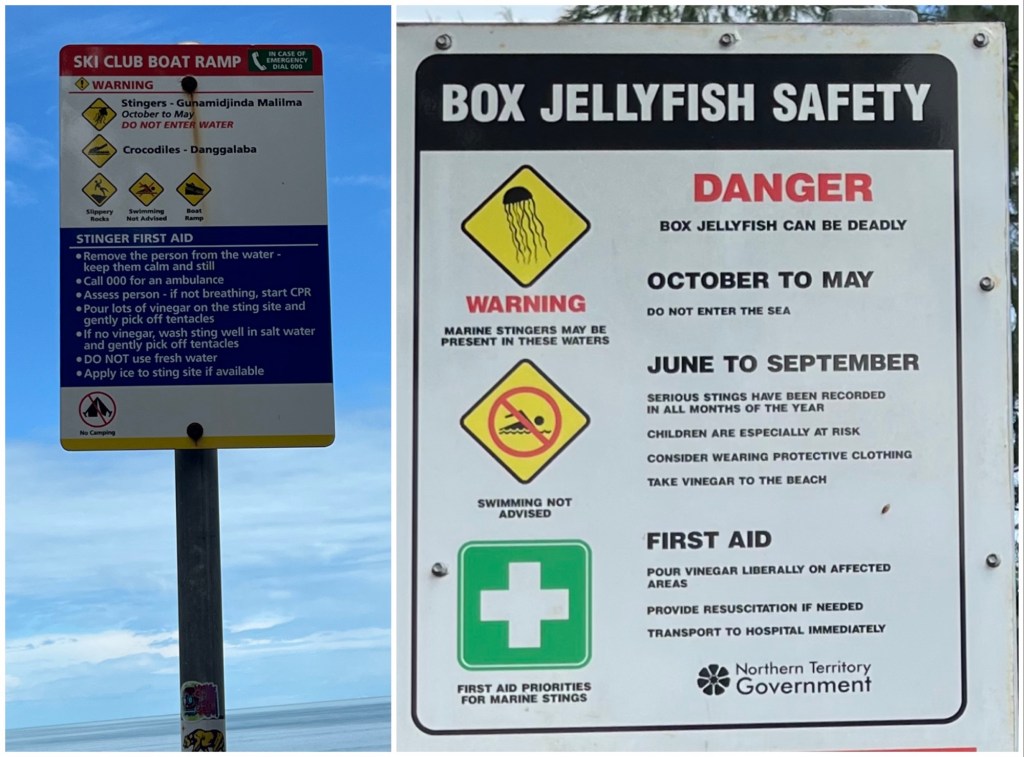
– Lots of crocs in the nearby rivers. They’re even thinking of thinning the “herd.” of about 100,000. But tourism prospers with croc trips. One can visit Crocosaurus Cove. Or, you can pay $50 to see jumping crocs and a bit more to ride in a “cage of death” and be lowered into croc waters….presumably being protected by the cage. Who would be afraid of a 20 foot 3000 pound overgrown lizard?
 Millers World Cruise 2025
Leave a comment