Feb. 15
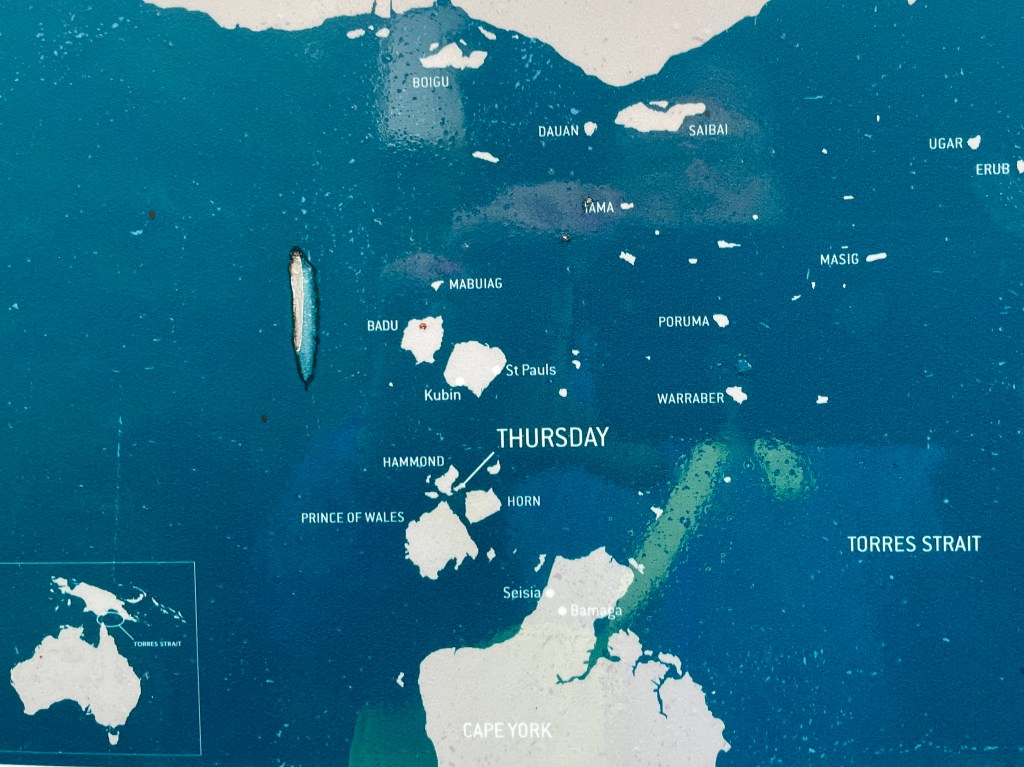
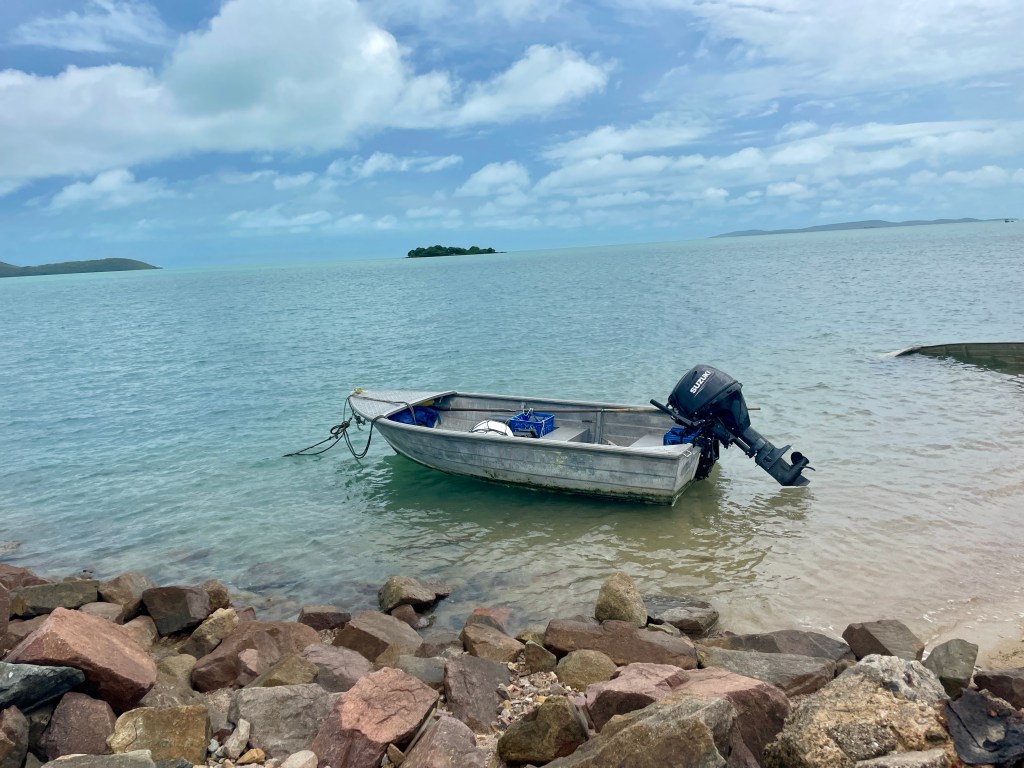
Torres Strait is the passageway between northern Australia and Papua New Guinea. There was a land bridge connecting the land masses about 10,000-12,000 years ago, but rising sea levels have covered most of the ‘bridge.” Now, there are 276 islands which used to be hills or at least high points. Fourteen of these are populated. The others must be available for discovery or claiming, but we weren’t there long enough to take action.
The population of all the islands is 4500-5000. About 50-60,000 Torres Straits descendants live in Australia. The islands are governed by a Regional Authority; they even have their own flag.
Originally, the island were settled by Melanesians, not Aboriginees. In 1606, Luis Vaez de Torres visited the strait, having sailed from Peru. Captain Cook, of course, mapped a number of the islands in 1770. In the mid 19th century the British assumed control of the islands.
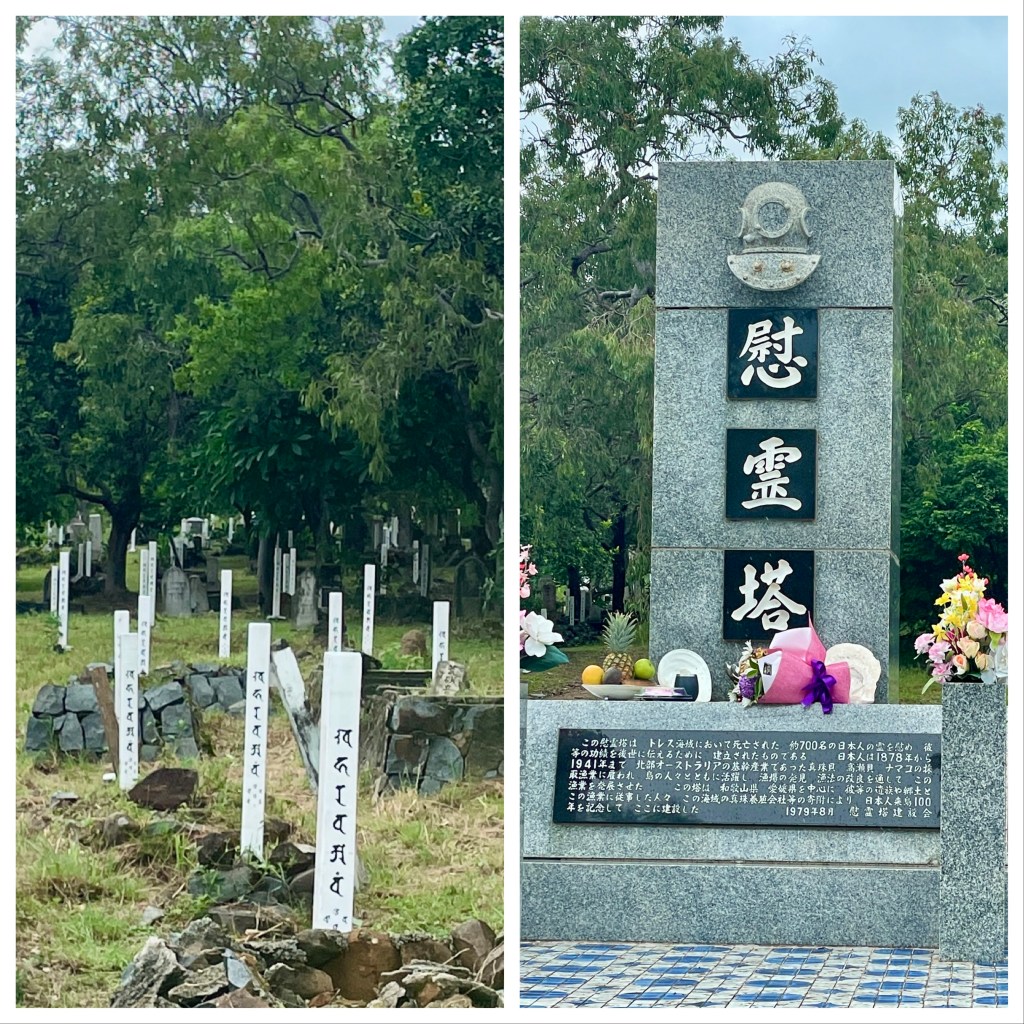
In the 1850’s, the area became a center for harvesting pearls and oyster shells. That brought a number of immigrants, largely from Japan. The industry was aided by “blackbirding” or forcefully recruiting divers from outlying islands. The work became increasingly dangerous as overharvesting drove the ships and “luggers” to deeper water…over 200 feet, and the majority of deaths were due to the bends. The shells were a primary source of buttons until plastics came along. One of the more interesting sights on Thursday Island is the cemetery where there are many Japanese graves alongside TS Islanders and others. A plaque at the cemetery honors the Japanese:
This monument has been erected in memory of the centenary of the Japanese people who worked, lived and died in the Torres Strait area. From 1878 to 1941, thousands of Japanese were employed in the gathering of pearl shell and this constituted the principal enterprise of Northern Australia. They worked hard together with the Islanders contributing to the development of the fishing industry during this period. Approximately 700 of the Japanese people died in the Torres Strait area. May the Japanese rest in peace here”.
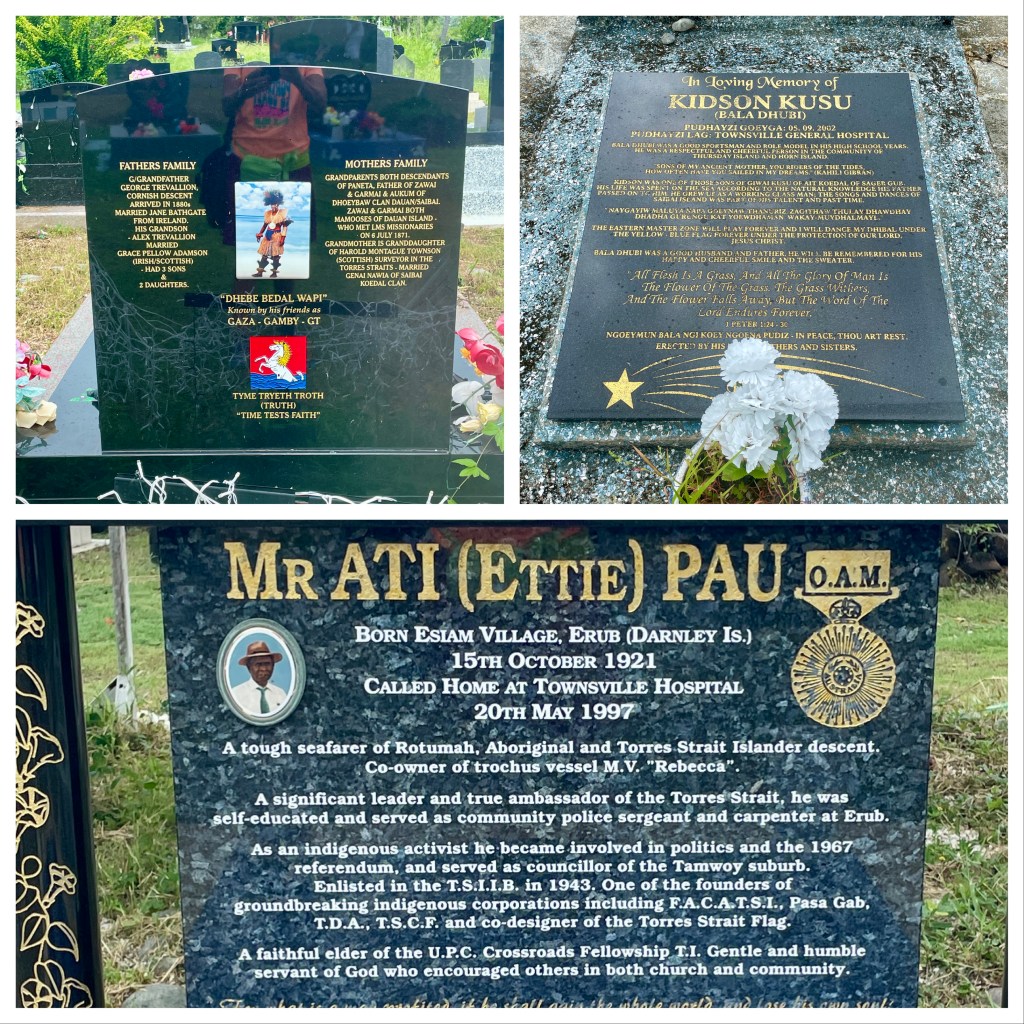
The islands are dealing with the threats of climate change, rising sea levels, and the impacts of cyclones. They are currently negatively impacted by erosion and water contamination. It is predicted that by 2100, the sea will rise by 1 to 3 1/2 feet. In the longer run, they won’t have to worry. Australia is moving northward about 3 inches per year. That’s about 20 miles in 100,000 years.
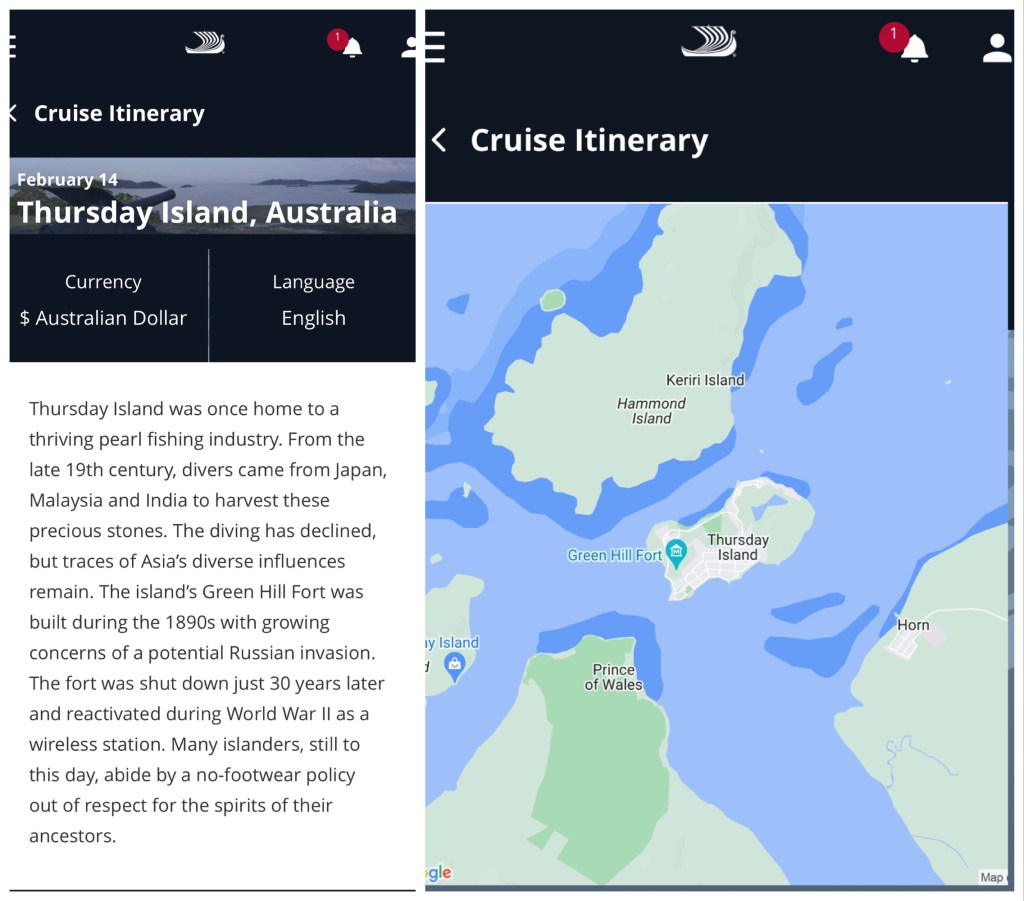
Thursday Island is the administrative center of the Regional Authority, as well as the center for the pilots who are necessary to guide ships through the strait. The island is home for about 2800 people. It is only 1.4 square miles and can be walked in a 6 mile loop. The economy is supported by pearl harvesting, fishing and tourism. During World War 2, Australian and US troops were housed there. While Japan bombed other islands, they stayed clear of Thursday Island. Some say that the cemetery full of deceased Japanese divers discouraged the Japanese from bombing.
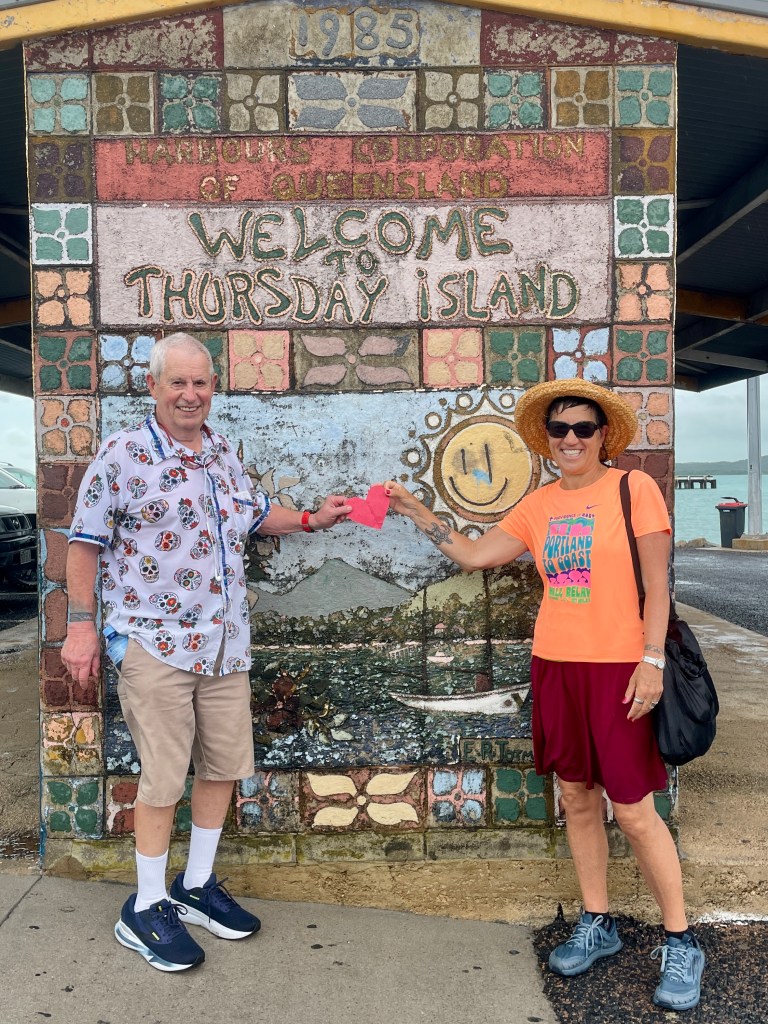
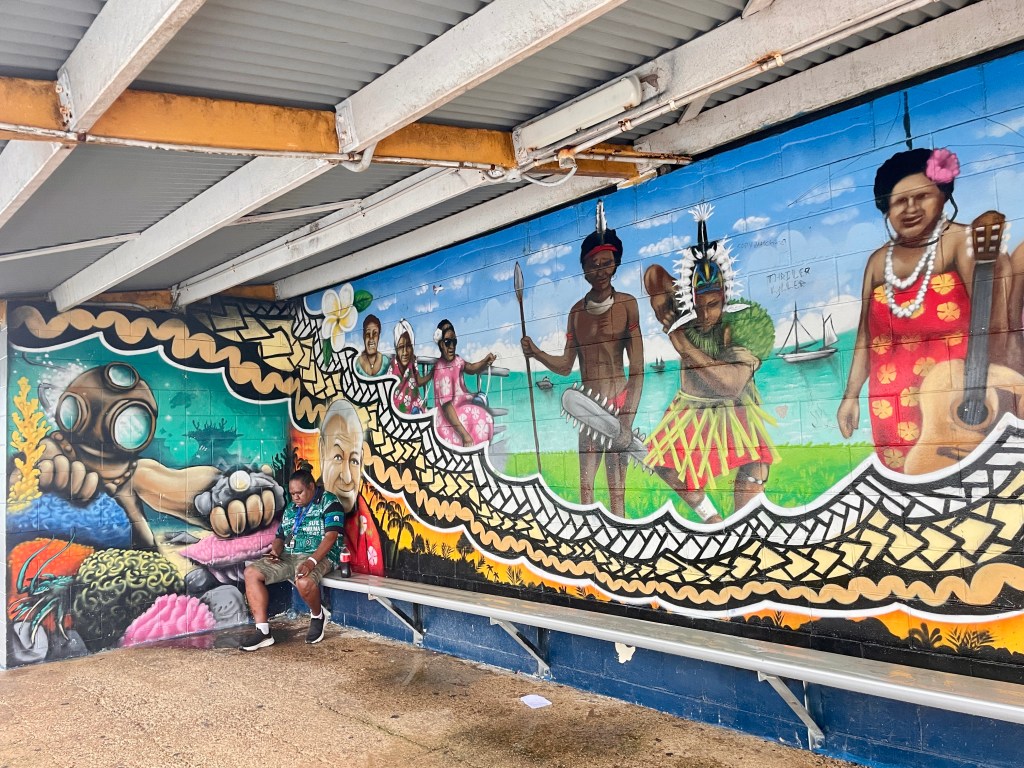
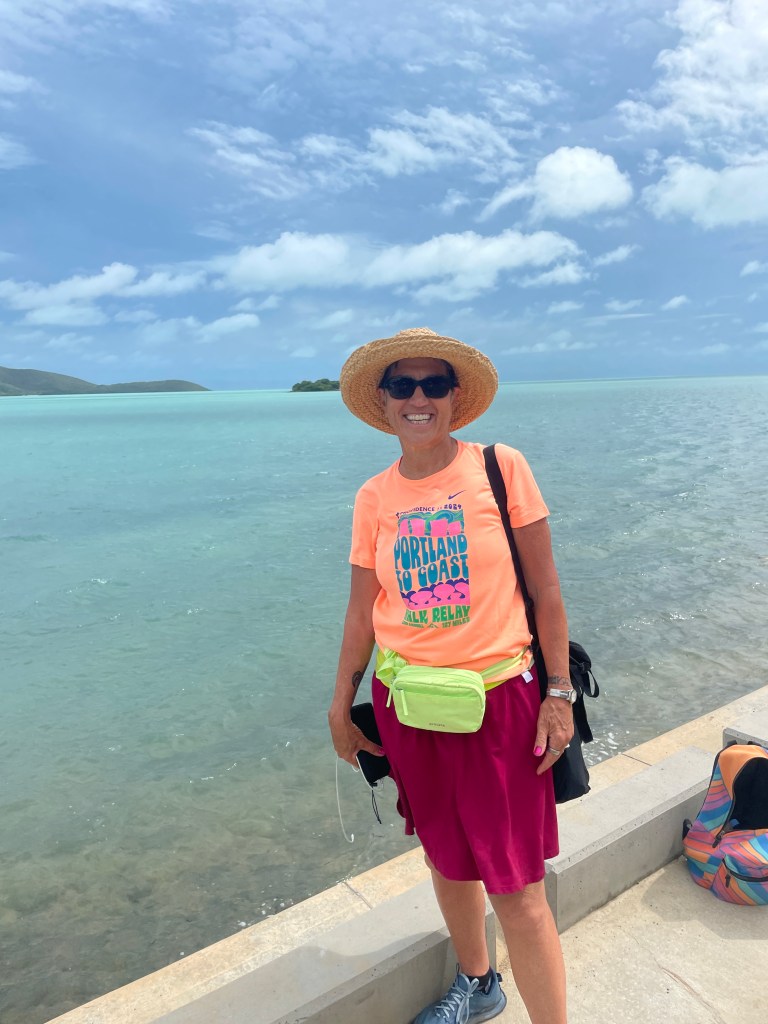
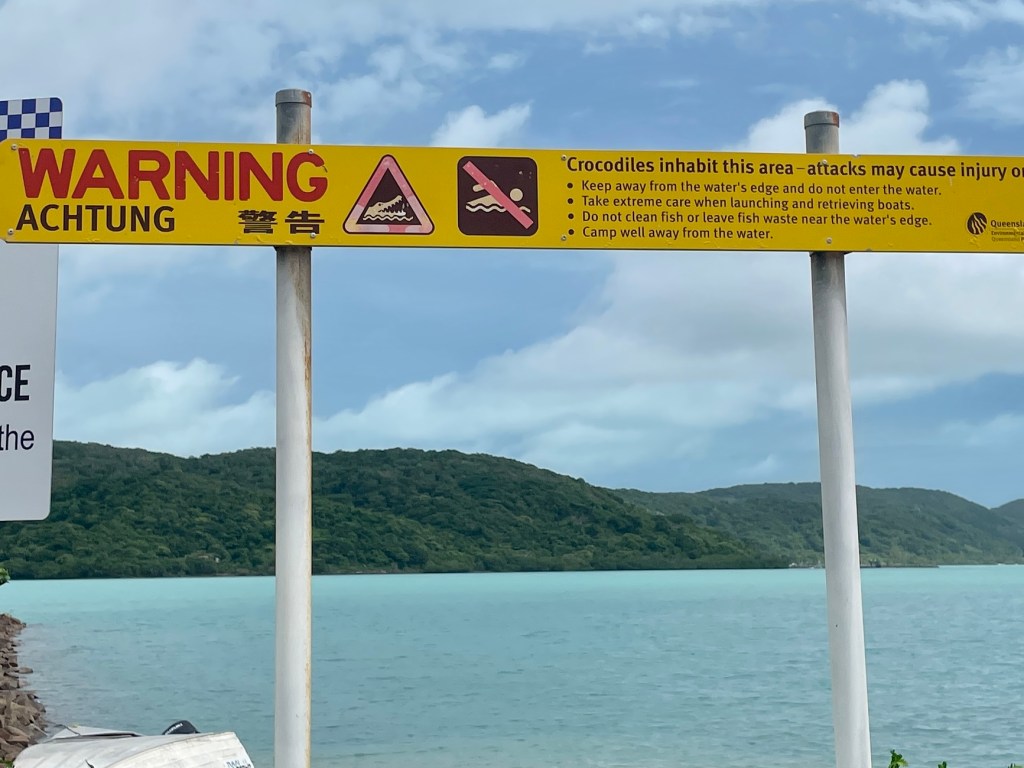
There isn’t much happening on the island. Karla, of course, was required to walk around the island. I thought about it, but we were told that we probably wouldn’t see saltwater crocs. I was going to follow her with the camera and get some action shots when the path got near the water. (They do say absolutely no swimming in the ocean.)
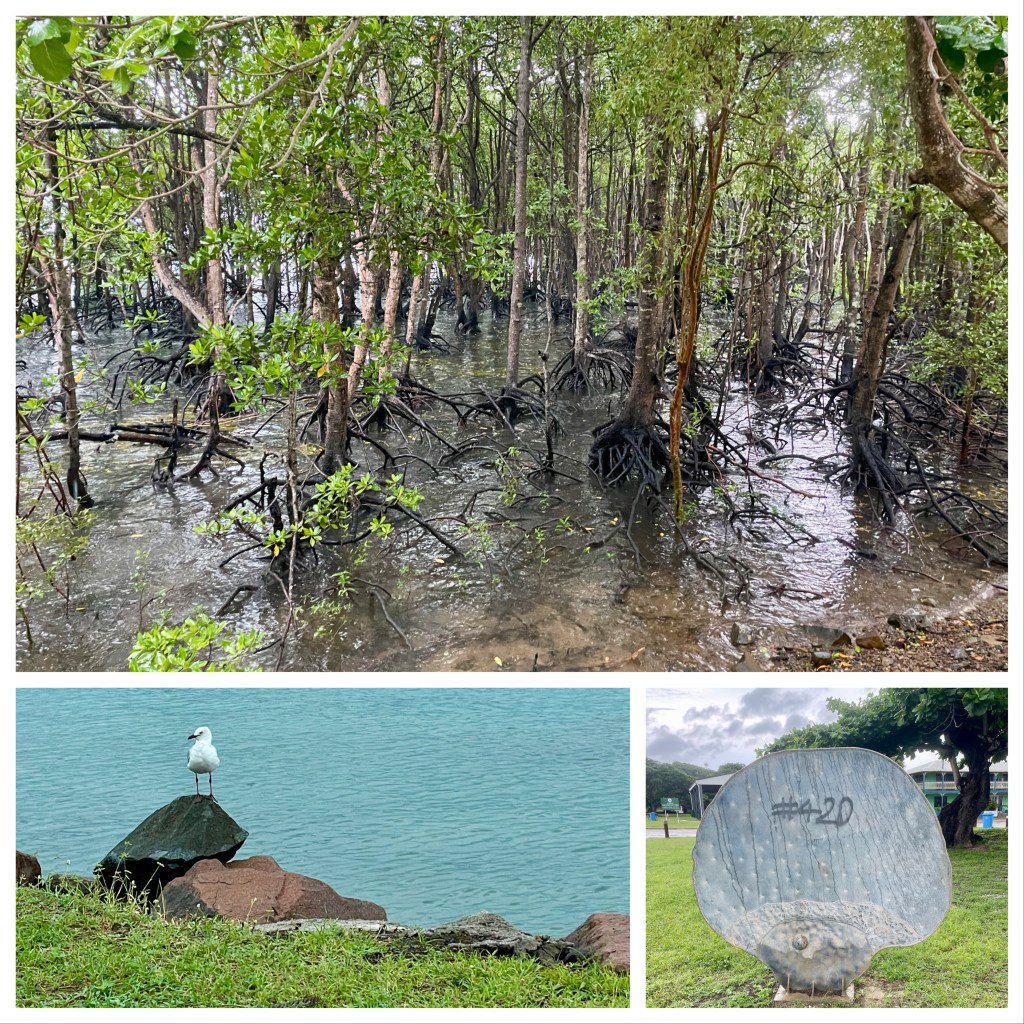
Outside of the single main street, there wasn’t much activity. The shops that were open had to be pleased with 900 passengers wandering the streets, looking for ways to spend money. A couple heavy downpours even forced people inside, as if the merchants controlled the weather. We stopped at the post office to purchase cards and stamps, as the Island had a special stamp for outgoing mail.
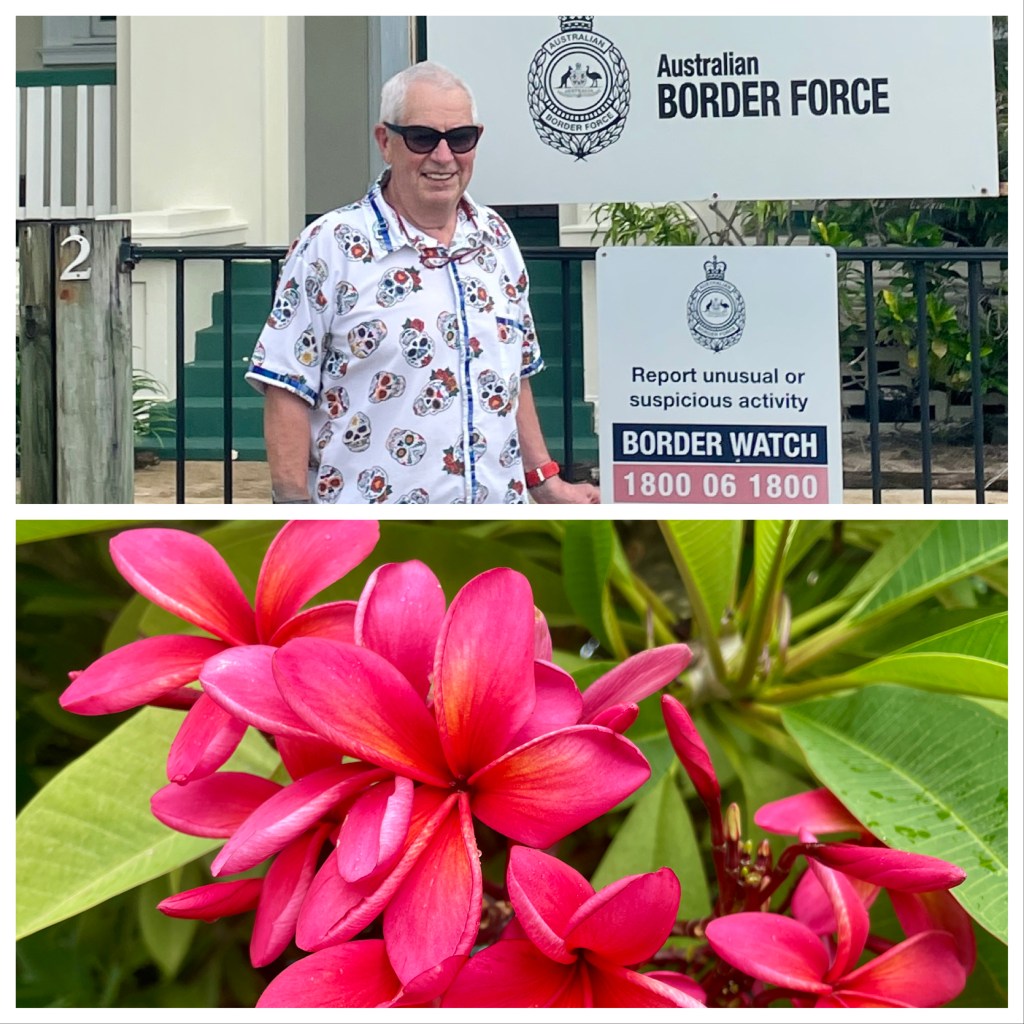
In the evening, we had a nice dinner with our closest group of friends. It had a Valentine’s Day theme and was followed by active dancing on the deck to the tunes of the Viking band. This is hard work!
 Millers World Cruise 2025
Leave a comment