Jan. 31
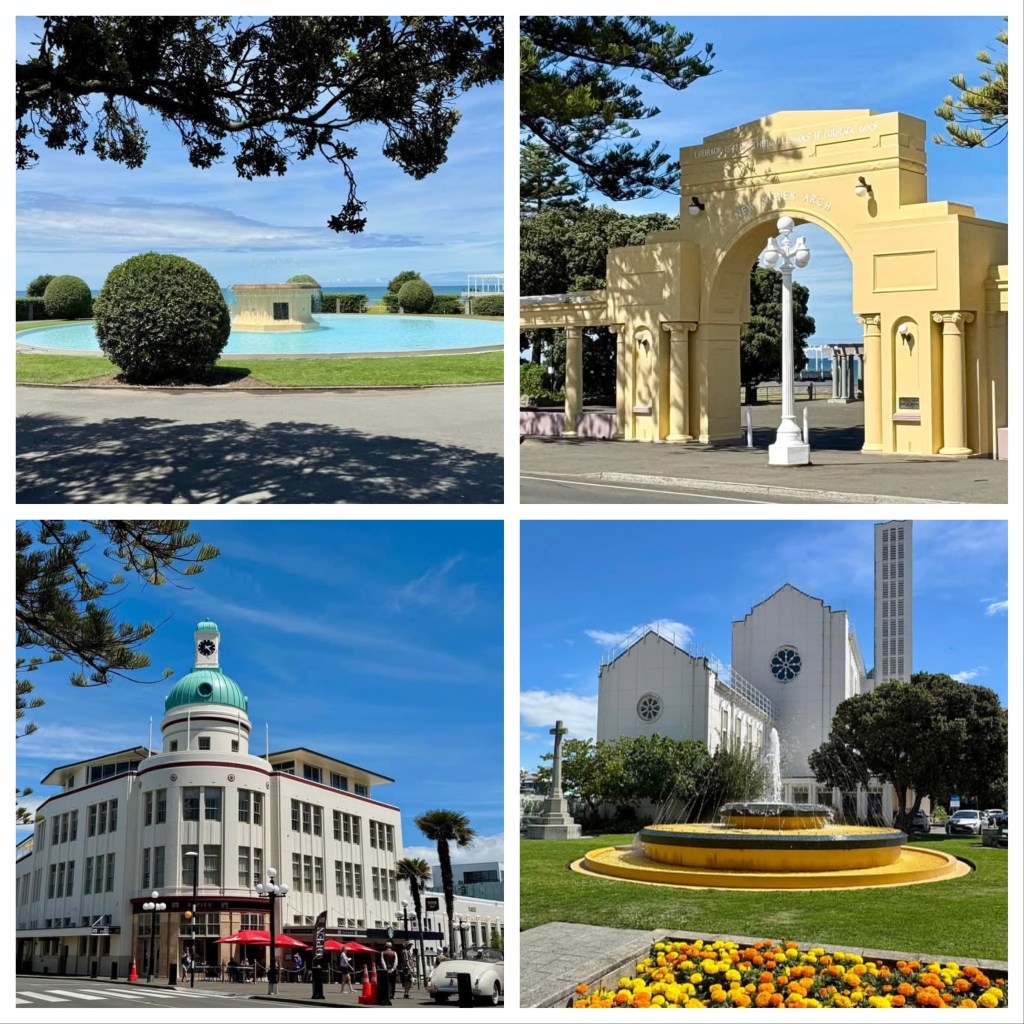
Napier is a pleasant coastal city with around 70,000 people. It seems as though lots of our stops are at coastal cities. While Napier has a history beginning with Captain Cook, followed by whalers, traders, and missionaries, it is really defined by a 7.9 earthquake in 1931. The earthquake leveled the commercial center and lots of residential structures, A decision was made to reconstruct the city in Art Deco style. It retains that style today.
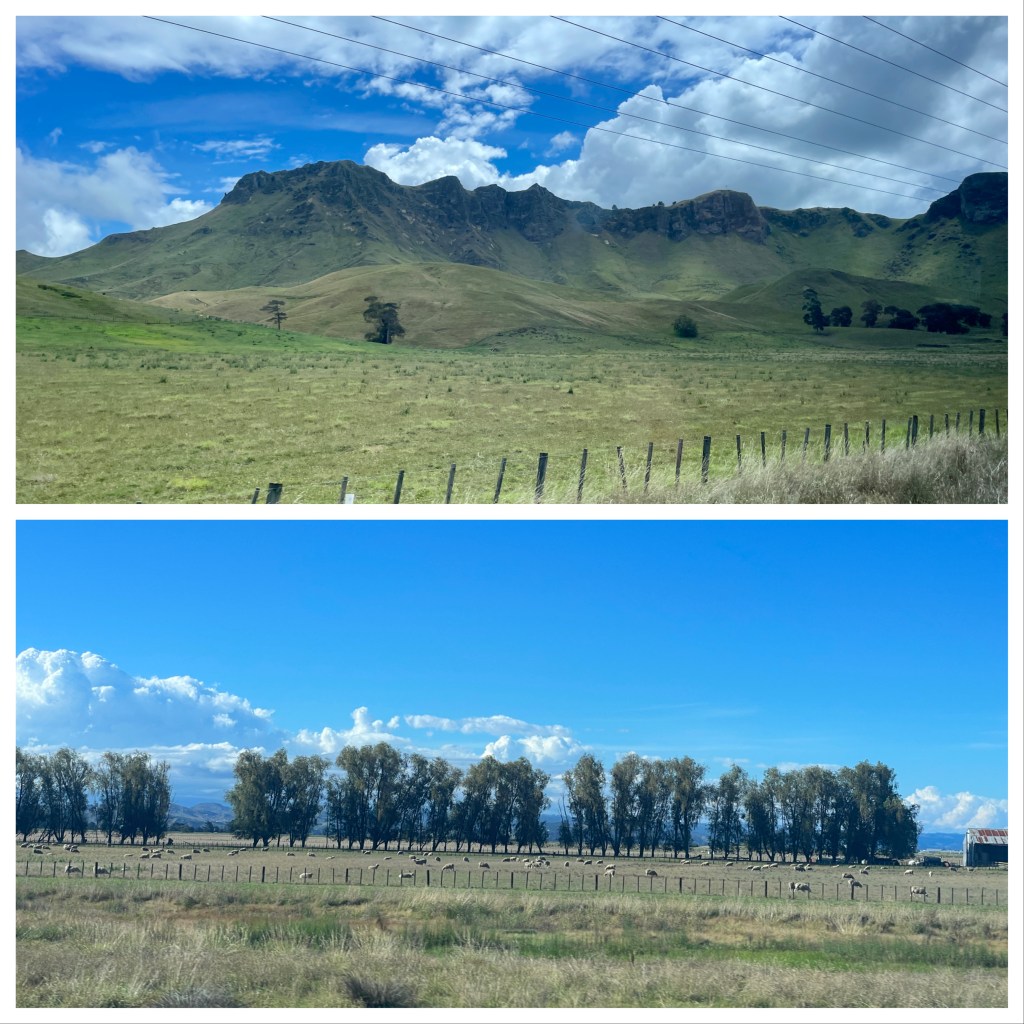
The surroundings are flat fertile lands surrounded by hills. Our driver described it as “one big farm” and a “fruit bowl.” The economy is defined by the production and export of natural resources. It is the largest wool center in the Southern hemisphere. It is the second largest wine region in New Zealand, after Marlborough. It is known for the export of wool, meat, timber and wood pulp as well as apples, pears and stone fruit. The area doesn’t get lots of rain, but 4 rivers feed underground aquifers. By tapping the aquifers to irrigate the fertile land, they have accelerated growing seasons for their crops. California pine, for example requires about 30 years to mature in California; 20 in the Napier area.
A few standout facts:
-Electricity is provided by solar, wind and hydro.
-There are no “critters” so the birds and animals thrive.
-Resource extraction is limited to preserve the natural environment .
-There are 100’s of earthquakes, most not especially strong. Our driver said there was a 3.1 that morning.
-We saw lots of cattle on the hills and some of the nation’s 38 million sheep. The flatlands are loaded with crops and the hills with grazing animals.
Our tour was billed as a tour of the Tukituki River and visit to a winery. Once we viewed the countryside, we visited a “honey center.” We walked through the shop and ate manuka honey ice cream while viewing all of the honey products. As you can imagine, there were soaps, lotions, and honey containers that seemed to be reasonably priced. A tasting station allowed sampling of about 20 different kinds of honey….clover, thyme, borage, etc. And, of course, they sold manuka honey with all of it’s beneficial health effects.
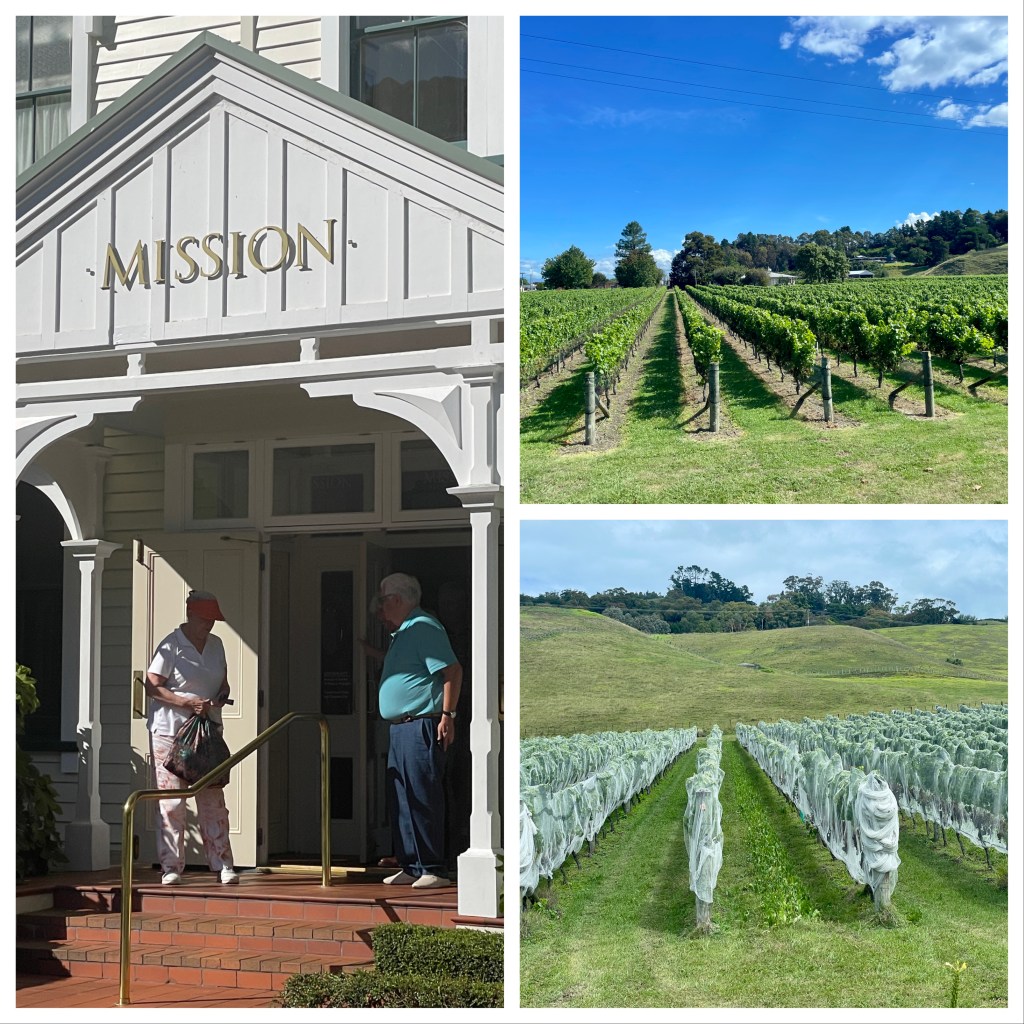
The final stop was at the Mission Winery. It’s the oldest winery in New Zealand, having been founded in 1851 by Catholic priests. It is still owned by the Catholics. The wine was decent and the grounds nicely preserved. Following our tasting of 5 wines, we were returned to the ship around sailing time. The ship leaves on time whether all passengers are on board or not. The exception is that if you’re on a Viking sponsored excursion, they will wait for your arrival. Usually, we can find excursions provided by independent operators, but we’re hesitant to sign up for them if there is any doubt about arriving back at the ship on time.
 Millers World Cruise 2025
Leave a comment